Budapest — the complete city guide
Plan your Budapest trip with confidence: top sights, thermal baths, ruin bars, day trips, honest budgets and zero tourist-trap fluff.

Quick facts
- Currency
- Hungarian Forint (HUF). ~400 HUF per EUR. Pay in HUF, not EUR.
- Airport
- BUD Liszt Ferenc, ~16 km east. Bus 100E + metro M3 into the city; use Bolt app for taxis.
- Language
- Hungarian. English widely spoken in tourist areas.
- Visa
- Schengen zone. Visa-free for US, UK, CA, AU, NZ. ETIAS expected late 2026 (~€20).
- Tap water
- Safe to drink.
- Tipping
- ~10% at restaurants and for taxis.
Why Budapest belongs on your Europe shortlist
Few European capitals manage the trick Budapest pulls off so effortlessly: monumental scale paired with genuine neighbourhood warmth. Cross the Széchenyi Chain Bridge and you move between two distinct cities — hilly, historic Buda on the west bank and flat, buzzing Pest on the east — each with its own personality, its own pace, its own argument for your attention.
Add a thermal bath culture that has been unbroken since Roman times, an Art Nouveau architectural heritage that survived two world wars, a nightlife scene built literally inside crumbling 1940s apartment blocks, and food that has shed its grey communist-era reputation in favour of inventive modern Hungarian cooking, and you have a city that rewards the curious traveller at every turn.
This guide is the honest starting point. We cover how to orient yourself, what to see in the time you have, how to get around without being ripped off, and how to connect every neighbourhood and day trip through the rest of this site.
| Where to base yourself | Pest for convenience; Buda for quiet, scenic streets |
| Time needed | 3–4 days for the essentials; 5+ with day trips |
| Daily budget | Around €30–50/day budget, €50–100/day mid-range |
| Getting around | BKK metro/tram/bus; single 500 HUF, 72h pass 5 750 HUF |
| Best time | April–May and September–October |
How Budapest is organised
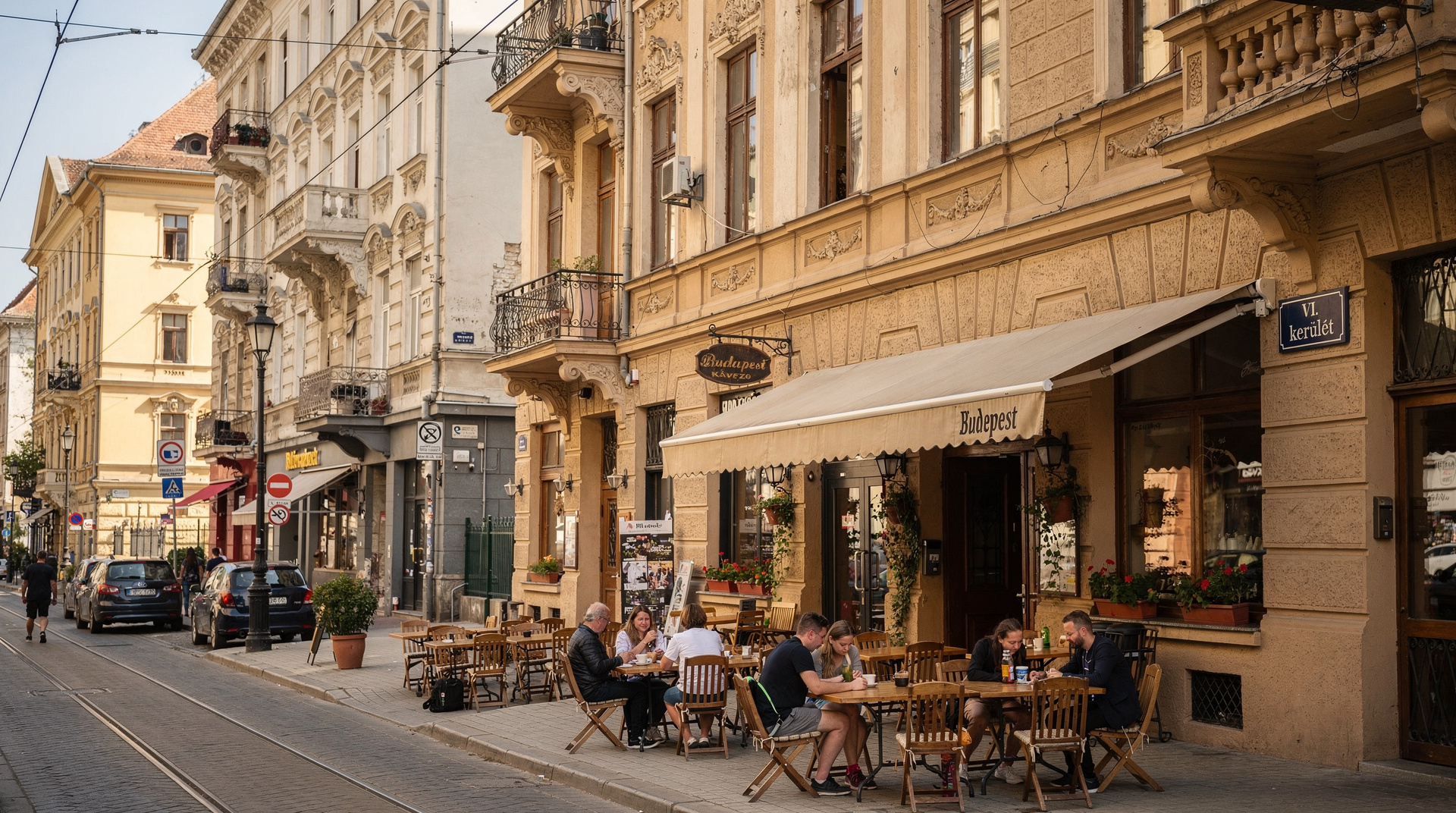
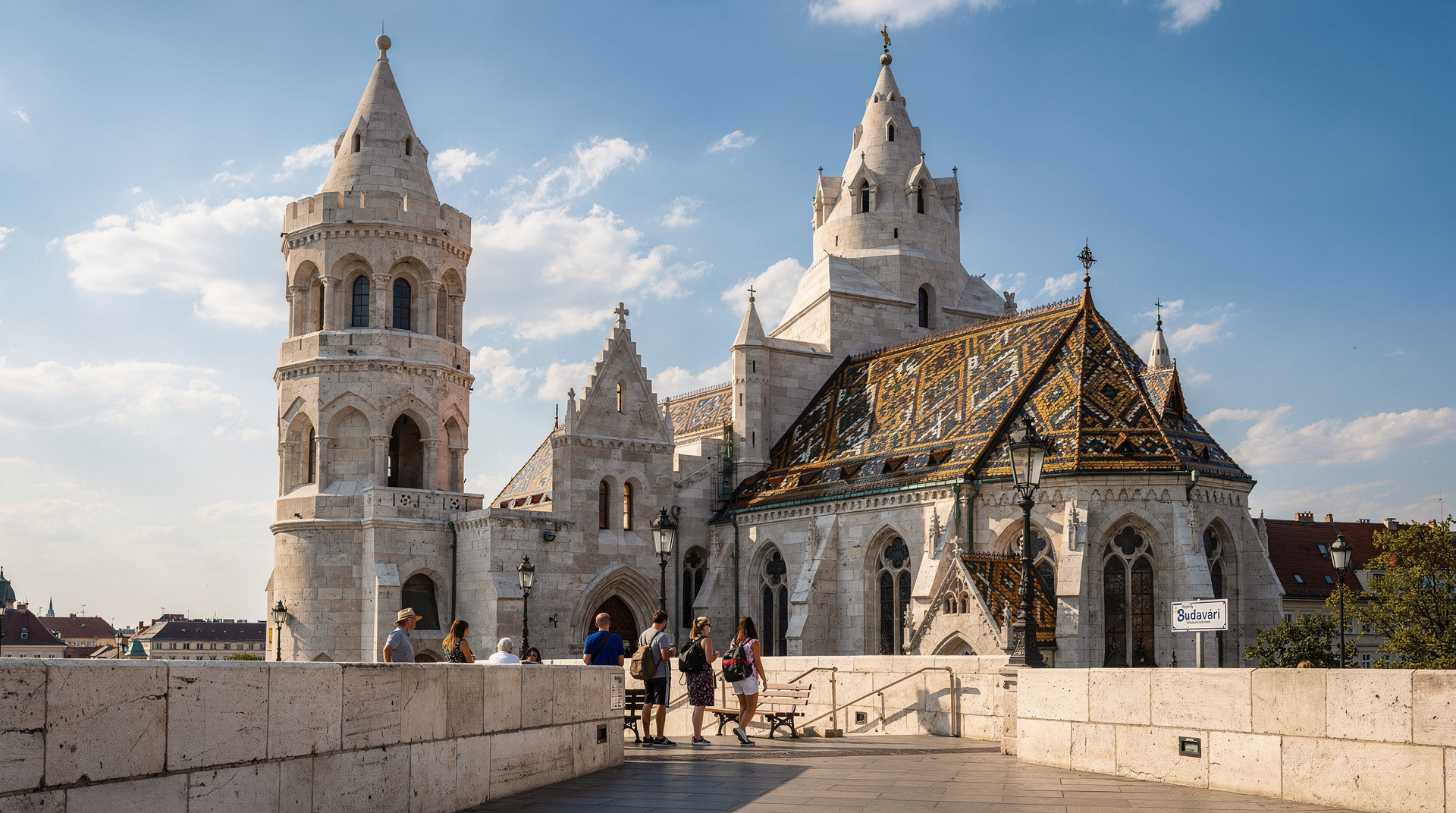
The city is split by the Danube into Buda (west) and Pest (east). Most visitors spend most of their time in Pest — it holds the Parliament, the Jewish Quarter, the ruin bars, the Central Market Hall and the majority of restaurants and hotels. Buda is quieter, hillier and home to the Castle District, Fisherman’s Bastion, Matthias Church and Gellért Hill.
Districts run in a ring pattern from District I (Castle Hill) outward. The key ones for visitors:
- District I — Castle District: Buda Castle, Fisherman’s Bastion, Matthias Church
- District V — Downtown Pest: Parliament, St Stephen’s Basilica, Váci utca (tourist-heavy), Vörösmarty tér
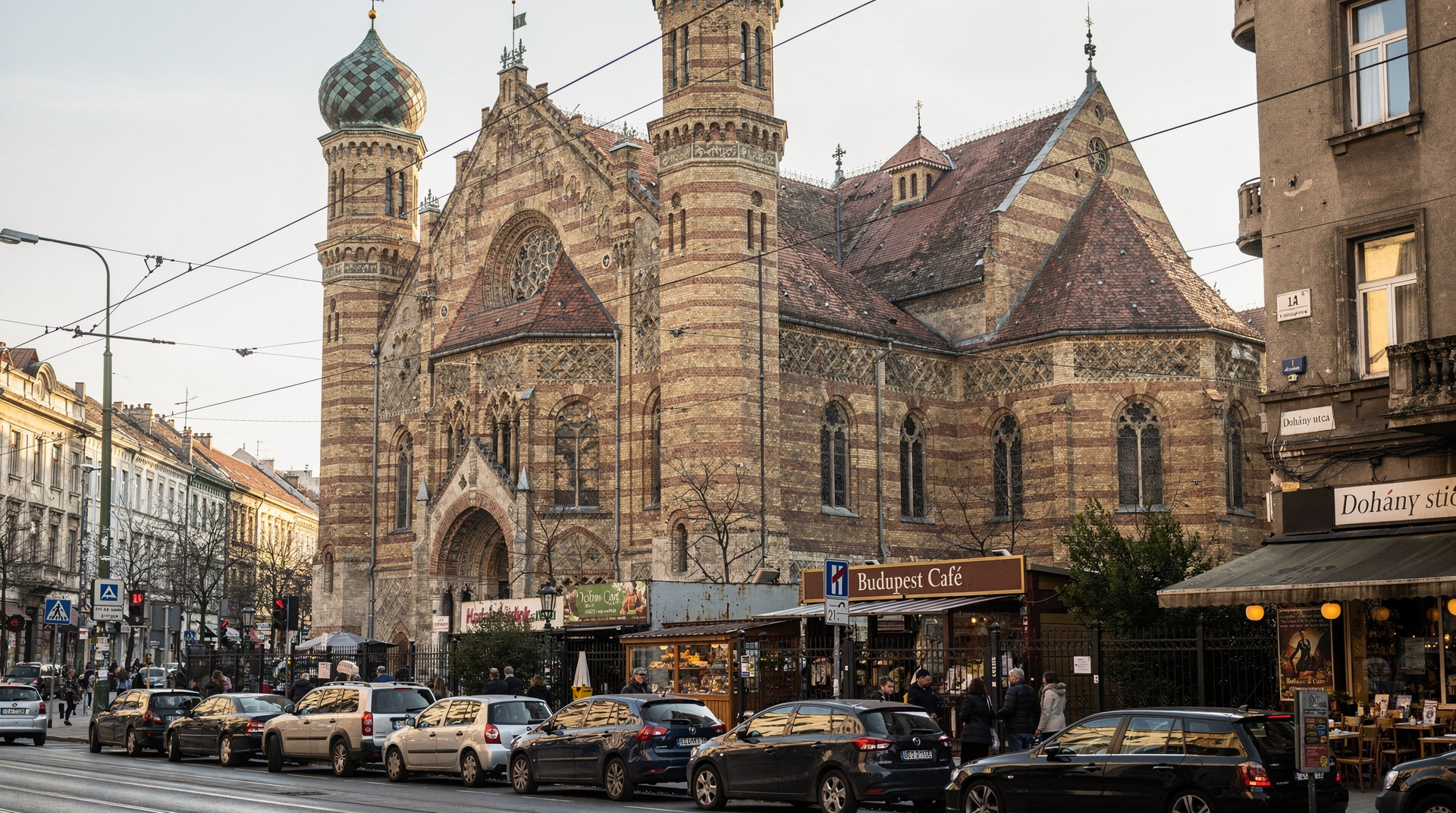
- District VII — Jewish Quarter: Dohány Street Synagogue, Szimpla Kert, street food, ruin bars
- District XIV — City Park and Városliget: Széchenyi Baths, Heroes’ Square, Vajdahunyad Castle
- District XI (southern Buda) — Gellért Hill: Citadella, Liberty Statue, Gellért Baths
- Margaret Island — Margaret Island: park, spa, running track in the middle of the Danube
- Districts III — Óbuda and Aquincum: Roman ruins, authentic neighbourhood life
Buda vs Pest, at a glance:
| Buda | Pest | |
|---|---|---|
| Character | Hilly, historic, quiet | Flat, buzzing, commercial |
| Main draws | Castle District, Gellért Hill | Parliament, Jewish Quarter, ruin bars |
| Nightlife | Minimal | Concentrated in District VII |
| Best for staying | Couples wanting calm evenings | First-timers, nightlife, walkability |
Neither side is objectively “better” — most short trips are Pest-based with day excursions into Buda for the Castle District and Gellért Hill. The where to stay guide breaks this down by neighbourhood and traveller type.
Getting there and getting around
From BUD airport: The most reliable option is Bus 100E (2 500 HUF) to Deák Ferenc tér in central Pest, then metro or tram. The journey takes around 40 minutes depending on traffic. Do not take unlicensed taxis from the kerb — stick to the Bolt app or the official miniBUD shuttle. See the airport transfer guide for the full breakdown.
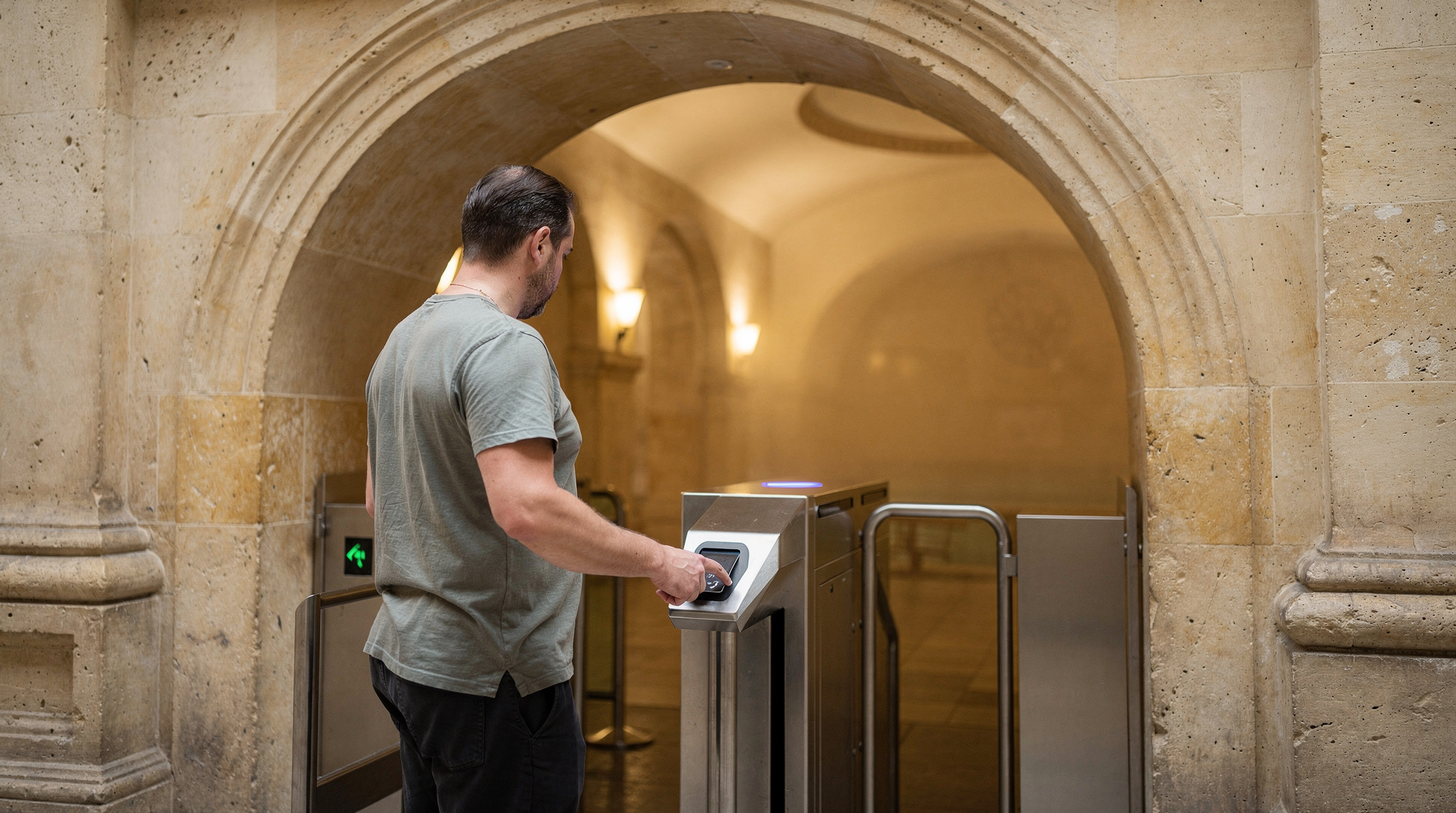
Within the city: Budapest’s BKK public transport network covers almost everywhere tourists go. A single ticket costs 500 HUF if bought in advance; a 72-hour travelcard runs 5 750 HUF. Validate before boarding — inspectors are active. The Budapest Card (from 17 990 HUF for 24 hours) adds more than 30 free visits and activities and discounts of 10 to 25 % on top of unlimited transport — worth it if you plan to visit several paid attractions. Metro lines M1 (Europe’s second-oldest underground, Art Nouveau stations), M2 and M3 connect the main tourist corridors; trams 2 and 47–49 run along the river.
Pay in HUF everywhere. Dynamic currency conversion at card terminals almost always costs you more — always choose the local currency.
On foot: Central Pest is genuinely walkable — Deák Ferenc tér to the Basilica is 10 minutes, to the Jewish Quarter is 5, to Vörösmarty tér is 10. Crossing to Buda on foot via the Chain Bridge takes about 15 minutes and is one of the best free things to do at any time of day. Most first-timers underestimate how much of the centre can be covered without transport at all.
Top experiences, ranked honestly
1. A thermal bath session
This is not optional. Budapest has been a spa city since the Romans built Aquincum on the west bank. The choice comes down to your priorities — see the full thermal baths guide for a side-by-side comparison.
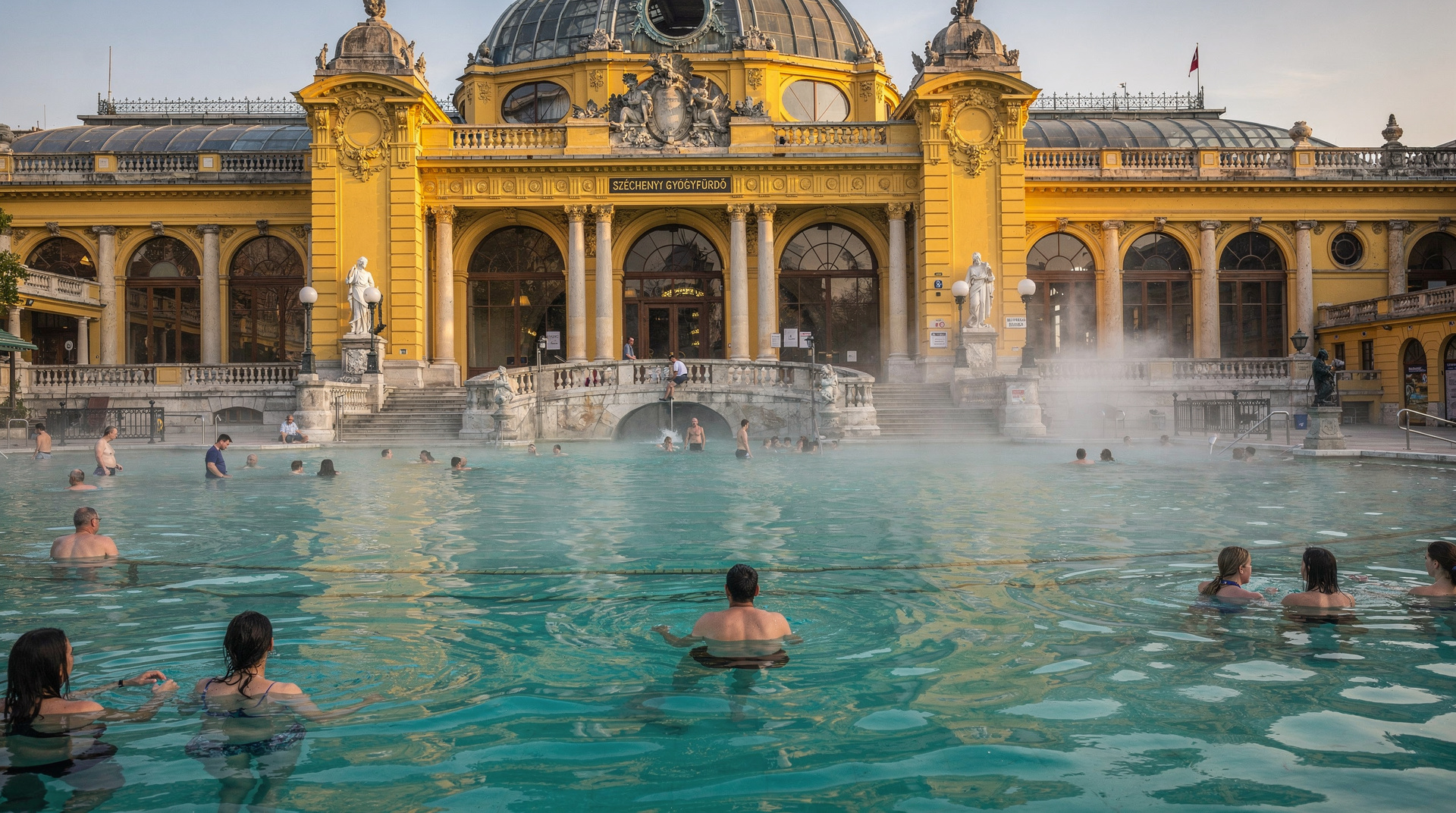
Széchenyi Baths in City Park is the most photogenic and easiest to reach (metro M1, Széchenyi fürdő). Its outdoor pools stay open year-round; in winter, sitting in 38°C water while snow falls around the neo-baroque dome is one of those genuinely memorable travel moments. Book online to skip the queue and avoid resellers at the entrance.
Gellért Baths on the Buda side is architecturally the most spectacular — an Art Nouveau masterpiece with mosaic columns and a glass-roofed main pool. Check current opening status before visiting, as renovation work may affect access.
Rudas, perched on the Danube bank, is the most authentic: five original Turkish domed pools from the 16th century, a rooftop pool with city views, and a hard-edged local clientele on weekday mornings.
2. Parliament and the riverfront
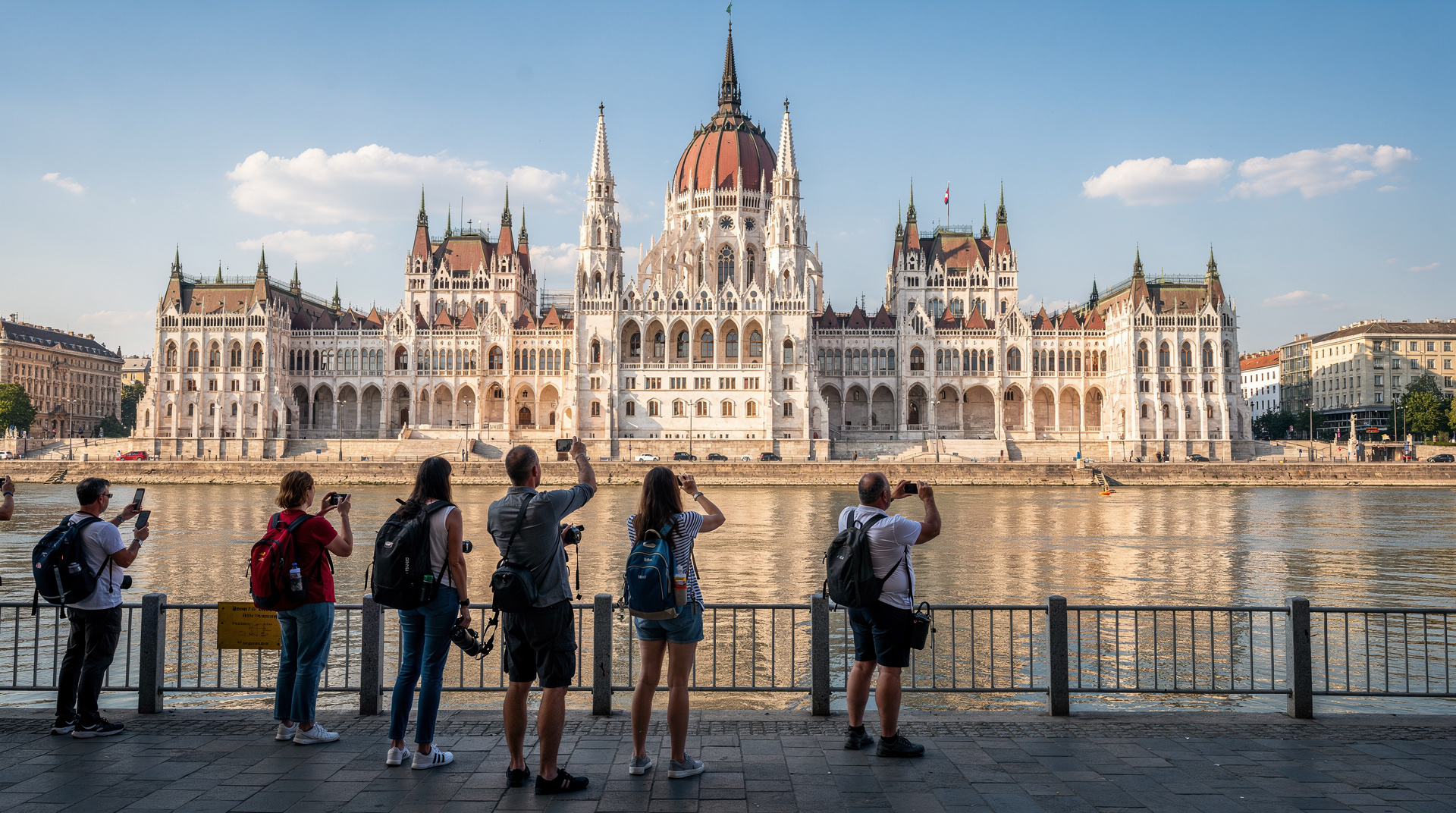
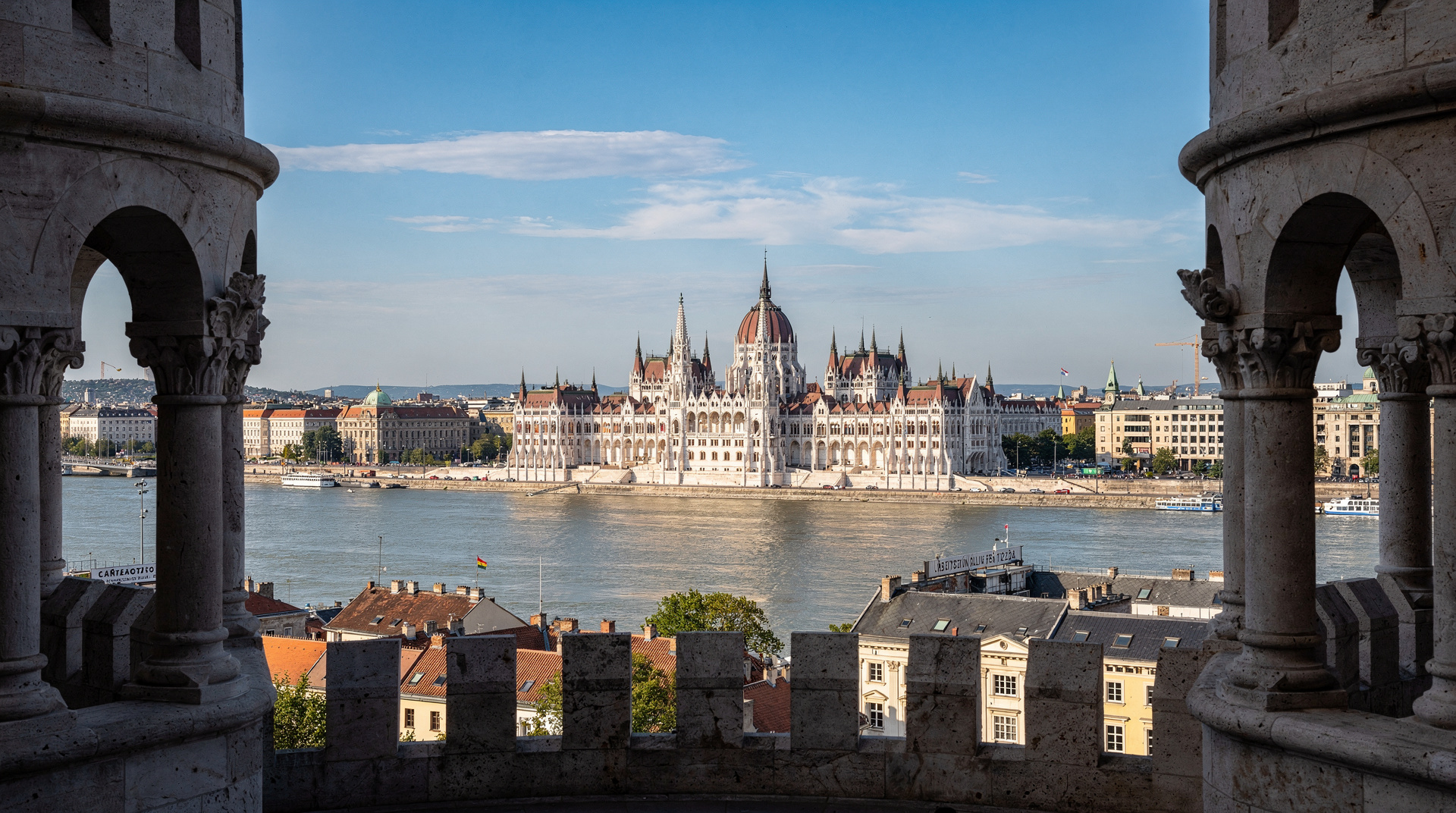
The Hungarian Parliament building is the third-largest parliament in the world and one of the most extraordinary neo-Gothic structures on the continent. Viewing it from across the Danube at night, lit against the dark water, is one of Europe’s great free spectacles. Inside, the dome hall, the royal insignia and the chandelier-hung corridors are worth every forint of the entry fee. The Parliament audio guide tour is well-paced and informative; book ahead as timed entries sell out weeks in advance in peak season.
3. The Castle District
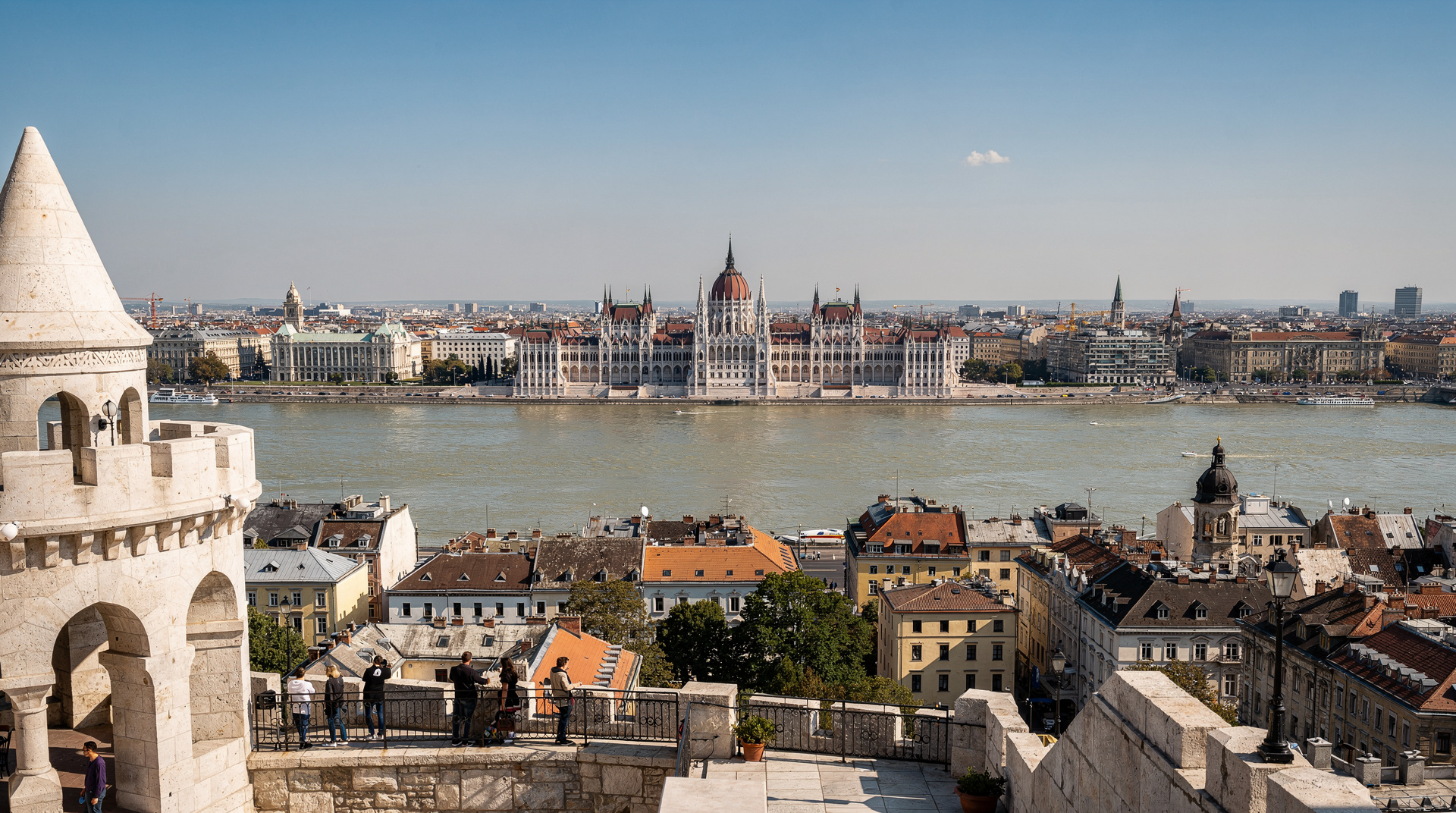
Buda Castle, Fisherman’s Bastion and Matthias Church sit on Castle Hill above the western bank. The area demands a half-day at minimum — see the Castle District guide for a walking route that avoids the tourist-trap restaurants clustered around the main viewpoints. The funicular from the Chain Bridge saves the steep climb; a return ride costs around 1 800 HUF (~€4.50).
4. The Jewish Quarter and ruin bars
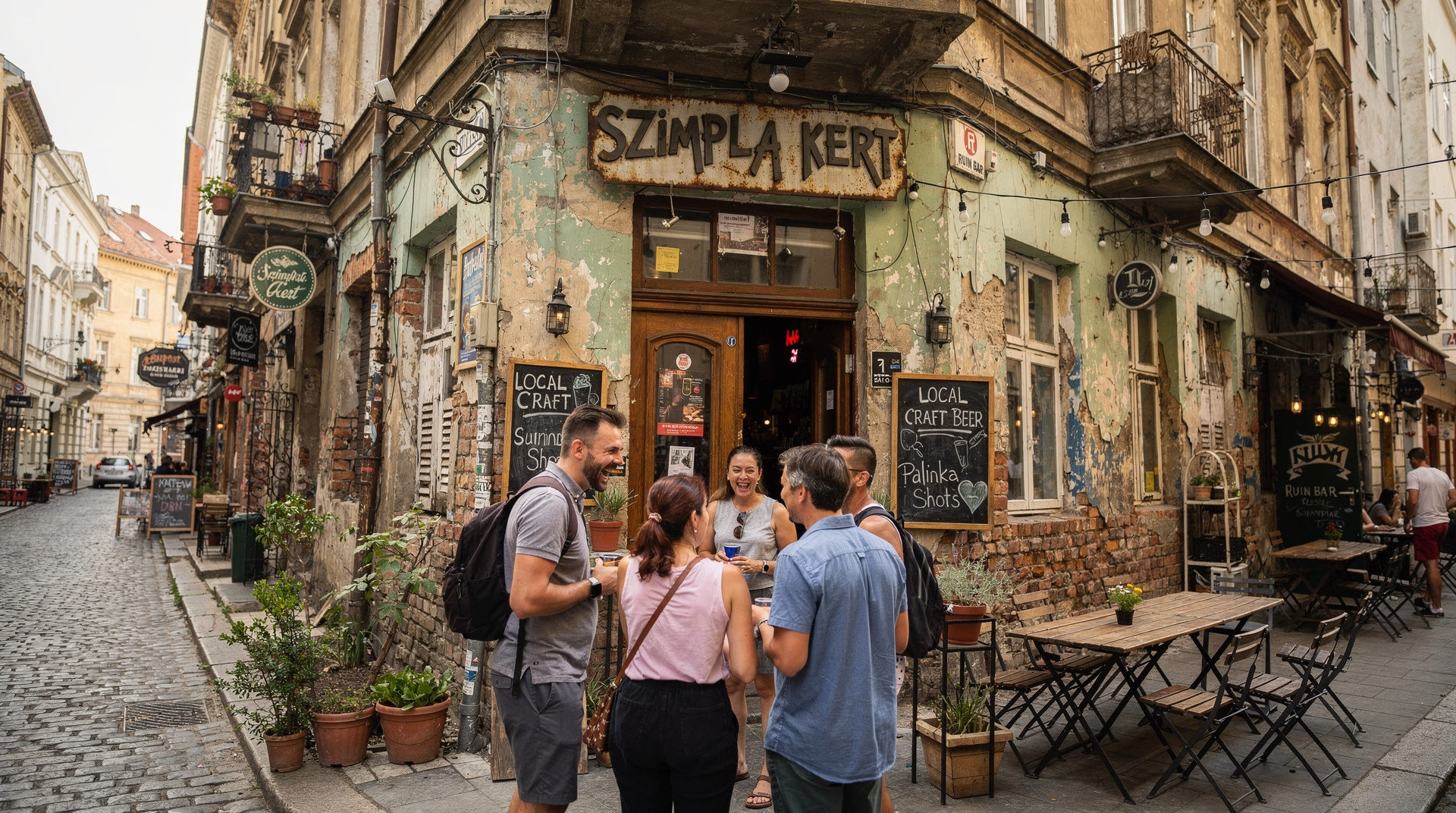
District VII is the city’s most layered neighbourhood: the Dohány Street Synagogue (largest in Europe outside New York), a sobering Holocaust memorial, pre-war architecture at every turn, and then — after dark — Europe’s most creative bar scene. The ruin bars grew from squatter culture in the early 2000s, occupying derelict courtyards and communist-era apartment blocks. Szimpla Kert remains the original and best. A guided ruin bar pub crawl is the fastest way into the scene if you are new to the city. See the full Jewish Quarter guide.
5. A Danube cruise
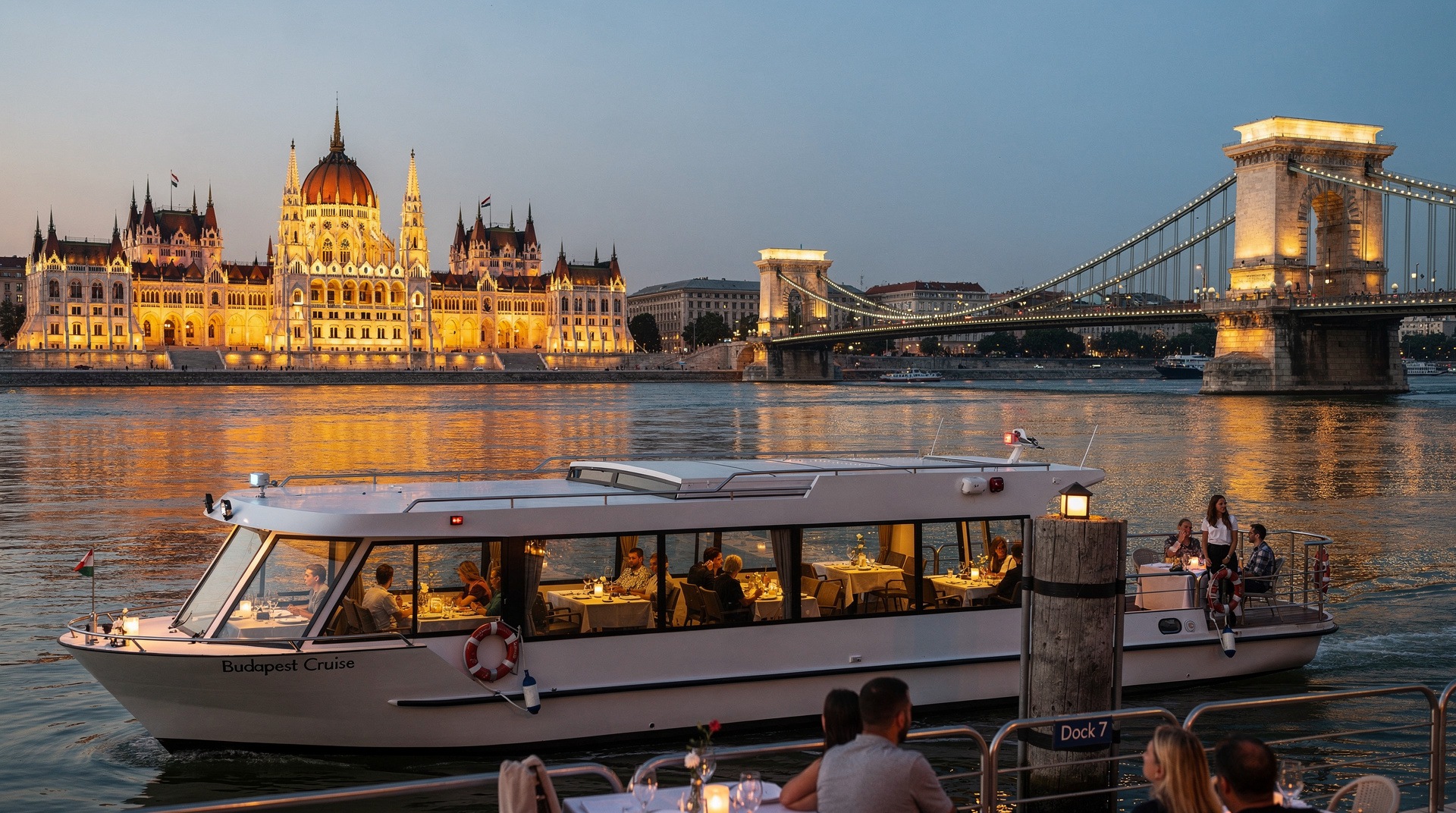
Even if you have been walking the riverbanks, seeing Parliament and the Chain Bridge from the water at dusk is a different experience entirely. A one-hour city highlights sightseeing cruise is the most flexible option; dinner cruises with live folk music are the classic Budapest date-night move.
6. Heroes’ Square and City Park
The grand boulevard of Andrássy út (a UNESCO World Heritage site) ends at Heroes’ Square, one of the most imposing public spaces in central Europe. Behind it, City Park holds Vajdahunyad Castle, the Budapest Zoo, the Circus, the Széchenyi Baths and the under-renovation Városliget area. Worth a morning or afternoon.
Honest travel tips
Taxis: Only use the Bolt app (equivalent to Uber). The green-liveried metered official taxis (Főtaxi and Taxi4) are legitimate but Bolt is easier. Never get into an unmarked car at Keleti station — the metre-manipulation scam is well documented and expensive. Read the Budapest taxi scam guide.
Váci utca: The main pedestrian shopping street in District V looks like a bargain but the restaurants that line it charge double what you would pay two streets over, and quality suffers accordingly. Use it to orient yourself, not to eat. See Váci Street tourist traps.
Ruin bar scams: A small number of bars in District VII employ women to invite foreign men in and then produce an enormous bill. Stick to known venues (Szimpla Kert, Instant, Fogas Ház, Corvintető) and check prices before ordering.
Bath ticket resellers: Buy thermal bath tickets at the official website or at the venue’s own desk. Street resellers charge a premium and the tickets are occasionally invalid. The same applies to Parliament tours.
Day trips worth taking
Budapest’s position on the Danube makes it an exceptional base for day trips. The Danube Bend — the arc of the river north of the city — contains three of Hungary’s most historically significant towns.
Szentendre is the closest (40 minutes by HÉV suburban rail from Batthyány tér) and the most visited: an artists’ town with Serbian Orthodox churches, open-air museums and excellent langos. Half a day is enough.
Visegrád holds a dramatic hilltop citadel and a reconstructed medieval royal palace overlooking one of the most beautiful river bends in central Europe.
Beyond the Danube Bend, Lake Balaton (Central Europe’s largest lake), Eger (baroque old town plus the Bull’s Blood wine region) and Tokaj (UNESCO wine landscape) are all reachable in a day from Budapest.
Practical planning links
- Budapest travel guide — full planning overview
- How many days in Budapest?
- Where to stay in Budapest
- Getting around Budapest
- Budapest airport to city centre
- Is Budapest expensive?
- Budapest 3-day itinerary
- Budapest with kids
- Best day trips from Budapest
- Budapest tourist traps — honest guide
A city that earns repeat visits
Most travellers who come to Budapest for a long weekend find themselves planning a return trip. The city has a habit of revealing new layers — the thermal bath you did not get to, the neighbourhood you passed through too quickly, the festival that clashes with your existing booking. The how many days in Budapest guide helps you calibrate how long you genuinely need, while the 3-day classic itinerary maps out a day-by-day plan that covers the essentials without rushing.
Use the destination guides below to plan each area in detail, then connect them with the itinerary that fits your schedule. Start wherever makes sense — Budapest rewards the organised planner and the spontaneous wanderer equally.
Top experiences
Bookable activities with verified prices and instant confirmation on GetYourGuide.