Budapest tourist traps: the honest guide to avoiding them

What are the main tourist traps in Budapest?
The main traps are: street taxis from Keleti station or the airport (use Bolt app instead); the konzumlány bar scam in District VII where women befriend tourists and run up enormous bar bills; overpriced restaurants on Váci utca; fake or overpriced ticket resellers outside Széchenyi Baths; and Euronet ATMs that charge terrible exchange rates. All are avoidable with basic awareness.
What nobody tells you before you land
Budapest is one of Europe’s great travel destinations — beautiful, historically rich, full of genuine character. It is also home to a set of tourist traps that are predictable, avoidable, and that nobody warns you about clearly enough.
This guide is the honest briefing. Not to frighten you — Budapest is safe, and most visitors have no problems. But the taxi scam at Keleti station, the bar bill inflation in District VII, the Váci utca restaurant markup — these are real, they happen to informed people every week, and knowing the patterns in advance costs you nothing except five minutes of reading.
| Biggest financial risk | Konzumlány bar scam (50,000–200,000 HUF bills) |
| Most common | Street taxis at Keleti/airport |
| Easiest to avoid | Váci utca restaurants — walk one block |
| Where it happens least | Museums, thermal baths, licensed shops |
| Fix for almost everything | Bolt app + checking prices before ordering |
Tourist trap 1: street taxis
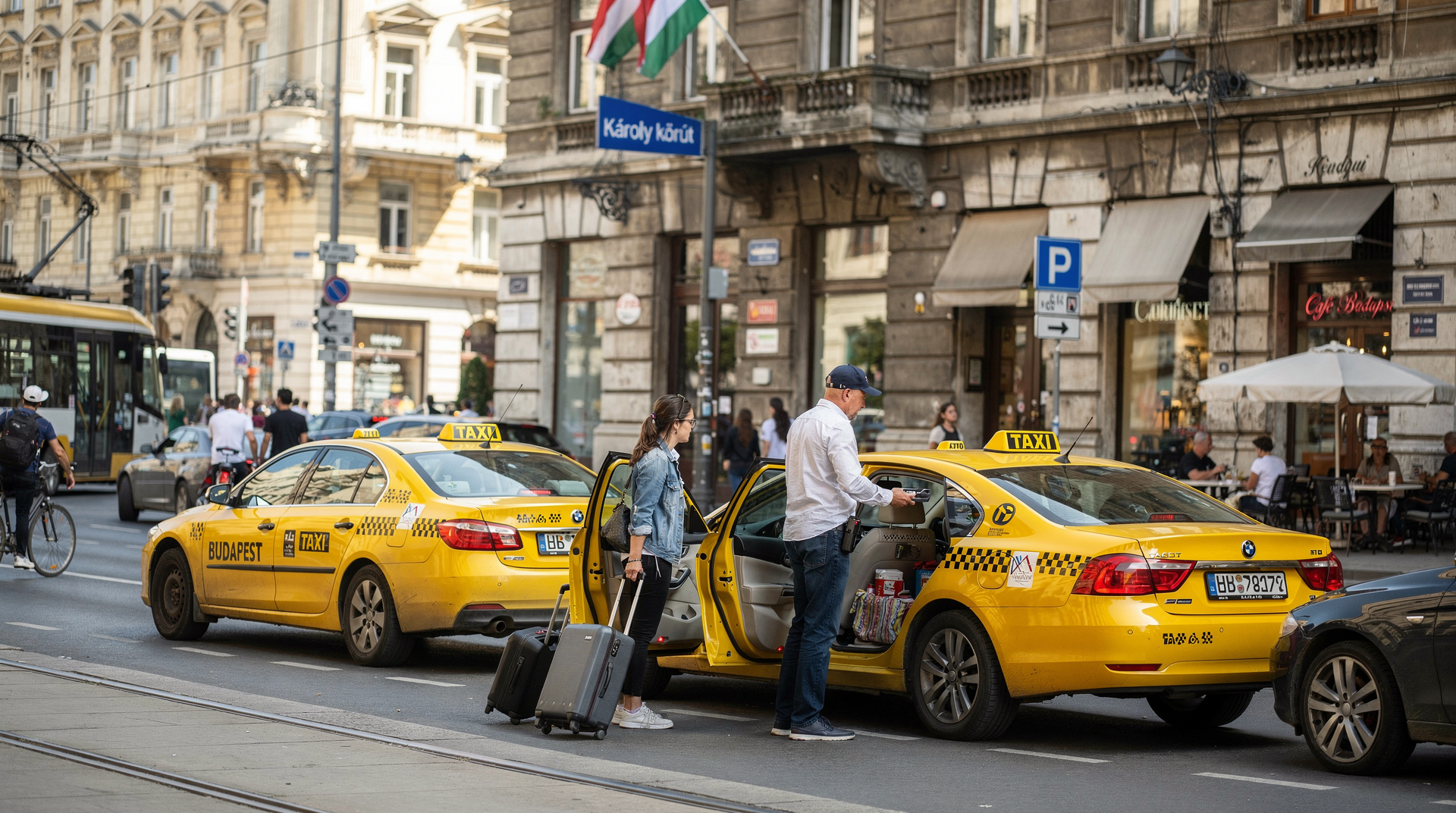
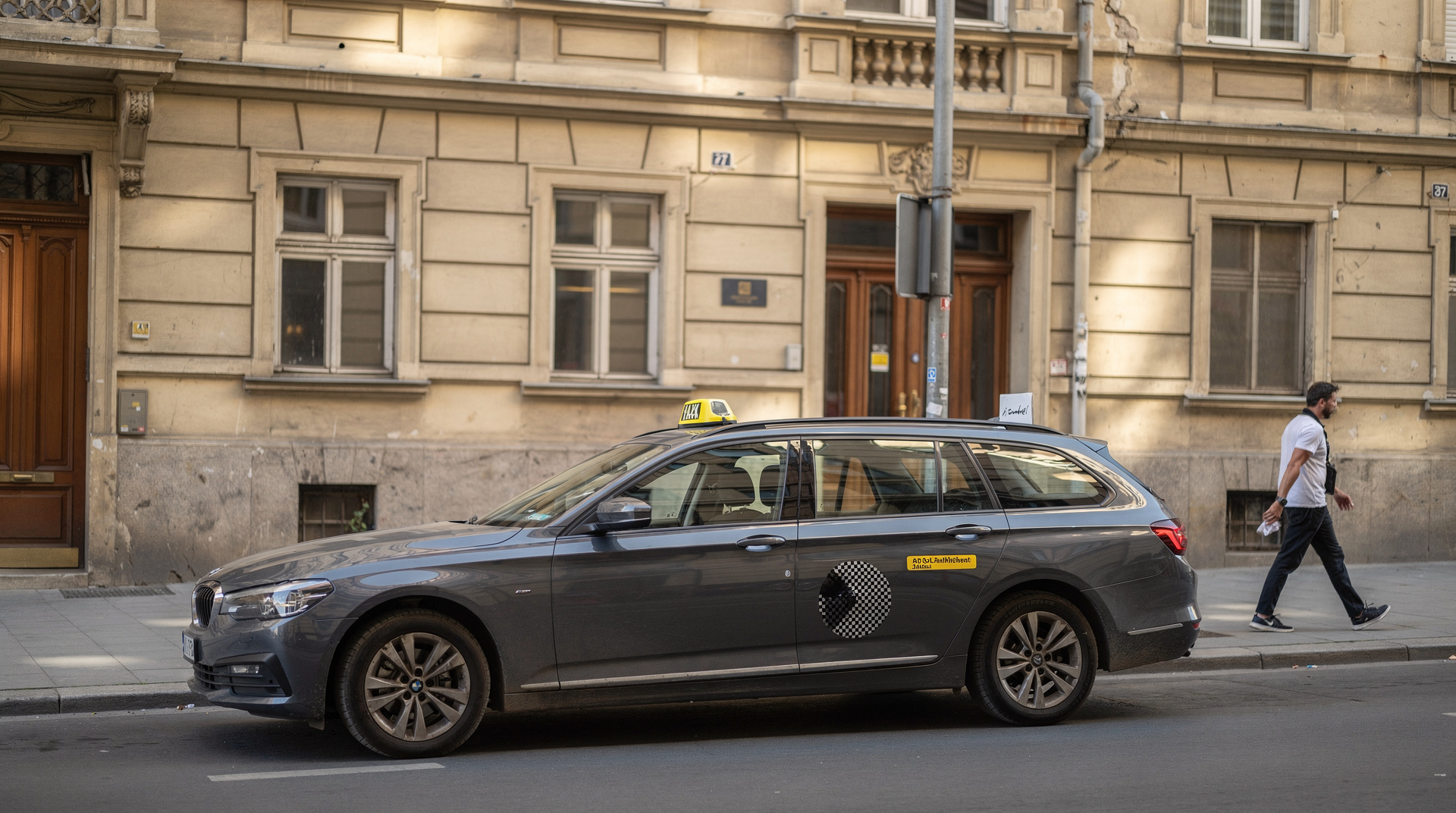
The Budapest taxi trap is the most damaging in financial terms. Unregulated street taxis — often parked outside Keleti railway station, Kelenföldi station, the airport arrivals hall or near popular tourist areas — can charge 5–10× the legitimate fare.
The mechanics are usually one of these: a metered taxi with a tampered meter that runs fast, a negotiated fare that sounds cheap until you realise the driver is quoting per kilometre, or simply a very high fixed price for tourists who do not know better.
The solution is simple: use Bolt. Bolt is a ride-hailing app (similar to Uber, Lyft) that operates legally throughout Budapest. The price is shown before you confirm the booking. The route is tracked. The driver knows there is accountability. A typical Bolt ride from Keleti station to the centre costs 1,500–2,500 HUF (€3.75–6.25). A street taxi for the same journey has charged tourists 15,000–30,000 HUF.
Download Bolt before you land. This one action eliminates the most expensive tourist trap in Budapest. Full details at Budapest taxi scams guide.
Tourist trap 2: the konzumlány bar scam
This is Budapest’s most notorious tourist trap and it still catches people regularly in 2026. The setup:
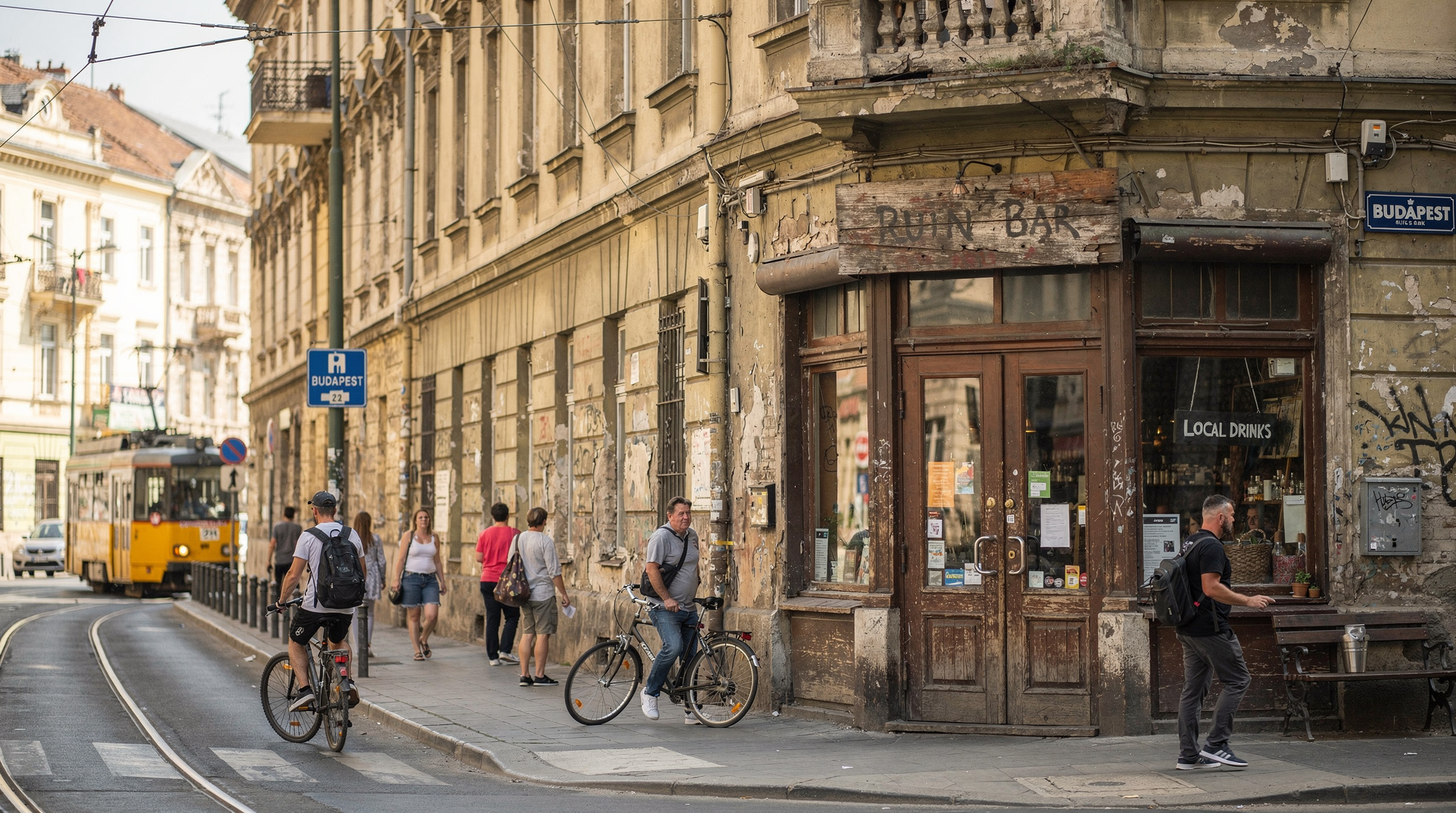
An attractive local approaches a tourist (typically male, solo or in a small group) near the ruin bars or in District VII. She is friendly, speaks English, suggests you check out a bar she knows. You go. The drinks arrive. You think about leaving after two drinks. The bill appears: 80,000 HUF (€200) for what you assumed would cost 8,000 HUF. You try to argue. There is a large staff member nearby. The bill is paid.
The woman (the “konzumlány,” or “consommation girl” — a term borrowed from the old Budapest cabaret tradition) is on commission. The bar is her employer. The whole interaction was scripted.
Protective rules:
- Never let a stranger choose your bar
- Confirm prices before you order, especially for bottles of wine or spirits
- Look up any bar on Google Maps before entering — recent reviews mentioning inflated bills are the warning sign
- If approached by someone overly friendly who wants to show you a “great place,” simply decline
For the full breakdown of this and other scams, see common scams in Budapest.
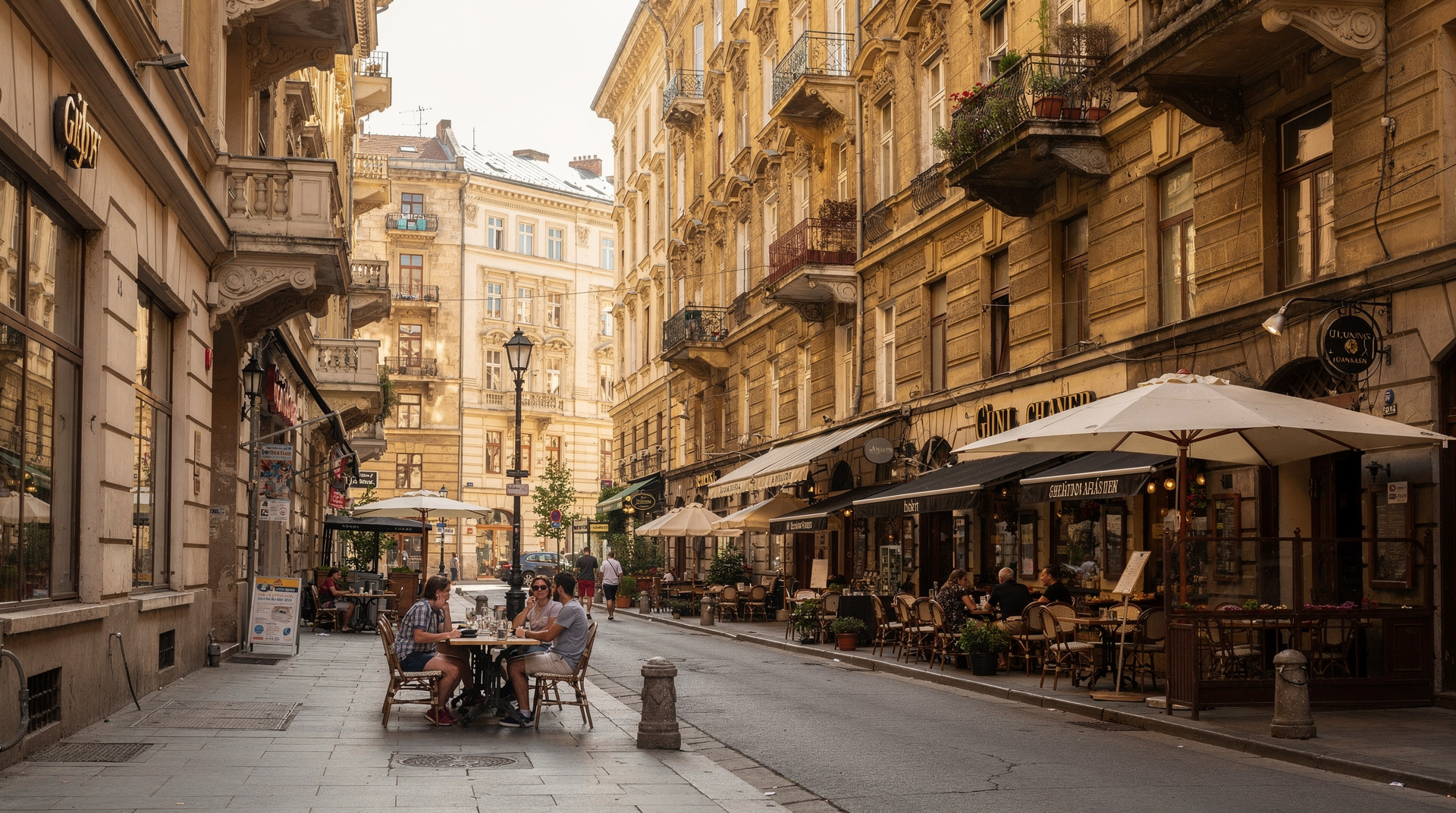
Tourist trap 3: Váci utca restaurants
Váci utca (Váci Street) is Budapest’s main tourist shopping street — a pedestrianised strip through District V lined with souvenir shops, chain cafés and restaurants. Many of the restaurants here are not dishonest exactly, but they are systematically overpriced compared with equivalent restaurants one or two streets away.
Common tactics: menus outside the restaurant show reasonable-looking main courses, but the final bill includes a mandatory “cover charge” (1,000–1,500 HUF per person for bread you did not ask for), service charge (10–12% added), and sometimes tourist-specific prices for daily specials.
The simple rule: walk one block east (toward Petőfi Sándor utca, Veres Pálné utca) or one block west (toward Párisi utca) and the prices drop by 30–50% for genuinely comparable food. The Central Market Hall is a five-minute walk south and offers excellent authentic food at real Budapest prices.
Full details at Váci Street tourist trap guide.
Tourist trap 4: bath ticket resellers
Outside Széchenyi Baths on Állatkerti körút, you will often find people selling thermal bath tickets. They present the tickets as discounted or convenient — “skip the queue.” The reality:
- Some tickets are genuine but marked up above the desk price
- Some are counterfeit
- Some are “friendly” distractions for pickpockets working nearby
There is no legitimate reason to buy a bath ticket from a stranger outside the entrance. The queue at the official desk or online pre-purchase are the only sensible routes.
For full guidance on tickets, locker options and the best way to book each bath, see bath ticket mistakes guide and Budapest baths prices and tickets.
Tourist trap 5: Euronet ATMs
Euronet is a network of orange standalone ATMs found throughout Budapest’s tourist zones, shopping centres and near transport hubs. They work — but they charge among the worst exchange rates in the city. Two specific mechanisms:
High fixed fees — Euronet charges a per-withdrawal fee that, on small withdrawals, represents a meaningful percentage of the total.
Dynamic Currency Conversion (DCC) — the machine asks if you want to be charged in HUF or in your home currency. If you select your home currency, Euronet applies its own exchange rate, which is consistently worse than your card’s rate. Always select HUF.
Alternative: use ATMs from Hungarian banks — OTP Bank (largest network), K&H, Raiffeisen, UniCredit. All have better fee structures. Even better: use a card like Wise, Revolut or Starling that avoids ATM fees entirely.
Also: never change money at airport exchange bureaux. The rates are designed for captive passengers. Use the airport’s Raiffeisen ATM instead.
Tourist trap 6: ruin bar pub crawl markup
Pub crawls in Budapest are popular and some are genuinely fun. The tourist-trap version: pub crawls that promise “free shots” and “VIP entry” but steer you to venues where the shots are watered, the included drinks are minimal, and every additional round is priced for tourists rather than locals.
The legitimate ruin bars — Szimpla Kert, Ellátó Kert, Mazel Tov, Doboz — do not charge tourist premiums. They are consistent, local-facing venues. The trap is in the satellite venues that orbit the legitimate ruin-bar scene.
Read the reviews. Any pub crawl with recent Google reviews mentioning unexpected charges or misleading inclusions should be treated with suspicion. See ruin bar rip-offs for the full picture.
Tourist trap 7: currency exchange and DCC
Beyond ATMs, dynamic currency conversion (DCC) applies at card payment terminals throughout Budapest. When paying by card at a restaurant, hotel or shop, you may be asked whether you want to pay in HUF or in your home currency (GBP, USD, EUR, etc.). Always choose HUF. The “convenience” of paying in your home currency locks in the merchant’s exchange rate, which is always worse than your card’s rate.
This is not illegal and not unique to Budapest — but it is widespread enough in tourist areas that it catches many people.
Tourist trap 8: overpriced souvenirs and hop-on-hop-off tickets
Not every trap involves being cheated outright — some are simply poor value. Souvenir shops along Váci utca charge a significant markup on paprika, embroidered textiles and Rubik’s Cube merchandise compared with the Great Market Hall or Jewish Quarter shops; quality is also inconsistent. Similarly, a hop-on-hop-off bus ticket costs more than a 72-hour BKK travelcard and covers less ground with less context than a proper guided walking tour. Neither is a scam exactly — but both are avoidable overspends once you know the alternative.
See is Budapest expensive? and free things to do in Budapest for better-value alternatives to the tourist-trail defaults.
None of this is dishonest in the way the taxi or bar scams are — nobody is lying to you about the price of a fridge magnet. It’s simply worth knowing that the convenient, obvious option in a dense tourist strip is rarely the best value, and a five-minute walk or a quick price comparison usually solves it.
How to spot a trap before it closes on you
Almost every trap in this guide follows the same shape: someone or something creates urgency, removes the price from view, and relies on you being too polite or too tired to push back. Once you recognise that shape, you stop needing a list. A stranger who is unusually keen to help, a menu with no total, a driver who will not show a price, a seller who says the offer ends now: each of these is a prompt to slow down and ask for the number in writing.
Three habits cover most situations:
- Ask for the price first, out loud, every time. In a bar, in a restaurant, in a taxi, at a stall. A legitimate business has no problem telling you what something costs before you commit, and the way a person answers tells you a lot.
- Choose the place yourself. Whether it is a bar, a restaurant or a tour, the traps depend on someone else steering you. Decide from your own research, read recent reviews, and walk away from anything pushed on you in the street.
- Keep one fallback ready. A charged phone with Bolt installed, a card that works abroad and a rough idea of the walking route back to your accommodation mean you can leave any awkward situation without negotiating.
If you want the broader picture of where first-time visitors lose money, biggest Budapest mistakes and first time in Budapest walk through the planning errors that sit behind most of these stories.
Your first evening: a low-risk routine
Arrival is the moment you are most exposed, because you are tired, carrying luggage and do not yet know what normal looks like. A simple routine removes most of the risk. Sort out your transport before you leave the terminal or station, using the options in Budapest airport to city centre and taxis and Bolt in Budapest. Drop your bags, then walk a short loop around your neighbourhood to get your bearings in daylight if you can.
For dinner, resist the nearest bright terrace and look at the side streets instead. If you are staying in the centre, where to eat in Budapest and street food in Budapest give you honest options that do not depend on a menu board aimed at passing foot traffic. The goal of the first night is not to find the best meal of the trip, only to avoid the most expensive one.
A good way to get past the tourist-trail defaults entirely is to let someone local show you the city on day one. A guided walk through the city centre gives you the geography, the street names and a feel for ordinary prices, which makes every later decision easier. If you prefer to see the main sights from the water instead, a sightseeing cruise past the main riverside landmarks is an easy, low-pressure way to orient yourself, and Danube cruises in Budapest explains how to choose one without falling for an inflated onboard menu.
Getting around without overpaying
Transport is where small leaks add up. Learn how the public network works before you reach for a taxi: Budapest metro guide and public transport tickets explain what to buy and how to validate it, which also protects you from fines that can look like scams but are not. If you plan to visit many paid attractions and ride transit a lot, compare the options in Budapest Card vs single tickets and decide whether a Budapest Card with transport and attraction access suits your itinerary. It will not suit everyone, and the honest answer depends on how much you actually plan to do.
If something does go wrong
Even careful visitors occasionally get caught. If you realise you have been overcharged, stay calm, do not hand over more money than the original bill, and note the name and address of the venue. Ask for an itemised receipt. Take photos of the menu and the bill if you can. If you paid by card, contact your bank soon afterwards and explain what happened; a card payment leaves a record that a cash payment does not. For a wider look at what to do and where the risks genuinely sit, is Budapest safe? and common scams in Budapest cover the patterns in more depth, and Váci Street tourist trap and ruin bar rip-offs go into the two most common venue-based traps.
The most useful mindset is simple: a trap only works if you let someone else make the decision for you. Keep the decision in your own hands, and Budapest rewards you.
What Budapest tourist traps do not look like
Worth saying clearly: Budapest is not a city full of pickpockets, violent crime or systematic tourist exploitation. The traps described in this guide are specific, patterned and avoidable. The vast majority of Budapest residents — in restaurants, shops, thermal baths and on the street — are straightforward and honest.
The taxi, bar-scam and ATM traps cluster in specific contexts. Avoid those contexts, use a ride-hailing app, choose your own bars, pay in HUF, and your Budapest experience will be exactly what it should be: one of Europe’s most rewarding city breaks.
For a full safety assessment, see is Budapest safe?. For the complete list of first-timer mistakes, see biggest Budapest mistakes.
This guide is part of our honest Budapest hub — a collection of straightforward planning guides with no tourist-brochure varnish.
Frequently asked questions about Budapest tourist traps
Is Budapest safe for tourists?
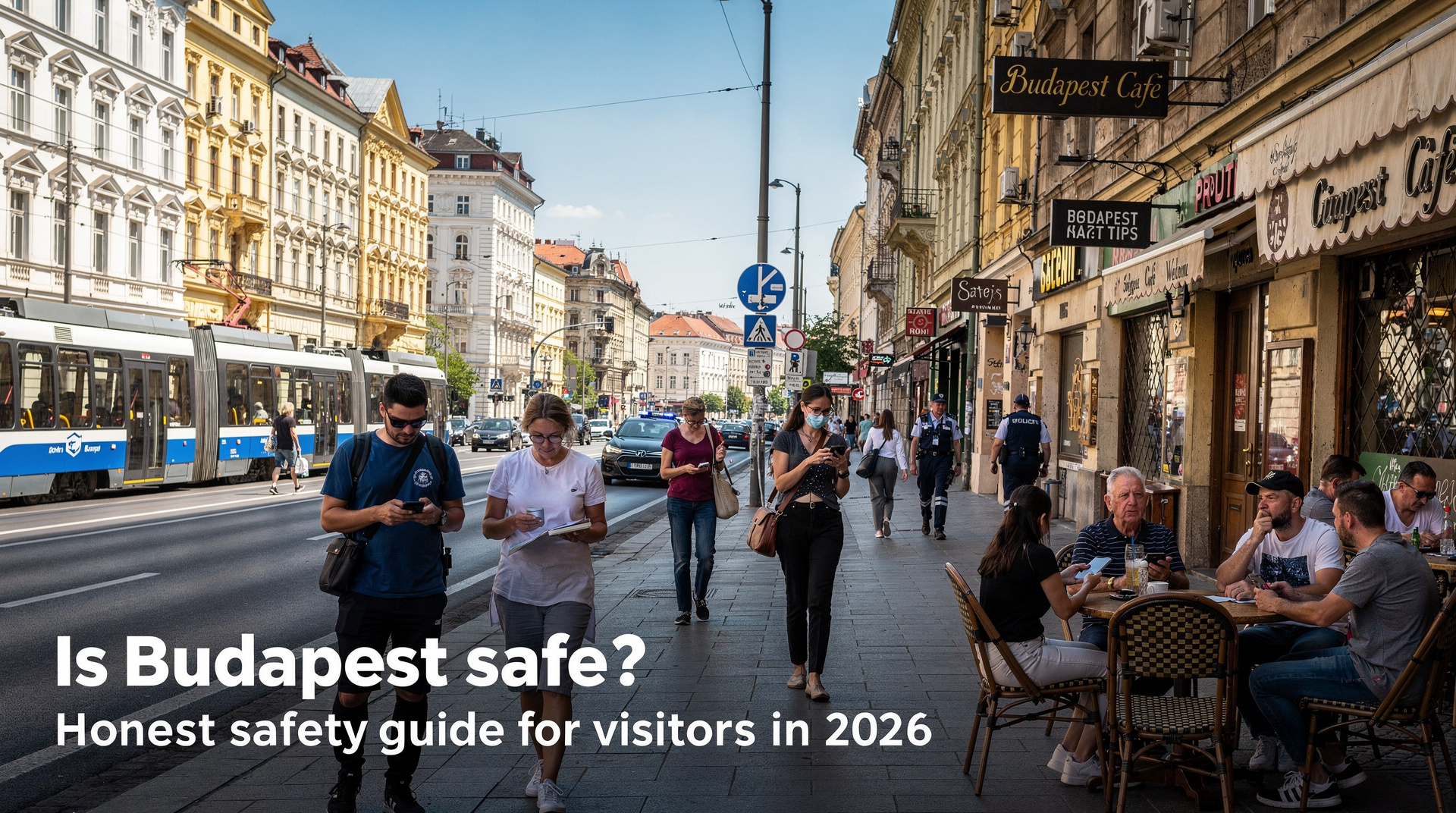
Yes — Budapest is one of the safer capitals in Europe for visitors. The risks are not violent crime but financial scams targeting tourists: taxi overcharging, bar bill inflation and currency tricks. Knowing the specific patterns removes most of the risk. See /guides/is-budapest-safe/ for a full safety breakdown.How do I avoid taxi scams in Budapest?
Use Bolt (ride-hailing app, similar to Uber). Fixed fares, tracked route, price shown before you confirm. Never take an unmarked taxi, never take a taxi from outside Keleti or Kelenföldi stations, and never accept a ride from someone approaching you at the airport. See /guides/budapest-taxi-scams/ for the full picture.What is the friendly girl bar scam?
The konzumlány scam: an attractive local approaches a tourist (usually male, solo or small group) in the street or near a bar, suggests a 'great bar nearby', and the tourist ends up with a bill of 50,000–200,000 HUF for a few drinks. The bar and the woman are partners. It happens primarily in District VII. Never let a stranger choose your bar. See /guides/common-scams-in-budapest/ for full details.Which street in Budapest is the biggest tourist trap for restaurants?
Váci utca (Váci Street) in District V. Restaurants on or directly off this pedestrian shopping street charge 30–60% more than equivalent restaurants one block away. The menus outside look reasonable; the final bill includes service charges and items you did not expect. Eat on the parallel streets (Váci köz, Irányi utca) or in District VI/VII instead. See /guides/vaci-street-tourist-trap/.How do I avoid fake bath ticket sellers?
Only buy thermal bath tickets at the official ticket desk inside the bath or through the official website. People outside Széchenyi on Állatkerti körút selling 'discounted tickets' are either selling fakes, legitimate tickets at a markup, or trying to distract you before a theft. See /guides/bath-ticket-mistakes/ for everything you need to know.What ATMs should I avoid in Budapest?
Avoid Euronet ATMs (orange branding, found in tourist areas and shopping centres). They charge high fees and offer unfavourable exchange rates. Use ATMs from Hungarian banks: OTP, Raiffeisen, K&H, UniCredit. Always choose to be charged in HUF (not in your home currency) to avoid dynamic currency conversion.Are ruin bars in Budapest honest?
The ruin bars themselves (Szimpla Kert, Ellátó Kert, Fogasház and similar) are legitimate and enjoyable. The tourist trap is the premium bar bills in venues that target tourists but look like ruin bars, and the upselling tactics at pub crawl stops where 'free shots' become paid. Read /guides/ruin-bar-rip-offs/ before an evening out.What are the biggest Budapest mistakes first-timers make?
Taking a street taxi, eating on Váci utca, buying bath tickets from resellers, paying in euros at a card machine (always choose HUF), and changing money at airport exchange bureaux. Also: not booking Széchenyi online and losing an hour in the queue. See /guides/biggest-budapest-mistakes/ for the full list.Are hop-on-hop-off bus tours a tourist trap in Budapest?
Not a scam, but often poor value compared with the alternatives. A hop-on-hop-off ticket costs more than a 72-hour BKK travelcard and covers less of the city in practice. A guided walking tour usually delivers more context per forint. It's a legitimate option for visitors with limited mobility or very limited time, not the default choice. See /guides/hop-on-hop-off-budapest/.Are souvenir shops on Váci utca overpriced?
Generally yes. Paprika tins, embroidered textiles and Rubik's Cube merchandise on Váci utca carry a significant tourist markup compared with the Great Market Hall or shops in the Jewish Quarter. Quality also varies — some Váci utca souvenirs are mass-produced rather than genuinely Hungarian-made. Compare prices at the Great Market Hall before buying.
Top experiences
Bookable activities with verified prices and instant confirmation on GetYourGuide.