Gellért Hill — Citadella, Liberty Statue and Cave Church
Climb Gellért Hill for Budapest's best panoramic view: the Citadella, Liberty Statue, Cave Church and the iconic Gellért Baths at the foot of the hill.

Quick facts
- Getting there
- Tram 19 or 41 to Gellért tér (Buda side of the Liberty Bridge), then a 30-minute uphill walk. Or bus 27 to the Citadella stop.
- Citadella entry
- The hilltop grounds are free; the Citadella fortress interior has been under renovation — check current status on arrival.
- Gellért Baths
- Iconic Art Nouveau spa at the hill's base. Check current opening status before visiting — renovation works may affect access. Tickets from ~9 000 HUF (~€22) online.
- Cave Church
- St Ivan's Cave Church (Sziklatemplom) is carved into the hillside. Entry ~1 600 HUF (~€4). Modest dress required.
- Walking time to top
- About 30 minutes from Gellért tér. The path is paved but steep; wear comfortable shoes.
The hill that sees everything
Gellért Hill rises 235 metres above the Danube on the Buda bank, directly south of the Chain Bridge. From its summit — occupied since Roman times by watchers, defenders and now tourists — the view encompasses essentially the entire flat expanse of Pest spread out to the east, the river curving away in both directions, Buda Castle to the north, and the Liberty Statue’s gilded palm leaf catching the light above everything.
This is Budapest’s best urban panorama, and it is free. The 30-minute walk up from Gellért tér is the main cost, and it is a modest one by any standard. At the foot of the hill, the Gellért Baths occupy the most architecturally spectacular building in Budapest’s thermal bath network. The Cave Church cuts into the hillside halfway up. The whole hill — from thermal pools to rocky summit — can be managed in a comfortable half-day.
| Where | District XI, Buda bank, directly south of the Chain Bridge |
| Cost | Summit and views free; Cave Church ~1 600 HUF; baths from ~9 000 HUF |
| Time needed | Half a day; the climb itself takes about 30 minutes |
| Getting there | Tram 19/41 to Gellért tér, or bus 27 to the Citadella stop |
| Best time | Sunset for the illuminated skyline; early morning for thin crowds |
The climb — routes and options
The most popular ascent begins at Gellért tér (tram 19/41, or across the Liberty Bridge on foot from Pest). A paved path winds up through gardens with increasingly good views as you climb. The route is well-signed and accessible with reasonable fitness; the total elevation gain from the tram stop to the Citadella is about 130 metres.
Bus 27 runs from Móricz Zsigmond körtér (metro M4) to a stop near the Citadella, cutting out the climb if needed. The bus runs approximately every 20 minutes.
An alternative descent (or ascent) on the south side of the hill passes through the quieter residential streets of the 11th district and past the Jubilee Park, which has benches and views toward the Danube bend above the city.
The Citadella and Liberty Statue
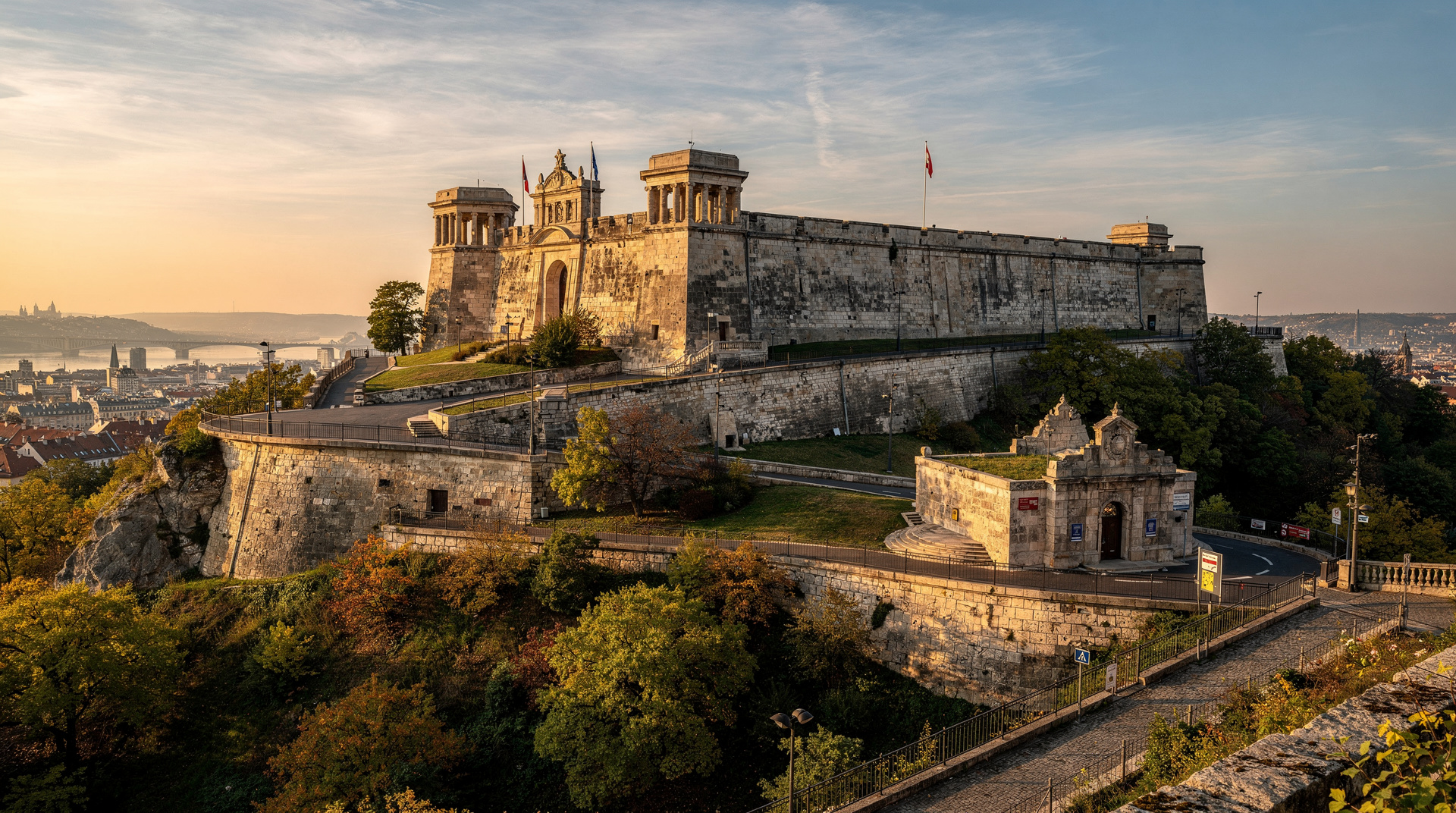
The squat limestone fortress at the summit was built by the Austrian Empire in 1851–54, in the aftermath of the suppressed 1848–49 Hungarian Revolution. The position allowed artillery to command both Buda and Pest — a deliberate intimidation of a city that had just fought for independence. Hungarians resented it from the start. After the 1867 Compromise established the dual Austro-Hungarian monarchy, the fortress gates were ceremonially torn off by the Budapest public. It has never functioned as a military installation since.
The Citadella was renovated in recent years and houses a small exhibition; check current access status when you arrive, as opening hours and interior access can vary. The walls and the surrounding hilltop park are always accessible.
The Liberty Statue immediately south of the Citadella is impossible to miss: a 14-metre bronze woman holding a palm leaf aloft, set on a 26-metre stone plinth. It was commissioned in 1947 by the Soviet-backed Hungarian government to commemorate the Red Army’s role in driving the Germans from Budapest. The accompanying statue of a Soviet soldier was removed after 1989 and can now be seen at Memento Park. Today the statue is maintained as a monument to freedom in a non-specific sense, and is one of the most photographed objects in the city.
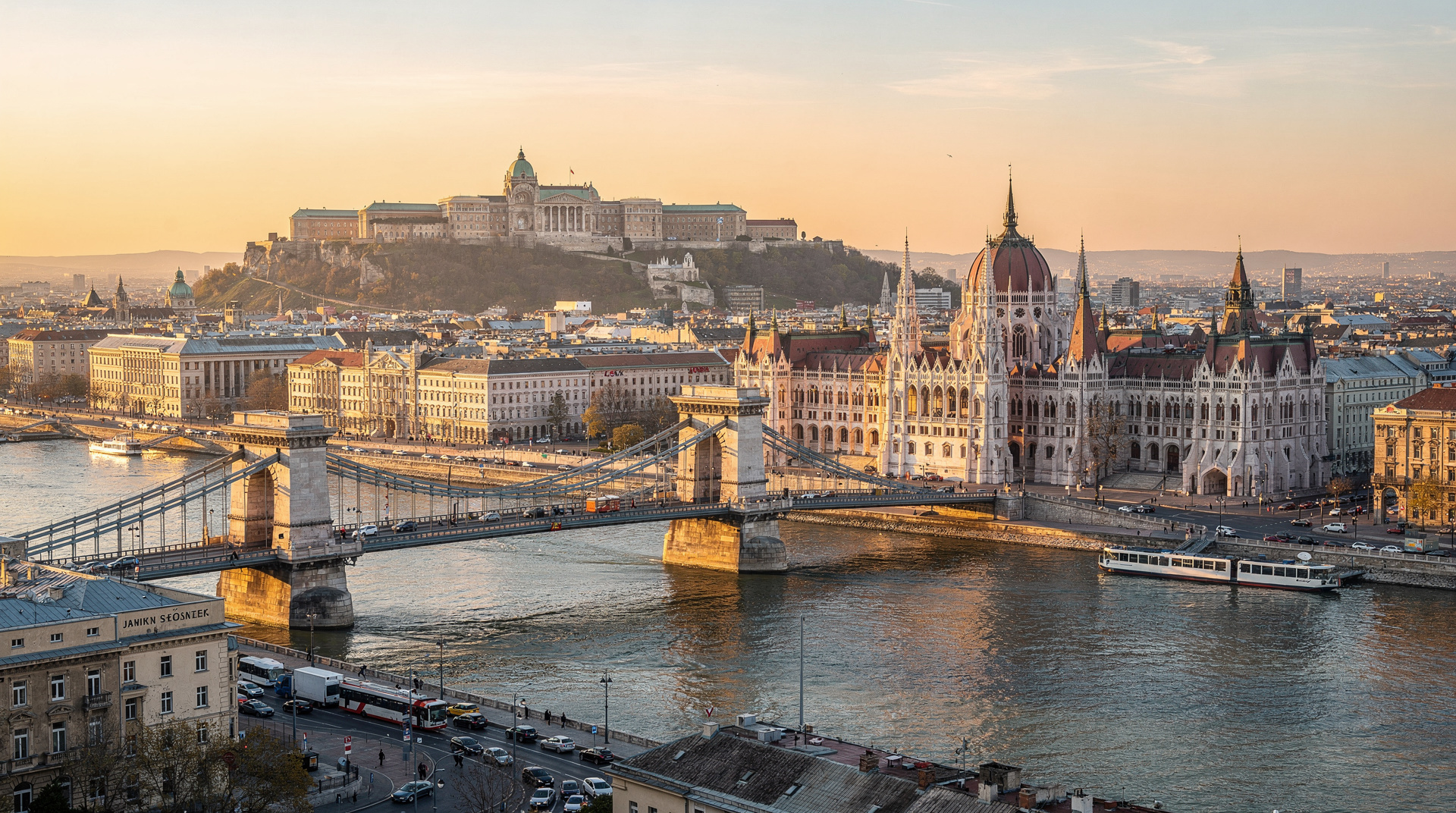
The view from the base of the Liberty Statue is the definitive Budapest panorama: Parliament directly north across the river, the Chain Bridge below and to the right, Buda Castle to the northwest, and on a clear day the Pilis Hills beyond the Danube Bend visible on the horizon.
How to pace the walk
The climb rewards a slow rhythm. Stop at each bend where the trees open up and the view widens; the river and the bridges reveal themselves a little at a time, so that by the time you reach the top the panorama feels earned rather than handed to you. Bring water, wear shoes with decent grip, and treat the Cave Church and the garden benches as natural rest stops rather than detours. If you are travelling with children or older relatives, the bus is a perfectly respectable way up, and the walk back down is far easier on the legs. For more ideas on managing a busy day with a family, see the Budapest with kids guide.
Which way up suits you
Walkers who like a sense of arrival tend to prefer the route from Gellért tér, because it passes the Cave Church and ends at the Citadella walls. Those who would rather start at the top and drift downhill choose the bus and then walk down toward the river, ending the outing at the baths or at the tram stop. Both approaches work equally well; the main difference is whether you want the effort at the start of the day or the end. A fuller route breakdown, with practical notes for the summit, sits in the Gellért Hill and Citadella guide.
Gellért Baths — Art Nouveau in the steam
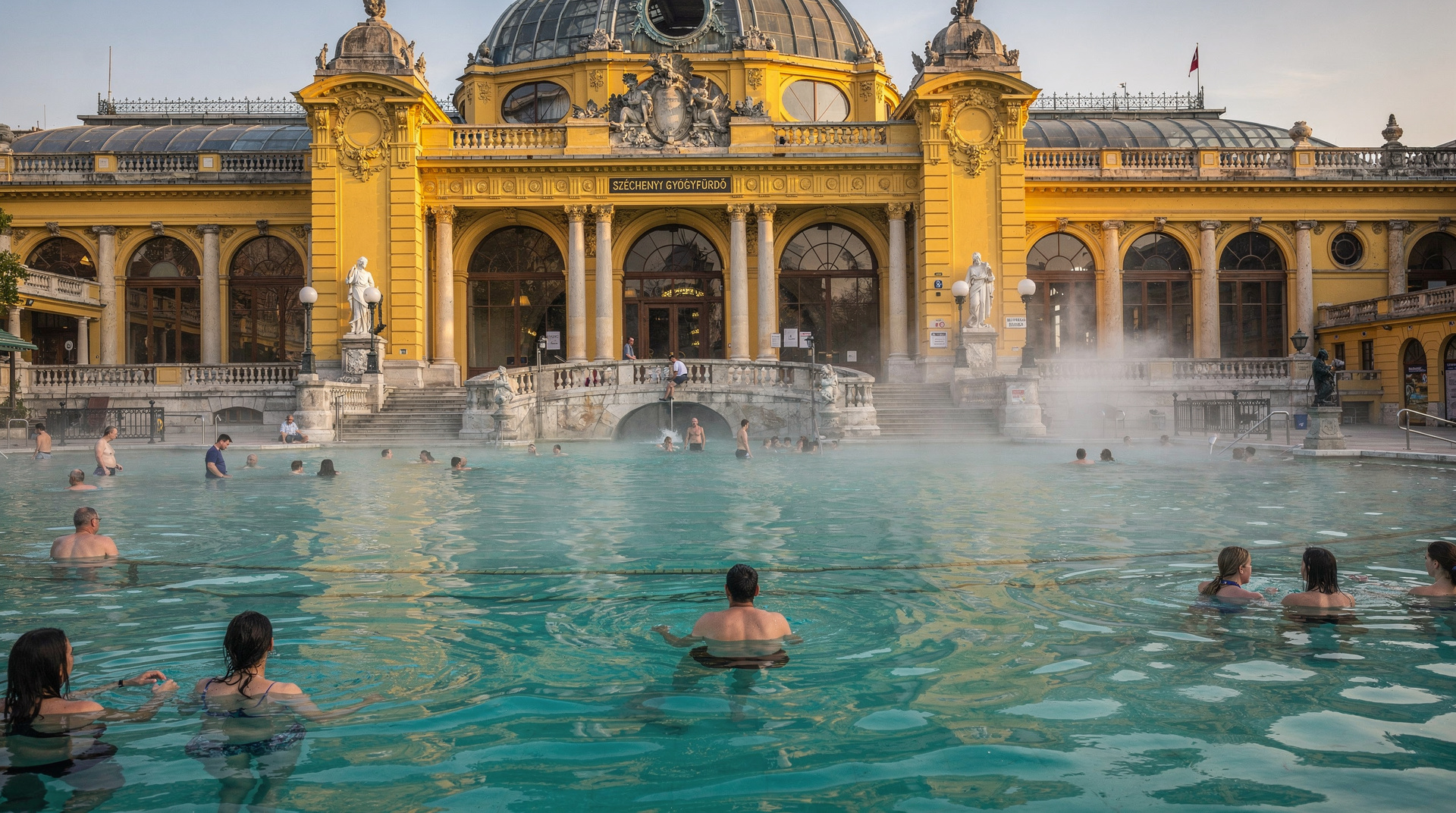
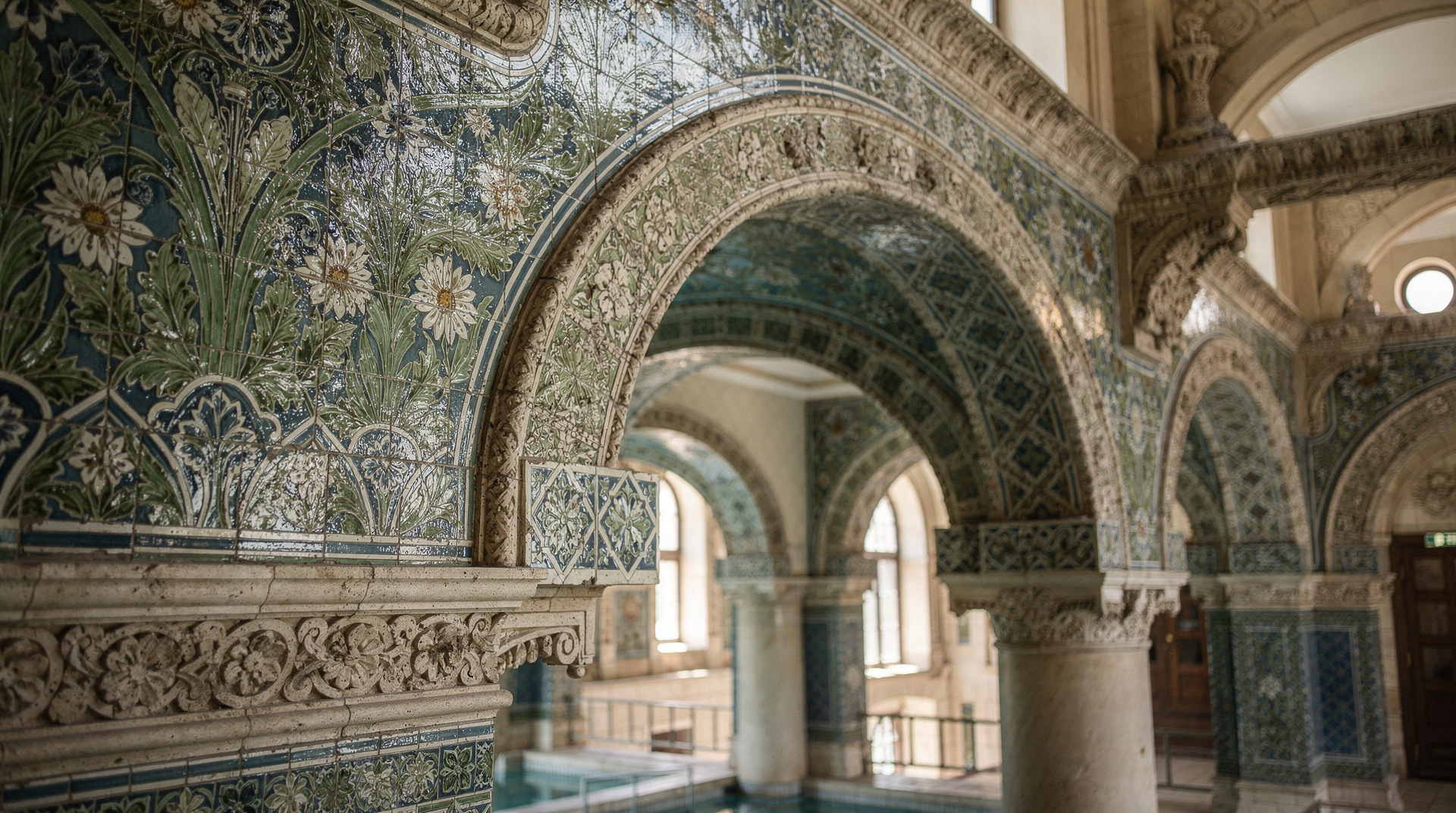
At the base of the hill, the Gellért Baths occupy the southern wing of the Grand Hotel Gellért, a building completed in 1918 after almost a decade of construction interrupted by the First World War. The style is Art Nouveau merging into early Modernism — mosaic columns, a glass-roofed main pool, elaborately tiled changing cabins, and marble floors that have been polished by a century of bathers.
The baths are fed by the same thermal springs that Romans called Aquae Iani. The main pool — a grand indoor space with arched windows and decorative colonnades — is the most photographed bath interior in Budapest. The outdoor wave pool, terrace pools and terraced sun decks are among the most pleasant in the city in summer.
Important note: Check the current opening status of Gellért Baths before including it in your plans. Reports have circulated about a possible renovation closure, though no confirmed date has been announced as of mid-2026. Gellért tickets are no longer sold on GetYourGuide; for a thermal soak in the meantime, the Széchenyi thermal baths fast-track admission with locker is a close alternative. Széchenyi in City Park and Rudas on the riverbank (10 minutes north of Gellért by tram) are the best alternatives if Gellért is unavailable. See the Széchenyi vs Gellért vs Rudas comparison for a full breakdown.
If you decide to soak, a little planning makes the visit smoother. Arrive with your swimwear and a towel sorted, learn the changing-cabin routine before you queue, and read the thermal bath etiquette guide so that the rules do not catch you out. Ticket choices can be confusing at first, and the bath ticket mistakes guide explains the errors visitors make most often. Pairing the hill with a soak works especially well after a long climb, when tired legs welcome the warm water. For a fuller look at the building itself, the Gellért Baths guide goes into the halls, pools and atmosphere in more depth.
St Ivan’s Cave Church — rock and faith
Halfway up the hill from Gellért tér, cut into the natural limestone of the hillside, is the Cave Church of St Ivan (Sziklatemplom). A cave on this spot was used as a hermit’s dwelling in the Middle Ages, associated with a monk named Brother Ivan who reportedly healed the sick with the spring water from the hillside.
The current church was carved and built by the Pauline Order between 1926 and 1931 — a vaulted cave chapel with an altar carved from the living rock, mosaics, and an anteroom used for services. The Paulines were forced out by the communist government in 1951; the cave entrance was sealed with concrete. After the fall of communism, the monks returned and the church reopened in 1992.
The interior is compact, cool (12°C regardless of season) and atmospheric in a way that stone-built surface churches rarely match. Modest dress is required. Entry costs around 1 600 HUF (~€4).
The church is best treated as a quiet pause rather than a sightseeing tick-box. Step in, let your eyes adjust to the low light, and spend a few minutes taking in the rock walls and the simple altar. It is a working place of worship, so keep your voice low, switch your phone to silent and be mindful of anyone praying. The contrast between the busy path outside and the stillness within is part of the appeal, and it makes a good counterpoint to the open views waiting at the summit.
What to look for at the summit
Once you reach the top, take a slow lap before settling on a viewpoint. Walk along the Citadella walls to see how the position commands the river in both directions, then wander toward the Liberty Statue and look back at the fortress to appreciate how it was designed to dominate the city. Photographers should try several angles: the wide shot toward Parliament, a tighter frame of the Chain Bridge, and a view back along the bridges toward the Pest skyline. A short wait often pays off, because the light changes quickly and the river can shift from silver to gold within a few minutes.
For context on the monuments you can see from up here, the Hungarian Parliament guide and the Chain Bridge guide help you recognise each landmark and understand why it matters. If the history of the Soviet-era statuary interests you, the Memento Park guide tells the story of where the removed figures ended up.
The evening on the hill
The Castle Hill evening lights and sights tour includes the Gellért Hill panorama as part of a broader evening circuit of the Buda hilltops — a good option if you want to see both the Castle District and the Liberty Statue illuminated at night without navigating the logistics independently.
Going independently, the view from the Citadella at sunset (when Parliament and the Chain Bridge begin to light up as the sky darkens behind you) is one of Budapest’s finest free experiences. The last bus down runs around 11pm; check the BKK website for the current timetable.
Building Gellért Hill into your itinerary
Because the hill needs only half a day, it slots easily into most plans. It suits the quieter part of a first visit, when you have seen the main sights and want a calm vantage point to tie everything together. The first-timer highlights itinerary and the thermal baths itinerary both leave room for it, and shorter stays can still fit it in; the one-day Budapest plan shows how to squeeze the essentials together without rushing. A good rhythm is to climb in the late afternoon, stay for the lights coming on across the river, then walk down for dinner on the Pest side.
Connecting to the wider city
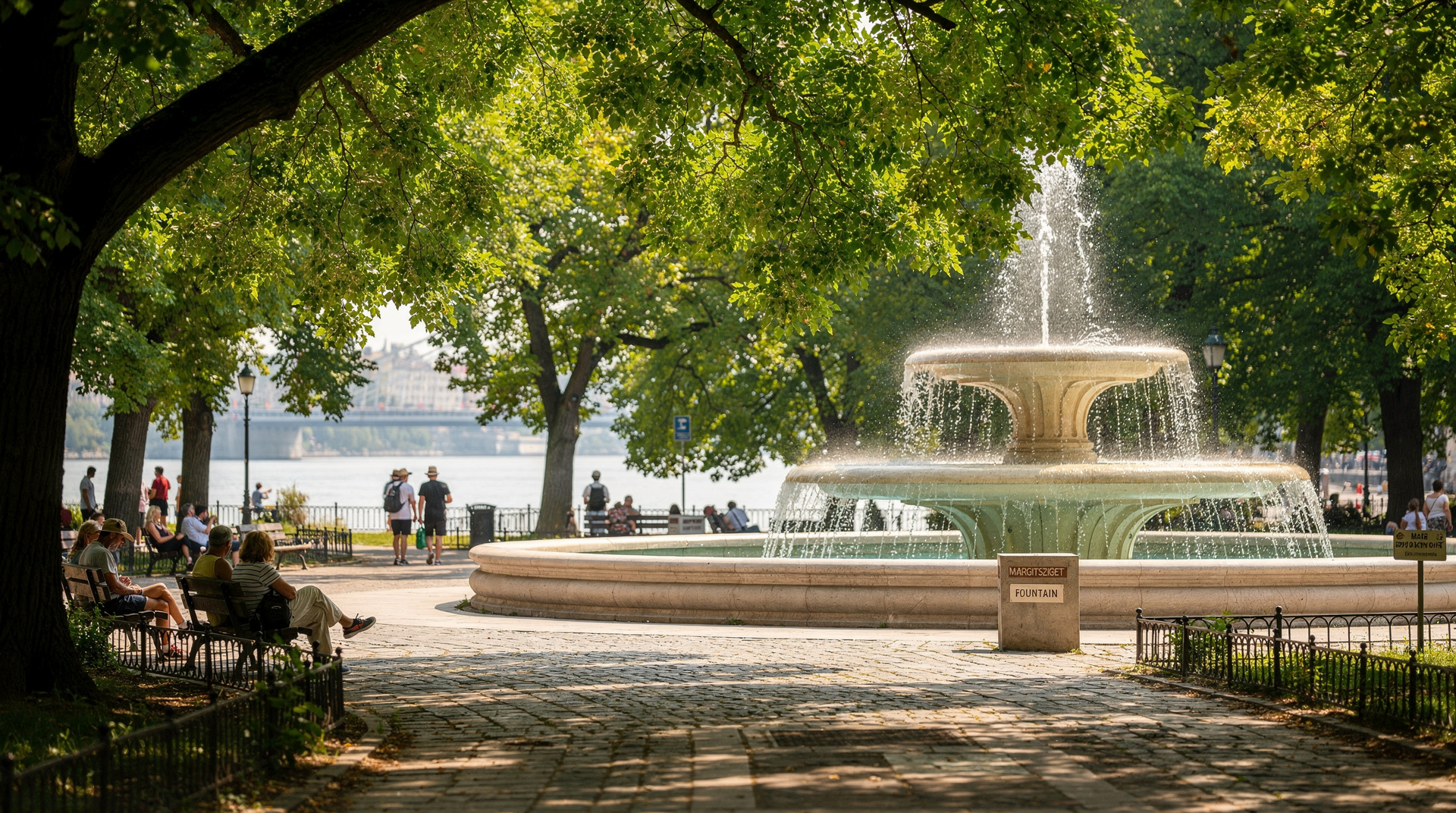
Gellért Hill is most naturally combined with the Castle District — both are on the Buda bank and connected by tram 19/41 along the riverside. Add Margaret Island further north on the same tram line for a full Buda-side day.
From the Pest bank, the Liberty Bridge (Szabadság híd) at the foot of the hill connects to the Fővám tér end of Downtown Pest — the Great Market Hall is immediately on the other side. The romantic Budapest guide ranks Gellért Hill at sunset as one of the top experiences for couples; the Budapest neighborhoods guide gives context on the surrounding 11th district residential area that most tourists never reach.
Gellért Hill versus Castle District as your one Budapest viewpoint
Both hills offer panoramic views, and travellers with only one free half-day sometimes have to choose:
| Gellért Hill | Castle District | |
|---|---|---|
| View | Wide, symmetrical Danube panorama | Closer, more architecturally detailed |
| Cost | Free | Free (paid museums optional) |
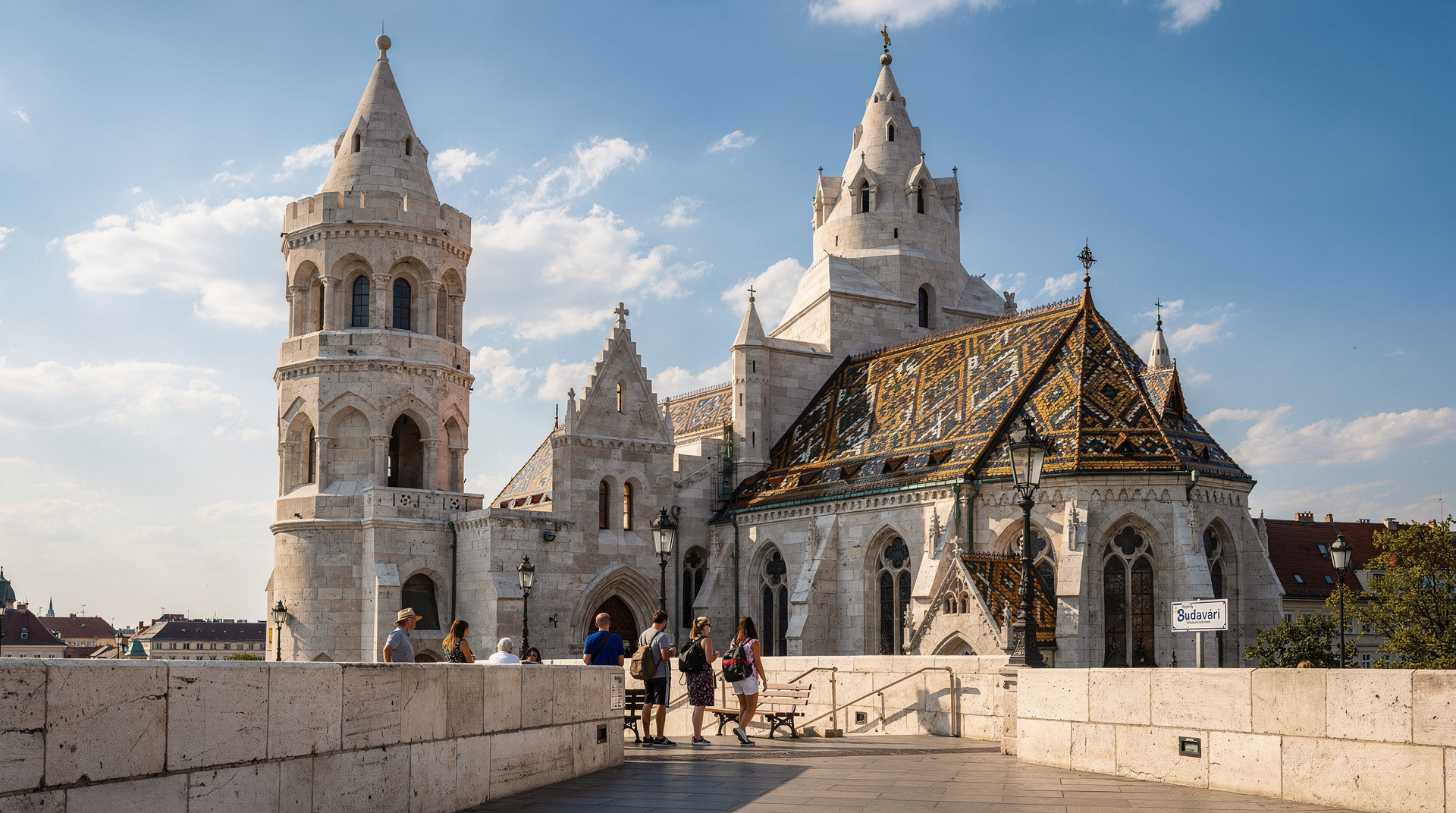
| Crowds | Lighter, especially at the summit | Heavier, particularly at Fisherman’s Bastion |
| Extras | Cave Church, Liberty Statue, baths at the base | Matthias Church, Buda Castle museums |
If you want a quieter, more contemplative viewpoint, Gellért Hill wins; if you want more to see and do at the top, the Castle District has the edge. Many itineraries fit both in over two separate days rather than choosing.
Top experiences
Bookable activities with verified prices and instant confirmation on GetYourGuide.