Best day trips from Budapest: 10 destinations worth the journey
What are the best day trips from Budapest?
The Danube Bend (Szentendre, Visegrád, Esztergom) is the classic choice and reachable in 30–90 minutes. Lake Balaton works for a long summer day. Eger gives medieval castles and excellent wine. Tokaj is further (2.5 hours) but worth it for serious wine lovers. Bratislava is easy by bus or train in under 2 hours.
Why leave Budapest for the day?
Budapest is a city dense enough to fill five days without repetition — yet some of Hungary’s most compelling places are within two hours. The Danube Bend bends the river through hills and ruins that feel nothing like the flat, urban Pest plain. Eger is a baroque market town with a castle, a Turkish minaret, and vineyards that produced the legendary “Bull’s Blood” wine. Tokaj is where the world’s first classified wine region was established in 1730. Even Bratislava, Slovakia’s compact capital, is closer to Budapest than many people realise.
The question isn’t really whether to do a day trip — it’s which one fits your time, your interests, and your tolerance for logistics.
This guide covers all ten realistic day-trip destinations in order of overall value: how far, how to get there, what you’ll actually see, and when a guided tour is worth the extra cost over going independently.
| Closest | Szentendre — 40 min by HÉV train |
| Furthest realistic | Tokaj — 2.5 hrs by Intercity train |
| Cost | Independent from ~750 HUF; guided tours ~15,000–25,000 HUF |
| Booking | 3–5 days ahead in peak season for guided tours |
| No car needed | Szentendre, Eger, Bratislava, Vienna, Gödöllő |
1. The Danube Bend: Szentendre, Visegrád, Esztergom
Travel time: 40 minutes to Szentendre by HÉV train; 90 minutes by bus to Visegrád or Esztergom. Best for: Culture, history, scenery, the classic “Hungarian countryside” experience.
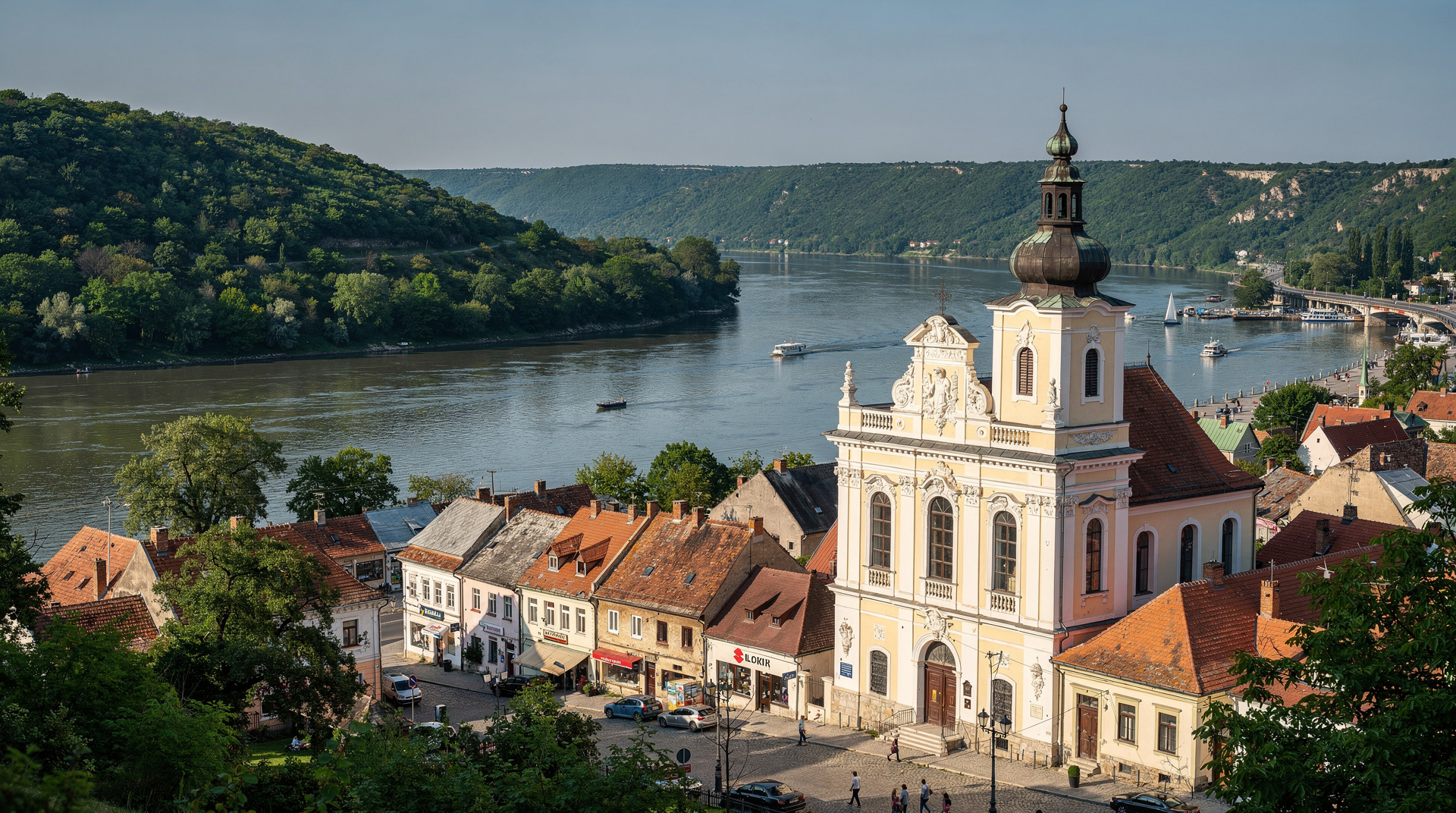
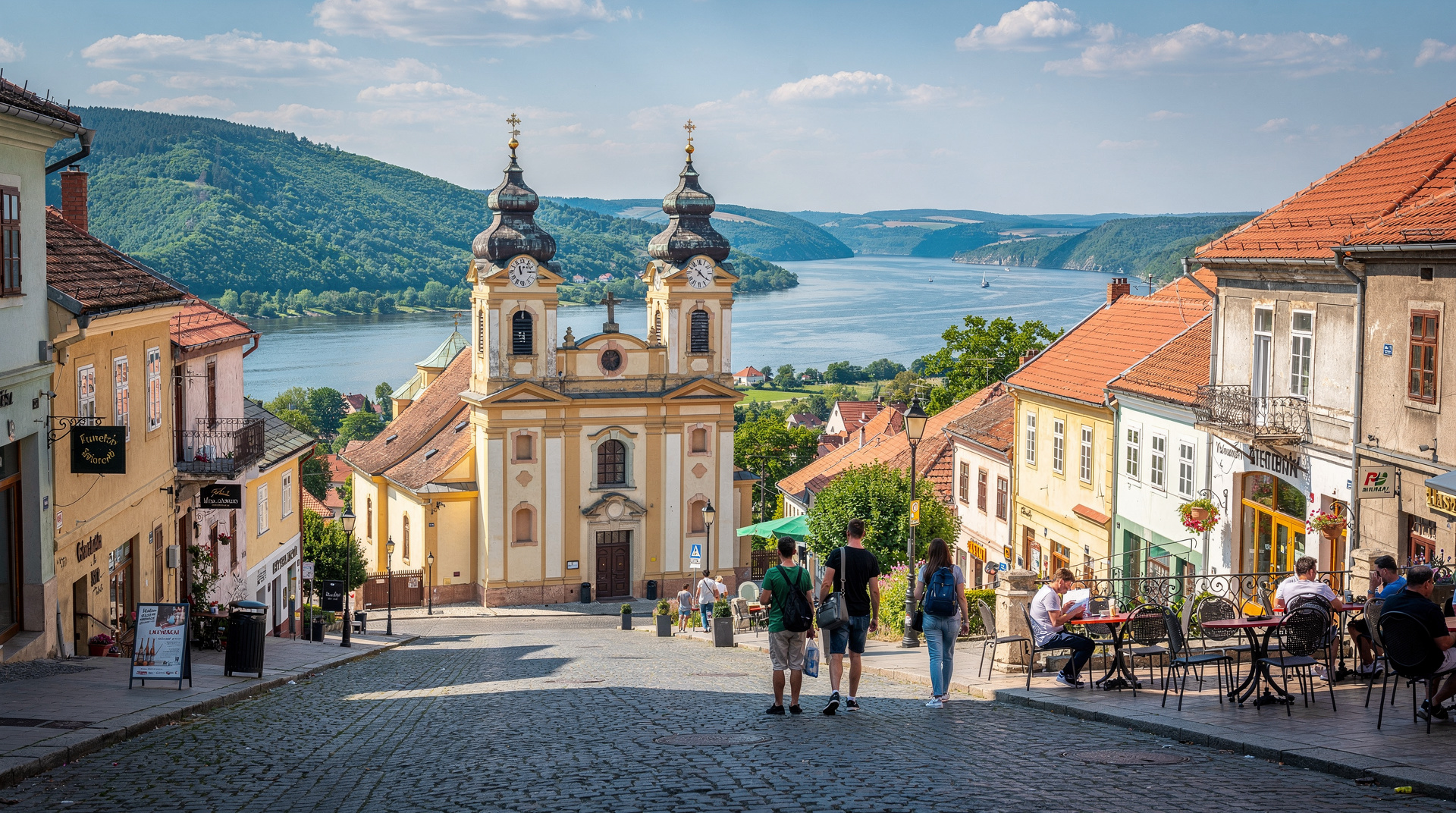
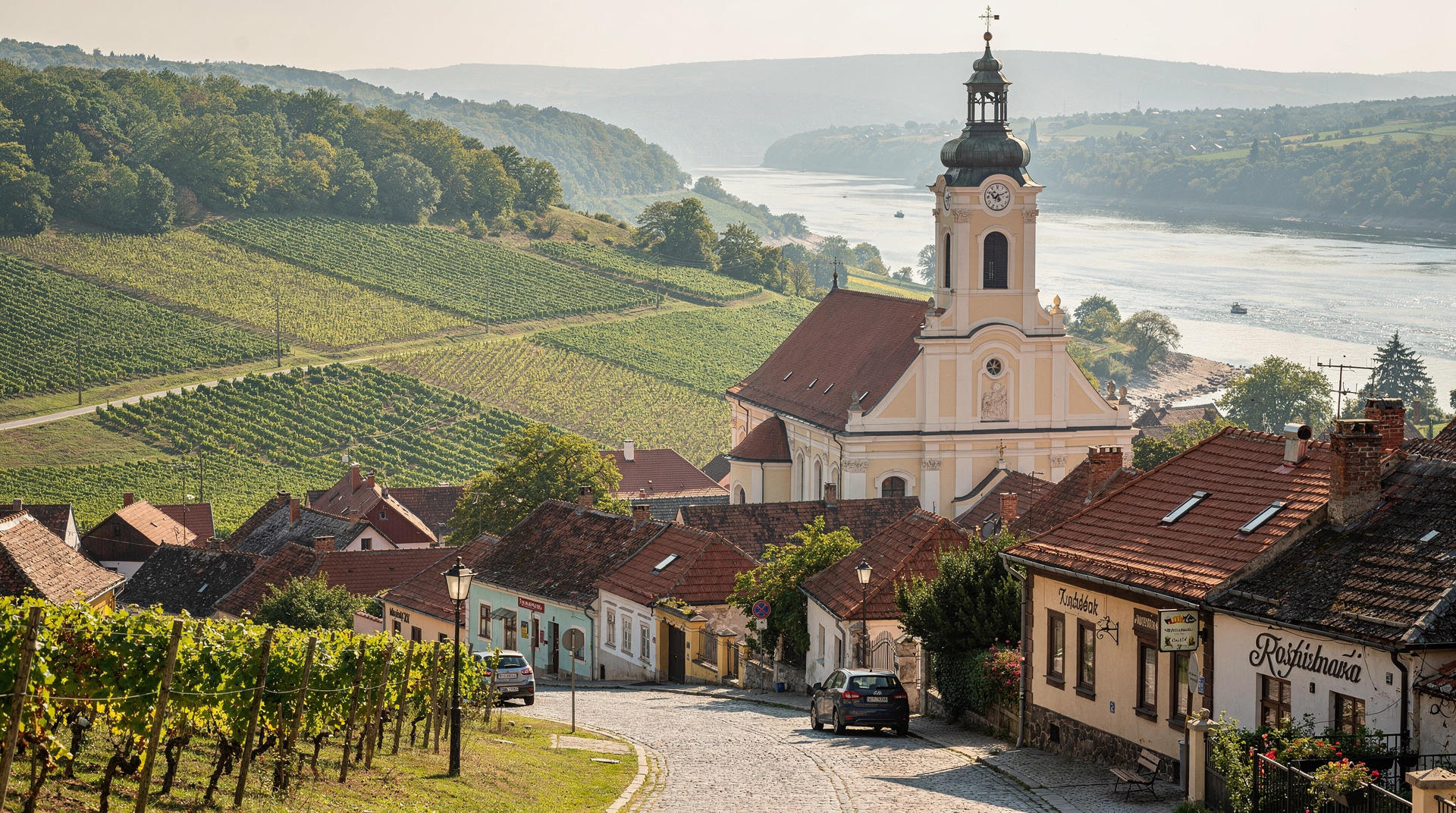
The Danube Bend is where the river makes a dramatic right-angle turn through a gap in the hills north of Budapest — the landscape suddenly becomes green, hilly, and un-metropolitan. Three towns define this loop:
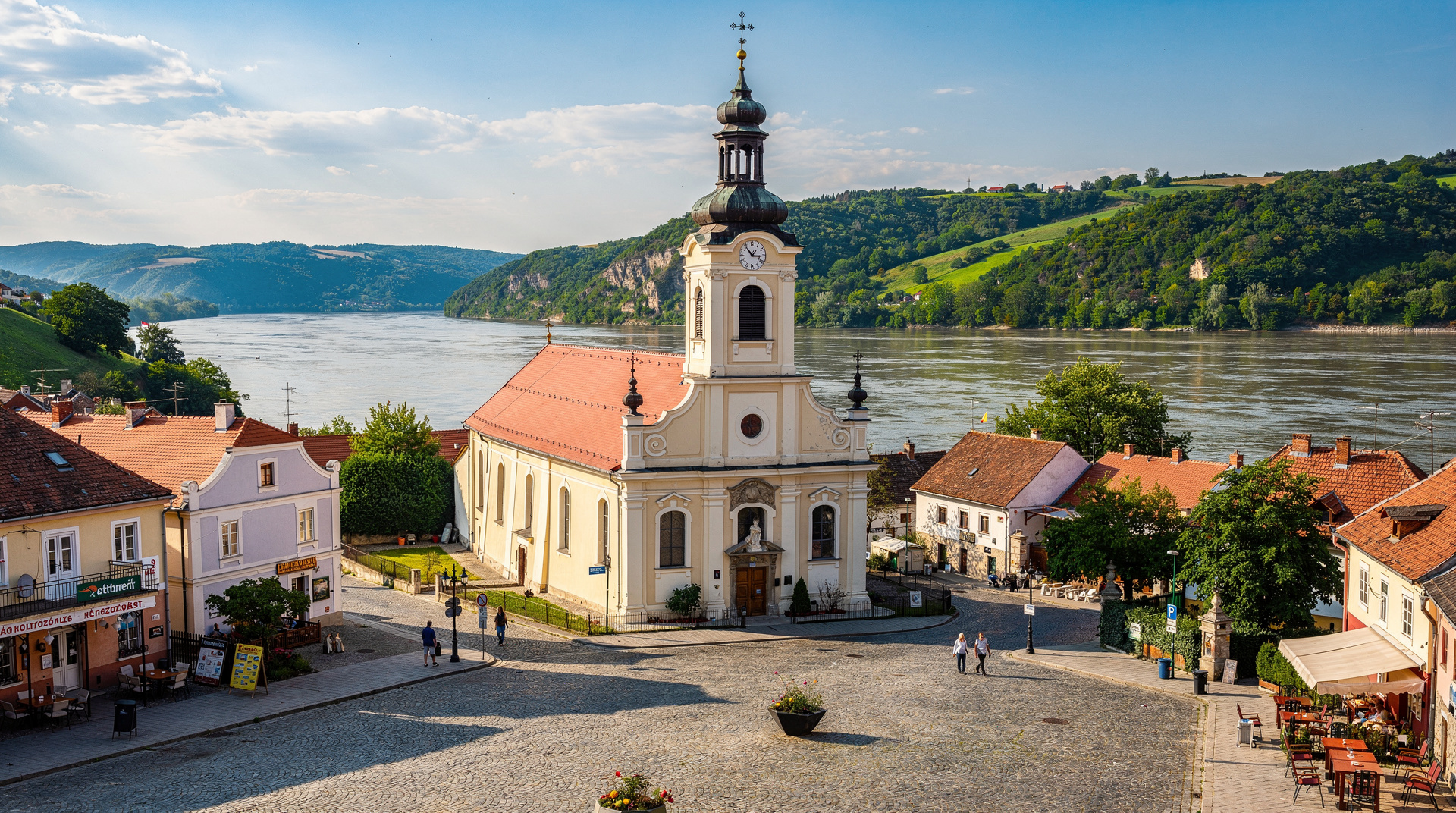
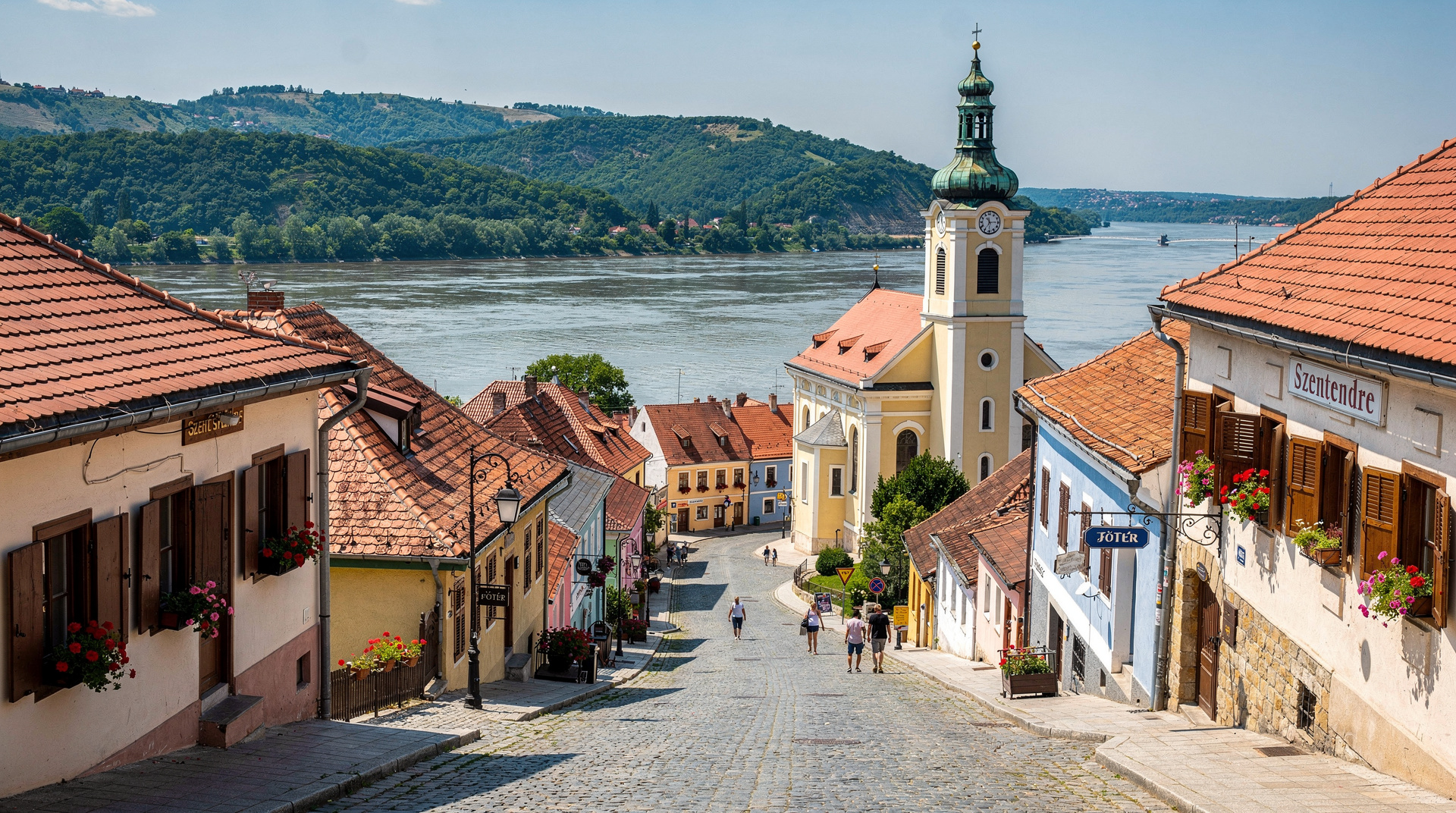
Szentendre is the easiest — an 18th-century artists’ colony with baroque streets, Serbian Orthodox churches, craft galleries, and a decent marzipan museum. It rewards 2–3 hours of wandering. Arrive before 10:00 in summer to beat day-tripper crowds, which can be considerable by noon. The HÉV suburban train from Batthyány tér metro station is frequent and cheap (~750 HUF each way).
Visegrád has a hilltop medieval castle (Solomon’s Tower visible from below, the Upper Castle higher up) with panoramic views over the Danube. The Salamon-torony medieval palace museum at river level is also worth an hour. Getting here without a car requires a slow bus from Árpád híd station or a river ferry from Szentendre in season — a tour solves this efficiently.
Esztergom is Hungary’s most important historical city: the seat of the Catholic Church in Hungary, home to the enormous Esztergom Basilica visible for miles. The view from the basilica terrace over the Danube — with Slovakia directly across — is one of the most dramatic in central Europe. The city is manageable independently by bus, but takes the most time of the three.
The classic solution is a full-day guided tour that covers all three (or at least two) in sequence with transport sorted:
Full-day Danube Bend tour from BudapestFor more on each town: Szentendre destination guide, Visegrád destination guide, Esztergom destination guide. The full logistics and options are in the dedicated Danube Bend day trip guide.
2. Szentendre: the half-day option
Travel time: 40 minutes by HÉV. Best for: Travellers who only have a morning free, art lovers, easy independent trips.
If you have just a morning, Szentendre is the most obvious answer in the Budapest day-trip universe. It’s essentially suburban Budapest on the HÉV network — the journey is easy, the town is tiny and walkable, and it can be combined with afternoon plans back in the city.
The main street (Bogdányi utca) and the central square (Fő tér) hold most of what matters: the red Serbian Orthodox church, cobbled lanes, ceramic shops, and wine bars. The Margit Kovács Ceramic Museum is genuinely good. Avoid the tourist shops selling mass-produced “Hungarian” souvenirs on Dumtsa Jenő utca — they’re not representative.
For a structured half-day with local context: Szentendre day trip guide.
3. Gödöllő: the Habsburgs’ summer palace
Travel time: 35 minutes by M2 metro to the end of the line, then HÉV H8. Best for: Habsburg history, royal interiors, fans of Empress Sisi (Elisabeth).
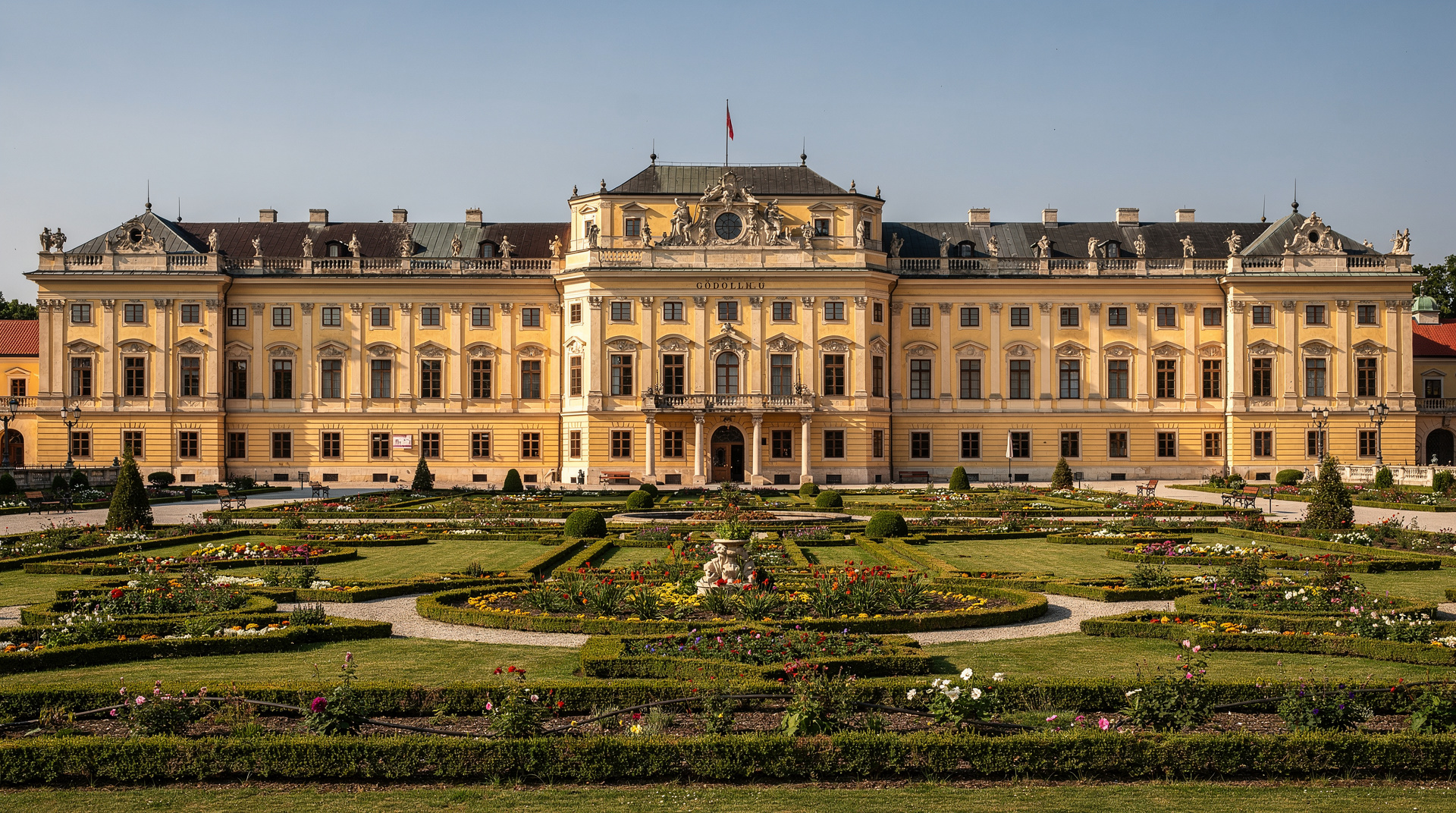
Gödöllő surprises people. It’s easy to reach (M2 metro to Örs vezér tere, then the suburban HÉV H8, ~900 HUF return), and the Royal Palace of Gödöllő is genuinely impressive — the largest baroque palace in Hungary, once the favourite summer residence of Emperor Franz Joseph I and Empress Elisabeth (the famous “Sisi”). The rooms are well-preserved, the Sisi memorabilia thoughtfully displayed, and the formal gardens pleasant for a walk.
The town itself is modest, but the palace alone justifies the trip. Allow 2–3 hours for the palace and grounds. Guided tours are available that include transport:
Gödöllő Palace day tour from BudapestSee also the Gödöllő palace day trip guide and the Gödöllő destination page.
4. Lake Balaton: Hungary’s sea
Travel time: 1h15–1h30 by direct train from Keleti or Kelenföld station. Best for: Summer swimming, wine, scenic lakeside towns, a contrast to the city.
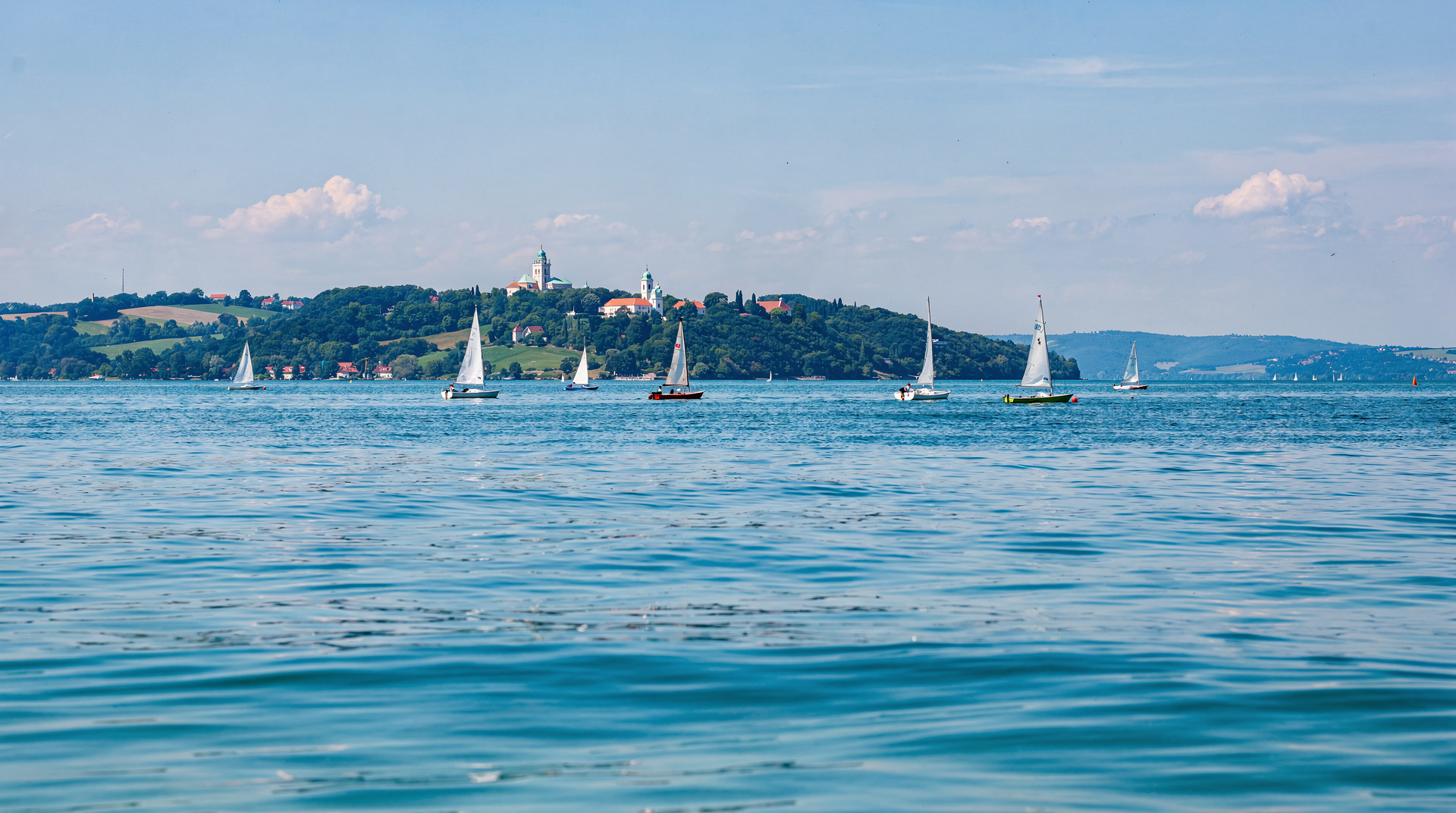
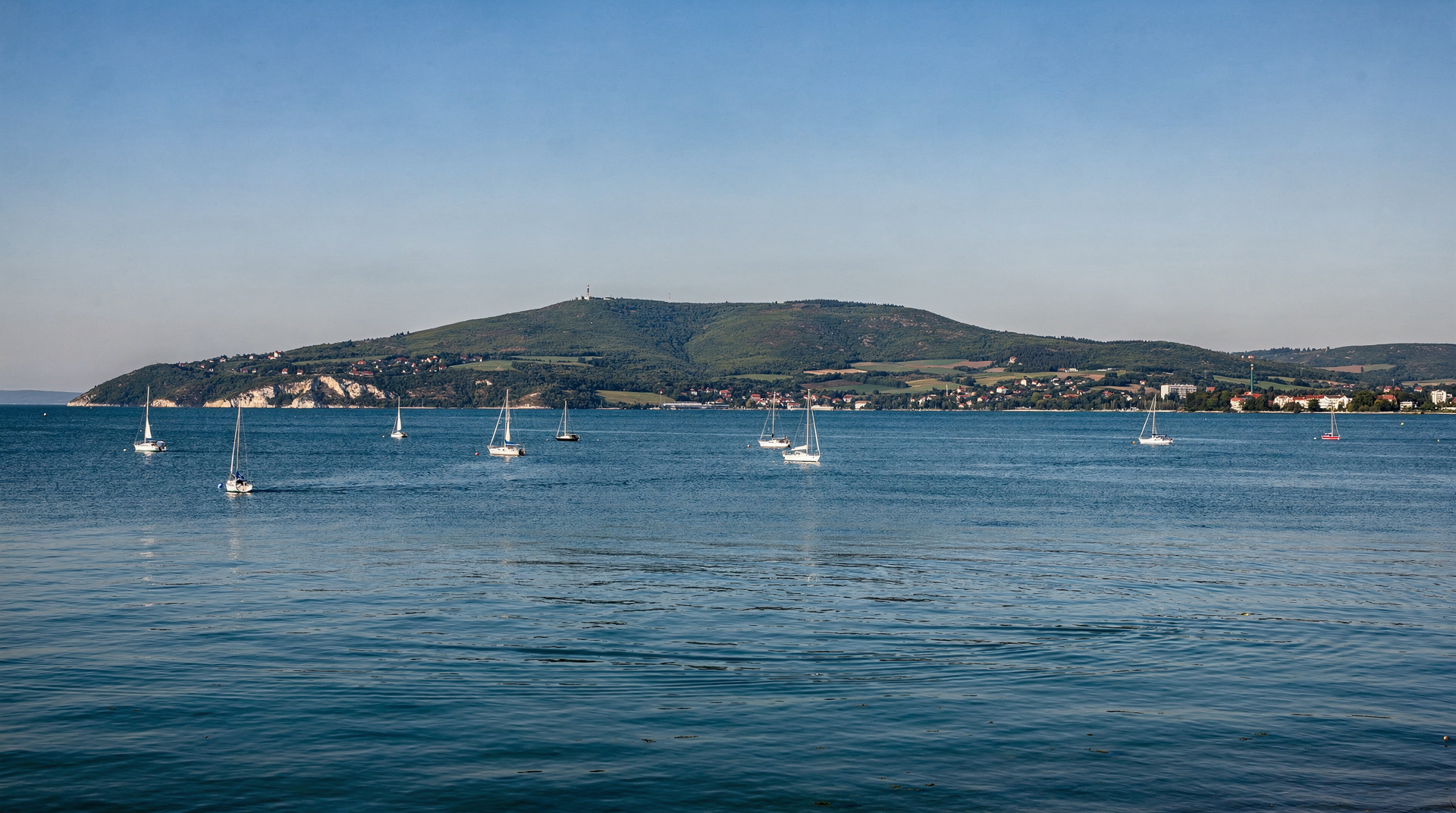
Lake Balaton is Hungary’s inland sea — 77 km long, shallow, warm in summer, and surrounded by villages, vineyards, and thermal baths. For visitors based in Budapest, it works best as a long summer day trip (June–August) rather than an off-season excursion when most of the lakeside infrastructure is closed.
Balatonfüred on the northern shore is the most refined: tree-lined promenade, wine terraces, and the Tihany peninsula nearby. Tihany itself — an ancient Benedictine abbey visible from the lake — is worth a half-hour detour if you have the time.
The southern shore (Siófok) is more developed and crowded; fine for beach, not particularly beautiful. Most guided tours favour the northern towns and may include Herend porcelain factory en route:
Lake Balaton full-day tour from BudapestFull details: Lake Balaton day trip guide and Lake Balaton destination.
5. Eger: castle, wine, and thermal springs
Travel time: 2 hours by direct Intercity train from Keleti (book in advance, ~4,400 HUF return). Best for: Hungarian wine, medieval history, thermal bathing without the Budapest prices.
Eger is the most underrated day trip on this list. The city is strikingly beautiful — a baroque market town ringed by vineyards, dominated by a 16th-century castle that famously held off Ottoman forces in 1552. The castle museum is detailed and the views over the valley are superb.
The Valley of Beautiful Women (Szépasszony-völgy) just outside town is a cluster of wine cellars cut into rock, where you can taste Egri Bikavér (Bull’s Blood) by the glass for a few hundred HUF each. It’s convivial, informal, and genuine — nothing like a polished tasting room.
The Egerszalók spa (Saliris thermal resort) is 10 km from the city with calcium-carbonate travertine terraces and outdoor thermal pools — unusual and photogenic. The combined Eger and Egerszalók tour is efficient:
Eger and Egerszalók day tour from BudapestMore at the Eger day trip guide and Eger destination.
6. Tokaj: Hungary’s wine capital
Travel time: 2.5 hours by Intercity train from Keleti. Best for: Serious wine lovers, Aszú wine, UNESCO heritage landscape, unhurried travel.
Tokaj is further than most day trips warrant, but the town and its wine region hold a special place in wine history — the Tokaj wine region was the world’s first classified wine appellation (1730, predating Bordeaux’s 1855 classification by over a century). The sweet Aszú wines — made from nobly rotted Furmint grapes — are unique, complex, and affordable by western standards.
The town itself is small but serious: wine cellars cut into volcanic tufa, serious producers, and a landscape of vineyards on loess slopes that UNESCO recognised as a World Heritage Site in 2002. A guided tour from Budapest makes the logistics painless:
Tokaj wine day tour from BudapestSee the Tokaj wine day trip guide and Tokaj destination.
7. Puszta horse show: the Hungarian Great Plain
Travel time: 1.5–2 hours by car or tour; public transport is impractical. Best for: Unique Hungarian folklore, horse culture, a complete contrast to Budapest.
The Puszta is the vast flat steppe of the Hungarian Great Plain — a landscape and culture as different from Budapest as it’s possible to be within the same country. The Hortobágy region (a UNESCO National Park) preserves the traditional csikós (Hungarian cowboy) culture: horsemen who ride and perform feats on horseback with remarkable skill.
The horse shows — typically csikós riding demonstrations, carriage rides, and folk performances — are genuine (not tourist confections), and the flat, wide-sky landscape makes for striking photography. You cannot do this independently in a day without a car. Tours include transport and a typically generous lunch:
Puszta horse show day trip from BudapestMore at the Puszta horse show guide and Hortobágy Puszta destination.
8. Bratislava: the easiest foreign capital
Travel time: Under 2 hours by direct bus (Eurolines/FlixBus from Népliget) or Slovak train via Rajka (~2.5 hours); occasionally by boat in season. Best for: City explorers, those who want to tick two countries, stag groups.
Bratislava’s old town is compact — you can cross it in 20 minutes — and genuinely attractive: a pedestrian historic centre, Bratislava Castle visible on the hill above, and a handful of excellent museums. It’s a functioning city rather than a theme park.
The city also has a reputation as a stag-party destination, with notably cheap bars. The Communist-era bus terminal and brutalist architecture are part of the experience for those who like that kind of contrast. For travellers who want the context:
See the Bratislava day trip guide and Bratislava destination.
9. Vienna: not technically a day trip, but doable
Travel time: 2.5 hours by Railjet direct from Keleti; ~3 hours by bus. Best for: Architecture, museums, coffee house culture, the contrast of two imperial capitals.
Vienna is feasible as a very long day trip — the Railjet is comfortable and punctual, and a return ticket booked in advance costs around 40–60 EUR. But honestly, Vienna rewards an overnight. If you’re doing it as a day trip, prioritise the Ringstrasse walk (Opera House, Kunsthistorisches Museum, Parliament, Rathaus), Schönbrunn Palace if you have time, and at least one proper Viennese coffee house. Skip the tourist bus.
The vienna day trip guide has logistics and what to prioritise with limited time.
10. Visegrád: the castle that earns its climb
Travel time: 90 minutes by bus from Árpád híd, or 40 minutes from Szentendre by ferry in season. Best for: Medieval fortifications, Danube panoramas, the more dramatic counterpart to Szentendre.
Visegrád’s Royal Palace and Upper Castle sit on a dramatic hillside above the Danube Bend’s sharpest curve. The castle is ruined but evocative, and the view from the top — looking down on the river curving through green hills — is one of the best in all of Hungary.
Getting there independently requires buses from Budapest or a combination of HÉV train to Szentendre plus seasonal ferry (neither is frequent). A tour or a car is far more practical. See the Visegrád destination guide.
Which day trips can be combined?
Some pairings work in a single day with a car:
- Szentendre + Visegrád: 4 hours total, easy, good variety.
- Eger + Egerszalók: 45 minutes apart; spa in the afternoon.
- Tokaj + Eger: Ambitious but possible with an early start and a car; 80 km apart.
- Gödöllő: Combines easily with an afternoon back in Budapest — it’s the closest on the list.
For a full week including multiple day trips: see the Budapest and day trips 7-day itinerary.
Day trip logistics: trains, buses, and tour operators
Trains (MÁV-Start): Book at mav.hu in advance for Intercity trains (Eger, Tokaj). Intercity reservations are mandatory and cheap. The suburban HÉV network (for Szentendre via H5, Gödöllő via H8) uses Budapest BKK tickets/passes.
Buses (Volánbusz): Good for Visegrád, Esztergom, and many smaller towns. Depart from Árpád híd bus station (M3 metro).
Guided tours: Reputable operators include Absolute Tours, Cityrama, and various GetYourGuide partners. Tours for the Danube Bend, Puszta, and Gödöllő typically include hotel pickup and drop-off, which removes the metro + bus logistics entirely.
Bolt/car: Renting from Budapest Keleti area and driving yourself gives the most flexibility, especially for Visegrád and Puszta. Driving is left-hand traffic (like most of Europe). Hungarian motorways require a vignette (matrica), purchased at petrol stations.
The getting around Budapest guide covers the full BKK network for city transport. For longer journeys, see getting to Budapest.
Choosing by season
| Season | Best picks | Avoid or check first |
|---|---|---|
| Summer (Jun–Aug) | Lake Balaton, Danube Bend, Puszta | Book tours 5+ days ahead; Szentendre gets crowded by noon |
| Autumn (Sep–Nov) | Eger, Tokaj (harvest season) | Balaton towns start closing down |
| Winter (Dec–Mar) | Eger + Egerszalók thermal, Vienna, Bratislava | Lake Balaton largely shut; Puszta shows may pause |
| Spring (Apr–May) | Szentendre, Gödöllő, Danube Bend | Weather variable — check forecasts for outdoor castles |
This pairs with the destination-specific detail in the best time to visit Budapest guide, which covers the city itself alongside these day-trip considerations.
Independent vs. tour: the real cost comparison
The gap between doing a day trip independently and booking a guided tour is bigger than it first appears, in both directions. For Szentendre or Gödöllő — both served by fast, cheap suburban trains — independent travel saves money with almost no added hassle, since the towns are small enough to navigate without a guide. For Visegrád, Esztergom, and Puszta, the calculation flips: public transport is slow, infrequent, or (for Puszta) essentially non-existent, so the tour price effectively buys back several hours of your day rather than just adding a guide’s commentary. Eger and Tokaj sit in between — public transport works but requires advance train booking and careful timing, so a tour trades a modest premium for zero planning.
A rough rule that holds across most of this list: if the destination is reachable by a single direct train or metro/HÉV combination, go independently and save the money. If reaching it involves multiple bus connections, a rare ferry schedule, or no public transport at all, the tour is worth the premium purely on logistics — separate from whatever guiding or commentary it includes.
What guided tours typically include (and don’t)
Most GetYourGuide-booked day tours from Budapest include return transport, a guide’s commentary, and hotel pickup in central districts; they typically do not include lunch, museum or castle entry fees, or wine tasting fees unless explicitly stated in the listing. Read the inclusions carefully before comparing prices between operators — a cheaper-looking Danube Bend tour that excludes the Esztergom Basilica treasury entry, for instance, is not necessarily cheaper once you add that fee on the day. The Danube Bend day trip guide and Eger day trip guide both spell out which entry fees are commonly separate.
First day trip vs. second visit picks
If this is your first Budapest trip, Szentendre or the Danube Bend tour gives the best return on a single day — easy logistics, unmistakably different scenery from the city, and a manageable pace. Returning visitors who have already done the classic loop are better served picking based on a specific interest: Tokaj or Eger for wine, Puszta for folklore and horses, or Vienna/Bratislava for a taste of a different country. See the first time in Budapest guide for how a day trip fits a first visit’s overall pacing, and the how many days in Budapest guide for deciding whether your trip length allows for one.
Frequently asked questions about Best day trips from Budapest
Which day trip from Budapest is easiest to do independently?
Szentendre is the easiest solo day trip — a 40-minute suburban train (HÉV line H5 from Batthyány tér, ~750 HUF each way) drops you right in the town centre. No car or tour needed, easy half-day, and the town is walkable in a few hours.How far in advance should I book day trips from Budapest?
Book at least 3–5 days ahead in peak season (June–August). Guided tours to the Danube Bend, Gödöllő, and Puszta sell out in summer. For Lake Balaton and Eger, which are less crowded, a day or two ahead usually suffices. Bratislava and Vienna have more departures and more availability.Is it cheaper to do day trips independently or on a tour?
Independently is always cheaper in out-of-pocket cost: train/bus fares are modest (Eger round trip ~4,400 HUF by direct train, under €12). Tours add a guide and often entry fees, but save logistics — especially useful for Visegrád, Esztergom, and Puszta where public transport is limited or slow.Can I do two Danube Bend towns in one day?
Yes — Szentendre plus Visegrád is a comfortable two-stop day with a tour or a car. Szentendre plus Esztergom is harder independently (buses connect them, but slowly). The classic Danube Bend full-day tour covers all three in sequence with transport included.What is the best day trip for families?
Szentendre is great for families — small, walkable, marzipan museum, ice cream shops, low pressure. Lake Balaton in summer works well too (beach, swimming). The Puszta horse show is memorable for kids older than 8 or so. The Danube Bend full tour can work with kids if they like castles.Are day trips from Budapest possible in winter?
Most work year-round. Eger (with its thermal baths at Egerszalók) is actually excellent in winter. The Danube Bend towns are quieter but charming. Lake Balaton is largely closed off-season — the towns are sleepy and most lakeside restaurants are shut. Bratislava and Vienna are enjoyable year-round.Do I need a car for day trips from Budapest?
No car is required for the most popular destinations. Szentendre, Eger, Bratislava, and Vienna are well-served by public transport. Visegrád and Esztergom require some planning without a car (buses from Árpád híd bus station). Gödöllő is trivially easy by M2 metro. Puszta requires a car or a tour.Which day trip is best for a first-time visitor with only one extra day?
Szentendre or a Danube Bend tour is the strongest first choice: easy logistics, a genuinely different atmosphere from Budapest, and a comfortable half- to full-day pace. It avoids the long travel times of Tokaj or the car dependency of Puszta and Visegrád, making it the lowest-risk option if you only have one day to spare beyond the city itself.
Top experiences
Bookable activities with verified prices and instant confirmation on GetYourGuide.