Danube Bend day trip from Budapest: Szentendre, Visegrád, Esztergom

How do you do the Danube Bend as a day trip from Budapest?
Take the HÉV suburban train to Szentendre (40 min), then a bus or boat to Visegrád and Esztergom. Alternatively, book a full-day guided tour that covers all three towns with transport included — much simpler since Visegrád and Esztergom are poorly served by direct public transport from Budapest.
The Danube Bend: one of central Europe’s great detours
North of Budapest, the Danube does something unusual — it turns sharply right, cutting through the Börzsöny and Pilis hills in a dramatic arc before flattening again toward Slovakia. This is the Danube Bend (Dunakanyar), and it’s been drawing travellers since the Habsburg era for the simplest of reasons: it’s extraordinarily beautiful.
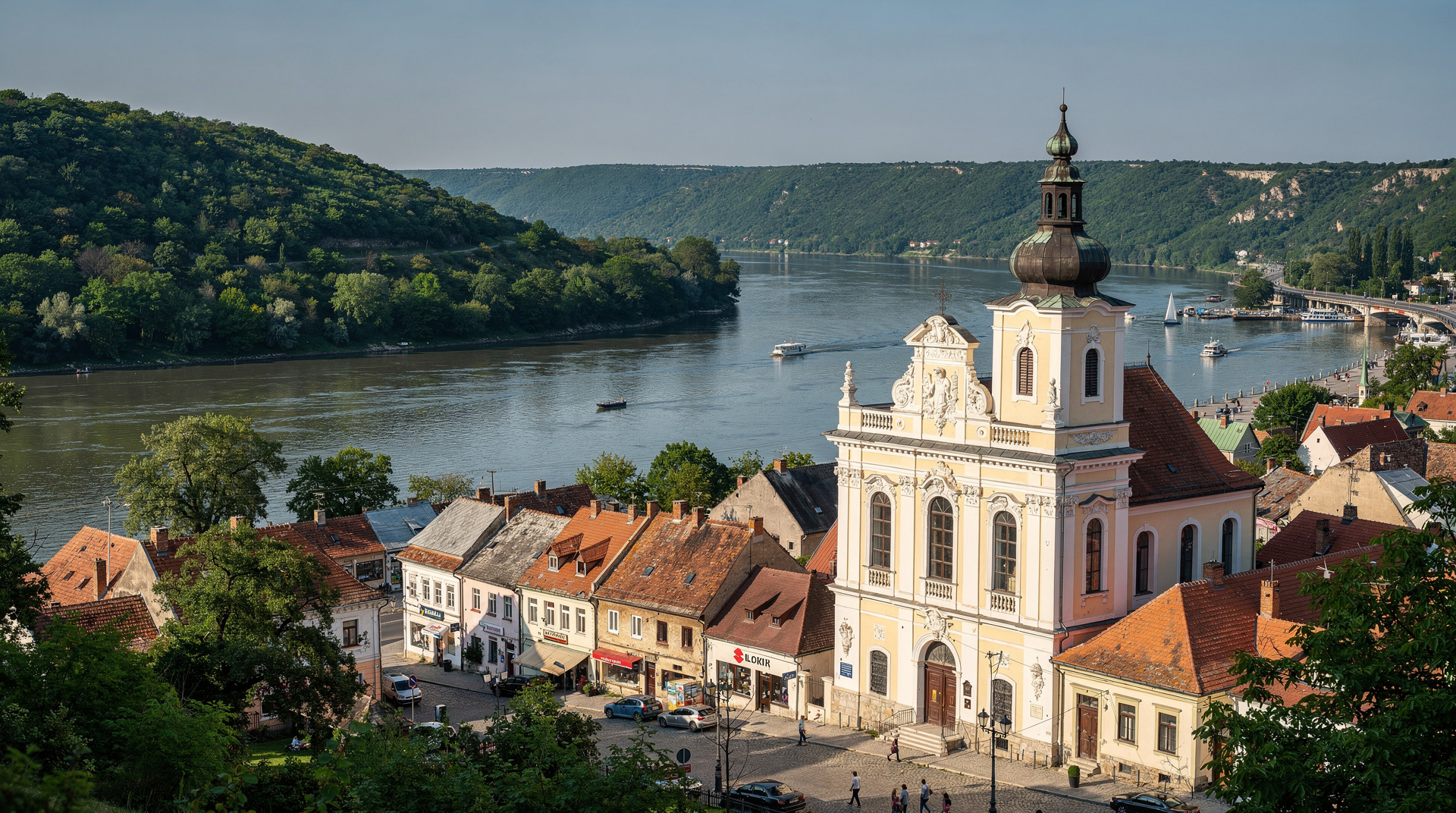
Three towns define the loop. Szentendre is a pastel-coloured artists’ colony with Serbian Orthodox churches and craft galleries, easy and colourful. Visegrád is a hilltop medieval citadel with panoramic views that justify the climb. Esztergom holds Hungary’s most important church — a basilica so large it’s visible from Slovakia across the river — and the seat of the Hungarian Catholic Church for over a thousand years.
Together, they form one of the best day trips from any European capital. Here’s how to approach them.
| Where | North of Budapest along the Danube: Szentendre (20km), Visegrád (35km), Esztergom (70km) |
| Cost | Around 20,000–35,000 HUF/person for a guided full-day tour; under 3,000 HUF independently by HÉV/bus |
| Time needed | Full day for all three; half a day for Szentendre alone |
| Getting there | HÉV train (H5 line) from Batthyány tér for Szentendre; bus 880 or tour for Visegrád/Esztergom |
| Best time | April–October, weekday mornings to beat tour-group crowds |
Szentendre: the easy start
Szentendre sits 20 km north of Budapest and is the most accessible Danube Bend stop — a 40-minute HÉV suburban train ride from Batthyány tér metro station (M2 line) on the H5 line. Trains run every 10–20 minutes and the ticket costs around 750 HUF each way.
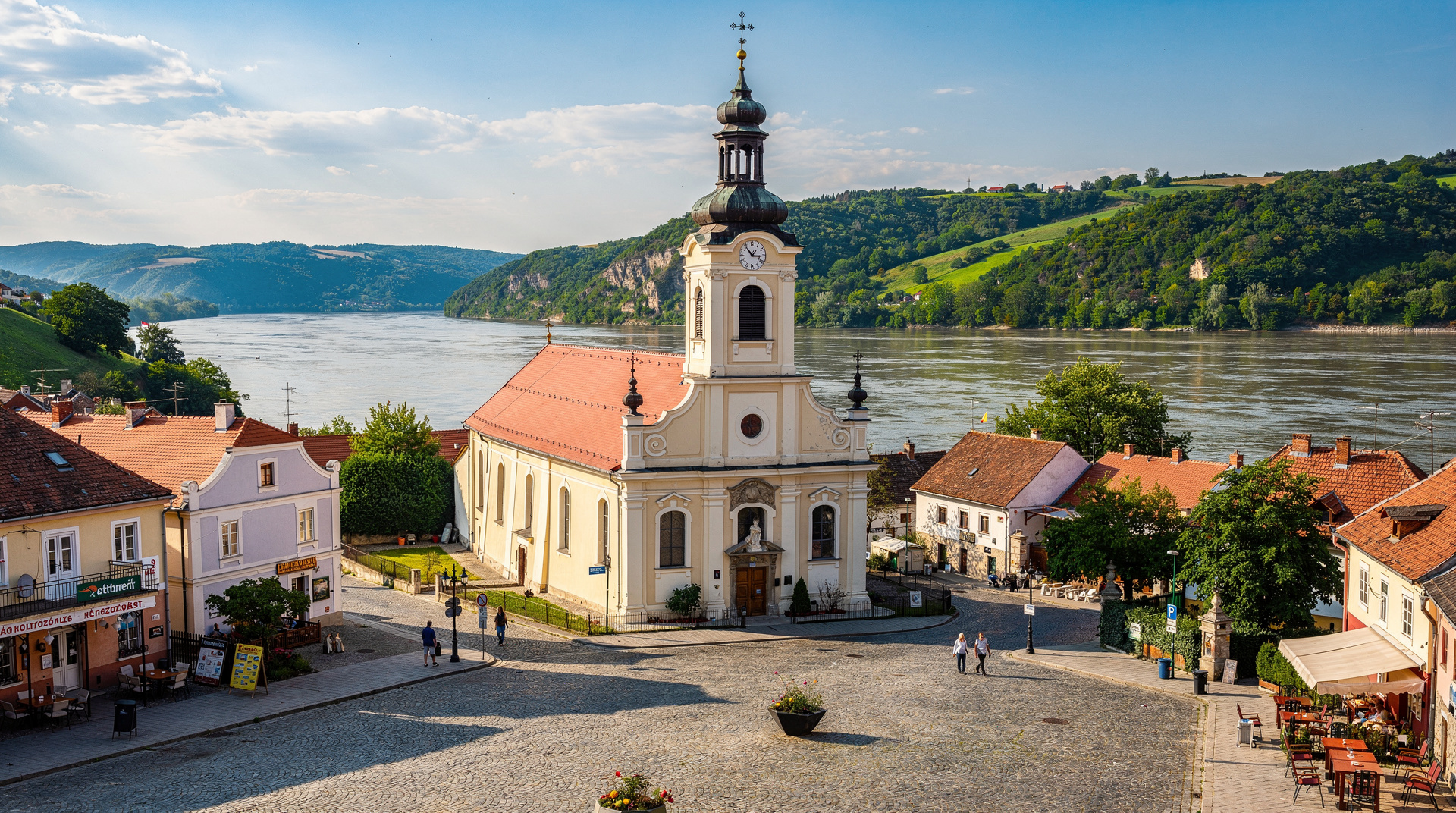
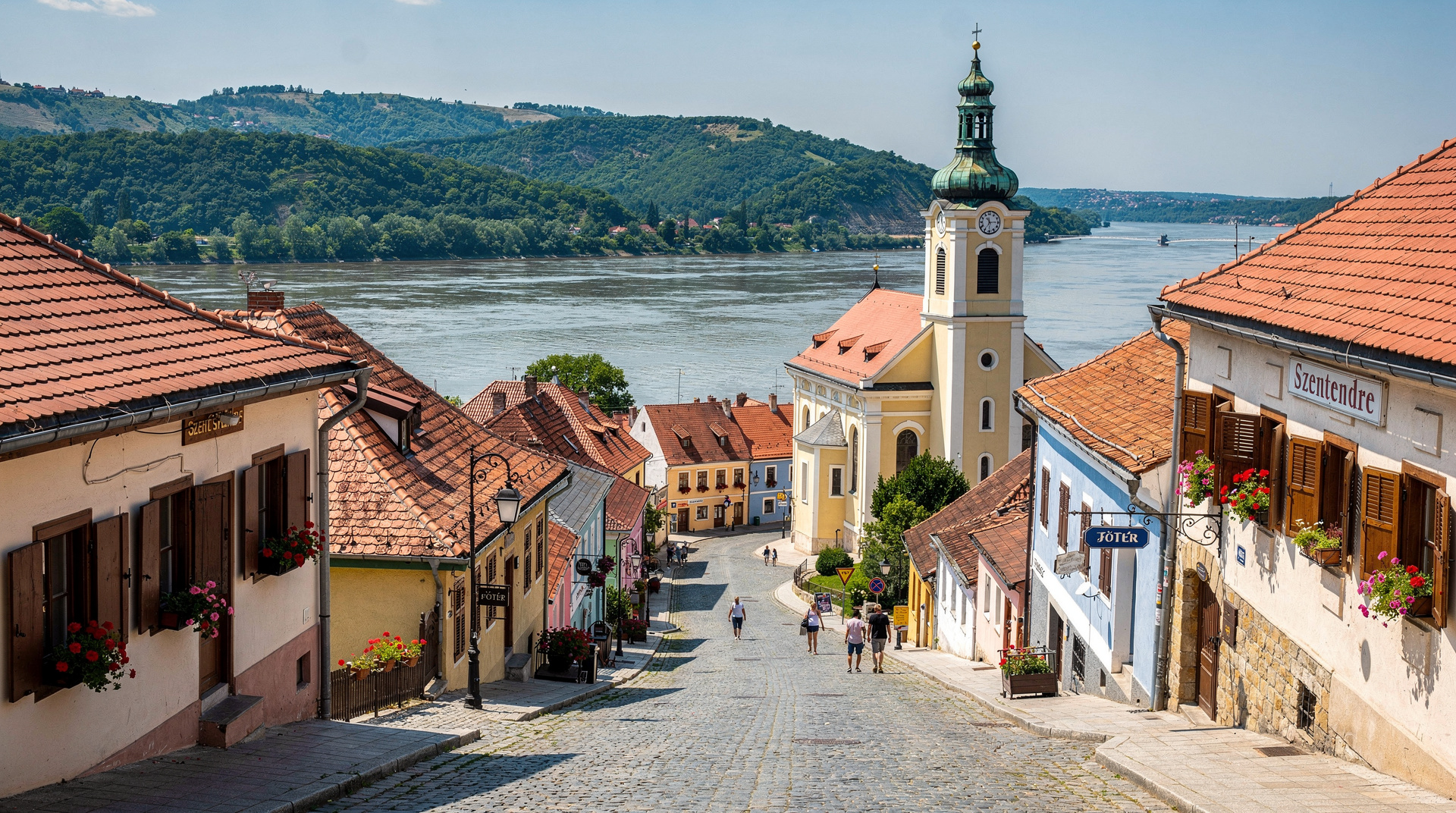
The town’s charm is its scale: the historic centre is genuinely small, the streets are genuinely cobbled, and the Serbian Orthodox churches (a legacy of Serb refugees who settled here after the Ottoman wars) are genuinely old. Main Square (Fő tér) is the focal point — a sloping baroque square with a plague column and the red-and-white Blagovestenska Church.
What to do:
- Walk Bogdányi utca, the main street, for ceramics, local wine, and kürtőskalács (chimney cake).
- The Margit Kovács Ceramic Museum (Vastagh György utca 1) is the best cultural stop — a Hungarian ceramicist of real quality.
- The Belgrade Cathedral and its grounds are peaceful and architecturally interesting.
- Marzipan Museum and Café (Dumtsa Jenő utca): kitschy but entertaining, especially with children.
What to skip: The souvenir shops selling mass-produced paprika, embroidery, and “Hungarian” trinkets — they’re not locally made and they’re not cheap.
Timing: Arrive before 10:00 in summer. Tour groups arrive mid-morning and the narrow streets become congested by noon. Two to three hours is enough for Szentendre before moving on.
More in the dedicated Szentendre day trip guide and Szentendre destination page.
Visegrád: the castle that earns its climb
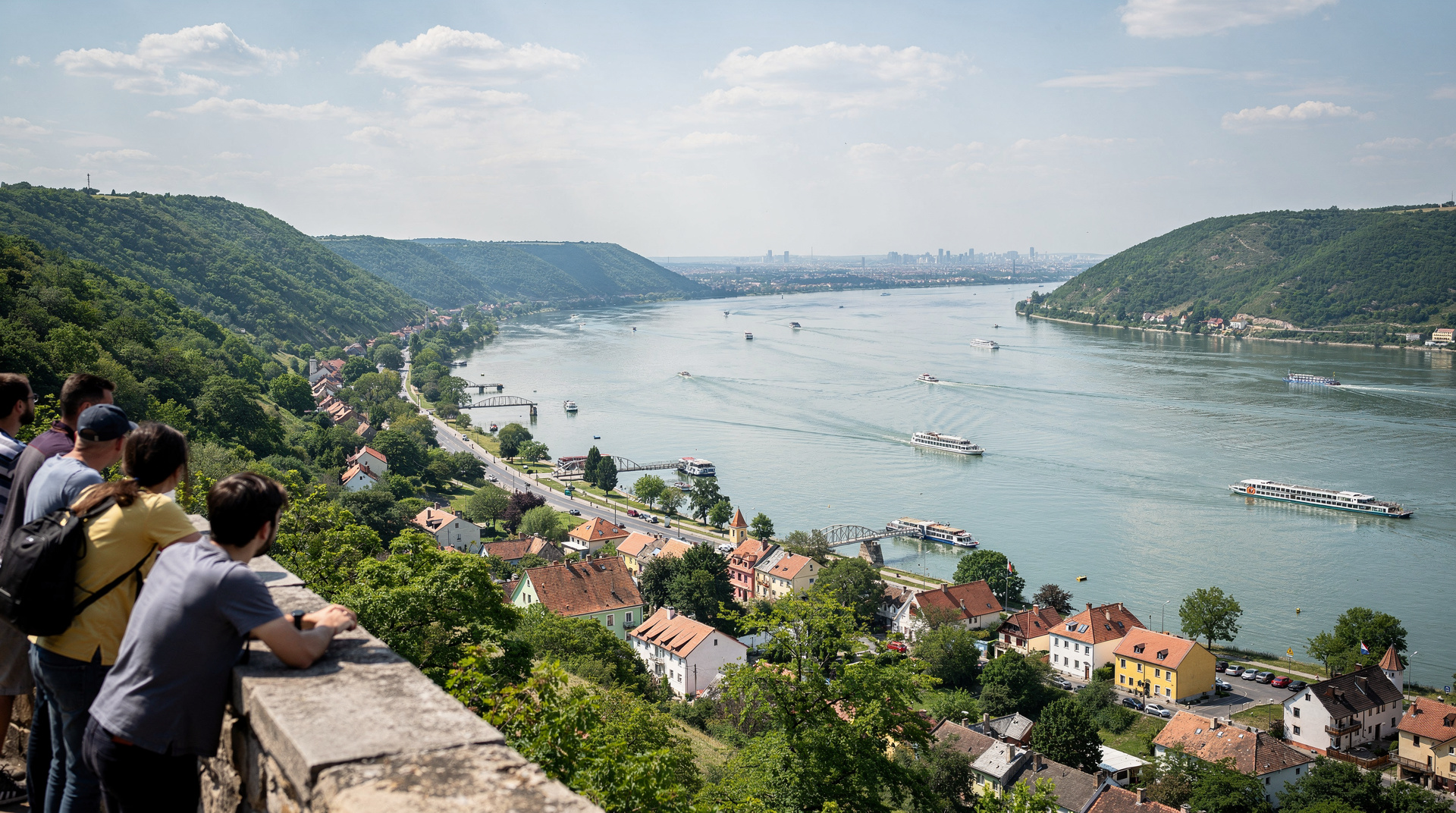
Visegrád is 15 km upriver from Szentendre, and the shift in character is immediate — from cosy artists’ colony to dramatic medieval fortification. The town’s defining image is the Fellegvár (Upper Castle) perched on a 350-metre hill above the Danube, its ruined walls forming a silhouette that hasn’t changed much since the 14th century.
Getting there: By bus from Árpád híd station in Budapest (bus 880, about 90 minutes); by seasonal ferry from Szentendre or Budapest Vigadó pier; or by car. The H5 HÉV does not reach Visegrád — you’ll need to change at Szentendre and catch an infrequent connecting bus or taxi. A tour solves all of this.
What to see:
- Fellegvár (Upper Castle): The climb takes 20–30 minutes and the view from the top — looking down on the Danube making its sharpest curve — is one of the best in Hungary. The castle is mostly ruined but the towers and walls are partially restored and walkable.
- Solomon’s Tower (Salamon-torony): A massive hexagonal tower on the riverbank, part of the lower defensive system. A museum inside covers Visegrád’s medieval history.
- Royal Palace ruins: Below the castle, the remains of King Matthias I’s Renaissance palace (once considered one of the most sophisticated in central Europe). A small museum reconstructs the original layout.
Honest note: Visegrád’s town centre is not particularly interesting — a handful of restaurants and souvenir shops. The castle is the point entirely. If the castle is what you want, the hike-and-ferry tour is the most atmospheric way to approach it:
Visegrád hike and castle tour with ferry from BudapestMore at the Visegrád destination page.
Esztergom: Hungary’s most important church
Esztergom is the furthest of the three towns — 70 km north of Budapest — and the most historically significant. This was Hungary’s first capital, the seat of its kings before the court moved to Buda, and has been the centre of Hungarian Catholicism for over a millennium.
The Esztergom Basilica is the draw: the largest church in Hungary, its green dome visible from the Slovak bank of the Danube. Inside, the Bakócz Chapel (1506) is a remarkable piece of Renaissance stonework transported here from an older church. The treasury holds some of the most important ecclesiastical objects in Hungarian history. The terrace of the basilica offers a panorama over the Danube — Slovakia is the country on the other side, and the Maria Valeria Bridge connecting the two banks is a pedestrian-crossing option.
Getting there independently: Bus from Árpád híd (roughly every hour, 90 minutes); or suburban train from Kelenföld via a different line. The bus is more direct. Esztergom also has a riverside HÉV station (H5 line) — check current service status as this line has had interruptions.
What to do:
- Esztergom Basilica: allow 1.5 hours including the crypt and treasury.
- Castle Museum (Vármúzeum) in the former royal palace: medieval Hungarian history well-presented.
- Víziváros (Watertown): the district below the castle has an Ottoman-era market hall and some attractive streets.
- Walk across the Maria Valeria Bridge into Slovakia: passport required (or EU ID card).
For a private guided version including tickets: Private day trip to Esztergom basilica from Budapest
The full Danube Bend day: tour vs. independent
The case for a tour:
- Transport is included and door-to-door from your hotel.
- Visegrád and Esztergom are not easily reachable by direct public transport from Budapest.
- A guide provides context that the monuments themselves often lack.
- Lunch is frequently included, removing one logistical decision.
The case for going independently:
- Significantly cheaper in out-of-pocket cost (under 3,000 HUF in transport vs. 25,000–40,000 HUF for a tour).
- More flexibility — you spend as long as you want in Szentendre, skip what doesn’t interest you.
- Easy for Szentendre alone (HÉV train, no planning needed).
The hybrid approach: Take the HÉV to Szentendre independently (easy), then join a half-day tour for Visegrád specifically. Or take the HÉV to Szentendre, walk/explore, then catch the seasonal ferry up to Visegrád.
The classic organised option covers all three with lunch and transport from Budapest: Full-day Danube Bend tour with lunch
Practical details
Best time to visit: April–October for warmth and ferry services. July–August are the most crowded, especially in Szentendre. Late September and October offer good weather, thinner crowds, and the Danube at its most atmospheric in autumn light.
What to eat:
- Szentendre: Lángos (fried dough with sour cream and cheese) from street vendors on the main square; fresh langoustines at the waterfront restaurants; local wine at any of the small wine bars on Bogdányi utca.
- Visegrád: The restaurants near Solomon’s Tower are decent (gulyás, roast pork, beer) and reasonably priced compared to Budapest.
- Esztergom: The Prímás Pince wine cellar restaurant below the castle is the best option — traditional Hungarian food, good wines, reasonable prices.
Currency: Everything is in HUF. ATMs in all three towns. Credit cards accepted in most restaurants and attractions, but carry some cash for market stalls and smaller cafés.
Combining with other trips: The Danube Bend fits naturally before or after Gödöllő for travellers spending a week in the region. See the 7-day Budapest and day trips itinerary. For context on getting around Budapest and the best day trips from Budapest overall.
Shaping the day around your own pace
The Danube Bend rewards a slow start and a clear plan. Decide the night before which town is your anchor and treat the others as bonuses rather than obligations. Travellers who try to tick off every monument tend to remember the connections more than the views, while those who linger over a long lunch by the river usually come home happiest.
If you are travelling with children, Szentendre is the gentlest choice: the streets are short, there is plenty to nibble on, and the museums are small enough not to wear anyone out. The Budapest with kids guide and the family-friendly attractions list help you decide how much of the city to pair with it. For couples, the river light at the end of the day makes the Bend a natural fit with a romantic Budapest plan, especially if you finish with dinner back in the city.
Those who prefer an organised day should also compare this trip with the other options in the best day trips from Budapest guide. The Eger day trip and the Lake Balaton day trip suit a very different mood, with wine cellars and lakeside walks instead of river views, so it is worth choosing deliberately rather than by default.
Making the most of each stop
Szentendre works best as a wandering town. Leave the map in your pocket, follow the lanes that climb away from the main square, and stop whenever a courtyard gallery or a small church looks inviting. The Szentendre blog post gives a first-hand feel for how an unhurried day there unfolds.
At Visegrád, pace yourself on the way up and save energy for the descent, which is harder on the knees than most people expect. Bring water and sturdy shoes, and keep the town itself for a short meal rather than a long visit. Pairing the castle with the river-level sights makes for a balanced half day.
In Esztergom, the basilica deserves unhurried attention before you look for anything else. The scale of the interior is easier to appreciate when you are not rushing to catch a bus, so build in a buffer before your return connection. If you are curious about the town beyond the church, the Esztergom destination page and the Visegrád destination page cover what else is on offer.
Fitting the Bend into a longer stay
A day on the Danube Bend slots well between city days rather than on your arrival or departure day. After a few days of museums and baths, the change of scenery feels like a reset. Our Budapest 3-day plan and the 5-day plan both leave room for an excursion, and the Budapest in autumn guide explains why the shoulder season suits the river valley so well. If your trip is short, the first time in Budapest guide will help you decide whether this day is worth the trade-off against the city sights.
Which town to prioritise if you can’t do all three
| Town | Best for | Time needed | Getting there without a tour |
|---|---|---|---|
| Szentendre | Charm, ease, first-timers | 2–3 hours | HÉV train, straightforward |
| Visegrád | Castle views, hiking | 3–4 hours incl. climb | Bus 880 or seasonal ferry, less direct |
| Esztergom | History, the basilica | 3–4 hours | Bus from Árpád híd, roughly hourly |
If you’re deciding how this day fits your overall trip length, see how many days in Budapest or check the Budapest 4-day itinerary, which typically has room for one full day-trip like this one. The best time to visit Budapest guide also covers how the Danube Bend’s ferry schedules shift by season, and the public transport tickets guide explains whether your Budapest travel card covers the HÉV suburban line (it partly does, up to the city boundary — a supplementary ticket is needed beyond it).
For travellers who enjoy the river-town pace of Szentendre, the Esztergom destination page and the wider Tokaj wine region guide both make good follow-on day trips later in a longer stay, alongside Vienna or Bratislava if you want to cross a border.
A note on weather flexibility: unlike a Danube river cruise within the city, the Danube Bend trip involves genuine outdoor time — the Visegrád climb especially — so check the forecast the night before if you’re going independently. A tour operator will usually still run in light rain, but the castle view and photos suffer. If the forecast looks poor, Szentendre and Esztergom’s basilica interior are the more weather-proof half of the loop, while the Visegrád hike is the part worth rescheduling for a clearer day if your itinerary allows it.
Frequently asked questions about Danube Bend day trip from Budapest
Can I visit all three Danube Bend towns in one day?
Yes, with a car or a guided tour. Independently by public transport, it's challenging — buses between the three towns are infrequent and the connections eat into your time. Most organised tours cover all three in 8–9 hours. If doing it alone, pair Szentendre with one other town rather than trying all three.Is the Danube Bend worth it as a day trip?
Absolutely. The landscape — the river curving through forested hills, the hilltop castle at Visegrád, the enormous basilica at Esztergom — looks nothing like Budapest. It's one of the most dramatic stretches of the Danube in central Europe, and the contrast with the city is exactly the point.Which Danube Bend town is best?
Szentendre for charm and ease — it's the most walkable and colourful. Visegrád for the castle and panoramic views. Esztergom for the basilica and historical significance. If you can only do one, Szentendre is the default. If you want drama, Visegrád's hilltop viewpoint is the money shot.How do I get to Visegrád from Budapest without a tour?
Take the M3 metro to Árpád híd, then bus 880 to Visegrád (about 90 minutes). Or take the HÉV to Szentendre then a seasonal river ferry. Bus connections are infrequent (every 1–2 hours), so plan your return carefully. A car or tour is far simpler.How much does the Danube Bend tour cost?
Guided full-day tours including transport cost roughly 20,000–35,000 HUF (€50–87) per person. A lunch-included version is around 30,000–40,000 HUF (€75–100). Going independently by HÉV + bus costs under 3,000 HUF (under €8) in transport, but you'll need entry fees and food separately.
Top experiences
Bookable activities with verified prices and instant confirmation on GetYourGuide.