Váci Street tourist trap: what to know before you eat there

Is Váci Street in Budapest a tourist trap?
Váci utca itself — the pedestrian shopping street — is fine for a walk and for souvenir shopping, though prices are higher than elsewhere. The restaurants on and immediately around Váci utca are where the trap lies: they typically charge 30–60% more than equivalent restaurants one street away, use cover charges for bread and service fee surprises. Walk one block for a much better deal.
The street that looks like Budapest but charges like a tourist trap
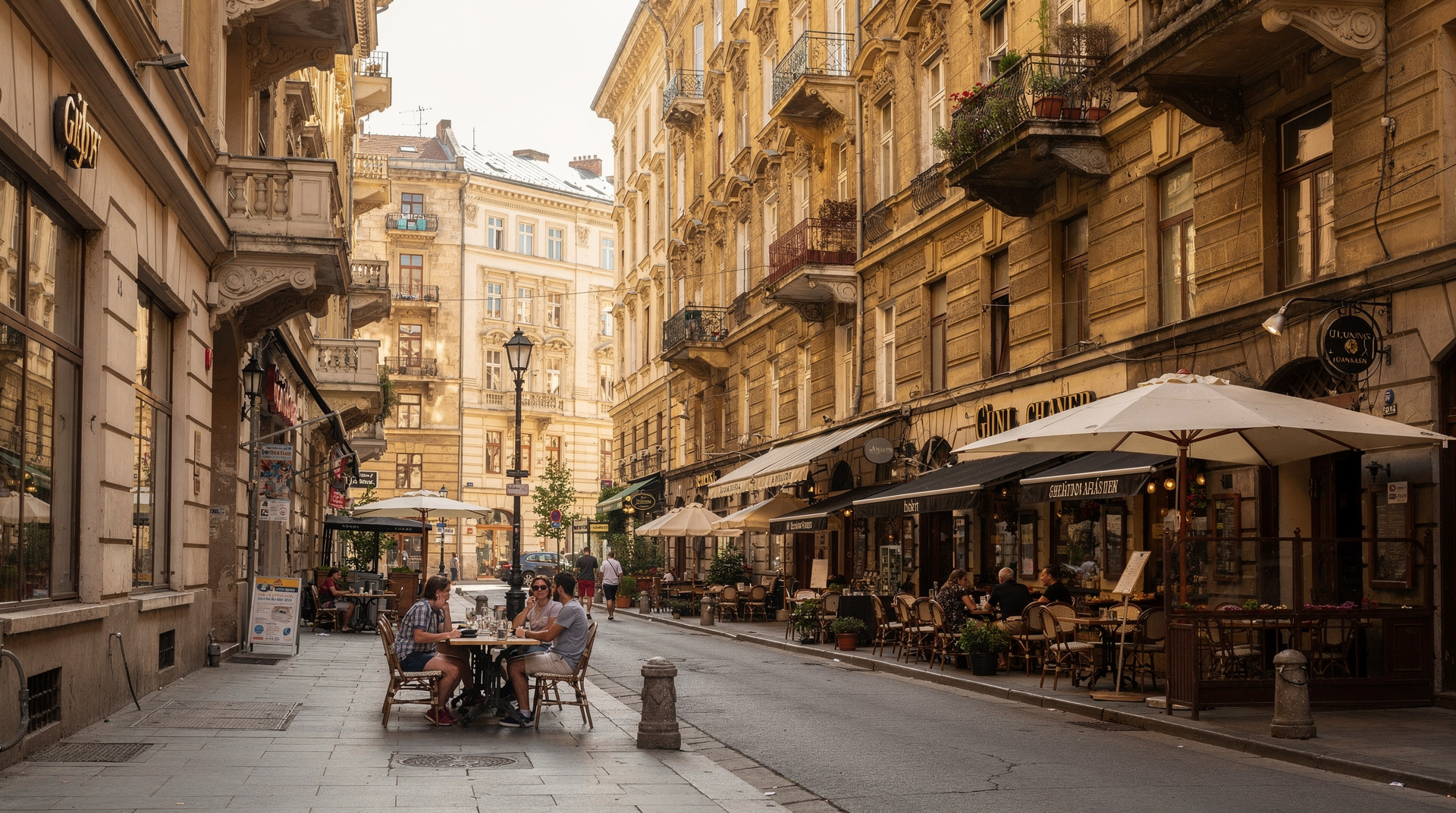
Váci utca (pronounced “VAH-tsee OOT-sah”) is one of Budapest’s most famous streets — a pedestrianised shopping corridor running north to south through District V, lined with international chains, souvenir shops, coffee houses and, critically, restaurants. Every guidebook mentions it. Every tour bus stops nearby. Every visitor walks it at some point.
The street itself is not the problem. The problem is the restaurant ecosystem that has built up around it, calibrated specifically for visitors who do not know Budapest prices and will not be coming back tomorrow to complain.
| Where | District V, Váci utca and immediate side streets |
| The issue | Restaurants only — cover charges, hidden service fees, inflated drink prices |
| Fix | Walk one street east (Petőfi Sándor utca, Irányi utca) |
| Price difference | Roughly 30–60% cheaper one block away |
| Street itself | Fine for walking and souvenir shopping |
How the pricing mechanism works
Váci utca restaurants do not need to offer good value. Their entire business model relies on footfall from tourists who are nearby, hungry, and unfamiliar with alternatives. The street does the marketing; the tourist-trap model does the pricing.
The specific mechanisms:
Cover charges for bread: bread arrives at the table automatically within a few minutes of sitting down. It is charged at 1,000–1,500 HUF per person (sometimes more). It is not mentioned by the waiter. It appears on the final bill under “bread” or “cover.” You can refuse it — send the bread back if you do not want it and say “No, thank you” clearly. But you have to know to do this.
Service charge added to the bill: a 10–12% service charge appears at the bottom of the bill in addition to the menu prices. This is technically disclosed in the menu (usually in small print on the inside back page), but is rarely mentioned verbally. In a normal Budapest restaurant this would be communicated clearly; here it is structured to be missed.
Daily specials priced higher than quoted: a waiter recites a daily special verbally and when it appears on the bill it is priced higher than implied. “Around 4,000 HUF” becomes 5,200 HUF.
Drinks priced at tourist rates: the food menu looks reasonable. The drinks — beer, wine, soft drinks — are priced to make up the margin. A local beer (0.5L) that costs 800–1,200 HUF in a District VII ruin bar costs 1,800–2,800 HUF on Váci utca.
The aggressive touting: legitimate restaurants in Budapest do not have staff standing on the pavement actively inviting passing tourists inside. This sales behaviour is specific to tourist-trap venues that rely on walk-in traffic they cannot otherwise attract. If someone is working hard to get you through the door, that is a flag.
A real price comparison
Rough, honest numbers to make the difference concrete. Prices vary by restaurant, but the pattern holds consistently across District V.
| Item | On Váci utca | One street away |
|---|---|---|
| Local beer (0.5L) | ~1,800–2,800 HUF | ~800–1,200 HUF |
| Gulyás soup | ~3,500–5,500 HUF | ~1,800–2,800 HUF |
| Bread cover charge | ~1,000–1,500 HUF/person | Usually none, or asked first |
| Service charge | 10–12%, often unmentioned | Standard, usually stated on menu |
| Chicken paprikash main | ~5,000–7,500 HUF | ~3,000–4,500 HUF |
None of this means every Váci utca restaurant is dishonest — some disclose everything clearly — but the pattern is consistent enough that “walk one block” is a reliable default rather than an overreaction.
What to do instead
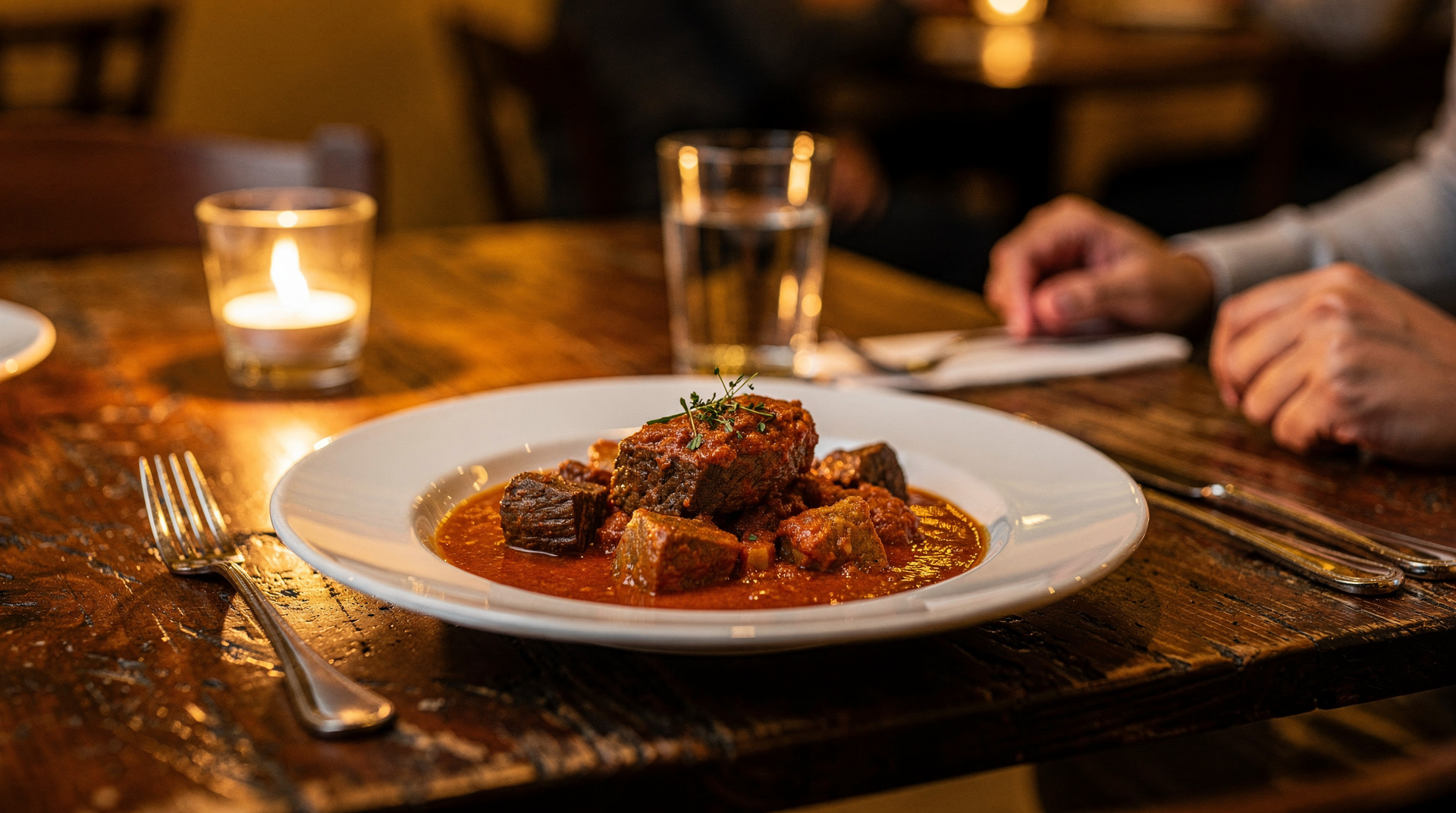
Eat one street away. This is genuinely all it takes. The parallel streets east of Váci utca — Petőfi Sándor utca, Veres Pálné utca, Irányi utca — have restaurants that serve the same Hungarian food (gulyás, chicken paprikash, hortobágyi meat pancakes, kürtőskalács) at 30–50% lower prices to a mixed local-and-tourist clientele. No touting, no cover charges, comparable quality.
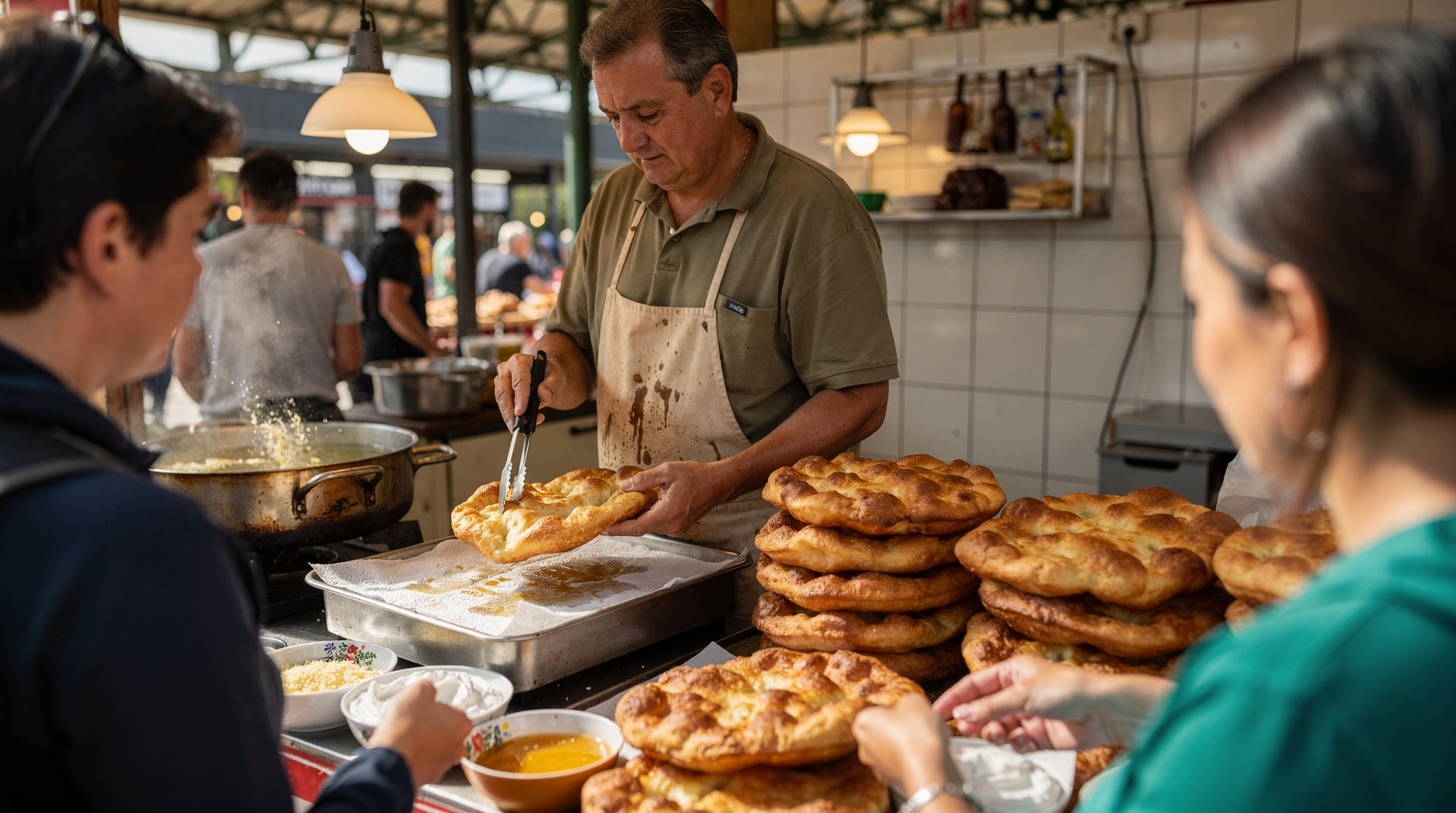
Go to the Central Market Hall. Fővám tér, a 5-minute walk south from the southern end of Váci utca, is the largest market hall in Budapest. The ground floor is a working market — fresh produce, meat, paprika, pick for gifts. The first floor has a row of food stalls serving lángos (deep-fried flatbread with sour cream and cheese: 1,200–2,000 HUF), gulyás soup (2,500–4,000 HUF), kürtőskalács (chimney cake) and cold platters. Tourists eat here too, but the prices are fair and the food is genuinely good. Read the full Central Market Hall guide for what to order and where to sit.
Eat in District VI (Andrássy Avenue area). Liszt Ferenc tér and the streets around it have restaurant terraces that are actually popular with Budapestians. Menza on Liszt Ferenc tér is a classic — mid-century decor, traditional Hungarian food, real prices. Macesz Bistro (Jewish fusion) is excellent. The whole district runs parallel to the Váci utca area without any of its tourist-trap dynamics.
Use the honest-planner restaurant filter. The best restaurants in Budapest guide lists only venues we have verified for value and quality, with none of the Váci utca ecosystem.
How to read a menu before you sit down
The cheapest way to avoid the trap is to spend thirty seconds at the door. Look at the printed menu posted outside and read it properly rather than glancing at the photos. Check whether drinks are listed at all, whether the service charge is mentioned anywhere, and whether the menu is the same one the locals at neighbouring tables seem to be holding. A restaurant with a short, mostly Hungarian menu and a handful of regulars is usually telling you something good; a laminated book in eight languages is telling you something else.
It also helps to know the dishes. If you already have a rough idea of what a fair plate of gulyás or paprikash looks like, a wildly inflated line stands out immediately. Our guide to traditional Hungarian dishes explains what to expect from each classic, and the lángos guide covers the single most common street snack so you can judge it on sight. If you would rather skip sit-down restaurants altogether for a meal, street food in Budapest is a faster and cheaper route to the same flavours.
Why the trap works on smart travellers too
Nobody falls for this because they are careless. It works because several small pressures stack up at the same moment. You have been walking for hours, the street is pretty, the terrace is full, and the waiter is friendly. You are jet-lagged or simply hungry, and the idea of opening a map to research an alternative feels like effort. The restaurant is selling convenience, and the price of that convenience is hidden in the bill rather than on the menu.
First-time visitors are the most exposed, which is why the first time in Budapest guide and the list of the biggest Budapest mistakes both flag central-district dining as something to plan ahead. A decision made before you are hungry is almost always a better one. If you settle on a lunch spot in the morning, you never have to choose under pressure on the street.
Building a day around the one-block rule
The easiest way to put this into practice is to treat Váci utca as a route rather than a destination. Start at the northern end near Vörösmarty tér, take your photos, and walk south at an unhurried pace. Ignore the touts, browse a shop or two if you like, and keep moving until you reach the market hall end. Along the way, the wider district is worth exploring in its own right: the District V Belváros guide and the downtown Pest destination page show how much more there is around you than a single shopping corridor.
If you finish the walk hungry, you have two sensible choices. Either step east a block and eat where the menu is short and the clientele is mixed, or carry on to the Central Market Hall for a proper lunch. Both are easy on the budget, and the Budapest on a budget guide shows how a few good meal choices keep the whole trip affordable. For a wider sense of daily spending, the Budapest daily budget guide is a good companion read.
Eating well without a restaurant
Some of the best meals in the city are not sit-down affairs at all. A food-focused outing lets someone else handle the research, and it is a good way to taste several dishes without committing to a full menu at a doubtful table. If that appeals, a guided street food and beer tasting is an easy way to eat like a local on your first evening, and our overview of the best food tours in Budapest compares the options.
Evening drinks are a separate question. Inflated drink prices are part of the Váci utca pattern, so it pays to have a plan for where you will actually drink. The best ruin bars in Budapest and the best bars for locals are better starting points than anything on the main shopping street, and the Budapest nightlife guide helps you pick a district to match your mood.
Paying the bill without drama
Whatever you decide, a few habits make the end of the meal calmer. Ask for the bill by saying you would like to pay, check each line against what you ordered, and confirm whether the service charge is already included before you add anything. If something is wrong, say so politely and early; a calm question usually gets a calmer answer than an argument at the door. If the problem is bigger than a bread charge, the Budapest taxi scams guide and the wider Budapest tourist traps guide explain how similar patterns work elsewhere in the city, so you can recognise them quickly.
Keep a sense of proportion too. Overcharging at a restaurant is irritating rather than dangerous, and the practical cost is a slightly worse meal and a lighter wallet. Learn the signs once and you will spot them in every tourist district in Europe, not just this one.
What Váci Street is actually good for
Having said all of this, Váci utca is worth a walk. As a pedestrian zone it is lively, especially in the evening. The architecture at the northern end (around Vörösmarty tér) is lovely. Gerbeaud coffee house on Vörösmarty tér is a genuine Budapest institution — historically important, properly expensive, but honestly so.
The souvenir shops are overpriced, but so are souvenir shops everywhere in Europe. If you want a Rubik’s cube, a paprika set, Herend porcelain or a bottle of Unicum (a bitter Hungarian liqueur), Váci utca has them. Just buy them; the prices are visible and consistent.
The problem is restaurants, not the street itself.
The honest Budapest eating strategy
For each meal in Budapest, one question: “Am I within 100 metres of Váci utca?” If yes, walk away from it before choosing where to eat. That is the complete framework.
Beyond District V, the tourist-trap restaurant model largely disappears. District VII ruin bars are imperfect (see ruin bar rip-offs guide), but the food-focused places in the Jewish quarter (Macesz, Fülemüle, Carmel Restaurant) are legitimate. District VI has excellent mid-range restaurants. The Buda side (Castle District excepted) rarely has tourist-trap pricing at all.
A guided walking tour of the city centre typically includes a guide who knows where to eat — worth doing on day one to orient yourself to the honest Budapest rather than the tourist circuit.
For a complete overview of where to eat well at different budget levels, see best restaurants in Budapest and street food Budapest.
This guide is part of our honest Budapest hub alongside Budapest tourist traps and common scams in Budapest.
What if you’re already seated and it’s too late
If you realise mid-meal that you’ve walked into one of these restaurants, you still have options. Check the bread on your table against the bill — if you didn’t order it and don’t want it, you can ask for it to be removed before paying, though success varies by venue. Ask for an itemised bill (kérem a számlát, részletesen) rather than accepting a verbal total, and check the service charge line before adding a further tip on top — it’s easy to accidentally tip twice. None of this fixes an inflated menu price, but it stops the two most common add-on surprises from compounding the damage. For next time, the common scams in Budapest guide covers the wider pattern, and the is Budapest safe guide puts this kind of overcharging in context against genuinely dangerous scams — it isn’t one, just an annoying one.
Frequently asked questions about Váci Street tourist trap
Which specific Váci Street restaurants should I avoid?
Rather than naming specific restaurants (which change ownership and quality frequently), watch for these warning signs at any restaurant in the area: a waiter standing outside actively trying to bring you in, menus in many languages with photos of every dish, bread served automatically without being asked, and tables turned over quickly. These patterns cross-cut the trap restaurants.Where should I eat near Váci Street instead?
One block east, on Petőfi Sándor utca and Irányi utca, the price difference is dramatic. The Central Market Hall (Nagy Vásárcsarnok) on Fővám tér, a 5-minute walk south, is excellent — first floor has lángos, kürtőskalács, gulyás and cold Hungarian dishes at real prices. Gerbeaud on Vörösmarty tér is a tourist institution but at least genuinely historic. Belvárosi Disznótoros on Deák tér area is excellent value.What are the typical hidden charges at Váci Street restaurants?
Cover charge for bread: 1,000–1,500 HUF per person, placed on the table automatically, charged unless you explicitly send it back. Service charge: 10–12% added at the end of the bill. Tourist prices on daily specials: the chalk board special quoted verbally may not match the price added to the bill. The menu price for food usually does not include drinks, which are separately priced at tourist rates.Is it worth walking on Váci Street at all?
Yes, for the atmosphere and a walk. It is Budapest's main commercial pedestrian street and lively in the evening. The souvenir shops are priced for tourists but so is every souvenir shop. The issue is specifically the restaurants. Walk it, look at the facade, then eat one block away.Is the Central Market Hall also touristy?
The Central Market Hall (Nagy Vásárcsarnok) at the south end of Váci utca is genuinely used by locals for daily shopping. The ground floor is the real market — fresh produce, meat, paprika. The first floor has tourist-facing food stalls, but prices remain reasonable (lángos 1,200–2,000 HUF, gulyás soup 2,500–4,000 HUF). Quality is consistent and authentic. Far better than any Váci Street restaurant.
Top experiences
Bookable activities with verified prices and instant confirmation on GetYourGuide.