Best thermal baths in Budapest: the honest comparison

Which thermal bath in Budapest is the best?
Széchenyi is the most iconic and beginner-friendly. Rudas is the most atmospheric (a 450-year-old Turkish dome). Gellért has Art Nouveau grandeur. Lukács is the quietest and most local. The right choice depends on your vibe — see the full breakdown below.
Budapest’s thermal bath scene — more than just hot water
Budapest sits atop one of the richest geothermal systems in Europe. More than 120 natural hot springs bubble up beneath the city, feeding baths that have been in continuous operation since the Ottoman occupation of the 16th century. Today, roughly a dozen public baths remain open, ranging from grand neo-baroque palaces to modest neighbourhood pools still used by locals on their lunch break.
Visitors often land at the airport, scroll Instagram for five minutes, and conclude “obviously Széchenyi.” That is not wrong — but it is not the full story. Széchenyi is spectacular and beginner-friendly, but its outdoor pools are now shared with stag parties, selfie sticks, and queues that can stretch past the gate on summer Saturdays. Rudas, Gellért, and Lukács each offer something different, and the right bath depends heavily on what you are actually looking for.
This guide gives you an honest comparison of the main baths — prices, atmosphere, facilities, transport, and which type of visitor each one suits best.
| Where | Buda and Pest, spread across several districts |
| Cost | Around 5,300–13,900 HUF per bath, day ticket |
| Time needed | 2–4 hours per bath |
| Getting there | Metro M1 (Széchenyi), tram 47/49 or 4/6 (Gellért/Lukács), bus 7 (Rudas) |
| Best time | Weekday mornings for calm; winter for the outdoor-steam effect |
The four main baths: a side-by-side comparison
Széchenyi — the crowd favourite for a reason
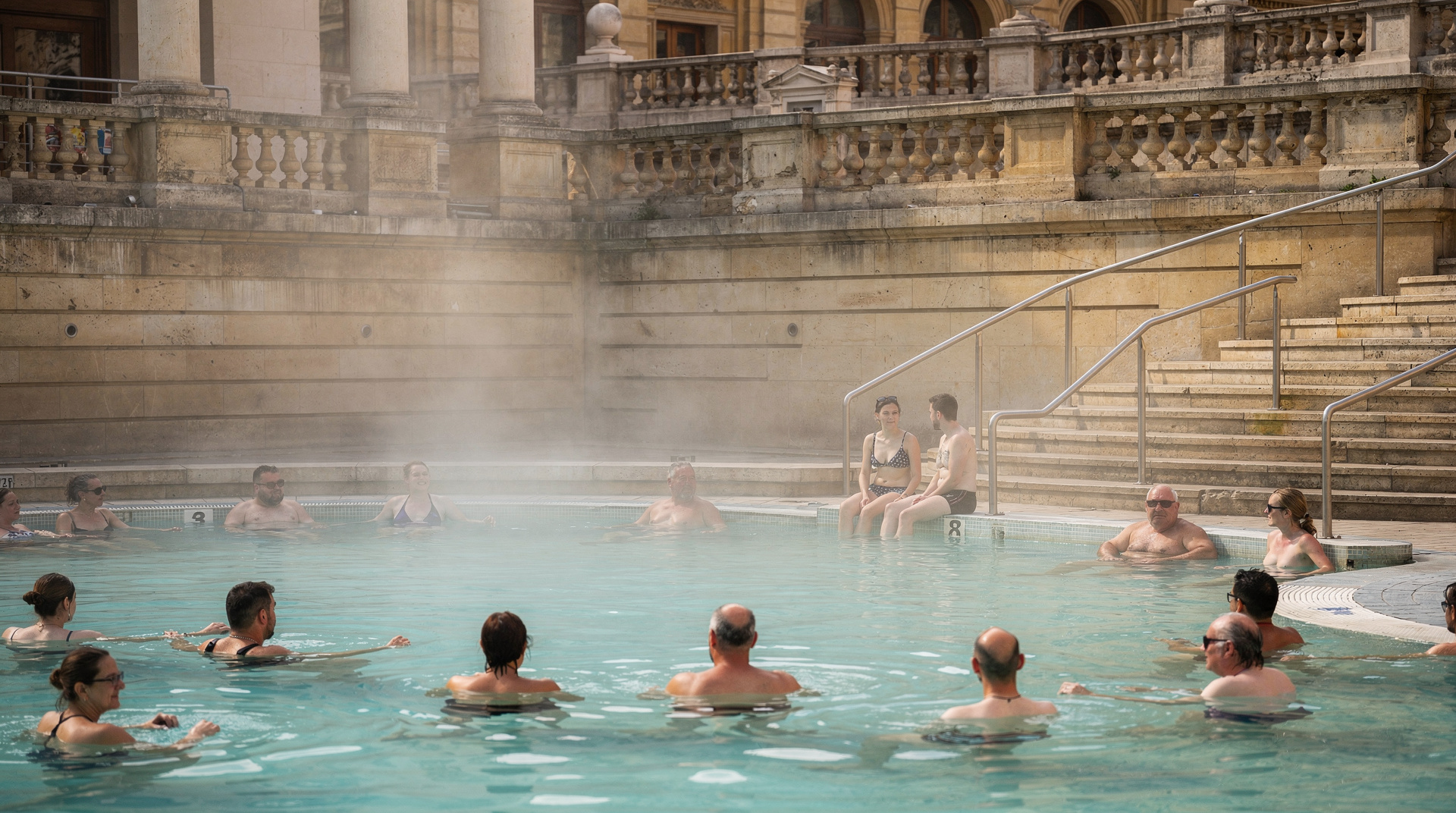
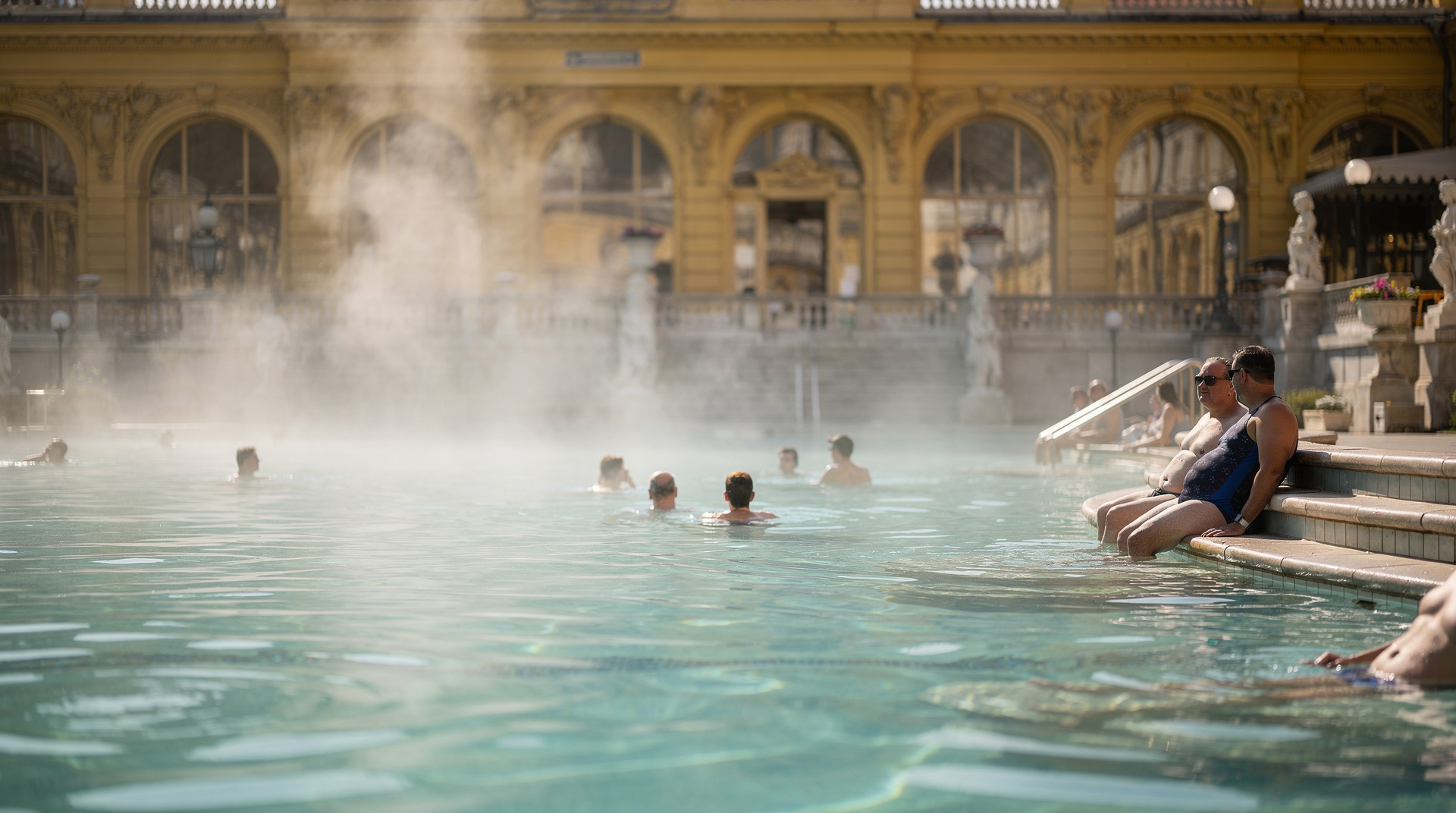
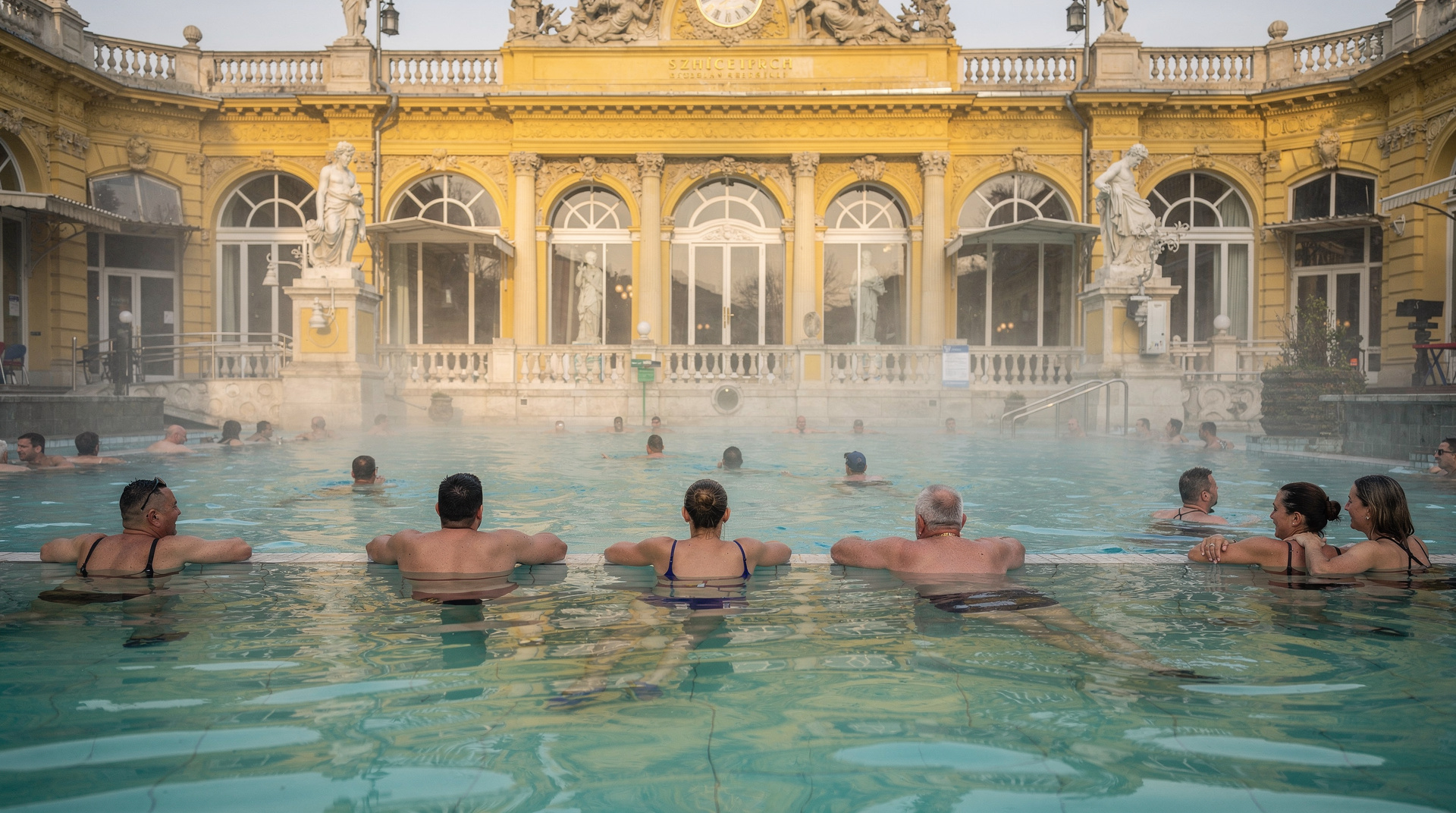
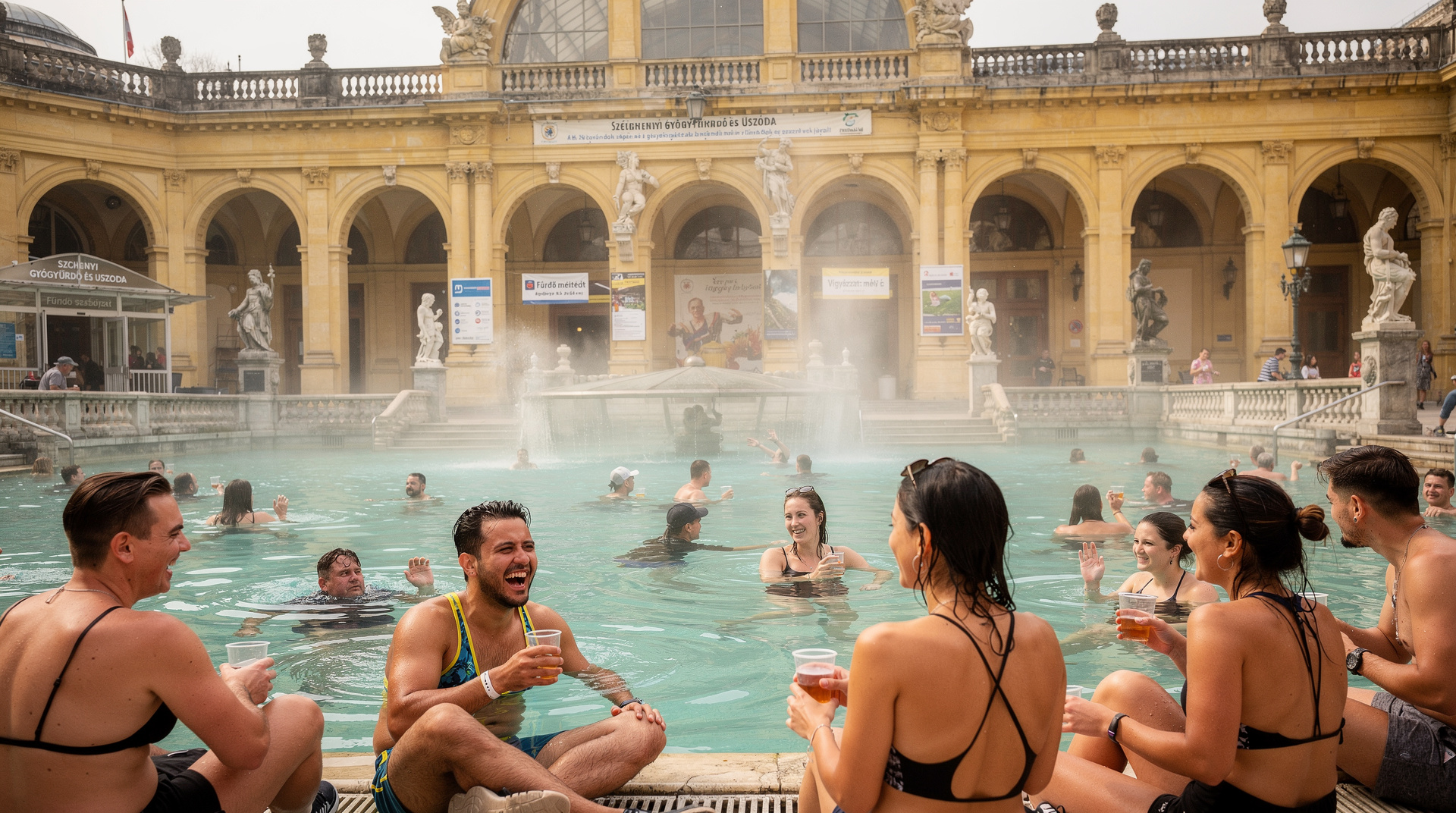
Széchenyi is the largest medicinal bath in Europe, occupying a yellow neo-baroque palace in City Park (Városliget). Built in 1913, it has three outdoor pools and fifteen indoor pools and thermal tubs. The outdoor pools, with their chess-playing regulars and ornate architecture, are genuinely iconic.
Temperature range: 27–40°C across pools. The outdoor main pool is kept at around 27–28°C (cooler, for swimming), while the thermal pools climb to 36–40°C.
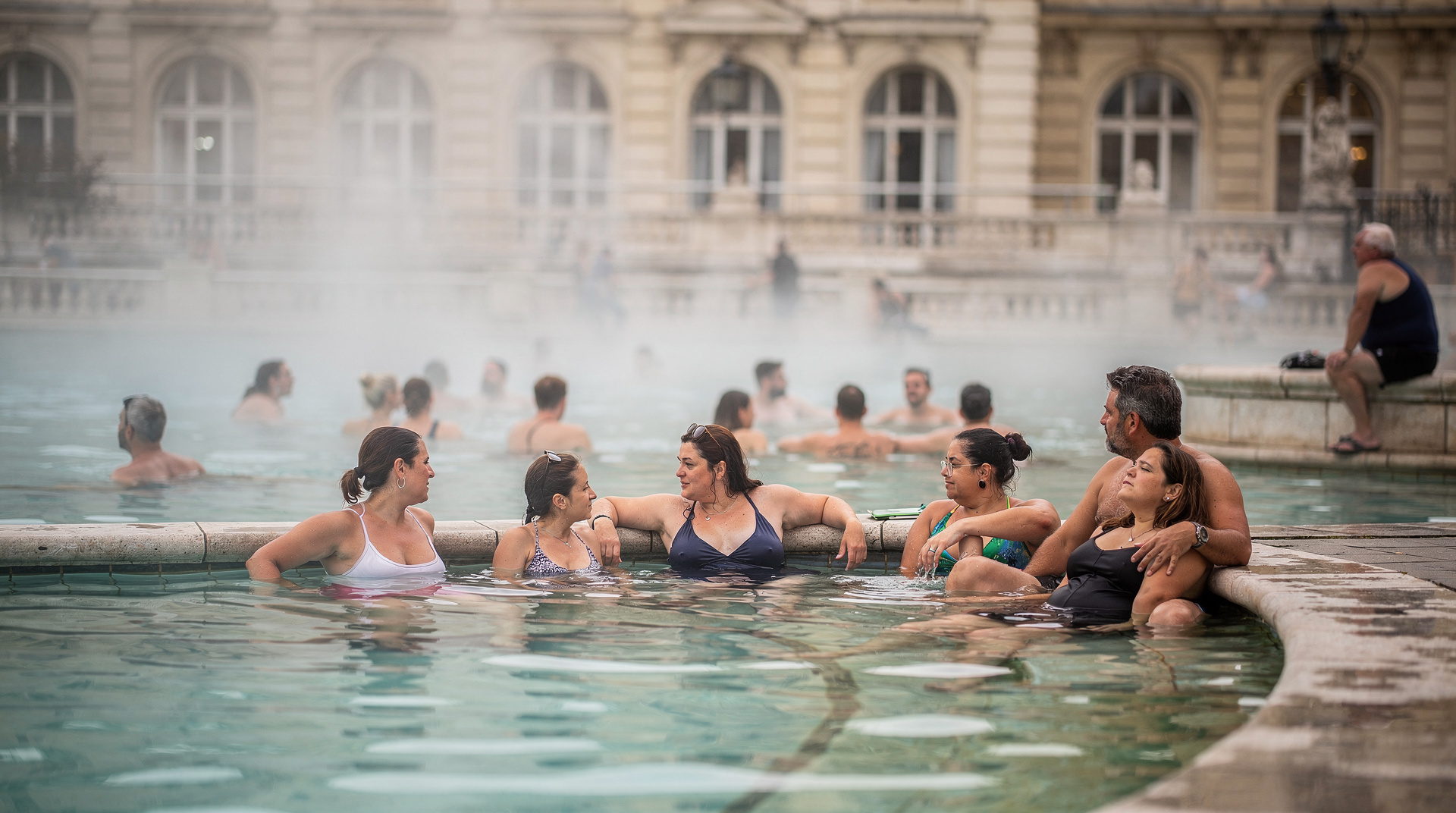
Atmosphere: Lively, international, and social. In summer it edges toward resort vibrancy; in winter the outdoor pools steam beautifully against cold air. A portion of the crowd is always on a stag or hen trip.
Best for: First-timers, social soaking, anyone wanting the full classic Budapest experience, winter visits for the outdoor drama.
Practical details: Open daily, usually 06:00–22:00 (weekend hours can vary). Arrive early on weekdays. Locker vs. cabin pricing differs by around 1,000 HUF. The Széchenyi full-day pass includes access to all pools, thermal baths, and saunas.
How to get there: Metro M1 to Széchenyi fürdő. A quick walk from Heroes’ Square at the end of Andrássy út.
Paskal sits in Zugló, well off the tourist axis, and its clientele is largely local families rather than visitors on a city break: a Paskal bath entry ticket is the option for a bath day without the Széchenyi crowd, at the cost of the grand architecture.
Gellért — Art Nouveau grandeur on the Buda side
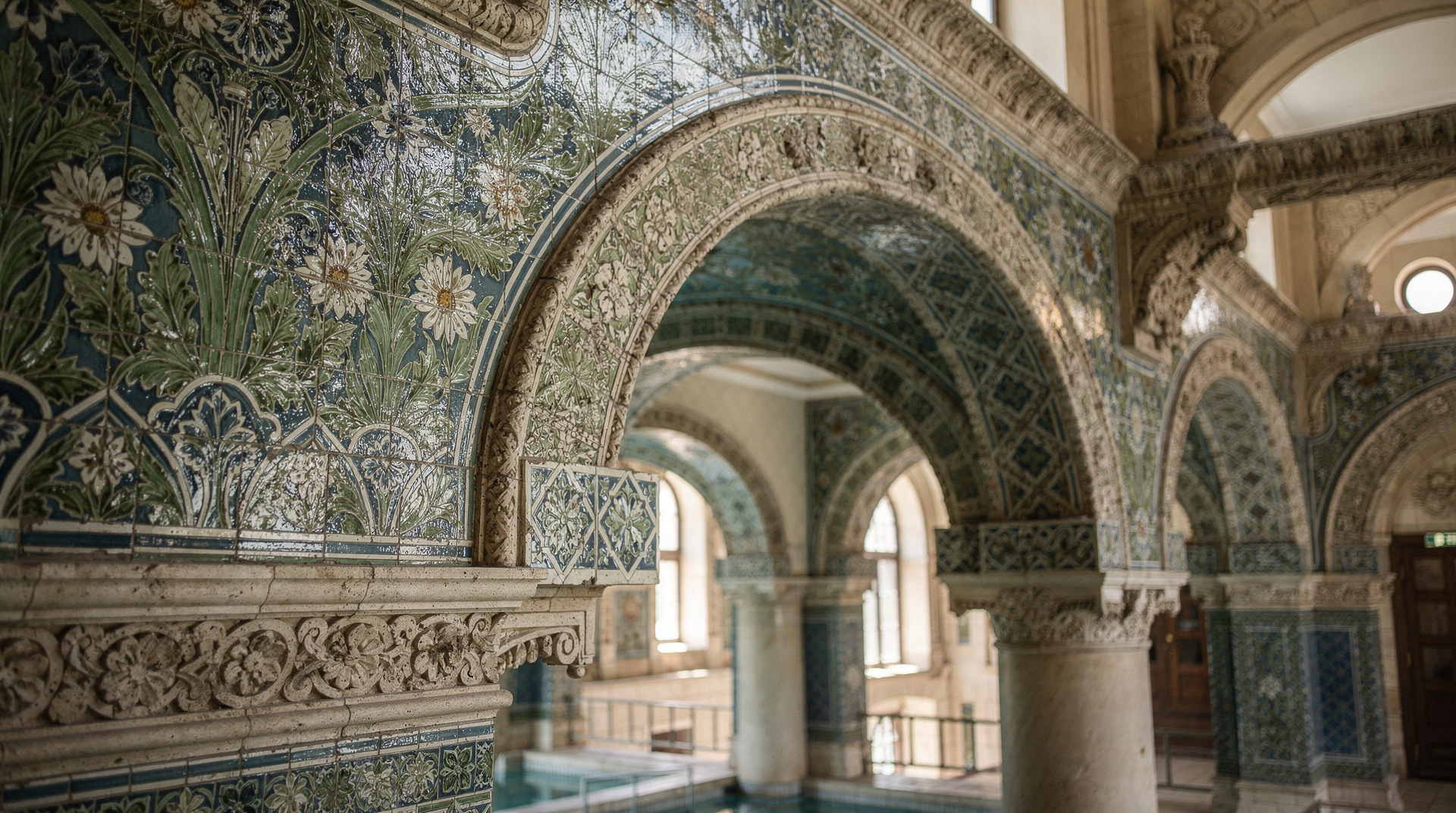
The Gellért Hotel and Baths complex is one of the most photographed bath interiors in the world — a soaring domed hall with mosaic floors, marble columns, and wrought-iron railings built in 1918. The main indoor thermal pool looks like a Roman forum. The outdoor pool terrace above the Danube opens in summer.
Important note: There are ongoing reports of a possible renovation or partial closure at Gellért — nothing confirmed at time of writing, but check current operating status before visiting. The GYG ticket remains valid; verify opening hours directly with the bath or your booking confirmation.
Temperature range: Indoor thermal pool at 36–38°C; outdoor pool cooler (around 26°C in season).
Atmosphere: More sedate and elegant than Széchenyi, though increasingly touristy. Still feels like stepping into 1920s Budapest in the main hall. Hotel guests from the attached Danubius Hotel Gellért also use the baths, giving it a slightly mixed crowd.
Best for: Architecture lovers, couples wanting a refined setting, those staying on the Buda side near /destinations/gellert-hill/.
How to get there: Tram 47 or 49 to Szent Gellért tér. Ten-minute walk from the Liberty Bridge.
While Gellért tickets are unavailable, the Széchenyi thermal baths fast-track admission with locker is a close alternative for a thermal soak.
Rudas — 450 years of steam under an Ottoman dome
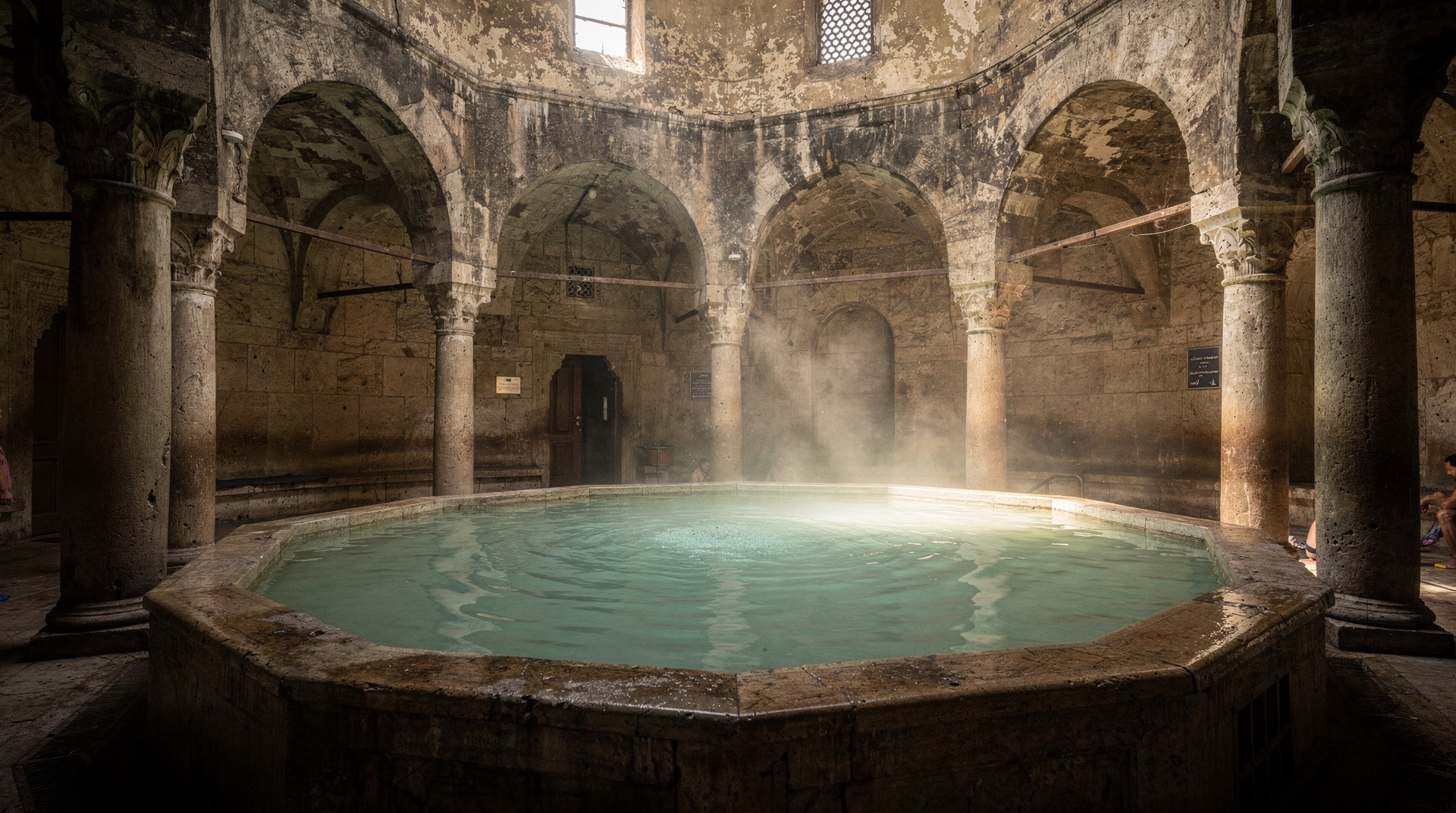
Rudas was built in 1550 under the Ottoman ruler Mustafa Pasha. The central chamber — an octagonal pool beneath a star-pierced dome, letting in columns of light — is the most atmospheric bathing space in the city. On weekdays, the traditional Turkish section is men-only; weekends and evenings open to all genders, though the atmosphere shifts considerably.
A rooftop Jacuzzi with panoramic views over the Danube and Pest was added in the 2000s — a jarring but popular addition.
Temperature range: Central pool 34°C; surrounding alcove pools 28–42°C; rooftop Jacuzzi 36°C.
Atmosphere: The most genuinely historic in Budapest. Weekday mornings draw older Hungarian regulars; weekend evenings get younger and louder. The Friday and Saturday late-night “Rudas Party” nights operate similarly to the Sparty concept.
Best for: History lovers, solo travellers, those wanting an authentic Turkish bath experience, couples on evenings/weekends.
How to get there: Bus 7 or tram 2 to Rudas gyógyfürdő stop, at the foot of Gellért Hill. Five minutes on foot from the Elizabeth Bridge.
The Rudas spa day with three-course meal is a popular combination if you want to pair a full soak with Hungarian cuisine in the on-site restaurant.
Lukács — the local’s bath in District II
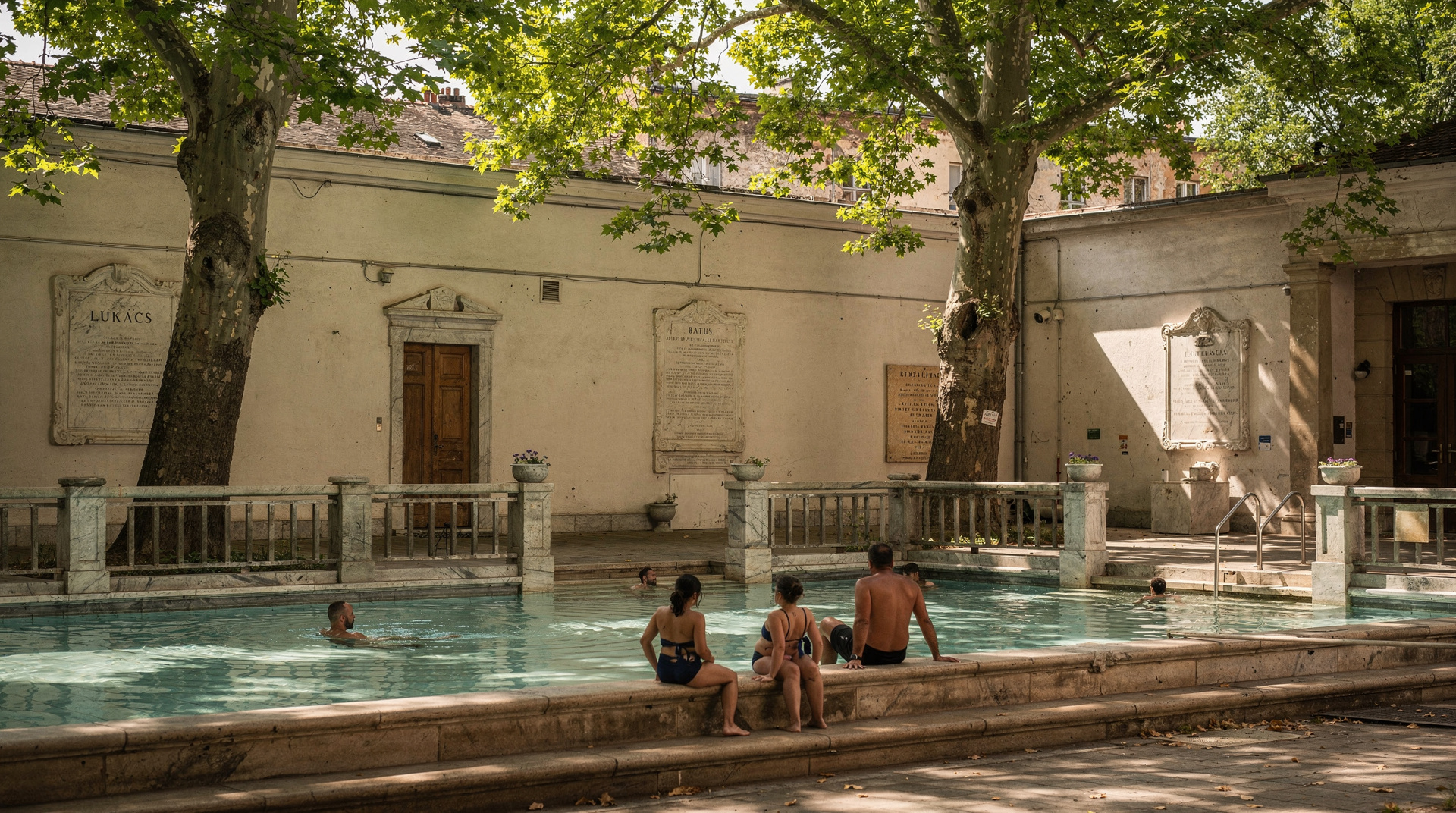
Lukács Baths, tucked behind the tram line in Buda’s District II, is the least visited of the major baths by tourists — and that is precisely the point. A renovated complex with outdoor pools, thermal tubs, and a garden where locals read newspapers in the sun, it has a quiet neighbourhood character that Széchenyi simply cannot replicate.
Temperature range: Outdoor thermal pool 36°C; indoor pools 22–40°C.
Atmosphere: Calm, mixed-age local crowd, almost no stag groups. The garden area is lovely in spring and autumn. Spa treatments available, including physiotherapy.
Best for: Those who want to soak without the tourist bubble, couples seeking a calm afternoon, repeat Budapest visitors who have done Széchenyi.
How to get there: Bus 86 or tram 4/6 to Lukács fürdő. Roughly 15 minutes from the city centre.
The Lukács full-day ticket includes all pools and access to the thermal section.
What to expect at check-in
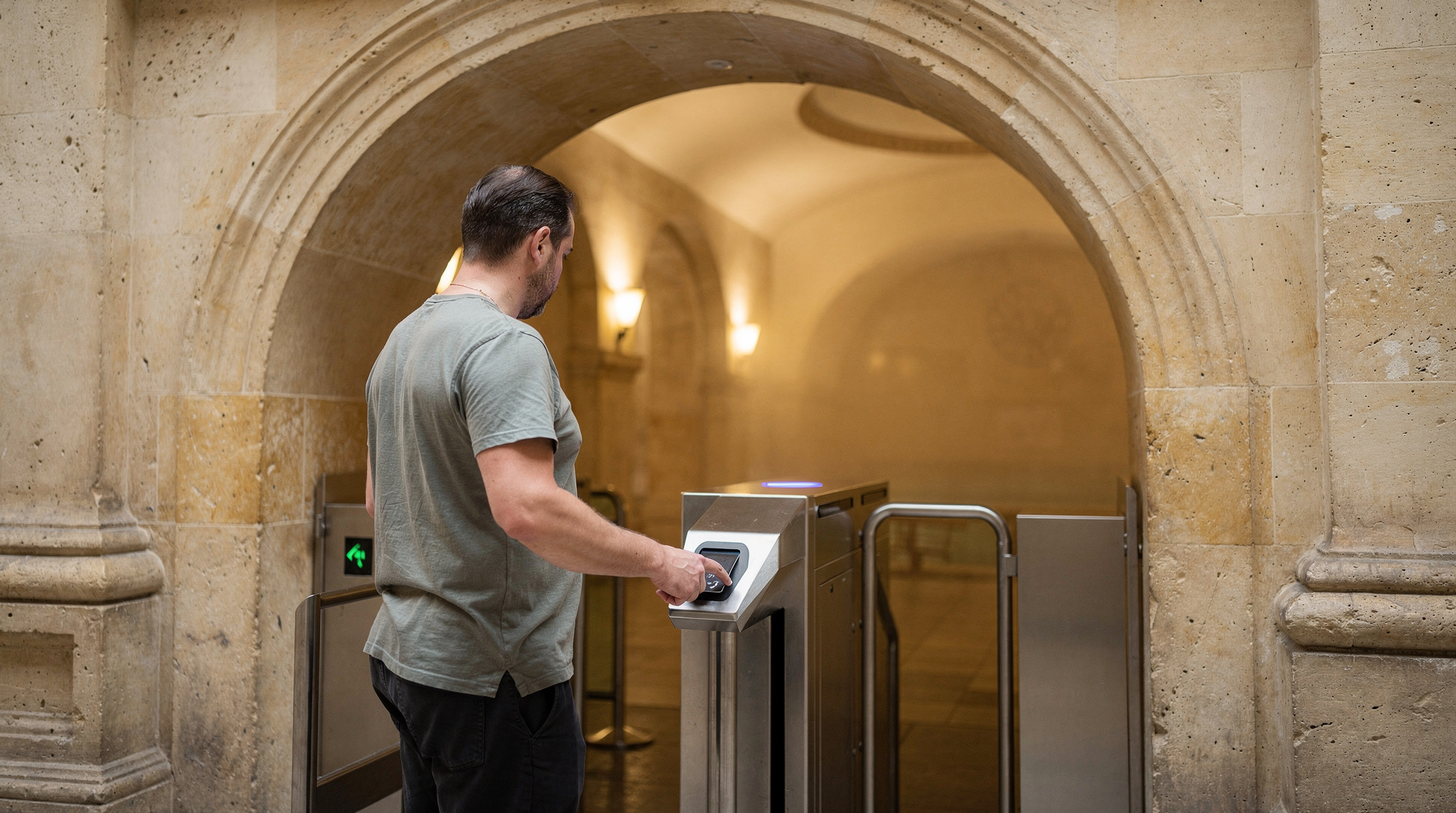
First-time visitors are often thrown by the check-in process, which differs from a typical swimming pool. At Széchenyi and Gellért, you’re issued a wristband (or a chip-card) at the turnstile that also serves as your locker key — tap it at any free locker to claim it, and the same wristband lets you back in. Cabins work the same way but with an attendant showing you to a private space instead of a locker bank. Keep the wristband on at all times; losing it can mean a replacement fee. Rudas, being older, uses a simpler locker-key system without electronics.
Getting to whichever bath you choose is straightforward on Budapest’s public transport — see the BKK travel passes guide if you don’t already have a multi-day ticket, and the Budapest metro guide for how the M1 line specifically serves Széchenyi. If you’re deciding between the three most-compared baths, the dedicated Széchenyi vs Gellért vs Rudas comparison goes deeper than the table below.
Planning your bath day around the rest of the city
A bath works best as the slow part of a day, not as a box to tick. Széchenyi pairs naturally with a stroll through City Park and Heroes’ Square and City Park, so you can walk the grounds before or after your soak. Gellért sits at the foot of Gellért Hill, which makes a good viewpoint walk once you are warm and relaxed. If you are weighing how to fit baths into a short stay, how many days in Budapest helps you decide whether one soak or two is realistic.
If tickets are the part you worry about, bath ticket mistakes lists the errors that cost visitors time and money, and couples spa experiences covers the more private options for two. For a first visit with no other plans, the first time in Budapest guide shows where a bath day fits among the classic sights.
Beyond the big four: other baths worth knowing
Dandar Thermal — the neighbourhood hidden gem
Dandar in District IX is the kind of bath that Budapest residents send each other on WhatsApp as a “secret.” Small, functional, and genuinely local, it has an outdoor pool, a thermal pool, and a sauna. Prices are among the lowest of any public bath in the city.
Palatinus on Margaret Island — the summer playground
Palatinus is a vast outdoor water park on /destinations/margaret-island/ rather than a traditional thermal bath. Seven pools, slides, and a wave pool make it the place for families and sun-seekers in summer. The thermal content is present but secondary to the fun-park atmosphere.
Margaret Island Spa — the wellness resort option
The Danubius Health Spa Resort on /destinations/margaret-island/ is a full hotel spa with thermal pools, treatments, and medical bathing programs. Entry is sold as a day ticket and attracts a calmer, wellness-focused crowd separate from the Palatinus crowds.
Paskal Bath — the modern alternative
Paskal in District XIV is a newer complex with a fitness club, pools, sauna world, and a more contemporary atmosphere. Good if you want clean modern facilities alongside thermal soaking.
Beer Spa at Széchenyi — a quirky add-on
A smaller experience tucked near the Széchenyi grounds: you soak in a tub of warm beer and hops (said to be good for skin), then receive a Széchenyi entry ticket or a beer package. Novelty factor is high. The beer spa with optional Széchenyi tickets is the entry point.
How to choose the right bath for your trip
| Your priority | Best match |
|---|---|
| Iconic Instagram shot | Széchenyi or Gellért |
| Genuine history | Rudas (Ottoman dome) |
| Quietest experience | Lukács or Dandar |
| Winter outdoor soak | Széchenyi or Rudas rooftop |
| Family with kids | Széchenyi or Palatinus |
| Couples, romantic | Gellért or Lukács |
| Spa night party | Sparty (Széchenyi) |
| Budget priority | Lukács or Dandar |
| Day + meal combo | Rudas spa-meal package |
Practical tips that will save you hassle
Book tickets online. At Széchenyi, walk-up queues in summer can run 45–90 minutes. Online tickets with a time slot skip the main queue. Buy directly through the official Széchenyi site or a verified platform — not from touts at the gate (a common scam: they sell over-priced or unofficial tickets outside the Állatkerti körút entrance).
Arrive before 10:00 or after 16:00. The midday rush at Széchenyi (roughly 10:00–16:00 in summer) packs the outdoor pools. Weekday mornings are noticeably calmer.
Bring your own swimsuit. Rentals are available at all major baths (roughly 1,500–2,500 HUF) but are not always clean or well-fitted. Bring your own.
Locker vs. cabin. Most baths offer locker (kabin) or shared cabin pricing. A locker is fine for a straightforward soak; a cabin gives you a private changing space and costs about 1,000–2,500 HUF more.
Currency. Pay in HUF. Hungary is not in the eurozone — paying in euros at the desk will always cost you more due to poor conversion rates. There are ATMs near every major bath; avoid Euronet machines. Tip: check the /guides/budapest-baths-prices-tickets/ page for a current price table before going.
Health caveats. Heart conditions, high blood pressure, and pregnancy are standard contraindications for very hot pools. The thermal sections (38–42°C) are genuinely warm. Take it slowly, drink water, and step out if you feel lightheaded.
Read the etiquette guide. Going to a Budapest bath has unwritten rules — showering before entry, pool-specific dress codes, men-only vs. mixed days at Rudas. Read /guides/thermal-bath-etiquette/ before your first visit.
Thermal baths and Budapest itineraries
No Budapest trip feels complete without at least one bath visit. Most three-day itineraries include Széchenyi on Day 2 or Day 3. For dedicated wellness trips, a two-day bath itinerary makes sense: Rudas in the morning (when the dome light is at its best), Lukács the next afternoon.
If you are planning a stag weekend, the Sparty night event covers the social angle; read the full /guides/sparty-spa-party-guide/ for logistics. Couples looking for a romantic approach should check /guides/best-baths-for-couples/. Families should start at /guides/best-baths-with-kids/.
For overall trip planning, the /itineraries/budapest-3-days/ flagship itinerary includes bath recommendations by neighbourhood. The /itineraries/budapest-thermal-baths-itinerary/ goes deeper on a wellness-focused two-day structure.
Seasons, nights and add-ons
Baths change character with the calendar. Budapest in winter is when the outdoor pools are at their most dramatic, while Budapest in summer brings the crowds and the open terraces. If the soak is part of a stag or party weekend, the Budapest stag do weekend itinerary shows how it fits with the rest of the schedule, and the Beer Spa guide covers the novelty option in more detail. For a first-hand account, my first winter bath describes what the experience felt like.
The honest verdict
For deeper information on any specific bath, follow the links to /guides/szechenyi-baths-guide/, /guides/gellert-baths-guide/, /guides/rudas-baths-guide/, and /guides/lukacs-baths-guide/. For pricing specifics, /guides/budapest-baths-prices-tickets/ has a current table.
Frequently asked questions about Best thermal baths in Budapest
How much do Budapest thermal baths cost?
Prices vary widely. Széchenyi day ticket runs around 9,900–13,900 HUF (€25–35) depending on day and locker type. Gellért is similar, roughly 10,900 HUF (€27). Rudas spa-only is about 5,500 HUF (€14) on weekdays. Lukács is the best value at around 5,300 HUF (€13). Sparty tickets run 14,000–17,000 HUF (€35–43).Do I need to bring a towel and swimsuit to Budapest baths?
Yes, always bring your own swimsuit (mandatory everywhere) and a towel (optional but practical — rentals cost 1,000–2,000 HUF). Flip-flops are strongly recommended. Széchenyi provides caps for the pool; Rudas requires them in the thermal pools on certain days.Can I visit multiple baths in one day?
You can, but most visitors leave after 2–4 hours feeling relaxed and ready for nothing. Choose one bath per day unless you are on a dedicated wellness itinerary. See the /itineraries/budapest-thermal-baths-itinerary/ for a two-day soak plan.Which bath is best in winter?
Széchenyi's outdoor pools are magical in winter — steam rising off 38°C water while snow falls. Rudas also has a rooftop pool with city views. Both Lukács and Dandar have outdoor options. The /guides/outdoor-baths-in-winter/ guide covers the experience in detail.Are thermal baths good for kids?
Széchenyi and Lukács are the most family-friendly. Rudas has age restrictions (under 14 not admitted on most days). Gellért has a children's splash pool. Read the full /guides/best-baths-with-kids/ guide before booking.Should I book tickets online or at the door?
Book online. Walk-up queues at Széchenyi can exceed one hour in summer. Buying through the official ticket system or a trusted platform saves time and often includes locker assignment. Avoid resellers outside the gate who inflate prices — a common trap at the Széchenyi entrance on Állatkerti körút.What is the Sparty?
Sparty (spa + party) is a monthly late-night event at Széchenyi where the pools turn into a pool party with DJs, light shows, and a bar. It runs from roughly 22:00 to 04:00. It is popular with stag groups but attracts a broad crowd. See /guides/sparty-spa-party-guide/ for the full breakdown.Is there a quiet, non-touristy bath in Budapest?
Lukács Baths in District II is the go-to local choice — smaller, calmer, and genuinely used by the neighbourhood. Dandar Thermal in District IX is even more under the radar. Neither shows up on tour-bus itineraries.How does check-in work at Budapest's baths?
At Széchenyi and Gellért, a wristband or chip-card issued at the turnstile also acts as your locker key — tap it at any free locker, and the same wristband gets you back in. Cabins work similarly but with an attendant showing you to a private space. Rudas uses a simpler, non-electronic locker-key system. Keep your wristband on at all times, since losing it can mean a replacement charge.
Top experiences
Bookable activities with verified prices and instant confirmation on GetYourGuide.
Budapest: Széchenyi spa full day entrance pass
Budapest: Széchenyi thermal baths fast-track admission with locker
Budapest: Rudas turkish bath spa day pass 3 course meal
Budapest: Lukács thermal bath full day spa ticket
Budapest: The ultimate late night spa party ticket