Szentendre — the artists' town on the Danube Bend
Plan a Szentendre day trip from Budapest: Serbian churches, artists' galleries, open-air museum, lángos and wine — just 40 minutes from the city.

Quick facts
- Getting there
- HÉV suburban rail from Batthyány tér (metro M2): 40 minutes, ~900 HUF (~€2.25) each way. Or organised day tour from Budapest.
- Distance from Budapest
- About 20 km north of Budapest, on the Danube Bend.
- Time needed
- Half a day for the old town; a full day if you add the Skanzen open-air village museum.
- Entry costs
- Old town and churches: free to walk; church interiors from ~500 HUF (~€1.25). Skanzen: ~3 000 HUF (~€7.50) adults.
- Crowds
- Weekend afternoons in summer are extremely busy. Arrive before 11am or after 3pm. Weekdays are far calmer.
An artists’ town that survived its own discovery
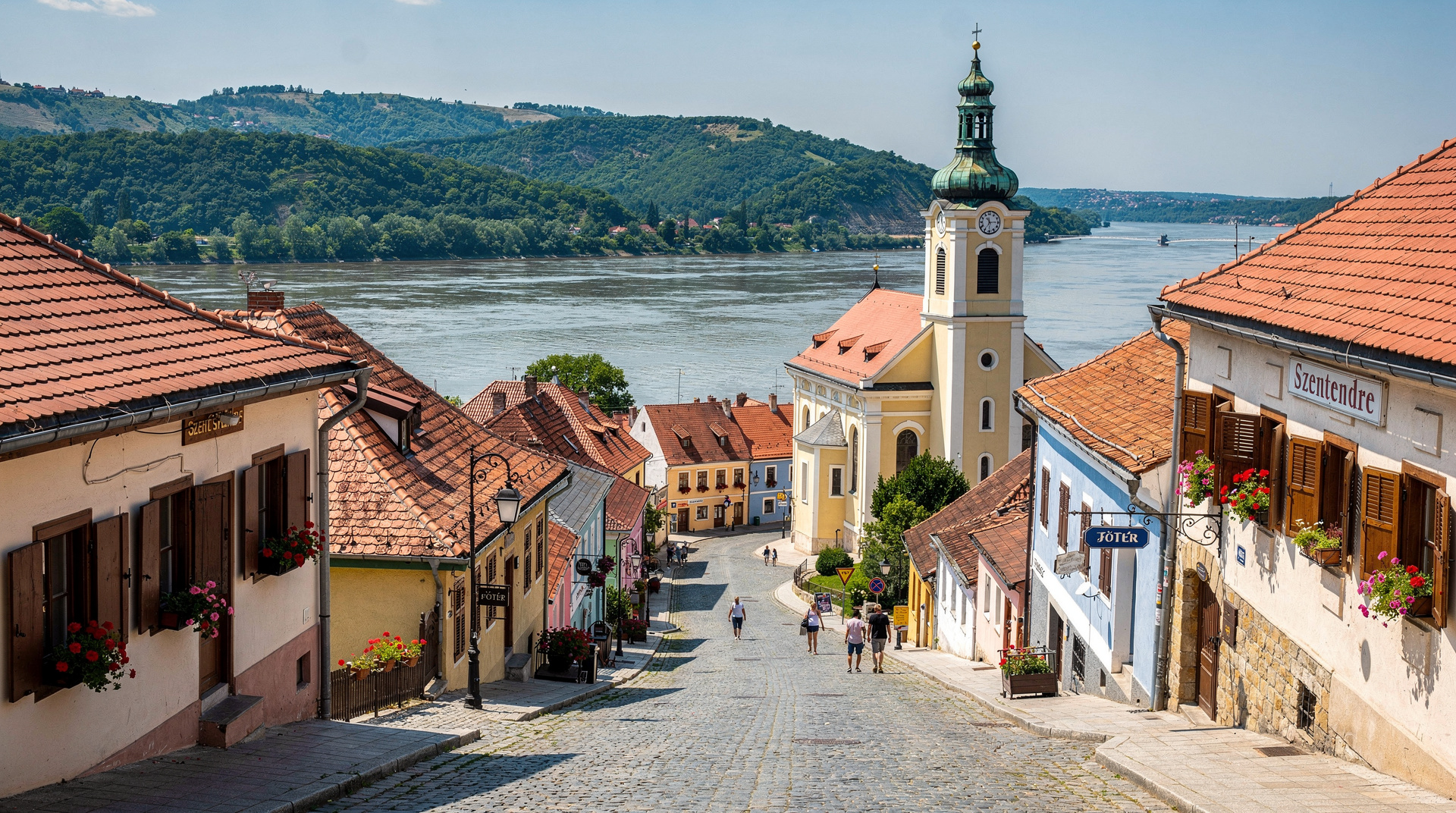
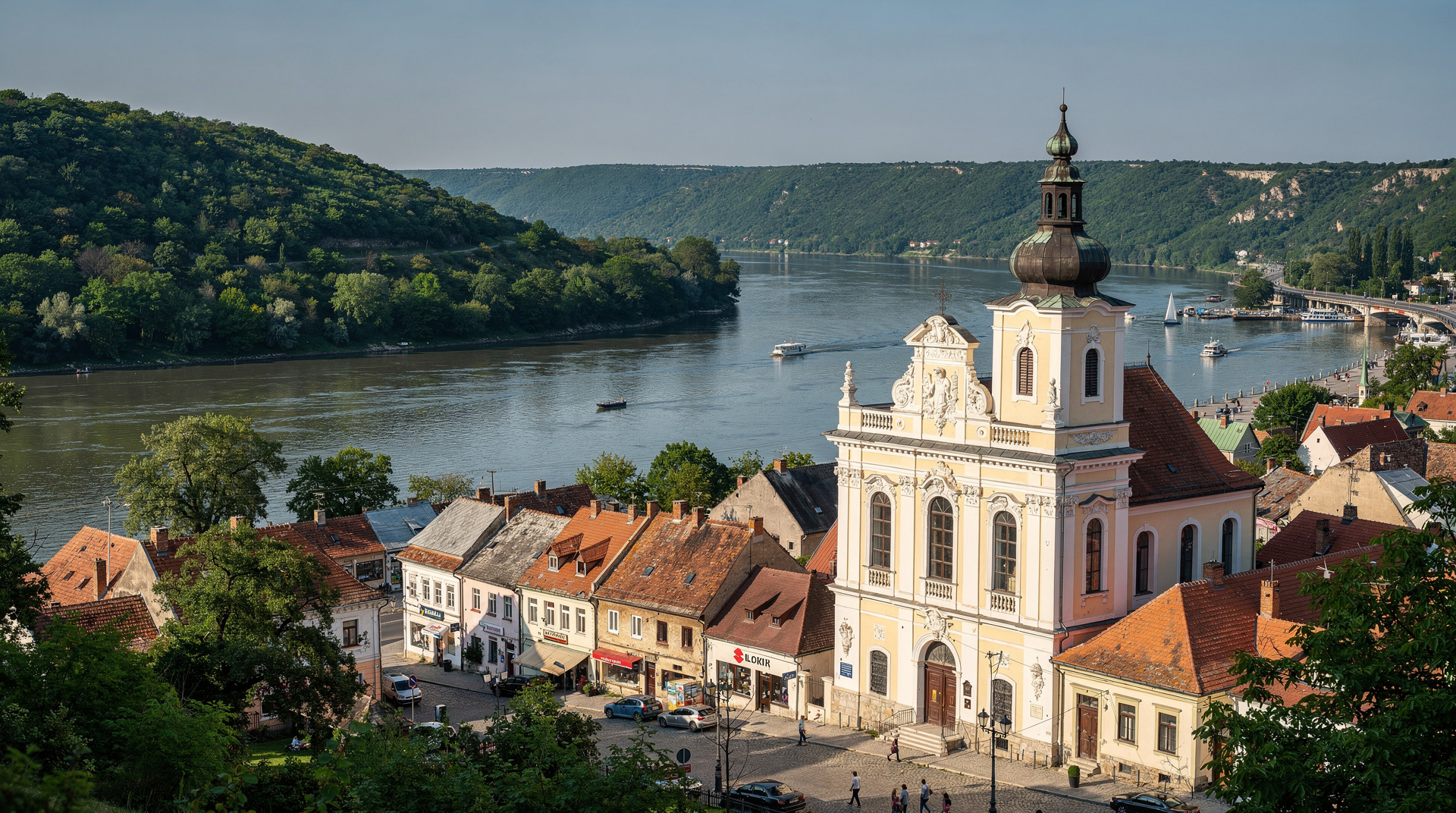
Szentendre was a Serbian market town before it was an artists’ colony, and an artists’ colony before it became a day-trip destination. The Serbian Orthodox community settled here in waves after fleeing Ottoman rule in the Balkans — first in the 1690s, then again in the 1740s — and built the distinctive ensemble of churches, merchants’ houses and Orthodox monasteries that gives the old town its particular character. In the 1920s, Hungarian artists discovered the same qualities (the light, the affordable rents, the proximity to Budapest) and established a colony that brought Béla Czóbel, Lajos Vajda and others into a community that lasted through the communist era and into the present.
What you see today is the result of all three layers: the Serbian Baroque town, the artists’ quarter, and the tourist infrastructure that has grown around both. In peak season, the combination can feel overwhelmed. Outside peak hours, Szentendre is still one of the most pleasant half-days available from Budapest.
| Where | ~20 km north of Budapest, Danube Bend |
| Cost | Old town free; Skanzen ~3 000 HUF; church interiors from ~500 HUF |
| Time needed | Half a day (old town) to a full day (with Skanzen) |
| Getting there | HÉV from Batthyány tér (~40 min, ~900 HUF each way) |
| Best time | May–October; weekdays or before 11am for fewer crowds |
Getting there — the HÉV is the right choice
The most direct and cheapest route is the HÉV suburban rail from Batthyány tér (metro M2), which takes approximately 40 minutes and deposits you at the southern edge of the old town. The ride itself is pleasant — the HÉV follows the Danube Bend, with river views from the right-hand side of the train as you approach Szentendre.
Note on tickets: Budapest transit passes cover the journey only as far as the city boundary. You need either a separate Szentendre ticket (~900 HUF each way) or an extension ticket from a ticket machine on the platform at Batthyány tér. The HÉV does not accept BKK contactless; buy paper tickets. For a full breakdown of Budapest’s ticketing zones and passes, see the BKK travel passes guide.
The half-day tour from Budapest to Szentendre includes transport and a guided walk through the old town — a good option if you prefer context and don’t want to navigate the HÉV independently. The artists’ village tour focuses specifically on the art colony history and the gallery quarter.
The old town — what to see and in what order
From the HÉV station, the old town is a 5-minute walk north along the main pedestrian street (Dumtsa Jenő utca). The logical sequence:
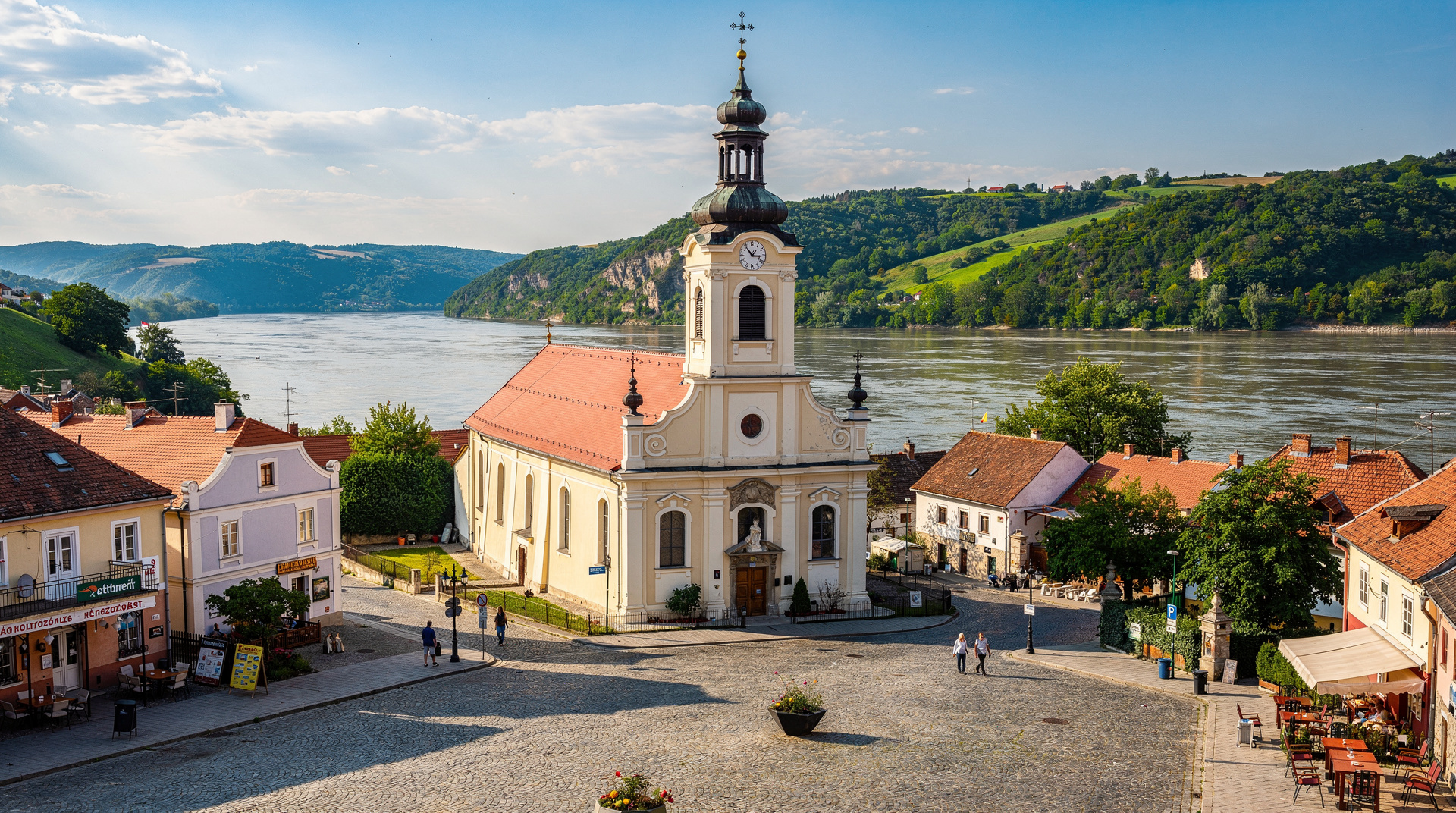
Fő tér (Main Square): the heart of Szentendre, a gently sloping Baroque square with the 18th-century Plague Cross at its centre (erected in thanks after the 1763–64 plague passed). The surrounding buildings are a textbook example of Hungarian provincial Baroque; the Serbian merchants who built them were prosperous enough to build well. The Blagovestenska Church on the east side of the square has the best interior of the old-town churches — an elaborate gilded iconostasis with 18th-century icons painted in a synthesis of Byzantine tradition and Baroque naturalism.
The street above Fő tér: the lanes climbing west and north from the square toward the hilltop Cathedral of St John escape most of the tourist flow. The view from the cathedral garden over the tiled rooftops to the Danube is one of the defining images of the Danube Bend.
Margit Kovács Ceramic Museum (Vastagh György utca 1): the most significant single museum in Szentendre, dedicated to Hungary’s best-known ceramic sculptor (1902–1977). Kovács’s work ranges from delicate figurines to large-scale mythological reliefs, all with a distinctive folk-influenced modernism. The museum is well-curated and not overcrowded. Entry 2 000 HUF (€5).
Gallery quarter: the streets around Bogdányi utca and Alkotmány utca are lined with galleries showing contemporary Hungarian painting, printmaking and ceramics. Quality and price vary considerably; the municipal gallery at Ferenczy Múzeum Centrum shows the more significant historical and contemporary work.
The Skanzen — Hungary’s open-air village museum
Three kilometres west of Szentendre, the Szabadtéri Néprajzi Múzeum (Open-Air Ethnographic Museum, known as Skanzen) is one of the finest open-air museums in central Europe. The 46-hectare site reconstructs complete Hungarian village environments from different regions and periods — farmsteads from the Great Plain, timber church from Transylvania, watermill from western Hungary — all with furnished interiors showing how different communities lived from the 18th century through the early 20th.
The scale is considerable: 300 original buildings have been dismantled from their original sites and reconstructed here. On summer weekends, demonstrations of traditional crafts (weaving, pottery, baking) take place in the appropriate buildings. The site requires half a day to do justice to — plan on 3 hours minimum.
Entry to Skanzen costs around 3 000 HUF (~€7.50) for adults; the museum runs its own bus service from Szentendre HÉV station. Closed Mondays.
Food and wine in Szentendre
Lángos: deep-fried dough topped with sour cream and grated cheese is the essential Szentendre street food. The stall near the HÉV station on Dumtsa Jenő utca is well-regarded; expect to pay around 800–1 200 HUF (~€2–3) for a large serving. Avoid anywhere with an English-language menu that also sells lángos — the tourist premium is real.
Wine tastings: the wine tasting in a 100-year-old cellar is one of the better ways to explore Hungarian wines in a convivial setting. The cellar venue near Fő tér typically offers 4–6 wines including local whites and Tokaj selections, with a guide explaining the wine regions. Around 5 000–7 000 HUF (~€12–17) per person.
The Szentendre day trip with food tastings from Budapest combines transport, a guided walk and structured tastings of regional specialties — efficient if food is your primary interest.
Aranysárkány Restaurant (Alkotmány utca 1a): the most consistently recommended restaurant in the old town for traditional Hungarian cooking. Mains around 4 000–7 000 HUF (~€10–17). Reserve in advance for weekend lunch.
Szentendre versus the rest of the Danube Bend
| Szentendre | Visegrád | Esztergom | |
|---|---|---|---|
| Distance from Budapest | ~20 km | ~45 km | ~65 km |
| Signature sight | Serbian churches, artists’ quarter | Royal palace ruins, citadel | Basilica, Danube Bend views |
| Best for | Half-day, easiest access | Hiking, castle views | Combining religion & architecture |
Most visitors treat Szentendre as the first, closest, and easiest stop on the Danube Bend, saving Visegrád and Esztergom for a longer day or a separate trip. The Danube Bend day trip guide has the full logistics for combining all three.
How Szentendre fits into a Budapest stay
Szentendre works best as a change of pace inside a longer trip rather than as a headline act. After two or three days of metros, bath queues and busy boulevards, a slower town with low houses and quiet side streets is a welcome contrast. If you are still shaping your plans, the first-time in Budapest guide and the Budapest in 3 days itinerary show where a half-day out of the city sits most comfortably, and how many days in Budapest helps you decide whether you can afford the time at all.
A sensible pattern is to spend the morning in Szentendre and return in the early afternoon, leaving the evening free for something very different in the city: a Danube cruise after dark, or a soak in one of the thermal baths. Tired legs from cobbled streets are well served by warm water. If you would rather save the baths for another day, the town also pairs naturally with a slow dinner back in Pest.
What to do if the weather turns
Szentendre is mostly an outdoor town, and the hillside lanes are not much fun in heavy rain. The good news is that the town’s real strengths are indoors: the Margit Kovács Ceramic Museum, the Ferenczy museum and the church interiors all work as a wet-weather plan, and the wine cellar is dry and cool whatever the sky is doing. Allow a little extra time between stops, because the old town is small and you will end up sheltering in a café more often than you expect.
In the cooler months the town is calmer and the light on the rooftops can be lovely, but the Skanzen open-air museum is a much less appealing prospect in bad weather because so much of it is outside. If the forecast is poor, keep the visit to the old town and its museums, and treat the open-air village as something for a better day.
Travelling with company
Different travellers get different things from the town. Couples tend to enjoy the wandering itself: the upper lanes, the view from the cathedral garden and a long lunch. The romantic Budapest guide for couples has ideas for building the rest of the day around that mood. Families usually do better with the Skanzen, where children can move around freely and see buildings and demonstrations rather than reading labels, and the Budapest with kids guide covers how to pace the rest of a family trip around a day out like this.
Solo travellers will find the HÉV simple and the town easy to navigate on foot, which makes it a comfortable first outing alone; the solo travel guide has more on getting the most out of independent days. Keen photographers should favour early morning, when the lanes are empty and the church towers catch the light without crowds in the frame.
Reading the town: a few things worth noticing
Slow down enough and the Serbian heritage shows in small details. Look for the church towers rising above ordinary rooftops, the carved doorways of old merchants’ houses and the way the lanes bend to follow the hillside rather than a grid. The icons inside the churches reward a few unhurried minutes: let your eyes adjust to the candlelight and the gilding, and the iconostasis starts to read as a story rather than a wall of decoration.
The art colony’s legacy is just as visible once you know to look for it. Small galleries occupy former workshops and cellars, and many of the shop windows show ceramics and prints rather than mass-produced souvenirs. Wander into a few and you will quickly learn which galleries are serious and which simply trade on the town’s name. Do not feel obliged to buy; browsing is part of the pleasure here.
Eating well without overspending
The pattern for a good day is simple. Have lángos as a snack rather than a meal, save your appetite for one proper sit-down lunch, and treat the wine cellar as an afternoon activity rather than an add-on. If you want to know what you are eating and why it matters, the traditional Hungarian dishes guide and the where to eat lángos guide are useful primers before you go. Wine-minded visitors can go deeper with the Hungarian wine guide and the wine tastings guide, which help you recognise what is in your glass.
Keep a little room for something sweet. The honey cake sold around the main square comes in decorative shapes and makes a pleasant small gift, though quality varies, so look for a stall that makes it visibly and does not rely on packaging alone. For chimney cake, a Hungarian street sweet, see the chimney cake guide.
Cycling and the route north toward Óbuda
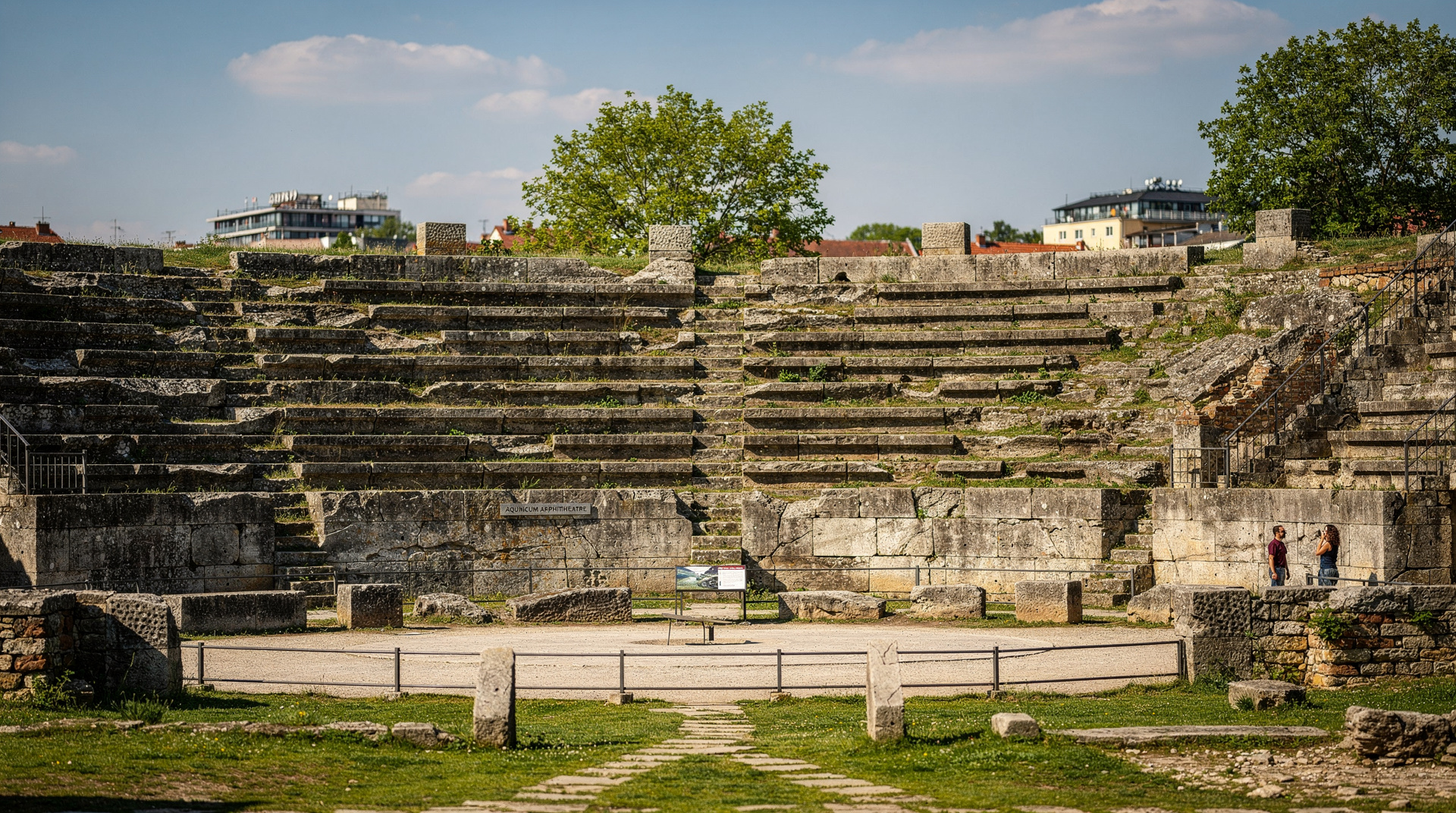
The Danube cycle path connects Szentendre south to Óbuda and Aquincum and central Budapest — a popular route for cyclists who want to combine Roman ruins with the Danube Bend scenery in a single longer day. Renting a bike in Szentendre or at a Budapest MOL Bubi station and riding the roughly 20 km back toward the city centre is a satisfying alternative to the HÉV for the return leg, particularly outside the heat of midsummer afternoons.
Practical tips
Arrive before 11am on weekdays or before 10am on weekends to find the old town quiet. By 1pm on a Saturday in July, the main streets are dense with tour groups. The upper streets and the Skanzen site stay manageable throughout the day.
The tourist offices around Fő tér tend to push overpriced marzipan museum tickets and souvenir honey cake — neither is essential. The actual museums (Margit Kovács, Ferenczy) are more rewarding per forint.
Onwards to Visegrád and Esztergom
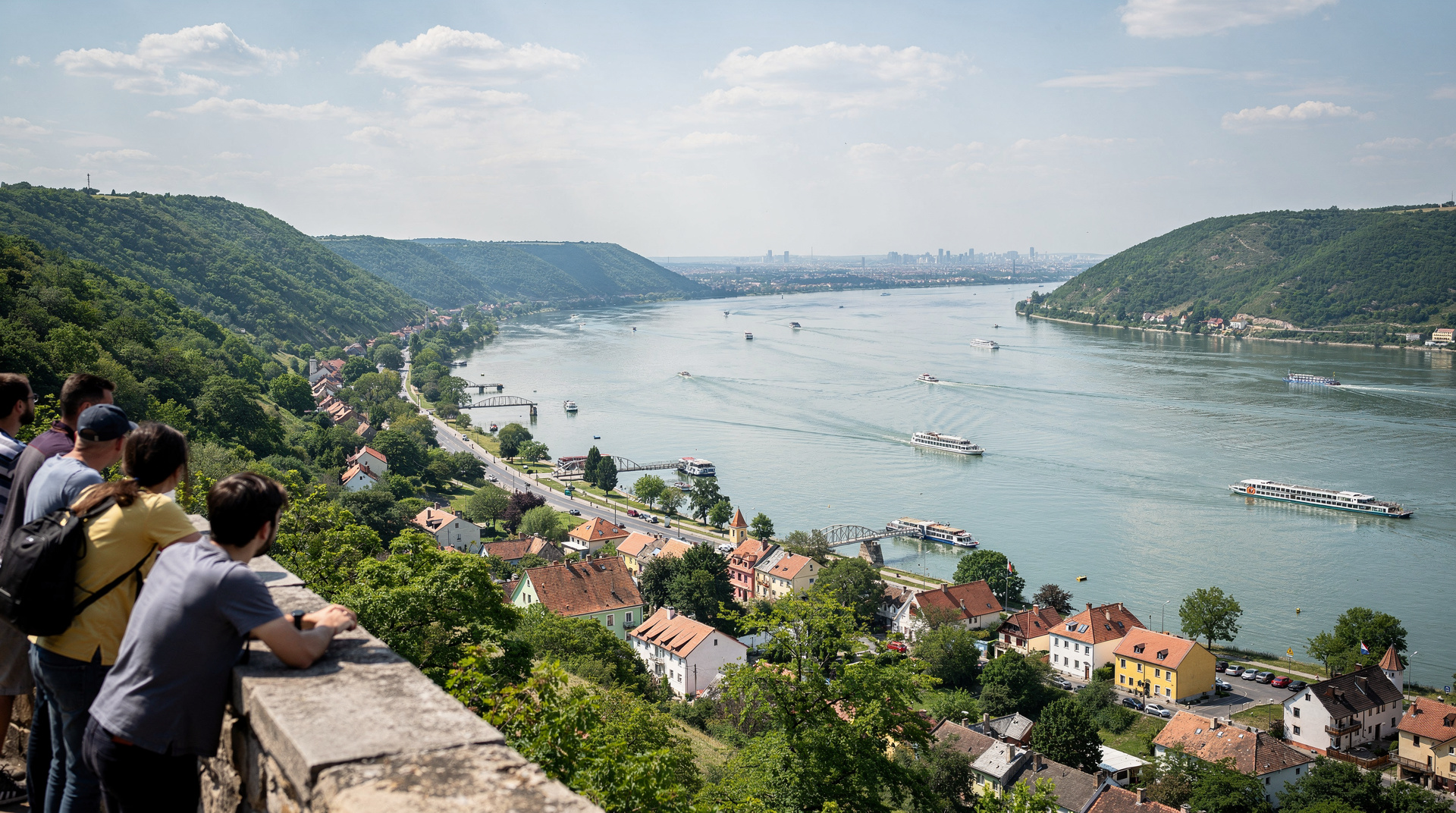
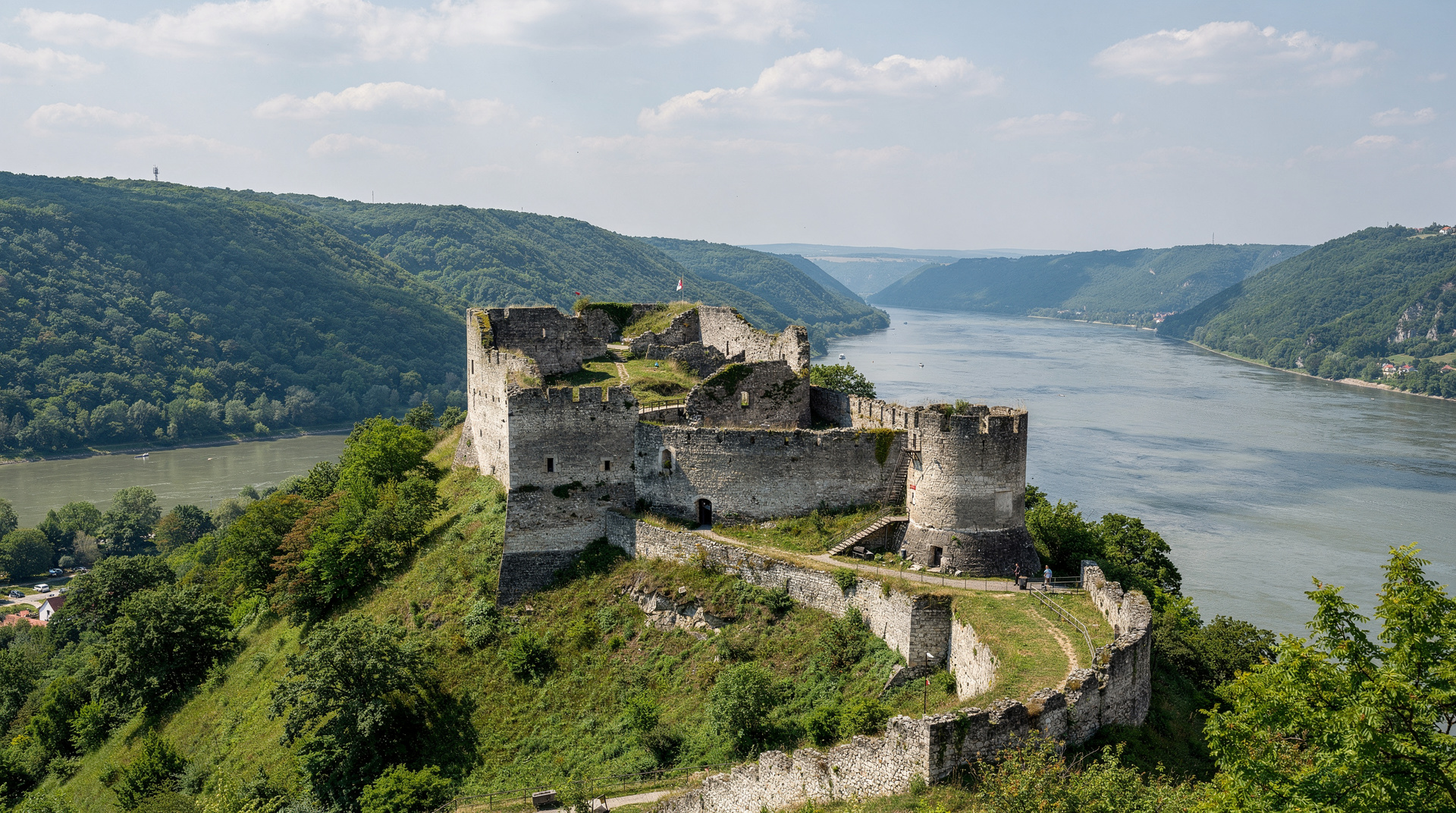
Szentendre is the southernmost point of the Danube Bend’s main tourist triangle — from here you can continue by bus or boat to Visegrád (25 km north) and Esztergom beyond it. The ferry from Szentendre pier runs in summer; the river journey takes about an hour to Visegrád and gives the best possible view of the Danube Bend panorama. See the Danube Bend day trip guide for the logistics of combining all three towns in a single day, and the Szentendre day trip guide for a more tactical hour-by-hour plan.
Top experiences
Bookable activities with verified prices and instant confirmation on GetYourGuide.