Budapest with kids: the complete family guide

Is Budapest good for families with kids?
Yes — Budapest is one of Europe's most underrated family destinations. Thermal baths with splash areas, the zoo, interactive museums, cave walks, a chocolate museum, and a hop-on hop-off bus make it easy to keep children entertained. Prices are lower than Western Europe, and the city centre is compact enough to navigate on foot or metro.
Planning a family trip to Budapest
Budapest rewards families who do a little homework. The city is compact, prices are genuinely lower than Vienna, Prague, or Amsterdam, and there is no shortage of activities that hold children’s attention without exhausting parents. The trick is knowing which parts of the city work well for families — and which to skip.
This guide covers the best family-friendly attractions, which thermal bath to choose, how to get around with kids, honest budget numbers, and a few traps to avoid.
| Where to base yourselves | District V or VI — walkable, near City Park and the metro |
| Cost for a family of 4 | Around 60,000–90,000 HUF/day (~€150–225) for a full activity day |
| Getting around | Metro M2/M4 (lift access) + trams; avoid street taxis |
| Best time | Spring or autumn for mild weather; winter baths for a memorable one-off |
| Book ahead | Széchenyi tickets and the cave walk in June–August |
Why Budapest works for families
The city has a few structural advantages for travelling with children. The metro is fast and cheap — a single ticket costs 500 HUF when bought in advance (700 HUF on board) and children under six ride free. The main attractions in City Park, Castle District, and along the Danube are clustered within manageable distances. Most museums offer reduced or free entry for under-14s, and Hungarian food portions are enormous, making eating out practical rather than stressful.
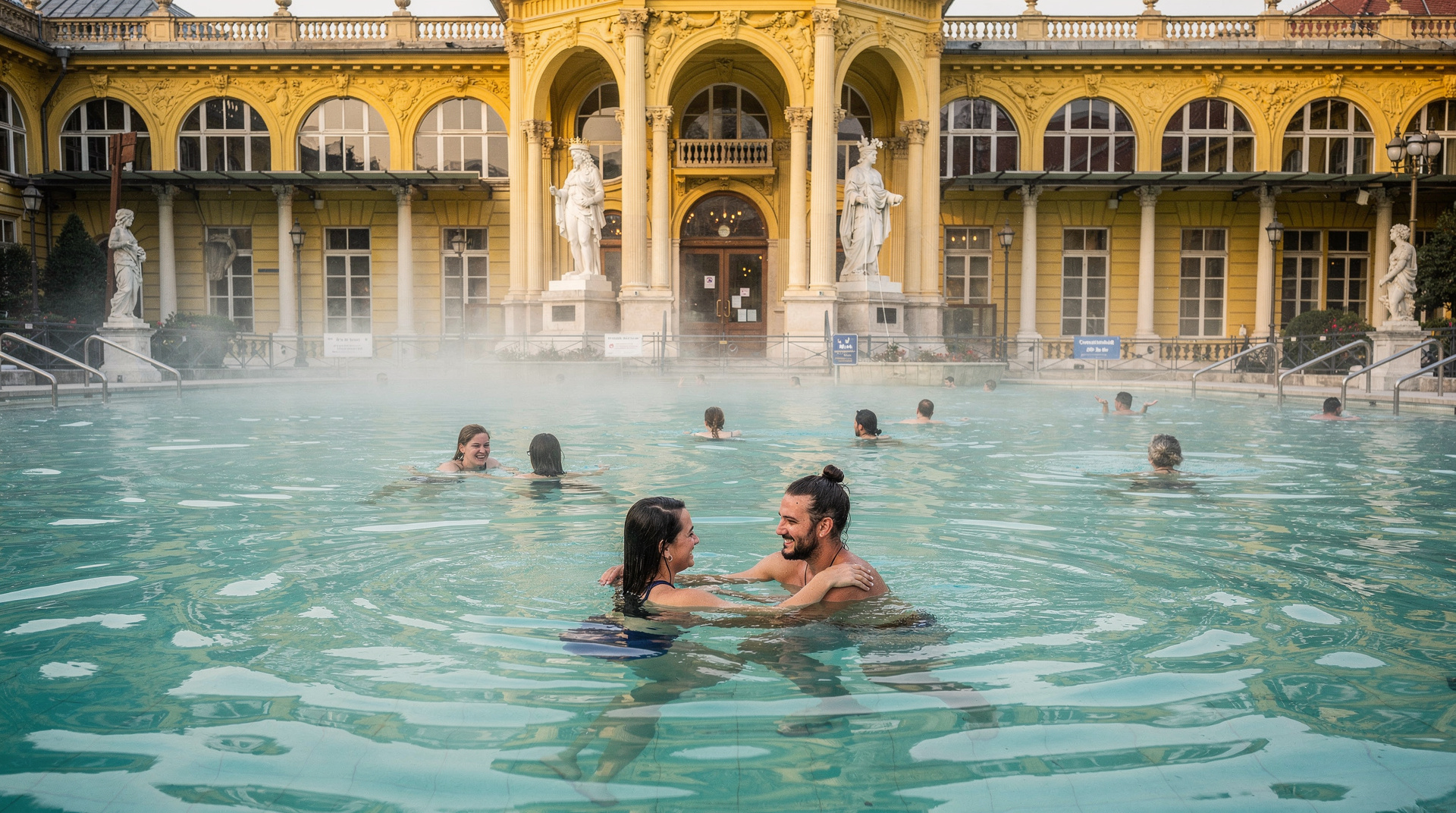
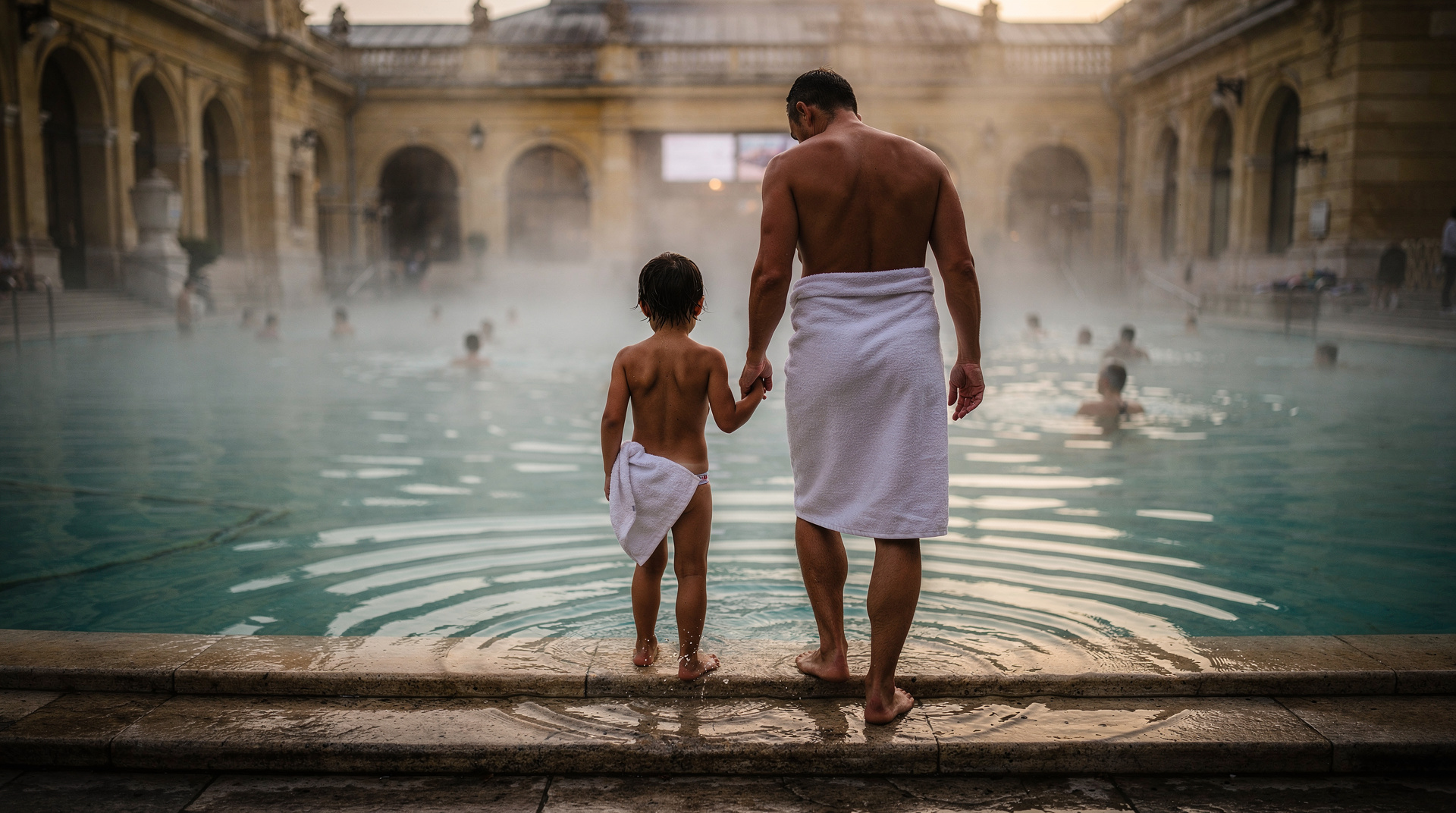
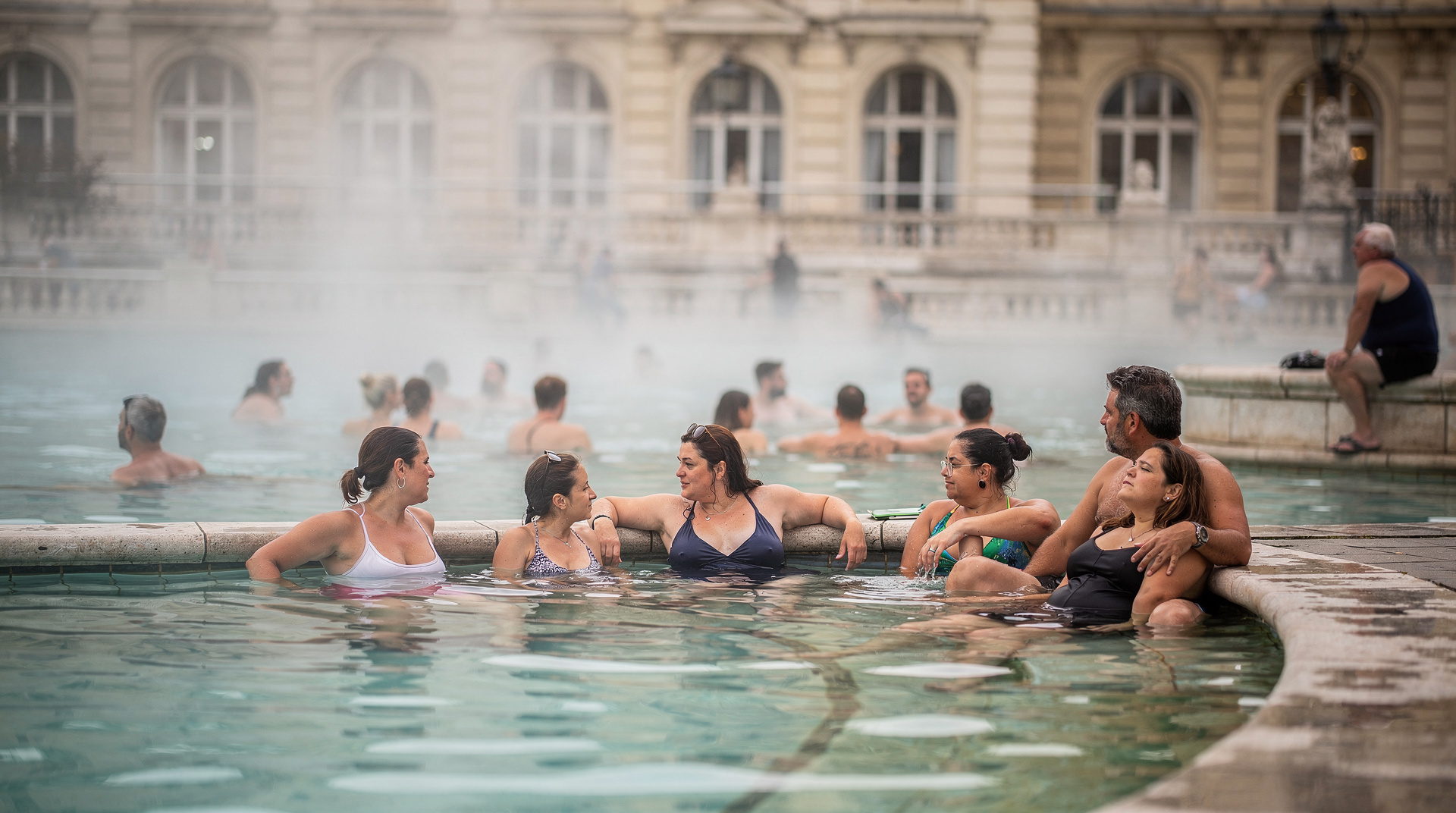
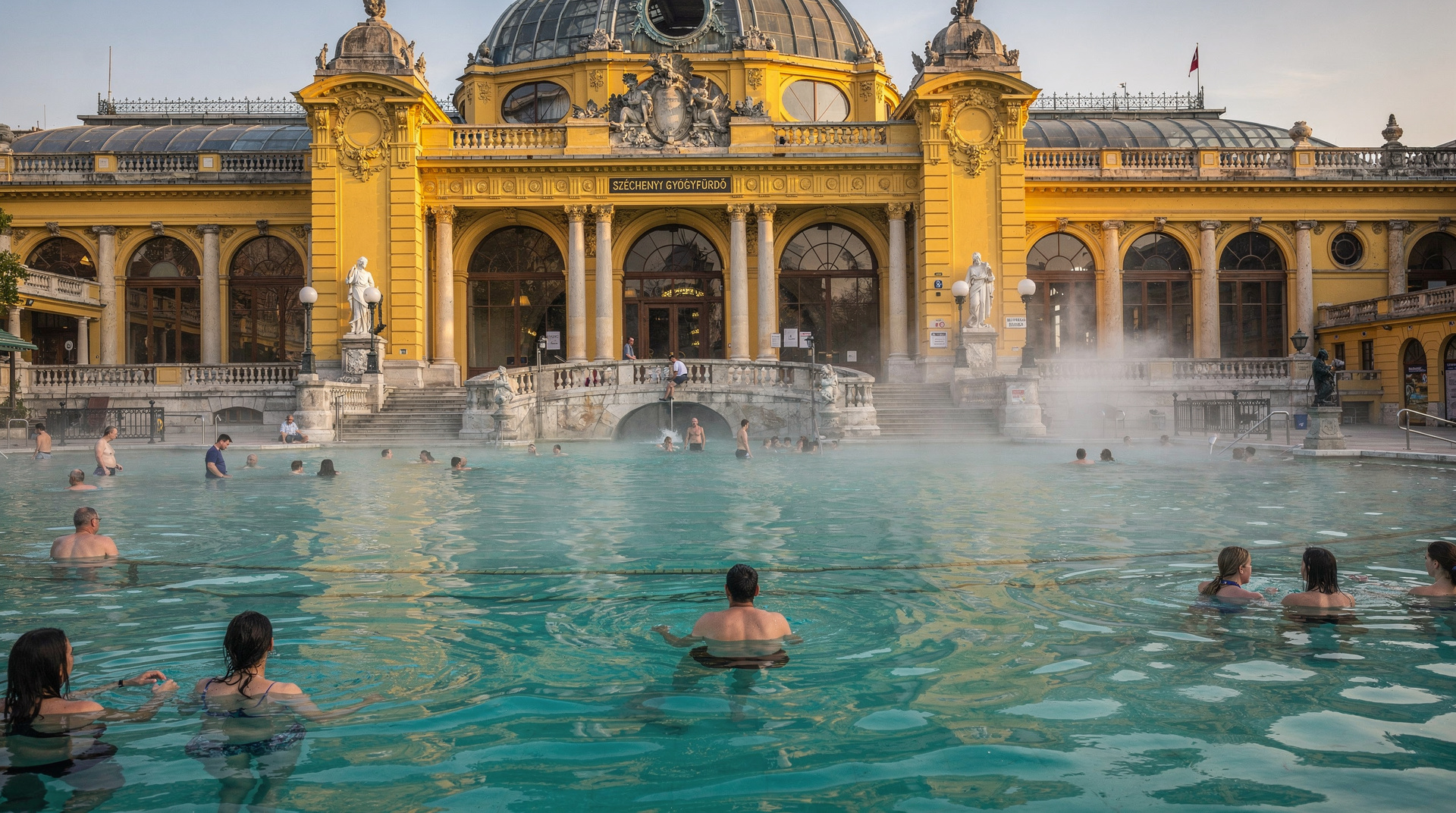
The thermal baths are the city’s most distinctive family draw. Széchenyi, the vast yellow complex in City Park, has outdoor pools with a wave feature, an indoor leisure pool with a slide, and enough space that children can splash around while adults actually relax. It is far more forgiving than Gellért or Rudas for families with energetic children.
If you are still choosing between the baths, the best baths with kids guide and the baths with kids guide go deeper on what each pool offers children. For a wider list beyond this page, see the family-friendly attractions guide, and for the full picture of the city, the Budapest travel guide.
The best family attractions in Budapest
1. Széchenyi Thermal Bath
Széchenyi is the most family-friendly of Budapest’s major baths. The outdoor pools operate year-round — the main pool stays at around 38°C, which keeps smaller children comfortable even in cooler months. There is a leisure pool with a water slide and a wave-effect section. The chess-playing tradition in the outdoor pool (old men playing on floating boards) is genuinely entertaining for children of all ages.
Széchenyi day tickets include locker access and unlimited pool use. Children under 14 pay a reduced rate. Book online to avoid queues, which can be substantial in July and August.
Practical note: The changing rooms get crowded. Go early (opening time is 09:00) or after 15:00 to avoid the midday rush.
Heroes’ Square and the City Park behind it form one continuous open space, which is rare enough in the centre to matter when nobody wants another interior: a Heroes’ Square and City Park tour with a music performance keeps the day outdoors and gives it a fixed point.
2. Budapest Zoo and Botanical Garden
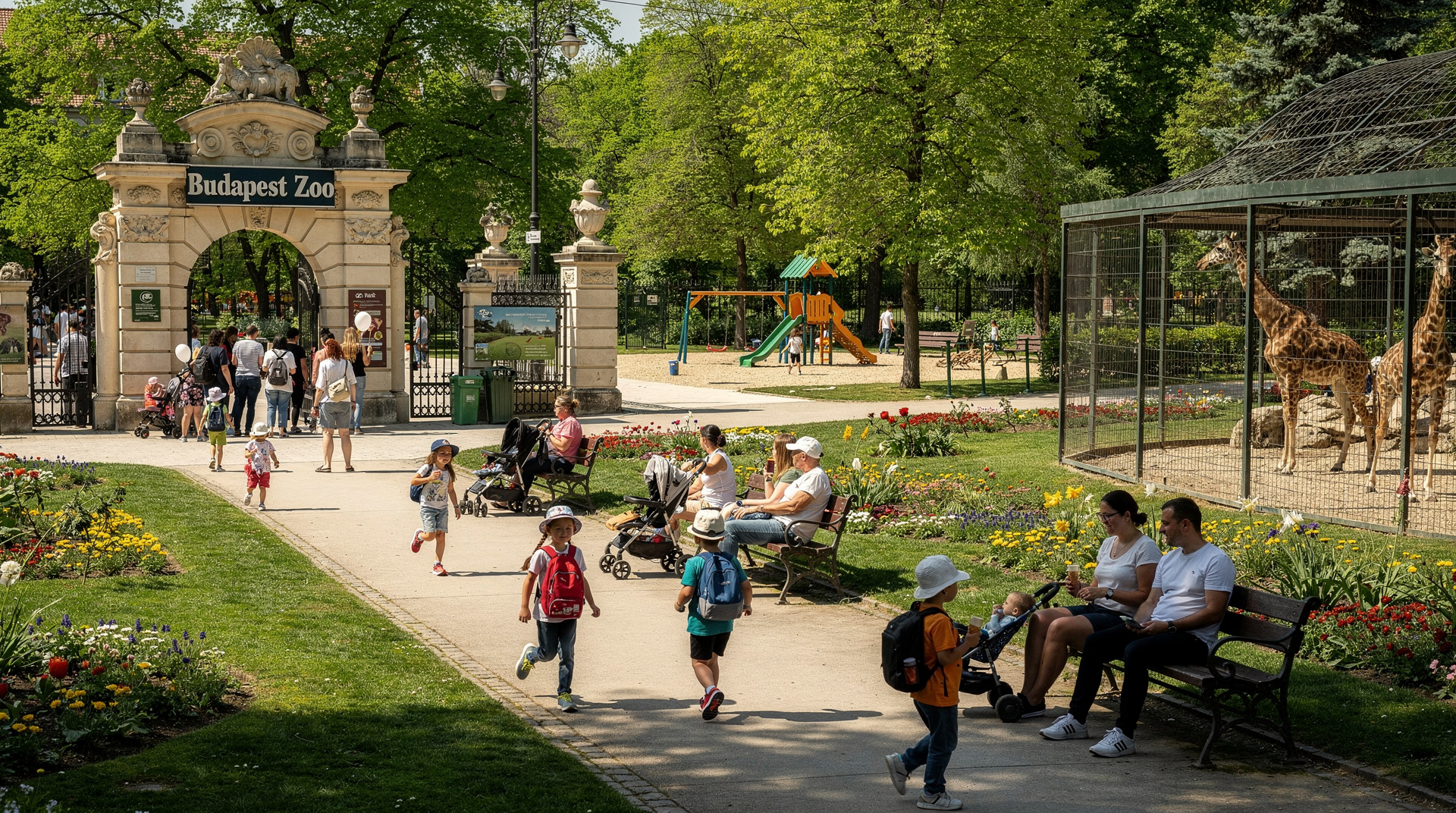
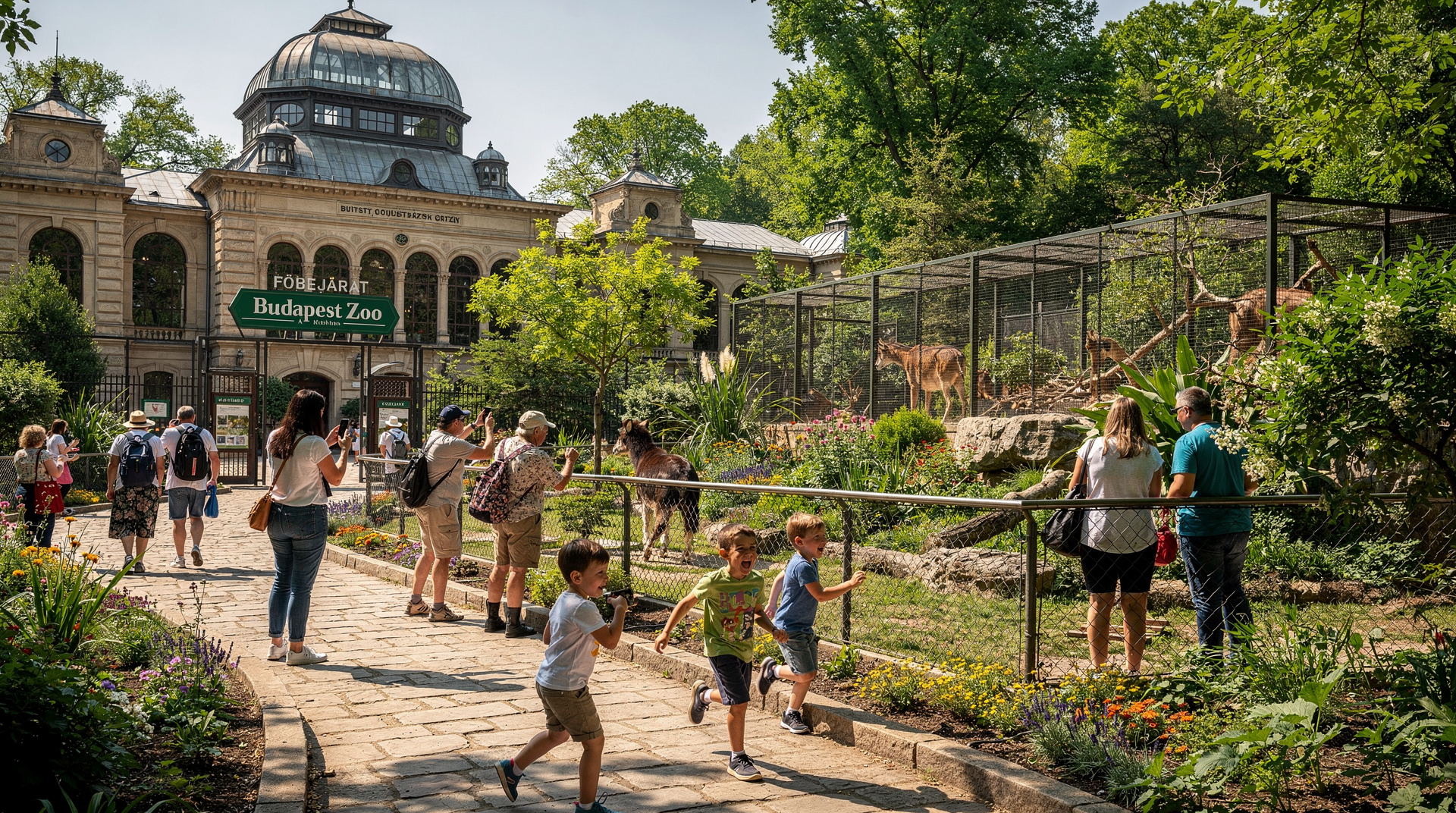
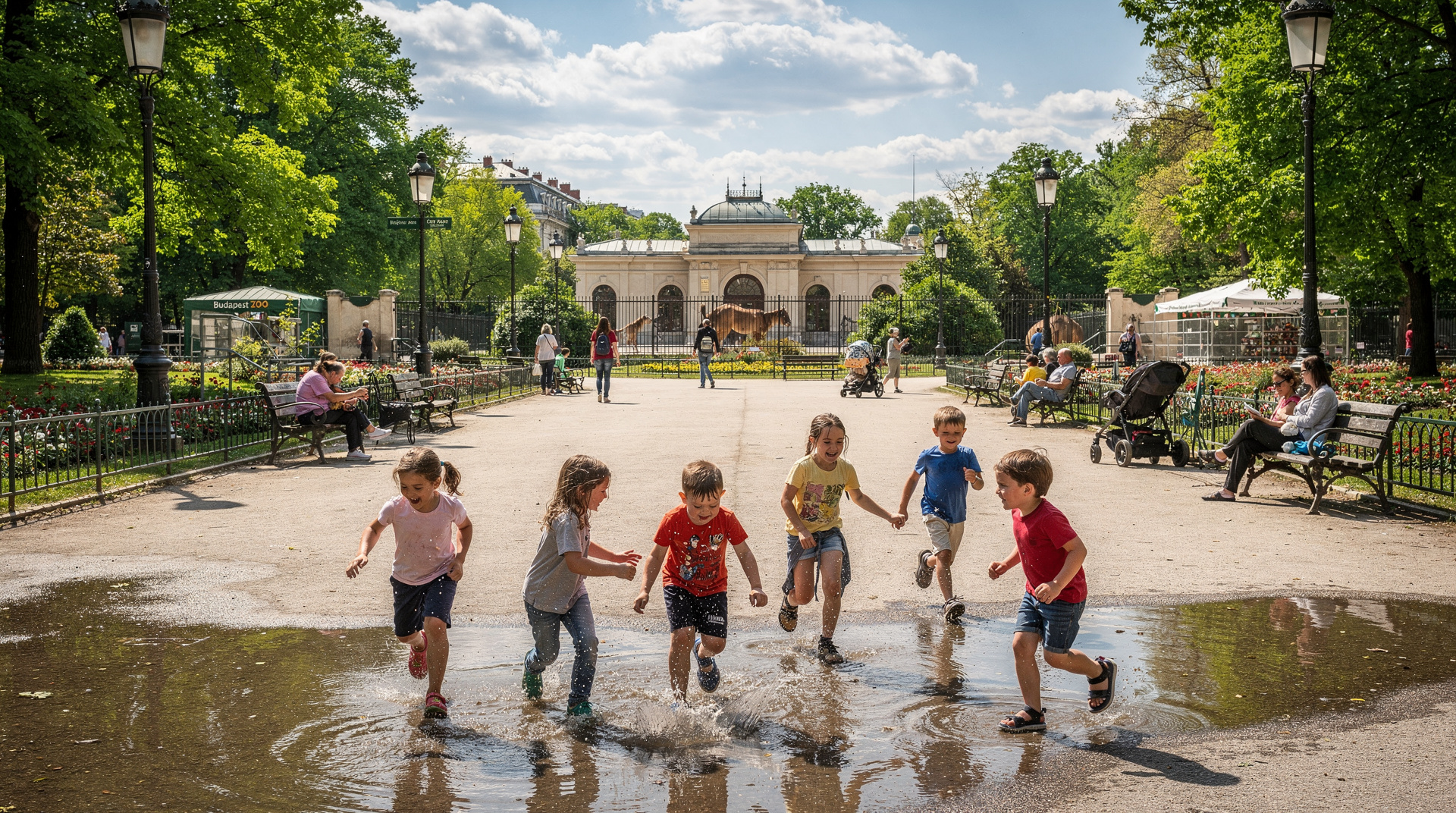
Located directly beside Széchenyi in City Park, the Budapest Zoo (Fővárosi Állat- és Növénykert) is one of Central Europe’s most beautiful urban zoos. The Art Nouveau elephant house and palm house are architecturally remarkable, and children tend to engage well with the extensive collection of animals including big cats, primates, and a substantial reptile house.
Entry costs roughly 4,400 HUF (€11) for adults and 3,000 HUF (€7.50) for children aged 3–14. Under-3s are free. The zoo and Széchenyi combine naturally into a full day in City Park — the zoo opens at 09:00 and the baths are a two-minute walk. See /guides/budapest-zoo-and-aquarium/ for a detailed visit guide.
3. Hop-on hop-off bus
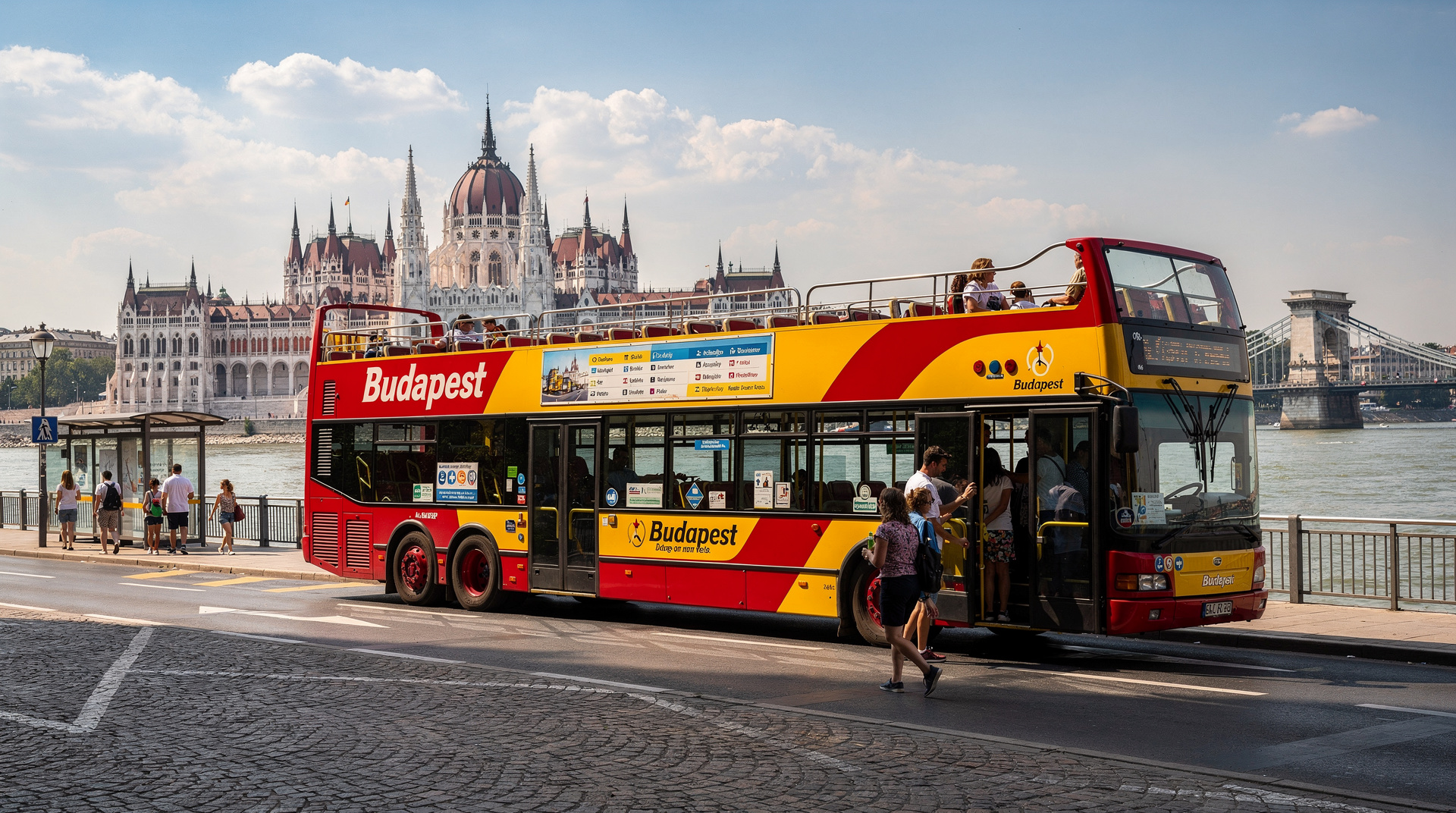
The hop-on hop-off bus covers all the major sights across both Buda and Pest with live commentary in multiple languages. For families with children who struggle with long walks, it provides a practical way to cover the Parliament, Castle District, Chain Bridge, and City Park without exhausting anyone. Tickets allow unlimited boarding for 24 or 48 hours.
Honest note: The commentary quality is uneven, but children enjoy the open-top deck and the novelty of the double-decker format. The Danube cruise add-on included in some packages adds a nice 70-minute river leg.
4. Szamos Chocolate Museum
The Szamos Chocolate Museum in City Park is compact but extremely well-suited to children aged 5–14. Exhibits trace the history of chocolate, there are working displays of chocolate production, and the visit ends with a workshop where children decorate their own treat. The adjacent Szamos confectionery is a local institution.
Chocolate museum tickets with tasting include the workshop and product samples. Booking ahead is recommended on weekends and in peak summer — the museum is small and groups fill it quickly.
5. Cave walk under Budapest
Budapest sits on a network of thermal caves, and a guided walk through the Pálvölgy or Szemlőhegy caves makes for a memorable half-day. The caves maintain a constant 11–12°C, so bring a light layer.
The underground cave walk runs for about three hours and covers around 1,000 metres of passages, stalactites, and narrow crawl sections that older children (8+) find exhilarating. The minimum age varies by provider — check before booking.
6. Danube cruise
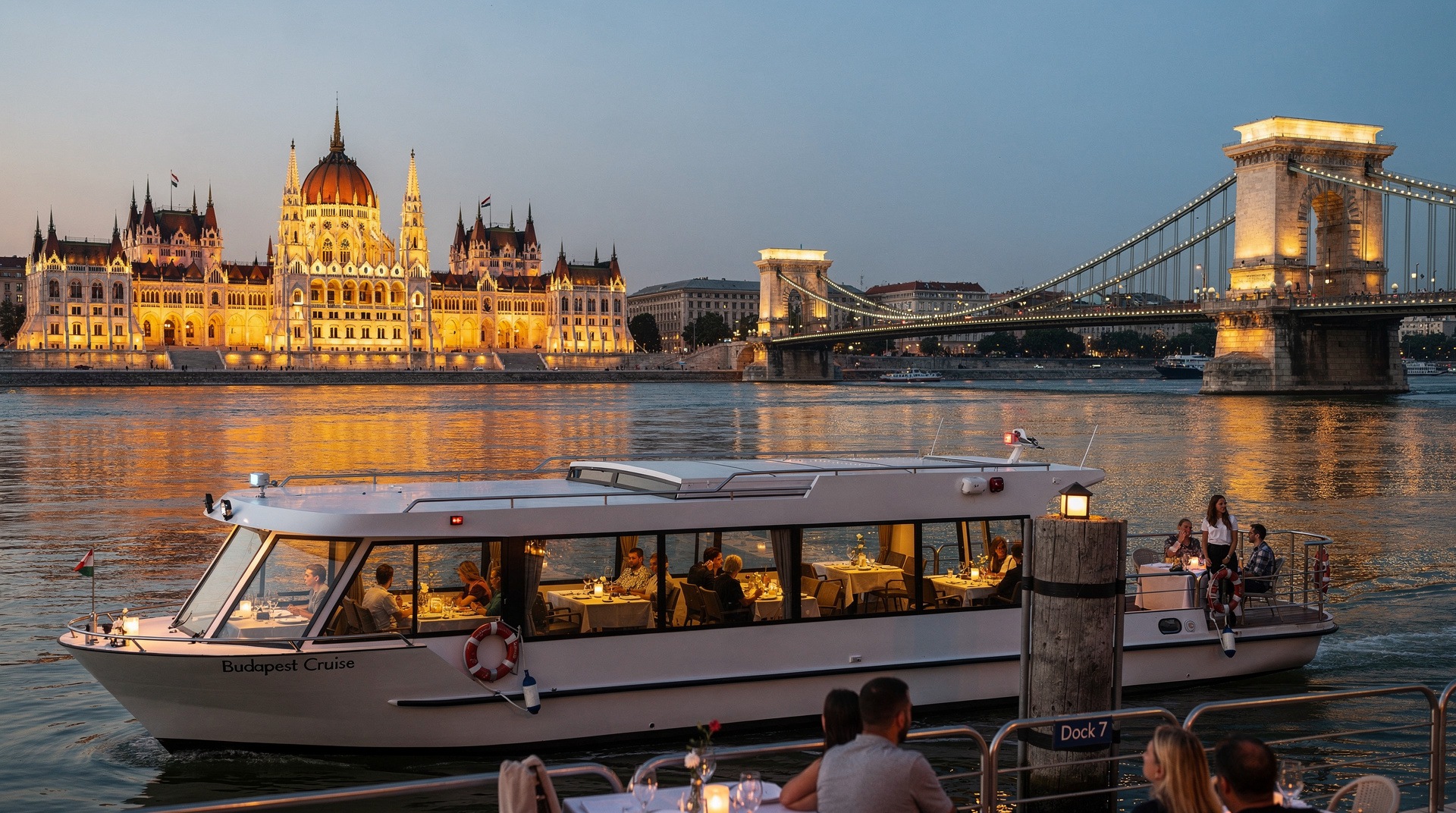
A daytime city highlights cruise on the Danube is an easy 70-minute activity that requires no planning. Children get river views of the Parliament, Buda Castle, and the Chain Bridge from the water — a genuinely different perspective that holds attention well. The city highlights sightseeing cruise departs regularly from the Pest embankment and includes basic commentary.
7. Margaret Island
Margaret Island (Margit-sziget) is Budapest’s urban park island in the middle of the Danube, car-free and full of open space. There is a small zoo section, a musical fountain that plays on a schedule, pedal-car hire, a thermal spa complex (Palatinus) with open-air pools and slides, and walking paths along the water. The island connects to both Buda and Pest by bridges. See /guides/family-friendly-attractions/ for more on how to structure a day here.
Which attractions suit which age
Not every family attraction fits every age group well. This quick comparison helps you skip the ones that will not land with your children’s current ages.
| Attraction | Toddlers (0–3) | Young kids (4–8) | Older kids (9–14) |
|---|---|---|---|
| Széchenyi Baths | Good (shallow warm pools) | Excellent | Excellent |
| Budapest Zoo | Good | Excellent | Good |
| Cave walk | Not suitable | Not suitable | Excellent (8+) |
| Chocolate museum | Limited interest | Excellent | Good |
| Margaret Island | Excellent (open space) | Excellent | Good |
| Danube cruise | Good (short attention needed) | Good | Fair (can feel slow) |
| Hop-on hop-off bus | Fair (naps disrupted) | Good | Good |
A useful rule of thumb: pair one physically demanding activity (zoo, cave walk, hop-on hop-off day) with one low-effort one (baths, Margaret Island, a cruise) rather than stacking two big outings back to back. Budapest’s heat in summer and the sheer size of the zoo and Széchenyi complex both tire children faster than parents expect, and a rushed second attraction tends to end in tears rather than memories.
If the weather turns, do not force the outdoor plan. Swap in indoor stops from the rainy day Budapest with kids guide, and keep the zoo or the baths for a drier morning. Children cope far better with a plan that bends than with one that is defended against the forecast.
Free and low-cost activities for families
Not every good day in Budapest needs a ticket. Margaret Island is free to enter and has a musical fountain (Zenélő szökőkút) that runs on a schedule near the southern end — check times on arrival, as it varies seasonally. The island’s playgrounds and open lawns are ideal for letting toddlers burn off energy after a museum morning.
City Park (Városliget) itself is free — you only pay for the zoo, the baths, or the chocolate museum inside it. Vajdahunyad Castle’s courtyard and the boating lake (skating rink in winter) cost nothing to wander around, and the ornate Heroes’ Square is a genuinely striking, free photo stop. See the Heroes’ Square and City Park guide for the layout.
Walking Andrássy Avenue or the Danube promenade near Shoes on the Danube costs nothing, though the latter memorial (commemorating Jewish victims shot into the river in 1944–45) warrants a brief, age-appropriate explanation before older children encounter it. Fisherman’s Bastion on the Buda side is also free to walk around outside the small paid upper terraces, and the views over Pest from its towers are a reliable hit with children who enjoy spotting landmarks — the Parliament, the river, and the whole flat sweep of Pest laid out below.
Family day trips from Budapest
Families with an extra day or two can extend beyond the city. Szentendre, about 45 minutes north, is a compact, colourful riverside town with cobbled streets that toddlers and older kids alike tolerate well as a half-day out — see the Szentendre day trip guide. Lake Balaton, roughly 1.5–2 hours away, offers a proper beach day in summer, covered in the Lake Balaton day trip guide. The Puszta horse show near Kecskemét or Bugac is a genuine hit with children who like animals and horsemanship, detailed in the puszta horse show day trip guide.
Half-day Szentendre trip from Budapest works well as a lower-key day sandwiched between busier city days.
If you can only fit in one outing beyond the capital, pick the one that matches your children’s energy rather than the one that looks best in photos. The best day trips from Budapest guide compares the options so you can choose with your family’s patience in mind.
Getting around Budapest with children
Metro and public transport
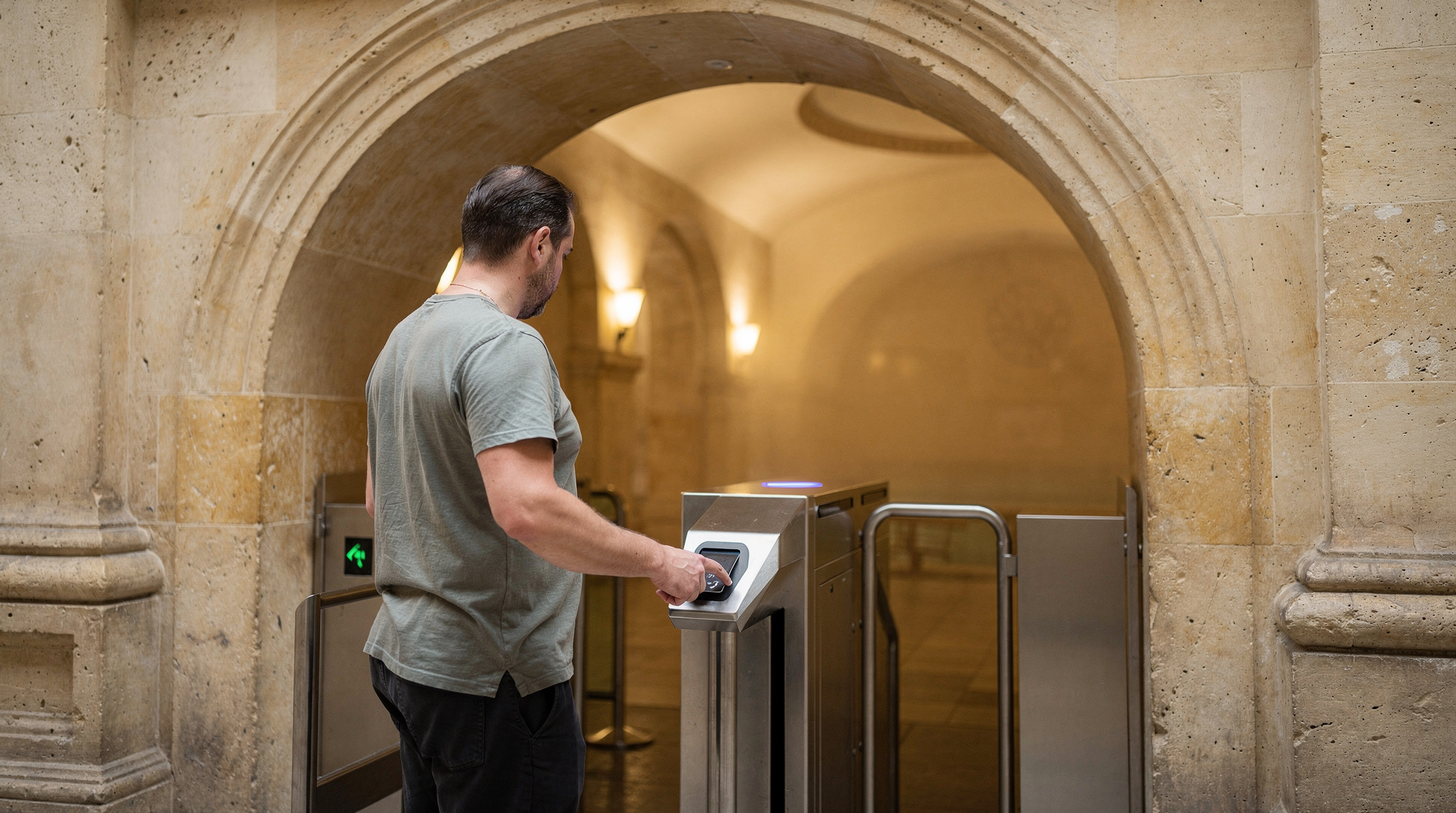
The Budapest metro (BKK) has four lines. M1, the yellow line (the world’s second-oldest underground), is charming but has no lifts — not practical with a pram or buggy. M2 (red) and M4 (green) have lifts at most stations. M3 (blue) is partially under renovation; check current status at bkk.hu.
A single transit ticket costs 500 HUF when bought in advance (700 HUF on board). The 24-hour travelcard costs 2,750 HUF and covers unlimited rides on metro, tram, and bus. A family of four buying daily cards will spend roughly 11,000 HUF on transport per day — worth checking against single-ticket sums if you plan to move around a lot.
With a pram or several tired children, a little preparation at the ticket machine pays off. The getting around Budapest guide and the BKK travel passes guide explain how the passes work, so you can decide whether a day card or single tickets suit the way your family moves.
Trams and buses
Tram 2 runs along the Pest embankment between Jászai Mari tér and Közvágóhíd — one of Europe’s most scenic urban tram routes, with views of the Parliament and Buda Castle the whole way. Trams 4 and 6 cross the Margaret Bridge and circle the inner city. Buses handle most other connections.
Taxis
Use Bolt, not street taxis. Bolt operates on fixed per-km rates, shows the price before you book, and accepts card payment. Budapest street taxis outside Bolt are known for inflated metering, particularly around Keleti station and tourist hotspots. Download the Bolt app before you arrive. See /guides/taxis-and-bolt-budapest/ for detail.
Eating with kids in Budapest
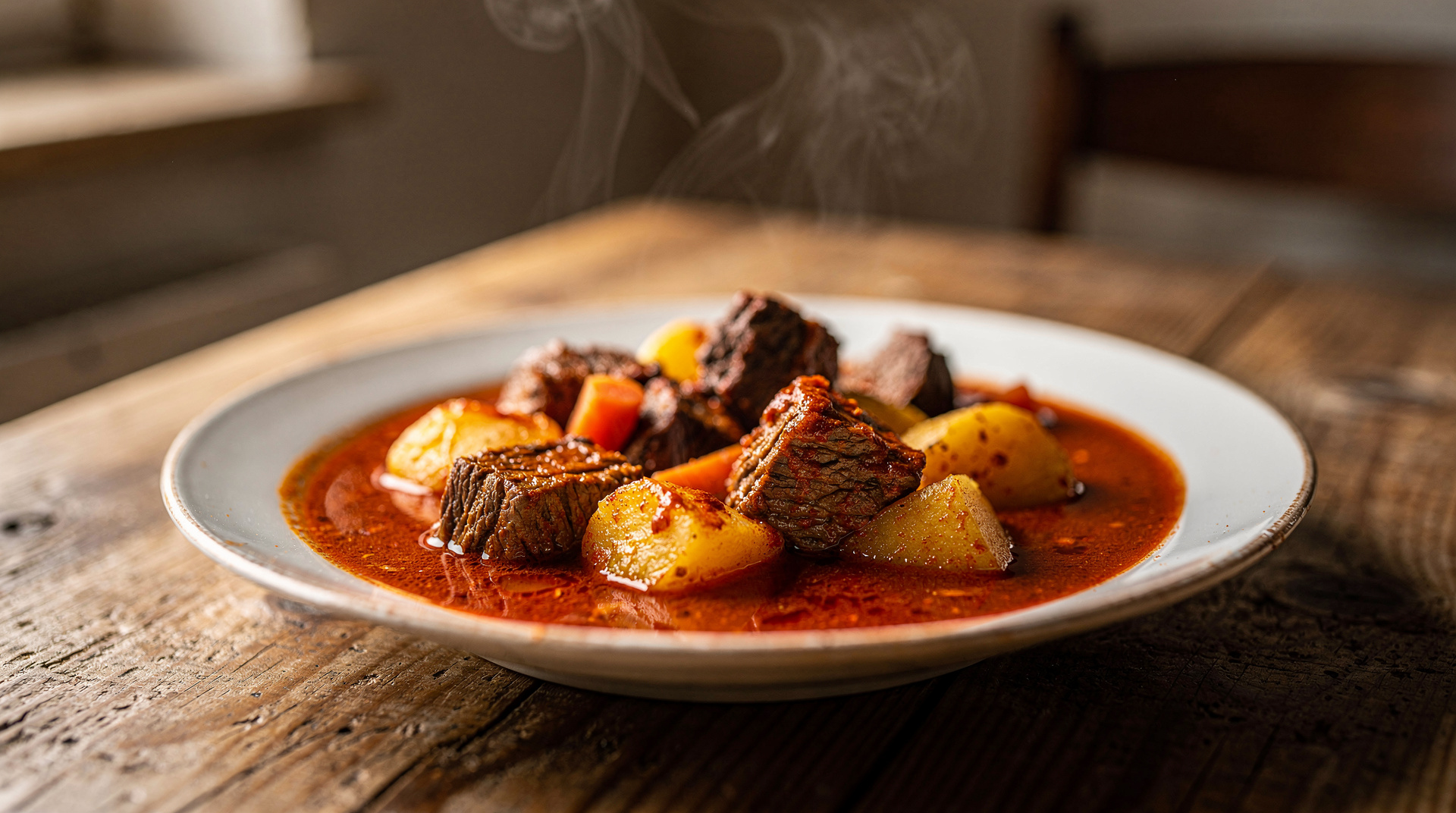
Hungarian portions are large, which works in families’ favour. A main course of gulyás (goulash soup), schnitzel, or roast pork comes in quantities that children and adults can comfortably share. Most Central European restaurants are child-tolerant rather than actively child-welcoming — expect highchairs at mid-range places but not always at local spots.
Recommended family-friendly areas:
- Nagy Vásárcsarnok (Great Market Hall): The ground floor has market stalls selling lángos (deep-fried flatbread with various toppings), kürtőskalács (chimney cake), and fresh produce. A filling lunch for a family of four costs 5,000–8,000 HUF (€12–20). See /guides/central-market-hall-guide/ for what to buy and where.
- Andrássy Avenue: Cafés and restaurants along Andrássy Avenue cater to the full range — from quick pastries at Gerbeaud to sit-down meals.
- City Park: Kiosks and restaurants around Vajdahunyad Castle are overpriced but convenient if you are spending the day at the zoo or baths.
Avoid Váci utca restaurants: The pedestrian shopping street near the city centre is lined with restaurants charging tourist prices for average quality. Prices can be 30–50% higher than equivalent meals two streets away. Eat parallel to the main tourist drag, not on it.
Before you settle on a restaurant, it helps to know what is on the menu. The traditional Hungarian dishes guide is a good primer for children who need to know what they are being asked to try, and the where to eat lángos guide points to the snack most children end up remembering.
Family budget breakdown
Budapest remains noticeably cheaper than Western Europe for a family holiday. Here are honest figures for 2026:
| Expense | Per person | Family of 4 |
|---|---|---|
| Széchenyi entry (adult) | 10,000–14,000 HUF | ~50,000 HUF |
| Széchenyi entry (child) | 5,000–8,000 HUF | — |
| Zoo entry (adult) | 4,400 HUF | — |
| Zoo entry (child) | 3,000 HUF | — |
| Transit 24h card | 2,500 HUF | 10,000 HUF |
| Lunch (restaurant) | 3,000–5,000 HUF | 12,000–20,000 HUF |
| Ice cream / snacks | 500–1,000 HUF | 2,000–4,000 HUF |
A solid family day including Széchenyi, the zoo, transit, lunch, and snacks runs 60,000–90,000 HUF (€150–225). Accommodation is the main variable — a family apartment for four in Districts V or VI runs €80–140/night in shoulder season, more in peak summer. See /guides/is-budapest-expensive/ for a full cost breakdown and the budget calculator for daily figures by profile.
Day-by-day suggestions for a 3-day family trip
The dedicated /itineraries/budapest-with-kids-3-days/ itinerary covers this in detail. In brief:
Day 1 — City Park focus: Széchenyi Baths in the morning, zoo in the afternoon, Vajdahunyad Castle for a late stroll.
Day 2 — Buda side: Castle District and Fisherman’s Bastion in the morning (views are worth the climb), National Museum or cave walk in the afternoon.
Day 3 — Danube and riverside: morning cruise, afternoon at the Great Market Hall, Margaret Island for a relaxed evening.
For a slower version of the same plan, see the Budapest with kids 3-day itinerary, and for where to sleep, the where to stay in Budapest guide.
Practical tips for families
- Book baths online: Széchenyi queues exceed 60 minutes in summer. Pre-booked tickets have a separate, faster lane.
- Carry cash: Many local restaurants and market stalls are cash-preferred. ATMs from OTP, CIB, and K&H banks offer reasonable rates. Avoid Euronet machines, which charge inflated fees.
- Tap water: Safe to drink across Budapest. Carry a refillable bottle — saves money and reduces plastic waste.
- Pharmacy (gyógyszertár): Green cross sign. There are 24-hour pharmacies in the city centre. Children’s medicines are available without prescription for most standard needs.
- Emergency number: 112 across Hungary. English is spoken.
- Sun: Budapest summers are hot — 30°C+ in July and August. Apply sunscreen before outdoor activities and time walks for early morning or evening.
What works well in summer vs other seasons
Summer (June–August): Peak season, all attractions open and busy. Outdoor pools at Széchenyi are brilliant. Book everything in advance. The Sziget festival (mid-August) makes the second week of August significantly more crowded and expensive — plan around it if you are not attending.
Spring and Autumn (April–May, September–October): Ideal for families. Mild temperatures, fewer crowds, lower hotel prices. Széchenyi and the zoo are comfortable without peak congestion. See /guides/best-time-to-visit-budapest/ for month-by-month detail.
Winter (November–March): Thermal baths become more compelling in winter — the outdoor Széchenyi pool at 38°C on a cold morning is a genuinely memorable experience. Christmas markets (mid-November to 1 January) at Vörösmarty tér and St Stephen’s Basilica are beautiful and manageable with children. See /guides/budapest-in-winter/ for what to expect.
The honest checklist before you go
- Download Bolt before arriving (avoid street taxis)
- Book Széchenyi tickets online if visiting June–August
- Pre-book cave walk if travelling with older children
- Check cave minimum age requirements
- Check Gellért Baths’ current status before including it in plans — there are unconfirmed reports of possible renovation closure; visit /guides/gellert-baths-guide/ for the latest
- Carry some HUF cash (market stalls, smaller restaurants)
- Pack swimwear, flip-flops, and a light layer for the caves
- Check zoo opening times — they vary by season
Budapest handles families well. The combination of thermal baths, open parks, affordable food, and genuinely interesting museums makes it easier to keep everyone happy than in many major European capitals. Plan the baths, leave room for spontaneous wandering, and you will cover more than you expect.
Frequently asked questions about Budapest with kids
What age is Budapest suitable for?
All ages. Toddlers enjoy Margaret Island's open spaces, the zoo, and the splash pools at Széchenyi. School-age children love the cave walk, the chocolate museum, and the hop-on hop-off bus. Teenagers tend to enjoy the ruin-bar architecture of District VII and the House of Terror for history lessons. Plan around nap times for under-3s — the metro gets crowded.Which Budapest thermal bath is best for kids?
Széchenyi is the most family-friendly: large outdoor and indoor pools, a wave pool, a water slide, and space to play. Lukács is calm and local, good for older children. Rudas restricts under-14s on most days. Gellért has a children's splash pool. Always check current age restrictions before booking — they can vary by session.Is the Budapest metro safe and easy with a pram?
The metro has lifts at major stations but coverage is patchy. M1 (the yellow line) has no lifts. M2 and M4 are better. Trams 2 and 19 along the Danube are pram-accessible and scenic. Bolt taxis handle car seats — ask the driver when booking. Budget extra time for station transitions.How much does a family day in Budapest cost?
A family of four (2 adults, 2 children 6–12) can budget around 60,000–90,000 HUF (~€150–225) for a full day including Széchenyi entry, lunch, transport, and one attraction like the zoo or cave walk. Széchenyi children's tickets run around 5,000–8,000 HUF. The zoo costs roughly 4,400 HUF per adult and 3,000 HUF per child. Ice cream, lángos, and kürtőskalács add up fast — plan a snack budget.Are there good indoor activities for rainy days with kids?
Plenty. The Szamos Chocolate Museum in City Park is a firm favourite. The Natural History Museum, the Hungarian National Museum, and the interactive Pinball Museum work well on wet afternoons. Escape rooms (Paniq Room has family-friendly options) and the Aquaworld indoor water park north of the city are solid fallbacks. See the /guides/rainy-day-budapest-with-kids/ guide for a ranked list.Where should families stay in Budapest?
District V (Belváros) puts you within walking distance of most sights and has good supermarkets. District VI around Andrássy Avenue is calmer and close to City Park and the zoo. Avoid District VII at night if travelling with young children — it's lively until late. Apartments with a kitchen save significantly on family food budgets. See /guides/where-to-stay-in-budapest/ for neighbourhood detail.Do I need to book family activities in advance?
For peak summer (June–August), book Széchenyi tickets, the hop-on hop-off bus, and cave tours at least a few days ahead. The zoo rarely sells out but afternoon queues build. The chocolate museum is small — weekends fill up. Outside peak season, walk-up is usually fine for most attractions.What should families avoid in Budapest?
Avoid street taxis, particularly around Keleti station — use Bolt (the app) instead. Skip Váci utca restaurants, which are overpriced and uninspiring. Do not buy bath tickets from touts near Széchenyi's entrance on Állatkerti körút — stick to the official desk or a verified booking platform.
Top experiences
Bookable activities with verified prices and instant confirmation on GetYourGuide.