Budapest taxi scams: how to get around safely in 2026

How do I avoid taxi scams in Budapest?
Download the Bolt app before you arrive. Bolt shows you the price before you confirm, tracks your route and provides full driver accountability. Never take a taxi from someone who approaches you at the airport or outside Keleti station. Never get into an unmarked cab. Bolt from airport to centre costs roughly 4,500–6,000 HUF (€11–15); street taxis have charged tourists 5–10× that.
The Budapest taxi problem: still real in 2026
Budapest introduced ride-hailing apps years ago and the taxi situation improved dramatically as a result. But the scam is not gone — it has retreated to specific locations and specific tactics, and it still catches visitors who do not know what to look for.
This guide tells you exactly where the traps are, how they work, and the simple app-based solution that eliminates essentially all of them.
| Solution | Bolt app (fixed price, GPS-tracked, no cash) |
| Airport to centre (Bolt) | 4,500–6,500 HUF |
| Airport to centre (licensed Főtaxi) | 7,000–9,000 HUF |
| Airport to centre (bus + metro) | ~3,000 HUF |
| Scam hotspots | Keleti station, BUD airport arrivals, District VII at closing time |
Where the scam concentrates
Keleti station (Keleti pályaudvar)
Keleti is Budapest’s main international railway station, arriving point for trains from Vienna, Prague, Bratislava, Bucharest and beyond. It is also the most notorious location in the city for taxi overcharging.
Drivers approach passengers in the arrival hall and offer rides. They are not licensed, not metered properly, or metered with a rigged device. Tourists who have just arrived, are carrying luggage, and are unfamiliar with the city are the target. The journey from Keleti to a central hotel is about 2 km; the legitimate price is 1,200–1,800 HUF (€3–4.50) by Bolt. Scam taxis at Keleti have charged 15,000–25,000 HUF for the same journey.
Rule: do not accept any approach at Keleti. Walk to the Bolt pickup point and book through the app.
Liszt Ferenc Airport (BUD)
The airport has a legitimate taxi rank (Főtaxi, yellow branded vehicles) with a fixed official rate to central Budapest (~7,000–9,000 HUF). This is not a scam. The scam is the unlicensed drivers who stand inside the terminal with handwritten signs or approach near the baggage carousel.
Rule: ignore approaches inside the terminal. Use the official Főtaxi rank or book Bolt in the arrival hall before exiting.
Tourist areas in the city centre
Near Széchenyi Baths, Váci utca, Buda Castle and the Chain Bridge, you will find unmarked or poorly marked taxis willing to negotiate a fare. “How much to Keleti?” sounds like a reasonable question. The answer should be 1,500–2,500 HUF. When a driver suggests 6,000 HUF, the negotiation is already a trap.
Nightlife district at closing time
Taxis prowling District VII at 2–3am targeting intoxicated tourists are a specific pattern. Impaired judgement, urgency to get home, unfamiliarity with the city — all factors that increase vulnerability. Book Bolt before you leave the bar. If you cannot find the car or the connection drops, go back inside and book again rather than accepting a street taxi.
The Bolt solution (everything you need to know)
What Bolt is: a ride-hailing app that operates legally in Budapest. Similar to Uber in Western Europe. The company is European (Estonian) and has been operating in Hungary since before Uber left the market.
How to set it up:
- Download Bolt from your app store before your trip
- Register with your email and a payment card
- At any Budapest location, open the app, set your destination, see the price and confirm
Why it works against scams:
- Price is fixed and shown before you confirm — no meter manipulation
- Route is tracked by GPS — no unnecessary detours
- Driver identity and license plate are shown — full accountability
- Payment is through the app — no cash dispute
- Driver rating system — drivers with bad ratings lose the platform
Typical Bolt fares (2026 estimates):
- Airport to central Pest: 4,500–6,500 HUF (€11–16)
- Keleti to City Park: 1,200–1,600 HUF (€3–4)
- Chain Bridge to Széchenyi: 900–1,400 HUF (€2.25–3.50)
- City centre to Buda Castle: 1,500–2,500 HUF (€3.75–6.25)
These prices are not guaranteed — Bolt uses surge pricing during peak hours (late Friday/Saturday nights, major events), but even surge-priced Bolt fares are typically still below scam-taxi prices.
Public transport: the cheapest alternative
For most journeys in Budapest, public transport is both faster and cheaper than any taxi:
Bus 100E (airport): specific airport express bus from BUD to Deák Ferenc tér, ~35–45 minutes, 2,500 HUF one way (special airport ticket). Combined with metro for onward travel: ~3,000 HUF total. See Budapest airport to city centre for full details.
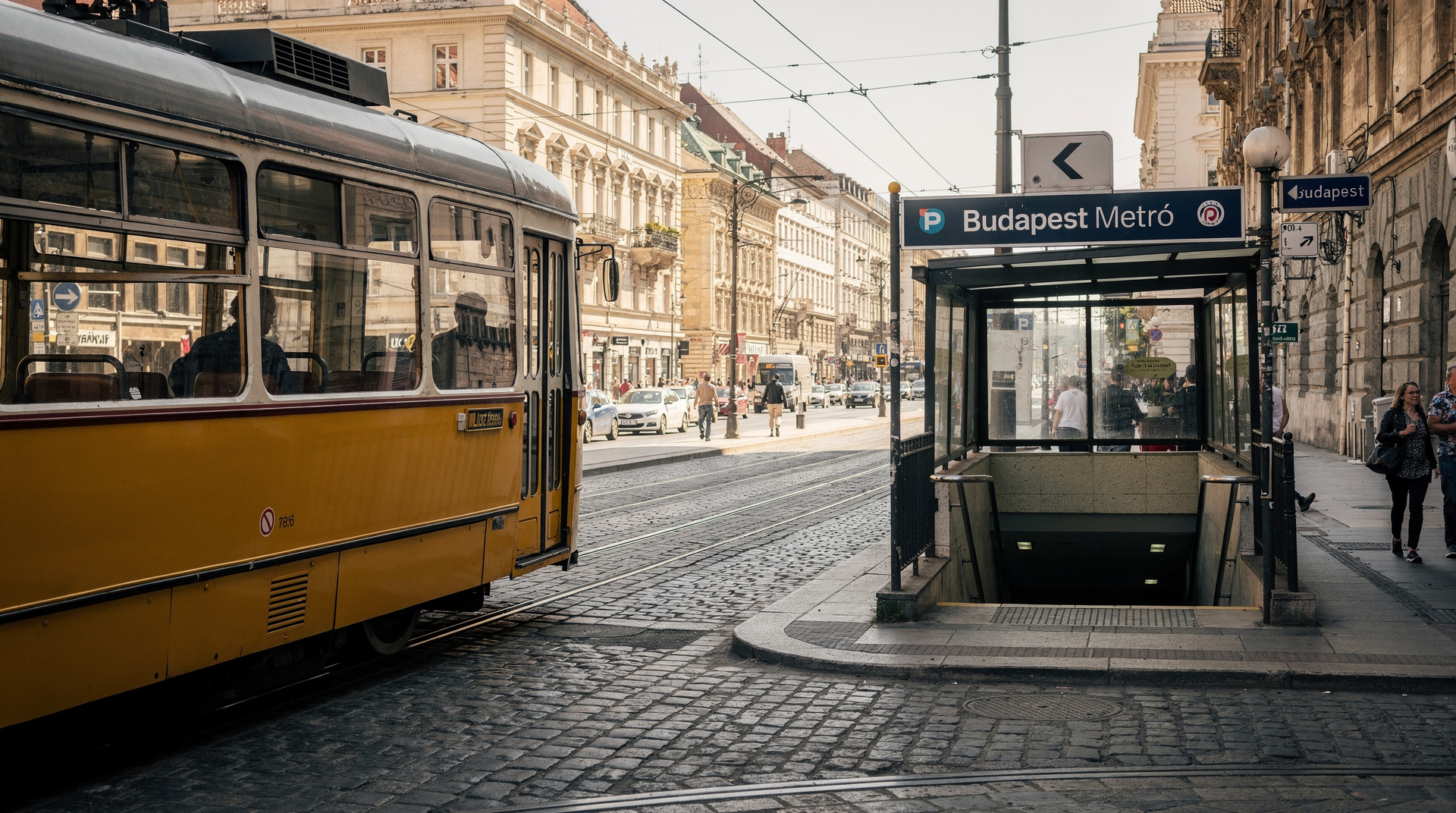
Metro M2/M4 (Keleti): Keleti station is directly on metro M2 (red line) and M4 (green line). From Keleti to central Pest (Deák tér) is 2–3 stops, 500 HUF. This is the correct way to travel from Keleti if you do not have excessive luggage.
Tram 2 (riverbank): the most scenic way to travel along the Pest riverbank, from Jászai Mari tér to Boráros tér. Standard ticket price (500 HUF).
The Budapest metro guide and public transport tickets guide cover the full BKK network.
Licensed taxis when you need them
If you do choose a taxi rather than Bolt (rainy night, luggage, preference), use a legitimate one:
Főtaxi / Budapest Taxi: licensed, metered, identifiable yellow vehicles. You can call them: +36 1 222 2222. They also have an app. Flag fall is around 700 HUF in 2026; the per-km rate is around 400–500 HUF. A 5 km journey should cost roughly 2,700–3,200 HUF.
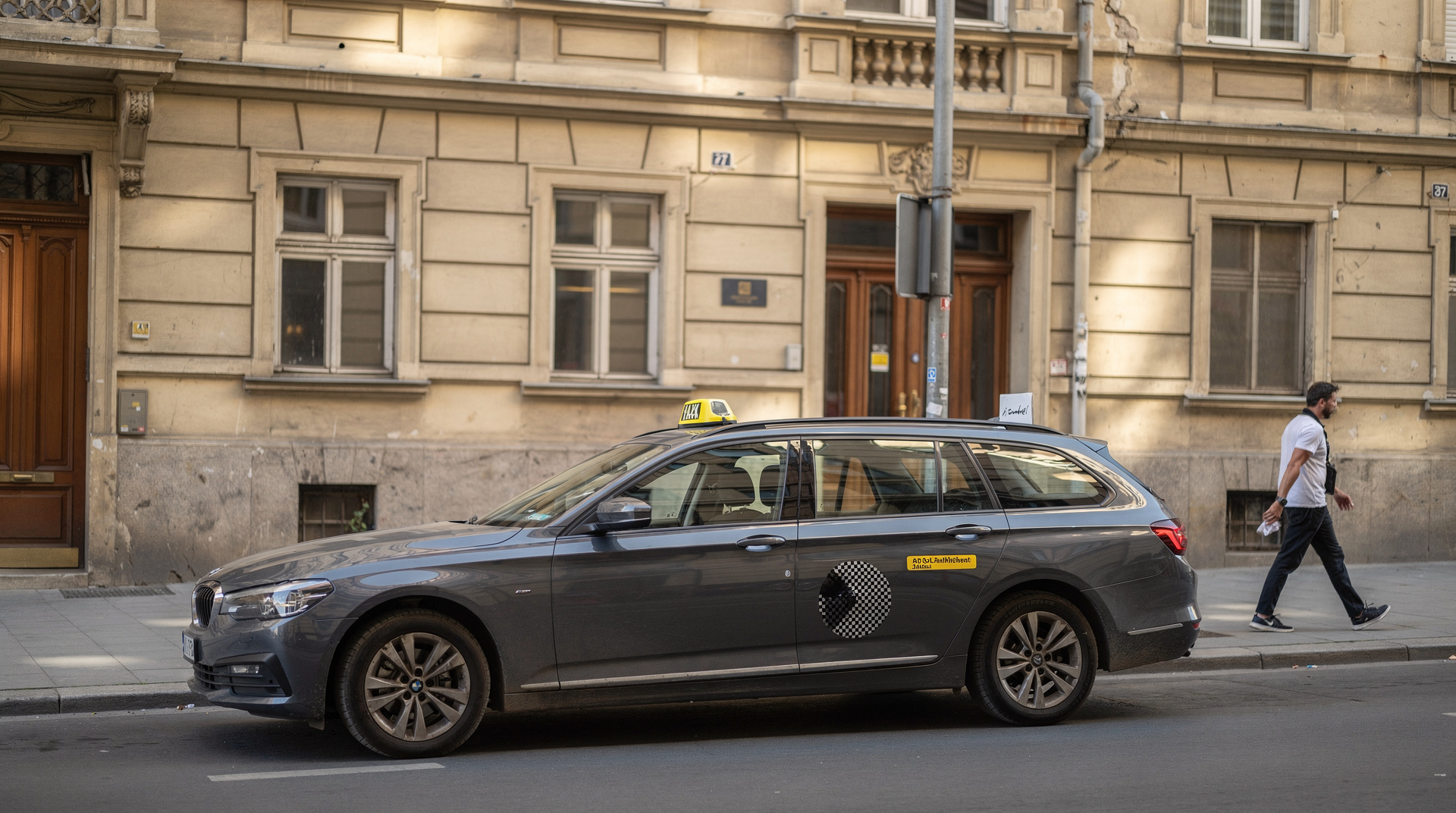
How to identify a legitimate taxi:
- Yellow vehicle with clear company branding
- License plate visible and matching paperwork inside
- Meter that starts and ticks in small increments
- Driver ID card displayed on dashboard
Red flags:
- Driver approaches you (legitimate drivers wait in rank)
- No visible meter or meter starts very high
- Driver suggests a flat price before you state the destination
- Vehicle is black or unmarked
A fixed-price ride instead of a street taxi
A flat price named by a driver before you state your destination is a red flag, yet a fixed fare is fine when you agree it in writing in advance. Settling it beforehand removes the question of the meter, the rank and who approached whom. Check that the confirmation shows the pick-up point, the destination and the total, and keep it on your phone in case a dispute starts later. This suits a rainy night or a trip with heavy luggage, the moments when you might otherwise accept the first car offered. If you prefer a price settled in advance, you can arrange a Budapest transfer with Kiwitaxi instead of hailing a car.
Taxis, nightlife and late-night safety
The single riskiest window for taxi scams is closing time in District VII — impaired judgement, urgency, and unfamiliarity with the streets combine to make tourists easy targets. Book Bolt from inside the bar or club before you step outside, and if the app can’t find your driver or the connection drops, go back inside and rebook rather than accepting a street offer. See Budapest nightlife guide for the fuller late-night picture, including the separate “friendly girl” bar scam that sometimes overlaps with the same streets and hours.
Solo travellers and stag/hen groups are disproportionately targeted at both ends of the taxi scam — the airport arrival and the 3am departure from a club. If you’re arriving with a group carrying luggage, a pre-booked private airport transfer removes the decision entirely and costs a predictable, fixed amount.
How the overcharging actually works
Understanding the mechanics makes the scam much easier to spot. Almost none of it involves anything dramatic. It relies on small pressures that add up: you are tired, you have bags, you do not know what a fair price looks like, and the driver is friendly and quick. By the time the fare appears, you are already a few minutes down the road and the easiest thing seems to be to pay.
The most common pattern is the meter that is either absent, rigged or set to a tourist tariff. A second pattern is the flat fare quoted in a currency you did not expect, so the number sounds fair until you do the conversion. A third is the “long way round”, where the car takes a route that makes no sense on a map. All three disappear when the price is fixed in an app before the car moves.
A practical habit helps: before you travel anywhere, glance at the route on a map and form a rough idea of the distance. If you can see that the destination is only a short hop away, a very large fare is an immediate warning sign. The Budapest neighbourhoods guide gives you a feel for how compact the central districts are, which is exactly the knowledge a scam driver hopes you do not have.
Arriving by train, plane or bus: a calm first hour
Most taxi trouble begins in the first hour after arrival, so plan that hour before you leave home. Decide in advance how you will get to your accommodation, save the address in your phone, and have the Bolt app registered with a working card. Then you never need to improvise in a crowded hall.
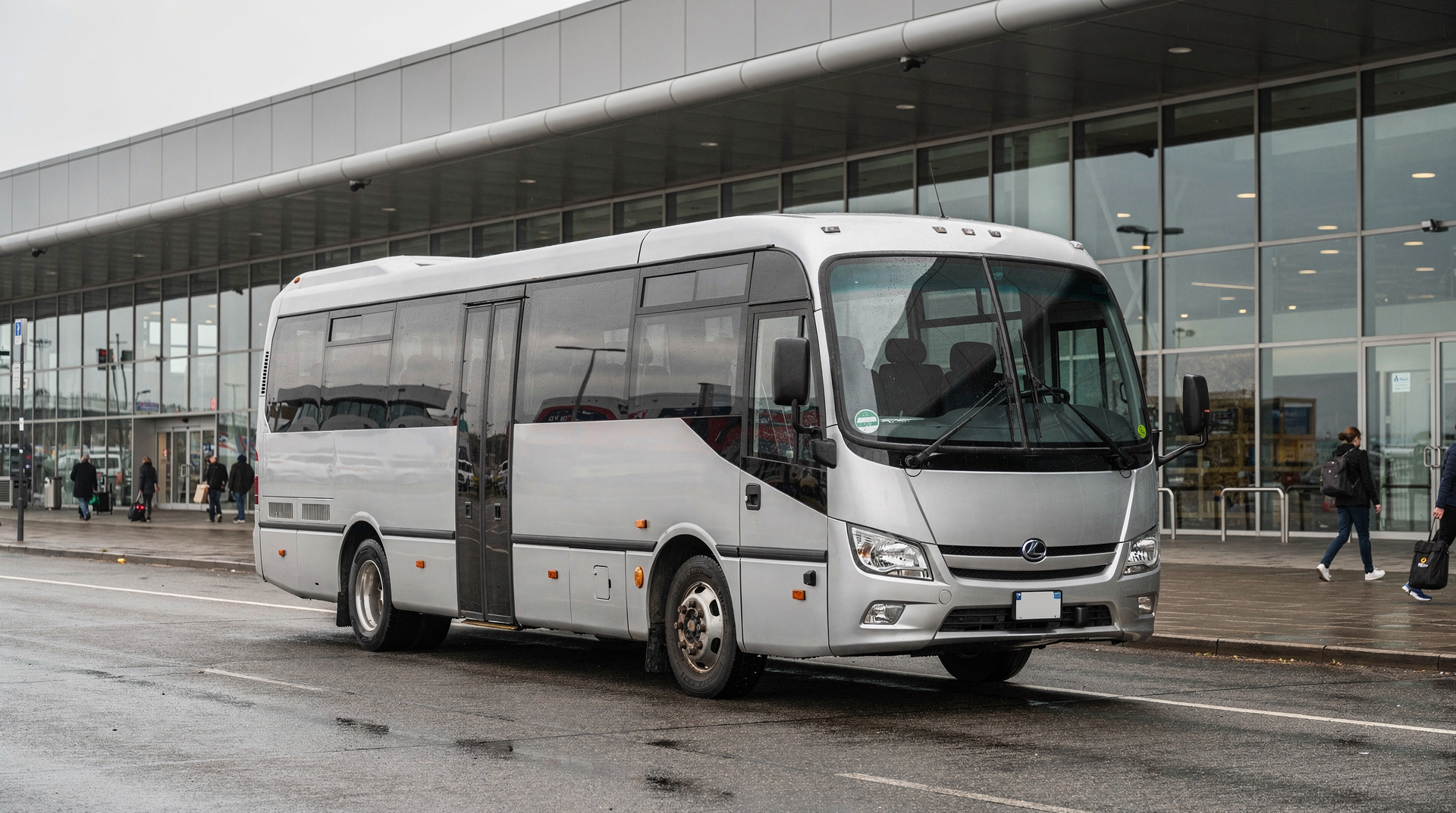
If you arrive at the airport, read getting to Budapest and Budapest airport to city centre so you know every legitimate option. For those who prefer not to think about it at all, a shared airport shuttle to your hotel is a straightforward option that is arranged before you travel, so nobody can approach you with a better offer in the terminal.
If you arrive by train at Keleti, walk past anyone who speaks to you first, step outside the busiest part of the hall, and either take the metro or open the app. A few moments of calm are worth far more than the time you think you are saving by accepting the first offer.
Choosing the right way to move for each trip
A taxi is rarely the best answer to every journey. Match the transport to the situation:
- Short hops inside the centre: walking is often the most pleasant option, and Pest in particular rewards it. See Budapest on a budget for how much you can do on foot.
- Longer rides across the river or up to the hills: the metro, trams and buses cover most of what visitors need. The BKK travel passes guide explains the pass options.
- Late at night, with luggage, or in bad weather: Bolt is the sensible choice, booked from a place where you are comfortable waiting. The taxis and Bolt guide goes deeper on using the app day to day.
- Sightseeing days with many stops: a pass that bundles transport can simplify things. The Budapest Card for transport and sightseeing is worth comparing with single tickets in Budapest Card vs single tickets.
For a wider look at moving around the city, getting around Budapest pulls all of these options together.
Small habits that keep you safe
Scams thrive on distraction, so a few small habits go a long way:
- Keep your phone charged before you go out for the evening, because a dead phone means no app and no map.
- Confirm the licence plate and driver name in the app before you get in, every time.
- Sit in the back, keep your valuables close, and share your trip with a friend if the app allows it.
- Keep a little cash and a card on you, but do not pull out a thick wallet in front of strangers.
- If anything feels wrong, get out in a busy, well-lit place and rebook.
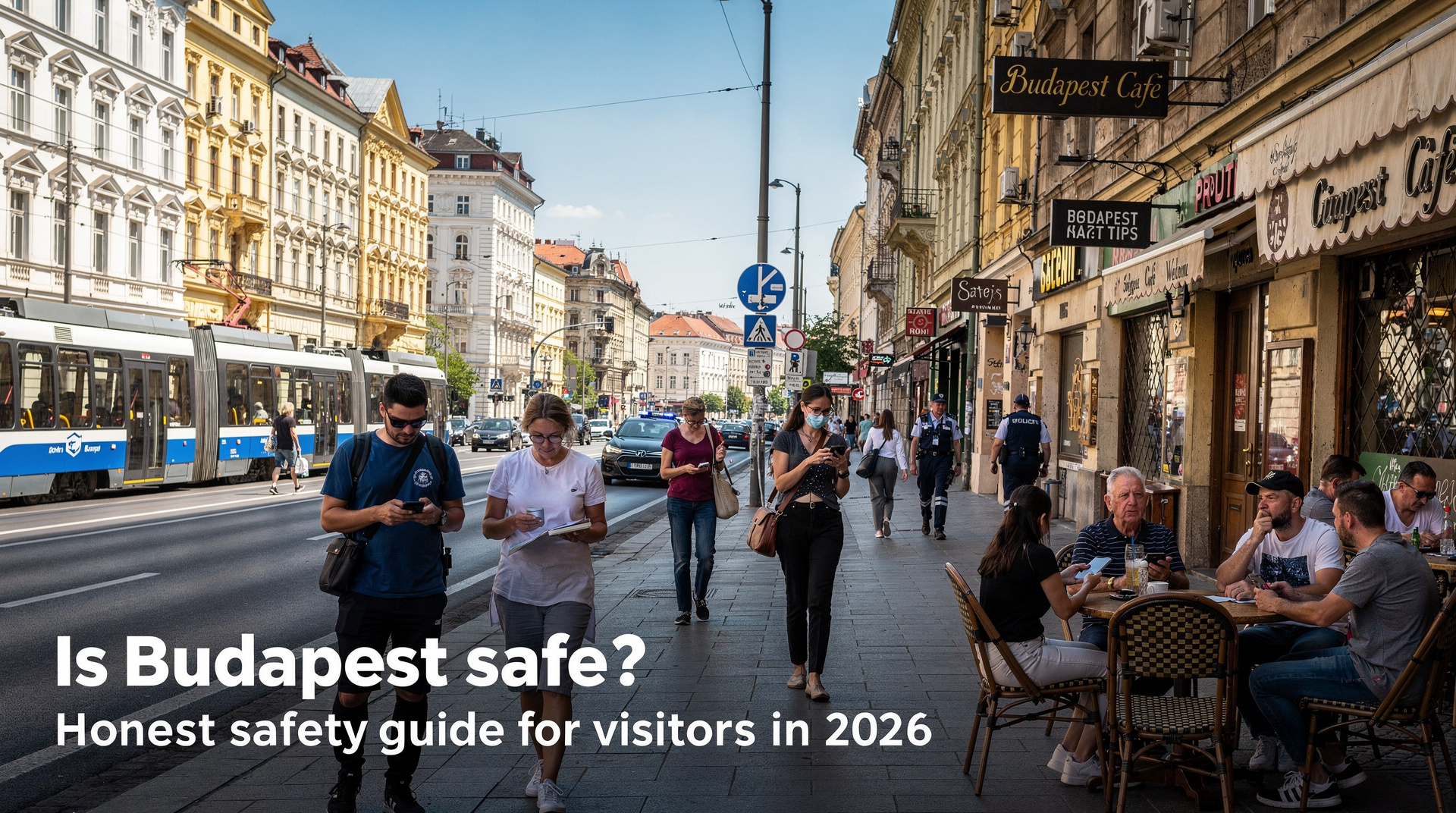
None of this is paranoia. Budapest is, for the vast majority of visitors, an easy and welcoming city, as discussed in is Budapest safe?. The taxi problem is simply one of the few places where a little preparation visibly changes the outcome. If you are planning your whole trip, the first time in Budapest guide and the biggest Budapest mistakes are good companions to this page.
What to do if you are overcharged
If you are already in a taxi and the fare feels wrong:
- Note the license plate number (visible on the plate and usually inside the vehicle)
- Ask for a printed receipt — legitimate drivers must provide one
- Do not pay cash if you feel unsafe — offer to pay by card (legitimate taxis accept cards)
- Report to the Hungarian National Police (Rendőrség) at www.police.hu, or call 107 (police emergency)
- Leave a review on Google Maps to warn other travellers
In practice, the most sensible response to being overcharged is to pay, leave, and report. Confrontation with a taxi driver who is deliberately scamming is rarely worth the risk.
Travelling in a group or with family
Groups behave differently from solo visitors, and so do the risks. A large party arguing over who pays is exactly the kind of situation in which a driver can slip in an inflated fare. Agree on the split beforehand, let one person hold the app and book the ride, and let the others simply get in once the plate matches. If you are travelling with children or older relatives, the calm of a fixed price matters even more, because nobody wants a dispute at the kerb with tired people and bags.
For families, the Budapest with kids guide covers practical planning, and for stag and hen weekends the Budapest stag do weekend itinerary is a useful reminder to sort the transport before the night begins rather than at the end of it.
Keeping the scam in proportion
It is worth ending on perspective. The vast majority of taxi drivers in Budapest do their job honestly, and most visitors never meet a problem. The scam is a narrow, predictable pattern tied to a few places and moments, which is precisely why it is so easy to avoid. You do not need to distrust the whole city or turn down every friendly stranger. You only need to avoid being approached for a ride in the places where it is known to happen, and to let the app do the negotiating for you.
If you want to see how this fits into the wider picture of honest advice, the Budapest travel guide is the best starting point, and the 3-day Budapest overview shows how a short stay can be arranged with very little taxi use at all.
The honest bottom line
Budapest’s taxi problem is solvable with a single app. Download Bolt. Use it every time you need a taxi. You will pay fair prices, arrive safely, and never have a dispute.
For wider safety information and Budapest scam prevention, read is Budapest safe?, common scams in Budapest and Budapest tourist traps.
This guide is part of our honest Budapest hub — straightforward planning information, no tourist-brochure polish.
Frequently asked questions about Budapest taxi scams
Is Bolt safe in Budapest?
Yes — Bolt is the standard way to get around Budapest beyond public transport. The app is widely used by locals, the price is fixed in advance, routes are GPS tracked, and the driver's rating system provides accountability. It is accepted as payment by most residents. Download it before you arrive; payment is by card through the app.What are the official taxi companies in Budapest?
The legitimate licensed taxi company in Budapest is Főtaxi (also called Budapest Taxi). Their cars are yellow with clear branding and a meter that starts at a set rate (flag fall ~700 HUF in 2026). The legitimate meter rate for regulated taxis is approximately 400–500 HUF/km. Any meter running faster than this is suspicious. However, using Bolt is simpler and often cheaper.How much should a taxi from Budapest airport cost?
A legitimate Bolt ride from Liszt Ferenc Airport (BUD) to central Pest costs roughly 4,500–6,500 HUF (€11–16). Főtaxi at the official airport rank charges a fixed rate to central Budapest — around 7,000–9,000 HUF (€17–22) — which is legitimate. The bus 100E + metro M3 costs about 3,000 HUF total and takes 45 minutes.Can I take the bus from Budapest airport instead?
Yes — bus 100E runs from the airport terminal to Deák Ferenc tér in the city centre, connecting to all metro lines. It costs 2,500 HUF one way (a special airport ticket) and takes 35–45 minutes. Combined with a metro single ticket (500 HUF) you reach most central areas for about 3,000 HUF total. This is the honest-planner recommendation for solo travellers or couples without heavy luggage.What happens if I get in a scam taxi?
If you realise mid-journey the meter is running abnormally fast, you can ask to stop and refuse to pay the full displayed amount. Note the license plate, take a photo if possible, and report to the Hungarian National Police (Rendőrség) or Budapest tourism police. In practice, confrontation is rarely worth it for the sums involved — prevention via Bolt is far simpler.Do Bolt drivers in Budapest expect a tip?
No — tipping Bolt drivers is not expected or required, though rounding up is appreciated for good service. This differs from restaurant tipping culture in Hungary, where 10% is standard. The Bolt fare shown before you confirm is the full price.Is it safe to use Bolt late at night in Budapest?
Yes — Bolt remains the safest option at any hour, including after nightlife in District VII closes. Book the car before leaving the venue rather than trying to hail one on the street, and confirm the license plate and driver name shown in the app match the car that arrives. See /guides/budapest-nightlife-guide/ for the broader late-night safety picture.
Top experiences
Bookable activities with verified prices and instant confirmation on GetYourGuide.