Visegrád — the citadel above the Danube Bend
Visit Visegrád on a day trip from Budapest: a 14th-century hilltop citadel, a reconstructed royal palace and the best panorama of the Danube Bend.

Quick facts
- Getting there
- Bus from Árpád Bridge bus station (Budapest) to Visegrád: ~1.5 hours. Or summer ferry from Budapest pier (Vigadó tér). Easiest by organised day tour.
- Distance from Budapest
- About 45 km north of Budapest on the Danube Bend.
- Citadel entry
- ~3 000 HUF (~€7.50) for adults; accessible by road from the main car park or on foot (45-minute hike from the ferry pier).
- Royal Palace
- Solomon's Tower and the partially reconstructed palace grounds: ~2 000 HUF (~€5). The palace museum displays original Gothic and Renaissance stonework.
- Combination
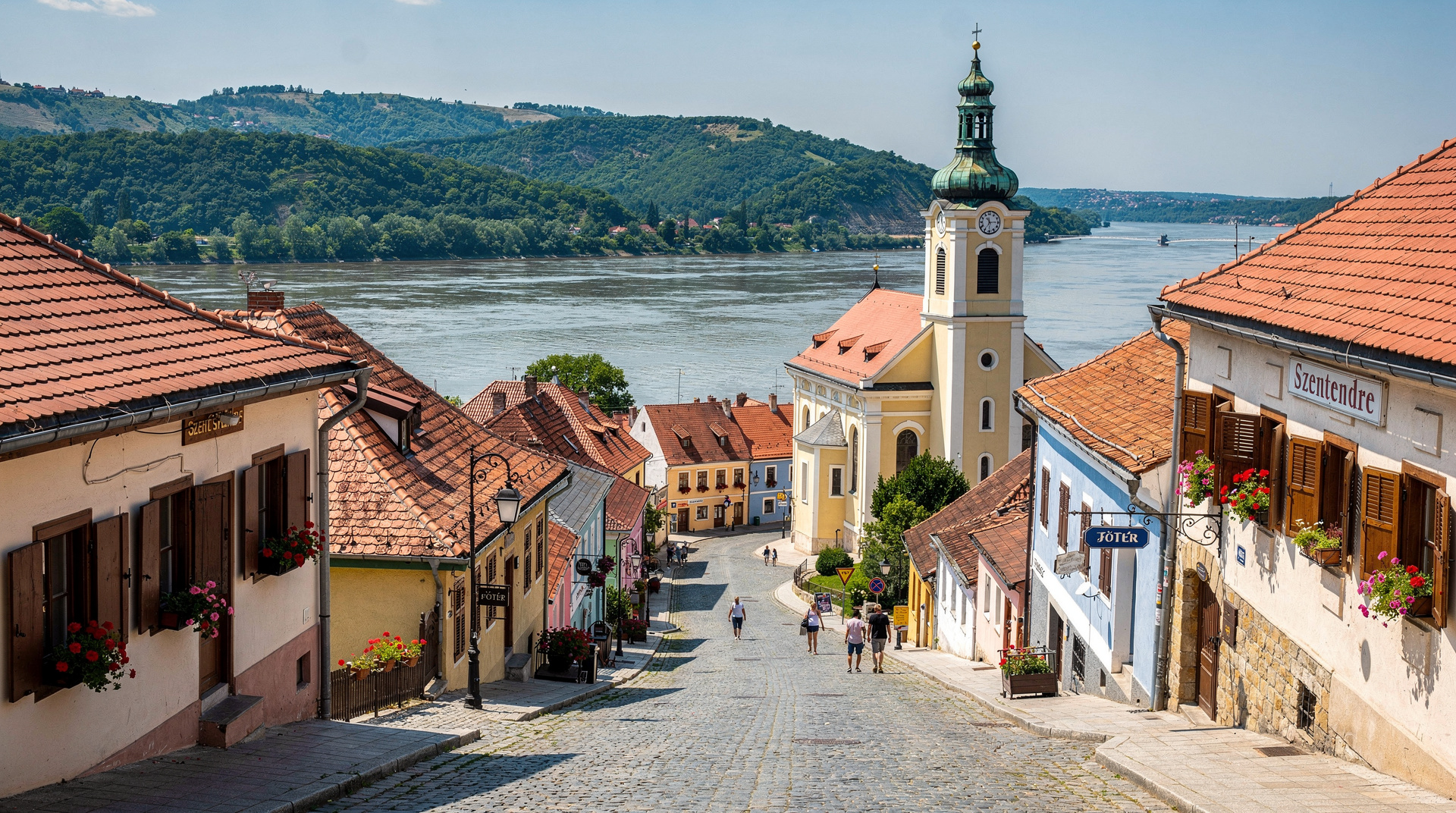
- Visegrád pairs naturally with Szentendre (30 km south by bus or river) for a full Danube Bend day.
Where the Danube turns — and a castle watches
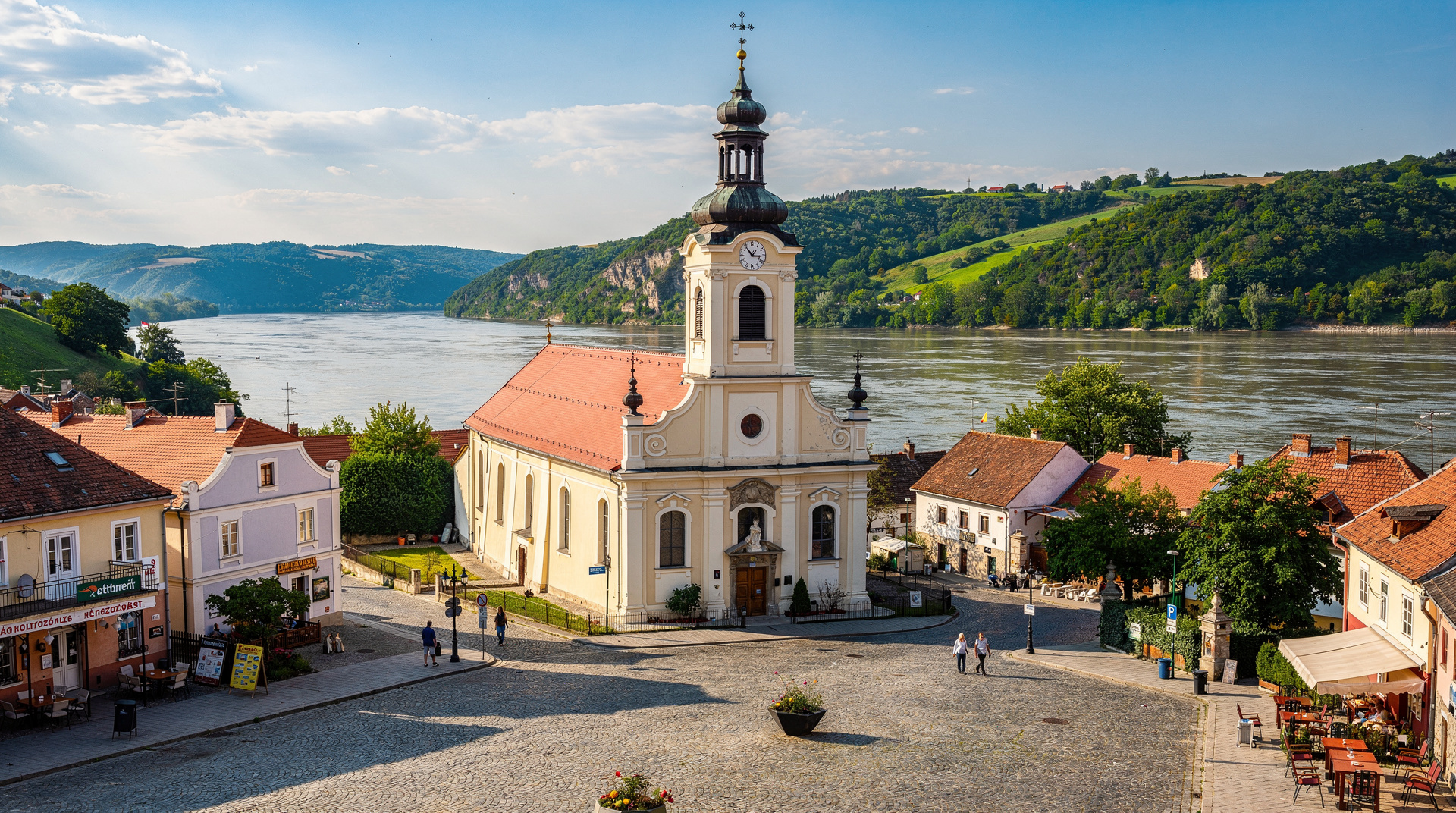
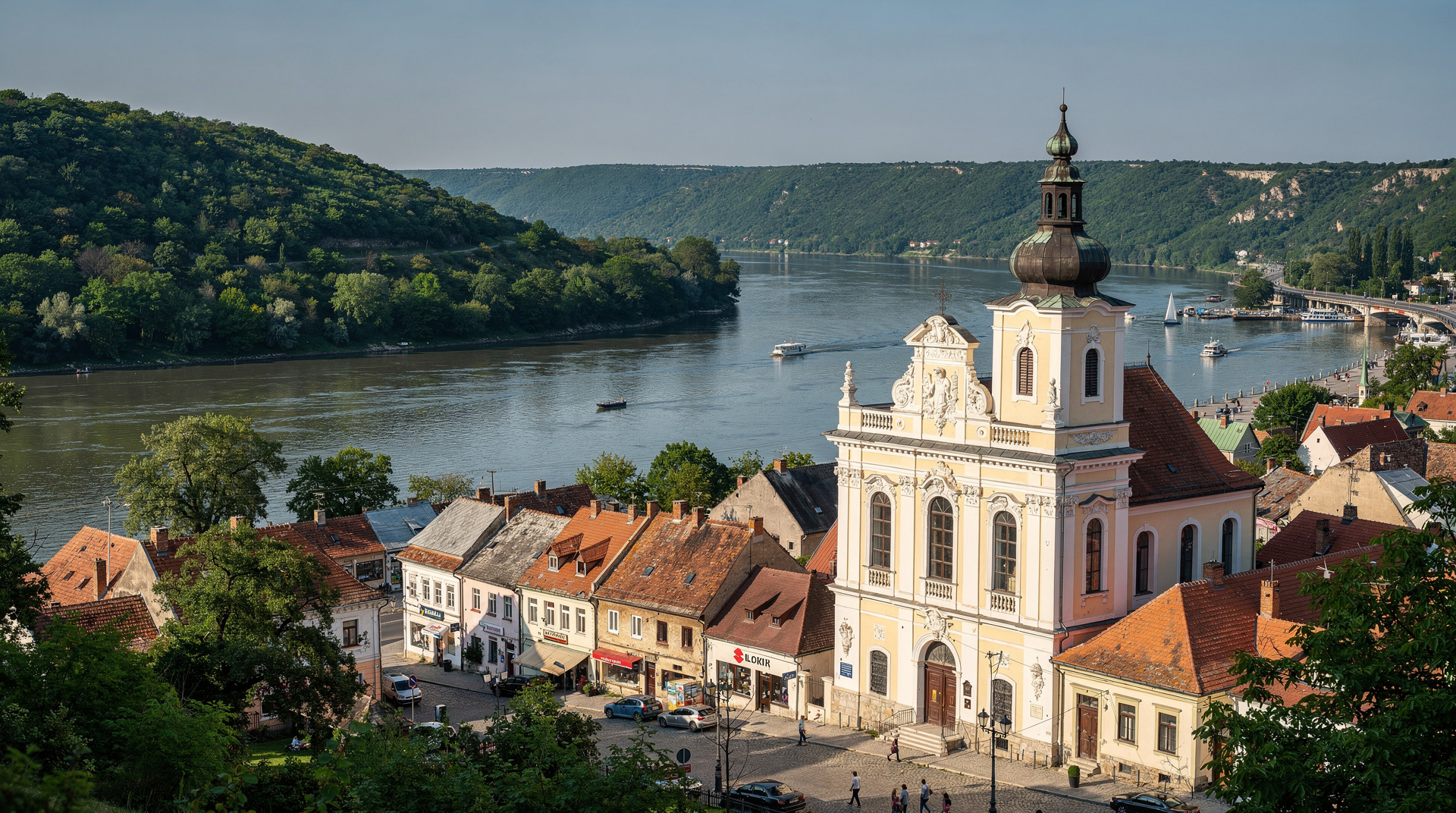
At a point about 45 kilometres north of Budapest, the Danube does something unusual: it bends sharply to the south through almost 90 degrees, creating the panorama that Hungarians call the Dunakanyar — the Danube Bend. The bend is the result of geology rather than human intention, but the effect is one of the most dramatic river landscapes in central Europe: wooded hills dropping steeply to the water, the river curving out of sight in both directions, the sky wide above everything.
Standing on the Visegrád citadel above this bend is the defining experience of a Danube Bend day trip. The castle has been here in some form since the 13th century, positioned to control river traffic through the narrowest point of the bend. Today it is a well-maintained ruin — enough to understand the scale of what stood here, nothing so reconstructed that it loses authenticity — and the view it commands is the reason most visitors make the journey.
History — from medieval capital to Habsburg ruin
Visegrád’s importance in Hungarian history is disproportionate to its current size (the town today has about 2 000 residents). In the 14th century it was briefly the effective capital of the Hungarian kingdom.
The original fortification on the hill dates from the 13th century, built by the Árpád dynasty to guard the Danube crossing and store the Hungarian crown jewels. After the Mongol invasion of 1241–42 demonstrated the inadequacy of existing defences, King Béla IV ordered a comprehensive upgrading of Hungarian border fortifications — Visegrád was one of the key investments.
Under the Angevin kings Charles I (1308–1342) and Louis the Great (1342–1382), Visegrád became a royal residence of the first importance. Charles I moved the Hungarian court here from Buda; it was at Visegrád in 1335 that the Congress of Visegrád took place — a summit meeting between the kings of Hungary, Poland and Bohemia that established a trade route to bypass Vienna, a medieval diplomatic achievement that gave the modern Visegrád Group (V4) its name.
The palace below the citadel reached its peak under Matthias Corvinus (1458–1490), the Renaissance king who invited Italian artists and architects to transform it into one of the most sophisticated royal residences in 15th-century Europe. Contemporary accounts describe marble fountains, a library with one of the largest book collections outside the Vatican, and gardens with exotic plants. The Ottoman conquest ended all this; by 1702, when Habsburg engineers deliberately destroyed the castle walls to deny them to Hungarian rebels, Visegrád was already a ruin. Centuries of flood deposits buried the palace.
The Fellegvár — the upper citadel
The citadel (Fellegvár) occupies the hilltop above the town at 258 metres. The surviving fortifications include the gatehouse, several towers, stretches of curtain wall and the keep. The interior of the main courtyard has been partly landscaped as a park with interpretive panels explaining the original layout.
From the topmost accessible point, the panorama extends: the Danube curving away to the north and south, the dark forested hills of the Pilis on the west bank, the town of Nagymaros on the opposite bank with the Börzsöny hills rising behind it. On a clear day, the river and the hills and the silence combine into something that feels genuinely impressive rather than merely scenic.
The Visegrád hike and castle tour with ferry from Budapest combines the approach by river (the summer ferry gives the first view of the citadel from the water, which is the most dramatic first impression) with a guided walk to the castle and the return leg by bus or ferry. The approach by water — seeing the castle emerge above the trees as the boat rounds the bend — is significantly better than arriving by road.
The Visegrád aerial tour offers a drone-assisted or aerial perspective on the castle and the Danube Bend landscape — relevant if photography is a primary interest.
The Royal Palace
The Alsóvár (Lower Castle) or Royal Palace stands at the edge of the Danube, a five-minute walk south of the ferry pier. The excavations have revealed the foundations and lower walls of the original 14th–15th-century structure; the Renaissance court (Hercules Fountain courtyard) has been partially reconstructed and gives the clearest picture of the palace’s appearance under Matthias Corvinus.
The palace museum displays original carved stonework from the Renaissance renovation — window frames, column capitals, decorative panels — in a level of detail that rewards close attention. The Gothic and Renaissance styles are clearly distinguishable in the carved stone; the Italianate influence on the 15th-century work is particularly striking against the medieval Hungarian Gothic of the earlier construction.
Entry to the palace museum is around 2 000 HUF (~€5) for adults. Solomon’s Tower — a cylindrical keep from the 13th century at the river’s edge — is included in the ticket and has a small exhibition of medieval metalwork and ceramics found during excavations.
The Danube Bend full-day tour
For visitors who want to cover the entire Danube Bend circuit without logistical effort, the full-day Danube Bend tour from Budapest covers Szentendre, Visegrád and Esztergom in a single day with a guide who handles transport and provides historical context at each stop. This is the most efficient option for first-time visitors who want to understand the region rather than simply transit through it.
Getting to Visegrád independently
By bus: Volánbusz buses run from Budapest’s Árpád Bridge bus station (metro M3) to Visegrád in approximately 1.5 hours. The bus drops you in the town centre near the ferry pier. Services run roughly hourly; the journey is inexpensive (1 000–1 500 HUF/€2.50–4 each way).
By summer ferry: From May through September, Mahart Passnave operates a hydrofoil and a standard passenger ferry from Vigadó tér pier in Budapest to Visegrád. The hydrofoil takes about 1 hour; the slower ferry about 2.5 hours (but the river journey itself is enjoyable). Booking in advance is recommended in peak season.
By organised tour: The easiest option for a single day. Most tour operators in Budapest offer a Danube Bend day trip combining Visegrád with Szentendre; the full-day tour is the most comprehensive.
Practical tips
The hike from the town to the citadel (approximately 45 minutes each way, about 200 metres of elevation gain) is the most rewarding approach but requires decent footwear and fitness. The path is signed and the gradient manageable; a rest at the top is required in any case.
Visegrád has limited restaurant options — the best is the Renaissance Restaurant near the palace, which serves Hungarian medieval-inspired cuisine and is worth booking ahead for lunch (mains around 4 000–6 000 HUF/~€10–15). There are snack stalls near the citadel car park in summer.
For a full Danube Bend itinerary combining Visegrád with Szentendre and an optional Esztergom extension, see the Danube Bend day trip guide and the best day trips from Budapest.
How to shape your day around the citadel
Visegrád rewards a slow rhythm. The town is small, the sights are spread between the riverbank and the hilltop, and the best moments are the quiet ones: a pause on a forest bend of the path, a long look at the river from the upper walls, a coffee near the water before the return journey. Treat the citadel as the anchor of the day and let everything else fit around it, rather than trying to tick off every stop on the Danube Bend.
If you arrive early, go up to the citadel first. Morning light on the river is kind to photographs, the path is cooler under the trees, and you reach the top before the tour groups. Come back down to the Royal Palace and the riverfront for the middle of the day, then keep your last hour or two for lunch and an unhurried look at the town. If you arrive later, reverse the order: start at the palace, which is flat and close to the pier, and save the climb for when you are properly warmed up and the afternoon sun lights the bend from the west.
Whichever order you choose, carry water and a light layer. The hilltop is exposed, and the weather at the top can feel different from the weather by the river. Comfortable shoes matter more here than almost anywhere else on the Danube Bend, because the stone at the castle is uneven and the forest path can be slippery after rain.
Choosing between the hike, the road and the tour
There are three sensible ways to reach the citadel, and each suits a different traveller. The walk through the forest is the most atmospheric: you earn the view, you see the landscape open up gradually, and you arrive with a real sense of having climbed to a fortress. It suits walkers, photographers and anyone who likes to feel the geography of a place. Travellers with limited mobility, small children or a tight schedule will prefer the road approach, which leaves a short walk at the end. Those who would rather not manage any logistics can book a guided option, and the hike-and-ferry tour described earlier on this page is the one that fits the approach above most closely.
For families, the climb is a good test of the day. Older children often enjoy the forest path and the towers, while very young ones may tire quickly. Our guides to Budapest with kids and family-friendly attractions can help you decide whether to combine Visegrád with a gentler stop, and the accessible Budapest guide is worth reading if steep paths and uneven stone are a concern for anyone in your group.
Why the Danube Bend deserves more than a quick stop
Many visitors treat the Danube Bend as an afterthought to the capital, a box to tick between a thermal bath and a night out. That undersells it. The region offers something Budapest cannot: space, silence and a landscape that has barely changed in its broad shape since medieval kings chose it for their court. If your days in the city have been dense with museums, markets and crowds, Visegrád is a natural counterweight, and it fits well into longer plans such as the five-day Budapest itinerary or the Budapest and day trips week.
The trip also helps put Budapest itself in context. The story of the Angevin court, the Mongol invasion and the Ottoman decline runs through the whole country, and standing in the ruins makes the Hungarian history primer feel far less abstract. If you have already walked around the Buda Castle district or read the Buda Castle guide, Visegrád gives you the earlier chapter: a royal seat that came before the one on the Buda hill.
Combining Visegrád with its neighbours
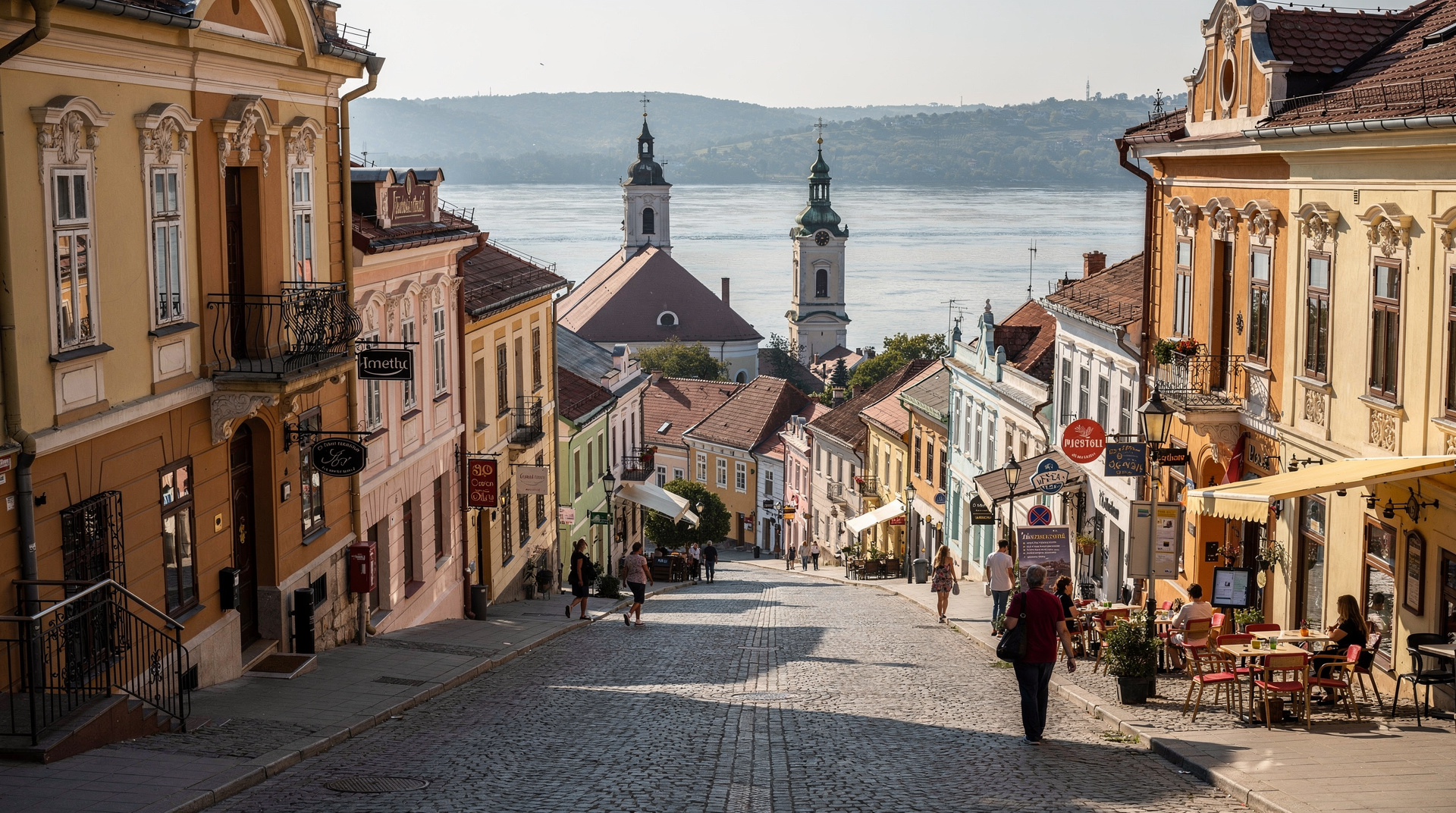
The classic pairing is with Szentendre, a short hop along the river, and our Szentendre destination page and Szentendre day trip guide cover the old town, the galleries and the lanes in more detail. If you would like a relaxed, narrative companion piece to that visit, the blog post A day in Szentendre gives a first-hand feel for the town.
Travellers with more energy, or a second day to spare, can extend the trip to Esztergom, the former royal and ecclesiastical centre with its great basilica above the river. Read the Esztergom destination page before you decide, because adding it turns a relaxed day into a long one. If you prefer to leave all the sequencing to someone else, a guided Danube Bend tour is built around exactly this kind of pairing.
What to look for once you are there
Take a few minutes at the citadel to read the interpretive panels in the courtyard before heading for the viewpoint. They explain how the fortress was laid out, and knowing where the gatehouse, towers and walls once stood turns a pile of stone into something you can picture. At the palace, slow down in the museum rooms and compare the carved Gothic details with the later Renaissance work; the difference is easy to spot once you have seen both side by side.
Look, too, at the river itself. From the hilltop you can follow the water as it curves between the Pilis hills and the Börzsöny on the far bank, and you can understand at a glance why a fortress was placed here to watch the traffic below. Boats, small villages and the changing colour of the forest all add to the scene, and the view shifts noticeably with the light and the season. Visitors who come in autumn often find the slopes especially beautiful, and our guide to Budapest in autumn explains what else the season offers.
Do not rush the descent. The way down is as pleasant as the way up, and it is a good moment to reflect on how the place ties into the wider story of the kingdom. Allow time at the end of the day for something simple: a seat by the water, a drink, and a last look at the hills before the bus or boat takes you back toward the city.
Planning the rest of the trip around it
A Visegrád day works best when it sits between easier days in the city. Check the best time to visit Budapest for the broad seasonal picture, and use the Budapest travel guide as the overall frame for your stay. If your public transport plans for the week are still open, the BKK travel passes guide and the getting around Budapest guide explain how to reach the bus station and the city-side departure points without confusion.
Finally, think about how you will end the day. After the climb, many travellers want nothing more than a long soak, and a thermal bath back in the city is the natural reward. Our best thermal baths in Budapest overview will help you choose one that suits tired legs, and the outdoor baths in winter guide is useful if you are visiting in the colder months. An evening on the water, for example one of the options in the best Danube cruises guide, is another good way to see the same river from a very different angle once you are back in the capital.
Top experiences
Bookable activities with verified prices and instant confirmation on GetYourGuide.