Castle District — Buda's historic hilltop neighbourhood
Explore Budapest's Castle District: Buda Castle, Fisherman's Bastion, Matthias Church and the medieval lanes of Castle Hill in half a day.

Quick facts
- Getting there
- Funicular from Clark Ádám tér (1 800 HUF return); bus 16/116 from Deák tér; or walk up the stairs from the Chain Bridge.
- Entry
- Castle Hill is free to walk. Buda Castle museum from ~3 200 HUF (~€8); Matthias Church ~3 600 HUF (~€9); Castle Caves ~4 500 HUF (~€11).
- Time needed
- Half a day for the main sights; a full day if you include a museum inside the Castle.
- Tourist traps
- Restaurants immediately around Fisherman's Bastion charge tourist prices. Walk one street back for the same views at half the cost.
- Best photo spot
- Fisherman's Bastion at sunrise — free entry before 9am; €4 (roughly 1 600 HUF) after that to climb the towers.
A medieval hilltop that survived the centuries (barely)
Castle Hill is not pretty in the way that comes easily. The limestone plateau rising 60 metres above the Danube Bend has been besieged, occupied, bombed flat and rebuilt so many times that what you see today is substantially a 20th-century reconstruction — and yet it reads as genuinely ancient. The bones of a medieval city are still here: the grid of pale stone lanes, the Gothic niches embedded in later Baroque facades, the cellars and caves honeycombing the rock beneath your feet.
The main attractions cluster within a ten-minute walk of each other at the southern end of the hill: Buda Castle itself (housing two major museums), Matthias Church, Fisherman’s Bastion, and the Sándor Palace (the official residence of Hungary’s president). Between them lies a largely pedestrianised neighbourhood of embassies, boutique hotels, galleries, and the kind of quiet that feels incongruous given how close the ruin bars are.
| Where | Castle Hill, District I, above the western (Buda) riverbank |
| Cost | Hill and Bastion lower terrace free; museums from ~3 200 HUF |
| Time needed | Half a day; a full day with a museum inside Buda Castle |
| Getting there | Funicular from Clark Ádám tér, bus 16/116, or the stairs from the Chain Bridge |
| Best time | Before 9am or after 4pm, to avoid tour-group traffic |
Fisherman’s Bastion — the most photographed spot in Budapest
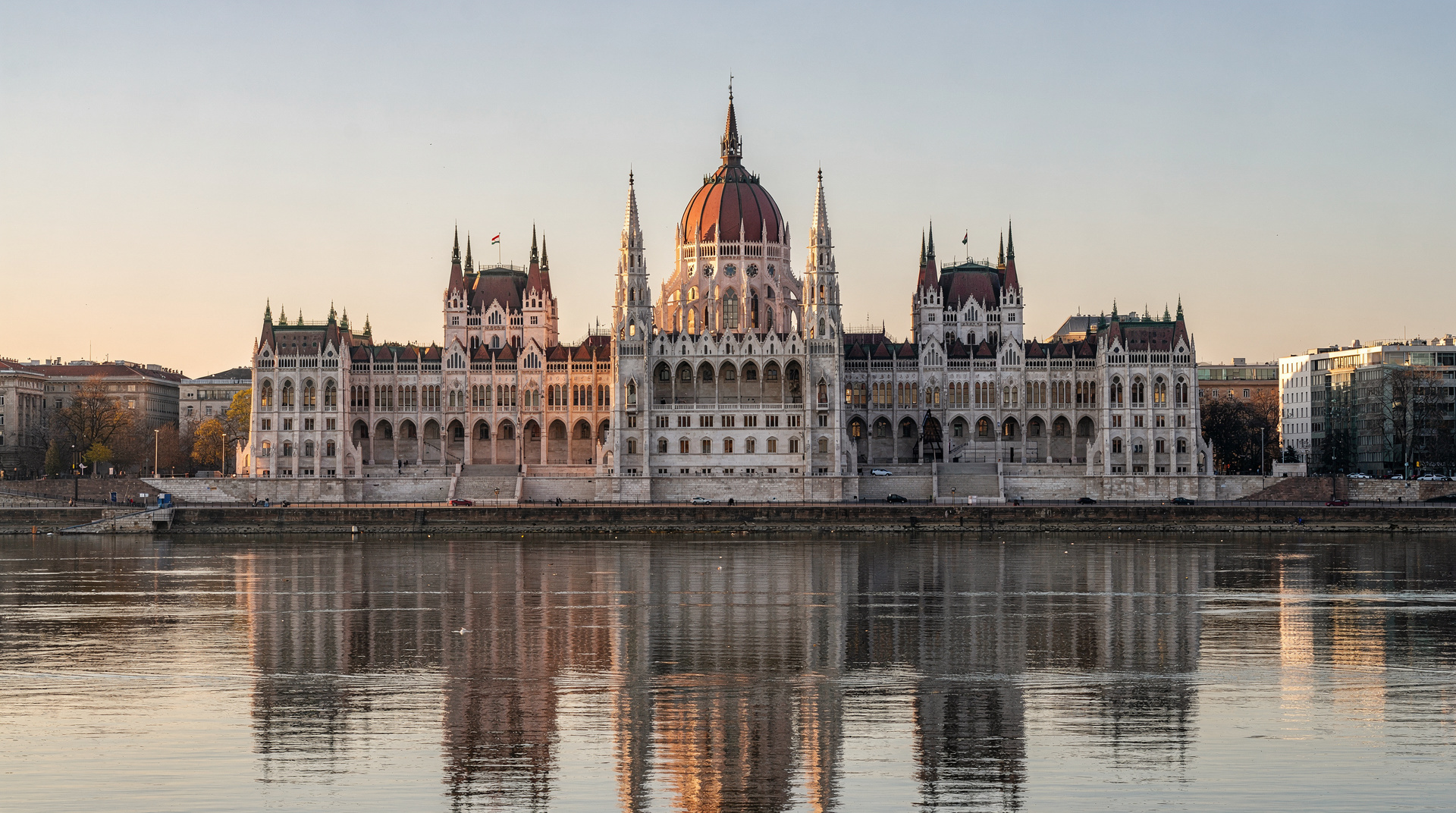
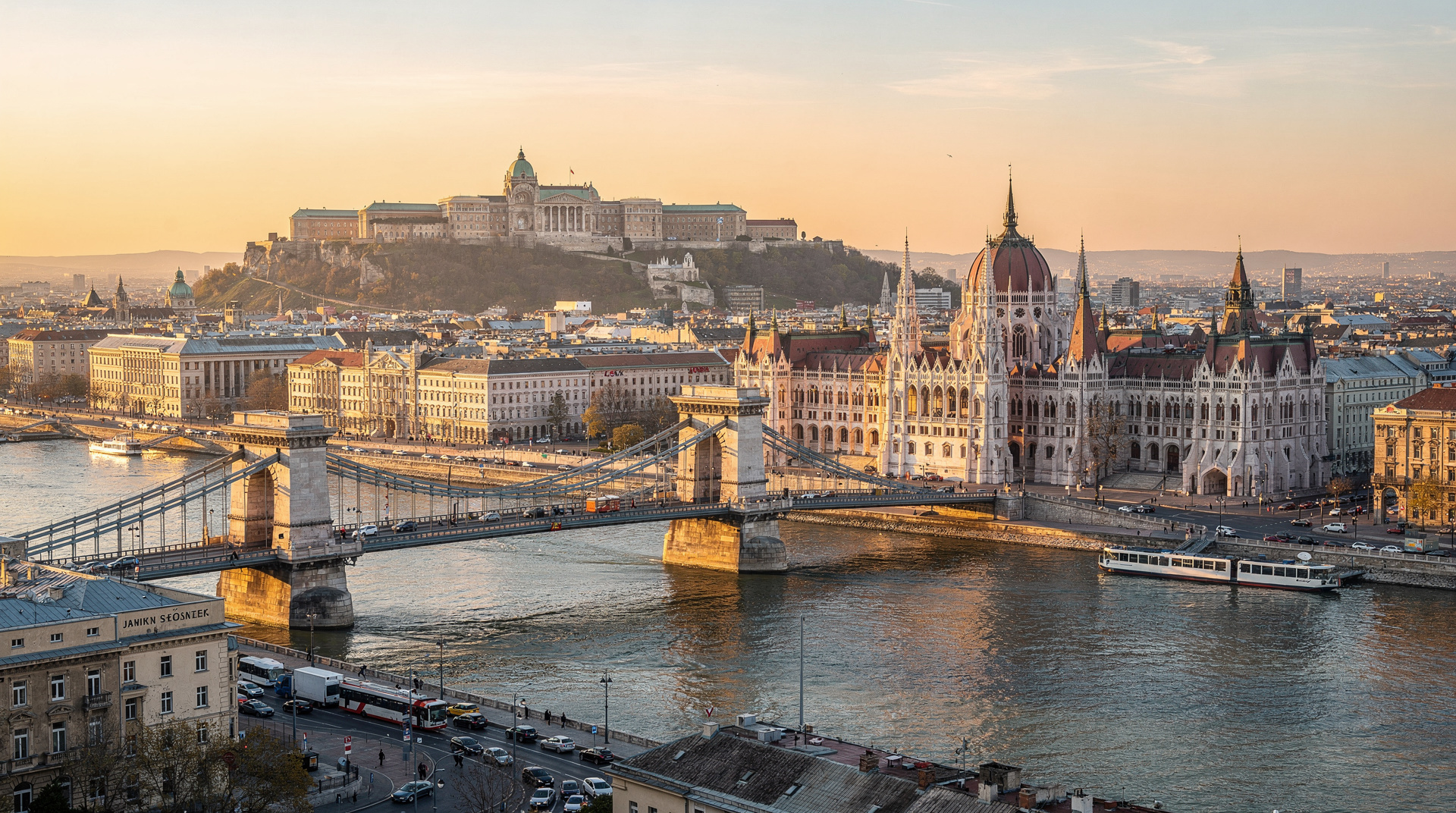
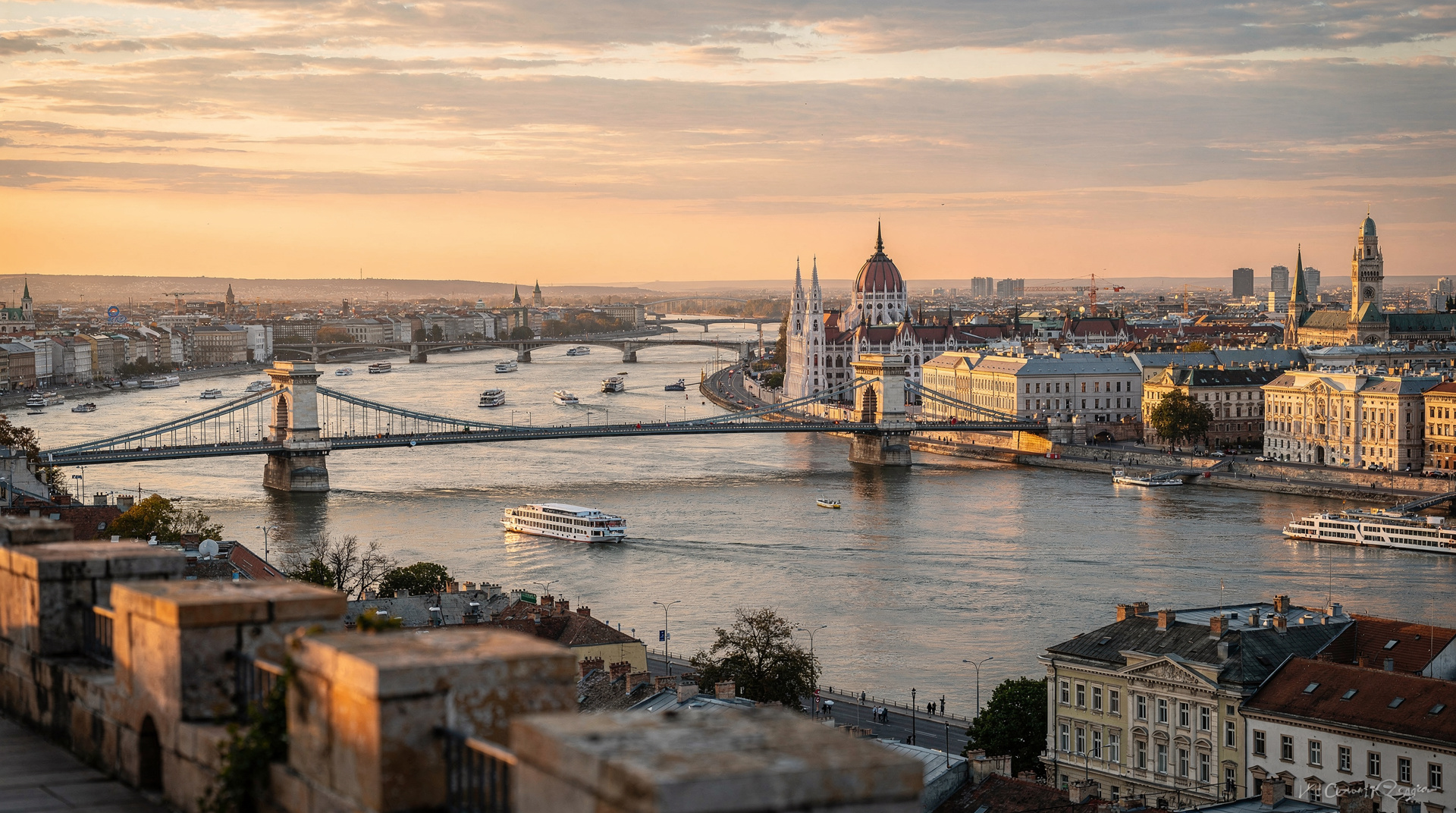
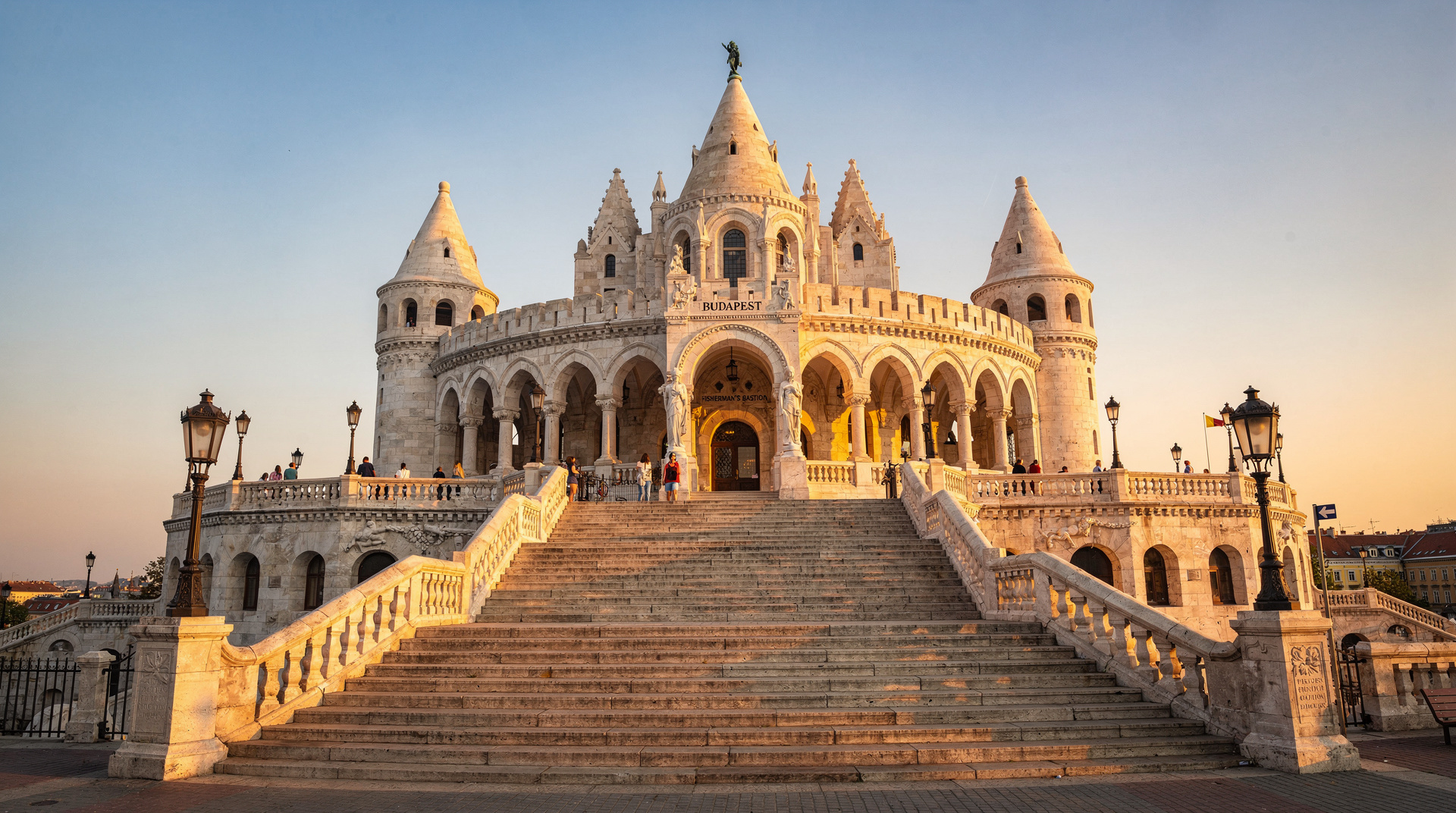
Built between 1895 and 1902 as a decorative viewing terrace (never a functioning fortification), Fisherman’s Bastion is a neo-Romanesque fantasy of seven towers representing the seven Magyar tribes who settled the Carpathian Basin. The towers and their conical white stone spires are the most photographed sight in Budapest, and with good reason: the view from the upper terrace takes in the entire sweep of the Danube, the Hungarian Parliament on the Pest bank, the Chain Bridge, and the city spreading away to the southeast.
The lower terrace is free to access at all hours. The towers and upper walkways cost around 1 600 HUF (~€4) during daytime; before 9am and after 7pm, access is entirely free. Coming at sunrise — impractical for many, but achievable — gives you the bastion to yourself in golden light.
Between the Bastion and Matthias Church stands the equestrian statue of King Stephen I, Hungary’s first Christian king. Do not confuse the apostolic double cross on his statue with standard Christian iconography — it is a specifically Hungarian symbol with a different political and religious history.
Matthias Church — a thousand years of Hungarian rule
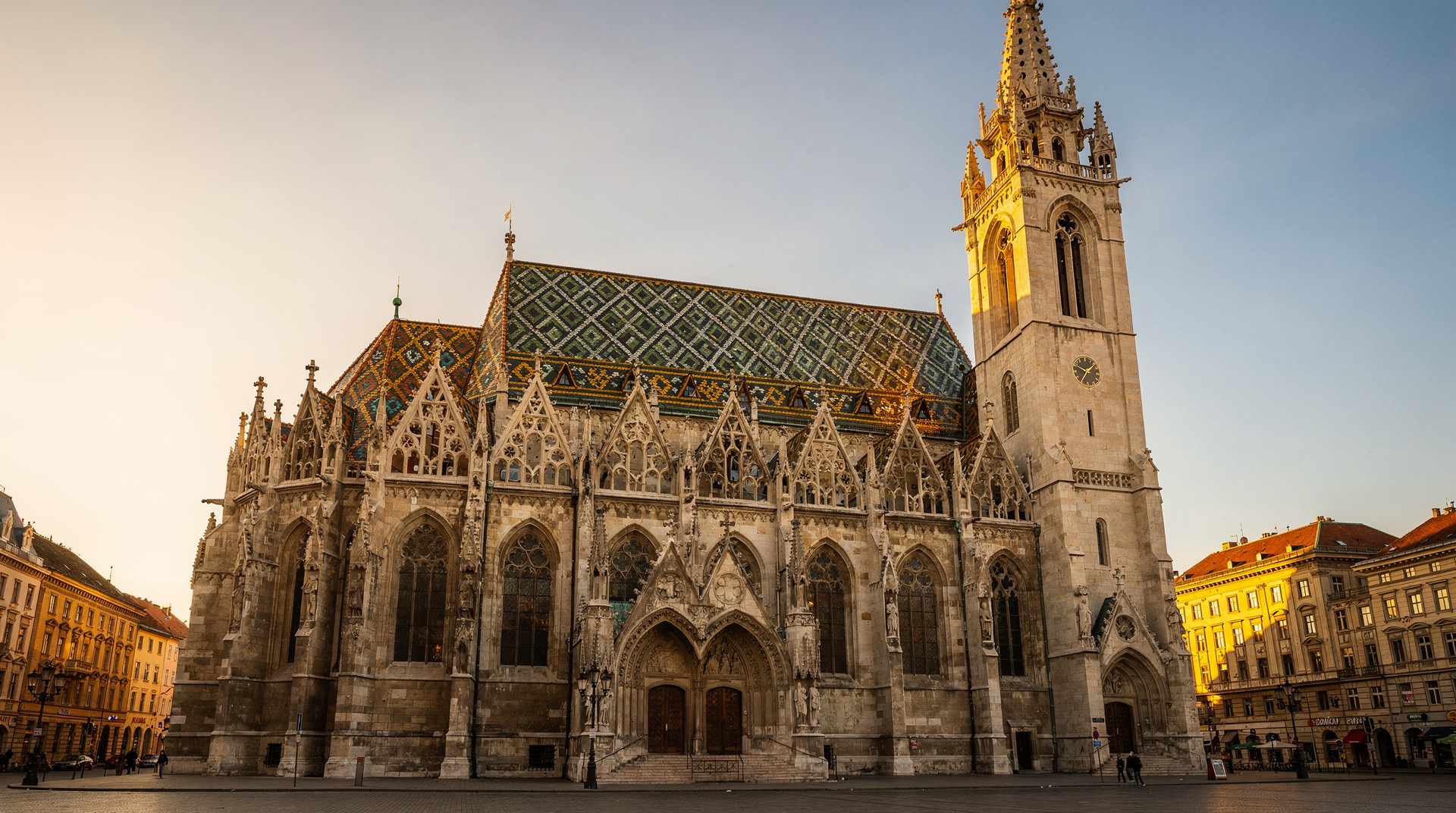
The Church of the Assumption of Buda Castle — almost universally called Matthias Church after the 15th-century king who renovated it — is one of Budapest’s most layered interiors. The current structure dates primarily from 14th-century Gothic construction, with major additions under King Matthias Corvinus, then conversion to a mosque under Ottoman occupation (1541–1699), then reconversion and baroque overlay after the Habsburgs retook the city.
The result is a building of remarkable complexity: the diamond-patterned coloured roof tiles (a 19th-century restoration), the medieval stone carvings preserved behind the altars, the Turkish floral patterns still visible beneath later plasterwork, and a treasury holding Hungarian royal regalia. Matthias Church entry tickets are available online; the treasury and the upper gallery looking down into the nave are included.
Organ concerts are held here regularly — check the church website for the current schedule, as they are worth the extra cost if your visit coincides.
Buda Castle — two museums in a palace rebuilt after WWII
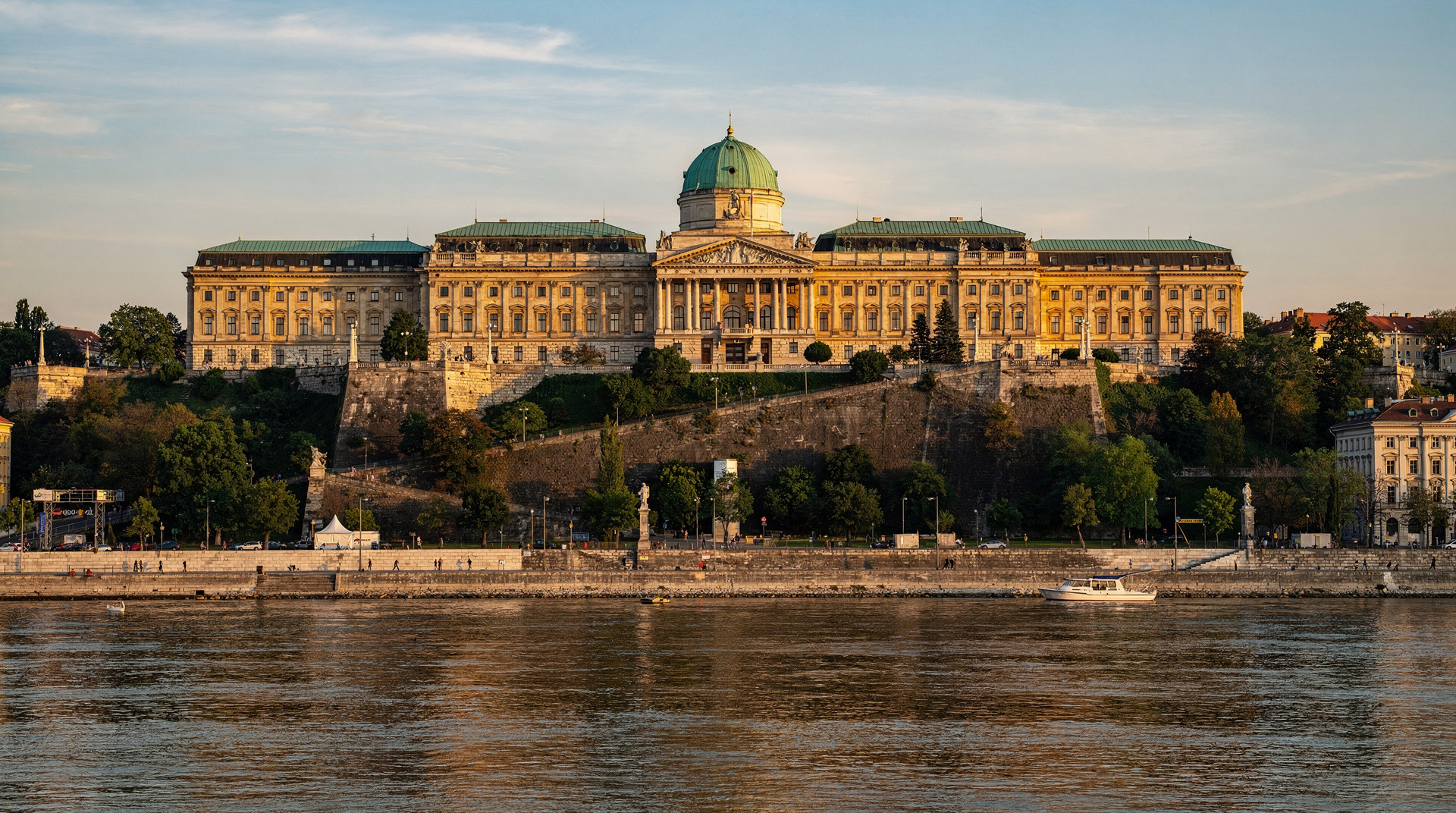
The massive Baroque-and-Neoclassical palace complex stretching across the southern end of Castle Hill is simultaneously Hungary’s most recognisable architectural monument and a building almost entirely reconstructed after the Second World War. The original medieval royal palace was destroyed in the Ottoman siege of 1686; the Habsburgs built a new palace on the site; that in turn was almost completely destroyed in the fighting of 1944–45; the current structure is a 1960s–80s rebuild of the Habsburg original.
Inside, two major institutions occupy the wings:
Hungarian National Gallery (wings B, C, D): the country’s most comprehensive collection of Hungarian fine art from the Middle Ages to the 20th century, including Gothic altarpieces rescued from provincial churches, late medieval panel paintings, 19th-century Romantic and Realist canvases, and an outstanding collection of Art Nouveau works. Allow two hours minimum.
Budapest History Museum (wing E): traces the city’s history from the Roman settlement at Aquincum through the medieval kingdom, Ottoman occupation, Habsburg rule and the communist era. The medieval Gothic Hall in the basement — original palace architecture from the 14th century — is genuinely impressive.
The classic Buda Castle walking tour covers the exterior highlights, the history of the hill and the main viewpoints with a local guide. A good option if you want context before entering the museums.
Castle Hill’s underground — the cave network
Below Castle Hill runs an extensive network of natural and man-made tunnels carved from the soft limestone. In the medieval period these served as cellars and escape routes; during the Second World War they became an underground hospital. Today the accessible section (Hospital in the Rock) is a museum preserved exactly as it was when it last operated.
A separate network of caves is the focus of the Buda Castle Caves walking tour, which descends into the geological formations beneath the hill — stalactites, narrow passages and the eerie acoustics of rock corridors. Practical footwear required; the temperature underground stays around 12°C regardless of season.
The Castle District at dusk
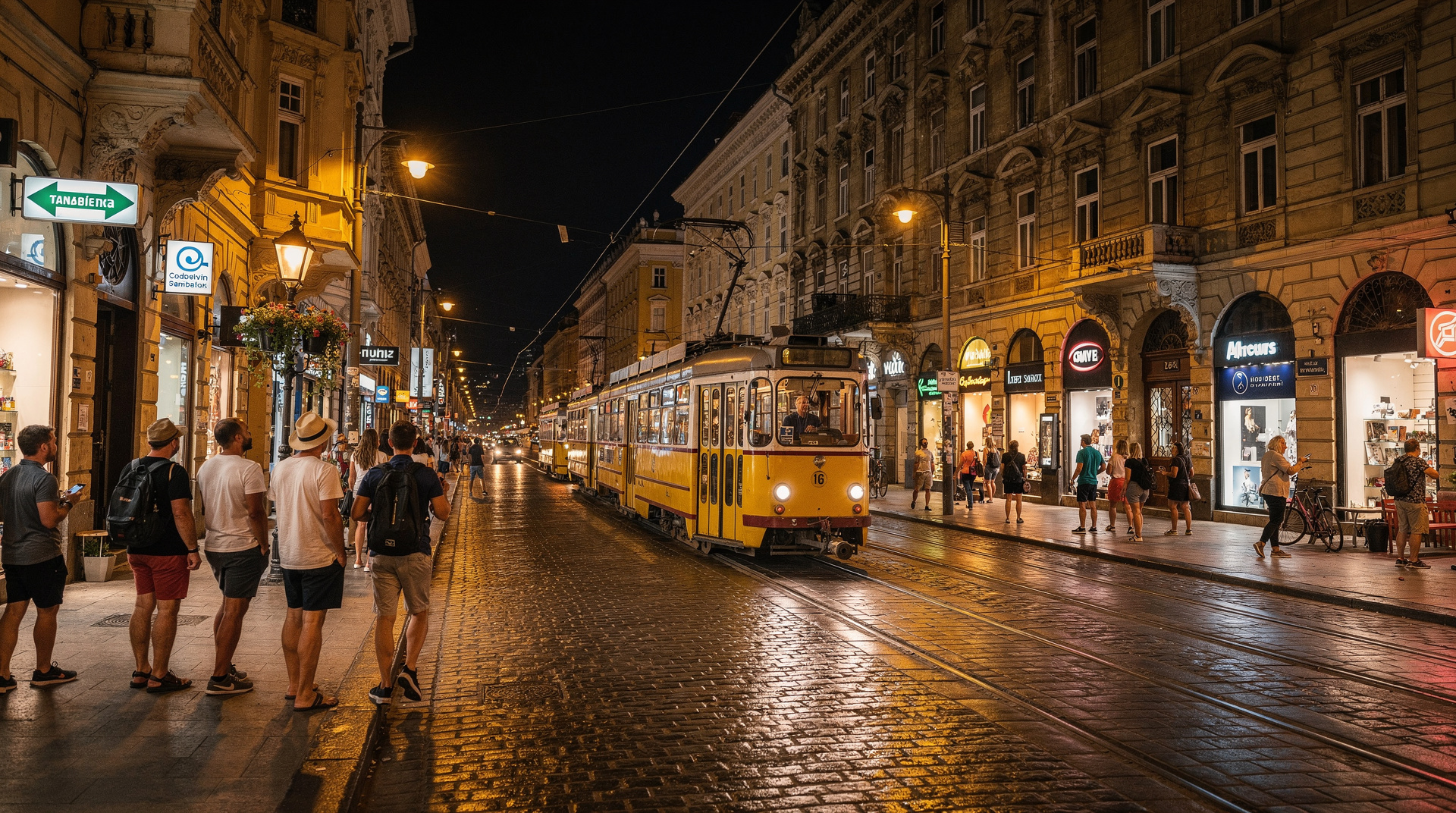
As the day tour groups thin after 5pm, the Castle District becomes a different place — quieter, lit by warm late-afternoon sun in spring and summer, and genuinely atmospheric once the street lamps come on. The Castle Hill evening lights and sights tour takes advantage of this: the Parliament building glowing across the river, the Chain Bridge illuminated, the Matthias Church spire catching the last light. This is also the time to ride the e-scooters — the Fisherman’s Bastion e-scooter tour covers the hilltop at a relaxed pace once the pedestrian crowds have dropped.
Getting there — all the options
Funicular (Sikló): The castle funicular runs from Clark Ádám tér at the Buda end of the Chain Bridge. It is small, slow, and enjoyable — about 2 minutes to ascend. Return ticket costs 1 800 HUF (€4.50). Not worth the queue in peak summer; but fun once.
Bus 16 and 116: Run from Deák Ferenc tér (Pest) directly to the castle gate. Cheap (500 HUF single, pre-purchased), comfortable and frequent. Bus Várbusz runs from Széll Kálmán tér (formerly Moszkva tér).
Walking: From the Chain Bridge, take the stairs on the Buda side (15–20 minutes of genuine uphill walking, well-signed). From the southern end, you can walk up through the garden terraces of the Várkert Bazár (Castle Garden Bazaar), which is worth exploring on its own.
Minibusz: Runs within the Castle Hill plateau itself, connecting the main sites — useful if mobility is a concern.
Where to eat on Castle Hill
Baltazár Bistro (Országház utca 31): a wine bar and bistro with decent grilled meat and an excellent wine selection, both Hungarian and international. Prices are elevated but reasonable given the location — around 5 000–8 000 HUF (~€12–20) for a main.
Pest-Buda Bistro (Fortuna utca 3): traditional Hungarian cooking in a setting that does not try too hard to be charming. Gulyás, töltött káposzta (stuffed cabbage), beef tenderloin with dumplings — executed properly.
Ruszwurm (Szentháromság utca 7): Budapest’s oldest confectionery, open since 1827. Tiny, always crowded, and worth the wait for the Dobos cake and the history.
Practical tips
Plan to arrive before 9am or after 4pm to avoid the thickest tour-group traffic at Fisherman’s Bastion. The lanes behind Úri utca and Tóth Árpád sétány (the promenade along the western wall) are almost empty compared to the main tourist corridor and give a more authentic sense of the neighbourhood. The walk down through the Várkert Bazár garden terraces to the riverside is one of the most pleasant exits from Castle Hill and connects to tram 2 along the Danube.
For a full Budapest visit that slots the Castle District into the right sequence, see the 3-day Budapest itinerary and the first-time visitor guide.
Combining with the rest of Buda
The Castle District pairs naturally with the rest of hillside Buda rather than as a standalone half-day. Gellért Hill, a 20–30 minute walk or short tram ride south along the riverside, adds Budapest’s best panoramic view and the Cave Church to the same day. Coming down the eastern side of Castle Hill toward the Chain Bridge connects directly into Downtown Pest — Parliament and St Stephen’s Basilica are a 15-minute walk across the river, making a Castle Hill morning followed by a Pest afternoon a logical full-day structure.
For accommodation, staying inside the Castle District itself is scenic but quiet in the evenings — most visitors base themselves in Pest and treat Castle Hill as a day excursion. See the where to stay guide and the Budapest city overview for how this fits the wider trip.
A sensible order for your half-day
The hill rewards a simple sequence. Start at the Bastion while the terraces are quiet, then drift toward Matthias Church, which sits right beside it, and only then decide whether you have the appetite for a museum. Doing it in this order means you see the busiest spot at its calmest and keep the interior sights for the hours when the light outside is flat anyway. If you would rather have the stories behind each building as you go, our Fisherman’s Bastion guide and the Matthias Church guide go into the details that a short visit skips.
Leave a little slack between stops. The hill looks compact on a map, but the cobbles, the viewpoints and the constant temptation to take one more photograph stretch every leg of the walk. Travellers who schedule something rigid straight after the Castle District, such as a dinner reservation across the river, tend to rush the best part of the visit.
Choosing between the museums and the lanes
Not everyone needs to go inside the palace. The Buda Castle guide helps you decide which wing, if any, suits your interests. History lovers will find the Budapest History Museum rewarding, and anyone drawn to painting and sculpture should give the National Gallery proper time rather than a quick pass. If neither appeals, the lanes, courtyards and terraces are a complete experience in themselves, and nothing is lost by treating the palace as a backdrop rather than a destination.
Families and mixed groups often split the difference: a short museum visit for those who want it, while the others walk the western promenade and meet up afterwards. The hill is small enough that this works without any fuss, and it keeps everyone from being dragged through galleries they will not enjoy. For more ideas on where to spend museum time elsewhere in the city, see the best museums in Budapest.
Seeing the hill with a guide or on wheels
The Castle District suits both a guided introduction and a self-paced wander. A local guide adds the layers of siege, rebuilding and reinvention that signs rarely explain, which is why the walking tour mentioned above works well as an opening move. If you prefer to compare formats first, the roundup of the best walking tours in Budapest lays out the choices, and the free walking tours guide covers the pay-what-you-like alternatives.
Those who want to cover more ground with less effort can look at wheeled options, from e-scooters to tuk-tuks, described in the tuk-tuk and e-scooter guide. They are especially handy for the long, gently sloping promenades, though you should always respect the pedestrian-only streets and the people strolling on them.
Photography on Castle Hill
Few places in the city reward a camera as generously. The Bastion’s arches frame Parliament almost too perfectly, the lanes behind the church give quieter street scenes, and the western wall looks out over Buda’s rooftops rather than Pest’s skyline. Soft light at the edges of the day flatters the pale limestone, while the middle of the day tends to flatten it and fill every frame with other visitors. Photographers who want a structured session will find ideas in the photography tours guide.
After the hill
Once you come down, there is plenty to keep the day going. The nearby Chain Bridge makes a natural crossing back to Pest, and from there you can continue to the Hungarian Parliament for the view you were just admiring from above. If your legs ask for a rest, an evening soak in one of the city’s thermal baths is a classic way to finish; the best thermal baths in Budapest will help you pick one. Travellers with only one day in the city can see how this fits into a compact plan in the one-day Budapest itinerary.
Top experiences
Bookable activities with verified prices and instant confirmation on GetYourGuide.