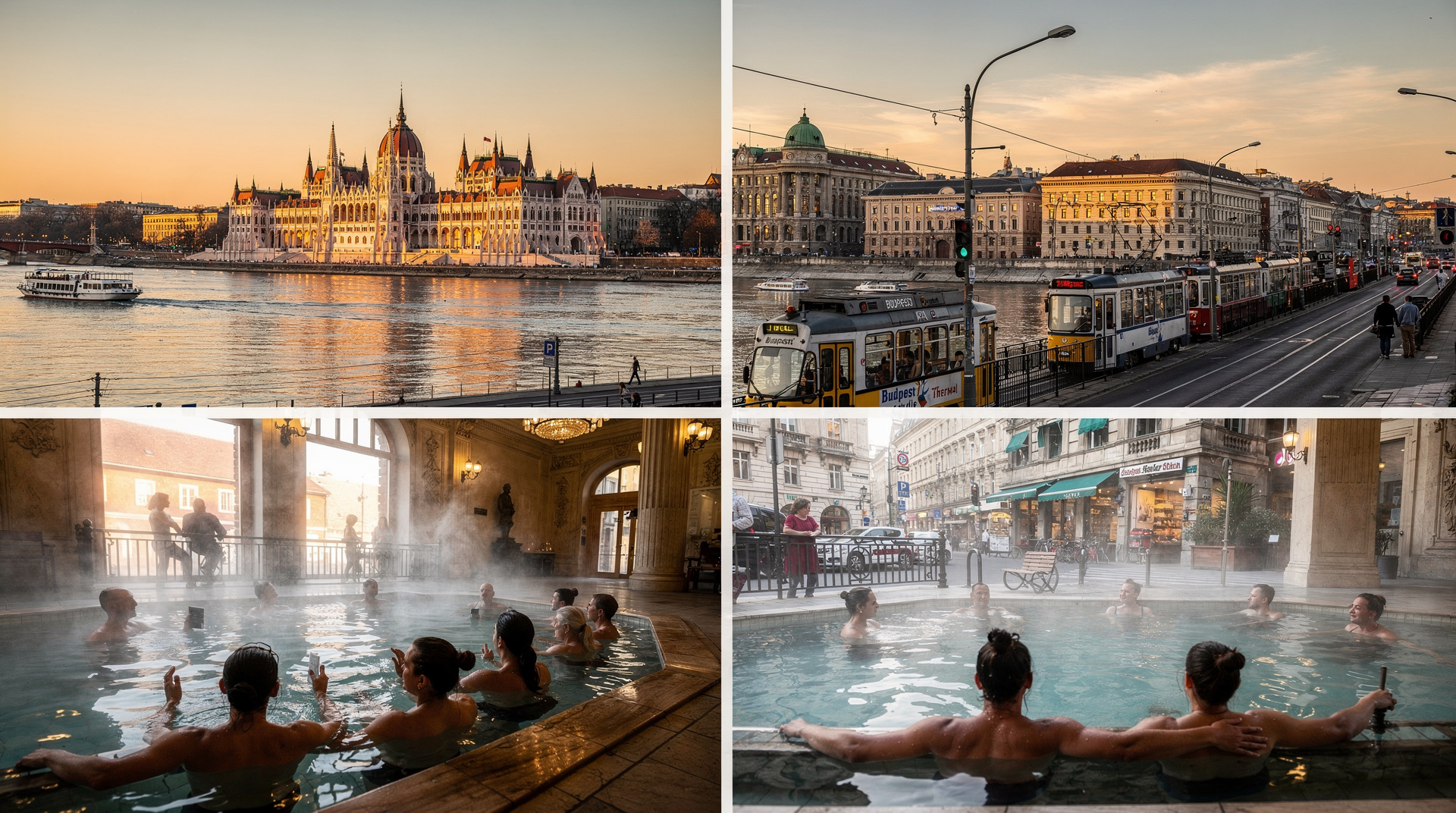
Budapest weekend itinerary: 2 days done right

Two days in Budapest is the sweet spot for a short break: long enough to feel unhurried, compact enough to justify the flight from most European cities. You will cover the headline sights on both sides of the Danube, soak in a thermal bath, eat well, and still have an evening for the ruin bars. This itinerary is designed for a Friday-evening arrival (or an early Saturday start) and a Sunday departure.
| Where | Castle District + Széchenyi day 1, Parliament + Jewish Quarter day 2 |
| Cost | around 71,500–81,500 HUF (€180–205) per person, mid-range |
| Time needed | two full days, Friday evening arrival to Sunday departure works well |
| Getting there | on foot + metro M1 + a 72-hour BKK travelcard |
| Best time | spring or autumn for weather; book Parliament and Széchenyi ahead year-round |
If you find yourself wanting more, see the Budapest 3-day itinerary — adding one day opens up a day trip, the food scene, and a more leisurely pace. For a different two-day angle, the Budapest weekend break itinerary emphasises relaxation over sightseeing density. If two days feels tight before you commit, the Budapest 1-day itinerary shows what a maximally compressed version looks like.
Day-by-day summary
| Day | Morning | Afternoon | Evening |
|---|---|---|---|
| Day 1 | Castle District, Fisherman’s Bastion, Matthias Church | Széchenyi Baths, City Park | Danube cruise, dinner |
| Day 2 | Parliament, Shoes on the Danube, St Stephen’s Basilica | Great Market Hall, Jewish Quarter | Ruin bars, final dinner |
Day 1: Buda, the Castle and thermal baths
Morning: Castle District (8:00–12:30)
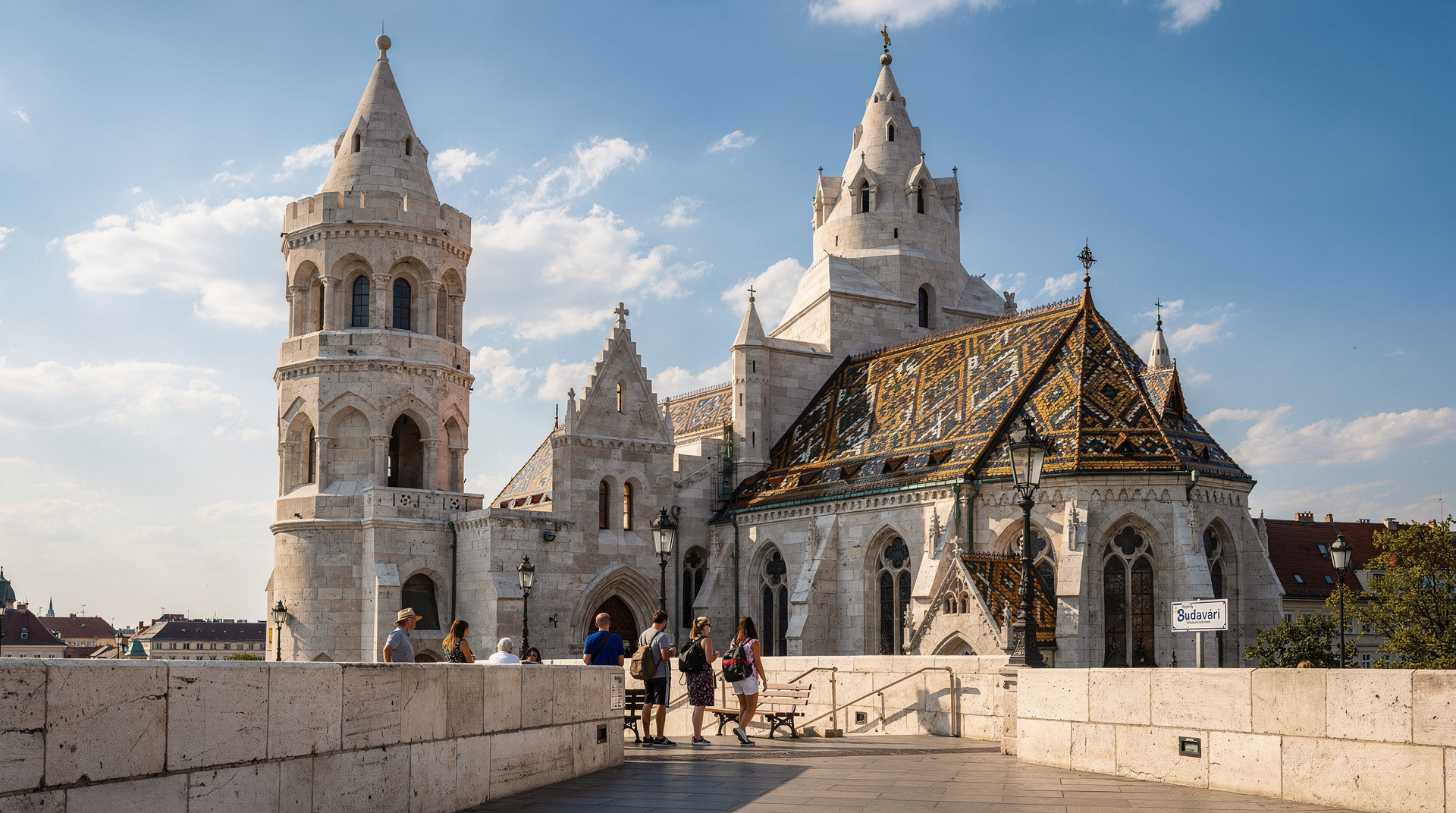
Start on the Buda side before the tour groups arrive. The Castle District is at its best before 10:00 — quiet cobbled streets, golden morning light on the Baroque facades, and Fisherman’s Bastion almost to yourself.
Take the funicular from Clark Ádám tér (1,400 HUF one-way) or walk up the stairs alongside it for free. Either way, arrive at Fisherman’s Bastion by 8:30. The lower terraces are free; the upper gallery (1,500 HUF) gives a fraction more elevation but is rarely worth the premium — the panorama over the Danube, Chain Bridge and Parliament is extraordinary from the lower level.
Matthias Church (Mátyás-templom) opens at 9:00. Entry is around 3,500 HUF and the painted vaulting and medieval tile floor inside are genuinely worth 40 minutes. For deeper context on the Castle District’s layered history — Habsburg, Ottoman, communist — consider a guided Castle District walking tour rather than exploring alone.
After the church, walk south through the palace district to the Royal Palace terrace for views toward Gellért Hill, then take the steps down to the riverbank.
Afternoon: Széchenyi Baths (13:00–17:30)
Cross to Pest via the Chain Bridge on foot (15–20 minutes, excellent views). Grab a quick lunch somewhere off the tourist circuit — the area around Váci utca is scenic but overpriced for food; the tourist traps guide explains where not to eat and what to order instead. A gulyás soup or a bowl of lecsó with bread runs 2,500–3,500 HUF (€6–9) in a non-tourist spot.
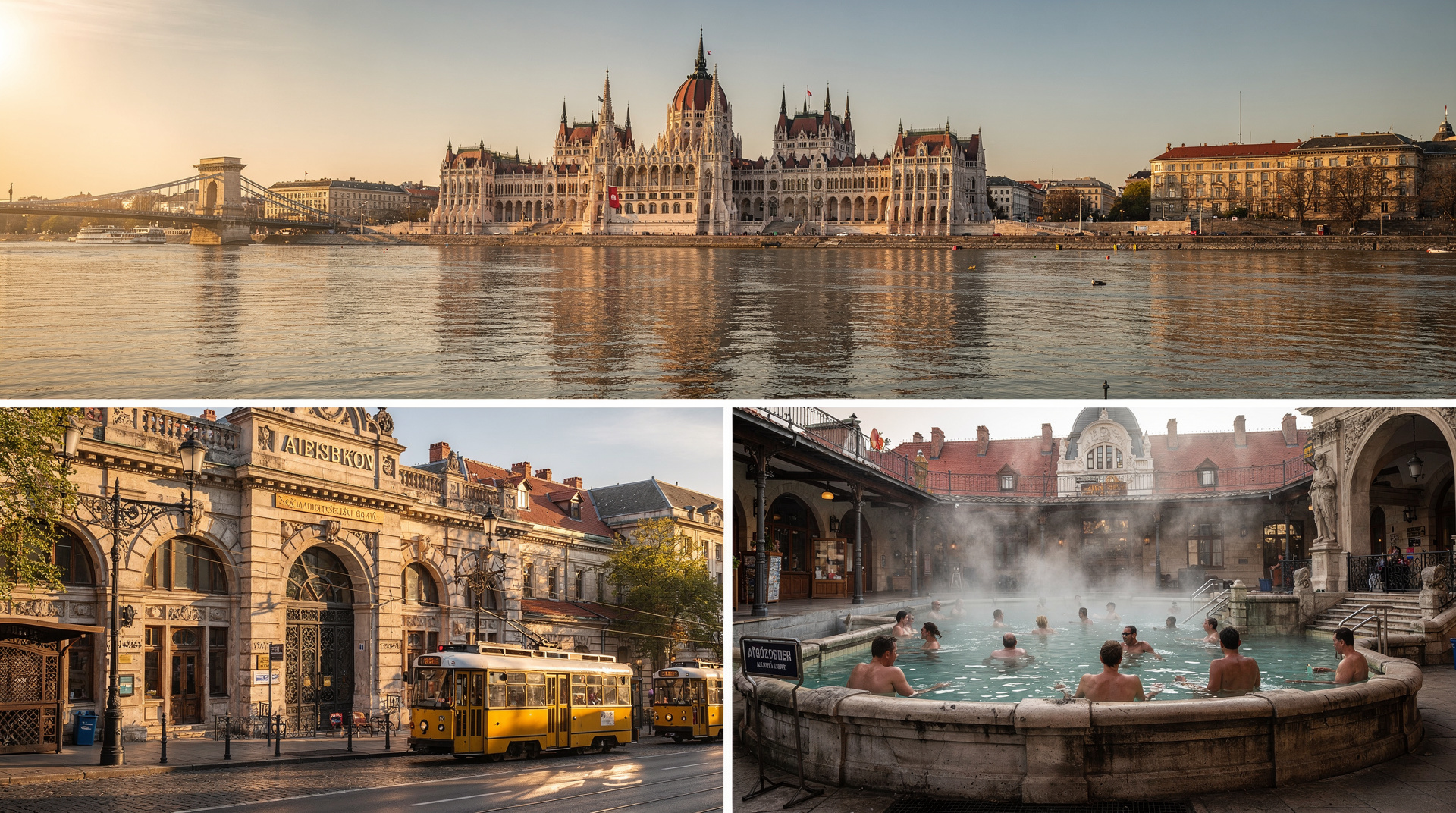
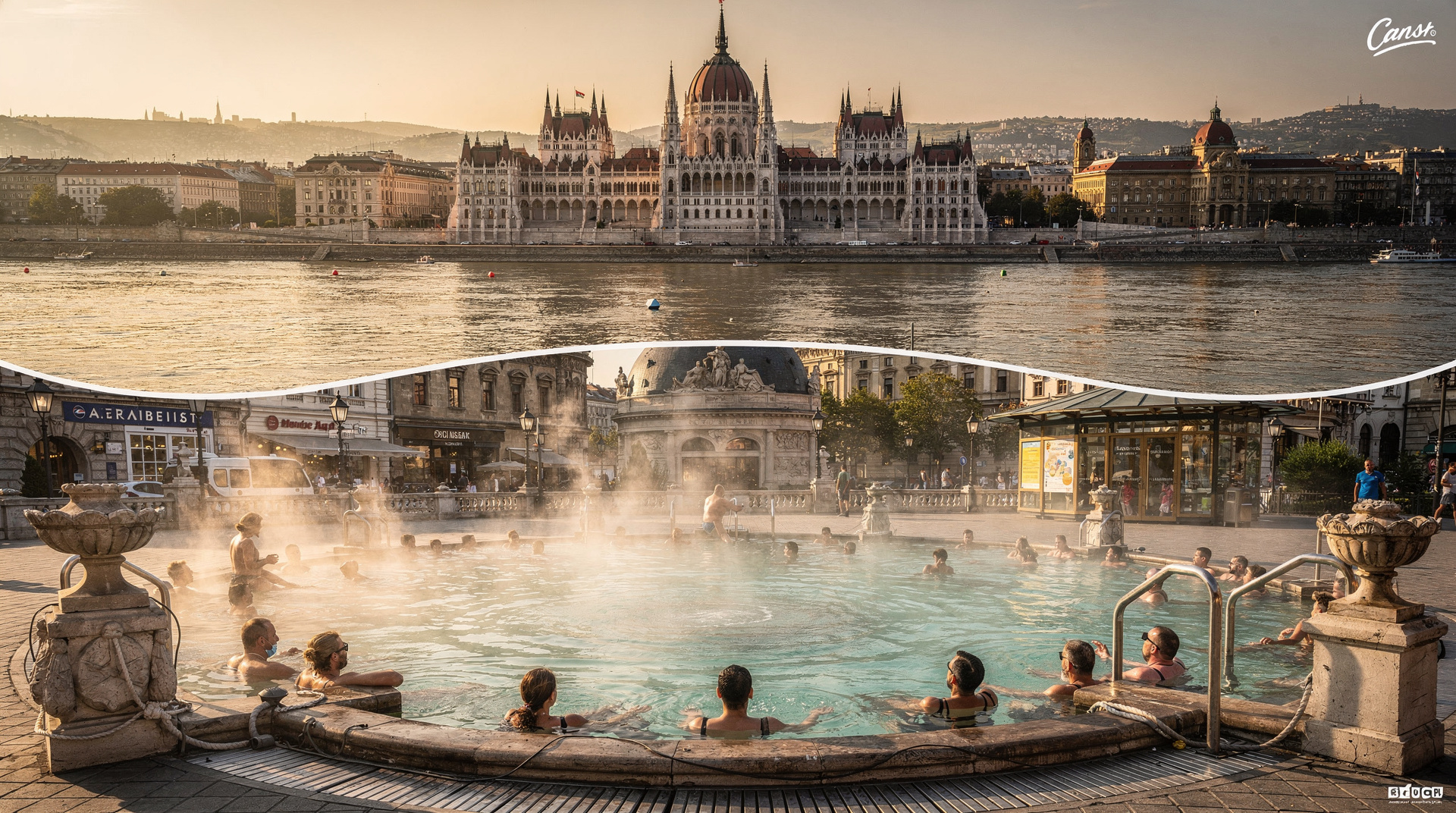
Take metro M1 from Vörösmarty tér to Széchenyi station. The Széchenyi Baths are Budapest’s most famous: three outdoor pools, indoor pools, steam rooms and the grand yellow neo-baroque building. A day ticket runs 9,900–13,900 HUF (€25–35). Allow 2.5–3 hours. Book your Széchenyi ticket online to avoid queues that can reach 45–60 minutes in summer.
While you are in the area, the City Park around Vajdahunyad Castle and Heroes’ Square (Hősök tere) makes a pleasant evening stroll. The castle is free to walk around; the Museum of Agriculture inside costs extra. Heroes’ Square is one of Budapest’s grandest public spaces and completely free — the Heroes’ Square and City Park guide covers both in more depth if you have an extra 30 minutes.
Evening: Danube cruise and dinner (19:30–23:00)
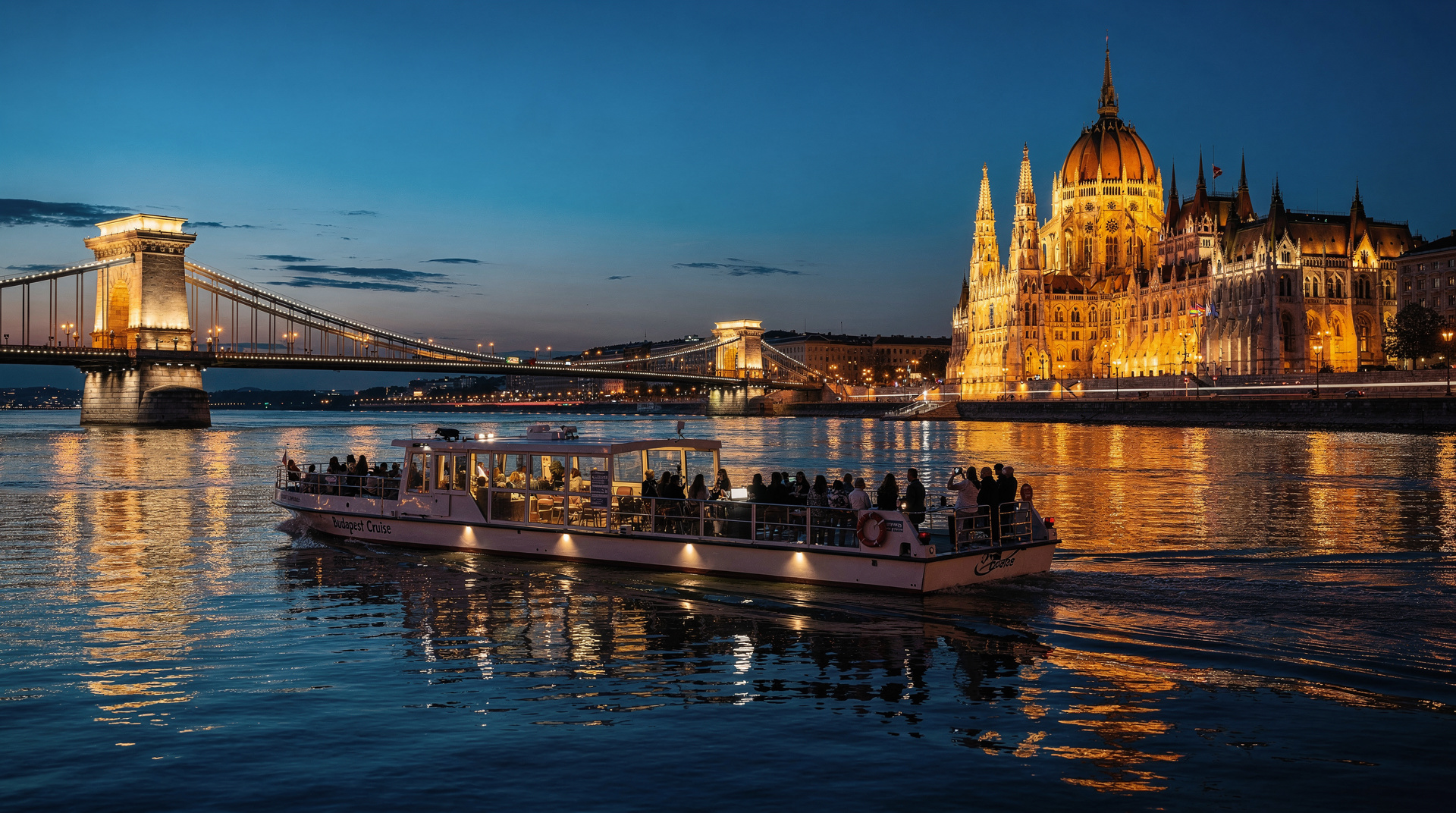
An evening cruise on the Danube is the classic Budapest moment. Parliament, the Castle and the Chain Bridge are all floodlit, and the reflection on the water is spectacular after sunset. A one-hour evening sightseeing cruise with a welcome drink runs around 5,500–8,000 HUF (€14–20) and slots neatly before dinner.
For dinner, try the Pest Bisztró area around Ráday utca in District IX or the restaurants on Liszt Ferenc tér in District VI — both lively without being tourist-trap territory. Dinner for two at a decent mid-range Hungarian restaurant runs 14,000–22,000 HUF (€35–55) including wine.
Day 2: Pest, Parliament and the Jewish Quarter
Morning: Parliament and the embankment (9:00–12:30)
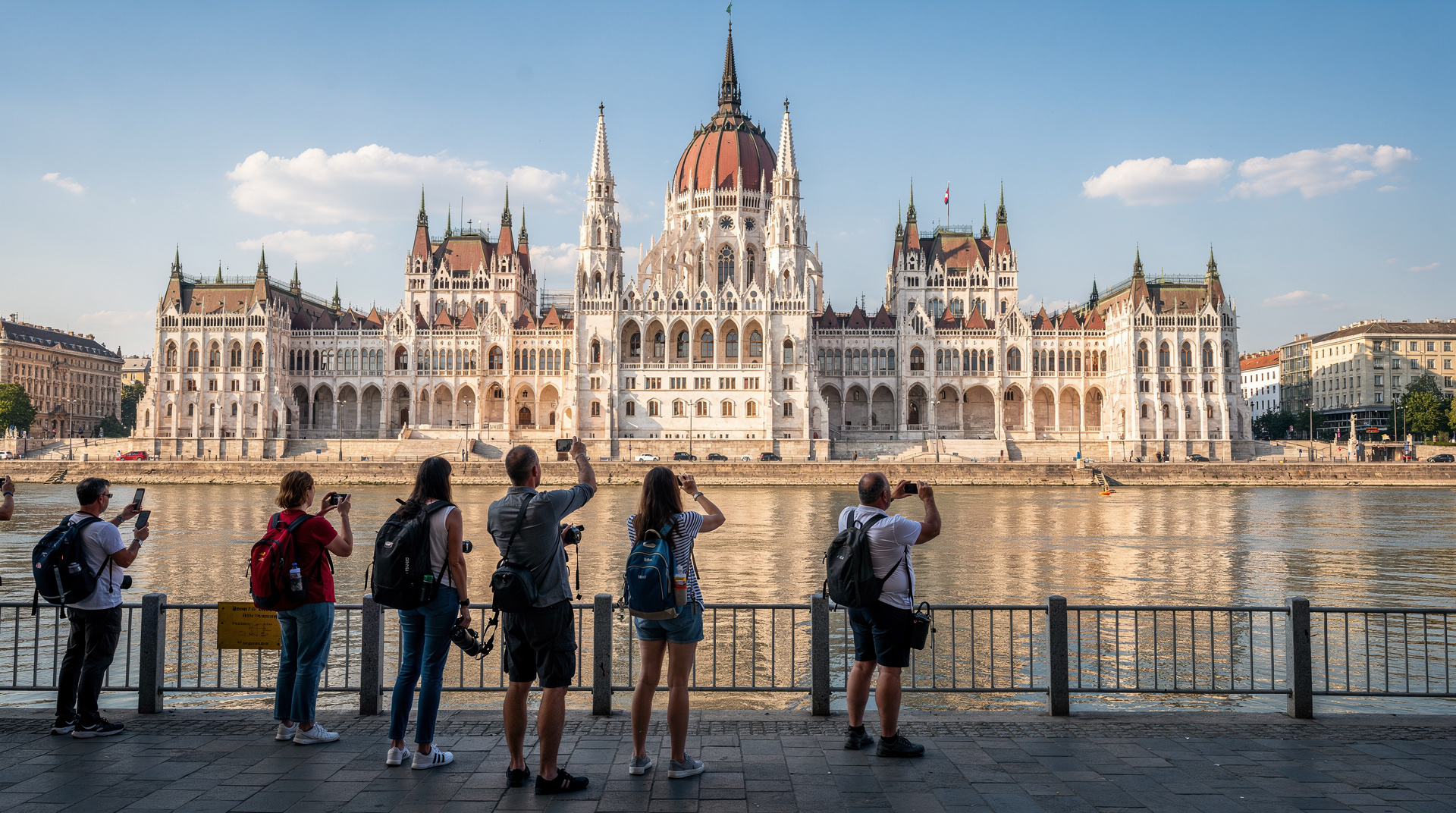
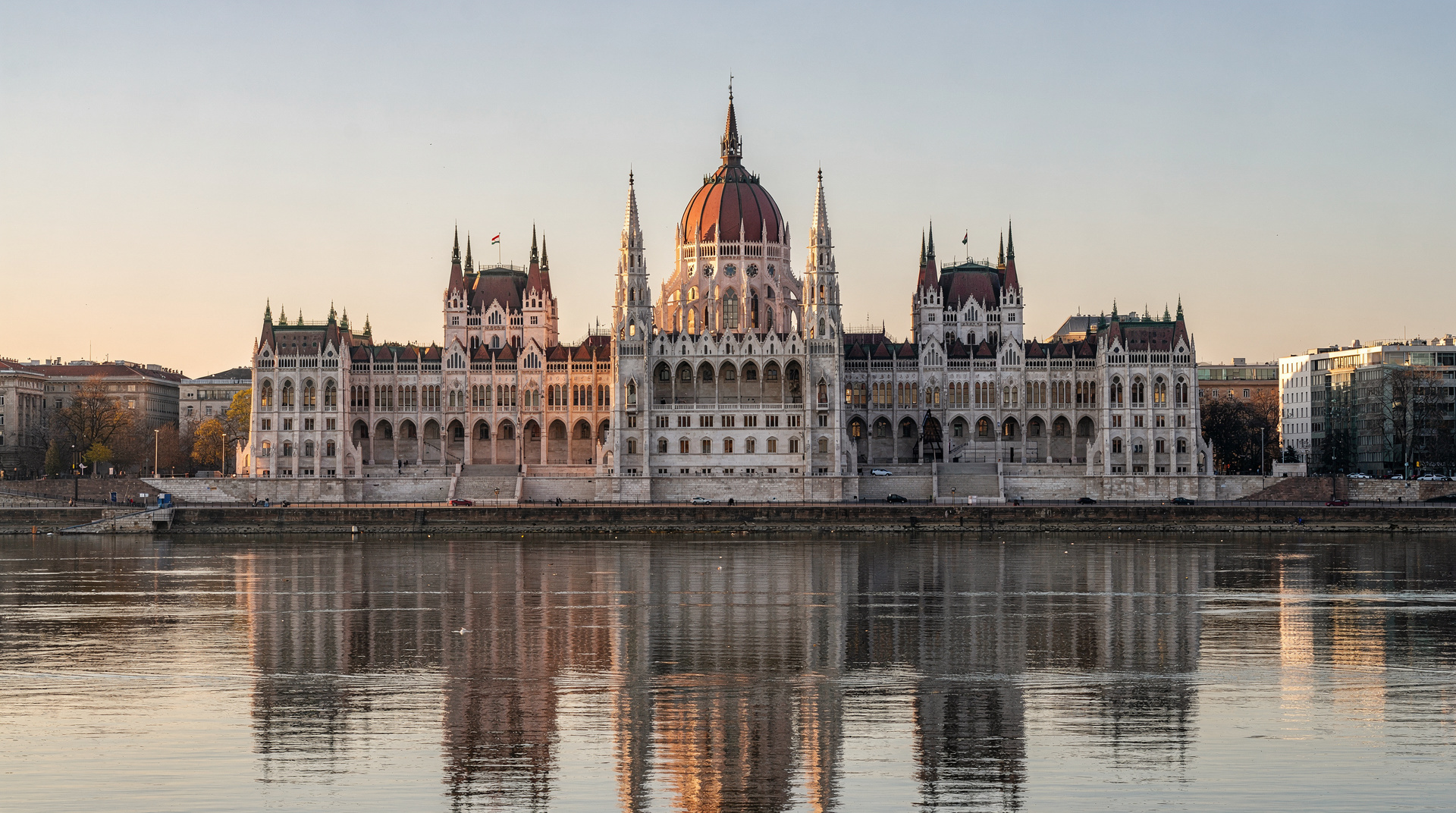
Begin at Kossuth tér with the Hungarian Parliament Building — pre-book your timed tour online (adults ~7,000 HUF / €18). Tours depart every 30 minutes from around 8:00 and last approximately 45 minutes. The interior is extraordinary: the central dome, the Hungarian Holy Crown and the twin lobbies are worth seeing. Alternatively, use a self-paced Parliament audio guide tour for more flexibility.
Walk south along the Danube embankment from Parliament. Stop at the Shoes on the Danube Bank memorial — 60 pairs of iron shoes marking where Jewish Budapest residents were shot into the river in 1944–45. It is free and takes ten minutes; its restraint makes it one of the most affecting memorials in the city.
Continue to St Stephen’s Basilica (Szent István Bazilika). The dome is worth climbing (~1,300 HUF) for a 360° view across Pest. The basilica interior is free to enter (donations welcomed). On Thursday evenings and Saturday mornings, organ concerts take place in the nave — check classical concerts in Budapest for the schedule.
Midday: Great Market Hall and lunch (12:30–14:30)
Walk south 15 minutes or take tram 2 to the Central Market Hall (Központi Vásárcsarnok). Budapest’s finest market hall has stalls selling paprika, sausages, pálinka, embroidered goods and tourist keepsakes on the ground floor; a food court on the upper floor with decent, honest prices. A lángos (deep-fried flatbread with sour cream and cheese) here is the classic Budapest street-food experience — around 1,200–2,000 HUF.
The Great Market Hall guide explains what to buy and what to skip. If you want a guided food experience to make sense of Hungarian cuisine, a food walking tour can be booked for the afternoon.
Afternoon: Jewish Quarter and Andrássy út (14:30–18:00)
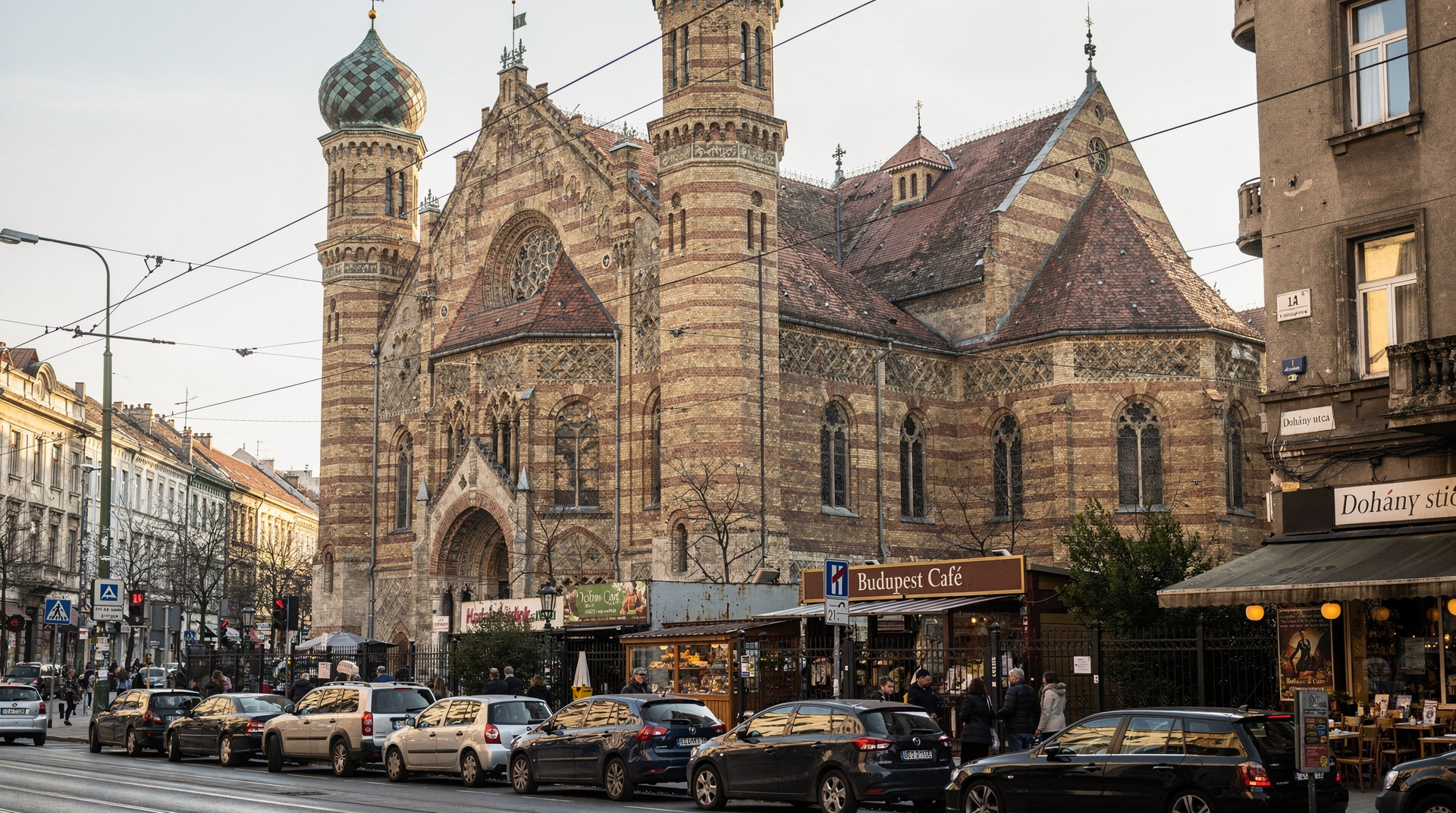
Take the metro back north to Astoria station and spend the afternoon in the Jewish Quarter (District VII). The Dohány Street Synagogue (Dohány utcai Zsinagóga) is the largest in Europe — entrance around 4,500–5,500 HUF and includes the Jewish Museum and the memorial garden at the rear. See the Dohány Street Synagogue guide for visiting tips.
Afterwards, walk the neighbourhood’s back streets. The streets around Kazinczy utca, Rumbach Sebestyén utca and Klauzál tér are full of street art, small galleries, ruin-bar courtyards and independent cafés. This neighbourhood rewards wandering without a fixed plan.
End the afternoon on Andrássy út, Budapest’s grand boulevard lined with neo-Renaissance mansions and UNESCO-listed. A 20-minute walk takes you from the Hungarian State Opera to Heroes’ Square, passing the House of Terror (the former secret police headquarters, now a museum — €6, open until 18:00). If an evening performance fits your dates, the Opera House itself is worth checking — tickets are inexpensive by Western European standards and the interior is as grand as the Vienna equivalent.
Evening: Ruin bars and final dinner (19:30 onwards)
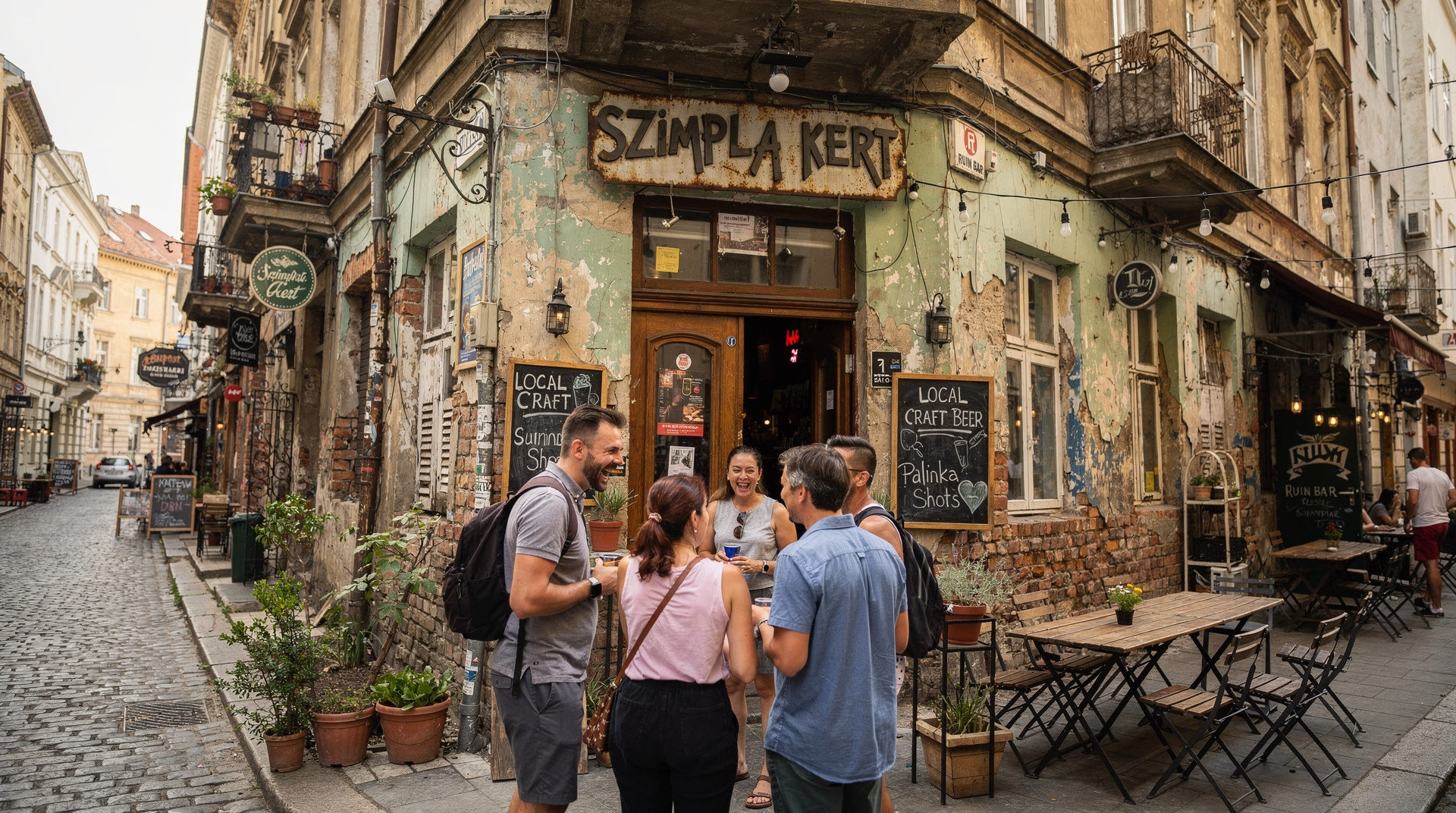
The Jewish Quarter transforms after dark. Szimpla Kert (Kazinczy utca 14) is the original ruin bar and still the most atmospheric: multiple rooms in a derelict building, mismatched furniture, live music on weekends, local craft beers. Entry is usually free; beers run 900–1,500 HUF.
Other spots worth a visit: Instant-Fogas (one of Budapest’s largest club-bar complexes), Ellátó Kert for a more local crowd, and Anker’t for an open-air courtyard bar. The ruin bars guide covers them all with honest advice.
If you want to explore the bar district with a local guide, a ruin bar pub crawl includes venues, shots and insider stories — book in advance on weekends.
For a final dinner, the area around Király utca and Gozsdu Udvar has plenty of mid-range Hungarian and international restaurants. Budget 7,000–12,000 HUF per person including wine.
Swapping the days, and what to do with a Friday-night arrival
This itinerary works equally well reversed — Parliament and the Jewish Quarter on day 1, Castle and baths on day 2 — so build around whichever side of town is closer to your hotel. If you land Friday evening, resist the urge to squeeze in sightseeing: a late arrival plus jet lag makes for a weak start to Saturday’s Castle District morning. Instead, use Friday night for a low-key dinner near your accommodation and an early night, and start Saturday exactly as written above. Travellers who land Friday afternoon with a few free hours can use them for the Jewish Quarter’s daytime side — the Dohány Street Synagogue and the Central Market Hall are both open into the evening and easy to slot in without disrupting the two-day plan.
If your flight home is late on the Sunday rather than the same evening, you effectively gain a half-day. The best use of it is a short, low-effort add-on rather than trying to squeeze in a full sight: a slow walk along the Danube embankment, a return visit to whichever bath or church impressed you most, or coffee at one of the historic cafés like New York Café or Gerbeaud. Don’t try to add Memento Park or a day trip on a departure-day half-day — both need dedicated time and a taxi or tour, and rushing them defeats the point.
Practical notes for two days
Transport: A 72-hour BKK travelcard (5,750 HUF) covers the whole weekend and simplifies everything — no fumbling for single tickets. Buy it at the airport or any metro station. See the Budapest public transport guide for the full network overview.
Honest budget (two days, mid-range):
- Transport (72h pass): 5,750 HUF
- Baths day 1: 11,000 HUF (€28)
- Parliament tour: 7,000 HUF (€18)
- Dohány Synagogue: 5,000 HUF (€13)
- Meals x2 days: ~30,000–40,000 HUF (€75–100)
- Evening cruise: 7,000 HUF (€18)
- Misc entries (Matthias Church, etc.): 6,000 HUF (€15)
- Total per person: ~71,750–81,750 HUF (€180–205)
Scam awareness: Taxis hailed on the street near Keleti station or from Váci utca have rigged meters — use the Bolt app exclusively. The taxi scams guide has the full picture. Avoid any “friendly” local who steers you toward a specific bar with a cover charge — this is the classic konzumlány scam covered in the common scams guide.
Currency: Hungary uses the forint (HUF) — not the euro. Pay in HUF, not EUR, when given the option at card terminals. Use bank ATMs (OTP, K&H, Raiffeisen); avoid Euronet machines which charge high fees.
Frequently asked questions about Budapest weekend itinerary
Should I do the Castle District on day 1 or day 2? Either order works, but day 1 is usually easier logistically since you’re fresher for the walking-heavy morning. If your hotel sits closer to Pest, reverse the order and open with Parliament instead — the itinerary doesn’t depend on a specific day.
Is two days enough to include a day trip? Not comfortably. Two days is already full with city sights, and adding a half-day trip to somewhere like Szentendre means cutting one of the baths or the Jewish Quarter afternoon. If a day trip matters to you, the Budapest and day trips week itinerary or a third day built around the best day trips from Budapest guide is a better fit.
Top experiences
Bookable activities with verified prices and instant confirmation on GetYourGuide.