Budapest weekend break: a relaxed two-day escape

This itinerary is not about cramming in every sight. It is about experiencing Budapest properly in two days — a long morning in a thermal bath, a proper dinner rather than a rushed one, an evening on the Danube and a late night in the ruin bars. There will be things you miss; that is fine. The goal is to return home feeling you have genuinely been somewhere rather than just photographed it.
| Where | Castle District (Day 1), Jewish Quarter/Downtown Pest (Day 2) |
| Cost | Around €178–215 per person, mid-range |
| Time needed | 2 days, flight-friendly for a short break |
| Getting there | Bus 100E or Bolt from BUD airport |
| Best time | Spring or autumn for comfortable walking weather |
For a more comprehensive two-day plan that covers more ground, see the Budapest 2-day itinerary. For three days and the full treatment, see the Budapest 3-day itinerary.
Day 1: Slow morning, Buda, afternoon on the Danube
Morning: Castle District without the rush (9:00–13:00)
Arrive at Castle District by 9:00 — not 7:30, because this weekend break starts at a human pace. Fisherman’s Bastion is the first stop: even with a few early tour groups, the view across to Parliament and the Pest embankment is extraordinary.
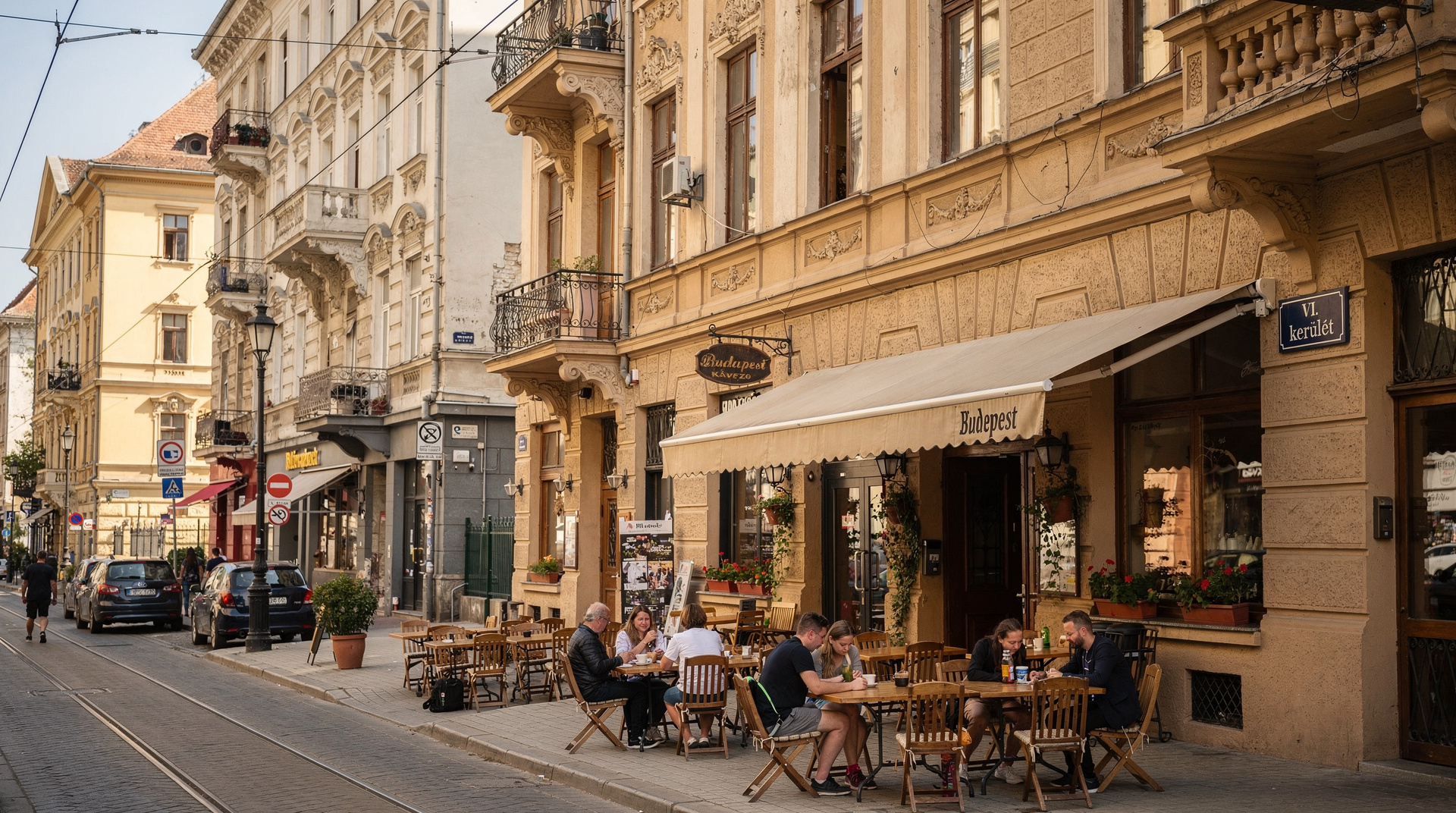
Walk slowly through the cobbled lanes of the castle district — Tárnok utca, Úri utca, the old town houses with their medieval details embedded in Baroque facades. Pop into Matthias Church (entry around 3,500 HUF) for the painted interior. Have a coffee at one of the castle district cafés — prices are higher here than in Pest, but you are paying for the location.
A guided city tour from the Castle District with a local guide is worth considering if context matters to you — the city’s layered history (Roman, medieval, Ottoman, Habsburg, communist) is genuinely interesting and difficult to piece together alone from signage.
Descend to the river via the funicular or stairs and walk across the Chain Bridge. Stop in the middle for the classic view upstream and downstream.
If you would rather not walk the castle district cold, the Buda Castle guide has a fuller layout of what is worth 20 minutes versus what is worth skipping — useful when you only have one morning here rather than a full day.
Lunch in central Pest (13:00–14:30)
Resist the pull of Váci utca for food — the street is beautiful but its restaurants are aimed at tourists with no price sensitivity. The tourist traps guide explains what specifically to avoid. Instead:
- Páva Étterem near Fővám tér for proper Hungarian lunch (gulyás, paprikás csirke) at neighbourhood prices (main courses 3,000–4,500 HUF)
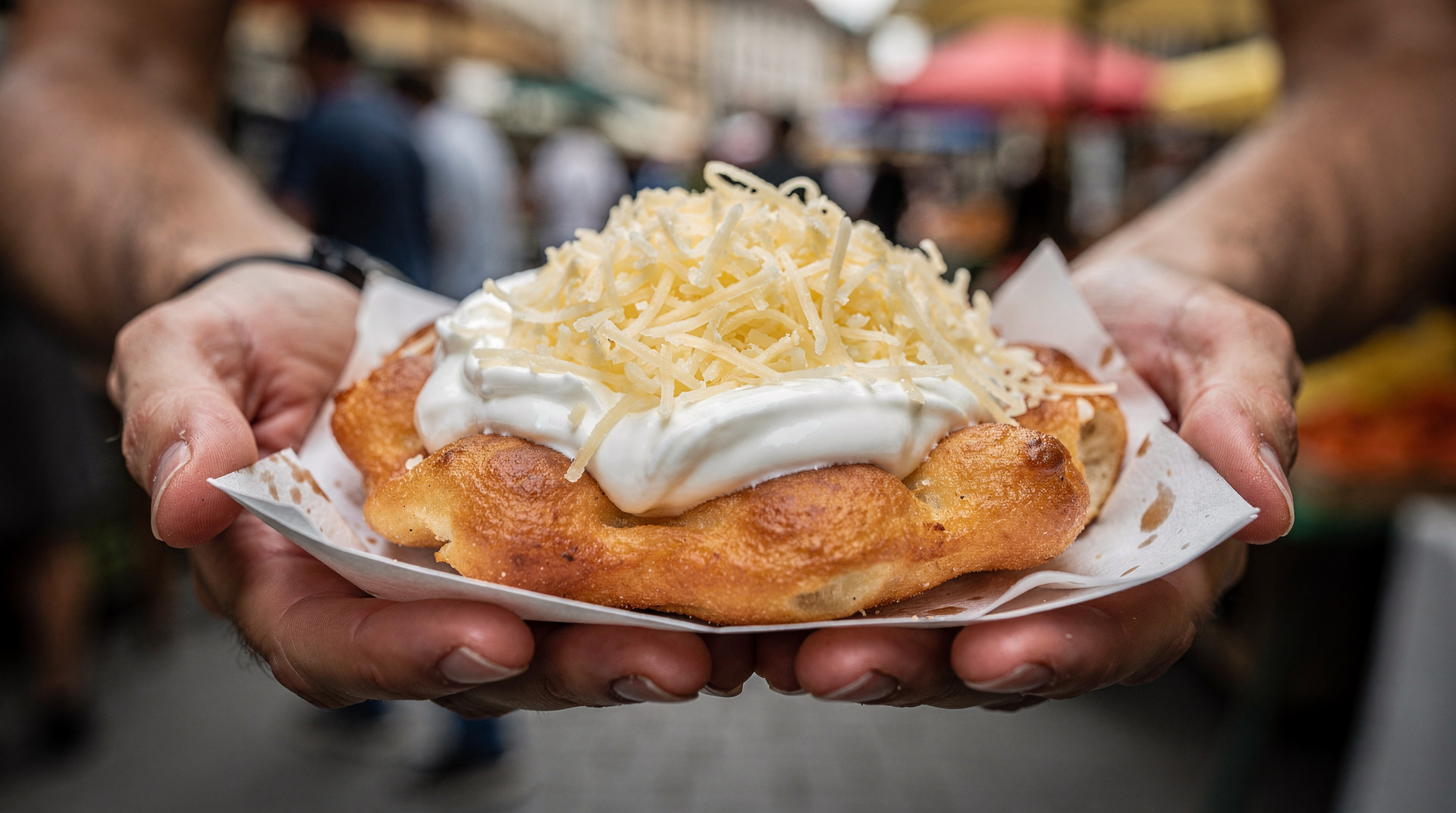
- Karavan Food Court on Kazinczy utca for outdoor street food (kürtőskalács, lángos, langostino, veggie options)
- A coffee house lunch — Central Kávéház on Károly Mihály utca is a beautifully restored 1887 coffee house, café food around 2,500–4,000 HUF
Afternoon: Széchenyi Baths (15:00–18:30)
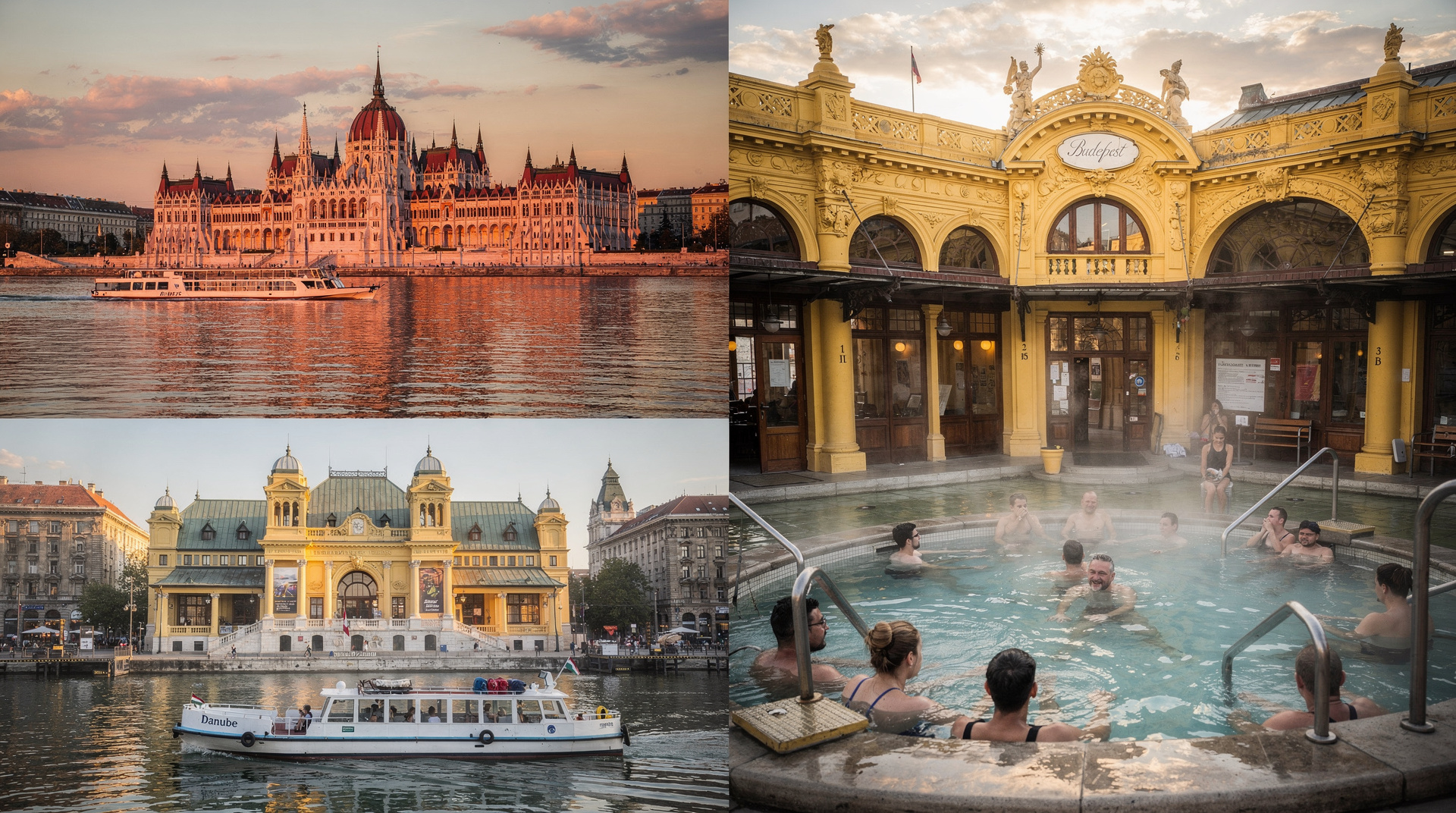
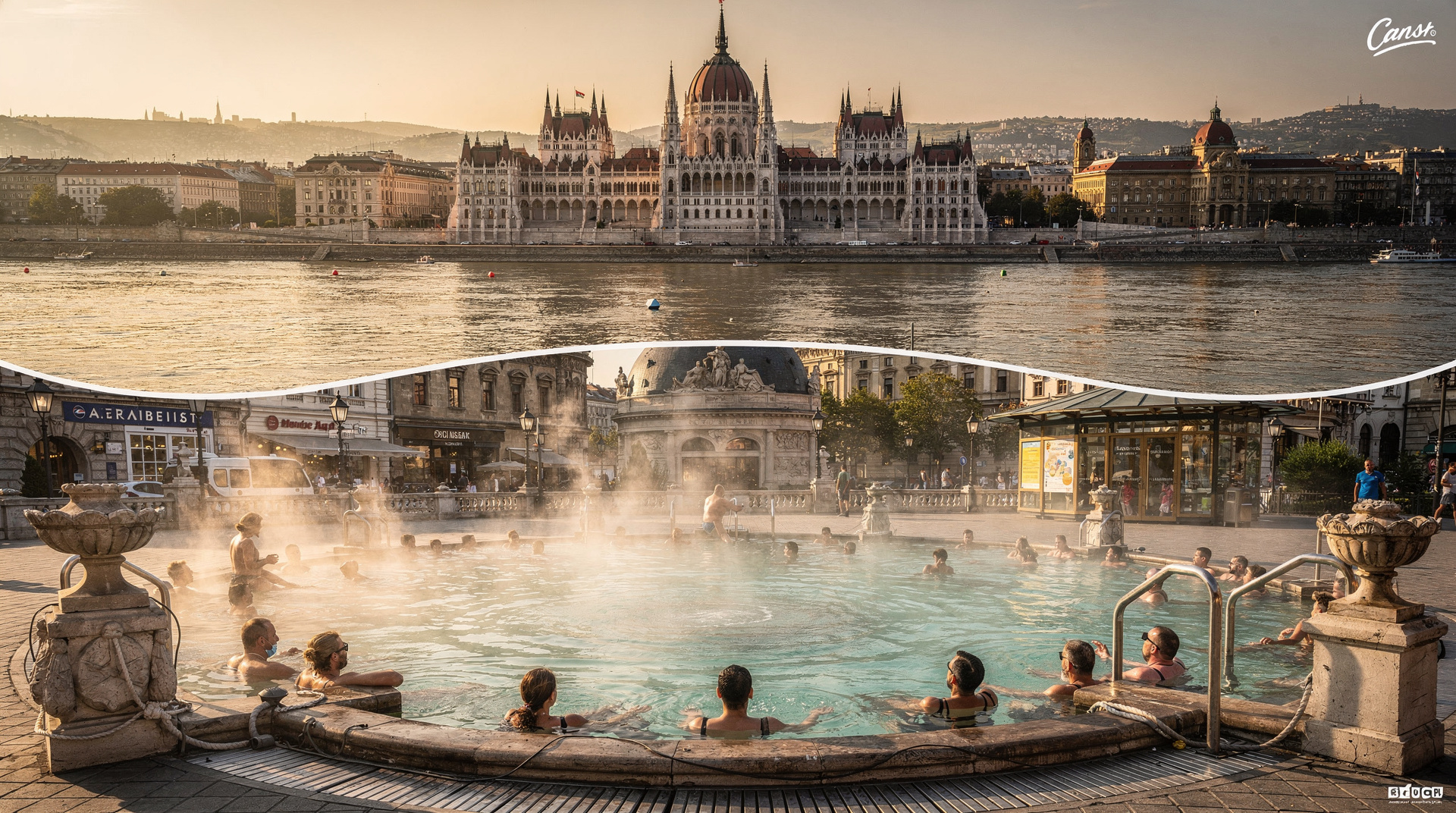
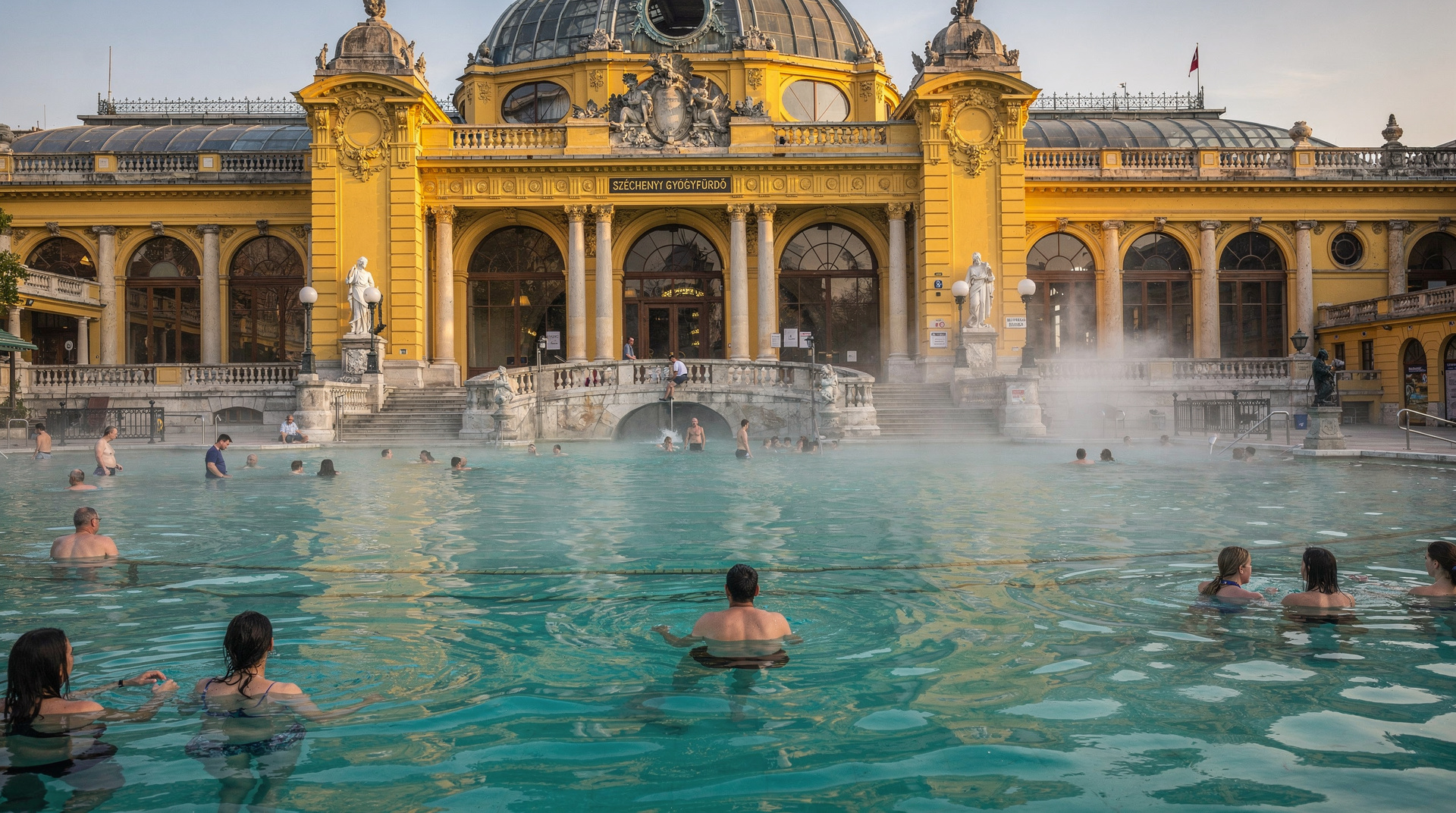
This is the centrepiece of day 1. Allow a full afternoon at Széchenyi Baths — arrive around 15:00 when the morning rush has cleared and stay until 18:30 or later. A day ticket is 9,900–13,900 HUF (€25–35); book your Széchenyi ticket in advance to skip the queue. The outdoor pools at 38°C, the chess players in the mineral water, the grand yellow building — this is what Budapest does that nowhere else in Europe does.
Take your time: move between the pools, try the steam rooms, read by the side of the pool if you want to. There is nowhere else to be.
See the thermal baths guide for what to bring, how the locker system works, and whether a different bath (Rudas, Lukács) might suit you better. If Széchenyi’s scale is not your style, the Rudas baths guide covers the more atmospheric Ottoman-era alternative, which works just as well slotted into this same afternoon window.
Why this weekend break skips the Parliament tour
Deliberately, this itinerary does not include a timed Parliament tour — booking one requires committing weeks ahead and the tour itself takes a fixed 45 minutes out of a day that otherwise flows at your own pace. If Parliament matters more to you than an unhurried bath afternoon, swap it in on Day 1 morning instead of the Castle District, or add a third day using the Budapest 3-day itinerary as a base. The exterior and the Danube embankment views of Parliament are free and covered on both evenings of this plan regardless.
Evening: Danube cruise and dinner (19:30–22:30)
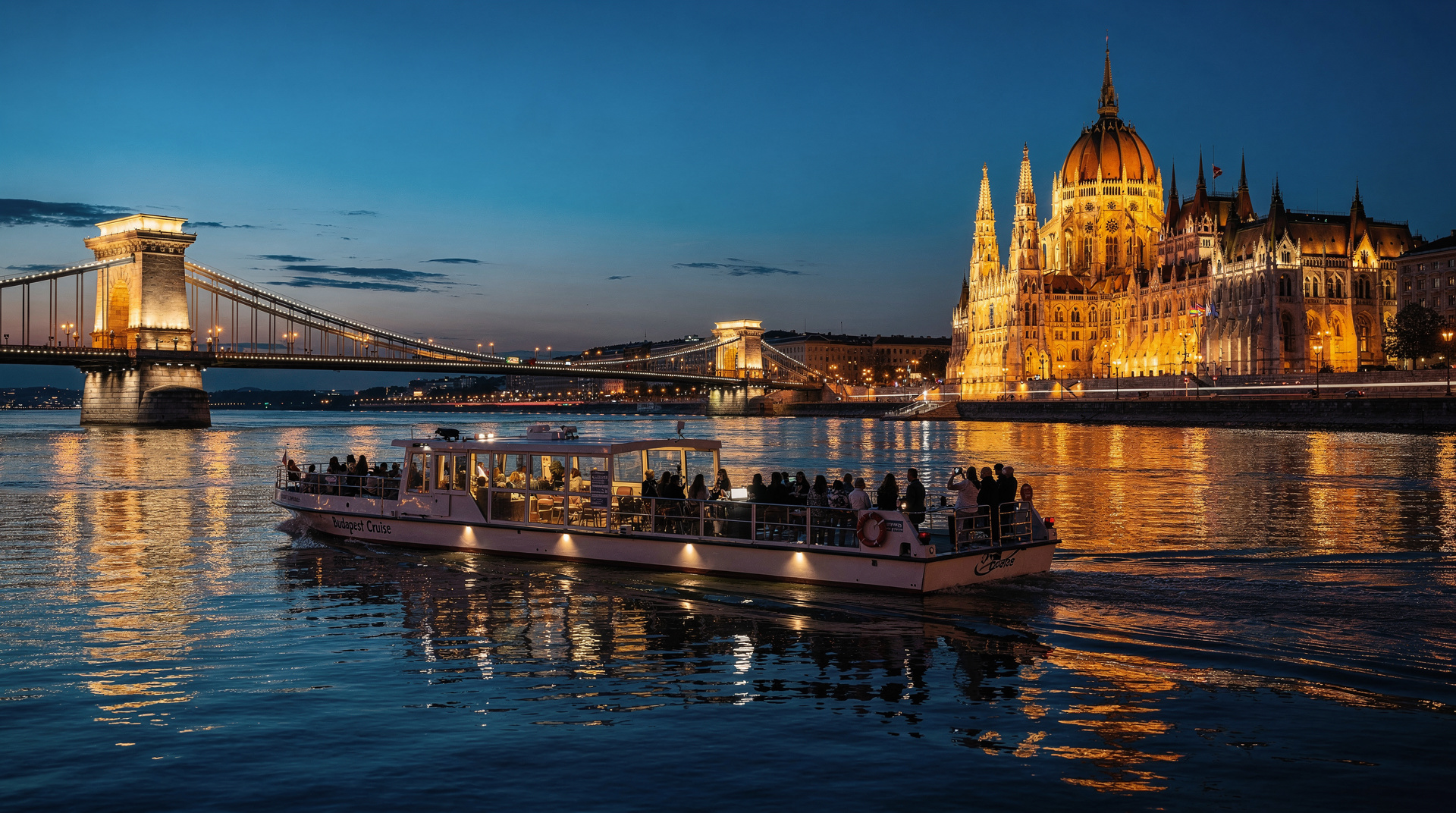
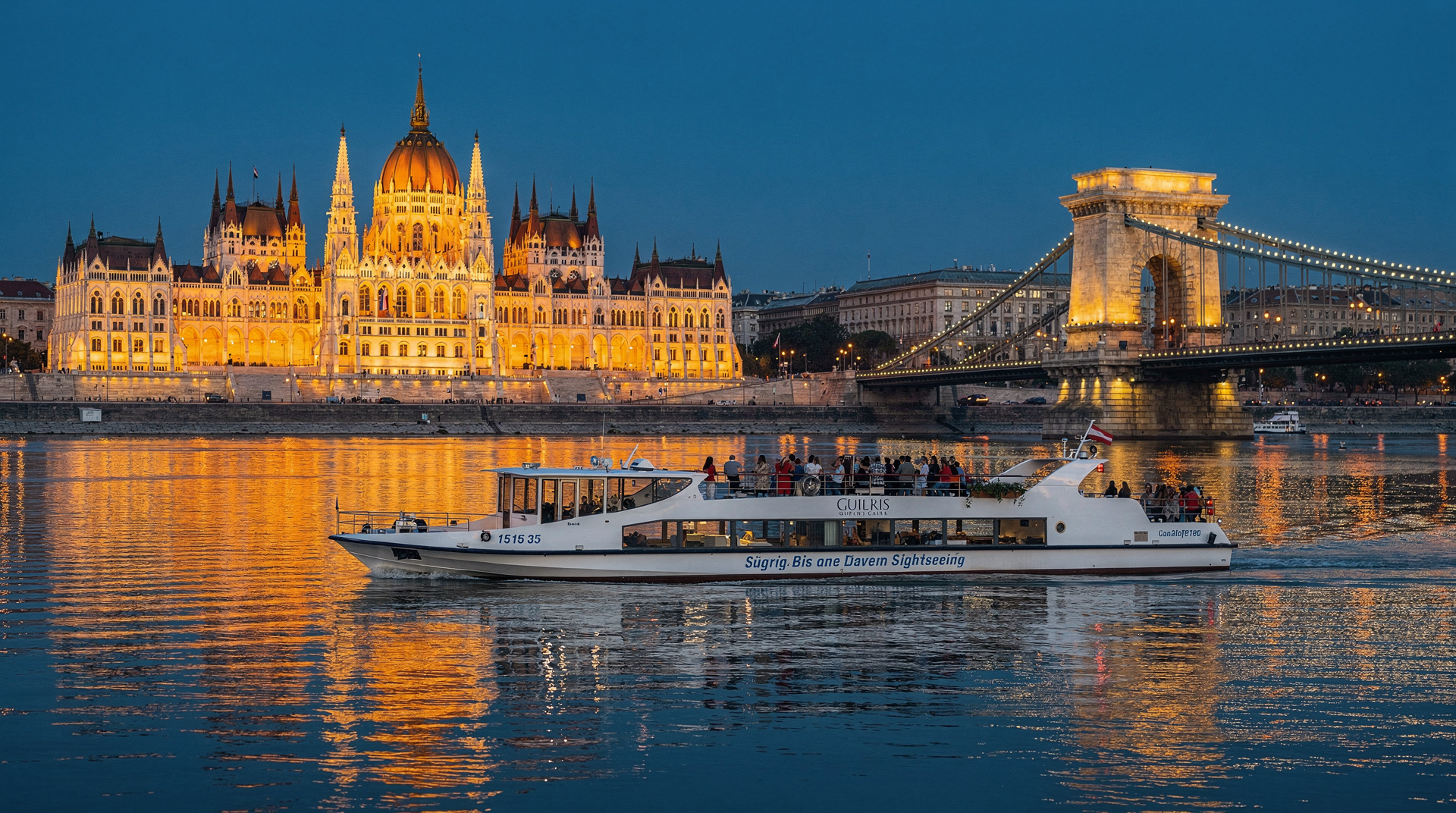
An evening cruise is perfect after a lazy afternoon. The Danube after sunset, with Parliament and Buda Castle lit up on either side, is genuinely one of Europe’s finest urban spectacles. A one-hour evening cruise with a welcome drink is the right scale for a weekend break — relaxed, an hour long, and leaves you back on land ready for dinner.
For dinner, try the area around Belvárosi (District V) or the restaurants near the Basilica on Zrínyi utca. A mid-range Hungarian dinner for two costs around 15,000–25,000 HUF (€38–63) including wine.
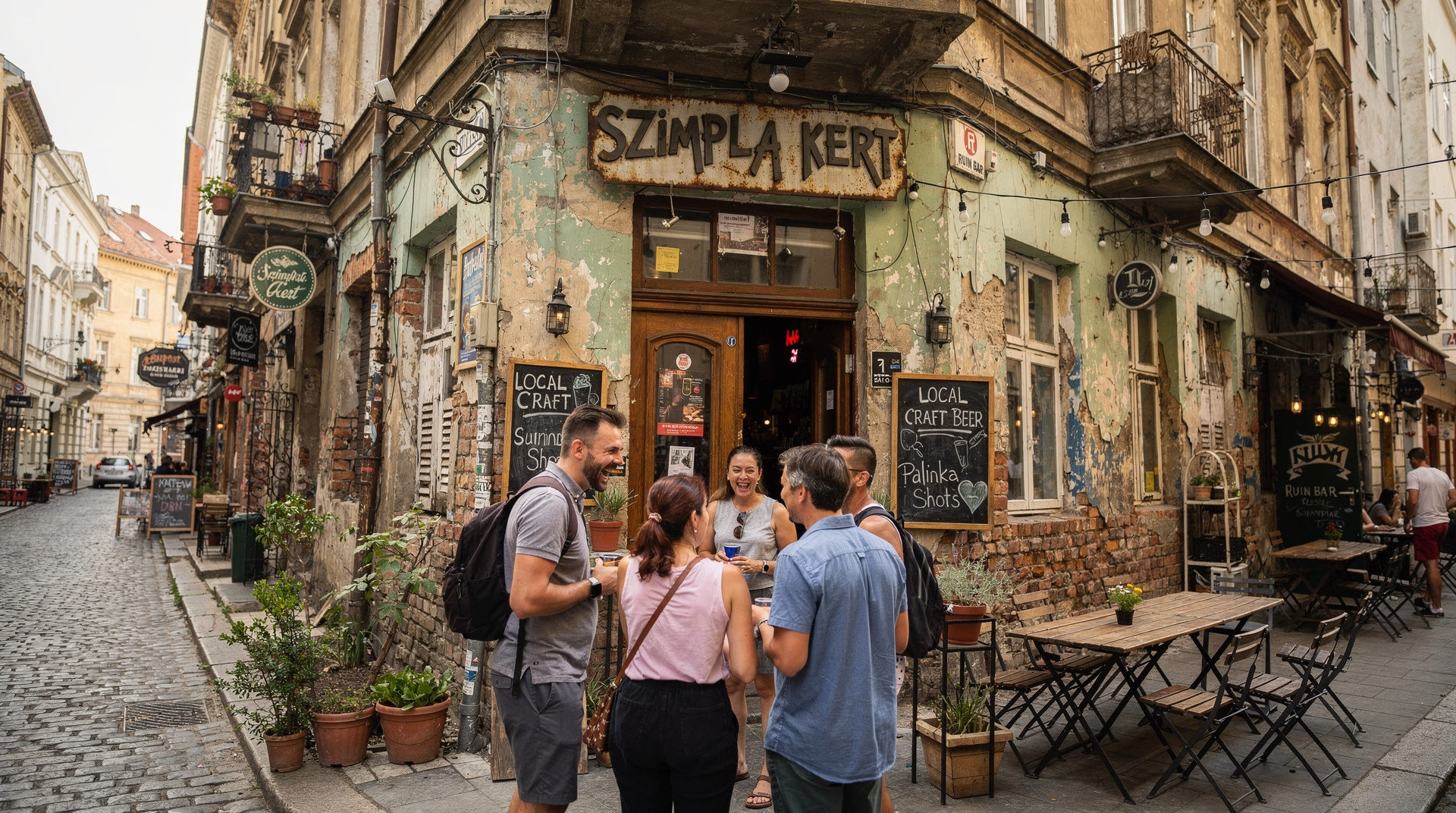
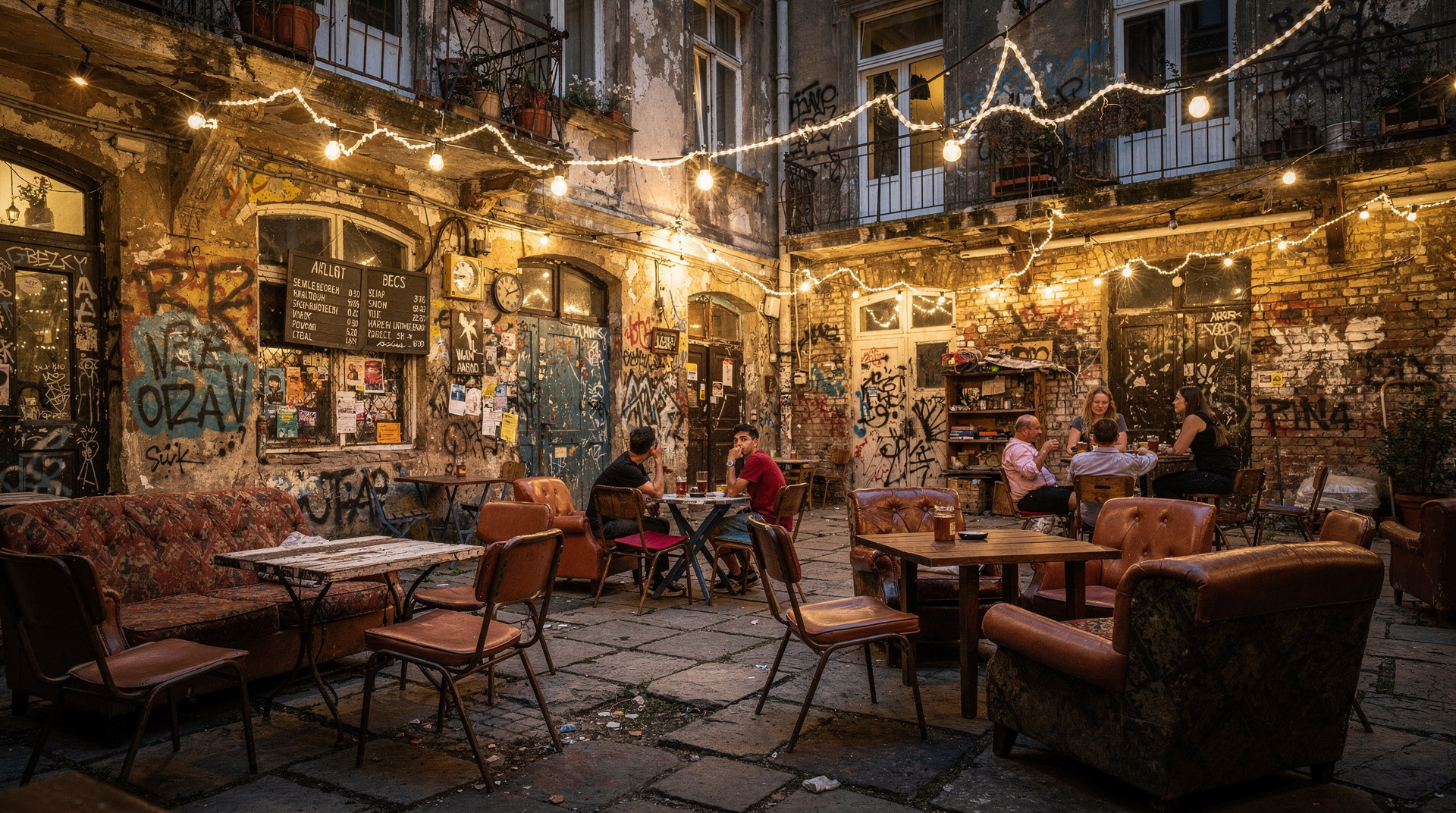
End the evening at Szimpla Kert on Kazinczy utca — open from noon but liveliest after 21:00. Entry is usually free; craft beers run 900–1,500 HUF. Even if you are not a bar person, a half-hour inside to see what a ruin bar actually is is worthwhile. It feels like nowhere else in the world.
Day 2: Jewish Quarter, great food and a final afternoon wander
Morning: Dohány Street Synagogue (10:00–12:00)
Begin at the Dohány Street Synagogue (entry approximately 4,500–5,500 HUF) — the largest in Europe. The building itself is remarkable: twin Moorish towers, a Byzantine-Gothic nave, and a garden at the rear with the Weeping Willow sculpture marking the graves of Jewish Budapest residents who died during the 1944–45 ghetto siege. Allow 90 minutes.
The Jewish Quarter around the synagogue deserves slow exploration. Kazinczy utca, Rumbach Sebestyén utca, the covered alley of Gozsdu Udvar. Street art, small galleries, independent bookshops. The quarter has been gentrifying for 20 years but the layers of history are still visible in the architecture and the names on the walls.
Midday: A proper food experience (12:30–15:00)
On a weekend break, a food tour is one of the best uses of three hours — it covers the Great Market Hall, street food spots, wine and pálinka tastings, and gives you enough knowledge about Hungarian cuisine to eat well for the rest of the trip. A food walking tour that combines eating and exploring replaces lunch with an experience.
Alternatively, go independently to the Central Market Hall (Fővám tér) for lángos on the upper gallery, then walk to Gerbeaud on Vörösmarty tér for the most famous cake in Hungary (the Gerbeaud slice — chocolate, apricot jam and walnuts — around 2,500 HUF). It is a tourist institution, but an honest one.
Afternoon: St Stephen’s Basilica and Andrássy út (15:00–18:00)
St Stephen’s Basilica is a ten-minute walk from the market. The dome is worth climbing (~1,300 HUF) for city views in a different direction to Fisherman’s Bastion. Inside, the mummified hand of Hungary’s first king is on display — one of those strange Catholic relics that is either fascinating or faintly absurd depending on your outlook.
Walk north up Andrássy út toward Heroes’ Square. This UNESCO-listed boulevard lined with neo-Renaissance mansions, embassies and upmarket boutiques is Budapest’s most elegant street. It takes about 30 minutes to walk the length without stopping; add 15 minutes for a look at the House of Terror exterior (and enter if you have time — open until 18:00, ~3,000 HUF).
Departure afternoon or final evening
If you have a late flight, the area around Liszt Ferenc tér (a few streets off Andrássy út) is excellent for a final coffee or afternoon drink. In the summer, the square fills with outdoor café tables and a lively crowd throughout the day.
Budget a final dinner around Kazinczy utca or Gozsdu Udvar — the Jewish Quarter has the city’s best concentration of interesting mid-range restaurants. Mazel Tov, Kőleves, and the wine bar Divino on Bajcsy-Zsilinszky út are all excellent. For a fuller list beyond these two streets, the best restaurants in Budapest guide covers the wider city.
Practical notes for the weekend break
Airport arrival: Bus 100E from BUD airport runs to Deák Ferenc tér (2,500 HUF, 40–60 minutes depending on traffic). Bolt taxi costs around 6,000–9,000 HUF (€15–23). Full details in the airport to city centre guide. Never take a taxi from the arrivals hall without agreeing on a Bolt booking or using an official airport taxi stand.
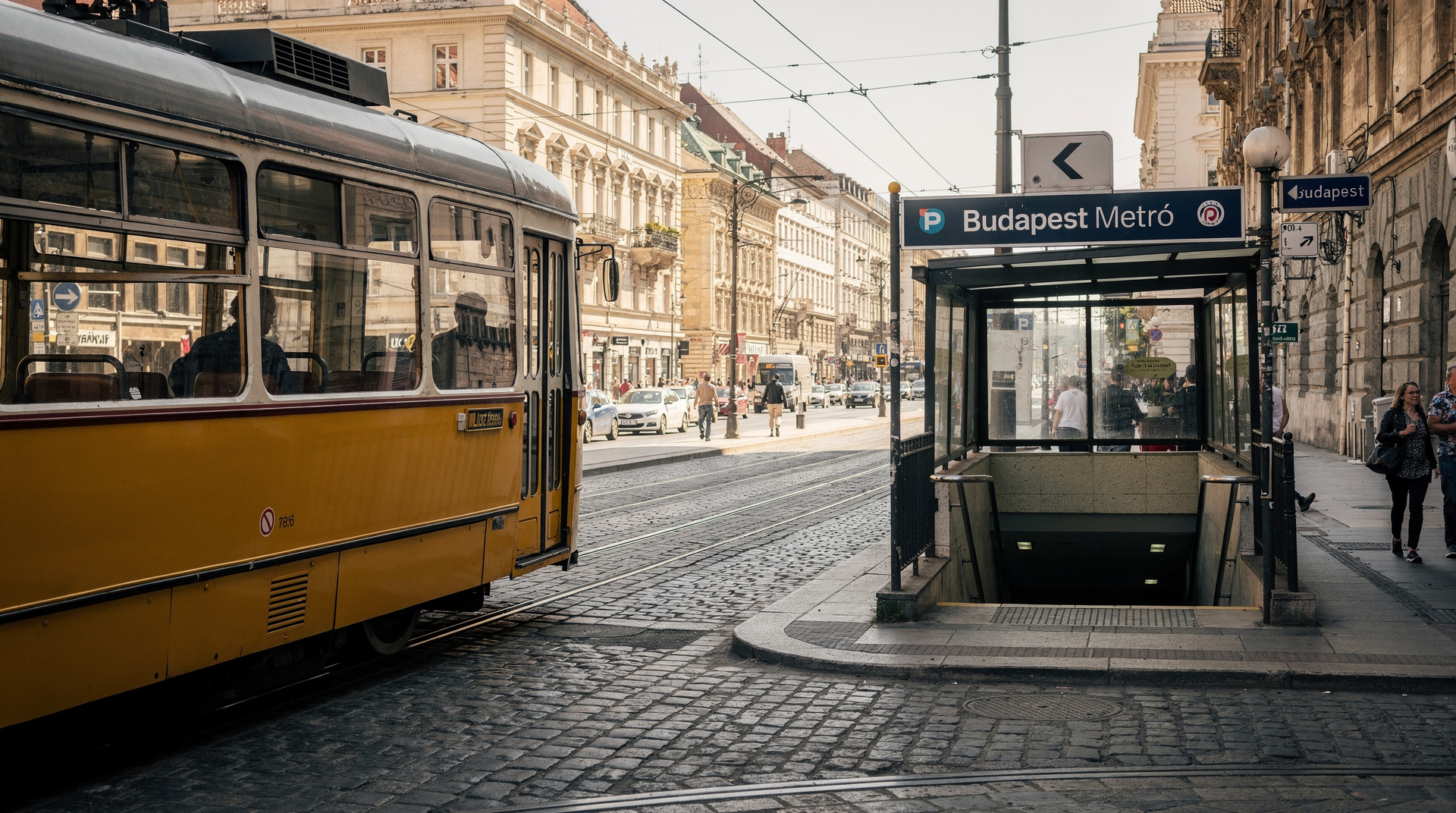
Transport in the city: A single 24h BKK travelcard per day (2,750 HUF each) is sufficient for a weekend break. The public transport guide explains the metro, trams and bus system clearly. The BKK travel passes guide covers whether a multi-day pass is worth it if you extend this trip.
Currency: Hungary uses the forint (HUF), not the euro. Pay in HUF on card terminals when given the choice — euro conversions at point of sale use unfavourable rates.
Honest budget for two days:
- Transport: 5,500 HUF
- Széchenyi Baths: 11,000 HUF (€28)
- Synagogue entry: 5,000 HUF (€13)
- Cruise: 7,000 HUF (€18)
- Meals x2 days (mid-range): 35,000–50,000 HUF (€88–125)
- Misc entries and drinks: 8,000 HUF (€20)
- Total: ~71,000–86,000 HUF per person (€178–215)
Budapest is genuinely good value by Western European standards. A weekend here costs less than a weekend in London, Paris or Amsterdam — and offers something most of those cities cannot match.
Frequently asked questions about Budapest weekend break
Is two days enough to see Budapest properly? Two days is enough to experience the city genuinely, though not to see everything — this itinerary deliberately prioritises one great bath afternoon and a proper evening over cramming in every landmark. For a fuller sweep of sights, the Budapest 3-day itinerary adds the Parliament tour and more of the Jewish Quarter.
What should I skip if I only have a weekend in Budapest? Skip the Parliament interior tour (it needs advance booking and a fixed 45-minute slot) and a second thermal bath — one long, unhurried bath session at Széchenyi delivers more of the experience than two rushed ones. Both can be added on a longer return trip.
Top experiences
Bookable activities with verified prices and instant confirmation on GetYourGuide.