Best food tours in Budapest: market walks, cooking classes and culinary crawls

What is the best food tour in Budapest?
The market-to-tavern food tour (14 tastings) is the most comprehensive, covering the Great Market Hall plus traditional tavern food. The culinary wine walk is best for food-and-wine pairing. The Jewish cuisine walk is the best single-theme food tour. Cooking classes with Chef Marti are the highest-rated for a hands-on experience.
Why a food tour is the best introduction to Hungarian cuisine
Hungarian food is more varied and more interesting than its international reputation suggests. Most visitors arrive with vague ideas of gulyás (often misunderstood as a soup when it’s closer to a stew) and little else. A good food tour covers the full range — from the Great Market Hall’s stalls of paprika and Hungarian salami to a bowl of authentic fisherman’s soup, from a lángos cart to a sitting at a traditional tavern. It also covers Hungary’s remarkable wine culture, which most tourists entirely miss.
Budapest has a dense and competitive food-tour market. This guide cuts through it with honest comparisons of the main formats and operators.
| Where | Great Market Hall (District IX) and inner Pest streets |
| Cost | €30–90 per person depending on format |
| Time needed | 3–4 hours for walking tours; cooking classes similar |
| Getting there | M4 to Fővám tér for the Great Market Hall |
| Best time | Morning (09:00–12:00) for the market at its freshest |
The market-to-tavern tour: the most comprehensive option
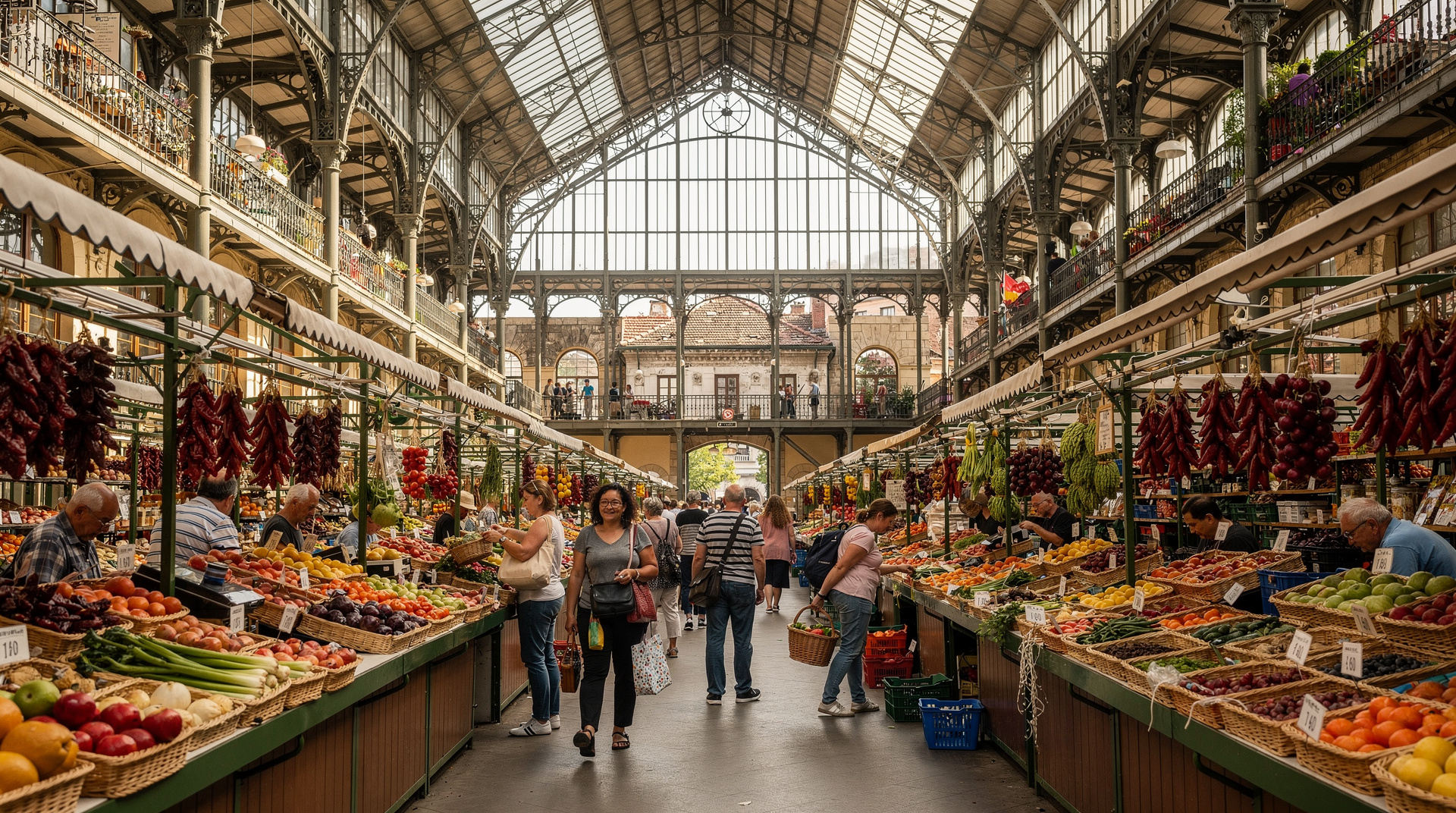
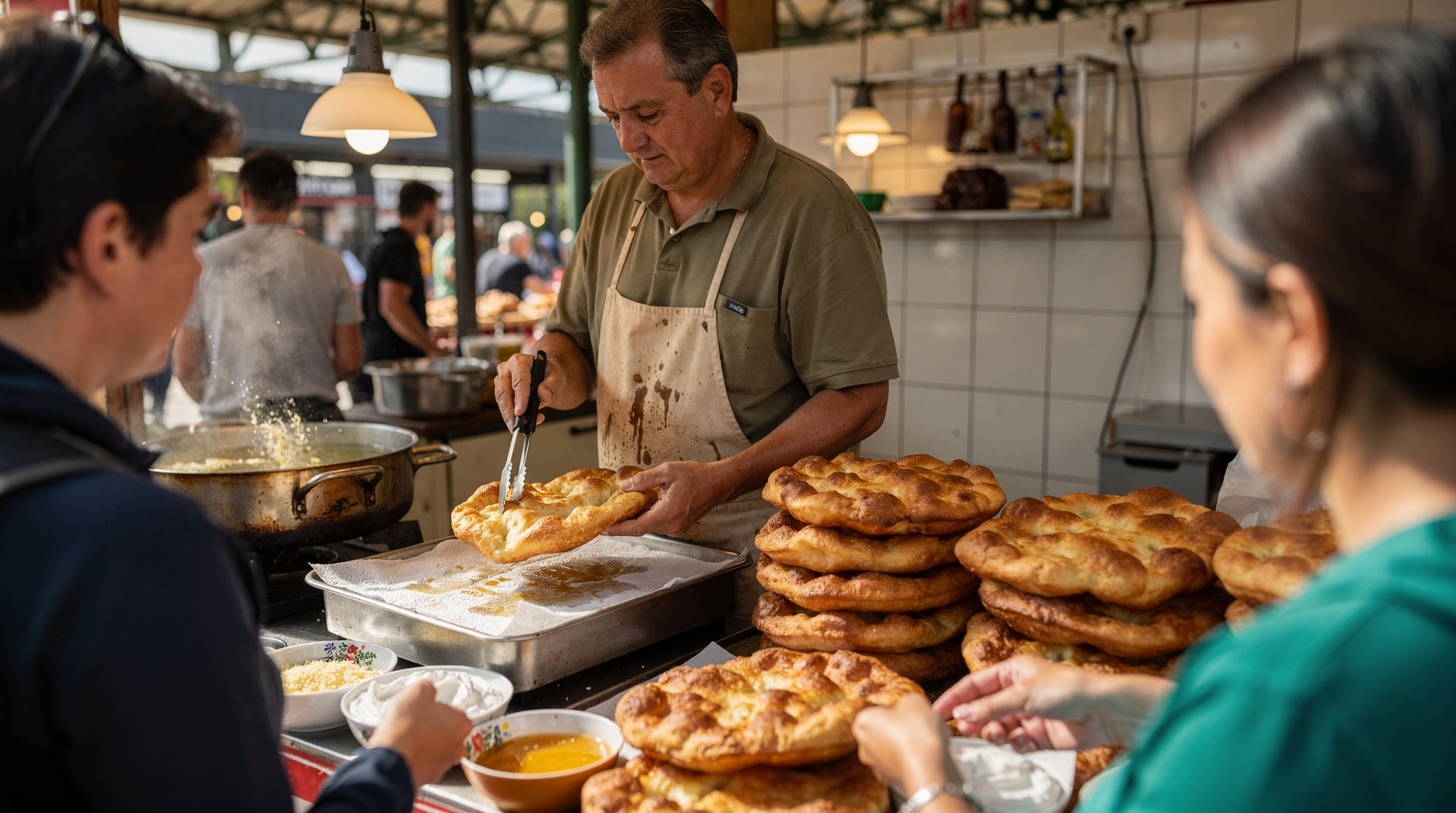
The market-to-tavern food tour with 14 tastings is the highest-volume, most content-rich option. The tour starts at the Great Market Hall (Vásárcsarnok, Fővám tér), where a guide navigates the stalls — Hungarian paprika, handmade noodles, pickled vegetables, Mangalica salami, túrós rétes (cottage cheese strudel) — before moving through the surrounding streets for additional stops: a sit-down at a traditional étkezde (canteen-style restaurant), wine tastings, and at least two dessert tastings.
14 tastings over 3–4 hours at a fair price (around €40–50 per person) makes this excellent value by European standards. The portion sizes on food tours in Budapest are notably generous — you leave full.
Best for: First-time visitors, those who want the broadest coverage of Hungarian cuisine, and anyone who hasn’t visited the Great Market Hall before.
The Great Market Hall’s ground floor sells to households and its upper gallery sells to visitors, and the prices differ accordingly: a guided food tour of the Central Market Hall shops on the floor where the city actually buys.
The eat-sip-explore walk: local-neighbourhood focus
The eat, sip and explore food walking tour takes a different approach — it focuses on neighbourhood eating rather than the market hall. Stops are typically in District VII and District VI, including a wine bar, a traditional pastry shop, a Jewish-quarter deli, and a sit-down at a local-favourite restaurant.
The emphasis is on understanding how Budapestians eat day-to-day — where they buy their bread, their coffee, their Tuesday lunch. The tour guide aspect includes neighbourhood history alongside food. Price is similar to the market tour (€35–45).
Best for: Repeat visitors, those interested in food culture and neighbourhood life rather than pure tasting volume, couples.
The culinary wine walk: food and Hungarian wine paired
Budapest’s signature culinary wine walk is specifically designed around pairing Hungarian food with Hungarian wine — a sensible focus given that Hungary has several outstanding wine regions (Tokaj, Eger, Villány, Badacsony) that are poorly known internationally. The tour typically covers 4–5 food stations paired with wine tastings across 3 hours.
Expect to try Tokaji Aszú (the famous sweet wine), Egri Bikavér (Bull’s Blood red blend), and at least one Furmint or Hárslevelű white. Food pairings include charcuterie, cheeses, and traditional Hungarian dishes designed to accompany wine.
Best for: Wine-interested visitors, couples, those combining the food scene with a broader interest in Hungarian wine. Follow up with Hungarian wine guide and wine tastings in Budapest.
The Jewish cuisine walk: a specific and excellent tour
The Jewish cuisine and culture walk covers Budapest’s specific Jewish culinary heritage — a distinct strand of Hungarian cooking shaped by the large pre-war Jewish community of the city and the continued presence of kosher and Jewish-style restaurants in District VII.
The tour includes: traditional Jewish bakeries (Fröhlich Cukrászda on Dob utca is a stop on most versions), flódni (a layered cake of pastry, walnut, apple, and poppy seed), Shabbat dishes, and the Jewish Quarter neighbourhood context. The guide typically covers the history of the Jewish Quarter alongside the food.
This is the best single-theme food tour in Budapest — specific, culturally rich, and covering food that visitors wouldn’t otherwise encounter. See also our Jewish Quarter heritage guide.
Best for: Visitors with specific interest in Jewish cultural heritage, food historians, anyone doing the Dohány Street Synagogue visit on the same day.
The downtown food tour: broadest geographic range
The downtown Budapest food tour covers the inner-city Pest area — District V and the commercial streets between Deák tér and the Great Market Hall. This format tends to be slightly more eclectic, mixing traditional Hungarian with newer Budapest food trends (craft beer, artisan coffee, modern Hungarian cuisine).
Good for getting a snapshot of the contemporary Budapest food scene alongside the classics.
Comparison: which food tour to choose
| Format | Best for | Duration | Price range |
|---|---|---|---|
| Market-to-tavern | First visit, maximum tasting | 3.5h | €40–50 |
| Eat-sip-explore | Neighbourhood culture | 3h | €35–45 |
| Culinary wine walk | Wine lovers | 3h | €40–55 |
| Jewish cuisine walk | Cultural depth, specific interest | 3h | €35–45 |
| Downtown tour | Contemporary food scene | 3h | €35–45 |
| Cooking class (Marti) | Hands-on, take a skill home | 3.5h | €65–80 |
For cooking classes, see the dedicated cooking classes in Budapest guide.
What to know before booking a food tour
Time of day: Morning tours (09:00–12:00) get the Great Market Hall at its freshest and most active. Afternoon tours (14:00–17:00) are cooler in summer and allow a post-tour aperitivo. Evening tours combine food stops with wine/bar visits — closer to a bar crawl with food.
Group size: Private tours cost more but allow pace control and dietary accommodation. Small-group tours (6–12 people) are the best balance. Large groups (20+) can feel rushed at stops.
What’s included: All tastings on reputable tours; drinks may be extra beyond included wine/pálinka tastings. Check before booking whether water and soft drinks are provided.
Language: All major operators run English-language tours; some also offer French and German. Private tours can be booked in any language with advance notice.
Currency: Tours booked via GetYourGuide are priced in EUR; paid in local currency on arrival, prices are consistent with the quoted rate.
For full food context — what dishes you’ll encounter, what they’re made of, where else to find them independently — see the traditional Hungarian dishes guide before your tour. For budget context, see is Budapest expensive?.
A detailed look at what you’ll taste: the standard tasting items
Most Budapest food tours include a version of these items, though the exact selection varies by operator and season:
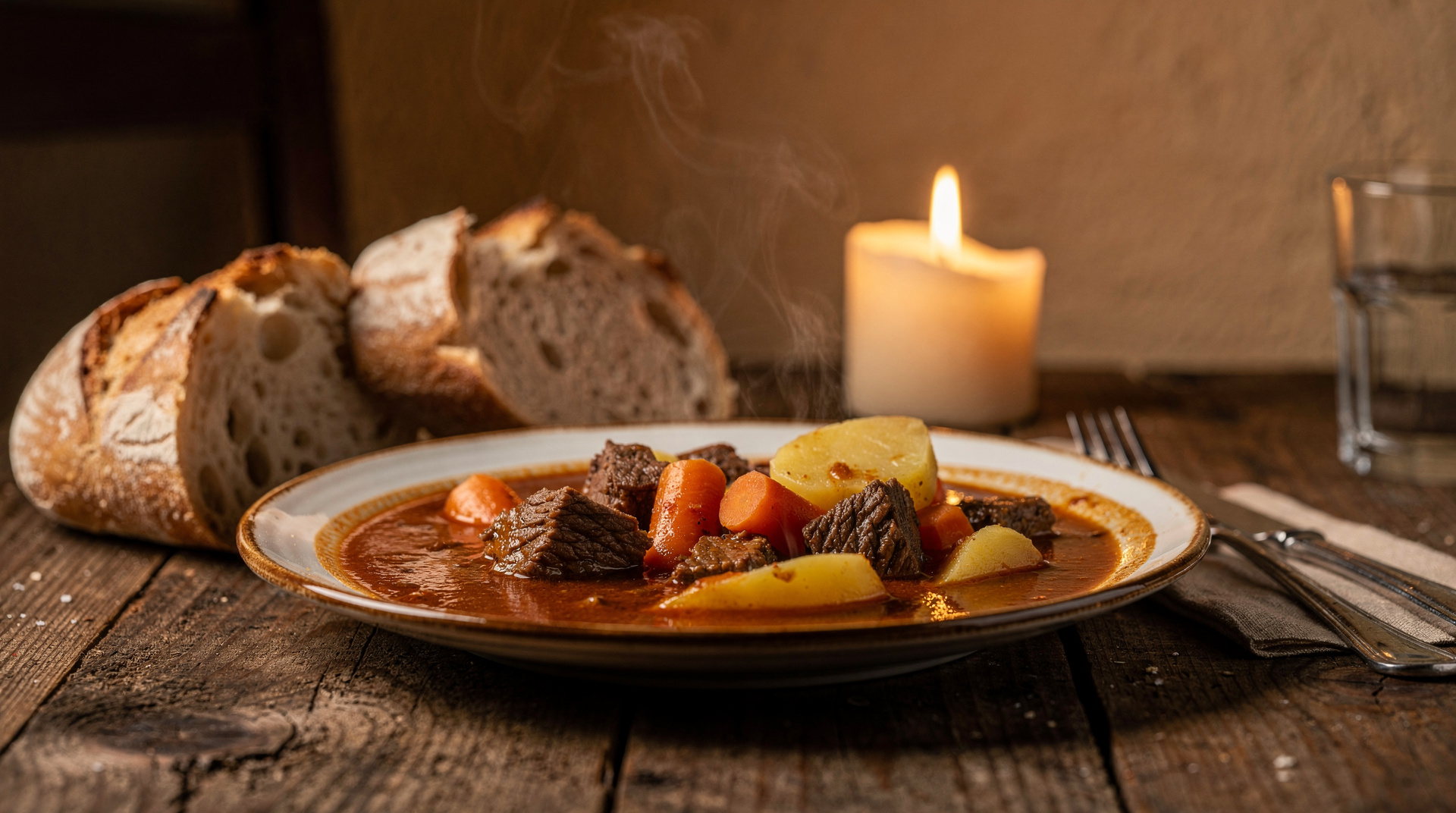
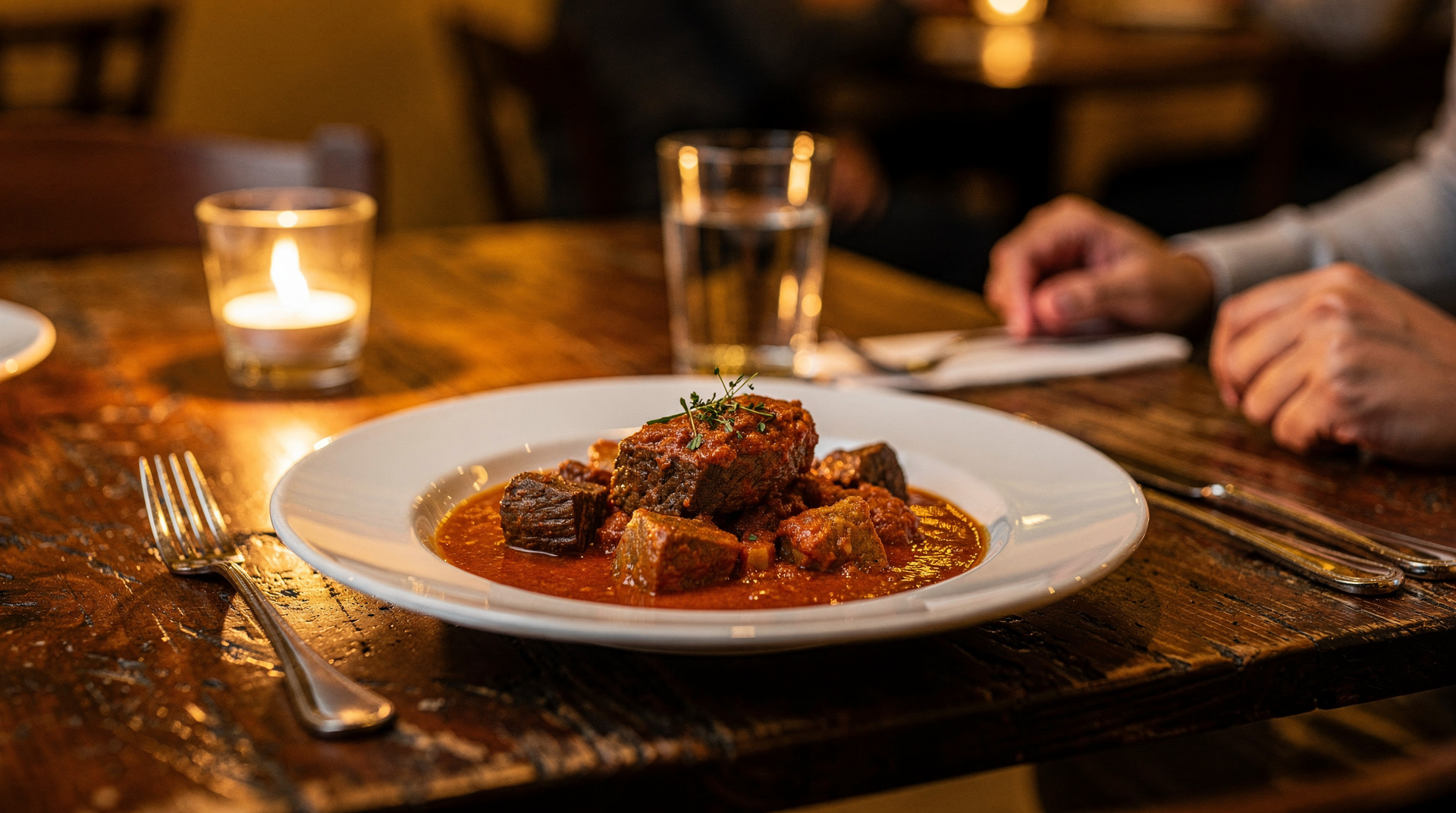
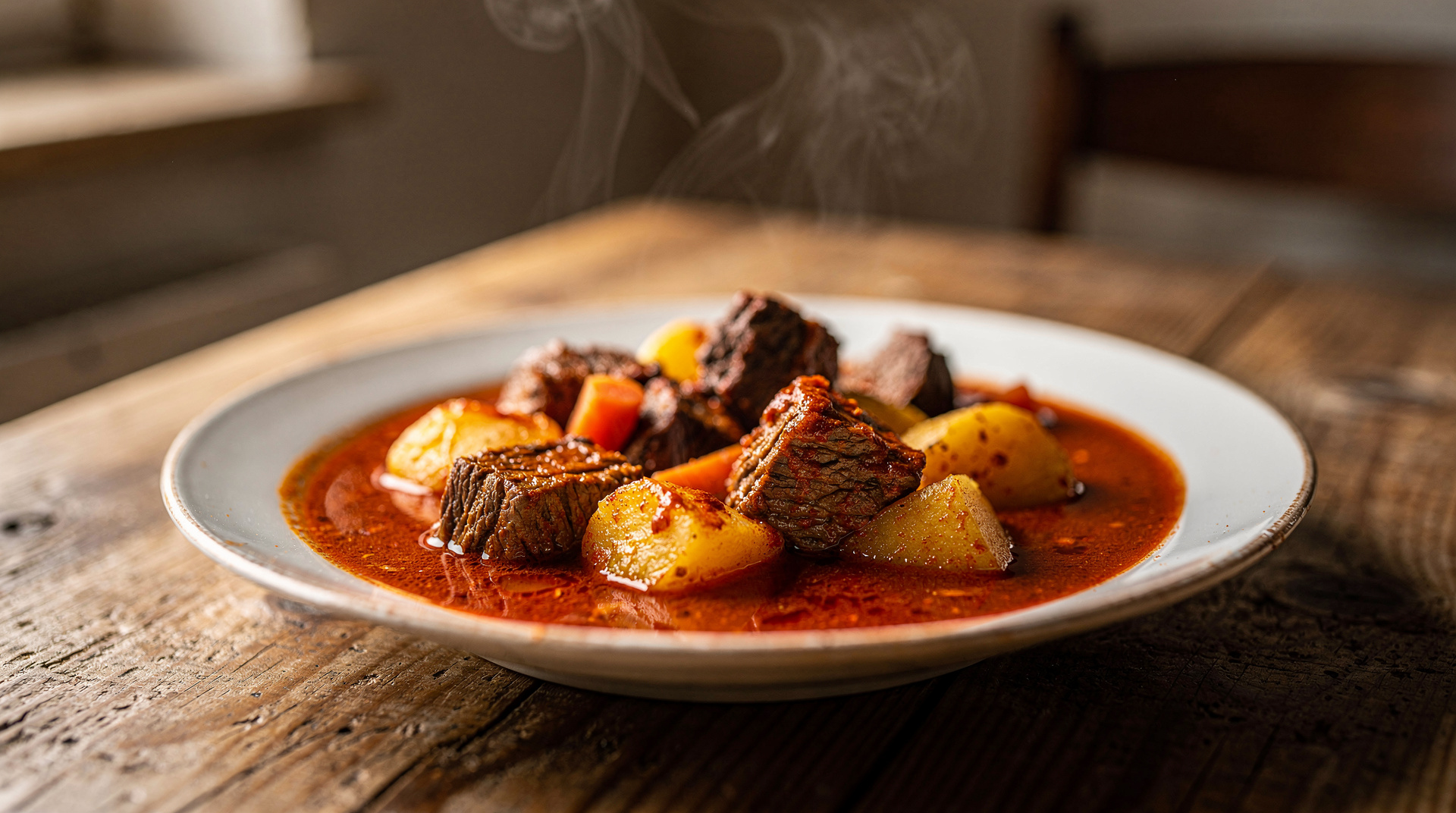
Gulyás (goulash soup): Almost always present, often as a sit-down stop at a traditional étkezde (canteen) or tavern. The tour guide will explain the crucial distinction between gulyás (soup) and pörkölt (the thick stew that foreigners call goulash). Typical presentation: a deep ceramic bowl of rich red-orange broth with potato, carrot, beef chunks, and caraway. Portion size: enough for a meaningful taste without being a full meal.
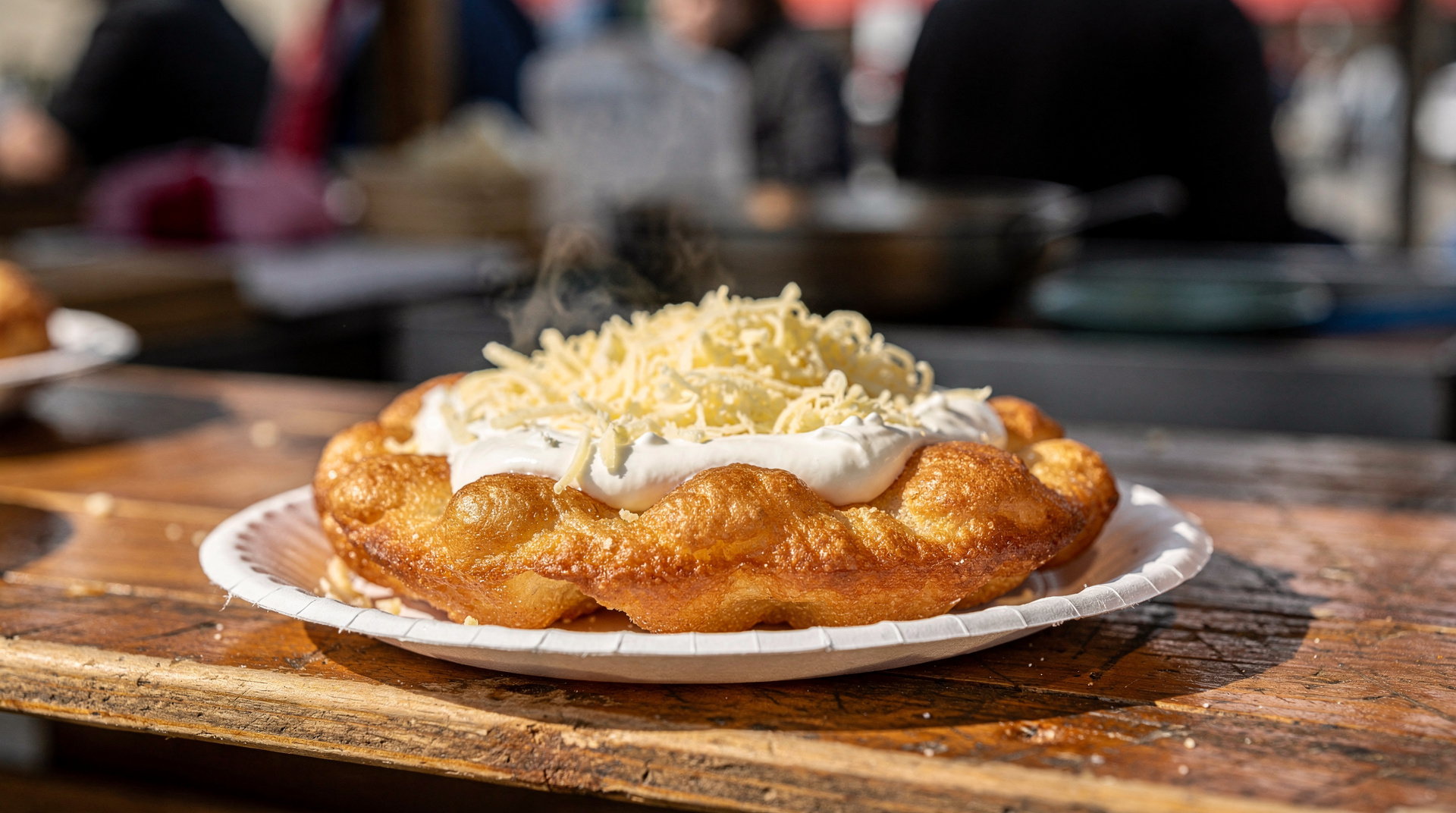
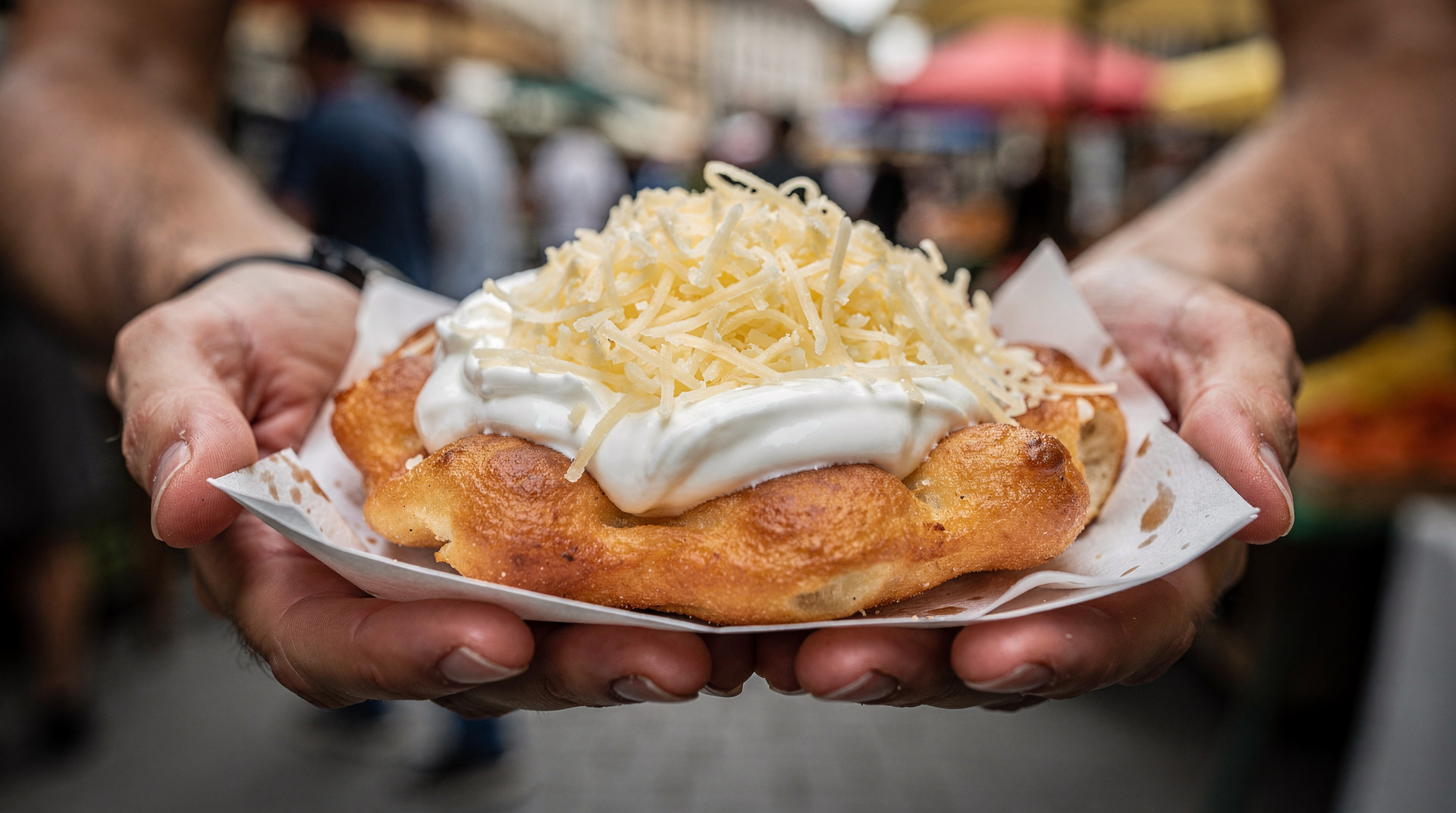
Lángos: The deep-fried dough with sour cream and cheese. Usually the market-hall stop — watched being fried, eaten immediately. Portion size: a personal piece, not a full disc. Guides typically explain the flame-baked origin and the significance of lard-frying versus oil-frying.
Hungarian charcuterie: Mangalica salami, Pick salami, smoked pork, and various cold cuts. Often presented as a board at a wine-bar stop, paired with a glass of Hungarian wine. This is where the market-to-tavern format excels — the guide takes you from the raw deli counter at the market to a plated version in a bar.
Cheese: Hungarian cheeses are less internationally known than the meats but excellent. Trappista (a semi-hard monastery cheese), Ementáli made in Hungary, and sheep-milk cheeses from the Hungarian plains are common tour items.
Kürtőskalács or rétes: The sweet element — chimney cake or strudel slice at a market or pastry-shop stop. Usually mid-tour as an energy boost.
Hungarian wine: Most food tours include at least one wine stop — typically a glass of Furmint (the dry white grape of Tokaj) or Bikavér (the Eger red blend). The guide explains the significance of Hungarian wine regions.
Pálinka: A shot of fruit brandy at some point — the strongest sensory item on the tour. Guides are honest: quality pálinka is warm and fruity, not harsh. The shot is small; this is a tasting, not a drinking tour.
Questions to ask your food tour guide
Good food tour guides in Budapest go beyond “and now you’ll taste…” to genuine cultural and historical context. Questions that tend to generate interesting responses:
- “Why does Hungarian cooking use so much sour cream?”
- “What happened to the Jewish food culture after World War II?”
- “Which paprika region produces the best and why?”
- “Is Hungarian street food changing, or is it the same as it was 30 years ago?”
- “Which restaurant do you eat at on your day off?”
The last question is particularly useful — guides on good food tours have strong independent restaurant recommendations that don’t appear in any guidebook.
Street food vs. sit-down on a food tour
The best food tours in Budapest deliberately mix standing-up market items (lángos, kürtőskalács) with seated stops at restaurants or bars (gulyás, wine). This reflects how Budapestians actually eat — the market and the restaurant are not separate categories; they’re part of the same food culture.
Tours that are entirely restaurant-based feel slower and more like a meal sequence. Tours that are entirely street-food-based don’t give adequate time for conversation and context. The market-to-tavern format, which moves from the Great Market Hall to a tavern for a sit-down middle section, is the best hybrid.
For the street food components independently, see street food in Budapest. For the sit-down components independently, see best restaurants in Budapest.
Food tours and the Jewish Quarter
The Jewish Quarter (District VII) intersects with the food tour scene in a specific way: several tours use the neighbourhood as their base, and the Jewish cuisine-specific walk is set entirely within it. The Jewish food culture of Budapest — matzo, flódni, cholent, liver dishes — is distinct from mainstream Hungarian cooking and represents a strand of the city’s culinary heritage that is not covered by the standard market-to-tavern format.
The Jewish cuisine and culture walk covers this ground specifically: Fröhlich Cukrászda (the last kosher patisserie in Budapest), Jewish Quarter history, the Dohány Street Synagogue neighbourhood, and the survival of Jewish culinary traditions through communism and into the present day.
This walk pairs particularly well with a morning visit to the Dohány Street Synagogue on the same day. See the Jewish Quarter heritage guide for the wider historical context.
After the food tour: eating on your own
One of the best uses of a food tour is as orientation for independent eating over the rest of your visit. You’ll leave the tour knowing: which stalls at the market to trust, what lángos should taste like when it’s good, which restaurants in the Jewish Quarter are worth the money, and what gulyás should actually taste like.
Restaurants visited on good food tours are usually worth returning to independently. Ask the guide which of the stops they recommend for a full sit-down meal — they’ll have an honest answer.
For the full Budapest restaurant picture beyond what a single tour covers, see best restaurants in Budapest and traditional Hungarian dishes.
Food tours and the Hungarian wine question
Hungary has excellent wine — Tokaj, Eger, Villány, and Badacsony are serious wine regions with international recognition among specialists — but the wines are almost completely unknown to most visitors. A food tour that includes wine is often the first time a visitor encounters Hungarian wine in a meaningful context.
The culinary wine walk specifically pairs food stops with wine for each item: a glass of Furmint with fish; Bikavér with meat; Tokaji Aszú sweet wine with cheese. This is more instructive than a standalone wine tasting because the food pairing makes the wine’s character comprehensible — why the acidity of Furmint works with fish, why the weight of Bikavér matches braised meat.
If your interest in Hungarian wine goes beyond a food tour, see Hungarian wine guide and wine tastings in Budapest for dedicated wine experiences.
Operator quality: how to choose between Budapest food tour companies
Budapest has more food tour operators than any other city in Central Europe at this price point. Quality varies significantly. The markers of a good operator:
Consistent guide quality: The best operators train their guides to tell stories, not just provide information. Ask at booking whether the same guide does all tours or whether multiple guides rotate.
Small group size: The best food tours cap at 8–12 participants. Large groups (20+) cannot share tastes easily, move slowly between stops, and make conversation difficult.
Owned relationships with vendors: Good tour operators have genuine relationships with the vendors they visit — the lángos stall that gives fresh dough rather than day-old; the wine bar that opens its cellar rather than just the public menu. These relationships show in the experience quality.
Transparent pricing: A tour that lists its inclusions clearly (which tastings are included, which drinks are covered, whether tips are expected) is more trustworthy than one with vague “includes some tastings.”
English-language quality: The guide’s English quality matters more than you might expect — explaining why Hungarian paprika is prepared after the fat is removed from the heat, or why Mangalica pork has a different fat profile from standard pork, requires precise and fluent communication.
Vegetarians on food tours: what to expect
Most Budapest food tours accommodate vegetarians with advance notice. The Hungarian food landscape has enough non-meat items (rétes, lángos, cheeses, vegetable preparations, wine) to construct a coherent tour. The items typically substituted:
- Meat-based gulyás → vegetable soup or mushroom soup
- Mangalica charcuterie → additional cheese or vegetarian mezze
- Pörkölt → gombapaprikás (mushroom paprikash) where available
For a tour specifically well-suited to vegetarians, the Jewish cuisine walk has a strong dairy and vegetable emphasis given the kashrut restrictions on meat-dairy mixing.
See vegetarian and vegan Budapest for the full picture of plant-based eating in the city.
Cooking classes vs. walking tours: which teaches more
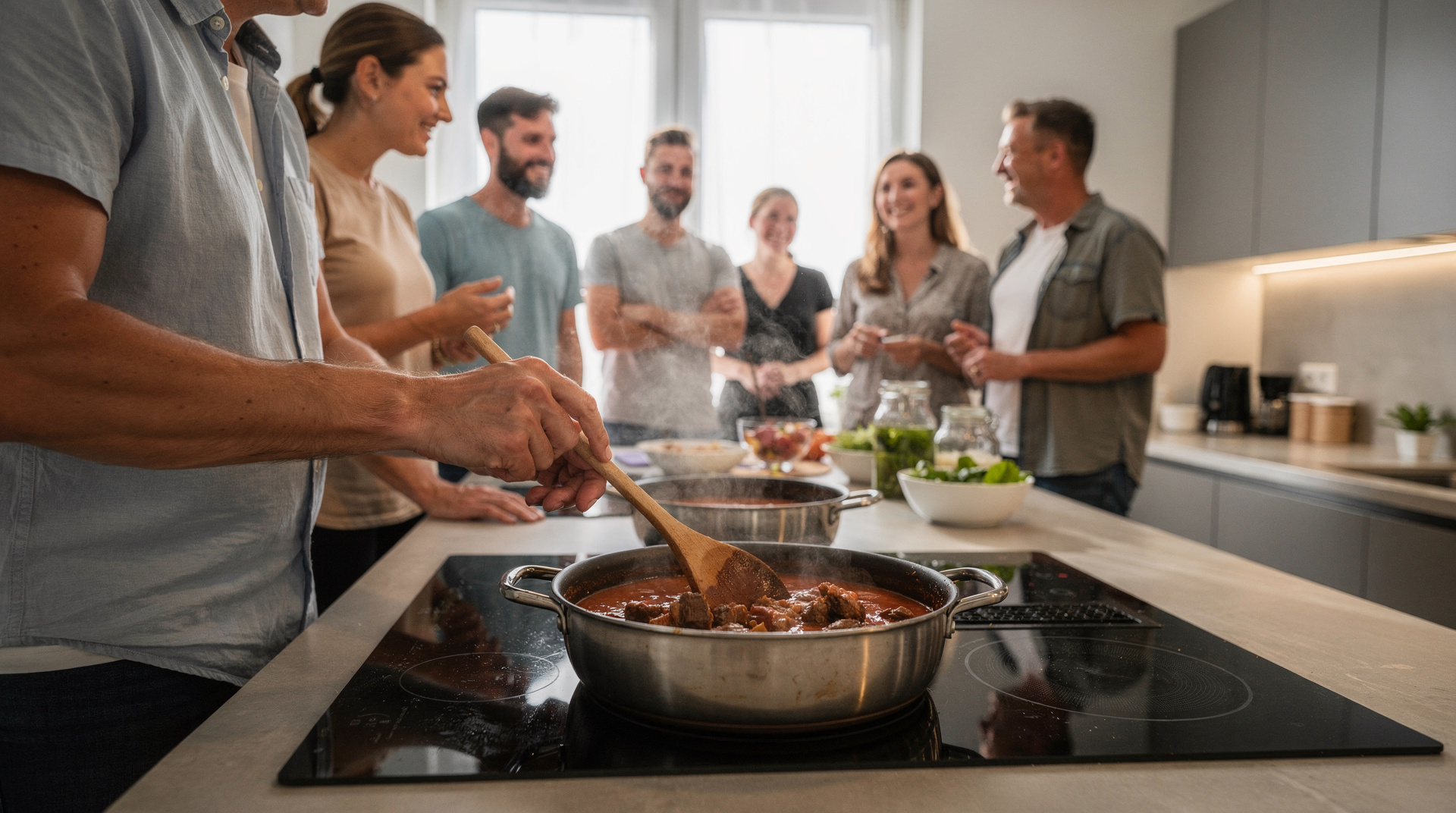
A walking food tour and a hands-on cooking class answer different questions. A walking tour is the better introduction if you want breadth — a wide sample of dishes, market context, and neighbourhood history in a single afternoon. A cooking class, typically with a smaller group around a kitchen table, teaches technique — how to make the paprika base for a proper gulyás, how dough is stretched for rétes, why sour cream is added off the heat rather than while cooking.
Cooking classes also produce a meal you eat together at the end, which gives a more social, dinner-party feel than a tour’s succession of tastings. If you only have time for one, a first-time visitor usually gets more from the breadth of a walking tour; a repeat visitor or a keen home cook gets more from a class. The cooking classes in Budapest guide has the full comparison of class formats and instructors, including which classes run at the Great Market Hall itself and which use a dedicated teaching kitchen elsewhere in the city.
Booking and logistics summary
When to book:
- Summer (June–August): 3–5 days ahead minimum; popular slots fill within 24 hours
- Shoulder season (April–May, September–October): 2–3 days ahead
- Winter: often available same-day, but advance booking ensures your preferred slot
Meeting points:
- Most tours meet near Deák tér, at the Pest embankment near Vigadó tér, or at the Great Market Hall entrance
- Booking confirmation email has the exact address and what-to-look-for instructions
What to wear: Comfortable walking shoes; you’ll cover 2–4 km over 3 hours. No dress code.
What to bring: Cash for additional purchases, appetite (don’t eat a full meal immediately before), and optionally a small bag for market purchases.
Cancellation: Standard policy is 24–48 hours free cancellation. Check the specific operator’s policy when booking.
For a full Budapest trip context, the Budapest 3-day itinerary suggests placing a food tour on Day 2 after an orientation day — once you’ve seen the city, you’ll have more context for what the food means culturally.
Solo travellers on food tours
Food tours are one of the better solo-travel activities in Budapest — small-group formats put you at a shared table or standing at a market stall alongside other travellers, which naturally opens conversation in a way that solo restaurant dining doesn’t. Guides are also used to solo participants and tend to include them naturally in group tastings rather than treating them as an afterthought. For a solo visitor building out a full day, the solo travel Budapest guide has broader context on where a food tour fits alongside other low-friction social activities.
Combining a food tour with the rest of your day
A food tour works well as an anchor activity rather than a standalone outing. Morning market-to-tavern tours free up the afternoon for the Castle District or a thermal bath, since you’ll already be well fed and won’t need a lengthy lunch stop. Evening food-and-wine walks pair naturally with an early sightseeing day, ending the day with the culinary tour rather than squeezing it in around other plans. If your food tour finishes near the Great Market Hall, the central market hall guide has independent browsing tips for a return visit once you know which stalls to trust. For those staying near the market or the Jewish Quarter, see the where to stay in Budapest guide for how proximity to the food scene factors into choosing a base.
Honest limitations of a group food tour
A group food tour is not a substitute for sitting down at a proper restaurant meal — portions are tasting-sized by design, and the pace moves for the group rather than for your own appetite or curiosity about a particular dish. If you want to eat slowly and generously at one specific restaurant rather than sample broadly, book a table directly instead — see best restaurants in Budapest. Large tour groups (20+, more common with budget operators) also compress the time at each stop and reduce the chance for genuine guide interaction; if this matters to you, check group size before booking rather than assuming smaller is standard.
Frequently asked questions about Best food tours in Budapest
How much does a food tour in Budapest cost?
Walking food tours cost €30–60 per person (8,000–24,000 HUF) and typically last 3–4 hours with 8–14 tastings included. Cooking classes run €60–90 per person and last 3–4 hours including the meal. These prices include all food; drinks may be extra on some tours.Are Budapest food tours worth it?
Yes, particularly as an introduction to Hungarian cuisine, which many visitors know little about before arriving. A good food tour covers gulyás, lángos, kürtőskalács, pálinka, Hungarian wine, and Jewish cuisine — all in context. The Great Market Hall is also better experienced with a guide who knows which stalls to trust.What food is included on Budapest food tours?
Typical stops include: gulyás (Hungarian beef and paprika soup/stew), lángos (fried dough with toppings), töltött káposzta (stuffed cabbage), chimney cake, Hungarian salamis and cheeses, traditional tavern dishes, and Hungarian wine or pálinka. The Jewish cuisine tour adds specific items from Budapest's Jewish culinary heritage.Can I do a Budapest food tour with dietary restrictions?
Most operators accommodate vegetarians with advance notice — Hungarian cuisine has enough vegetable dishes, cheeses, and breads to construct a good tour. Vegan is harder; gluten-free difficult. Contact the specific operator when booking. Cooking classes with Chef Marti are adaptable and have had vegetarian participants.What is the best neighbourhood for a food tour in Budapest?
The Great Market Hall (District IX) combined with the surrounding inner Pest streets covers the widest range. The Jewish Quarter (District VII) is excellent for the Jewish cuisine angle and has the most concentrated good-quality eating on a single street. Downtown Pest covers the broadest mix of traditional Hungarian and modern options.Are food tours good for solo travellers in Budapest?
Yes — small-group food tours are one of the easier solo-friendly activities in Budapest, since shared tastings and standing stops naturally create conversation with other participants. Guides are used to solo travellers and include them in the group experience rather than treating them differently. It is a lower-pressure way to socialise than a solo restaurant meal.
Top experiences
Bookable activities with verified prices and instant confirmation on GetYourGuide.
Budapest: Food tour market to tavern 14 tasters wines
Budapest: Food walking tour eat sip explore like a local
Budapest: Culinary wine walk budapest s signature food tour
Budapest: Jewish cuisine and culture walk
Budapest: Hungarian home cooking experience with chef marti