Heroes' Square and City Park: the complete visitor guide
What is Heroes' Square and is it worth visiting?
Heroes' Square (Hősök tere) is Budapest's most ceremonial public space, anchoring the northern end of Andrássy út with the Millennium Monument — a 36-metre column topped by the Archangel Gabriel, flanked by a colonnade of Hungary's greatest kings. Entry is free. Behind it, City Park contains Vajdahunyad Castle, the Széchenyi baths, Budapest Zoo and a boating lake. Allow 2–3 hours for the square and park together.
Budapest’s grand public axis
Heroes’ Square and City Park form the northern terminus of Andrássy út, Budapest’s grandest boulevard. The axis runs 2.3 km from Deák tér through the Opera House, past rows of Second Empire apartment buildings, to emerge at this enormous ceremonial space — a combination of national monument, green space, thermal baths and cultural institutions that is unmatched in any other Central European city.
The whole area was designed for Hungary’s Millennium celebration of 1896, marking 1,000 years since the Magyar tribes entered the Carpathian Basin. The scale is deliberately imperial — Hungary was at the peak of its prosperity and influence within the Habsburg Empire, and it wanted architecture to match.
| Where | Northern end of Andrássy út, District XIV |
| Cost | Square is free; Vajdahunyad interior ~2,000–3,500 HUF |
| Time needed | 2 hours minimum, half a day with baths or zoo |
| Getting there | Metro M1 to Hősök tere (from Deák tér, 5–10 min) |
| Best time | Morning for the square, any time for the park |
The Heroes’ Square and City Park highlights tour covers the major sights of this district efficiently, with historical context for the Millennium Monument and the park’s unusual buildings.
The Millennium Monument
The centrepiece of Heroes’ Square is the Millennium Monument (Millenniumi emlékmű), completed in 1896 and subsequently modified several times. It consists of:
The central column: 36 metres high, topped with the Archangel Gabriel holding the Holy Crown of Hungary and an apostolic double cross. Gabriel was said to have appeared to Pope Sylvester II to suggest crowning Stephen I as Hungary’s first Christian king.
The two semicircular colonnades: flanking the column on both sides, each supporting sculptures of Hungary’s most significant rulers and historical figures. The left colonnade has Árpád (leader of the Magyar tribes) and the six other chieftains who led the conquest. The right colonnade carries statues of the greatest kings: Stephen I, Béla IV, Charles Robert, Louis the Great, John Hunyadi, Matthias Corvinus and others — replaced once when communist-era politicians (Kossuth, Rákóczi) were substituted, then returned to kings after 1989.
The Tomb of the Unknown Soldier: a marble slab at the base of the central column, representing all Hungarians who died in wars throughout history.
The square is free to enter at all times and is popular with locals running, cycling, or simply passing through. On major national holidays (20 August, 15 March, 23 October) official ceremonies are held here.
Vajdahunyad Castle
Behind Heroes’ Square, across the bridge over the park lake, Vajdahunyad Castle (Vajdahunyad vára) is the most cinematically improbable building in Budapest.
Ödön Lechner’s pupil Ignác Alpár designed it for the 1896 Millennium Exhibition as an exhibit in itself — a collage of 21 different Hungarian architectural styles in a single complex, referencing famous buildings from across the Carpathian Basin: the fortified Vajdahunyad Castle (now in Romania), the Ják abbey church, the Romanesque Benedictine church at Jak, Gothic chapels, Renaissance loggias and baroque towers, all combined in a fantasy castle that was initially built from wood and painted cardboard.
Reactions were mixed — some loved it, some found it kitsch — but it proved so popular that it was rebuilt in permanent stone in 1904–1908. Today it houses the Hungarian Agricultural Museum (Magyar Mezőgazdasági Múzeum), the largest agricultural museum in Central Europe. The exhibits on Hungarian wine, farming history, animal husbandry and fisheries are genuinely interesting if you have any curiosity about the rural economy that underpins Hungarian culture.
Entry: approximately 2 000–3 500 HUF. The castle exterior, courtyards and the lakeside setting are free to explore.
The statue of Anonymous in the castle courtyard — a hooded, faceless scribe — is one of Budapest’s most photographed oddities. The figure represents the anonymous medieval chronicler who wrote the first history of the Hungarians (Gesta Hungarorum). Rubbing his pen nib is said to bring writing inspiration.
City Park (Városliget)
City Park is Budapest’s oldest and largest public park, covering 100 hectares of formal gardens, wooded paths, lakes and heritage buildings. Originally a hunting ground (Vadaskert), it was landscaped in the English style in the early 19th century and opened to the public.
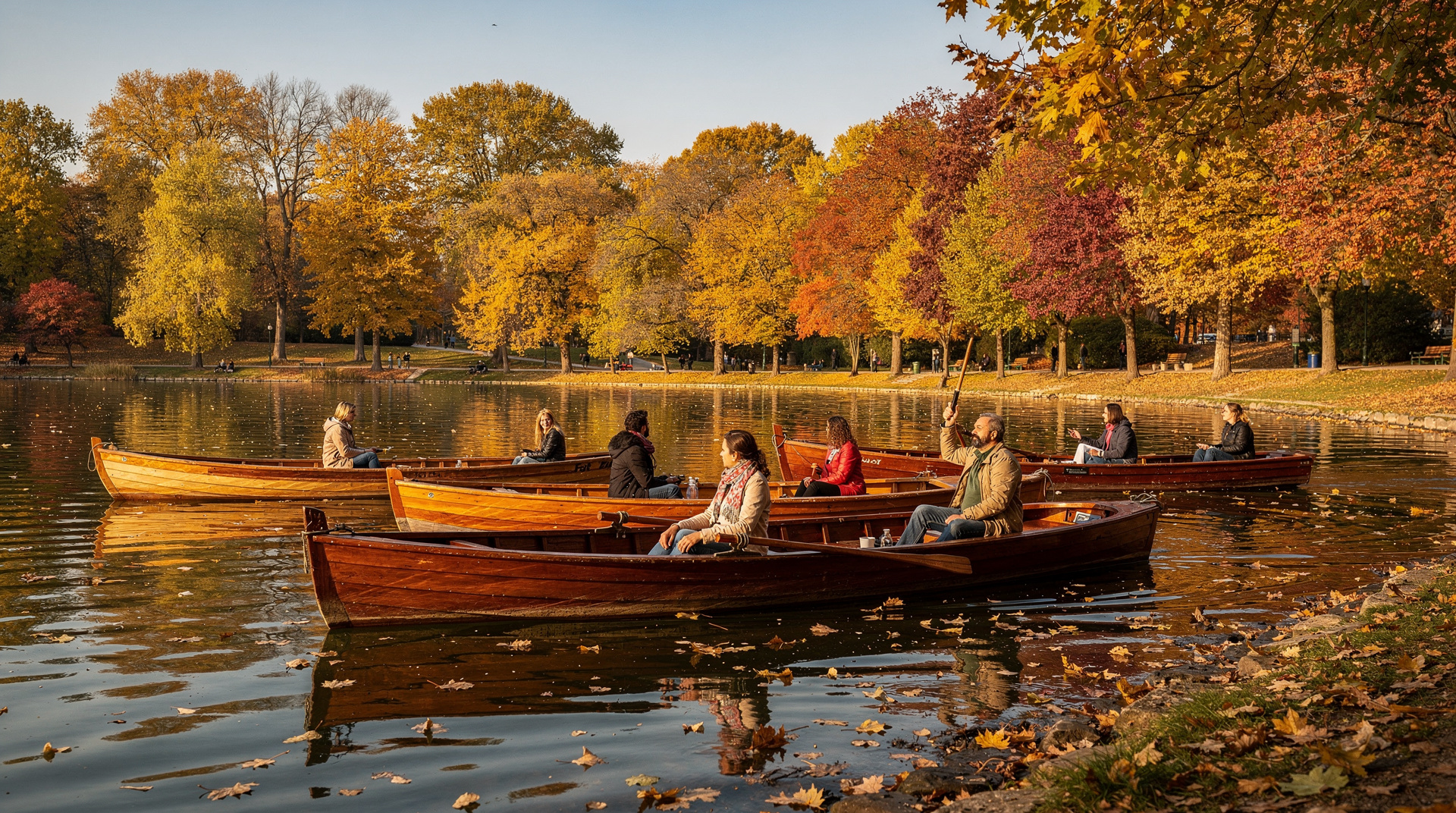
The boating lake / ice rink: In summer, pedal boats and rowing boats are available on the lake (600–1 200 HUF per hour). In winter (approximately December–February), the lake surface becomes Central Europe’s largest outdoor ice rink, with skate hire available and warming facilities on the lakeside. The Vajdahunyad Castle reflected in the ice is one of Budapest’s great winter sights.
Budapest Zoo (Fővárosi Állat- és Növénykert): Established in 1866, one of Europe’s oldest zoos, with interesting Secessionist animal houses dating from 1909–1912. Entry approximately 3 500–5 500 HUF; the animal house architecture is worth seeing even without zoological enthusiasm.
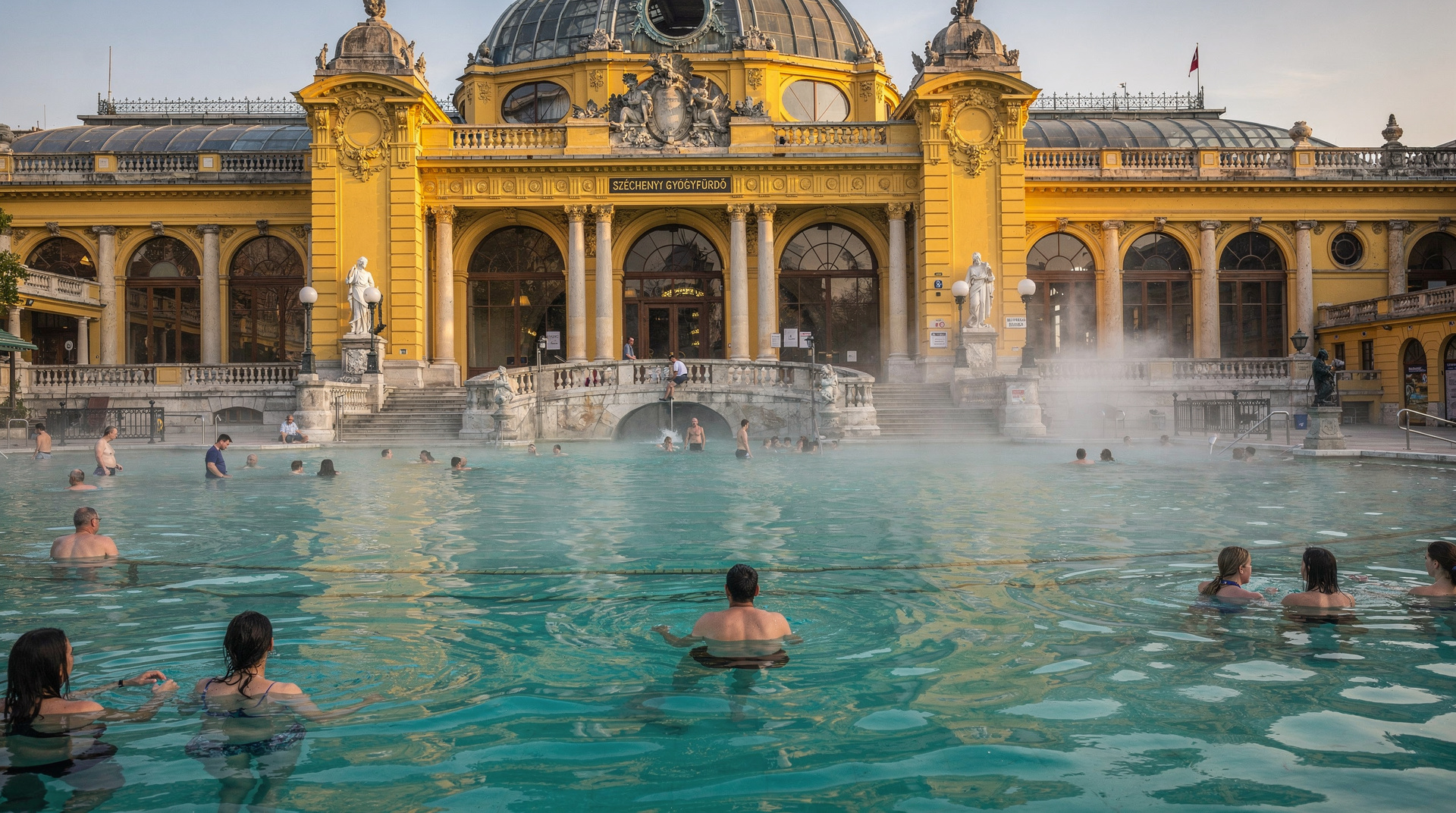
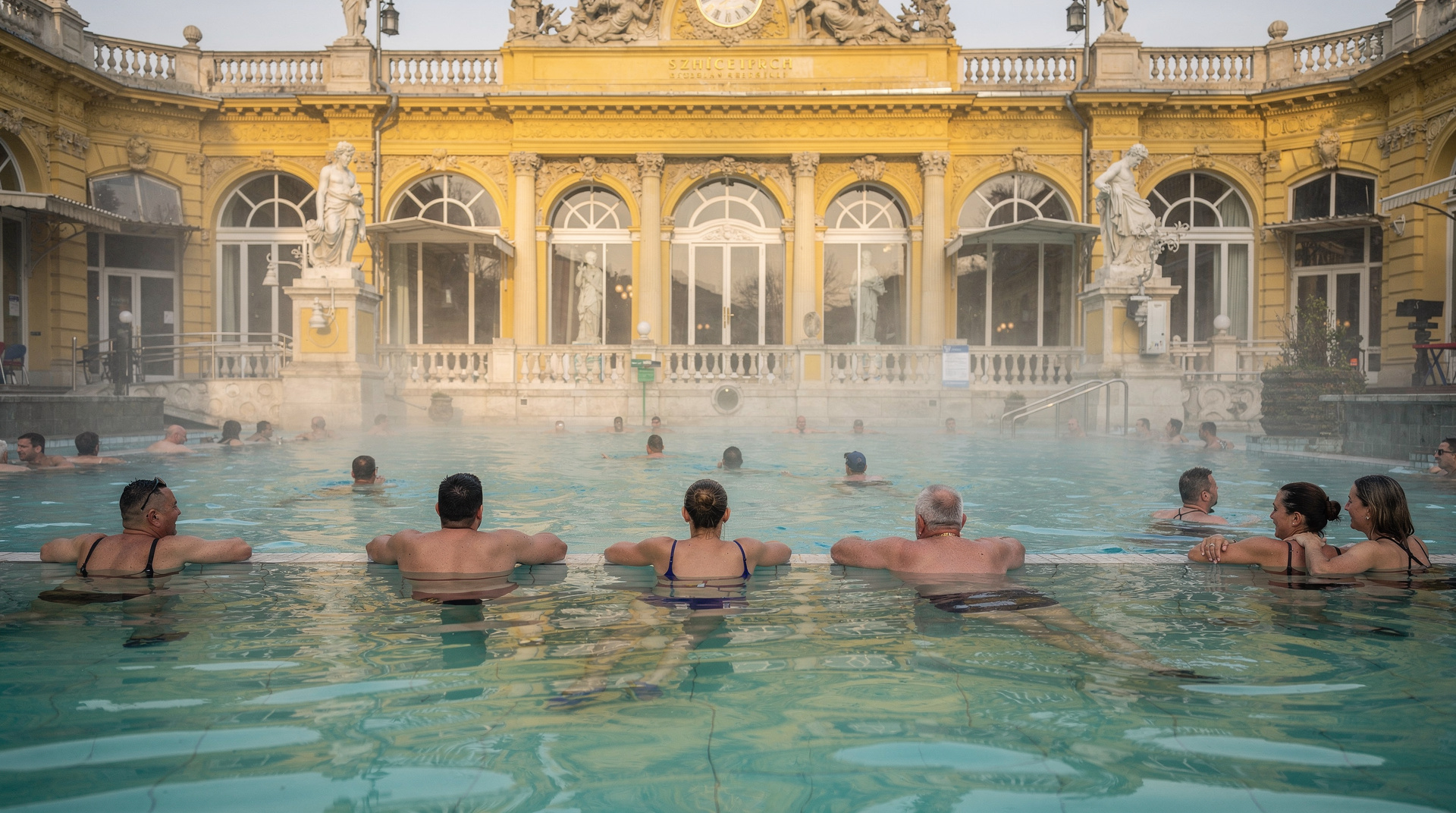
The Széchenyi thermal baths: At the park’s eastern end, the neo-baroque Széchenyi bath complex (1913) is the largest thermal bath in Budapest. The iconic outdoor chess-playing scene — older men in the steaming pool moving pieces on floating boards — takes place here. See the Széchenyi baths guide for full entry information.
Városligeti fasor: The tree-lined boulevard leading into the park from Heroes’ Square, with significant Art Nouveau villas on both sides — the best street of private architecture in Budapest, largely overlooked by tourists.
Andrássy út: the walk that gets you there
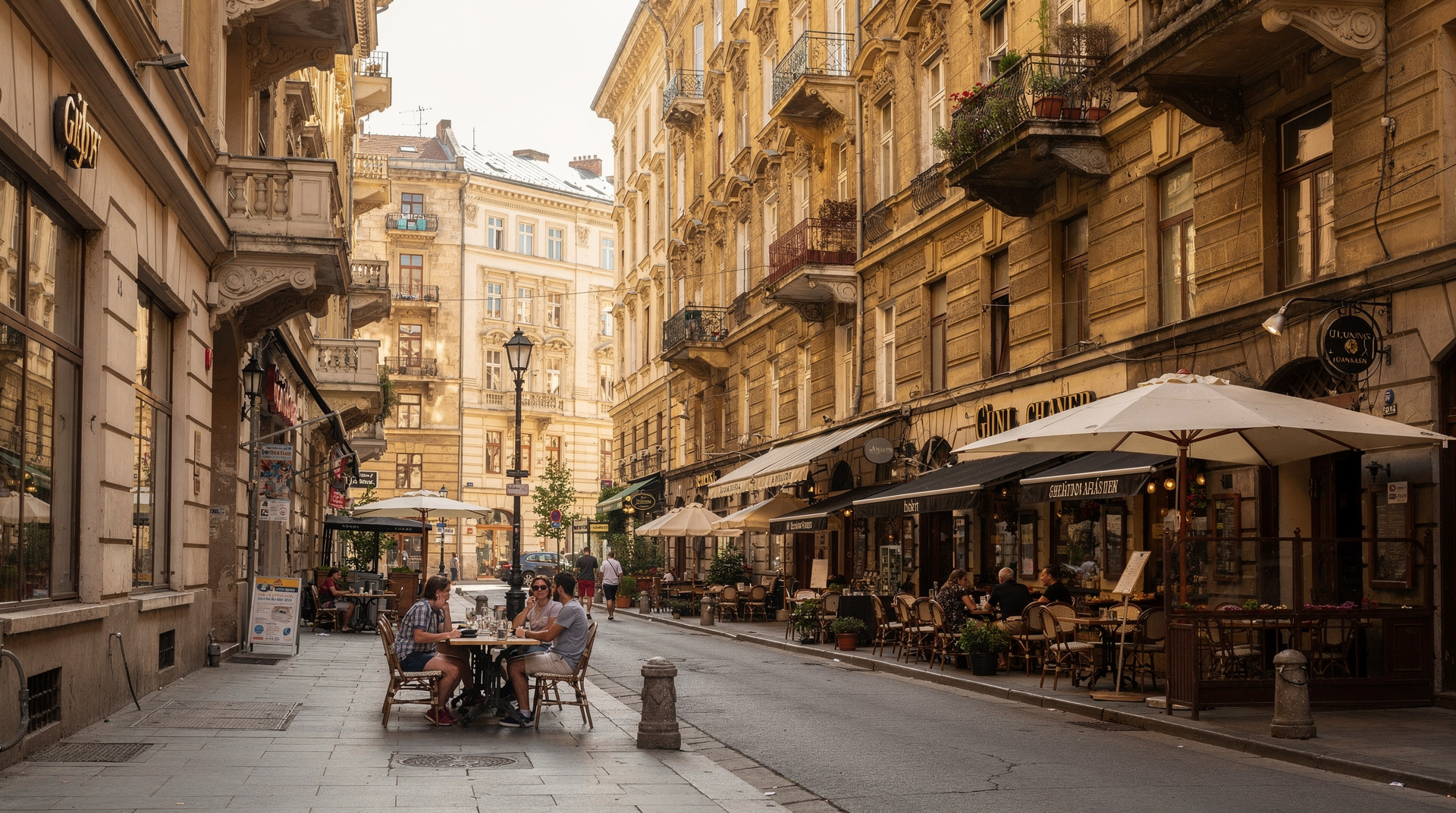
Metro M1 is the fastest way to Heroes’ Square, but walking the length of Andrássy út from Deák tér is a worthwhile alternative if you have the time. The 2.3 km boulevard, UNESCO-listed alongside the square and the metro line itself, passes the Hungarian State Opera House, rows of grand 19th-century apartment buildings, and the House of Terror museum documenting Hungary’s fascist and communist periods — see the House of Terror guide for context before or after. Allow 30–40 minutes for the walk without stops, longer if you’re browsing along the way.
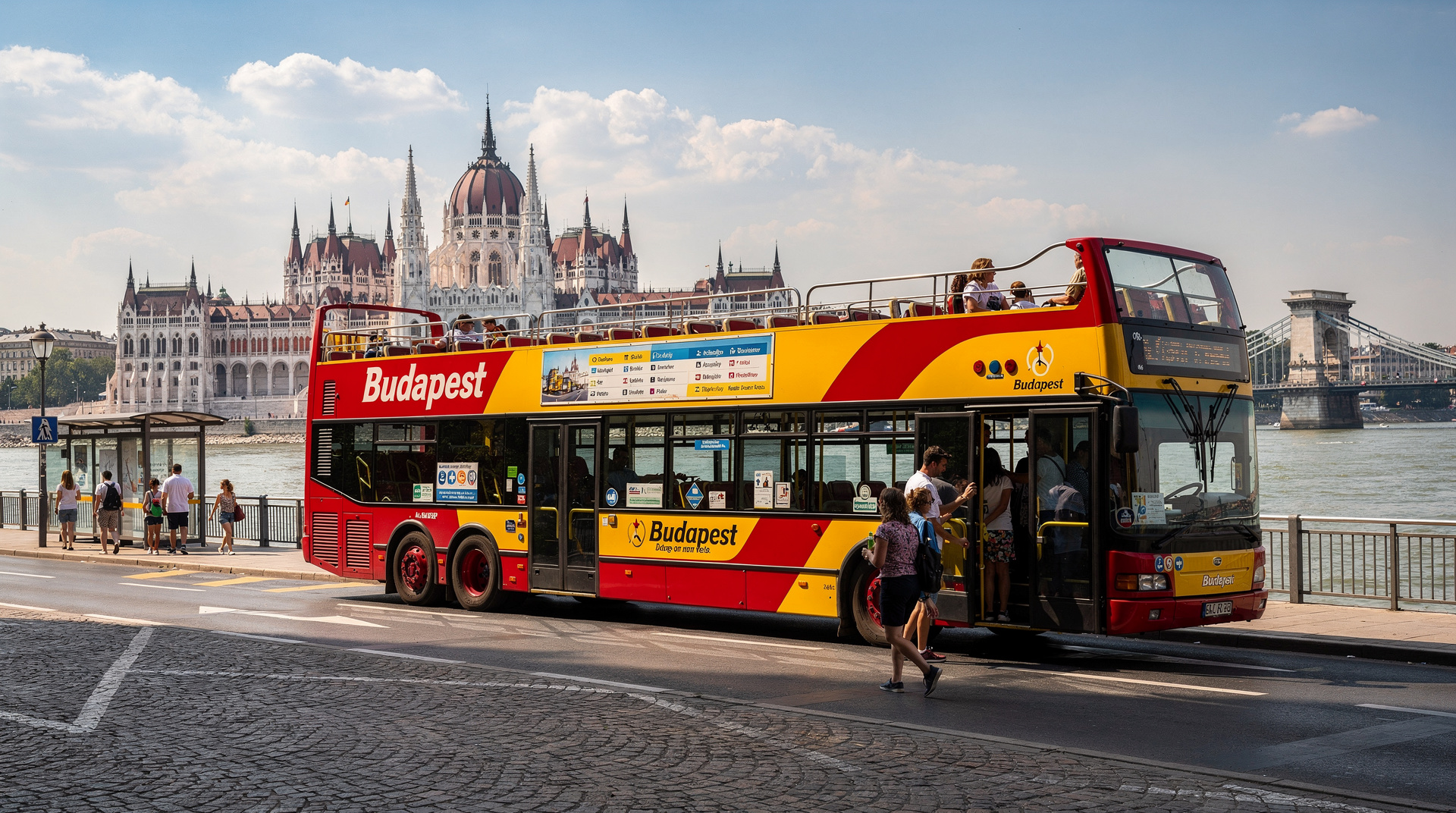
If you would rather not navigate on your own, a guided walk through the city centre is an easy way to take in the boulevard and its landmarks with someone explaining what you are looking at. Visitors who prefer to sit down between stops can look at a hop-on hop-off bus ride, which lets you see the wider city and step off where something catches your eye. Our hop-on hop-off guide and the comparison of walking tours will help you choose between the two styles.
How to read the square
Heroes’ Square rewards a slow first lap. Stand in the middle, facing the column, and let the whole composition settle: the colonnades curve away on both sides like open arms, and the two museum buildings that flank the square mirror each other across the open space. The design was meant to be taken in as a single picture, so resist the urge to rush straight to the statues.
Then go closer. The figures on the colonnades are worth reading one by one, because together they tell the story of the Hungarian state in a handful of portraits. If the names are unfamiliar, the Hungarian history primer gives enough background to make the statues meaningful, and the communist-era Budapest guide explains why the lineup was changed and later restored.
Light matters here. The square is open at any hour, so you can choose the mood: morning for quiet and clean views of the column, evening for the lit monument and fewer tour groups. Photographers will find the open space forgiving, with plenty of room to step back and fit the whole monument in one frame. If you enjoy that sort of thing, the photography tours guide lists organised options elsewhere in the city.
Making the most of City Park
The park is large, and the best way to enjoy it is to pick a rhythm rather than a checklist. Many visitors cross the bridge to the castle, wander the lakeside paths, stop for a coffee, and only then decide whether the afternoon calls for a museum, the zoo or a soak. Treating the park as a place to spend time, not a list of tickets to collect, is what makes it feel different from the busier central districts.
Around the lake you will find a mix of locals and visitors: people walking dogs, families with pushchairs, joggers, and friends sitting on the grass. It is a good place to see everyday Budapest life at an unhurried pace. If you are staying in the centre and want a break from crowds, this is one of the easiest escapes, and it connects naturally with the wider picture of Budapest’s neighbourhoods.
For travellers with children, the zoo and lake are the obvious draws, but the open lawns and paths are just as useful for letting younger ones burn off energy. The family-friendly attractions guide and the dedicated Budapest zoo and aquarium guide give more detail for planning a day around them.
Connecting the park to the rest of your trip
Heroes’ Square and City Park sit comfortably in a larger itinerary. Because the square is at the end of the M1 line, it pairs naturally with a day that starts or finishes on Andrássy út. Our Budapest metro guide explains how the line works, and the guide to getting around covers the other ways of reaching the park.
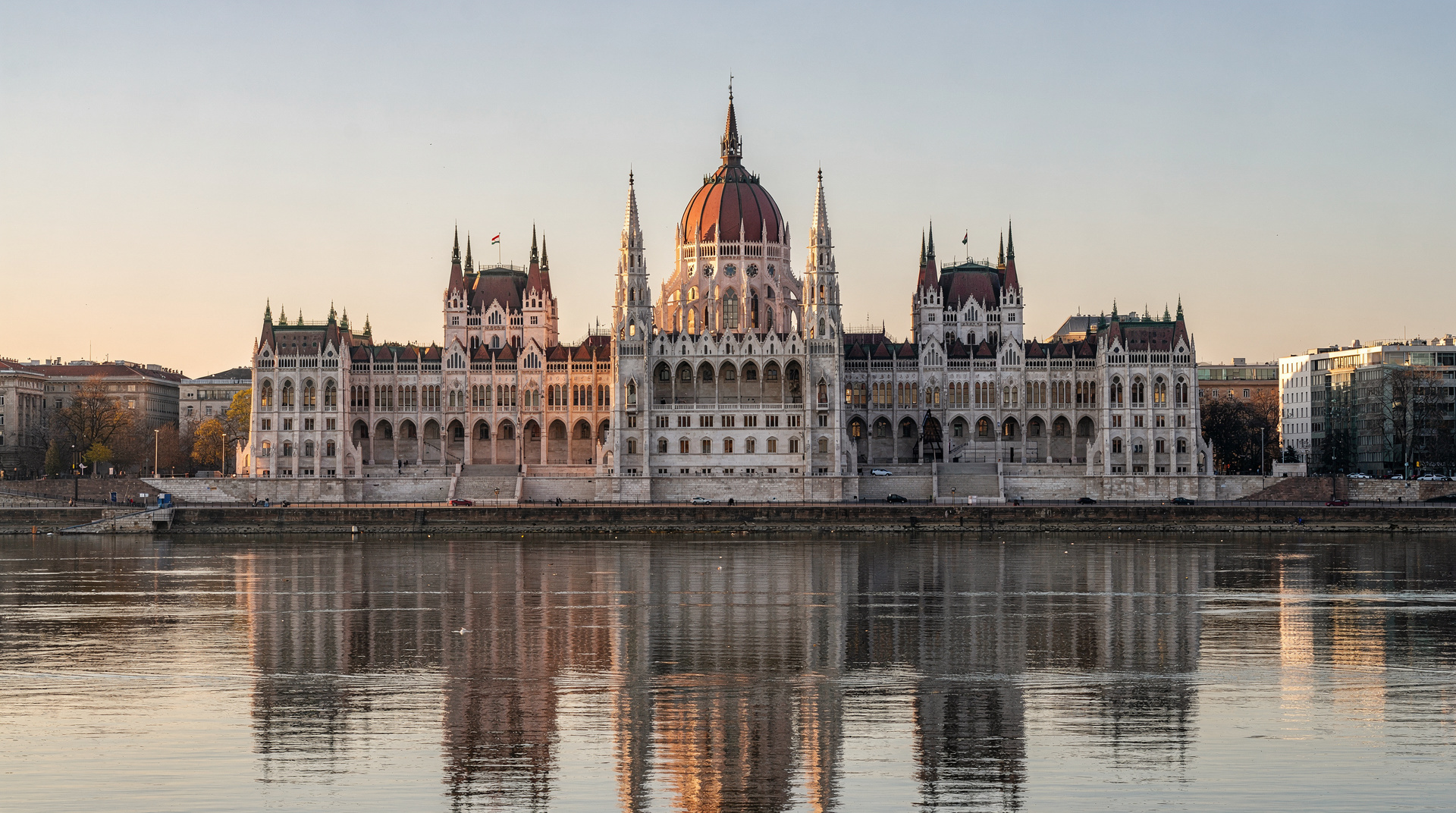
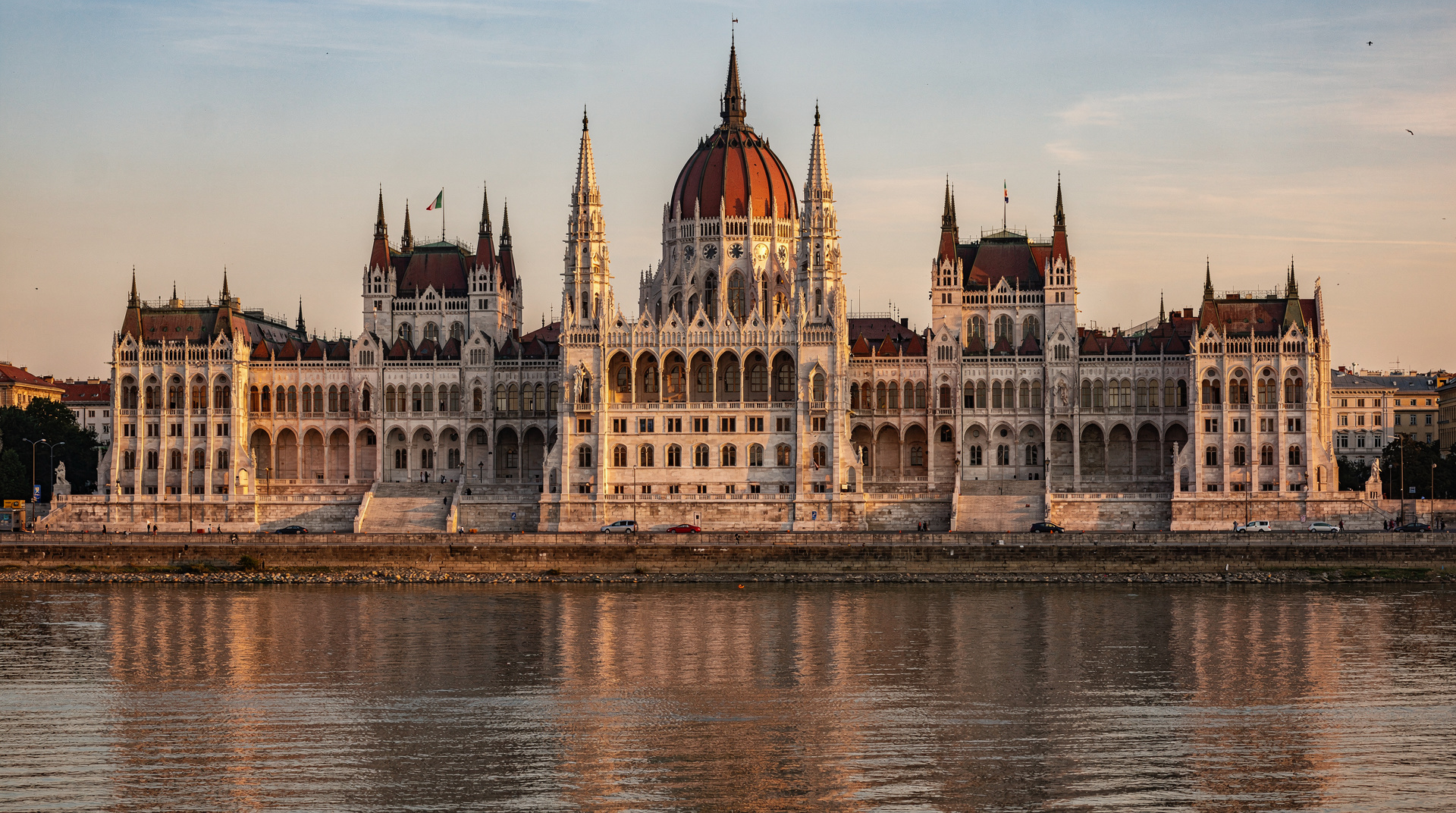
If you are building a short stay, the one-day itinerary and the first-timer highlights itinerary show where this area can fit alongside the major sights of Buda and Pest. Travellers who like to see the city lit up after a day in the park might also consider the Parliament and night views for the evening, while a grand city tour that includes the Parliament can round out a first visit by linking the park with the riverside landmarks.
Combining with Széchenyi baths
Because the Széchenyi thermal baths sit inside City Park itself, this is one of the easiest sightseeing-plus-bath combinations in Budapest — no separate cross-town journey required. A common pattern is Heroes’ Square and Vajdahunyad Castle in the morning, lunch at a park café, then Széchenyi in the afternoon. See the Széchenyi baths guide for ticket options, and the Budapest baths prices and tickets guide if you’re comparing costs against other baths first.
Varosliget’s redevelopment
City Park has been undergoing significant redevelopment since 2019 as part of the “Liget Budapest” project. New museums (the House of Hungarian Music by Sou Fujimoto, the Budapest Museum of Fine Arts extension, the National Gallery temporary site) have opened or are under construction. The House of Hungarian Music, opened in 2022, is a remarkable building with a forest roof where trees grow through the ceiling. Entry approximately 2 500–4 000 HUF.
Some park sections may be closed during construction phases; check current maps at the park entrance.
A relaxed way to spend the day
If you have no fixed agenda, a good pattern is to start at the square while it is quiet, walk slowly through the colonnades, and then cross into the park with no particular destination. The castle courtyards, the lakeside paths and the shaded corners of the park all reward wandering. Bring comfortable shoes, because the distances between the sights add up even though each one looks close on the map.
It also helps to decide early what matters most to you. Architecture lovers will want extra time around the castle and the villas along Városligeti fasor. History readers may want to linger at the monument. Travellers who mainly want to relax will probably head for the baths sooner. None of these choices is wrong, and the area is compact enough that you can change your mind halfway through the day. For more ideas on what to see elsewhere, browse the best museums guide and the free things to do list, both of which pair well with a visit here.
Planning your visit
Half-day: Heroes’ Square + Vajdahunyad Castle exterior + park walk + coffee at the park café. Free or very low cost.
Full morning: Heroes’ Square + Vajdahunyad interior (Agriculture Museum) + Széchenyi baths in the afternoon. This fills a satisfying day.
With children: Budapest Zoo + park lake (boating in summer, ice rink in winter) + Széchenyi outdoor pools. See Budapest with kids for family-specific tips.
In winter: Széchenyi outdoor thermal pools in the snow + ice skating on the park lake = a genuinely magical Budapest winter experience.
The City Park neighbourhood guide covers the district in detail. The top attractions guide places Heroes’ Square and City Park within a multi-day itinerary. For transport logistics, take metro M1 from Deák tér or Vörösmarty tér — the line runs the length of Andrássy út and deposits you directly at Heroes’ Square.
Frequently asked questions about Heroes' Square and City Park
How do I get to Heroes' Square?
Metro M1 (yellow line) to Hősök tere. This is the oldest underground railway in continental Europe (1896) and the ride is itself a heritage experience. From central Pest, the journey takes 5–10 minutes. Walking from Deák tér along Andrássy út takes about 25 minutes and passes the Hungarian State Opera House.What is Vajdahunyad Castle?
Vajdahunyad Castle is a theatrical assemblage of architectural styles built for the 1896 Millennium Exhibition. It copies elements from 4 Hungarian castles — Romanesque, Gothic, Renaissance and Baroque — in a single complex. The original was temporary (built from wood and cardboard); it was rebuilt in permanent materials 1904–1908. Today it houses the Hungarian Agriculture Museum. Entry approximately 2 000–3 500 HUF.Is the Széchenyi bath in City Park?
Yes. The Széchenyi thermal baths are in the eastern section of City Park, in a neo-baroque palace building (1913). They are one of the largest and most visited thermal bath complexes in Budapest, with outdoor pools, indoor pools, saunas and steam rooms. See the thermal baths guide for full entry information.What is City Park like in winter?
In winter, the boating lake becomes Central Europe's largest outdoor ice rink (admission approximately 1 500–2 500 HUF including skate hire). The Széchenyi outdoor pools steam visibly on cold mornings — soaking in hot water while snow falls is one of Budapest's signature winter experiences. Christmas events are held in the park from mid-November.How much time should I budget for Heroes' Square and City Park?
A minimum of 2 hours for the square and a walk through the park. Add another 1–2 hours if you plan to go inside Vajdahunyad Castle's museum, and a further 2–3 hours if you want to include a Széchenyi baths visit the same day. Families with the zoo on the agenda should budget a half-day at least.Is Heroes' Square free to visit at any time of day?
Yes, the square itself is a public space with no entry fee or opening hours restriction. The colonnade statues and Millennium Monument are lit at night, making an evening visit worthwhile as well as a daytime one. The museums flanking the square and the sights within City Park (Vajdahunyad interior, zoo, baths) do have their own hours and fees.
Top experiences
Bookable activities with verified prices and instant confirmation on GetYourGuide.