Top attractions in Budapest: the essential guide for first-time visitors

What are the top attractions in Budapest?
Budapest's unmissable sights are the Hungarian Parliament Building (best from across the Danube or on a guided tour), Buda Castle and the Castle District, Fisherman's Bastion, St Stephen's Basilica, the Great Synagogue on Dohány Street, Széchenyi thermal baths, and an evening along the ruin bars of the Jewish Quarter. The Danube itself — seen from Chain Bridge or on a cruise — ties everything together.
Planning Budapest’s sights strategically
Budapest rewards planning more than most European capitals. The city is geographically divided — the hills and historic castle district of Buda on one bank, the flat, grid-planned Pest on the other — and grouping sights by neighbourhood saves enormous amounts of time and transport.
This guide covers the must-see attractions honestly, with practical advice on what to skip, what to book in advance and where tourist-trap pricing lurks. The architecture alone justifies visiting; the thermal baths are unlike anything else in Europe; and the Danube that separates and connects the two halves of the city is one of the great urban river experiences.
| Where | Split between Buda (Castle District, Gellért Hill) and Pest (Parliament, Basilica, Jewish Quarter) |
| Time needed | 3 full days for the essentials; 4th day for extras like Memento Park |
| Cost | Free sights (Chain Bridge, Heroes’ Square) to around 8,500 HUF (Parliament tour, foreigner rate) |
| Getting around | Metro M1/M2/M3, trams (line 2 along the Danube), walking within districts |
| Best time | Spring/autumn for comfortable walking; early morning for quiet photos |
Castle District: Buda’s historic hill
The Castle District (Várnegyed) on the western bank of the Danube is Budapest’s most photogenic neighbourhood — a UNESCO World Heritage Site containing the Royal Palace, Matthias Church, Fisherman’s Bastion, and a medieval street grid remarkably intact despite two world wars and decades of communist neglect.
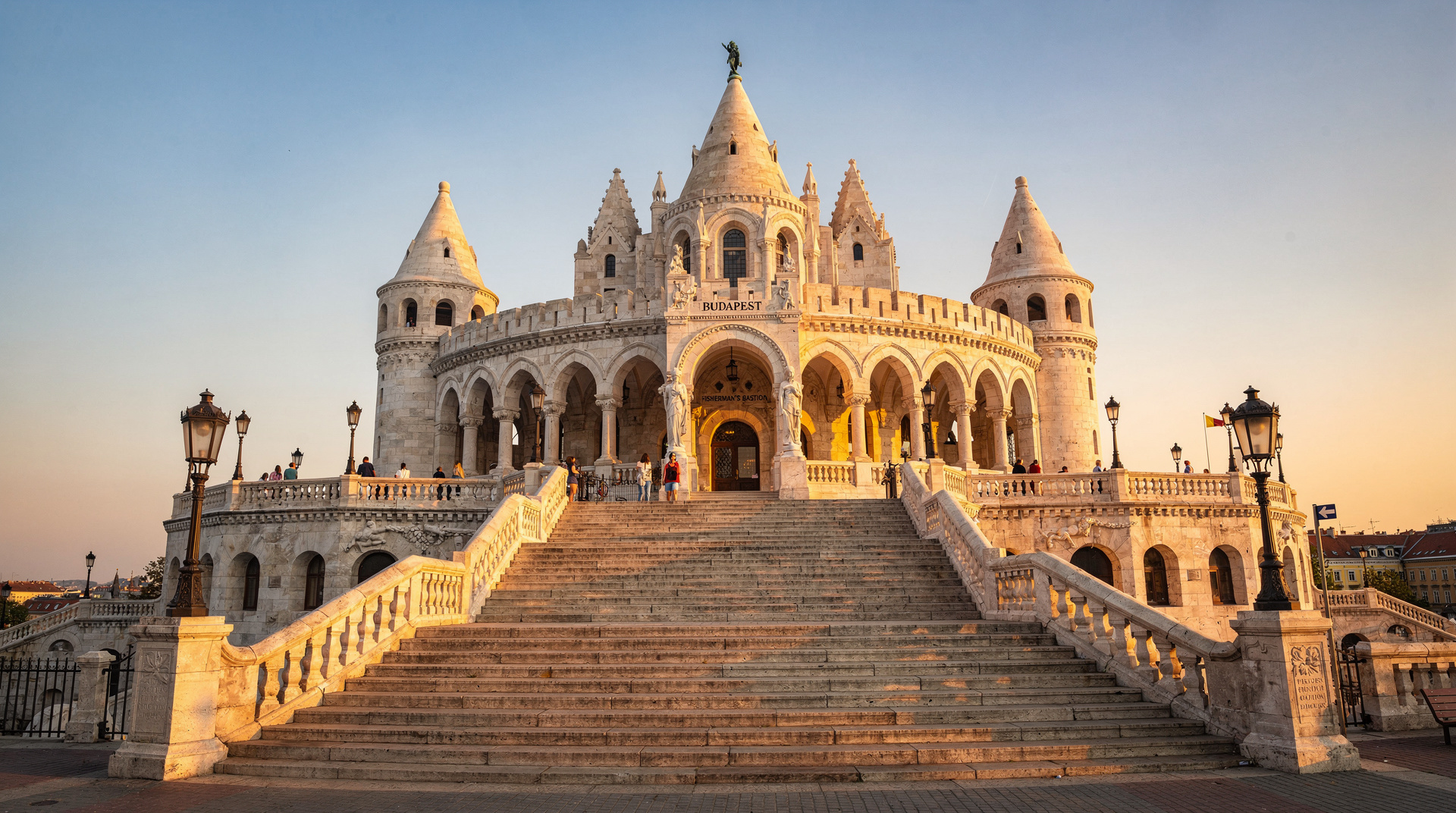
Fisherman’s Bastion is the building most visitors photograph. The neo-Romanesque terraces and turrets were built 1895–1902 as a decorative viewing platform over the Danube — they are not a real medieval fortification. The views across to Parliament are among the best in any European city, especially at sunrise when tour groups have not yet arrived. The terraces are free; the towers charge approximately 1 500–2 000 HUF entry.
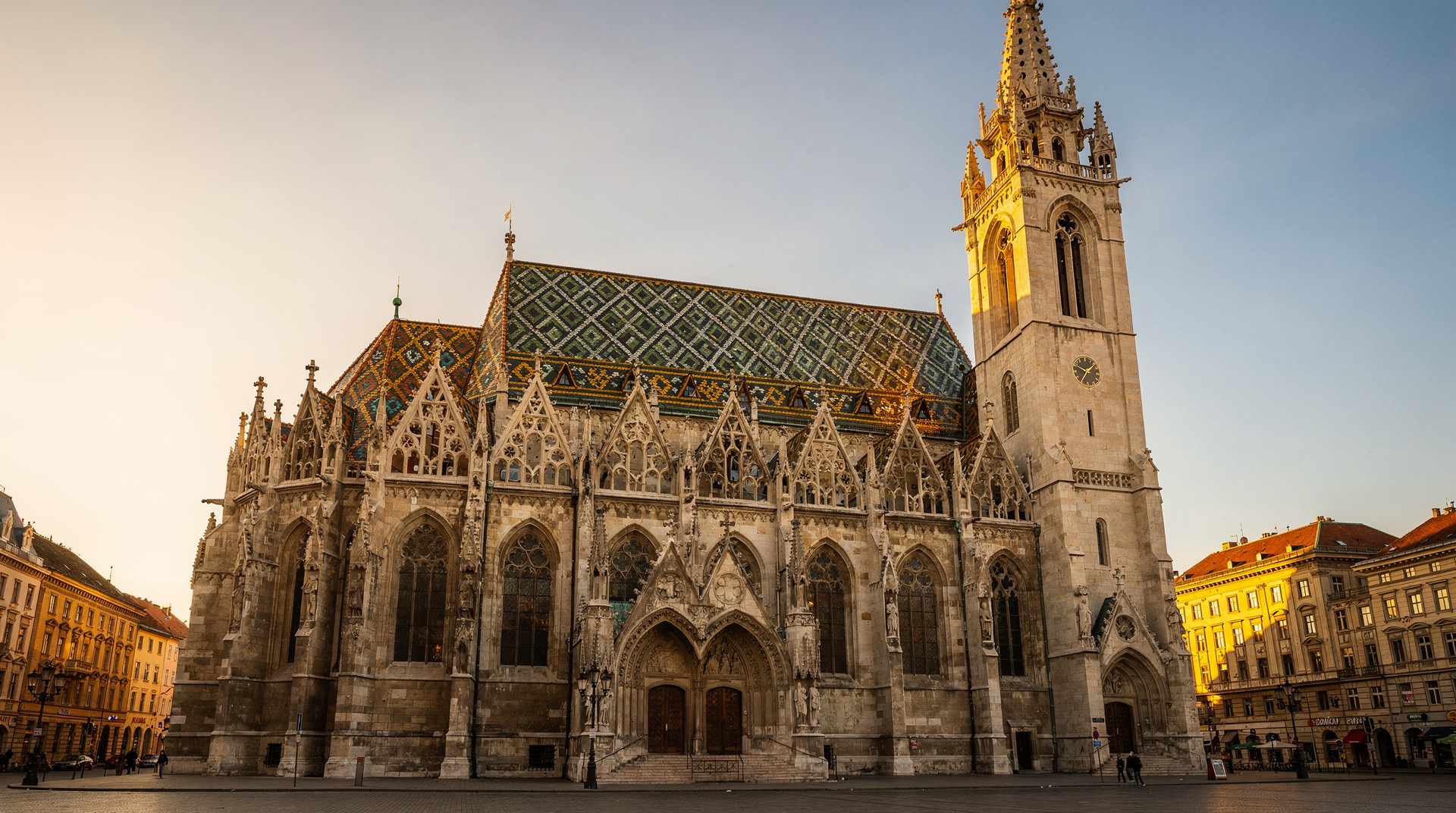
Matthias Church (Mátyás-templom) is the most important church in Buda, a Gothic-Romanesque building with a distinctive diamond-pattern tiled roof that became an iconic Budapest image. Entry is 2 200–3 500 HUF; the interior has remarkable medieval-style murals. It is used for regular services, so check opening times in advance.
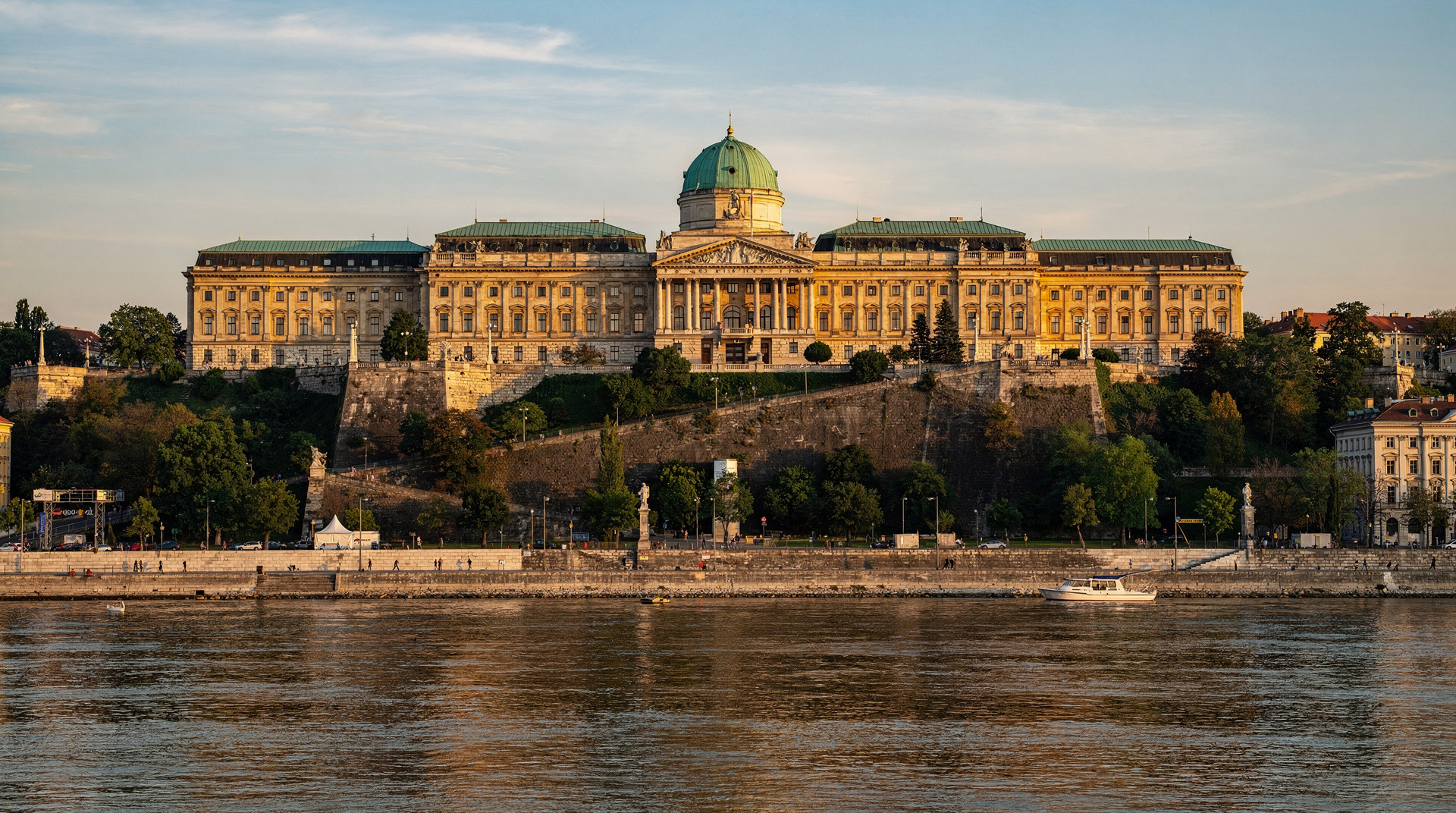
Buda Castle (Budavári Palota) at the southern end of Castle Hill is the royal palace complex, rebuilt multiple times — most recently after near-total destruction in 1945. The National Gallery and National History Museum are housed inside. The palace exterior and courtyard gardens are free to walk through.
A guided Buda Castle walking tour covers the Castle District coherently — the medieval streets, palace history, wartime destruction and postwar reconstruction — in about 2.5 hours. The best guides here are historians who make the patchy visible history comprehensible.
The Hungarian Parliament Building
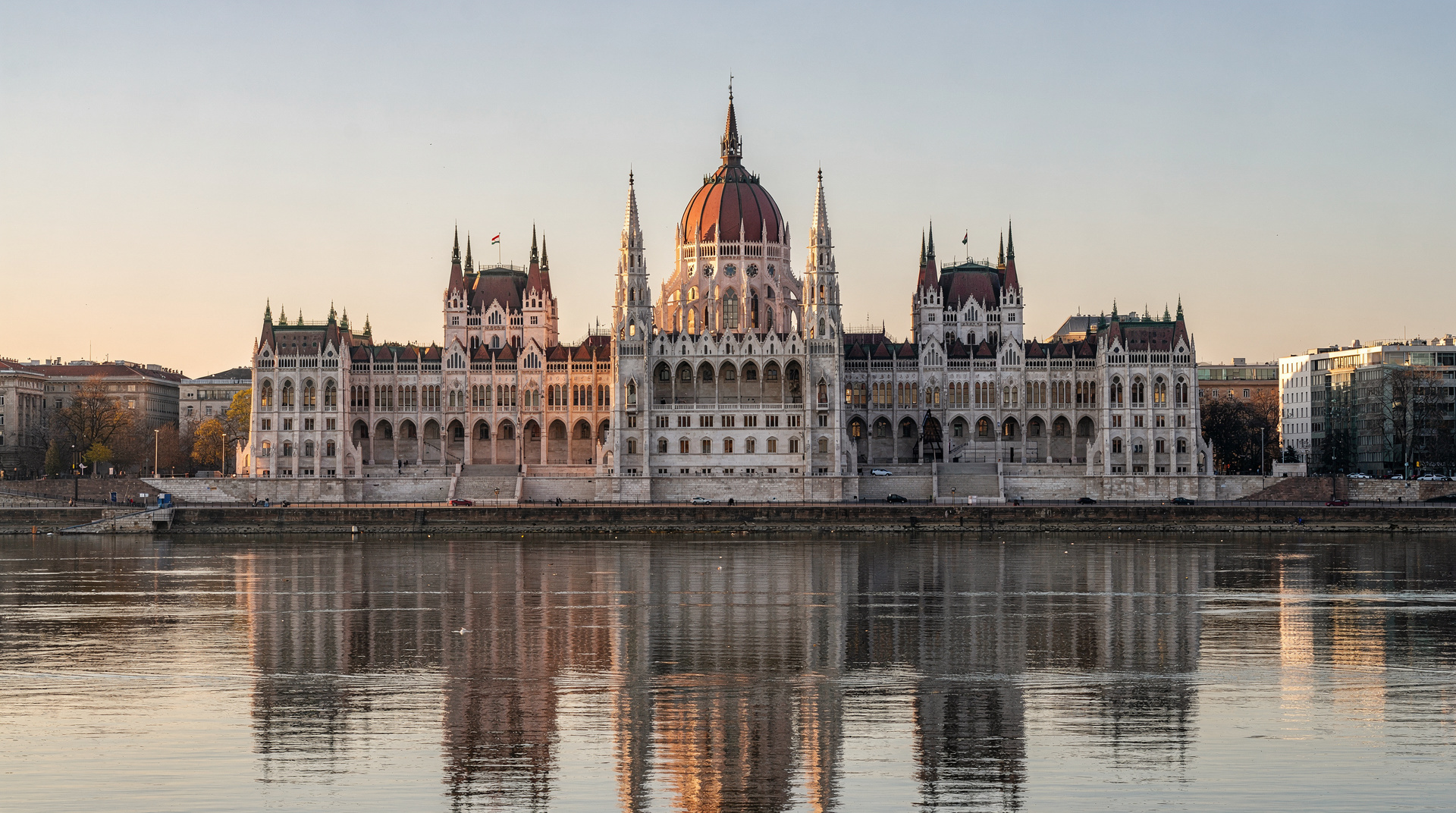
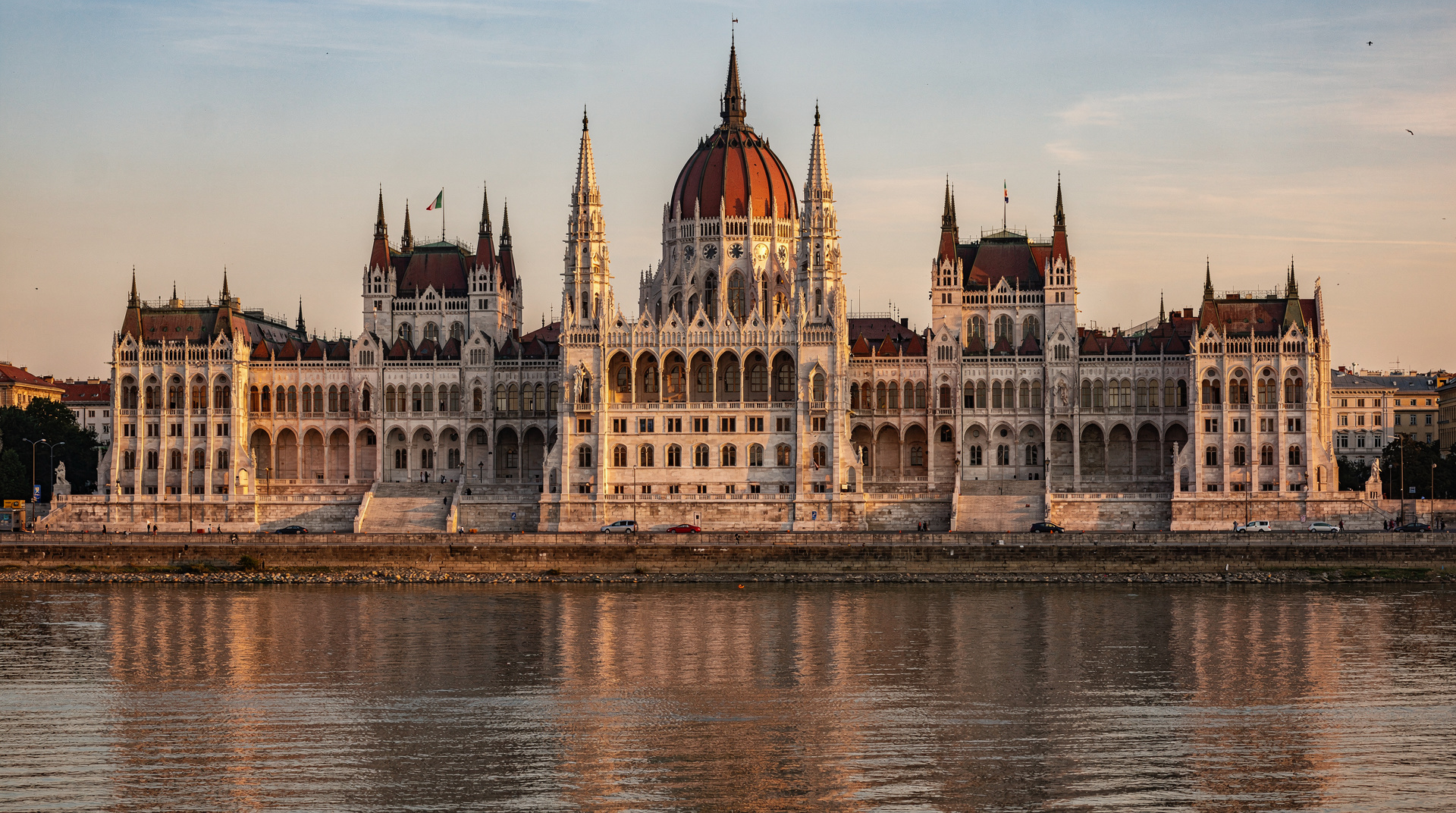
On the Pest bank of the Danube, the Hungarian Parliament (Országház) is one of Europe’s largest and most elaborate legislative buildings — 96 metres tall, 268 metres long, 691 rooms, and built 1885–1904 in a flamboyant Gothic Revival style by Imre Steindl.
The best view of Parliament is from across the river in Buda, or from the Danube — which is why a cruise at night, with Parliament illuminated, is one of Budapest’s signature experiences.
Interior tours are available in English, running approximately 45 minutes. They cover the central dome, the Crown Jewels room, the Grand Staircase and two legislative chambers. Tickets should be bought online in advance (foreigners pay ~8 500 HUF; EU citizens ~3 500 HUF). The queue without a ticket in July–August can exceed two hours.
The Hungarian Parliament guide covers the full logistics, history and tour options. The Grand City Tour with Parliament visit combines the interior tour with a coach overview of major Pest sights — useful for first-timers who want orientation as well as the Parliament experience.
St Stephen’s Basilica
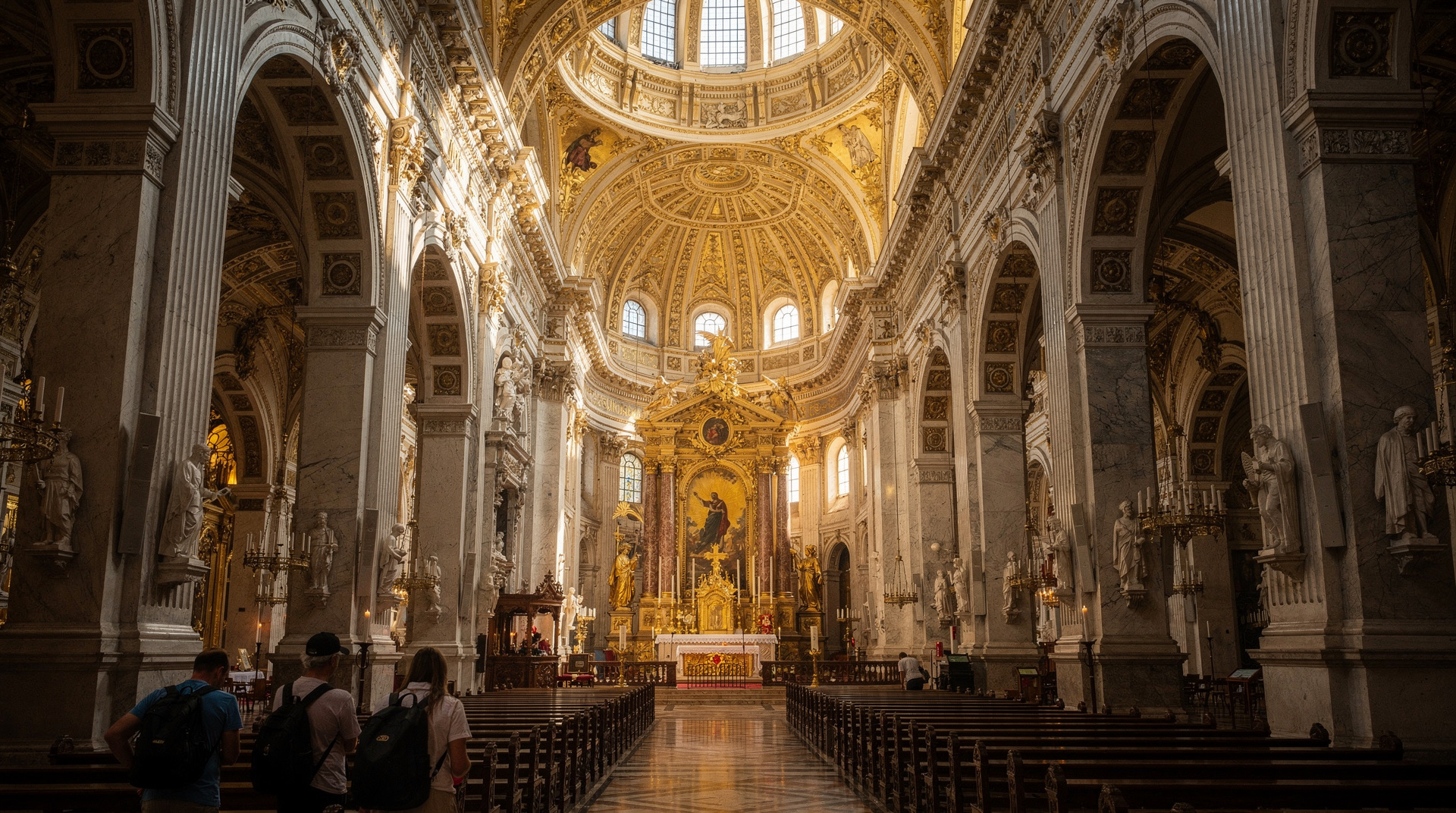
The Basilica of St Stephen (Szent István Bazilika) in Downtown Pest is the largest church in Budapest, built 1851–1905 in neoclassical style. The dome is 96 metres high — equal to Parliament, by deliberate design, symbolising the equivalence of church and state.
Inside, the most-visited object is the mummified right hand of King Stephen I (the Holy Right, or Szent Jobb), Hungary’s most important religious relic. The panorama terrace on the dome (accessible by lift plus stairs) offers excellent views over central Pest and the Danube.
Entry to the church is free; the panorama costs approximately 1 500–2 500 HUF. Evening organ concerts in the Basilica are an atmospheric option — the acoustic is extraordinary. The square in front of the Basilica (Erzsébet tér side) hosts a popular Christmas market from late November to January 1.
The St Stephen’s Basilica guide has full entry information, concert schedules and practical tips.
The Great Synagogue and Jewish Quarter
The Dohány Street Synagogue (Dohány utcai zsinagóga) is the largest synagogue in Europe outside New York — built 1854–1859 in Moorish Revival style, seating 3 000 worshippers. The adjacent Hungarian Jewish Museum, memorial garden and the 1944 ghetto wall make this a significant historical site as well as an architectural landmark.
Entry: approximately 4 000–6 000 HUF; guided tours available in English. The Jewish Quarter surrounding the Synagogue (District VII) is worth exploring beyond the religious site — its streets of Art Nouveau apartment buildings, ruin bars and food market are among Budapest’s most interesting.
Andrássy út, Heroes’ Square and City Park
Andrássy út, running from central Pest to Heroes’ Square, is one of Europe’s great boulevards — the underground M1 metro (the first underground railway in continental Europe, 1896) runs below it, and the Hungarian State Opera House sits at its midpoint.
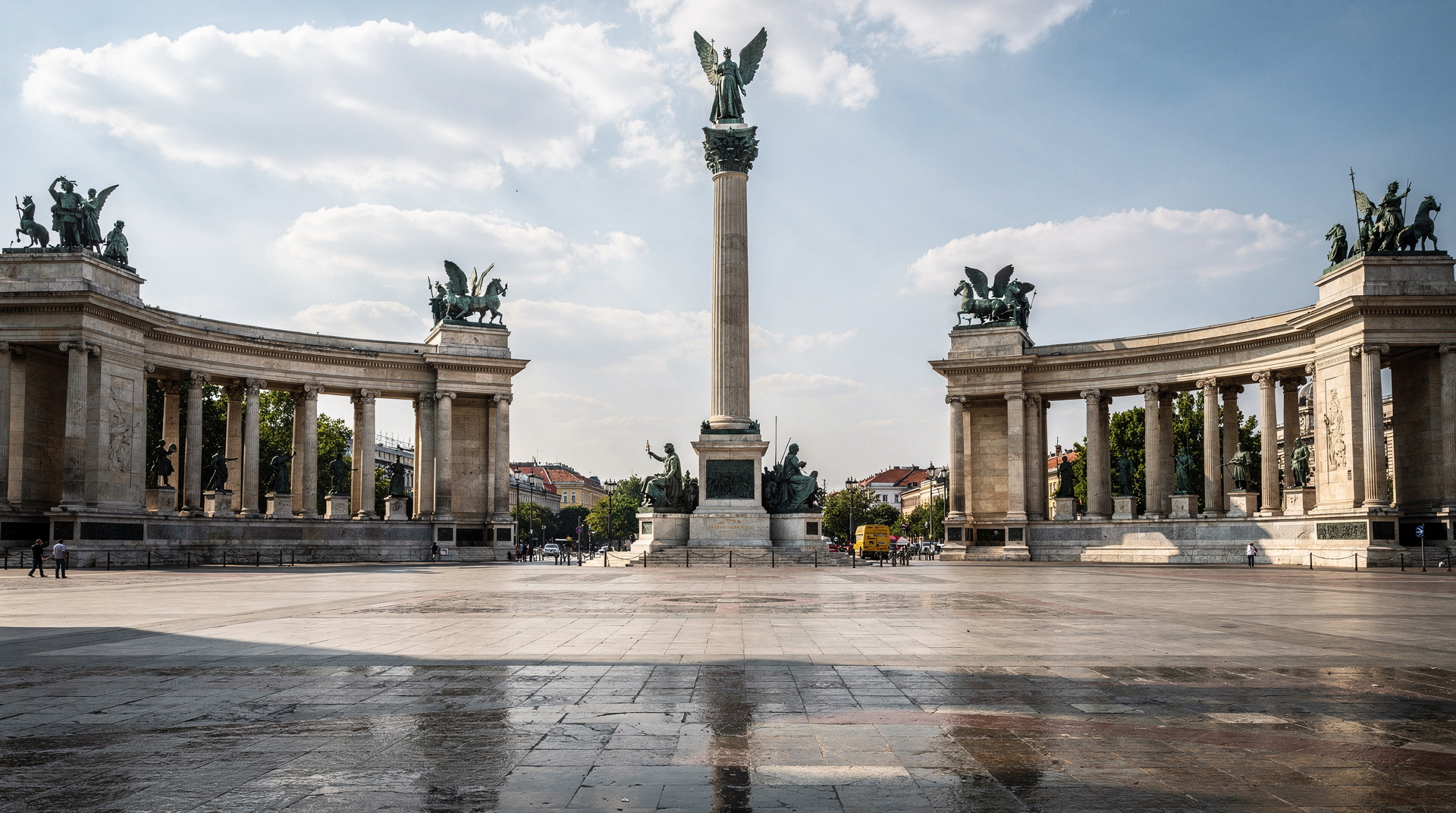
Heroes’ Square (Hősök tere) at the top of Andrássy út has the Millennium Monument — 36-metre column topped with the Archangel Gabriel, with the seven Magyar chieftains and a colonnade of Hungarian kings. It is grand, photogenic and free.
City Park (Városliget) behind Heroes’ Square contains Vajdahunyad Castle (a theatrical assemblage of architectural styles built for the 1896 Millennium Exhibition), the Széchenyi thermal baths, Budapest Zoo, the Circus, a boating lake in summer and an ice rink in winter.
The Heroes’ Square and City Park guide covers the area in detail. The highlights tour including Heroes’ Square, City Park and the baths is a convenient way to cover this district without detailed planning.
Gellért Hill and the Citadella
Gellért Hill (Gellért-hegy) rises 235 metres above the Danube on the Buda bank, topped by the 19th-century Citadella fortress and the Liberty Statue (Szabadság szobor) — visible from most of the city. The climb takes 20–30 minutes from the Gellért bath entrance; the views at the top encompass both Buda and Pest, Parliament, Chain Bridge and the Danube bends.
At the base of Gellért Hill, the Gellért thermal baths are housed in a Secessionist building of genuine architectural beauty. Check current opening status before visiting (as of mid-2026, a possible renovation closure had been reported but not confirmed).
The Gellért Hill guide has the walking route, viewpoint locations and the Gellért bath situation.
The Danube and its bridges
The Danube through Budapest is a UNESCO World Heritage Site in its own right. Chain Bridge (Széchenyi Lánchíd), the first permanent bridge between Buda and Pest, was rebuilt after wartime destruction and remains the city’s most iconic structure. Walking across it is free and one of the best ways to transition between the two sides.
The Shoes on the Danube Bank memorial — 60 pairs of iron shoes on the promenade where Jews were shot into the Danube in 1944–1945 — is one of Budapest’s most moving commemorative sites. It requires no entry fee and takes 15 minutes to visit respectfully. The Shoes on the Danube guide has the full historical context, which is worth reading before you visit rather than after — it changes how the memorial reads.
The two other Danube bridges worth noticing on foot are Elizabeth Bridge (Erzsébet híd), the sleek white suspension bridge rebuilt in the 1960s after wartime destruction, and Liberty Bridge (Szabadság híd), a green Art Nouveau steel structure near Gellért Hill that locals use as an informal riverside hangout spot in summer, with people sitting directly on the bridge’s lower steel structure.
A Danube cruise at sunset or in the evening, when Parliament is illuminated, is the single most spectacular way to appreciate Budapest’s architectural panorama. The Chain Bridge guide covers both the bridge’s history and the riverside walk.
Hop-On Hop-Off: when it makes sense
The Hop-On Hop-Off bus covers both Buda and Pest with commentary and covers most major sights in a single circuit. It makes most sense for visitors with limited mobility, those who arrive late and want a quick overview, or anyone who wants to see Buda Castle without negotiating the funicular or a steep walk.
For physically active visitors who are happy with public transport (very easy in Budapest — buy a 24h or 72h travelcard for 2 750 HUF for 24h or 5 750 HUF for 72h), the HoHo bus adds little. The tram along the Pest bank of the Danube (line 2) gives views comparable to a cruise and costs one transit ticket (500 HUF if bought in advance).
If you’re weighing the Hop-On Hop-Off against paying separately for each site, the Budapest Card worth it guide breaks down whether a bundled pass or individual tickets works out cheaper for your itinerary.
Underrated sights beyond the checklist
Once the headline sights are covered, a few less-obvious places reward the extra effort. Memento Park, about 20 minutes southwest of the centre by combination of tram and bus, gathers the communist-era statues removed from Budapest’s streets after 1989 — Lenin, Marx, Engels and the enormous Stalin’s Boots monument (a replica; the original was torn down in 1956). It’s odd, atmospheric, and gives real context to Hungary’s 20th-century history that the postcard sights don’t. The Memento Park guide and the wider communist Budapest guide cover this history in depth.
The Cave System under Castle Hill, largely missed by visitors focused on the surface sights, is a network of natural caves later expanded for wartime use — genuinely atmospheric and rarely crowded even in high season. Pair it with the Castle District walking tour above for a fuller picture of Buda’s underground history.
If you’re travelling with children, not every top sight lands equally well — check the family-friendly attractions guide before committing a full day to Parliament interior queues with younger kids in tow.
Building your Budapest sightseeing itinerary
| Day | Focus | Key sights |
|---|---|---|
| Day 1 — Buda | Castle District | Fisherman’s Bastion, Matthias Church, funicular, Chain Bridge, riverside walk |
| Day 2 — Central Pest | Parliament & Jewish Quarter | Parliament (book ahead), St Stephen’s Basilica, Great Market Hall, Dohány Synagogue, ruin bars |
| Day 3 — Andrássy út | Boulevard & baths | Heroes’ Square, City Park, Széchenyi or another bath, Opera House |
| Day 4 (optional) | Extras | Gellért Hill, Danube cruise, Memento Park, or Szentendre day trip |
Day 1 — Buda: Castle District, Fisherman’s Bastion, Matthias Church, funicular back down, Chain Bridge on foot, riverside walk.
Day 2 — Central Pest: Parliament (book in advance), St Stephen’s Basilica, Great Market Hall, Jewish Quarter, Dohány Street Synagogue, ruin bars in the evening.
Day 3 — Andrássy út and baths: Heroes’ Square, City Park, Széchenyi or another thermal bath (half-day), Opera House exterior, Andrássy út back to centre.
Day 4 (if available): Gellért Hill, Danube cruise, Memento Park (communist statues, 20 min southwest), or a day trip to Szentendre.
The 3-day Budapest overview has a more detailed version of this planning. For transport between sights, getting around Budapest covers metro, tram and bus options. The Budapest travel guide has the full planning framework.
Frequently asked questions about Top attractions in Budapest
How many days do I need to see Budapest's top sights?
Three full days covers the main sights comfortably: Castle District and Fisherman's Bastion on day one; Parliament, Great Market Hall and the Jewish Quarter on day two; a thermal bath and Andrássy út (Heroes' Square, Opera) on day three. A fourth day works well for a Danube cruise, City Park or a day trip to Szentendre.What is the best free thing to do in Budapest?
Walking across Chain Bridge, climbing Gellért Hill for the panorama, watching the Parliament from the Pest side of the Danube, exploring the ruin bars in the Jewish Quarter without a guided tour, and wandering through Heroes' Square and the City Park are all free (or negligible cost). The exterior of Fisherman's Bastion is free; the towers charge a small entry fee.Which Budapest attractions require advance booking?
Parliament interior tours need advance booking, especially in summer — queues for walk-in tickets can be very long. Széchenyi and Gellért baths are worth pre-booking at peak times. Matthias Church entry and St Stephen's Basilica tower access can be bought at the door, but GYG tickets let you skip the queue. Ruin bars need no booking for individual visitors.What is the best view in Budapest?
The classic Budapest panorama is from Fisherman's Bastion on Castle Hill, looking across the Danube at Parliament in the morning light. The Citadella on Gellért Hill gives a higher, wider view over both Buda and Pest. For an unusual angle, the Parliament tour gives you a close-up of the building's interior grandeur. Night views from any of these points are extraordinary.Is the Hop-On Hop-Off bus worth it in Budapest?
The Hop-On Hop-Off is most useful for visitors who want an overview without detailed planning — it covers both Buda and Pest, stops at all major sights, and includes commentary. For energetic travellers, public transport (metro, tram) combined with walking is cheaper and more flexible. The combo ticket that includes a Danube cruise adds genuine value.What are the top Budapest tourist traps to avoid?
The Váci utca restaurants overcharge heavily — walk one street back (Váci mögött, the parallel Váci utca) for dramatically better prices. Currency exchange booths at tourist sights have terrible rates — use a bank ATM (not Euronet). Buying thermal bath tickets from street resellers adds cost without benefit. Unlicensed taxis at Keleti station: always use the Bolt app.What Budapest attraction is most underrated?
The New York Café on Erzsébet körút is spectacular Art Nouveau architecture and worth seeing even if you only have a coffee (expensive, but justified once). Memento Park, 20 minutes southwest of the centre, contains the communist-era statues removed from Budapest's streets after 1989 — peculiar, atmospheric and historically fascinating. The Cave System under Castle Hill is largely missed by visitors.
Top experiences
Bookable activities with verified prices and instant confirmation on GetYourGuide.