Puszta horse show day trip from Budapest: csikós, Hortobágy, and the Great Plain
What is the Puszta horse show day trip from Budapest?
A guided full-day excursion to the Hungarian Great Plain (Puszta) where traditional csikós horsemen perform riding feats that have been part of Hungarian culture for centuries. Tours typically include transport from Budapest (1.5–2 hours each way), the horse show, a traditional Hungarian lunch, and time to experience the flat steppe landscape.
The Hungarian steppe: a landscape like nowhere else in Europe
Hungary divides into two utterly different landscapes. West of Budapest: the Transdanubian hills, the Bakony forest, the Balaton shoreline. East of Budapest: the Great Plain (Alföld), a vast, flat steppe that stretches to the Romanian and Ukrainian borders. This is the Puszta — a word that describes not just the landscape but the culture that evolved within it.
| Where | Hortobágy National Park, about 175 km east of Budapest |
| Cost | around 20,000–30,000 HUF per person for a guided full-day tour |
| Time needed | full day, roughly 9–10 hours including transport |
| Getting there | tour coach from Budapest; independent transit is impractical |
| Best time | April–October; October also brings the crane migration |
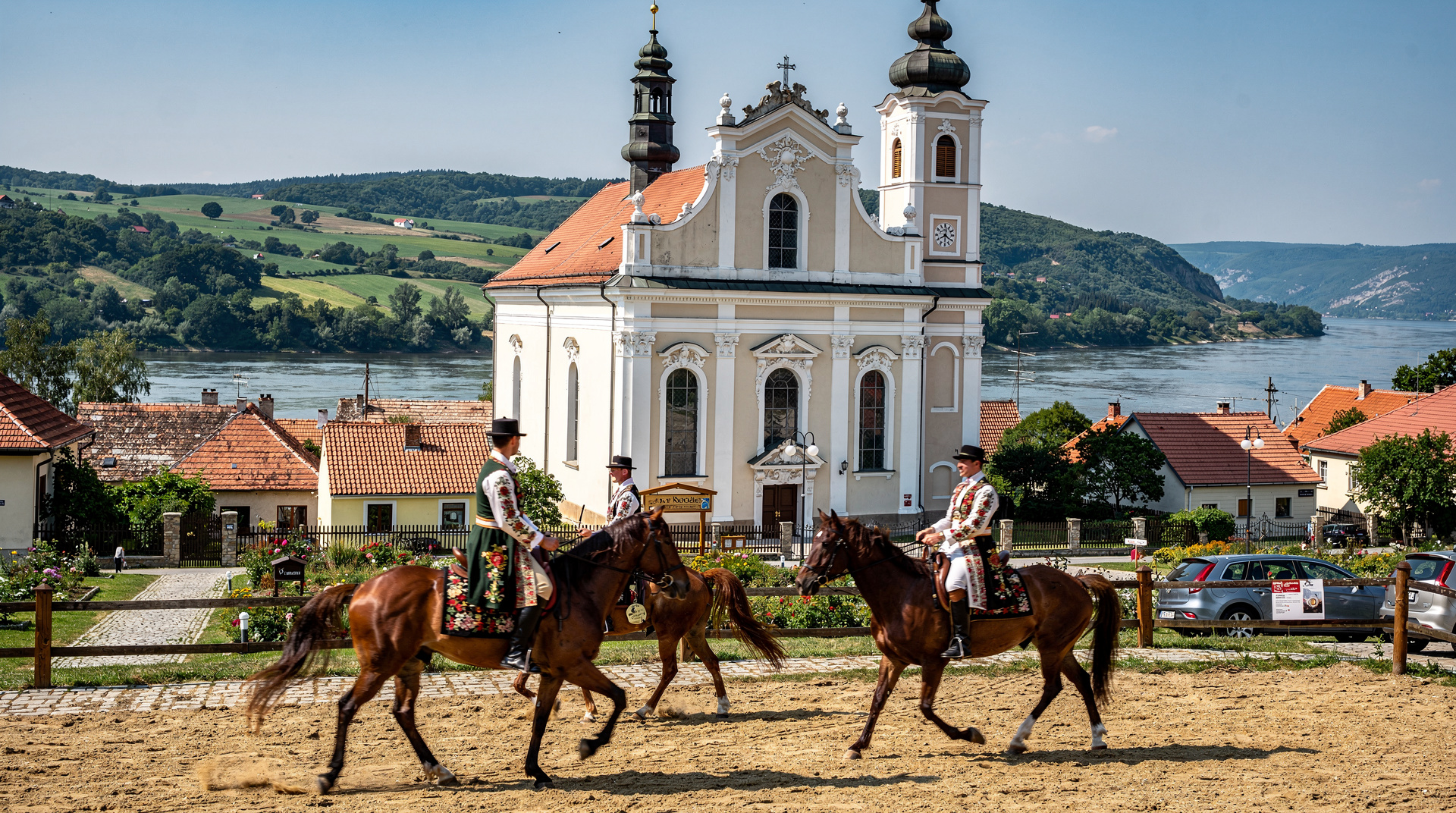
For a thousand years, Hungarian herdsmen (gulyás, csikós, juhász — cattle, horse, and sheep herders respectively) worked these plains on horseback. The horse became central to Hungarian self-understanding — the csikós, the horseman of the Puszta, occupies a role in Hungarian mythology similar to the cowboy in American culture. The skills they developed — riding standing on the backs of five horses simultaneously, precision lasso work, whip-cracking that can extinguish a candle flame at 5 metres — are kept alive today both as living craft and as performance.
The day trip to the Puszta is the most culturally distinctive excursion from Budapest — nothing else on the list is quite like it.
How to do the Puszta day trip
There is essentially one practical way to visit the horse shows from Budapest: a guided tour.
The Hortobágy National Park — Hungary’s largest national park and a UNESCO World Heritage Site — is about 175 km from Budapest. The ranch facilities that host horse shows are not on public transport routes that make same-day return feasible. Tours depart early morning, drive to the ranch, include the full program, and return by evening.
The standard program includes:
- Morning drive from Budapest (1.5–2 hours)
- Welcome with pálinka and local snacks at the ranch
- Horse show (demonstrations of csikós riding feats, carriage driving, whip cracking): typically 60–90 minutes
- Traditional Hungarian lunch at the ranch — gulyás, roast pork, bread, local wine
- Afternoon time to explore the landscape, watch grazing horses and cattle, or take a carriage ride
- Return journey to Budapest
What you’ll see: the csikós performance
The horse show typically includes:
Five-in-hand riding (Csikós ötös): The most iconic Puszta spectacle — a rider standing on the backs of two horses while driving three more in front, controlling all five through reins alone. It requires years of training and total trust between horse and rider. At full gallop, it’s visually astonishing.
Carriage driving demonstrations: Hungarian carriage horses are driven with a distinctive harness and style — rapid course changes, tight manoeuvring, controlled stops at speed. Traditional painted wooden carriages are used.
Whip cracking: The csikós whip (ostor) is a long braided leather whip historically used to guide cattle. Demonstrations include cracking the whip to extinguish candles at distance and complex rhythmic patterns. The sound carries across the flat plain — startlingly loud.
Lasso and rope tricks: Lasso demonstration on foot and horseback.
Parade of traditional breeds: Hungarian breeds including the Nonius and the lighter Lipizzaner are typically shown. The Mangalica pig (a curly-haired Hungarian breed) and grey Hungarian cattle (szürke marha) may also be visible grazing nearby.
How to get the most out of the show
A horse show is easy to watch passively and much more rewarding when you know what to look for. Pay attention to the horses rather than only the riders: the way they respond to a voice, a shift of weight or a whistle is the real story of the csikós tradition. These animals are not decoration; they are working partners, and the calm of the Hungarian breeds in the middle of cracking whips and thundering hooves says a lot about how they are raised.
If you want photographs, think about where you stand before the performance begins. The riders cover a lot of open ground, so a spot with a clear view along the length of the arena usually serves you better than one pressed against the rail. Bring a lens or phone setting that copes with movement and dust, and put the camera down for at least one of the big set pieces. The sound of the whip carrying across the plain and the rhythm of the gallop do not translate to a screen.
Many visitors are surprised by how much conversation happens around the show. Guides and hosts often explain the history of each skill, and the riders themselves are usually happy to let you meet the horses afterwards. Ask questions. Asking how a young horse is trained, or what a csikós’s working day looked like a century ago, tends to turn a tourist performance into something closer to a cultural exchange.
Setting expectations honestly
The Puszta day trip is a long, structured day, and it suits some travellers more than others. You will spend a good share of it on a coach, you will move at the pace of a group, and the programme follows a schedule that has been refined over many seasons. That is not a flaw, but it does mean the day is closer to a guided cultural visit than to a spontaneous ride across the steppe.
What you gain in exchange is access. Without a guide, the ranches, the horse handlers and the best viewpoints on the plain are very hard to reach, as the best day trips from Budapest guide also explains when it compares the options. If what you are after is an unhurried, self-directed day, a town such as Eger or a lakeside stop at Lake Balaton will give you more freedom to wander.
Weather deserves a mention too. The steppe is exposed, so a bright day feels brighter and a windy day feels windier than it would in the city. None of this spoils the experience, but dressing sensibly and carrying water makes the long open-air stretches far more comfortable.
The Hortobágy landscape
Beyond the show, the Hortobágy National Park is worth experiencing in its own right. This is one of Europe’s largest intact grassland ecosystems — the steppe has not been significantly altered by agriculture and retains the character of the pre-modern Hungarian Great Plain.
Nine-Arch Bridge (Kilenclyukú híd): The longest stone bridge in Hungary (167 metres), crossing the Hortobágy River. Built in 1833. Atmospheric and photogenic in the flat landscape.
Csárda (roadside inn): Traditional roadside taverns have existed on the Puszta since the 16th century — stopping points for herdsmen and travellers on the open steppe. The csárda is the traditional setting for lunch: long wooden tables, gulyás in a cast-iron pot, local wine. Most tours include lunch at a csárda-style venue.
Bird watching: Hortobágy is one of Europe’s most important bird migration routes. Red-footed falcons, great bustards (Europe’s heaviest flying bird), and vast flocks of cranes (up to 160,000 during autumn migration in October) all pass through or reside here.
What to eat
Lunch at the ranch or csárda typically includes:
Gulyás: The authentic version — a dense beef and paprika soup with potatoes and csipetke (small egg-dough pasta pinched by hand) — is the default first course.
Roast pork or chicken with Hungarian sides: Sliced roast meat with fresh bread and pickled vegetables is the standard main.
Lángos or stuffed pancakes (palacsinta) as a dessert option.
Local wine and pálinka: The welcome shot of pálinka (Hungarian fruit brandy — typically plum or apricot) is non-negotiable at any self-respecting Puszta lunch.
Choosing between operators and ranch options
Not all Puszta day trips visit the same ranch or run the same programme, so it’s worth checking a few details before booking. Some tours combine the horse show with a shorter overall itinerary (closer ranches, less time on the coach); others go the full distance to Hortobágy itself for the UNESCO landscape and the National Park. If bird migration or the Nine-Arch Bridge matters to you specifically, confirm the itinerary includes Hortobágy proper rather than a closer alternative ranch. Group size also varies — smaller tours give more time near the horses and a more relaxed lunch, while larger coach tours are usually cheaper per person.
Full-day Hortobágy Puszta and horse show tourWho this day trip suits best
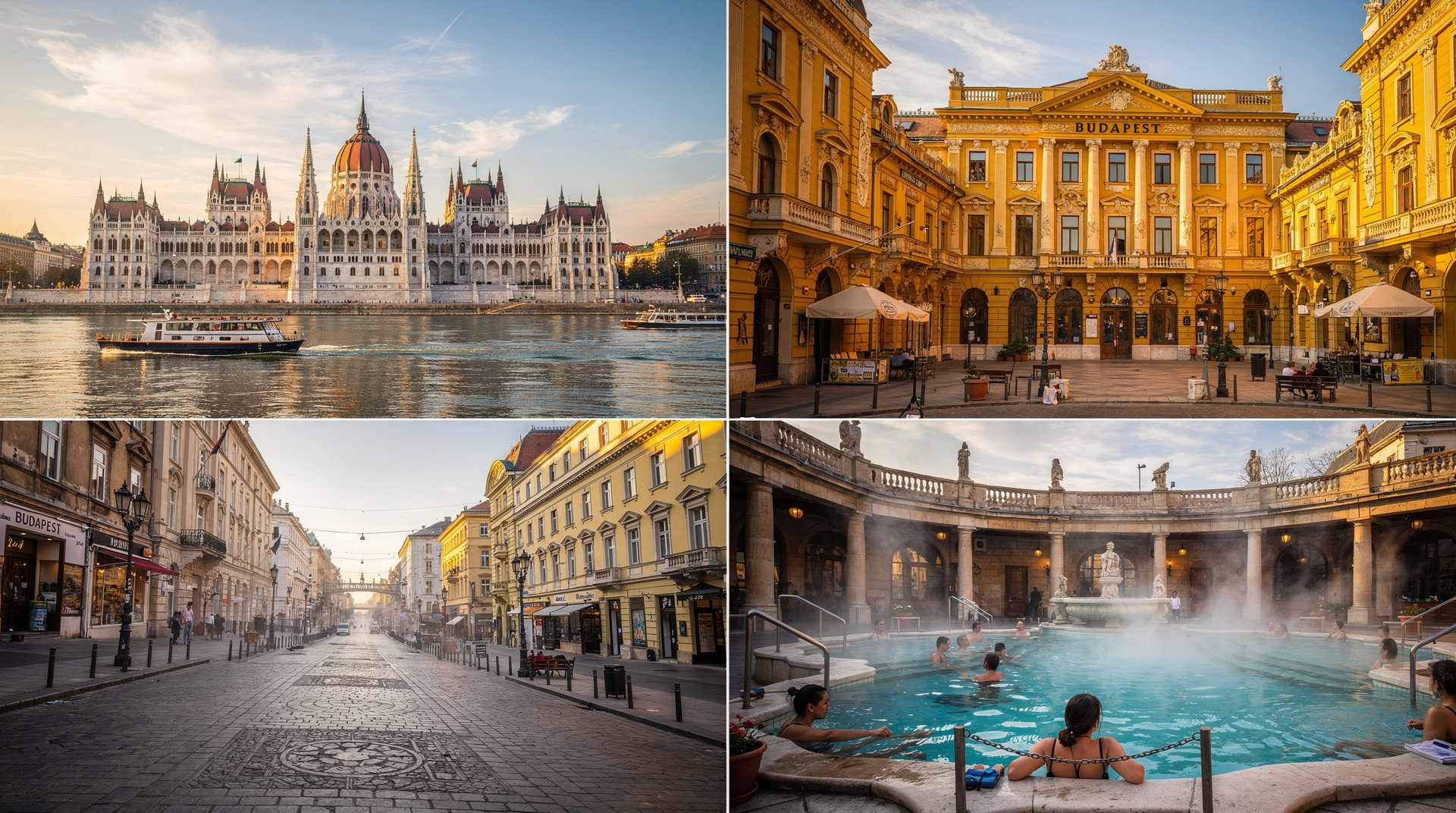
Couples and friends who want a break from baths, bars and museums tend to enjoy it most. After a few days in the city, the quiet and scale of the plain feels like a reset, and it pairs well with an evening of thermal bath relaxation once you are back, which soothes the stiff legs that a long coach day can leave behind.
Families often find it one of the easiest days out, because the animals and the open space keep children engaged. If you are travelling with younger ones, the Budapest with kids guide has more ideas for balancing big excursion days with calmer ones.
Photographers and nature lovers will appreciate the light and the sky over the steppe. The flat horizon makes sunrises, sunsets and weather fronts unusually dramatic, and the birdlife adds another reason to bring binoculars.
Food-minded travellers get a proper introduction to the rustic side of Hungarian cooking. If the lunch whets your appetite, the traditional Hungarian dishes guide explains what to try next back in the city, and the palinka guide covers the brandy you were welcomed with.
Planning the day around the rest of your trip
Because the excursion takes a whole day, it helps to place it deliberately. Many visitors schedule it for a morning when they have nothing fixed in the evening, so a late return does not cost them a dinner reservation or a show. A gentler day before it is wise, since the start is early and the day is long. If you are still deciding how many days to spend in the capital, the how many days in Budapest guide and the Budapest 3 days overview show where a full-day excursion fits without crowding out the main sights.
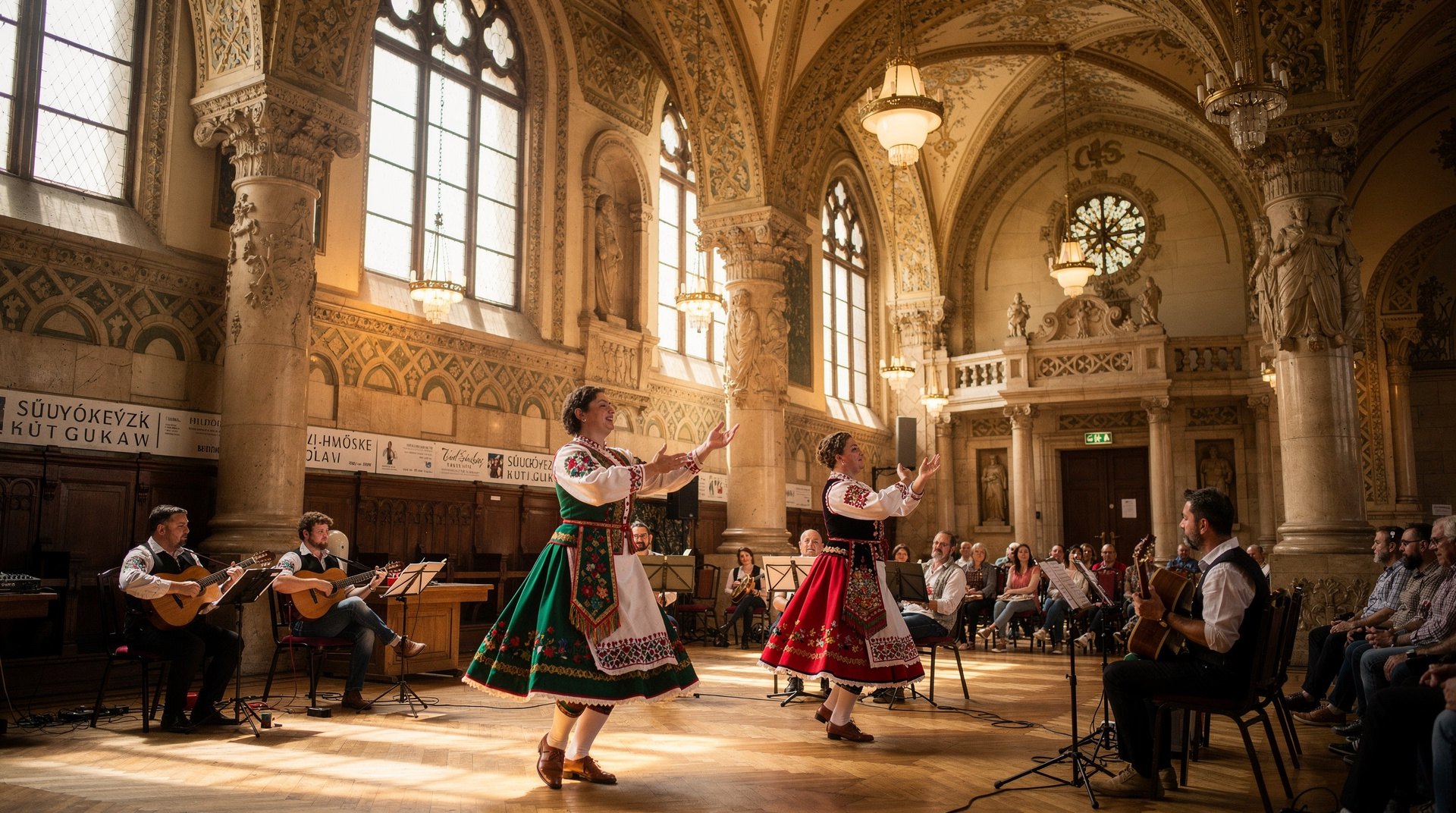
If the horse show sounds appealing but a full day away does not, a shorter taste of Hungarian folk culture is possible in the city itself. The folklore shows guide covers evening performances of music and dance that give a flavour of the same heritage, though they cannot reproduce the open landscape or the riding. For planning your wider stay, the first time in Budapest guide is a good companion.
Small things that make the day easier
Pack light but sensibly. A small bag with water, sun protection, a layer for the wind and a charged phone is usually all you need, and leaving bulky items on the coach keeps your hands free at the arena. Keep some cash or a card handy for small purchases at the ranch, such as a drink or a keepsake, without assuming anything about prices in advance.
Arrive at the meeting point a little early. Coach departures run to a schedule, and a calm start sets the tone for the rest of the day. On the ride out, it is worth watching the landscape change: the hills and suburbs of Budapest give way gradually to farmland and then to the endless horizon of the plain, and that slow transition is part of what makes the destination feel far away.
Finally, go with an open mind. The Puszta rewards patience, and some of its best moments are not on the programme: a herd moving slowly across the grass, the smell of woodsmoke near the csárda, a rider quietly settling a horse after the show. Give yourself time to notice them, and the day will stay with you longer than most city sightseeing does.
Combining the Puszta with other regions
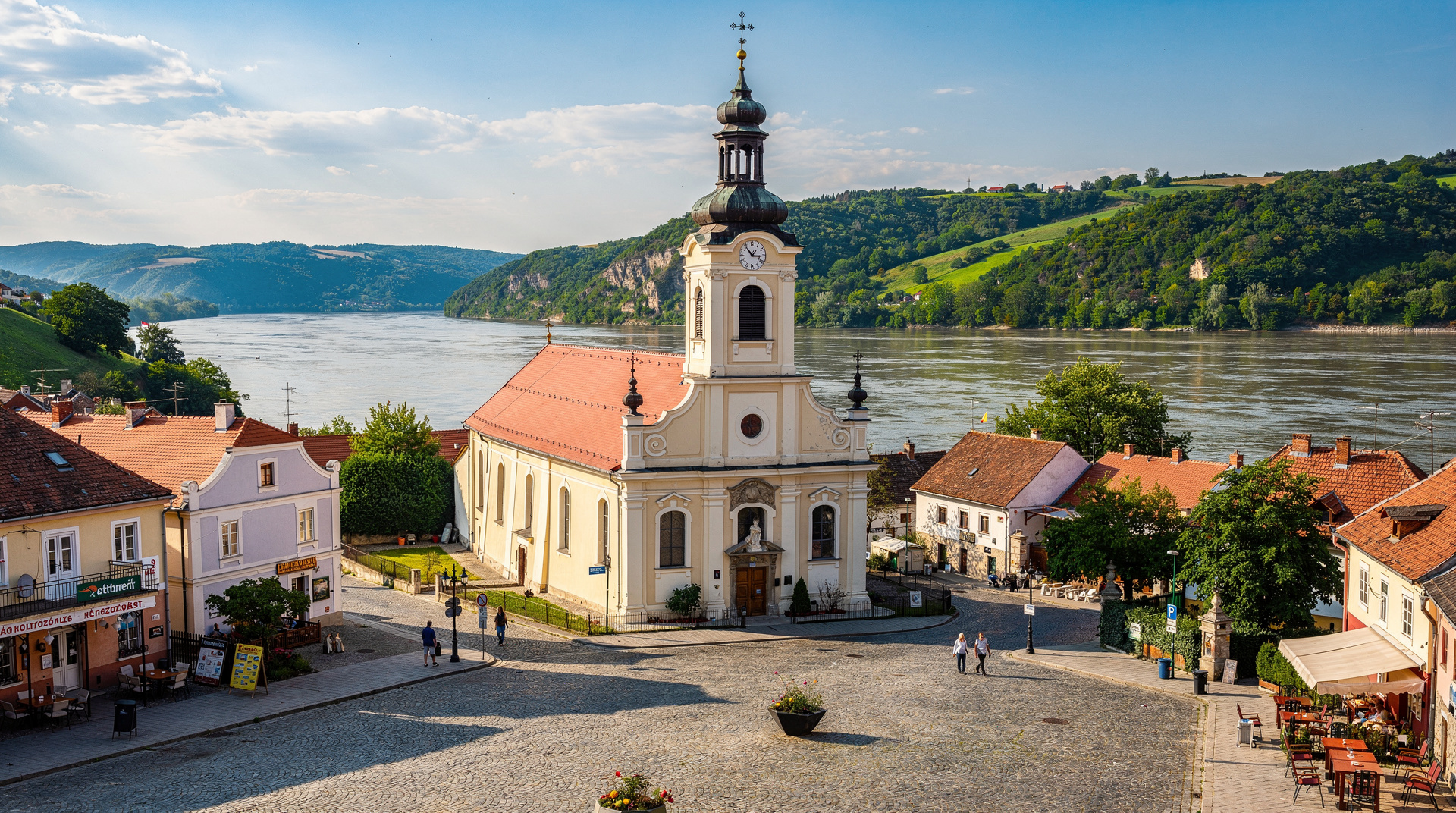
Because the Puszta day trip covers so much driving time, it’s rarely combined with another day trip on the same day — unlike Szentendre or the Danube Bend, which sit close enough to Budapest to pair with a second stop. Most visitors treat it as a standalone day within a longer Budapest stay. If you’re planning several day trips, the best day trips from Budapest guide helps sequence them so you’re not doing two long coach days back to back.
Practical details
| Details | |
|---|---|
| Distance from Budapest | 175 km east (Hortobágy); some ranches closer |
| Transport | Tour bus only (practical option) |
| Time needed | Full day (9–10 hours with transport) |
| Best season | April–October; October for crane migration; avoid heavy rain |
| What’s included | Transport, horse show, lunch typically included in tour |
For context on Hungarian cultural experiences: folklore shows in Budapest. Full day trip overview: best day trips from Budapest. The Hortobágy Puszta destination page has additional practical information. For a full week itinerary including the Puszta: Budapest and day trips 7-day itinerary.
Frequently asked questions about Puszta horse show day trip from Budapest
Is the Puszta horse show authentic or a tourist performance?
Both. The csikós equestrian tradition is genuinely ancient — Hungarian herdsmen on the Great Plain developed exceptional horsemanship over centuries. The shows performed for visitors are real skills (five-in-hand riding, trick riding, whip cracking), performed by riders who have grown up with these horses. The setting is also real — the UNESCO-listed Hortobágy National Park is not constructed for tourism.Can I get to the Puszta independently without a tour?
Technically yes — trains run from Budapest Keleti to Debrecen (1.5 hours), then local buses to Hortobágy. But the bus connections are infrequent, the distances from bus stops to ranch venues can be large, and the horse show schedules are designed around group visits. A guided tour is by far the practical choice.How long is the journey from Budapest to the Puszta?
Approximately 1.5–2 hours by car or tour bus, depending on traffic and exact destination. The Hortobágy region (the most famous Puszta area) is about 175 km east of Budapest. Some tours visit ranches closer to the city for a shorter journey.What should I wear to the Puszta horse show?
Comfortable clothes for outdoor activity. The Puszta is dusty in dry weather and can be muddy in wet weather. Flat shoes or light boots are better than sandals. Sun protection is essential — the flat landscape offers no shade. In spring or autumn, bring a layer as the steppe is exposed and wind is constant.Is the Puszta horse show suitable for children?
Yes, and it's often a highlight for families — the animals, the open space, and the physical spectacle of the riding tend to hold children's attention better than a museum day would. The main practical concern is the long return coach journey (1.5–2 hours each way), so plan for younger children to nap or bring activities for the drive.How does the Puszta day trip compare to Lake Balaton or Szentendre?
They're different kinds of day trips. Szentendre is a compact, walkable artists' town reachable by suburban rail in under an hour; Lake Balaton is a lakeside resort area for swimming and views; the Puszta is a full-day cultural and landscape experience with no walkable town centre. If you only have time for one day trip and want something distinct from typical European sightseeing, the Puszta is the most unusual choice of the three.
Top experiences
Bookable activities with verified prices and instant confirmation on GetYourGuide.