First time in Budapest: what to know before you go

What should I know before visiting Budapest for the first time?
Hungary uses HUF (not euros). Use Bolt for taxis — never take unlicensed cabs at Keleti station or the airport. Book thermal bath tickets online to avoid queues. Download BudapestGO for the metro. Three days is the right trip length. The ruin bars in District VII are unmissable in the evening.
Arriving with the right expectations
Budapest is a city that rewards both the over-prepared and the spontaneous traveller, but it helps to arrive with a few specific facts straight. Several of the most common first-timer problems are entirely preventable with 10 minutes of reading before you land. This guide handles those specifics.
The bigger context — how many days to spend, when to visit, itinerary planning — is at Budapest travel guide 2026 and how many days in Budapest.
| Currency | Hungarian forint (HUF) — pay in HUF, never euros |
| Getting around | BudapestGO app + a 72-hour BKK travelcard, 5,750 HUF |
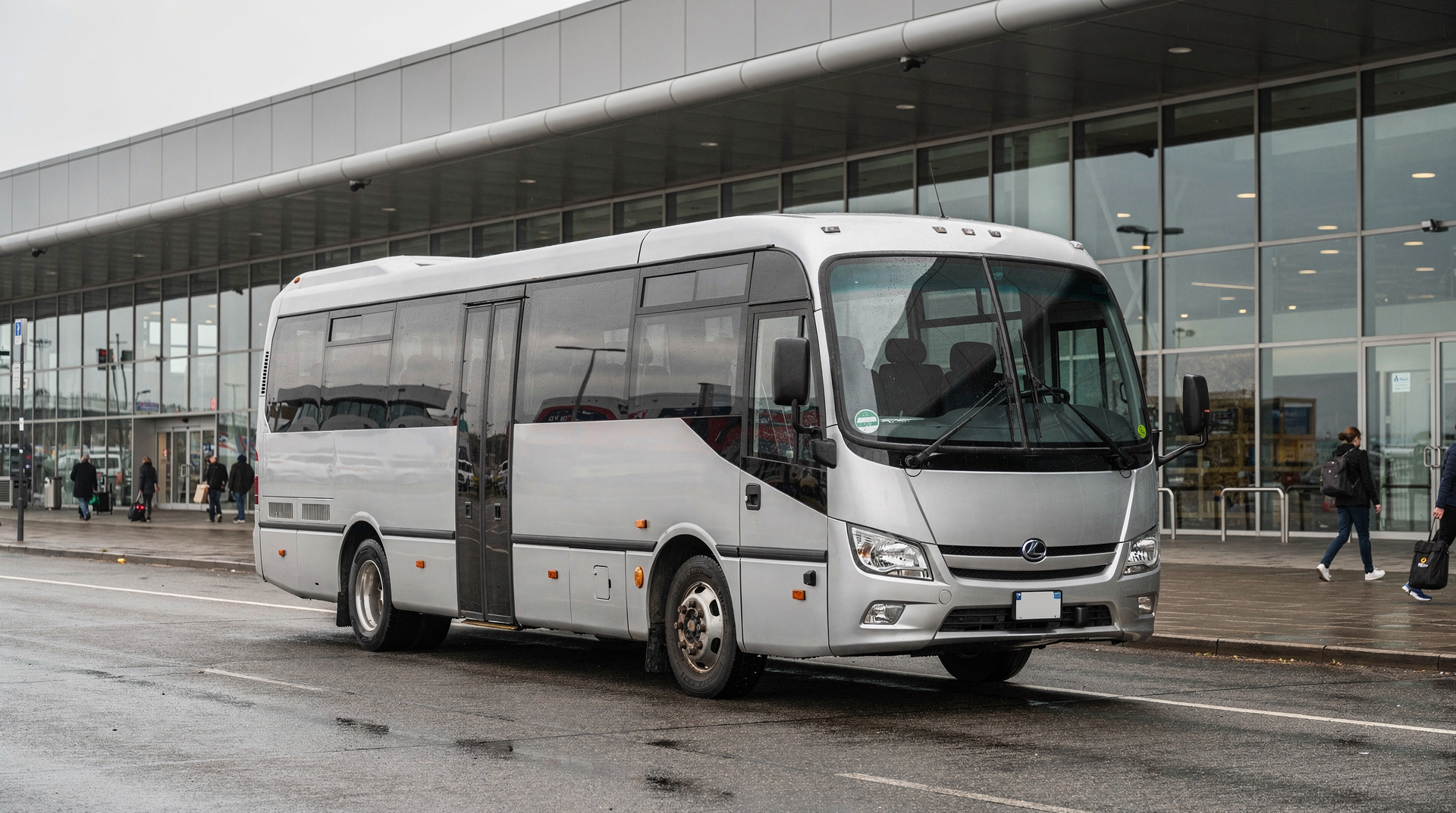
| From the airport | Bus 100E (2,500 HUF) or Bolt — never a street taxi |
| Trip length | Three days covers the essentials comfortably |
| Book ahead | Thermal bath tickets and the Parliament interior tour, especially in summer |
The Budapest Card bundles unlimited public transport with museum and bath discounts — worth comparing against paying separately if you plan a packed few days.
Before you land: the app checklist
Download these before flying:
BudapestGO: The official BKK public transport app. Shows real-time departures, journey planning, and digital ticket purchase. Essential for navigating the metro, trams and buses.
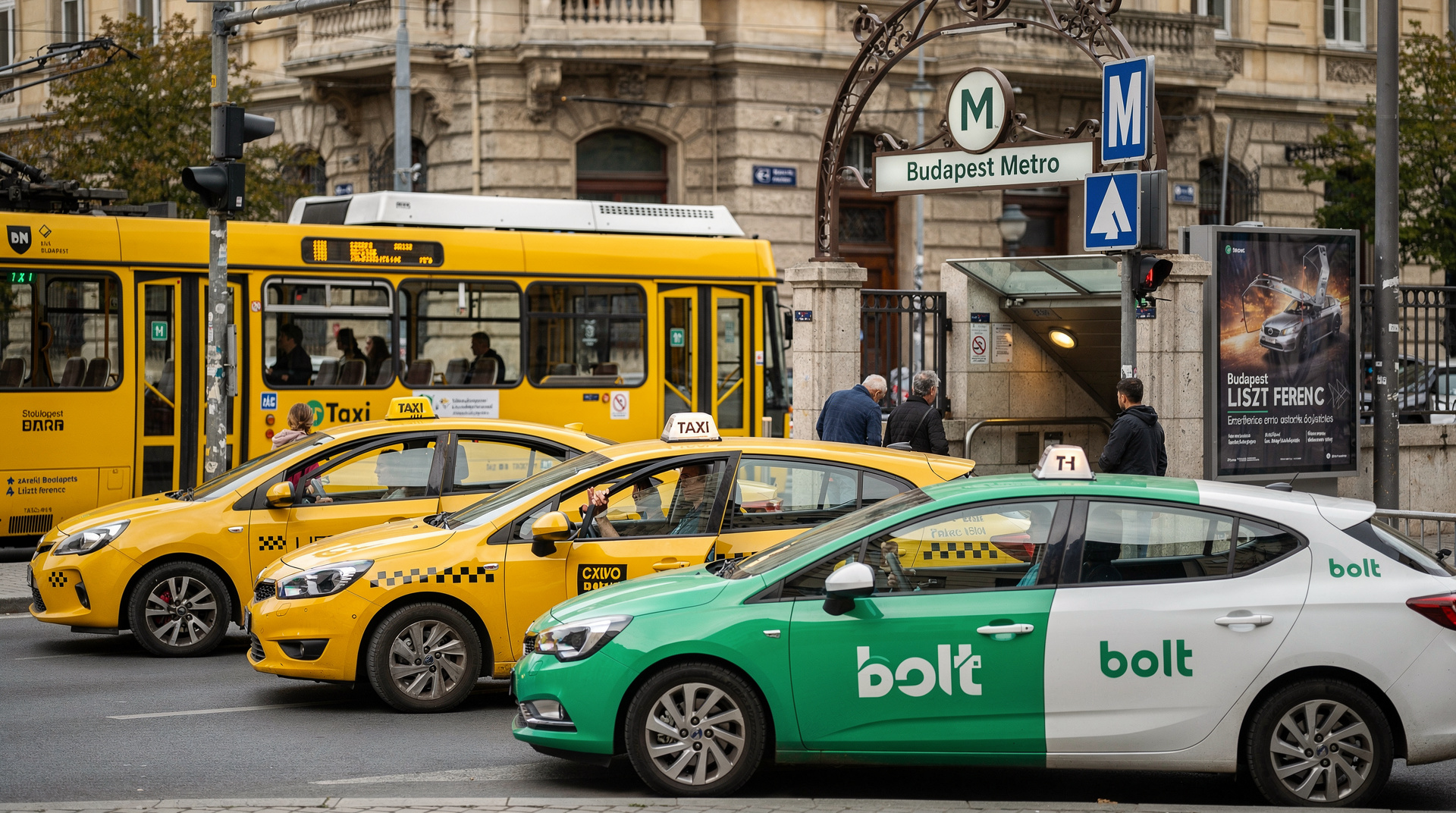
Bolt: The ride-hailing app that has replaced unlicensed taxis as the safe way to travel by car in Budapest. Register with a phone number and payment card before arrival. The registration SMS may not work if you land without local data roaming.
Google Translate: Hungarian is not an Indo-European language; it looks nothing like Spanish or German. Google Translate’s camera feature handles menus and signs without internet if you download the Hungarian language pack offline.
Google Maps: Works well for Budapest navigation; up to date with BKK timetables. Download the Budapest offline map for use without data.
At BUD airport: the first decisions
The arrivals hall of Budapest Liszt Ferenc Airport (Terminal 2A/2B) is compact and efficient. Two decisions to make immediately:
How to get to the city: Bus 100E (2,500 HUF, 35–40 minutes to Deák tér) is cheapest. Bolt is the best balance of convenience and price. Never accept a ride from anyone who approaches you inside the terminal — this is the unlicensed taxi scam. The full comparison of every airport transfer option is at Budapest airport to city centre.
Cash: Hungary uses HUF. There is an OTP ATM in the arrivals hall — withdraw 20,000–50,000 HUF as starting cash for transport, the first meal and small vendors. The exchange bureaux in the arrivals hall offer poor rates; use the ATM instead.
Money: the most common first-timer confusion
Budapest operates on HUF (Hungarian forint). Hungary is not in the eurozone. There is no confirmed euro adoption date. The approximate rate as of mid-2026 is around 390–410 HUF per euro; use the currency converter for current rates.
Pay in HUF, not euros: Many restaurants and shops accept euros or offer to “help” you by charging in euros. The conversion rate embedded in these transactions is always unfavourable — typically 10–15% worse than the interbank rate. When paying by card and the terminal asks whether you want to pay in HUF or your home currency, always choose HUF.
ATMs: Use bank-branded machines (OTP Bank — Hungary’s largest domestic bank — Raiffeisen, K&H, UniCredit). Avoid Euronet machines (orange/white branding) which charge a service fee of 3–5% on top of your bank’s charges. The city centre has plenty of legitimate ATMs.
Tipping: 10% is customary and expected in restaurants, cafés and taxis. Round up or add 10% — leaving nothing reads as a complaint. Some restaurants add a service charge automatically; check the bill before adding a tip.
Transport: the essentials
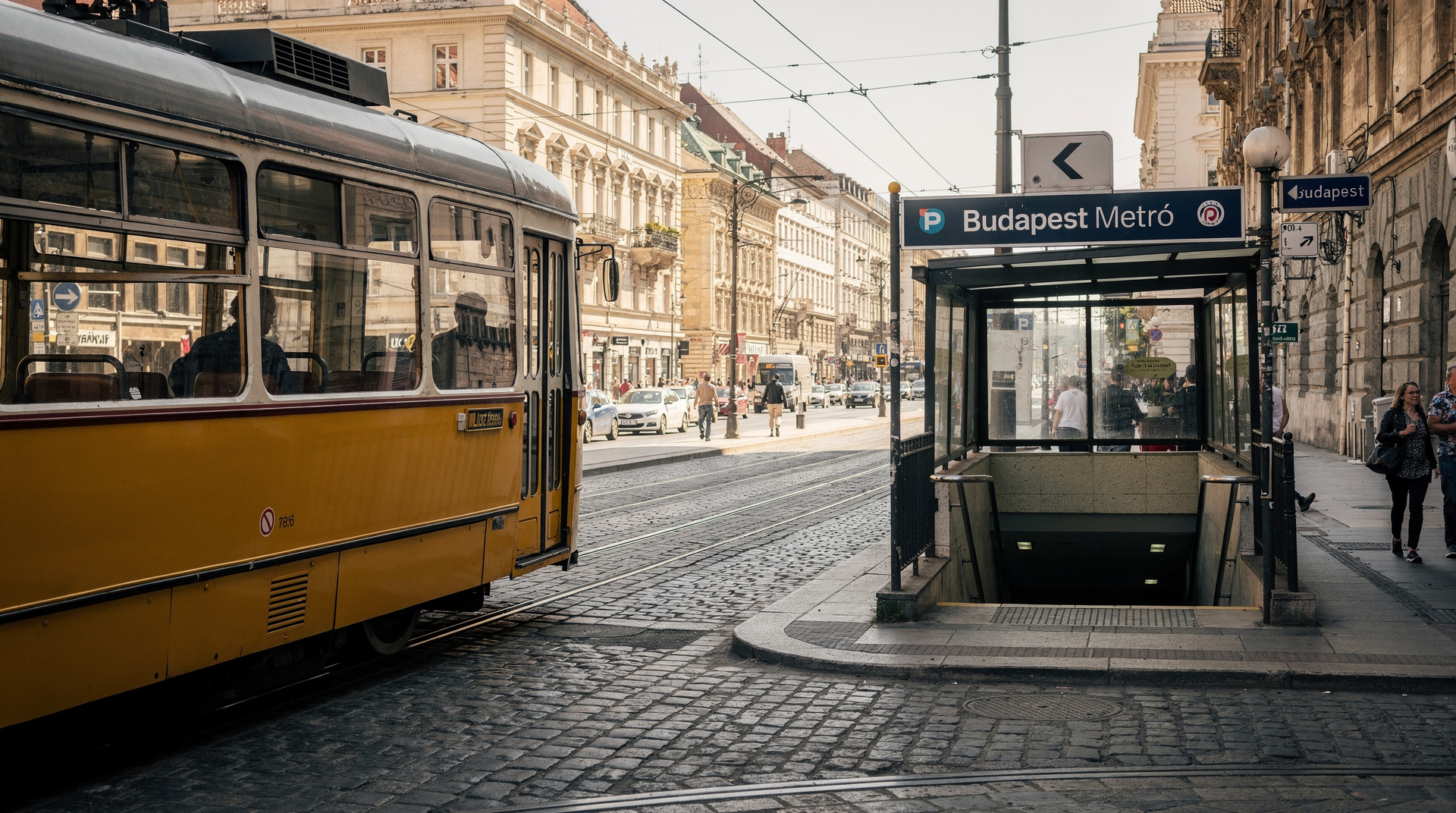
Metro: Four lines (M1–M4) converging at Deák Ferenc tér. Fast, frequent, cheap. A single journey is 500 HUF if bought in advance (700 HUF on board); validate immediately on boarding or face a 16,000 HUF fine. See Budapest metro guide for line-by-line details.
Trams: Essential for the Danube riverfront (tram 2 on the Pest bank) and the main ring road (trams 4/6, which run 24 hours). Same tickets as the metro.
72-hour travelcard: 5,750 HUF for unlimited transport for three days. For most first-timers, this is the right ticket — buy it at any metro station machine and validate on first use. See BKK travel passes.
Bolt: For late nights, airport trips, or any journey where you need door-to-door. See taxis and Bolt for setup and scam avoidance.
Walking: Central Pest is highly walkable. The distance from Deák tér to the Great Market Hall is 20 minutes on foot; from the Basilica to the Jewish Quarter is 10 minutes. A good shoe policy pays off.
If you would rather cover more ground without tiring your legs, a guided bike ride through lesser-known corners of the city is a relaxed way to see beyond the main squares on a first visit. Our bike tours guide and getting around Budapest compare the options.
The sights: what is genuinely unmissable
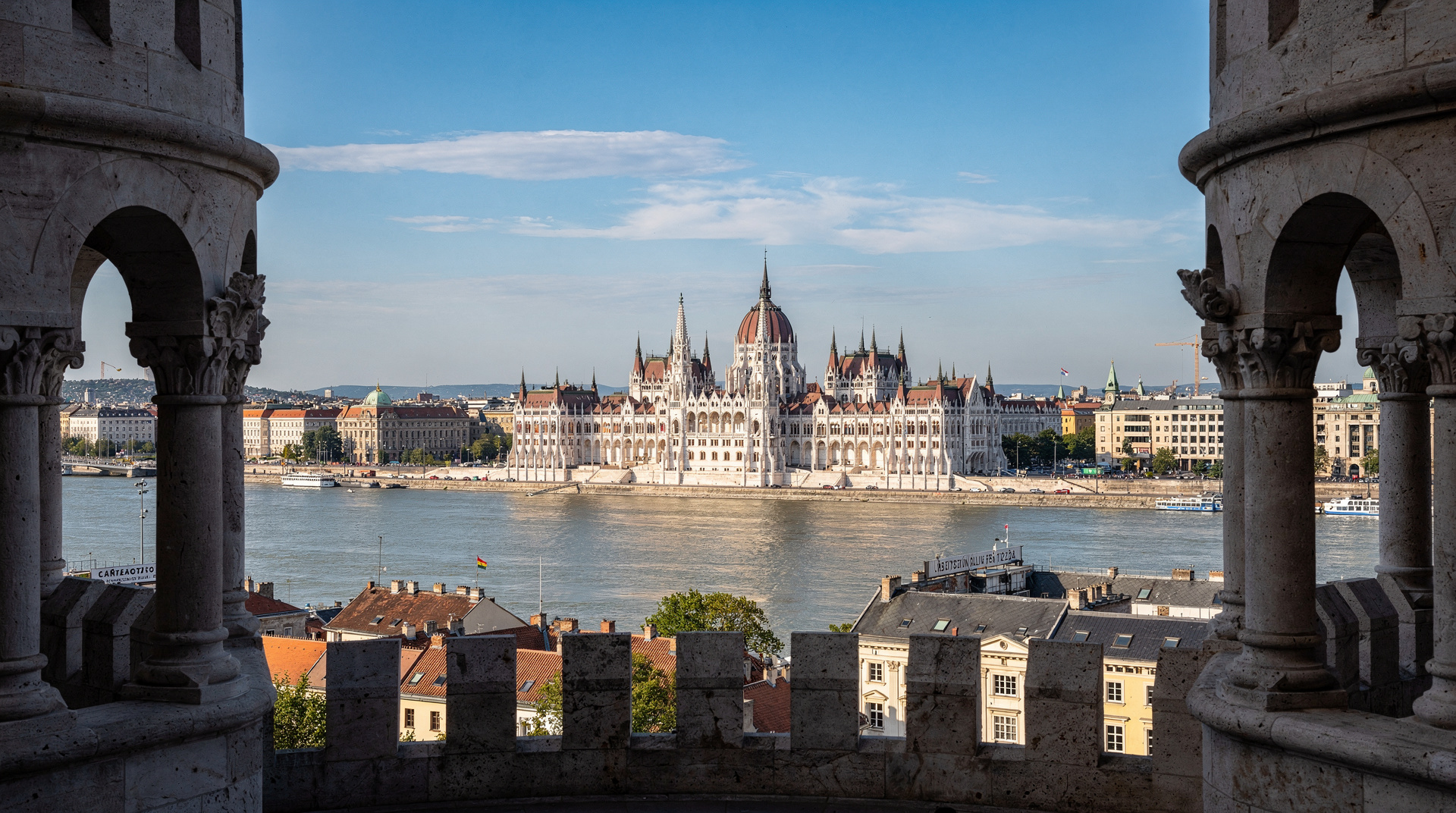
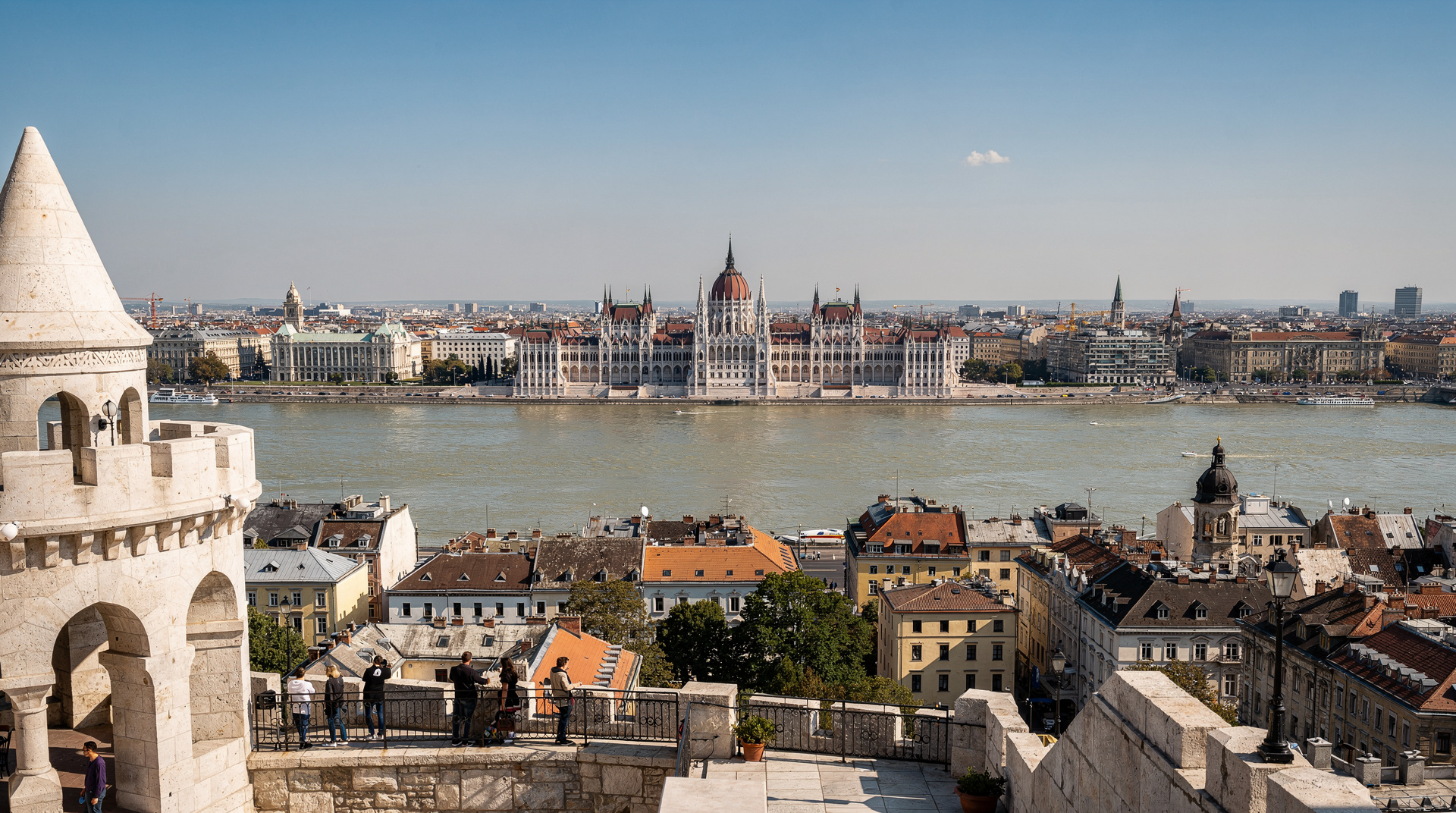
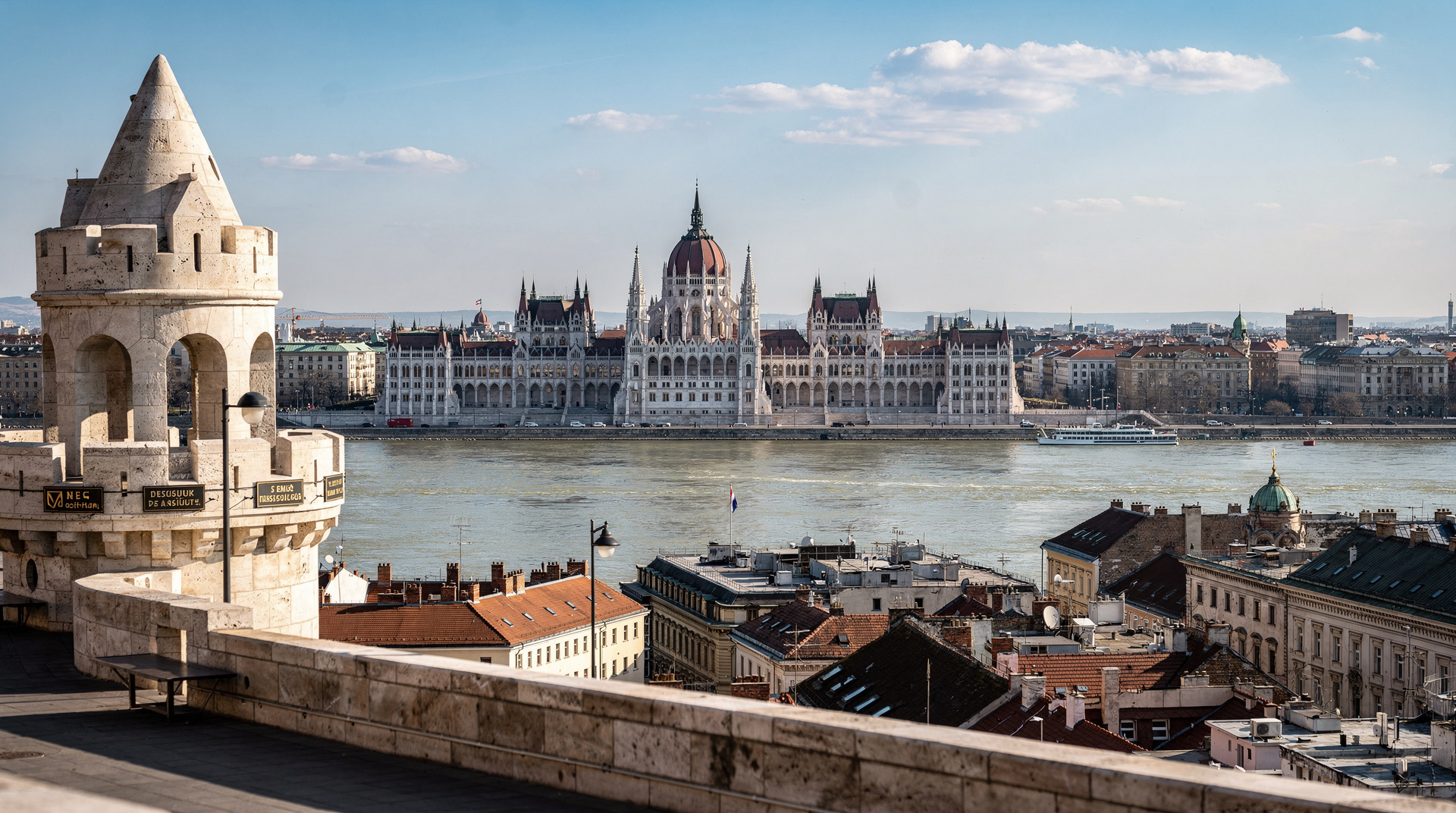
Castle District (half-day minimum): Fisherman’s Bastion for the panorama over the Danube and Pest, Matthias Church for the geometric tile roof and Gothic interior, the Castle complex for the museum and gardens. Best in the morning before 10:00 when tour groups arrive.
Hungarian Parliament (2–3 hours with tour): Book interior tours online — same-day tickets are often gone by 09:00 in summer. The building exterior from the riverfront is free and spectacular at night.
St Stephen’s Basilica: The rooftop terrace gives the best Pest panorama. The Crown Jewels viewing is in the crypt. Evening organ and classical concerts make a good first-night activity.
Dohány Street Synagogue (1–2 hours): Europe’s largest synagogue; the memorial garden is the best preserved example of the Jewish memorial landscape in Central Europe. Book tickets online; the queue moves slowly.
Széchenyi or Rudas Thermal Bath (2–3 hours): Book online the night before at minimum. Széchenyi is the most beginner-friendly (outdoor pools, obvious layout, central location). Rudas is for those who want the most atmospheric Turkish bath under an Ottoman dome.
Great Market Hall (1–2 hours): The ground floor is a working food market — buy pálinka from the right vendors, paprika, salami, fresh produce. The upper floor is tourist souvenirs. The lángos stall on the upper level (the fried dough with sour cream and cheese) is a mandatory first experience.
Ruin bars (evening): District VII — start at Szimpla Kert (Kazinczy utca 14), walk the neighbourhood, end wherever your evening takes you.
The honest warnings
Unlicensed taxis: Never get in a car whose driver approaches you — not at Keleti station, not at the airport, not on the street. Use Bolt exclusively or the licensed taxi rank.
The friendly girl scam (konzumlány): A well-dressed person befriends you, typically in the District VII area, and suggests going to a bar. The bill arrives at 100× normal prices — tens of thousands of HUF for a round of drinks. The bar and the person are working together. Stick to well-reviewed venues from trusted lists. If someone you just met immediately suggests a specific bar, decline. See common scams in Budapest for the full picture.
Váci utca restaurants: The tourist strip between Vörösmarty tér and the Great Market Hall is lined with restaurants charging 2–3× the local price for average food. Walk one block off Váci utca in any direction for significantly better value.
Bath resellers: People outside Széchenyi offer “discounted” tickets. They are resellers inflating prices, not legitimate sellers. Buy at the official desk or the GetYourGuide platform. See bath ticket mistakes.
Euronet ATMs: The high-fee private ATM machines in tourist areas. Use OTP or Raiffeisen machines instead.
What to do in the evenings
Budapest’s evenings are structured differently from Western European capitals. Dinner is eaten later (19:00–21:00); the ruin bars fill up from 20:00; clubs begin in earnest at 23:00. The sequence for a good evening:
- 18:00–19:00: Aperitivo culture — Szimpla Kert opens at 12:00, Mazel Tov from 17:00
- 19:00–21:00: Dinner — see best restaurants in Budapest for reliable choices by neighbourhood and budget
- 21:00–23:00: Bar hopping in District VII — Instant–Fogas, Anker’t, Corvintető rooftop bar
- 23:00+: Clubs for those continuing — Instant–Fogas main rooms, clubs along the Danube
If you want the castle and baths experience in daylight, schedule the nightlife for your second or third evening rather than arriving tired from the airport.
What a typical first day actually costs
Budgeting realistically for the first 24 hours removes one source of first-timer stress. A single traveller landing at BUD, taking the bus into town, buying a 72-hour travelcard, eating three meals away from Váci utca and visiting one thermal bath typically spends 25,000–35,000 HUF (around €65–90) on the first day, excluding accommodation. Couples and groups spend less per person on transport (a single travelcard covers one person, but taxis split easily) and can save further by cooking or eating market food at the Great Market Hall rather than restaurants. For a full multi-day breakdown by traveller type, see Budapest trip cost and Budapest daily budget.
Misconceptions worth correcting before you land
“Budapest uses the euro.” It does not. Hungary is in the EU but not the eurozone, and there is no confirmed adoption date. Carrying euros “just in case” is fine as a backup, but plan to withdraw and pay in HUF.
“The ruin bars are all in one place.” District VII has the highest density, but individual venues are spread across several streets, and quality varies enormously between the well-known originals and newer copycats. Walking a curated route beats wandering randomly. See ruin bar rip-offs for which ones to skip.
“Public transport is confusing without German or Hungarian.” It is not — station names, the BudapestGO app and the metro map are all in Latin script and largely intuitive, and platform announcements repeat in English on the newer M4 line. The bigger adjustment is remembering to validate your ticket, not the language.
“You need a car.” Almost never true for a city visit. A car adds parking cost and stress; even day trips to Szentendre or the Danube Bend are easily reached by train or organised tour. See getting to Budapest if you are arriving from elsewhere in Europe and weighing driving against the train.
The thermal baths: your most important booking
Every first-timer should visit at least one thermal bath. The decision hierarchy:
- Most atmospheric: Rudas (Ottoman dome, 16th century)
- Most iconic: Széchenyi (grand outdoor pools, City Park)
- Most local: Lukács (quiet, District II, used by Budapestians)
- Most scenic interior: Gellért (Art Nouveau architecture) — check current renovation status before booking
Book online for Széchenyi in summer. For any bath, the thermal bath finder tool helps match you to the right one for your preferences.
If the big names feel overwhelming, a visit to a thermal bath set inside a hillside cave complex offers a different, less conventional take on the city’s bathing culture. For side-by-side help choosing, read Széchenyi vs Gellért vs Rudas and thermal bath etiquette before your first soak.
Planning checklist for first-timers
Before arriving:
- Download BudapestGO, Bolt, Google Translate
- Book Széchenyi or chosen bath online (especially in summer)
- Book Parliament interior tour
- Reserve dinner on the nights you want something specific
On arrival:
- Withdraw HUF from an OTP ATM
- Take bus 100E or Bolt from airport (not a street taxi)
- Buy 72-hour BKK travelcard at first metro station
During the visit:
- Pay in HUF always
- Walk the Chain Bridge at least once in daylight and once at night
- Check the menu pricing before ordering in any bar
- Use the currency converter if prices seem confusing
For the complete planning resource, see the Budapest travel guide 2026. For the cost breakdown, see Budapest trip cost.
Frequently asked questions about First time in Budapest
Do people speak English in Budapest?
In the tourist areas, restaurants, hotels and most shops: yes, English is widely spoken by younger staff. At local bakeries, market stalls and in residential neighbourhoods, Hungarian is the primary language. Google Translate handles Hungarian well. Learning a few words (köszönöm = thank you, kérem = please) is appreciated and usually prompts a warmer response.Is Budapest a safe city to visit?
Generally yes. The main risks are pickpockets on crowded trams (especially tram 4/6 and at the Great Market Hall), bar scams in the nightlife district, unlicensed taxis, and tourist-restaurant overpricing. None of these require alertness beyond the standard European-city level. Violent crime against tourists is rare. See /guides/is-budapest-safe/ for specifics.What currency should I carry in Budapest?
Hungarian forint (HUF). Always pay in HUF rather than euros even if a merchant offers to charge in euros — dynamic currency conversion rates are poor. Withdraw HUF from a bank-branded ATM (OTP, Raiffeisen, K&H) on arrival; avoid Euronet machines with their high fees. Keep small denominations (200, 500, 1,000 HUF notes) for markets and transport.What is the most important thing to book in advance?
For summer (June–August): Széchenyi baths (queues can exceed one hour at the door), Parliament interior tour (often fully booked same-day), and the Sparty if visiting on a party night. For any season: popular dinner restaurants on Friday or Saturday nights. Everything else is manageable as walk-up in shoulder season.What neighbourhood should I stay in as a first-time visitor?
District V (Belváros) is central and walkable to most sights. District VI (Terézváros, near Andrássy Avenue) is quieter and elegant. District VII (Erzsébetváros, the Jewish Quarter) is the most social — ruin bars on your doorstep but can be noisy on weekends. District I (Castle District) is atmospheric but isolated without a car — you will use the metro frequently. See /guides/where-to-stay-in-budapest/ for the full neighbourhood guide.What should first-timers avoid doing on day one?
Don't book anything requiring a full day of energy for the afternoon you land — jet lag and a long flight make the first few hours unreliable for anything beyond checking in and a short walk. Don't exchange cash at the airport exchange bureaux (poor rates) or accept a ride from anyone approaching you in the arrivals hall. Save the ambitious sightseeing for day two once you have local currency, a transit pass and a full night's sleep. See how many days in Budapest for pacing a short trip properly.Is three days really enough for a first visit to Budapest?
Three days covers the essentials comfortably: a full day for the Castle District and Danube views, a day for Pest's landmarks and a thermal bath, and a day with flexibility for a day trip or deeper exploration of a neighbourhood. It is tight if you also want to fit in a Danube Bend excursion. See the Budapest 3-day itinerary for a structured plan.