Esztergom day trip from Budapest: Hungary's holy city and the Danube Bend
Visit Esztergom on a half-day from Budapest: Hungary's largest basilica, panoramic Danube Bend views, and a walk across the border into Slovakia.

Quick facts
- Distance from Budapest
- ~50 km north-west
- Travel time
- ~1.5 hrs by train (direct from Keleti or Nyugati) or ~1 hr by organized tour bus
- Admission — Basilica
- Treasury and crypt ~1 500 HUF (~€3.75); tower views ~1 000 HUF extra
- Best combined with
- Visegrád and Szentendre on a full Danube Bend loop
- Currency
- HUF on the Hungarian side; euros accepted in the Slovak border town of Štúrovo
- Honest note
- The basilica exterior is always impressive, but interiors can be closed for mass — arrive early or after noon
Hungary’s spiritual capital on a bend of the Danube
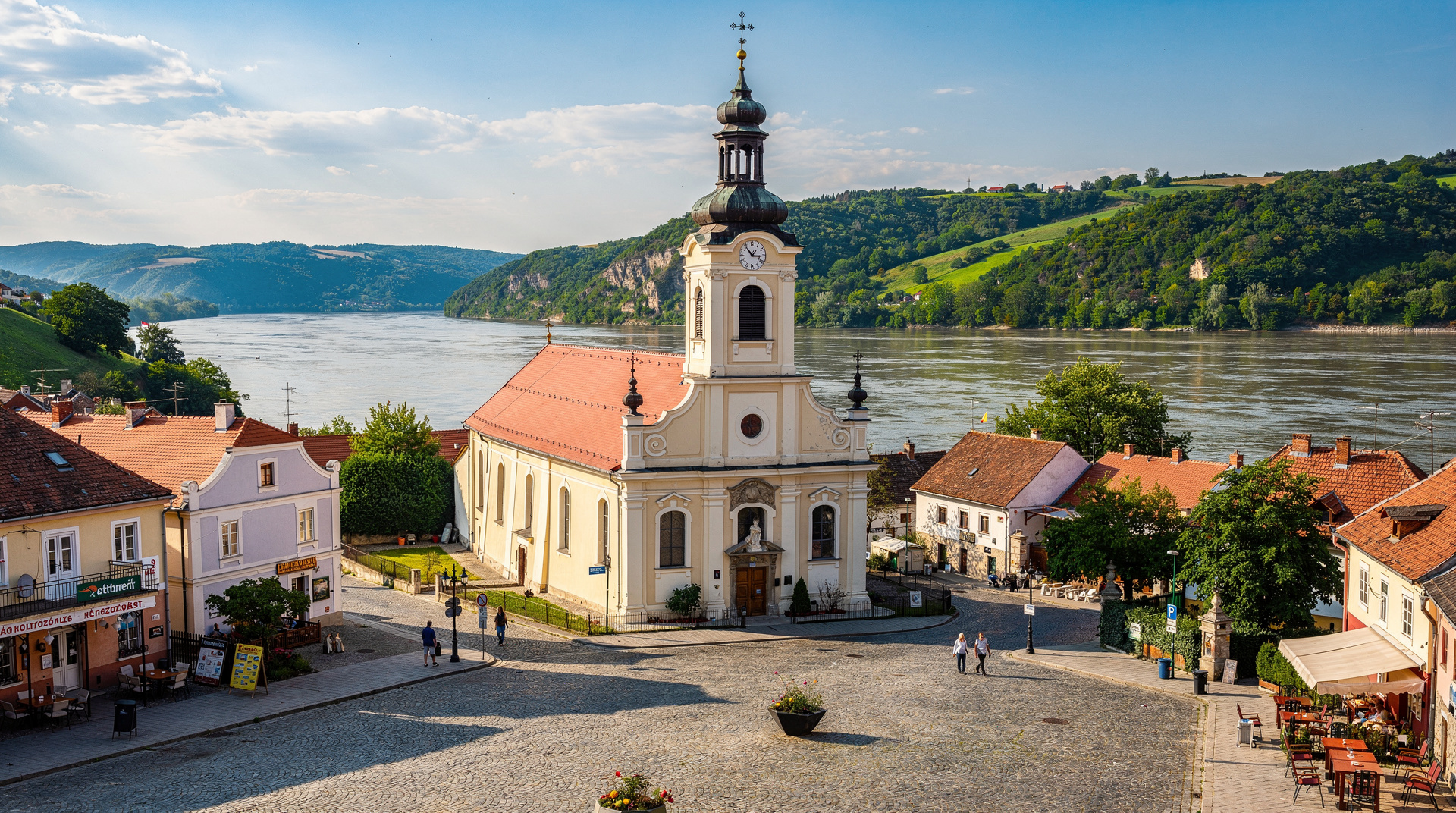
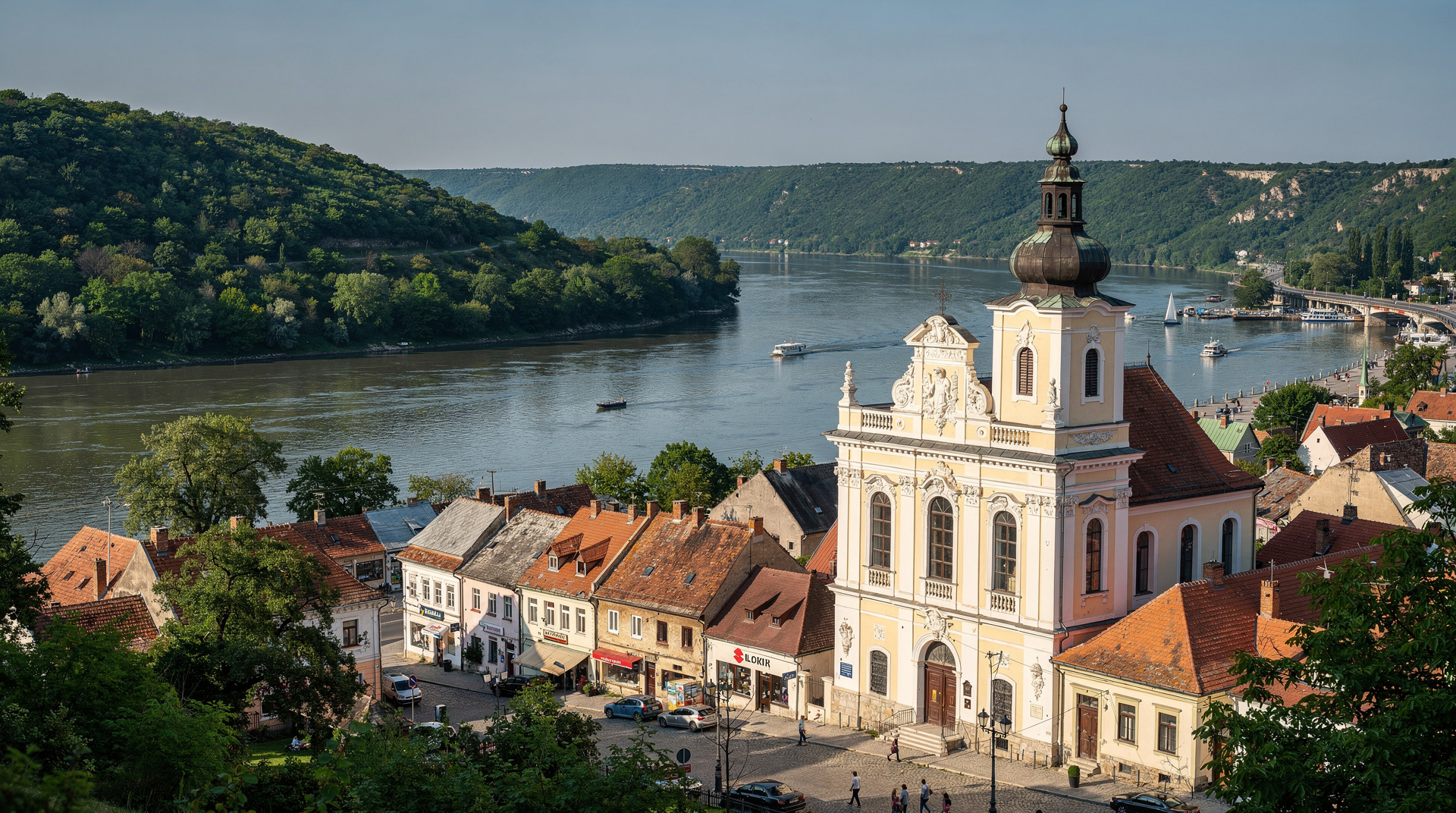
Esztergom is one of those towns that earns its reputation the moment you crest the hill and the basilica dome fills your field of view — pale and enormous against the blue ribbon of the Danube. For roughly a thousand years this was the seat of Hungary’s Catholic Church and the residence of the country’s first king, Stephen I, who was born here around 967 AD. Today it draws visitors who want a shot of Hungarian history that goes deeper than the Budapest highlights circuit, and those who want the bragging rights of crossing into Slovakia on foot.
At just 50 km north-west of Budapest, Esztergom fits comfortably into a half-day excursion, but it rewards those who linger longer with a castle museum, a Baroque quarter, and a riverside walk that has none of the city-break frenzy.
| Where | ~50 km north-west of Budapest, on the Danube Bend |
| Cost | Treasury and crypt ~1 500 HUF; dome tower ~1 000 HUF extra |
| Time needed | Half a day; add an hour for the Slovak border crossing |
| Getting there | Train from Budapest (~1.5–2 hrs) or an organized Danube Bend tour |
| Best time | April to October; arrive before 10am or after noon to avoid mass |
The Esztergom Basilica — facts beyond the superlatives
Every guide mentions that the Esztergom Basilica is Hungary’s largest church. What guides mention less often: it was also a building project that took the better part of two centuries to complete (1820–1869), which is why the exterior has a certain stoic grandeur rather than the elaborate ornament of Gothic rivals. The central dome rises 71 metres above the hill, and on a clear day from the observation platform you can see the Börzsöny hills, the Slovak lowlands, and the S-curve of the Danube that gives the “Danube Bend” its name.
Inside, the Bakócz Chapel is the architectural highlight — a complete piece of early-16th-century Florentine Renaissance work in red Hungarian marble. When the medieval cathedral was demolished to make way for the current building, craftsmen dismantled the chapel stone by stone and rebuilt it inside the new basilica. The treasury holds the 13th-century Matthias Calvary (gold, enamel, and jewels) alongside vestments, monstrances, and chalices spanning eight centuries of Hungarian church history.
The crypt is open independently of the main nave and houses the sarcophagus of Cardinal Mindszenty, who became a symbol of resistance during communist rule — a contested but historically significant figure whose story is told in brief display panels.
Admission to the treasury and crypt costs roughly 1 500 HUF (about €3.75); the dome tower adds another 1 000 HUF. Mass schedules can close parts of the interior — check times on the official website or arrive before 10:00 or after 12:00 to avoid clashes.
The castle hill and its medieval layers
Below the basilica, the hill preserves the ruins of the royal palace where King Stephen I was born and later where Hungary’s archbishops lived for centuries after the royal court moved to Visegrád and then Buda. The Castle Museum (Vármúzeum) excavated and conserved significant Romanesque and Gothic sections — carved stone fragments, frescoes, and the outline of the original palatial complex. It is among the best-presented archaeological sites in Hungary outside Budapest, and the entry fee (roughly 1 200 HUF / ~€3) is well worth it for the scale of what survives underground.
The view from the hill’s southern terrace, framing the Maria Valeria Bridge and the Slovak lowlands beyond, is the photograph that puts Esztergom on social media feeds each summer. Come in the golden hour before sunset if you’re staying until late afternoon.
Walking into Slovakia
The Maria Valeria Bridge was destroyed in the Second World War and rebuilt only in 2001 — its opening was celebrated as a symbol of Hungarian-Slovak reconciliation. Crossing it on foot takes about ten minutes, costs nothing, and delivers you into Štúrovo (Párkány in Hungarian), a quiet Slovak town with a few riverside cafés, a thermal spa, and a market square. Both countries are in the Schengen Area so there is no passport control, though you should carry ID. Euros are the local currency on the Slovak side, though larger establishments may accept cards.
The experience is low-key rather than spectacular, but there is something genuinely unusual about walking between two countries in twenty minutes on a day trip from Budapest — and the view back toward the basilica from the Slovak bank is arguably the best angle of all.
Getting there without a car
Train: The most independent option. Trains run from Budapest-Kelenföld or Keleti via Almásfüzitő; some require a change. Journey time is 1.5 to 2 hours depending on the service. Check the MÁV app (Hungarian national rail) and book tickets in advance at weekends when trains fill with day-trippers.
Organized tour: A private guided day trip from Budapest to Esztergom takes the logistics out of the equation and adds expert commentary on the basilica’s art history and Hungary’s Christian foundations — well worth the extra cost if history interpretation matters to you.
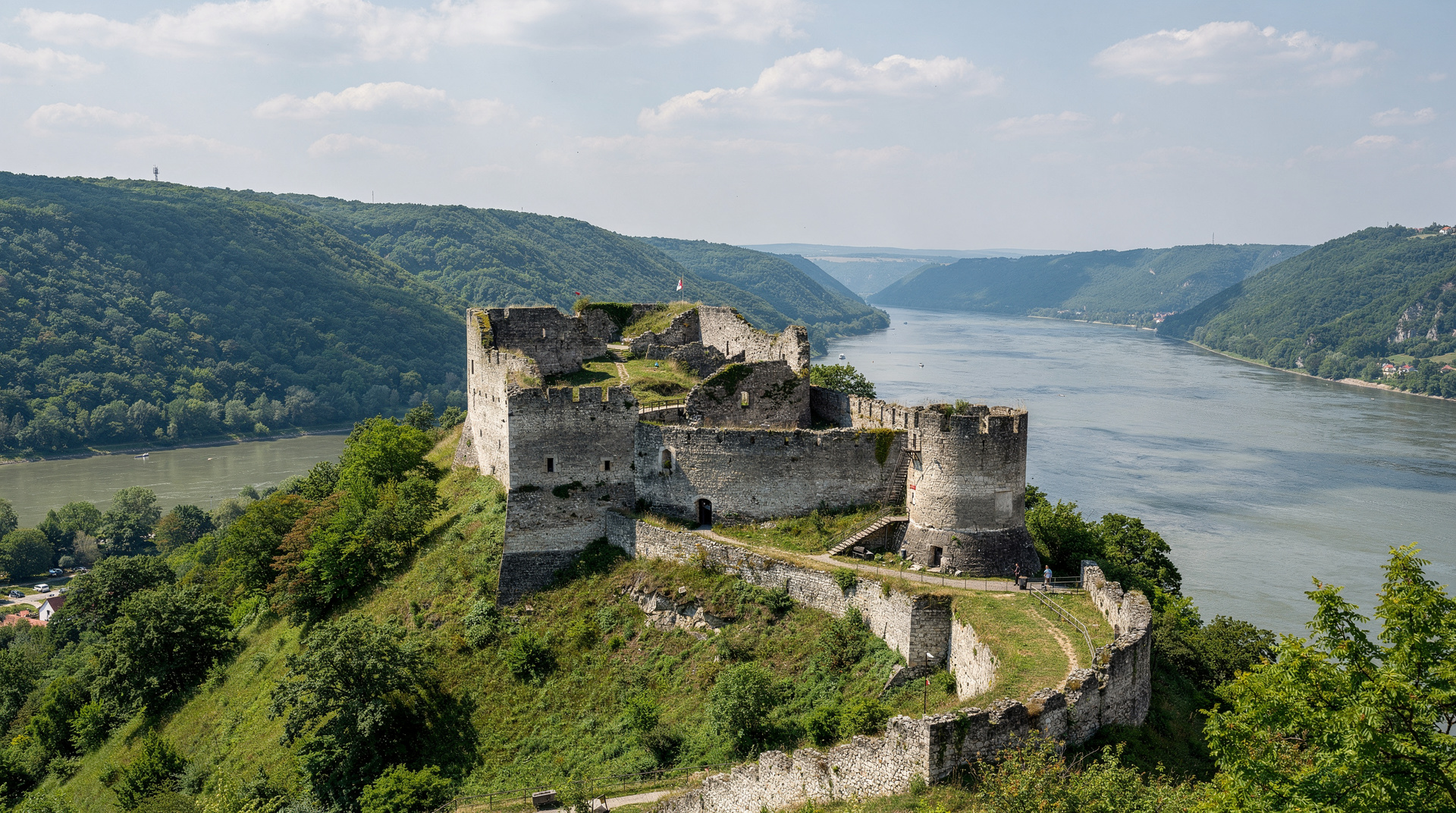
Danube Bend loop tour: The most popular option is a full-day Danube Bend tour from Budapest that combines Esztergom with Visegrád (hilltop castle ruins) and Szentendre (Serbian baroque town and artists’ colony). It’s a longer day but you cover three destinations in one sweep with a guide who keeps the stories connected.
Boat: Seasonal Mahart ferry services (roughly May to September) connect Budapest’s Vigadó Pier with Esztergom, stopping at Visegrád. The upstream journey takes about five hours; the downstream return is faster. Check the current schedule as services vary year to year.
What to eat and drink in Esztergom
The main square (Széchenyi tér) has a handful of restaurants serving standard Hungarian fare: gulyás, pörkölt (paprika meat stew), and fried catfish from the Danube. For something more considered, the restaurant at the Prímás-sziget (Primate’s Island) between the bridge and the town offers terrace dining with water views. Prices here are noticeably lower than comparable Budapest restaurants — a main course with a glass of local wine runs 3 000–4 500 HUF (€7.50–€11).
At the riverside market stalls (especially active on summer weekends), pick up chimney cake (kürtőskalács) fresh off the spit, local honey, and paprika products — better quality and lower prices than the tourist shops near Váci utca in Budapest.
Practical tips
Best time: April to October for boat connections and outdoor dining. June and July are busiest; May and September offer similar weather with noticeably fewer crowds. The basilica looks atmospheric in winter snow, but boat services and the castle museum may have reduced hours from November onward.
What to wear: The hill involves uneven cobblestones and a climb from the train station. Comfortable shoes are non-negotiable. Inside the basilica, bare shoulders and short hemlines are discouraged — carry a scarf or light layer.
Photography: Tripods are not permitted inside the basilica. The best outdoor light for the dome is morning from the bridge, or late afternoon from the Slovak side.
Combined itinerary: If you have a car, the Danube Bend circuit (Budapest → Szentendre → Visegrád → Esztergom → back via the M1 motorway) is one of Hungary’s finest half-day drives. Without a car, the organized Danube Bend day trip does the same loop and handles the timing.
Linking Esztergom into your Budapest trip
Esztergom makes most sense as part of a broader Danube Bend exploration rather than a standalone trip. Pair it with Visegrád — the medieval castle there contrasts nicely with the ecclesiastical grandeur of Esztergom — and add Szentendre for the arts-and-crafts atmosphere. If your Budapest itinerary leans cultural and historical, read the best day trips from Budapest guide to prioritize; if wine and outdoor scenery are the priority, consider Eger or Tokaj instead.
Return to Budapest in the evening in time for a Danube cruise — the evening light on the Parliament is the perfect counterpoint to a morning spent on the basilica hill.
Esztergom versus the other Danube Bend towns
Deciding how to spend a Danube Bend day (or half-day) usually comes down to this comparison:
| Esztergom | Visegrád | Szentendre | |
|---|---|---|---|
| Character | Ecclesiastical grandeur, basilica dome | Medieval hilltop citadel, river views | Artists’ town, Serbian Orthodox heritage |
| Time needed | Half a day | Half a day | Half a day |
| Best for | History and architecture | Castle views and hiking | Galleries, shopping, langos |
| Unique feature | Walk across into Slovakia | Panoramic Danube Bend viewpoint | Open-air museums |
Doing all three in one day is possible with a car or an organized tour, but each deserves enough time that rushing undercuts the experience — a two-stop day (Esztergom plus one other) is often more satisfying than a hurried three-stop sweep.
Shaping the day: a relaxed order of stops
The simplest way to enjoy Esztergom is to let the hill set the rhythm. Start at the basilica while you are fresh, since it is the stop that rewards the most attention, then drift down to the castle museum and its excavated rooms. Keep the riverside and the walk to the bridge for the end, when you no longer need to concentrate and the light tends to be kinder. Eating in between, rather than saving everything for the end, keeps the day from feeling like a march.
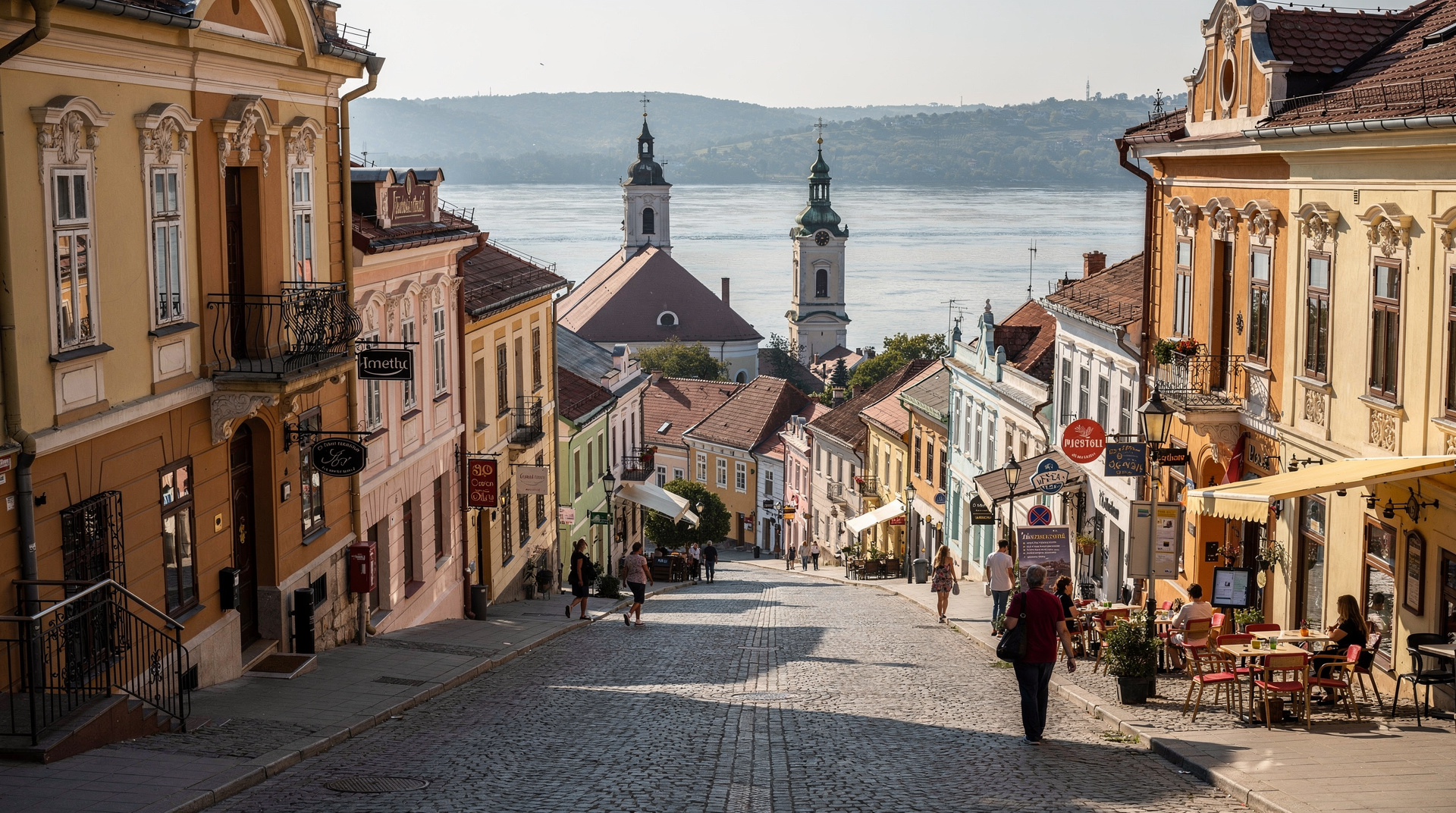
If you are travelling independently, think of the town as two halves: the hilltop with its monuments, and the lower town with its Baroque streets, cafés and the water. Moving between them on foot is part of the pleasure, and the changing views of the dome from different streets are worth a pause or two. Visitors who rush straight from the station to the basilica and back again miss most of what makes the place feel lived-in rather than staged.
Who will enjoy Esztergom most
Esztergom suits travellers who like their sightseeing slow and layered. If you already enjoyed the Buda Castle guide or spent time at Matthias Church, you will recognise the same interest in how Hungarian history is built into stone, only here with fewer people around. Readers who prefer a grand sacred interior will also find a natural comparison in St. Stephen’s Basilica in Pest, and seeing both gives a fuller sense of how the church shaped the country.
Families can manage the day too, as long as children are happy with a mix of walking and a few quiet interiors; the bridge crossing and the river give younger travellers something more active to look forward to, and the Budapest with kids guide has more ideas for planning around them. Couples will find the evening-light viewpoints particularly rewarding, and the romantic Budapest guide suggests how to pair a quiet day out with a more indulgent night in the city.
Travellers who mainly want nightlife, shopping or a packed schedule will probably be happier elsewhere. For them, Budapest nightlife or the thermal baths will be a better use of a free day.
Fitting Esztergom around the rest of your stay
Because the trip takes most of a half-day once travel is included, it sits best on a day when you have nothing booked for the morning or the early afternoon. A first-time visitor with a short stay may prefer to see the capital first, using the first time in Budapest guide to cover the essentials, and keep the Danube Bend for later. Those with more time can follow the Budapest and day trips week plan, which shows how excursions slot between city days, or look at the Budapest 4 days itinerary if you want one outing without losing the city.
Getting around on the Budapest side is easy once you understand the system. The getting around Budapest guide explains the options for reaching the departure stations, and Budapest metro guide helps if your hotel is near a metro line. If you would rather avoid train timetables altogether, the best day trips from Budapest overview compares the guided alternatives, and a read of the Szentendre day trip guide shows what the neighbouring option looks like if you are undecided between the two.
Small things that make the visit easier
- Carry a bit of cash in forints for small purchases at market stalls, even though larger places usually take cards.
- Leave the heaviest bag at your hotel; the hill and its cobbles are more comfortable with light luggage.
- Fill a water bottle before you set out, especially in summer, and plan a shaded break during the middle of the day.
- Allow a little slack at the end of the day so that a late train or a slow ferry does not turn into stress.
- Look up from the street now and then; the best views of the dome often come from unexpected side lanes.
Reading a little history beforehand also pays off. The Hungarian history primer gives the background on Stephen I and the early kingdom, which makes the castle hill far more meaningful than a quick walk-through would. If you want a livelier contrast on the same trip, the Visegrád hill and the town of Szentendre offer a different mood, and the Danube Bend day trip guide shows how the three towns relate on the map.
Top experiences
Bookable activities with verified prices and instant confirmation on GetYourGuide.