Szentendre day trip from Budapest: what to see, eat, and skip
How do I get to Szentendre from Budapest and how long does it take?
Take the HÉV H5 suburban train from Batthyány tér metro station (M2 line) — it takes about 40 minutes and costs around 750 HUF each way. Trains run every 10–20 minutes. No advance booking required. The train drops you directly in Szentendre town centre.
A small town that punches above its weight
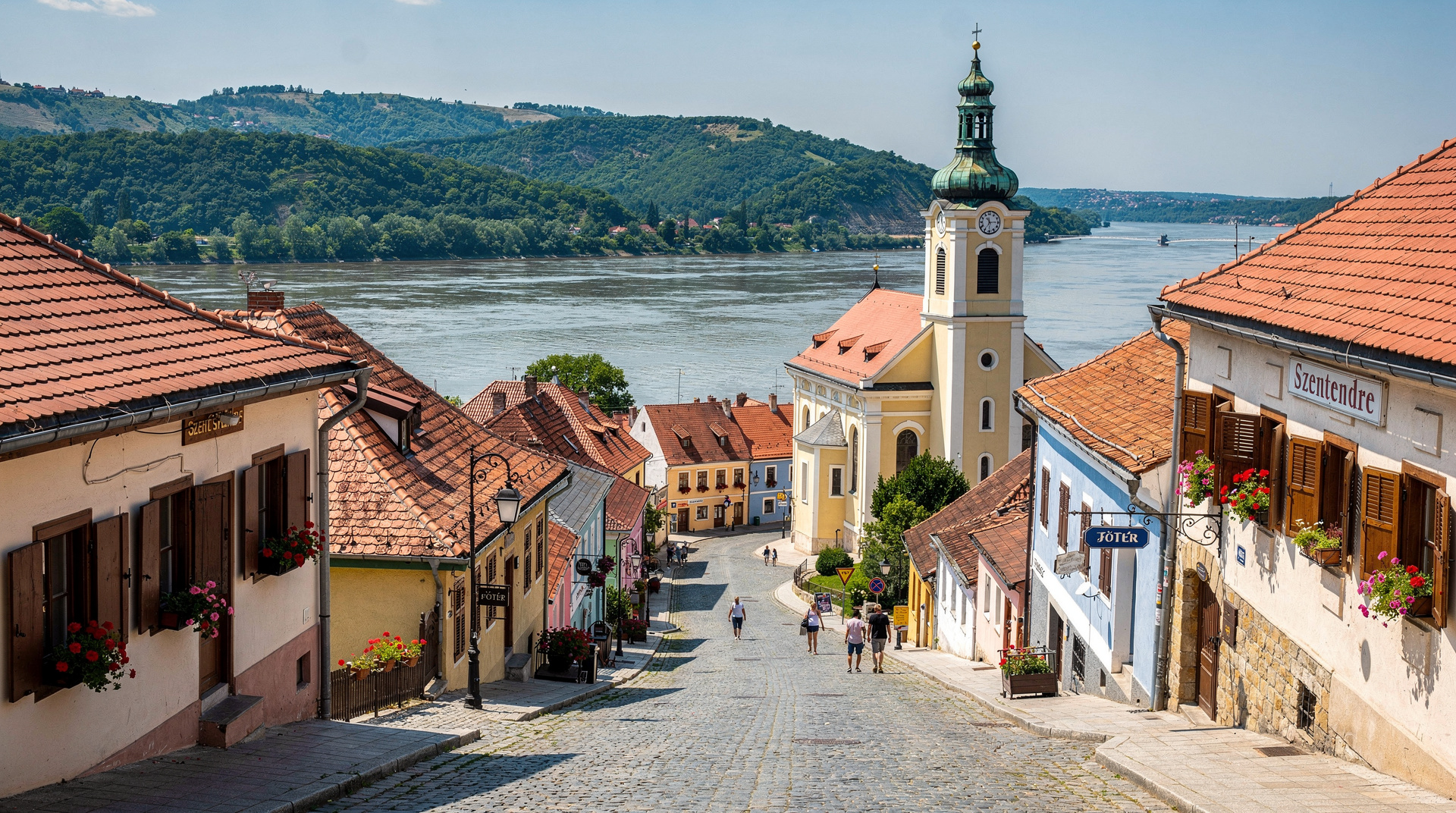
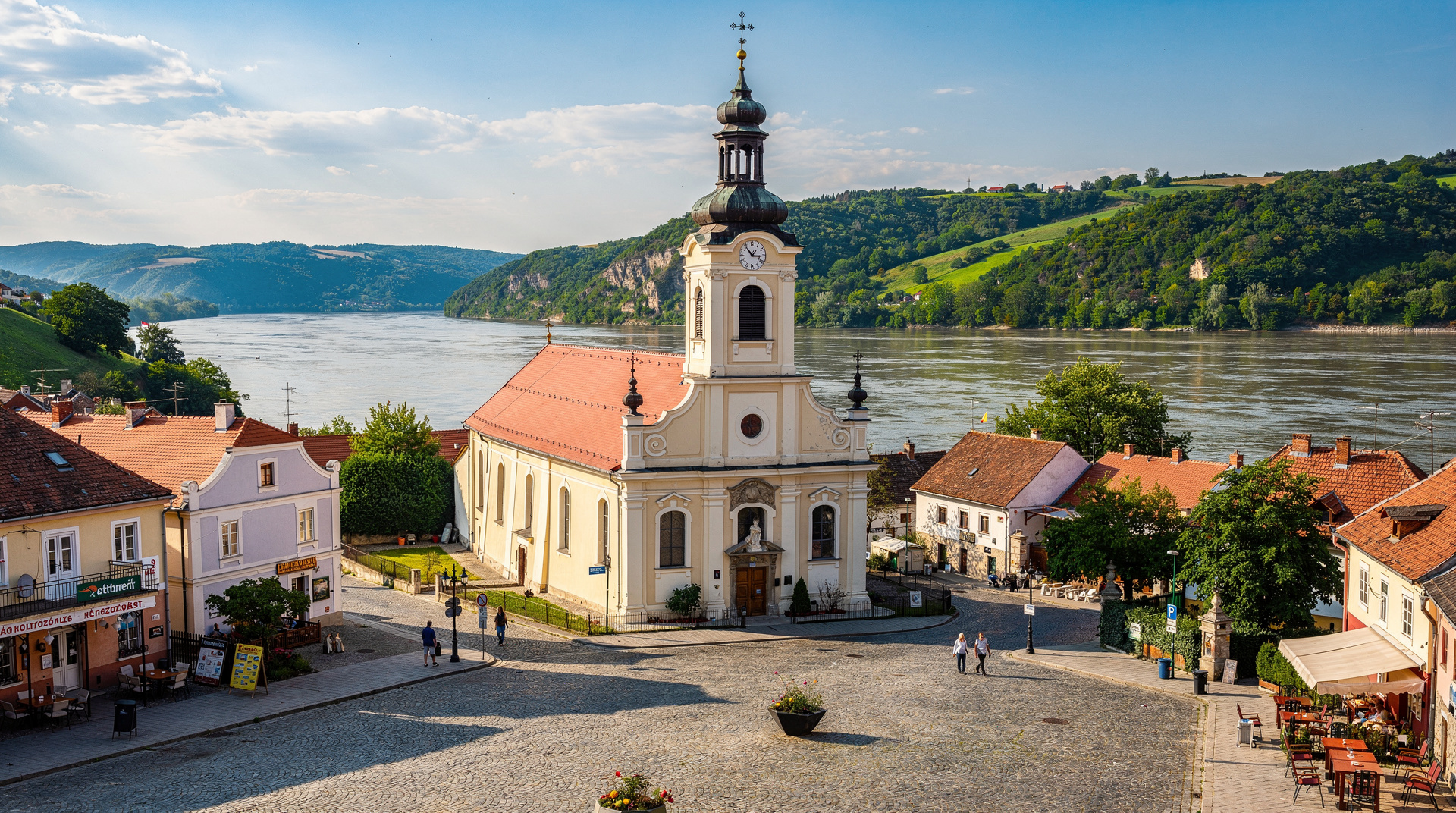
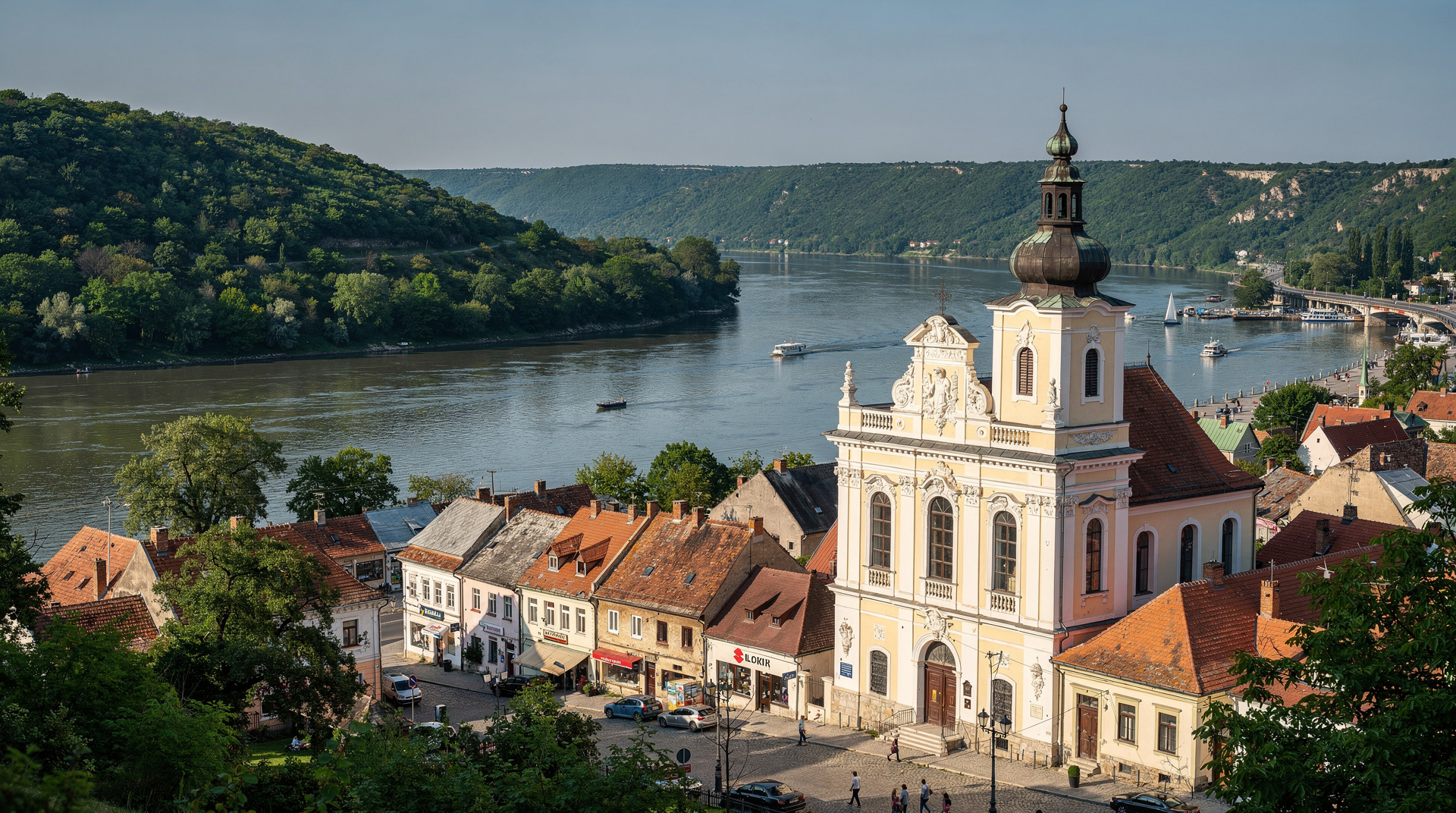
Szentendre is not Hungary’s most dramatic destination. There is no castle, no UNESCO monument, no panoramic viewpoint that will stop your breath. What Szentendre offers instead is something rarer in central Europe: a genuinely small, genuinely old, genuinely lived-in baroque town that happens to be easy to reach from a major capital.
The streets are mostly pedestrianised, the churches are painted yellow and red, and the Danube sits calmly at the edge of it all. It takes about two hours to see properly and can be combined with lunch and wine before heading back to Budapest — a perfect half-day.
| Where | 20 km north of Budapest, Danube Bend |
| Cost | ~750 HUF each way by HÉV |
| Time needed | 2–3 hours; half-day ideal |
| Getting there | HÉV H5 from Batthyány tér (M2), ~40 min |
| Best time | April–October, before 10:00 or after 15:00 |
Getting there: the HÉV H5
The HÉV (Helyiérdekű Vasút) is Budapest’s suburban rail network, and the H5 line to Szentendre is one of its most useful routes. Trains depart from Batthyány tér station on the M2 (red) metro line in Buda.
- Journey time: ~40 minutes
- Frequency: every 10–20 minutes on weekdays, every 20–30 minutes on weekends
- Ticket: ~750 HUF (Budapest transit zone + regional supplement); buy at the Batthyány tér ticket machine or validate your Budapest pass and pay the supplement separately
- Terminus: the HÉV drops you at Szentendre HÉV station, which is a 5-minute walk from the main square
Return trains are just as frequent. There’s no need to book in advance. If you have a 72-hour Budapest travelcard, it does not cover the full journey — you’ll pay a small supplement for the zone beyond the Budapest city boundary.
Alternatively, a half-day guided tour from Budapest handles all logistics and includes a local guide: Half-day guided tour to Szentendre from Budapest
Szentendre and Visegrád sit forty minutes apart on the same bend of the Danube, and the second has the citadel view that the first cannot offer: a Szentendre and Visegrád tour from Budapest takes the pair, which is what turns a half-day into a full one.
What to see in Szentendre
Fő tér (Main Square) is the heart of the old town: a sloping baroque square with the 18th-century plague column at its centre and the red-and-white Blagovestenska Church (1752) overlooking it. The buildings around the square were constructed primarily by Serbian merchants and retain their Central European baroque character. It’s photogenic, especially in morning light before the tour groups arrive.
Belgrade Cathedral and Museum of Serbian Ecclesiastical Art: The cathedral (Saborna crkva) at the top of the hill is the most important Serbian Orthodox church in Hungary. The churchyard and the museum behind it hold an exceptional collection of icons, vestments, and liturgical objects. It’s not a crowd-pleaser but it’s serious if you are interested in Orthodox art.
Margit Kovács Ceramic Museum (Vastagh György utca 1): The standout cultural institution in Szentendre. Margit Kovács (1902–1977) was a Hungarian ceramicist of real stature — her figures are expressive, slightly melancholy, and completely unlike tourist folk art. The museum is in a well-preserved merchant house and the collection is substantial. Allow 45–60 minutes.
Ferenczy Museum Centre: A cluster of galleries spread across several locations, covering the Ferenczy family of painters (Károly Ferenczy was one of Hungary’s most important Post-Impressionists) and rotating contemporary exhibitions. Worth dipping into.
Bogdányi utca: The main pedestrian street leading north from the main square. Ceramic shops, wine bars, galleries, and the unavoidable souvenir vendors. The quality varies — look for locally made ceramics (usually signed and slightly more expensive) rather than mass-produced tourist goods.
Marzipan Museum and Café (Dumtsa Jenő utca 14): Kitschy, absolutely — but the marzipan sculptures (life-size Hungarian Parliament, historical figures, fairy-tale scenes) are genuinely impressive in a baroque-excess kind of way. Good for children and anyone who enjoys absurdist applied art. The adjacent café sells the standard marzipan sweets.
Barcsay Collection (Dumtsa Jenő utca 10): Works by Jenő Barcsay, a geometric/constructivist painter who was part of the Szentendre school. Smaller than the Margit Kovács museum but worth a look for those interested in 20th-century Hungarian art.
What to eat and drink
Lángos: The quintessential Hungarian street food — deep-fried dough topped with sour cream and grated cheese. Vendors sell it on and near the main square. Budget 600–900 HUF for one. Don’t skip it: it’s hot, filling, and deeply satisfying.
Kürtőskalács (chimney cake): The other unavoidable street food — coiled dough wrapped around a cylinder and roasted over coals, finished with sugar or cinnamon. Szentendre vendors are some of the most consistent in the region.
Sit-down lunch: The restaurants around Fő tér and along the riverfront are tourist-oriented but generally decent. Aranysárkány (Golden Dragon, Alkotmány utca 1) has a solid reputation for traditional Hungarian cooking. Laris (Kossuth Lajos utca 14) is slightly cheaper and more casual. Expect 3,000–5,500 HUF for a two-course meal including a glass of wine.
Local wine: Szentendre’s wine cellar scene is modest — the region isn’t a major wine producer — but the bars along Bogdányi utca stock wines from nearby Etyek (Hungary’s closest wine region to Budapest), which are crisp and good. Try a glass of Etyek Sauvignon Blanc or a local Chardonnay for 1,500–2,500 HUF.
What to skip
Overpriced souvenir shops: The vast majority of the “Hungarian” goods for sale in Szentendre (paprika sets, embroidered items, ceramic cups) are not locally made. Prices are inflated. If you want genuine Hungarian folk crafts, the Great Market Hall in Budapest has a better selection and more transparent provenance.
Expensive riverfront restaurant tables: The Danube-facing restaurant terrace spots look lovely in photos but come with a premium. Walk half a block back and eat better for less.
Mid-afternoon weekends in July–August: Szentendre is tiny and tourist traffic at weekend midday in peak summer can make the main street uncomfortably crowded. Arrive before 10:00 or after 15:00, or visit in May, June, September, or October when the town is far more pleasant.
Combining Szentendre with other Danube Bend stops
Szentendre is the easiest Danube Bend town to reach, but it’s also the smallest and least dramatically situated. If you want to see more of the bend in one day, consider adding Visegrád or Esztergom — though this requires a car or a guided tour rather than public transport alone.
The full Danube Bend day trip guide covers all three towns and the logistics of combining them. For the broader context of excursions around Budapest: best day trips from Budapest. The Szentendre destination page has additional practical details.
A guided full-day option covering both Szentendre and the wider Danube Bend is available too: the full-day Danube Bend tour with lunch adds Visegrád or Esztergom to the Szentendre stop without you needing a car.
Planning your day: a simple rhythm
The easiest way to enjoy Szentendre is to resist the urge to tick off every museum. The town rewards wandering more than checklists, and the lanes behind the main square are where it feels least staged. A rhythm that works for most visitors: arrive on an early train, walk straight up to the churches while the streets are quiet, pick one museum rather than three, and leave the main square and Bogdányi utca for later, when you are ready to sit down with something to eat.
If you are building the trip into a wider stay, a half-day here slots neatly into a Budapest one-day plan only if you start very early; it sits more comfortably inside the Budapest and day trips week, where there is room to spend a whole morning outside the city without rushing back. First-timers who are still choosing between excursions will find the trade-offs laid out in the first time in Budapest guide.
For a personal account of the same walk, the blog post A day in Szentendre follows one traveller through the town and is a useful complement to the practical notes here.
Tickets, passes and getting back
The HÉV is part of the wider Budapest public transport system, but the Szentendre end of the line sits beyond the city boundary, which is why a standard city pass may not cover it. Before you travel, read public transport tickets and BKK travel passes so you know what your pass does and does not include. If you are weighing a sightseeing card for the rest of your stay, the Budapest Card guide explains what it covers, and it is worth checking its terms against a trip like this one before you assume the suburban line is included.
Keep a little slack for the return. On the way back, trains fill up on warm weekend afternoons, and it is far more pleasant to leave a little earlier, perhaps with a last coffee at the station end of town, than to queue for a seat on the platform.
Eating well without overspending
Szentendre makes it easy to snack your way through the day. Start with a fried street classic from our guide to where to eat lángos, then save room for something sweet: the chimney cake guide explains what to look for in a good one. If you would rather sit down for a proper meal, the traditional Hungarian dishes guide will help you read a menu and order with confidence, which matters when the restaurants closest to the square lean towards the tourist crowd.
For a glass of wine with lunch, the Hungarian wine guide gives the background on the regions you will see on local wine lists, so the names on the board mean something before you order.
Travelling with children, or in bad weather
The town works well for families. The streets are pedestrianised, the marzipan sculptures tend to delight younger visitors, and distances are short enough that small legs rarely tire. The broader advice in Budapest with kids applies here too, particularly the habit of planning one big activity and leaving the rest of the day loose.
If rain is forecast, the town is still worth the trip, because the galleries and museums give you plenty of cover and the lanes look atmospheric in grey light. Even so, if the weather looks truly miserable and you would rather stay in the city, the rainy day Budapest with kids guide has indoor alternatives.
If Szentendre makes you want to see more
Many travellers finish the day wanting a little more castle and a little more river. The Visegrád destination page and the Esztergom destination page cover the next two stops on the bend, and each rewards a longer day than the one you spend here. If photography is a priority, the photography tours in Budapest guide shows how guided options can help you find the best angles and light.
Szentendre for photographers and slow travellers
The best light in Szentendre is early — before 09:30 the main square is empty enough to photograph properly, the baroque façades catch low sun, and the cobbled lanes off Bogdányi utca are genuinely quiet. Fő tér from the plague column looking toward Blagovestenska Church is the classic shot; the Danube promenade near the HÉV station gives a calmer, less-photographed river view with Buda hills in the background. If you’re not on a tight schedule, arriving on the first or second train and having coffee on the square before the shops open is one of the most pleasant hours the Danube Bend offers.
If you want more than a half-day
For visitors who want to combine Szentendre with wine, the Danube Bend day trip guide covers pairing it with Visegrád’s castle ruins and Esztergom’s basilica for a fuller day, though this needs a car or organised tour rather than the HÉV alone. For a longer excursions-focused stay, best day trips from Budapest sets Szentendre alongside Lake Balaton, Eger and Gödöllő as options for a multi-day Budapest-plus-excursions itinerary.
Practical summary
| Details | |
|---|---|
| Distance from Budapest | 20 km north |
| Transport | HÉV H5 from Batthyány tér (~40 min, ~750 HUF) |
| Time needed | 2–3 hours; half-day ideal |
| Best season | April–October; avoid midsummer midday |
| Key attractions | Margit Kovács Museum, Fő tér, Belgrade Cathedral, Bogdányi utca |
| Budget | Museum entries 2,000–4,000 HUF; lunch 3,000–5,500 HUF |
For getting around Budapest and the metro network that connects to the HÉV, see the transport guide.
Frequently asked questions about Szentendre day trip from Budapest
How many hours do you need in Szentendre?
Two to three hours is enough for most visitors — the historic centre is small and very walkable. Half a day (morning arrival, lunch there, back to Budapest by afternoon) is ideal. A full day is pleasant if you are a slow walker, a gallery browser, or combining with wine tasting.Is Szentendre worth visiting?
Yes, for a half-day. The town is genuinely charming — baroque streets, Serbian Orthodox churches, good craft galleries, local wine, and lángos vendors. It can feel touristy in midsummer midday, but arrive early or in shoulder season and it's lovely. Don't expect a remote discovery.What is Szentendre famous for?
Szentendre is famous for being an artists' colony that flourished in the 20th century, for its Serbian Orthodox heritage (Serb refugees settled here after the Ottoman wars in the 17th century), for the Margit Kovács Ceramic Museum, and for being one of the most pleasant short excursions from Budapest.Is Szentendre expensive?
By Budapest standards, slightly more — tourist areas always inflate prices a little. Expect 2,500–4,000 HUF for a main course at a sit-down restaurant, 600–900 HUF for lángos, 1,500–2,500 HUF for a glass of local wine. Museum entries are 2,000–4,000 HUF. The HÉV journey is very cheap.Can I visit Szentendre without a guided tour?
Yes, easily — the HÉV H5 train from Batthyány tér is simple, frequent and doesn't require booking. Szentendre's old town is small enough to navigate without a guide. A guided tour adds context (history, art, recommendations) and removes the need to plan logistics, but independent travel is entirely practical for this particular day trip.Is Szentendre suitable as a first day trip from Budapest?
Yes — it's the easiest and shortest Danube Bend day trip, with the simplest public transport connection of the region. For a first day trip that doesn't require a car or a full-day commitment, Szentendre is the natural choice ahead of Visegrád or Esztergom, both of which take more planning.
Top experiences
Bookable activities with verified prices and instant confirmation on GetYourGuide.