Lake Balaton day trip from Budapest: beaches, wine, and Tihany

Is Lake Balaton worth a day trip from Budapest?
Yes, in summer — the train from Keleti takes about 1h15 to Balatonfüred and the northern shore has good beaches, the scenic Tihany peninsula with its Benedictine abbey, and decent wine bars. In winter, most of the lakeside is closed. It's a long but rewarding summer day.
Hungary’s inland sea: worth the journey in summer
Balaton is a fixture in Hungarian national imagination — the lake where every family spent childhood summers, where the water is warm and the wine is cheap. At 77 km long and up to 14 km wide, it’s the largest lake in central Europe and the third largest in Europe overall. For visitors based in Budapest, it’s the most time-intensive easy day trip: the train journey takes over an hour each way, and you need a full summer day to make it worthwhile.
But when the conditions are right — a hot June morning, the northern shore’s vineyards catching the light, the Tihany peninsula rising sharply from the water — Balaton delivers something genuinely different from Budapest’s urban texture. This guide covers the northern shore, which is consistently more interesting for visitors than the crowded southern resort strip.
| Where | Northern shore: Balatonfüred and Tihany, around 110km from Budapest |
| Getting there | Intercity train from Keleti, around 1h15–1h30 |
| Cost | Around 5,500–8,000 HUF return train, plus meals/wine |
| Time needed | Full day, around 8–9 hours on-site |
| Best time | June–September, avoid August crowds if possible |
Getting there by train
The most convenient and independent way is by train from Budapest.
Intercity trains from Keleti or Kelenföld pályaudvar run several times daily to Balatonfüred (the best base for the northern shore). Journey time: approximately 1h15–1h30. Book in advance via mav.hu — Intercity trains require a reservation (cheap, around 500–800 HUF extra). Return tickets: roughly 5,500–8,000 HUF (€14–20).
Slower regional trains take 2–2.5 hours and don’t require reservations; fine if you haven’t booked in advance, but significantly longer.
From Balatonfüred station it’s a 15-minute walk or short bus/taxi to the lakeside promenade.
For those who want transport and structure sorted: Lake Balaton full-day tour from Budapest
Herend has been making hand-painted porcelain since 1826 and its factory sits ten minutes off the northern Balaton road, which makes it the natural stop on a lake day rather than a detour: a Lake Balaton and Herend tour takes both in the one loop.
The northern shore: Balatonfüred and Tihany
Balatonfüred
Balatonfüred is the most refined town on Balaton — a 19th-century spa resort that retains some of its elegance. The waterfront promenade (Tagore sétány) is tree-lined and pleasant, named after Rabindranath Tagore who visited in 1926 and planted a linden tree (still there, with a commemorative plaque). The Kisfaludy pier is the main ferry embarkation point.
Key things to do in Balatonfüred:
- Walk the Tagore promenade and the waterfront.
- Visit the Lóczy Cave (Lóczy-barlang) — an unusual geological feature just behind the town, with stalactites and a comfortable internal temperature of 14°C.
- Wine tastings: the northern shore is part of the Balatonfüred-Csopak wine region, producing some of Hungary’s best white wines (Olaszrizling, Chardonnay, Szürkebarát/Pinot Gris). Several cellar doors operate tasting rooms. Kolonics Pincészet and Figula Winery are both well-regarded.
- Beach access: Balatonfüred has several public and paid beach sections. Water temperatures in July–August reach 24–27°C.
Tihany Peninsula
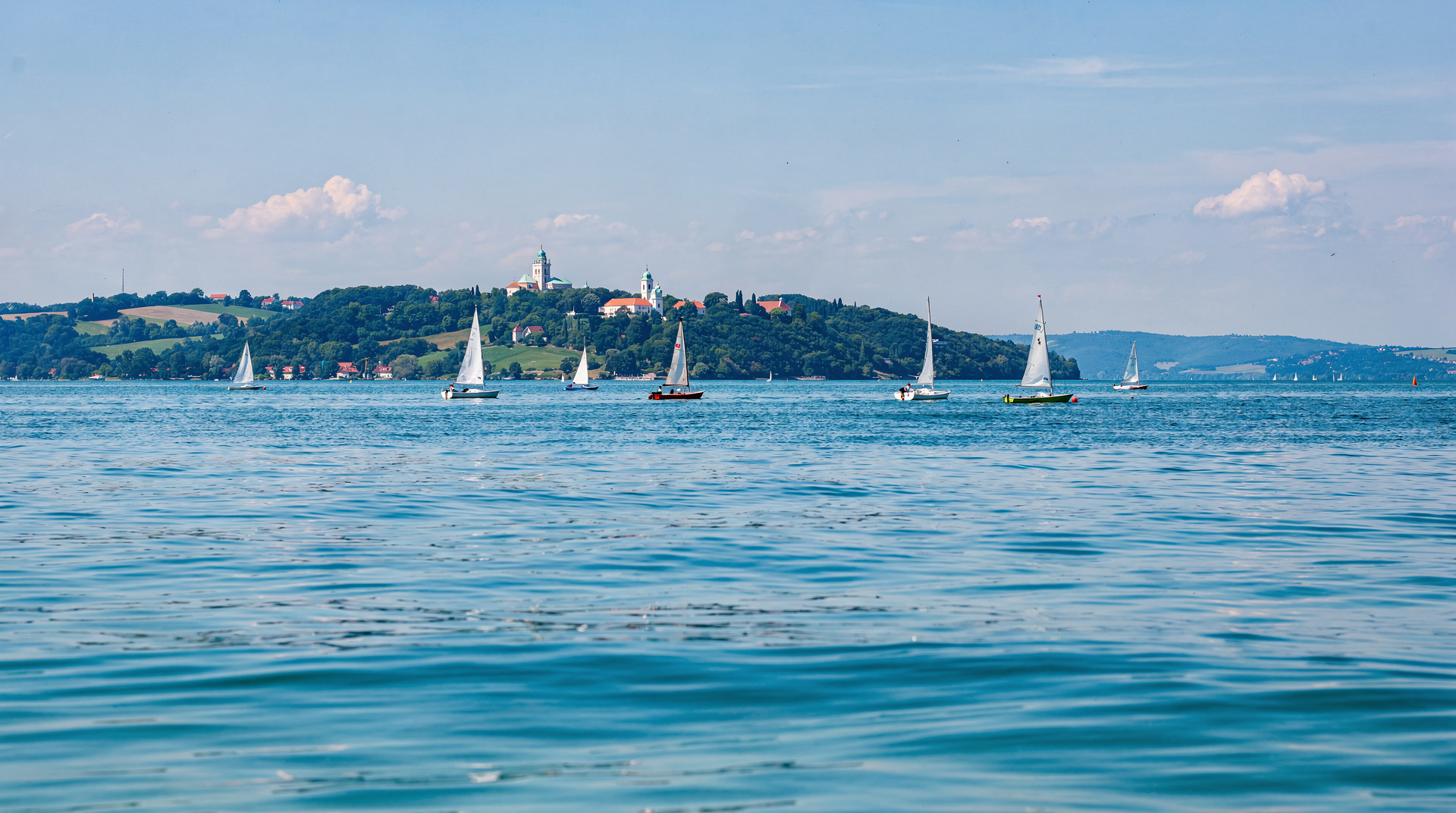
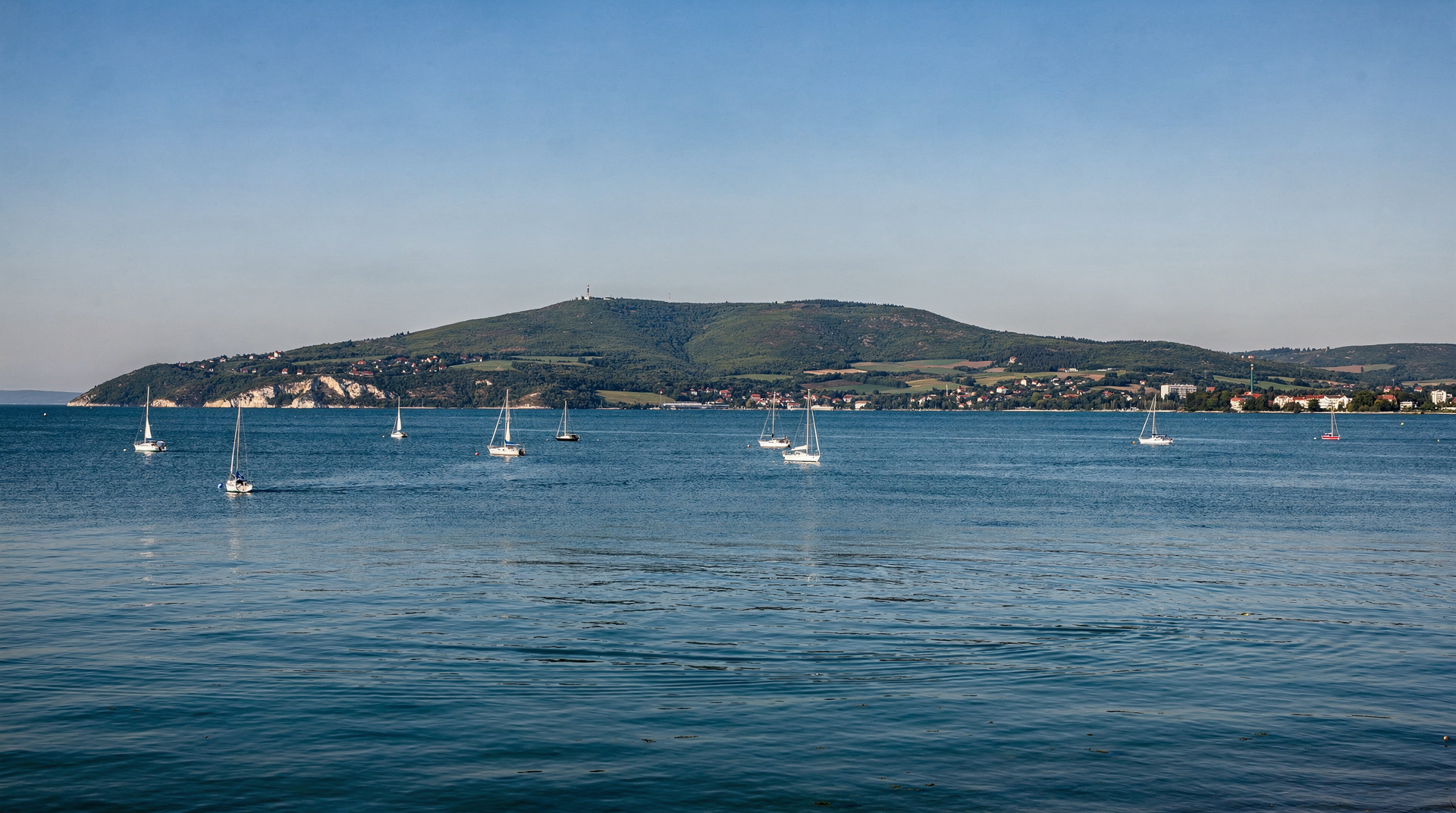
Tihany is the most dramatic point on the Balaton shoreline — a peninsula that juts 5 km into the lake, rising steeply above the water. The hilltop is occupied by the 11th-century Benedictine Abbey (Tihanyi Apátság), founded in 1055 by King Andrew I and home to one of the oldest documents in the Hungarian language. The abbey church is well-preserved and the interior is Baroque with good 18th-century woodwork.
From the abbey terrace, the view over Balaton is one of the finest in Hungary: the lake stretching in both directions, the two shore lines in different shades of green and blue, the Bakony hills in the distance.
The Old Village (Öregfalu) below the abbey is notably unspoiled — traditional rural Hungarian architecture, lavender fields (Tihany is famous for its lavender), and small craft workshops. In the right season (late June–early July), the lavender is in full bloom and the air smells remarkable.
Getting from Balatonfüred to Tihany: take bus 8 from Balatonfüred train station (about 15 minutes, several times per hour), or take the ferry from Balatonfüred pier to Tihany pier (10–15 minutes, seasonal).
For a structured Tihany hike with guide: Tihany peninsula hike and abbey day trip from Budapest
The southern shore: Siófok and beach tourism
The southern shore is Hungary’s main beach holiday strip — Siófok in particular is the most developed resort, with clubs, strand hotels, and a very different atmosphere to the quieter northern shore. It’s more accessible by train (faster journey from Budapest) and better for beach-and-party purposes, but architecturally and culturally it’s less interesting.
For visitors doing a day trip, the northern shore is almost always the better choice unless you specifically want a beach day without much sightseeing.
What to eat around Balaton
Fogas (pike-perch): The defining dish of Balaton. Every lakeside restaurant serves it — pan-fried or breaded. Try it at Balatonfüred’s Stefánia restaurant (Blaha Lujza utca 1) or at any of the simple fish restaurants along the Balatonfüred waterfront. A main course runs 3,500–6,500 HUF (€9–16).
Lángos and kürtőskalács: As in every Hungarian tourist area, these are available from vendors around the Balatonfüred pier and in Tihany village.
Local wine: The Balatonfüred-Csopak appellation produces wines that often outperform their price point. Olaszrizling (Italian Riesling) is the regional specialty — dry, mineral, and food-friendly. Buy a bottle from a local producer for 2,500–5,000 HUF or sample by the glass for 800–1,500 HUF.
Planning your day on the lake
A Balaton day works best when you decide in advance what the day is for. If it is a swimming day, travel early, find a beach section near the Balatonfüred waterfront, and treat Tihany as an afternoon add-on. If it is a sightseeing day, reverse the order: go straight to the peninsula while the abbey terrace is quiet, then come back to Balatonfüred for lunch, a stroll and a glass of wine. Trying to do both at full intensity is how people end up rushing for the last train.
A rough shape that works for most visitors: arrive at Balatonfüred station, walk or ride to the promenade, have a coffee by the water, then head to Tihany by bus or ferry. Spend the middle of the day in the Old Village and at the abbey, eat fogas somewhere with a lake view, and keep the late afternoon for the water or a cellar-door tasting. Leave a generous margin before your return train, because the connection from Tihany back to the station is the one step that cannot be skipped.
If you are weighing independence against convenience, the train gives you freedom to linger, while a guided option removes the logistics. A small-group excursion to the lake from Budapest suits travellers who would rather not manage timetables, and the trade-off is a fixed schedule at each stop.
What to pack
Balaton is an outdoor day, so bring what you would for a beach and a hill walk at once: swimwear, a towel, sun protection, a hat, and comfortable shoes for the cobbled lanes and slopes around the abbey. A light layer is useful on the water in the evening. Our what to pack for Budapest guide covers the broader summer checklist, and the Budapest in summer guide explains what the heat is like before you leave the city.
Tihany beyond the abbey
Most visitors stop at the terrace and the church, but the peninsula rewards a slower pace. The lanes of the Old Village are good for wandering without a plan: craft stalls, lavender products, small cafés and views that open unexpectedly between the houses. The walking paths around the peninsula are what the guided hike is built on, and even on your own you can follow a stretch of shoreline for a quieter view of the lake. For more on the area, see the Tihany destination page and the broader Lake Balaton destination guide.
Eating and drinking without the tourist-trap feel
Lakeside restaurants near the main piers are convenient and busy, so a few streets back you will often find a calmer table and a shorter wait. Order the local fish, ask for the regional white by the glass, and finish with something sweet from a market vendor. If the street food appeals more than a sit-down meal, our guides to lángos and kürtőskalács explain what to look for, and traditional Hungarian dishes will help you read a menu that is mostly in Hungarian.
Wine on the northern shore
The Balatonfüred-Csopak area is a gentle introduction to Hungarian white wine, and a cellar visit fits naturally into the afternoon. Tasting rooms tend to be relaxed, and the staff are usually happy to explain how the lake and the volcanic hills shape the style. If wine becomes the real reason for your trip, read our Hungarian wine guide for the wider picture, and consider the Tokaj wine day trip or the Eger day trip as dedicated wine days. Remember that if you are drinking, the train is a much better choice than driving.
Combining Balaton with the rest of your trip
Balaton is a long day, so it sits best in the middle of a longer stay rather than on your arrival or departure day. Our best time to visit Budapest guide helps you match the lake to the right month, and Budapest’s daily budget shows how a day out compares with a city day. If you prefer something shorter and closer, the Szentendre day trip is an easier half day, and the Hungarian wine guide is a good evening read after you return.
If you are building a longer itinerary, the Budapest weekend break shows how little time a short stay leaves, which is why Balaton usually belongs in a trip of several days rather than a quick city break.
Practical details
| Details | |
|---|---|
| Best season | June–September; July–August warmest but most crowded |
| Transport | Intercity train Keleti → Balatonfüred (~1h15, ~4,500 HUF return booked in advance) |
| Time needed | Full day (8–9 hours on-site) |
| Key attractions | Tihany peninsula + abbey, Balatonfüred promenade, local wine, lake swimming |
| Swimming | Warm June–September; beaches free or small fee |
For the full panorama of excursions from Budapest: best day trips from Budapest. More on Lake Balaton destination and practical Budapest transport at getting around Budapest. If you want a whole week combining Budapest and Balaton, see the 7-day Budapest and day trips itinerary.
When to go: month by month
| Month | Water temp | Crowds | Notes |
|---|---|---|---|
| June | Warming, cooler early | Low–moderate | Lavender blooming in Tihany late June |
| July | Warm (25–28°C) | High | Peak Hungarian and German holiday season |
| August | Warmest | Very high | Busiest month; book trains ahead |
| September | Still swimmable early month | Low | Good weather, thinning crowds, best value |
Balaton vs the Danube Bend: which day trip to choose
If you can only fit one day trip into your Budapest visit, the choice usually comes down to Balaton or the Danube Bend. Balaton wins for swimming, lake scenery and a genuine change of pace from city sightseeing — but it takes a full day and is really only worthwhile May through September. The Danube Bend wins for historical sightseeing (Visegrád’s castle, Esztergom’s basilica), is doable in half a day, and works year-round. Choose Balaton if you have a summer date and want the lake experience; choose the Danube Bend if your dates fall outside summer or you’d rather see history than swim.
Frequently asked questions about Lake Balaton day trip from Budapest
Which part of Lake Balaton should I visit from Budapest?
The northern shore is more interesting: Balatonfüred has a promenade and wine culture, and the Tihany peninsula (15 minutes further) has a hilltop Benedictine abbey and beautiful landscapes. The southern shore (Siófok) is busier and more developed for mass beach tourism but less atmospheric.How long does it take to get to Lake Balaton from Budapest?
Roughly 1h15–1h30 by direct Intercity train from Keleti or Kelenföld to Balatonfüred. Trains run several times daily. The guided tours drive and take about 1h30–2 hours depending on traffic and route. A slower regional train takes up to 2.5 hours.Can you swim in Lake Balaton?
Yes — Balaton is one of central Europe's most popular swimming lakes. The water is warm (25–28°C in July–August), clean, and very shallow on the southern shore (up to 2 km of knee-depth water near Siófok). The northern shore is slightly deeper. Beaches are generally free or have a small access fee.Is Lake Balaton busy in summer?
Very — it's Hungary's main domestic holiday destination and the most popular lake in central Europe. August is the peak, with Hungarian and German families filling the lakeside resorts. Late June and early September offer good weather with far fewer crowds.
Top experiences
Bookable activities with verified prices and instant confirmation on GetYourGuide.