Hortobágy Puszta day trip from Budapest: horse shows, grey cattle, and the Great Plain
Visit the Hortobágy Puszta from Budapest: UNESCO Great Plain, csikós horse shows, Hungarian grey cattle, traditional ranch life, and vast grassland

Quick facts
- Distance from Budapest
- ~180 km east
- Travel time
- ~2 hrs by car via M4; or organized tour from Budapest
- UNESCO status
- Hortobágy National Park designated UNESCO World Heritage Site (cultural landscape) in 1999
- Horse show tickets
- ~4 000–6 000 HUF (~€10–€15); included in most organized tours
- National park area
- Europe's largest semi-arid steppe, 82 000 hectares
- Honest note
- The distance and limited public transport make this one of the few Budapest day trips where an organized tour is strongly recommended over going independently
Europe’s largest semi-arid steppe
The Hortobágy Puszta stretches east of Debrecen in a flatness so complete that you notice the curvature of the earth before you find a hill. Hungary’s Great Plain (Alföld) covers nearly half the country, but the Hortobágy National Park — 82,000 hectares designated a UNESCO World Heritage Site in 1999 — is its most perfectly preserved and culturally significant section. This is the landscape that shaped Hungarian national identity as thoroughly as the Danube and the castle hill of Buda: the puszta of folklore, of the csikós horseman, of grey cattle drifting through grass tall enough to disappear into.
Coming from Budapest (about 180 km east), the Hortobágy requires the longest journey of any major day trip from the capital, and the limited public transport makes it the strongest case for an organized tour. But for visitors interested in natural landscapes, traditional culture, and the UNESCO heritage that few tourists bother to seek out, it is among the most memorable days available from Budapest.
| Where | Hortobágy National Park, ~180 km east of Budapest, Great Plain (Alföld) |
| Cost | |
| Time needed | Full day (organized tour) |
| Getting there | Organized tour recommended; M4 motorway by car (~2 hrs); train to Debrecen + taxi/bus |
| Best time | May–September for horse shows; March–May and September–October for bird migration |
The csikós and what a horse show actually involves
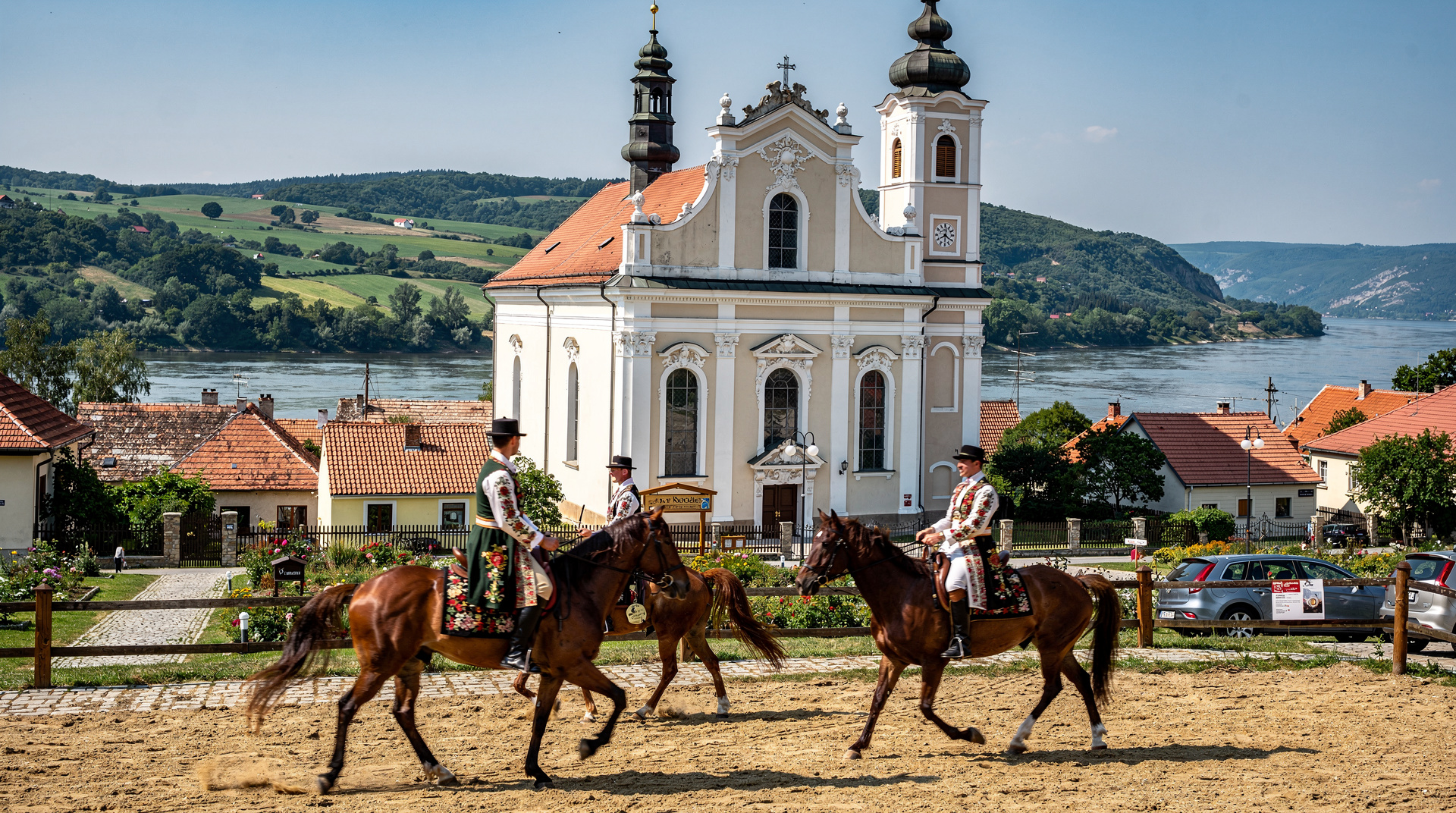
The csikós (plural: csikósok) tradition is the Hungarian equivalent of the American cowboy or the Argentine gaucho — working horsemen who managed vast herds on the open grassland for centuries. The distinctive puszta riding techniques were developed by necessity: managing cattle and horses across flat terrain with no fences required exceptional horsemanship.
The centrepiece demonstration is the “Hungarian post” — a rider standing upright astride five galloping horses, feet spread across the backs of the rear pair while the other three are controlled by reins. It requires years of training and extraordinary balance. Horse shows also include whip-cracking demonstrations (the crack is produced by breaking the sound barrier with the tip), herding demonstrations with traditional Hungarian sheepdog breeds (the Puli, with its distinctive dreadlock coat, and the larger Komondor), and parades of historical ranch equipment and dress.
These shows are genuine skills demonstrations, not purely theatrical performances — many participants are active ranch workers maintaining a living tradition. The best performances are at established working ranches rather than tourist-only venues.
The Budapest to Hortobágy day trip with puszta horse show is the most popular organized option, covering both the national park landscape and the horse demonstration in a single day from Budapest. For a broader national park experience, the full puszta tour from Budapest adds more time in the park and typically includes lunch at a traditional csárda (roadside inn). The puszta horse show tour is a slightly shorter version focused tightly on the equestrian programme. For the most immersive option — spending time at an actual working ranch — the Hungarian ranch day trip with horse show provides hands-on time at a working puszta operation.
The animals of Hortobágy
Hungarian grey cattle (Magyar szürke) are the most visually striking residents of the puszta — large, pale grey animals with long lyre-shaped horns that can span over a metre. Adapted over centuries to the semi-arid grassland, they are hardy and slow-growing, which means their meat is prized for flavour but expensive to produce. By the 1970s the breed was nearly extinct; the national park conservation programme rebuilt the population to around 8,000 animals today, and seeing a grey cattle herd moving across the flat grassland in golden light is one of the defining Hortobágy images.
Racka sheep are equally distinctive: their corkscrew horns spiral upward and outward in a way that seems implausible. The breed produces both meat and wool and has been characteristic of the puszta for centuries. Both animals can be seen at close range at working ranches and the national park visitor areas.
Birds: The Hortobágy is one of Europe’s premier bird migration sites. In spring (March to May) and autumn (September to October), common cranes pass through in numbers that can reach 100,000 individual birds in a single day during peak migration — one of the great wildlife spectacles of Central Europe. The fishponds (halastó) at Hortobágy also support breeding colonies of herons, egrets, spoonbills, and — in summer — great white pelicans. Year-round residents include great bustards (one of Europe’s heaviest flying birds), raptors, and various grassland species. The national park runs guided birdwatching tours with high-powered telescopes from the main observation points.
Why the puszta feels so different from the capital
After days among thermal baths, ruin bars and grand façades, the puszta resets your sense of scale. If you are still shaping your overall plan, the Budapest travel guide and the first time in Budapest guide help you decide how much of your trip to hand over to a long day out. Travellers who have already ticked off the Széchenyi baths and the Buda Castle district often find that the open grassland is exactly the contrast they were missing, and a quiet day under a very large sky makes the return to the city feel fresh rather than tiring.
It also helps to think about what kind of day you want. Some day trips are about food and cellars, others about palaces or riverside towns. Hortobágy is about space, animals and a living rural tradition. Go with that expectation and you will enjoy it; go expecting a town to wander and you may feel the day is thin. The best day trips from Budapest overview is a useful way to compare the mood of each option before you commit.
How a typical day unfolds
Most organized days follow the same rhythm. You leave the city early, settle into a long, comfortable drive across the plain, and the scenery slowly empties of buildings until the horizon flattens. Arrival is usually followed by time at the village or the bridge, then the horse show and a traditional lunch, with some free time before the return journey. The details vary by operator, so read the itinerary of the tour you choose carefully, especially if you care most about the ranch visit or about birdwatching.
Because so much of the day is spent travelling, it pays to prepare for the road: bring something to read or listen to, a charged phone for photographs, and layers you can add or remove. Anyone prone to motion sickness should sit near the front. The drive is part of the experience, since it shows how far the plain extends beyond the places most visitors ever see. If you want a sense of how the capital’s transport works before and after the trip, the getting around Budapest guide and the airport to city centre guide are worth a look, particularly when your tour starts or ends at an awkward hour.
Food on the Great Plain
Plains cooking is hearty and unfussy, built around meat, paprika and slow simmering. A csárda lunch is as much a part of the cultural experience as the horse show, and it is a good moment to try dishes you may have skipped in the capital. Our guide to traditional Hungarian dishes explains what to expect from gulyás, pörkölt and fish soup, and the Hungarian wine guide and pálinka guide are handy if your lunch comes with a glass of something local. Vegetarians should mention their needs when booking, and the vegetarian and vegan Budapest guide gives useful background on how Hungarian menus handle meat-free requests.
Choosing between the tour options
The four organized options on this page differ mainly in how much time they give you in the park and how much they focus on riding. If the horse show is the main reason you are going, pick the tour built around it. If you want more landscape and time in the village, the longer puszta programme suits you better. If you are travelling with children or with friends who enjoy hands-on experiences, the ranch option tends to feel the most personal. The family-friendly attractions guide and the Budapest with kids guide can help you judge whether a long day with younger travellers is right for your group.
Whichever you choose, book ahead in the busy summer months and check the programme for the date you plan to travel, since shows and ranch visits follow the season. For a wider look at comparing guided days, the Eger day trip and Tokaj wine region guide show what a very different excursion from the capital looks like.
The Nine-Arch Bridge and the village
The Kilenclyukú híd (Nine-Arch Bridge) over the Hortobágy River is the visual symbol of the puszta — Hungary’s longest stone bridge at 167 metres, built in 1833 with a graceful nine-span profile that is deeply familiar from Hungarian postage stamps, banknotes, and tourist imagery. It is a short walk from the main visitor area and free to visit. The bridge offers good photography from both the riverbank and the adjacent grassy meadow.
Hortobágy village itself is modest but has the national park visitor centre (with exhibits on the puszta ecosystem and cultural heritage), a traditional csárda serving gulyás, halászlé (fisherman’s soup), and pörkölt at prices significantly below Budapest restaurants (mains around 2 500–3 500 HUF / ~€6.25–€8.75), and a small artisan market with local handcrafts including woven textiles, leather goods, and pottery.
Hortobágy by season
| Months | What’s happening | Crowds |
|---|---|---|
| March–April | Spring crane migration begins; cool, changeable weather | Low |
| May–June | Horse shows resume; lush green grassland; good bird activity | Moderate |
| July–August | Peak horse show season; hot and exposed; long daylight for photography | High on tour days |
| September–October | Autumn crane migration (the largest spectacle, up to 100 000 birds/day); harvest light | Moderate, rising on weekends |
| November–February | Most horse shows and ranch visits paused; bleak, atmospheric off-season | Very low |
Combining Hortobágy with a wider eastern Hungary trip
Hortobágy sits on the way to nowhere else Budapest visitors typically go, which is part of why it feels so different from a Danube Bend or Balaton day trip. Travellers who enjoy it tend to also enjoy Tokaj and its wine cellars, reachable via a similar eastward route — see the Tokaj wine day trip guide for logistics on stringing the two together over two days. Debrecen itself, Hungary’s second city, has a handsome Reformed Great Church and a lively pedestrian centre worth an hour if you have a car and time to spare beyond the puszta itself. The puszta horse show day trip guide covers ticket options and show timings in more detail than fits here.
Getting there
By organized tour: Strongly recommended. The distance (180 km), limited rail connections (trains reach Debrecen but not the national park), and the need to be at specific ranch locations at show times make independent travel genuinely inconvenient. All the organized tours handle transport, timing, and access — the horse show admission is typically included.
By car: The M4 motorway east from Budapest to Debrecen, then Route 33 northwest to Hortobágy village, takes about 2 hours in normal traffic. Having a car allows you to explore more of the park independently and combine with Debrecen (a large university city with a fine Reformed church) or Eger to the west.
By train: Intercity trains reach Debrecen in about 2.5 hours from Budapest Keleti. From Debrecen, buses run to Hortobágy village (about 40 minutes) but the timing often doesn’t align well with horse shows. A taxi from Debrecen to the park costs roughly 6 000–8 000 HUF (~€15–€20) one way.
Practical tips
Best months: April to October for horse shows and outdoor experiences. May and September combine horse shows with excellent bird migration (spring cranes depart in March–April; autumn cranes arrive in September–October). July and August can be very hot on the exposed flat grassland — carry sun protection and water.
What to wear: Flat, comfortable shoes — the terrain is mainly grass and packed earth paths. A light jacket even in summer (afternoon winds can be cool). Sun hat and sunscreen are essential in summer.
Photography: The flat puszta light is extraordinary — the horizon is unobstructed in all directions, and both sunrise and sunset create long-shadow dramatic light. The horse demonstrations are best photographed from the ends of the performance area rather than the middle; ask the guide for the best position.
Combine with: A Hortobágy visit pairs naturally with Eger or Tokaj on a two-day northern Hungary circuit. See the best day trips from Budapest for the full range of regional options and how to combine them, and the Eger day trip guide for pairing the two on a longer route. The Great Plain is genuinely unlike any other Hungarian landscape — if you want Budapest’s historical opposite, this is it.
Top experiences
Bookable activities with verified prices and instant confirmation on GetYourGuide.