Eger day trip from Budapest: castle, wine cellars, and thermal springs
Is Eger worth a day trip from Budapest?
Yes — Eger combines a medieval castle with a famous dramatic siege story, Hungary's most accessible wine-cellar street, and the unusual Egerszalók thermal springs 10 km away. The direct Intercity train takes 2 hours each way. It's one of Hungary's most rewarding day trips.
Eger: the day trip that overpays
Most day trips return you feeling you’ve seen the main thing. Eger returns you feeling you’ve seen three main things and still didn’t have time for a fourth. In one day, you can explore a castle that held off the entire Ottoman army (the 1552 siege is one of the defining stories in Hungarian national identity), drink exceptional wine in rock-cut cellars, soak in geothermal springs, and walk through one of Hungary’s most beautiful baroque market squares. The train takes two hours from Budapest and runs directly.
Eger is consistently undervisited by international tourists who focus on Budapest, Prague, and Vienna — which means it’s authentic, affordable, and not overrun with souvenir shops.
| Where | Eger, 130km northeast of Budapest |
| Cost | Around 15,000–22,000 HUF/person all-in (transport, castle, tastings, lunch) |
| Time needed | Full day, 7–9 hours |
| Getting there | Direct Intercity train from Keleti (~2hrs) or guided tour |
| Best time | May–October for the wine cellars; year-round for the castle and thermal baths |
Getting there
By train (recommended): Direct Intercity trains from Budapest Keleti station run approximately 4–6 times daily to Eger. The journey takes about 2 hours. Book in advance at mav.hu — mandatory Intercity reservation runs 500–800 HUF on top of the ticket price. Return fare: approximately 4,400 HUF (€11) round trip. The train arrives at Eger station, which is a 10-minute walk from the castle and town centre.
By bus: Buses from Népliget bus station (Budapest) to Eger run frequently and take about 2 hours. Slightly cheaper than the train but less comfortable for a long round trip.
By guided tour (with Egerszalók): If you want to combine Eger with Egerszalók thermal springs in the same day, a guided tour handles the logistics: Eger and Egerszalók full-day tour from Budapest
Eger Castle
The castle stands on a volcanic rock plateau above the town and is the reason Eger exists in the world-historical sense. In 1552, Captain István Dobó and approximately 2,000 Hungarian and Slovak soldiers held the castle against an Ottoman army of 35,000–80,000 men for 39 days before the Ottomans withdrew — one of the very few Hungarian victories of the 16th century. The story became the subject of a beloved Hungarian novel (Géza Gárdonyi’s “Eclipse of the Crescent Moon,” 1899) and remains taught in Hungarian schools today.
The castle museum contains:
- The Bishop’s Palace museum with medieval and Turkish-era artefacts.
- Dobó István Vármúzeum — the history of the siege in detail.
- Wax figure museum illustrating the siege (slightly kitschy, but children love it).
- The underground casemates — a network of tunnels cut into the volcanic rock, used for mining under the Ottoman positions.
The views from the castle walls over the town and the Eger valley are excellent. Allow 1.5–2 hours for the castle. Entry: approximately 2,800–4,500 HUF for adults.
The Valley of Beautiful Women
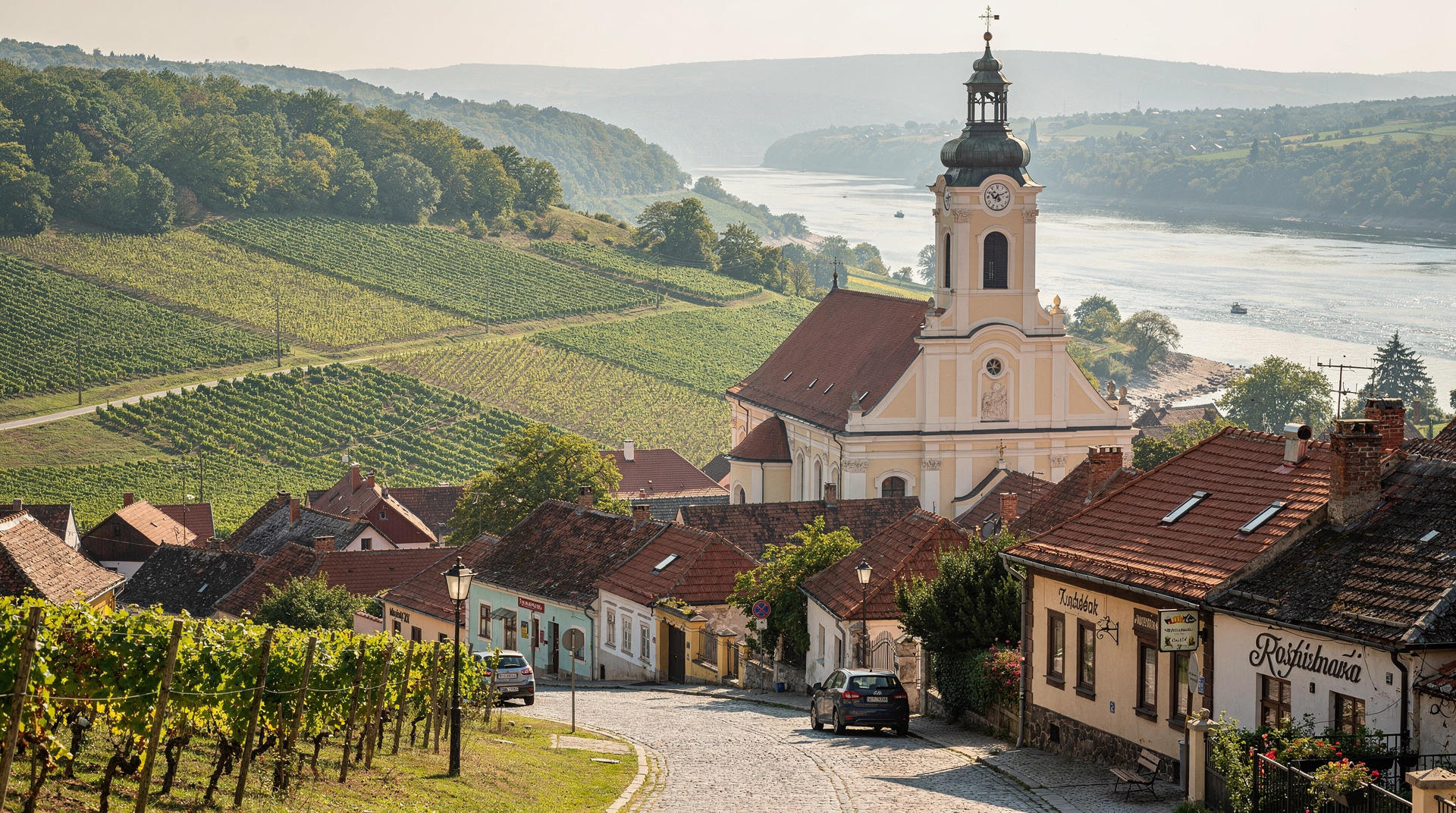
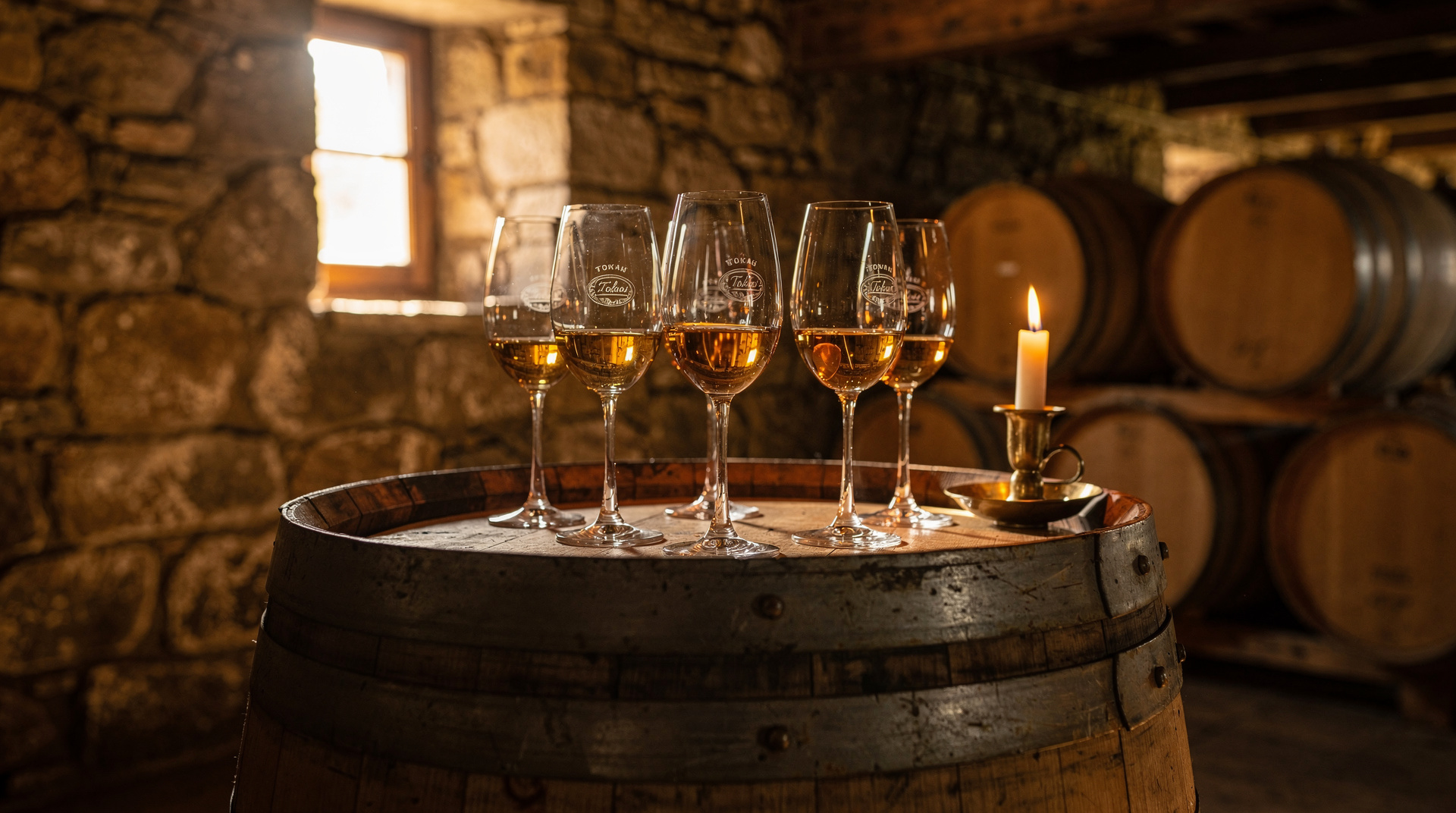
Szépasszony-völgy (the Valley of Beautiful Women) is a unique Hungarian institution: a valley just southwest of the town centre where about 30–40 wine cellars are cut directly into the hillside volcanic tufa. Each cellar is owned by a different producer; most are open for walk-in tasting and sell wine by the glass for 200–600 HUF.
The atmosphere is convivial and informal — plastic chairs outside the cellar doors, local produce for sale alongside the wine, no dress code, no reservations. It’s the antithesis of a formal tasting room. Older couples, young Hungarians, and the occasional tourist all mix happily.
What to drink:
- Egri Bikavér (Bull’s Blood): The signature red blend. Look for the “Superior” label from producers like Tibor Gál, St. Andrea, or Thummerer for higher quality.
- Egri Csillag: A white wine blend newly established as the region’s flagship white — clean, dry, and food-friendly.
- Single varietal whites: Leányka (a local grape variety), Olaszrizling, and Chardonnay are all produced here.
Budget 1,500–3,500 HUF for a satisfying tasting session across two or three cellars. The valley is a 15-minute walk from the castle, or a short taxi ride.
How to taste in the cellars
Treat the valley as a stroll rather than a checklist. Pick a cellar that looks inviting, order a glass of something you don’t know, and ask the person pouring what they would drink with lunch. Cellar owners are usually happy to talk about their vines, and a glass shared with a neighbour at the next table often turns into a conversation. Move on after one or two glasses, compare the Bikavér from one cellar with the next, and notice how much the style changes from producer to producer. If you want to understand why, the Hungarian wine guide explains the grapes and regions behind what is in your glass.
Pace yourself. You have a train to catch, and a long afternoon of tastings on an empty stomach is the most common way this day goes wrong. Eat something solid before you start, drink water between cellars, and decide in advance who is staying sober enough to read the timetable.
If you would rather have someone else handle the route, the choice of cellars and the driving, a private wine tasting experience in the Eger region is a comfortable alternative to wandering the valley alone. For a broader look at the surrounding vineyards, a countryside wine day out from Budapest takes you beyond the cellar street itself.
The historic town centre
Eger Cathedral (Egri Főszékesegyház): Built 1831–37 in neoclassical style, it’s the second largest church in Hungary after Esztergom Basilica. The interior is imposing and the organ is excellent — daily organ recitals are held in summer.
Minaret: The 40-metre-tall Ottoman minaret on Knézich utca is the northernmost surviving Turkish minaret in Europe. You can climb the 97 steps (narrow spiral staircase) for the view. Entry: ~600–800 HUF.
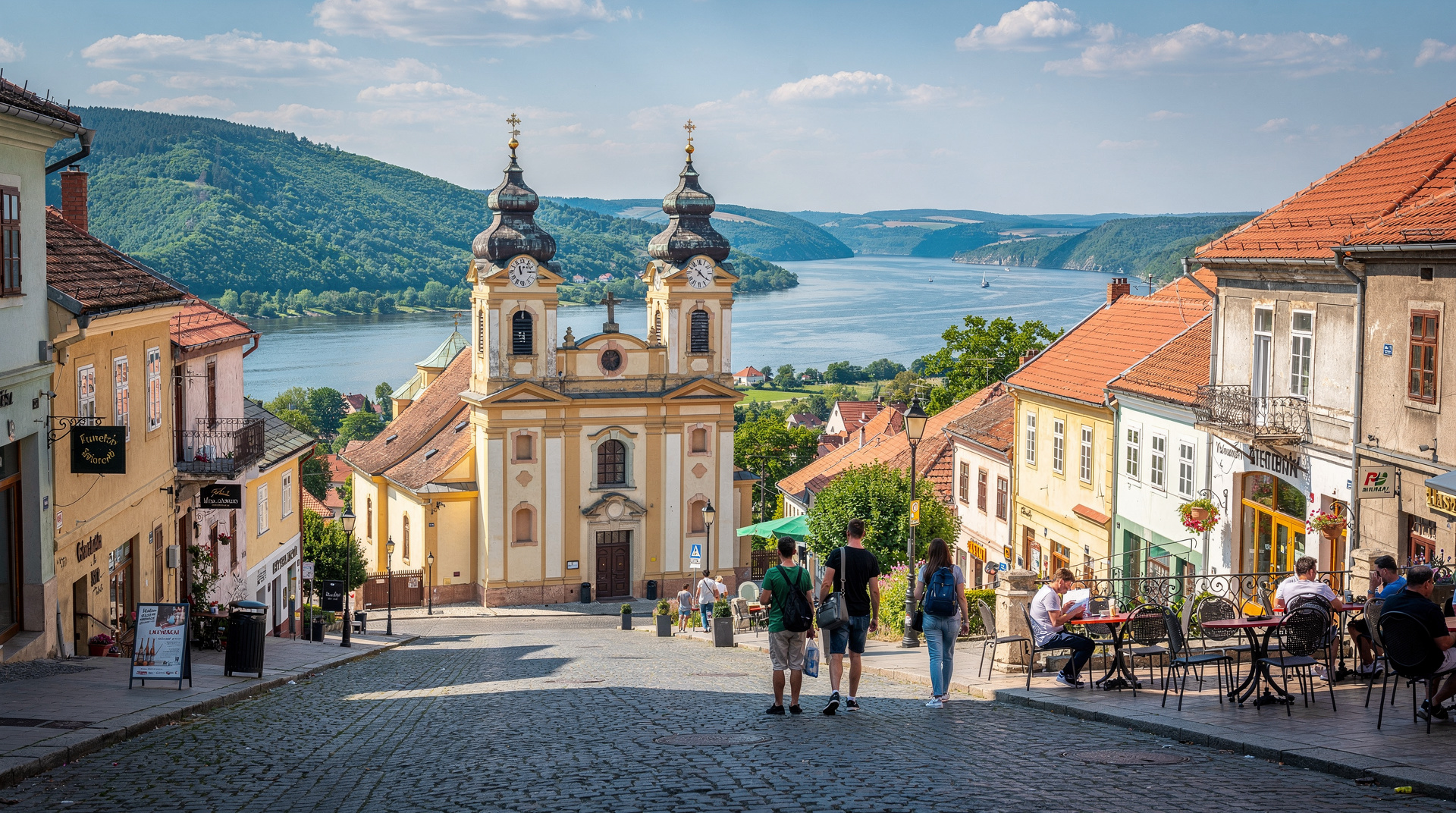
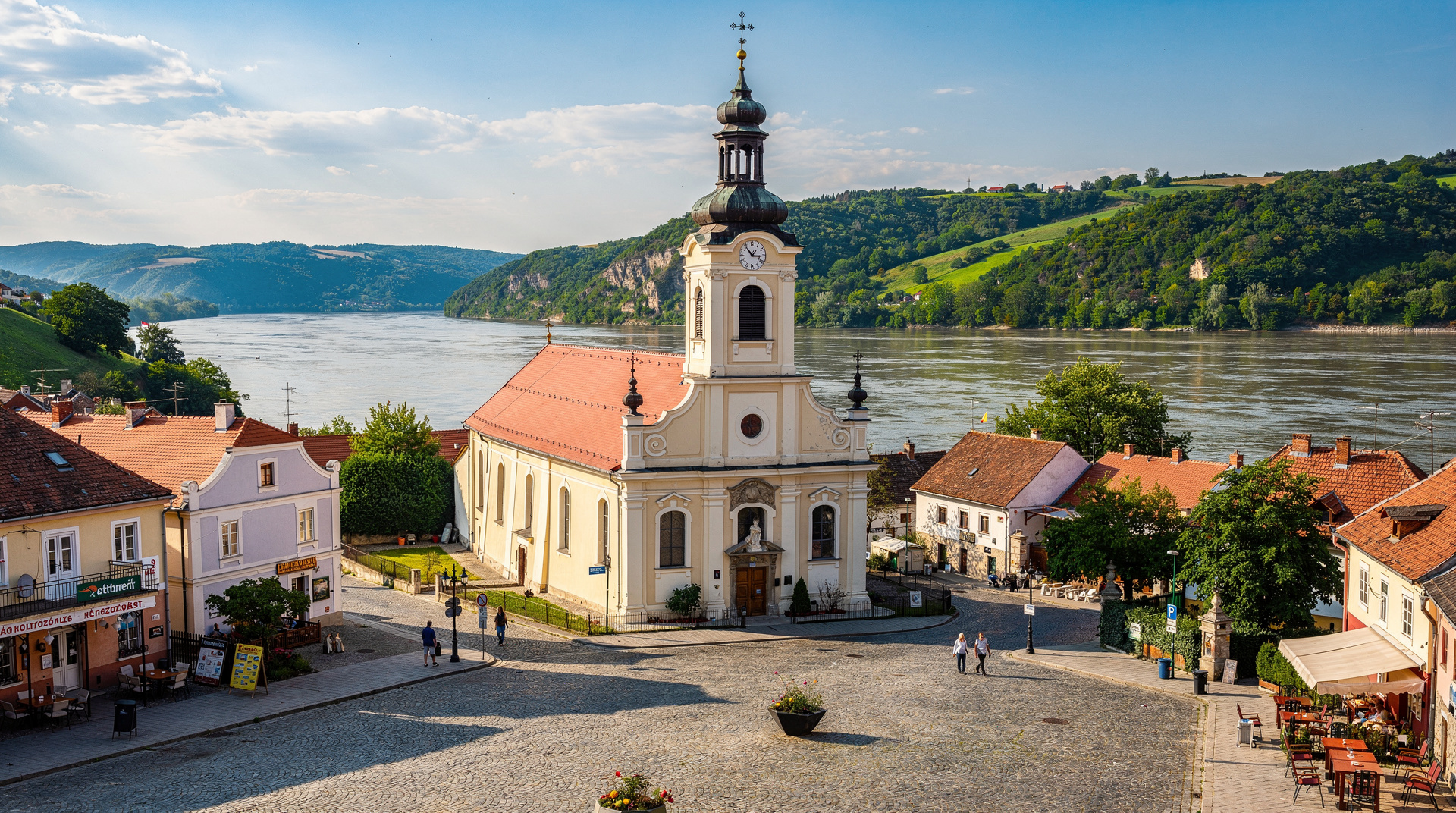
Dobó Square (Dobó István tér): The main baroque square of Eger, with the Minorite Church (1773), a statue of Dobó, and good restaurants on the surrounding streets. This is the place for lunch.
Eszterházy Palace (Líceum): Now a university, this 18th-century baroque palace has a camera obscura in its tower (one of the earliest in Europe) and a beautiful library floor. Tours available.
Walking the town
Eger is small enough that you rarely need transport between the sights in the centre. The castle, the square, the cathedral and the minaret all sit within an easy walk of each other, and the pleasure of the town is in the streets between them: baroque facades in soft colours, courtyards you can glance into, and cafés where nobody hurries you. Leave a little slack in the day for wandering, because the best moments here are usually unplanned.
If you like this kind of compact historic town, you may also enjoy Szentendre, which offers a very different, riverside version of the same slow pace and is far easier to reach from the capital. Visitors who want to see how Eger compares with the rest of the region should read Tokaj alongside it, since the two wine areas are often weighed against each other.
Egerszalók thermal springs
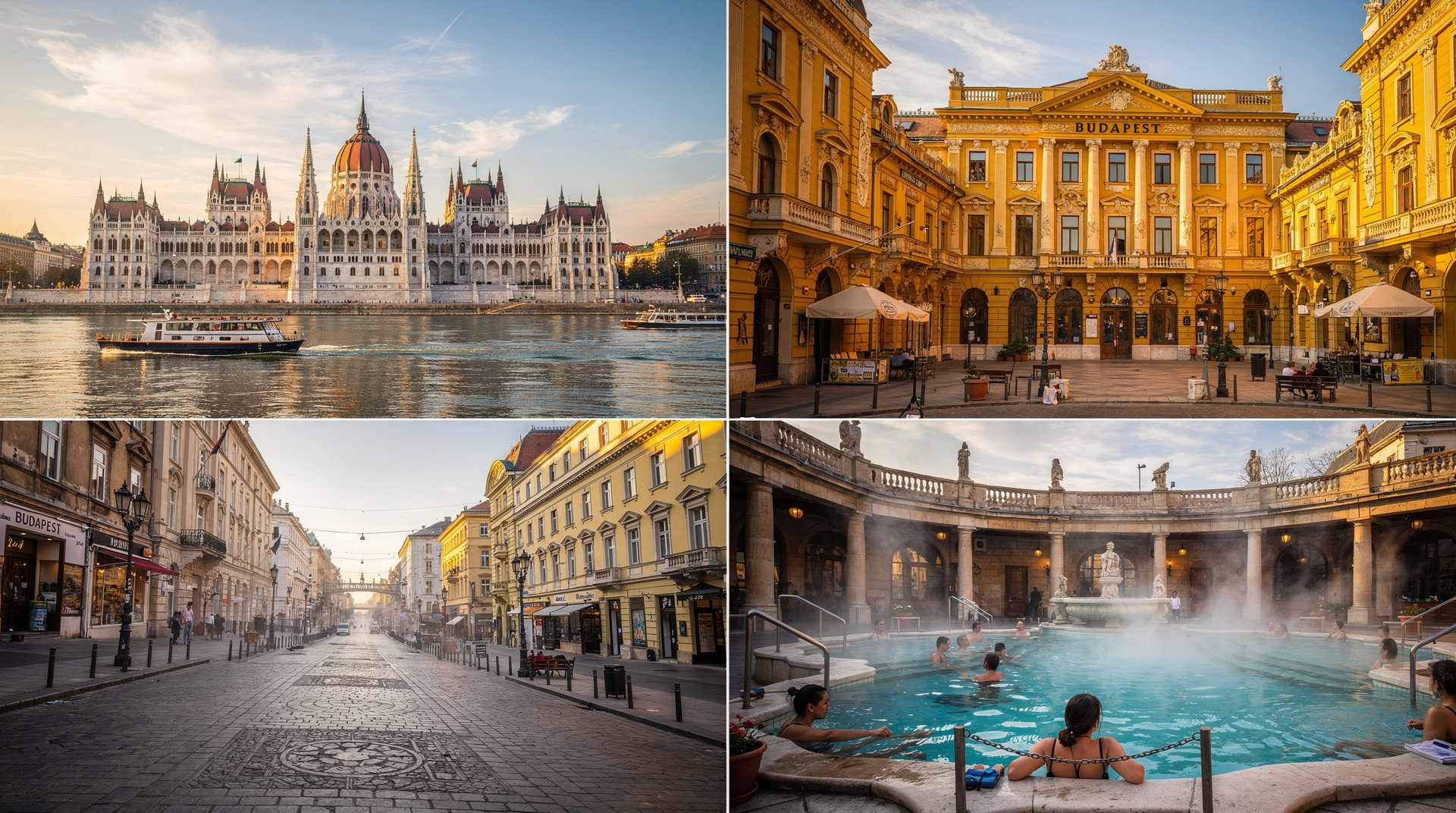
Saliris Resort, 10 km west of Eger, sits around a thermal spring where calcium-carbonate mineral water has created white terraced formations over decades — a naturally occurring travertine landscape. The outdoor thermal pools are at 34–38°C. The setting is distinctive: you’re soaking in geothermal water surrounded by an unusual white mineral landscape.
Getting there from Eger: taxi (approximately 2,500–3,500 HUF each way) or local bus 10 or 12 (slow but cheap).
Entry to the thermal area: approximately 5,500–7,500 HUF depending on season and package.
If combining Eger and Egerszalók in a single day, arrive in Eger early (on the first or second train), visit the castle and town by mid-afternoon, then take a taxi to Egerszalók for the late afternoon/early evening thermal experience before returning to Budapest on a late train. It’s a full day but very satisfying.
Making the most of the thermal visit
Bring a swimsuit and a towel, or check what the resort provides, so you aren’t buying them on the spot. The warm water feels especially good after a morning on your feet on castle stones and cobbled streets, and it is a gentle way to end a day that began with an early train. In cooler months the contrast between hot water and cold air is part of the appeal, much as it is in Budapest’s outdoor pools; our guide to outdoor baths in winter explains what to expect. If you are new to Hungarian bathing customs, thermal bath etiquette will save you some awkward moments.
For a guided way to do both Eger and the springs without arranging taxis, the full-day Eger and Egerszalók excursion remains the simplest option, and it avoids the problem of watching the clock while you float.
Planning your day around the train
The shape of the day depends mostly on which train you take out of Budapest and which one you plan to take back. Choose an early outbound service so that the castle gets your freshest energy, keep lunch relaxed on Dobó Square or a side street, and save the wine valley for the afternoon, when the cellars are lively and the walking is easy. Work backwards from your return train and give yourself a margin, since the walk to the station and the formalities of boarding take longer than you expect when you are tired and a little merry.
If you are travelling with children or with anyone who tires easily, it is perfectly sensible to drop one of the big three. The castle and the town alone fill a satisfying day, and the Egerszalók soak can wait for another visit. Families will find more ideas in the Budapest with kids guide, and anyone building a longer trip around several excursions can look at the best day trips from Budapest to see where Eger fits.
Finally, think about how this day sits within the rest of your stay. A day out of the city is a welcome change of pace after a few days of museums and baths, so it works well in the middle of a visit rather than on your arrival or departure day. The Budapest in 4 days itinerary and the first-time visitor guide both help you decide how many days to spend in the capital before heading out.
Where to eat in Eger
Macok Bistro (Tinódi utca 4): Creative Hungarian cuisine with good wines, locally sourced ingredients, and a pleasant courtyard. Main courses 3,500–6,500 HUF.
Senator Ház Restaurant (Dobó tér 11): Traditional Hungarian cooking right on the main square. Reliable gulyás, roast duck, wine from local producers. 3,000–5,500 HUF for a main course.
Palacinta House: Savoury crepes with various fillings — cheap, quick, good for lunch on the run. Under 2,000 HUF.
Avoid the restaurants with laminated tourist menus and photographs of every dish — they are invariably more expensive and less authentic than the side-street options.
Practical summary
| Details | |
|---|---|
| Distance from Budapest | 130 km northeast |
| Transport | Direct Intercity train from Keleti (~2 hours, ~4,400 HUF return) |
| Time needed | Full day (7–9 hours) |
| Best season | Year-round; wine cellar season peaks May–October; thermal baths excellent in winter |
| Key attractions | Castle, Valley of Beautiful Women, Egerszalók thermal springs, cathedral, minaret |
| Budget per person | Transport + castle + tastings + lunch: roughly 15,000–22,000 HUF (€38–55) |
For wine background: Hungarian wine guide and Tokaj wine day trip for a comparison of Hungary’s two wine day trips. Full excursion overview: best day trips from Budapest. The Eger destination page has additional practical details.
Guided tour vs independent train trip
| Guided tour (with Egerszalók) | Independent by train | |
|---|---|---|
| Cost | Roughly 25,000–35,000 HUF/person | Around 15,000–22,000 HUF/person all-in |
| Effort | Minimal — transport and logistics handled | Requires booking train seats, taxis between sights |
| Flexibility | Fixed schedule, guided commentary | Full control over timing and which sights to skip |
| Best for | First-timers, those short on planning time | Independent travellers comfortable with Hungarian rail |
Our companion guide on Eger’s Bull’s Blood wine and the Valley of Beautiful Women goes much deeper into the wine side of this trip if that’s your main interest. For the pálinka side of Hungarian spirits, which pairs naturally with an Eger cellar visit, see the pálinka guide. If you’re weighing this against other options for a longer stay, the week of Budapest and day trips itinerary has room for Eger alongside other regional trips, and the getting around Budapest guide covers how to reach Keleti station from wherever you’re staying. Budget-conscious travellers should also check the Budapest daily budget guide for how a day trip like this compares to a day spent in the city.
Frequently asked questions about Eger day trip from Budapest
How do I get to Eger from Budapest?
Take a direct Intercity train from Keleti station (platform varies — check MÁV app). Journey time is about 2 hours. Trains run 4–6 times daily. Book in advance via mav.hu — Intercity trains require a reservation fee (roughly 500–800 HUF extra). Return ticket: ~4,400 HUF. There's also a bus from Népliget (~2 hours).What is Egri Bikavér (Bull's Blood)?
Bull's Blood is a red wine blend produced in the Eger wine region. The name comes from the 1552 siege legend — Turks supposedly believed the Hungarians' fierce resistance was powered by mixing bulls' blood with their wine. Modern Egri Bikavér is a blend of Kékfrankos, Merlot, Cabernet Franc, and other grapes. Quality varies; ask for 'Superior' designation for the better producers.What are the Egerszalók thermal springs?
Egerszalók's Saliris Resort has travertine terraces formed by calcium-carbonate mineral water — similar in appearance (though smaller scale) to Turkey's Pamukkale. The outdoor thermal pools are at 36°C. It's 10 km from Eger town, accessible by taxi or local bus. Entry to the resort thermal area: approximately 5,500–7,500 HUF.What should I not miss in Eger?
The Eger Castle museum and the views from the walls; at least one wine tasting in the Szépasszony-völgy cellars; the Cathedral (one of the largest in Hungary); and the minaret — the northernmost surviving Ottoman minaret in Europe. If time allows, Egerszalók thermal baths in the afternoon.Is it better to visit Eger independently or on a guided tour?
Independent by train is cheaper and gives you full control over timing, but requires booking an Intercity seat reservation and arranging taxis to Egerszalók yourself. A guided tour costs more but removes all logistics, including transport between Eger town and the thermal baths. First-time visitors short on planning time generally do better with a tour; confident independent travellers save money going by train.
Top experiences
Bookable activities with verified prices and instant confirmation on GetYourGuide.