Traditional Hungarian dishes: what to eat in Budapest and where to find them

What is the most famous Hungarian dish?
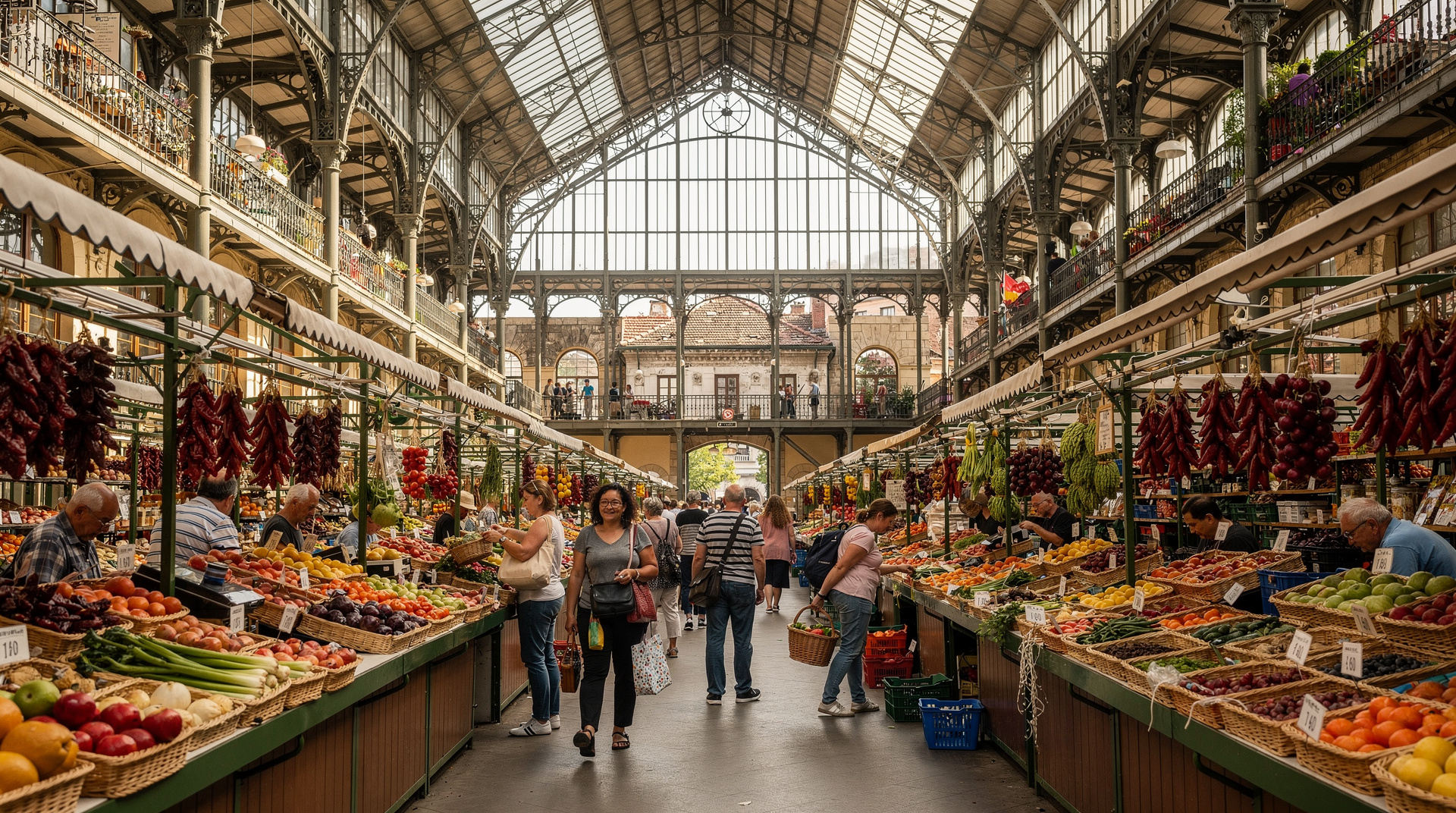
Gulyás (goulash) is Hungary's national dish — a paprika-spiced beef and vegetable soup, not the thick stew most foreigners imagine. Equally essential: lángos (fried dough), kürtőskalács (chimney cake), pörkölt (the actual thick stew), and halászlé (fisherman's soup). All are available at the Great Market Hall and in traditional étkezde canteens.
Hungarian cuisine: misunderstood and underrated
Hungarian food suffers from an image problem outside its borders. “Goulash” has been adopted into international cuisines in such adulterated forms — thick, mild, often accompanied by egg noodles — that the original bears little resemblance. And Hungary’s wine culture, comparable to France’s or Italy’s in seriousness, remains almost completely unknown internationally.
The reality of eating in Budapest is better than most visitors expect. The cuisine is generous, flavour-forward, and built on a handful of excellent core techniques: slow-braised paprika meats, fermented and pickled vegetables, dairy-rich sauces, and sweet doughs that produce some of Europe’s best pastry. This guide covers the essential dishes, where to find them, and the honest context you need to eat well.
| Must-try dishes | Gulyás, lángos, pörkölt, kürtőskalács, halászlé |
| Cost per dish | Around 700–4,500 HUF depending on dish and venue |
| Where | Great Market Hall, District VII étkezde, cukrászda pastry shops |
| Best for locals’ prices | Canteen-style étkezde over Váci utca restaurants |
| Vegetarian-friendly? | Yes, with planning — see the vegetarian guide below |
Gulyás: the real thing
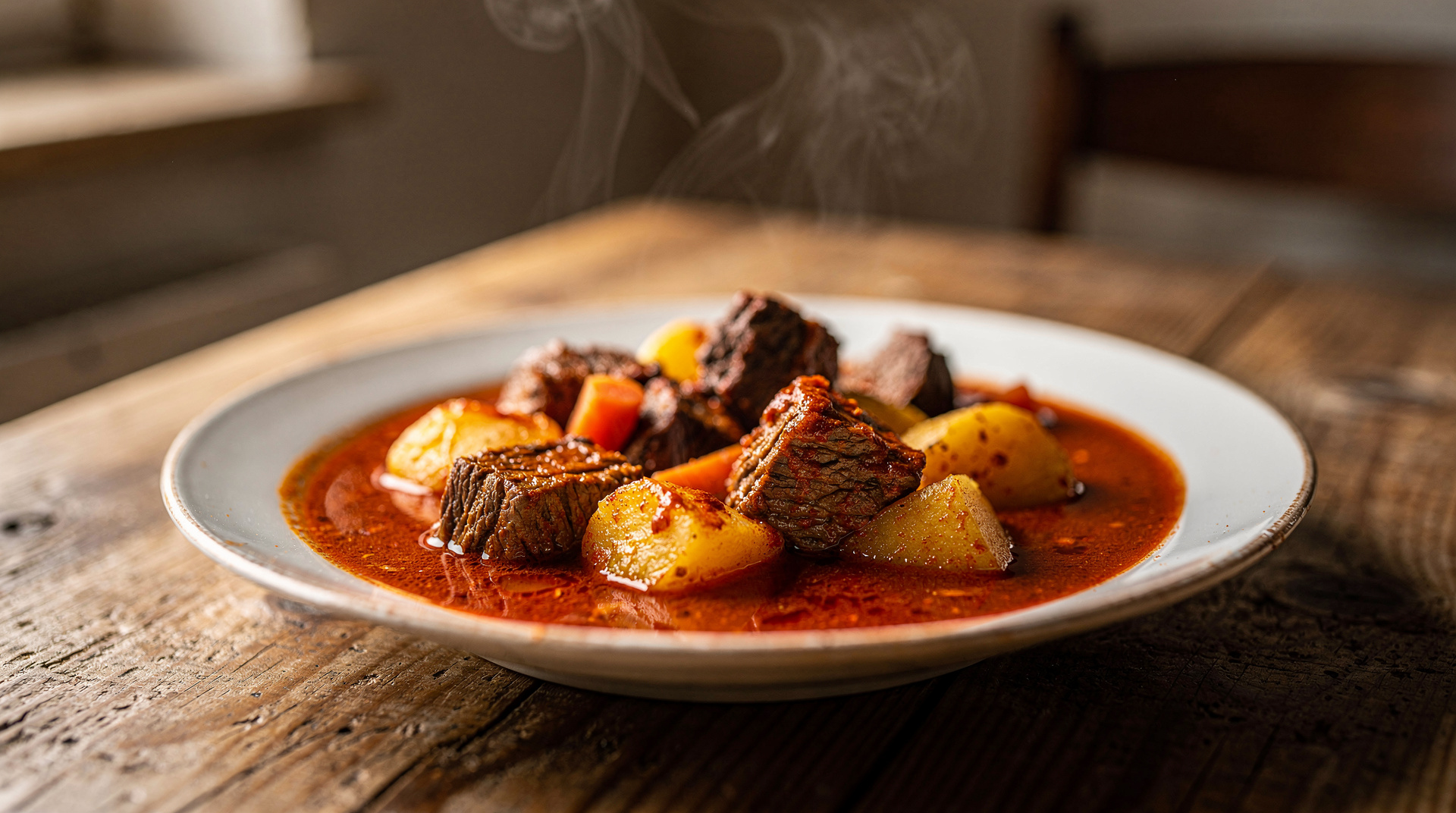
Gulyás (pronounced ‘goo-lyash’) is Hungary’s national dish and the source of the most persistent misconception in European food tourism. In Hungary, gulyás is a soup — not a stew.
The dish is made by rendering lard with onions and paprika until the onions caramelise, then adding diced beef (traditionally from cattle raised on the Great Plain), potatoes, carrot, parsnip, and caraway seed, simmered long enough that the beef becomes tender and the broth becomes deep red and richly flavoured. The result is served in a bowl with bread on the side. It is hearty and warming — particularly appropriate in the cooler months.
Price in a traditional étkezde: 1,800–2,800 HUF (€4.50–7). In a tourist-facing restaurant: 2,500–4,000 HUF. Do not order it from a restaurant on Váci utca — the version there tends to be overpriced and underseasoned.
Where to find the real thing:
- Kádár Étkezde (Klauzál tér 9, District VII): a legendary old-school canteen, open Monday–Saturday for lunch only. Gulyás around 1,900 HUF. Cash only; expect to share tables.
- Hungarikum Bisztró (Steindl Imre utca 13, District V): mid-range, consistently good, near the Parliament.
- Buja Disznó’ka (Erzsébet körút 2): Hungarian small-plates format, modern presentation, honest prices.
Pörkölt: the actual stew
Pörkölt is what most non-Hungarians call goulash — a thick, slow-braised meat ragout in a heavy paprika and onion sauce, with no soup broth. It can be made with beef, pork, chicken, or lamb; the paprika concentration is higher than in gulyás.
Pörkölt is served with nokedli (small egg dumplings, similar to German Spätzle) or potato galuska. The sauce is rich and red-orange, with rendered fat visible at the surface — this is normal and correct.
Price: 2,500–4,500 HUF (€6.25–11.25) as a main course.
Lángos: the quintessential street food
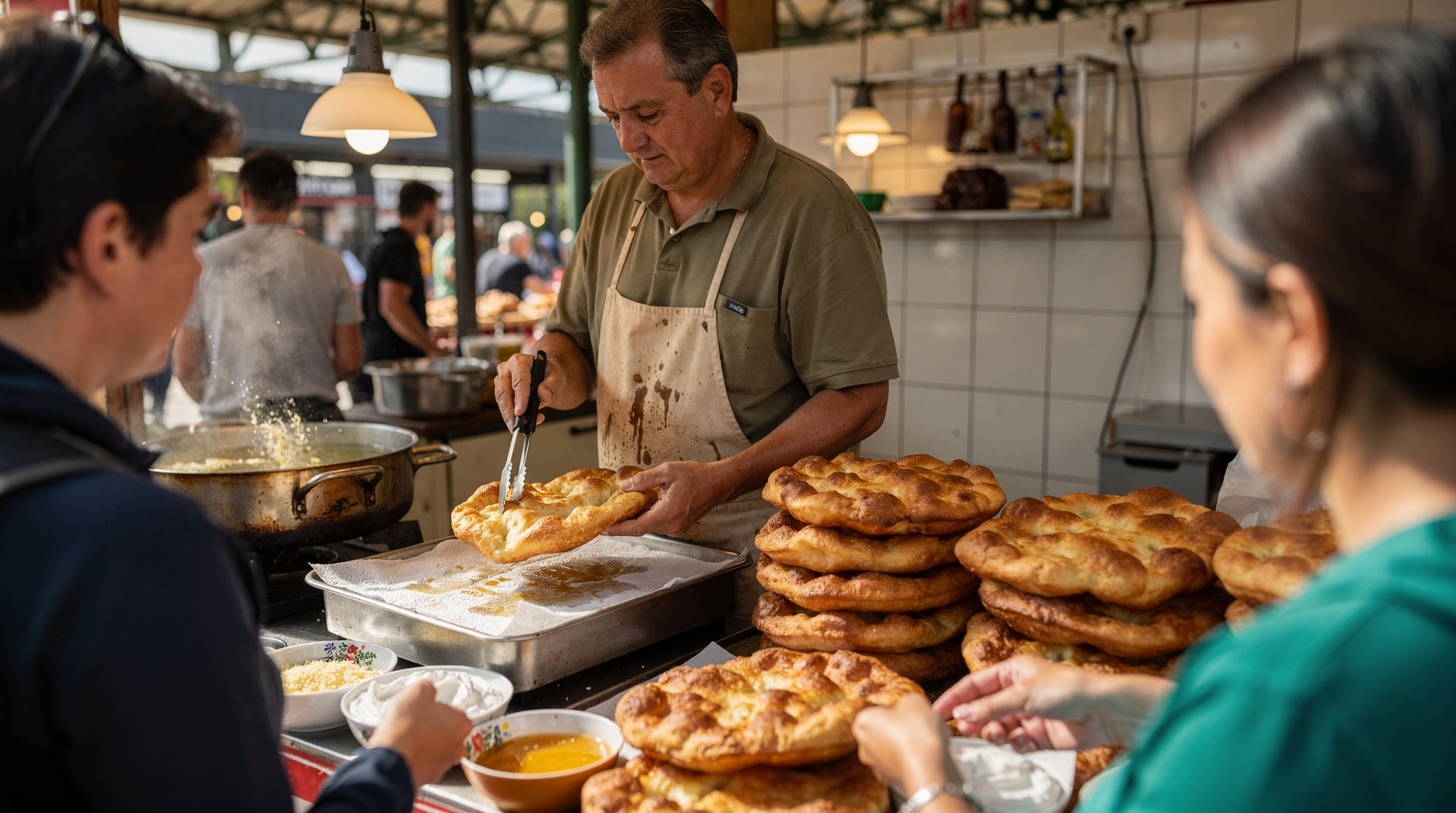
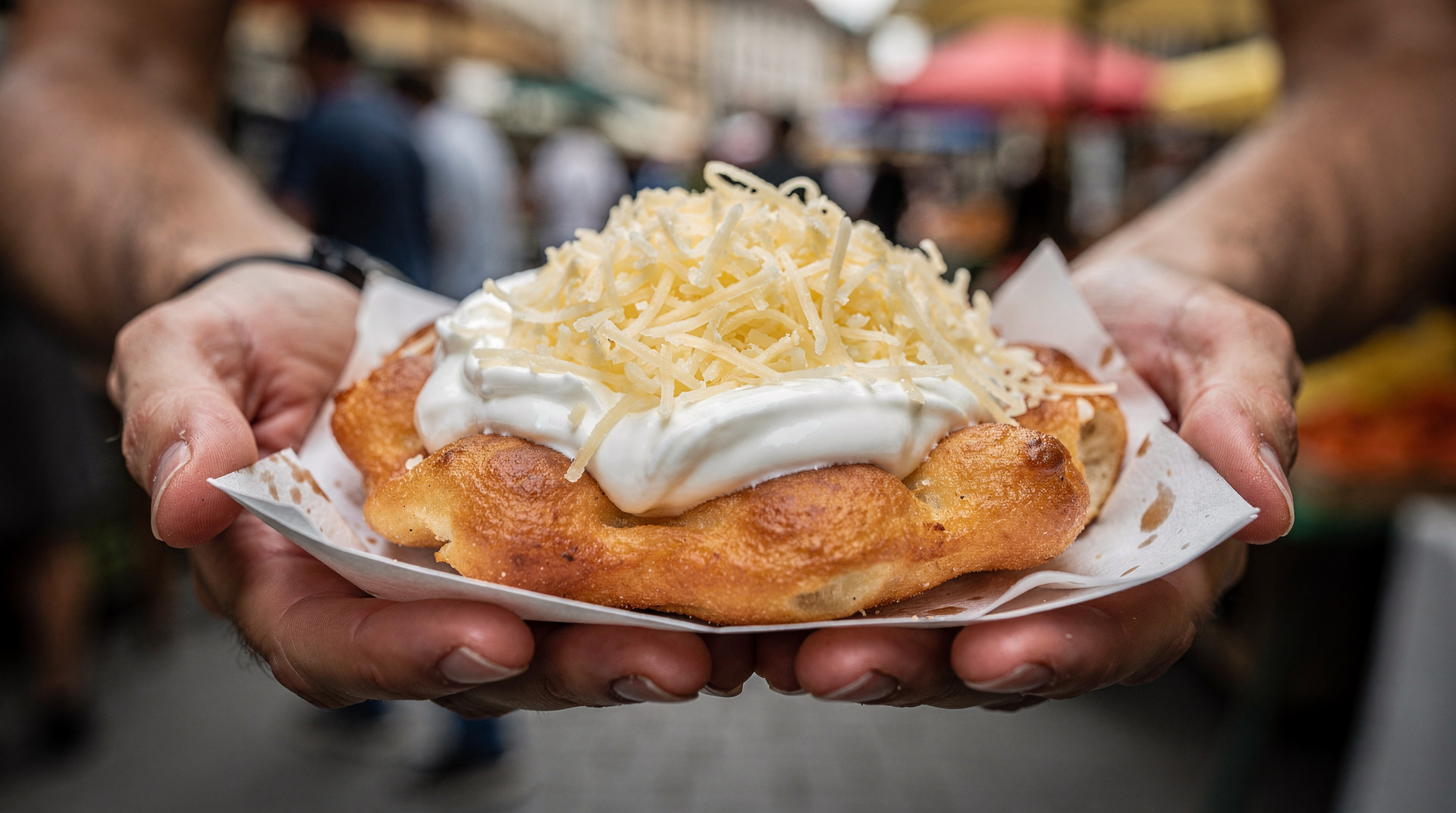
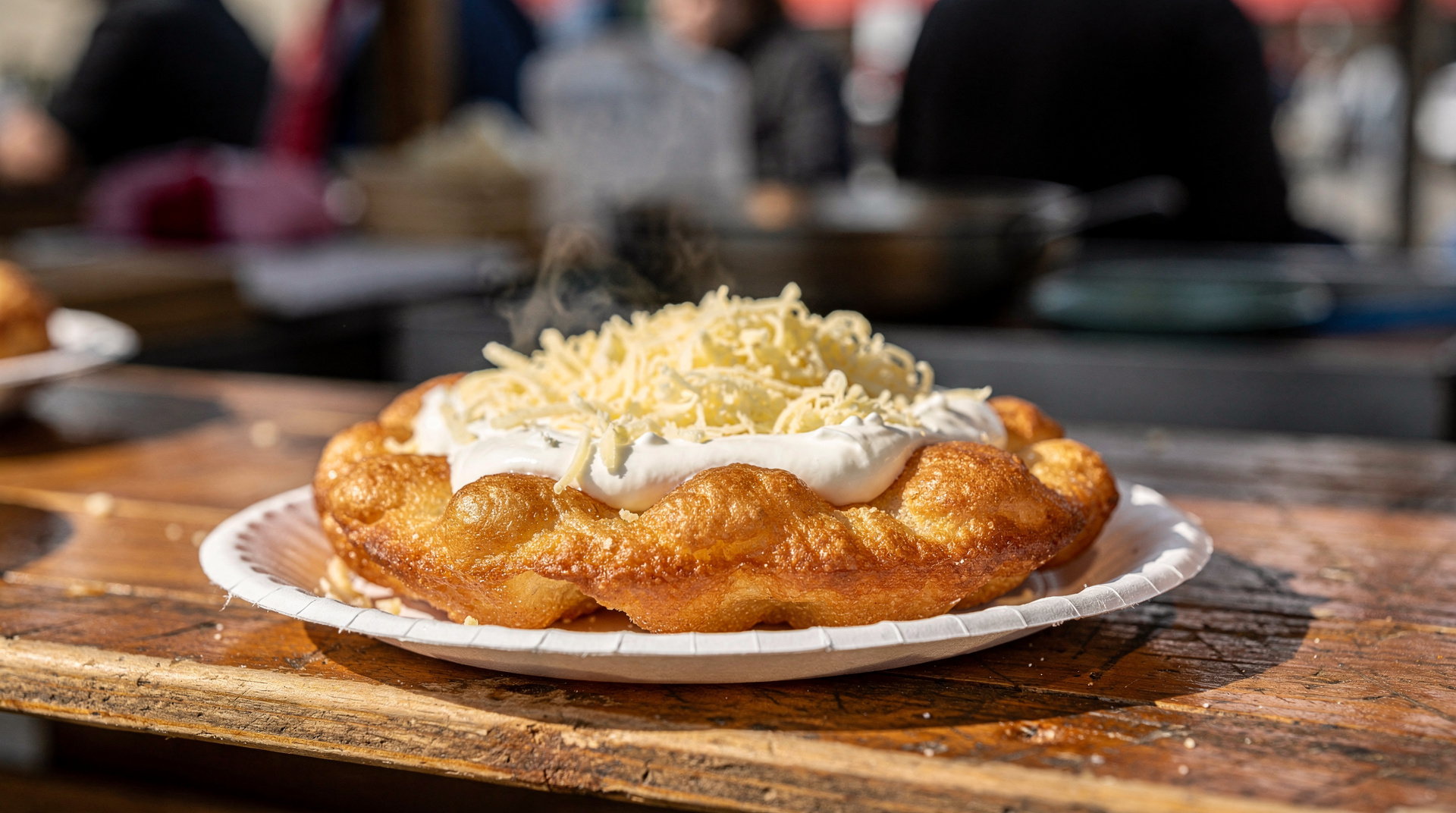
Lángos (pronounced ‘lahn-gosh’) is Hungary’s definitive street food — a disc of deep-fried yeast dough, typically 25–30 cm across, golden brown outside and soft inside. The standard topping is tejföl (sour cream) and reszelt sajt (grated semi-hard cheese); variations include garlic, ham, and various sauces.
The key quality indicator: it should be freshly fried, not held in a warmer. The dough should be slightly chewy, not dense. At the Great Market Hall, the upper-floor stalls fry to order; arrive between 09:00–13:00 for the busiest, freshest service.
For a hands-on lángos experience, a market-to-tavern food tour typically includes a fresh lángos stop as one of its tastings.
Price: 700–1,500 HUF (€1.75–3.75) depending on size and toppings. Full guide at where to eat lángos in Budapest.
Kürtőskalács: chimney cake
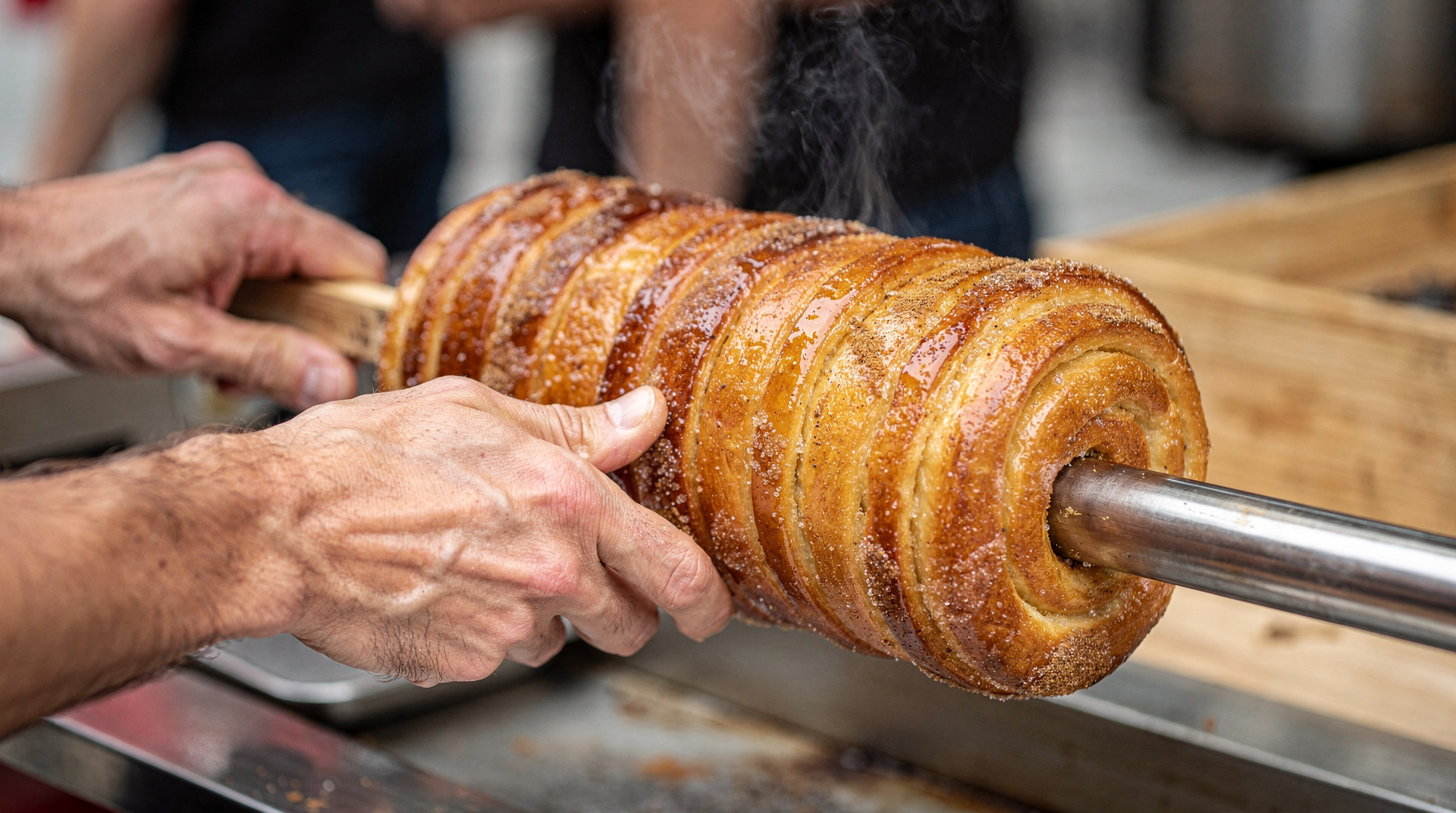
Kürtőskalács (pronounced ‘kur-tush-kah-lach’) is a sweet bread dough wound around a wooden or metal cylinder, baked over charcoal or an open flame, then rolled in granulated sugar and often cinnamon. As it bakes, the sugar caramelises into a crust while the interior stays soft and slightly chewy.
The name means “chimney cake” in reference to its hollow cylindrical shape. It originates in Transylvania (now Romania, but historically Hungarian territory) and is the traditional cake at Hungarian celebrations and Christmas markets.
The quality difference between good kürtőskalács and a poor version is significant: a good one is made with fresh dough, baked to order, and has a genuinely caramelised crust. Many tourist-area stalls sell pre-made versions — fine, but not the same experience.
Best in Budapest: Look for street stalls at Christmas markets (Vörösmarty tér and the Basilica), the Great Market Hall, and during Sziget festival. The chimney-cake workshop on our chimney cake guide covers baking your own.
Halászlé: fisherman’s soup
Halászlé is one of Hungary’s most distinctive dishes — a vivid red paprika soup made with freshwater fish. The broth is intensely flavoured with hot paprika (not sweet), typically made with carp bones and head first to create depth, then with fish pieces added late to stay tender. The result is fiery, rich, and unlike any other European fish soup.
There are two main regional styles: Bajai halászlé (from Baja, in southern Hungary — one pot, fish and pasta cooked together) and Szegedi halászlé (from Szeged — more complex, multiple types of fish, pasta served separately). Budapest versions tend toward the Szegedi style.
Good halászlé is not widely available in Budapest; look for it as a seasonal special or at Hungarian-focused restaurants rather than tourist menus.
Hortobágyi palacsinta and savoury pancakes
Hungarian palacsinta (pancakes/crepes) are extremely thin and can be sweet or savoury. Hortobágyi palacsinta — named after the Great Plain — is the most famous savoury version: filled with veal or chicken pörkölt, rolled and baked in a dish, topped with sour cream and paprika sauce.
This dish appears on virtually every traditional Hungarian menu. It’s often a starter; price around 2,000–3,000 HUF (€5–7.50).
Töltött káposzta: stuffed cabbage
Töltött káposzta is braised cabbage leaves stuffed with minced pork and rice, cooked in sauerkraut with pork ribs and smoked meat, finished with sour cream. It is heavy, intensely smoky, and deeply satisfying — a winter dish by nature though served year-round. This is Hungarian grandmothers’ food: slow-cooked, practical, and not designed for Instagram.
Paprikás csirke: chicken paprikash
Chicken slow-cooked with onions, red paprika, and sour cream until the sauce is thick, orange, and gently spiced. Served with nokedli (egg dumplings). One of the most exportable Hungarian dishes internationally; in Budapest it is ubiquitous and, when made properly, excellent.
Rétes (strudel) and pastries
Hungarian rétes is strudel — paper-thin pastry wrapped around sweet or savoury fillings. Common fillings: meggyes (sour cherry), almás (apple and cinnamon), túrós (cottage cheese and raisins), mákos (poppy seed). Salty versions include cabbage or cheese. Served at pastry shops (cukrászda) and the Great Market Hall.
The cukrászda culture is important in Budapest. Old-school establishments — Gerbeaud (Vörösmarty tér 7), Ruszwurm (Szentháromság utca 7 on Castle Hill), Auguszt (Fény utca 8) — serve genuine pastry alongside good coffee. Prices at tourist-adjacent Gerbeaud are high (rétes ~1,200–1,800 HUF); Ruszwurm and Auguszt are better value.
Pálinka: the national spirit
Pálinka is a fruit brandy, distilled from a single fruit (most commonly plum/szilva, apricot/barack, pear/körte, cherry/meggy, or quince/birs) to around 40–52% ABV. Legally, pálinka must be made from fruit grown in Hungary — other Central European countries make similar spirits, but only Hungarian production can use the name.
Quality ranges from industrial (harsh, one-dimensional) to artisan (complex, aromatic, with clear fruit character and smooth warmth). A good artisan pálinka shot costs 800–2,000 HUF (€2–5) at a specialist bar or restaurant with a serious list.
Avoid the cheapest pálinka at tourist-facing bars — it’s not representative of the category. Ask for ‘kézműves pálinka’ (artisan pálinka) or visit a specialist tasting venue. For the full guide, see pálinka guide.
Cheese, cured meats and the deli counter
Hungarian charcuterie is underrated internationally. Csabai kolbász (a coarse, paprika-forward sausage from Békéscsaba) and gyulai kolbász (from Gyula, slightly milder) are the two classic cured sausages, both sold at the Great Market Hall and neighbourhood delis (hentesáru). Both are worth buying as travel-friendly gifts — vacuum-sealed versions clear customs without issue for EU-bound travellers, and Hungarian smoked paprika (both édes/sweet and csípős/hot) is one of the best culinary souvenirs available, sold in tins at the market for a fraction of specialty-shop prices abroad.
For cheese, Hungary is not historically a great cheese-producing country compared to France, but körözött (the spreadable paprika curd cheese mentioned below under breakfast) and a handful of artisan sheep’s-milk cheeses from the Great Plain are worth seeking out at farmers’ markets rather than supermarkets.
Where to eat: a practical shortlist
Cheap and traditional:
- Kádár Étkezde, Klauzál tér 9 (lunch only, cash only)
- Főzelékfaló Ételbár, Paulay Ede utca 53 (főzelék — vegetable stew — and traditional mains)
- Great Market Hall upper floor (lángos, strudel, Hungarian fast food)
Mid-range, reliable:
- Hungarikum Bisztró, Steindl Imre utca 13
- Kőleves, Kazinczy utca 41 (Jewish Quarter, Hungarian with a modern edge)
- Buja Disznó’ka, Erzsébet körút 2
Experience-led:
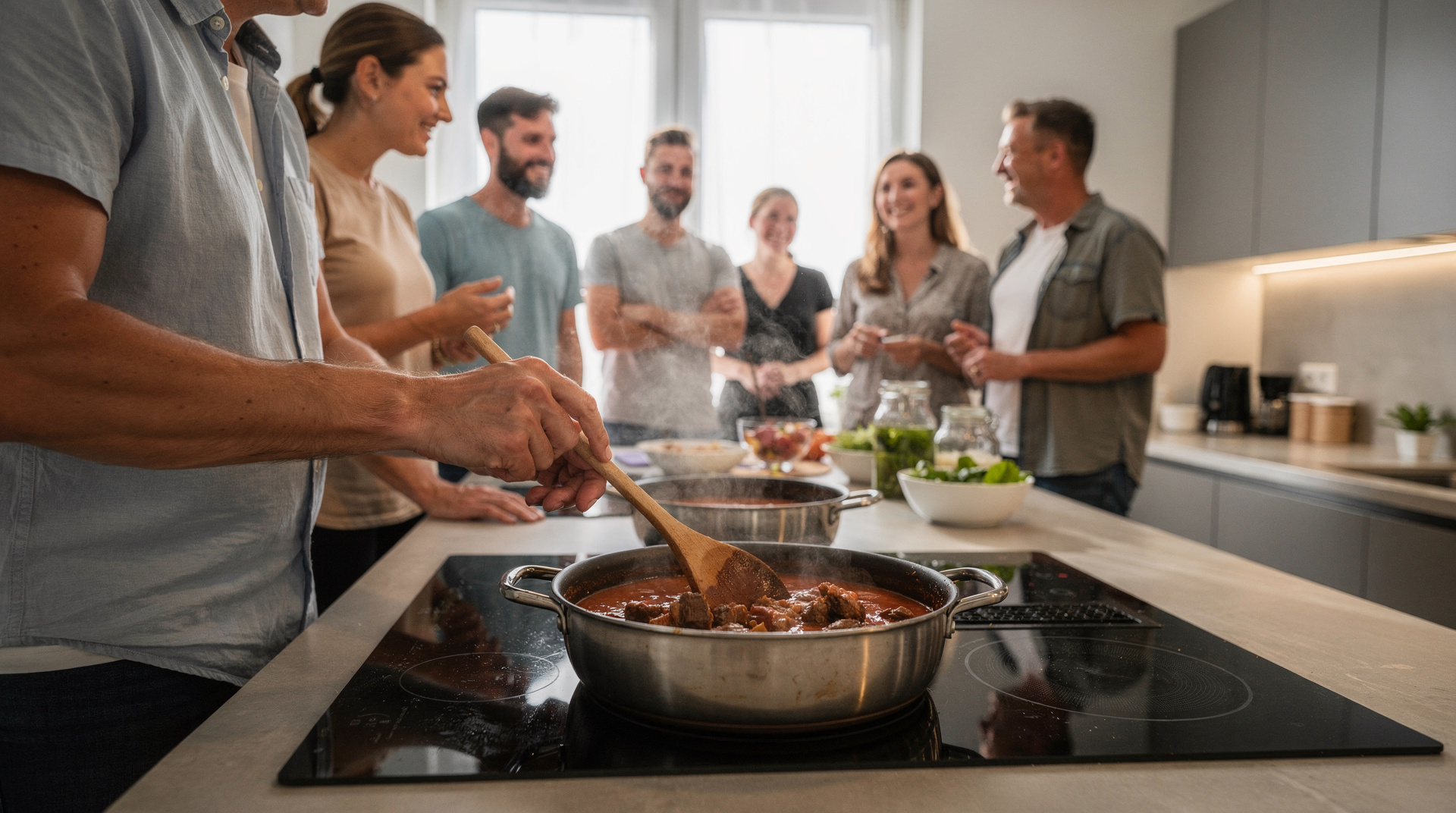
- A cooking class with Chef Marti covers gulyás, pörkölt, and traditional Hungarian dishes in a home kitchen setting — the most direct way to understand the cuisine.
- The food tours guide covers organised tasting walks.
For pricing context across Budapest eating — from the cheap canteen to the Michelin restaurant — see is Budapest expensive? and best restaurants in Budapest.
A note on portion sizes and pacing: traditional Hungarian restaurants tend to serve generously, and a starter (like Hortobágyi palacsinta) plus a main (gulyás or pörkölt) is often more food than it looks on the menu. Sharing a starter between two people is common practice and not considered unusual, even in mid-range restaurants — worth knowing if you’re trying to sample widely across a short trip rather than filling up on one dish.
Hungarian food and the seasons
Hungarian cuisine is profoundly seasonal — not as a marketing claim but as a practical reality. The country’s agricultural heartland (the Great Plain, south of Budapest) has four distinct seasons that produce genuinely different food at different times of year.
Spring (March–May): The Hungarian obsession with asparagus is real and extreme. Spárga (white asparagus) dominates menus and markets from late April through early June. White asparagus with sauce hollandaise, asparagus soup, asparagus served cold with paprika vinaigrette — restaurants build seasonal menus around it. The green asparagus season runs slightly later.
Also in spring: first strawberries (eper) from local farms, spring onions (újhagyma) and radishes at the market, and the gradual return of fresh herbs to gardens and stalls.
Summer (June–August): Lecsó season begins in earnest when Hungarian sweet peppers (the yellow and red elongated varieties) come in from the Great Plain in late June. The best lecsó is made from late-summer peppers that have developed full sweetness — a lecsó made in August is better than one made in June. Paprika pepper season follows: the fresh peppers appear first, followed by the dried paprika that defines Hungarian cooking through the winter.
Stone fruits — peaches, apricots, plums, cherries — are the raw material for pálinka production and for the summer desserts. A bowl of cold meggyes (sour cherry soup) on a hot August day is one of the great pleasures of Hungarian summer eating.
Autumn (September–November): Mushroom season. Hungary has an active mushroom-gathering culture: residents collect ceps (vargánya), chanterelles (rókagomba), and horn of plenty (trombitagomba) from the forests of the Buda Hills and the Northern Uplands. The market stalls fill with fresh and dried mushrooms; gomba paprikás (mushroom paprikash) appears on restaurant menus.
Grape harvest (szüret) fills September and October. Wine-producing regions — Tokaj, Eger, Badacsony — are at their most active and most visitable. The harvest festivals (szüreti fesztiválok) in these towns are genuine celebrations.
Walnut (dió) and chestnut (gesztenye) season arrives in October. Roasted chestnuts from street vendors are a Budapest autumn staple. Walnut appears in pastries, pasta, and the stuffing for various dishes.
Winter (November–March): The heaviest, most fortifying cooking. Pörkölt, töltött káposzta (stuffed cabbage), bean soup, and lentil dishes dominate. The Christmas season brings mézeskalács (gingerbread) and beigli (rolled pastry filled with walnut or poppy seed — the essential Hungarian Christmas dessert). New Year brings szilveszter food customs — lentil soup is eaten for prosperity, fish instead of meat for neutrality.
What to eat by season, at a glance
| Season | Signature dishes | Why |
|---|---|---|
| Spring (Mar–May) | Spárga (asparagus) dishes, fresh strawberries | Great Plain asparagus harvest |
| Summer (Jun–Aug) | Lecsó, meggyes (cold cherry soup), fresh peppers | Peak stone fruit and pepper season |
| Autumn (Sep–Nov) | Gomba paprikás (mushroom paprikash), roasted chestnuts | Mushroom and grape harvest |
| Winter (Nov–Mar) | Pörkölt, töltött káposzta, beigli, bean soup | Fortifying, slow-cooked comfort food |
Modern Hungarian cuisine and Michelin
Traditional dishes are only half the story. Budapest’s dining scene has changed dramatically over the past decade, with several restaurants now holding Michelin stars and dozens more reinterpreting classics like gulyás and pörkölt with lighter techniques and modern plating. If your trip includes a special-occasion dinner, it’s worth knowing this side of the city exists alongside the étkezde canteens — the Michelin Budapest guide covers the current starred and Bib Gourmand list. Even at this level, the flavours are recognisably Hungarian; what changes is technique and presentation, not the underlying ingredients.
Ordering like a local
A few habits mark the difference between a tourist meal and a local one. In an étkezde, you often order at a counter and take a numbered ticket rather than waiting for table service — watch what regulars do if the system isn’t obvious. Bread is usually included or charged separately by the piece; ask if unsure. Tipping (borravaló) of around 10% is standard at sit-down restaurants and often added automatically as “service” on tourist-area bills — check before adding a second tip. Menus in heavily touristed streets sometimes carry two price lists or vague “market price” seafood; if a menu has no prices printed at all, treat that as a warning sign, a habit worth carrying over from the biggest Budapest mistakes guide and the common scams in Budapest guide.
Hungarian breakfast: what locals actually eat
The classic Hungarian breakfast (reggeli) is simple: fresh bread rolls (zsemle or kifli) with butter, and a choice of toppings. Common breakfast foods:
Körözött: A spreadable mixture of sheep’s or cow’s milk curd cheese with paprika, caraway, butter, and onion. Served on bread; one of the most distinctively Hungarian breakfast items.
Szalámi: Thin slices of Hungarian salami — Pick or Csabai — on bread. The standard cold-cut breakfast.
Tükörtojás: Fried egg, typically in lard, crispy at the edges. Served with bread.
Tejeskávé or presszókávé: White coffee or espresso, from a presszó or home coffee maker.
Kakaó: Hot cocoa — particularly for children’s breakfast, but adults drink it too.
The Western-style hotel breakfast (buffet with pastries, cereals, yoghurt) is available at most Budapest hotels. For an authentic Hungarian breakfast experience, find a neighbourhood pékség (bakery) and buy fresh rolls to take away with butter and körözött from a deli counter.
Wine and food pairing: the Hungarian approach
Hungarian wine has a natural relationship with Hungarian food that most foreign visitors don’t know to explore. A few pairings worth understanding:
Furmint with fish: The dry Furmint from Tokaj has high acidity and stone-fruit character that pairs exceptionally well with freshwater fish — pike-perch, carp, pike. Tokaji Furmint with halászlé (fisherman’s soup) is as apposite as Chablis with oysters.
Bikavér with pörkölt: Egri Bikavér (Bull’s Blood) is a red blend from Eger — structured, with dark fruit and peppery notes. The tannic structure and weight are the right match for the fatty richness of pörkölt.
Tokaji Aszú with foie gras: The sweet Aszú wines of Tokaj have been paired with foie gras in Hungarian fine dining for over a century. The residual sugar, balanced by high acidity, cuts through the fat. This is not a clichéd pairing — it works more naturally than Sauternes with foie gras because both the wine and the foie gras tradition are Hungarian.
Rosé with gulyás: A chilled Hungarian rosé — particularly from Villány or Szekszárd — is the most versatile match for gulyás. The acidity and light body work with the paprika-rich broth without overwhelming it.
For the full wine exploration, see the Hungarian wine guide and wine tastings in Budapest.
Learning to cook Hungarian food in Budapest
The best way to truly understand any cuisine is to cook it. Budapest’s cooking class scene gives visitors direct access to the techniques behind the dishes:
The eat, sip and explore food tour covers Hungarian dishes as a series of tastings with explanations — an ideal introduction before cooking.
For cooking hands-on, see the cooking classes in Budapest guide, which covers Chef Marti’s class (traditional gulyás, pörkölt, nokedli), the market-tour cooking class, and specialist workshops for lángos and kürtőskalács.
The combination of a food tour on one day and a cooking class on the next is the most comprehensive food education available in Budapest in 48 hours.
Frequently asked questions about Traditional Hungarian dishes
Is gulyás a soup or a stew?
In Hungary, gulyás (goulash) is a hearty soup — beef, potatoes, onions, peppers, tomatoes, and caraway seed in a paprika-red broth. What foreigners often call 'goulash stew' is actually pörkölt — a thicker meat ragout without potatoes. Ask for gulyás in a Budapest restaurant and you'll receive a deep bowl of rich, spiced soup.What is lángos and where should I eat it?
Lángos is deep-fried dough — a thick, soft disc similar to fried bread, typically topped with sour cream (tejföl) and grated cheese (sajt). It's Hungary's quintessential street food, sold at markets, fairs, and street stalls. The Great Market Hall upper floor has several lángos stalls; prices start around 700–1,200 HUF (€1.75–3) depending on toppings.What is kürtőskalács (chimney cake)?
Kürtőskalács (chimney cake) is sweet bread dough wrapped around a wooden cylinder, baked over charcoal, and rolled in sugar and cinnamon. The result is a spiral tube of caramelised pastry — crispy outside, soft inside. Originally from Transylvania, now ubiquitous at Hungarian markets and tourist areas. Authentic ones are baked to order; avoid pre-made versions sitting under heat lamps.What is pálinka and should I try it?
Pálinka is a traditional Hungarian fruit brandy — distilled from plums, apricots, pears, cherries, or quince, typically 40–52% ABV. Quality varies enormously: industrial pálinka is harsh; artisan pálinka from small producers is genuinely excellent, with pronounced fruit flavour and warmth. At restaurants, ask for 'házi pálinka' (house pálinka) or try a tasting flight at a specialist bar.What should vegetarians eat in Budapest?
Hungarian cuisine is meat-heavy but has good vegetarian options: lecsó (a pepper and tomato stew similar to ratatouille, often served with egg), rántott sajt (fried cheese), gomba pörkölt (mushroom stew), fruit soups, stuffed peppers with rice, and various pasta dishes. Jewish-quarter restaurants often have the strongest vegetarian selection. See vegetarian and vegan Budapest.Where is the best place to eat traditional Hungarian food in Budapest?
For authentic, cheap traditional food: traditional étkezde (canteen-style lunch restaurants) — Kádár Étkezde in District VII (Klauzál tér 9) is a classic. For mid-range sit-down: Hungarikum Bisztró (Steindl Imre utca 13, District V), Buja Disznó'ka (Erzsébet körút 2), and Kőleves (Kazinczy utca 41). For the Great Market Hall experience, the upper-floor food court is the most atmospheric option.What is halászlé and where can I find it?
Halászlé is Hungarian fisherman's soup — a rich, bright-red paprika broth made with freshwater fish (traditionally carp, sometimes pike-perch and catfish), fiery with hot paprika. It's most authentically eaten in southern Hungary (Baja and Szeged styles differ slightly), but good versions are available in Budapest. Avoid tourist versions; look for a restaurant that makes it fresh and serves it hot.What is Hortobágyi palacsinta?
Hortobágyi palacsinta is a savoury crepe — thin pancake filled with veal or chicken ragout (similar to pörkölt), rolled and baked, served with sour cream and paprika sauce. Named after the Hortobágy plain but common across Hungary. A typical appetiser in traditional Hungarian restaurants, costing around 2,000–3,000 HUF (€5–7.50).
Top experiences
Bookable activities with verified prices and instant confirmation on GetYourGuide.