Central Market Hall guide: Budapest's Vásárcsarnok, what to buy and what to skip

Is the Central Market Hall worth visiting?
Yes — the Great Market Hall (Vásárcsarnok) is one of the most beautiful market buildings in Europe and has excellent food on the ground floor: Hungarian salamis, cheeses, paprika, pickles, and produce. The upper floor has good lángos and strudel stalls. Avoid the tourist souvenir section, which is overpriced. Go before noon on a weekday for the freshest food and smallest crowds.
Budapest’s most beautiful building with a market inside
The Great Market Hall — Nagycsarnok or Vásárcsarnok — opened in 1897 at the southern end of Váci utca. The architect, Samu Pecz, designed a cathedral-like structure with a cast-iron and timber-vaulted interior, coloured Zsolnay ceramic tiles on the roof, and a riverside setting that makes it one of the most photogenic buildings in Budapest.
Inside, it is a working market. Five days a week (closed Sunday), Budapestians come to buy vegetables, meat, dairy, fish, and pickled goods. Tourists come to eat lángos on the upper floor and buy paprika. Both uses coexist, and the market works on both levels.
The honest guide to visiting: the food is excellent and the building is worth seeing for itself. The souvenir section is overpriced and you should skip it. A guided tour adds value here because a knowledgeable guide will take you to the right stalls and explain what you’re looking at.
| Where | Vámház körút 1–3, District IX, at the south end of Váci utca |
| Cost | Free entry; snacks around 700–1,400 HUF, meals 1,500–3,500 HUF |
| Time needed | 45–90 minutes browsing, longer with a food tour |
| Getting there | Tram 47/49 or Metro M4 to Fővám tér |
| Best time | Weekday before 10:00; closed Sundays |
The building: what to notice
Enter from Fővám tér (the main entrance, facing the boulevard). The central nave rises to a barrel-vaulted iron ceiling; light comes from windows along the upper arcade. The lower floor is the main market; a gallery level runs around the perimeter; stairs at each end lead to the upper-floor food court.
The Zsolnay ceramic tiles on the roof — blue and orange in geometric patterns — are visible from the outside and worth walking around the building to see before entering. Zsolnay is a Hungarian ceramics manufacturer (based in Pécs) whose tiles appear on many Budapest landmarks; this is one of the most prominent uses.
Ground floor: what to buy and what to pay
The food section (left side of the main nave and outer stalls):
-
Paprika: The primary reason to shop here seriously. Hungarian paprika (fűszerpaprika) comes in multiple grades: noble sweet (édesnemes), exquisite delicate (csemege), rose (rózsa), and hot (erős). The hand-tied bundles from small-producer stalls are better quality and not much more expensive than pre-packaged. Budget 1,000–2,500 HUF (€2.50–6.25) for a good bunch. Avoid the pre-packaged tourist tins in the souvenir section.
-
Hungarian salami and cold cuts: Look for Mangalica salami (from the traditional Hungarian woolly pig breed), Pick salami (the famous brand from Szeged), and various smoked meats. The stalls on the left side of the main nave sell by weight; bring cash. Mangalica salami: 6,000–9,000 HUF/kg (€15–22.50/kg). Pick the whole salami costs less per gram than pre-sliced.
-
Pickled and fermented vegetables: Hungary has an excellent pickling tradition — savanyú káposzta (fermented cabbage, similar to sauerkraut but milder), csípős paprika (pickled hot peppers), and mixed vegetable pickles. These are sold from barrels and jars at the inner stalls.
-
Honey and preserves: Several stalls sell local honey from different regions — acacia (akác), sunflower (napraforgó), and forest honey (erdei). Price: 1,500–3,500 HUF (€3.75–8.75) for a small jar. Hungarian fruit preserves (lekvár) are also excellent and small enough to pack.
-
Wine: The ground-floor wine section has a reasonable selection of Hungarian bottles at fair prices — better than supermarket selections, with some smaller producers represented. A decent Furmint or Bikavér starts around 2,800 HUF (€7).
The fish section (rear of the ground floor): Fresh and smoked freshwater fish — carp, pike-perch, catfish — on ice. If you’re staying in self-catering accommodation, this is the right place to buy fish.
Upper floor: food court and souvenirs
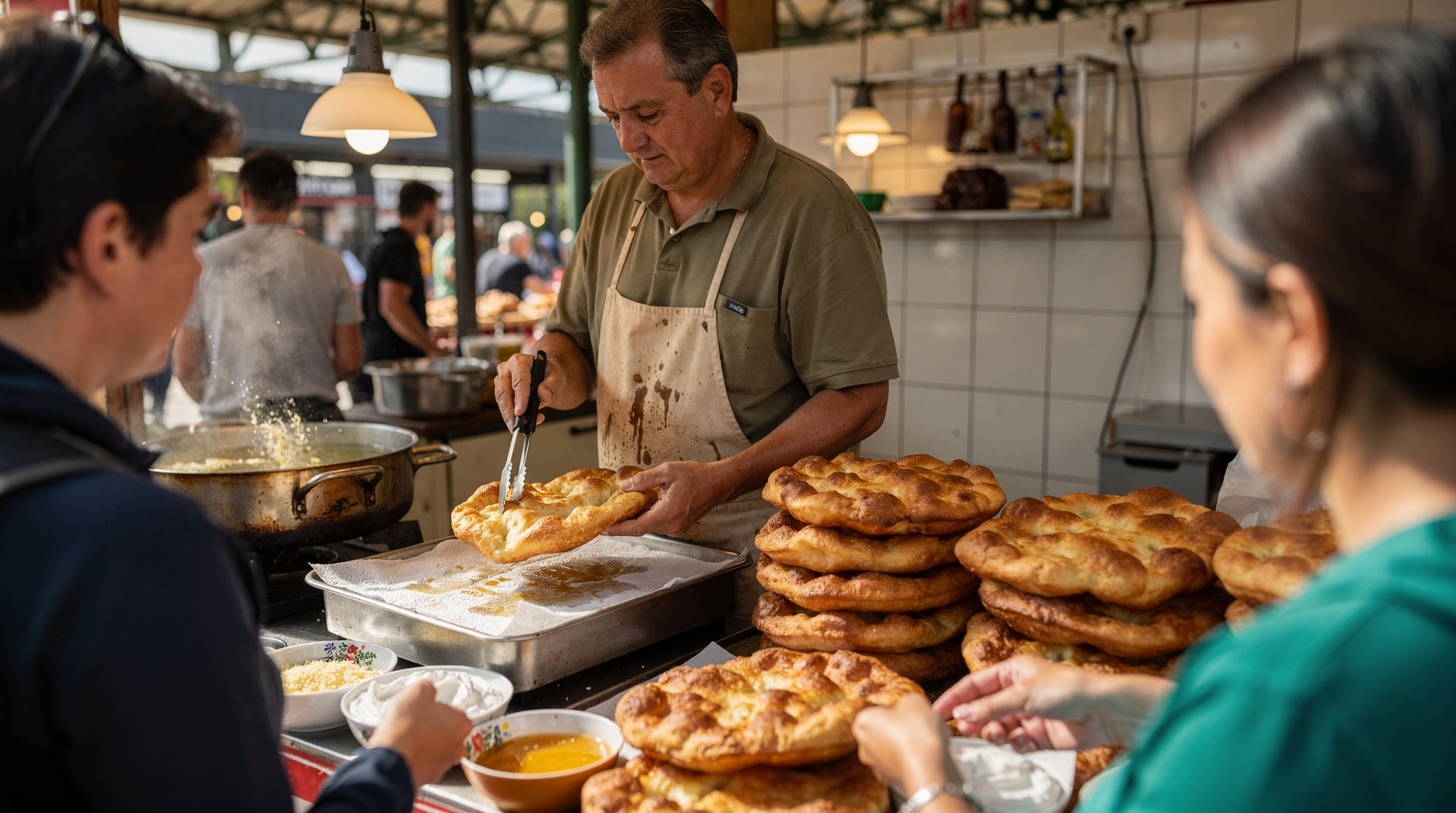
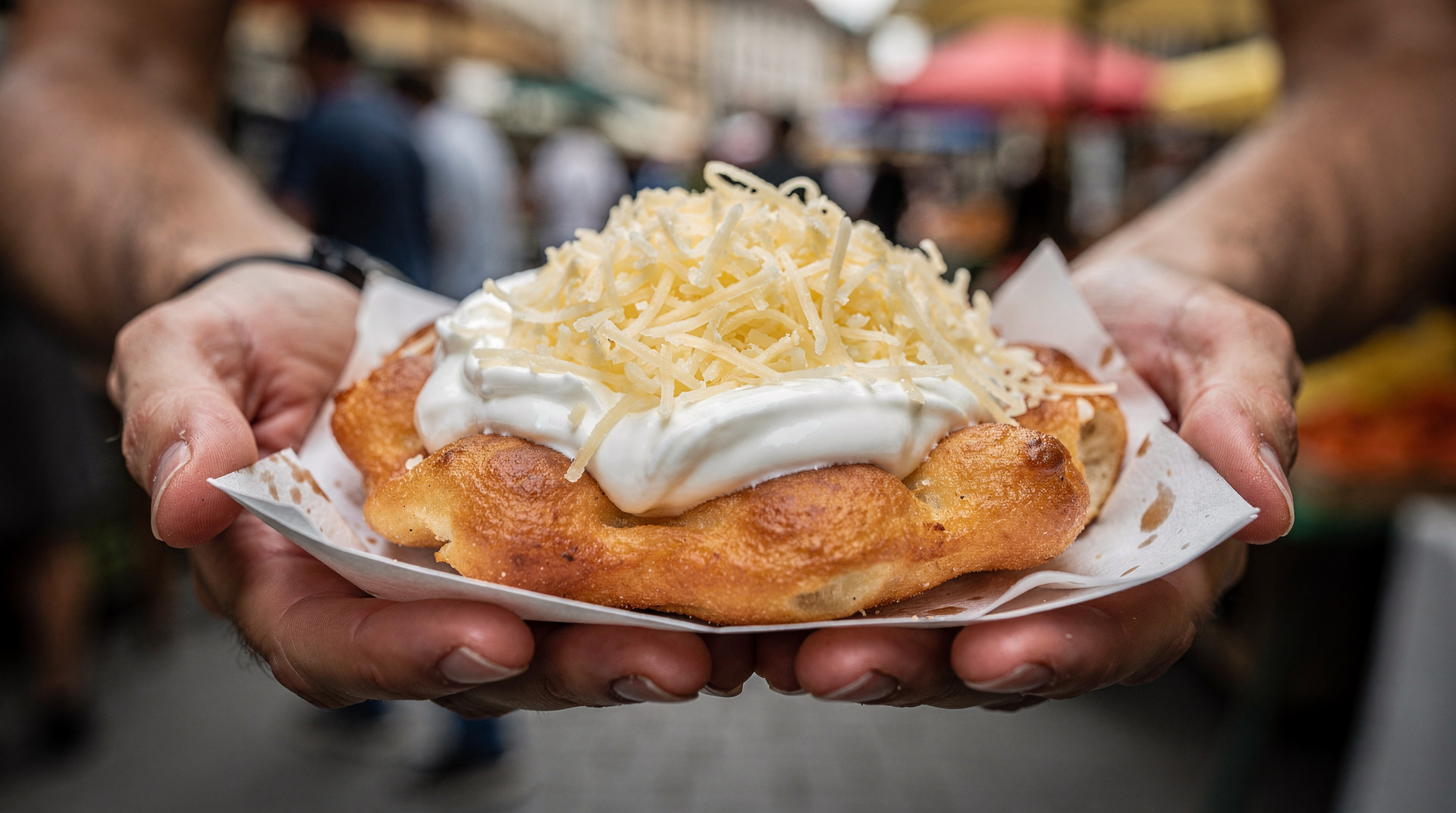
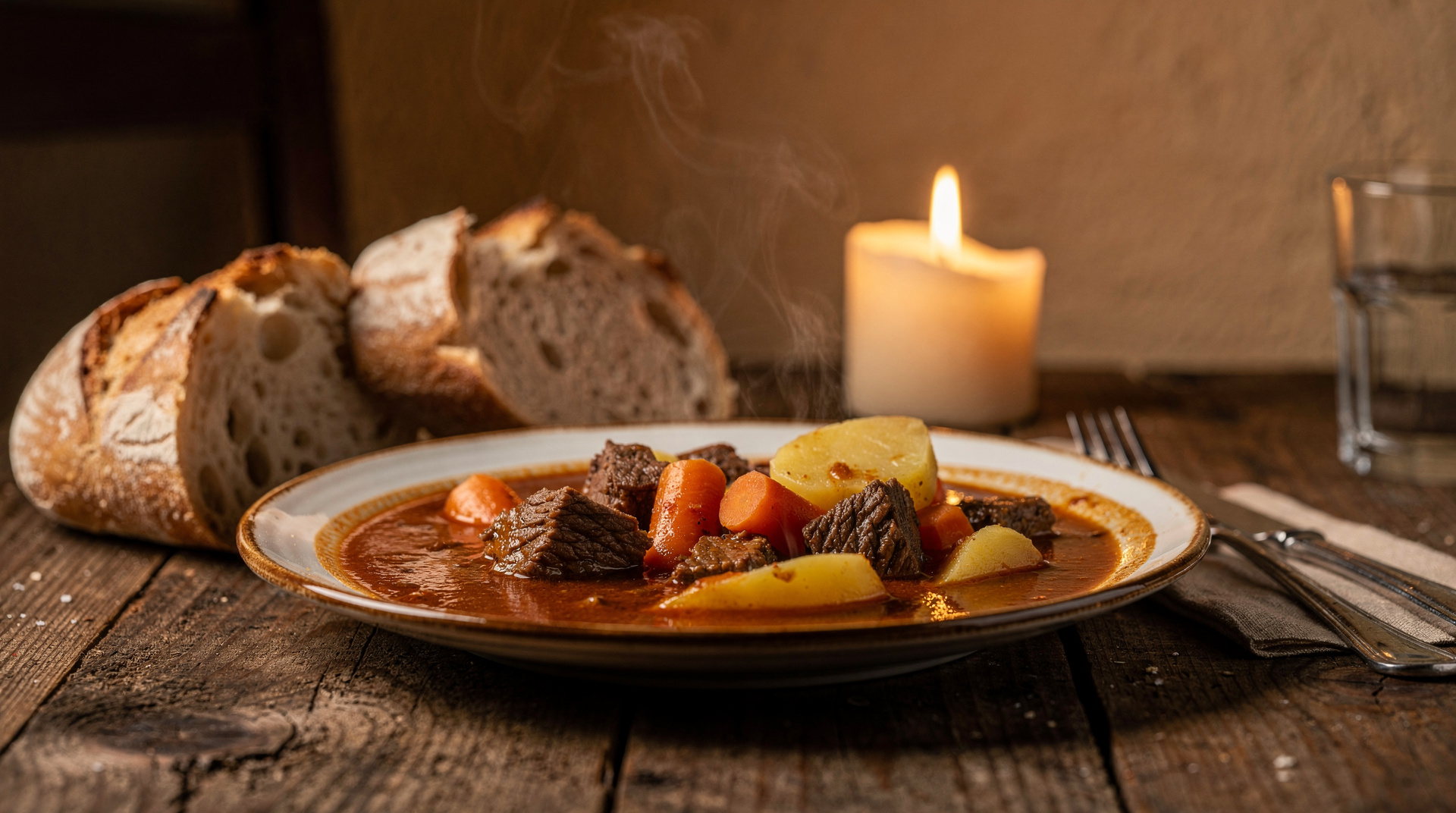
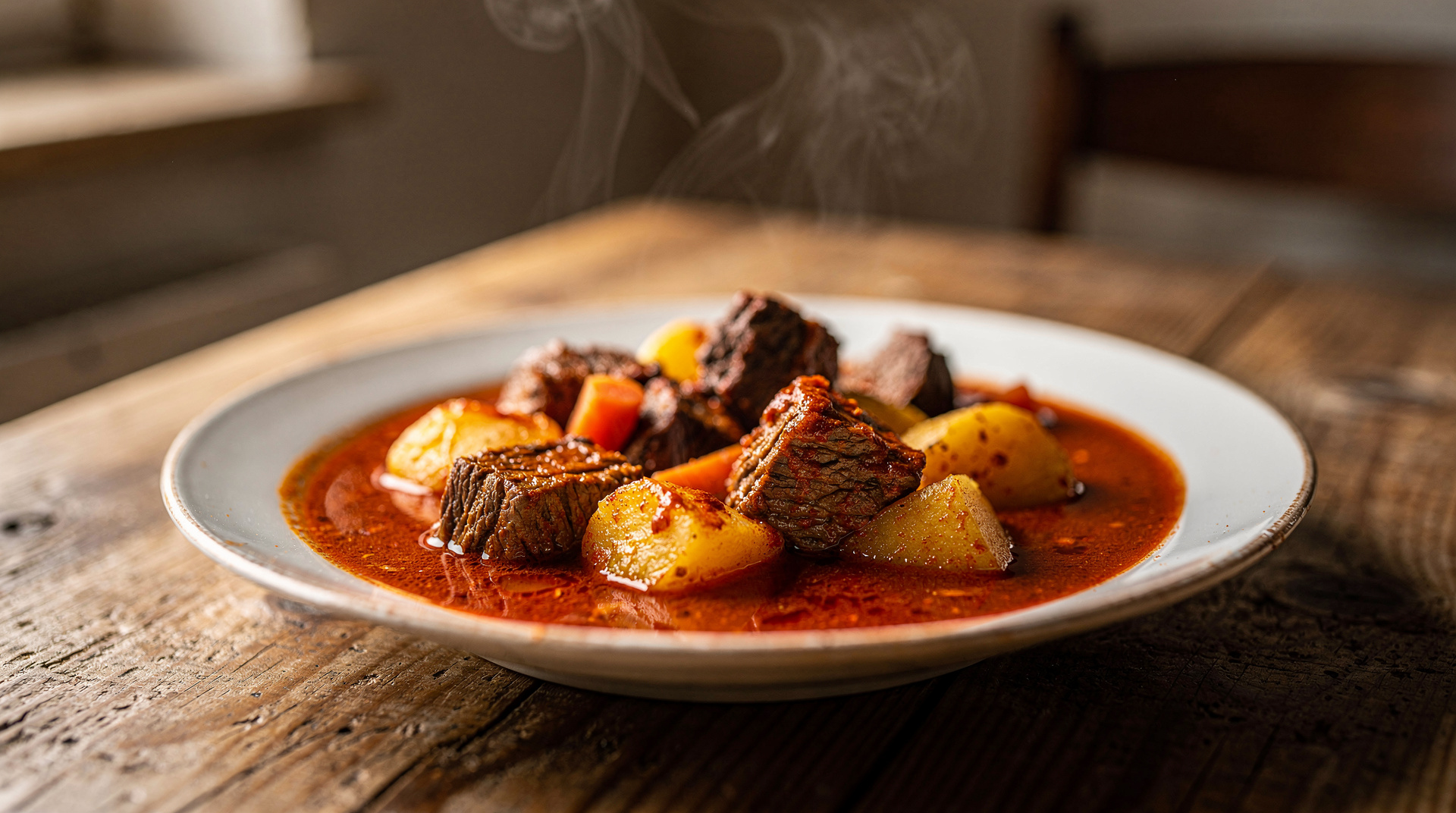
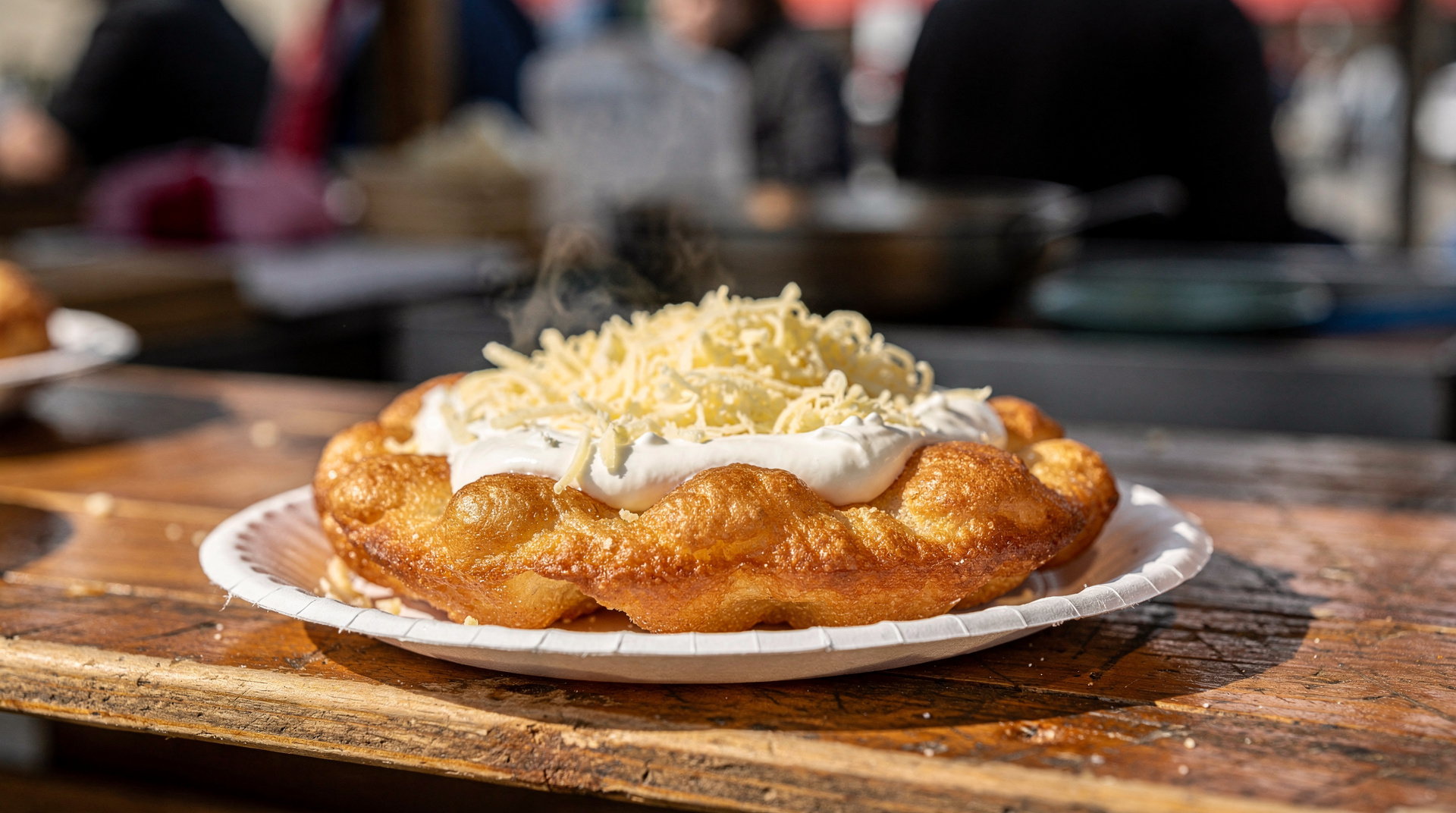
The food court (lángos and more): The upper floor’s inner arcade has a row of food stalls. The lángos stalls at the top of the main staircase are the most popular — fresh fried dough topped with sour cream and cheese. The queue is worth joining. Nearby stalls serve rétes (strudel) slices, gulyás soup, and pörkölt with nokedli.
For a sit-down lunch, the inner food court offers plastic-tray service but genuinely traditional food. Budget 1,500–3,500 HUF (€3.75–8.75) for a full meal with a drink. Quality varies by stall — favour the ones with the longest queues.
The souvenir section (outer ring of the upper floor): This is where you should exercise selective spending. Embroidered tablecloths, Herend porcelain, palinka gift sets, and paprika packages are all sold here at prices 30–100% above what you’d pay elsewhere. If you want folk-craft items, the genuine article is available more cheaply at the Ecseri Piac flea market (open Saturday mornings, District XIX) or at the Fővám tér folk-craft market outside during summer weekends.
Organised tours at the Central Market Hall
The market-to-tavern food tour starts at the Great Market Hall with a guided walk through the stalls — the guide identifies the right vendors, explains what you’re tasting, and provides context for Hungarian food culture before moving to a nearby tavern for hot dishes. This is the best value way to experience the market properly.
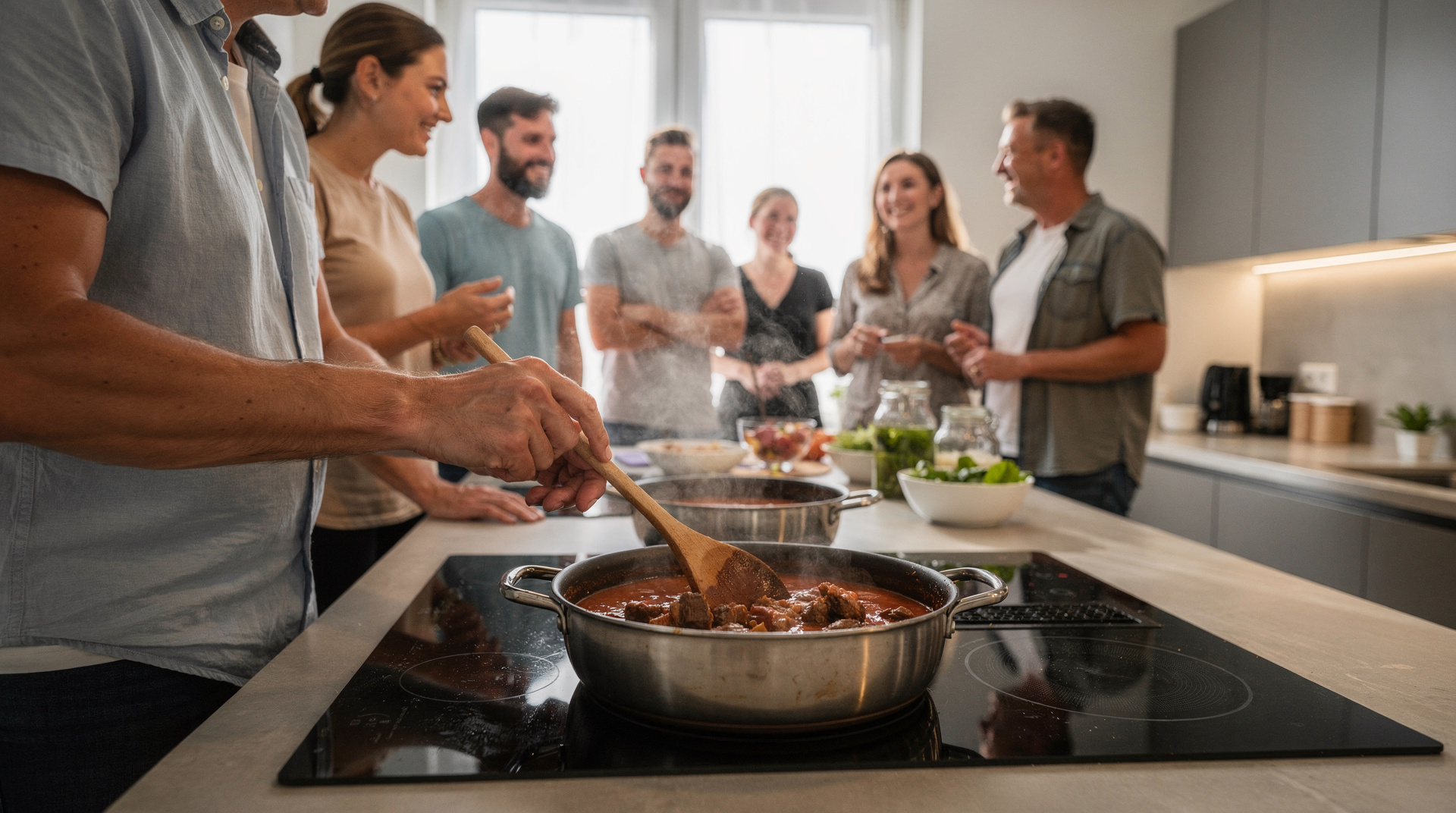
The Foodapest cooking class begins with a market visit to buy ingredients before moving to a kitchen for a hands-on cooking session. This format — shop then cook — is the most connected experience linking the market to the food.
Getting there
Address: Vámház körút 1–3, Budapest 1093 (District IX)
Transport: Tram 47 or 49 to Fővám tér (1 minute’s walk from the tram stop). Metro M4 (green) to Fővám tér station (one stop from Kálvin tér). Tram 2 along the Danube embankment also stops at Fővám tér.
On foot: From Váci utca, walk south 500m to the end of the street — the market is directly ahead. From Kálvin tér, walk west one block.
Practical: The market has toilets (small fee payable). No bag check; a standard shopping bag or small backpack is fine. Card payments accepted at some stalls but cash is more reliable — bring HUF. ATM on Vámház körút outside.
The Great Market Hall fits well into a Downtown Pest visit — pair it with the Liberty Bridge (five minutes’ walk south) and the Gellért Baths (ten minutes’ walk). See the Budapest 3-day itinerary for how to sequence it with other major sights.
What makes this market different from other European markets
The Great Market Hall occupies an unusual position among European food markets. Unlike the Mercat de la Boqueria in Barcelona (which has moved significantly toward tourist-facing prepared-food stalls) or the Borough Market in London (premium artisan produce at premium prices), the Budapest Vásárcsarnok is still primarily a working-class market.
The ground floor functions as a genuine wholesale and retail food market for Budapest residents. The prices on the vegetable and dairy sections are competitive with supermarkets. The Mangalica salami and artisan cheese vendors charge what the product is worth — which is more than a supermarket, but because the product is substantially better, not because of tourist premium.
The upper floor is the tourist-facing section. It’s honest to call it that: the lángos stalls, the rétes vendors, and the goulash service are primarily used by visitors. Locals eat at the ground-floor stalls or the few fast-food counters in the basement. The food-court upper floor is priced fairly; it’s just that the customer is primarily a tourist.
This distinction matters for planning your visit. If you’re here to shop and eat as a Budapestian does, focus on the ground floor. If you’re here for the food-court experience and photographs, the upper floor is perfectly designed for it.
Shopping at the market: what’s worth buying
Best value purchases:
- Paprika: The best price-to-quality ratio purchase in the market. A 100g bag of genuine Hungarian édes nemes (noble sweet) paprika from a small-producer stall: 400–700 HUF (€1–1.75). The same quality in a UK or German supermarket isn’t available at any price.
- Honey: Local Hungarian honey varieties (acacia, sunflower, wildflower) at 1,500–3,500 HUF for a 500g jar. Unopened, it travels well.
- Pálinka: The market’s wine section has bottled pálinka at prices lower than airport duty-free. A 0.5L bottle of quality apricot or plum pálinka: 3,500–8,000 HUF (€8.75–20).
Consider carefully:
- Herend or Zsolnay ceramics: Sometimes sold at the upper-floor souvenir section. Authentic pieces from these manufacturers are expensive (15,000–100,000+ HUF) and the quality varies dramatically between genuine items and cheap copies. If you want Herend or Zsolnay, buy from an authorised dealer, not a market stall.
- Embroidery: Traditional Hungarian embroidery (kalocsa or matyó patterns) is authentic craft work, but prices at the market are comparable to dedicated folk-art shops that may have better selection. If you want embroidered items, Folkart Centrum (Váci utca 14) has a larger and more curated selection.
Skip entirely:
- Pre-packaged paprika in tourist tins: The same product is available in any Hungarian supermarket (Spar, Tesco, Aldi) at a fraction of the market price.
- Tourist “spice kits”: Assembled sets of paprika, caraway, and other spices in gift packaging — the markup over buying individual spices is significant.
The market across the seasons
Spring (April–May): New-season vegetables arrive — asparagus (spárga, a Hungarian seasonal obsession), early strawberries, fresh herbs. The market is particularly vibrant with colour; prices for seasonal produce are lowest just after harvest begins.
Summer (June–August): Highest variety of fresh produce. Peaches, cherries, apricots, and sweet peppers come in from the Great Plain. Paprika season begins in August. The lángos stalls run at full capacity; arrive before 10:00 to avoid queues.
Autumn (September–November): Harvest season — walnuts, chestnuts, mushrooms, and the paprika pepper harvest. This is when the ground-floor produce stalls are most spectacular. The paprika bundles hanging in the market are at their freshest; this is the best time to buy them.
Winter (December–March): The market is open but quieter. Christmas specialties appear in December: honey cookies, mézeskalács (gingerbread), and winter preserves. The food-court is warmer and more comfortable to eat in. A good choice for a December morning activity before the Christmas market at Vörösmarty tér.
Combining the market with other food experiences
The Great Market Hall works as either:
-
A standalone half-morning activity: Arrive at 08:00, eat lángos and rétes on the upper floor, browse the ground floor stalls, buy some paprika and honey, leave by 11:00 for whatever’s next in your day.
-
The start of an organised food tour: The market-to-tavern food tour begins at the market with a guided ground-floor walk (explaining what’s worth buying and from whom), followed by upper-floor food tastings, followed by a walk to a traditional tavern for hot dishes. This is the most contextual experience.
-
The ingredient-shopping segment of a cooking class: The Foodapest cooking class starts with a market visit to buy the ingredients you’ll cook. This gives the market visit a functional purpose rather than a purely observational one.
For the street food context beyond the market, see street food in Budapest. For the full food tour comparison, see best food tours in Budapest. For the cooking class that starts here, see cooking classes in Budapest.
Practical visitor information
Address: Vámház körút 1–3, Budapest 1093 (District IX)
Hours: Monday 06:00–17:00; Tuesday–Friday 06:00–18:00; Saturday 06:00–15:00; closed Sunday.
Transport: Tram 47 or 49 to Fővám tér (1 minute’s walk). Metro M4 (green) to Fővám tér. Tram 2 along the Danube embankment also stops at Fővám tér.
Facilities: Toilets (paid, small fee), coin-operated lockers for bags, ATM on Vámház körút outside. No coat check. Free to enter.
Payment: Cash is most reliable at market stalls; some ground-floor vendors accept card, but the food-court stalls are often cash-only.
Accessibility: The ground floor is fully accessible via ramp entrance on the south side. Lifts to upper floors. The upper-floor food court has step-free access via lift.
Ground floor vs upper floor: which to prioritise if you’re short on time
| Ground floor | Upper floor | |
|---|---|---|
| Best for | Buying paprika, salami, honey, wine to take home | Eating lángos, rétes, a quick hot meal |
| Crowd level | Busy but functional, locals shop here too | Busiest section, especially near the lángos stalls |
| Value | Genuinely fair prices for quality | Fair for food; overpriced for souvenirs on the outer ring |
| Time needed | 20–30 minutes to browse properly | 15–30 minutes to eat |
If you only have 30 minutes, prioritise the ground floor for shopping and the lángos stall nearest the main staircase for a quick bite on the way out — you get the building’s best photo angles and the signature snack without committing to the full loop. A 90-minute visit adds a proper sit-down meal upstairs, a slower browse of the pickle and cheese stalls, and time to compare two or three paprika vendors before committing — prices and quality vary more between stalls than first-time visitors expect, so a little comparison shopping genuinely pays off on anything you plan to bring home.
Pairing the market with Gellért Hill and the baths
The market’s location at the southern end of Váci utca puts it within easy reach of two of Budapest’s best afternoon options. Crossing Liberty Bridge (a five-minute walk south) leads directly toward Gellért Hill and the Citadella, a steep but rewarding climb for panoramic Danube views. At the base of the hill, the Gellért Baths make a natural way to rest tired legs after a morning of market-browsing and hill-climbing — Art Nouveau tiles and a thermal soak are a good reward for the walk. A market-morning, baths-afternoon combination is one of the more relaxed pairings in central Budapest, and it avoids the need for any additional transport between stops.
Photography and market etiquette
The Great Market Hall is one of Budapest’s most photographed interiors — the barrel-vaulted ceiling and Zsolnay roof tiles reward a wide-angle shot from the main entrance looking down the nave, best taken early before crowds fill the frame. Vendors generally tolerate photos of produce and stalls, but ask before photographing a vendor directly, and always buy something if you have lingered at a stall for a photo — it is a working market for locals, not a photo backdrop, and treating it that way is appreciated. Weekday mornings before the tour groups arrive give the cleanest shots of the vaulted ceiling and the empty central aisle; by mid-morning on weekends the nave fills with enough foot traffic that a clear shot becomes genuinely difficult. Tripods are impractical given the crowds; a phone or compact camera works better than bulky gear.
Coffee and a rest after the market
A market visit pairs naturally with a coffee stop. Rather than the tourist-priced kiosks around Fővám tér, walk a few minutes into Downtown Pest toward one of the city’s historic coffee houses for a proper sit-down break — most are a 10–15 minute walk and worth the detour if your legs need a rest before the next stop on your itinerary. This works especially well if you are combining the market with an afternoon at Gellért Hill, since a coffee break beforehand makes the climb feel less daunting.
The Great Market Hall in history
The Vásárcsarnok was built as part of a programme of five covered market halls across Budapest, all opening simultaneously in 1897 to mark the Hungarian millennium (1,000 years since the Magyar conquest of the Carpathian Basin). The architect Samu Pecz had previously designed the market hall network and approached the Vásárcsarnok as the centrepiece — the largest, most architecturally ambitious of the five.
The building was constructed with a cast-iron internal structure (visible in the roof trusses) and a brick exterior, with the distinctive Zsolnay ceramic tile roof added as a distinctly Hungarian decorative element. Zsolnay of Pécs had developed a unique frost-resistant ceramic called pyrogranit in 1893; the Budapest market halls were among the first major public buildings to use it. The same tiles appear on the Parliament building and many other Budapest landmarks of the 1890s–1910s.
During the communist period, the building functioned as a state distribution centre — still a market, but with a much reduced selection, state-controlled vendors, and queuing for basic goods that were often unavailable. The physical structure was maintained but not significantly improved.
After 1989, the building was restored to its current state (reopening 1994 after extensive renovation) and the market function was restored. Today it has approximately 180 vendors across its floors.
What makes the Vásárcsarnok special versus Budapest’s other markets
Budapest has several other markets worth knowing:
Fény utca Market (District II, Buda): A neighbourhood covered market serving the Mammut shopping area. Smaller and more local than the Vásárcsarnok; strong on fresh produce and dairy. Used primarily by residents of Districts I and II. Open Monday–Saturday.
Ecseri Piac (District XIX): Budapest’s flea market, open Saturday mornings on the city’s south-eastern edge. This is where antique furniture, vintage clothing, old Hungarian memorabilia, and genuine curiosities are sold. Not food-oriented; good for shopping, not eating.
Hold utca Market (District V): A small indoor market in a historic building in the inner city (Alkotmány utca 7). Open weekdays only; primarily local residents. The food quality is high and the prices are fair — it’s genuinely a neighbourhood market, not a tourist attraction.
Szimpla Kert Sunday Market (Kazinczy utca 14, District VII): Not primarily a food market but a producers’ market emphasising artisan goods. Cheeses, breads, and seasonal produce from small farms. Open Sunday 09:00–14:00.
The Vásárcsarnok is not the only option, but it is the most complete — the combination of architectural spectacle, variety of goods, and food-court experience makes it the appropriate choice for a visitor with limited time.
Tips for getting the most from your visit
Arrive before 10:00: The ground floor is at its freshest before the tour groups arrive. The lángos stalls on the upper floor fry continuously through the morning; the first batches after opening are the best.
Buy to take home: The most portable high-quality items: paprika (100–200g bags travel easily), pálinka in 0.5L bottles (check airline regulations for carry-on), and Hungarian honey (well-sealed jars are fine to pack).
Avoid the tourist souvenir area: The upper-floor outer ring sells embroidered goods, ceramics, and packaged spices at significantly inflated prices. The same embroidery in better variety is available at Folkart Centrum (Váci utca 14) or at lower prices at folk-art shops in Districts V and VI.
Use the basement: The lower level (not advertised) has a small supermarket section and additional vendors. Prices are lowest here; fewer tourists.
Eat standing or seated: The upper-floor food court has communal tables; eating while standing at the stall is entirely acceptable and sometimes faster. There are no table service options in the food court.
For the full food context of what you’ll find at the market, see traditional Hungarian dishes. For the organised market experience with guide, see best food tours in Budapest.
Frequently asked questions about Central Market Hall guide
What are the Central Market Hall's opening hours?
Monday 06:00–17:00; Tuesday–Friday 06:00–18:00; Saturday 06:00–15:00; Sunday closed. The market is busiest from 08:00–13:00. Arrive early for the best selection of fresh produce and to avoid tour-group congestion.What should I buy at the Central Market Hall?
Ground floor: paprika (both sweet and hot varieties; look for the hand-tied bundles from small producers), Mangalica salami and cold cuts, túró (fresh curd cheese), pickled vegetables (especially savanyú káposzta and hot peppers), local honey, and Hungarian wine. Upper floor: fresh lángos and rétes (strudel) are the essential food-court items. Avoid: pre-packaged paprika from the tourist section — it's often the same as supermarket quality at three times the price.How much does food cost at the Central Market Hall?
Lángos: 700–1,400 HUF (€1.75–3.50) depending on toppings. Rétes slice: 500–900 HUF (€1.25–2.25). Mangalica salami: 4,000–8,000 HUF/kg (€10–20/kg). Paprika: 800–2,500 HUF (€2–6.25) for a good hand-tied bundle. Hungarian wine: 2,500–6,000 HUF (€6.25–15) per bottle. The food-court items are fairly priced; cold cuts and specialty products are more expensive but of good quality.Is there a tourist trap inside the Central Market Hall?
Yes — the upper-floor outer ring is lined with souvenir stalls selling embroidered tablecloths, porcelain, paprika, and Tokaji wine at significantly inflated prices. The same embroidery is available for less at the folk-art shops on Váci utca (which are themselves overpriced) and at much better prices at genuine folk-craft markets. The food section is honest; the souvenir section is not.Can I eat a full meal at the Central Market Hall?
Yes, on the upper floor. Several stalls serve hot Hungarian food — gulyás, pörkölt with nokedli, stuffed cabbage, fried fish — alongside the lángos and pastry stalls. Prices are fair (mains 1,500–3,000 HUF / €3.75–7.50). The atmosphere is communal seating with market noise — casual and unpretentious. The food is not gourmet but is genuine and good.Are there vegetarian or vegan options at the market?
Yes, more than the meat-and-salami reputation suggests. The ground floor's produce, pickle and dairy stalls make it easy to assemble a vegetarian spread — bread, cheese, pickled vegetables, fruit. On the upper floor, plain lángos with sour cream and cheese (no meat topping) is vegetarian, and some stalls offer a garlic-and-oil vegan version on request. Dedicated vegan mains are rare in the food court itself; see the vegetarian and vegan Budapest guide for restaurant options nearby.
Top experiences
Bookable activities with verified prices and instant confirmation on GetYourGuide.