Street food in Budapest: lángos, chimney cake, ruin-bar bites and market finds

What is the best street food in Budapest?
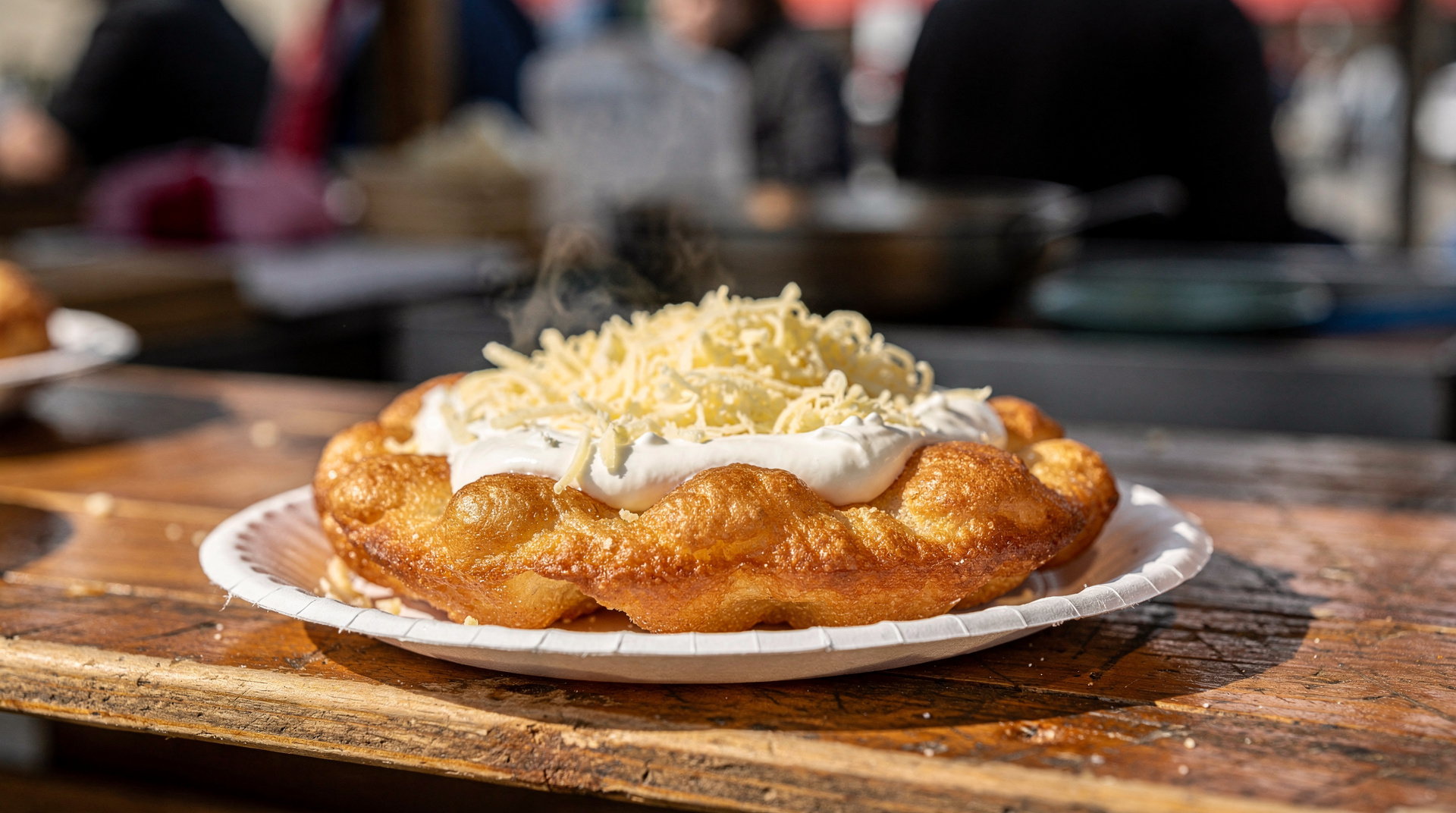
Lángos (fried dough with sour cream and cheese) is the essential Budapest street food — find it at the Great Market Hall upper floor, outdoor fairs, and 24-hour stands near Blaha Lujza tér. Kürtőskalács (chimney cake) is the must-try sweet. The ruin bars in District VII have street-food stalls with a wider range including Hungarian sausages, brisket, and international options.
Budapest street food: a guide to what’s worth eating
Budapest’s street food culture has two distinct strands: the traditional (lángos from the market hall, kürtőskalács from fair stalls, grilled kolbász from the butcher’s shop at the Christmas market) and the newer (food trucks in City Park, the street-food market at Gozsdu udvar, craft beer and brisket at ruin-bar yards). Both are worth knowing.
This guide covers the essential items, where to find the best versions, realistic prices, and a few useful organised experiences.
| Where | Great Market Hall, District VII ruin bars, Gozsdu udvar, Christmas markets |
| Typical cost | 400–1,400 HUF (€1–3.50) per item |
| Best time | Any day for markets; evenings/weekends for ruin-bar stalls |
| Cash or card | Both widely accepted; small stalls sometimes cash-only |
| Full afternoon of grazing | Under 3,500 HUF (€8.75) |
Lángos: Hungary’s definitive street food
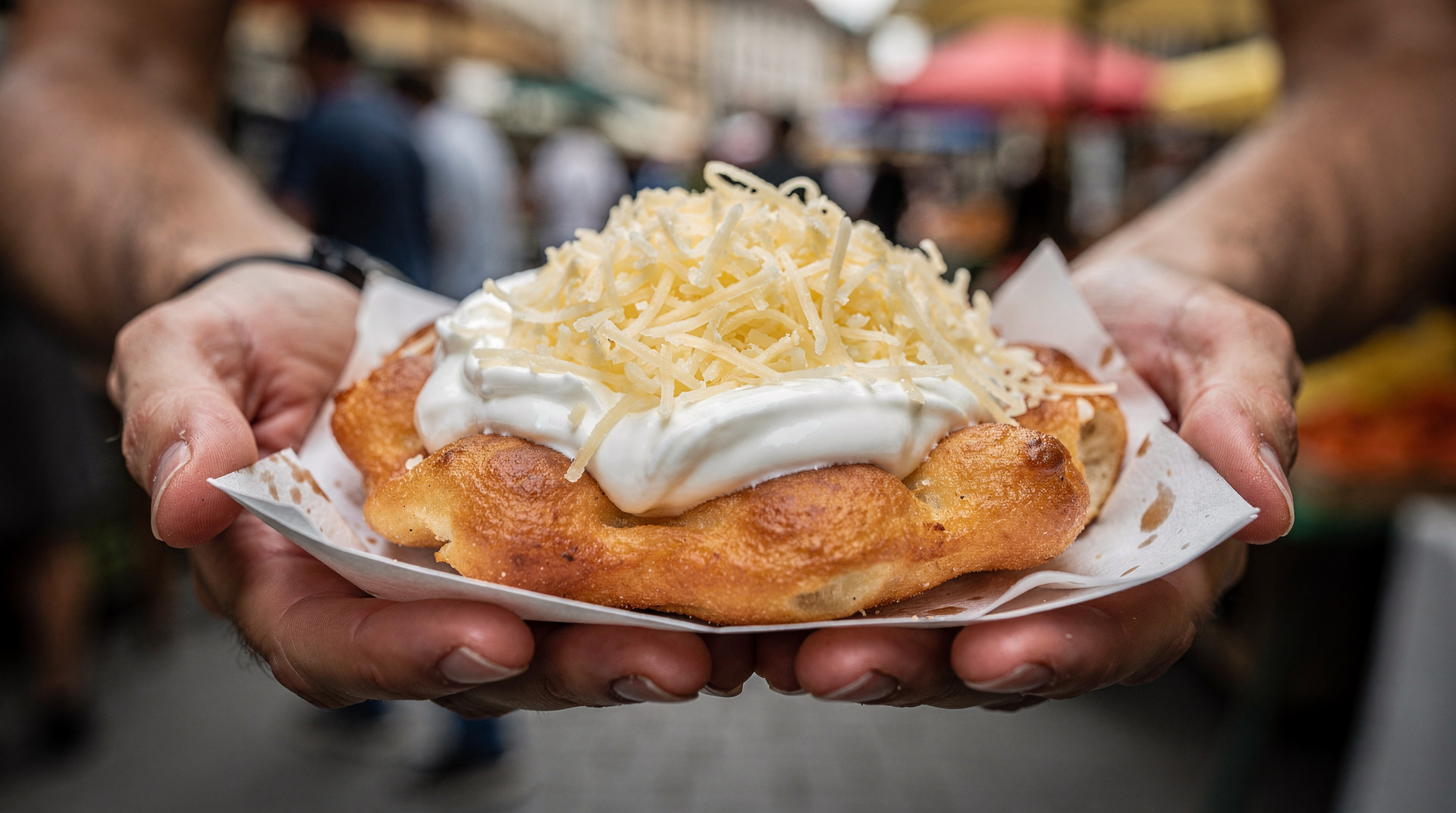
Lángos is a round disc of deep-fried yeast dough — thick, golden, soft inside and slightly crispy at the edges. The standard topping is tejföl (sour cream) smeared across the surface and reszelt sajt (grated semi-hard cheese) on top. Common variations: fokhagymás (with garlic butter brushed on before frying), sonkás (with ham), and various combinations of toppings.
The quality indicator is freshness: lángos should be made to order, not held under a heat lamp. The batter should be freshly risen, the oil should be hot enough to puff the dough immediately, and the surface should have some colour variation (not uniformly beige).
Best lángos in Budapest:
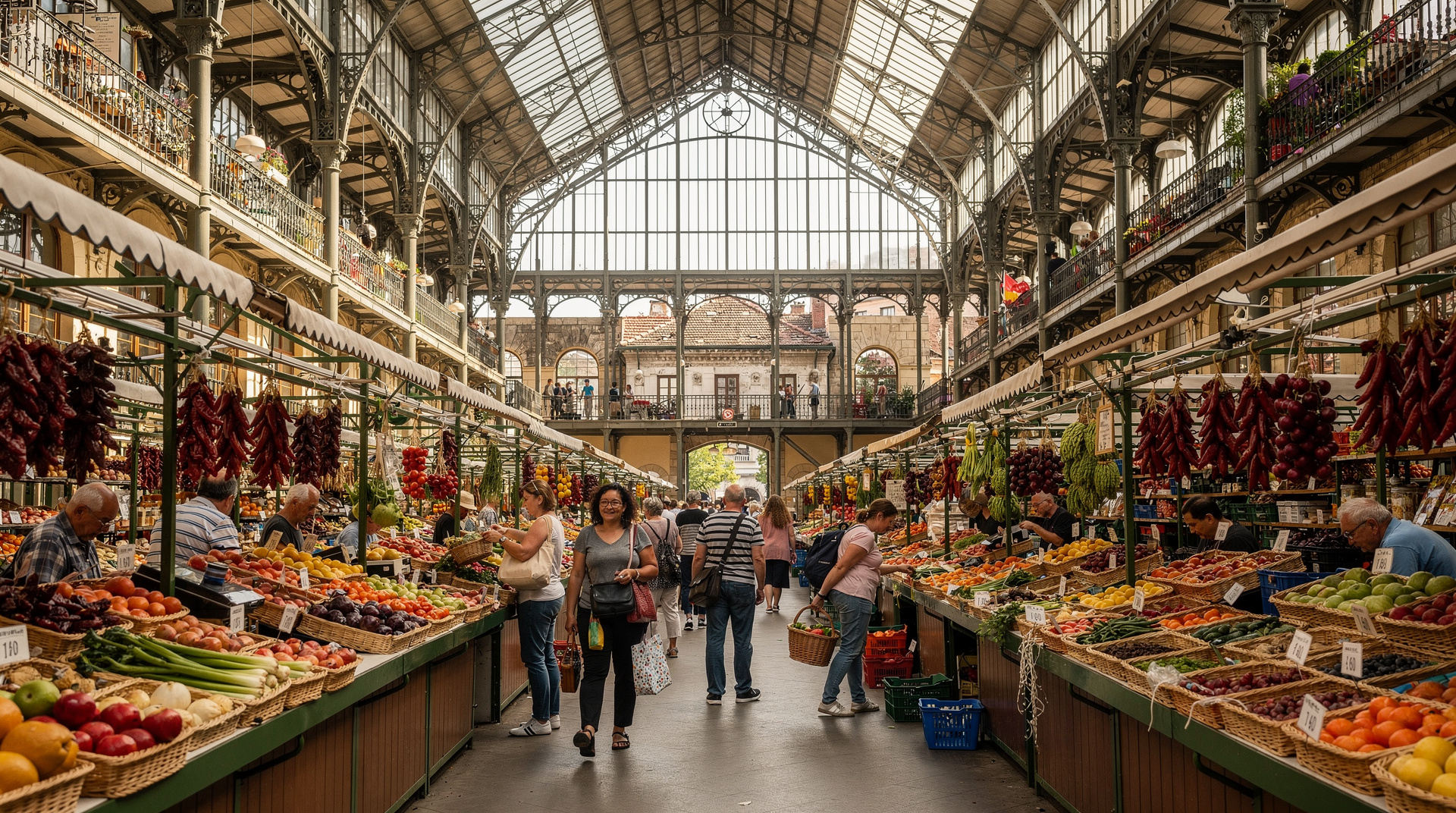
- Great Market Hall upper floor (Fővám tér, District IX) — freshest, most atmospheric setting
- Outdoor Christmas markets (Vörösmarty tér, Basilica area) — November to January
- Late-night stalls near Blaha Lujza tér — available until 03:00–04:00 on weekends
- Village markets and summer festivals around Hungary — the most traditional context
Price: 700–1,400 HUF (€1.75–3.50) depending on size and toppings. Full guide: where to eat lángos in Budapest.
Kürtőskalács: chimney cake
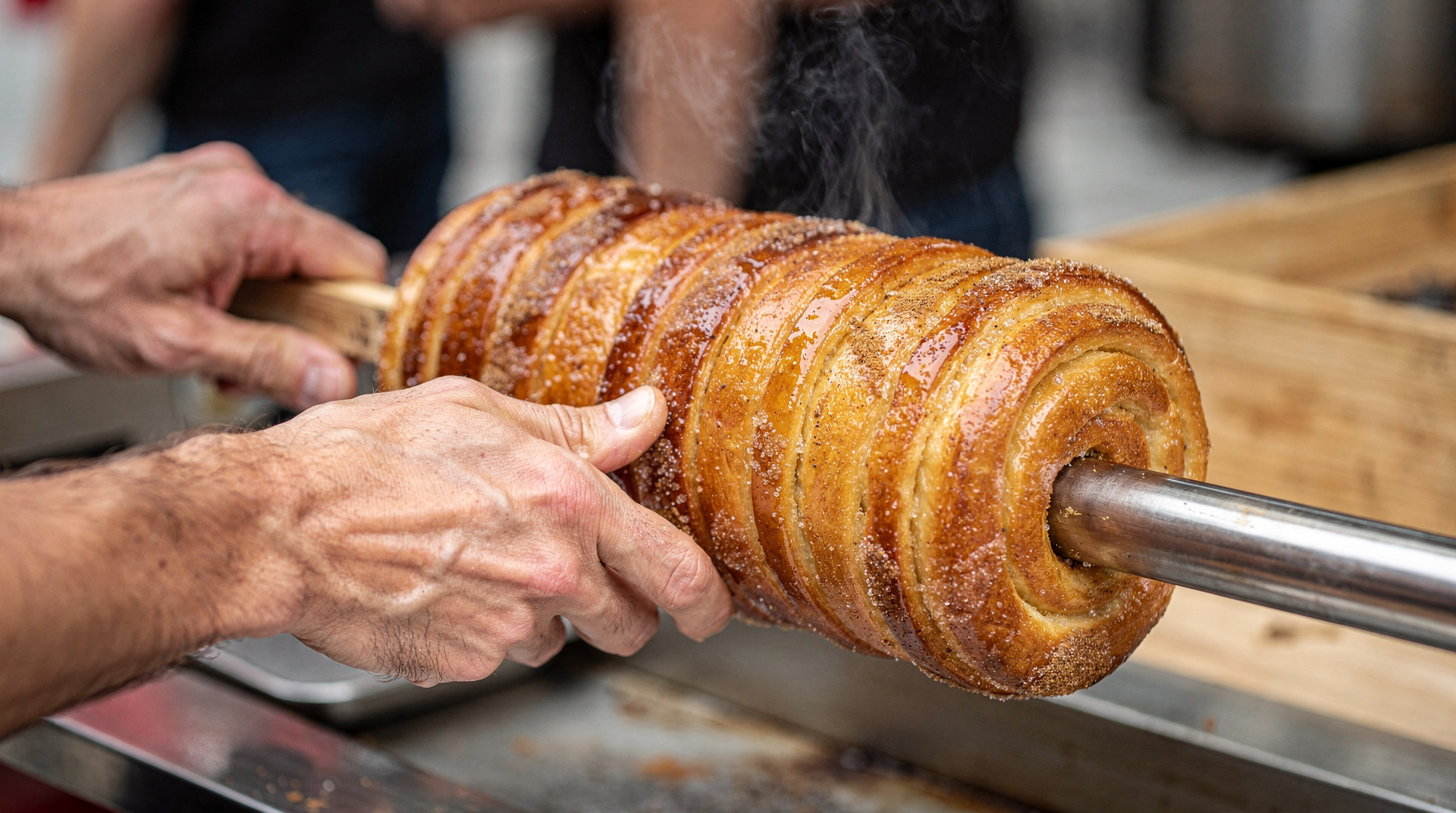
Kürtőskalács is sweet bread dough wound around a spit, baked over charcoal or a heated element, then rolled in sugar and cinnamon while still warm. The result is a spiral tube — hence “chimney cake” — with caramelised sugar on the outside and soft, slightly chewy bread inside.
This is the sweet item you’ll see at every Budapest market and Christmas fair, and at numerous tourist-area stalls. Quality varies significantly: the best are baked to order in front of you, with a proper charcoal or wood-fire flavour. The worst are pre-made, stored warm, and lack the distinctive caramelised crust.
Stalls with a visible charcoal or wood-fire element and a queue are the reliable indicator of quality. Price: 700–1,200 HUF (€1.75–3) for a standard size. For more detail, see chimney cake (kürtőskalács) guide.
Grilled sausages and meats
Hungarian kolbász (sausage) is spiced with paprika and garlic, typically made from pork, and can be fresh (for grilling) or smoked and cured. At outdoor markets and the Christmas market, grilled kolbász is served with mustard and fresh bread for 600–1,000 HUF (€1.50–2.50).
The Christmas market near the Basilica (November–January) has the best concentrated selection of grilled meats: alongside kolbász you’ll find mangalica (the traditional Hungarian woolly-pig breed) pork dishes, hurka (liver sausage), and slow-roasted meats.
Ruin-bar street food: the newer scene
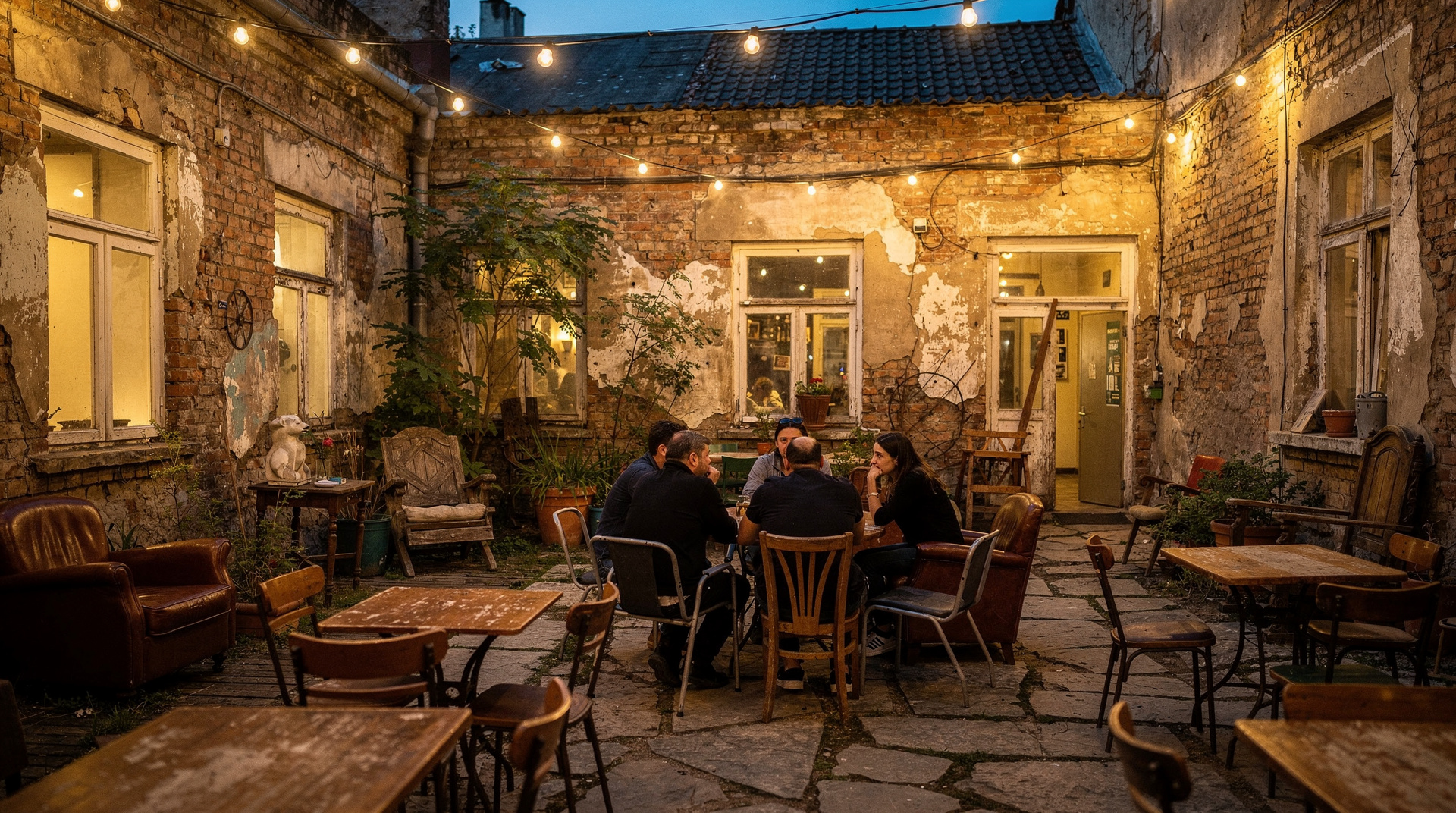
The ruin bars in District VII (particularly Szimpla Kert and the Instant–Fogas courtyard) have developed a food-stall culture in their courtyards — especially during weekend daytime hours and summer months. You’ll find:
- Szimpla Kert Sunday market: food trucks and stalls alongside the weekly farmers’ market (09:00–14:00). Korean tacos, Hungarian sausage sandwiches, fresh pastries.
- Gozsdu udvar (Király utca 13): a covered passage connecting Király utca and Dob utca, with approximately 10 food stalls and bar seating. Open daily; busiest evenings. A mix of Hungarian, Israeli (falafel, hummus), and international (burgers, gyoza) — more varied than traditional market food.
- Street-food markets at City Park (Városliget): weekend events with rotating food trucks, usually May–September.
For a guided version of the ruin-bar food experience, the ruin bars and street food walking tour combines 2–3 bar stops with street food tastings across the District VII area — a good afternoon activity.
The organised street-food beer tour
The Budapest street food tour with beer and food tastings pairs Hungarian street food items with local craft beer — a more structured way to cover the same ground with a guide providing context on what you’re eating and why. This format works particularly well for visitors who want to understand the food rather than just consume it.
Christmas market street food
Budapest’s Christmas markets (mid-November to January 1) are one of the best settings for traditional street food in Central Europe. Both the Vörösmarty tér market and the Basilica market have dozens of stalls.
What to eat at the markets:
- Kürtőskalács from a charcoal-fired stall
- Grilled kolbász with mustard and fresh bread
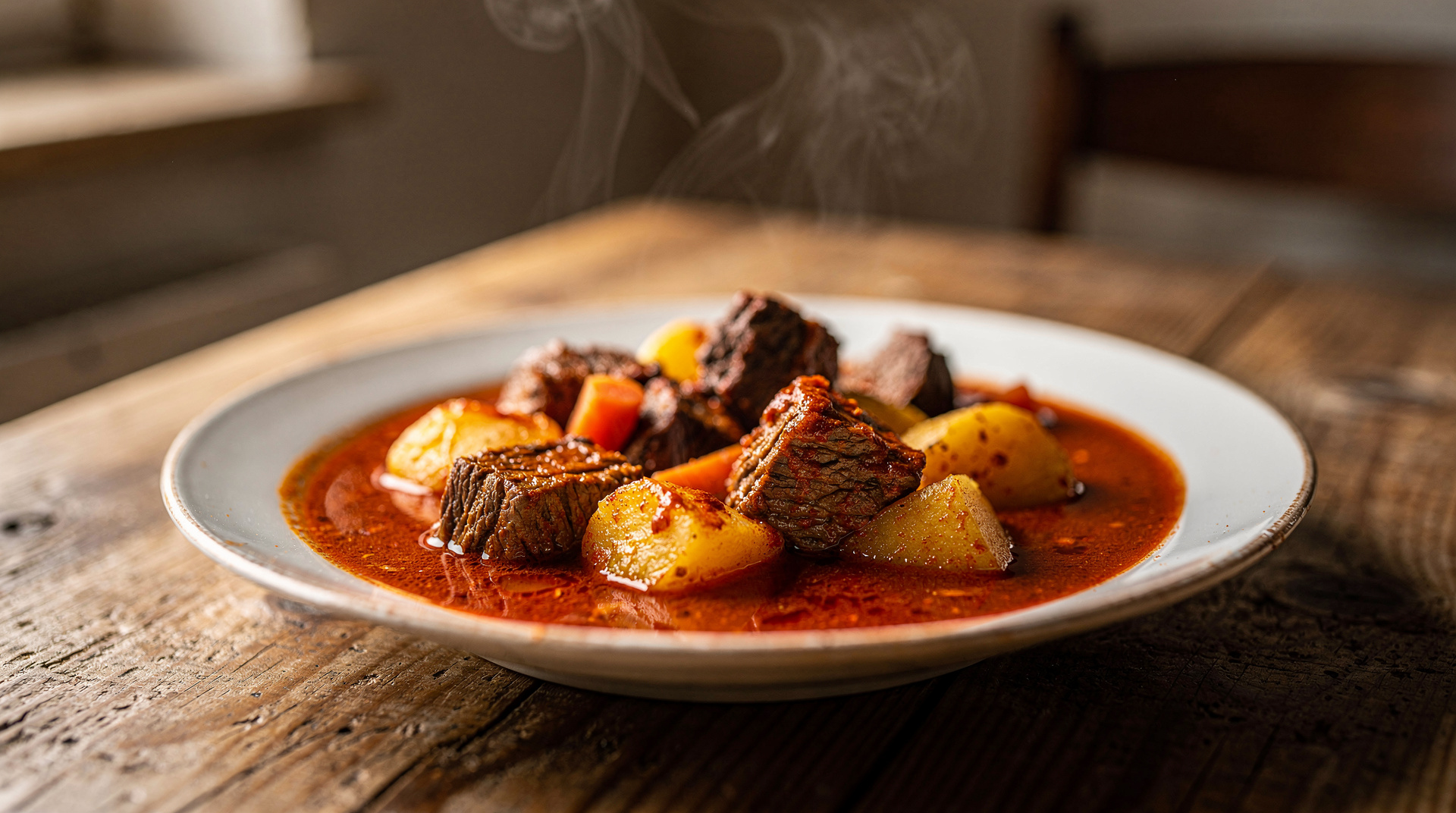
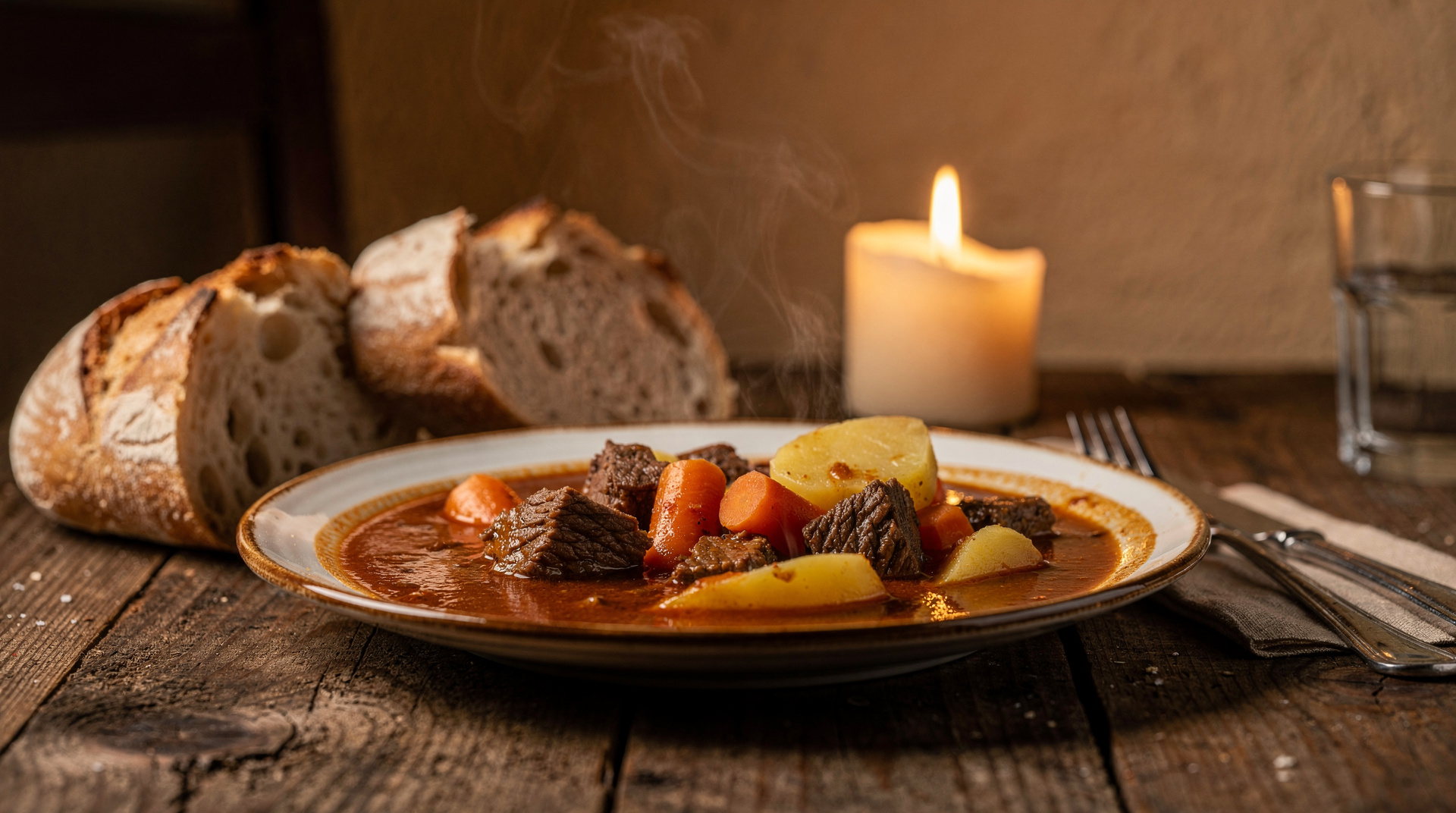
- Kürtős stew (a new format: kürtőskalács used as a bowl for gulyás or goulash soup)
- Forró bor (mulled wine): spiced red wine, served hot, 600–1,000 HUF
- Pálinka: warm fruit brandy shots, 600–900 HUF
For the full Christmas market guide, see Budapest Christmas markets.
Late-night street food
After midnight, the main options near the nightlife district:
- Lángos stalls near Blaha Lujza tér (open until 03:00–04:00 on weekends)
- Döner kebab shops on Rákóczi út (24 hours)
- McDonald’s at Rákóczi út 24 (24 hours)
For the full late-night eating context, see late-night Budapest.
Prices and budget
Budapest street food remains very good value. A full afternoon of market eating — lángos, a slice of strudel, a chimney cake, and a small beer — costs under 3,500 HUF (€8.75). Compare this to a sit-down meal in a mid-range restaurant (4,000–8,000 HUF for a main course).
For budget planning, see is Budapest expensive? and Budapest on a budget.
Street food tour options: the organised experience
For a structured approach to Budapest street food, the street food tour with beer and food tastings pairs Hungarian street food items with local craft beer across multiple stops. A guide provides the context — what each food is, how it fits into Hungarian culinary tradition, where to find the best versions independently — alongside the tastings themselves.
The ruin bars and street food walking tour combines District VII ruin-bar stops with street food tastings in the Jewish Quarter area. A good choice for visitors who want to experience both sides of Budapest’s informal food-and-drink culture in a single afternoon.
The Hungarian food market calendar
Street food culture in Budapest extends beyond permanent stalls into a calendar of seasonal markets and festivals:
Buda Castle Farmers’ Market (various dates): Occasional markets inside Buda Castle’s courtyards, with an emphasis on traditional producers and artisan food. Less regular than the Szimpla Kert Sunday market but worth checking if dates align with your visit.
Palotanegyed Street Food Festival (typically June): A street-food festival in District VIII’s regenerating Palotanegyed (Palace Quarter), with food trucks and pop-up stalls from Budapest’s emerging restaurant scene. International and Hungarian options side by side.
Balaton Sound and other summer festivals: The major Hungarian music festivals (Sziget in August, Balaton Sound in July) have extensive street food areas alongside the music. If your visit coincides, the festival food represents a cross-section of Budapest’s current street food scene. See Sziget festival guide for context.
Christmas market season (mid-November to January 1): The concentrated street food experience. Both the Vörösmarty tér and Basilica markets have dozens of food stalls operating daily. The mulled wine, chimney cake, and grilled sausage combination is as much a sensory experience as a food one. See Budapest Christmas markets.
Hungarian street food items you might not have heard of
Langall: A filled pastry, somewhat like a stuffed flatbread — yeasted dough wrapped around a filling (cheese and dill, cabbage and pork, or sweet with jam) and baked. Sold at some market stalls; less common than lángos but worth trying when you see it. Price: 400–700 HUF (€1–1.75).
Zsíros kenyér: Bread spread with lard (zsír) and topped with sliced onion, paprika, and sometimes pickled cucumber. A traditional working-class snack that has experienced a revival in Budapest’s neighbourhood bars and informal eateries. Very cheap (400–600 HUF / €1–1.50) and very Hungarian.
Sonkás-sajtos bukta: Soft yeasted rolls filled with ham and cheese, baked golden. Found at bakeries and some market stalls; a versatile street food that works for breakfast or a light lunch. 400–800 HUF (€1–2) per roll.
Rétes on the go: Strudel sold by the slice at market stalls, to be eaten standing — not the sit-down cukrászda experience, but the market-food version. The filling is usually apple, cherry, or cottage cheese; the pastry is less refined than a pastry shop version but warmer and more immediate. 500–800 HUF (€1.25–2) per slice at the Great Market Hall.
Fried fish (rántott hal): At the Christmas markets and some summer fairs, freshwater fish (carp, pike-perch) is battered and fried to order. This is more seasonal than permanent, but a traditional Hungarian dish in informal market form.
Gozsdu udvar: Budapest’s food-court courtyard
Gozsdu udvar is a covered passage connecting Király utca and Dob utca in District VII — a long corridor of seven interconnected courtyards that now holds approximately fifteen food and drink stalls alongside bar seating. It’s open daily and busiest Thursday through Sunday evenings.
What’s there: falafel and hummus (Pitapajtás), Korean-inspired dishes, Japanese ramen, Hungarian sausage sandwiches, craft beer bar, cocktail bar, and a few rotating pop-up concepts. The mix is international rather than specifically Hungarian street food.
The atmosphere is enclosed and convivial — especially when it rains (the corridor is covered) or in the evening when the string lights are on. A good stop for groups with mixed appetites: some want Hungarian, some want international; everyone can find something.
Getting there: walk from Kazinczy utca (30 seconds) or the Klauzál tér (2 minutes). Connecting to both Király utca and Dob utca, it’s impossible to miss once you’re in the ruin-bar district.
How street food fits into the broader Budapest food scene
Street food in Budapest occupies the bottom of a food pyramid that extends upward through étkezde canteens, mid-range restaurants, and Michelin-starred dining. It’s not separate from the restaurant culture but continuous with it — the same ingredients (paprika, Mangalica pork, freshwater fish, fermented vegetables) appear in both a Christmas market kolbász and a Stand restaurant tasting menu.
Understanding street food first makes the sit-down restaurant experience more comprehensible. A visitor who has eaten a proper lángos at the Great Market Hall, tried a kürtőskalács from a charcoal stall, and watched a strudel being made from stretched dough will understand the traditional Hungarian dishes guide more concretely.
For the complete food picture — restaurant dining, food tours, cooking classes — see best food tours in Budapest and best restaurants in Budapest. For the Budapest food budget context, see is Budapest expensive?.
Budapest street food: a neighbourhood guide
District VII (Jewish Quarter and ruin-bar district): The highest density of street-food options in the city — lángos near Blaha Lujza tér, the Gozsdu udvar passage stalls, and late-night kebab shops on Rákóczi út. Most options are open until 23:00–04:00 depending on the venue type.
District V (inner Pest): Good around the Great Market Hall end of Váci utca; poor on Váci utca itself. The riverfront near Vigadó tér has summer vendors. Christmas markets at Vörösmarty tér (November–January) are the exception — excellent concentration of traditional street food.
Castle Hill (District I, Buda): Overpriced. The tourist density creates a market for expensive, mediocre food stalls. Avoid buying food on Castle Hill and descend to Batthyány tér for fair prices.
City Park (Városliget, District XIV): Multiple options near Széchenyi Baths — lángos, kürtőskalács, grilled meats. Weekend food events in the park bring food trucks.
Street food economics in 2026
Inflation has affected Budapest prices across the board since 2022. Street food has been less affected than restaurant dining:
- Lángos basic: 700–1,000 HUF (€1.75–2.50)
- Lángos extra toppings: 1,000–1,400 HUF (€2.50–3.50)
- Kürtőskalács: 700–1,200 HUF (€1.75–3)
- Grilled kolbász with bread: 600–1,000 HUF (€1.50–2.50)
- Mulled wine at Christmas markets: 600–1,000 HUF (€1.50–2.50)
- Draft beer at a street kiosk: 800–1,200 HUF (€2–3)
These remain significantly lower than equivalent street food in Western European capitals.
International formats in Budapest street food
Since approximately 2012, international food culture has added to the traditional Hungarian offerings at food markets and the Gozsdu udvar passage:
Israeli and Middle Eastern: Falafel wraps and hummus-based fast food are now established in the Jewish Quarter — appropriate given the neighbourhood’s history. Several permanent stalls offer excellent falafel at 900–1,400 HUF (€2.25–3.50).
Korean-inspired: Kimchi quesadillas, bulgogi buns, and Korean fried chicken have appeared at food trucks and Gozsdu udvar stalls. Quality is high at the best stalls.
Japanese-inspired: Gyoza dumplings and onigiri have appeared at food market events. The dumpling format resonates with Hungarian taste (close to the gombóc tradition).
The traditional Hungarian items remain the most reliably excellent. The international formats are interesting additions but quality varies.
Planning street food into your Budapest visit
Street food works best as: (1) a morning activity at the Great Market Hall before museum-visiting or sightseeing; (2) a late-night fuel stop after an evening in the ruin bars; (3) a casual lunch during walking or exploration rather than a sit-down break.
Combining the Central Market Hall guide visit with a walk to the Gellért area (10 minutes south) and a ferry back across to the Buda side makes an excellent morning with street food at the centre.
For the broader food context including sit-down restaurants and food tours, see best food tours in Budapest and best restaurants in Budapest. For specific items: lángos at where to eat lángos, chimney cake at kürtőskalács guide, and traditional dishes at traditional Hungarian dishes.
Vegetarian, vegan and allergy-friendly street food
Hungarian street food is traditionally meat- and dairy-heavy, but the scene has genuinely opened up. Lángos ordered “sajtos-tejfölös” (cheese and sour cream, no ham) is vegetarian by default; a small but growing number of stalls, including several at Gozsdu udvar, offer a vegan version with plant-based sour cream and cheese. Falafel and hummus stalls in the Jewish Quarter — a legacy of the neighbourhood’s history — are reliably vegan, and Korean-inspired stalls at the food-truck events often have a vegetable option. Kürtőskalács contains egg and dairy in the dough, so it isn’t vegan, though it rarely contains meat or nuts unless a topping specifies otherwise. If you have a serious allergy, ask directly at the stall — Hungarian vendors are generally happy to describe ingredients, though English varies.
Street food and the seasons
Street food availability shifts noticeably across the year. Summer (June–August) brings the most food trucks and outdoor stalls, particularly at City Park weekend events and Gozsdu udvar’s busiest evenings. Winter concentrates almost entirely around the Christmas markets (mid-November to January), where the mulled wine and grilled kolbász combination becomes the default rather than one option among many. Spring and autumn are quieter for street food specifically, though the Great Market Hall and permanent lángos stalls operate year-round regardless of season.
Street food etiquette: queuing, cash and manners
Budapest street-food stalls run on a simple, largely unwritten etiquette: queue in a single line at the counter, order clearly (pointing at a menu photo works fine if your Hungarian is limited), and step aside once served to make room for the next customer — most stalls have no seating, so eating standing to one side is normal. Card payment is widely accepted at markets and Gozsdu udvar, but smaller fair stalls and some Christmas market vendors remain cash-only, so carry some HUF. Tipping isn’t expected at street-food stalls the way it is at sit-down restaurants; rounding up to the nearest note is appreciated but not required. At the Szimpla Kert Sunday market and similar farmers’ markets, sampling small pieces of cheese or produce before buying is normal practice at most stalls — just ask first.
Frequently asked questions about Street food in Budapest
Where can I find lángos in Budapest?
Great Market Hall upper floor (weekdays 06:00–18:00, Saturday until 15:00): the best for freshly fried lángos in a market setting. The stalls near the top of the main staircase are consistently good. Price: 700–1,400 HUF (€1.75–3.50). Outdoor markets, Christmas markets (November–January), and late-night street stalls near Blaha Lujza tér also serve lángos.How much does street food cost in Budapest?
Lángos: 700–1,400 HUF (€1.75–3.50). Kürtőskalács: 700–1,200 HUF (€1.75–3). Hungarian sausage (kolbász) grilled: 600–1,000 HUF (€1.50–2.50). Langall (a type of filled pastry): 400–800 HUF. Fresh-pressed juice at market stalls: 600–900 HUF. Street food in Budapest remains excellent value by European standards.Are there street-food markets in Budapest?
Yes. Budapest has a growing street-food market scene: Gozsdu udvar (Király utca 13) is a covered passage with food stalls and bar seating. The Városliget (City Park) hosts food trucks on weekends. The Rácz market (District I, Hadnagy utca) is more local-facing. Christmas markets (Vörösmarty tér and Basilica area, mid-November to January 1) have the widest range of traditional street food.Is Budapest street food safe to eat?
Yes — Hungarian food-hygiene standards apply to street stalls as they do to restaurants, and stalls with visible turnover and a queue are the reliable safety indicator, the same rule that applies anywhere. Lángos and kürtőskalács are cooked to order at high heat, which further reduces risk. As anywhere, avoid stalls with food sitting out uncovered for long periods, particularly meat in hot weather.Is there vegetarian or vegan street food in Budapest?
Yes, increasingly so. Lángos without the classic ham topping is naturally vegetarian (ask for sajtos-tejfölös — cheese and sour cream only, or plain with garlic). Vegan lángos with plant-based toppings is available at a handful of specialist stalls and at Gozsdu udvar. Falafel and hummus stalls in the Jewish Quarter are reliably vegan-friendly. Kürtőskalács is not vegan (egg and dairy in the dough) but usually contains no meat.
Top experiences
Bookable activities with verified prices and instant confirmation on GetYourGuide.