Where to eat lángos in Budapest: the best spots for Hungary's fried dough
Where is the best lángos in Budapest?
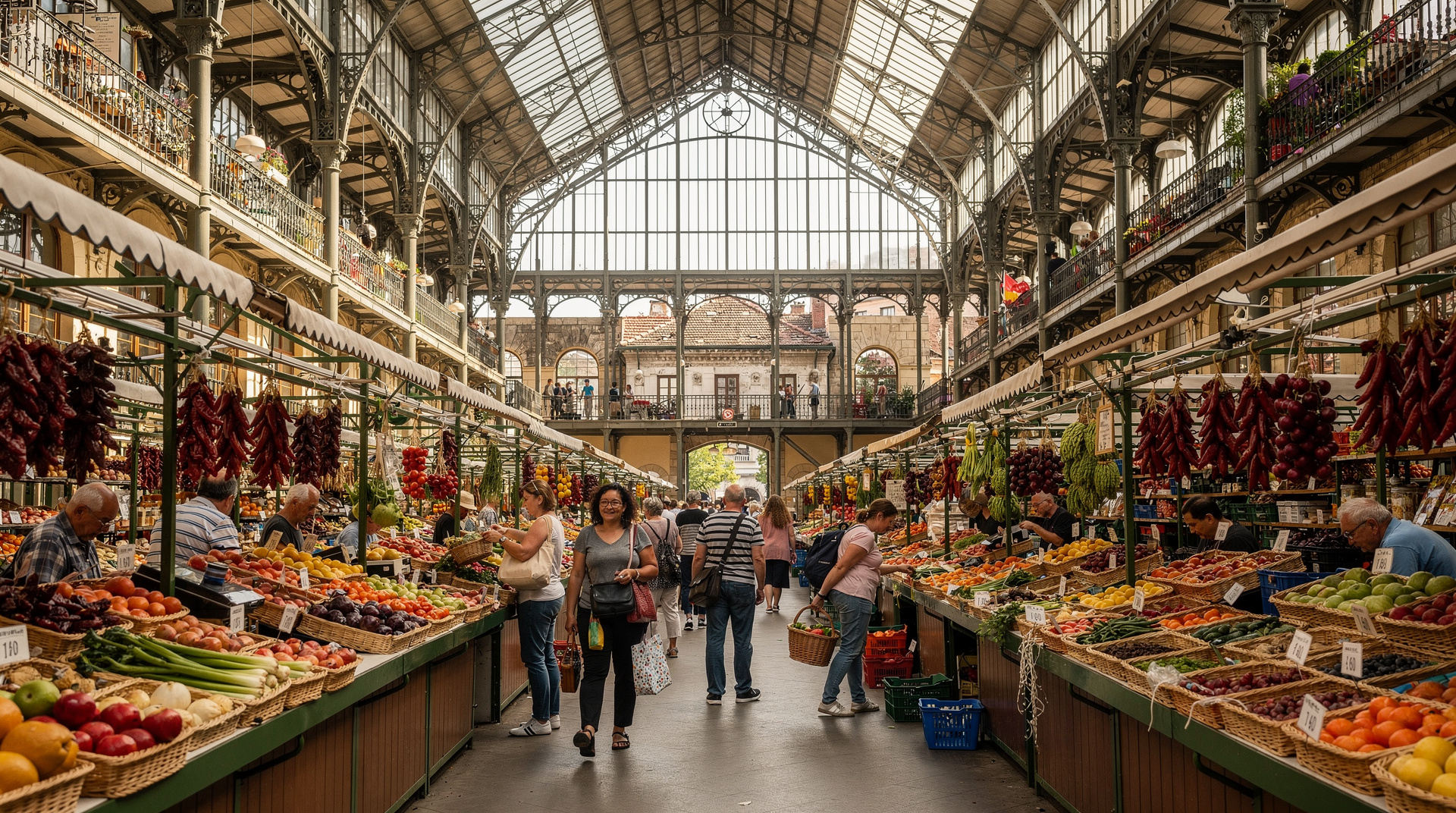
The Great Market Hall (Vásárcsarnok) upper floor has the best lángos in a market setting — freshly fried to order, 700–1,400 HUF (€1.75–3.50). Go before noon on a weekday for the freshest dough. Christmas markets (November–January) have excellent lángos from charcoal-heated stalls. Late-night stands near Blaha Lujza tér serve until 03:00–04:00.
Lángos: Hungary’s essential fried dough
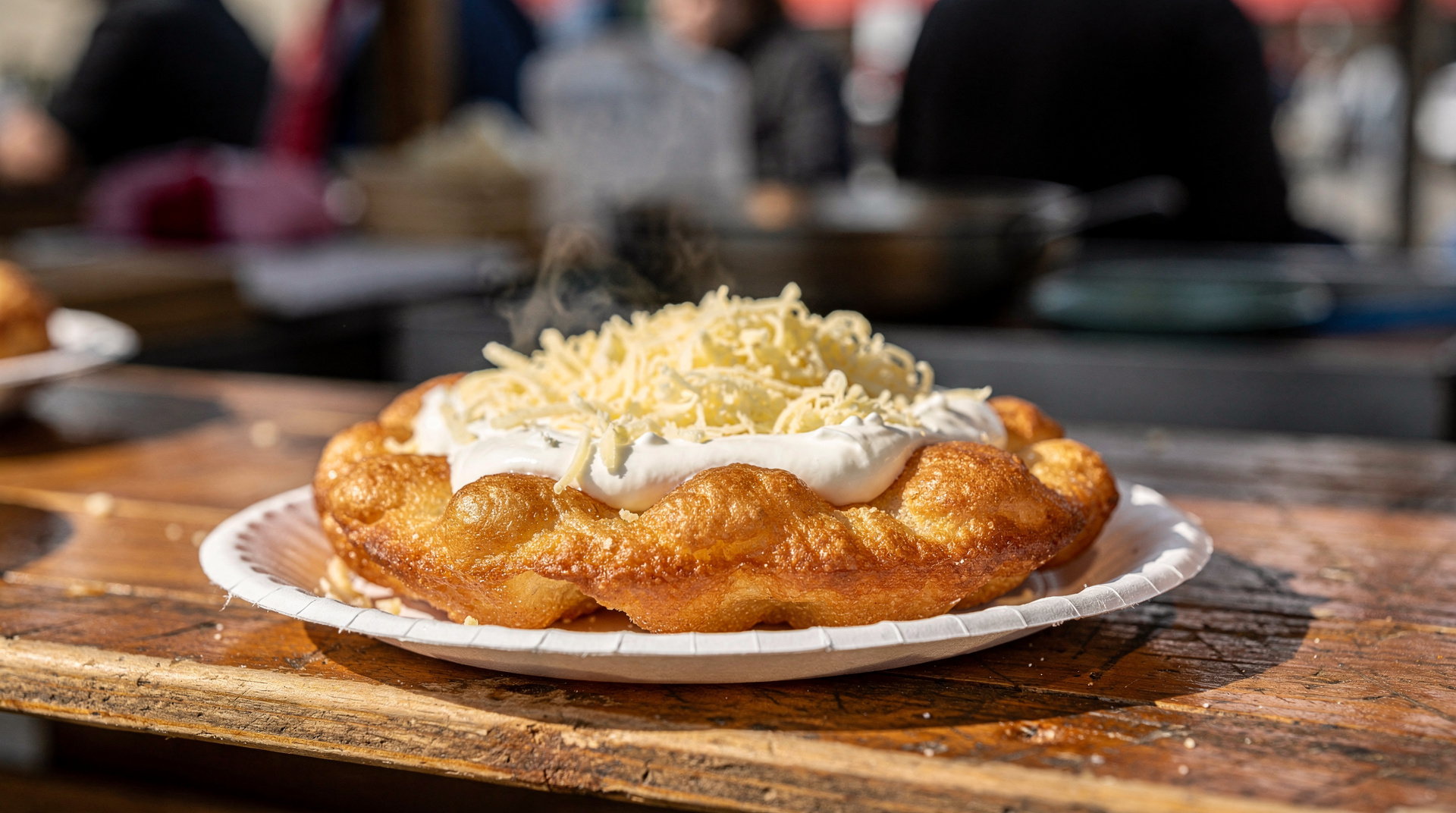
Lángos is Hungary’s most beloved street food — a disc of yeast-risen dough, deep-fried in oil until golden and slightly puffed, topped with sour cream and grated cheese and eaten immediately while still hot. The name derives from the Hungarian word for flame (láng); before modern bread ovens, lángos was baked in the dying heat of a wood-fired oven, pressed against the hot stones or the oven’s ember-side.
Today it’s deep-fried rather than flame-baked, but the essential appeal is unchanged: fresh, hot, a little greasy, generously topped, eaten standing at a market stall. It costs less than two euros at its best and is genuinely difficult to improve upon.
| Where | Great Market Hall upper floor, Christmas markets, outdoor fairs |
| Cost | Around 700–1,400 HUF for a standard topped lángos |
| Time needed | 15–20 minutes to fry and eat one, standing |
| Best time | Weekday mornings (08:00–12:00) at the Market Hall for freshest dough |
| Standard order | Tejfölös-sajtos (sour cream and cheese) |
Where to eat lángos: a quick comparison
| Location | Freshness | Price | Atmosphere | Best for |
|---|---|---|---|---|
| Great Market Hall | Fried to order, best mornings | 700–1,400 HUF | Busy, touristy but real | First-timers, reliable quality |
| Christmas markets | Fried to order | Similar to Market Hall | Festive, cold-weather contrast | Winter visits (Nov–Jan) |
| Late-night Blaha Lujza | Variable | ~800 HUF, cheapest | No-frills, post-bar crowd | After a night out |
| Lake Balaton beach kiosks | Fried to order in season | Similar to Budapest | Beach, summer holiday feel | Day trippers to Balaton |
The best places to eat lángos in Budapest
Great Market Hall (Vásárcsarnok) — Fővám tér, District IX
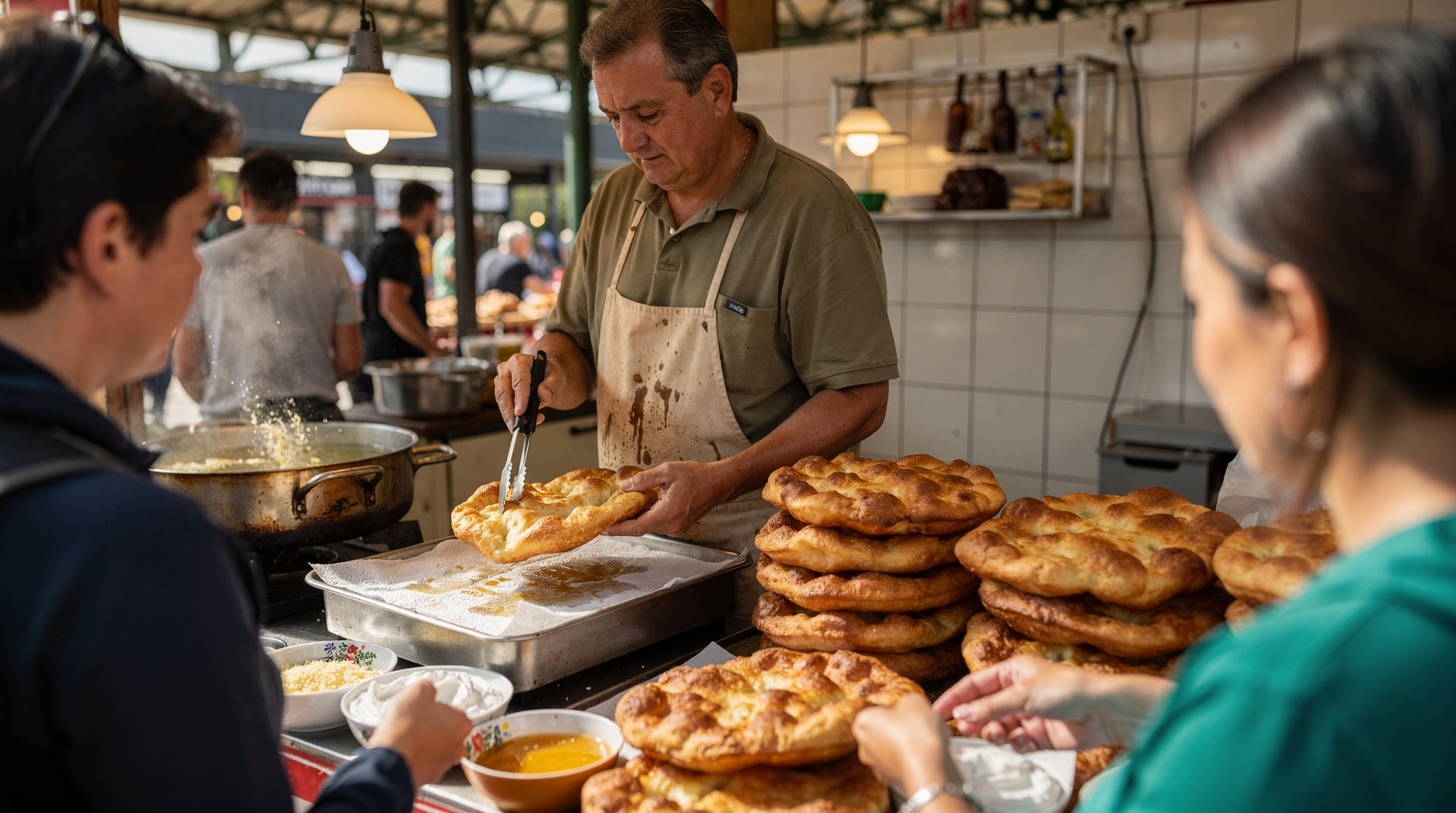
The upper floor of the Great Market Hall has the most famous lángos stalls in Budapest. Three or four competing stalls occupy the arcade above the main market floor; the best-known are the ones immediately at the top of the main staircase. They fry to order — watch the dough go into the oil and come out 2–3 minutes later.
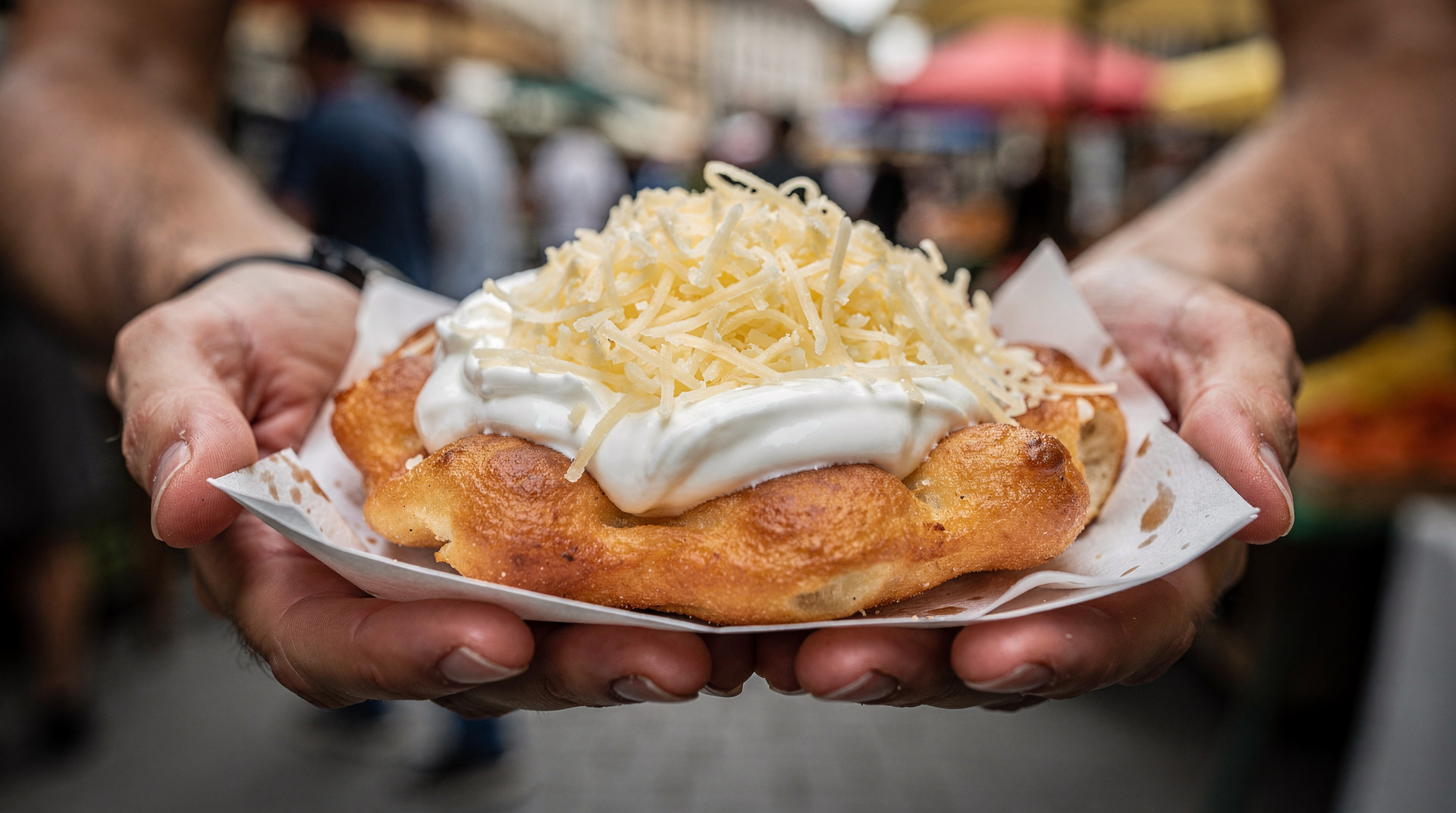
The lángos here are large (approximately 25–30 cm across), generously topped with cold sour cream and freshly grated cheese. The contrast of hot fried dough with cold topping is part of the experience.
Best time to go: Weekday mornings from 08:00–12:00. The oil is fresh, the dough has been rising overnight, and the stalls are at their most active. After 14:00, the last batches of the day may have sat longer than ideal.
Price: 700–1,000 HUF (€1.75–2.50) plain; 900–1,400 HUF (€2.25–3.50) with extra toppings.
Outdoor markets and fairs
Budapest’s summer market season (May–October) brings outdoor markets to several locations, all with lángos stalls. The Városliget (City Park) hosts weekend food events; the Rácz market in District I has a neighbourhood market feel. The quality at outdoor fair lángos stalls is variable — look for a stall with fresh dough (not pre-rolled discs sitting ready to fry) and oil that’s properly hot.
Christmas markets (November–January)
The Christmas markets at Vörösmarty tér and around St. Stephen’s Basilica have excellent lángos. The cold weather makes hot fried dough more appealing than ever, and the market atmosphere (mulled wine, chimney cakes, grilled sausages) is part of one of Budapest’s best seasonal experiences. See the full Budapest Christmas markets guide.
Late-night stalls near Blaha Lujza tér
For post-midnight lángos after a night in the ruin bars, small stalls near Blaha Lujza tér (District VII/VIII border) operate until 03:00–04:00 on Friday and Saturday nights. Quality is variable — this is sustenance, not gastronomy — but fresh hot lángos at 1:30 a.m. for 800 HUF is exactly what it should be. If your evening started with the ruin bar crawl, this is the natural way to end it.
Spots to be wary of
A handful of stalls in the most heavily touristed pockets — around Deák tér and directly on Váci utca — charge up to 2,000 HUF for a lángos that’s identical to the 800–1,400 HUF version two streets away. The giveaway is usually a laminated multilingual menu with photos and a tout nearby; the Váci Street tourist trap guide covers this pattern in more general detail, and it applies to street food just as much as sit-down restaurants.
The lángos-making class: make your own
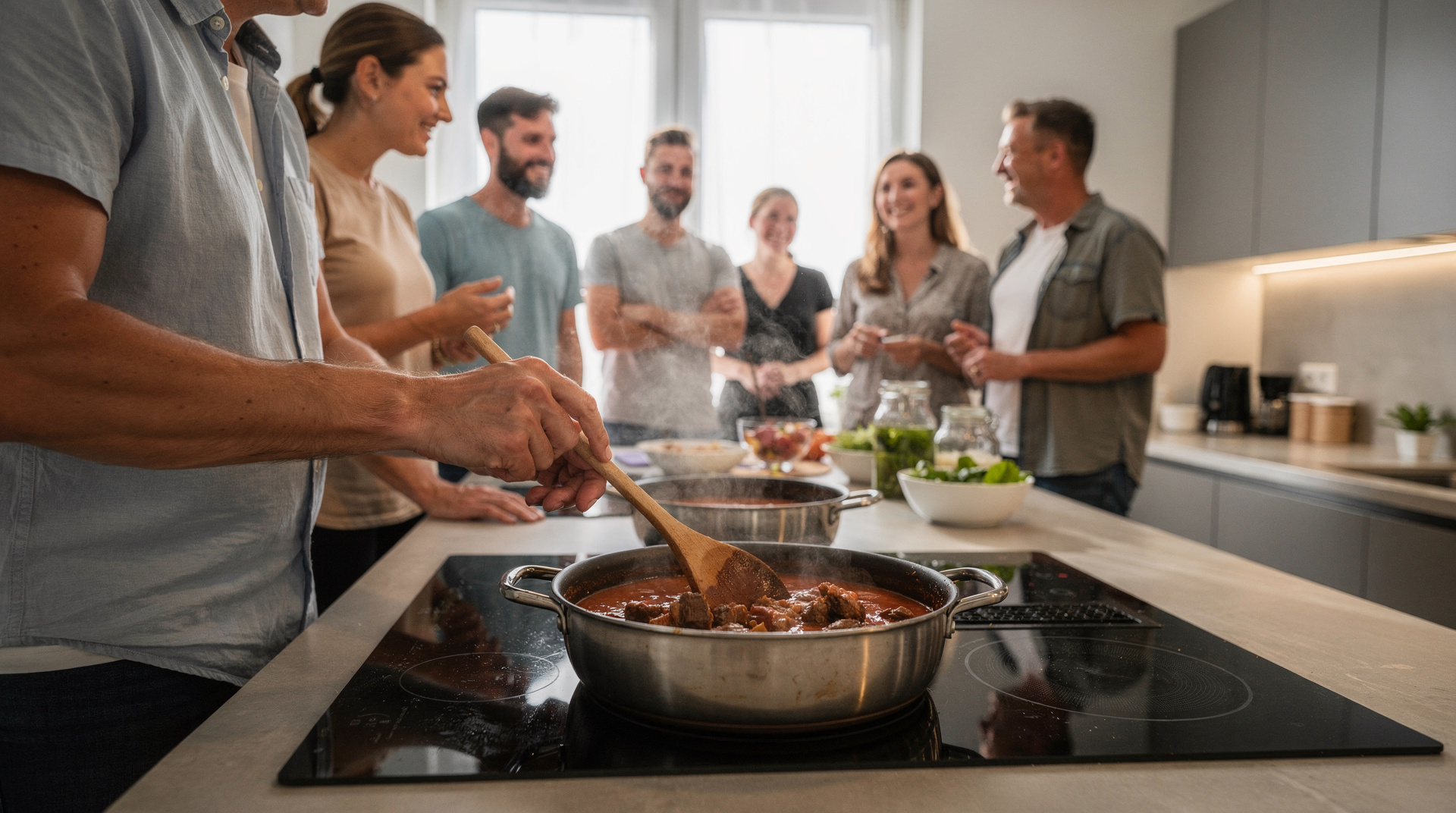
The lángos-making class is a hands-on workshop focused on Hungary’s most famous street food. In approximately 2 hours, participants make the dough from scratch (mixing, kneading, rising), learn the frying technique, and experiment with toppings before eating the results.
This is described as the number-one Hungarian street food class in Budapest, and it’s appropriate for all cooking levels — the dough is simple to make and frying is straightforward once the technique is demonstrated. A good choice for families, couples, or solo visitors who want a participatory experience rather than just tasting.
The class also provides context for what you’re cooking: the history of lángos in Hungarian food culture, the regional variations, and the difference between quality lángos and the tourist versions.
What to order and how to eat it
At a market stall, your interaction goes like this: point at the plain lángos option, confirm whether you want additional toppings (the stall will have a small menu on a sign), receive your lángos on a paper plate, and eat it standing or at a nearby table.
Standard order (beginners): Tejfölös-sajtos (sour cream and cheese). This is the classic.
If you want something extra: Fokhagymás (garlic butter added before frying — adds richness), sonkás (thin ham added to the topping), or combinations. Some stalls offer a sweet version with sour cream and sugar powder — this is less traditional but pleasant.
How to eat it: With your hands, folded slightly if it’s large. Eat while hot — lángos is considerably less appealing when it cools. Don’t plan on saving it for later.
Lángos and food tours
Most food tours in Budapest include a lángos stop — it’s the item most visitors haven’t tried and most immediately appreciate. The market-to-tavern food tour includes lángos as one of its 14 tastings in the Great Market Hall, alongside other Hungarian market foods.
For a broader view of Hungarian street food beyond lángos, see street food in Budapest and traditional Hungarian dishes.
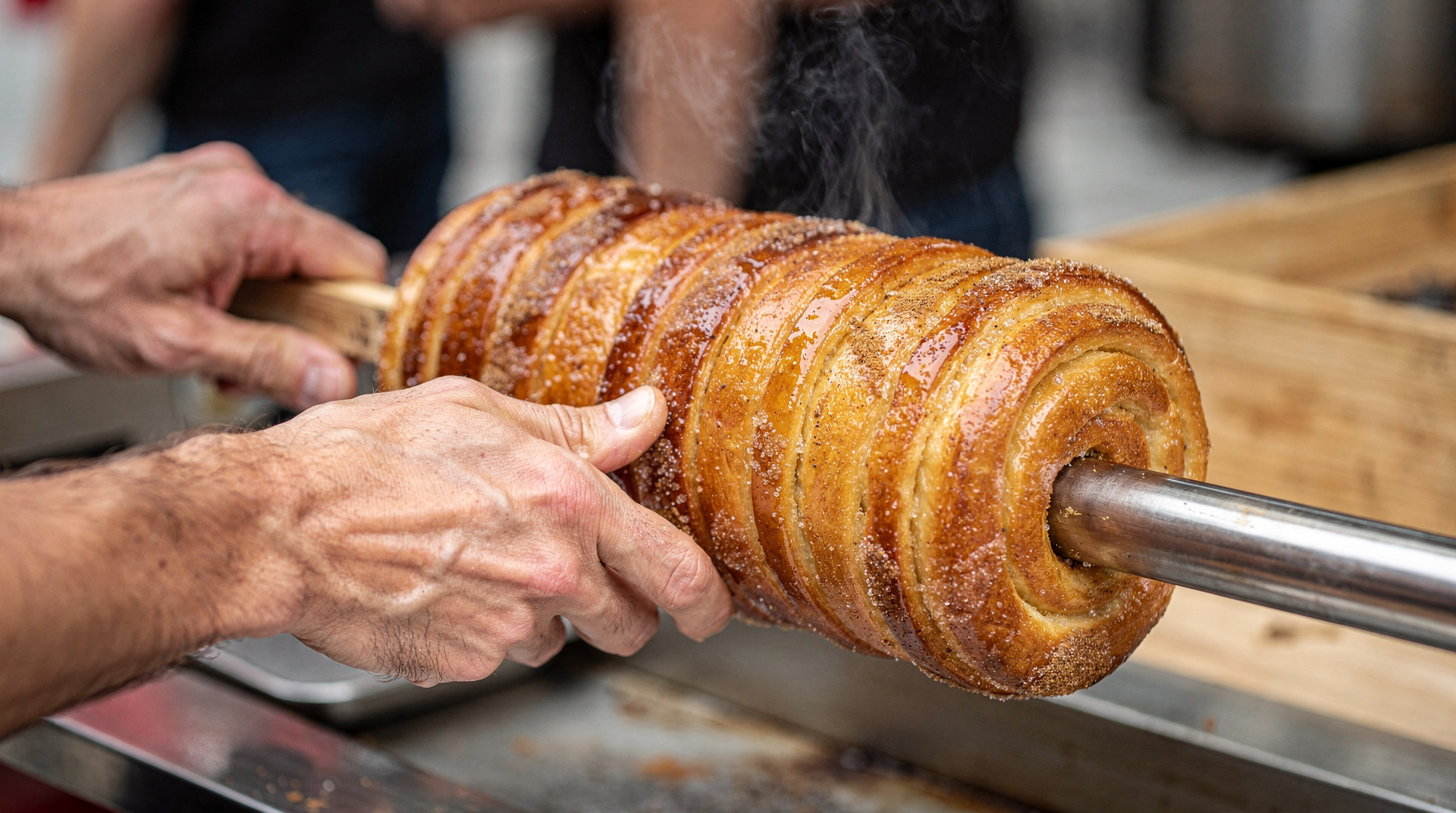
For the chimney-cake equivalent (the must-try sweet), see kürtőskalács guide.
Budget: how much to spend
A morning at the Great Market Hall eating lángos and browsing the stalls costs very little:
- Lángos: 900–1,400 HUF (€2.25–3.50)
- Slice of strudel: 500–800 HUF (€1.25–2)
- Coffee: 500–700 HUF (€1.25–1.75)
Total for an excellent market morning: 2,000–3,000 HUF (€5–7.50). This is one of the best-value things you can do in Budapest. The Great Market Hall is free to enter; the lángos stalls are on the upper floor.
For all food budget context, see is Budapest expensive?.
The history of lángos in Hungarian food culture
Lángos is older than its street-food status suggests. The word comes from “láng” (flame), and the dish predates modern frying equipment by centuries. Traditional lángos was pressed against the inside wall of a wood-fired bread oven — the residual heat after the bread was removed would puff and char the raw dough without burning it. The result was less crispy than the modern version but shared the same essential character: puffed, airy, slightly charred dough, eaten hot with whatever was available.
The modern, deep-fried version became widespread in Hungary during the 20th century as frying became affordable and practical. By the communist era, lángos was established as a staple of markets, fairs, and outdoor events — cheap, fast, filling, and universally available.
The emergence of Budapest as a tourist destination from the 1990s onwards didn’t change lángos fundamentally — it’s still made the same way, sold from the same types of stalls, and priced accessibly. This is one of the reasons it’s more authentic than many “traditional” tourist foods: there was never a need to adapt it for foreign tastes, because the foreign tastes arrived and found the local version exactly right as it was.
Regional and seasonal variations
Summer fair lángos: At Hungary’s outdoor summer fairs and folk festivals, lángos gets slightly more ambitious. The dough is sometimes flavoured (garlic worked into the batter, or a touch of caraway seed). Toppings expand to include: tejszín (cream rather than sour cream, richer), fresh herbs, local cheeses. These versions are better than the daily market version — the occasion justifies the extra effort.
Christmas market lángos: At winter markets, particularly the Vörösmarty tér and Basilica Christmas markets, lángos is sometimes served with unusual toppings: cinnamon sugar (a sweet version), sautéed mushrooms, or chilli sauce. The cold air makes the contrast with the hot fried dough more pronounced — one of the best arguments for visiting Budapest in December.
Homemade lángos: Hungarians make lángos at home for weekend family gatherings — it’s one of the most domestic of Hungarian foods, despite being sold primarily as street food. The home version often uses potato in the dough (adding flavour and a softer texture) and is fried in lard rather than sunflower oil. The lard-fried version is noticeably better; a few traditional market stalls still use it.
Dietary notes: gluten, dairy and vegan options
Lángos is not suitable for anyone avoiding gluten — the dough is entirely wheat flour, with no widely available gluten-free version at market stalls. For dairy-free eating, ask for fokhagymás (garlic butter) instead of the standard sour cream and cheese topping, or plain lángos with nothing added; the dough itself contains no dairy unless milk was used in the mix, which varies by stall and is worth asking about if it matters. For a fully vegan version, plain lángos with a drizzle of oil or a savoury seasoning instead of the dairy toppings is achievable at most stalls, though menus rarely list it explicitly — asking directly usually gets a straightforward answer, since it’s a simple substitution rather than a kitchen overhaul. See the vegetarian and vegan Budapest guide for the wider picture of eating this way in the city.
What to pair with lángos
Lángos is substantial enough to be a meal on its own, but it pairs naturally with several things:
- Beer: The obvious match. A light Hungarian lager (Dreher or Soproni) alongside a lángos at midday at the market is the authentic combination.
- Palinka: A shot of apricot or plum pálinka before or after a lángos is surprisingly pleasant — the fruit brandy cuts through the fat.
- Mineral water: Hungary has excellent sparkling mineral water (Theodora, Visegrád brand) — a practical accompaniment that cuts through the oiliness.
- Pickled cucumber or peppers: Some stalls offer csemege uborka (sweet pickled cucumber) or hot csípős paprika as a condiment alongside the lángos. The acidity and heat are excellent counterpoints.
Lángos etiquette: eating it like a local
There’s no formal etiquette around eating lángos, but a few habits mark the difference between tourists and locals. Locals eat it standing at the counter or a high table, not sitting down at a proper restaurant setting — treating lángos as a sit-down meal with cutlery is unusual and slows down the stall’s queue for everyone else. It’s eaten with hands, folded like a taco if it’s unwieldy, and finished within a few minutes rather than carried around while sightseeing (the sour cream doesn’t travel well, and the dough turns chewy as it cools). Napkins are essential and usually provided at the stall — take several, since lángos is genuinely messy to eat.
The lángos-making class in context
The lángos-making class is particularly valuable for a specific reason: the technique is simple enough that participants can reliably reproduce it at home. The dough requires no special equipment (a bowl, a spoon, and a heavy pan with oil), the ingredients are universally available (flour, yeast, salt, water), and the process takes under two hours from start to eating.
Compare this to, say, a croissant-making class — croissants require precision, specific butter, lamination technique, and controlled temperature conditions that most home kitchens can’t replicate. Lángos is genuinely learnable in two hours and genuinely makeable at home.
The class covers: dough ratios, the resting and rising process, oil temperature management (crucial — too cool and the dough absorbs oil; too hot and it burns before cooking through), the shaping technique, and topping options. By the end, you’ve made 4–5 lángos and eaten at least two.
Lángos in the broader Budapest food experience
Lángos is one entry point into Hungarian food culture. The same ingredients — flour, yeast, dairy — appear across the broader Hungarian pastry tradition in different forms: rétes (strudel with stretched dough), kalács (enriched sweet bread eaten at Christmas and Easter), kürtőskalács (the chimney cake wound around a spit), and palacsinka (thin crepes). The tradition of transforming simple dough through different techniques and heats is consistent across all of them.
A morning at the Great Market Hall that includes lángos from the upper floor, a slice of rétes from the next stall over, and a brief look at the chimney-cake stall covers three of Hungary’s most important dough-based foods in one visit.
For the broader street food picture, see street food in Budapest. For the chimney-cake companion piece, see kürtőskalács guide. For the Great Market Hall context, see the Central Market Hall guide.
For the full traditional Hungarian cuisine overview, see traditional Hungarian dishes.
Lángos across Hungary: regional and event variations
While Budapest is the most accessible place to eat lángos, the food is genuinely ubiquitous across Hungary and appears at every outdoor event and fair. A few contexts where lángos is particularly well made:
Lake Balaton beach kiosks: In summer, Balaton beach vendors fry lángos to order and serve with the full range of toppings. The combination of hot fried dough, sour cream, and lake air is a very specific Hungarian summer experience. If you’re visiting Balaton as a day trip (see Lake Balaton day trip), the beach lángos is worth including.
Eger outdoor market: The historic city of Eger has a weekly outdoor market where lángos vendors have operated for decades. The Eger version sometimes uses lard in the frying, which produces a noticeably different texture — richer, crispier edges. If you’re visiting Eger for the wine, the morning market lángos makes an excellent breakfast before the wine tastings. See Eger day trip.
Szentendre market: The artisan town on the Danube Bend (see Szentendre day trip) has market vendors including lángos stalls. Quality is higher than tourist-area Budapest because the customer base includes local shoppers.
Rural Hungary: The further you travel from Budapest, the more likely you are to encounter lángos made in traditional lard at outdoor fairs. The Great Plain (Hortobágy area), the Northern Uplands (near Eger and Tokaj), and the southern regions around Pécs all have lángos cultures that are distinct from the Budapest version.
Making lángos at home: what you learn in the class
After a Budapest lángos-making class, you should be able to make the dish reliably at home. The components:
The dough (alaprecept):
- 500g plain flour
- 7g dried yeast (or 20g fresh)
- 1 tsp salt
- 1 tsp sugar
- 300ml warm water (or a mix of water and milk for a richer version)
Mix together, knead briefly, rest until doubled (approximately 45 minutes at room temperature). Shape into discs 2–3 cm thick. Fry immediately — rested dough that goes into the oil while still risen produces the best result.
The oil: Deep enough to immerse the disc; temperature around 175–180°C (a piece of dough should bubble actively on contact). Sunflower oil is standard; lard gives better flavour.
The frying: 2–3 minutes per side, turning once. The dough will puff dramatically in the oil — this is correct. Remove when golden on both sides.
The topping: Cold tejföl (sour cream) spread immediately on the hot lángos; grated semi-hard cheese (Trappista or Edam equivalent) on top. Serve immediately.
The class makes the process clear in ways that a written recipe doesn’t fully capture — specifically the oil temperature management and the timing of when to flip. The hands-on experience is the value.
Lángos as an introduction to Hungarian cooking logic
Understanding lángos helps understand the wider Hungarian approach to food. Several patterns that recur across Hungarian cuisine are visible in lángos:
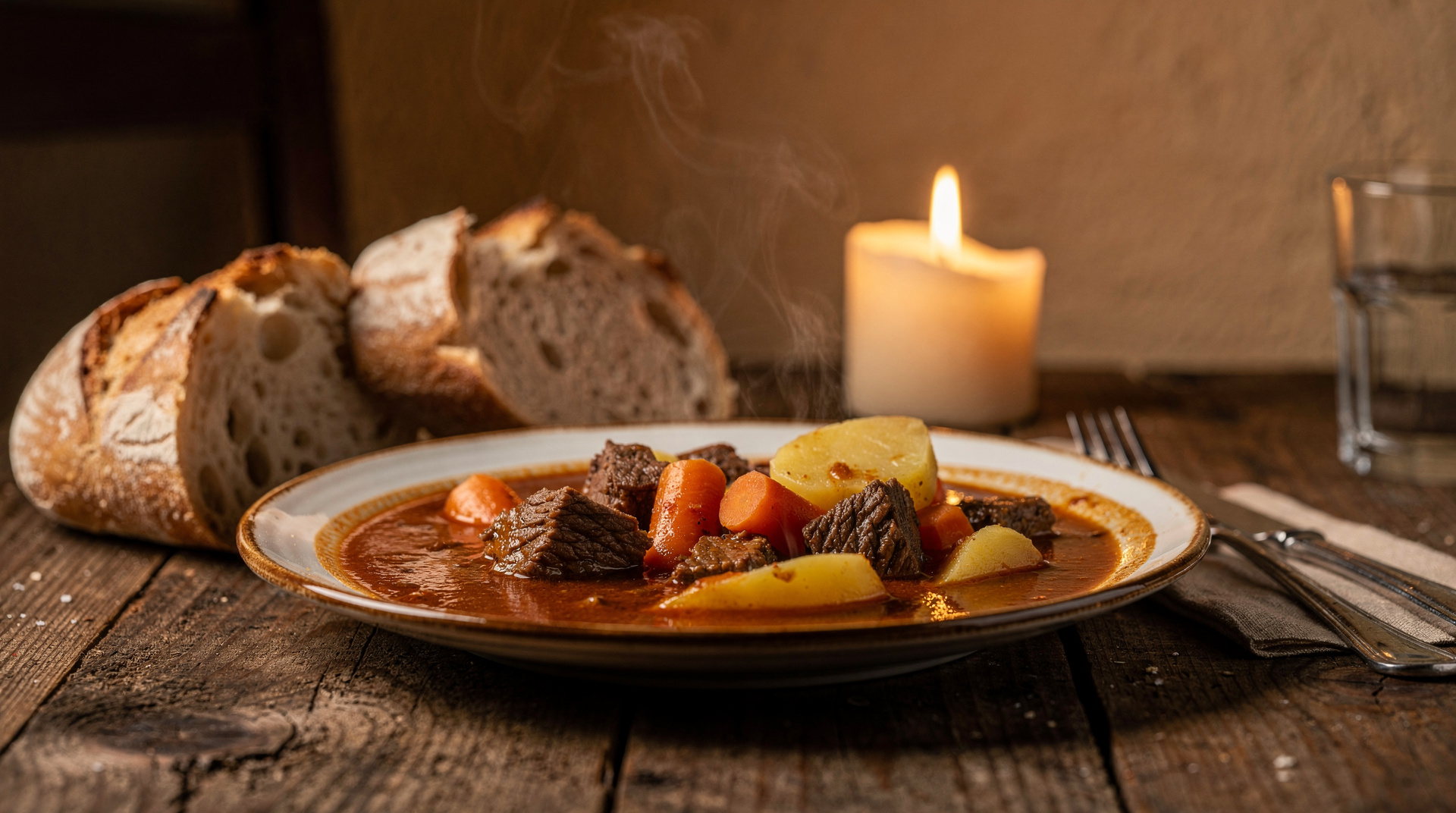
Fat as flavour: Hungarian cooking uses lard (zsír) as a primary fat, not as a compromise. The flavour of pork lard at frying temperature is significantly different from vegetable oil — deeper, with a subtle savoury note. This same principle applies in gulyás (rendered lard as the base), pörkölt (lard for the onion and paprika), and many pastries.
Sour cream as a finishing element: Tejföl appears in Hungarian cooking as a finishing sauce, a topping, a binding agent, and a cooling contrast — here, against the hot fried dough. The same logic applies in chicken paprikás (tejföl stirred into the paprika sauce at the end), cold soups (tejföl dolloped on cold fruit soup), and various salads.
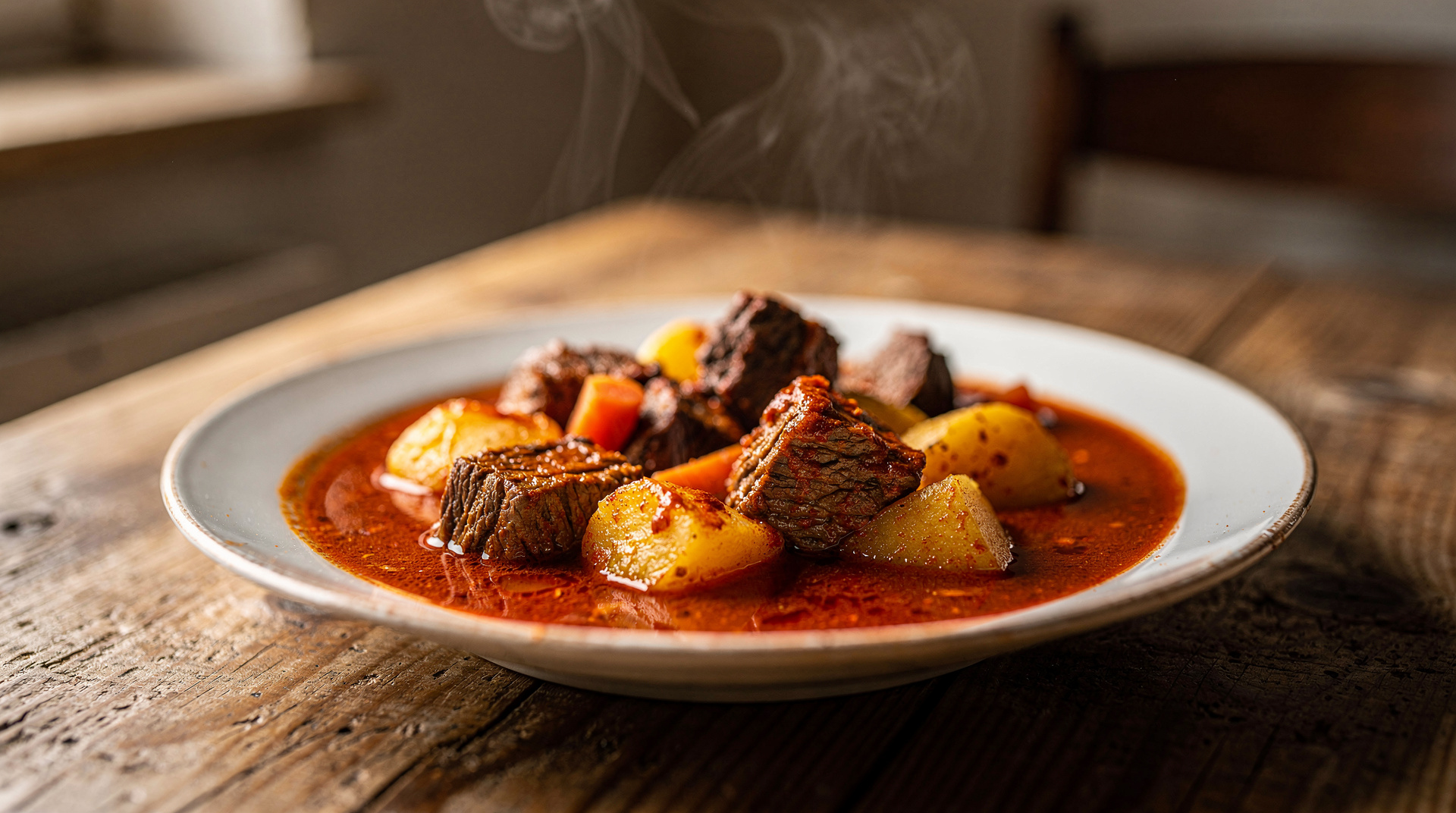
Simple ingredients, transformative technique: Lángos is flour, water, yeast, salt — four ingredients that produce something well beyond their individual qualities through the technique of rising and frying. The same principle applies across Hungarian cooking: gulyás is beef, onion, paprika, potato, and water; the quality comes from technique and patience.
For the full cuisine context, see traditional Hungarian dishes and cooking classes in Budapest for the hands-on learning option.
For lángos in the context of a broader food tour, see best food tours in Budapest — most tours include a lángos stop as one of the essential tastings.
Frequently asked questions about Where to eat lángos in Budapest
What is lángos made of?
Lángos dough is made from flour, yeast, salt, and water (sometimes with a little potato or milk). It is allowed to rise, then shaped into a thick disc and deep-fried in sunflower or lard until golden. The standard topping is sour cream (tejföl) and grated semi-hard cheese (sajt). The name comes from 'láng' (flame) — originally it was baked in the flame of bread ovens.What toppings can I get on lángos?
Standard: sour cream and cheese. Common variations: garlic butter (fokhagyma), ham (sonka), sour cream with smoked fish, pizza-style with tomato sauce and cheese. At Christmas markets and summer festivals, creative variations appear — though traditionalists consider the sour cream and cheese version the only correct one. Most stalls offer combinations at slightly higher prices.Can I make lángos myself?
Yes — a dedicated lángos-making class runs in Budapest and covers the dough preparation, frying technique, and topping options. It takes around 2 hours and includes eating what you make. The dough itself is simple; the frying technique is the key skill.How much does lángos cost in Budapest?
At the Great Market Hall: 700–1,000 HUF (€1.75–2.50) for a standard size, 900–1,400 HUF (€2.25–3.50) with extra toppings. At Christmas markets: similar pricing. At late-night stalls: slightly cheaper. Tourist-area lángos (some stalls near Deák tér) charge up to 2,000 HUF — not justified by quality.
Top experiences
Bookable activities with verified prices and instant confirmation on GetYourGuide.