Hungarian wine guide: regions, grapes and where to taste in Budapest

What is Hungarian wine like?
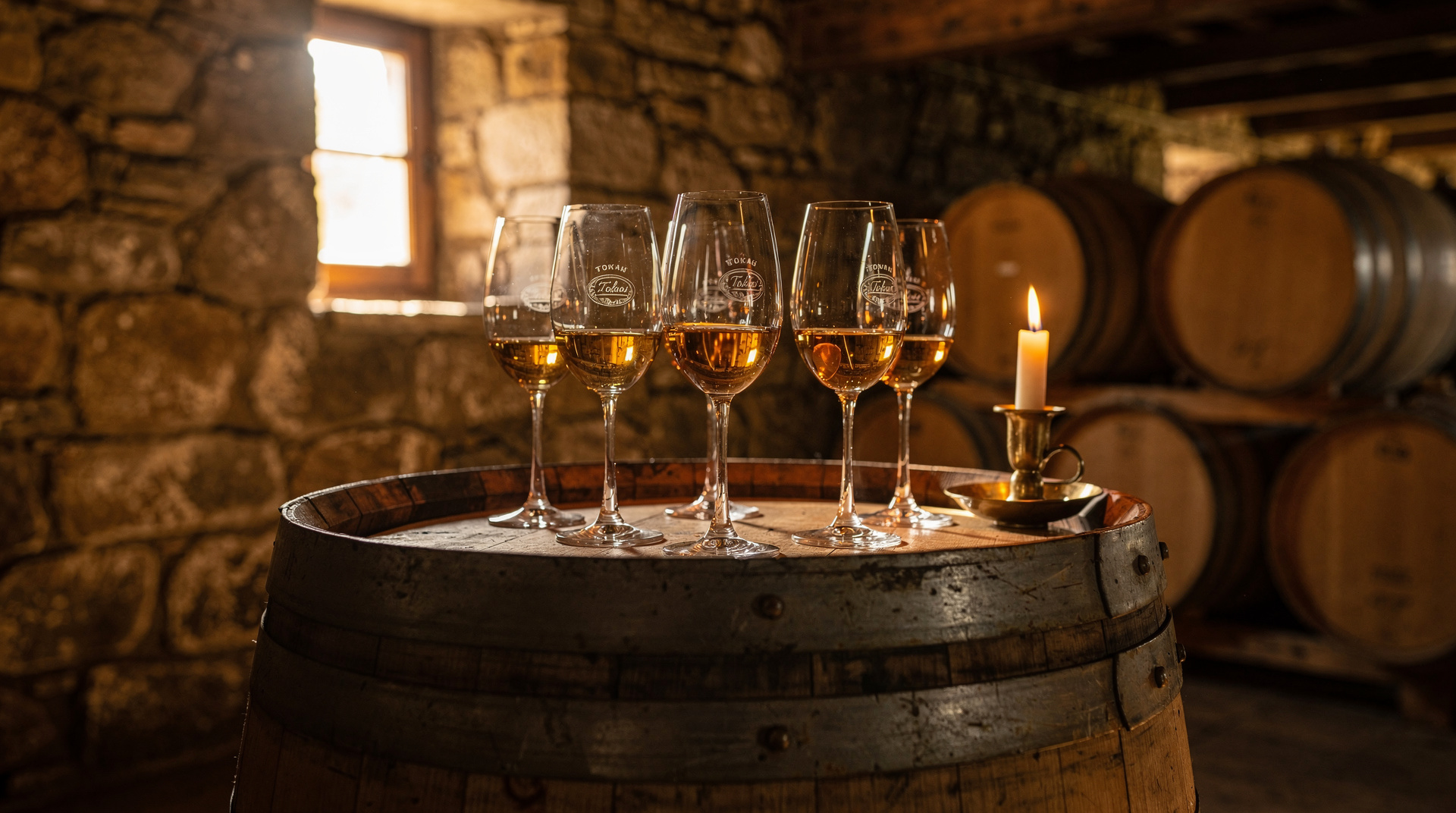
Hungary produces world-class whites — especially the honeyed Tokaj Aszú and the crisp furmint — as well as robust reds like Egri Bikavér (Bull's Blood). The country has 22 wine regions and a winemaking tradition stretching back over a thousand years, yet remains underexplored by international visitors.
Hungary has been making wine for over a thousand years, and the results — largely unknown to visitors who have not dug into the subject — are quietly remarkable. From the volcanic soils of Tokaj to the limestone cellars of Eger and the hill slopes of Villány, the country’s 22 official wine regions produce wines that hold their own against France, Italy and Austria. Budapest is the ideal base for exploring them, with a wine bar scene that has matured dramatically since 2010.
| In Budapest | Wine bars in Districts V, VI, VII — no travel needed |
| Cost | Around 1,200–4,000 HUF/glass; 8,000–18,000 HUF for a tasting class |
| Day trip | Tokaj (around 2.5hrs by train) or Eger (around 2hrs) |
| Best souvenir | A bottle of 5–6 puttonyos Tokaj Aszú |
| Best time | Autumn (harvest season) for regional visits; year-round in Budapest |
Comparing the main regions
| Region | Distance from Budapest | Known for | Best if you have |
|---|---|---|---|
| Tokaj | Around 2.5–3hrs by train | Sweet Aszú, dry furmint | A full day or overnight |
| Eger | Around 2hrs by train | Egri Bikavér (Bull’s Blood), spa town | A full day trip |
| Villány | Further south, less accessible by train | Bold reds (cabernet franc, merlot) | A dedicated wine-focused trip |
| Budapest wine bars | No travel | A curated preview of all regions | An evening, no day trip needed |
What makes Hungarian wine different
Hungary sits at a continental crossroads between the Mediterranean and Eastern European climate zones. Summers are hot and dry; autumns are long and mild, allowing grapes to develop complexity while retaining acidity. The volcanic, loess and limestone soils across the wine regions give wines a mineral character that is distinctly Hungarian.
The country’s native grape varieties are its biggest differentiator. Furmint, hárslevelű, irsai Olivér, kadarka and kékfrankos are not found in significant quantities anywhere else. Learning to recognise them — and why they taste the way they do — is a genuine education.
A brief political note: Hungary’s wine industry was collectivised under communism from 1949 to 1989, which devastated quality. The recovery since 1990 has been extraordinary, especially in Tokaj, where Western and Hungarian investors replanted vineyards, rebuilt cellars and restored historic estates. The wines you taste today are the product of that 35-year renaissance.
The major Hungarian wine regions
Tokaj — the historic heart
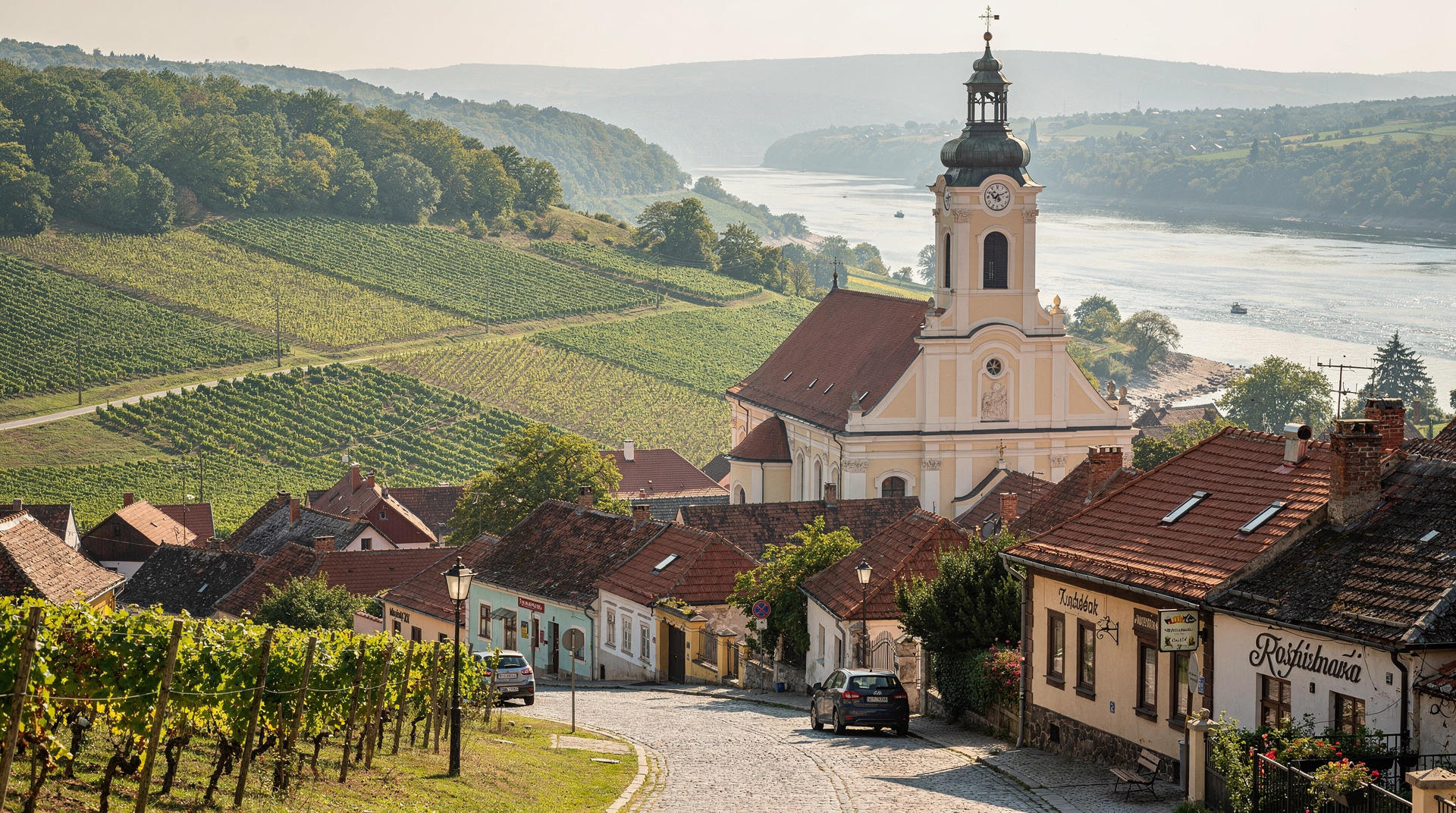
Tokaj, in northeastern Hungary near the Slovak border, is the country’s most famous wine region and a UNESCO World Heritage Site since 2002. The region covers 27 villages and around 5 500 hectares of vineyards on the slopes of volcanic hills above the Bodrog and Tisza rivers.
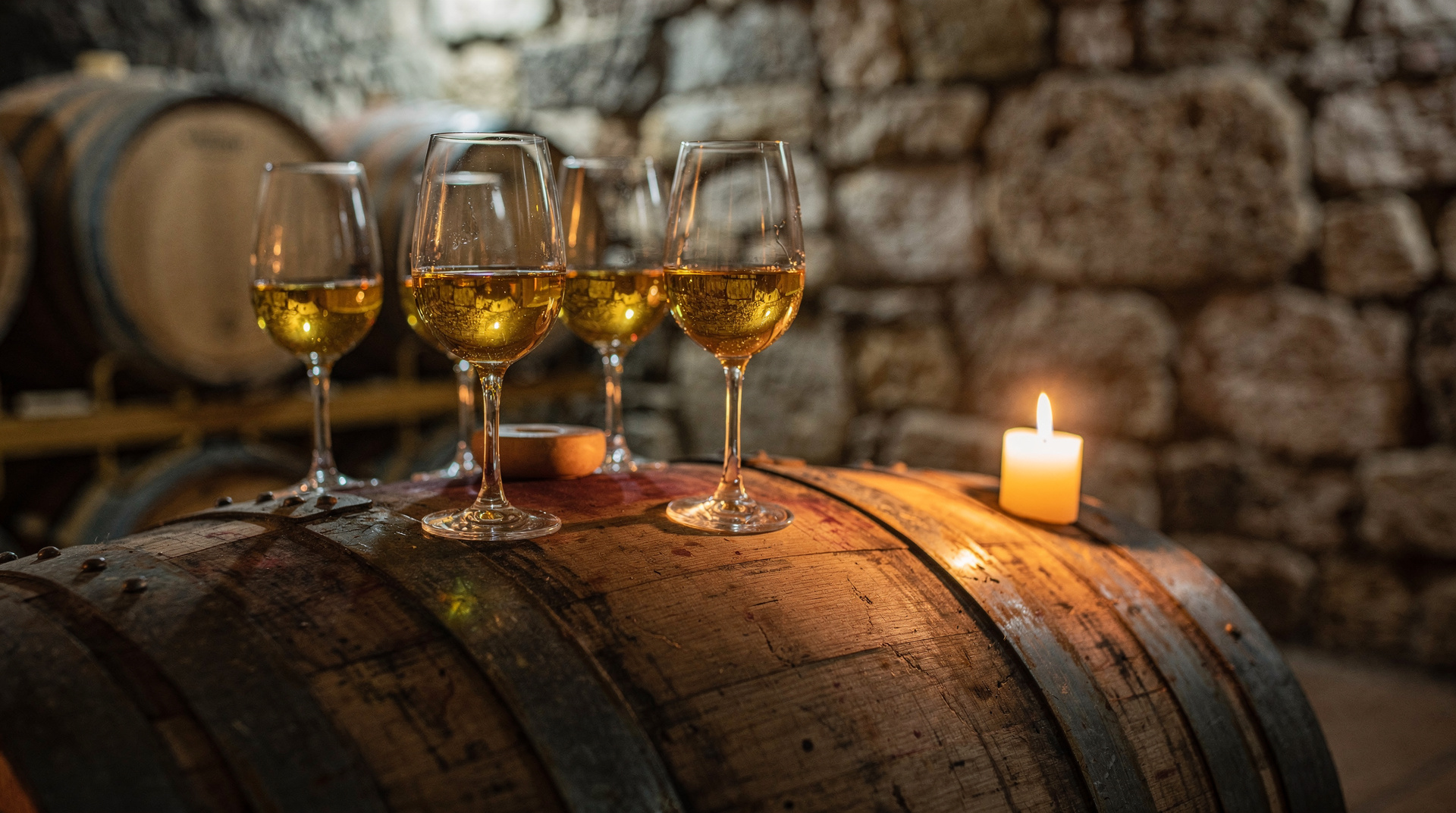
The region is best known for Tokaj Aszú, the legendary sweet wine made from botrytised (noble-rot affected) furmint and hárslevelű grapes. Puttonyos indicates sweetness: 3 puttonyos is lightly sweet; 6 puttonyos (and the even richer Eszencia) is intensely honeyed, complex and capable of ageing for decades. A good 5 puttonyos Aszú from a serious producer costs 12 000–30 000 HUF (€30–75) and should not be missed if you have the budget.
Dry furmint has become equally exciting in recent years. Crisp, mineral, sometimes smoky, it pairs beautifully with fish, goat’s cheese and Asian food. Producers like Oremus, Disznókő, István Szepsy and Royal Tokaji are worth seeking out.
A guided Tokaj wine day trip from Budapest is the most complete way to experience the region — visiting cellars, tasting multiple wines and understanding the landscape. The train journey alone (departing Keleti station, around 2.5 hours) passes through beautiful countryside.
Eger — Bull’s Blood and beyond
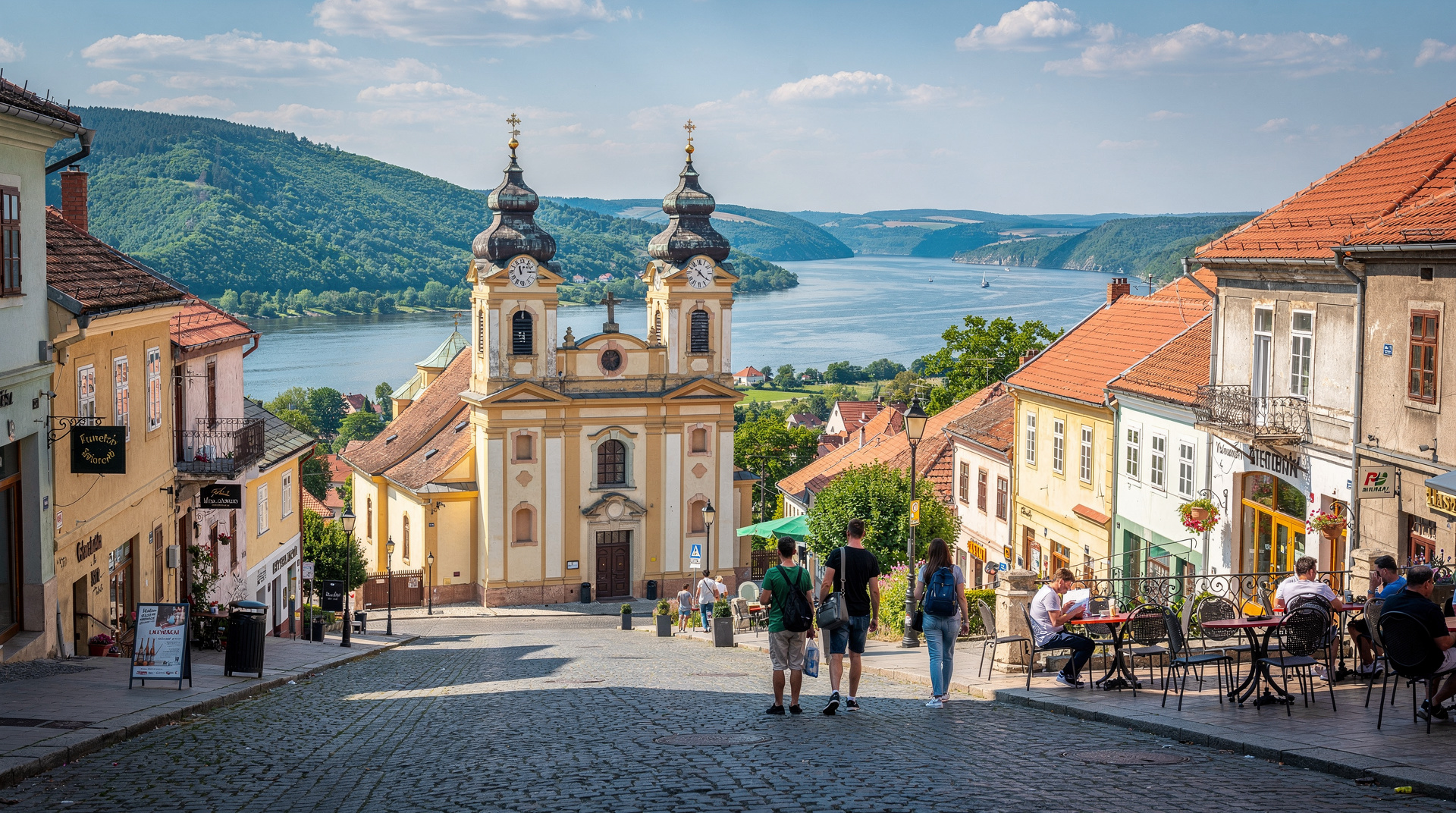
Eger is Hungary’s second-most famous wine region, located 130 km northeast of Budapest in the foothills of the Bükk Mountains. The town itself is worth visiting for its baroque architecture, thermal spa at Egerszalók and the striking castle above the city.
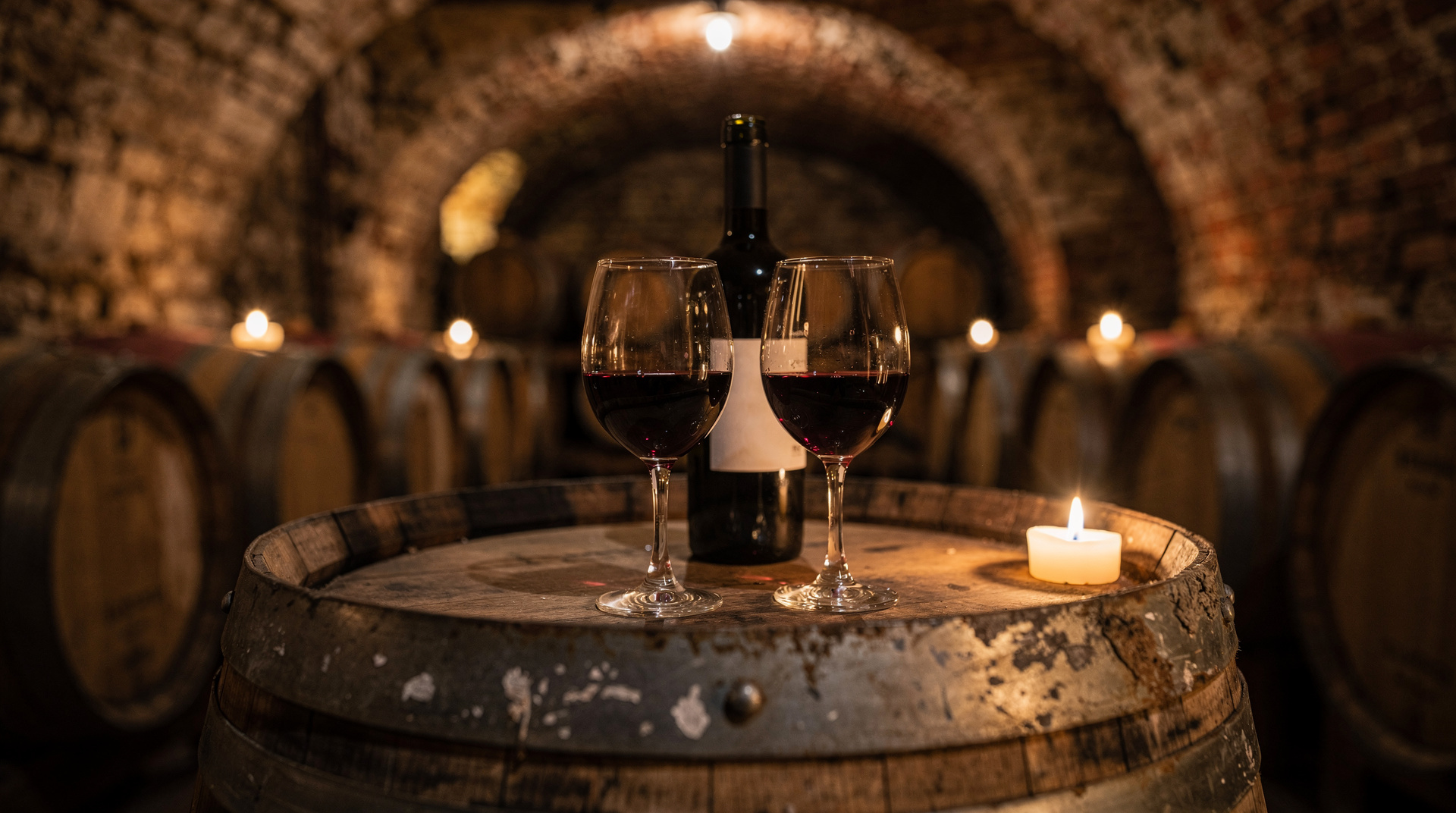
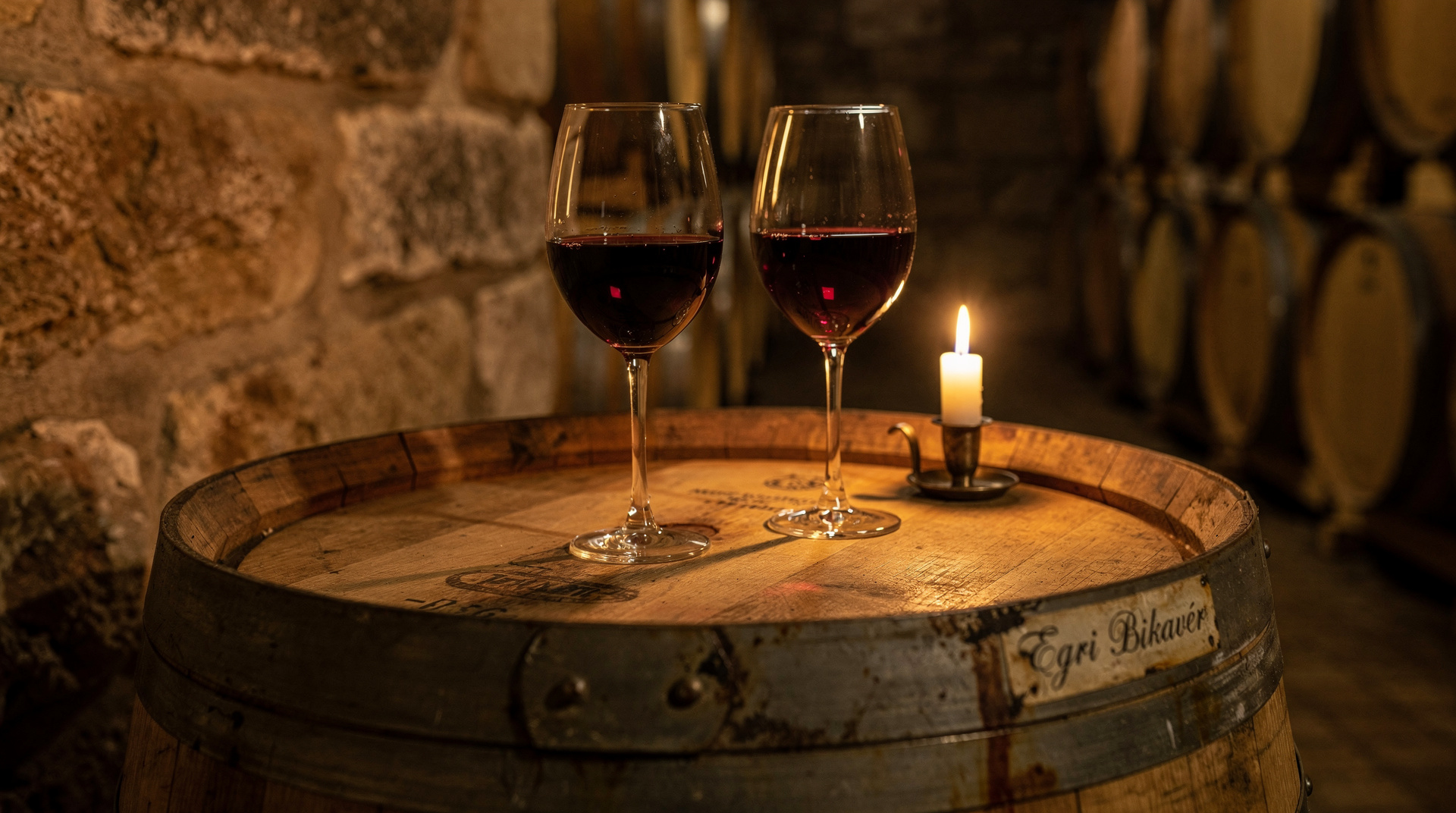
Egri Bikavér (Bull’s Blood) is the name everyone knows, but serious wine drinkers should look beyond the brand. The Eger Superior category ensures stricter production rules, and producers like Gál Tibor, Tűzkő and St. Andrea make genuinely impressive reds. The blend centres on kékfrankos but can include a dozen permitted varieties.
Eger also produces excellent whites — egri csillag (the regional white blend) and leányka — and the volcanic basalt soils around Noszvaj give wines a distinctive minerality.
A private day trip to Eger with local wine tasting gets you into the cellars and the countryside that no city-based tasting can replicate.
Other regions worth knowing
Villány, in southern Hungary near the Croatian border, produces Hungary’s most celebrated red wines. Cabernet franc, merlot and Portuguese (a native variety) thrive in the limestone-rich soils. Attila Gere and Malatinszky are internationally recognised producers.
Szekszárd, a gentle hill region northwest of Pécs, is the home of kadarka — the elegantly spiced red grape that was the backbone of the original Bull’s Blood recipe before communism erased it. Modern Szekszárd kadarka from Heimann or Vesztergombi is a revelation.
Badacsony, on the northern shore of Lake Balaton, produces excellent whites from the volcanic basalt slopes of an extinct volcano. The local olaszrizling (Welschriesling) has a distinctive minerality and is the wine of choice at lakeside restaurants all summer.
Somló is tiny and rarefied — 600 hectares of volcanic soil producing some of Hungary’s most structured whites. Juhfark (“sheep’s tail”) is the native variety, almost nowhere else in the world.
Balaton-Felvidék, on the hills above Lake Balaton’s northern shore, sits close to Badacsony and shares its volcanic soils, producing crisp, mineral whites that pair perfectly with a lakeside lunch — a natural stop if you are combining wine with a Lake Balaton day trip from Budapest.
Wine tasting in Budapest
Budapest has developed a serious wine bar scene, concentrated in Districts V, VI and VII. You do not need to leave the city to taste well across Hungary’s regions.
DiVino Wine Bar on Basilica Square (Október 6. utca 11) is the best-known and most tourist-friendly, with 220+ Hungarian labels by the glass and informative staff. Expect to pay 1 200–4 000 HUF per glass. The terrace in summer is among the most pleasant spots in Budapest.
Doblo Wine Bar in the Jewish Quarter (Dob utca 20) is darker, more atmospheric and attracts a more local crowd. The list is shorter but curated carefully, with a focus on natural and biodynamic producers.
Bortársaság (Wine Society) has multiple Budapest locations and sells bottles to take away as well as offering tastings. Their Batthyány utca shop has an impressive cellar with the best selection of aged Tokaj in the city.
Rézkakas on Veres Pálné utca is beloved by Hungarian wine insiders and still relatively unknown among tourists — natural and minimal-intervention wines, excellent by-the-glass list.
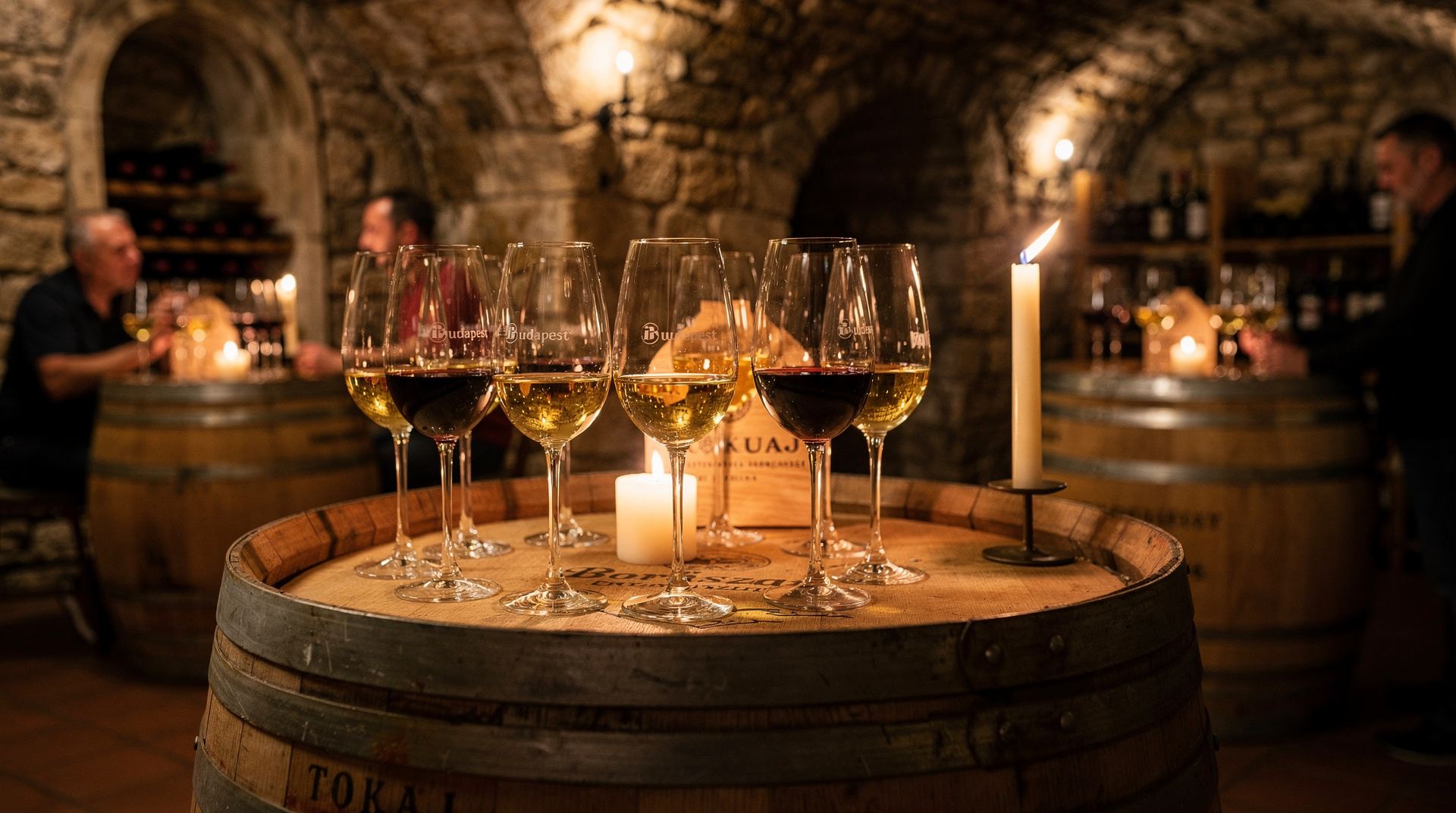
For a structured introduction, an Essentials of Hungarian Wine tasting class walks you through the major regions and varieties with a knowledgeable guide. Sessions typically cover 6–8 wines and last about two hours, ideal for building a mental map before you start ordering independently.
The 8-wine Hungarian tasting with tapas format is popular for its breadth — moving from dry whites through to sweet Tokaj — and the food pairings help palate fatigue. This works well as a late-afternoon activity before dinner.
Reading a Hungarian wine label
Hungarian wine labels can be intimidating until you recognise the key terms:
- Táj — a regional designation (e.g., Tokaj-Hegyalja)
- Minőségi bor — quality wine (basic designation)
- Különleges minőségű bor — premium quality wine
- Aszú — the noble-rot Tokaj style
- Száraz — dry; Félszáraz — off-dry; Féldesszert — medium-sweet; Édes — sweet
- Puttonyos — the sweetness measure on Aszú (3–6, or Eszencia above 6)
- Bikavér — Bull’s Blood; Superior — the higher-quality designation
The producer name (borászat) and vintage (évjárat) are always on the label. Reputable Hungarian producers often export under English-language labels, making them easier to identify in a shop.
Wine shops and taking bottles home
Bortársaság shops (multiple locations) offer the widest selection and staff who speak English. Monastery Wines on Párizsi utca specialises in small-producer Hungarian bottles. The Great Market Hall on Fővám tér has a wine section with tourist-friendly selections.
Carrying wine back on a plane is legal (EU rules for EU destinations; check your country’s allowances for non-EU). A bottle of quality Tokaj Aszú — especially a 6 puttonyos from Szepsy or Oremus — makes an outstanding souvenir and costs far less in Hungary than abroad.
Wine and food pairing Hungarian-style
Hungarian cuisine and Hungarian wine evolved together, and the pairings are intuitive once you understand both. A few guiding principles:
Furmint pairs beautifully with the country’s fish dishes (fogás — pike perch from Balaton), goose liver and aged cheeses. Its natural acidity cuts through rich preparations.
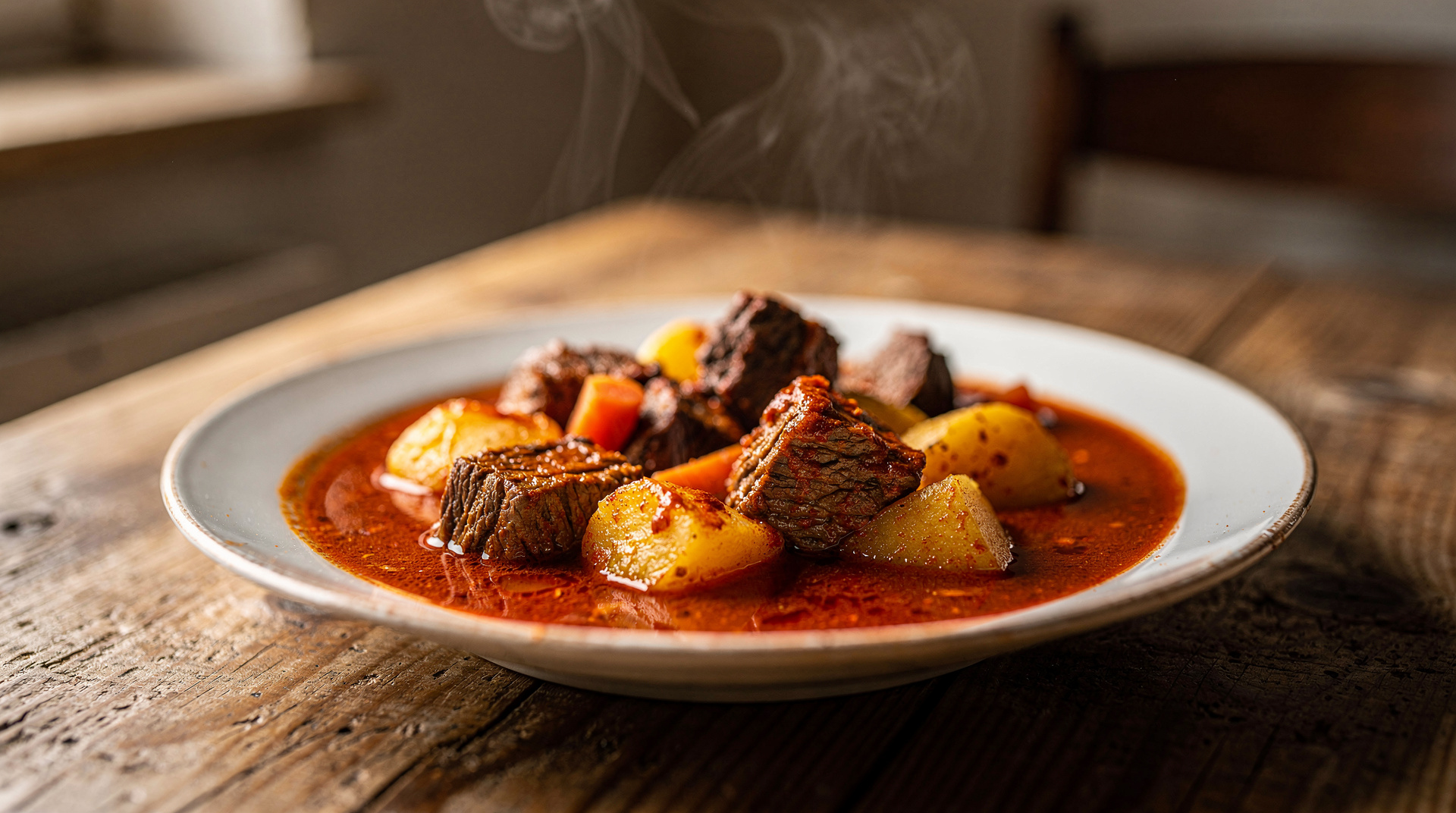
Kékfrankos is the all-purpose red for gulyás, pörkölt (stew) and grilled meats. Its moderate tannins and bright cherry character do not overpower strong paprika flavours.
Tokaj Aszú is traditionally served with foie gras, Roquefort-style cheeses, fruit desserts and custard-based puddings. In Hungary, it is also drunk before a meal as an apéritif.
Kadarka suits the lighter end of Hungarian cooking — stuffed peppers, chicken paprikás, lentil dishes. Its peppery spice is a natural match for paprika-forward preparations.
The wine tasting combined with food and pálinka experience is particularly good for this pairing education, since it takes you through the progression from wine to Hungary’s signature fruit brandy over the course of an evening.
Connecting to the wider trip
Wine is embedded in Budapest’s broader food and culture scene. The Central Market Hall is the best place to buy bottles to take home and to understand the breadth of Hungarian food. The best food tours in Budapest almost always include wine, and the evening food and wine walking tours pair well with a wine bar stop.
If wine is your primary motivation for the trip, a five-day itinerary based in Budapest with day trips to Tokaj and Eger is genuinely worth building — the countryside around both towns is beautiful, and the cellar experiences are worlds apart from city wine bars.
For accommodation, the best areas to stay in Budapest for wine enthusiasts are Districts V and VI, which are within walking distance of the best wine bars and close to Keleti station for day-trip trains.
The Budapest travel guide and first-time visitor’s checklist both contain logistics that complement a wine-focused trip. And if you are combining wine with a thermal bath itinerary — a very Hungarian combination — the Budapest Card can simplify transport between venues.
Wine tourism in Hungary is still developing compared to France or Italy, which means lower prices, more personal cellar visits and a genuine sense of discovery. The learning curve is part of the pleasure.
Do you need a day trip, or is Budapest enough
Honest answer: if you only have two or three days in Budapest, staying in the city and doing a structured tasting class is genuinely enough to understand Hungarian wine — DiVino and similar bars stock serious bottles from every region, and a guided class covers more ground per hour than a single-region day trip. A Tokaj or Eger day trip is worth the travel time specifically if you want the cellar atmosphere, the countryside, and the chance to buy directly from small producers who don’t export widely. Wine enthusiasts with 4+ days should do both: a city tasting early in the trip to build a mental map, then a regional day trip once you know which style you want to explore in depth.
Frequently asked questions about Hungarian wine guide
What is Tokaj wine and why is it famous?
Tokaj Aszú is a noble-rot sweet wine from northeastern Hungary, made primarily from furmint grapes affected by Botrytis cinerea. Louis XIV of France called it 'the wine of kings, the king of wines.' The region is a UNESCO World Heritage Site, and bottles are rated in puttonyos (3–6) indicating sweetness level. A bottle of 5 puttonyos Tokaj Aszú costs 8 000–25 000 HUF in a Budapest wine shop.What is Egri Bikavér (Bull's Blood)?
Egri Bikavér is a robust red blend from Eger, primarily based on kékfrankos (Blaufränkisch) with kadarka, zweigelt and other varieties. Legend says Ottoman soldiers retreating from Eger in 1552 thought Hungarians drank bull's blood to gain strength. Modern Bikavér Superior bottlings are complex, food-friendly wines worth 3 000–8 000 HUF.What grape varieties should I try in Hungary?
For whites: furmint (crisp, mineral, Tokaj's backbone), hárslevelű (linden-floral, Tokaj blend), olaszrizling (everyday, often mineral). For reds: kékfrankos (light-to-medium, cherry and spice), kadarka (elegant, peppery), zweigelt and blauburger. Irsai Olivér is a fragrant everyday white worth knowing.Where are the best wine bars in Budapest?
DiVino Wine Bar on Basilica Square is the most praised, with 220+ Hungarian wines by the glass. Doblo Wine Bar in the Jewish Quarter is atmospheric. Bortársaság (Wine Society) on Batthyány utca has an exceptional cellar. For a guided tasting, Essentials of Hungarian Wine at various downtown venues is the most structured introduction.How do wine tours work in Budapest?
Most Budapest wine tastings are held in dedicated bars or cellars in the V or VI district, lasting 1.5–2.5 hours with 4–8 wines plus food pairings. Prices range from 8 000–18 000 HUF (€20–45) per person. GYG-listed options include the 8-wine-and-tapas format at DiVino and the wine-and-pálinka combination classes.Is a day trip to Tokaj worth it from Budapest?
Yes, if wine is a priority. Tokaj is 2.5–3 hours by train or car from Budapest. The region's cellars (Oremus, Disznókő, Royal Tokaji) offer memorable tastings in medieval settings. GYG offers a dedicated Tokaj wine day tour. If time is short, many Budapest wine bars stock excellent Tokaj wines and can serve as a preview.What is pálinka and how is it different from wine?
Pálinka is a Hungarian fruit brandy, typically 40–52% ABV, distilled from plums, apricots, pears, cherries or quince. It is emphatically not wine — it is a digestif sipped at room temperature, often before a meal in rural tradition. Quality homemade pálinka is a genuine Hungarian cultural product; the cheap tourist-market versions are worth avoiding.
Top experiences
Bookable activities with verified prices and instant confirmation on GetYourGuide.