Kürtőskalács guide: Budapest's chimney cake, where to buy it and how to make it
Where can I find the best kürtőskalács in Budapest?
Christmas markets (Vörösmarty tér and Basilica, November–January) have the most authentic chimney cakes — baked over charcoal to order. Year-round, look for stalls with visible charcoal or wood-fire heat and a queue. The City Park area and Great Market Hall also have stalls. Price: 700–1,200 HUF (€1.75–3). Avoid pre-made versions sitting under heat lamps.
The chimney cake: what it is and why it matters
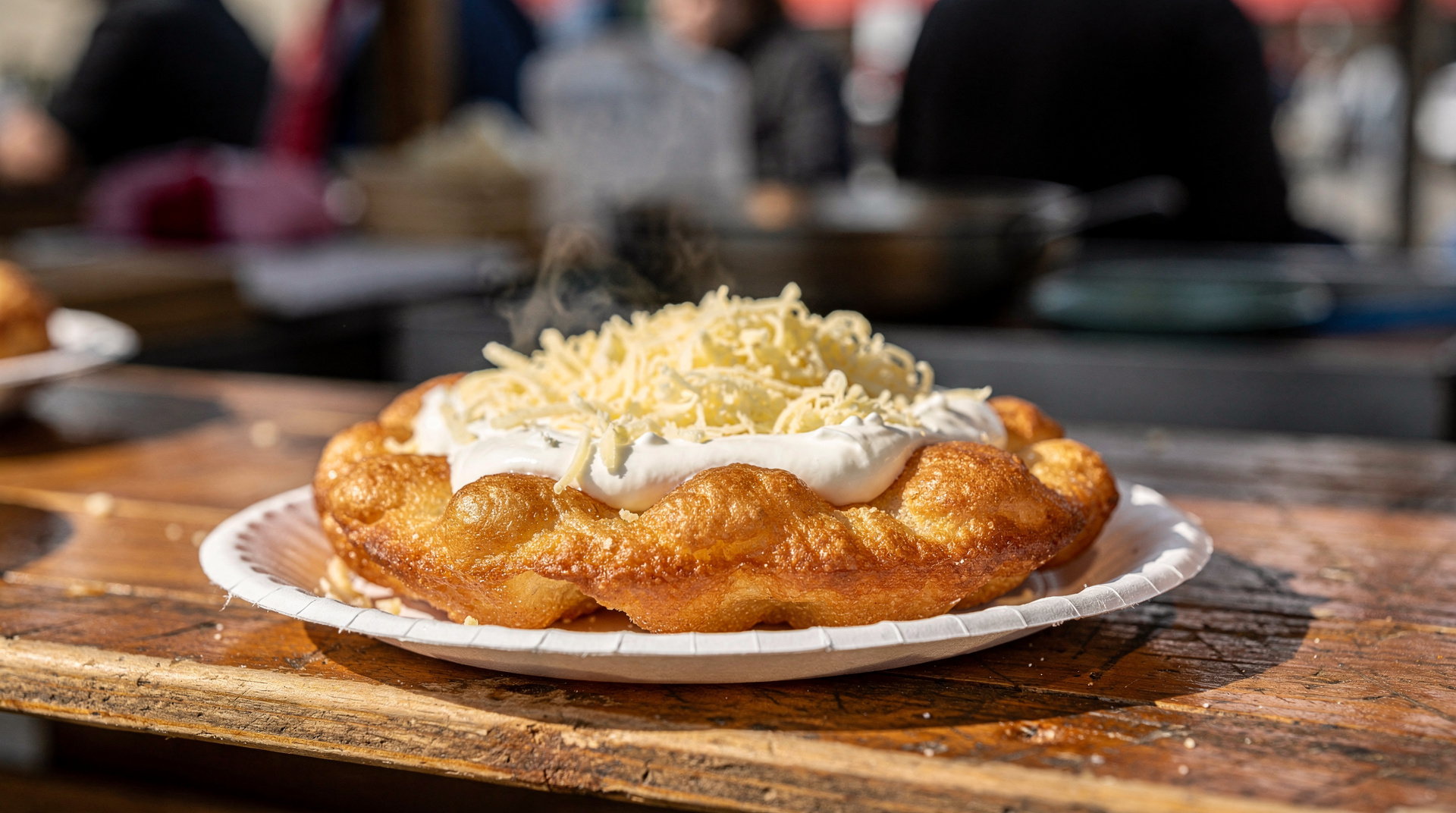
Kürtőskalács is the sweet counterpart to lángos in Budapest’s street-food culture — if lángos is the savoury essential, kürtőskalács is the sweet one. The name translates literally as “chimney cake” (kürtő = chimney or funnel; kalács = sweet enriched bread). The shape is hollow and cylindrical, like a chimney, which is where the name comes from.
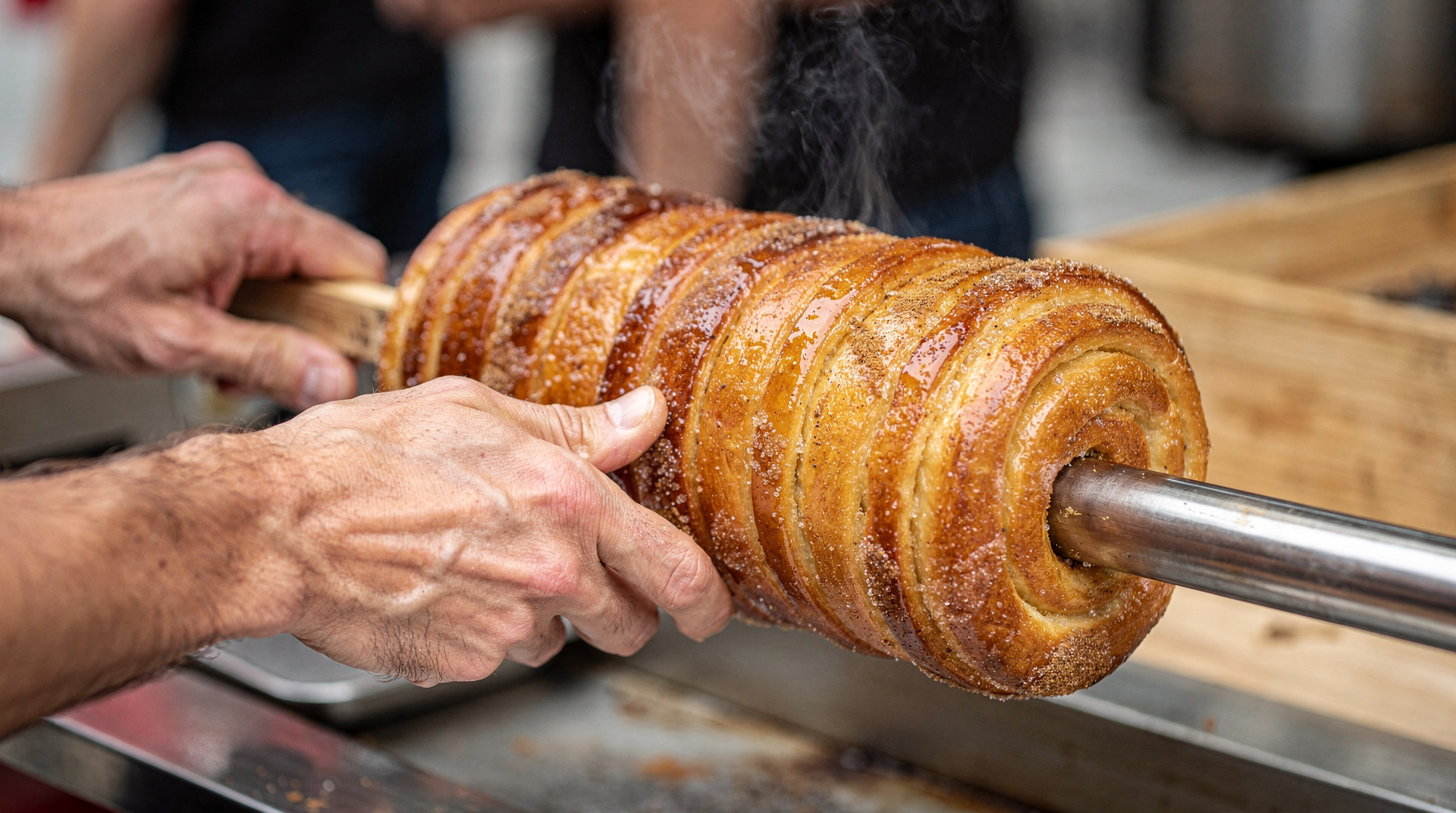
The preparation is more involved than lángos: a rich dough (enriched with eggs and sometimes butter) is rolled into a long strip, wound tightly in a spiral around a wooden or metal rolling pin, then pressed with the hands so the layers stick together before baking over a rotating charcoal fire. As it bakes, the outer surface is repeatedly brushed with melted butter and rolled through sugar, so the sugar melts and caramelises against the hot surface. The result peels away from the cylinder in one connected spiral of pastry.
The quality of a kürtőskalács depends almost entirely on two things: the freshness and enrichment of the dough, and the baking — charcoal-fired versions have a depth of flavour that electrically heated versions cannot replicate. A good one is one of the more satisfying things you can eat in Budapest; a poor one is forgettable.
| Where | Christmas markets, City Park, Great Market Hall upper floor |
| Cost | Around 700–1,200 HUF; tourist stalls charge more |
| Time needed | A few minutes to buy, 1.5–3 hours for a workshop |
| Best time | November–January Christmas markets for the full experience |
| Watch for | Charcoal or wood heat, not an electric warming tray |
Where to find the best in Budapest
Christmas markets — the peak season
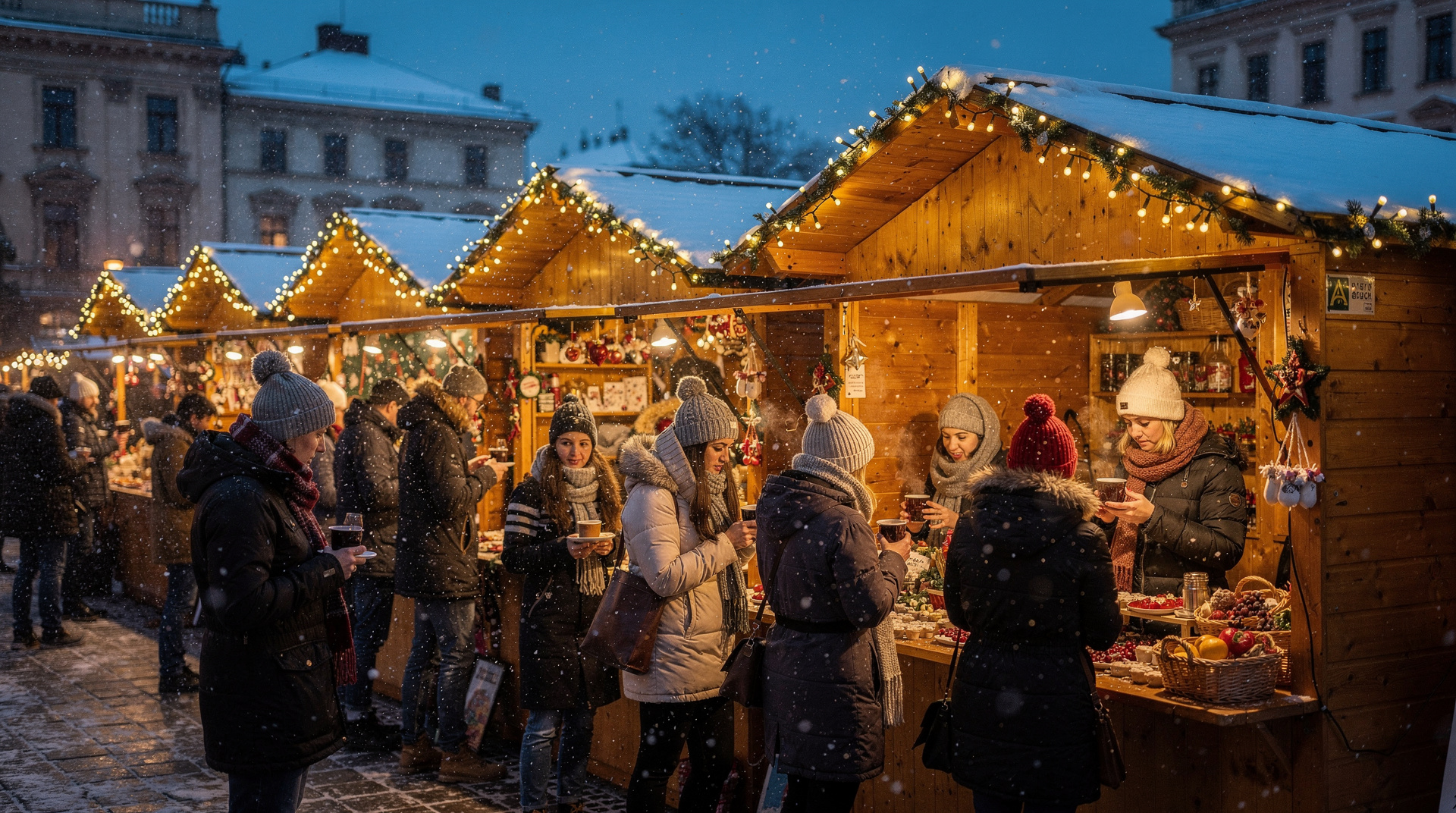
Kürtőskalács is a Christmas-market food at its best. The Vörösmarty tér and St. Stephen’s Basilica markets (mid-November to January 1) have multiple chimney-cake stalls; look for the ones with an open charcoal fire and a rotating mechanism — you can watch the dough being wound and baked in front of you.
The cold night air against the warm pastry is part of the experience. A good Budapest Christmas market chimney cake on a December evening is one of those food memories you keep. See the full Budapest Christmas markets guide.
City Park (Városliget) and market events
Year-round stalls in Városliget near Széchenyi Baths, and at outdoor market events throughout the summer, have chimney-cake vendors. Check for the charcoal heat element — an electric heating coil is the inferior option.
Great Market Hall upper floor
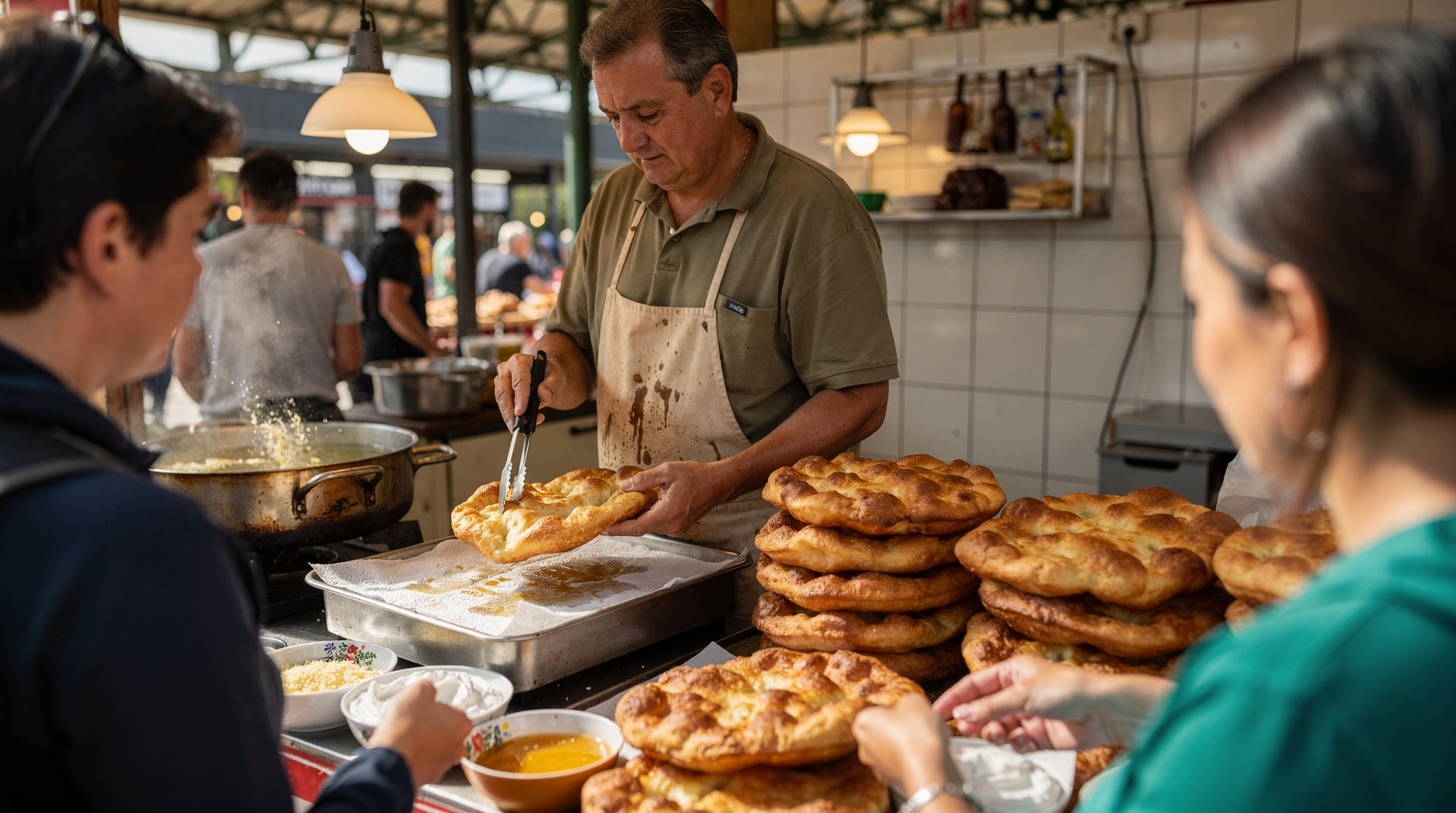
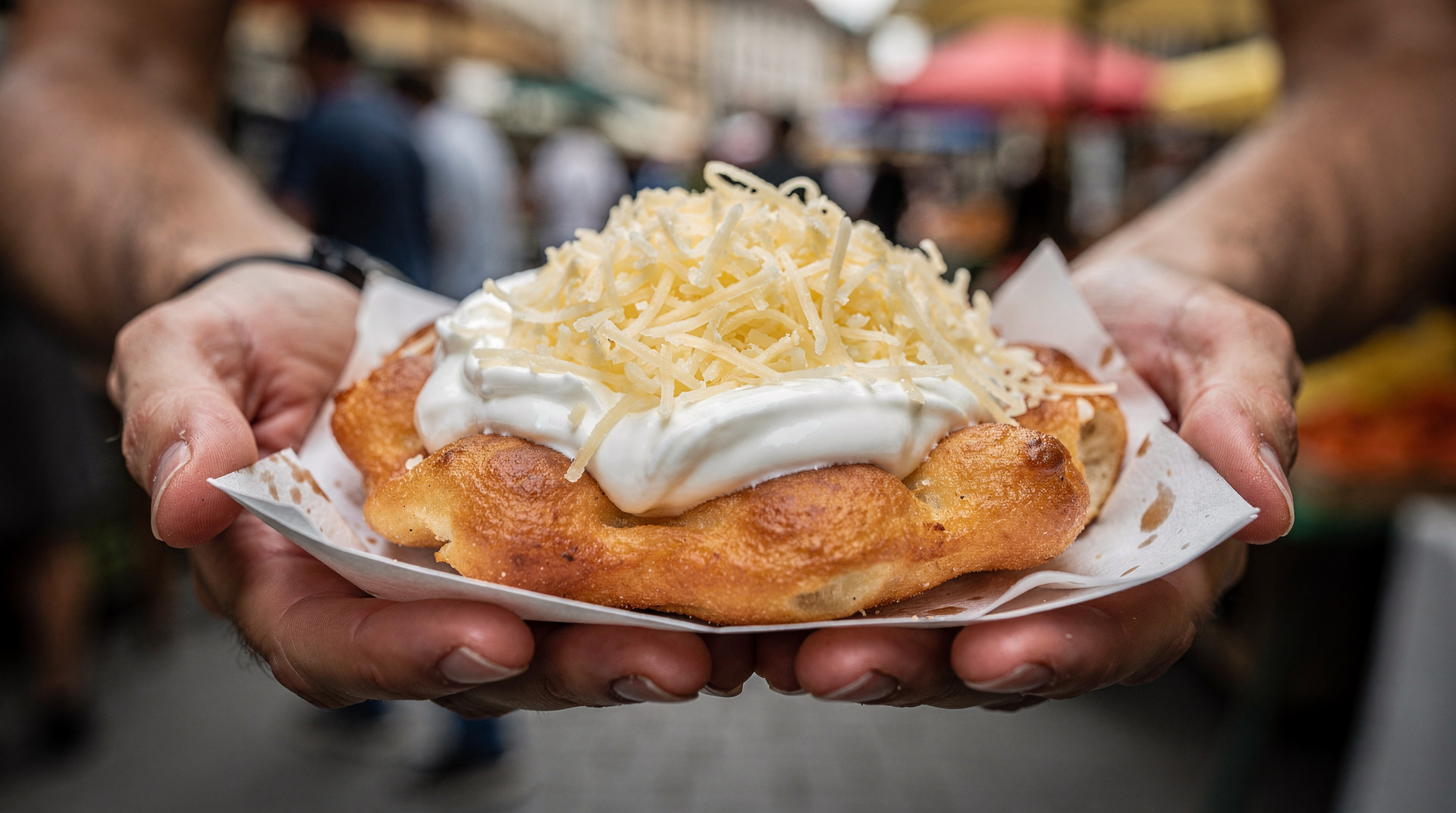
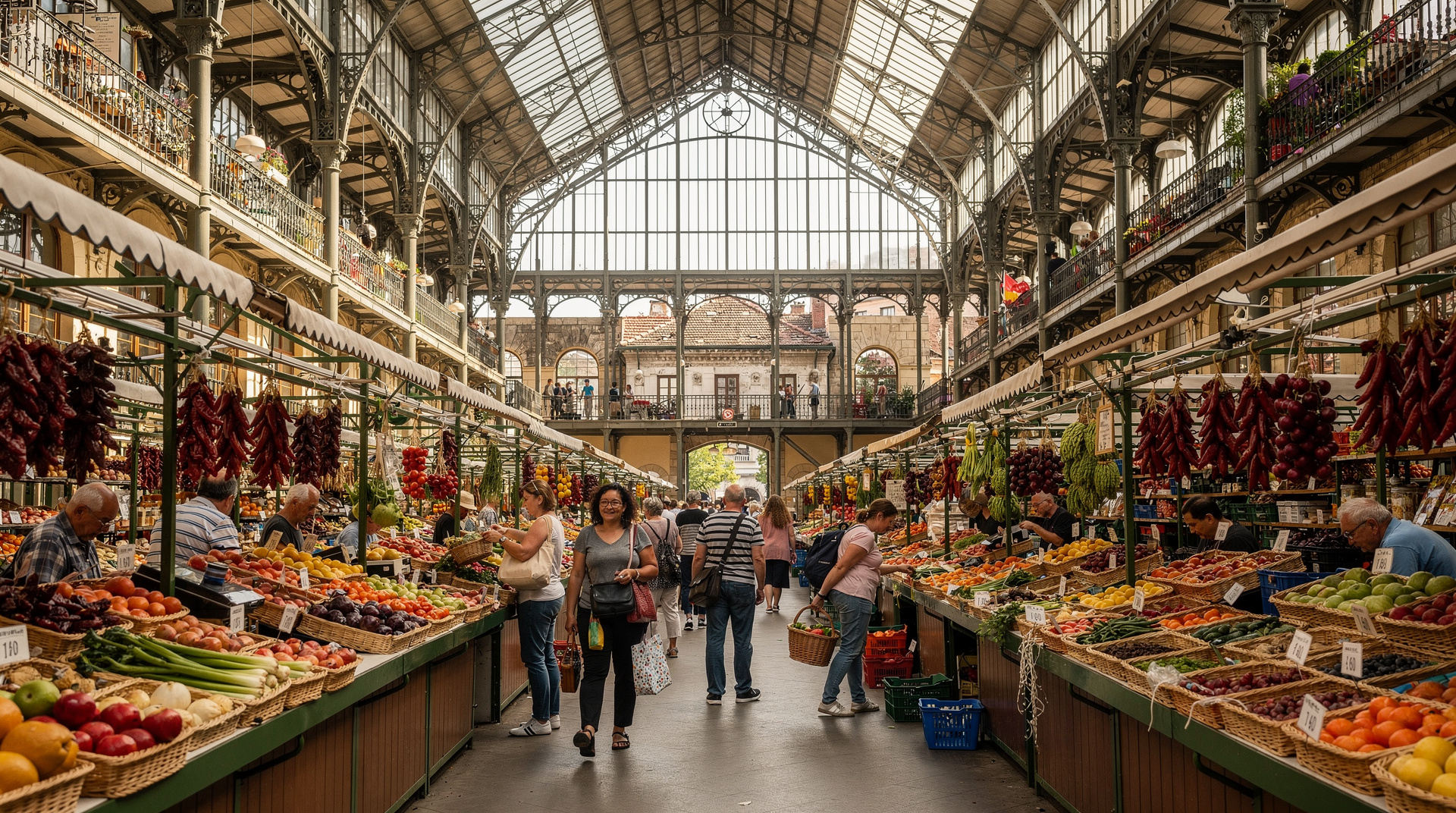
The Great Market Hall has at least one kürtőskalács stall on the upper food court level. Quality is reliable given the high volume of repeat customers. Good for combining with a lángos visit.
Tourist-area stalls (approach carefully)
Near Fisherman’s Bastion, Váci utca, and some spots around Vörösmarty tér, there are stalls selling pre-made or electrically heated chimney cakes at inflated prices (1,500–2,000 HUF). You can see immediately whether a stall is baking freshly or reheating. Pre-made chimney cakes lose their textural contrast quickly — the outside becomes chewy rather than crispy, and the caramelisation is flat.
Can you take it home? Kürtőskalács does not travel well — the caramelised crust softens within a few hours and the interior dries out overnight, so it is genuinely a same-day, eat-fresh food rather than a packable souvenir. If you want a take-home version, look for vacuum-packed kürtőskalács mixes sold at some Christmas market craft stalls, which let you bake your own at home, though the result never quite matches a freshly wound, charcoal-baked one.
The chimney-cake workshop: make your own
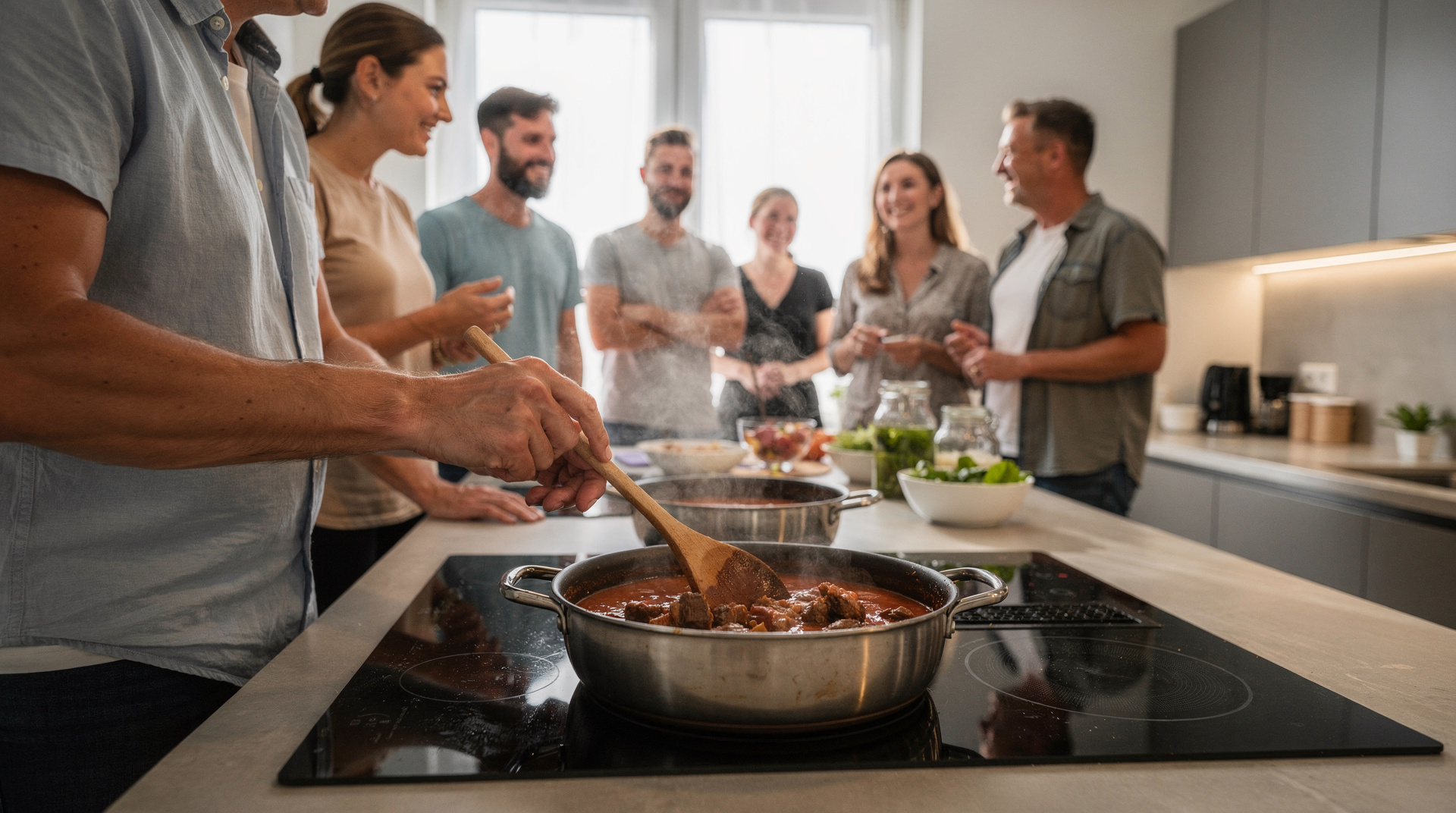
The Budapest chimney-cake workshop is a hands-on class where you make kürtőskalács from scratch — mixing the dough, rolling and winding it around the cylinder, and baking it yourself. The class takes approximately 1.5–2 hours and you eat the results.
This is one of the most appropriate food experiences for families, since children can participate fully (winding the dough around the cylinder is a task a 7-year-old can do) and the result is immediately edible and delicious. It also makes a good activity for couples or solo visitors who want a participatory experience rather than passive tasting.
For a cooking experience that covers a broader range of Hungarian dishes alongside kürtőskalács, see the cooking classes in Budapest guide.
The historical context: Transylvanian origins
Kürtőskalács is documented in Transylvania from at least the 18th century — there are historical records of it being made at Hungarian noble households in what is now central Romania. As a festive bread baked at celebrations, it was traditionally made in large quantities for weddings, Easter, and Christmas.
The post-1920 political changes (Transylvania was transferred to Romania after World War I) meant that the food became part of both Hungarian and Romanian cultural heritage simultaneously. In Budapest, it’s unambiguously Hungarian street food — present at every fair and Christmas market — though both cultures have equally valid claims to the original.
Flavours and variations
Traditional: Granulated sugar and cinnamon rolled on while still hot. This is the classic and, most would argue, the definitive version.
Walnut: Ground walnut mixed with the sugar coating — adds nuttiness to the caramel.
Cocoa/chocolate: Cocoa powder in the sugar coating gives a slightly bitter note.
Vanilla: Vanilla sugar coating — sweeter and less complex than cinnamon.
Innovations: Some stalls now fill the chimney tube with soft-serve ice cream, Nutella, or fruit purée. These versions are primarily aimed at tourists and Instagram posts. They’re not traditional. Whether they’re good is a matter of personal taste — the contrast of hot pastry and cold ice cream is at least conceptually interesting.
Pairing with other Budapest food experiences
Kürtőskalács pairs naturally with:
- Hot mulled wine (forró bor) at Christmas markets: 600–900 HUF
- Hot chocolate from a market stall: 700–1,000 HUF
- A coffee from a traditional cukrászda (pastry café) — see coffee houses in Budapest
For a full Budapest sweet-tooth morning: lángos at the Great Market Hall, a chimney cake from the upper-floor stall, and coffee at Gerbeaud or a neighbourhood café. Budget: 3,000–4,500 HUF (€7.50–11.25) for the full experience.
See street food in Budapest for the full street-food picture, and traditional Hungarian dishes for the wider food context.
Making kürtőskalács: the workshop experience
The Budapest chimney-cake workshop runs as a focused 1.5–2 hour session. The sequence:
Dough preparation: Mixing flour, yeast, eggs, sugar, and butter into a soft enriched dough. This is the same kalács dough used in Hungarian holiday breads — slightly sweet, enriched with eggs, quite different from the lean bread dough used for lángos. The guide explains the function of each ingredient.
Resting: The dough is allowed to prove for approximately 20–30 minutes. During this time, the guide covers the history of kürtőskalács and demonstrates the rolling pin/cylinder setup. Traditional wooden cylinders are used; some workshops use metal ones that heat through the baking more efficiently.
Winding: The dough is rolled into a long strip and wound tightly around the cylinder in a spiral, each layer pressed against the last to ensure they stick and bake as a single piece. This is the most active part of the class — the dough needs firm, consistent pressure over about 3 minutes of winding. Children find this the most enjoyable stage.
Sugar coating: Before baking, the wound dough is rolled through a tray of sugar (and cinnamon, walnut, or other flavours). The sugar adheres to the slightly sticky dough surface.
Baking: The cylinder is rotated over heat until the sugar caramelises and the dough cooks through — approximately 10–15 minutes. The guide monitors the heat and rotation; the class watches the transformation from raw dough to golden pastry.
Eating: The finished kürtőskalács peels away from the cylinder. Each participant peels a spiral of their own pastry and eats it immediately while still warm. The caramelised crust crunches; the interior is soft and slightly chewy.
The chimney cake in Hungarian celebrations
Kürtőskalács is not an everyday food in Hungary — it’s a celebration food, made at weddings, Easter, Christmas, and summer fairs. The labour involved (winding by hand, rotating over heat for 15 minutes) makes it impractical for daily production; the market-stall version is produced continuously by vendors with mechanised rotating systems.
In Transylvanian tradition, the size of a kürtőskalács indicated the importance of the occasion — wedding kürtőskalács were enormous, sometimes a metre long, while fair versions were personal-sized. The winding pattern was also meaningful: tighter spirals were considered more skilled; loose, irregular winding was a sign of an inexperienced baker.
Spotting quality: what separates good from bad
At any market or fair stall, you can assess kürtőskalács quality before buying:
Heat source: Charcoal or wood fire is superior to an electric element. The slight smoke character from the charcoal adds depth to the caramelisation. If you can smell charcoal, that’s positive.
Freshness: The cylinder should be actively rotating and the pastry visibly at different stages of baking. Pre-made kürtőskalács stored in a warming tray for 30+ minutes loses its textural contrast — the crust softens, the interior becomes dense. Fresh takes 10–15 minutes from raw dough to done; if there’s no wait, the product isn’t fresh.
Colour: The caramelised sugar should be a medium amber to dark amber — not pale yellow (undercooked, the sugar hasn’t caramelised) and not brown-black (burnt). The colour should have some variation across the surface — complete uniformity suggests an electric element rotating too slowly.
Texture on eating: Crispy outer crust (the caramelised sugar layer), immediately giving way to soft, slightly airy, slightly chewy interior. If the entire piece is dense or chewy, the dough was underproved or the baking temperature too low.
Kürtőskalács beyond Budapest
If you’re visiting other parts of Hungary, kürtőskalács stalls appear at every outdoor event and fair. The highest concentration outside Budapest:
Eger: The baroque old town hosts regular markets with traditional craft vendors including chimney-cake stalls. The autumn harvest festival (September) is particularly strong. See the Eger day trip guide.
Christmas markets outside Budapest: The Debrecen and Pécs Christmas markets both have chimney-cake stalls in traditional settings.
Szentendre: The artisan village on the Danube Bend often has a chimney-cake presence at its market. See the Szentendre day trip.
For the full chimney-cake experience in its market context, Budapest’s Christmas markets remain the best setting. See Budapest Christmas markets for the full guide to both the Vörösmarty tér and Basilica markets.
The cooking classes in Budapest page has additional context on other Hungarian food workshops, and best food tours in Budapest covers the organised food-tour options where chimney cake features as one of the tastings.
The kürtőskalács vocabulary: ordering at a stall
At a chimney-cake stall, the interaction is simple:
Standard orders:
- “Egy kürtőskalács kérek” (One chimney cake, please)
- “Fahéjas” = cinnamon (most common)
- “Diós” = walnut
- “Kakaós” = cocoa
- “Vaníliás” = vanilla
Point at the display if the vocabulary fails — stall vendors are accustomed to tourists and will indicate the options.
Price: Most stalls have a single price for the standard size (700–1,000 HUF / €1.75–2.50). Upgrades (extra toppings, larger size) are usually offered verbally.
Eating it: The spiral pulls apart from the top. The correct method is to unwind a section from the top and eat it in a continuous ribbon, not to tear off chunks. The top section is always the sweetest (the sugar caramelises unevenly, concentrating at the ends).
Where kürtőskalács fits in Hungarian food culture
Kürtőskalács occupies a specific niche in Hungarian celebrations. It is not everyday food — unlike lángos, which can be eaten for breakfast, lunch, or a late-night snack, kürtőskalács belongs to the fair, the wedding, the Christmas market, the Easter celebration.
This festive status means the quality of preparation reflects the occasion. A family making kürtőskalács for a Christmas gathering will take time with the dough, use good butter, fire the charcoal carefully. A commercial stall at a summer fair may cut corners. The further from a purely commercial setting, the better the kürtőskalács.
The paradox: the most easily accessible kürtőskalács (at tourist-area stalls near Fisherman’s Bastion or on Váci utca) is typically the worst quality. The best versions are found at the contexts where the food has cultural meaning — Christmas markets, village fairs, and the making-your-own workshop.
Comparing kürtőskalács workshops in Budapest
Three main workshops operate in Budapest:
Standard chimney-cake workshop: The Budapest chimney-cake workshop is the most accessible and most-reviewed format. Duration 1.5–2 hours; suitable for all ages. Participants each make their own cylinder and bake it.
City Park chimney-cake workshop: The City Park (Városliget) chimney-cake workshop is similar in content but in a different setting — more open-air, particularly good in good weather. Choose this one if you prefer an outdoor or semi-outdoor setting close to the zoo and Széchenyi Baths.
Traditional kürtőskalács workshop: The traditional kürtőskalács workshop is a more immersive format covering the Transylvanian origins of the food, traditional preparation methods, and a more extended baking process with multiple cylinders. Longer (2.5–3 hours) and better for visitors who want depth alongside the experience.
All three formats ultimately deliver the same core learning: dough preparation, winding technique, sugar coating, and baking. The differences are in setting, group size, and cultural context provided.
For the food tour context (tasting without making), see best food tours in Budapest — kürtőskalács typically appears as one of the sweet stops on market-based tours. For the lángos equivalent, see lángos guide.
Kürtőskalács by season
| Season | Availability | Notes |
|---|---|---|
| Nov–Jan (Christmas markets) | Excellent, dozens of stalls | Peak quality, best atmosphere with mulled wine |
| Feb–Apr | Limited, City Park and market-hall stalls only | Fewer vendors, still fresh where available |
| May–Aug | Moderate, summer fairs and tourist-area stalls | Watch for warming-tray versions near major sights |
| Sep–Oct | Good, autumn harvest festivals | Eger’s harvest festival is a strong out-of-town option |
The gap between peak and off-peak is mostly about vendor density and competition, not recipe — a good stall bakes to the same standard year-round, but Christmas markets attract more serious vendors competing on quality, which raises the average noticeably.
Dietary notes: gluten, dairy and vegetarian status
Kürtőskalács is vegetarian (egg-enriched dough, no meat or animal fat beyond butter), so it fits easily into most travellers’ diets. It is not suitable for a gluten-free or dairy-free diet in its traditional form — the enriched wheat dough and butter basting are essential to the texture, and no market stall offers a reliable alternative version. Vegan travellers should skip it or ask specifically at a workshop, where a small number of instructors can adapt the recipe with plant-based butter on request; walk-up market stalls will not accommodate this. Nut allergies are worth flagging directly at the stall if you choose the walnut version, since the same tray and tongs are often used across flavours. For a broader look at what Budapest offers dietary-restricted travellers, see the vegetarian and vegan Budapest guide.
A good pairing for a family day
The winding stage of the workshop genuinely suits children, which makes it one of the more reliable rainy-day or wind-down activities on a family trip to Budapest. Pairing a chimney-cake workshop with a morning at the zoo or Széchenyi Baths — both a short walk from the City Park workshop location — makes for an easy, low-stress family day that does not require much advance planning beyond booking the workshop slot itself. Most workshops run in small groups, so it is worth booking a slightly earlier session if travelling with younger children who tire by mid-afternoon. See family-friendly attractions for more City Park pairings.
Frequently asked questions about Kürtőskalács guide
What is kürtőskalács?
Kürtőskalács (pronounced 'kur-tush-kah-lach') is a sweet bread dough wound in a spiral around a wooden or metal cylinder, baked over charcoal or an open flame until caramelised, then rolled in granulated sugar and often cinnamon. The result is a hollow tube of pastry — crispy, caramelised outside, soft and slightly chewy inside. It originates in Transylvania and is now the most iconic sweet street food in Hungary.Is kürtőskalács Hungarian or Romanian?
Both. The food originates in Transylvania, a region that was Hungarian territory until 1920 and is now part of Romania. Both Hungarian and Romanian cultures claim it and make excellent versions. In Hungary it is called kürtőskalács; in Romania, cozonac on a spit or kurtos kalacs. The Budapest version is firmly part of Hungarian culinary tradition.What flavours can I get?
The traditional version uses granulated sugar and cinnamon. Modern variations include: walnut, vanilla, cocoa, and at some tourist stalls, chocolate sauce or Nutella drizzled inside (which purists consider heresy). The classic cinnamon-sugar version is the best — the caramelised sugar crust is the point, and additions often obscure it.Can I make chimney cake myself in Budapest?
Yes — chimney cake workshops run in Budapest and last 1.5–2.5 hours. You prepare the dough, wind it around the cylinder, and bake it yourself, then eat the result. It's a surprisingly active and enjoyable class. Suitable for all ages including children.How much does kürtőskalács cost?
At a legitimate market stall: 700–1,200 HUF (€1.75–3) for a standard-size chimney cake. Tourist-area stalls may charge 1,500–2,000 HUF for the same item — check prices before ordering. The quality difference between the cheapest and most expensive version is about baking technique (charcoal vs. electric element), not price.
Top experiences
Bookable activities with verified prices and instant confirmation on GetYourGuide.