Cooking classes in Budapest: gulyás, lángos, chimney cake and more
Are cooking classes in Budapest worth it?
Yes — Budapest cooking classes typically cost €60–80 per person for 3–4 hours including the meal. Chef Marti's home cooking experience is the most highly rated: small groups, traditional recipes, a family-atmosphere kitchen. The market-tour cooking class adds a Great Market Hall visit before cooking. Both provide the clearest insight into Hungarian cuisine available to a visitor.
Why take a cooking class in Budapest
Hungarian cuisine suffers from a visibility problem. Most visitors know gulyás by name but have misconceptions about what it actually is (a soup, not a stew). Few have heard of pörkölt, nokedli, főzelék, or the variety of Hungarian pastry traditions. A cooking class resolves this in the most direct way possible: you make the dishes, understand what goes into them, and eat the results.
Budapest has several well-established cooking class operators, ranging from a private home kitchen with an experienced host to more professional kitchen setups with a restaurant-adjacent format. This guide covers the main options with honest comparisons.
| Where | Private kitchens in central Pest; market classes start at the Great Market Hall |
| Cost | Around €30–80 per person depending on format, meal included |
| Time needed | 1.5 hours (specialist workshop) to 4 hours (market + cooking) |
| Getting there | Central Pest, metro-accessible; exact address confirmed on booking |
| Best time | Book 1–2 weeks ahead, 3–4 weeks for summer weekends |
Chef Marti’s home cooking experience: the most-reviewed option
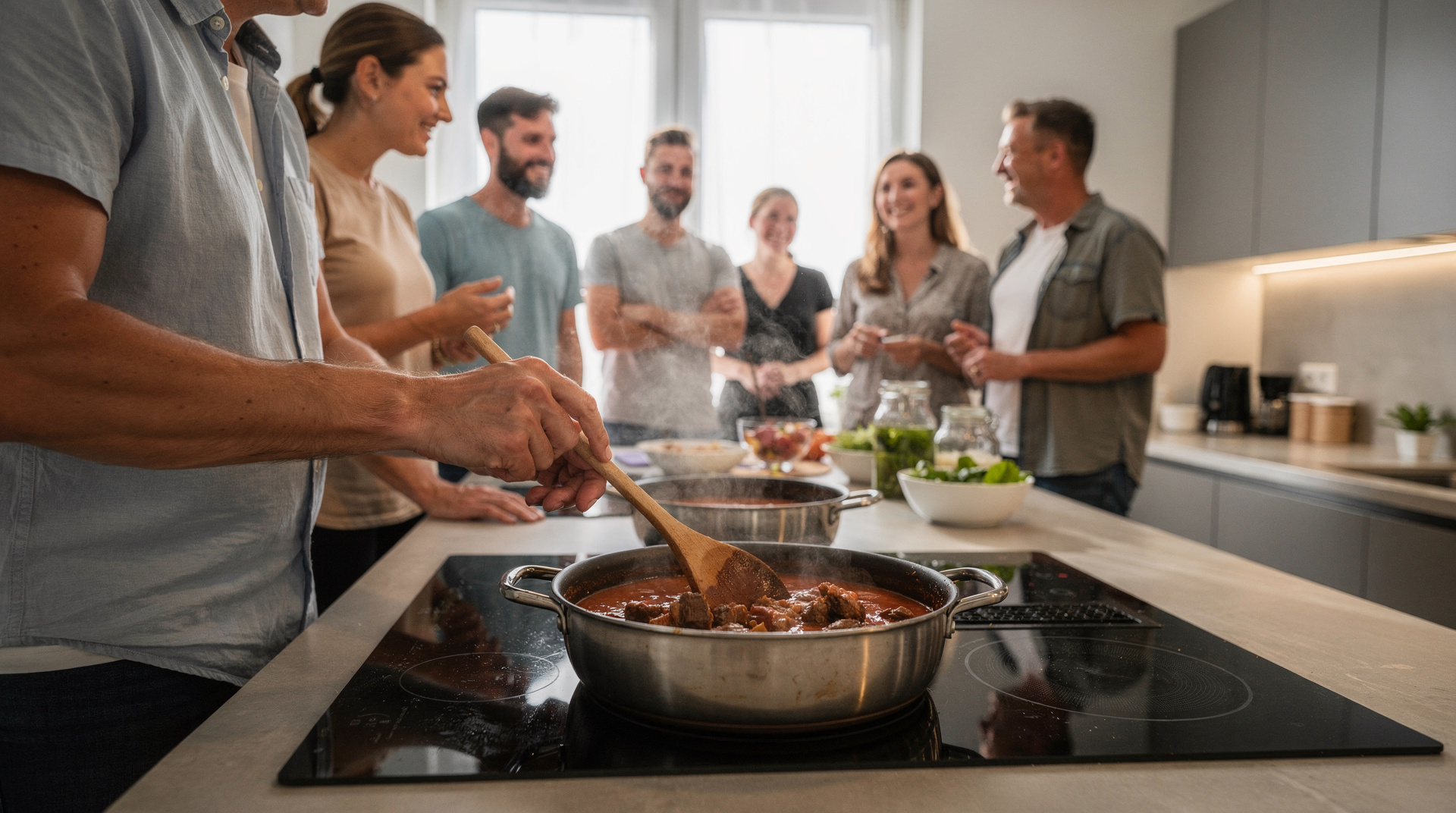
Chef Marti’s Hungarian home cooking experience is consistently the highest-rated cooking class in Budapest across booking platforms. The format: small groups (4–10 people) in a private kitchen, cooking traditional Hungarian dishes with Marti’s guidance. The atmosphere is deliberately home-like rather than professional-kitchen — this is the food Hungarian families actually cook.
The typical menu covers: gulyás soup (made correctly as a soup, with the full paprika preparation explained), pörkölt (thick braised pork or beef), nokedli (egg dumplings made by hand), and at least one sweet — rétes (strudel), palacsinta (pancakes), or a traditional cake. Wine is included alongside the meal.
What’s particularly good about this class: Marti’s personal style — a working cook with decades of experience — makes the format feel like being invited into a friend’s kitchen rather than a tourist activity. The recipes are traditional rather than adapted for foreign tastes. Questions about why certain ingredients are used and how the dishes fit into Hungarian food culture are answered with genuine knowledge.
Price: approximately €65–75 per person, including all ingredients and the meal. Book in advance — classes fill quickly, especially in summer.
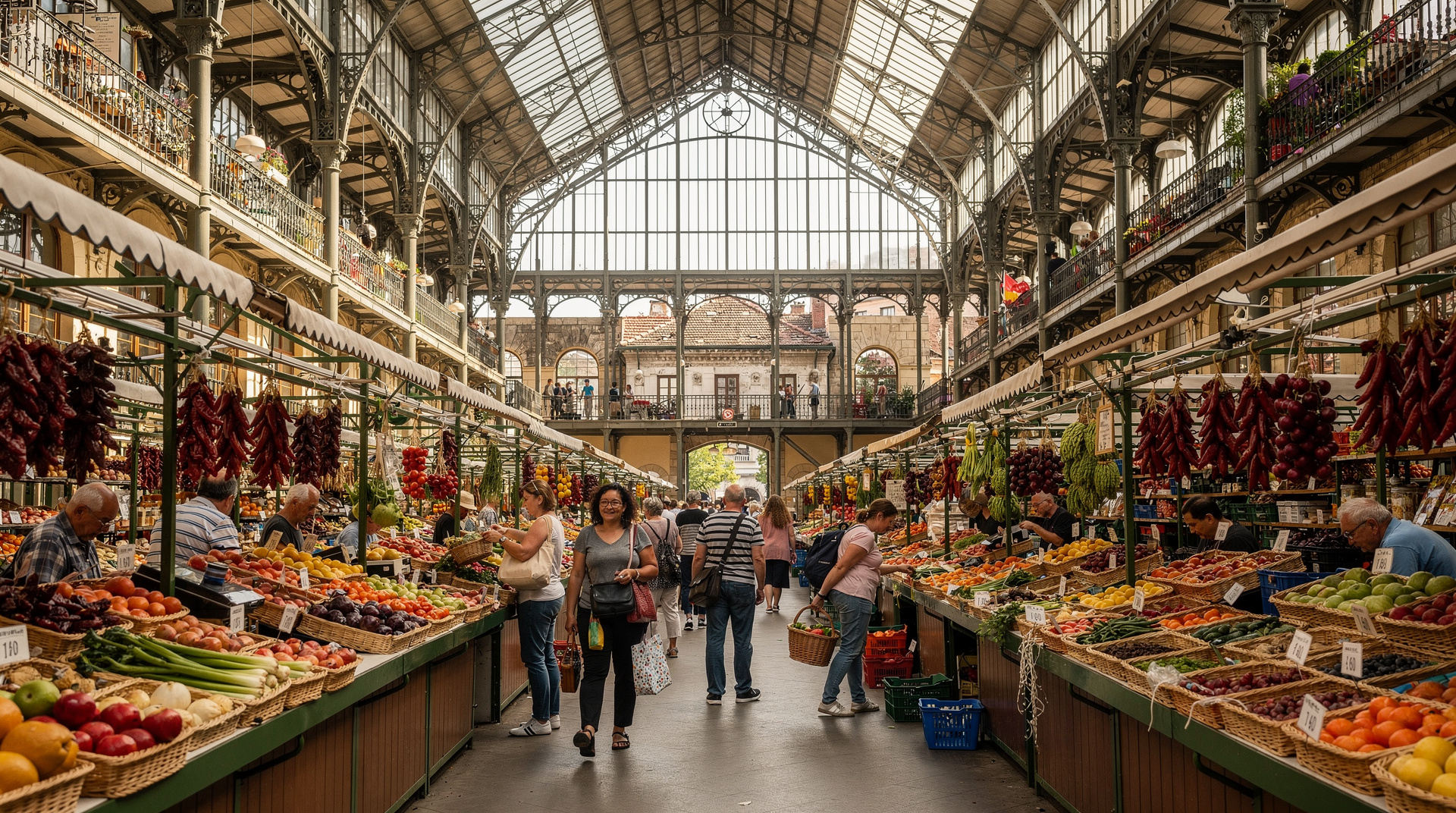
Hungarian cooking turns on paprika, and telling the sweet from the hot from the smoked is a shopping skill before it is a kitchen one: a Hungarian cooking class with a market tour starts at the stall, which is where that distinction is learned.
The market-tour cooking class: shop then cook
The Foodapest cooking class combines a guided visit to the Great Market Hall with a hands-on cooking session. You spend the first hour at the market with your guide, buying the day’s ingredients — paprika from a specific stall, the right cut of beef, fresh vegetables — before moving to a kitchen to cook a traditional Hungarian meal from those ingredients.
This format adds a dimension that the home-kitchen classes don’t have: you understand where the ingredients come from, what to look for when buying, and what the market experience of a Budapestian actually involves. The cooking session then puts those ingredients in context.
Typical menu: Gulyás, a main pörkölt or paprikás dish, nokedli, and a Hungarian dessert. The market visit takes around 45 minutes; cooking and eating takes 2.5 hours.
Price: approximately €65–80 per person including all ingredients and the meal.
Lángos workshop: the street-food class
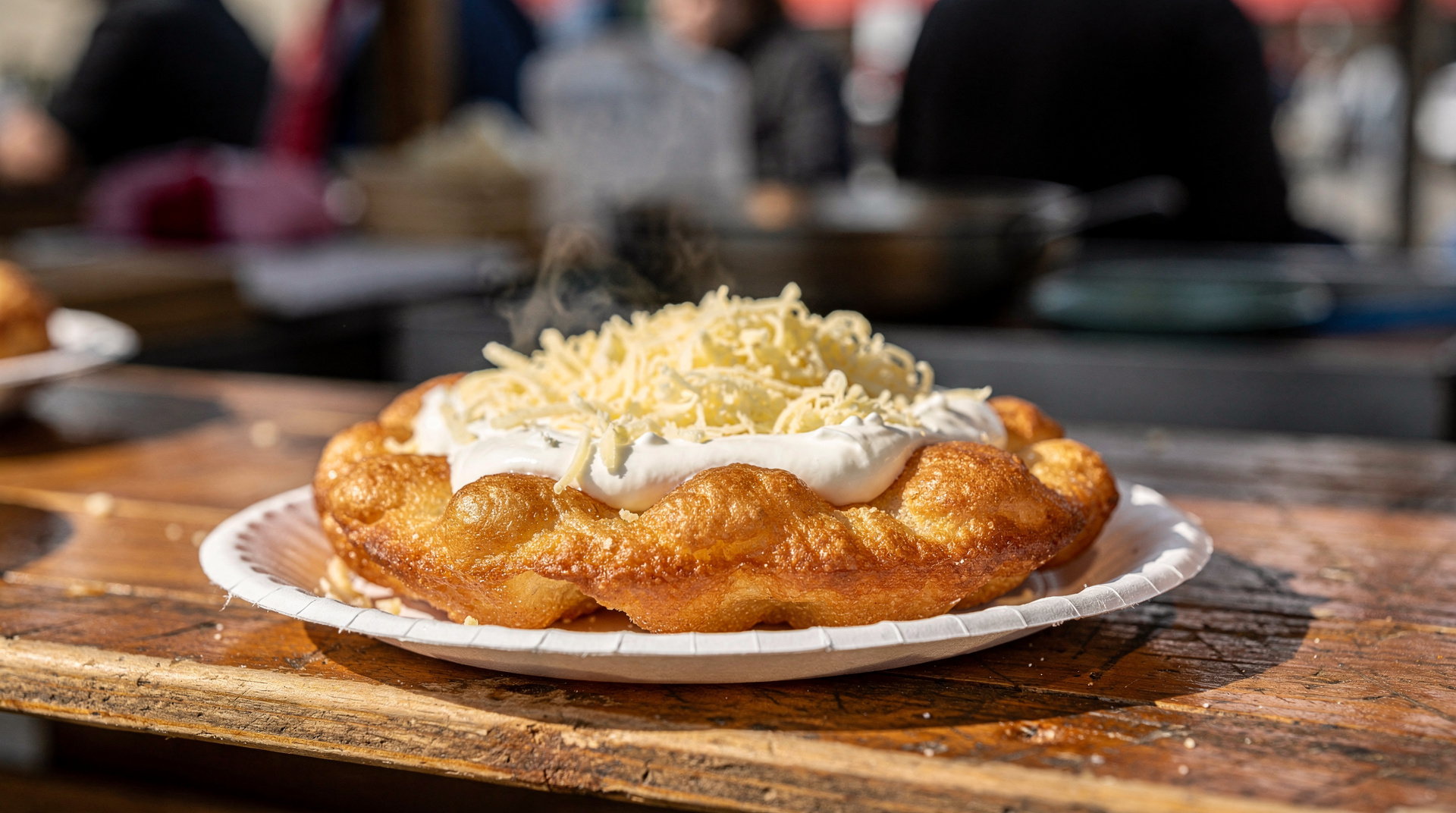
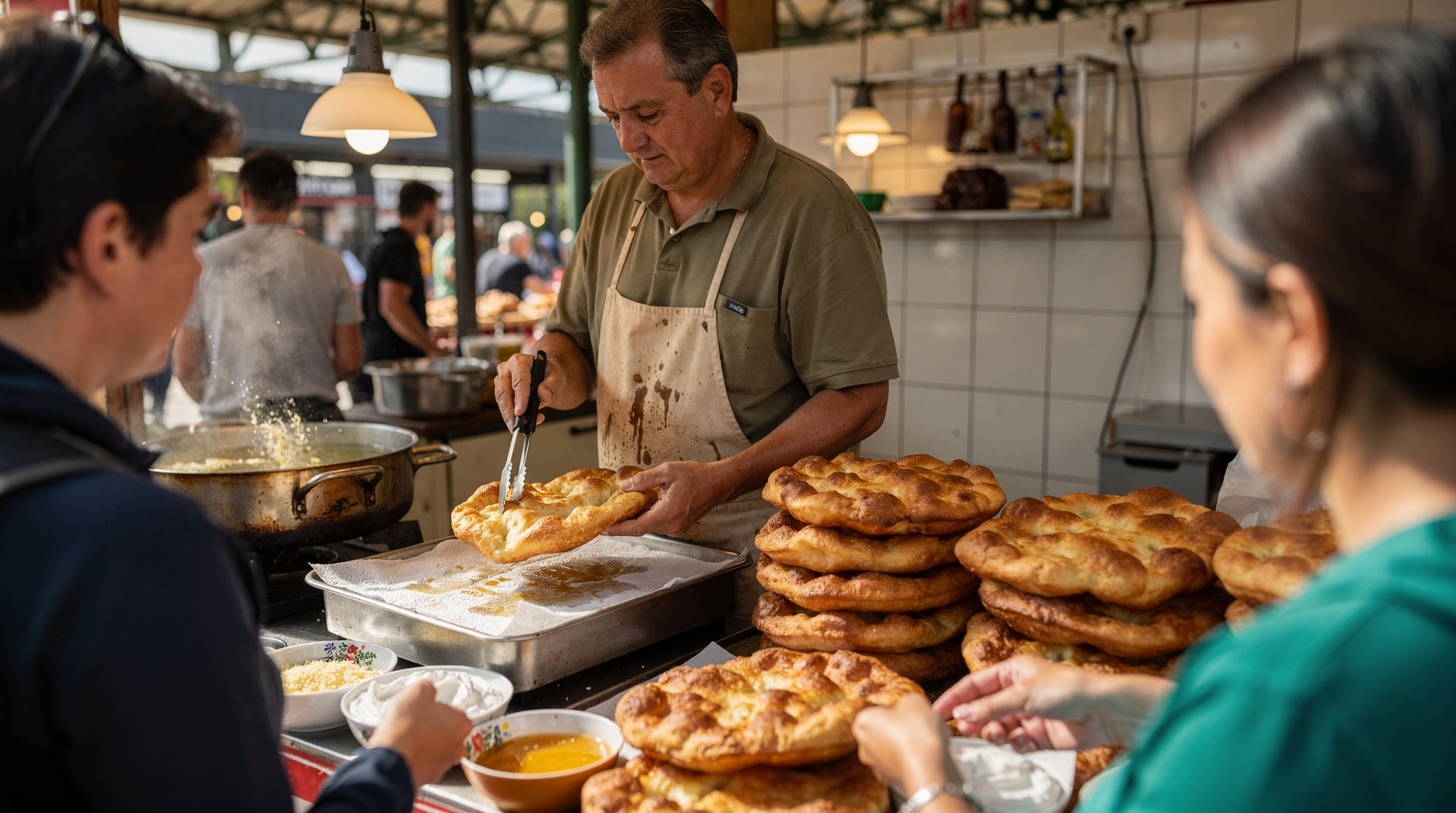
The lángos-making class focuses specifically on Hungary’s most famous street food. In approximately 2 hours, you make the dough from scratch, learn the frying technique, and experiment with toppings before eating the results.
The class is appropriate for all experience levels — the dough is simple (flour, yeast, salt, water) and the main skill is managing the oil temperature and frying time. The workshop also provides historical and cultural context for lángos in Hungarian food culture.
Best for: Families, those with limited time who want a focused experience, visitors who specifically want to take home a recipe for something they can genuinely reproduce. Lángos dough requires no specialist equipment.
See the full lángos guide for context on where to eat it in Budapest independently.
Chimney-cake workshop: kürtőskalács
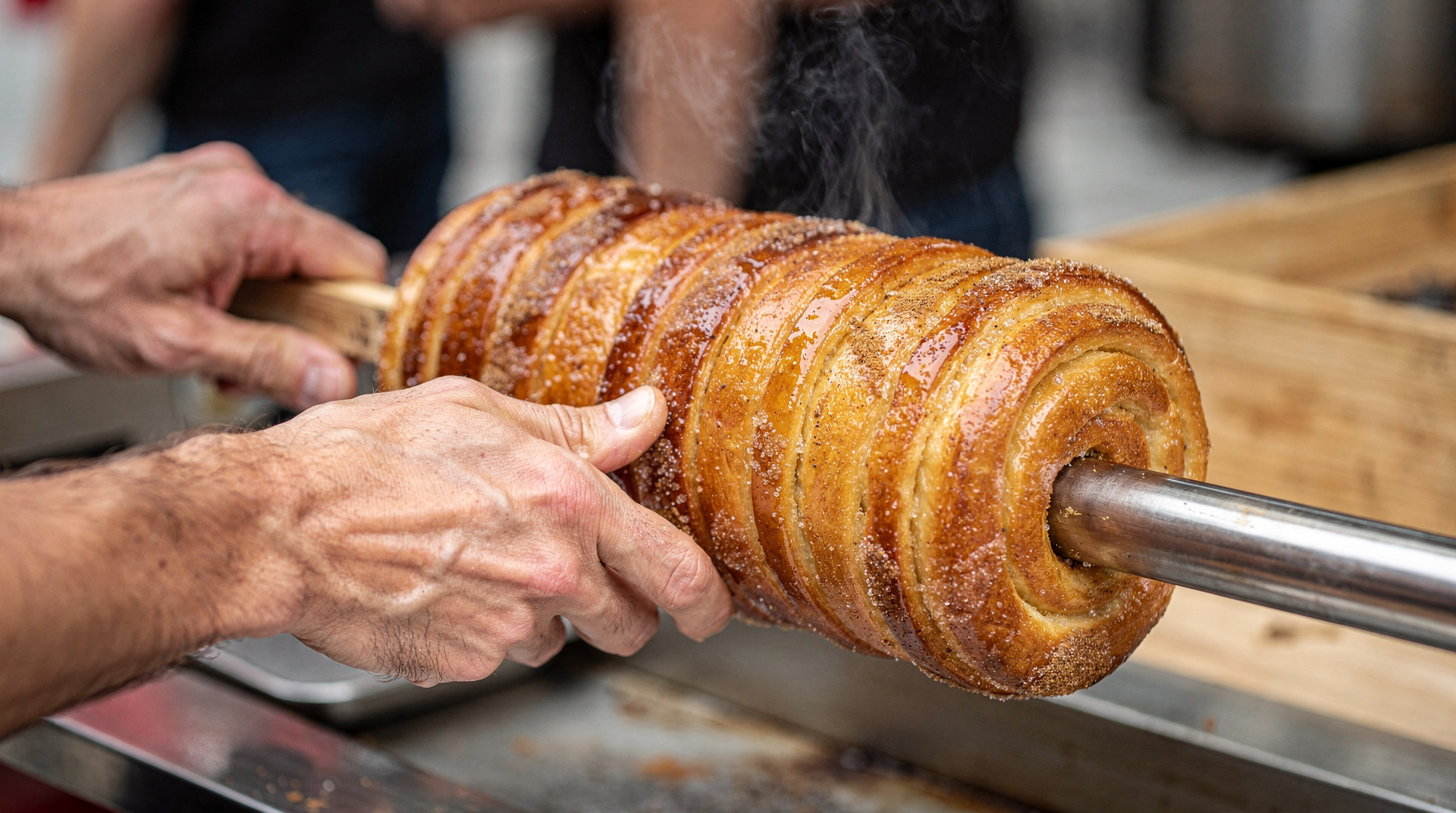
The chimney-cake workshop is a hands-on class making kürtőskalács — the traditional sweet bread spiral baked on a cylinder over heat. The class covers dough preparation, the winding technique, baking, and the sugar caramelisation process.
Particularly appropriate for families with children (winding the dough around the cylinder is a task children enjoy) and for visitors who want a sweet-focused experience. Duration: 1.5–2 hours. See the chimney-cake guide for background.
Comparing the options
| Class | Duration | Price | Best for |
|---|---|---|---|
| Chef Marti home cooking | 3.5h + meal | €65–75 | Traditional Hungarian, family atmosphere |
| Market-tour cooking class | 4h + meal | €65–80 | Market experience + cooking combined |
| Lángos workshop | 2h | €35–50 | Street food focus, families |
| Chimney-cake workshop | 1.5–2h | €30–45 | Sweet food, children |
Practical notes
Booking: All classes require advance booking; popular slots (Saturday mornings, late-afternoon sessions) fill weeks ahead in summer. Book as early as possible, especially for Chef Marti’s class which has limited capacity.
Languages: All major operators run English-language classes; some offer French or German. Private bookings can sometimes be arranged in other languages.
Dietary restrictions: Notify the operator when booking. Vegetarians can usually be accommodated; vegans and gluten-free participants should check specific class content before booking.
What to wear: Comfortable clothes you don’t mind getting cooking smells on. Most kitchens provide aprons.
After the class: A cooking class works well as a morning or afternoon activity followed by independent exploration of what you’ve cooked in the city’s restaurants. See best restaurants in Budapest and traditional Hungarian dishes for the broader food picture.
For food tours (tasting-only, no cooking), see best food tours in Budapest. For budget context, see is Budapest expensive?.
What you’ll actually cook: a typical class menu
For visitors who want to know exactly what to expect from a Budapest cooking class, a typical Chef Marti session covers:
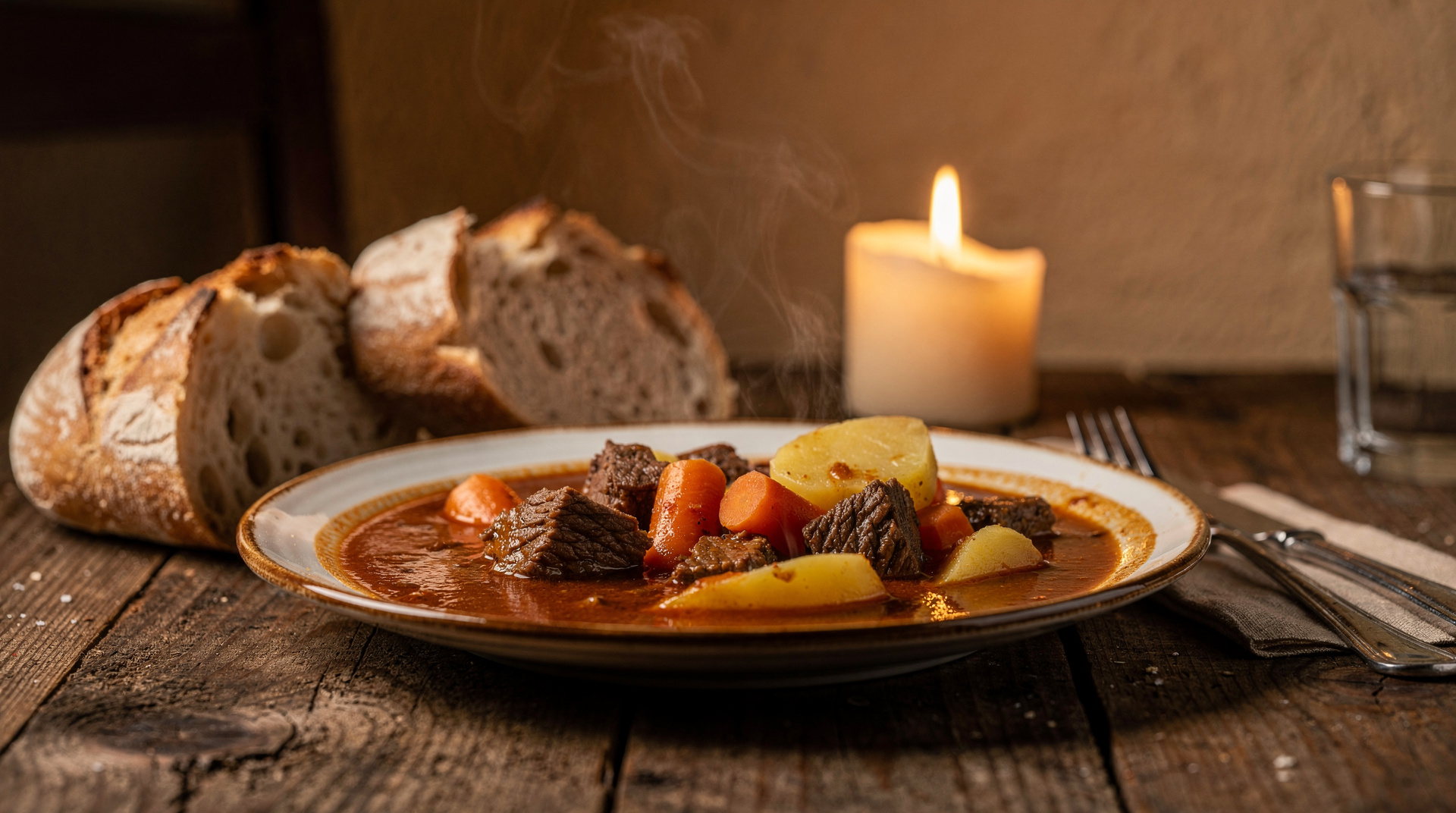
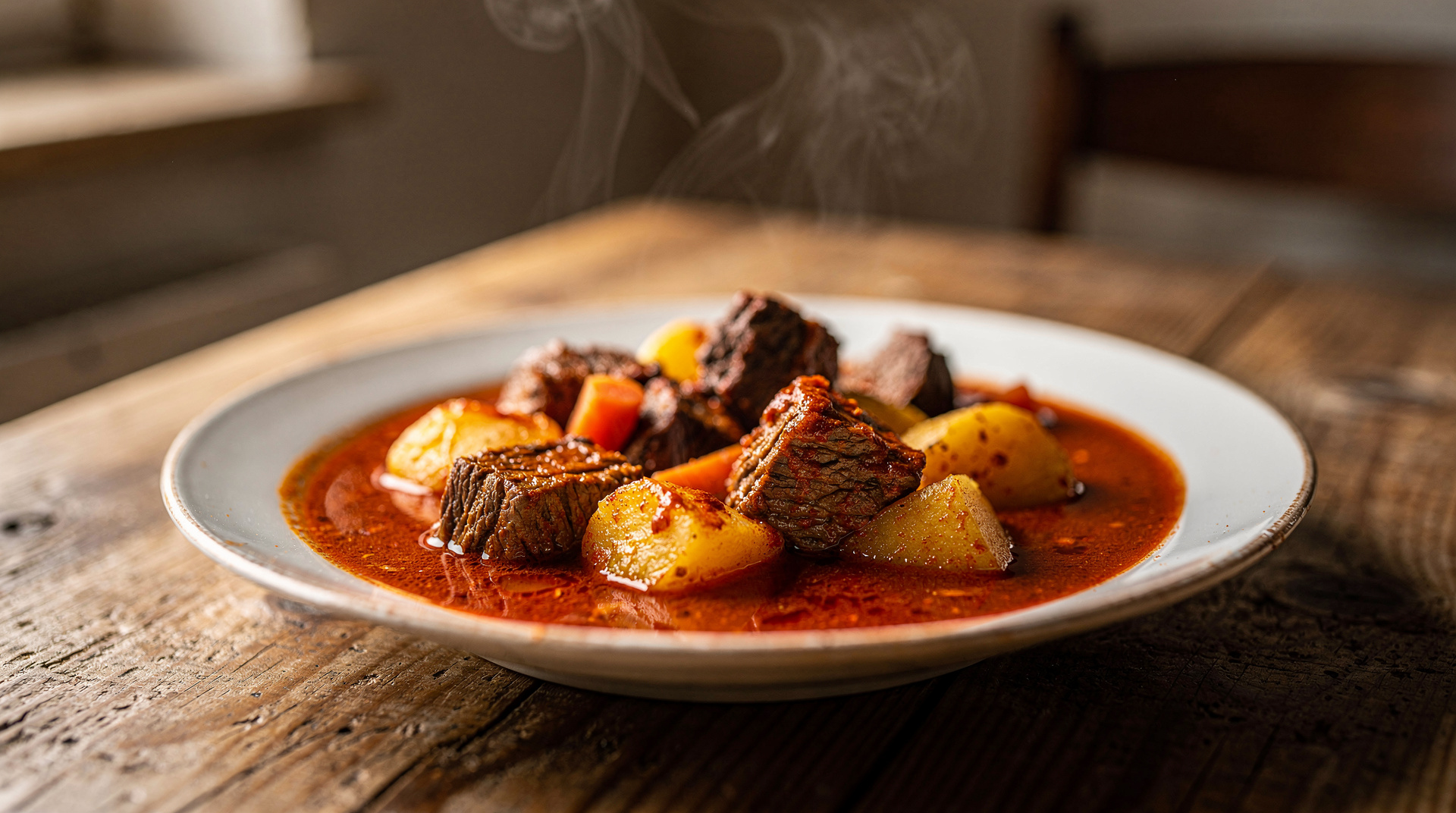
Gulyás: The Hungarian national dish — correctly a soup, not a stew. You’ll learn the paprika preparation (why it goes in after the oil is removed from the heat, to prevent bitterness), the vegetable sequence, and the caraway seed finishing. Most visitors have tried gulyás in restaurants; making it teaches why the restaurant version is often inferior to home cooking.
Pörkölt: The thick braised-meat dish that foreigners often confuse with goulash. Usually made with pork or beef. The technique — low, slow, covered, with multiple rounds of paprika — produces a completely different texture from the soup. This is the dish most visitors ask to take home a recipe for.
Nokedli: Hand-grated egg dumplings. Literally pressing the dough through a nokedli grater (a flat grater with large holes, held over boiling water). This takes five minutes and produces perfectly textured dumplings every time. The most immediately reproducible skill from the class.
Rétes or palacsinka: The dessert varies by session — either Hungarian strudel (paper-thin pastry stretched over the entire table before filling and rolling) or sweet palacsinka (thin crepes with jam, cottage cheese, or chocolate). The strudel stretching is the more dramatic demonstration; the palacsinka is the more practical recipe.
Wine: Hungarian wine accompanies the meal at the end of the session. A decent Furmint and a Bikavér are typically provided. This is when the guide discusses which wine regions to visit if you’re extending your trip — Tokaj, Eger, Villány.
The market visit component: what to look for
In cooking classes with a market tour component, the guide takes you through the Great Market Hall with specific purpose — you’re buying ingredients, not sightseeing. What this looks like in practice:
At the paprika stalls: choosing between varieties (édesnemes sweet versus erős hot), understanding the grading system, selecting the right quantity for the recipe.
At the meat counter: identifying the correct cut for pörkölt (typically a shoulder cut, with some fat). Hungarian butchers prepare cuts differently from Western European norms — the guide bridges this gap.
At the vegetable stalls: seasonal selection. A cooking class in spring will have different vegetables than one in autumn; the guide explains what’s best and what the dish should use when the season-appropriate option isn’t available.
At the dairy counter: selecting the right sour cream (tejföl) — not crème fraîche, not yoghurt, specifically the Hungarian version. This distinction matters for texture in sauces.
This market section, typically 45–60 minutes, gives the cooking class an additional layer that purely kitchen-based classes lack. By the time you start cooking, you understand the ingredients.
Budapest cooking vs. cooking classes elsewhere in Europe
Budapest cooking classes offer something specific: you’re learning a cuisine that is genuinely unusual for most Western visitors. Unlike an Italian cooking class (where you already have a mental model of what pasta and tomato sauce should taste like), or a French class (where techniques are familiar even if you haven’t made them), Hungarian cooking involves different fat types (lard rather than olive oil), different spice foundations (paprika rather than herbs), and different techniques (slow paprika braising rather than quick searing).
This novelty makes the learning more interesting and the skills more transferable — when you make gulyás at home, it genuinely surprises people. The same cannot always be said of a spaghetti bolognese made in a Roman cooking school.
The price of a Budapest cooking class (€60–80) is also notably lower than equivalent classes in Paris (€90–150), Florence (€80–120), or Barcelona (€70–100). Budapest offers the best value cooking-class market in Central Europe.
How to find the class and what to bring
Location: Chef Marti’s class is held in a private apartment — the exact address is provided upon booking confirmation. It’s in central Pest, accessible by metro or on foot from most accommodation.
What to bring: Nothing except an appetite. The class provides all equipment, ingredients, aprons, and the meal. Bring cash for a tip (1,000–2,000 HUF / €2.50–5 per person is appropriate for a great class).
Group dynamics: Classes typically mix solo travellers, couples, and small friend groups. The format is informal; conversation flows naturally while cooking. Most participants leave with at least two or three genuine friendships formed over the shared meal.
Language: Classes run in English. Chef Marti speaks Hungarian and English fluently; some recipe vocabulary requires a little explanation (the name “pörkölt” literally means “lightly charred” — referring to the caramelised onion base).
For the related food context — what these dishes taste like in restaurants, where to eat them independently, and how they fit into Hungarian food culture — see traditional Hungarian dishes and best restaurants in Budapest.
For an organised introduction to Hungarian food through tasting (without cooking), see best food tours in Budapest.
The Budapest 3-day itinerary suggests fitting a morning cooking class into a structured visit — a good choice for day 2 or 3 once you’ve oriented yourself to the city.
Cooking classes versus food tours: which is right for you
The key distinction: food tours are observational (you taste; a guide explains); cooking classes are participatory (you cook; you understand).
Choose a food tour if:
- You want to cover a wide range of different foods in a single session
- You have dietary restrictions that make cooking class accommodation uncertain
- You want the flexibility of a group experience without committing to a specific kitchen schedule
- You’re a first-time visitor wanting orientation before deeper engagement
Choose a cooking class if:
- You want to take a skill home — specifically, a recipe you can reproduce
- You prefer a structured, activity-based experience over walking and tasting
- You’re interested in understanding technique, not just flavour
- You’re travelling as a couple or small group and want a shared activity with a specific product (the meal you cooked together)
The two formats complement each other: a morning food tour at the Great Market Hall on day one, a cooking class in a private kitchen on day two. This sequence covers the widest range of Hungarian food experience available in 48 hours.
Hungarian cooking techniques: what you’ll learn
Beyond the specific recipes, a Budapest cooking class teaches a set of techniques that appear across Hungarian cuisine:
The paprika roux: Heating oil or lard, removing from heat, adding sweet paprika, stirring rapidly, and immediately adding liquid (onion water, stock, or tomatoes). This technique prevents the paprika from burning (which makes it bitter) while extracting its colour and flavour into the fat base. It is the foundation of gulyás, pörkölt, chicken paprikás, halászlé — virtually every Hungarian stew.
Rendering and browning onions: Hungarian onions are cooked much longer and at lower heat than in most Western cooking — until translucent, then golden, sometimes until lightly caramelised. This forms the flavour base for the paprika roux. The patience required (15–20 minutes) is often the most instructive part of the class.
Nokedli technique: Pressing egg-and-flour dough through a Spätzle grater or nokedli shredder directly into boiling salted water. The dumpling drops immediately to the bottom, rises to the top when cooked (2–3 minutes), is skimmed out and tossed in butter. The technique takes minutes to learn; the result is better than any pasta substitute.
Sour cream integration: Adding sour cream to a hot sauce without curdling. The technique: remove the pan from heat, stir in a tablespoon of the hot sauce into the cold sour cream to temper it, then add the tempered cream to the sauce. This prevents the protein in the cream from seizing.
These techniques transfer directly to home cooking and distinguish Hungarian cooking from a cursory reading of a recipe.
Solo travellers: is a cooking class awkward alone?
No — cooking classes are one of the more reliably comfortable group activities for solo travellers in Budapest, precisely because the shared task (chopping, kneading, stirring) gives everyone something to talk about that isn’t small talk for its own sake. Chef Marti’s and the market-tour classes both regularly host solo travellers, and the format naturally pairs people at workstations rather than leaving anyone standing alone — most solo participants report leaving with at least a dinner recommendation or two from fellow diners, if not a genuine new travel contact. If solo travel is a bigger theme of your trip, see the solo travel Budapest guide for how a cooking class fits alongside other solo-friendly activities like guided walking tours.
How the menu shifts by season
| Season | Typical dessert or seasonal touch | Notes |
|---|---|---|
| Spring | Fresh herb-forward salads, early vegetables | Lighter accompaniments to the main stew |
| Summer | Seasonal fruit in strudel (cherry, apricot) | Market ingredients at their best |
| Autumn | Mushroom-forward dishes, root vegetables | Harvest season shows in the market-tour classes especially |
| Winter | Heartier portions, mulled wine sometimes offered | Cosier atmosphere, classes book up around Christmas market season |
The core recipes (gulyás, pörkölt, nokedli) stay consistent year-round, but the vegetable and fruit components genuinely shift with what the Great Market Hall has in season — another reason the market-tour format has an edge if you want the most authentic, of-the-moment version of a dish. Winter classes also tend to run slightly warmer and cosier in atmosphere, which several past participants have specifically mentioned as a nice counterpoint to a cold day of sightseeing outside.
Dietary restrictions in more detail
Vegetarian participants are the easiest to accommodate — most menus can swap the meat in pörkölt for mushrooms or a vegetable-forward paprikás without losing the core technique lesson. Vegan accommodation is possible but needs advance notice, since sour cream and eggs (in nokedli and rétes) are structural to several dishes, not just garnishes. Gluten-free participants face the biggest limitation: nokedli, rétes and lángos all depend on wheat flour, and few operators keep a genuinely separate gluten-free kitchen setup, so cross-contamination risk is real even when a substitute dough is offered.
If dietary restrictions are a significant concern, the vegetarian and vegan Budapest guide covers restaurant options that may fit your needs more reliably than a group cooking class. Always mention allergies specifically rather than general preferences — nut allergies matter for some dessert options, and Hungarian kitchens do not always default to listing allergens the way Western European restaurants increasingly do.
Pairing a cooking class with Hungarian wine
Most classes end with a glass or two of Hungarian wine alongside the meal, which is often a visitor’s first real introduction to Furmint or Bikavér. If the class sparks an interest, it pairs naturally with a deeper dive: the Hungarian wine guide explains the main regions and grape varieties, and wine tastings in Budapest covers dedicated tasting venues in the city if you want to explore further without leaving Budapest. For travellers extending into the countryside, the Eger day trip and Tokaj wine day trip both build on what a cooking class introduces at the table — a nice full-circle if the wine at your cooking class turns out to be the highlight of the evening rather than a side note.
Booking logistics and how to prepare
Booking: Book at least 1–2 weeks ahead for standard dates; 3–4 weeks ahead for weekend classes in summer. Chef Marti’s class has the lowest capacity (8–10 people max) and fills fastest.
Confirmation: You’ll receive a booking confirmation with the exact address, start time, and any preparation instructions (some classes ask you to arrive slightly hungry; none require cooking experience).
Currency: Classes are typically priced in EUR for international visitors; payment is usually in HUF at the door using the day’s exchange rate. Some operators accept card; most prefer cash.
Group discounts: Most operators offer 10–15% group discounts for groups of 6+. Contact directly when booking.
Cancellation: Standard cancellation policy is 24–48 hours before the class. For no-shows after this period, most operators charge the full amount.
What participants say: what works and what doesn’t
Based on consistent feedback across platforms, the things cooking-class participants consistently praise:
- The casual atmosphere of home-kitchen classes versus formal restaurant kitchens
- The directness of seeing someone who grew up with the food explain why each step matters
- The quality of the meal at the end — that it’s genuinely better than restaurant food
- Taking home written recipes that are actually reproducible
Things occasionally criticised:
- Classes that feel rushed (too many participants, not enough individual attention)
- Classes where the guide doesn’t explain the why behind each technique
- Market-tour components that are too brief to be genuinely informative
Chef Marti’s class specifically scores well on atmosphere and explanation quality; the Foodapest class scores well on the market integration. The specialist workshops (lángos, chimney cake) are almost universally praised — the lower expectation level and more focused content create a reliable experience.
For the wider food picture in Budapest, see traditional Hungarian dishes, best food tours, and best restaurants in Budapest.
Frequently asked questions about Cooking classes in Budapest
What will I learn in a Budapest cooking class?
Most classes cover the essentials of Hungarian cuisine: gulyás (the correct soup version, not the foreign stew interpretation), pörkölt (the actual thick braised-meat dish), nokedli (egg dumplings), and at least one dessert. Specialist classes cover lángos, kürtőskalács (chimney cake), or Hungarian pastry. All include eating what you cook.What is Chef Marti's cooking class?
Marti's home cooking experience is a small-group class (typically 4–10 participants) held in a private home kitchen. It covers traditional Hungarian recipes — gulyás, pörkölt, Hungarian salads, desserts. The format is relaxed and conversational; Marti is an experienced host with high ratings across all platforms. Price around €65–75 per person including the meal.Is the market-tour cooking class different from a food tour?
Yes. The market-tour cooking class starts with a visit to the Great Market Hall to buy ingredients, then moves to a kitchen to cook a full Hungarian meal from those ingredients. A food tour is a tasting-only experience. The cooking class gives you a skill and a meal; the food tour gives you broader coverage of different foods.Can I do a cooking class with dietary restrictions?
Most operators accommodate vegetarians with advance notice. Vegan accommodation is possible in some classes with prior arrangement. Gluten-free is difficult given the prevalence of flour in Hungarian cooking. Always disclose restrictions when booking.How long do cooking classes in Budapest last?
Most classes run 3–4 hours including shopping (if a market visit is included), cooking, and eating the meal. Specialist workshops (lángos, chimney cake) run 1.5–2.5 hours. The longer format with a meal is the more satisfying experience — you sit down together to eat what you've made.
Top experiences
Bookable activities with verified prices and instant confirmation on GetYourGuide.