Gellért Hill and the Citadella: Budapest's best panorama

Is it worth climbing Gellért Hill in Budapest?
Yes. At 235 metres above the Danube, Gellért Hill offers the best panorama in Budapest — both Buda and Pest visible simultaneously, with Parliament, the castle, all the Danube bridges and the hills of the Danube Bend in a single view. The climb takes 20–30 minutes and is free. The Citadella at the top is open to the public.
Budapest’s highest viewpoint in the city
Gellért Hill (Gellért-hegy) is the rocky outcrop rising 235 metres above the Danube on the Buda bank, directly south of Chain Bridge. From its summit — marked by the Citadella fortress and the Liberty Statue — the entire Budapest panorama unfolds: both banks of the river, all the Danube bridges, Parliament, Castle Hill, the Pest flatlands extending to the horizon and, on clear days, the hills of the Danube Bend to the north.
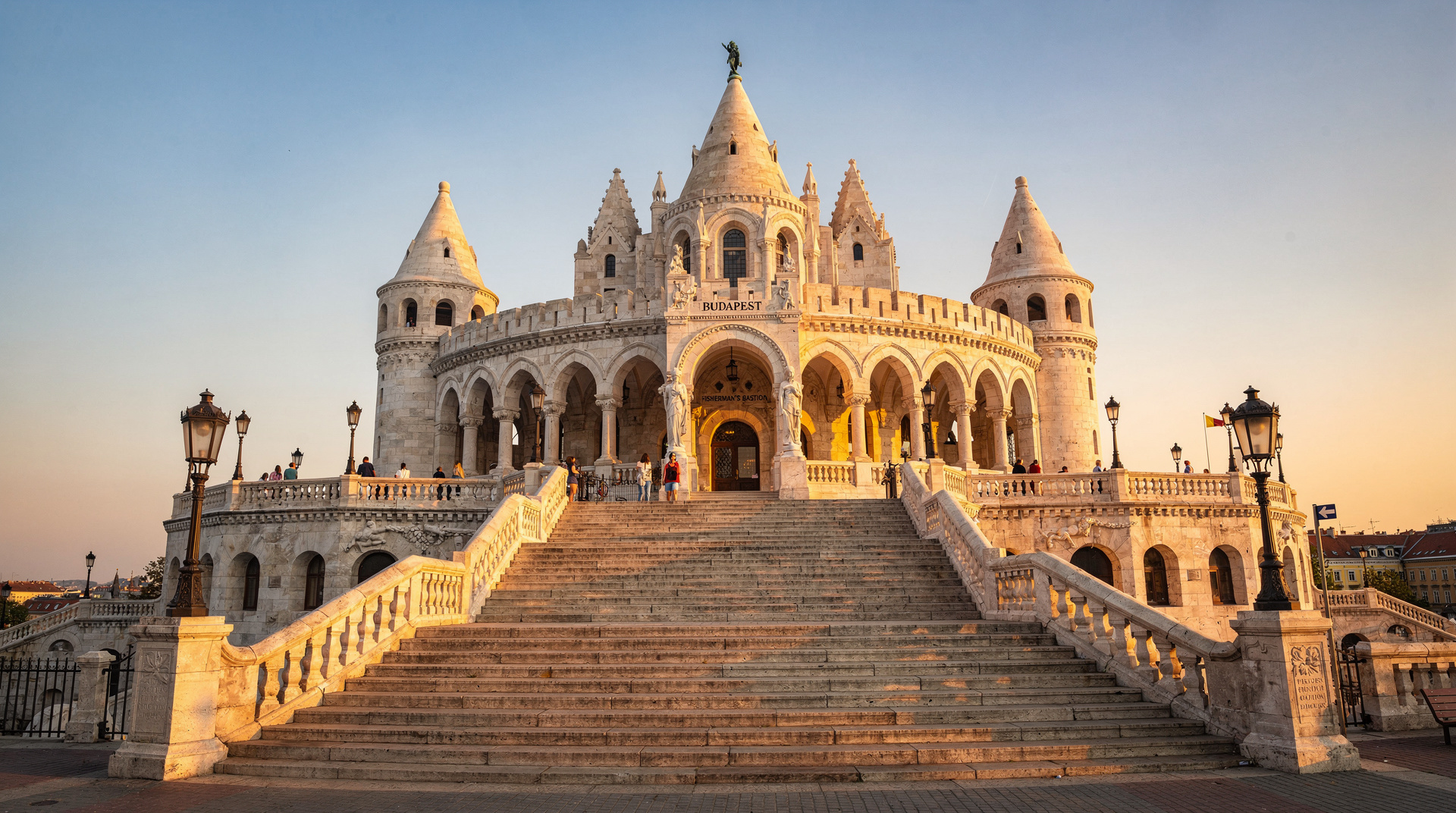
The view from Gellért Hill differs fundamentally from the better-known view from Fisherman’s Bastion. Where Fisherman’s Bastion looks directly east at Parliament across the river, Gellért Hill’s summit offers a wider, higher perspective that places the entire city in context. It is the view that makes you understand Budapest’s topography — why the city divides into hilly Buda and flat Pest, how the river bends through the landscape, and how large the city actually is.
The climb is free. There is no cable car. Allow 20–30 minutes uphill and 15–20 minutes back down, plus time at the top.
| Where | Buda bank, south of Chain Bridge, above the Gellért baths |
| Cost | Free to climb; Citadella exhibition around 2,000–3,500 HUF |
| Time needed | 1–1.5 hours round trip, more with the exhibition |
| Getting there | On foot only, from the Gellért bath side or the gentler Tabán approach |
| Best time | Sunset for the best light; early morning for the quietest climb |
The hill’s name and its history
The hill is named for Bishop Gellért (Gerard of Csanád), a Venetian Benedictine monk invited to Hungary by King Stephen I to help Christianise the Magyar tribes. In 1046, when a pagan reaction against Christianity broke out, Gellért was killed by being placed in a barrel and rolled down this hill into the Danube. He was canonised in 1083.
A statue of St Gellért stands halfway up the hill on a waterfall cascade — the most visible element of the hill from the Pest bank, though often less photographed than the summit structures.
The Citadella at the summit was built by the Habsburg Empire in 1848–1851 after suppressing the Hungarian Revolution — a symbol of control over the subjugated city below. Hungarians resented it intensely. The Habsburg emperor handed it to the city of Budapest in 1897, and it has served various functions since: barracks, prison, tourist attraction. A major renovation project (completed in stages between 2022 and 2025) has made the interior accessible with an exhibition on the hill’s history.
How to climb
From the Gellért thermal bath side (most common): Start at the main entrance of the Gellért baths on Kelenhegyi út. Marked paths climb through parkland — switchbacks make the gradient manageable but the total ascent is substantial. Allow 25–30 minutes. This route emerges near the Citadella’s main gate.
From the Tabán side (gentler gradient): Approach from Döbrentei tér (bus 27 stops here; or walk from Liberty Bridge). A broad path leads up through park gardens, past the Gellért lookout terrace, to the summit. This is the preferred route for people who find the steep main path uncomfortable.
Via steps from the river: Several stairway routes cut directly up the south face of the hill from the riverside. These are steeper and shorter — not recommended for anyone with knee issues.
Shoes: regular trainers or comfortable walking shoes are fine on all routes. The paths are paved or well-maintained gravel; no hiking boots required.
Choosing your route
The route you pick shapes the whole outing. The Gellért-bath approach is the classic: it begins at a landmark that is easy to find, it is well signposted, and it brings you out at the Citadella gate with a sense of having earned the view. The Tabán approach suits a slower, more reflective walk, with gardens and terraces that invite stops for photographs. Many visitors go up one way and come down the other, which gives two different views of the slope and avoids retracing steps. If you are arriving from the centre of Pest, crossing Liberty Bridge on foot and starting from the river end is a pleasant way to warm up before the real climb.
Take your time on the steeper stretches. Nobody is racing, and the benches and lookout points along the way exist precisely so that you can stop, breathe and turn around to see how much of the city has already opened up behind you.
The Citadella and summit
The Citadella fortress at the summit is a roughly oval stone structure with views in all directions from the rampart walls. Entry to the ramparts and exterior is free. The interior exhibition (on the hill’s history, the fortress’s military use and the WWII German occupation of Budapest) charges approximately 2 000–3 500 HUF entry and is worth the time if you want context on the Habsburg and wartime chapters.
The café at the summit serves coffee and basic food at tourist prices (500–1 200 HUF for drinks). The terrace has the views; the quality of the food is secondary.
Reading the view from the ramparts
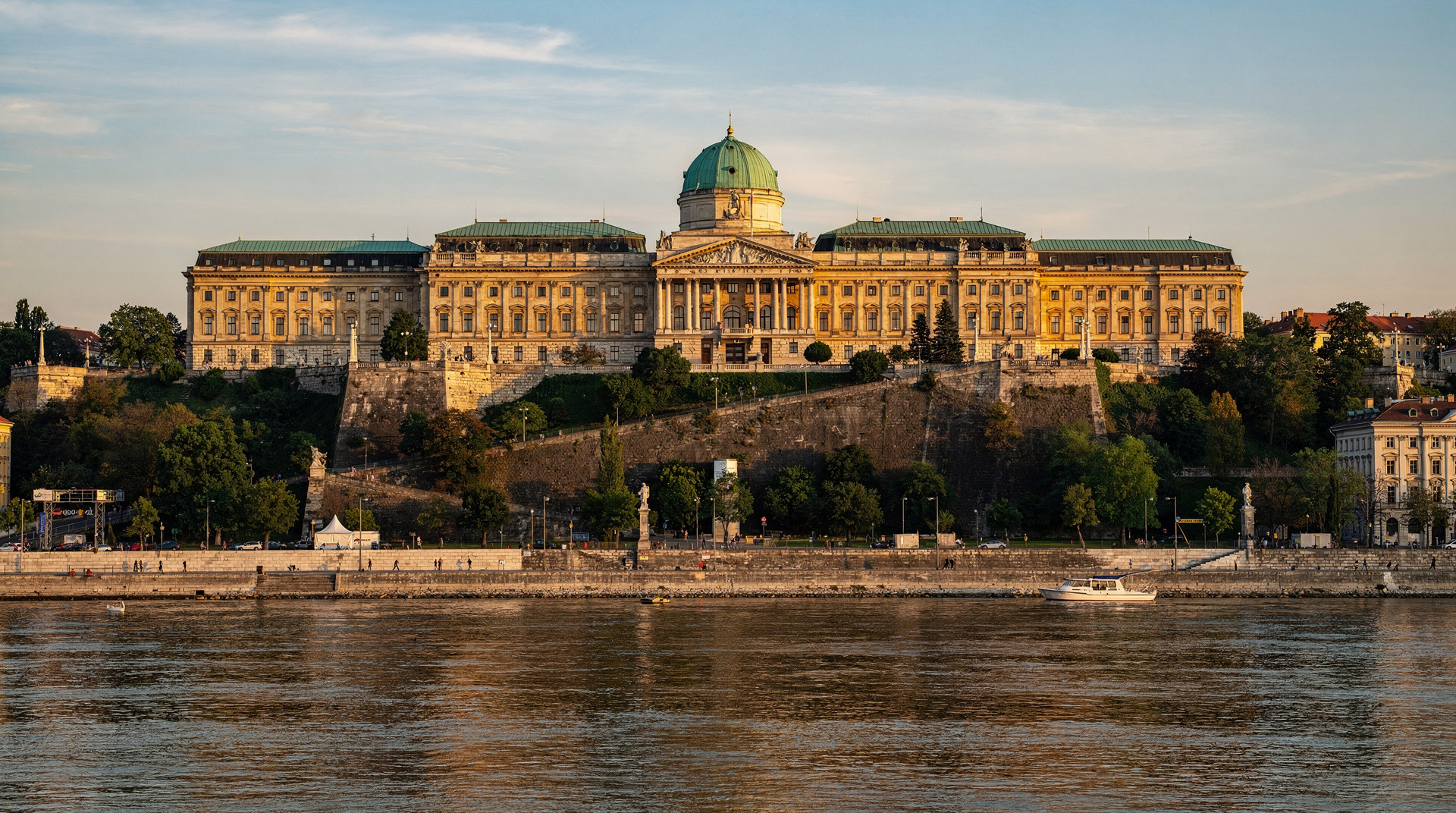
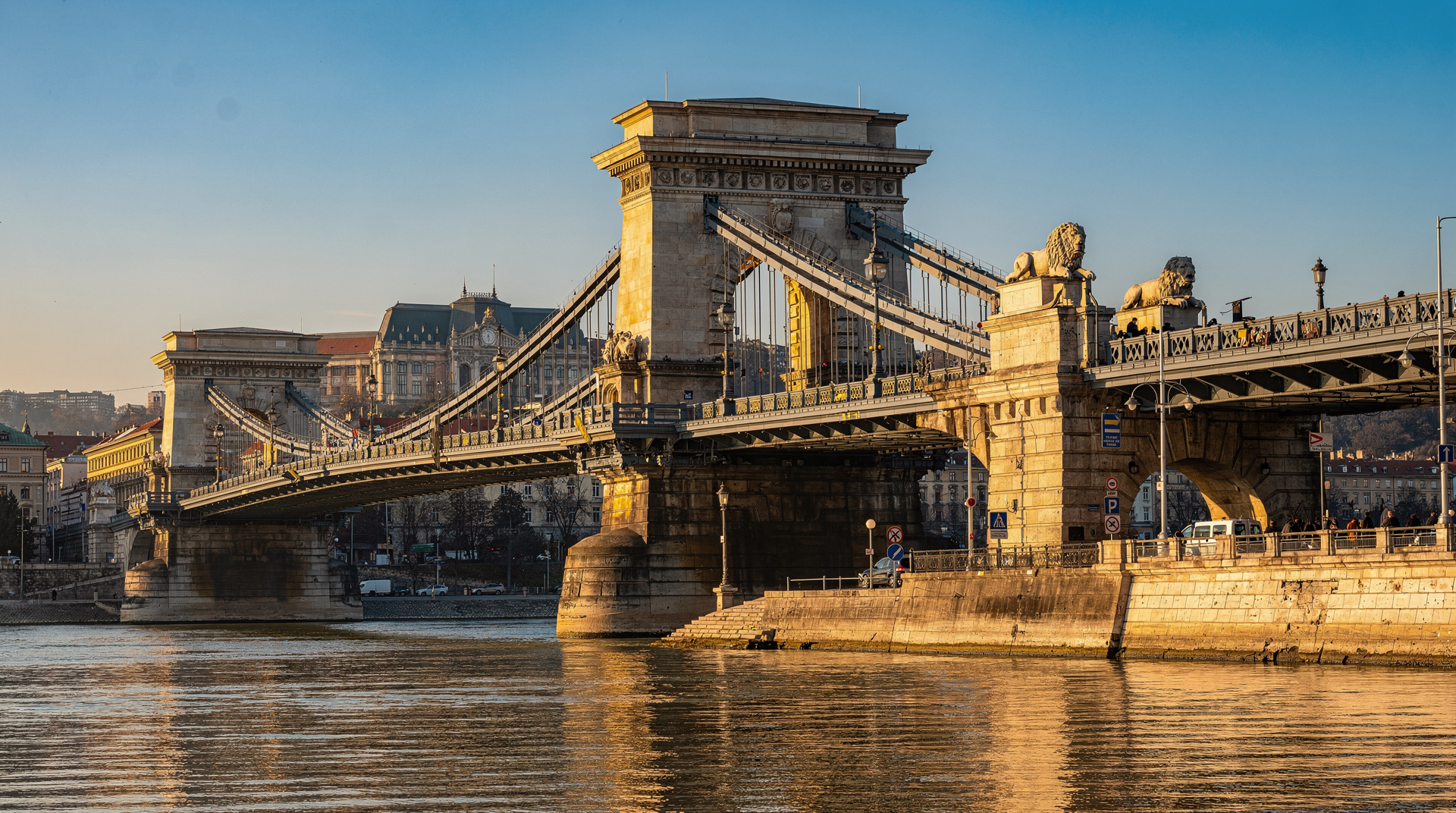
Walk the full circuit of the walls before you settle anywhere. Each side shows something different. To the north-east, the river leads your eye towards the Pest embankment, with the Hungarian Parliament as the obvious anchor. Turn towards the north and the Buda Castle complex and the spire of Matthias Church sit on their own ridge. Look down at the water and you can follow the sequence of bridges one by one, with the Chain Bridge the easiest to pick out. On the Pest side, the grid of boulevards, the domes and the dense rooftops of Downtown Pest give a real sense of scale.
A good habit is to come up with a rough map of the city in your head, then use the summit to check it. It is one of the best orientation exercises in Budapest, and it makes the rest of your trip easier to plan, particularly if you are still deciding between Buda and Pest as a base.
The Liberty Statue (Szabadság szobor)
The 14-metre bronze figure of a woman holding a palm branch aloft — the Liberty Statue — stands just south of the Citadella on the southern edge of the summit. The sculptor was Zsigmond Kisfaludi Strobl; the statue was commissioned in 1947.
Its political history is more complex than its current neutral appearance suggests. The original commission was for a memorial to Miklós Horthy’s son (killed in a WWII plane crash), but the Soviet liberation of Hungary in 1945 changed the context dramatically. The statue was redeployed as a Soviet liberation monument, with a Red Army soldier at the base, Soviet stars on the plinths and the dedication “To the liberating Soviet heroes.” All of these Soviet elements were removed in 1992. The palm branch, originally a different object in the Soviet version, was recast. The statue itself was retained because Hungarians had quietly reinterpreted it as symbolising freedom generally, not specifically Soviet-type liberation.
The original Soviet statue from the base is now in Memento Park (20 minutes west of the city centre), which preserves the removed communist-era public sculptures.
The Gellért baths at the base
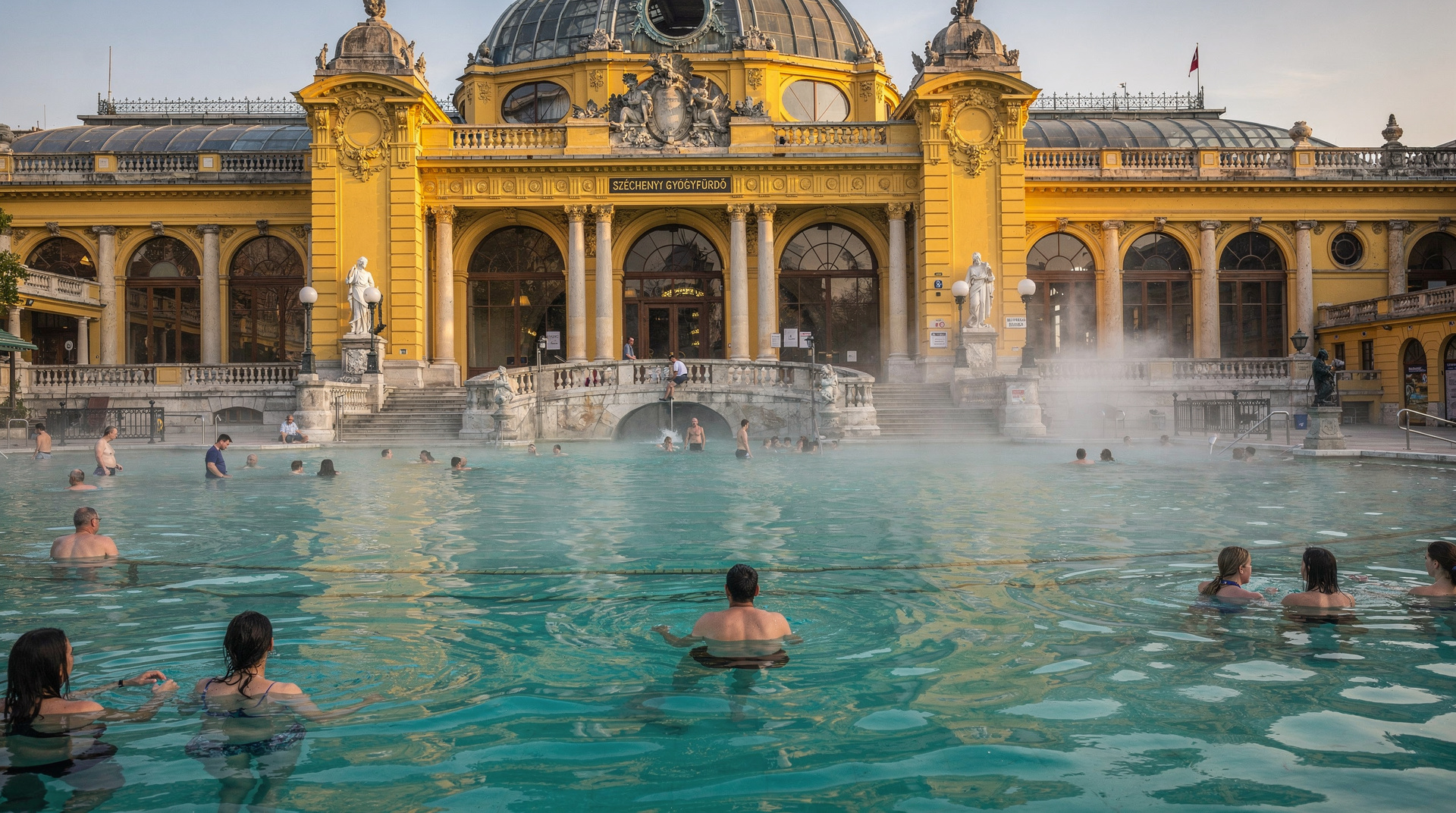
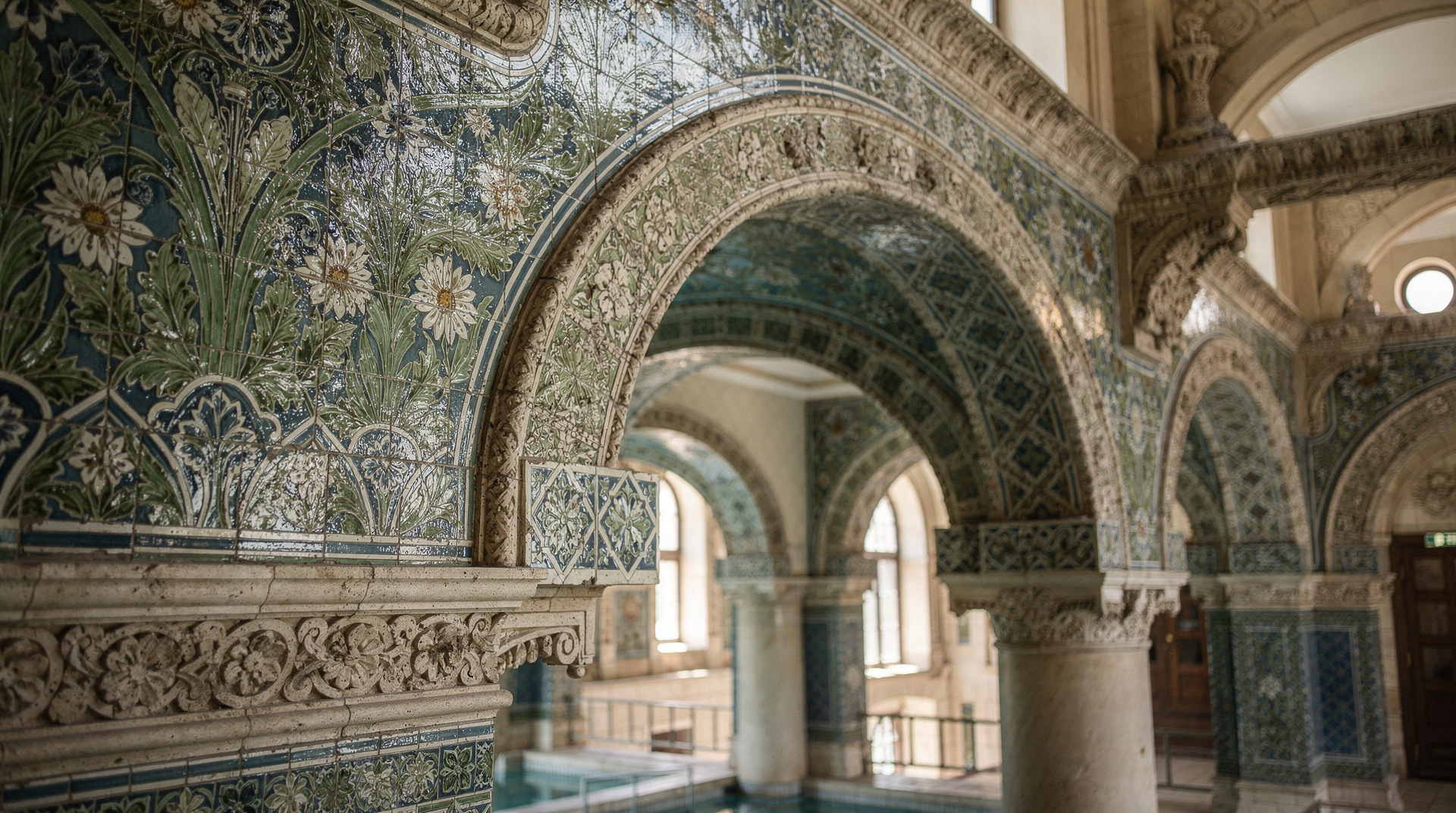
At the foot of the hill, the Gellért thermal baths occupy a Secessionist palace completed in 1918. The building — with its stained glass, mosaic floors and Roman-style indoor bath hall — is among the most architecturally impressive bath complexes in Budapest.
As of mid-2026, the Gellért baths’ opening status requires verification. Market reports have mentioned a possible renovation closure, but no confirmed closure date had been announced. Check the official Gellért website or call ahead before planning a visit specifically around the baths.
If the Gellért baths are open: the outdoor wave pool (summer only), the indoor neo-baroque central pool and the private cabin changing system (one of the last in Budapest) are the highlights. See the Gellért baths guide for full entry information.
If the Gellért baths are temporarily closed: Rudas baths (10 minutes north on the Buda bank) and Széchenyi (across the river in City Park) are excellent alternatives. The best thermal baths guide compares all options.
Gellért Hill vs Fisherman’s Bastion: which view first?
Both are free, both are iconic, and visitors often ask which to prioritise on a short trip. Fisherman’s Bastion gives a closer, more intimate frame of Parliament and sits directly next to Matthias Church, making it easy to combine with a Castle Hill morning. Gellért Hill gives the wider, higher panorama that shows the whole city at once, and pairs naturally with an afternoon that includes the Gellért baths at the base. If you only have time for one, Fisherman’s Bastion is the easier win for a first visit; Gellért Hill rewards visitors staying longer or specifically chasing sunset photography.
What to bring
Comfortable walking shoes are the only real requirement — trainers are fine on all routes. Bring water, especially in summer, since there are few shops along the climb itself (only the café at the summit). A light jacket is worth carrying even in warm weather, since the exposed summit can be breezy. If you are timing the climb for sunset, bring a light source for the walk back down, as the paths are not brightly lit after dusk.
Light, weather and the seasons
Gellért Hill changes character through the year. In spring and early autumn the parkland is green or gold and the air is clear, which makes for the sharpest views. In summer the climb is more demanding but the evenings stay light for a long time, so a late ascent works well. In winter the paths can be cold and, after rain or frost, slippery in places, so wear shoes with a decent grip. A clear, crisp winter day can give the most transparent view of all, with the hills in the distance standing out sharply. If you are choosing dates, the best time to visit Budapest guide explains how the seasons compare.
Haze and low cloud are the real enemies of the panorama. If the morning looks grey, keep the hill for another day and spend the time indoors at a museum or bath instead. The rainy day guide has ideas for when the weather does not cooperate, and it is easy to swap the hill into a later slot in your 3-day itinerary.
Making the most of a short visit
If you are pressed for time, a simple plan works: go up by the shorter route, spend a while at the ramparts, walk to the Liberty Statue for the southern outlook, and come down by the gentler path. Skip the café unless you need a break. If you have longer, add the exhibition, linger for the sunset and finish with a meal on the Buda side or a walk along the riverbank. For ideas on what to eat afterwards, see the Budapest restaurants guide.
Travelling with others of different fitness levels is easy enough: agree a meeting point at the summit, let the faster walkers go ahead, and everyone arrives to the same view. The Gellért Hill destination page gives further background on the neighbourhood around the hill.
Combining with other sights
Gellért Hill fits naturally into a Buda-focused day:
Morning: Chain Bridge walk → Clark Ádám tér → Castle Hill funicular → Buda Castle, Matthias Church, Fisherman’s Bastion. Afternoon: Walk south along the Buda embankment from Chain Bridge → Gellért Hill climb (1 hour) → Gellért baths (2–3 hours, if open) → Szabadság híd (Liberty Bridge) back to Pest.
The Castle Hill lights and sights evening tour covers the illuminated Buda landmarks at night — an atmospheric alternative for visitors who climb Gellért Hill by day and want a guided evening perspective on the castle.
If you would rather have the castle district explained than read about it, a guided walk through the Buda Castle area pairs well with a morning on the hill’s opposite side of the river, giving historical context for the skyline you have been looking at from above.
For a romantic Budapest experience, the hilltop at sunset — the city spreading below in all directions, the river catching orange light — is one of the most beautiful free experiences in Budapest. The romantic Budapest guide includes Gellért Hill as one of its central recommendations.
The top attractions guide places Gellért Hill in a full multi-day planning framework. The Chain Bridge guide covers the approach from the Buda riverside walking south.
Frequently asked questions about Gellért Hill and the Citadella
How do you get up Gellért Hill?
On foot only — there is no cable car or funicular. The most popular route starts from the Gellért thermal bath entrance and follows marked paths through parkland, taking 20–30 minutes. The steps are moderate — some sections are steep. Alternatively, approach from the Tabán side (from Döbrentei tér) for a gentler gradient.What is the Citadella on Gellért Hill?
The Citadella is a Habsburg fortress built 1848–1851 to control the city after the failed Hungarian Revolution. It was handed to the city in 1897 and used as a prison and barracks under both world wars. After renovation, parts are open as a visitor attraction with views, an exhibition on the hill's history and a café. Entry to the exterior and viewpoints is free.What is the Liberty Statue (Szabadság szobor)?
The Liberty Statue is the 14-metre female figure holding a palm branch aloft, visible from most of Budapest. Originally installed in 1947 as a Soviet liberation monument (with a Soviet soldier at the base, now removed), it was repurposed as a general freedom symbol after 1989. The sculptor, Zsigmond Kisfaludi Strobl, is one of Hungary's most celebrated 20th-century sculptors.What are the Gellért baths and are they open?
The Gellért thermal baths are at the base of Gellért Hill in a remarkable Secessionist building (1918). The indoor pools, outdoor wave pool and spa are among Budapest's most architecturally interesting bath complexes. As of mid-2026, a possible renovation closure had been mentioned in some reports but not confirmed — check current opening status before planning a visit.Is Gellért Hill suitable for children or older visitors?
The main path from the Gellért baths side is steady but has some steep switchback sections, manageable for most children and reasonably fit older visitors with a slower pace. The gentler Tabán-side approach from Döbrentei tér is the better choice for anyone concerned about the gradient. There is no wheelchair-accessible route to the summit.What is the best time of day to climb Gellért Hill?
Sunset is the single best time — the whole city catches golden light and the Parliament and Castle District glow as the sun drops. Sunrise is a close second and much quieter. Midday in summer is the least comfortable option: the climb has limited shade and can be genuinely hot.
Top experiences
Bookable activities with verified prices and instant confirmation on GetYourGuide.