Buda Castle guide: visiting the Royal Palace and Castle District
What is inside Buda Castle and is it worth visiting?
Buda Castle (Budavári Palota) houses the Hungarian National Gallery and the Budapest History Museum. The castle district around it — Matthias Church, Fisherman's Bastion, medieval streets — is unquestionably worth visiting. The palace exterior and courtyard are free; the galleries charge entry. Most visitors spend half a day on Castle Hill.
Castle Hill: the historical core of Budapest
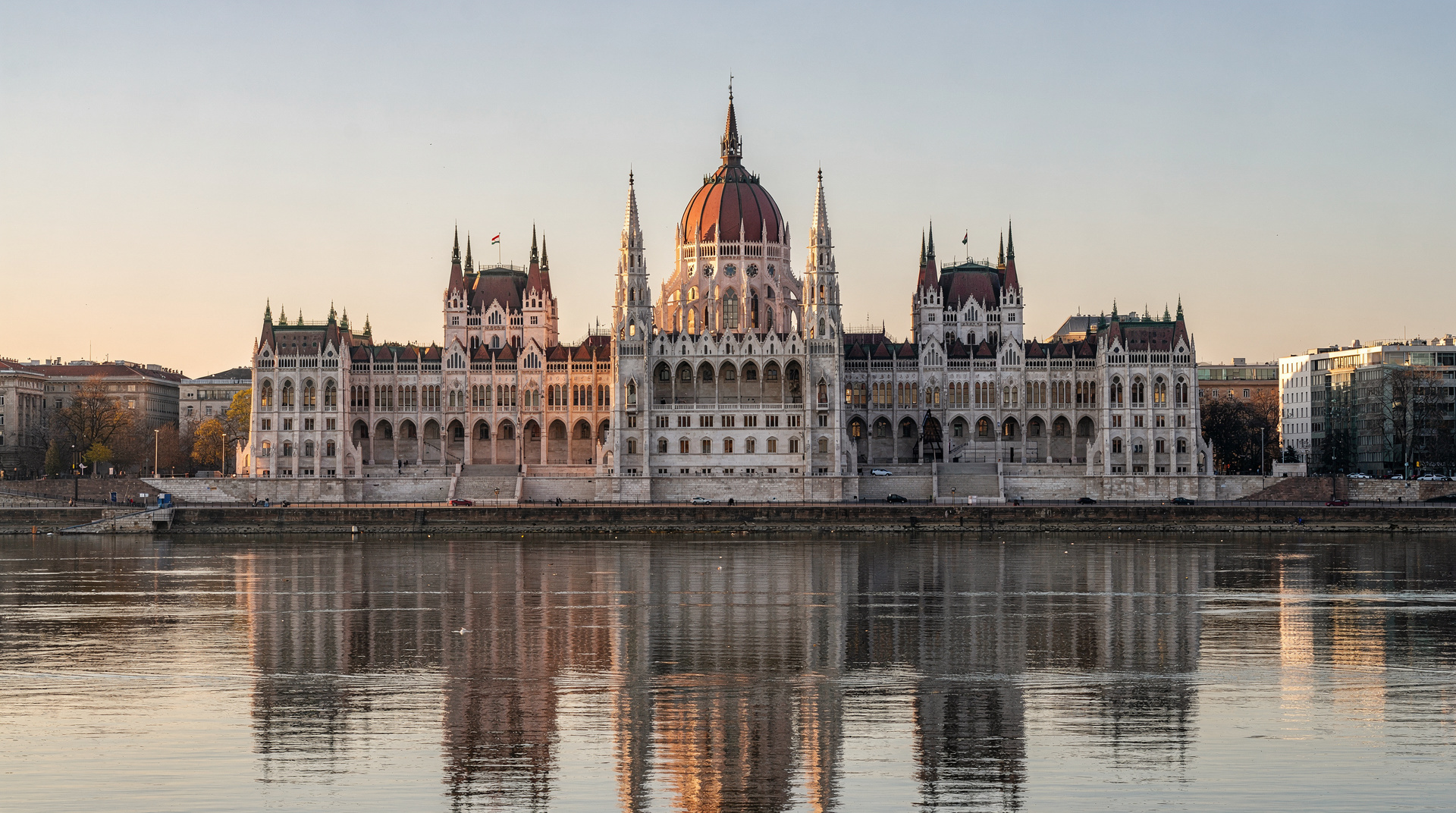
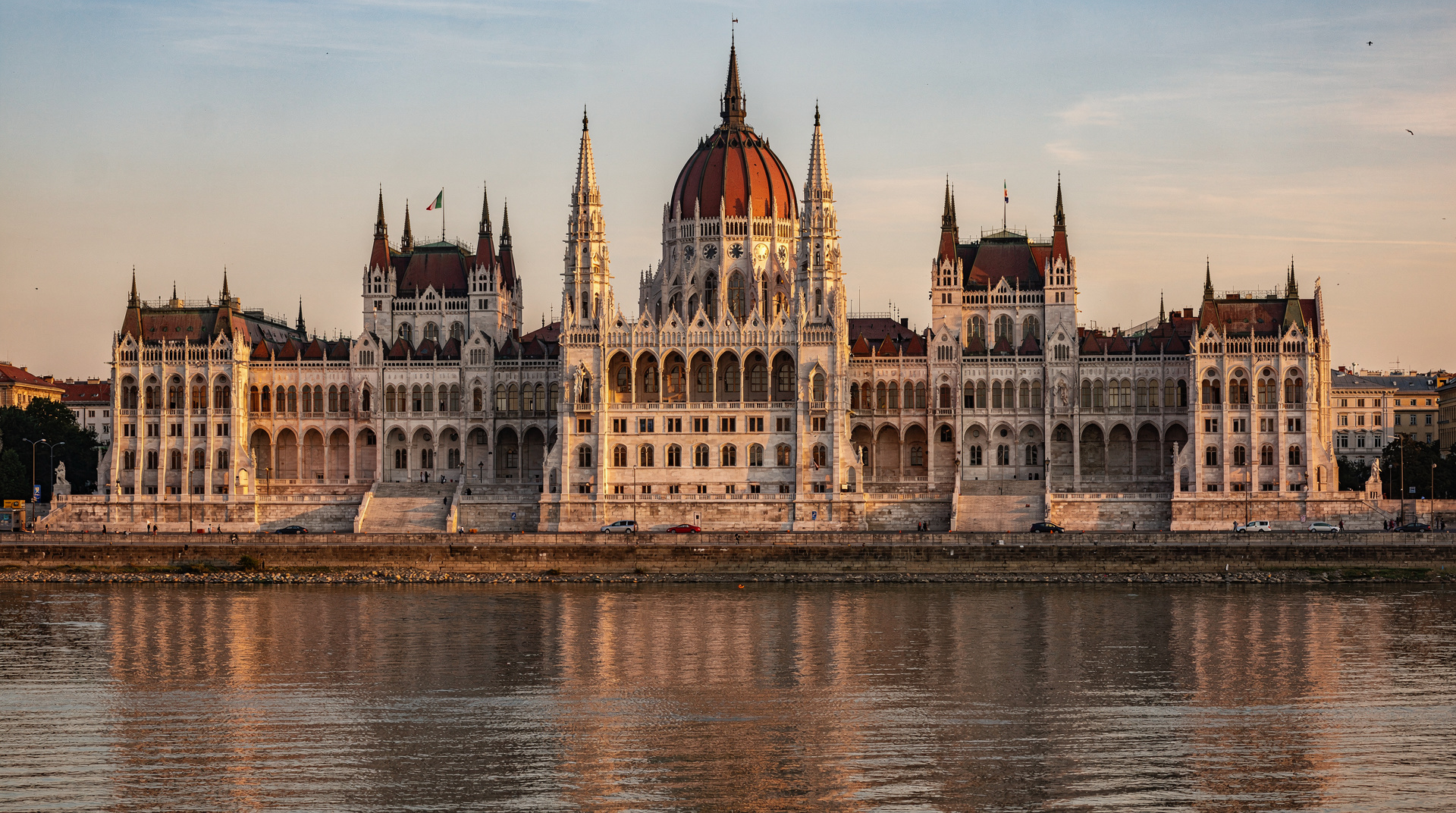
Buda Castle Hill (Várhegy) has been the seat of Hungarian royal and political power for 700 years. The hill rises 60 metres above the Danube on the western bank, and from its summit the views over the river, Parliament and the Pest skyline are among the finest in Central Europe.
The Castle District covers two distinct zones: the Royal Palace complex at the southern end (Buda Castle / Budavári Palota) and the medieval town at the northern end, where Matthias Church and Fisherman’s Bastion stand alongside Gothic house facades, baroque mansions and cobblestoned streets that survived — despite everything — into the 21st century.
A classic Buda Castle walking tour with a local guide is the most efficient way to absorb 700 years of history in 2.5 hours — the context makes the architecture legible in a way that solo wandering cannot match.
| Where | Castle Hill, Buda side, District I |
| Getting there | Funicular from Clark Ádám tér, or bus 16/16A |
| Time needed | Half a day for the district; add an hour per museum |
| Free to enter | Courtyard, gardens, medieval streets |
| Best time | Before 10:00 for morning light and fewer crowds |
The castle was flattened in the 1945 siege and rebuilt to a medieval plan that had been buried under Habsburg additions, so what stands there is neither original nor invented: a walking tour of Buda castle with a historian is what makes that layering legible.
A layered history
Castle Hill has been continuously occupied since Neolithic times. The medieval royal palace was established under Béla IV in the 13th century after the Mongol invasion destroyed the earlier lowland settlement. Subsequent kings — Lajos the Great, Matthias Corvinus, the great Renaissance patron — expanded and embellished it.
The Ottoman occupation (1541–1686) left little visible architecture but permanently shaped the city’s cultural identity. The Habsburg reconquest in 1686 and the subsequent baroque rebuilding created much of what visitors see in the medieval town today — Hungarian baroque, which blends Central European formality with Turkish-influenced elements.
The palace was destroyed in World War II in the longest city siege of the European war (Christmas 1944 to February 1945, 102 days). The postwar communist restoration rebuilt the shell in a simplified form; the elaborate interiors were recreated partially. The National Gallery and History Museum opened in the 1970s.
Understanding this sequence of destruction and rebuilding changes how you look at the hill. Almost every wall you pass has been repaired, reinterpreted or rebuilt at least once, and the district rewards slow looking more than checklist sightseeing. If the broader story interests you, the Hungarian history primer gives the background that connects the palace to the rest of the country, and the communist Budapest guide explains the postwar reconstruction choices that still shape what you see today.
Getting to Castle Hill
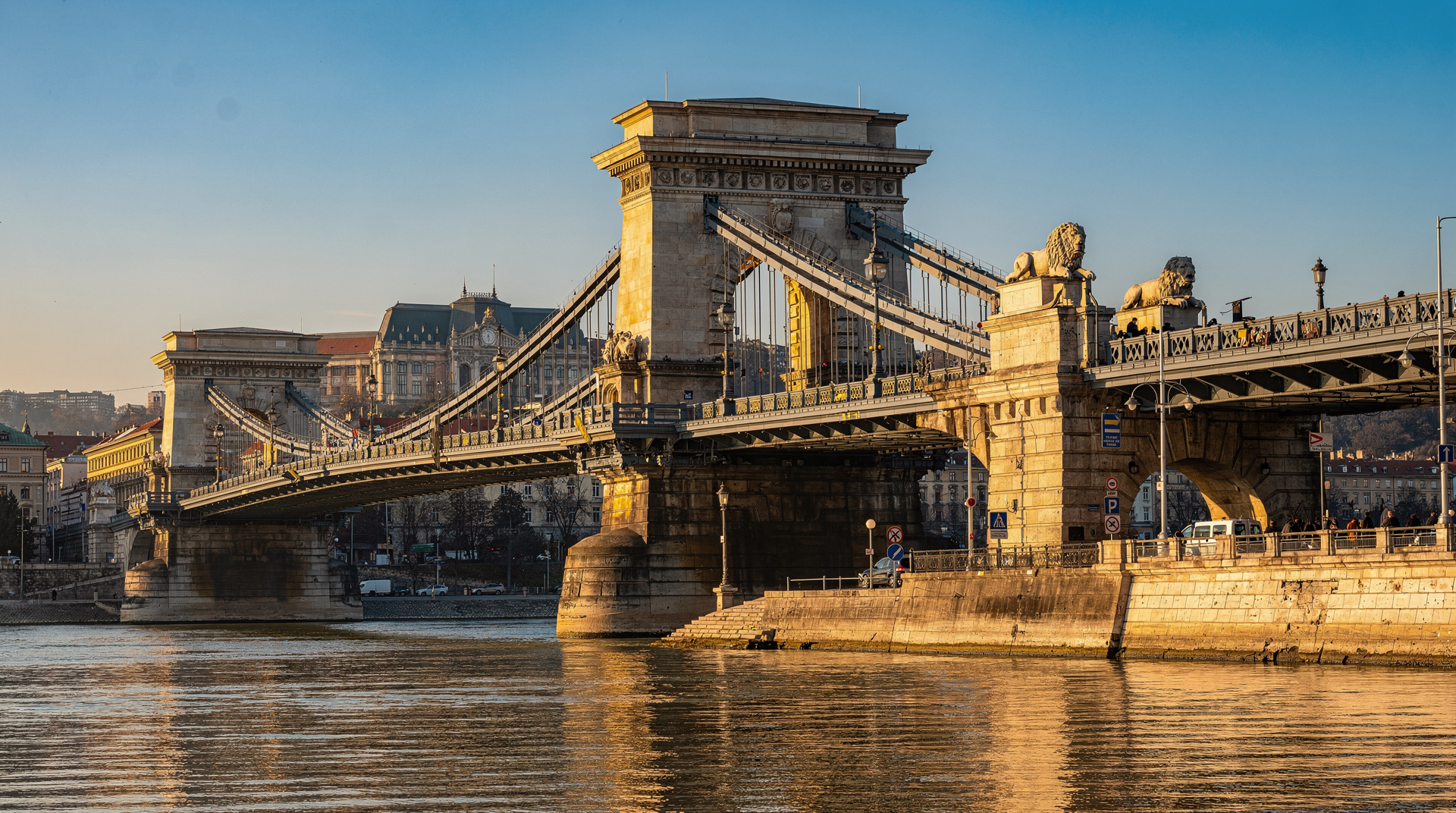
The funicular (Budavári Sikló) operates from Clark Ádám tér, adjacent to Chain Bridge. Running since 1870 (rebuilt after wartime destruction), it climbs 95 metres in 3 minutes to the castle courtyard. Price: 1 400 HUF upward; buy a one-way ticket and walk down via the ramparts stairs. The funicular queue can be 20–40 minutes in peak season; arrive before 9 am or after 5 pm to avoid the worst.
Bus 16/16A (Várbusz) from Széll Kálmán tér (metro M2, red line) runs frequently and deposits you near Matthias Church — less atmospheric than the funicular but faster and free with a transit ticket (500 HUF if bought in advance).
Walking: several stairway routes climb from the Buda riverside. The most pleasant is via the Király Steps from the south end of Castle Hill, emerging near the National Gallery. Allow 15–20 minutes from the river level.
By e-scooter tour: An e-scooter tour of Castle Hill covers Fisherman’s Bastion and the Castle District on electric scooters with a guide — unusual and enjoyable for visitors who want active sightseeing.
Whichever route you choose, think about the direction of travel. Going up by funicular or bus and coming down on foot lets you finish with the views and the river rather than starting with a climb. If you are unsure how the wider transport network fits together, the getting around Budapest guide and the public transport tickets guide explain how the Buda side connects to the rest of the city.
Buda Castle (Royal Palace)
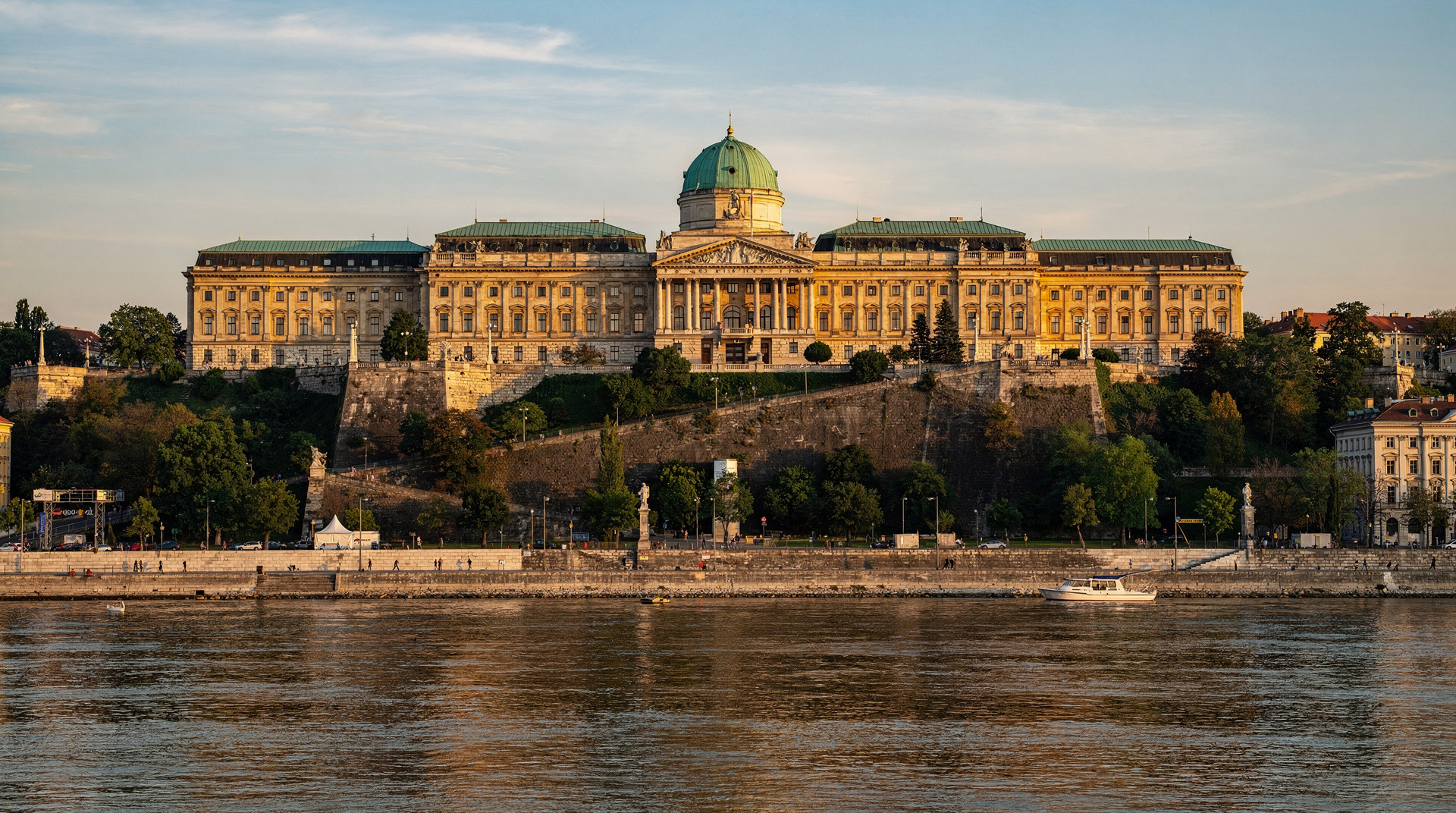
The palace complex at the southern end of Castle Hill is the largest building in Hungary — four wings enclosing a formal courtyard, with the distinctive green-domed lantern tower as its centrepiece. The equestrian statue of Eugène de Beauharnais (a confection — actually Hadik András, corrected in later renovations) guards the main courtyard.
Hungarian National Gallery (Magyar Nemzeti Galéria): The permanent collection spans Hungarian art from the 11th to the 20th century, including:
- Medieval stone carvings from the original Romanesque palace
- Gothic altarpieces from Transylvanian churches
- 19th-century historical paintings, including Munkácsy Mihály’s Christ trilogy (enormous, melodramatic, technically brilliant)
- Hungarian Impressionism and Expressionism (Rippl-Rónai, Ferenczy Károly) Entry: ~3 000–4 500 HUF; closed Mondays.
Budapest History Museum (Budapesti Történeti Múzeum): Located in the palace’s southern wing, with exhibits covering Budapest from Roman times through the medieval period to the 20th century. The medieval palace excavations beneath the building are particularly impressive — original Gothic halls, crypts and cellars preserved under the 20th-century reconstruction. Entry: ~2 000–3 500 HUF.
The courtyard and gardens: free to enter. The Matthias Fountain (a dramatic hunting scene with King Matthias and his retinue, 1904) in the northwest courtyard is the most photographed sculpture. The formal gardens on the Danube-facing terrace have excellent views north toward Parliament.
The medieval town
The northern section of Castle Hill — the medieval Várnegyed — contains the densest collection of historical architecture.
Holy Trinity Square (Szentháromság tér): the open space in front of Matthias Church, with the baroque Holy Trinity Column (1713, commemorating plague victims) at its centre. The square is the social heart of the Castle District.
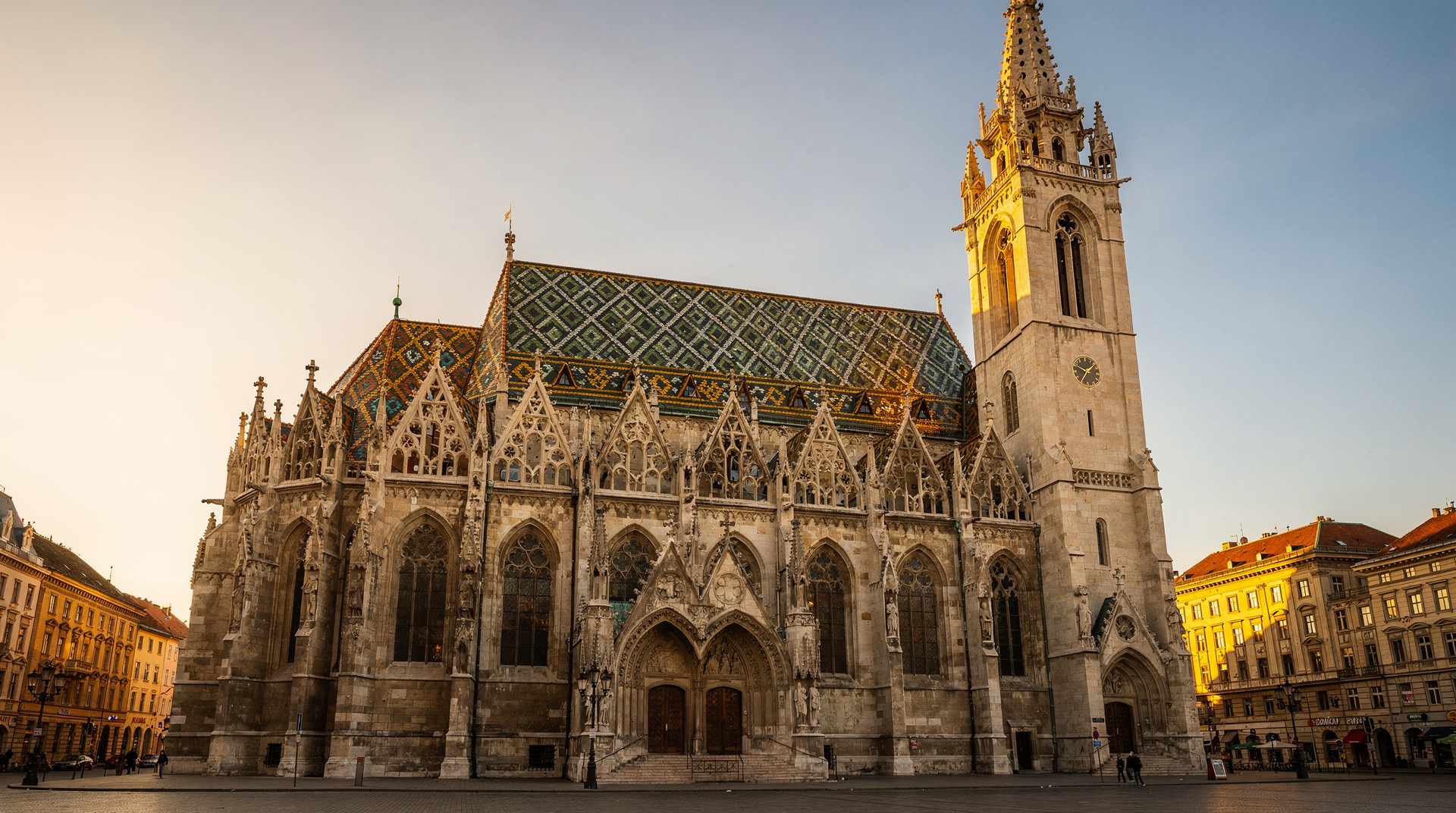
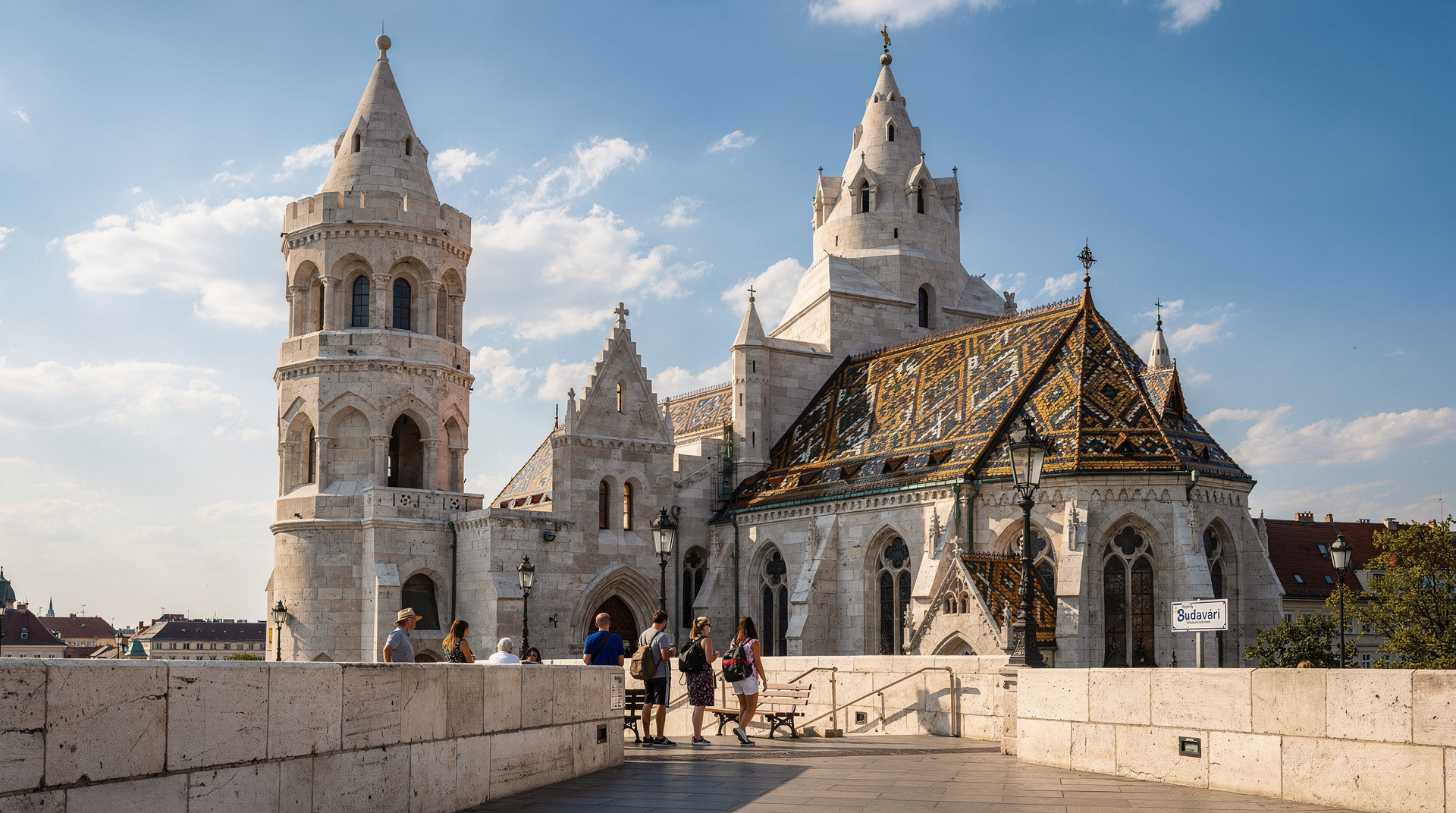
Matthias Church (Mátyás-templom): built in the 13th century, repeatedly rebuilt, its current form dates primarily to the 19th-century restoration by Frigyes Schulek. The tiled roof (diamond pattern in yellow, green and brown) is the building’s visual trademark. Inside, the interior murals by Bertalan Székely and Mór Than in a Byzantine-Romanesque style are unusual and striking. Entry: approximately 2 200–3 500 HUF; see the Matthias Church guide for full details.
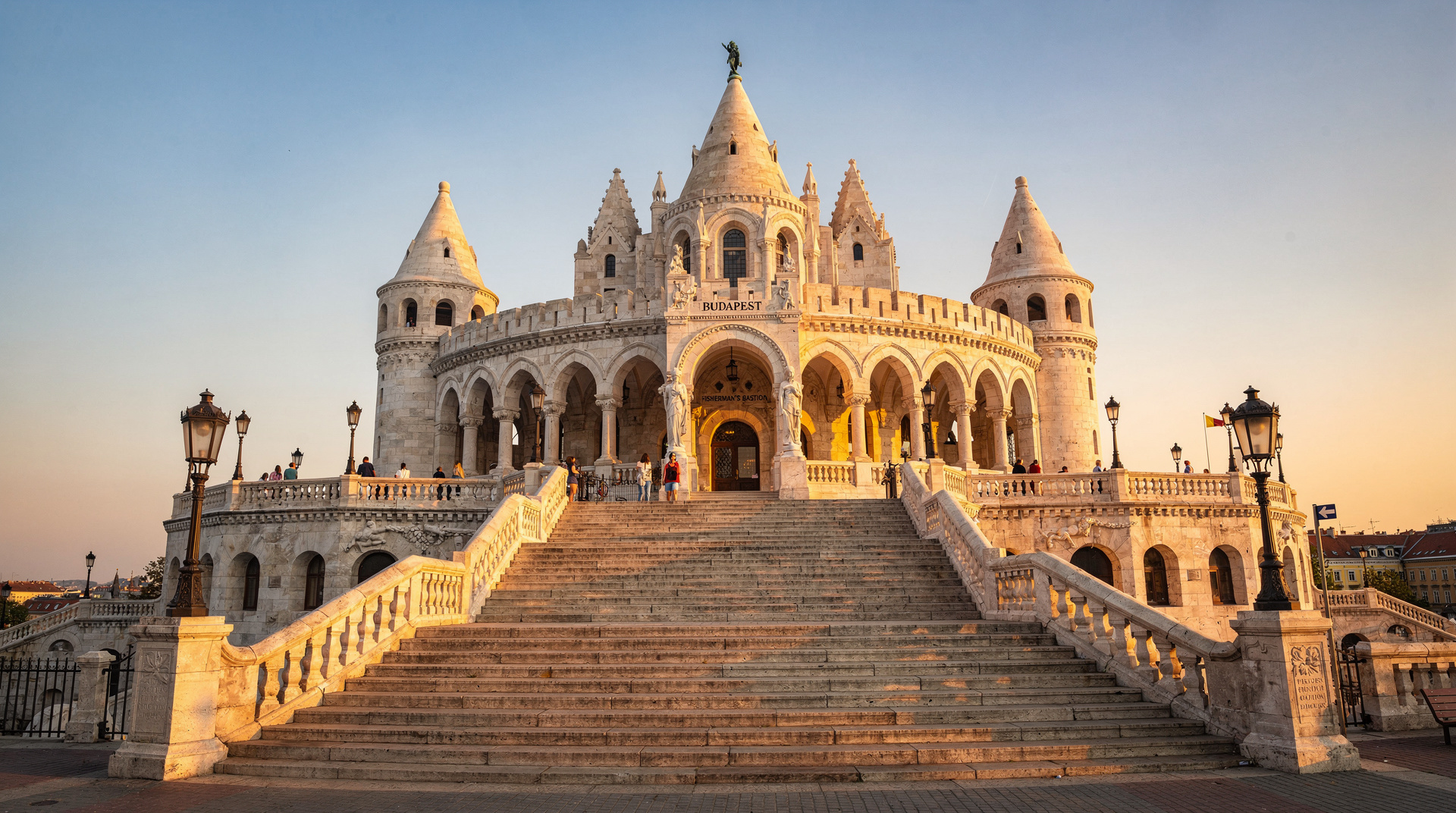
Fisherman’s Bastion (Halászbástya): the neo-Romanesque viewing terraces built 1895–1902 as a picturesque addition to the skyline and a monument to the river fishermen who once defended this section of the medieval walls. The seven conical towers reference the seven Magyar tribes. See the Fisherman’s Bastion guide for viewing times and the entry fee for the towers.
Uri utca and Táncsics Mihály utca: the main medieval streets, with restored Gothic and Baroque facades. Several contain medieval sedilia (window seats) and vaulted cellars visible through ground-floor windows.
The cave system beneath Castle Hill
Budapest sits on a vast network of natural thermal springs and man-made tunnels, and Castle Hill contains a particularly dense section of this underground city. The caves were used as medieval storage, as a labyrinth of cellars for the 15th-century royal court, and most recently as a military hospital during World War II.
The Buda Castle Labyrinth (Budavári Labirintus) in Uri utca is the most developed public cave section, with exhibits on the cave’s history including a recreation of prehistoric cave conditions and a section that displays historically dubious “Vlad the Impaler” memorabilia. The atmosphere is genuine; the historical interpretation is mixed. Entry around 3 000 HUF; worth 45 minutes if you enjoy underground environments. The Buda Castle caves guided tour covers the labyrinth with a guide who separates the genuine history from the more theatrical exhibits.
The Hospital in the Rock (Sziklakórház) in Lovas út (outside the main tourist zone) is a more serious historical museum — the actual WWII bunker hospital beneath Castle Hill, preserved with original equipment, with actors in period costume. This is sobering and fascinating. Entry ~4 000–5 000 HUF; guided tour mandatory.
Evening on Castle Hill
The Castle Hill lights and sights evening tour takes advantage of the spectacular illumination of Matthias Church, Fisherman’s Bastion and the palace after dark. The tourist crowds diminish substantially after 6 pm, and the floodlit stonework has a theatrical quality very different from the daytime experience. This is an excellent alternative for visitors who cannot access the Castle District during peak daytime hours.
Combining Castle Hill with the rest of your trip
Castle Hill works best as a morning activity — the views across the Danube to Parliament are best in morning light, and the tourist density before 10 am is manageable. Pair with an afternoon on the Pest side: Parliament, the Basilica or the Jewish Quarter.
The Castle District neighbourhood guide gives the local context. The top attractions guide places Castle Hill within the broader Budapest sightseeing framework. For a complete two-day Buda itinerary, include Gellért Hill (covered in the Gellért Hill guide) in the afternoon of the same day.
If you are still deciding how Castle Hill fits into your overall plan, the Budapest in one day itinerary and the first-timer highlights itinerary both show how other visitors sequence the Buda and Pest sides. The Buda vs Pest guide is also useful for understanding why the two banks feel so different, and why many travellers dedicate a separate, unhurried block of time to the Buda side.
Practical tips for a smoother visit
Castle Hill is compact, but the cobblestones are uneven and much of the walking is uphill or on stairs, so comfortable shoes matter more than any other piece of preparation. Visitors with limited mobility should read the accessible Budapest guide before planning the route, since the best viewpoints are not always the easiest to reach. Bring water and a light layer: the open terraces catch the wind above the river even on mild days, and there is little shade on the ramparts in summer.
Photography is the main reason many people come, and a little patience pays off. The terraces fill up quickly once the first groups arrive, so the early hours give you the open views, while the evening brings a softer, warmer atmosphere. If photography is your priority, a dedicated outing such as those in the photography tours guide can show you angles you would otherwise miss.
Families with children usually find that the outdoor parts of the hill hold attention better than the museums. The courtyards, towers and ramparts give younger visitors room to move, and the Budapest with kids guide suggests how to balance sightseeing with breaks. Keep one indoor option in mind in case the weather turns, and remember that the caves are cool and dim, which suits some children and unsettles others.
What to eat and drink after the climb
The streets around Holy Trinity Square are busy with cafés and restaurants, and as in any heavily visited spot, the places closest to the main sights tend to charge more for the setting. A short walk away from the square usually brings calmer surroundings. For ideas on where to sit down properly, the best restaurants in Budapest and coffee houses in Budapest guides are better starting points than whatever happens to be in front of you. Treat the visit as a slow morning with a long coffee stop rather than a race between ticket queues.
Museum tickets: worth combining or going selective?
With two major museums (the National Gallery and the History Museum) plus two cave attractions in a small area, it’s tempting to try to see everything in one visit — but that usually means rushing all of it. If your time is limited, choose based on interest rather than completeness: the National Gallery rewards art lovers, the History Museum rewards anyone drawn to the medieval excavations specifically, and the caves suit visitors who want something more atmospheric than a gallery walk. Neither museum is covered by a shared combo ticket with the other, so budget separately for each. The Budapest Card guide is worth checking if you’re planning several sights across the city: the card includes more than 30 free visits and activities, among them the Hungarian National Gallery, the Castle Bus and the Budavári Sikló funicular.
Frequently asked questions about Buda Castle guide
How do you get to Buda Castle?
Three ways: the Castle Hill Funicular (Budavári Sikló) from Clark Ádám tér on the Danube — 1 400 HUF one way, scenic but often queued; the free bus (Várbusz/16A) from Moszkva tér (Széll Kálmán tér); or walking up from the Buda side via the stairways. The funicular is the most atmospheric; the bus is the most practical.What is the best tour of Buda Castle?
A guided walking tour of the Castle District covering Buda Castle, Matthias Church and Fisherman's Bastion is the most efficient way to understand the architecture and history. The caves tour (Budapest's underground cave system beneath the castle) is the most unusual option — a genuine adventure through limestone tunnels.Is the Hungarian National Gallery inside Buda Castle worth visiting?
Yes, for Hungarian art from the 10th century to the present. The collection covers Romanesque stonework, medieval panel painting, 19th-century historical painting (the enormous canvases of Munkácsy Mihály are remarkable) and 20th-century Hungarian modernism. Entry around 3 000–4 500 HUF; closed Mondays.What are the Buda Castle caves?
A 10-km network of natural caves and man-made tunnels runs beneath Castle Hill, used for storage, as a hospital during World War II and as military tunnels. Parts of the system are open for tours (around 2 500–4 000 HUF entry). The underground hospital (Sziklakórház) in the cave system is a separate museum with original WWII medical equipment.How much time should I set aside for Buda Castle and the Castle District?
A half-day (3–4 hours) covers the free elements — the courtyard, gardens, Fisherman's Bastion and Matthias Church exterior — comfortably. Add an hour per museum if you want to visit the National Gallery, the History Museum, or a cave attraction. Trying to fit everything into one visit usually means rushing at least one part; pick based on interest if your time is limited.Is there a combo ticket for Buda Castle's museums?
No shared combo ticket currently covers both the Hungarian National Gallery and the Budapest History Museum — they're ticketed separately, each around 2,000–4,500 HUF. The Budapest Card (from 17,990 HUF for 24 hours) lists the Hungarian National Gallery among its free programmes, so compare it with single tickets if you're visiting several sights across the city.
Top experiences
Bookable activities with verified prices and instant confirmation on GetYourGuide.