Fisherman's Bastion guide: views, entry and how to visit

Is Fisherman's Bastion free to visit?
The lower terrace and main viewing platform are free year-round. The upper towers (the conical towers that make the most dramatic photos) charge an entry fee of approximately 1 000–1 500 HUF per adult. In winter the towers are often free. Early morning visits before 9 am are free and significantly less crowded than daytime.
Budapest’s most photographed viewpoint
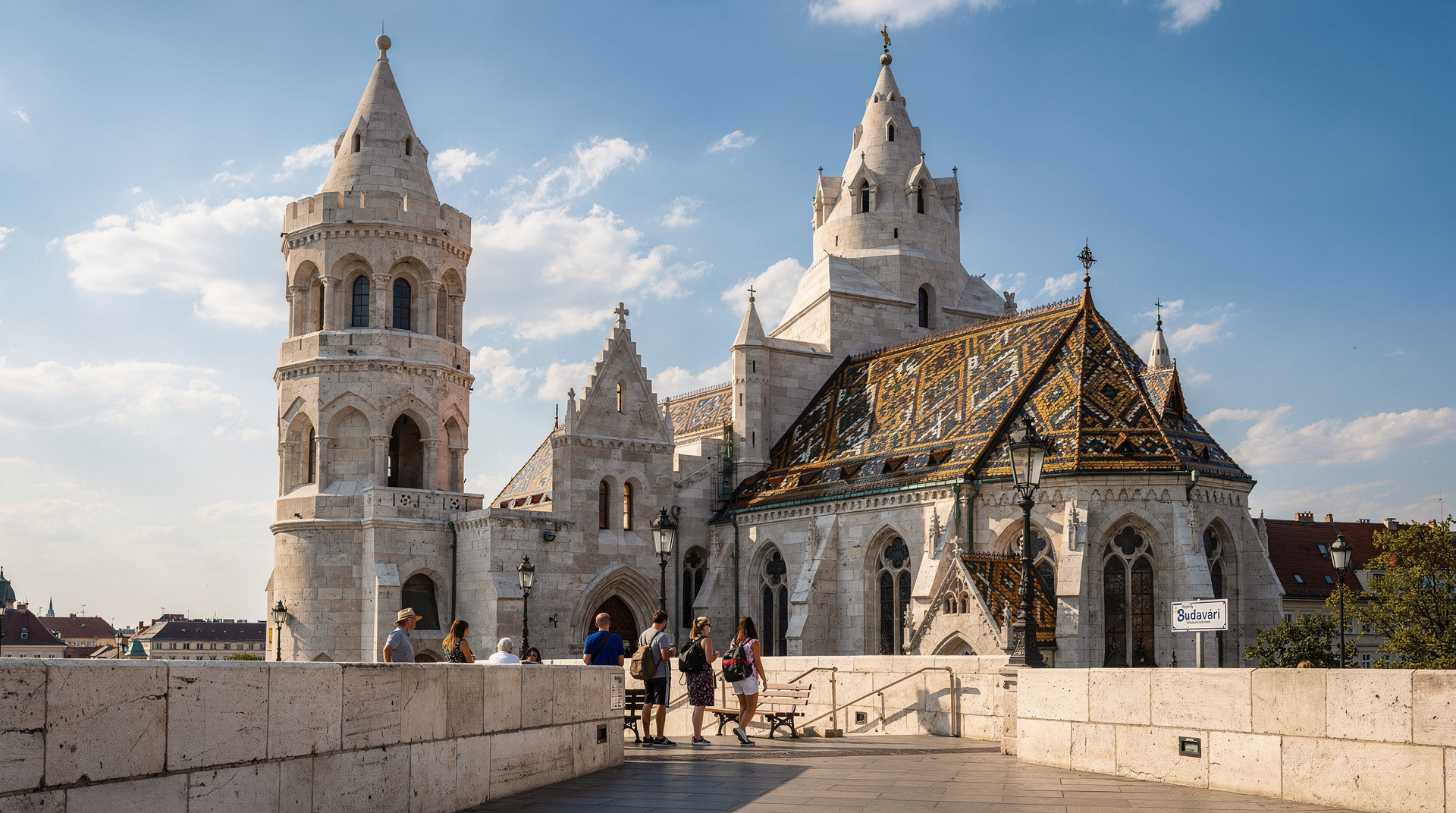
Fisherman’s Bastion (Halászbástya) is the building that anchors most first-time visitors’ mental image of Budapest — white neo-Romanesque arcades and conical towers on Castle Hill, framing the view across the Danube to the illuminated Parliament on the Pest bank.
It is not a real medieval fortification. It was built 1895–1902 as a picturesque addition to Budapest’s skyline, commissioned as part of Hungary’s Millennium celebration (1896, marking 1,000 years since the Magyar tribes settled the Carpathian Basin). Architect Frigyes Schulek designed it in a romantic neo-Romanesque style that was never historically accurate but was very deliberately beautiful.
The result is a viewing platform that has become one of Europe’s most photographed locations — for good reason. The views are extraordinary, the architecture is genuinely elegant, and the proximity to Matthias Church (steps away) makes the whole Castle Hill northern quarter a coherent and satisfying visit.
| Where | Castle Hill, Buda, next to Matthias Church |
| Cost | Terrace free; upper towers around 1,000–1,500 HUF |
| Time needed | 30–45 min, or a full morning combined with the Castle District |
| Getting there | Funicular from Chain Bridge, bus 16/16A, or a 15–20 min walk uphill |
| Best time | Early morning before 9am or evening after 7pm |
Entry and access
The main terrace and lower walkways of Fisherman’s Bastion are free to access year-round. This is where most visitors stand for the iconic photographs.
The upper tower galleries — the enclosed walkways inside the conical towers that give elevated views — charge an entry fee of approximately 1 000–1 500 HUF per adult. This fee applies from roughly April through October; in winter (November–March) the towers are often free. Payment is at a small booth on the terrace; cash and card accepted.
In summer, the terrace opens from around 9 am. The early morning hours before 9 am are technically a grey area — the unmanned entrances are accessible, and this is when the most dedicated photographers arrive for sunrise shots. By 10 am in July and August the terrace is significantly crowded; by noon in peak season it can feel genuinely unpleasant.
An e-scooter tour of the Castle District includes Fisherman’s Bastion and covers more of the hill in the same time as walking — a good choice for visitors who want to see the Bastion alongside the rest of the Castle District rather than treating it as a standalone stop.
The view: what you see
From the main terrace, looking east across the Danube:
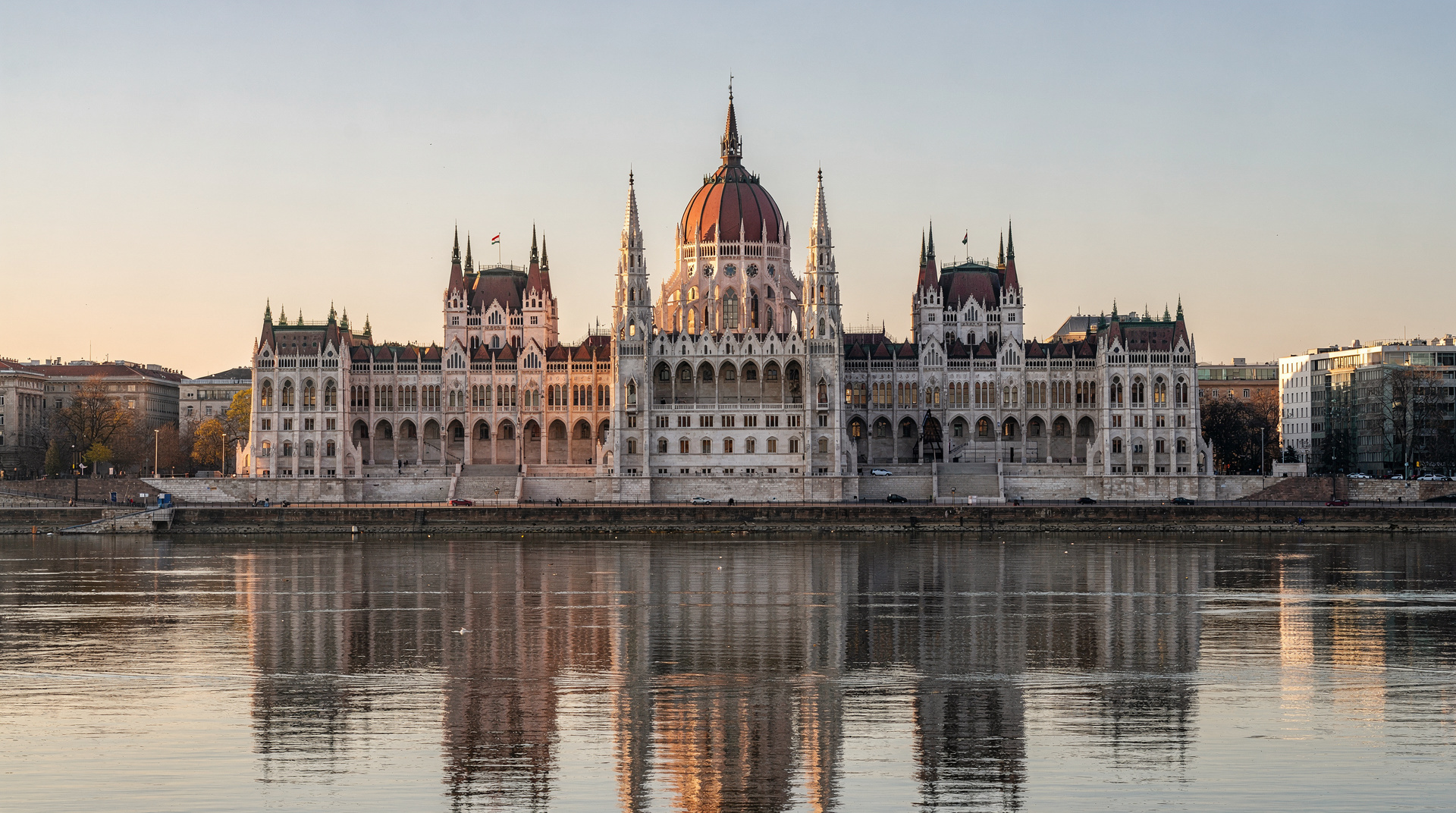
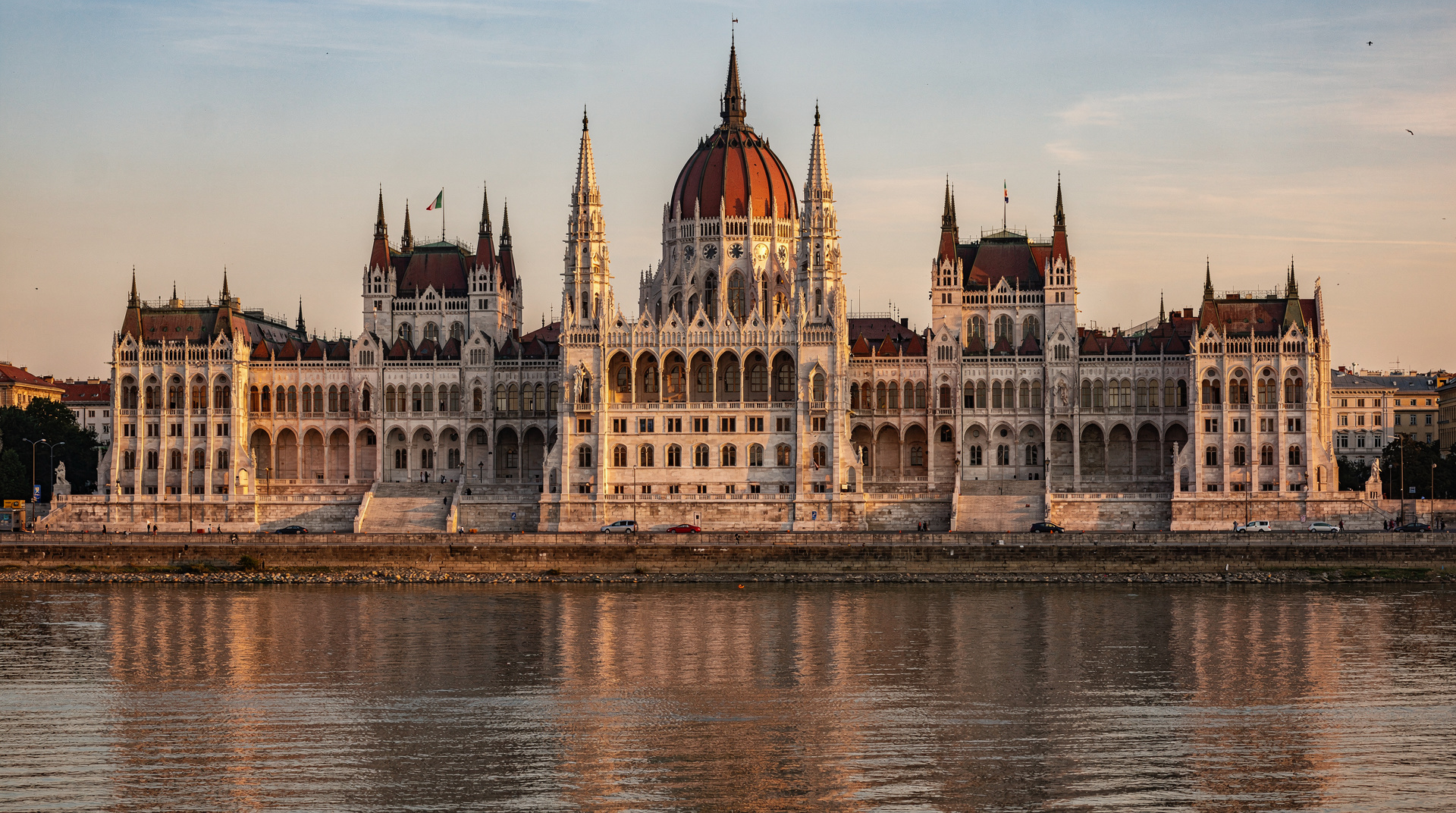
Hungarian Parliament dominates the view — its Gothic Revival spires, central dome and riverfront facade fill the horizon. At night, when the building is illuminated in warm yellow light, the view becomes theatrical.
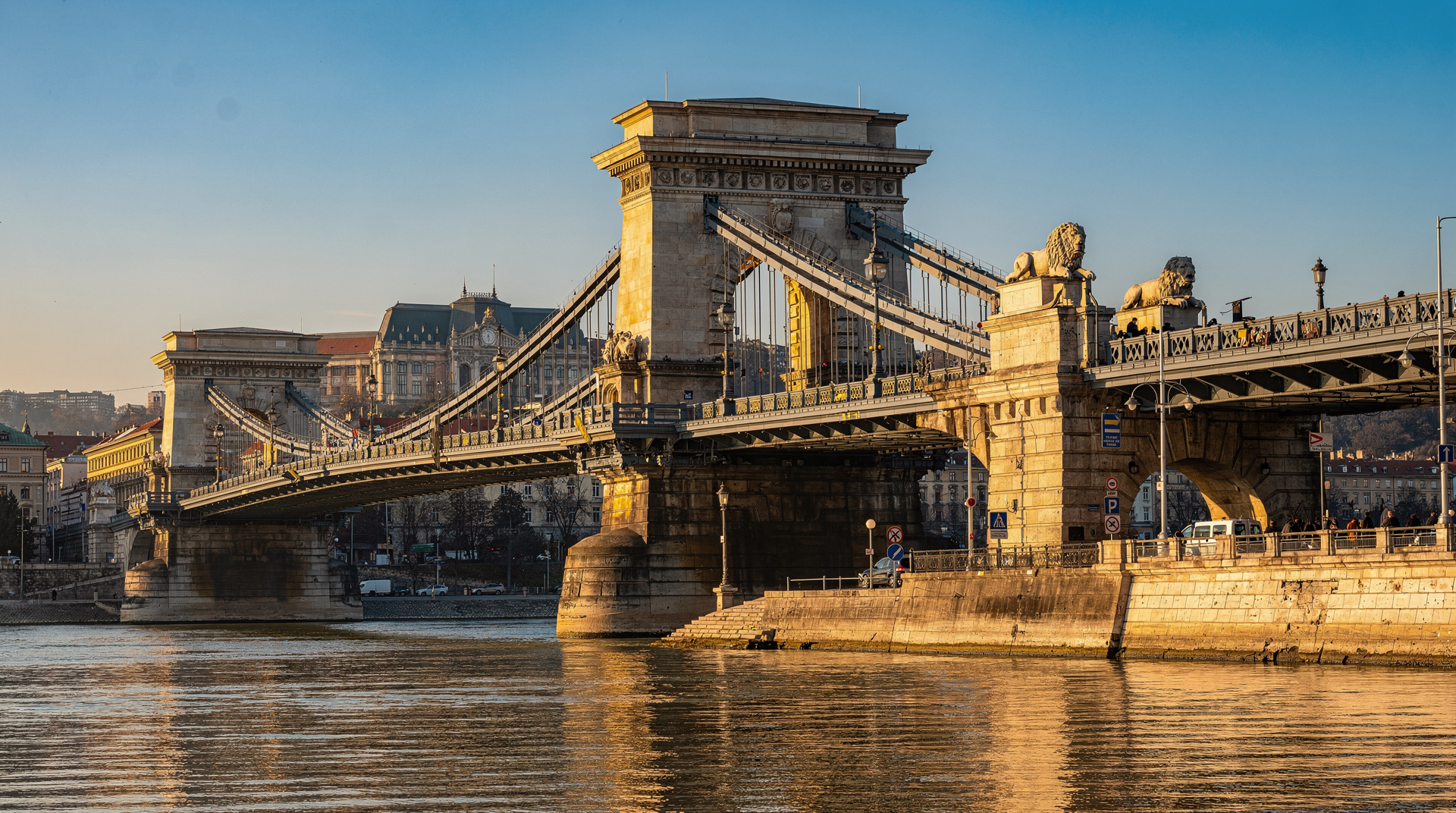
Chain Bridge (Széchenyi Lánchíd) curves across the Danube to the right (southeast), with the lion statues at each end visible from the Bastion height. Beyond the bridge, the Gresham Palace (Art Nouveau, now a Four Seasons hotel) and the InterContinental Hotel bracket the Pest embankment.
Elisabeth Bridge (Erzsébet híd) to the further south is the most modern of Budapest’s central bridges — a cable-stayed suspension bridge built in 1964 on the foundations of the prewar original.
Gellért Hill (Gellért-hegy) rises to the left with the Liberty Statue visible on its summit.
Photography tips
Golden hour: the hour after sunrise casts warm light directly onto the Bastion’s white stone and across the Danube onto Parliament. This requires arriving at dawn (5:30–6:30 am in summer, later in winter).
Cloudy days: Budapest often has soft, diffuse cloud cover in spring and autumn — ideal for photography because the light is even and the Parliament’s details resolve clearly.
Night photography: Bring a tripod (or use a surface) for night shots. Parliament’s illumination is consistent from dusk until midnight approximately. The best night position is from the central arch of the Bastion looking directly northeast.
Composition: the neo-Romanesque arches make natural frames. For a different angle, walk south along the castle rampart walls toward the National Gallery terrace — Parliament remains in view but with more foreground variety.
Avoid midday in summer: the sun is directly overhead, flattening shadows and washing out the architecture. The light is worst between 11 am and 3 pm.
Walking the terraces: a suggested route
Most visitors arrive at the central platform, take the same photograph as everyone else and leave. The Bastion rewards a slower loop. Start at the lower walkways, where the stairs and small landings give you the arcades from below, then climb gradually toward the upper terrace so that the Danube opens up a little at a time instead of all at once.
Take the stairways rather than the main ramp when you can. Each flight changes the angle on the towers, and the stone arches create a different frame at every landing. Pause at the side arches too: they are usually quieter than the central one, and the view of the river and the Pest embankment is just as good.
If you came for the iconic image, do the photograph first, before the terrace fills, and then spend the rest of your time simply looking. The view across the water is wide enough that it rewards a few quiet minutes without a camera. Watching the light change on the Parliament facade, the bridges and the river traffic is part of the point of coming up here.
Why the Bastion looks the way it does
The design borrows freely from Romanesque and Gothic details, which is why it feels both familiar and slightly theatrical. The white stone, the rounded arches, the slender columns and the conical roofs were chosen for picture-book effect rather than defensive logic. Nobody ever needed to hold this wall against an army, and that freedom is exactly what allowed the architect to prioritise views and proportions.
Understanding that helps you enjoy it for what it is. Treat the Bastion as a grand balcony designed for strolling and looking, and the mismatch between its medieval appearance and its late nineteenth-century origins stops being a disappointment and becomes part of its charm. For the real medieval and later layers of the hill, the Buda Castle guide and the Hungarian history primer give the longer story.
Details worth noticing
- The statue of King Stephen I stands on the terrace beside the Bastion, with Matthias Church rising directly behind it. It is a good landmark for meeting a group or orienting yourself.
- The colonnades are carved with fine stonework that is easy to miss when you are focused on the river. Look up and along the arcades rather than only out at the view.
- The towers each have their own character from below, so a quick walk around the outside gives you a better sense of the composition than staying on the platform.
- The surrounding lanes of the Castle District, with their pastel houses and small courtyards, are worth a few minutes before or after your visit.
Planning your visit around the crowds
The terrace is small relative to its fame, so the experience depends heavily on timing. Quiet hours feel like a different attraction: you can stand at an arch as long as you like, move freely between viewpoints and hear the city below. At peak hours you will be moving with the flow of groups and waiting for a clear patch of railing.
If you can only visit in the middle of the day, do not abandon the plan. Go anyway, keep your expectations modest for the photographs, and use the time for the architecture and for the neighbouring church. Another option is to see the Castle District in the morning and come back at the end of the day, when the mood shifts and the crowds ease. The best time to visit Budapest guide helps you choose the season that suits your trip as a whole.
The Bastion after dark
Evening is when many visitors find the Bastion most memorable. The stone glows, the river reflects the lights of Pest and Parliament becomes the centrepiece of the skyline. It is a calm, romantic atmosphere that suits couples and solo travellers alike, and it pairs naturally with a slow dinner afterwards.
If you prefer to see it with a guide, an evening walk on Castle Hill is a relaxed way to see the illuminated hilltop without worrying about the route. For a longer overview of the central districts, a guided walk through the city centre places the Bastion’s view in context by showing you the buildings you were looking at from above. Couples planning a special evening can also look at the romantic Budapest guide, and the night cruise guide shows the same Parliament from the water.
Making it part of a bigger day
Because the Bastion is compact, it works best as one stop within a wider plan. A few easy ways to build a day around it:
- A Castle Hill morning: the Bastion, Matthias Church and the lanes of the Castle District, followed by a walk toward the palace.
- A views day: pair it with Gellért Hill and the Citadella for the opposite perspective, looking back at Castle Hill from across the river.
- A bridges day: walk down toward the Chain Bridge and continue into Pest.
- A short stay: if you only have a day or two, the one-day itinerary and the first-timer highlights plan both include the hill.
Visitors who prefer to cover more ground quickly can compare the options in the tuk-tuk and e-scooter tours guide or the best walking tours in Budapest.
Practical comfort tips
Wear comfortable shoes: the stone steps and cobbled lanes are pleasant but uneven, and the climb is part of the visit. Bring a light layer even in warm months, since the terrace is exposed and the breeze can be noticeable. If you are travelling with children or anyone who finds stairs difficult, check the accessible Budapest guide before you decide how to reach the terrace. Keep an eye on your belongings in the busiest hours, as in any popular viewpoint, and read the common scams guide if you want a quick refresher on what to watch for around the major sights.
Seasonal differences
Spring and autumn: The most comfortable seasons for a longer visit — mild temperatures, softer light for photography, and noticeably thinner crowds than peak summer. The towers’ entry fee applies in this window, so budget accordingly.
Summer: Long daylight hours mean sunrise visits start very early (before 6am in June), but reward you with an almost empty terrace. Midday from June to August is the most crowded period of the year — cruise groups and coach tours arrive in waves from around 10am.
Winter: The towers are often free to enter, and the terrace can feel almost private on a cold weekday morning. Snow on the white stone and the conical towers is genuinely striking, though the Danube views are shorter-lived with earlier sunsets. See Budapest in winter for what else changes about the city in the colder months.
Combining Fisherman’s Bastion with Matthias Church
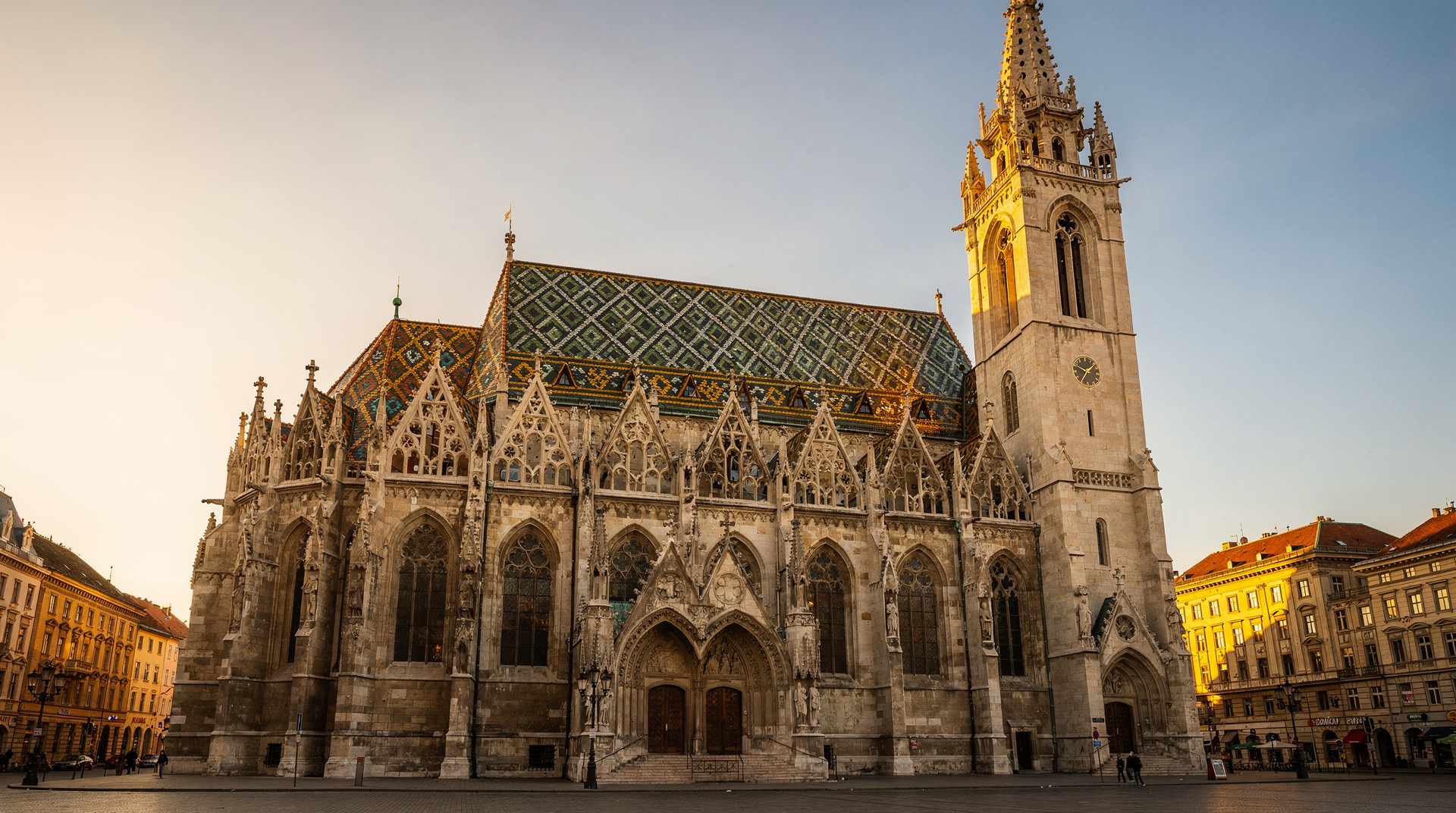
The two buildings are steps apart — Matthias Church is directly behind the Bastion’s central platform. A combined visit is the natural approach.
Matthias Church (detailed in the Matthias Church guide) charges approximately 2 200–3 500 HUF entry and requires 45–60 minutes inside. The interior murals are extraordinary. Budget a half-morning for Bastion plus Church combined.
Getting there
Funicular from Chain Bridge: 1 400 HUF one way, 3-minute ride, scenic. Queue up to 30–40 minutes in peak season.
Bus 16/16A from Széll Kálmán tér (metro M2, Batthyány tér direction): frequent, free with any transit ticket. Deposits you near the Matthias Church end of the Castle District.
Walking: stairs from the Buda riverside (near the southern end of Chain Bridge) climb to the castle terrace level in 15–20 minutes.
See the Buda Castle guide for the full range of transport options to Castle Hill and what else to combine in the district. The Castle District neighbourhood guide maps the streets between Fisherman’s Bastion, Matthias Church and the Royal Palace.
For the broader sightseeing context, the top attractions guide places Fisherman’s Bastion within a planned multi-day itinerary. Pair your Castle Hill morning with an afternoon on the Pest bank — the Hungarian Parliament or St Stephen’s Basilica are both easily reached via Chain Bridge on foot or by metro from Batthyány tér.
If you want a structured half-day covering the Bastion, the Royal Palace and the surrounding streets with a guide, the classic Buda Castle walking tour takes in all three without you needing to plan the route yourself.
Frequently asked questions about Fisherman's Bastion guide
What are the best times to visit Fisherman's Bastion?
Sunrise is the best time — the light on Parliament across the Danube is extraordinary, and the tourist crowds are absent. Late evening after 7 pm in summer also works well, especially with the Bastion illuminated. Avoid 10 am–4 pm in July and August, when the terrace can be genuinely uncomfortably crowded.Can you visit Fisherman's Bastion at night?
Yes. The Bastion is accessible in the evenings and the illuminated view of Parliament at night is one of Budapest's best. The upper towers may be closed after a certain hour; the main terrace and central stairways remain accessible. Check the notice board at the entrance for current closing times.What is the history of Fisherman's Bastion?
Despite looking medieval, Fisherman's Bastion was built 1895–1902 to plans by Frigyes Schulek as part of Hungary's Millennium celebrations (1896, 1000 years of the Magyar conquest). The name comes from the fish market and the guild of fishermen who defended this section of the medieval city walls. The seven towers represent the seven Magyar tribes that arrived in the Carpathian Basin in 896.Is Fisherman's Bastion good for photography?
It is one of the best photography spots in Budapest. The arched Neo-Romanesque colonnades frame Parliament perfectly. Golden hour light (1 hour after sunrise, 1 hour before sunset) is the ideal time. The statue of King Stephen I (Árpád-házi István) in front of Matthias Church is also a popular foreground element.How long should I spend at Fisherman's Bastion?
Budget 30–45 minutes for the terraces alone, or a full morning (2–3 hours) if combining it with Matthias Church and a walk through the rest of the Castle District. Photographers wanting sunrise light should allow extra time to explore the different arches and angles before the terrace fills up.Is Fisherman's Bastion crowded?
Yes, especially between 10am and 4pm from May to September, when tour groups and cruise-day visitors concentrate on the main terrace. Early morning before 9am or the evening after 7pm are noticeably calmer, and winter visits are quiet even at midday.
Top experiences
Bookable activities with verified prices and instant confirmation on GetYourGuide.