Communist Budapest: traces of the Soviet era in the city today
What traces of communist-era Budapest remain today?
Budapest retains significant physical traces of communism: Memento Park holds 42 removed Soviet-era statues; the House of Terror on Andrássy Boulevard was the secret police headquarters; brutalist housing estates ring the city; and street names, architecture and plaques document the period across many districts.
A city shaped by 40 years it has not forgotten
Budapest in 2026 presents a seamless face of Habsburg grandeur, thermal baths and ruin bars. The trams run on 19th-century lines. The boulevards follow the radial pattern laid down by the 1870s urban plan. The tourist Budapest is overwhelmingly pre-communist in its visible architecture.
But 40 years of Soviet-backed rule — from 1948 to 1989 — left marks that are visible if you know where to look, and audible in the conversations of Hungarians who lived through it. This guide maps what remains and explains what it means.
| Main sites | House of Terror, Memento Park, Szabadság tér, Kerepesi Cemetery |
| Cost | House of Terror ~3,000 HUF; Memento Park ~4,500 HUF incl. shuttle |
| Time needed | Half a day for House of Terror + Jewish Quarter; a further half-day for Memento Park |
| Getting there | House of Terror on metro M1; Memento Park by dedicated shuttle from Deák Ferenc tér |
| Best approach | Go with a guide for context, or read up beforehand — the material is dense |
The communist period in brief
Hungary became a Soviet satellite through a gradual process. Soviet forces occupied the country in 1944–45, driving out Nazi Germany and its Hungarian Arrow Cross allies. The Soviets then oversaw the installation of a communist government, with Mátyás Rákosi becoming effectively the Hungarian Stalin by 1948. Nationalisation, collectivisation, show trials and the ÁVH secret police followed the Soviet model closely.
The 1956 revolution was the decisive rupture. For 12 days, Hungary appeared to have broken free. Then the Soviet tanks returned. The aftermath — executions, deportations, hundreds of thousands fleeing as refugees — silenced resistance for a generation.
János Kádár, who came to power on the Soviet tanks in 1956, eventually developed a form of communism that Hungarians called “goulash communism” — more consumer goods, more tolerance of private enterprise, a relative loosening of cultural controls. Hungary became one of the most liveable Eastern Bloc countries by the 1970s–80s. The transition to democracy in 1989 was negotiated rather than revolutionary.
What was removed after 1989
The immediate post-communist years brought a systematic audit of public space. Statues, plaques, building dedications and street names associated with the Soviet period were removed or renamed. The process was contested and sometimes slow, but by the mid-1990s most explicit Soviet symbolism had been cleared from the city centre.
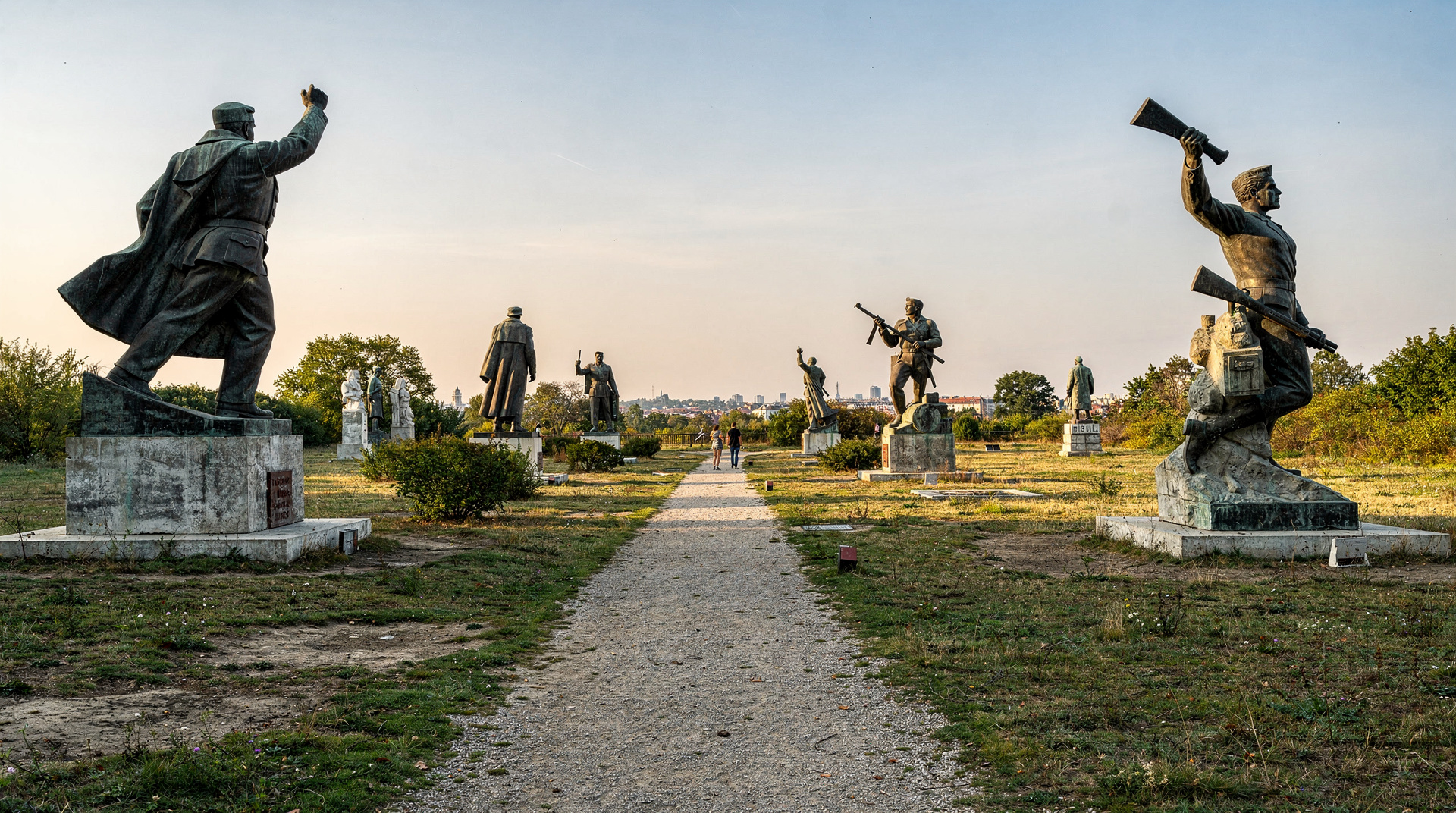
The statues went to Memento Park — 42 monumental works including Lenins, Red Army liberation monuments, and socialist realist worker figures. The park opened in 1993 and remains one of Europe’s most thoughtful responses to the question of what to do with the physical residue of a defeated ideology.
Street names were a complex process: Marx tér became Vörösmarty tér. Lenin körút became Teréz körút. Felvonulási tér (Parade Square, where May Day marches were held) is now Heroes’ Square — though Heroes’ Square had always been its name; the communist era had temporarily renamed it. Some renaming remains contested in the outer districts.
What remained: the House of Terror
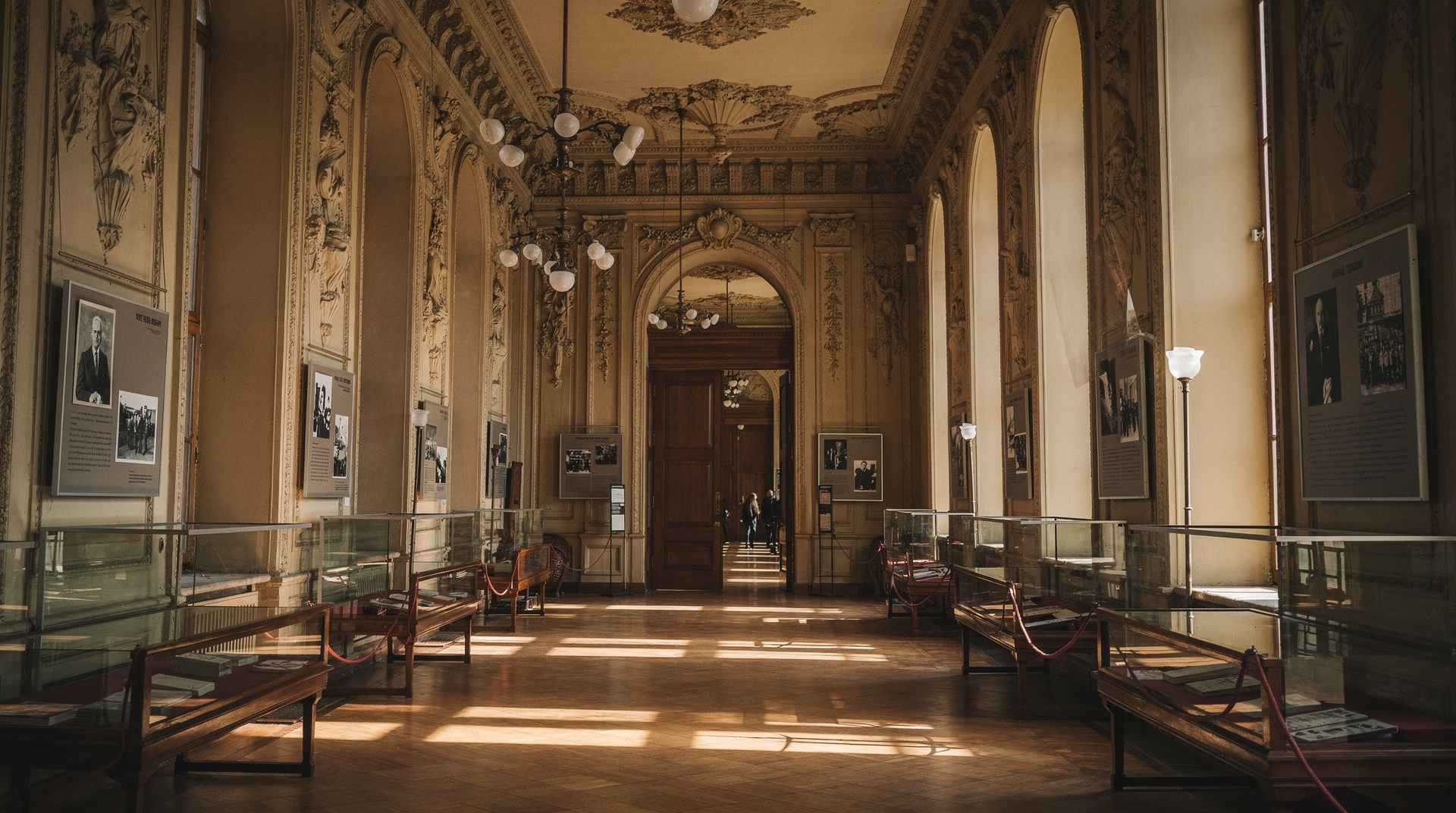
At Andrássy Boulevard 60, the building that served as headquarters first for the Arrow Cross and then for the ÁVH communist secret police was preserved intact and converted into the House of Terror museum. It opened in 2002.
The museum documents both regimes’ crimes and methods with considerable directorial force — dramatic lighting, survivor testimony, the preserved basement interrogation cells. It is the most important site for understanding the human mechanics of communist-era terror in Hungary.
A guided tour — such as the communist history guided tour — pairs the museum with the surrounding streets and provides the political narrative that connects the building to the city’s broader history.
Physical traces in the city
The panelháza housing estates: Beyond the tourist centre, Budapest is ringed by the large-panel prefabricated apartment blocks (panelház) built in their hundreds of thousands to house the rapidly urbanising working population from the 1960s to the 1980s. Kispest, Újpalota, Csepel, Kelenföldi lakótelep — these estates are not destinations in themselves, but riding trams or the metro to the outer districts gives a sense of the city that exists alongside the tourist Budapest. Around 700 000 people in Greater Budapest live in panelházak today.
The Kelvin tér area: The metro M2 line (red line) was built from 1970 to 1984, and its stations have a distinctive Soviet modernist character — functional, low-lit, utilitarian. The contrast with the Millennium Underground M1 (1896, the first metro on the European continent) is instructive.
The Szabadság tér Soviet memorial: In the centre of Szabadság tér (Liberty Square), behind the US Embassy, stands a Soviet memorial commemorating the Red Army soldiers who died liberating Hungary in 1945. It has survived intact, protected by bilateral agreement, despite periodic political pressure for its removal. A right-wing counter-memorial was installed nearby in 2014 — a controversial monument to Hungarian victims of German occupation that critics argued obscured Hungarian collaboration in the deportation of Jews. The two monuments face each other across the square in a permanent argument.
Andrássy Boulevard: The UNESCO World Heritage boulevard has markers beyond the House of Terror. The Hungarian State Opera at number 22 was nationalised under communism and subjected to Soviet-era programming constraints; its eventual restoration is a post-1989 success story. Walking the full length of Andrássy from Deák tér to Heroes’ Square traces both the 19th-century aspiration and the 20th-century repression that followed.
Guided tours: connecting the dots
The House of Terror guided tour covering Nazi and Soviet history provides the most thorough introduction to both periods and their physical legacy in the city. A guided tour can move between interior museum exhibits and the surrounding streets in ways that individual visiting cannot.
For a broader sweep of communist-era sites — statues, housing, signage, memorials — a general city tour with historical interpretation covers more ground. The best walking tours Budapest guide includes operators who specialise in 20th-century history.
House of Terror vs Memento Park: which to prioritise
Visitors with limited time often ask which of the two flagship communist-era sites matters more. They are complementary rather than interchangeable, and the honest answer depends on what you want from the visit.
| House of Terror | Memento Park | |
|---|---|---|
| Focus | The mechanics of terror: interrogation, surveillance, both Nazi and Soviet periods | The symbolism of the regime: monumental statues, propaganda aesthetic |
| Location | Central, Andrássy Boulevard, easy metro access | 10km southwest, requires a dedicated shuttle or taxi |
| Emotional tone | Heavy, dramatic, deliberately unsettling | Reflective, almost surreal, occasionally darkly funny |
| Time needed | 1.5–2 hours | 2–3 hours including transport |
| Best for | Visitors wanting the human and political detail | Visitors wanting the visual, symbolic legacy |
If you can only do one, the House of Terror gives the fuller picture and is far easier to reach. Memento Park rewards visitors who have already read the Hungarian history primer or seen the House of Terror first — the statues land harder with the context already in place.
The 1956 legacy
The revolution of 1956 is commemorated throughout Budapest, though the memorials are sometimes subtle. The most visible:
October 23 as national holiday: The date of the revolution’s start is now Hungary’s third national holiday (alongside March 15, the 1848 revolution, and August 20, St Stephen’s Day). State ceremonies are held annually.
The Nagy Imre statue: Near the Parliament, a bronze statue of Imre Nagy — the reform communist prime minister executed in 1958 for his role in the revolution — stands on a bridge, looking towards Parliament. He is depicted walking forward, then stepping off the end of the bridge into open space — the moment of irrevocable commitment.
The Corvin Cinema memorial: The Corvin Cinema in Józsefváros (District VIII) was one of the main resistance strongholds during the 1956 fighting. A memorial wall with portraits of fighters stands outside. It is one of the most specific physical links to the revolution in the city.
Kerepesi Cemetery: The national cemetery in District VIII contains the plot where 1956 fighters and victims of communist repression are buried, including Imre Nagy’s reinterment grave (his body was recovered in 1989 from an unmarked grave after decades). The cemetery is vast but a map at the entrance identifies the key sites.
How to read the city as you walk it
Communist Budapest rarely announces itself. Unlike a museum, the city asks you to notice small things: a plaque with a name chiselled out and replaced, a boulevard whose old name your older hosts still use out of habit, a block of flats that looks nothing like the façades in the postcards. Slowing down is the most useful skill here. If you are already exploring the Pest side on foot, the downtown Pest district and the grand avenues around it are a good place to practise, because the layers of history sit so close together.
A few habits help. Ask your guide, your host or the person at the café counter what a street used to be called; many Hungarians enjoy the question and the answers are often more vivid than any plaque. Look at the date on a building rather than only its style. And keep in mind that the same site can carry several meanings at once: a square can hold a Soviet memorial, a counter-memorial and a café terrace within a few steps of each other.
Pairing communist sites with the rest of your trip
Few visitors come to Budapest only for this subject, and it fits more easily into a wider plan than you might expect. The central sites are close to the main sightseeing routes, so a morning of history does not have to cost you an afternoon in the thermal baths. If you are still deciding how many days to give the city, the how many days in Budapest guide helps you weigh heavier cultural time against lighter experiences.
For a first visit, the first-timer highlights itinerary shows where a history-minded morning can slot in beside the big landmarks. If your plans are tighter, the Budapest 2-day itinerary leaves room for one focused visit rather than several rushed ones, and the Budapest museums guide helps you pick which single museum deserves that slot. Travellers who want the wider picture of the capital before narrowing down can start with the Budapest neighbourhoods guide.
It is also worth balancing the emotional weight. The House of Terror in particular is intense, and many people find that a lighter activity afterwards, such as a stroll along the Danube or a quiet coffee, makes the day easier to carry. The coffee houses guide is a good source of calm places to sit and process what you have seen, and the Heroes’ Square and City Park guide pairs naturally with the far end of Andrássy Boulevard.
Talking about this history with Hungarians
Opinions about the communist period are not uniform, and you will hear a range of them. Some people remember the security of guaranteed work and cheap housing; others remember surveillance, shortages and fear; many hold both memories at once. Treat these conversations as listening opportunities rather than debates. Asking open questions, and accepting that family stories differ, tends to produce far more interesting exchanges than offering a verdict.
The same sensitivity applies at the sites themselves. The House of Terror, the cemetery plots and the 1956 memorials are places of mourning for many families, so photograph respectfully and keep your voice down. Memento Park invites a lighter, more ironic reading of the statues, yet even there the humour is the humour of people who lived under the system, not an invitation to mock it.
Connecting to other city history
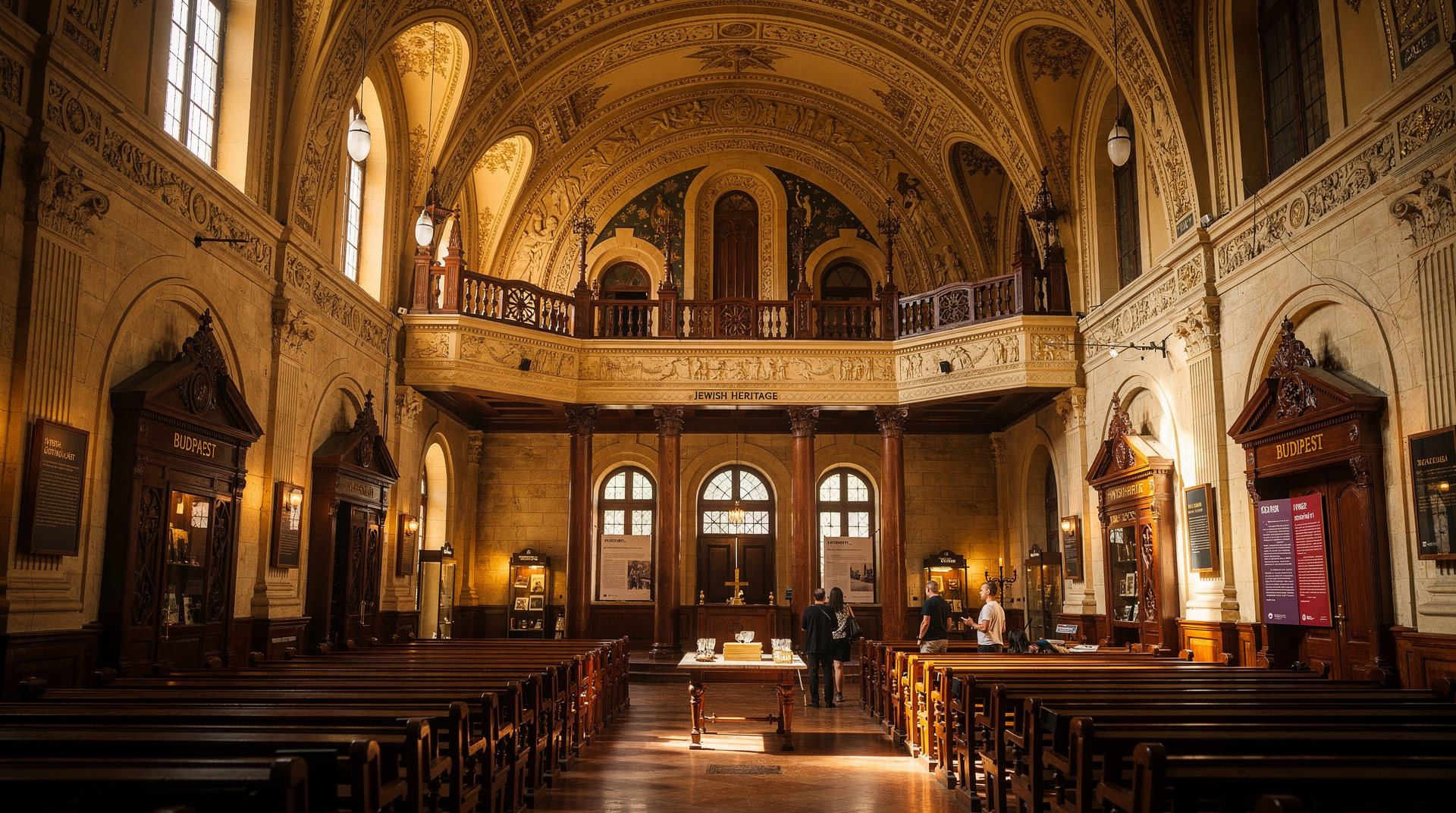
The communist period cannot be understood without the preceding Nazi occupation (covered in the Jewish Quarter heritage guide and the Dohány Street Synagogue guide). The Arrow Cross and the ÁVH occupied the same building; the Holocaust and the Stalinist show trials used similar techniques of dehumanisation and bureaucratic murder. The Hungarian history primer traces the full arc.
For visitors building a cultural day: start at the House of Terror in the morning, walk to the Jewish Quarter after lunch, and take the afternoon shuttle to Memento Park before returning to the city. This covers three of the four main 20th-century heritage sites in one day. The fourth — the Kerepesi Cemetery — works best as a standalone visit.
The Budapest 3-day itinerary suggests how to integrate this cultural strand alongside the thermal baths, the Castle District and the Danube that draw most visitors to the city.
Frequently asked questions about Communist Budapest
How long did communism last in Hungary?
Hungary was under Soviet-backed communist rule from 1948 to 1989 — approximately 40 years. The transition to democracy began with the Hungarian Roundtable Agreement of 1989 and the first free elections in April 1990. Hungary had been a de facto Soviet satellite since Soviet occupation in 1944–45.What happened during the 1956 Hungarian Revolution?
On October 23, 1956, mass protests in Budapest against Soviet rule turned into an armed uprising. Insurgents seized weapons, toppled the Stalin statue, and briefly drove Soviet forces out of the city. A reformist government under Imre Nagy declared Hungary's withdrawal from the Warsaw Pact. On November 4, 1956, the Soviet Union sent tanks back in. At least 2 500 Hungarians were killed; 200 000 fled as refugees. Imre Nagy was later executed. The revolution was a defining moment in Cold War history.What is Memento Park and how do I get there?
Memento Park is an open-air museum 10 km southwest of Budapest that houses 42 monumental Soviet-era statues removed from the city's public spaces after 1989. A dedicated shuttle bus runs from Deák Ferenc tér, or you can join a guided tour. See the full Memento Park guide for logistics.What was the ÁVH and why does it matter?
The ÁVH (Államvédelmi Hatóság) was Hungary's communist secret police, modelled on the Soviet MGB/NKVD. Operating from 1948 to 1956, it arrested, tortured and executed thousands of Hungarians including party members suspected of disloyalty, Catholics, and political opponents. Its headquarters at Andrássy Boulevard 60 is now the House of Terror museum. The ÁVH's methods created a pervasive climate of fear that shaped Hungarian society for decades.Which communist-era buildings are worth seeing in Budapest?
The most architecturally significant communist-era building in central Budapest is the former Hotel Olympia (now the Corinthia) on Erzsébet körút — though most of what survived the communist period in the centre dates from the 19th century. More representative are the Kispest and Újpalota housing estates (panelház, panel-block apartments) on the outskirts, still home to hundreds of thousands of Budapestians. The Keleti railway station's wartime and postwar additions also reflect the period.
Top experiences
Bookable activities with verified prices and instant confirmation on GetYourGuide.