Memento Park Budapest: the guide to visiting communist statues
What is Memento Park and how do I get there?
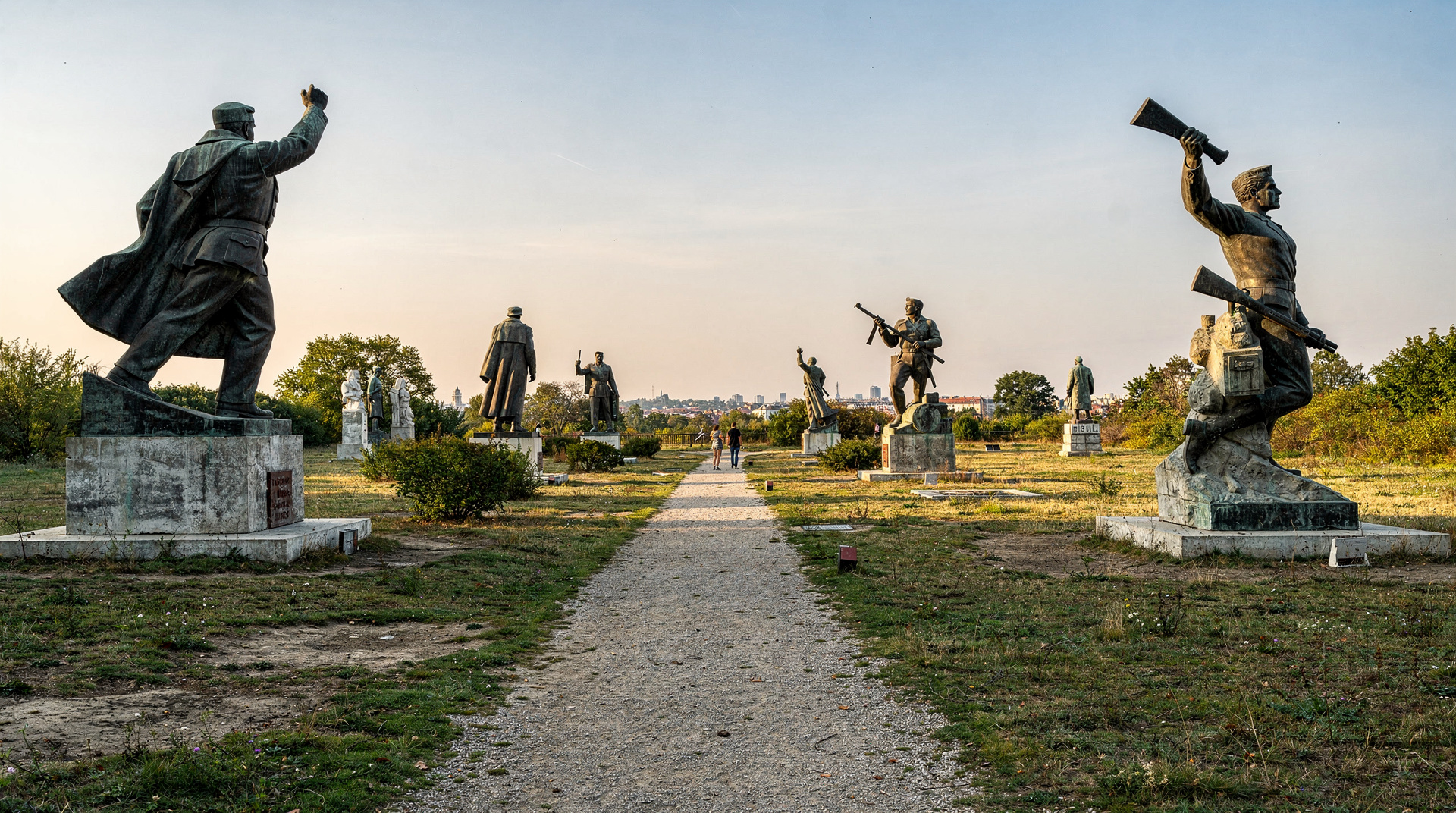
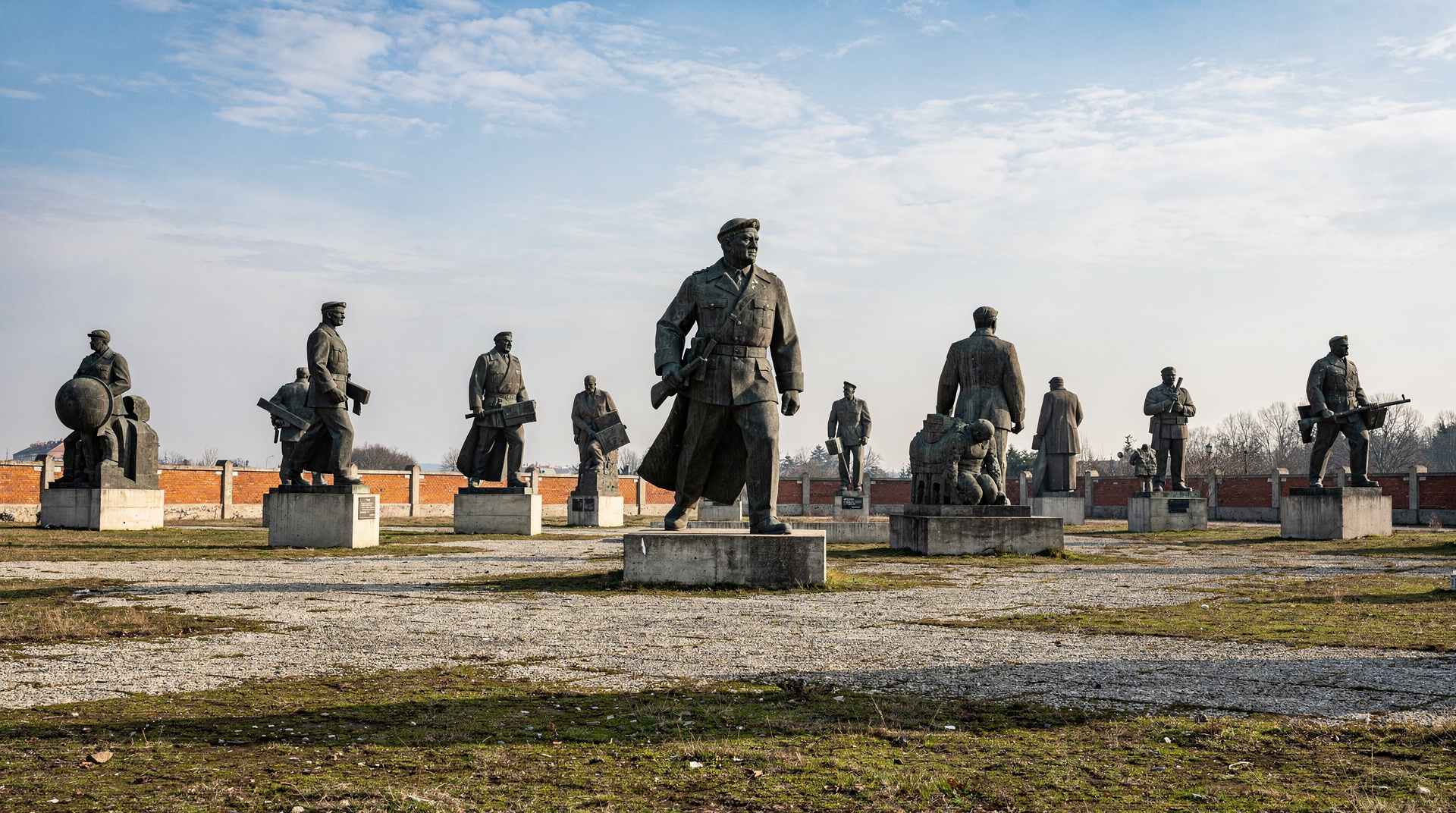
Memento Park is an open-air museum 10 km southwest of central Budapest, housing 42 monumental statues removed from Budapest's public spaces after the fall of communism in 1989. A dedicated bus departs from Deák Ferenc tér daily. Entry costs around 3 000–4 500 HUF.
When the statues couldn’t be destroyed
In 1989, the Berlin Wall came down. In Budapest, something different happened with the monuments of the communist era. Unlike in other Eastern Bloc countries, where statues of Lenin and Soviet soldiers were toppled by angry crowds, Hungary’s newly democratic city government debated what to do about the hundreds of monumental artworks installed under the previous regime.
The decision was distinctively Hungarian: move them rather than destroy them. An open-air museum on the southwestern edge of the city became the repository. Memento Park (Szoborpark) opened in 1993 with 42 statues, reliefs and monuments relocated from public squares, parks and building façades across Budapest. The sculptor Ákos Eleőd designed the park layout to feel like a stage set — a deliberate theatrical framing that emphasises the statues’ function as propaganda rather than art.
The result is one of the most interesting museums in Hungary: open-air, frequently windy, occasionally absurd in the best sense.
| Where | 10km southwest of central Budapest, District XXII |
| Cost | Around 3,000–4,500 HUF |
| Time needed | 1–2 hours |
| Getting there | Guided tour, direct bus from Deák tér, or M4 + bus 150 |
| Best time | Any time; entirely outdoor and weather-dependent |
How the park is organised
The park follows a roughly oval path around the main sculpture garden, with the entrance building and gift shop at the front. Ákos Eleőd’s design places the entrance behind a large neoclassical fake portal — a deliberate comment on the grand empty gestures of socialist architecture. Visitors enter through it.
Inside, the statues are arranged thematically rather than chronologically. You will encounter them in clusters: the Lenin grouping, the workers’ solidarity monuments, the Red Army liberation figures, the Hungarian Workers’ Party emblems. Most statues are on raised plinths; some are set into landscaping.
The Stalin boots replica deserves specific attention. On October 23, 1956 — the day that started the Hungarian Revolution — crowds toppled the enormous Stalin statue that had stood on the site of today’s City Park stage. They used chains to drag it down; it broke apart at the boots. Only the boots remained on the plinth. The moment became a defining image of the revolution. The Memento Park replica allows visitors to photograph themselves with the boots, which has the odd effect of making the historical event tangible in a way that a photograph cannot.
Getting there
The park’s location — 10 km from the centre in the Buda suburbs — makes it less convenient than central museums. Several options:
Organised tour: The easiest option for most visitors. The Memento Park and icons of communism guided tour handles transport, includes the park entry ticket, and provides a guide who explains the statues in political and historical context. This is how the majority of foreign visitors experience the park, and it is recommended unless you specifically want to go independently.
Direct shuttle bus: A seasonal direct bus from Deák Ferenc tér departs once daily (usually around 11:00; check current schedules). The return journey is timed to the bus. This option gives you more time at the park than a tour, but without a guide.
Bolt/taxi: Approximately 3 000–4 500 HUF each way from central Pest (10–15 EUR). More flexible than the bus but adds cost.
Public transport: Take metro M4 to Etele tér, then bus 150 for about 10 minutes, then walk 15 minutes. Feasible but slow.
If you are also purchasing entry tickets, the Memento Park entry ticket can be bought in advance to avoid on-site queues (which are rarely long but occasionally form in summer peak times).
The statues were removed from public squares after 1989 and gathered here rather than destroyed, which is a deliberate choice about how a country handles its own monuments: a official guided tour of Memento Park with entry explains where each one stood, which is the part the labels do not carry.
The documentary film
Inside the entrance building, a small cinema runs a 45-minute documentary on the communist period in Hungary, including archive footage of the statues in their original locations and of the political events they were built to commemorate. Watching this before walking the park substantially improves the experience — seeing a statue in its original square, surrounded by crowds for the May Day parade, then turning to see it here, isolated and decontextualized, makes the point about state propaganda more vividly than any text panel.
The film has English subtitles. It runs at set times; check the schedule at the entrance.
What the statues tell you about power
The monumental style used throughout is socialist realism — a set of aesthetic rules that required artworks to be accessible, heroic and optimistic. Figures are shown at their most idealised: workers with tools raised, soldiers advancing, collective farm girls bearing sheaves of grain. There is no darkness, no ambiguity, no irony. The visual language is completely confident.
In Memento Park, stripped of their public settings, these qualities become readable as techniques. You can see how scale — the 6-metre Lenin, the 4-metre soldier — was used to physically diminish the viewer. You can see how the forward-moving poses created a sense of historical inevitability (the revolution was always going to come, the workers were always going to triumph). You can see how public space was saturated with a single visual vocabulary, making any alternative aesthetic feel wrong.
This is what makes the park valuable even for visitors with only modest historical interest: it is an unusually legible display of how authoritarian visual culture works.
Walking the park without rushing
The park rewards a slow pace. Treat the oval path as a sequence of rooms rather than a row of photo stops: stand at the edge of each cluster, look at how the figures face each other, then step closer to see what the plaque says about where the piece originally stood. Many visitors head straight for the Lenin grouping and the Stalin boots and then feel the visit has run out of steam. The quieter corners, with the workers’ solidarity figures and the Red Army reliefs, are where the political message is easiest to read, because nobody is posing in front of them.
Bring patience for the weather. Because the whole collection is outdoors, a grey, windy afternoon actually suits the subject: the statues look heavier and more severe under low cloud. On a bright summer day the same bronze and stone look almost cheerful, which is its own lesson in how much staging matters. If you are visiting in a colder season, the Budapest in winter guide helps you plan layers and a warm stop afterwards, while the Budapest in summer guide covers heat and shade for the sunnier months.
Photography is part of the experience here, and the scale of the figures makes it easy to get striking pictures. A low angle exaggerates the size of the statues in exactly the way their sculptors intended, which is a neat way to feel the intimidation they were designed to create. Take a few frames like that, then put the camera away and simply look.
Where Memento Park fits in a Budapest trip
The park is an excursion rather than a quick stop, so decide early where it goes. First-time visitors sorting out priorities will find the first time in Budapest guide and the top attractions in Budapest list useful for judging what to trade against it. If you are still deciding how long to stay, the how many days in Budapest guide explains how much slack a trip needs for something that sits outside the centre.
Travellers who like their history in more than one register can follow the park with an evening on Andrássy Boulevard. The Budapest 2-day itinerary and the Budapest weekend break plans are tight, so on those you will probably need to choose between the park and another half-day sight. On a longer stay, the Budapest 4-day itinerary leaves more room for a relaxed outing to District XXII.
For a themed approach, the guided walk through the communist-era city pairs naturally with the park: one covers the sculpture garden, the other shows where the regime actually operated in the streets. Visitors who want the darker, interior side of the story can add the guided visit to the building on Andrássy Boulevard on a different day, so neither experience crowds the other.
Getting around once you are back in town
After the park you return to the centre by the same routes you came on, so it helps to know the city’s transport before you go. The getting around Budapest guide covers the overall system, the Budapest metro guide explains the M4 line used for the public-transport route, and the taxis and Bolt guide is worth reading if you plan to take a car, since a ride from this far out is exactly where a bad fare hurts. The BKK travel passes guide shows how to cover the bus and metro legs without buying separate tickets.
If you are travelling with younger visitors, the Budapest with kids guide and the family-friendly attractions list help you decide whether to combine the park with something more child-oriented the same day. The giant statues tend to hold children’s attention longer than adults expect, but a playground-style break afterwards is rarely a bad idea.
Combined visits: communism across Budapest
Memento Park works best as part of a day that includes other communist-era sites. The House of Terror on Andrássy Boulevard is the obvious companion: where Memento Park is outdoor, ironic and sometimes absurdist, the House of Terror is interior, serious and forensic. Together they cover the period from opposite ends.
The communist Budapest guide maps the physical traces of the regime that remain in the city’s streets — the Soviet star on certain buildings, the functional brutalist housing estates, the few plaques and monuments that were not removed. The Hungarian history primer provides the political narrative from 1944 to 1990 that makes all of these sites coherent.
For visitors with limited time, the Budapest 3-day itinerary places Memento Park on day three — logical if you spend the first two days on the city centre’s major sights and want a half-day excursion that goes beyond the typical tourist circuit.
Practical information
Address: Balatoni út – Szabadkai utca sarok, 1222 Budapest. This is genuinely far from the centre — plan the journey time.
Opening hours: Tuesday–Sunday 10:00–18:00 (last entry 17:00). Closed Monday. Check winter hours, which may be reduced.
Entry cost: Approximately 3 000–4 500 HUF (€7–11) for standard admission. Combined tickets including transport are available.
Gift shop: Open during museum hours. One of the better museum shops in Budapest — books in English on Hungarian history and communist-era design, propaganda poster reproductions, and the aforementioned Marxist Meat.
Weather: The park is entirely outdoors. Dress appropriately — it is colder and windier than the city centre in winter, and exposed in summer heat.
For kids: The statues are physically impressive and the Stalin boots make for memorable photographs. Older teenagers with some historical context will get more from the visit than younger children, but the sheer scale of the statues is striking for any age.
The best museums in Budapest guide ranks Memento Park among the city’s essential cultural stops — not mainstream, but irreplaceable. The Budapest on a budget guide notes that the park’s entry fee is lower than most major museums, making it one of the more affordable cultural experiences in the city.
Guided tour vs independent visit
The guided tour genuinely changes the experience at Memento Park, more so than at most Budapest attractions. Without context, the statues can feel like an open-air sculpture garden with a vaguely political theme — impressive in scale but not always legible in meaning. With a guide who explains which statues stood where, who commissioned them, and what specific propaganda function each style served, the same walk becomes a coherent lesson in how authoritarian regimes use public space. Independent visitors who want a similar depth should watch the documentary film first and read the information panels carefully rather than walking straight past them to photograph the Lenin statue.
Frequently asked questions about Memento Park Budapest
How do I get to Memento Park from Budapest city centre?
A direct bus runs from Deák Ferenc tér, departing once per day (usually late morning — check current times before visiting). The journey takes about 25–30 minutes. You can also go by bus 150 from Etele tér (metro M4 terminus), then walk 15 minutes. Taxis and Bolt also work. The park itself is not in a location convenient for metro or tram.How long does Memento Park take?
One to two hours covers the outdoor sculpture garden thoroughly. If you take the guided tour, plan on two hours including the accompanying explanations. There is also a small exhibition building with documentary films and artefacts from the communist period.Is Memento Park worth visiting?
Yes, for visitors interested in 20th-century history or unusual experiences. The statues have an uncanny quality — stripped of their political context, they become enormous objects. A guided tour adds the historical layer that makes them comprehensible as political instruments. Without a guide, some visitors find the park abstract. Read something about Hungarian communism before going.What statues are at Memento Park?
The collection includes a 6-metre statue of Lenin, Soviet-Hungarian friendship monuments, Red Army memorial figures, a large Marx-Engels relief, and various socialist realist heroes representing workers, soldiers and liberation. The most famous single piece is the replica of the giant Stalin boots — the 1956 revolutionaries toppled the original Stalin statue on October 23, 1956, leaving only the boots. A replica of those boots stands in the park.Can I buy communist-era souvenirs at Memento Park?
Yes. The gift shop is unusually well-curated for a museum shop: reproduction propaganda posters, books on Hungarian communism in English, vintage-style Lenin busts, and — memorably — a tin of 'Marxist Meat' (szocialista húskonzerv). It is one of the better souvenir shops in Budapest.
Top experiences
Bookable activities with verified prices and instant confirmation on GetYourGuide.