Hungarian Parliament guide: how to visit, tours and what to expect

How do you visit the inside of the Hungarian Parliament?
Guided English-language tours run several times daily, lasting approximately 45 minutes. Foreigners pay around 8 500 HUF (~€21); EU citizens pay ~3 500 HUF. Tickets must be bought online in advance — walk-up queues in summer can be 2–3 hours. Tours cover the Grand Staircase, the Crown Jewels and both the Upper and Lower chamber entrances.
One of Europe’s most extraordinary buildings
| Where | Kossuth Lajos tér, District V, metro M2 |
| Cost | Around 3,500 HUF for EU citizens, around 8,500 HUF for non-EU |
| Time needed | 45-minute tour, plus 20–30 minutes security |
| Getting there | Metro M2 to Kossuth Lajos tér, or Tram 2 riverside |
| Best time | Morning slot (9–10am), booked online well ahead |
The Hungarian Parliament (Magyar Országgyűlés Háza, known as Országház) is the third-largest parliament building in the world and one of the most astonishing examples of Gothic Revival architecture in existence. Built between 1885 and 1904 to designs by Imre Steindl, it extends 268 metres along the Danube bank, rises 96 metres at the central dome, and contains 691 rooms, 29 staircases, 10 inner courtyards and 13 elevators.
The number 96 appears throughout by deliberate design — 96 metres for the dome, 96 steps on the Grand Staircase, 96-section stained glass windows. This commemorates 896 AD, the year of the Magyar conquest of the Carpathian Basin and Hungary’s founding.
For visitors, the building is significant on multiple levels: the architecture is breathtaking, the Crown Jewels are Hungary’s most important historical objects, and the history of the building — commissioned during Hungary’s golden age as part of the Habsburg Empire, survived two world wars, served as Nazi headquarters, then Soviet puppet-state parliament, now a functioning democracy — is inseparable from Hungary’s modern identity.
The exterior: views and approach
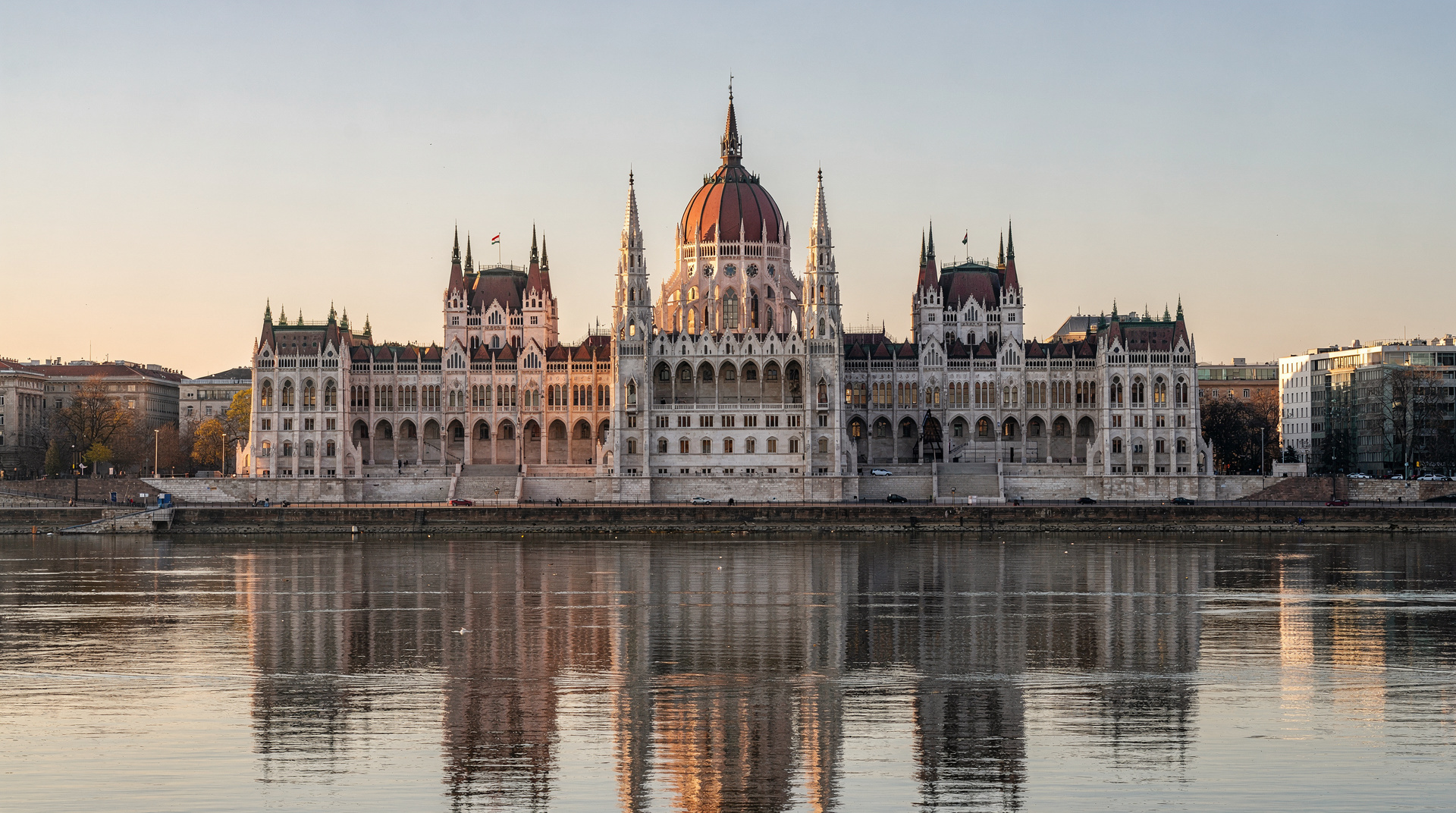
Before entering, spend time with the exterior. The Danube facade — the one seen in virtually every Budapest photograph — is best viewed from across the river in Buda, from the Fisherman’s Bastion or from a boat on the Danube itself.
Kossuth Lajos tér, the square facing the Parliament’s entrance, is also worth experiencing. It was the site of the 1956 massacre when Soviet-backed security forces fired on protesters, and it remains a politically resonant space. The statue of Lajos Kossuth (independence leader, 1848–1849 revolution) stands to the left of the main entrance.
The Parliament glows orange-gold when illuminated at night — one of the most dramatic night views in any European city. The reflection in the Danube on a still evening is extraordinary.
Choosing your vantage point
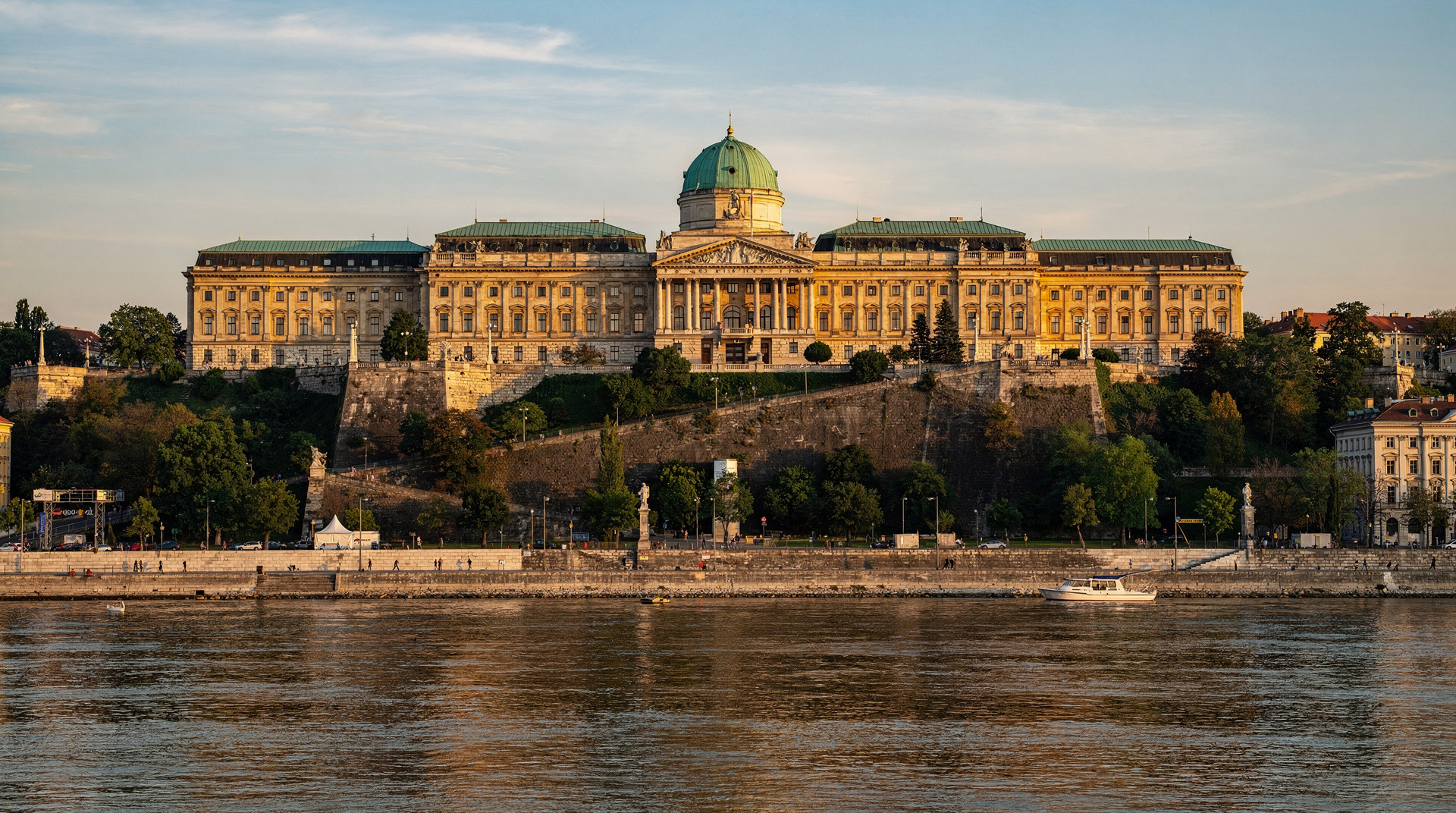
Each angle gives a different impression of the building. From the Buda side, the whole riverfront facade sits in one frame, which is why most postcards use it. The slopes beneath Buda Castle and the terraces of Gellért Hill add height and a wider backdrop of the river and its bridges. Up close on Kossuth Lajos tér, you lose the sweep but gain the detail: the pinnacles, the carved figures and the sheer density of the stonework become visible in a way no photograph from across the water can show.
If you only have time for one exterior view, pick the one that matches your plans. A sunset walk on the Buda bank works well before an evening meal, while a night cruise past the illuminated Parliament suits anyone who would rather sit down and let the view come to them.
Getting to the Parliament
The Parliament is on Kossuth Lajos tér in District V, easily reached by:
- Metro M2 to Kossuth Lajos tér (direct, 5–10 minutes from most central hotels)
- Tram 2 along the Danube embankment from Deák tér direction
The Visitor Centre entrance is on the south side of the building (turn right from the metro exit, towards the river). Security screening here is thorough — allow 20–30 minutes even with a pre-booked ticket.
Booking tickets
Online booking through the official website (parlament.hu/en/web/house-of-the-national-assembly/visitor-centre) is strongly recommended. The website allows you to select a tour time and language; English-language tours run multiple times daily from roughly 8 am to 6 pm.
Pricing (2026 approximate):
- Non-EU citizens:
8 500 HUF (€21) - EU/EEA citizens:
3 500 HUF (€8.75) — bring ID or passport - Students with EU ID: reduced rates available
- Under-6 free
Walk-in: tickets are sometimes available at the door, but queues of 1–3 hours are common in June–September. Arriving before 8:30 am gives you the best chance of a same-day walk-in ticket.
The Parliament tour with audio guide is a popular option that includes the entry ticket and an audio device with English commentary — useful for self-directed visitors who prefer their own pace within the permitted tour areas.
What you see inside
The tour follows a set route through the public areas. The highlights:
The Grand Staircase: 96 steps of red-carpeted marble, with a frescoed ceiling depicting allegorical scenes of Hungary’s history. The chandeliers above weigh several tonnes each. The staircase is the most photographed interior space and genuinely lives up to the photographs.
The Domed Hall: the central space under the 96-metre dome, ringed by 16 statues of Hungarian rulers from Árpád to Maria Theresa. The Crown Jewels are displayed in a glass case in the centre — Hungary’s most sacred historical objects:
- The Holy Crown of Saint Stephen (Árpád-házi korona): not actually contemporary with Stephen I (r. 1000–1038) but assembled in the 12th–13th century. It has a distinctive slightly tilted cross on top, bent in transport. It has been missing and recovered multiple times in Hungary’s history — most recently returned by the United States in 1978.
- The Orb and Sceptre: medieval regalia used at coronations
- The Coronation Mantle: an embroidered Byzantine-style vestment
The Upper House lobby and corridors: the former Lords’ Chamber lobby has beautifully detailed Neo-Gothic woodwork, stained glass and portrait galleries of Hungarian nobles and kings.
The Congress Hall: the Lower House chamber can be viewed through the entrance; the working plenary chamber is not accessible.
Visiting with an organised tour
The Grand City Tour with Parliament visit combines the Parliament interior with a coach tour of central Pest’s major sights — Andrássy út, Heroes’ Square, the Opera House exterior, the Jewish Quarter — giving context around the Parliament’s position in Budapest’s broader urban landscape. This is the best choice for first-time visitors who want orientation as well as the interior experience.
For those who want to pair Parliament with the Danube, a combined Parliament and river cruise booking is available through GYG — the building’s exterior from the water, then the interior on foot. The river gives you the perspective that makes the scale of the building comprehensible.
Practical tips for the visit
Arrive early: morning tours (9–10 am) have the most reliable access and the best light for photography inside the dome.
Dress code: smart casual is appropriate. There is no strict religious dress code, but overly casual clothing (beachwear) may attract comment.
Security: bags are X-rayed and pockets checked. Liquids are permitted; large backpacks can usually be checked.
Photography: permitted in most areas without flash. The Crown Jewels room policy has varied — follow guide instructions on the day.
Languages: English-language tours run frequently throughout the day. Other languages (German, French, Spanish, Italian, Russian, Chinese) run less frequently — check the schedule in advance.
Combination logistics: Parliament + Basilica in a single morning is very manageable — 20-minute walk between them along the Danube embankment.
Pairing Parliament with the rest of your day
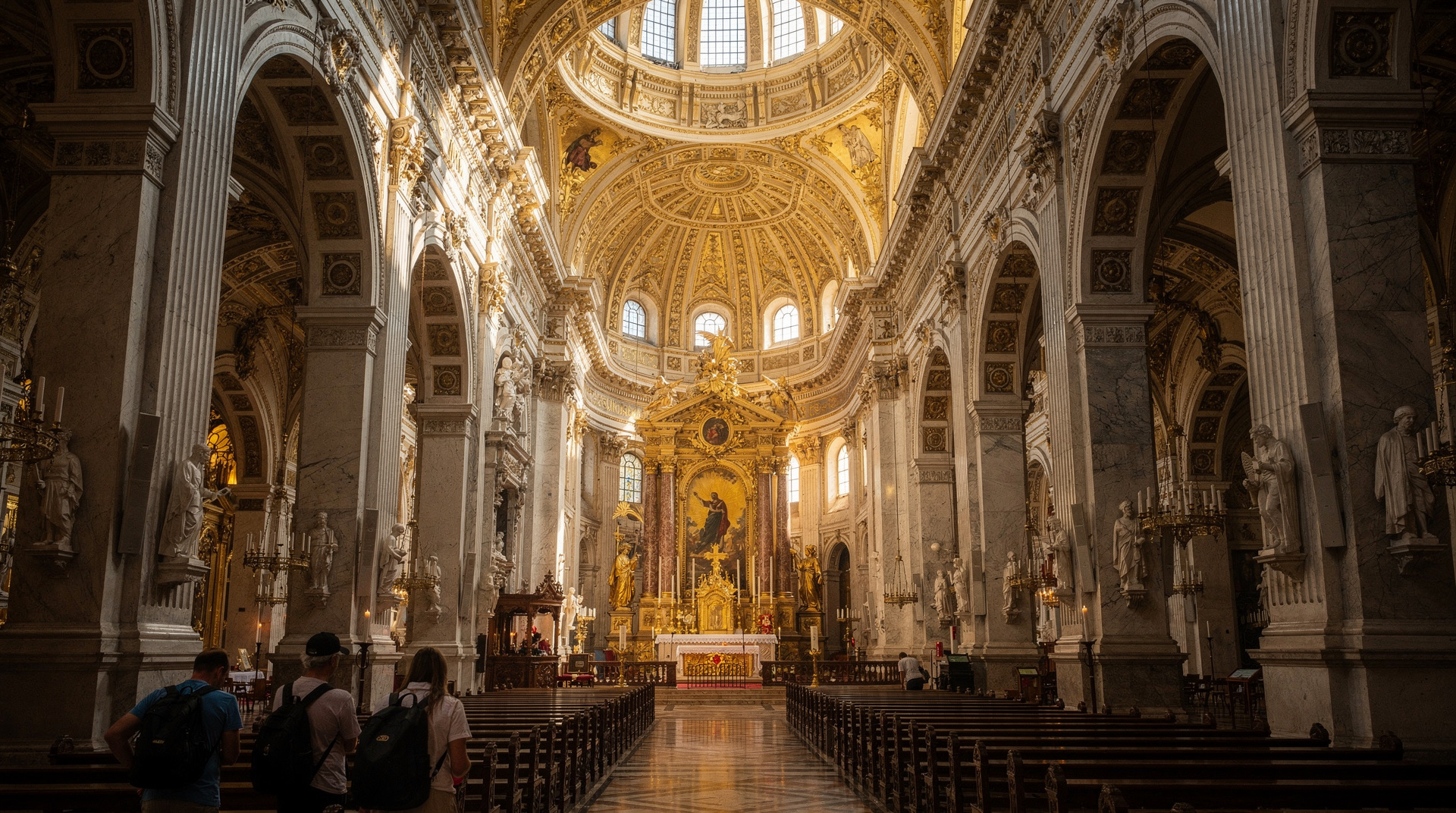
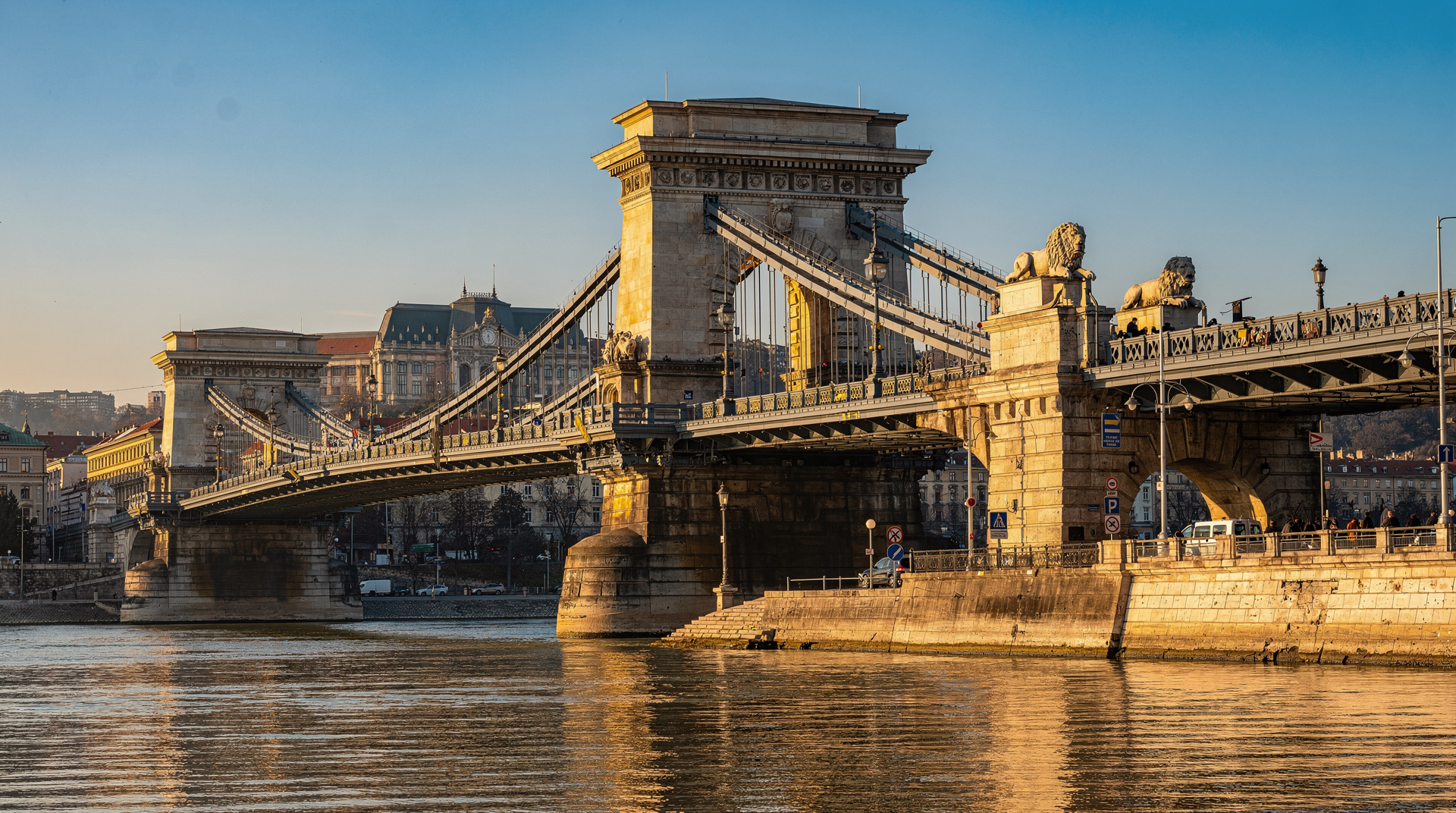
Because the tour is short, Parliament rarely fills a day by itself, and it combines naturally with other central sights. The most logical partner is St. Stephen’s Basilica, a short walk away, and a ticket such as the entry to the basilica and its dome fits neatly into the same morning. After lunch, the Chain Bridge leads you across the river towards the castle side of the city.
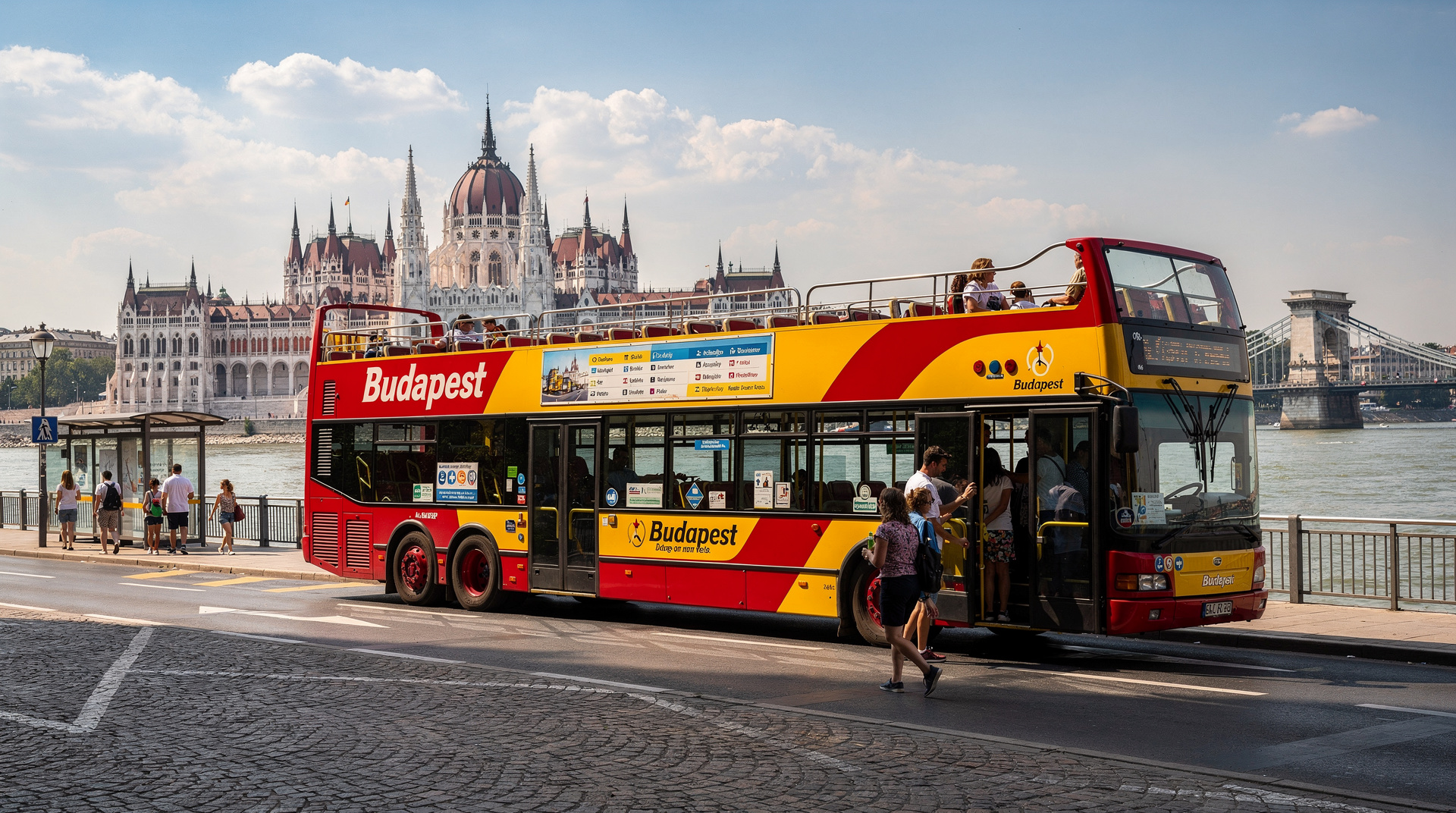
If you prefer to understand the layout before you commit to individual sights, a guided walk through the city centre passes close to the Parliament and gives useful background on the districts around it. Visitors who like to hop between stops at their own pace may also consider a hop-on hop-off bus ticket, which lets you see the building from the road without queuing for the interior at all.
Getting the most from the interior
A few habits make the tour more rewarding. Listen to the opening explanation before you start taking photographs, because the guide often points out details you would otherwise walk past, such as the symbolism in the ceilings and the craftsmanship in the woodwork. Look up as often as you look ahead: much of the decoration sits above eye level, in the vaults, the gilding and the stained glass. Keep your group in sight, since the route moves steadily from room to room and the corridors can feel crowded when several tours overlap.
Take a moment in the Domed Hall to stand still and read the room. The statues, the Crown Jewels and the height of the dome together explain why this building matters to Hungarians far beyond its role as a seat of government. If the history interests you, the Hungarian history primer gives helpful background before you go, and the House of Terror guide covers the twentieth-century story from another angle.
Who will enjoy it most
Architecture lovers and history-minded travellers usually get the most from the visit. Families with older children often find the Crown Jewels and the grand staircase memorable, while very young children may struggle with the quiet, guided pace; the Budapest with kids guide suggests more active alternatives for those days. Anyone with limited mobility should read the accessible Budapest guide and confirm arrangements with the visitor centre before booking.
The area around Parliament
Kossuth Lajos tér and the surrounding V district streets are worth exploring before or after the tour.
Ethnographic Museum (Néprajzi Múzeum), directly across the square from Parliament in a Neo-Renaissance building, covers Hungarian folk culture, textiles and rural traditions. Less visited than it deserves.
The Danube Promenade (Duna-korzó) south of Parliament leads past the Marriott Hotel, the Chain Bridge and towards Vigadó Concert Hall — one of the city’s loveliest riverside walks.
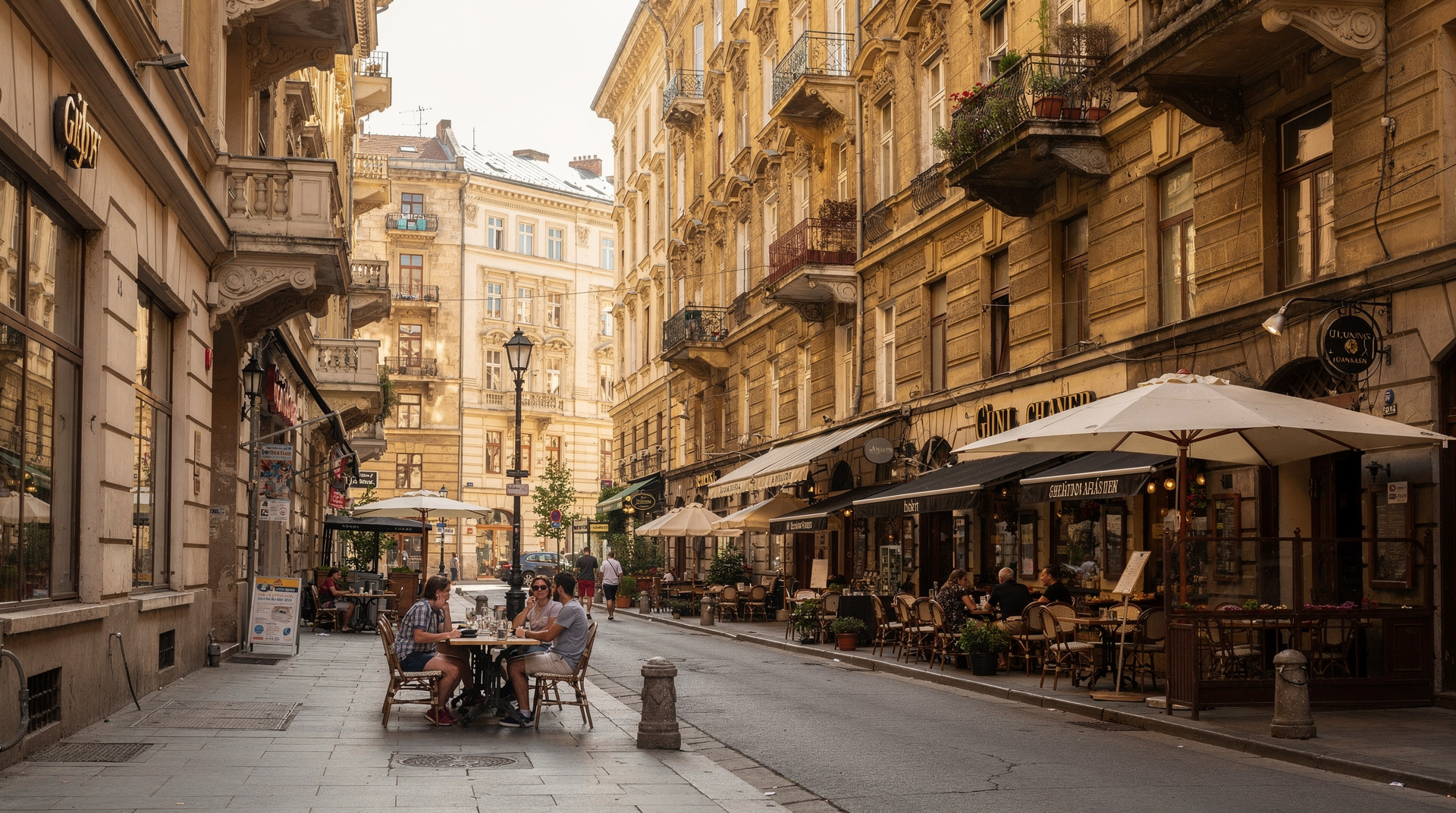
Parliament Street restaurants: the streets immediately east of the Parliament (Alkotmány utca, Báthory utca) have decent restaurants and cafés used primarily by office workers rather than tourists — reasonable prices, authentic atmosphere.
For the broader context of Budapest’s central sights, the top attractions guide covers what to combine and in what order. The downtown Pest neighbourhood guide maps the streets around Parliament and the Basilica. For planning your full itinerary, Budapest in 3 days places Parliament in a coherent three-day framework.
Guided tour vs audio guide vs self-guided
| Option | What you get | Best for |
|---|---|---|
| Audio guide (self-paced) | Entry ticket + audio device, walk at your own speed | Independent visitors, photographers |
| Live guided tour | Entry ticket + human guide, fixed pace, Q&A | First-timers who want context explained |
| Grand City Tour + Parliament | Parliament interior + coach tour of Pest highlights | Visitors combining Parliament with orientation |
| Parliament + Danube cruise | Interior visit + exterior view from the water | Visitors who want both perspectives in one booking |
None of these is wrong — the audio guide suits visitors who want to linger under the dome for photographs, while a live guide answers questions the recorded commentary can’t anticipate, such as which statues represent which historical rulers.
What people get wrong about visiting
The single most common mistake is treating Parliament as a walk-up attraction. It isn’t: same-day tickets do exist, but June–September queues at the Visitor Centre regularly run 1–3 hours, and tours can sell out entirely by mid-morning. Book online at least 48 hours ahead in peak season, earlier if you have a fixed date. The second common mistake is underestimating security time — arriving exactly at your tour slot with no buffer means you may miss it; build in the full 20–30 minutes.
Frequently asked questions about Hungarian Parliament guide
How do I buy Parliament tickets in Budapest?
Buy online through the official Parliament website (parlament.hu) at least 48 hours in advance in peak season. You can also buy at the Parliament Visitor Centre on Kossuth tér (V district), but expect queues of 1–3 hours in summer. GYG-listed Parliament tours include the entry ticket and skip some of the visitor centre queuing.How long does the Parliament tour take?
The standard guided tour lasts approximately 45 minutes inside the building. Allow 30 minutes for security and visitor centre waiting even with a pre-booked ticket. A combined grand city tour with Parliament takes 3–4 hours total and covers major Pest sights by coach before entering the building.What do you see inside the Parliament?
The tour covers: the Grand Staircase (frescoed ceiling, red-carpeted steps), the Crown Jewels room (Stephen I's crown, orb and sceptre — Hungary's most important historical objects), the Domed Hall with 16 statues of Hungarian rulers, the Upper House (Lords' Chamber) lobby and the Congress Hall. The working chamber is not accessible.What is the best view of the Parliament building?
The classic view is from the Buda bank of the Danube, especially at night when the building is illuminated — the reflection on the water is magnificent. The Fisherman's Bastion towers give an elevated view. From the river on a cruise, Parliament fills the entire view from mid-channel. The Pest bank riverside promenade (Kossuth tér side) gives a frontal view of the Danube facade.When is the Parliament closed to visitors?
The Parliament is closed during official sessions of the National Assembly — which is unpredictable, so check the schedule on the official website before your visit. It is also closed on some national holidays. Morning tours (9–10 am) are most reliably available. Exterior photography is unrestricted at all times.Is there a Parliament tour that includes a Danube cruise?
Yes — GYG offers a Parliament tour combined with a Danube river cruise, giving you the interior of the building plus the iconic exterior view from the water in a single booking. This is genuinely the most efficient way to see Parliament from both sides.Can you photograph inside the Parliament?
Photography without flash is permitted in most areas of the public tour. The Crown Jewels room policy has changed periodically — check current rules when entering. Tripods and video with large equipment are not permitted. Mobile phones are fine throughout.
Top experiences
Bookable activities with verified prices and instant confirmation on GetYourGuide.