Vegetarian and vegan Budapest: where to eat without meat in a meat-heavy city

Is Budapest good for vegetarians and vegans?
Better than you might expect. Traditional Hungarian cuisine is meat-heavy, but Budapest now has dedicated vegetarian restaurants, many mixed restaurants with good vegetarian mains, and a Jewish Quarter dining scene with strong plant-based options. Vegans face more challenges but dedicated vegan restaurants (Napfényes, Vegan Love) exist. Dishes to know: lecsó, főzelék, rántott sajt (fried cheese), and fruit soups.
Vegetarian and vegan in Budapest: the honest picture
Hungarian cuisine is substantially built around pork, beef, and poultry. The traditional repertoire — pörkölt, gulyás, töltött káposzta (stuffed cabbage with pork), körözött (sheep cheese with paprika and bacon lard) — assumes meat as central. This is the culinary heritage of a land-locked, agricultural country with long winters and a cooking tradition shaped by necessity.
The good news: Budapest as a city has moved significantly faster than Hungarian cuisine. The capital has dedicated vegetarian restaurants, an Israeli-influenced Jewish Quarter dining scene with excellent plant-based options, and a growing number of mixed restaurants that treat vegetarian dishes seriously. Vegans face more difficulty but are no longer without options.
This guide covers where to eat, what traditional dishes are naturally meat-free, and how to navigate the traditional restaurant landscape without meat.
| Vegetarian difficulty | Easy — dedicated restaurants plus mixed menus with reliable mains |
| Vegan difficulty | Moderate — plan around dedicated spots and the Jewish Quarter |
| Best neighbourhood | District VII (Jewish Quarter) for plant-based mixed dining |
| Cheapest option | Főzelék at an ételbár, roughly 900–1,500 HUF |
| Key phrase | ”Van valami vegetáriánus/vegán fogás?” (any vegetarian/vegan dish?) |
Vegetarian vs vegan: how much harder is it?
| Vegetarian | Vegan | |
|---|---|---|
| Dedicated restaurants | Several (Napfényes, Govinda) | Fewer but growing (Vegan Love) |
| Traditional dishes available | Főzelék, rántott sajt, lecsó, fruit soup | Lecsó, lángos without toppings, some főzelék without egg/cream |
| Mixed-menu reliability | High — most menus have a vegetarian main | Moderate — needs asking, cheese/egg often hidden in “vegetarian” dishes |
| Best fallback | Any traditional étkezde | Jewish Quarter falafel/hummus places |
| Markets | Great Market Hall, easy | Great Market Hall produce section, easy |
Traditional vegetarian dishes you should know
Főzelék: The single most important category for vegetarians. Főzelék are thick vegetable stews — the texture is somewhere between a stew and a sauce, made by cooking vegetables in stock with a flour-and-soured-cream thickening. Types: spenótos (spinach), borsós (pea), kelkáposztás (savoy cabbage), zöldbabos (green bean), tökös (marrow), lencsés (lentil). Served with a fried egg on top or with soured cream. Ubiquitous at ételbár food bars; price around 900–1,500 HUF (€2.25–3.75) for a main.
Rántott sajt: Breaded and deep-fried cheese — typically Trappista or Edam. Served with chips or salad and tartar sauce. On virtually every Hungarian restaurant menu as a vegetarian main. It’s not exciting but it’s reliable, honest, and inexpensive (1,800–3,000 HUF / €4.50–7.50).
Lecsó: A slow-cooked pepper, tomato, and onion stew. The Hungarian version of ratatouille, with more emphasis on sweet peppers and more fat (lard, or nowadays sunflower oil). Eaten with egg, or as a side dish, or on bread. In season (summer/autumn) it appears everywhere; out of season it’s made from preserved peppers.
Gyümölcsleves (cold fruit soup): Hungarian cold fruit soups are a distinctive national appetiser — sour cherry, raspberry, or peach blended into a cold, lightly sweetened, cream-enriched soup. Entirely vegetarian; often vegan. Served as a summer starter in traditional restaurants.
Rétes and pastries: Hungarian strudel (rétes) with apple, cherry, or cottage cheese filling is vegetarian. The pastry tradition generally — cakes, pastries at cukrászda — is vegetarian. The Great Market Hall has excellent rétes at fair prices.
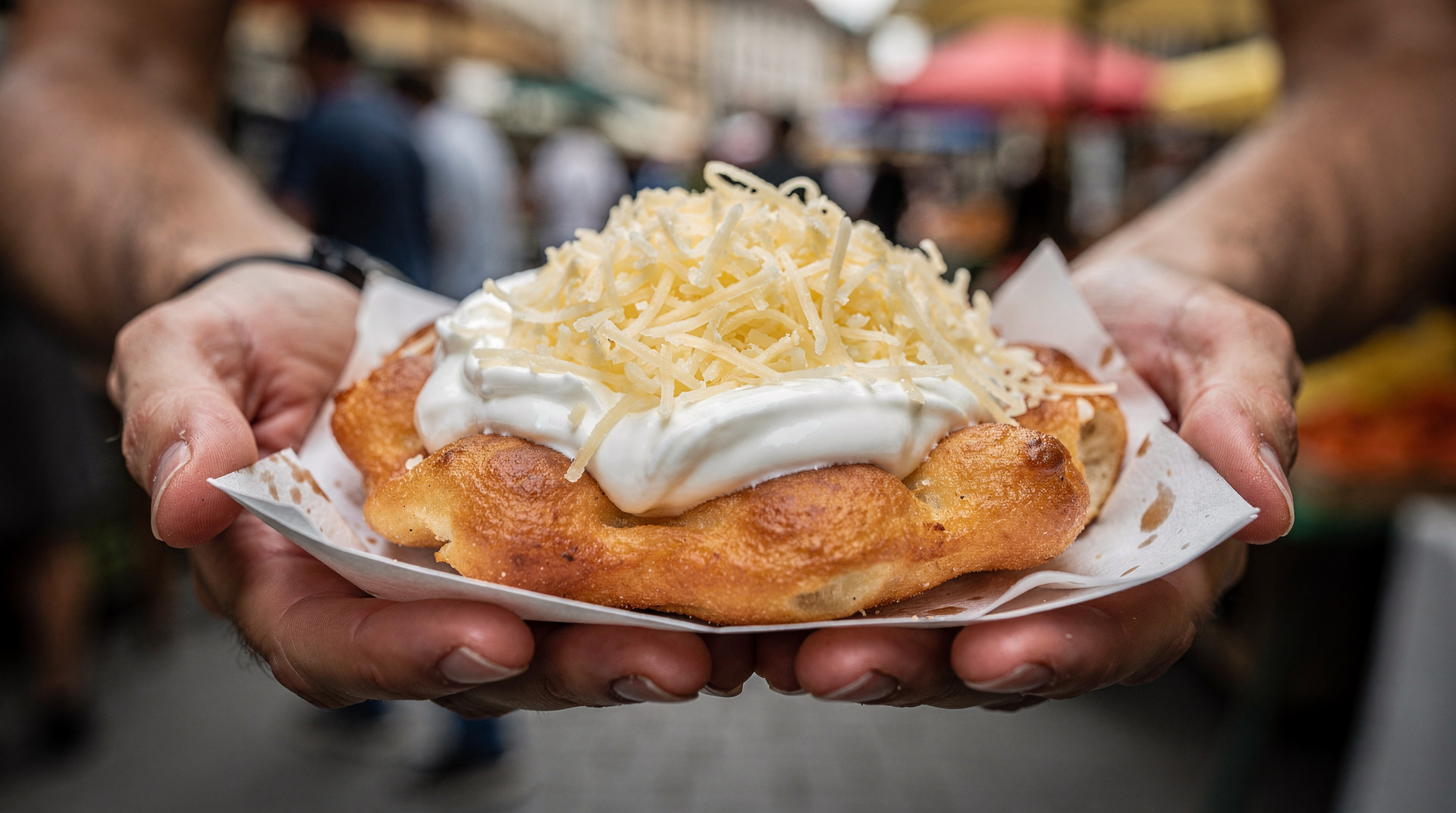
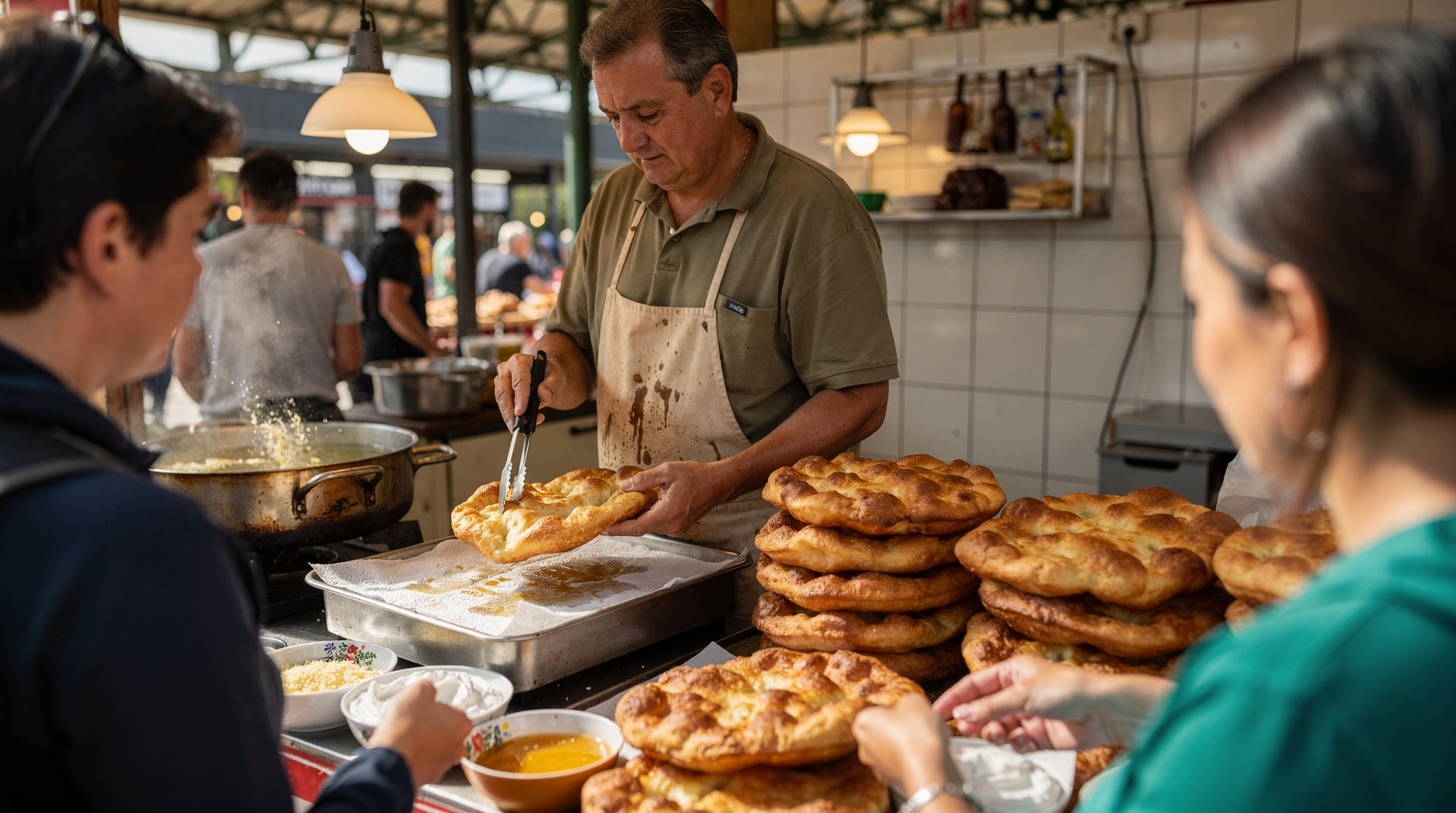
Lángos without toppings: Lángos dough itself is vegan; the standard topping (sour cream and cheese) is not. Ask for fokhagymás (garlic butter) and the lángos itself if you’re avoiding dairy.
Dedicated vegetarian restaurants
Napfényes Étterem — Teréz körút 30, District VI
Napfényes (meaning “sunny”) is Budapest’s longest-established vegetarian restaurant, open for over two decades. It operates as a self-service buffet — trays of hot food (Hungarian vegetarian adaptations, soups, rice dishes, salads), priced by weight. Budget 1,500–3,000 HUF (€3.75–7.50) for a full meal.
The food is honest rather than exciting — this is the everyday Hungarian home-cooking approach applied to vegetables. Good for a cheap, filling lunch without navigating menu translations. Vegan options are clearly labelled.
Vegan Love — Paulay Ede utca 35, District VI
Fully vegan restaurant with a more contemporary aesthetic than Napfényes. Menu features: burgers, wraps, salads, and some cooked dishes using plant-based proteins. More appealing to younger visitors accustomed to vegan restaurant formats in Western cities. Mains 2,500–4,500 HUF (€6.25–11.25). Booking recommended for dinner.
Govinda — Vigyázó Ferenc utca 4, District V
A Hare Krishna-run Indian vegetarian restaurant — simple, cheap, and reliably meatless. Indian dal, vegetable curries, rice dishes, and lassi. Lunch sets from 1,800–2,800 HUF (€4.50–7). Not specifically aimed at tourists; the clientele is a mix of regulars and visitors.
The Jewish Quarter: best for plant-based mixed dining
The Jewish Quarter (District VII) has Budapest’s best concentration of plant-friendly mixed restaurants — partly because of the Israeli/Middle Eastern influence (hummus, falafel, mezze) and partly because the neighbourhood dining scene is generally more progressive than traditional Hungarian restaurants.
Mazel Tov (Akácfa utca 47): Israeli-inspired mezze in a ruin-bar courtyard. Hummus, falafel, grilled vegetables, shakshuka (eggs in spiced tomato sauce — vegetarian). Mains from 2,500 HUF; excellent for vegetarians even in a group that includes meat eaters.
Tzafon (Sip utca 8): Small contemporary Israeli restaurant; strong vegetable-focused menu.
Kőleves (Kazinczy utca 41): Mixed Hungarian menu with several vegetarian mains that change seasonally. Not exclusively vegetarian but reliably accommodating.
Navigating traditional Hungarian restaurants
If you’re in a traditional étkezde or Hungarian restaurant with limited vegetarian options:
-
Ask about főzelék: Even if not on the menu, many kitchens have it. “Van valami vegetáriánus fogás?” (Is there a vegetarian dish?) is understood.
-
Default to rántott sajt: Available almost everywhere, reliable, filling.
-
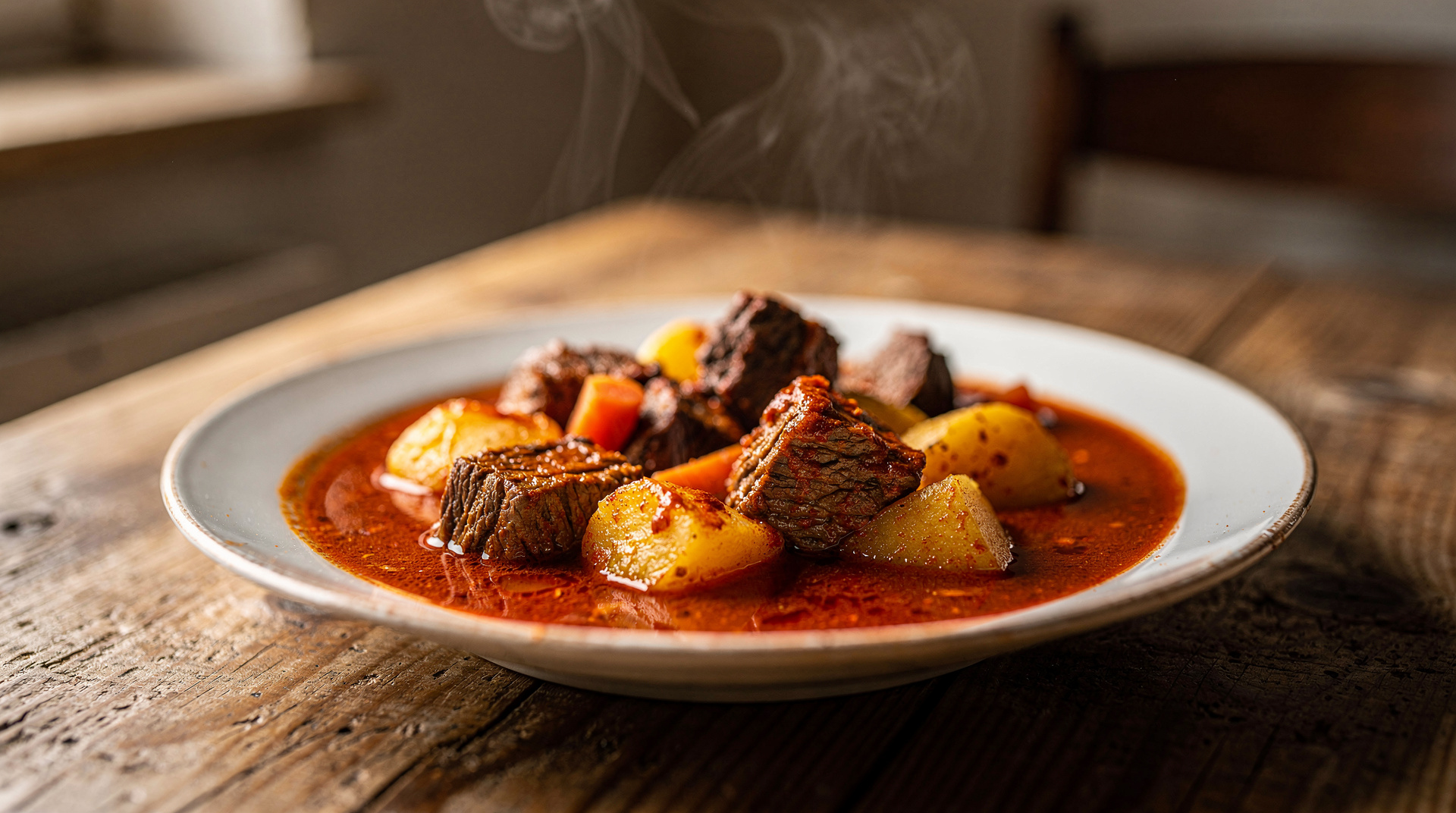
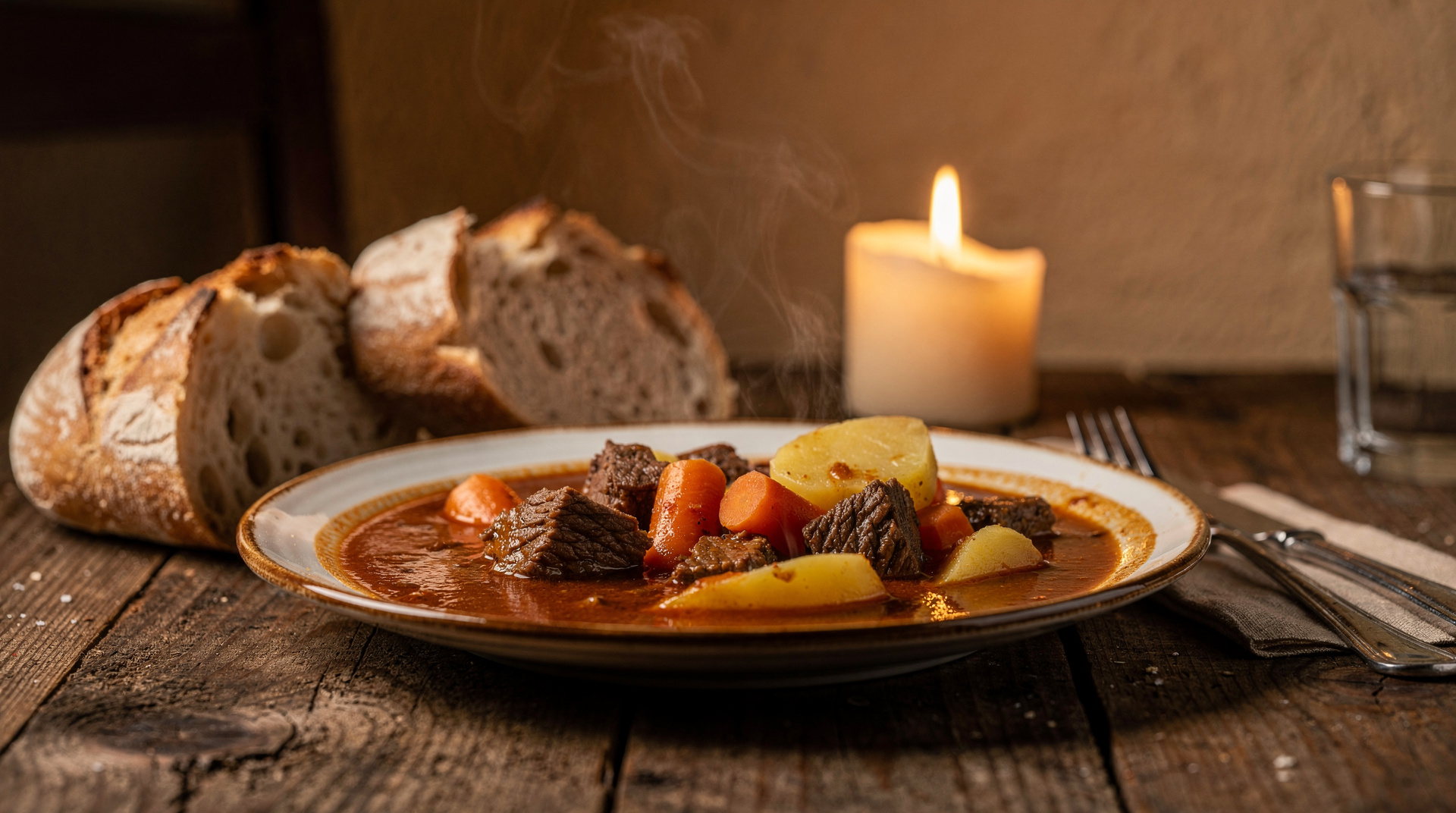
Soup first: Hungarian soups — gombakrémleves (cream of mushroom), paradicsomleves (tomato), gyümölcsleves (fruit) — are often vegetarian. Gulyás is not (it contains beef).
-
Pasta sections: Many Hungarian restaurants have a pasta section with simple tomato or cream sauces that are vegetarian.
Food tours for vegetarians
The eat, sip and explore food tour can accommodate vegetarians — contact the operator when booking to flag dietary requirements. Most Budapest food tours are adaptable because the Hungarian food landscape includes enough non-meat items to construct a meaningful tour.
The Jewish cuisine and culture walk is particularly suitable — Jewish cuisine includes substantial vegetarian and plant-based elements, and the tour specifically covers the Jewish culinary tradition which has more plant-based variety than mainstream Hungarian cooking.
Market eating for vegetarians
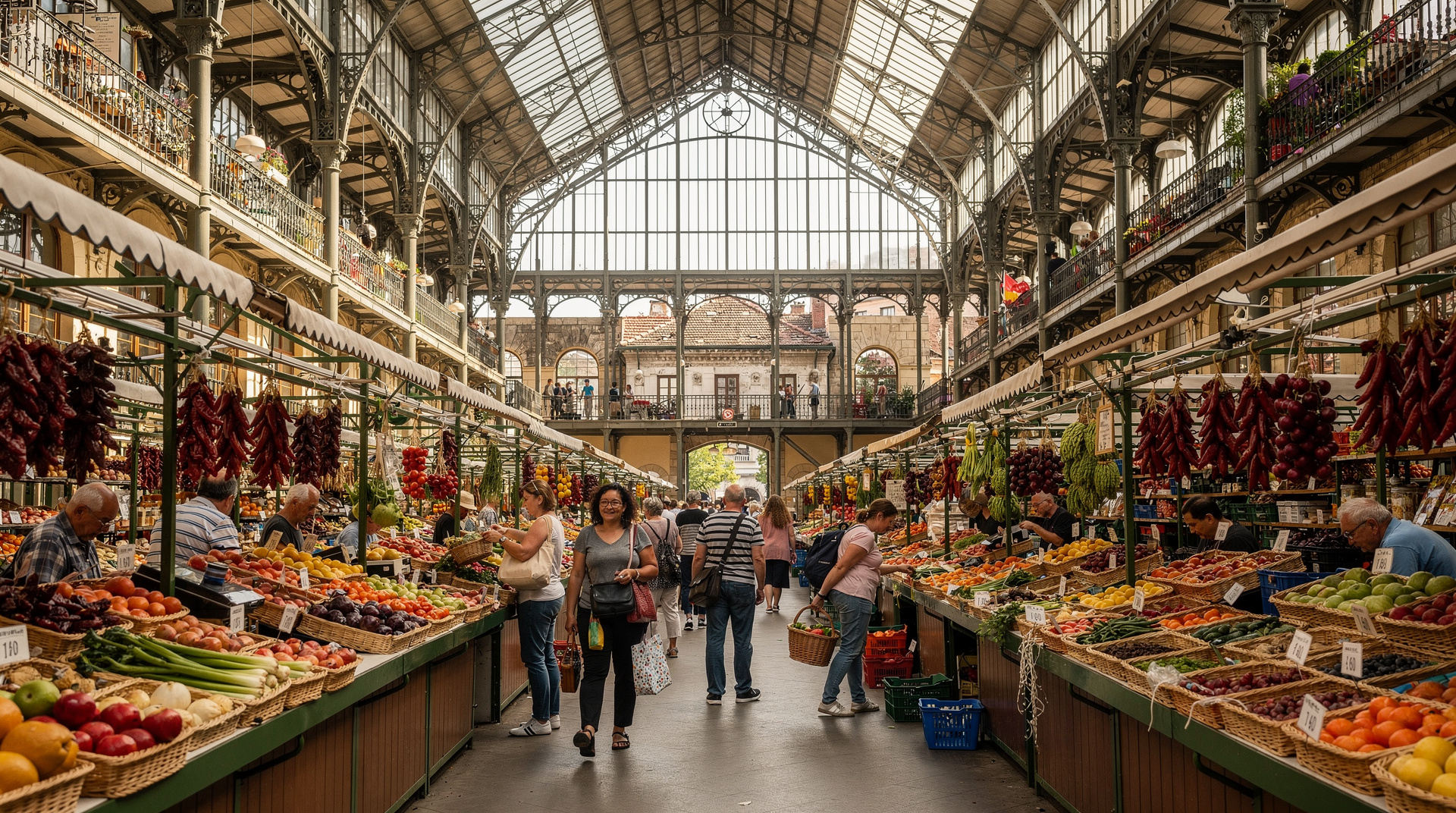
The Great Market Hall is excellent for vegetarians:
- Upper floor: lángos (ask for garlic butter instead of sour cream for vegan), strudel with fruit fillings
- Ground floor: excellent fruit, vegetables, pickled items, honey, cheese
See the Central Market Hall guide for the full picture.
For budget context, see is Budapest expensive?. A vegetarian eating well in Budapest can do so on less than a meat-eater — főzelék and rétes are among the cheapest foods in the city.
If you’d rather see the market with a guide who knows which stalls are worth stopping at, the market-to-tavern food tour visits the Great Market Hall as one of its stops — flag your dietary preference when booking and the tastings can be steered toward the plant-based options rather than the meat-focused ones.
A self-guided market shopping list for vegetarians
Beyond eating at the food-stall level, the Great Market Hall’s ground floor is genuinely useful for assembling a picnic or stocking a self-catered stay. Worth seeking out: fresh paprika peppers by the kilo (far cheaper than dried paprika in tins for cooking your own lecsó), a wedge of körözött (the paprika curd spread — vegetarian, not vegan) with fresh bread from one of the bakery stalls, seasonal fruit, pickled vegetables (savanyúság — cucumber, cabbage, peppers), and honey from the beekeeping stalls near the western end. A simple picnic assembled this way costs a fraction of a sit-down meal and works well for a lunch break between sightseeing stops, eaten along the Danube or in a nearby park.
Vegetarian and vegan at the restaurant tiers
Budget tier: The best-value vegetarian meal in Budapest is a főzelék lunch at an ételbár (food bar). Főzelékfaló Ételbár (Paulay Ede utca 53, District VI) is the most dedicated: an entire menu of vegetable stews, served with a fried egg or sour cream. Budget 1,200–2,000 HUF (€3–5) for a filling main. Vegetarians will also find: fruit soups (gyümölcsleves), lecsó, and cheese-stuffed crepes (sajtos palacsinka) at most traditional étkezde canteens.
Mid-range tier: Napfényes Étterem (Teréz körút 30) remains the best mid-range option — extensive, varied, reliably meatless, and honest on price. In the Jewish Quarter, Mazel Tov (Akácfa utca 47) has the strongest plant-friendly mid-range menu: hummus, falafel, shakshuka, roasted vegetables. Kőleves (Kazinczy utca 41) has 3–4 vegetarian mains that change seasonally.
Fine dining tier: Babel (the Michelin-starred restaurant at Piarista köz 2) explicitly focuses on vegetable-forward cooking — unusual in the Hungarian fine-dining context. A vegetarian at Babel gets the full tasting menu experience without compromises. Costes and Stand can accommodate vegetarians with advance notice; the kitchen prepares an alternative sequence using plant-based ingredients.
Vegan survival in Budapest: practical strategies
For vegans in Budapest, the strategy is clear: know the safe spaces and navigate around them.
Safe spaces:
- Vegan Love (Paulay Ede utca 35): fully vegan; reliable, consistent, and improving year on year
- Napfényes (Teréz körút 30): most dishes are vegan; clearly labelled
- Govinda (Vigyázó Ferenc utca 4): Indian vegetarian; most dishes are vegan by default
- The Israeli/Middle Eastern restaurants in the Jewish Quarter (hummus, falafel, tabbouleh, roasted vegetables): all naturally vegan
Navigation strategies:
- When ordering in a traditional restaurant: “Ön tud ajánlani valami vegán ételt?” (Can you recommend something vegan?) — most staff will understand and either offer a dish or admit there isn’t one
- Salads in Hungarian restaurants are often not vegan (they typically include cheese or egg)
- Soups: vegetable soups (zöldségleves) may contain animal stock; the safest bet is to ask whether it contains húsleves (meat broth)
- Pasta dishes: Italian-style pasta with tomato sauce (paradicsomos) is usually vegan; pasta with cream sauce is not
Shopping for vegan food: The Great Market Hall ground floor has excellent produce, pickled vegetables, honey (not vegan), and bread. For vegan specialties: Ökológiai piacok (organic markets) appear periodically in Budapest — check the Facebook group “Budapest Vegán” for current market locations and vegan-friendly restaurant additions.
The Hungarian Jewish food tradition: implications for vegetarians
The Jewish culinary tradition in Budapest has an indirect benefit for vegetarians: Jewish dietary law (kashrut) prohibits the mixing of meat and dairy, which means that at genuine kosher or Jewish-style restaurants, dairy-based vegetarian dishes are not contaminated with meat stock.
Carmel restaurant (Kazinczy utca 31) is the most traditional kosher option. The menu includes proper Jewish vegetarian dishes: matzo ball soup (vegetable version available), kugel (noodle or potato casserole), and various dairy dishes that are both vegetarian and prepared according to religious standards.
For the tourist interested in Jewish food culture beyond the strictly kosher option, the Jewish cuisine and culture walk covers the full range — including Fröhlich Cukrászda’s flódni (the layered pastry with walnut, apple, and poppy seed that is vegetarian and remarkable).
International food as vegetarian insurance
When Hungarian options are limited, Budapest’s international food scene fills the gap:
Indian: Govinda (Hare Krishna, Vigyázó Ferenc utca 4) and Salaam Bombay (Alkotmány utca 20, District V) — both reliably vegetarian-friendly, with vegan options.
Middle Eastern: Several falafel shops around Deák tér and in the Jewish Quarter; quality varies but the best (Yalla, on Paulay Ede utca 5) is genuinely excellent.
Italian: Pizza and pasta restaurants are ubiquitous in Budapest; the better ones (Da Mario, Trattoria Pomo d’oro) have authentic tomato-based vegetarian pasta options at reasonable prices.
Japanese: Nobu Budapest is obviously not vegetarian-friendly; more modest sushi and ramen restaurants in Districts V and VI have better vegetarian options (vegetable tempura, vegetable ramen).
Vietnamese and Thai: A smaller but growing scene, concentrated around District VIII and IX, with vegetable-forward pho, spring rolls and stir-fries that are naturally adaptable to vegan by requesting no fish sauce — worth asking specifically, since fish sauce is a default ingredient even in dishes that otherwise look plant-based.
When to eat vegetarian in Budapest: seasonal advantages
Vegetarian eating in Budapest is most rewarding in spring and autumn, when seasonal produce is at its best:
Spring (March–May): New asparagus, early strawberries, spring onions, fresh herbs. Lecsó made with fresh peppers rather than preserved is available from May. The markets are at their most colourful.
Autumn (September–November): Mushroom season — gombás ételek (mushroom dishes) appear everywhere. Gombapaprikás (mushroom paprikash, the vegetarian equivalent of chicken paprikash) is a genuine and excellent autumn dish. Walnut and chestnut season; pumpkin (tök) appears in főzelék and soups.
Summer (June–August): Fresh tomatoes, sweet peppers, and the full range of summer vegetables at the market. Lecsó is at its best. Cold fruit soups (meggyleves, barackos leves) are a summer treat.
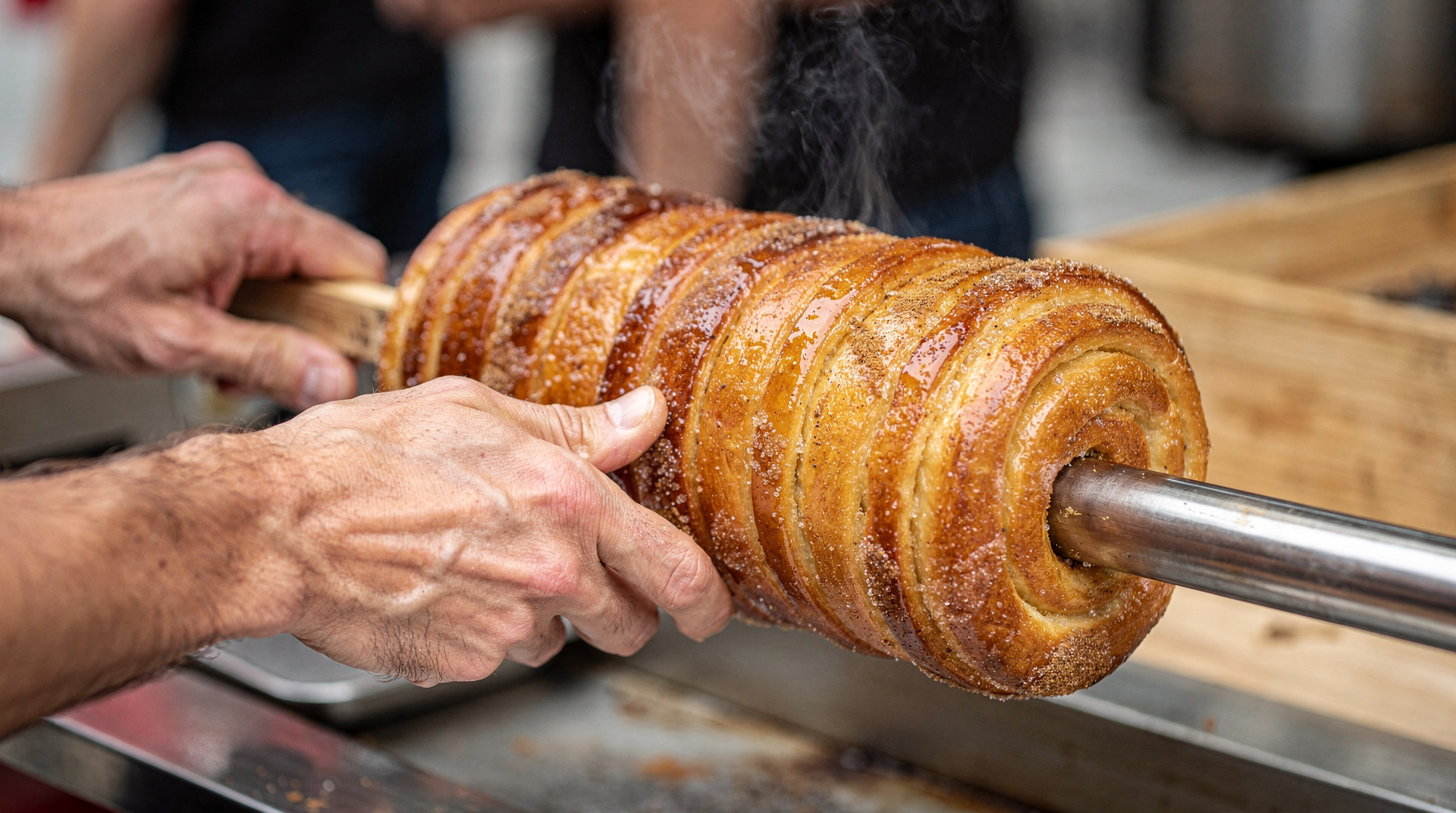
Winter (November–March): The hardest season for vegetarians — root vegetables, preserved goods, and pickles dominate. But Budapest’s Christmas market period (mid-November to January 1) has excellent vegetarian options: kürtőskalács (chimney cake), lángos (if you ask for garlic butter instead of the sour cream and cheese), and roasted chestnuts.
For a full picture of the Budapest food scene, see traditional Hungarian dishes and best food tours in Budapest. For eating context across the budget range, see best restaurants in Budapest and is Budapest expensive?.
Hungarian vegetarian dishes: a deeper look at főzelék
Főzelék deserves extended attention because it is genuinely excellent and almost entirely unknown outside Hungary. The category name comes from the verb főzni (to cook) — these are cooked vegetable preparations, but the cooking method is specific.
The base technique: vegetables are simmered in stock or water, then the liquid is thickened with rántás (a flour-and-fat roux) or sűrítés (a cream or sour cream thickening). The result is somewhere between a very thick soup and a puree — pourable, but substantial. Each főzelék type has its own character:
Spenótos (spinach): Cooked spinach blended with a cream sauce, finished with a fried egg on top. A distinctive dark green, quite rich. Best versions use fresh spinach in season; frozen spinach versions are more common and acceptable.
Borsós (pea): Green pea főzelék, sweetened by the natural sugar in fresh or frozen peas, thickened with cream. The most appealing to international palates unfamiliar with the genre.
Kelkáposztás (savoy cabbage): The most traditional and the most challenging for newcomers — a substantial, slightly bitter cabbage stew. Often served with smoked meat for non-vegetarians; without, it is a complete vegetarian main.
Lencsés (lentil): Brown or green lentils cooked with onion, paprika, and bay leaf, thickened to a dense stew. Served with vinegar (ecet) for acidity — a critical element that the cook adds at the table or the diner adjusts to taste.
Zöldbabos (green bean): Fresh or preserved green beans in a cream sauce. Summer-seasonal at its best.
Tökös (marrow/courgette): Grated young marrow or courgette cooked with dill and sour cream. One of the most specifically Hungarian vegetable preparations — the dill flavour is essential and distinctive.
Where to find it: Főzelékfaló Ételbár (Paulay Ede utca 53, District VI) is the dedicated főzelék restaurant; Kádár Étkezde (Klauzál tér 9, District VII) has it as part of the daily rotating menu; any traditional étkezde will have at least one or two options.
Protein sources for vegetarians in Hungarian cooking
Beyond rántott sajt (fried cheese), Hungarian vegetarian protein sources include:
Eggs (tojás): Deeply embedded in Hungarian cooking — as a topping for főzelék, as the base for palacsinka, in the lecsó preparation, and as tükörtojás (fried egg). Eggs appear in multiple forms at every meal of the day.
Legumes: Bean soup (babgulyás) is a vegetarian possibility (confirm no smoked meat in the base). Lentil főzelék. Pea preparations. The Eastern European tradition of bean and lentil cooking is present in Hungarian cuisine, though less prominent than in some neighbouring cuisines.
Dairy: Hungary has an excellent dairy tradition. Tejföl (sour cream) is more versatile than it appears — it’s used in cooking as well as as a topping. Túró (fresh curd cheese) appears in both savoury (körözött spread) and sweet (túrós rétes strudel, túrós palacsinka crepes) preparations. Hungarian Trappista cheese and the rarer sheep’s milk varieties from market vendors.
Nuts and seeds: Walnuts (dió) and poppy seeds (mák) are central to Hungarian pastry and also appear in savoury contexts. Walnut-based stuffings for peppers and stuffed pastries provide protein in vegetarian preparations.
Using translation apps and Google Maps for vegetarian dining
Practical tips for navigating Budapest’s restaurant scene without meat:
Google Translate camera function: Pointing your phone camera at a Hungarian menu translates in real time. Works well for main course listings; less accurate for specials boards in handwriting.
Google Maps filters: Search “vegetarian restaurants Budapest” in Maps for a filtered list. Reviews often flag whether the restaurant is genuinely vegetarian-friendly versus nominally so.
Hungarian words to recognise on a menu:
- Vegetáriánus: vegetarian
- Vegán: vegan
- Tojásmentes: egg-free
- Tejmentez: dairy-free
- Hal: fish (pescatarians look for this; vegetarians avoid it)
- Csirke/sertés/marha: chicken/pork/beef (avoid)
- Zöldséges: vegetable-based (positive indicator)
Apps: Happy Cow (happycow.net) lists vegetarian and vegan restaurants globally; the Budapest coverage is decent and regularly updated by the local vegetarian community.
Supermarkets and self-catering for vegetarians and vegans
For visitors staying in an apartment or wanting to supplement restaurant meals, Budapest’s supermarket chains have improved noticeably for plant-based shopping. Tesco and Spar both stock a “V-Label” or similarly marked vegetarian/vegan range — plant milks, meat substitutes, and labelled vegan chocolate and snacks — though selection is smaller than in Western European supermarkets. Health-food shops (Bio- or Reform-bolt signage) in most districts carry a wider vegan range, including specialty items like nutritional yeast and plant-based cheeses that mainstream supermarkets don’t stock.
For fresh produce, neighbourhood piac (market) buildings beyond the Great Market Hall — Fény utca market in Buda, Rákóczi tér market in District VIII — are cheaper and less touristy, with the same quality produce. A basic self-catered vegetarian budget (bread, cheese, produce, pastry) runs comfortably under 3,000 HUF per person per day, well below the cost of eating out for every meal.
Sample one-day vegetarian eating plan
For a concrete starting point rather than an abstract list: breakfast on fresh bread with körözött from a bakery or market stall; lunch at Főzelékfaló Ételbár or another ételbár for a főzelék with egg; an afternoon coffee and rétes at a cukrászda like Ruszwurm or Auguszt; dinner at Mazel Tov or Kőleves in the Jewish Quarter for a mezze-style plant-forward meal. This single day touches the cheap-and-traditional, the market, the pastry culture and the modern mixed-restaurant scene without ever feeling like a compromise on the meat-eating itinerary happening around you.
The vegetarian food tour option
For vegetarians who want an organised food experience, the eat, sip and explore food tour can be adapted for vegetarians with advance notice. Notify the operator when booking; they will substitute meat-based tastings with vegetarian alternatives (extra cheese, vegetable mezze, additional pastry stops).
The Jewish cuisine walk is the most naturally vegetarian-friendly food tour — the Jewish culinary tradition has substantial dairy and vegetable content by religious design, and the specific dishes covered (flódni, túrós palacsinka, dairy-based preparations) are all vegetarian.
See cooking classes in Budapest for the hands-on option — Chef Marti accommodates vegetarians and the class naturally covers vegetables and non-meat preparations alongside the meat dishes.
Fitting plant-based meals into the rest of your trip
Eating without meat is easier when it is planned around where you already are. If you are staying in the Jewish Quarter, the District VII guide and the wider Jewish Quarter heritage guide show how much of the neighbourhood’s food scene sits within a short walk of the sights, so a plant-forward lunch or dinner rarely needs a detour. The Jewish Quarter destination page is a useful companion for orienting yourself before you go.
Vegetarians who are building a longer stay can slot these meals into a ready-made plan: the 3-day Budapest itinerary leaves room for a market lunch and an evening in District VII, and the budget version pairs naturally with the főzelék-and-rétes approach described above. For the wider picture of how to structure your days, how many days in Budapest helps you decide how much time to give to eating well rather than rushing between sights.
Street snacks are the other place where vegetarians need a little care. The street food guide covers what is on offer at stalls, where to eat lángos explains how to order it without the usual toppings, and the chimney cake guide is a reliable sweet option that needs no special requests. If you want a sit-down evening after a day of sightseeing, romantic restaurants in Budapest is worth a look for places where a vegetarian can ask for an adapted dish without fuss, and Michelin Budapest gives context for the fine-dining tier mentioned above.
Frequently asked questions about Vegetarian and vegan Budapest
What traditional Hungarian dishes are vegetarian?
Lecsó (a pepper, tomato, and onion stew), főzelék (thick vegetable stews — spinach, pea, savoy cabbage, lentil), rántott sajt (fried cheese, typically breaded and fried Edam or Trappista), gyümölcsleves (cold fruit soup), rétes (strudel) with sweet fillings, and palacsinka with jam or cottage cheese are all naturally vegetarian. Hungarian bread and pastry culture is also excellent.Are there vegetarian restaurants in Budapest?
Yes. Napfényes (Teréz körút 30) is the longest-established vegetarian and vegan restaurant in the city — a buffet format with Hungarian vegetarian adaptations of traditional dishes. Vegan Love (Paulay Ede utca 35) is Budapest's most-reviewed fully vegan restaurant. Govinda (Vigyázó Ferenc utca 4) serves Indian vegetarian food and is run by a Hare Krishna community.Is főzelék something vegetarians should know about?
Yes. Főzelék is a category of thick vegetable stew that is central to traditional Hungarian cooking — the vegetable equivalent of pörkölt. Common varieties: spenótos (spinach), borsós (pea), kelkáposztás (savoy cabbage), zöldbabos (green bean), and lencsés (lentil). Served with a fried egg on top or with soured cream. Available at ételbár (food bars) across Budapest for under 1,500 HUF (€3.75).Can I eat well as a vegan in Budapest?
With some research, yes. Dedicated vegan restaurants exist. The Jewish Quarter has the strongest concentration of plant-friendly options (Israeli-inspired mezze, falafel, hummus). International food (Asian, Middle Eastern) supplements the Hungarian options well. The main challenge is traditional Hungarian restaurants, where vegan options are nearly nonexistent — staff will often suggest a salad or plain vegetables.Is it easy to find vegetarian food at Budapest restaurants?
At mixed restaurants, most menus have at least one vegetarian main (rántott sajt, pasta with tomato sauce, or a mushroom dish). The best strategy: look for restaurants with Israeli, Middle Eastern, or Italian influence in addition to Hungarian food. The Jewish Quarter has the highest density of vegetarian-friendly mixed restaurants.
Top experiences
Bookable activities with verified prices and instant confirmation on GetYourGuide.