Taxis and Bolt in Budapest: how to avoid the scams

Is it safe to take a taxi in Budapest?
Licensed taxis are safe; unlicensed taxis are a well-documented scam. The easiest safe option is the Bolt ride-hailing app — fixed price shown before you confirm, no cash, no negotiation. If you need a street taxi, call a company (Főtaxi, City Taxi) or use the official rank at the airport. Never get in a car whose driver approaches you unsolicited.
The short version: use Bolt
If you read nothing else in this guide, read this: download the Bolt app before you land in Budapest, and use it for every taxi journey. Bolt is the city’s dominant ride-hailing platform — completely legal, metered through the app, price confirmed before you commit, and cashless. Every scam warning in the rest of this guide becomes irrelevant the moment you start using Bolt.
The rest of this guide is for people who want to understand why the warnings exist, what licensed taxis look like, and how to handle situations where a phone is flat or the app is not an option.
| Best option | Bolt app (fixed price, cashless, no negotiation) |
| Typical inner-city fare | 2,000–5,000 HUF (€5–12.50) |
| Airport to centre | 7,000–13,000 HUF (€17–33) |
| Highest-risk spots | Keleti station, BUD airport arrivals hall |
| Uber | Not available in Hungary since 2016 |
Why Budapest has a taxi scam reputation
Budapest’s taxi scam problem peaked in the 2000s and early 2010s, when unlicensed operators dominated tourist areas with systematic overcharging. Regulatory reforms in 2013 consolidated licensing and made metered pricing mandatory for all licensed operators. The scam largely disappeared from mainstream licensed taxis.
What remained — and what continues today — is a parallel underground of unlicensed drivers who target tourists at Keleti railway station (where international trains arrive), at BUD airport, and occasionally outside major hotels. These drivers are not licensed taxis; they are private individuals with cars, operating illegally, who exploit the unfamiliarity of new arrivals.
The setup is simple: a person approaches you in the arrivals hall or station and offers a “taxi” or “transfer.” They name a price that sounds plausible in euros. You get in. At the destination, the “price” has changed dramatically — 50,000, 80,000, sometimes 100,000+ HUF for a journey that a licensed meter would show at 3,000–10,000 HUF. The driver may have accomplices, may lock the doors, or may behave aggressively.
This is not a rarity. It is well-documented and targeted primarily at tourists arriving by train or plane.
How to identify a licensed taxi
Legitimate Budapest taxis have these features:
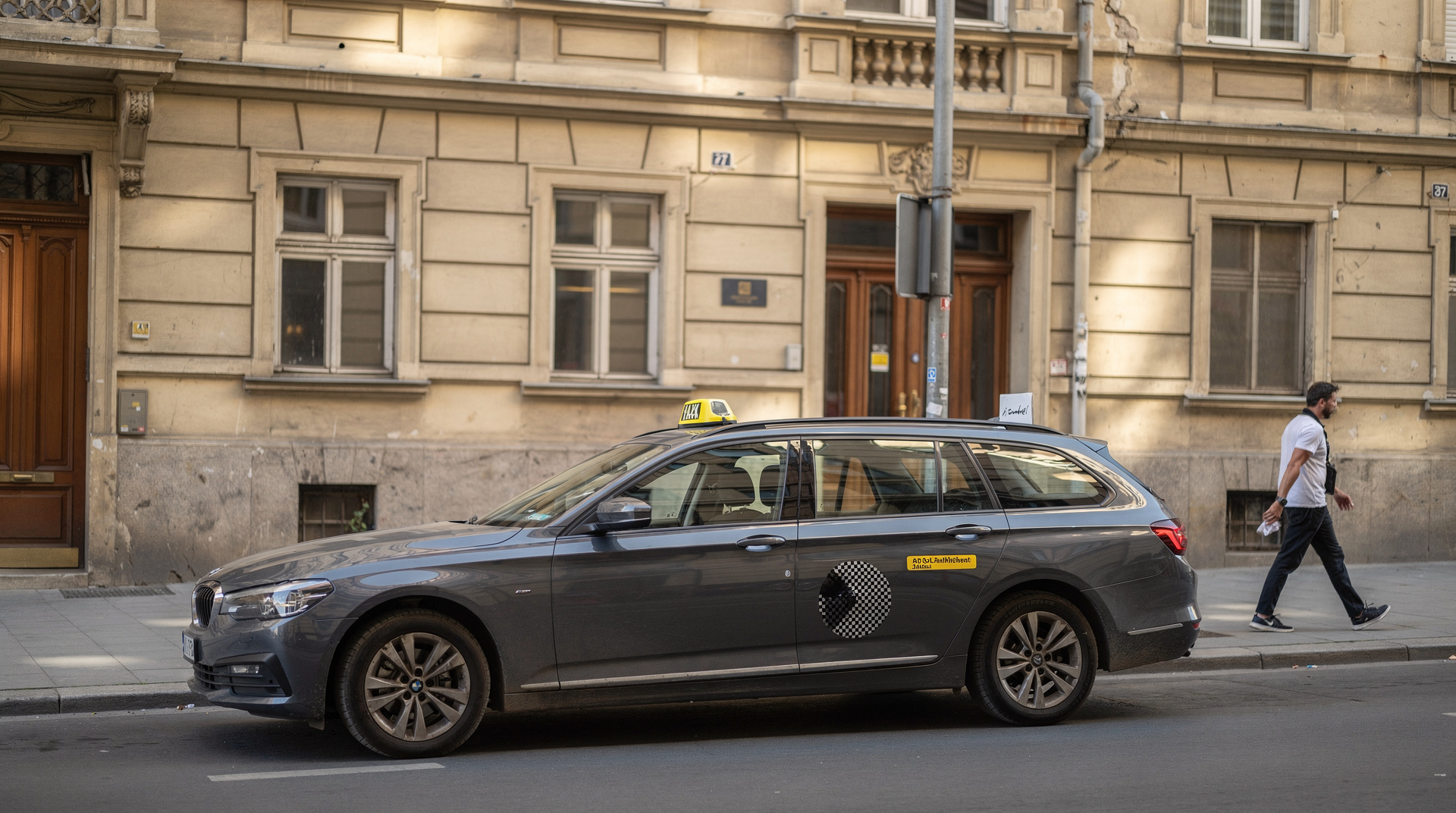
Colour: Predominantly yellow body or yellow roof light (executive black cabs also operate, but tourist taxis are almost always yellow).
Company branding: Clear company name and phone number on the door. Major companies include Főtaxi, City Taxi, Budapest Taxi, Rádió Taxi.
Yellow licence plate: Required for all licensed taxis. A white licence plate means it is a private vehicle.
Visible taximeter: Mounted on the dashboard, clearly visible from the back seat. The meter starts at 1,100 HUF (the flag-fall charge) and increments at the legal rate of 450 HUF/km.
Tariff card: Required by law to be displayed inside the vehicle showing the start rate, per-km rate, and waiting-time rate.
If any of these are missing, do not get in.
A fixed-price ride instead of hailing a cab
Checking for a yellow plate, a door phone number, a visible meter and a tariff card is easy in daylight, but harder when you step off a flight with bags and a stranger offering a lift. The simplest way to avoid the whole question is to have the driver and the fare settled before you arrive.
A pre-arranged transfer means a named driver waiting for you, with the price agreed in advance rather than read from a meter. Check that the confirmation shows the full fare, the pick-up point and a contact number for the driver, and keep it handy on your phone. You can arrange a Budapest transfer through Kiwitaxi and skip the taxi rank altogether.
The legal tariff: what you should pay
All licensed Budapest taxis charge the same regulated rate:
- Start charge: 1,100 HUF
- Per km: 450 HUF
- Waiting time: 95 HUF/minute
Typical journeys (licensed meter, no heavy traffic):
- Deák Ferenc tér to Keleti station: ~2,000–2,500 HUF (€5–6)
- City centre to Gellért baths: ~2,000–3,000 HUF (€5–7.50)
- City centre to Széchenyi baths: ~2,500–3,500 HUF (€6–9)
- Airport to city centre: ~8,000–13,000 HUF (€20–33) depending on traffic and destination
- Midnight–05:00 surcharge applies: 50% on the per-km rate
There is no “flat rate” for any journey in a licensed Budapest taxi. If a driver quotes you a flat rate before starting, it is either illegal or extremely unfavourable. Take Bolt instead.
Using Bolt: step by step
-
Before you travel: Download the Bolt app. Register with your phone number and a payment card (credit or debit). This takes 5 minutes and works from home.
-
Opening the app: The app uses your location. It shows available drivers nearby with estimated arrival times.
-
Booking a ride: Enter your destination. The app calculates a fare estimate based on current traffic and demand. Confirm the ride.
-
Finding your driver: The app shows the driver’s name, car make and colour, and licence plate. Walk to where the map shows your pickup point.
-
During the journey: The app tracks the route. If the driver takes a significantly different route, you can see it in real time.
-
Payment: Automatic charge to your card at journey end. No cash, no receipts, no tipping required (though 10% is appreciated).
Price range: A typical inner-city Bolt journey costs 2,000–5,000 HUF (€5–12.50). Airport runs are 7,000–12,000 HUF (€17–30). Surge pricing applies during Sziget Festival, New Year’s Eve and other peak moments — the app shows the multiplier before you confirm.
Free Now and other alternatives
Free Now (formerly My Taxi) is a licensed taxi-hailing app that operates in Budapest. It connects you with licensed yellow taxis rather than private drivers like Bolt. The base rate follows the standard licensed tariff, so fares are slightly higher than Bolt on average. The main advantage is that you are in a formally licensed taxi rather than a private hire vehicle — relevant for some business travellers or visitors who prefer traditional taxis.
Calling a taxi company directly: Főtaxi (+36 1 222-2222) and City Taxi (+36 1 211-1111) both dispatch licensed taxis. Useful if your phone battery is low or the app is not working. Specify your pickup address clearly — have it written down in Hungarian if possible, as dispatchers may have limited English.
Specific high-risk locations
Keleti railway station (Budapest-Keleti pályaudvar): The main target area for unlicensed drivers. International trains from Vienna, Prague, Warsaw, Krakow and Bratislava arrive here, depositing tired tourists with luggage. Unlicensed drivers wait in the main hall and on the steps outside. The licensed taxi rank is outside the main entrance to the right — yellow cars, metered, no solicitation.
BUD Airport arrivals hall: Drivers approach inside the terminal before you reach the official exit. The licensed taxi rank is outside the building to the left; the Bolt pick-up area is signposted separately. Never accept an offer from anyone inside the terminal.
Váci utca area and hotel fronts: Some unlicensed drivers operate as “helpful locals” suggesting transport, especially to visitors who look lost. If you didn’t call for a taxi, do not accept one.
What to do if you are already in a scam taxi
If you realise mid-journey that the meter is wrong or the driver is not taking you where you asked:
- Keep calm; do not escalate
- Note the licence plate if visible
- At any traffic light, open the door and exit — you have no obligation to pay an illegal fare
- If in doubt, call the emergency number (112) and explain your situation
- File a report with the BKK passenger service or Hungarian tourist police (ORFK tourist department)
The scam works partly on intimidation. Knowing the exit options in advance reduces its power.
For the full picture on Budapest scams
The taxi scam is one of several tourist-targeted situations in Budapest. The same honest planning approach that protects you from fake taxis also covers the “friendly girl” bar scam, Váci utca restaurant overcharging, and bath ticket resellers. See common scams in Budapest for the complete breakdown, and is Budapest safe? for the general safety picture.
For public transport as your primary city transport — which handles everything except late nights and airport runs — see getting around Budapest and public transport tickets.
When a pre-booked private transfer beats Bolt
Bolt is the right default for almost every journey, but there are situations where a pre-arranged private transfer is genuinely more comfortable: a late-night or early-morning flight where you don’t want to rely on app connectivity the moment you land, a group with heavy luggage that won’t fit a standard Bolt car, or simply wanting a named driver holding a sign at arrivals rather than finding a pickup point in an unfamiliar terminal. A private airport transfer to central Budapest fixes the price in advance and removes any uncertainty on arrival; for larger groups or those wanting a premium vehicle, the luxury airport transfer is the upgraded version of the same idea.
For the wider arrival picture beyond taxis specifically, see Budapest airport to city centre, getting to Budapest for the international arrival options, and first time in Budapest for the broader first-24-hours plan. The dedicated Budapest taxi scams page goes deeper on the fraud patterns specifically, if you want more detail than this guide covers.
Your first ten minutes after landing
Most taxi problems in Budapest start in the first few minutes after arrival, when you are tired, carrying luggage and eager to reach your bed. A little preparation turns that moment from a vulnerability into a routine. Before you leave the gate, switch on your phone data or connect to the airport wifi, open the Bolt app and check that your payment card is saved. Know your accommodation address, and ideally have it copied into your notes so you can paste it into the destination field without typing in a hurry.
Walk past anyone who speaks to you in the arrivals hall, even politely. A friendly voice offering help with your bags is not a sign of a licensed driver. Legitimate drivers wait at the rank or at the pick-up point shown in the app; they do not roam the terminal looking for customers. If you feel pressured, simply keep walking and say nothing more than “no, thank you”. You owe a stranger no explanation.
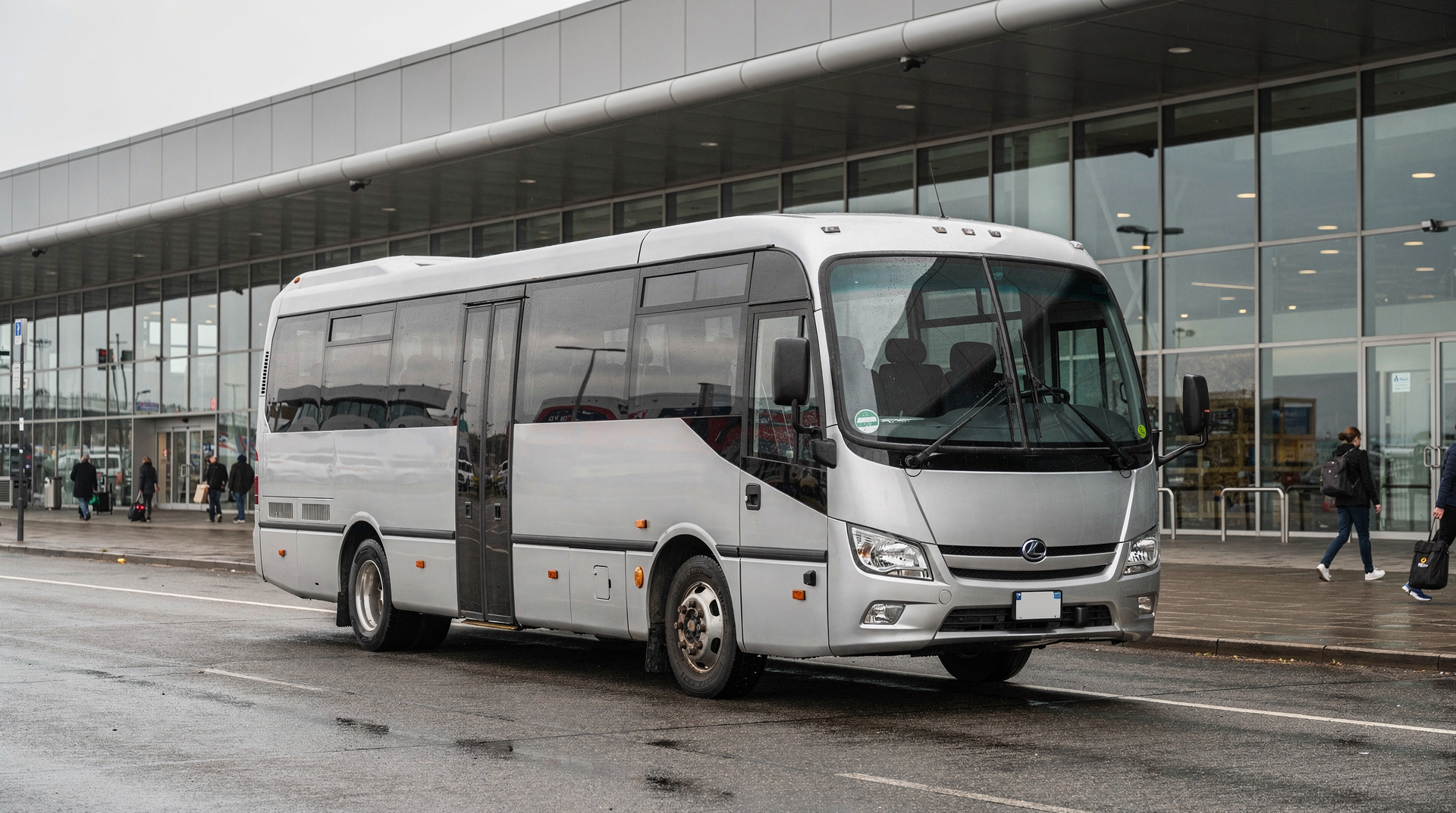
If you would rather skip the decision entirely, a shared airport shuttle into the city is another way to arrive without negotiating anything yourself, and it is worth comparing against Bolt in Budapest airport to city centre. Whichever option you choose, decide it before you land, not in the arrivals hall.
Arriving by train
Keleti is the station where tired travellers are most exposed, because international trains tend to arrive after a long journey and passengers are looking for the quickest way out. Resist that urge. Step outside, find the official rank, or open Bolt and wait for the confirmed car. If you are staying near the centre, the metro is often the calmest alternative, and the Budapest metro guide explains how the lines connect to the main station and the old town districts.
Trains from nearby cities are a popular way to reach Budapest, which is why it helps to read about the day trips that start or end at a railway station, such as the Bratislava day trip and the Vienna day trip. The same principle applies on the way back: book your onward ride from the station through an app or a company you called, never from someone who approaches you.
Bolt etiquette and small practical tips
Using Bolt well is mostly about small habits. Check the car make, colour and licence plate against the app before you get in, and ask the driver to confirm your name or destination rather than telling them yourself. This simple check protects you from getting into a car that is not yours, which can happen at a busy pick-up point where several drivers are waiting at once.
Share your pick-up point clearly. Large buildings, stations and hotels often have several entrances, and the map pin may sit on the wrong side. If the driver calls or messages, answer politely and say where you are standing. Many drivers speak limited English, so a short, clear message in the app goes further than a long explanation by phone.
Keep your phone charged, and carry a small backup battery if you plan a long day of sightseeing. A flat phone is the single most common reason visitors end up needing a street taxi. If that does happen, walk to a hotel lobby or a restaurant and ask the staff to call a licensed company for you; that is far safer than flagging a car on the pavement.
Finally, remember that a ride app gives you a record. If anything goes wrong, the trip details in the app make it easier to explain what happened and to ask for a correction to the fare.
When a taxi is the right choice and when it is not
Budapest is a compact city with a very good public transport network, so a taxi is a convenience rather than a necessity. For most daytime journeys, trams, buses and the metro will be cheaper and often just as fast. Read Budapest travel passes from BKK to see how the passes work, and use Budapest card vs single tickets to decide whether a city card makes sense for your trip. If you are tempted by an all-in-one pass, the Budapest Card is one option to weigh against your actual plans.
A taxi or Bolt makes the most sense in a few situations: late at night when public transport thins out, when you are carrying heavy bags, when the weather is poor, or when you are travelling with children or anyone who finds long walks difficult. In those cases the extra cost buys real comfort. For the rest of the time, save your money for the experiences that make the trip memorable.
Getting to the baths and the nightlife
Two destinations generate a lot of taxi traffic: the thermal baths in the morning and the bars in the evening. For the baths, a ride can be a pleasant way to start the day, especially if you are carrying a bag with swimwear and towels. If you are still choosing, the Széchenyi baths guide and the Gellért baths guide explain what to expect on arrival and how to avoid the ticket traps that catch first-timers.
In the evening, a ride home after dinner or drinks is where Bolt is at its most useful. You do not need to hunt for a rank in a crowd, and you know the fare before you commit. If your night centres on the bars of the Jewish Quarter, the Budapest nightlife guide covers the areas worth your time, and the ruin bar rip-offs page warns about the other kind of trap you can meet after dark. Ordering your ride before you step outside keeps you off the street and out of reach of anyone offering an unsolicited lift.
Planning your transport for the whole trip
The best approach is to think of transport in layers. Walk where you can, because the central districts are made for it. Use trams and the metro for longer distances in daylight. Keep Bolt for late nights, luggage days and the airport. And if you are planning excursions outside the city, a guided day out removes the transport question completely; a full-day Danube Bend excursion is one example, and you can read about the route in the Danube Bend day trip guide.
If you are still building your itinerary, Budapest in three days shows how to group sights so that you spend less time in transit, and where to stay in Budapest will help you choose a base that keeps most of your daily journeys short. A good location reduces how often you need a car at all, which is the simplest way to avoid any taxi problem.
Frequently asked questions about Taxis and Bolt in Budapest
How much does a taxi cost in Budapest?
The legal tariff for licensed Budapest taxis: start charge 1,100 HUF, then 450 HUF per km. A typical central journey (e.g. Keleti station to the Jewish Quarter) costs 2,500–4,000 HUF (€6–10). Airport to city centre costs 8,000–13,000 HUF (€20–33) by licensed meter. Bolt rides in the same range are usually 10–15% cheaper than metered taxis.What is the Budapest taxi scam exactly?
Unlicensed drivers, concentrated near Keleti station and BUD airport, approach tourists offering a 'taxi' or 'transfer'. Their vehicles are unmarked or use fake taxi signs. Once inside, they either quote an invented fare at the end, run a rigged meter that charges 10× the legal rate, or demand payment in euros at a terrible rate. Fares of 50,000–100,000 HUF (€125–250) for a short journey are reported.How do I use Bolt in Budapest?
Download the Bolt app (Android or iOS), register with a phone number and payment card, then open the app and set your destination. The app shows the estimated fare upfront. Confirm, and a driver comes to your location. The fare is charged automatically to your card — no cash needed. The system works identically to Uber in cities where Uber operates.Is Uber available in Budapest?
Uber pulled out of Hungary in 2016 following regulatory pressure. As of 2026, it has not returned. Bolt is the dominant ride-hailing alternative and is fully legal, widely used and well-reviewed. Free Now is another licensed option with smaller coverage. Both apps work with the same principles as Uber.What do licensed Budapest taxis look like?
Licensed Budapest taxis are yellow (or black for executive) with company branding, a working taximeter visible from the passenger seat, a legally required tariff card on the door, and a yellow licence plate. The meter starts at 1,100 HUF and ticks by km. If the meter starts at any other number, ask the driver to reset — or exit immediately.Can I take a taxi from Keleti station safely?
Yes, but use the official taxi rank outside, not drivers who approach you inside the station. The licensed rank is at the front entrance; taxis here are yellow and metered. Alternatively, book a Bolt from inside the station before walking out — your driver pulls up to the designated pick-up spot, confirmed in the app.Is a private airport transfer worth booking instead of Bolt?
For late-night arrivals, large groups or heavy luggage, a pre-booked private transfer removes any uncertainty — a named driver meets you at arrivals with a fixed price agreed in advance. For a solo traveller or couple with light luggage during the day, Bolt from the airport is cheaper and just as reliable. Both are safe; the choice comes down to convenience versus cost.Do Budapest taxis and Bolt drivers accept card payment?
Bolt is always cashless — payment is charged automatically to the card on file. Licensed taxis are legally required to accept card payment, though some drivers prefer cash; ask before the journey starts if you only have a card. Carrying some HUF cash as a backup is sensible regardless.