BKK travel passes for Budapest: which one to buy

Which BKK travel pass is best for a tourist in Budapest?
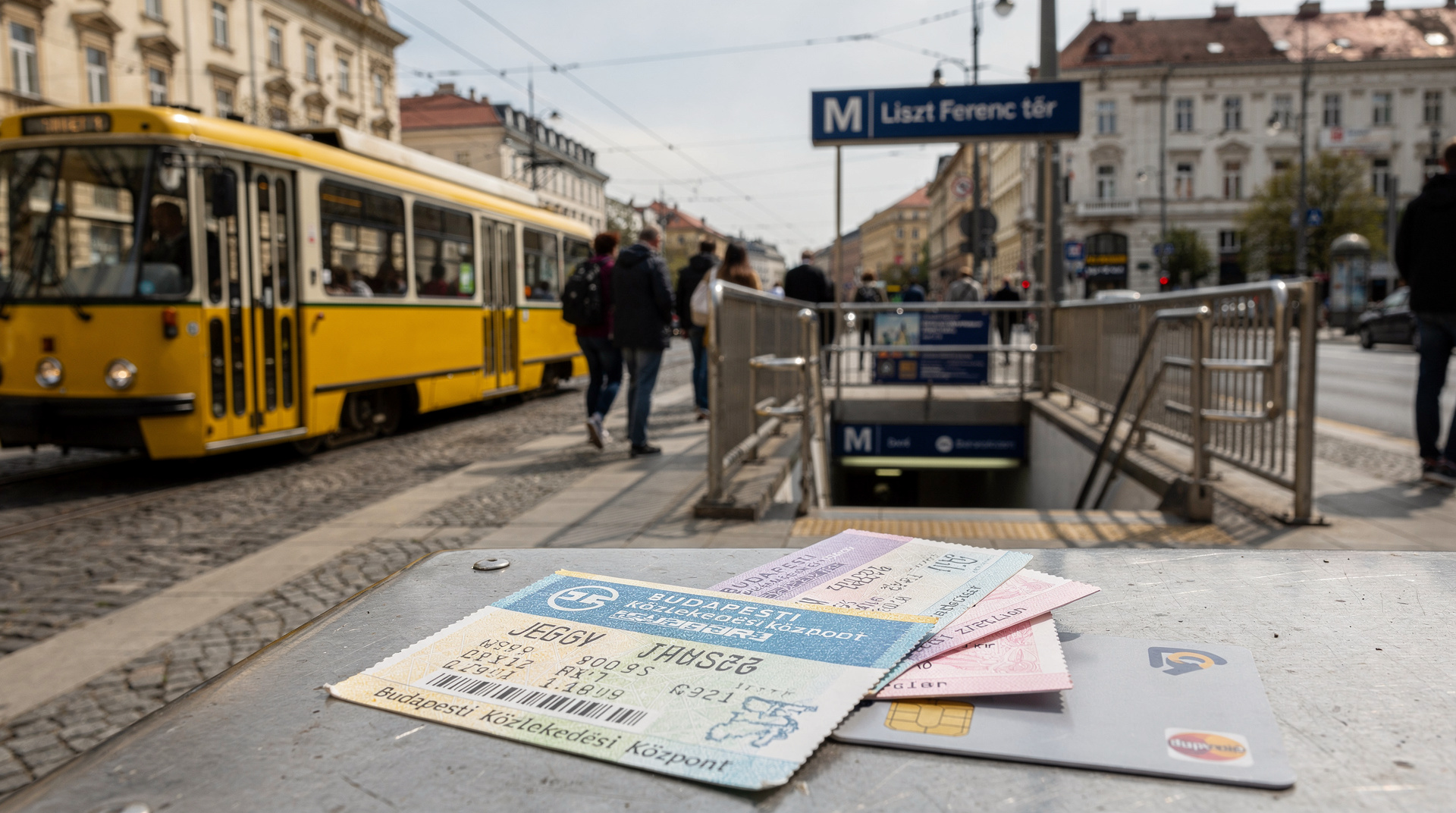
For a 3-night visit with normal sightseeing, the 72-hour travelcard at 5,750 HUF is best — unlimited metro, tram and bus for three days. The 24-hour pass (2,750 HUF) works for a day with many journeys. Single tickets at 500 HUF are only efficient if you plan fewer than 3 journeys per day.
How BKK travel passes work in Budapest
Budapest’s public transport authority BKK (Budapesti Közlekedési Központ) sells time-based travelcards that give unlimited travel across the entire network — metro, trams, buses, trolleybuses and the cogwheel railway — during the card’s validity period. The logic is the same as a London Oyster daily cap, Paris Navigo, or Berlin ABC zone pass: pay once, travel freely.
Unlike those systems, BKK does not use smart-card tap-in/tap-out for travelcards. The passes are physical paper or digital (via the BudapestGO app), and you validate the physical card once on first use to activate it. After that, you carry it and show it to inspectors. The digital version activates on purchase.
All passes require validation on first use (except digital). After first validation, you do not re-validate on subsequent journeys — you simply show the pass.
| Best for most visitors | 72-hour travelcard, 5,750 HUF |
| Doesn’t cover | Airport bus 100E, Castle funicular, sightseeing boats |
| Where to buy | Yellow ticket machines, BudapestGO app, newsagents |
| Fine for no valid pass | Around 16,000 HUF |
| Best paired with | The Budapest metro guide for route planning |
The main pass options
24-hour travelcard (24 órás Budapest-bérlet)
Price: 2,750 HUF
Valid for exactly 24 hours from the moment of first validation. Unlimited journeys across all BKK modes.
When it pays off: If you make 6 or more single-ticket journeys in a day (6 × 500 HUF = 3,000 HUF — already more than the pass). In practice, a typical sightseeing day in Budapest involves 6–10 transport movements, so this pass almost always beats buying individual tickets.
Best for: Day-trippers; visitors on a single intense sightseeing day; anyone who arrived late on one pass and needs to start a fresh one for the next day.
72-hour travelcard (72 órás Budapest-bérlet)
Price: 5,750 HUF
Valid for 72 hours from first validation. This is the most popular pass for 3-night city breaks.
When it pays off: At 5,750 HUF for three days, you need to make the equivalent of 12+ single-ticket journeys to break even (12 × 500 HUF = 6,000 HUF). On a typical 3-day Budapest visit with multiple sightseeing excursions, metro runs between neighbourhoods, and a few tram rides, this is easily achieved on day one or two.
Best for: The majority of tourist visitors spending 3–4 days in Budapest.
Monthly travelcard (30 napos bérlet)
Price: 8,950 HUF
Available for extended stays. Requires a BKK customer service office purchase; not sold at machines. Useful for stays of 2+ weeks.
Passes that cover extra services
Budapest Card (not a BKK product)
The Budapest Card includes unlimited public transport plus more than 30 free visits and activities, and discounts of 10 to 25 % at partner restaurants, cafés, museums and baths. It costs significantly more than a BKK travelcard alone but may deliver better overall value for heavy sightseers.
Available in 24h, 48h, 72h and 96h versions. Current prices start at 17,990 HUF for 24 hours, 23,990 HUF for 48 hours, 29,990 HUF for 72 hours and 38,990 HUF for 96 hours. Use the Budapest Card calculator to see whether the extras justify the premium versus buying a BKK pass plus individual museum tickets.
Full details at the Budapest Card guide. The Budapest Card can be booked in advance if the calculator confirms it’s the better fit for your itinerary.
What passes do NOT cover
Every standard BKK pass excludes:
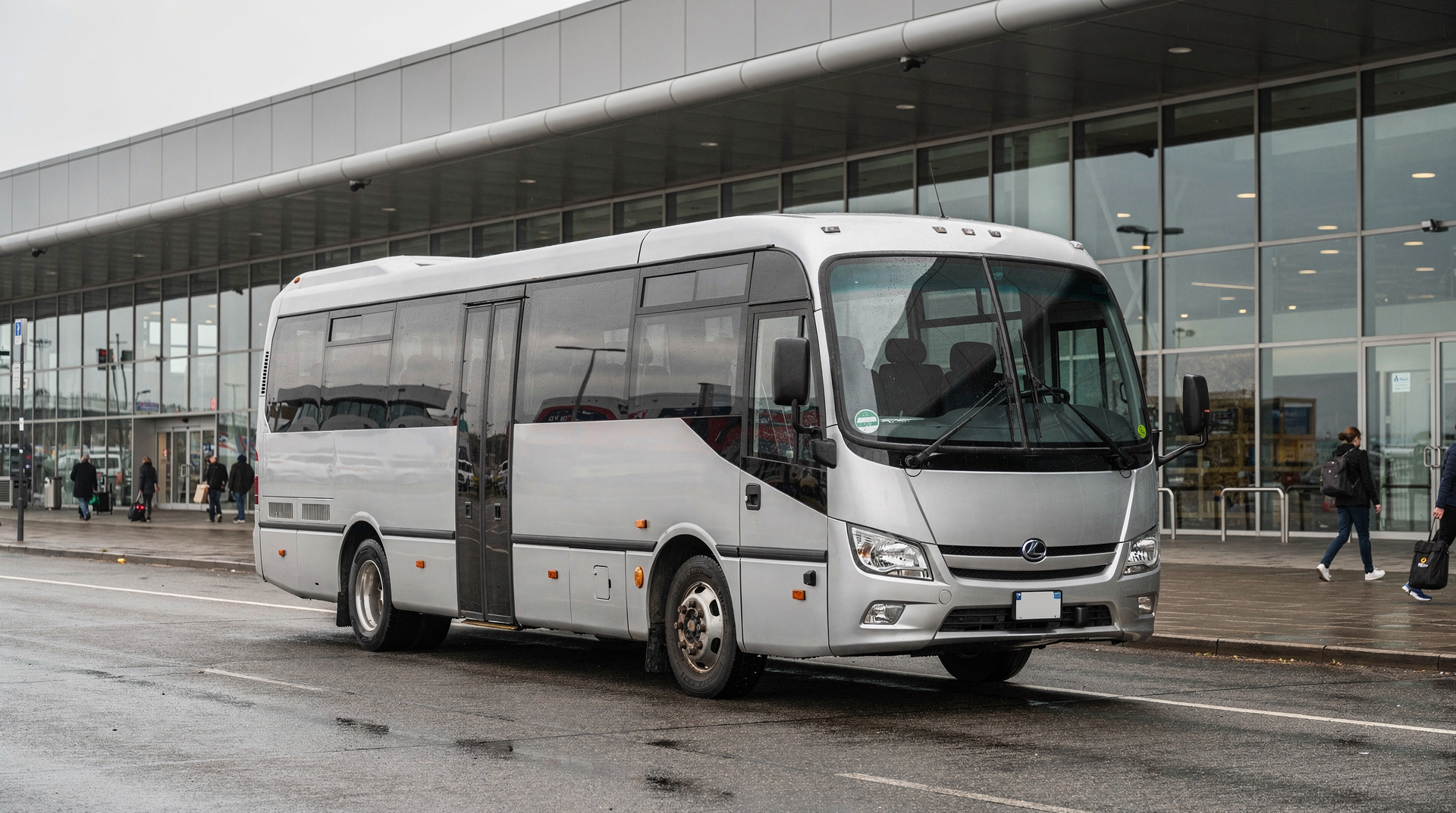
Bus 100E: The airport express requires its own 2,500 HUF ticket regardless of what pass you hold. This surprises many visitors at the airport. The 100E machine is at the bus stop outside the arrivals terminal.
Castle Hill funicular (sikló): A tourist attraction with its own pricing (~1,400 HUF one way), not a BKK service.
HÉV suburban railways beyond the city boundary: BKK passes are valid on the H5 (to Szentendre), H6, H7, H8, H9 lines within the Budapest city boundary. If you travel to Szentendre or Gödöllő, you pay a supplement for the section beyond the city boundary. The supplement is sold at the station.
Boat services: The BKK boat (public ferry) on the Danube has its own ticketing; sightseeing cruises are not BKK services.
Buying passes: step by step
At the ticket machine: Select your language (English available). Choose “travelcards” from the menu. Select your pass type. Pay by card or cash. The machine prints a paper pass. First use: insert it into the yellow validator to activate your time period.
At a customer service office: Queue, request your pass, pay. The attendant activates it if you wish, or you can activate it yourself on first use. Customer service offices are at Deák Ferenc tér, Keleti, Kelenföldi and other major stations.
Via BudapestGO app: Download the app, register (phone number required), purchase a digital pass. The pass activates on purchase — no physical validation needed. Show the pass screen to inspectors. This is the most convenient option if you have a reliable phone connection.
At newsagents (trafik): Widely available for 24h and 72h passes. Ask for “24 órás bérlet” or “72 órás bérlet” — you may need to know the Hungarian terms in smaller shops.
Validating correctly: the rules
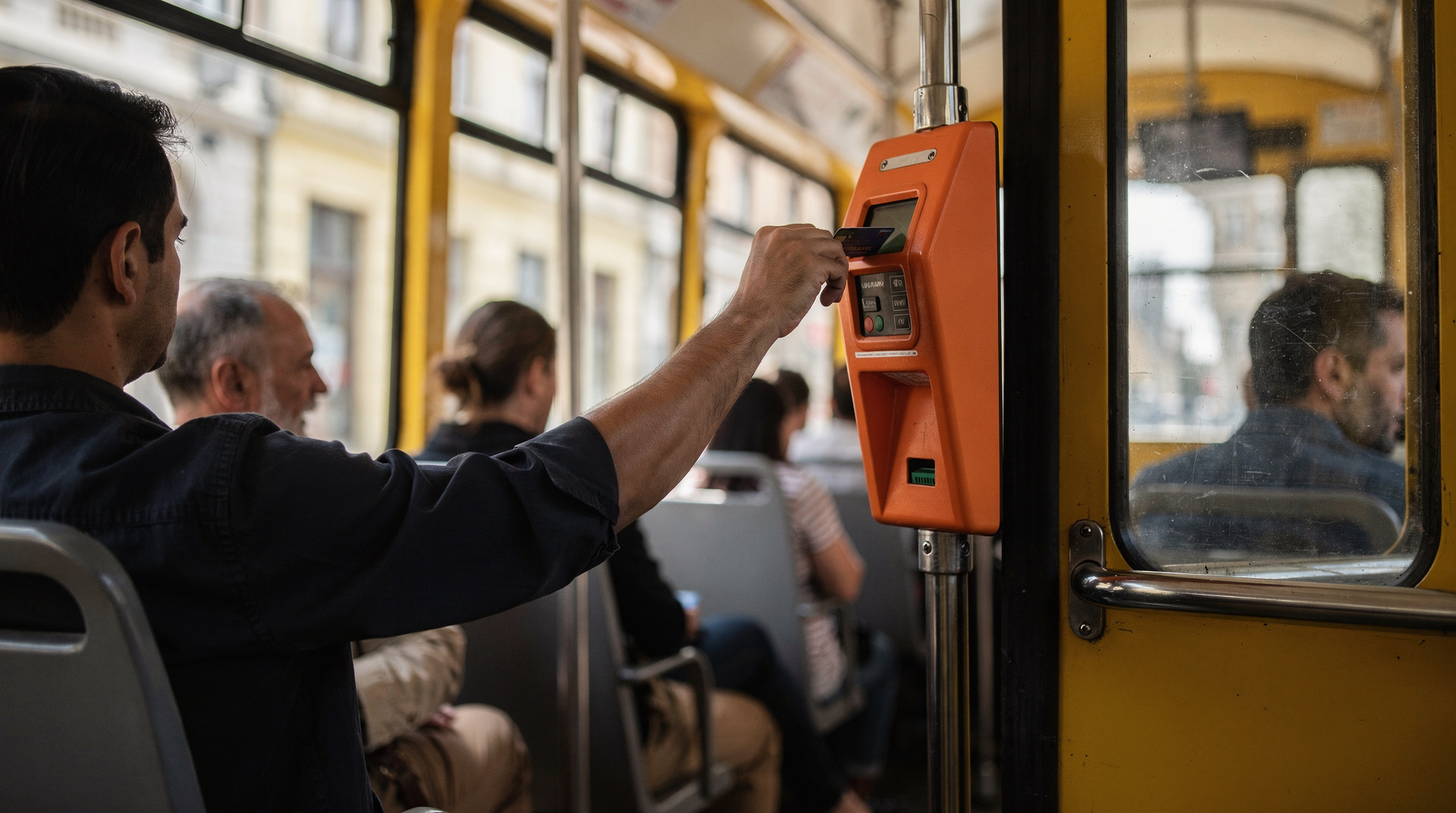
First validation (physical passes): On first use, insert your pass into a yellow validator on the vehicle or at the metro entrance. The machine stamps the date and time, activating your validity period. A green light confirms success. Keep the pass accessible after this — you do not validate again, but you must show it.
Subsequent journeys: Just board and carry the pass. No further validation needed. When an inspector boards, present the pass — they check the date/time stamp against the current time.
Inspectors: Plain-clothes inspectors are common on both the metro and surface vehicles. Always carry the pass on your person (not in your bag where it is hard to retrieve quickly). The fine for not having a valid pass is 16,000 HUF (~€40). Showing a valid pass but being unable to produce it quickly is also technically non-compliance — keep it in a jacket pocket or phone case.
How many journeys do you need?
Here is a practical calculation based on typical Budapest visit patterns:
Day 1 (arrival): Airport 100E (own ticket) + metro from Deák to hotel (2 journeys) + dinner area travel (2 journeys) + late return (1 journey) = 5 BKK journeys. Worth 24h or 72h pass from the start.
Day 2 (sightseeing): Castle District (tram/bus), Jewish Quarter (metro or walk), Great Market Hall (metro or tram), thermal baths (metro), evening return (metro) = 8–12 journeys. The 72h pass is clearly ahead.
Day 3 (day trip or further exploration): HÉV to Szentendre plus supplement (sold separately); or full metro/tram day in the city. Another 8–10 journeys.
Total for 3 days: approximately 21–27 BKK journeys. At 500 HUF each that would be 10,500–13,500 HUF. The 72-hour pass costs 5,750 HUF. Saving: 4,750–7,750 HUF.
For a budget breakdown including transport, food and sightseeing, see Budapest trip cost. For the full transport overview including trams, buses and night transport, see getting around Budapest. Current HUF/EUR rates are at the currency converter.
Passes and your first day from the airport
Because bus 100E and the airport transfer sit outside the BKK pass system entirely, it’s worth planning your very first journey separately from your travelcard purchase. Most visitors buy the 100E ticket at the airport, ride into the centre, and only validate their BKK travelcard once they start using the metro or tram network from their hotel onward — there’s no benefit to activating a 72-hour pass before you’ve actually started using it. See the airport to city centre guide for the full arrival sequence, including where the 100E ticket machine is and how it connects to the metro at Kőbánya-Kispest.
If your itinerary includes a Szentendre day trip, remember the HÉV supplement is bought separately at the station rather than being folded into any BKK pass — the Budapest metro guide explains how the HÉV lines interact with the metro network for that leg of the journey.
Matching a pass to your kind of trip
The right pass depends less on the price list than on how you actually spend your days. A few common visitor profiles make the choice easier.
The first-timer on a long weekend. If you are following a classic first visit, the 72-hour travelcard fits naturally around the headline sights: the Castle District, the Parliament, the Jewish Quarter and a thermal bath. Our first time in Budapest guide and the 3-day overview both assume a mix of walking and short metro or tram hops, which is exactly the pattern a travelcard rewards. If you would rather follow a ready-made plan, the 3-day itinerary lays out where each ride is likely to fall.
The budget traveller. When every forint counts, the pass is one of the few transport costs that is predictable. Work out how many days you will really be riding rather than walking, and buy only what you need. The Budapest on a budget guide shows where transport sits next to food, baths and sightseeing, and the daily budget breakdown helps you decide whether a 24-hour pass on your busiest day is enough.
The slow traveller. If you plan long lunches, coffee-house afternoons and plenty of walking in compact areas such as District V, you may find single tickets are enough on some days. The Belváros guide shows how much of the centre can be covered on foot, which is worth knowing before you pay for unlimited rides you will not use.
The bath-hopper. Thermal baths are scattered across both banks, and getting to them is often the longest ride of your day. If your plan revolves around soaking, read the thermal baths itinerary and count how many separate trips it involves before choosing a pass length.
Tips for using your pass day to day
- Think in blocks of time, not calendar days. A 24-hour or 72-hour pass starts counting from first validation, so a morning start gives you the longest useful stretch. Activating it late in the evening wastes part of the first period.
- Plan your route before you leave the hotel. The BudapestGO app and the network map make it easy to see which line or tram gets you closest to your destination. Fewer wrong turns means fewer wasted rides, although with an unlimited pass a mistake costs only time.
- Use trams as sightseeing. Some tram routes run along the Danube and make a relaxed way to see the river and the main bridges without paying for a separate tour. They are included in your pass, so riding one simply for the view costs nothing extra.
- Keep the pass with your ID if you can. If an inspector has doubts, being able to show both quickly avoids friction.
- Know when to walk. Much of central Pest is compact. Using the pass is worthwhile for hills, longer distances and tired evenings, not for every short stretch.
Passes when you leave the city
A BKK pass is designed for the urban network, so day trips need a little extra planning. Excursions towards the Danube Bend, for example, mix local transport with other services, and the pass will only carry you part of the way. The Szentendre day trip guide explains how that journey is organised.
For a bigger outing, the lake is a different story: reaching Balaton from the capital is usually done by a dedicated train, coach or organised excursion, and your travelcard will not help beyond the city boundary. If you would rather skip the logistics, a guided option such as a day out at Lake Balaton from Budapest takes care of the transfers, while the Lake Balaton day trip guide covers the independent route. On days like these, a 24-hour pass is rarely worth activating; single tickets for the city portions are often enough.
Pass or taxi?
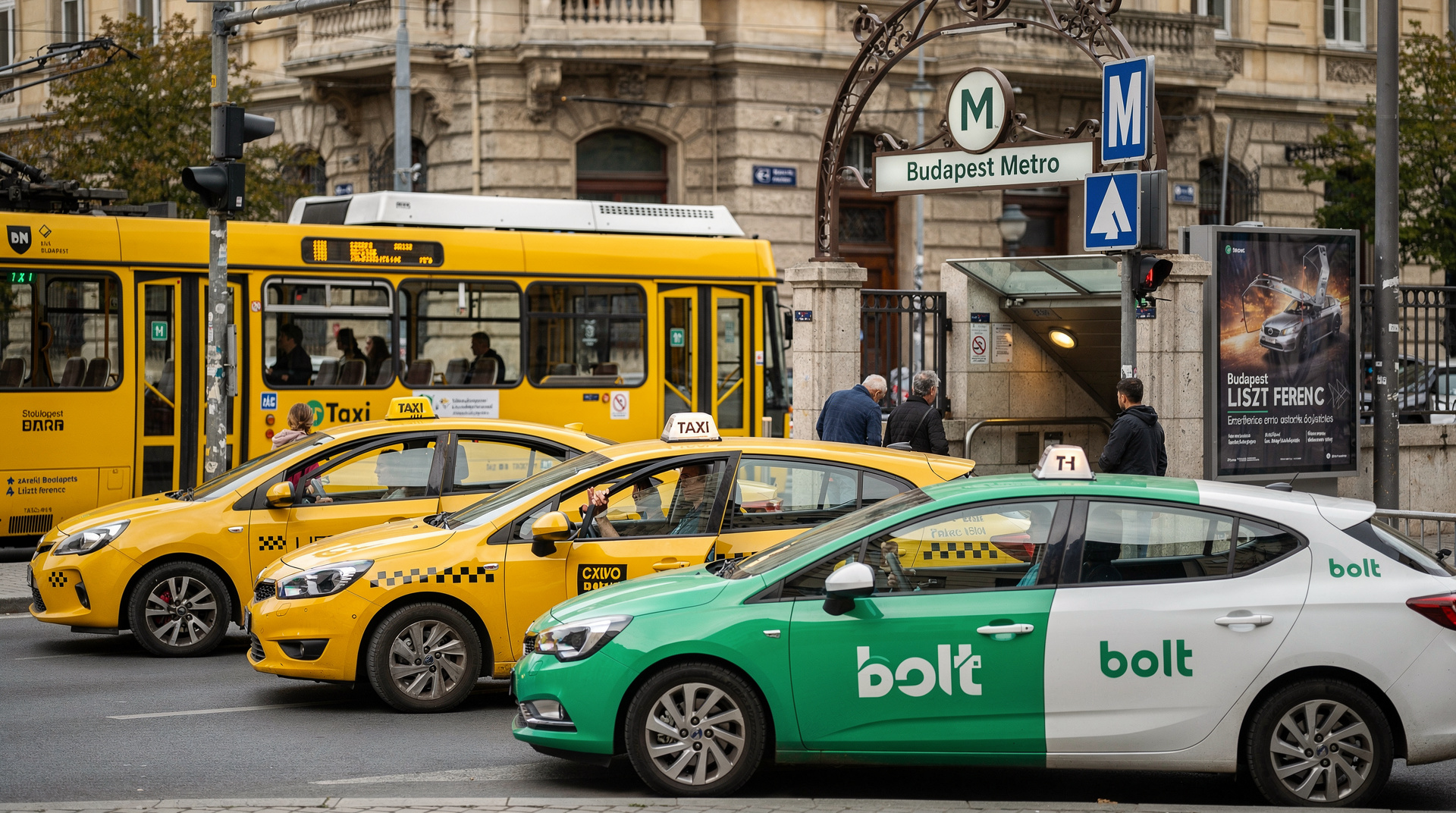
Passes and ride-hailing complement each other rather than compete. Late at night, with heavy luggage or in bad weather, a ride-hailing car may make more sense than waiting for the next tram, and the cost is separate from your pass. Read taxis and Bolt in Budapest before relying on either, and keep the pass for the daytime journeys where public transport is quicker and cheaper.
Frequently asked questions about BKK travel passes for Budapest
Does the BKK travelcard cover the airport bus?
No. Bus 100E (BUD airport to Deák tér) requires a dedicated 100E ticket (2,500 HUF) regardless of which BKK pass you hold. Standard travelcards and single tickets do not cover the 100E service.Can I share a BKK travelcard with another person?
No. BKK travelcards are personal and non-transferable. Each person in your group needs their own pass. Inspectors can request photo ID to verify a travelcard is being used by its purchaser if there is any doubt.Where can I buy BKK passes in Budapest?
At any yellow BKK ticket machine at metro stations (accepts cards and cash, English interface), at BKK customer service offices at Deák, Keleti and Kelenföldi metro stations, at newsagents (trafik) throughout the city, and via the BudapestGO app for digital passes.Is the Budapest Card better value than a BKK travelcard?
It depends on your sightseeing plans. The Budapest Card includes unlimited public transport plus more than 30 free visits and activities and discounts of 10 to 25 % at partner venues. If you only need transport with no sightseeing planned, a BKK travelcard is much cheaper. Compare using the /tools/budapest-card-calculator/.Should I buy my BKK pass before or after the airport bus?
After. Bus 100E has its own separate ticket regardless of which BKK pass you hold, so there's no reason to activate a 72-hour travelcard before you've reached the city and started using the metro or tram network. Buy the 100E ticket at the airport, then validate your BKK pass once your onward transport actually begins.