Buda vs Pest: which side of the river should you stay on?

Should I stay in Buda or Pest?
Most first-time visitors should stay in Pest. It is flatter, has more accommodation options at every price point, better transport links and is closer to most restaurants, bars and nightlife. Buda is quieter, prettier and better for couples or anyone prioritising calm over convenience. Both sides are connected by multiple bridges — the river is easy to cross.
The river that divides and connects
Budapest is two cities that merged into one in 1873: Buda, hilly and ancient on the west bank, and Pest, flat and cosmopolitan on the east. The Danube between them is not a barrier — eight bridges connect the two banks, and crossing from one to the other takes minutes by tram or foot. But the two sides feel genuinely different, and where you stay shapes your entire experience of the city.
This guide gives you the honest comparison. No vague suggestions that “both sides have their charm” — concrete recommendations based on what type of traveller you are.
| Best for first-timers | Pest (Districts V, VI or VII) |
| Best for quiet/couples | Buda (Castle District or Gellért area) |
| Crossing time | 10–15 min on foot or 5 min by tram |
| Metro coverage | Dense in Pest, minimal in Buda |
| Typical price gap | Comparable; Castle District and riverside Pest command a premium |
What Buda feels like
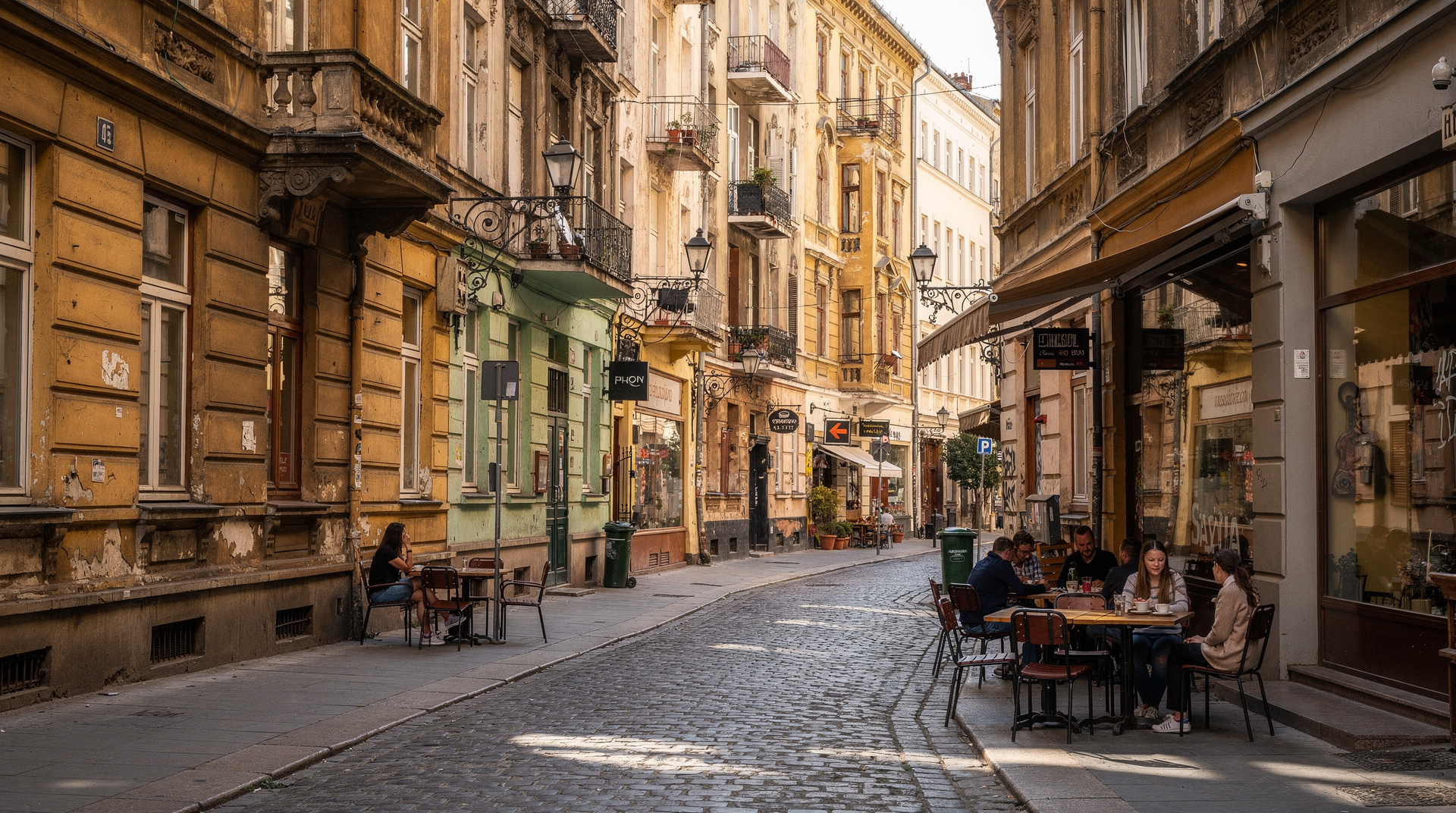
Buda is defined by its topography. The Castle Hill rises steeply from the Danube bank, with the Royal Palace, Matthias Church and Fisherman’s Bastion at the top. The neighbourhoods below and around the hill — Víziváros (Watertown), Tabán, Krisztinaváros — are quiet, residential and pretty.
There are excellent restaurants in Buda, notably around the Castle District and in the Mammut/Moszkva tér area. But the streets are emptier after 9pm. Transport connections work fine but require more changes than central Pest. The Castle District itself has limited public transport — taxis, Bolt or the castle funicular are the practical options.
Buda is best for: couples seeking quiet and romance, visitors with a specific focus on the Castle District and Gellért Hill, people who do not want to deal with late-night street noise, those visiting primarily for the Gellért thermal baths (check current status before booking — see Gellért baths guide).
Buda is not ideal for: first-timers who want central convenience, anyone focused on nightlife, solo travellers or groups who eat out late.
What Pest feels like
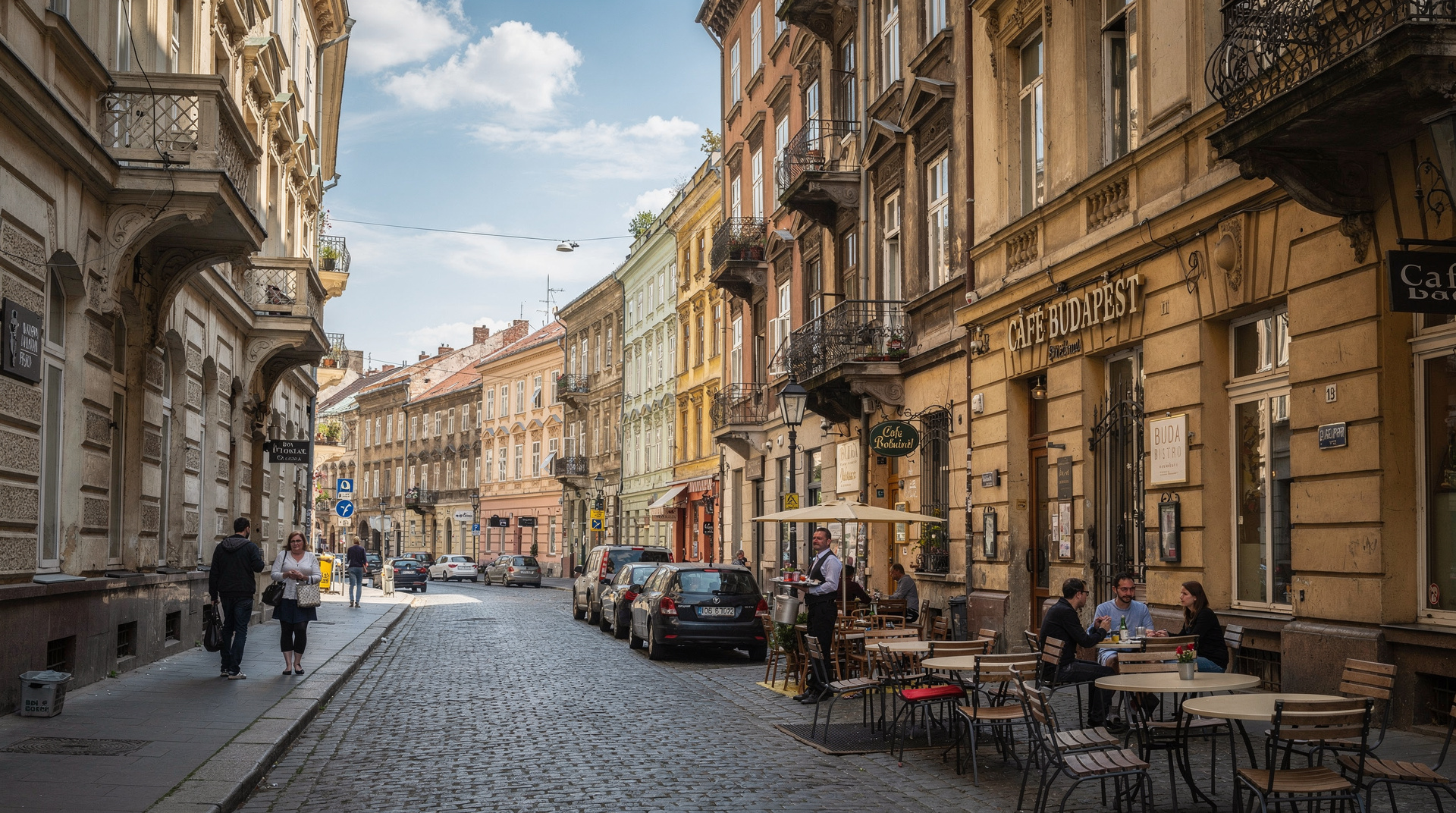
Pest is where most of the city’s energy concentrates. The grand boulevards (Andrássy Avenue, the Ring Roads) run arrow-straight. The Parliament sits on the Danube bank. The Jewish quarter and ruin bars fill District VII. The Central Market Hall, the National Museum and most of the city’s best coffee houses are in Pest.
The four metro lines (M1, M2, M3, M4) all intersect at Deák Ferenc tér in central Pest — you can reach almost anywhere in 15–20 minutes. Trams 4 and 6 on the Great Ring Road are the most useful surface lines.
The noise reality: if you stay in or near District VII, expect street noise until 3–4am on Friday and Saturday nights. Light sleepers should look for courtyards or inner-facing rooms, or choose the quieter stretches of District V or VI.
Pest is best for: first-time visitors, solo travellers, groups, anyone focused on nightlife or restaurant access, people who want to maximise sightseeing efficiency.
District-by-district breakdown for Pest
District V (Belváros and Lipótváros) — the most central option. Parliament is here; Váci utca shopping street runs through it; Chain Bridge connects at its western end. Accommodation ranges from budget guesthouses to luxury riverside hotels. The main tourist caution: Váci utca restaurants are significantly overpriced — a common Budapest tourist trap. Eat one street back. See Váci Street tourist trap.
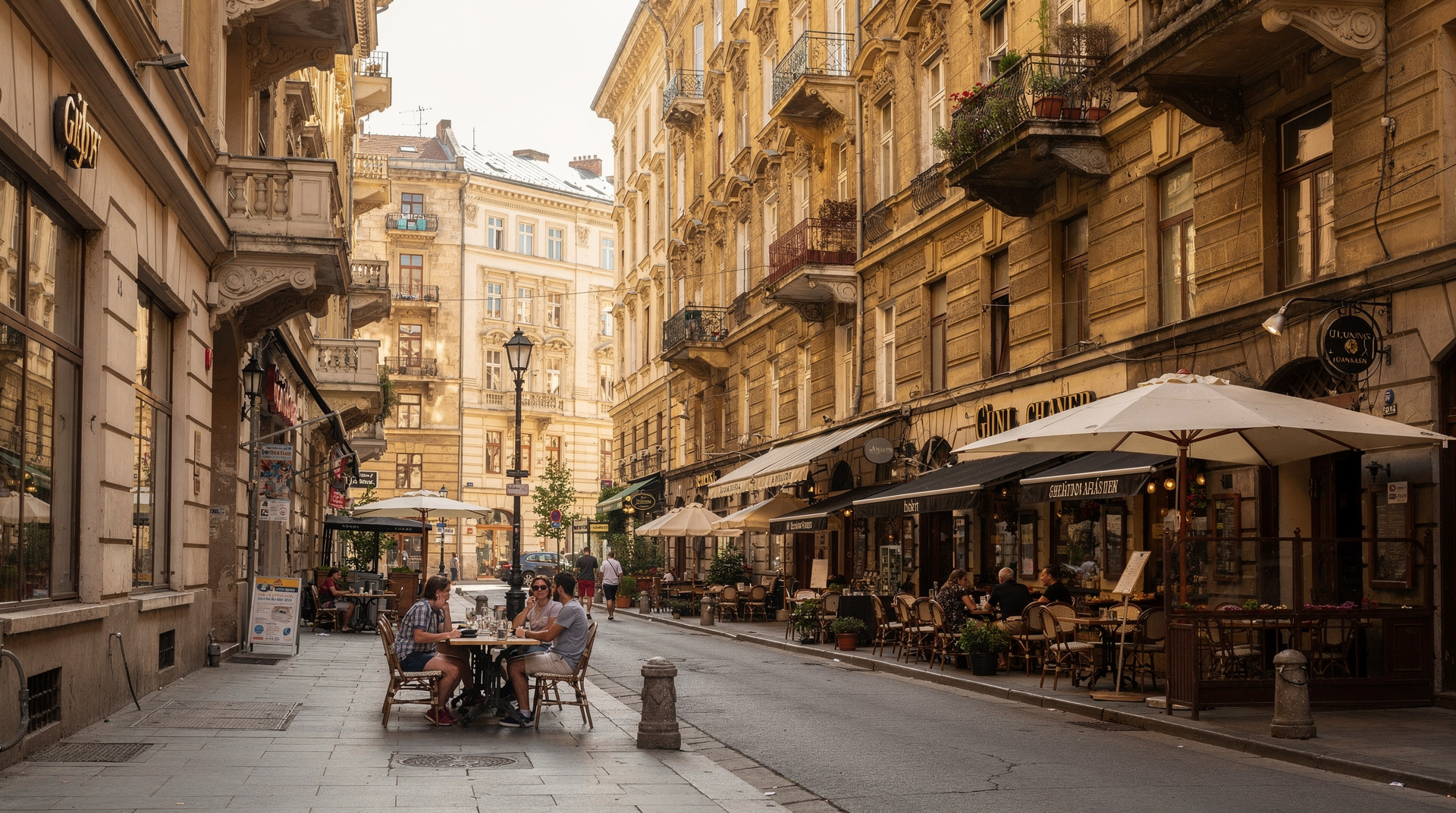
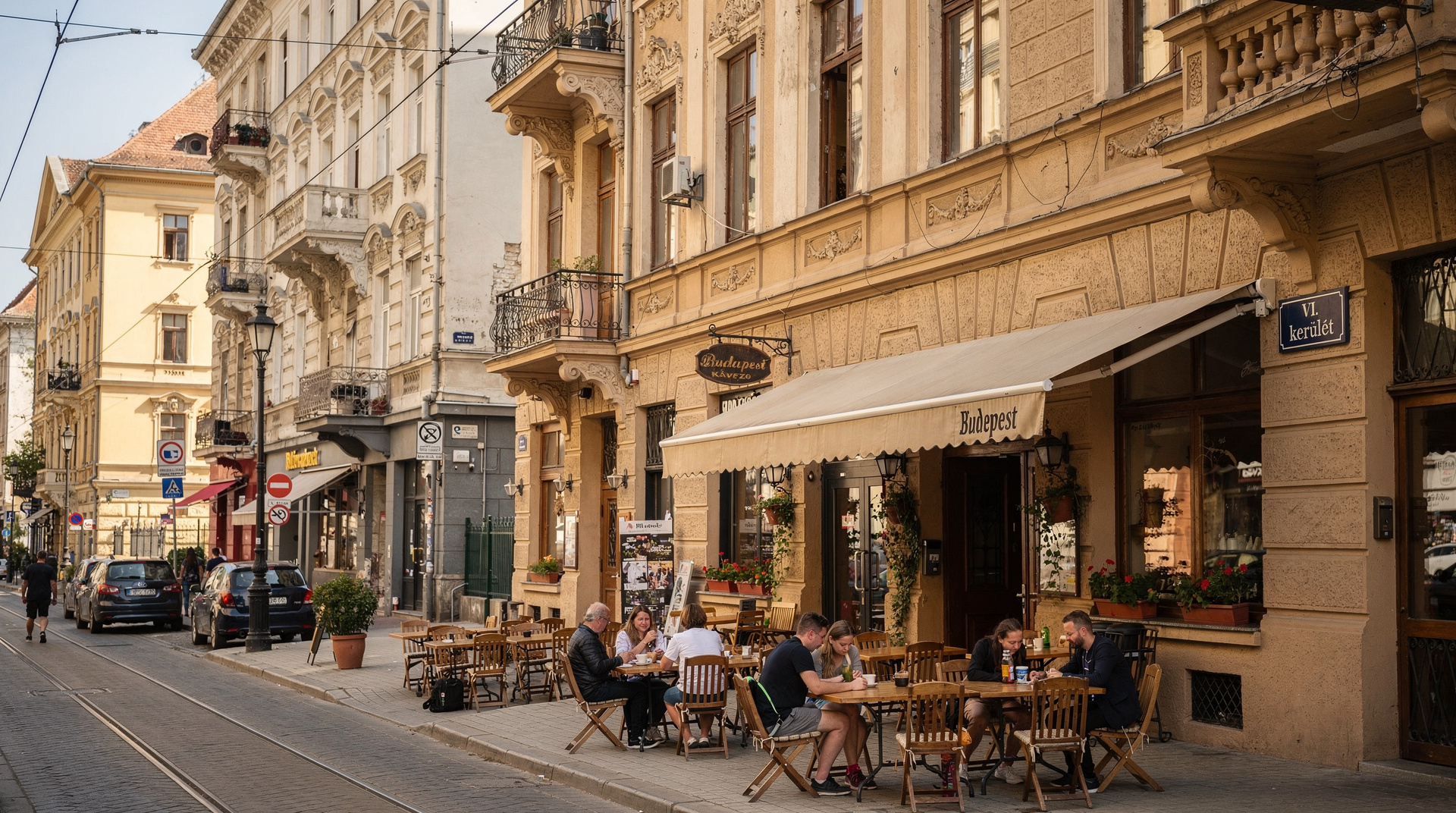
District VI (Terézváros) — Andrássy Avenue runs from Deák tér to Heroes’ Square, passing the Hungarian State Opera and lined with grand coffee houses. The area around Liszt Ferenc tér has some of the city’s best restaurant terraces. Quieter than District VII, classier feel, still very central.
District VII (Erzsébetváros / Jewish Quarter) — the most atmospheric choice. Szimpla Kert, the Great Synagogue on Dohány Street and the ruin-bar network are all here. Excellent for nightlife access but noisy on weekends. Read District VII guide and ruin bar rip-offs before booking accommodation in this area.
District VIII (Józsefváros) — cheaper, less touristy, improving rapidly. Good transport links. Less immediately appealing for first-timers, but the Palace District area around the Hungarian National Museum has charm and good value accommodation.
Key areas in Buda worth knowing
Castle District (District I) — the most historic location in Budapest, and the most expensive. Streets are cobbled and car-free in the castle perimeter. Hotels and pensions here can be wonderful but pricey. Practical consideration: the castle area has no metro station — you rely on the 16 bus, funicular or Bolt for getting around.
Gellért area — the foot of Gellért Hill on the Buda bank, adjacent to the Gellért Hotel and its famous thermal baths. Quiet, beautiful position, easy tram access to central Pest via tram 19 or 41.
Víziváros (Watertown) — the strip between the Danube and Castle Hill. Pleasant residential area, some good guesthouses. Chain Bridge is within easy walking distance.
Whichever Buda neighbourhood appeals, check the walk from the nearest tram or bus stop to the front door, since the Castle District has no metro and cobbles are tiring with a suitcase. Judge guesthouses in Víziváros and near Gellért on location first and room rate second, and read the cancellation terms before paying. You can search Buda stays on Booking.com for your dates.
How to choose your base in practice
Start with how you plan to spend your evenings, because that is where the two banks differ most. If you expect to wander out for dinner, find a bar and walk home, Pest makes that effortless. If you expect to return to the hotel after a day of sightseeing and want a calm night, Buda starts to look much better. Daytime sightseeing barely depends on the side you pick, since the major sights are spread across both banks and the connections are good.
Next, think about luggage and arrival. Whichever side you choose, check how you will reach the door from the airport or station, and whether the street is cobbled, steep or pedestrianised. Our guides to getting from the airport to the city centre and getting to Budapest explain the options, and a steep Buda lane with a heavy suitcase is a very different experience from a flat Pest street with a lift.
Finally, be honest about your travel style. People who like to improvise tend to be happier in Pest, where something is always open nearby. People who plan carefully and like a quiet retreat after a long day often prefer Buda. If you are unsure, the first time in Budapest guide is a useful companion to this page, and the where to stay in Budapest overview widens the comparison beyond the two banks.
Sleeping well on either side
Noise, more than price, is what most often spoils a stay. A few habits help wherever you book:
- Read recent guest reviews for comments about street noise, not only about the room itself.
- Ask for an inner-facing or courtyard room if you are a light sleeper, particularly in busy parts of Pest.
- Check whether the building has a lift, since many central apartments sit on upper floors of older buildings.
- Look at the exact address on a map rather than trusting the district name alone, because the character of a street can change within a few minutes of walking.
In Buda the issue is usually not noise but distance from late transport and restaurants, so it is worth checking how far the nearest tram or bus stop is. The getting around Budapest guide and the Budapest metro guide show how the network fits together, and BKK travel passes cover the ticket side so you can plan crossings without stress.
Evenings, food and nightlife by side
Pest gives you the widest choice for dinner and drinks. The best areas for nightlife guide and the Budapest nightlife guide explain how the scene is spread across the central districts, and the best ruin bars in Budapest list helps you decide how close to the action you want to sleep. For food, the best restaurants in Budapest guide covers both banks, so you can plan a special dinner in Buda even if your hotel is in Pest.
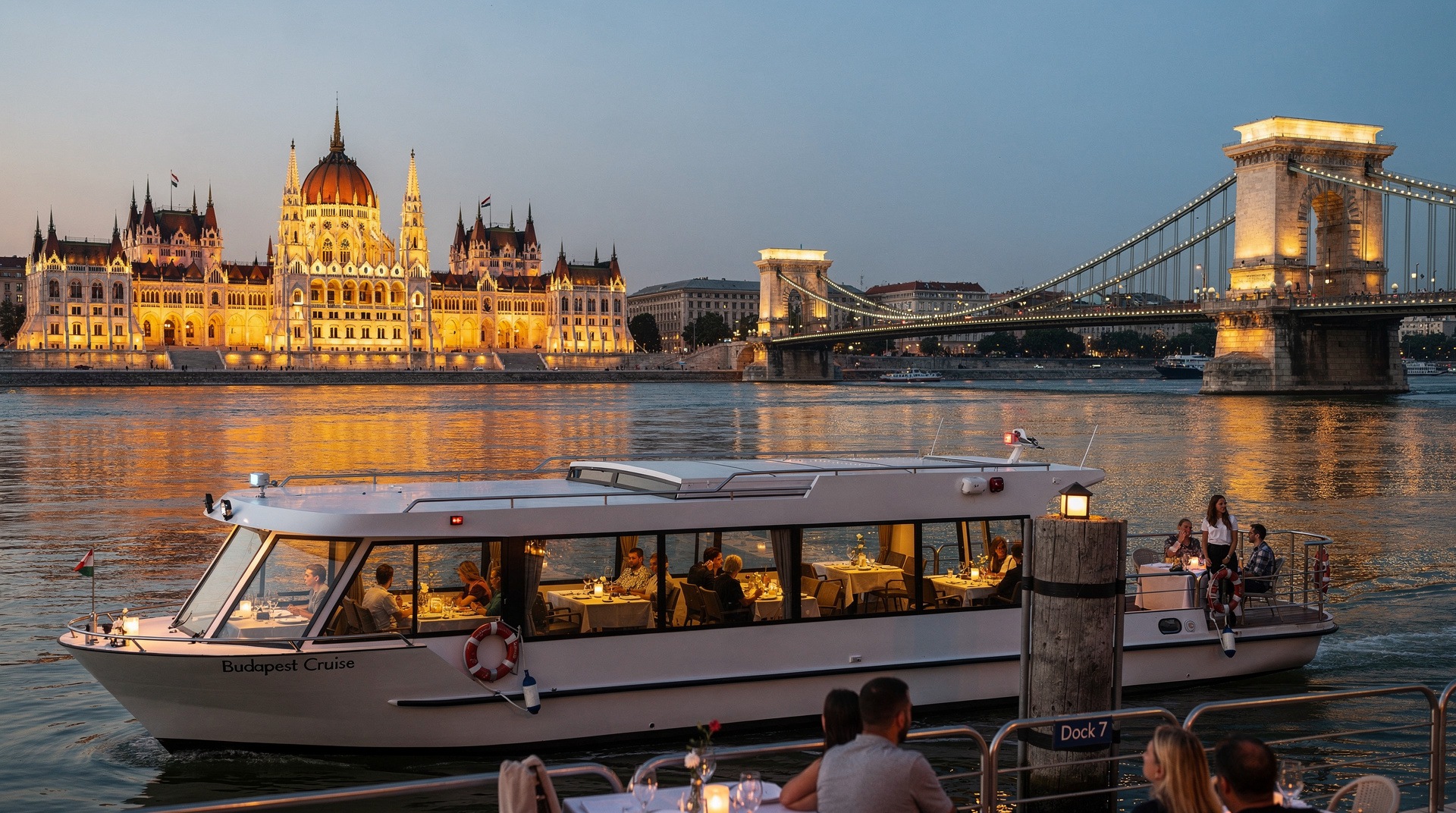
Buda rewards a different kind of evening: a slow walk along the embankment, a view of the lit-up Parliament across the water, and an early night. Couples in particular may like to read the romantic Budapest for couples guide before deciding, since the answer there often tips the balance toward the quieter bank.
Thermal baths and your choice of side
Many visitors build their trip around a bath day, and that can influence where you sleep. Buda has the baths at the foot of Gellért Hill, while others sit elsewhere in the city, so it helps to see the options side by side in the Széchenyi vs Gellért vs Rudas comparison. A hotel near your preferred bath saves a morning commute, but it is not essential: the transport network makes every bath reachable from either bank, so do not let one spa dictate your whole base.
Seeing both sides without changing hotels
Staying on one bank does not stop you from getting to know the other. A walking route over one of the bridges, such as a guided walk through the city centre, is a gentle way to understand how the districts connect. If you prefer to read up first, top attractions in Budapest and the three-day overview show how a visit can be arranged around a single base. For a ready-made plan, the Budapest 3 days itinerary moves across the river several times without any need to relocate.
The price reality
Accommodation in central Pest (Districts V, VI, VII) is generally competitive with Buda, sometimes cheaper because of higher supply. Luxury hotels on the Pest side of the Danube (Kempinski, Four Seasons on the Chain Bridge, Marriott on the embankment) command premium prices for the Parliament and river views.
In Buda, the Castle District’s boutique hotels charge for prestige and quiet. The Gellért Hotel itself is a landmark experience rather than a value proposition. Suburban Buda is cheaper but less useful for short visits.
Transport between the sides
Never feel locked into your chosen side. The bridges are numerous and the crossings are easy:
- Chain Bridge (Széchenyi lánchíd) — the most iconic, pedestrian-friendly, connects central Buda to District V in Pest
- Elizabeth Bridge (Erzsébet híd) — direct connection between Gellért and District V; fast tram routes
- Margaret Bridge (Margit híd) — connects Buda to District XIII/VI in Pest; also accesses Margaret Island
- Liberty Bridge (Szabadság híd) — connects Gellért to the Central Market Hall in Pest; popular with cyclists
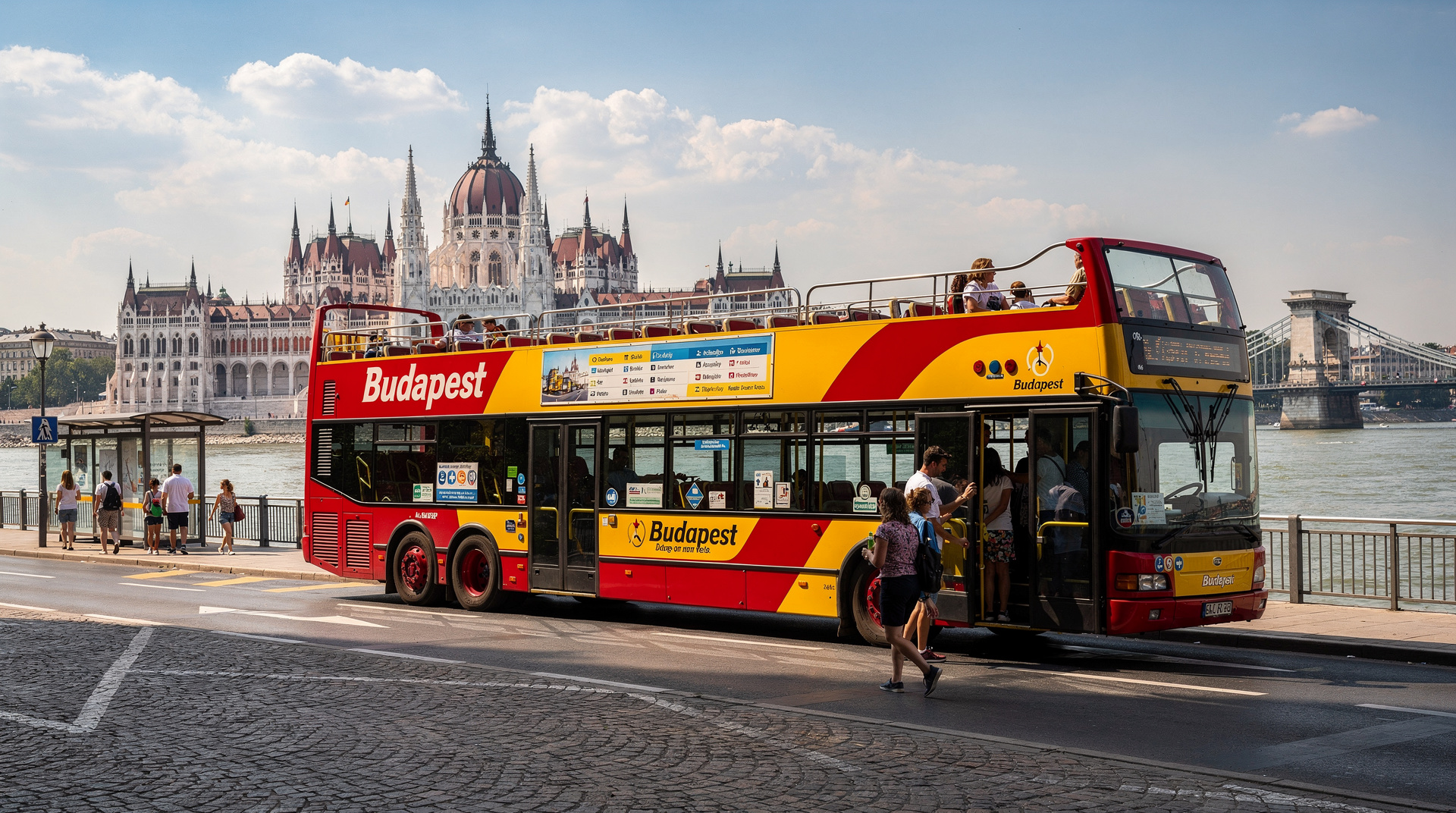
A hop-on hop-off bus crosses both banks and is genuinely useful for understanding Budapest’s geography on your first day — it gives you the bird’s-eye view before you start navigating on foot.
Which side for specific traveller types
Solo travellers almost always do better in Pest — busier streets late at night feel safer than Buda’s quiet residential lanes, and hostels/budget guesthouses cluster in Districts VI and VII. See is Budapest safe for a wider safety picture.
Families with young children often prefer the calmer pace of Buda or the outer edge of District VI, away from ruin-bar noise, combined with easy access to Margaret Island for green space — see budapest with kids.
Business travellers gravitate to District V and the riverside hotels near Parliament, for proximity to conference venues and reliable transport at any hour.
Groups and stag/hen parties should stay in or very near District VII, where the walk home from ruin bars is short — but expect the noise that comes with it. Budget realistically using Budapest daily budget.
A day plan that uses both sides
You do not have to pick a side and stay there all day. A typical first day works well split across the river: morning in Buda for Castle Hill and Fisherman’s Bastion (see Buda Castle guide), lunch back in Pest around Váci utca’s side streets, afternoon at the Parliament or a museum, then an evening river Danube sightseeing cruise that shows both banks lit up after dark. This rhythm — Buda for views, Pest for pace — is a good template for the rest of the trip too, whichever side your hotel is on.
Using the Budapest Card from either side
The Budapest Card covers unlimited public transport across both banks — metro, trams, buses. Wherever you stay, you can reach any major sight efficiently. Use the Budapest Card calculator to assess whether it pays off for your specific itinerary.
Money, timing and booking tips
Because prices on both banks overlap, the better way to save is to be flexible about the exact street rather than the bank. Compare a few options in neighbouring districts, and read the Budapest daily budget and is Budapest expensive guides to see where accommodation sits in the wider cost of a trip. Travellers watching every forint will find more ideas in Budapest on a budget.
Timing matters too. The season you visit changes which side feels better: a terrace-heavy summer favours lively Pest streets, while a cold winter weekend can make a cosy Buda guesthouse more appealing. The best time to visit Budapest guide helps you match the season to the base, and the Budapest in winter page is worth a look if you travel in the cold months.
The honest recommendation
Stay in Pest if this is your first visit, if you have fewer than 5 nights, or if evenings out are part of your plan. District V for the cleanest central location; District VI for atmosphere and restaurants; District VII if nightlife is a priority and you can tolerate noise.
Stay in Buda if you are a couple looking for quiet evenings and scenic walks, if you have already seen Pest on a previous trip, or if you are focused on the Castle District sights and the Gellért/Rudas baths.
Do not overthink it. The bridges make both sides accessible. Pick Pest for ease, Buda for quiet. Whichever you choose, the view from the opposite bank is always worth a walk across.
For a complete neighbourhood breakdown, see where to stay in Budapest and the Budapest neighborhoods guide.
Frequently asked questions about Buda vs Pest
How far apart are Buda and Pest?
The two banks of the Danube are roughly 300–500 metres apart at the central bridges. Crossing Chain Bridge on foot takes about 10–12 minutes. Tram, metro and bus connections mean you can get from one side to the other in 5–15 minutes at almost any time of day. The river is never an obstacle — it is a scenic crossing.Which side has better nightlife?
Pest, decisively. The ruin-bar district (District VII), the bar-dense District V around Deák tér, Gozsdu Udvar, and Kazinczy utca are all in Pest. Buda has some quality restaurants and bars but nothing approaching the nightlife density of central Pest. If evenings out matter, stay in Pest.Is Buda quieter and more expensive?
Buda is generally quieter — fewer tourists, less street noise, more residential character. Prices for accommodation are broadly comparable; in some pockets of the Castle District, prices are higher for the view and prestige. In suburban Buda they can be lower. Quiet does not automatically mean more expensive.Which district in Pest is best for first-timers?
District V (Belváros/Lipótváros) for centrality — close to the Chain Bridge, Parliament, Váci utca and excellent transport. District VI (Terézváros) on Andrássy Avenue for style. District VII (Erzsébetváros, the Jewish quarter) for atmosphere and nightlife access — but read /guides/ruin-bar-rip-offs/ before booking there.Where should couples stay?
Couples who want romance and quiet: the Castle District in Buda or the Gellért area near the thermal baths. Couples who want access to good restaurants and evening walks: District V or VI in Pest. The Danube panorama from either side at night is spectacular.Is District VIII safe to stay in?
The parts of District VIII closest to the National Museum and the Palace District are safe and increasingly popular with visitors, offering good value accommodation. Streets further southeast, nearer Keleti station, feel rougher after dark and are less pleasant to walk through. Stick to the Palace District pocket and you will have no issues; check the exact address before booking.Can I split my stay between Buda and Pest?
Yes, and it works well on longer trips. A common pattern is three or four nights in Pest for sightseeing and nightlife, then a couple of nights in the Castle District or near Gellért Hill to end the trip quietly. Two hotel changes add packing hassle for a short visit, so this suits stays of six nights or more rather than a long weekend.
Top experiences
Bookable activities with verified prices and instant confirmation on GetYourGuide.