Buda vs Pest: which side of Budapest should you stay and explore?

Should I stay in Buda or Pest in Budapest?
Pest for most visitors — it has the majority of restaurants, bars, museums, and metro lines. Buda is quieter, greener, and more residential, with the Castle District as its main attraction. The Danube bridges connect both sides easily, so where you stay mostly affects how long your transit takes to various sights.
Two cities, one name
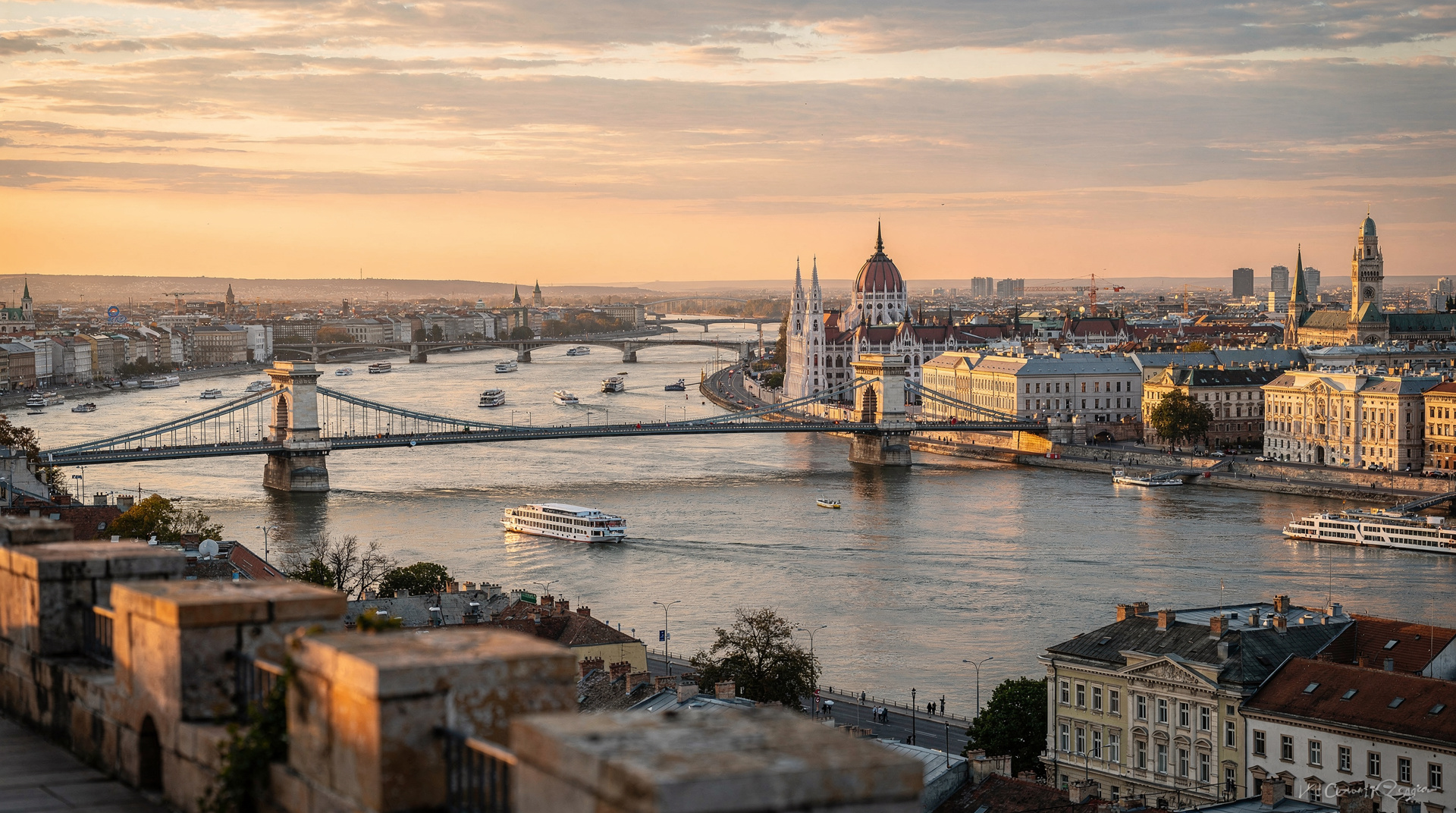
Budapest was three separate cities — Buda, Óbuda, and Pest — until their administrative union in 1873. The merger was largely political: the two banks had been trading and communicating across the Danube for centuries, connected by seasonal pontoon bridges and, from 1849, by the Chain Bridge (Széchenyi Lánchíd). Today the eight bridges that cross the river make the two sides feel like one city — and they are, legally and practically. But the character difference persists.
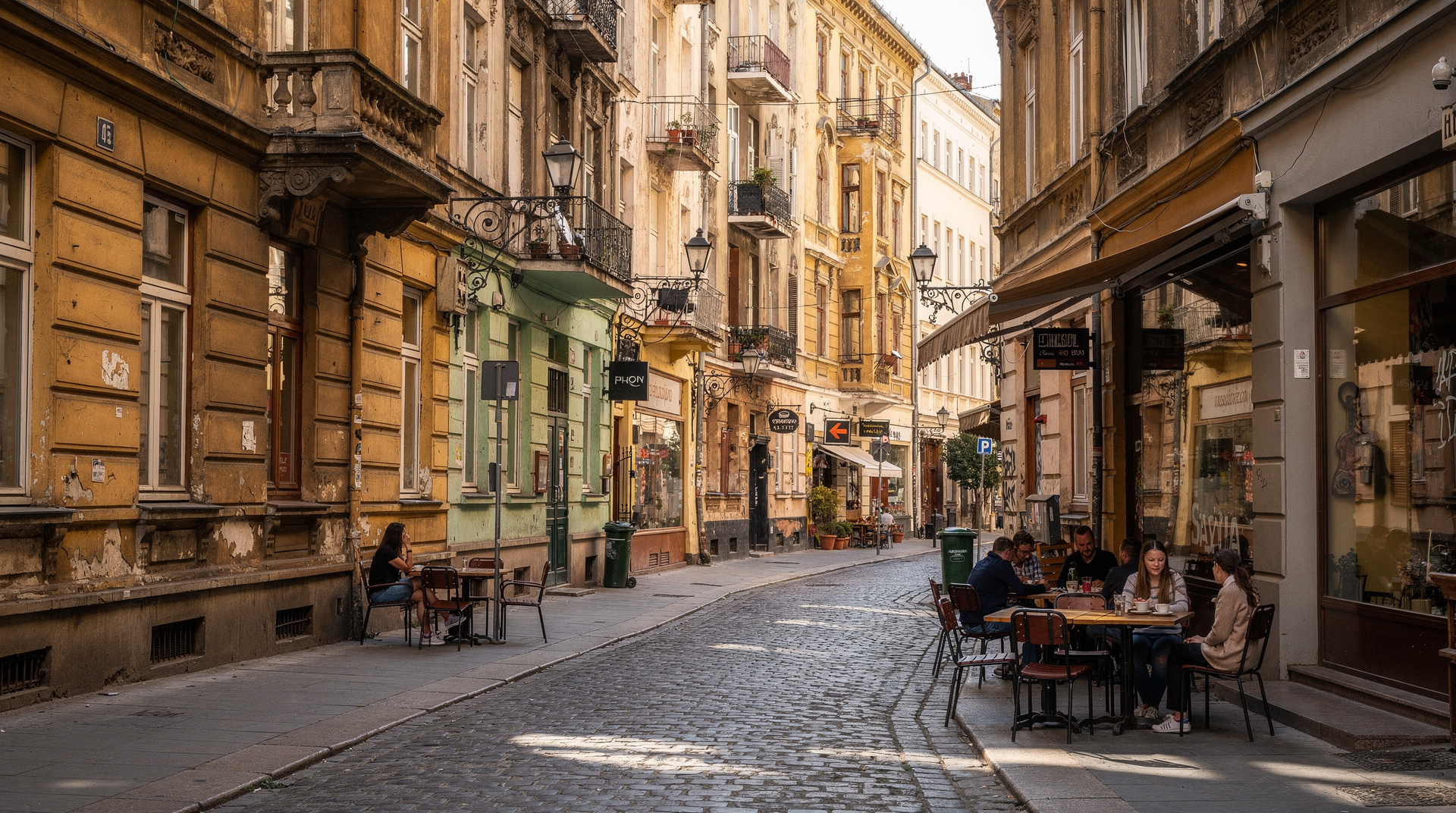
Buda occupies the western hilly bank. It’s defined by the Castle District on its plateau, the residential villas of the Buda Hills, the quiet neighbourhood streets of Districts II and III, and a general sense of calm and greenery.
Pest spreads east across the flat Great Plain — dense, urban, relentlessly flat, and holding the bulk of what makes Budapest famous: the Parliament, the Andrássy boulevard, the ruin bars, the Jewish Quarter, the thermal baths at Széchenyi, the main metro network.
| Where | Buda = west bank (hilly); Pest = east bank (flat) |
| Crossing time | 10–15 min on foot via Chain Bridge; 5 min by tram |
| Best time in Buda | Early morning, 07:00–09:00, before tour groups |
| Best time in Pest | Evening, for restaurants and bars |
| Getting between them | Trams 19/41/56/61, buses, or on foot across any bridge |
Buda: the quieter bank
The Castle District
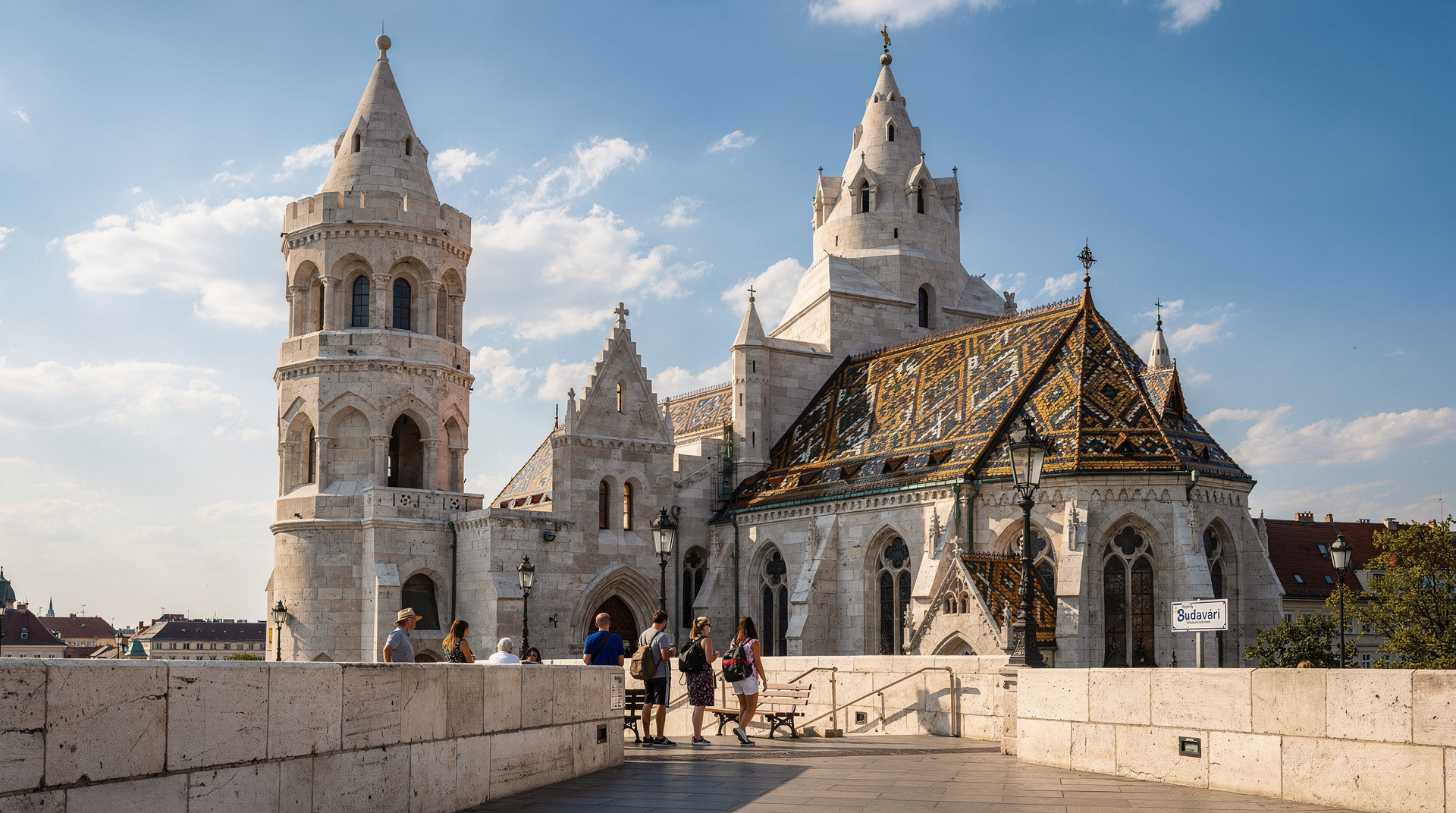
The Castle District (District I) is Buda’s calling card — a plateau 60 metres above the Danube, occupied by Buda Castle, Matthias Church, Fisherman’s Bastion, and a network of cobblestone streets lined with baroque townhouses. It’s one of the most beautiful urban environments in central Europe, and it’s a UNESCO World Heritage Site.
What it’s not: a place to eat well or stay affordably. The Castle District is oriented almost entirely toward daytime tourism. Restaurants are limited and expensive; by 20:00 the streets are nearly empty. The only hotel of note is the Hilton Budapest, built around the ruins of a Dominican church.
The best time to experience the Castle District is early morning (07:00–09:00) before the tour groups arrive — the light on the limestone walls and the empty Fisherman’s Bastion terrace are worth an early alarm.
Gellért Hill
Rising steeply south of the castle to 235 metres, Gellért Hill offers the most panoramic view of Budapest from the Citadella at its summit (the fortress built by the Habsburgs after the 1848 revolution). The Gellért Baths and the grand Art Nouveau Gellért Hotel anchor the hill at river level on the Buda side of Elizabeth Bridge. Check current status of Gellért Baths before visiting as renovation work may affect access.
The Liberation Monument at the hilltop was erected by the Soviets in 1947 — the female figure holding a palm leaf has become a Budapest landmark despite its ideological origins.
Lukács Baths and the Buda residential areas
District II contains the Lukács Thermal Baths (Frankel Leó út 25–29) — a smaller, less internationally famous bath than Széchenyi or Gellért, but genuinely local in atmosphere and extremely good value. District III (Óbuda) has the Aquincum Roman ruins and some authentic neighbourhood character around Fő tér.
The Buda Hills (Districts II, XII) are excellent for hiking — the Normafa plateau, the Hárs-hegy trail, and the Children’s Railway (Gyermekvasút) are popular with Hungarian families. For visitors interested in urban hiking rather than tourist attractions, a day in the Buda Hills is a genuine refreshment.
Pest: where the city lives
District V — the grand centre
The Pest waterfront, from the Parliament to the Great Market Hall, is Budapest at its most impressive. The buildings are enormous, the streets are wide, and the views back to Buda Castle across the river are constant. More in the District V Belváros guide and downtown Pest destination.
Districts VI and VII — the real Budapest
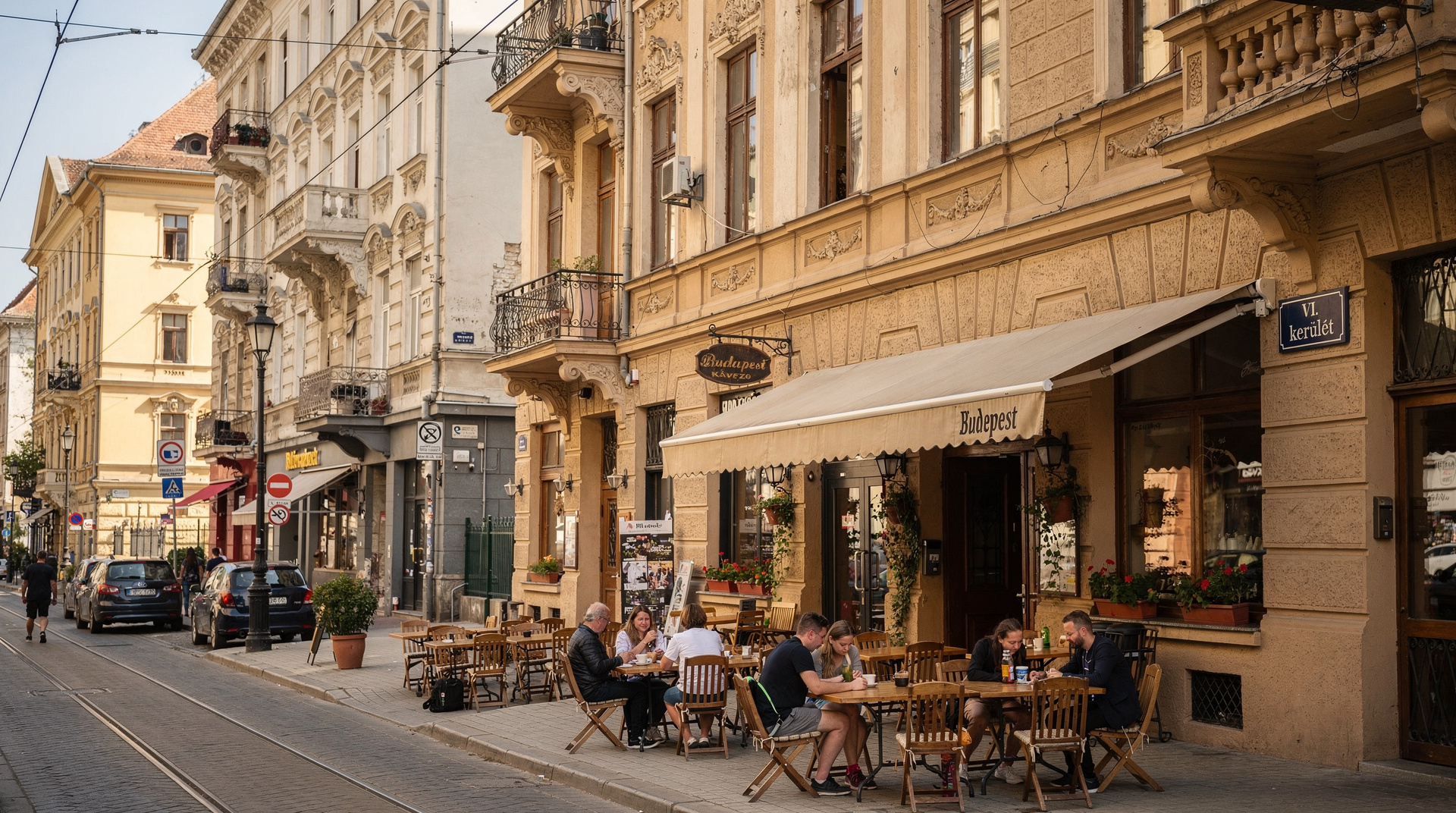
This is where most Budapestians eat, drink, and spend their evenings — Andrássy út with its opera house and M1 metro (the first underground railway in continental Europe), the Jewish Quarter with its ruin bars and diverse restaurants, the Gozsdu Udvar courtyard. For most international visitors, spending several evenings here is essential to understanding the city as it actually exists. More at District VII Jewish Quarter guide.
Széchenyi and the City Park
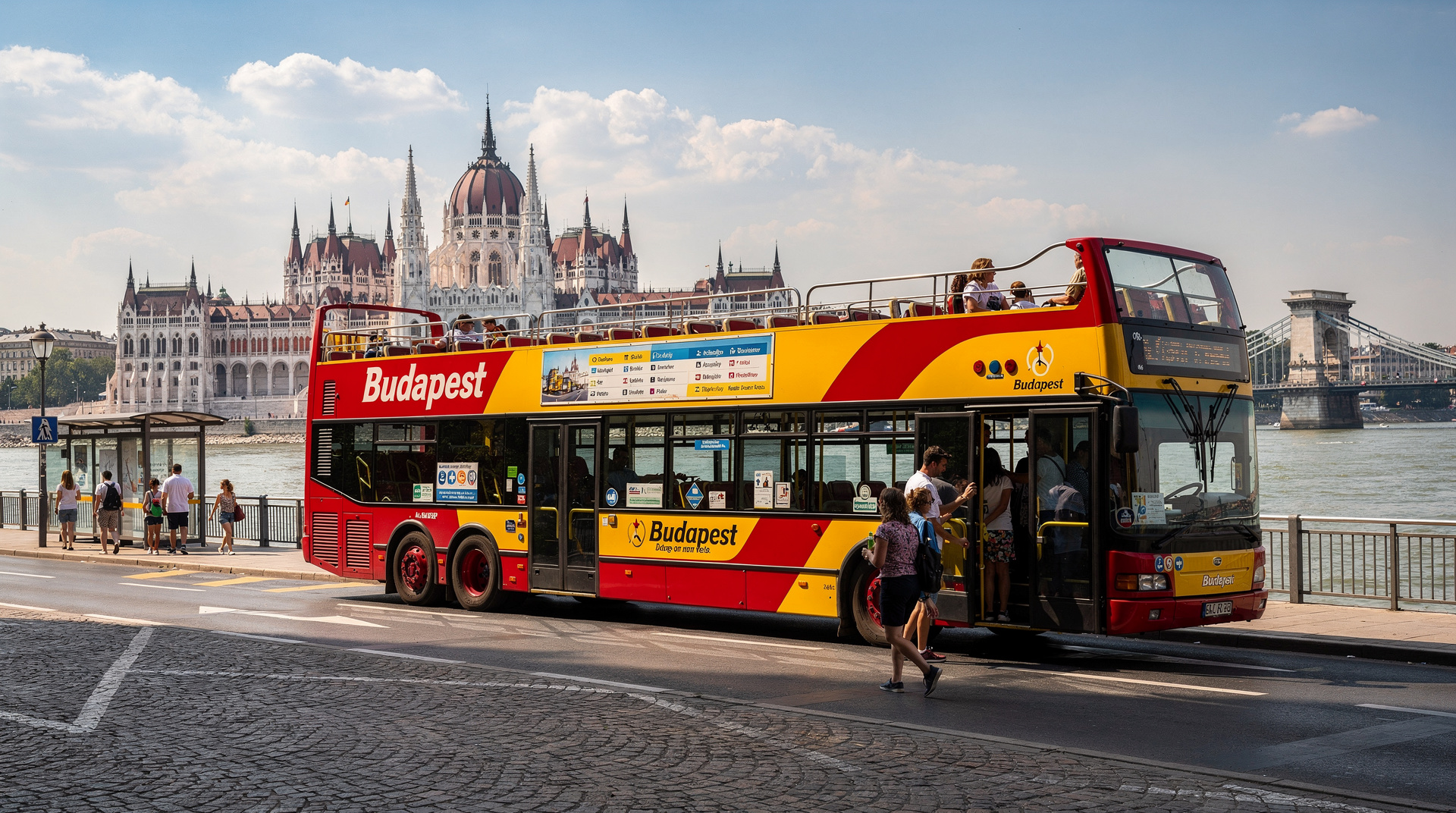
District XIV contains the City Park (Városliget), the Heroes’ Square, and Széchenyi Thermal Baths — the largest outdoor thermal bath in Europe, with its iconic yellow baroque exterior and outdoor pools in which people play chess on floating boards. The Vajdahunyad castle complex (a Disneyland-style architectural collage of Hungarian building styles) is in the same park. Budapest hop-on-hop-off bus — covers both Buda and Pest
For a wider look at the park and its neighbours, see the City Park destination page and the Heroes’ Square and City Park guide. The Széchenyi baths guide covers the practical side of a soak.
Seeing Pest on foot
Pest rewards walking more than any other part of the city. The grid of streets between the river and the Grand Boulevard packs grand façades, courtyards and cafés into short distances, and a first-time visitor who simply wanders from the Parliament towards the Great Market Hall will pass most of what the district has to offer. If you would rather have the context explained as you go, a guided walk through the Pest side of the city is an easy way to connect the buildings to the history. Our best walking tours in Budapest roundup compares the options, and the Parliament guide and St. Stephen’s Basilica guide help you decide which interiors are worth the time.
What Pest feels like after dark
The contrast with Buda is sharpest in the evening. Pest’s streets stay busy long after the Castle District has emptied out: restaurants fill, the courtyards of the Jewish Quarter come alive, and the ruin bars set the tone for the night. If that is what you came for, the Budapest nightlife guide and the best ruin bars in Budapest explain where to start, and the Szimpla Kert guide covers the best-known of them. Light sleepers should note that this energy is also the main drawback of a hotel in the middle of the action, so ask for a room away from the street.
Eating on each side
Pest has the volume and the variety — everything from street food carts near the Central Market Hall to Michelin-recognised tasting menus in District V and VI. Buda’s food scene is smaller but not worse: local, less touristy restaurants around Batthyány tér and the Víziváros streets often undercut Pest prices for genuinely good Hungarian cooking, precisely because they are not chasing passing tourist traffic. For a food-first framing of the city, see traditional Hungarian dishes and street food Budapest.
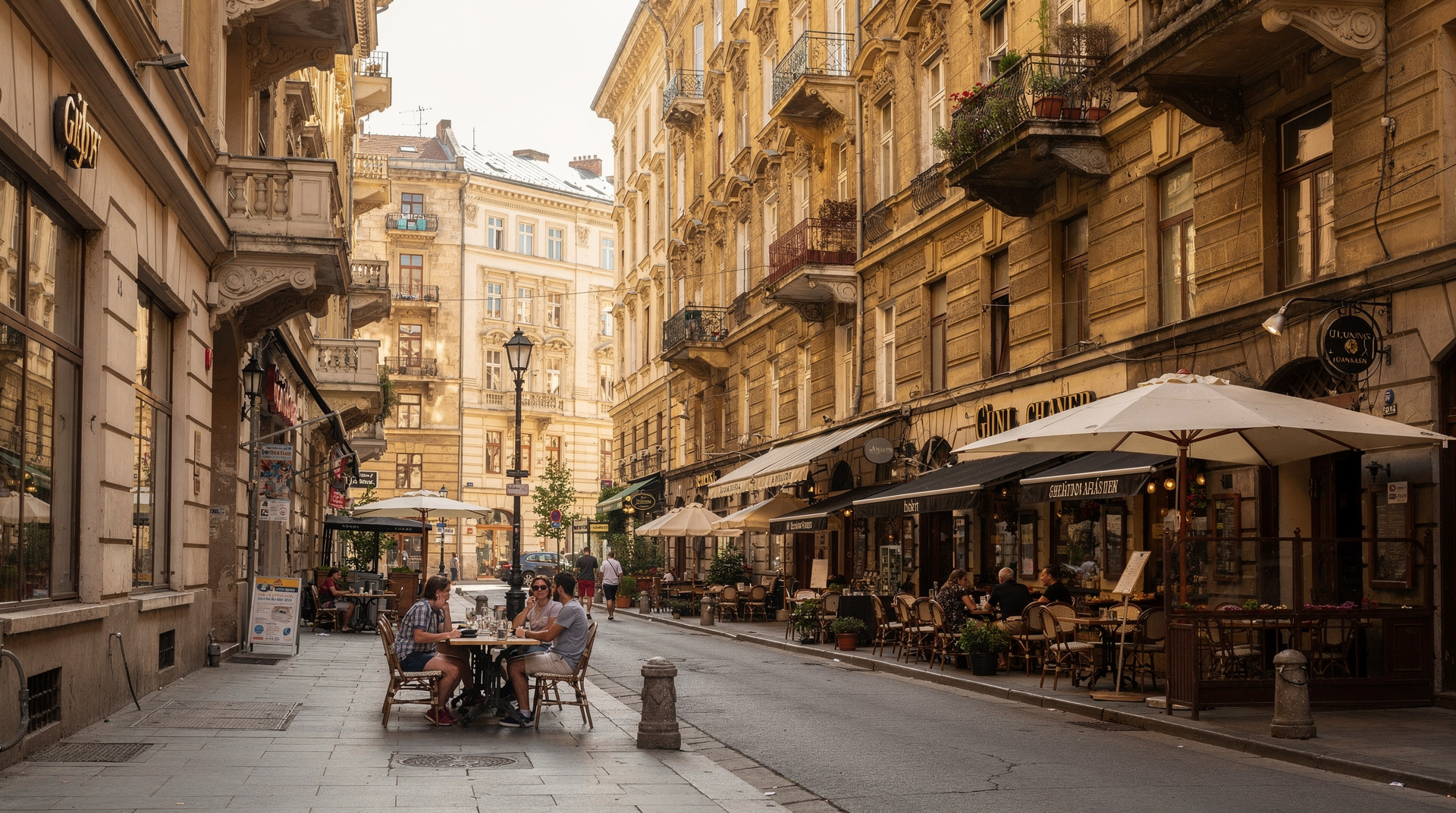
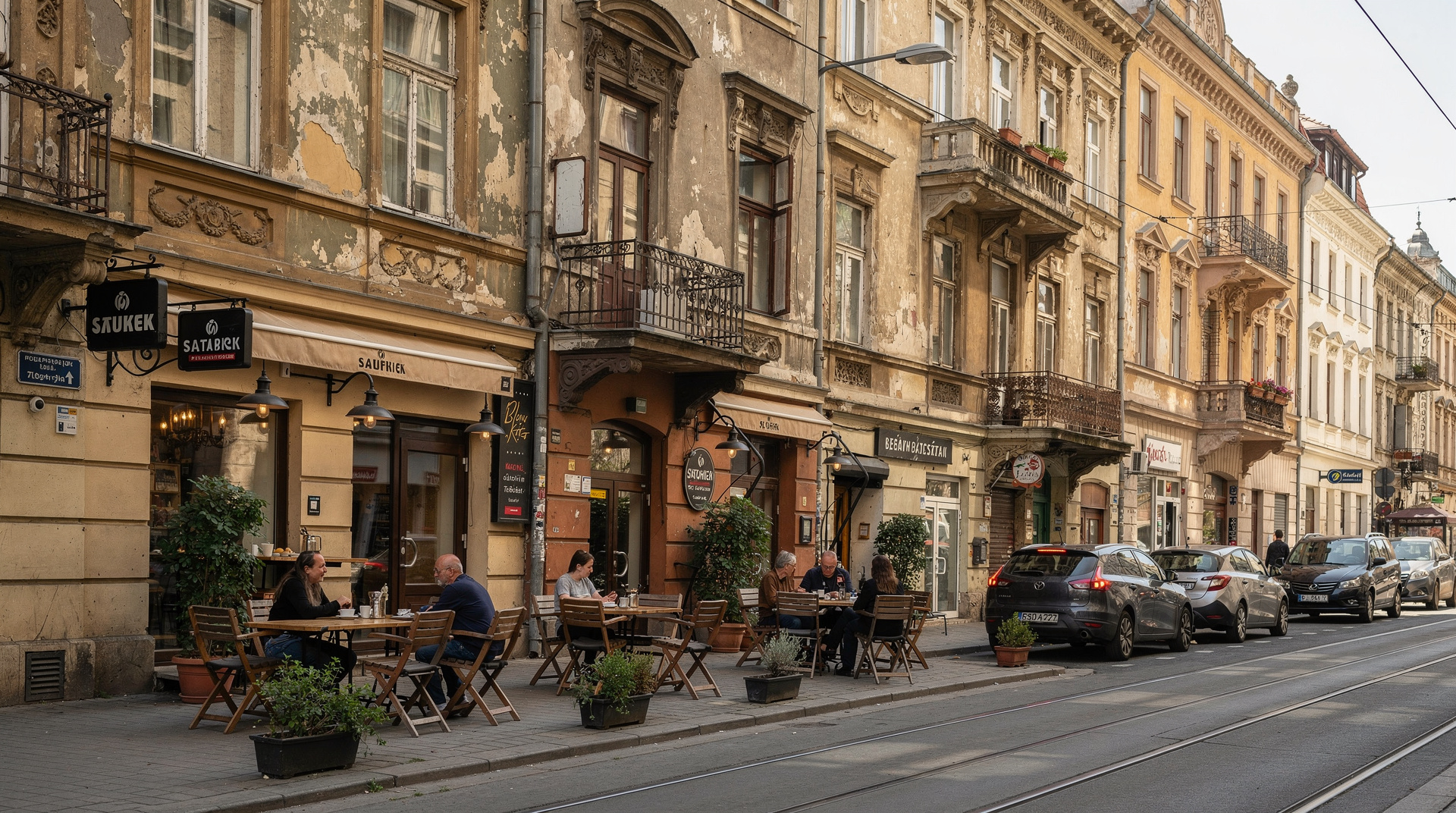
Coffee is a good way to compare the two banks. Pest has the grand, ornate coffee houses that people photograph; Buda has quieter corners where locals read the paper and nobody is in a hurry. Our coffee houses in Budapest guide lists both kinds. If you are travelling with a particular diet, the vegetarian and vegan Budapest guide is worth a look before you choose a base, since the widest choice sits on the Pest side.
Day-tripping into Buda from a Pest base
If you stay in Pest — the recommendation for most first-timers — Buda is never more than 15–20 minutes away. A simple half-day loop: tram or funicular up to Castle Hill, an hour around Matthias Church and Fisherman’s Bastion, lunch in the Castle District or back down in Víziváros, then either the Gellért Hill viewpoint or a soak at Rudas or Gellért baths before crossing back. Pairing it with an evening Danube sightseeing cruise gives you both banks lit up after dark, which is arguably the best single view in the city.
Making the most of the Castle District
Buda’s headline area is easy to do badly: arrive late, wander the main square, take the same photo as everyone else and leave. A better approach is to treat it as a place to be understood rather than ticked off. A classic walking tour of the castle quarter gives you the stories behind the façades, and our Buda Castle guide, Matthias Church guide and Fisherman’s Bastion guide cover each landmark in more depth. The Castle District destination page puts them on one map, and the Chain Bridge guide describes the walk that links the two banks.
Walkers who like a view should also look at the Gellért Hill and Citadella guide and the Gellért Hill destination page. Both pair naturally with a bath visit, since the hill and the baths sit side by side at the foot of the Buda end of the bridge.
Getting around between the banks
Because the metro stays mostly in Pest, the way you move around changes the moment you cross the river. Trams, buses and the funicular do the work in Buda, and a travel pass saves you counting single tickets. The Budapest public transport tickets guide and the BKK travel passes guide explain the options, and the Budapest metro guide covers the lines you will use on the Pest side. For a broader overview, see getting around Budapest.
Matching the side to your trip
The right base depends on what kind of trip you are planning. Couples after a slow, romantic stay may enjoy the calm of Buda, and the romantic Budapest guide suggests places on both banks. Families often prefer the convenience of Pest, with its easy transport and many restaurants; the Budapest with kids guide goes into detail. First-time visitors with a short stay should read the first time in Budapest guide and the three-day itinerary, which spend most of the time in Pest and dedicate one block to Buda.
If you are still undecided, the companion piece Buda vs Pest: where to stay approaches the same question from the accommodation side.
The practical comparison
| Buda | Pest | |
|---|---|---|
| Character | Hilly, residential, quiet | Flat, urban, lively |
| Transport | Trams, buses, no metro | M1–M4 metro, trams, buses |
| Restaurants | Fewer, more local | Huge variety, all price ranges |
| Nightlife | Very limited | Concentrated in D VI/VII |
| Accommodation | Castle District luxury; residential elsewhere | All categories, best value in D VI/VII |
| Main sights | Castle, Matthias Church, Fisherman’s Bastion, Gellért Hill | Parliament, Opera, Great Synagogue, Jewish Quarter |
| Thermal baths | Gellért, Rudas, Lukács | Széchenyi |
| Best time | Morning (Castle District at dawn) | Evening (restaurants and bars) |
How the two banks work together
The most useful way to think about Buda and Pest is as two halves of one day rather than two competing choices. Spend the morning on the Buda side while it is calm, cross a bridge at midday, and let Pest carry the afternoon and evening. Each bank has what the other lacks: Buda offers the views, the history on the hill and the quiet; Pest offers the density, the food and the nightlife. Visitors who try to pick a “winner” usually miss the point of the city.
A few habits make this easier. Cross the river on foot at least once, because the view from the bridge is a different experience from the view out of a tram window. Keep your most walking-heavy Buda activities for the cooler hours of the day, since the hills are steeper than they look on a map. And leave a little slack in the schedule: the walk up to the castle, a coffee stop and a bath visit each take longer than you expect.
If the weather turns, the split still works. Pest has more indoor options within easy reach, so rainy afternoons are better spent there, while clear days are best saved for Buda’s terraces and viewpoints. For ideas when it rains, see best museums in Budapest and the Budapest in winter guide.
Which side should you actually stay on?
Stay in Pest (D V or D VI/VII) if: you want maximum convenience and access; you’re visiting for a long weekend; you plan to use nightlife heavily; you want the best restaurant density; or you’re on a mid-range budget.
Stay in Buda (Castle District) if: atmosphere and historical immersion matter more than convenience; you don’t mind a 15-minute tram ride to the main Pest attractions; you want quieter evenings; or you’re on a luxury budget at the Hilton Budapest.
The honest answer: Most visitors should stay in Pest and spend at least a half-day in Buda. The bridges make both sides permanently accessible from either base.
Whichever you choose, you are not locked in. Many visitors change their mind after a day on the ground and simply adapt their plans, because the bridges and the tram lines make the other bank a short ride away. What matters more than the side is the exact street: a quiet block in either district beats a noisy one in the other.
For accommodation specifics: where to stay in Budapest. For orientation: Budapest neighborhoods guide.
Frequently asked questions about Buda vs Pest
What is the main difference between Buda and Pest?
Buda is hilly, residential, and quieter — historic buildings, Habsburg villas, hiking trails in the Buda Hills, and the Castle District. Pest is flat, urban, and energetic — restaurants, ruin bars, thermal baths (Széchenyi), the Parliament, the major metro lines. The Danube and its eight bridges connect them.Is Buda more expensive than Pest?
Generally yes, for accommodation — the Castle District and the Buda Hills residential areas command premium prices. For restaurants, Pest's tourist-heavy areas (Váci utca) are expensive; Buda's local restaurants can be slightly cheaper. Overall the difference is modest.Can I easily travel between Buda and Pest?
Yes — eight bridges cross the Danube, and the journey by tram, bus, or taxi takes 10–20 minutes between most points. The metro lines are mostly in Pest; for Buda you typically use trams (lines 19, 41, 56, 61), buses, or the Castle Hill funicular. The Danube is not a barrier — it's more of an orientation marker.Are the thermal baths on the Buda or Pest side?
Both sides. Gellért and Rudas are on the Buda side (south of the Castle District); Lukács is on the Buda side (north, District II). Széchenyi is in Pest (City Park, District XIV). Széchenyi is the most famous and most accessible; Gellért is the most architecturally impressive — check current status before visiting as renovation may affect opening.Which bridge is best for walking between Buda and Pest?
Chain Bridge (Széchenyi Lánchíd) is the classic choice — pedestrian-friendly, historic, and it lands you right at the foot of Castle Hill on one side and District V on the other. Elizabeth Bridge is a faster, less scenic option between Gellért and central Pest. Both are lit at night and worth crossing on foot at least once for the view alone.How much time should I budget for Buda if I am staying in Pest?
Half a day covers the essentials — Castle Hill, Fisherman's Bastion and Matthias Church, plus the funicular or a short tram ride back down. A full day lets you add Gellért Hill's Citadella viewpoint or a soak at Rudas or Gellért baths. Early morning is the best window, before the Castle District fills with tour groups around 10:00.
Top experiences
Bookable activities with verified prices and instant confirmation on GetYourGuide.