Budapest neighborhoods guide: what's where and how they feel

What are the main neighborhoods in Budapest and which is best to stay in?
Budapest divides into Buda (hilly, quiet, historic) and Pest (flat, urban, vibrant). For first-time visitors, District V (Belváros/Inner City) and District VI/VII (around Andrássy út and the Jewish Quarter) are the best bases — close to everything, excellent transport, good restaurant density. For quiet and views, the Castle District in Buda is atmospheric but requires more walking.
How to think about Budapest’s geography
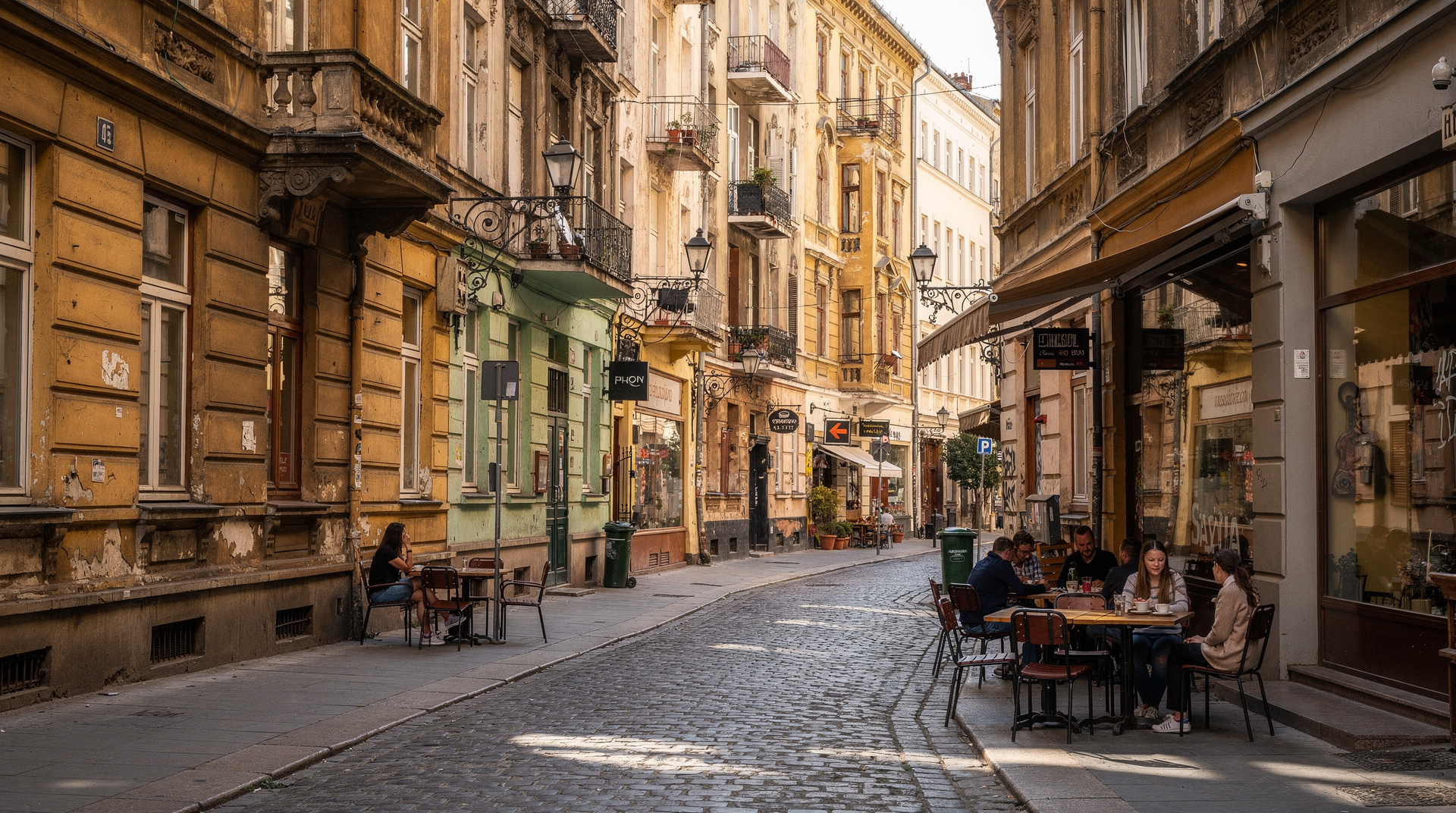
Budapest is two cities joined at the Danube. Buda occupies the western hilly bank; Pest spreads eastward across the flat plain. They were officially merged into a single city in 1873, but the character difference remains visible and tangible: Buda is hilly, residential, quieter, and architecturally denser with Habsburg-era villas; Pest is flat, urban, more energetic, and holds most of what visitors come to see.
The city also uses a numbered district system (kerületek, abbreviated as I., II., III., etc.). These are not neighbourhood names but administrative divisions, and knowing which district you’re in tells you approximately where in the city you are. Districts I–III are in Buda; IV and above are in Pest (with some exceptions).
| Best base for first-timers | Districts V, VI, VII |
| Quietest option | Districts II, III, XI (Buda) |
| Best nightlife access | District VII (Jewish Quarter) |
| Most atmospheric, least practical | Castle District (District I) |
| Getting between Buda and Pest | Chain Bridge, Liberty Bridge, or M2/M4 metro |
Buda
District I — Castle District (Várnegyed)
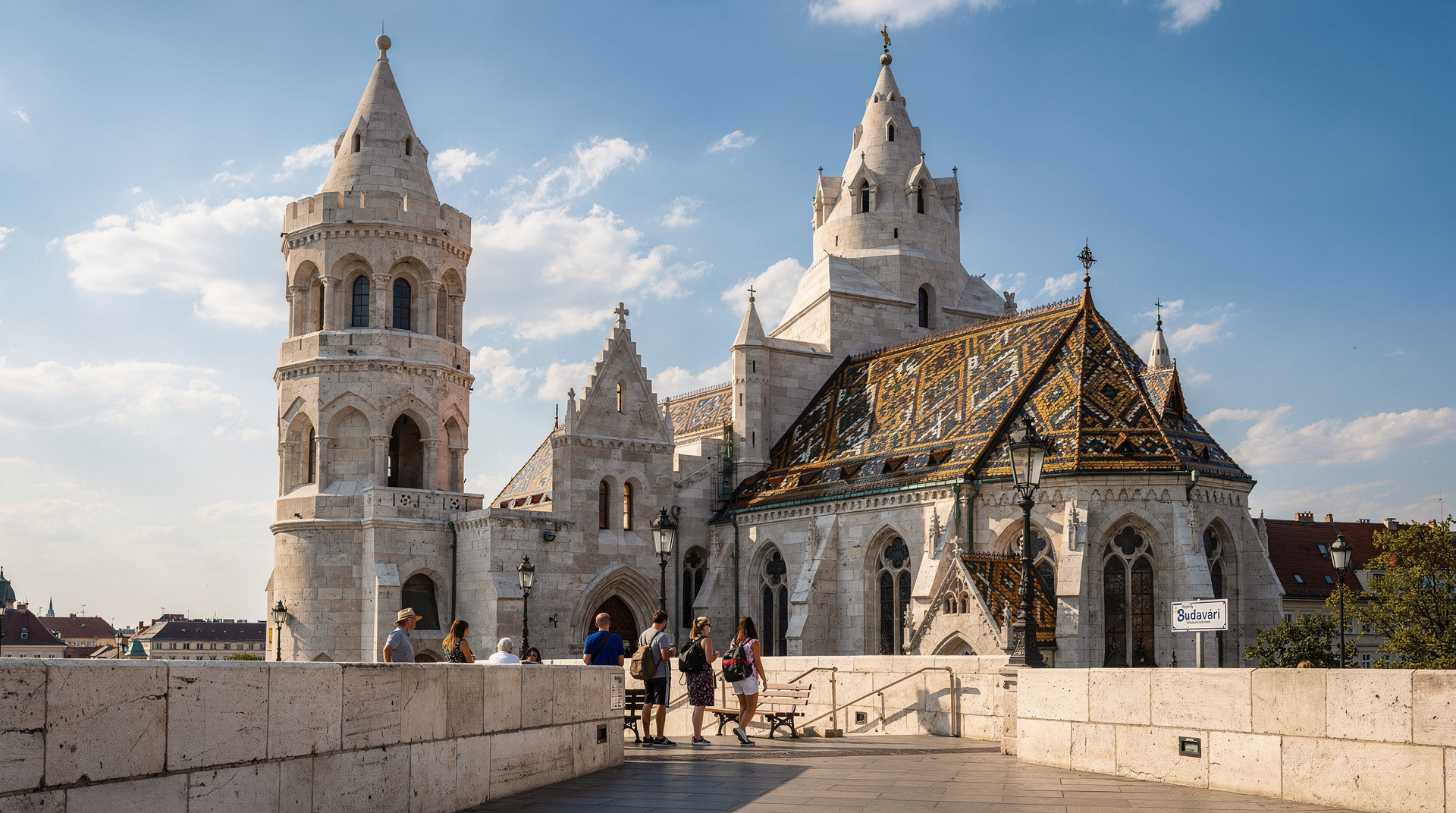
The Castle District occupies the plateau of Castle Hill, 60 metres above the Danube, and is the most historically significant and most photographed part of Budapest. The Buda Castle complex, Matthias Church, and Fisherman’s Bastion define it visually; cobblestone lanes, baroque townhouses, and medieval remains fill it in.
Character: Quiet, somewhat museumified, very beautiful. By day: tourists, tour groups, and locals visiting the palace museums. By night: almost deserted — most residents here are wealthy or diplomatic, and the tourist infrastructure doesn’t extend to late-night bars or casual restaurants.
Best for: History and architecture; the view from Fisherman’s Bastion; the castle museums. Not ideal for nightlife or dining density.
Getting around: Funicular (sikló) from Clark Ádám tér; bus 16/116 from Deák tér; or walk up from the Buda riverbank. No metro access.
More on the Castle District destination page.
If you do spend a day up here, plan it around the sights rather than around meals. The Buda Castle guide, the Matthias Church guide and the Fisherman’s Bastion guide each cover one corner of the hill, and together they make a full, unhurried day. Come back down to Pest for dinner and the district will feel like two different places: a daytime stage set and a nighttime village.
District II and III — Buda Residential and Óbuda
Districts II and III stretch north of the Castle District. District II covers the Buda Hills — green, residential, expensive, with hiking trails (Normafa, Hárs-hegy) and the Children’s Railway. District III is Óbuda (Old Buda), containing Roman ruins at Aquincum and a semi-industrial waterfront being slowly redeveloped.
Character: Decidedly local, quiet, not oriented toward tourists except for the Roman ruins and specific hike destinations.
Best for: Day hikes in the Buda Hills; Aquincum Roman ruins; a glimpse of Budapest without tourists.
These districts reward travellers who have already seen the headline sights and want a slower day. The Óbuda and Aquincum destination page is the place to start if the Roman remains interest you, and the Margaret Island page covers the green strip in the river that sits between the two banks. Neither fits well into a short first trip, but both are easy additions once you know which side of the Danube you are based on.
Pest
District V — Belváros (Inner City)
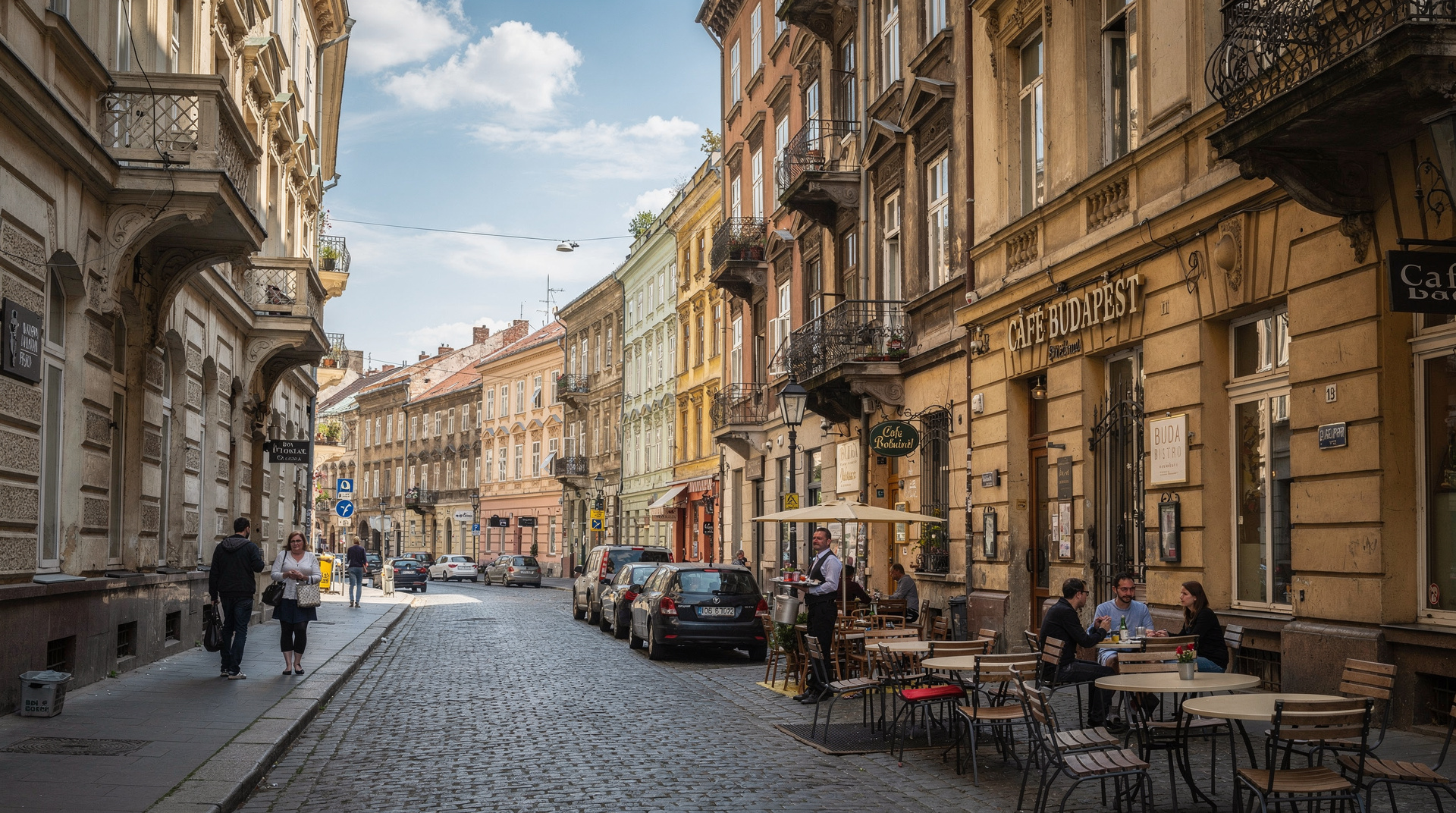
District V is the heart of historic Pest — the area between the Danube and Erzsébet körút, containing the Parliament, St Stephen’s Basilica, Váci utca (the pedestrian shopping street), Vörösmarty tér, and the most historic hotel strip. It’s the most tourist-dense and expensive part of Budapest.
Character: Grand, expensive, very central. The best hotels are here; so are some of Budapest’s most overpriced restaurants. Váci utca is worth walking but not shopping — it’s entirely tourist-facing. The real city is slightly away from the main street.
Best for: First-time visitors; Parliament visits; the Danube riverfront walk. Expensive for eating unless you go one block off the main drag.
Detailed guide: District V Belváros guide. More: Downtown Pest destination.
Districts VI and VII — The Pest Broadway and Jewish Quarter
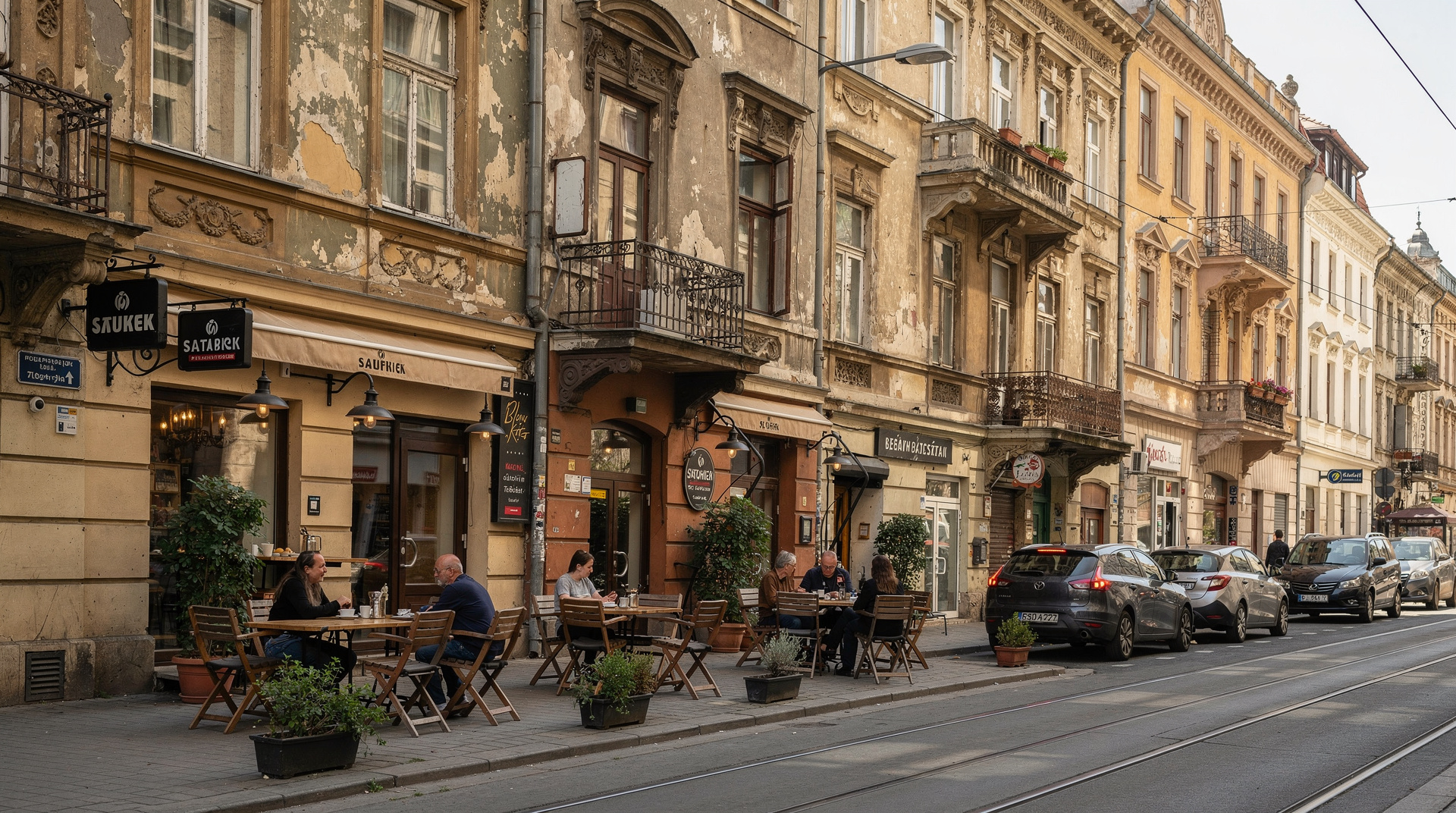
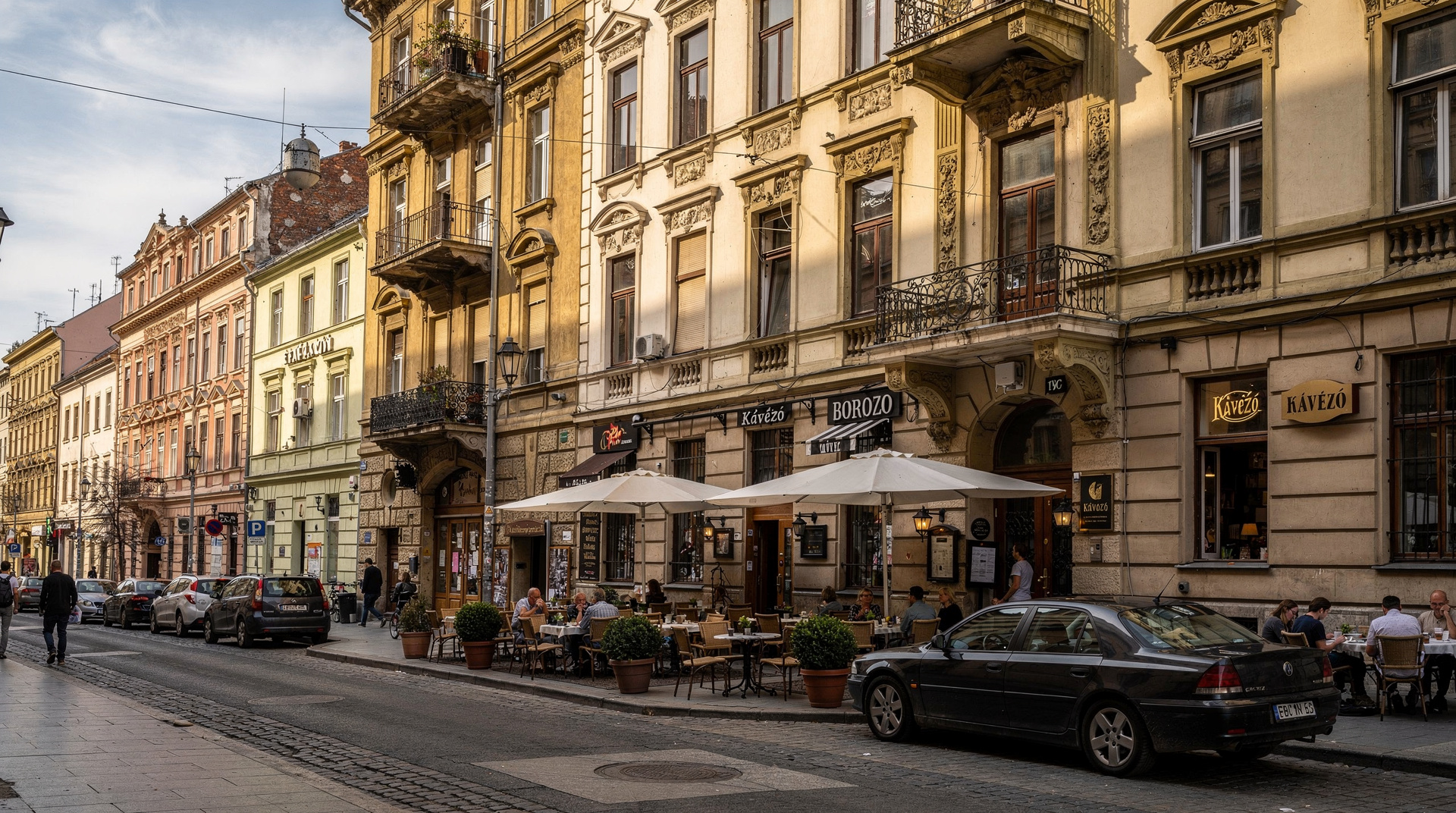
District VI (Terézváros) is the grand boulevard district: Andrássy út (Budapest’s answer to the Champs-Élysées, with the Hungarian State Opera House and the underground M1 metro — the first in continental Europe) leads northeast to Heroes’ Square and City Park. The buildings are imposing 19th-century apartment blocks; the restaurants and cafés here are excellent and genuinely local.
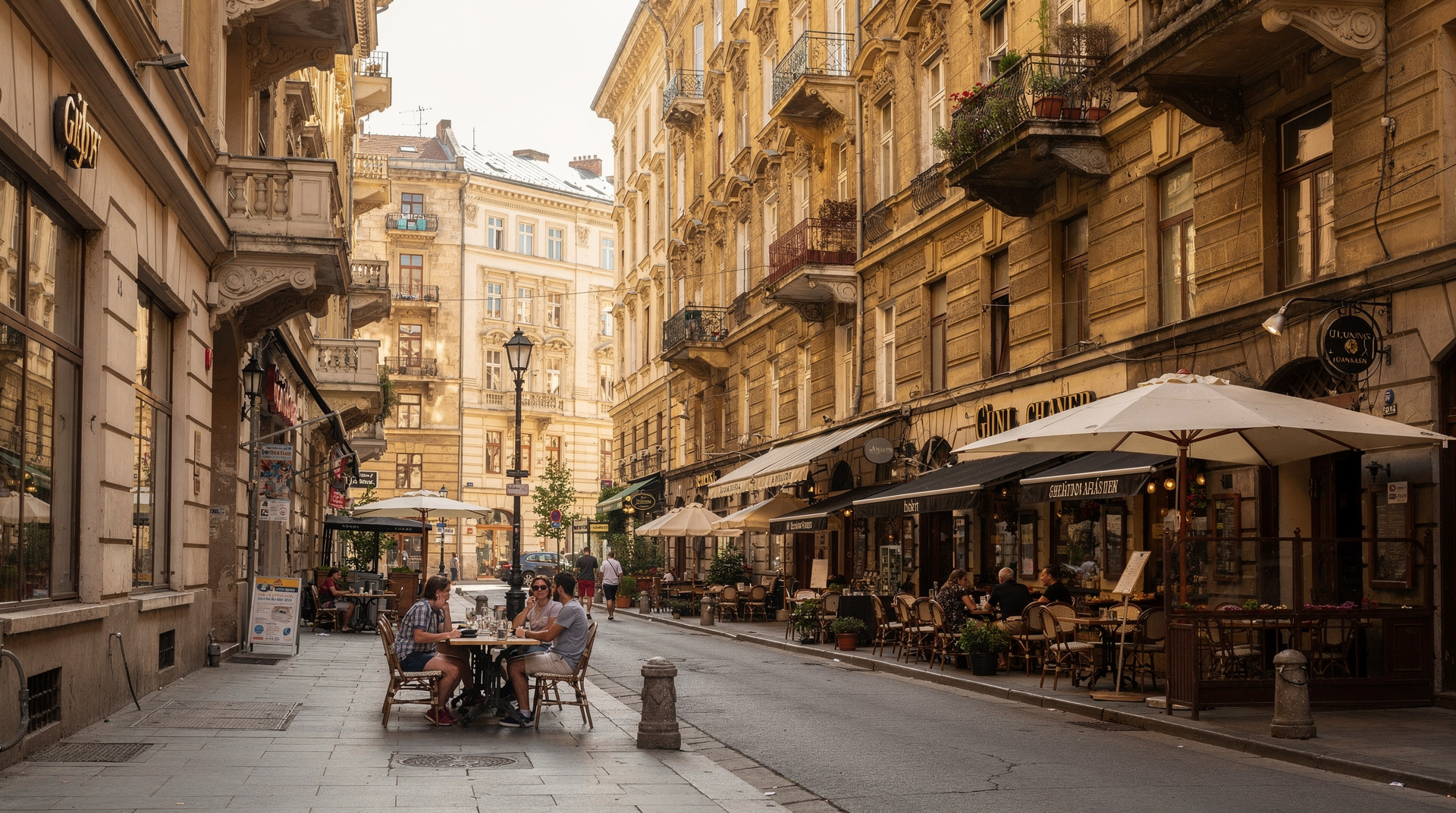
District VII (Erzsébetváros) contains the historic Jewish Quarter — the area that was the Budapest Ghetto during WWII and is now the city’s most dynamic neighbourhood. Szimpla Kert, the original ruin bar, is here; so are dozens of other bars, international restaurants, street food venues, galleries, and the enormous Dohány Street Synagogue. Kazinczy utca is the focal street for bars; Gozsdu Udvar is a covered courtyard connecting several streets with cafés and bars.
Character (District VII): Young, international, fast-changing, noisy on weekend nights. The ruin bar scene makes it Budapest’s nightlife epicentre.
Best for: Almost everything practical: restaurants, bars, cafés, museums, shopping, transport connections, accommodation value for money.
Jewish Quarter walking tour of BudapestMore: District VII Jewish Quarter guide and Jewish Quarter destination page.
The two districts are neighbours and blend into each other, but they feel different once you start walking. District VI is where you go for a calm morning coffee, a stroll under the plane trees and a long lunch; District VII is where the evening gathers. Many visitors stay in VI and walk the few minutes into VII after dark, which gives you the energy without sleeping on top of it. If the history of the area matters to you, the Jewish Quarter heritage guide and the Dohány Street Synagogue guide explain what you are walking past. For the bars themselves, see the Szimpla Kert guide and the best ruin bars in Budapest, and read ruin bar rip-offs before you order your first round.
Districts VIII and IX — Southeast Pest
District VIII (Józsefváros) is a transitional district: the area around Blaha Lujza tér and Keleti station is rough in places, gentrifying in others. The National Museum is here (free entry). The inner part around Múzeum körút is pleasant and has good secondhand bookshops and cafés.
District IX (Ferencváros) has the Great Market Hall at its northern tip (worth visiting) and the Bálna cultural centre on the Danube. The Millennium City Centre along the Danube riverfront is being regenerated. Boráros tér connects this district to Pest’s tram network.
Gellért Hill and District XI
District XI (Újbuda) stretches south from the Castle District along the Buda bank. Gellért Hill, crowned by the Citadella and the Liberation Monument, is its best-known feature — a steep climb rewarded with the best panoramic view of the whole city. At its base sits the Gellért Baths, one of Budapest’s grandest Art Nouveau thermal complexes. The district itself is residential and quiet beyond the hill.
Character: Quiet, green, residential, with one outstanding viewpoint.
Best for: The Gellért Hill hike and the Gellért Baths; not a nightlife or dining base.
More: Gellért Hill and the Citadella.
Matching a district to your kind of trip
The best district depends less on the city than on who is travelling. A few common patterns:
- First visit, three or four days, sightseeing-focused. Base in District V or VI. You will walk to most of what you came for and rely on the metro for the rest. Pair this guide with the first time in Budapest guide and the top attractions in Budapest.
- Couples after atmosphere. The Castle District or the Buda riverbank gives you evening quiet and views, while Pest gives you restaurants. Many couples split the difference by staying in Pest and booking one special dinner in Buda. See romantic Budapest for couples.
- Groups and nightlife-first trips. District VII puts you within walking distance of everything open late, and it saves you the cost and hassle of late taxis. The Budapest nightlife guide maps the bars by street.
- Families. Prefer a calmer street in District VI or a residential Buda district, and check the Budapest with kids guide for what is practical with children.
- Travellers watching their budget. Look slightly outside the most central streets of District V; the Budapest on a budget guide explains where the savings tend to come from.
Whichever pattern fits you, remember that Budapest is compact enough that a “wrong” choice is rarely a disaster. The real cost of a poor choice is usually noise, a long walk home, or paying tourist-strip prices for ordinary meals, and all three are avoidable with a little care at the booking stage.
Moving between districts
Your base matters less if the connections are good, and in Budapest they usually are. The metro, trams and buses link most of the districts above, and the bridges make crossing the river simple. Before you arrive, read the Budapest metro guide and getting around Budapest so the first journey from the airport or station does not feel like a puzzle. If you will use public transport heavily, the BKK travel passes guide is worth a look, and the itinerary for three days in Budapest shows how a real trip moves between districts day by day.
A useful habit is to learn the district number of each place you plan to visit. Addresses in Budapest start with a postcode whose middle digits give the district, so a quick glance at a booking confirmation tells you which part of town you are heading to. It also helps when comparing hotels: two listings that both say “central” can sit in very different districts.
Comparing the main options for where to stay
| District | Vibe | Best for | Trade-off |
|---|---|---|---|
| I — Castle District | Historic, quiet at night | Atmosphere, views | Poor nightlife/dining access, no metro |
| V — Belváros | Grand, central, expensive | First-timers, Parliament proximity | Higher prices, touristy on Váci utca |
| VI/VII — Terézváros/Jewish Quarter | Energetic, dense | Restaurants, nightlife, transport | Noise on weekend nights in VII |
| II/III — Buda residential | Local, green, quiet | Peace, hiking, Aquincum | Less convenient for nightly sightseeing |
| XI — Gellért Hill area | Quiet, one big view | The hike and Gellért Baths | Not a dining or nightlife base |
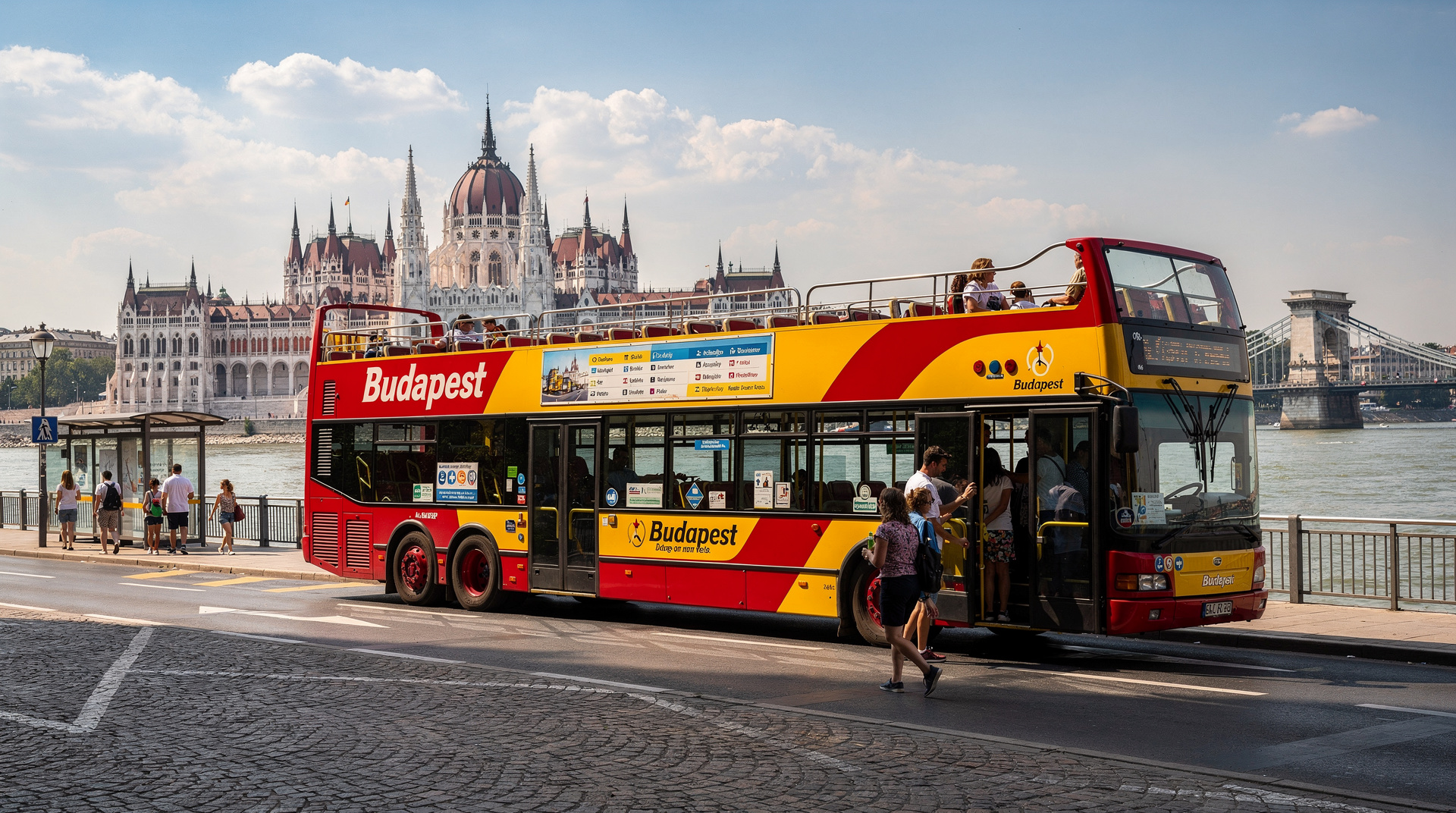
A hop-on-hop-off overview
For a quick geographical overview of how the districts connect before diving into specific areas:
Budapest Big Bus hop-on-hop-off tourThe route covers Castle District, Parliament, Andrássy út, Heroes’ Square, and the Danube — a useful orientation before you navigate independently.
A bus loop is not the only way to get your bearings. Some travellers prefer to see the districts on foot, and the best walking tours in Budapest compares the options, while the hop-on-hop-off Budapest guide explains how the bus format works so you can decide whether it suits your pace.
The Danube waterfront
The riverfront itself — the Chain Bridge, Gellért Hill, the Pest embankment (Duna-korzó) — doesn’t belong to any single district but defines Budapest’s visual identity. The Duna-korzó on the Pest side, between Chain Bridge and Elizabeth Bridge, is the classic evening promenade. The Buda side is less walkable but includes the Budapest History Museum and the Castle Bazaar.
The river is also the easiest way to understand how the districts relate to one another. From the water, Castle Hill, the Parliament and the bridges line up in a single view, and the two banks make sense as halves of one city. The Chain Bridge guide is a good short read for the most famous crossing, and the best Danube cruises in Budapest compares the ways to see the skyline from the river. Evening is the best time for the waterfront, when the embankment lights come on and the Buda hills fade into the dusk.
Neighbourhoods vs. districts: what actually matters for visitors
For most visitors, the relevant geography boils down to:
- Castle District (I.) — daytrip territory, beautiful, not for staying unless you want peace and don’t mind distance from the action.
- District V — most convenient Pest base; grand and expensive.
- Districts VI/VII — best all-round base for most visitors; good transport, restaurant density, the ruin bar scene nearby.
- Districts II/III — residential Buda, for those who want quiet; slightly less convenient.
- Gellért Hill / District XI — Buda south of the castle; residential, with the Gellért Baths at the Danube edge.
For a comparison of where to actually base yourself: where to stay in Budapest and Buda vs Pest: which side to stay. For nightlife geography: best areas for nightlife in Budapest.
Frequently asked questions about Budapest neighborhoods guide
How is Budapest divided into districts?
Budapest uses a numbered district system (kerületek). District I is the Buda Castle area; Districts II and III cover Buda's residential and historic areas. Across the river, District V is the historic Pest centre (Parliament, Váci utca). Districts VI and VII cover Andrássy út and the Jewish Quarter (ruin bars, dining). Districts VIII and IX are southeast Pest, with the Great Market Hall and regenerating areas.Is Buda or Pest better for tourists?
Pest is better for most visitors — it has the majority of restaurants, bars, clubs, museums, and transit hubs. Buda is more residential and quieter, with the Castle District as its main attraction. For staying: Pest (Districts V, VI, VII) for convenience; Buda Castle area for atmosphere and fewer tourists (at a cost of more walking).Is the Jewish Quarter safe to visit and stay in?
Yes — District VII is very safe and is Budapest's most dynamic neighbourhood, with ruin bars, international restaurants, street art, and a dense nightlife scene. It's the city's most socially mixed and fast-changing area. Some streets are lively until 4–5am on weekends, so lighter sleepers should choose accommodation accordingly.Which Budapest neighbourhood is quietest for families?
Districts II and XI in Buda are the quietest options with reasonable transport links — residential, green, and away from nightlife noise. For families who still want central convenience, District VI (Terézváros) is calmer than District VII while remaining walkable to the main sights. See /guides/budapest-with-kids/ for family-specific planning.Is Gellért Hill its own district or part of another neighbourhood?
Gellért Hill sits in District XI (Újbuda), south of the Castle District on the Buda side. It's mainly known for the Citadella viewpoint and the Gellért Baths at its base, rather than as a place to stay, though the surrounding streets are quiet and residential. See /guides/gellert-hill-and-citadella/.
Top experiences
Bookable activities with verified prices and instant confirmation on GetYourGuide.