Best bars for locals in Budapest: beyond the tourist trail

Where do locals drink in Budapest?
Locals frequent Margit körút (District II, Buda), Ráday utca (District IX), Bartók Béla út (District XI), and quieter corners of District VII away from Szimpla Kert. Key venues include Élesztőház, A38 Ship, Fogas Ház, Kádár Étkezde, and a dozen neighbourhood wine bars where the owner is behind the counter.
Why “local bars” in Budapest are worth finding
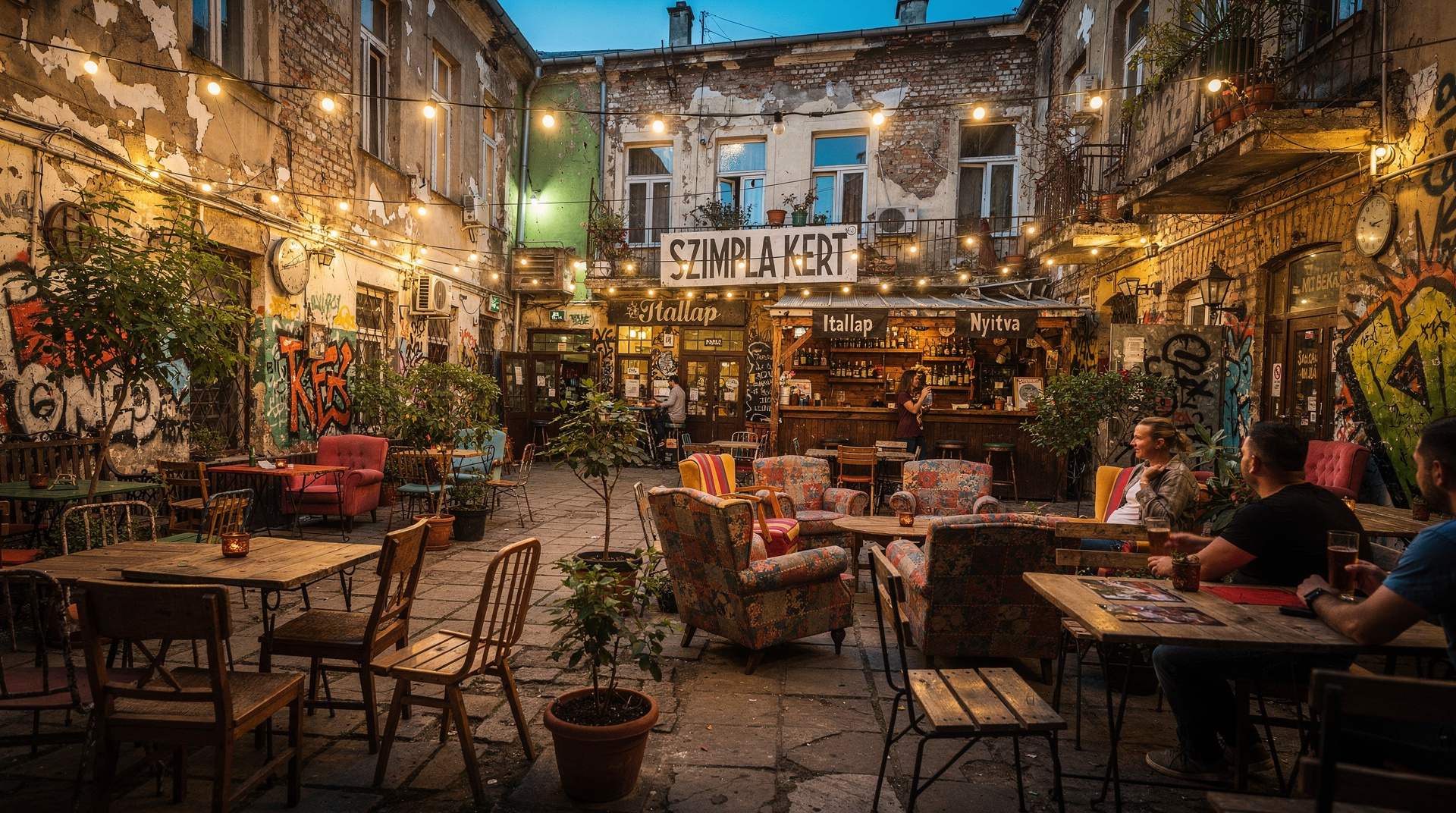
Budapest has two nightlife ecosystems running in parallel. The tourist circuit — Szimpla Kert, the Official Pub Crawl, Instant–Fogas on a Friday night — is excellent and worth experiencing. But the city also has hundreds of neighbourhood bars, wine bars, kocsma (traditional pubs), and craft beer taprooms that rarely appear in travel guides and where the clientele is overwhelmingly Hungarian.
These places are not secret. They’re not hard to find. They’re just on streets that tourists don’t walk unless they have a reason to — Ráday utca in District IX, Bartók Béla út in District XI, Margit körút in District II. The reward: better prices (often 30–50% less than the tourist core), less noise, and the kind of unscripted atmosphere that makes a bar feel real.
| Where | Ráday utca (IX), Bartók Béla út (XI), Margit körút (II) |
| Cost | Kocsma beer 500–900 HUF; craft beer 1,000–1,800 HUF |
| Time needed | One neighbourhood per evening, 2–3 hours |
| Getting there | M3/M4 Kálvin tér (Ráday), tram 4/6 (Margit körút) |
| Best time | Weekday evenings from 19:00 for the calmest, most local crowd |
For orientation on how these neighbourhoods sit relative to the main tourist zones, see the Budapest neighbourhoods guide and the best areas for nightlife guide for the tourist-facing counterpart to this one.
Ráday utca (District IX): the local restaurant and bar street
Ráday utca runs south from Kálvin tér metro station (M3/M4 interchange) through Ferencváros — a neighbourhood that was genuinely rough ten years ago and has gentrified steadily since. The street is about 400 metres long and lined with bars, restaurants, and café-bars on both sides, most with outdoor terraces.
What’s there: A mix of Hungarian restaurants (Ráday 11 does excellent gulyás and beef stew at 2,800–3,800 HUF for a main), wine bars, casual pizza places, and pubs. No ruin-bar aesthetic, no tourist-targeting, no pub crawls stopping in. Beer is 900–1,200 HUF (€2.25–3) per half-litre.
Best time: Summer evenings from 19:00, when the outdoor terraces fill. The street is lively but conversational rather than loud.
Getting there: Metro M3 (blue) or M4 (green) to Kálvin tér; Ráday utca starts directly from the square.
Élesztőház (District IX): the best craft beer bar in Budapest
Tűzoltó utca 22, District IX (open daily from 16:00)
Élesztőház (“fermentation house”) is the benchmark for Budapest craft beer. Set in a former industrial space five minutes’ walk from Ráday utca, it has 20+ rotating taps of Hungarian craft beer alongside a modest food menu (cheeseboards, sausages, pizza). The crowd is knowledgeable and local — serious beer drinkers from their 20s through 50s.
Expect to spend 1,000–1,800 HUF (€2.50–4.50) per 0.5L depending on style and strength. The bar staff can guide you through the selection. Labels to look for: Monyo (experimental styles), Horizont (clean German-influenced lagers), Légenda (complex stouts and IPAs), Fehér Nyúl (natural wine of beer — funky and interesting).
For a guided craft beer experience across multiple venues, the Budapest craft beer tour visits the best taprooms with a local beer expert.
Pálinka and unicum are the two drinks a Hungarian will actually offer you, and neither appears on the shot menus aimed at stag parties: a bar crawl with local drinks follows the first list rather than the second.
Margit körút (District II, Buda): the Buda alternative
Margit körút runs parallel to the Danube on the Buda bank, through a neighbourhood that is firmly residential and middle-class. Several bars and restaurants here have survived for decades without adapting to tourist trade — they serve the local population, which means fair prices and no English menus.
Notable venues:
- Margit Presszó — a classic presszó (Hungarian-style café-bar); coffee, beer, pálinka, regulars who’ve been coming for thirty years.
- Fekete Holló (Bécsi utca 27, nearby) — traditional Hungarian restaurant and bar with excellent pálinka selection; modest prices.
- Fő utca bars — the street running from Batthyány tér south has several casual bar-restaurants with Danube views.
Getting there: Metro M2 (red) to Batthyány tér, then walk or tram 4/6 along the körút.
Bartók Béla út (District XI): the student and artist quarter
District XI south of Gellért Hill has become Budapest’s emerging neighbourhood — artists, students, young professionals, and a new wave of interesting bars that opened in the last five years.
Key venues on and around Bartók Béla út:
- Hadik (Bartók Béla út 36) — legendary Hungarian literary café, open since 1899. Coffee, cake, wine; the regulars include writers and academics. Prices are honest: espresso 500 HUF, wine from 700 HUF/glass.
- Csiga Bar (Vásárhelyi Pál utca 6) — dark, crowded, cheap; a true neighbourhood bar with pool tables and rotating local art on the walls.
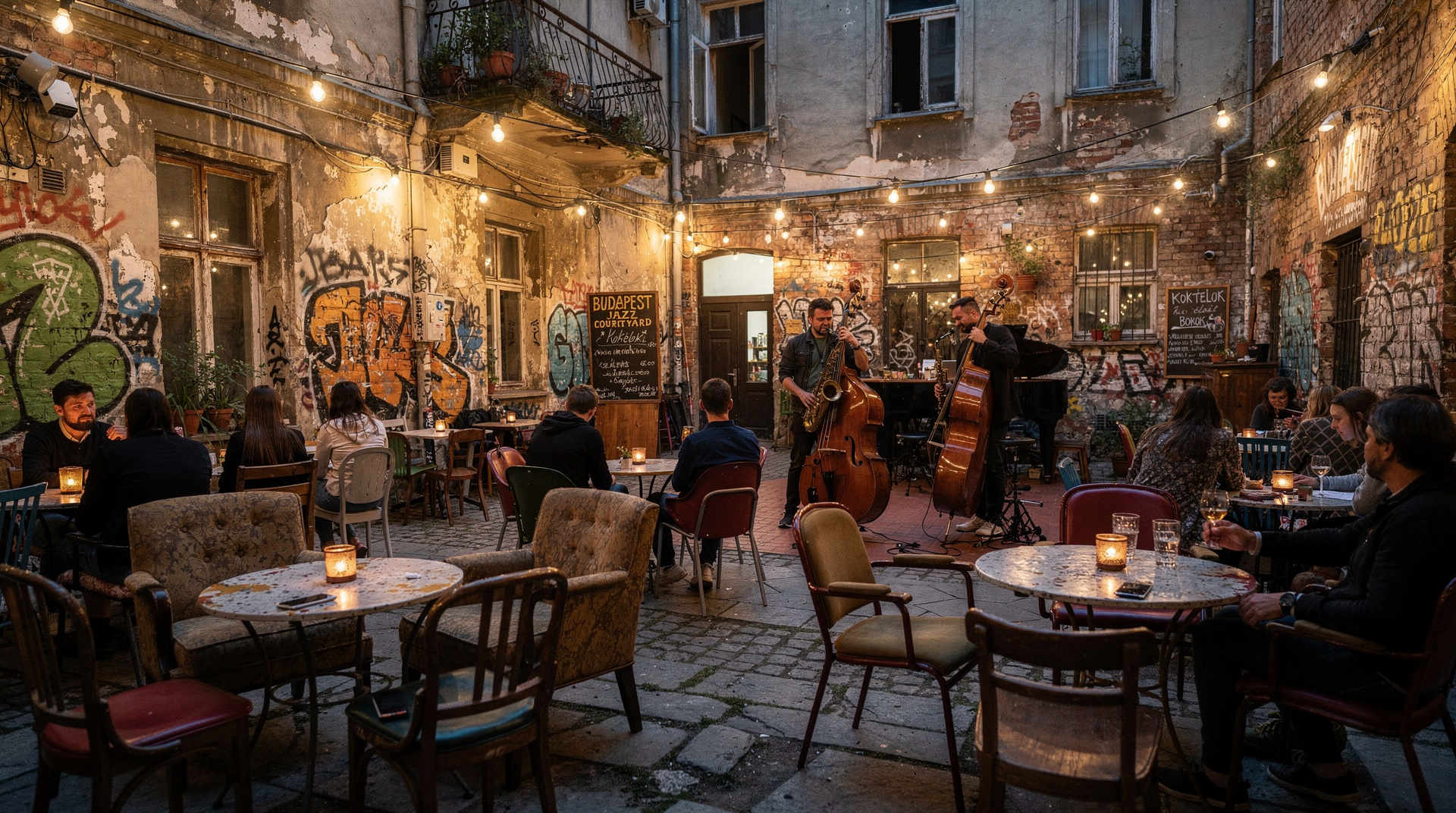
- Morrison’s (the District XI location, not the tourist-oriented Morrison’s 2 in District VI) — live music bar drawing a local crowd.
Getting there: Tram 49 or 4/6 to Bartók Béla út; tram 47 from Deák tér.
District VII quieter corners: away from Szimpla
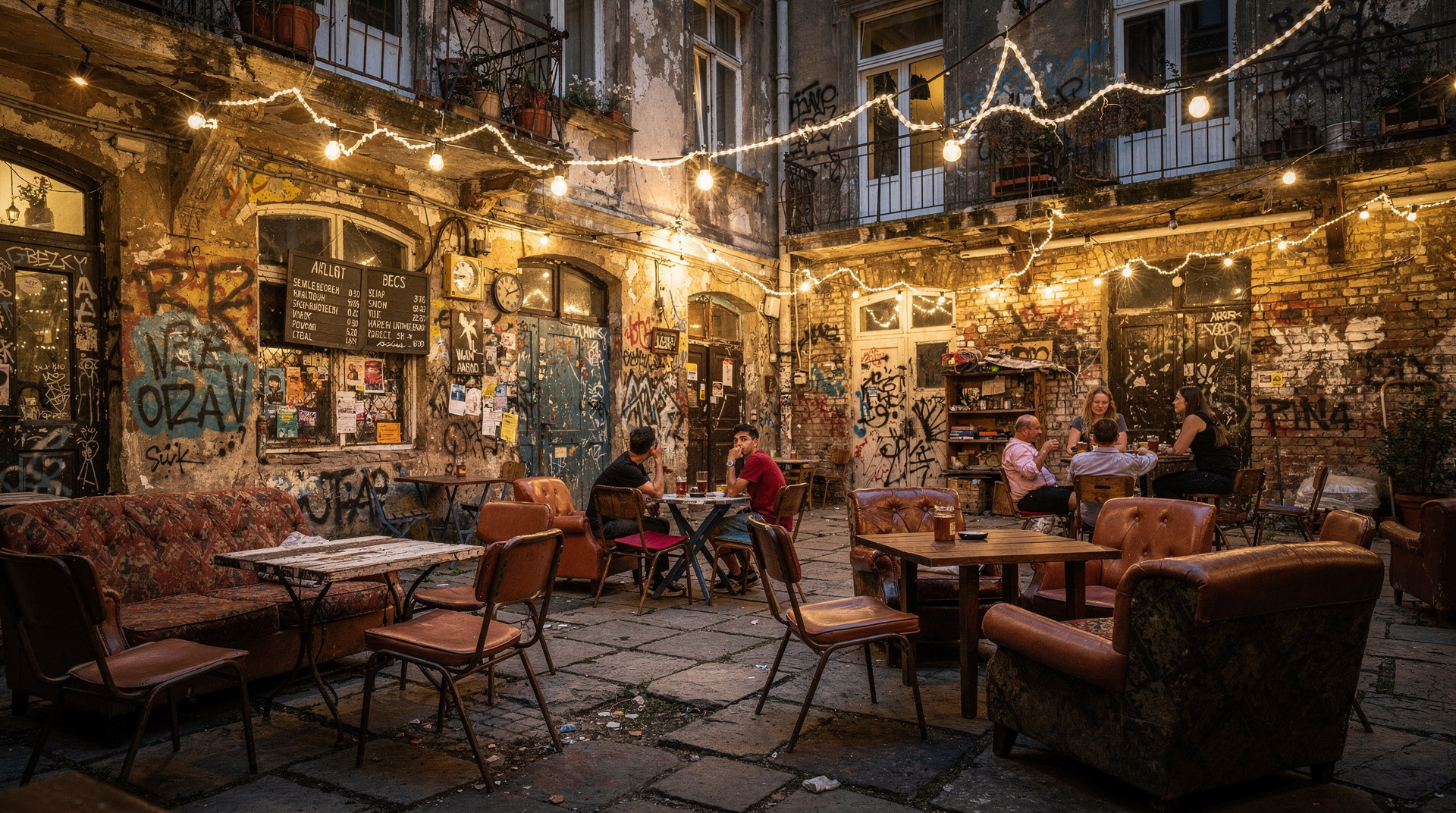
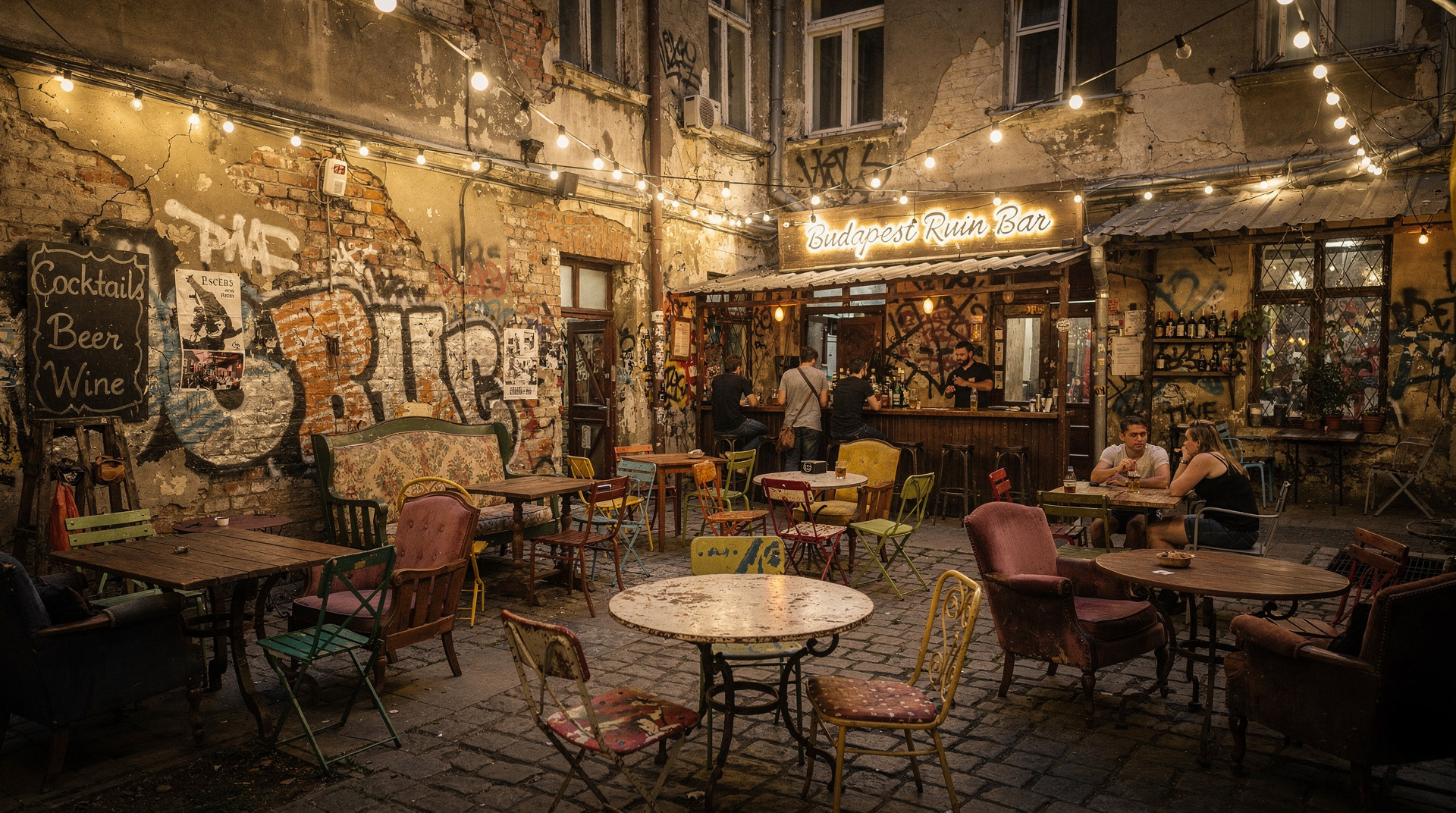
The ruin-bar district (District VII) isn’t all tourist-facing. The streets immediately east of the main tourist corridor — around Dob utca, Wesselényi utca past Klauzál tér, and Rumbach utca — have a mix of genuine neighbourhood bars.
Dob utca: A few quiet wine bars and a kocsma or two. Macesz Bistro (no. 26) is a Jewish-inspired bistro with excellent food at fair prices — not a bar, but a reliable dinner option before a night out.
Wesselényi utca: Quiet bar scene after 20:00, cheaper than the bars one block west on Kazinczy utca.
For a more organised night in the ruin-bar district, the ruin pub crawl with free VIP entry, 6 shots, games and photos offers a lively, group-style alternative to wandering the quieter streets alone.
Wine bars worth knowing
Budapest has a strong wine-bar culture driven by Hungary’s excellent (and underrated) wine regions — Tokaj, Eger, Villány, Badacsony. These are worth knowing for a quieter evening:
- Bortársaság (multiple branches) — a wine shop and bar hybrid; honest prices, knowledgeable staff. Main branch at Batthyány utca 59.
- Doblo (Dob utca 20, District VII) — intimate Jewish Quarter wine bar with a strong Hungarian selection; board games and low lights.
- Divino (Október 6 utca 20, District V) — near the Basilica; one of the most respected wine bars in the city, particularly for first-time explorations of Hungarian wine.
For the full guide to Hungarian wine, see hungarian wine guide and wine tastings in Budapest.
What to expect: prices and atmosphere
The bars in this guide run at roughly:
- Kocsma / neighbourhood pub: Beer 500–900 HUF (€1.25–2.25) per 0.5L
- Craft beer bar: Beer 1,000–1,800 HUF (€2.50–4.50) per 0.5L
- Wine bar: Glass from 800–1,500 HUF (€2–3.75)
- Cocktail bar: 2,000–3,000 HUF (€5–7.50)
These prices are 20–50% lower than comparable venues in the tourist core. The atmosphere is generally calmer — conversation is possible, tables have more space, music levels are moderate.
For a broader view of Budapest’s bar geography and which areas to avoid (Váci utca and the konzumlány scam zone), see the party districts guide and common scams in Budapest.
For placing a bar evening in the context of a full visit, the Budapest 3-day itinerary suggests how to balance sightseeing with evenings in the right neighbourhoods.
How to find local bars without a guide
The most effective method for finding local bars in any unfamiliar city applies perfectly in Budapest: look for signage primarily in the local language, look for menus displayed in the window without pictures, look for a clientele that includes people who appear to have been coming here for years rather than consulting Google Maps.
In Budapest, additional indicators:
- Cash only: Traditional neighbourhood bars are often cash-only. A card reader is a significant investment for a small bar; the absence of one suggests a certain vintage of operation.
- Sports on the TV: Hungarian football (Ferencváros, Újpest, Honvéd) on the television screen means you’re in a neighbourhood bar. Premier League or Champions League on TV means you’re in a tourist-facing establishment.
- No English menu: A menu only in Hungarian is not a red flag for quality; it’s an indicator of the customer base. The staff will almost always help translate with good humour.
- Regulars at the counter: A Hungarian kocsma with regulars nursing coffee or beer at the bar counter at 14:00 on a Tuesday is a reliable sign.
The presszó culture: a deeper dive
The presszó (plural: presszók) deserves its own exploration. These small coffee-bar-pubs are the most quintessentially Hungarian drinking establishment — more than ruin bars, which were a post-communist invention; more than the grand kávéház, which was explicitly an elite institution.
A presszó is a neighbourhood institution that combines coffee bar and pub functions in a single small room. The counter runs the length of one wall; behind it, an espresso machine, beer taps, and bottles of pálinka, wine, and spirits. Tables and chairs fill the rest of the space — sometimes four tables, sometimes eight. The clientele is whoever lives on the street: pensioners in the morning for coffee, workers at lunch for a quick beer, friends in the evening.
Prices at a genuine presszó: espresso 350–500 HUF (€0.88–1.25), beer 400–700 HUF (€1–1.75), pálinka 400–700 HUF per shot. These are the cheapest drinks in Budapest, and the experience is completely unmediated by tourism.
How to find one: Walk five minutes in any direction from the tourist core — five minutes down Rákóczi út, five minutes off Andrássy út, five minutes into any residential street in District VIII, IX, or XI — and you’ll find a presszó. The sign above the door may just say “kocsma” or “presszó” or may be handwritten. There may be no sign at all.
Hungarian wine bars: the emerging scene
Budapest’s wine-bar culture has grown significantly since 2015. The Hungarian wine renaissance — driven by a generation of young winemakers working with natural and low-intervention methods in Tokaj, Eger, Badacsony, and Somló — has created a supply of interesting bottles that has found an enthusiastic urban audience.
The wine bars worth knowing beyond Divino and Bortársaság:
Borkonyha Winekitchen (Sas utca 3, District V): Michelin Bib Gourmand-recognised; serves Hungarian natural wine by the glass alongside a kitchen that takes food seriously. Not just a wine bar — a wine restaurant. Higher prices than the local bars in this guide (glass from 1,500–3,000 HUF / €3.75–7.50) but justified by quality.
Drop (Hollán Ernő utca 8, District XIII): A neighbourhood wine bar in the increasingly interesting Újlipótváros neighbourhood north of the centre. Casual atmosphere, excellent selection of Hungarian and Central European natural wines, regular tasting events. Glass from 900–2,000 HUF (€2.25–5).
Tasting Table (Múzeum körút 15, District V): Small wine bar near the National Museum with a rotating by-the-glass selection focused on smaller Hungarian producers. The owner selects personally and knows each producer.
For the full wine context, see Hungarian wine guide and wine tastings in Budapest.
Specific bar recommendations by neighbourhood
For visitors who want specific addresses by district:
District V (inner city):
- Nöbar (Október 6 utca 13) — a working-class bar that survived in an expensive district; cash only, beer from 500 HUF
- Gerloczy Café (Gerloczy utca 1) — not a local bar per se, but a neighbourhood institution with a quieter atmosphere than the tourist-facing cafés; reliable food and honest wine
District VI (Terézváros):
- Szóda (Wesselényi utca 18) — long-established neighbourhood bar, mixed Hungarian/Jewish Quarter crowd
- Liszt Ferenc tér café-bars — mostly tourist-facing but with some genuine local regulars; arrive on a weekday morning to see the local side
District VIII (Józsefváros):
- Corvin Cinema bar (Corvin köz) — local crowd, attached to the Corvin multiplex; good beer selection, honest prices
- Multiple szórakozóhely (entertainment venues) on Corvin sétány — an arts-led regeneration area with several new bars targeting the local creative-class
District IX (Ferencváros):
- The Ráday utca street (mentioned above) is entirely worth an evening — walk the length of it and choose by atmosphere
For the best approach to a single evening combining local and tourist bar areas, see the party districts guide and the full Budapest nightlife guide.
Pálinka: the drink locals actually order
No guide to local Budapest bars is complete without pálinka, Hungary’s fruit brandy and the drink most likely to appear on a Hungarian table regardless of the venue. Traditional flavours — apricot (barack), plum (szilva), pear (körte) and the more intense quince (birsalma) — range from smooth commercial bottlings to rough homemade batches brought in from a relative’s countryside orchard. In a genuine kocsma or presszó, pálinka is drunk neat, in a small glass, often as a single shot before a meal rather than sipped through the evening. At a wine bar or specialist venue, expect a curated flight with tasting notes. Prices at neighbourhood venues run 400–700 HUF per shot; specialist pálinka bars and tastings cost considerably more but offer far better quality and range. The pálinka guide covers the full picture, including where to taste a proper flight rather than a single shot.
Combining a local bar evening with dinner
Several of the neighbourhoods in this guide double as good dinner destinations, which makes planning an entire local evening straightforward rather than requiring a separate trip across town. Ráday utca has strong Hungarian kitchens alongside its bars, so a single walk down the street covers both dinner and drinks. Bartók Béla út pairs well with an earlier stop at Hadik for coffee and cake before the bars pick up later in the evening. For a fuller sense of where Hungarian food fits into an evening built around local bars rather than tourist restaurants, the traditional Hungarian dishes guide and best restaurants in Budapest both flag which venues have a genuinely local clientele rather than a tourist-facing menu.
District VIII: the most overlooked local scene
District VIII (Józsefváros) gets less attention than Districts VII, IX or XI in most nightlife writing, but the area around Corvin sétány and the streets south of the National Museum have a growing cluster of genuinely local bars that benefit from years of urban regeneration without yet attracting a heavy tourist footprint. This is also one of the more varied districts economically — grand 19th-century buildings sit alongside still-rough pockets — so exercise ordinary city awareness after dark, particularly around Blaha Lujza tér and the streets furthest from Corvin sétány, and stick to well-lit, populated streets. The reward for visitors willing to explore District VIII is a bar scene that feels years away from being discovered by pub crawls.
The presszó: Budapest’s neighbourhood café-bar
The presszó is a category that doesn’t translate well. Part café, part bar, part social club — it’s a small neighbourhood establishment usually run by one or two people, open from morning until evening, and catering to a regular clientele who come as much for the company as the drinks.
Characteristics of a genuine presszó:
- Small physical footprint: Usually 20–40 square metres with a service counter and a handful of tables.
- Fixed menu: Black coffee (fekete), espresso, tea, basic soft drinks, domestic beer, and pálinka. No cocktails. Possibly a daily sandwich or pastry from a neighbouring bakery.
- Cash only: The majority of presszó businesses operate cash-only and have never installed card terminals.
- Regulars at the counter: The same faces every morning. Conversation is normal; being quietly alone is also normal.
- Very low prices: Coffee 350–500 HUF (€0.90–1.25), beer 450–650 HUF (€1.15–1.65).
Where to find presszók: Districts VIII, IX, and XI have the highest concentration. Pesterzsébét and Kőbánya (Districts XIX and X) have almost entirely local bar cultures with few tourists. In central Districts V and VI, the presszó has largely been replaced by specialty coffee shops and wine bars, but survivors remain — look for hand-lettered signs in windows rather than illuminated menus.
Craft beer in Budapest: what locals drink
Budapest’s craft beer scene began growing around 2012–2014 and has matured substantially. Hungarian microbreweries have improved quality significantly, and the best now compete with Czech and Austrian craft producers.
Key Hungarian craft breweries to look for:
- Élesztőház (Yeast House): Based in Budapest, with taproom in District IX. IPAs, pale ales, and seasonal specials. Rotating taps — ask what’s new.
- Mad Scientist: The most internationally visible Hungarian craft brewery. Known for experimental flavours — fruit IPAs, unusual stouts, seasonal collaborations. Widely stocked at specialist bars.
- Legenda: More traditional styles — lagers, weissbier, pilsner. Good quality for those who prefer straightforward beer over experimental formats.
- HopTop: Session IPAs and pale ales. Popular among the local craft-beer crowd; regular presence at beer events.
- Hübris: Smaller production, focused on barrel-aged and mixed-fermentation beers. Occasionally available at Élesztőház and specialist bars; worth trying when available.
At most craft beer bars, the draught selection rotates weekly. Ask the bar staff which brewery the guest tap is from — they usually know in detail and welcome the question.
The Budapest craft beer tour visits several of these establishments and provides context for Hungarian brewing culture that’s hard to find elsewhere.
How Budapest bar culture compares to neighbouring cities
Visitors coming from Prague, Vienna, or Krakow sometimes compare bar cultures. Honest comparison:
Vs. Prague: Prague has a more established beer culture (Czech pilsner is objectively excellent), more historic pub buildings, and lower prices. Budapest has a more varied nightlife scene, the unique ruin-bar format, and — for visitors who prefer wine and spirits to beer — a stronger local drinks culture. The ruin-bar phenomenon exists nowhere else at the same scale.
Vs. Vienna: Vienna has a coffee-house culture that’s more sophisticated and better preserved than Budapest’s. For bar culture specifically, Budapest is considerably more lively and significantly cheaper. Viennese bars close earlier and the nightlife scene is more subdued.
Vs. Krakow: Similar price point, similar post-communist cultural dynamics. Krakow’s bar scene is concentrated in the old town and Kazimierz; Budapest’s is more geographically spread. Budapest has more variety; Krakow has more historical architecture in the immediate bar-district context.
Seasonal bar culture
Budapest’s bar culture changes substantially by season:
Summer (June–August): The outdoor bar scene peaks. Romkocsma (ruin bar) courtyards are full. Beer gardens (sörkertek) appear on squares and riverbanks. The rooftop bars (see best rooftop bars in Budapest) reach their best value-to-experience ratio. Nights are warm until 23:00–00:00, making outdoor drinking comfortable well past midnight.
Autumn (September–November): The shoulder season. Tourist numbers drop in October; the local crowd becomes more dominant. Wine becomes a more prominent choice as the harvest season starts and new Hungarian wines appear. The Tokaj wine harvest in October coincides with increased tokaji wine availability at bars across the city.
Winter (December–March): Budapest’s Christmas market bar culture — mulled wine (forralt bor), pálinka warmers, and outdoor stands in Vörösmarty tér and Erzsébet tér — is genuinely appealing despite the cold. Indoor presszók and traditional kávéházak are at their most atmospheric when it’s cold outside. Prices in all venues are at their lowest; the tourist premium effectively disappears.
Spring (April–May): The first outdoor terrace season. Bars reopen their gardens. The period between Easter and mid-June is an excellent time to experience Budapest bar culture without the summer crowds.
| Season | Local crowd ratio | What to expect | Prices |
|---|---|---|---|
| Summer (Jun–Aug) | Mixed | Courtyards full, beer gardens open, warm nights past midnight | Standard, tourist premium visible in D VII |
| Autumn (Sep–Nov) | High | Tourist numbers drop, wine and Tokaj harvest prominent | Standard, quieter service |
| Winter (Dec–Mar) | Highest | Mulled wine stands, presszók at their most atmospheric | Lowest of the year |
| Spring (Apr–May) | High | Terraces reopen, pre-summer calm | Standard |
Etiquette at a kocsma or presszó
Walking into a genuine neighbourhood bar is not the same as walking into a ruin bar, and a little etiquette awareness goes a long way. Greet the room with a quiet “jó estét” (good evening) if it’s evening, or “jó napot” earlier — a small gesture that is noticed and appreciated. Order at the counter rather than waiting to be served at smaller kocsmák; table service is common at wine bars and craft beer bars but not always at the classic presszó.
Tipping around 10% is standard and usually stated as a total (“kérem, legyen kerek” — round it up, or simply say the total you want to pay including tip) rather than left on the table. Do not expect an English menu or English-speaking staff everywhere — a smile, patience and Google Translate go further than frustration. Loud tourist behaviour is the fastest way to be politely but firmly ignored by staff at a genuine local establishment; match the room’s volume.
Ruin bar tour with 7 drinks and VIP club entryFrequently asked questions about Best bars for locals in Budapest
Are ruin bars popular with locals?
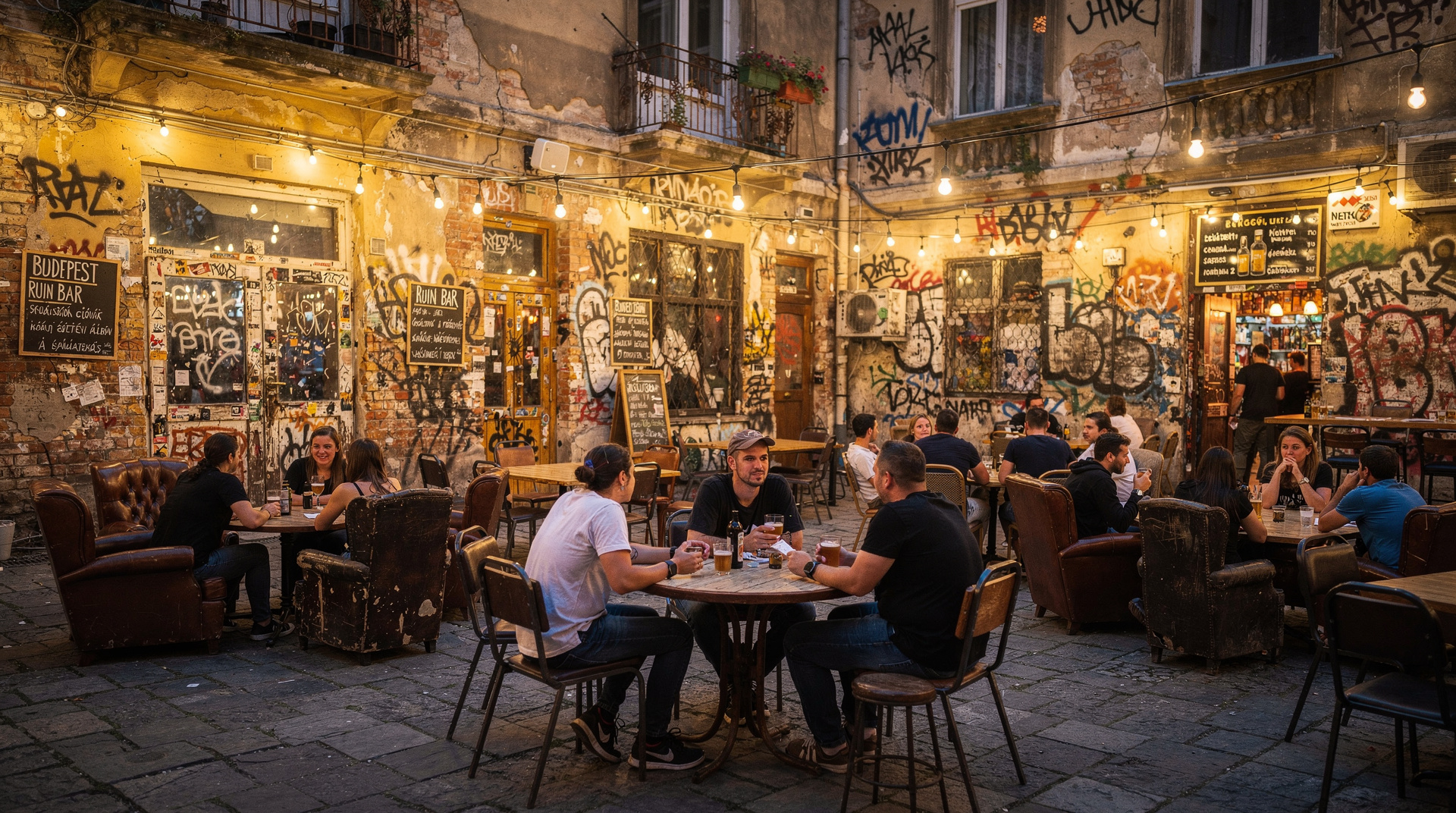
Ellátó Kert, Anker't, and the smaller bars on Dob utca and Rumbach utca attract genuine local regulars. Szimpla Kert has local customers too, but the tourist ratio increases sharply in summer. For a mostly local crowd, visit ruin bars on weekday afternoons or the smaller venues listed in this guide.What is a kocsma and how is it different from a ruin bar?
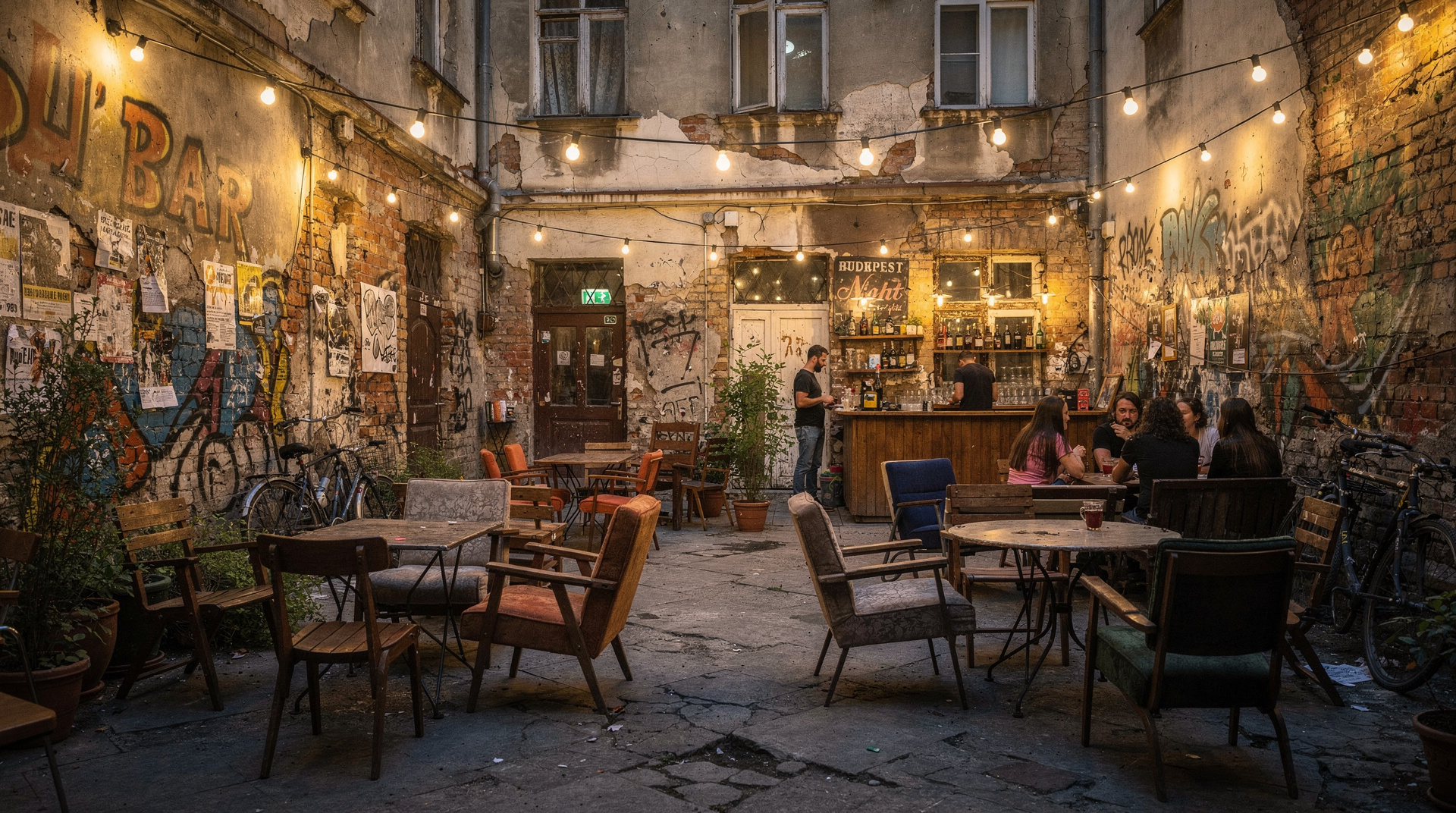
A kocsma (pronounced 'kotchma') is a traditional Hungarian pub — simple, cheap, often with a pool table and TV showing football. No décor investment, no craft beer, no tourists. Beer is 500–800 HUF (€1.25–2) per 0.5L. A ruin bar uses the same derelict aesthetic but is designed for an international audience and charges accordingly.Where is Ráday utca and why do locals like it?
Ráday utca is in District IX (Ferencváros), south of the centre — often called Budapest's 'street of restaurants.' It runs 400m from Kálvin tér, with approximately 30 bars and restaurants, mostly with outdoor seating. Prices are honest (beer 900–1,200 HUF), the crowd is 80% local, and there's no tourist-trap atmosphere.Is craft beer popular in Budapest?
Yes, and growing fast. Hungarian craft breweries (Légenda, HopTop, Monyo, Horizont) have bars and taprooms across the city. Élesztőház (Tűzoltó utca 22, District IX) is the most respected craft beer bar with 20+ taps and a loyal local following. Drinks run 1,000–1,800 HUF (€2.50–4.50) per 0.5L.Do I need to know Hungarian to drink at a local bar?
No, but a little goes a long way. A quiet 'jó estét' (good evening) on entering and 'köszönöm' (thank you) when paying are appreciated. Genuine kocsmák and presszók often only have Hungarian-language menus and staff with limited English, but patience, a smile and Google Translate get you through easily — Hungarians are generally happy to help once they see you're making an effort rather than expecting service in English.
Top experiences
Bookable activities with verified prices and instant confirmation on GetYourGuide.