Live music and jazz in Budapest: venues, tickets and what to expect

Where is the best live music in Budapest?
Budapest Jazz Club (Holló utca 7) is the premier jazz venue. A38 Ship (Buda embankment) is the best for indie, electronic, and world music. For folk and Hungarian traditional music, the Fonó Music Hall in District XI. Classical concerts at St. Stephen's Basilica run almost every evening at 20:00.
Budapest’s music scene: more than ruin bars
Budapest’s nightlife reputation rests on ruin bars and pub crawls, but the city has a serious live music culture that runs parallel and largely independent of the tourist circuit. The Hungarian capital has produced major jazz musicians, is a significant stop on the European touring circuit for indie and electronic acts, and has one of the most active classical music scenes in Central Europe.
This guide covers where to find live music across genres — from free jazz nights at neighbourhood bars to high-production folk shows and the Budapest Philharmonic.
| Where | Budapest Jazz Club (Holló utca), A38 Ship (Buda), Basilica (organ) |
| Cost | Free (ruin-bar jazz) to 20,000 HUF (Opera) |
| Booking | Advance for weekends; rush tickets often available |
| Dress | Casual, except Opera |
| Best for authenticity | Fonó Music Hall táncház, District XI |
Jazz: Budapest Jazz Club and the broader scene
Budapest Jazz Club (BJC) Holló utca 7, District V | Open most evenings; concerts from 20:00.
Budapest Jazz Club is the most respected jazz venue in Hungary. The room holds around 200 people and has excellent acoustics for a club space. Programming covers the full range — mainstream jazz, bebop, modal, contemporary, and occasionally Latin jazz or fusion. Hungarian musicians (such as pianists Béla Szakcsi Lakatos and Kristóf Bacsó) appear regularly alongside international touring artists.
Tickets: 2,500–5,000 HUF (€6.25–12.50). Book online at bjc.hu or at the door if not sold out. The bar serves decent wine and spirits; food is available from the adjacent kitchen.
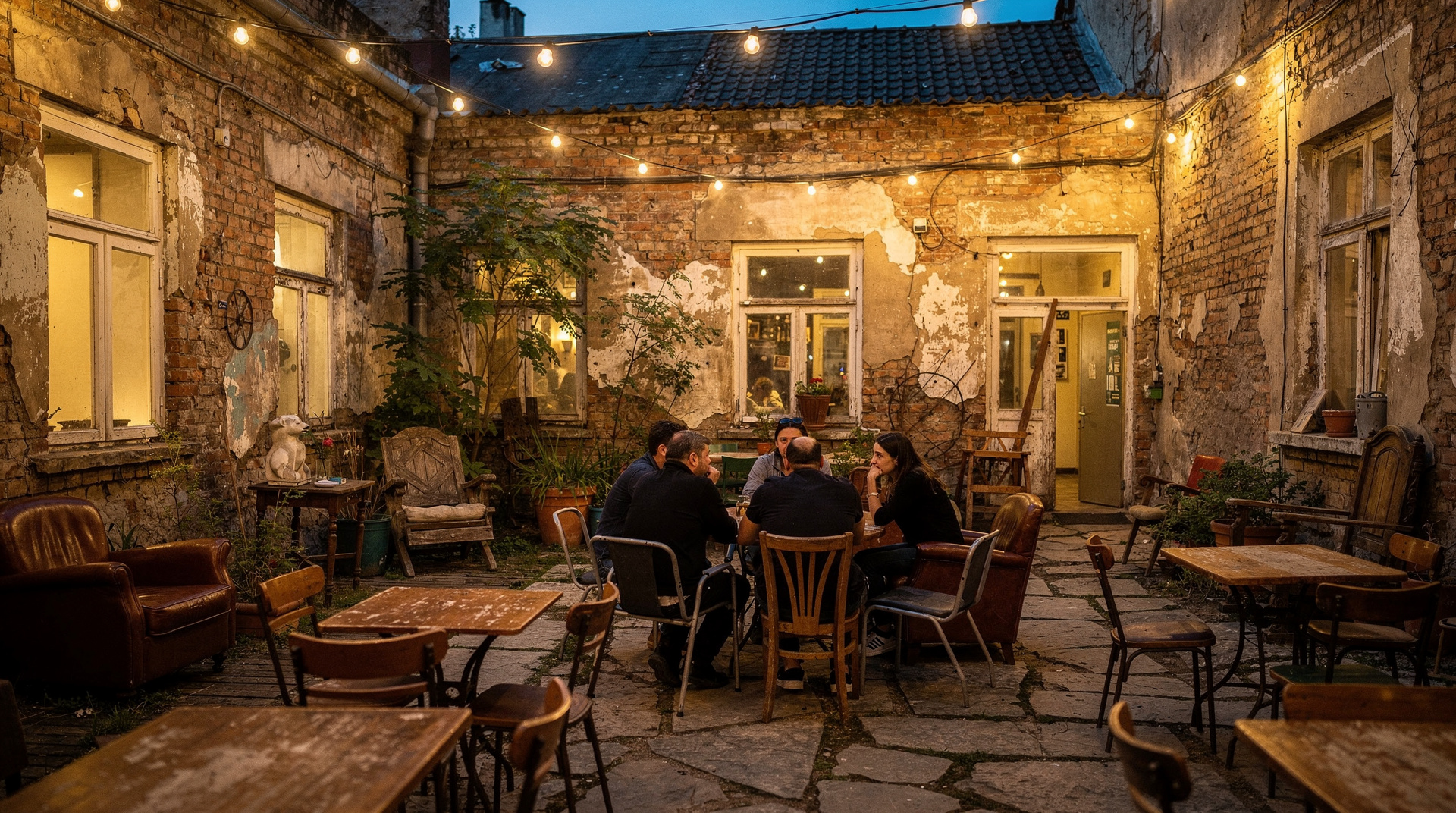
Ruin bars with jazz nights: Several ruin bars host regular jazz sessions, typically on weekday evenings:
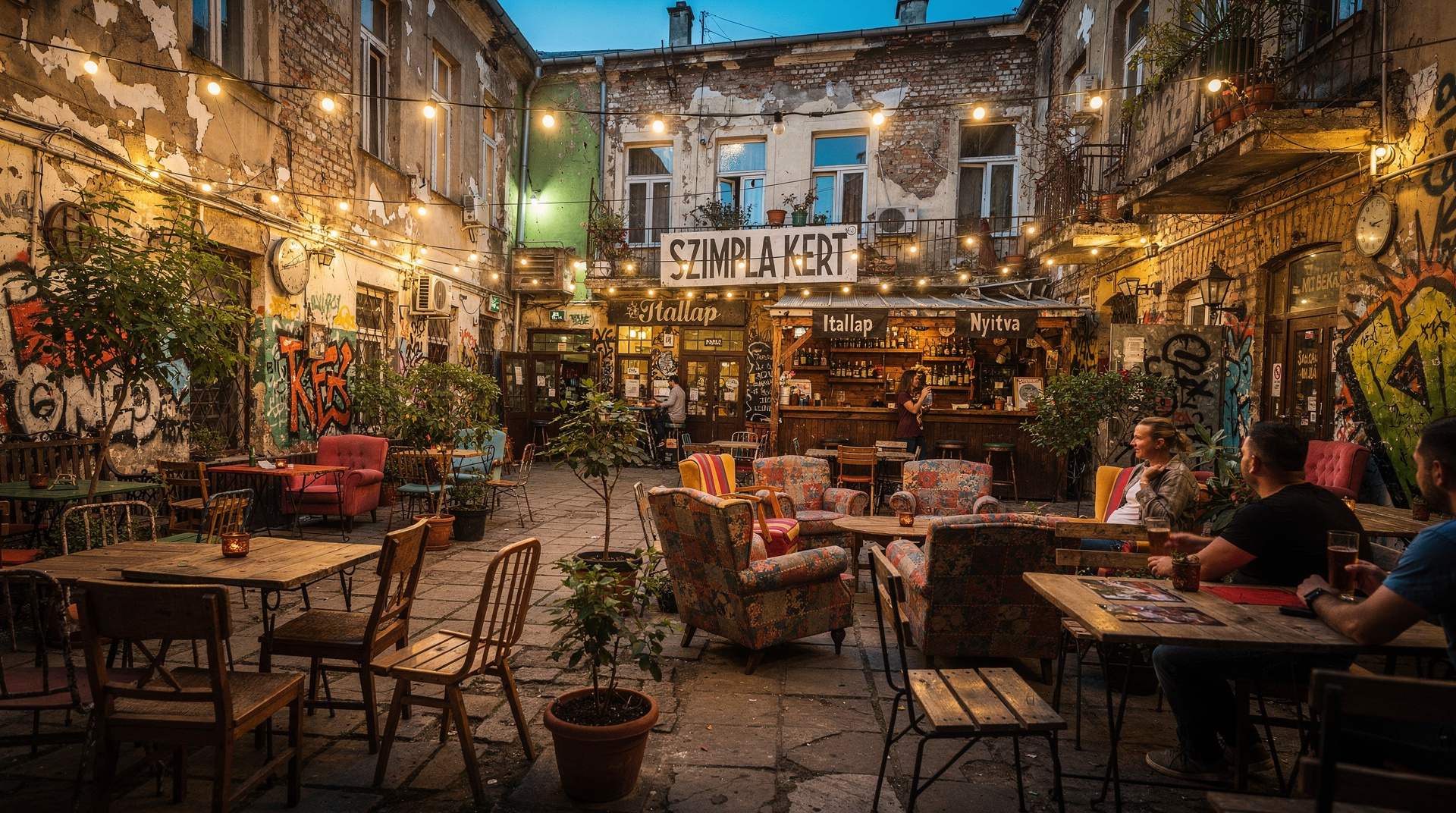
- Szimpla Kert (Kazinczy utca 14): Monday and Wednesday evenings from around 20:00 in quieter seasons; check their Facebook calendar.
- Anker’t (Paulay Ede utca 33): occasional live jazz and acoustic sets.
- Blue Fox (Hajós utca 22, near the Opera): jazz bar with live music most evenings; smaller room, intimate atmosphere.
Jazz nights at ruin bars are free to enter — you just buy drinks. Quality varies but includes genuinely excellent musicians.
A38 Ship: Budapest’s best live music venue
Moored on the Buda embankment near Petőfi Bridge, A38 (formerly a Ukrainian stone-carrying vessel) is Budapest’s most respected live music venue for non-classical genres. The ship has two stages — a larger hall below deck (capacity ~700) and a rooftop deck with city views.
Programming at A38 covers indie, electronic, post-rock, world music, and hip-hop. International touring acts that would play small venues in London or Paris often play A38; Hungarian acts from every genre appear regularly. It’s where Budapest’s music-literate local crowd goes.
Tickets: 3,000–8,000 HUF (€7.50–20) depending on the act; buy at a38.hu or at the door. The venue has a bar and restaurant on the upper deck. Note: it’s on the Buda bank — tram 4/6 stops near the Petőfi Bridge south end, or take a Bolt from the city centre.
St. Stephen’s Basilica: organ concerts
The organ at St. Stephen’s Basilica (District V, the largest church in Budapest) is one of the finest instruments in Central Europe. Nightly organ concerts at 20:00 run almost year-round, performed by professional organists from Hungary and abroad. The acoustic inside the Basilica — a domed space with marble walls — is exceptional for organ music.
Tickets: 4,500–8,000 HUF (€11.25–20) depending on seat tier. Book online at jegymester.hu or at the Basilica ticket desk (open from 15:00). For a longer evening that combines an organ concert with a Danube night cruise, a combined ticket is also available.
If you would rather have the booking sorted before you arrive, you can reserve an evening organ concert inside the Basilica in advance, which takes the pressure off on a busy night.
For visitors not specifically seeking music, a St. Stephen’s Basilica guide covers the building’s history and viewing options separately.
Folk music: authentic vs. theatrical
Authentic folk: Fonó Music Hall Sztregova utca 3, District XI | fonobp.hu
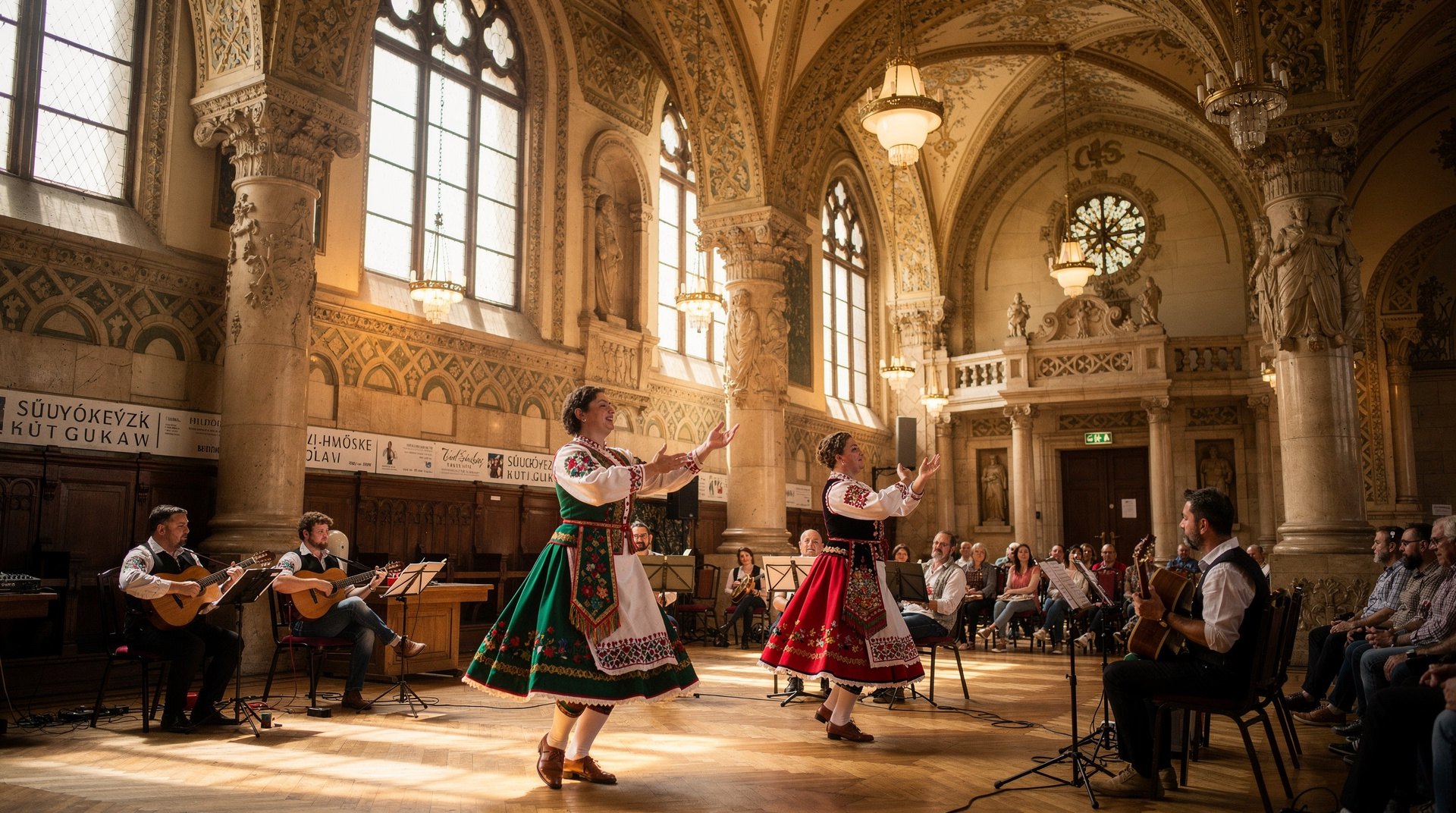
The Fonó is the home of táncház (literally “dance house”) — a movement that revived Hungarian traditional music and folk dance in the 1970s as cultural resistance during the communist era. Today the Fonó hosts táncház evenings on a roughly fortnightly basis: musicians play authentic Hungarian regional styles, and participants join in the dancing. No performance stage — just a hall where musicians play and people dance. Entirely Hungarian crowd; no English commentary.
Tickets: 2,000–3,000 HUF (€5–7.50). Check fonobp.hu for the schedule. Getting there: tram 49 from Deák tér to the Fonó stop.
Theatrical folk shows: The Duna Palota (Zrínyi utca 5, District V) and similar venues host professional folklore dance and music shows designed for a tourist audience. These are well-executed performances with skilled dancers, authentic costumes, and live traditional music — not cheap imitations. Tickets run 9,000–16,000 HUF (€22.50–40), often including dinner. The honest assessment: enjoyable and genuine in musicianship, but staged for viewing rather than participation. For context, see folklore shows Budapest.
If a staged show is what you want, one option is to combine it with the river, for example a Danube cruise with folk dancing on board, which gives you the music and the city views in a single evening.
Classical music: the Liszt Academy and Philharmonic
Liszt Academy of Music (Liszt Ferenc tér 8, District VI)
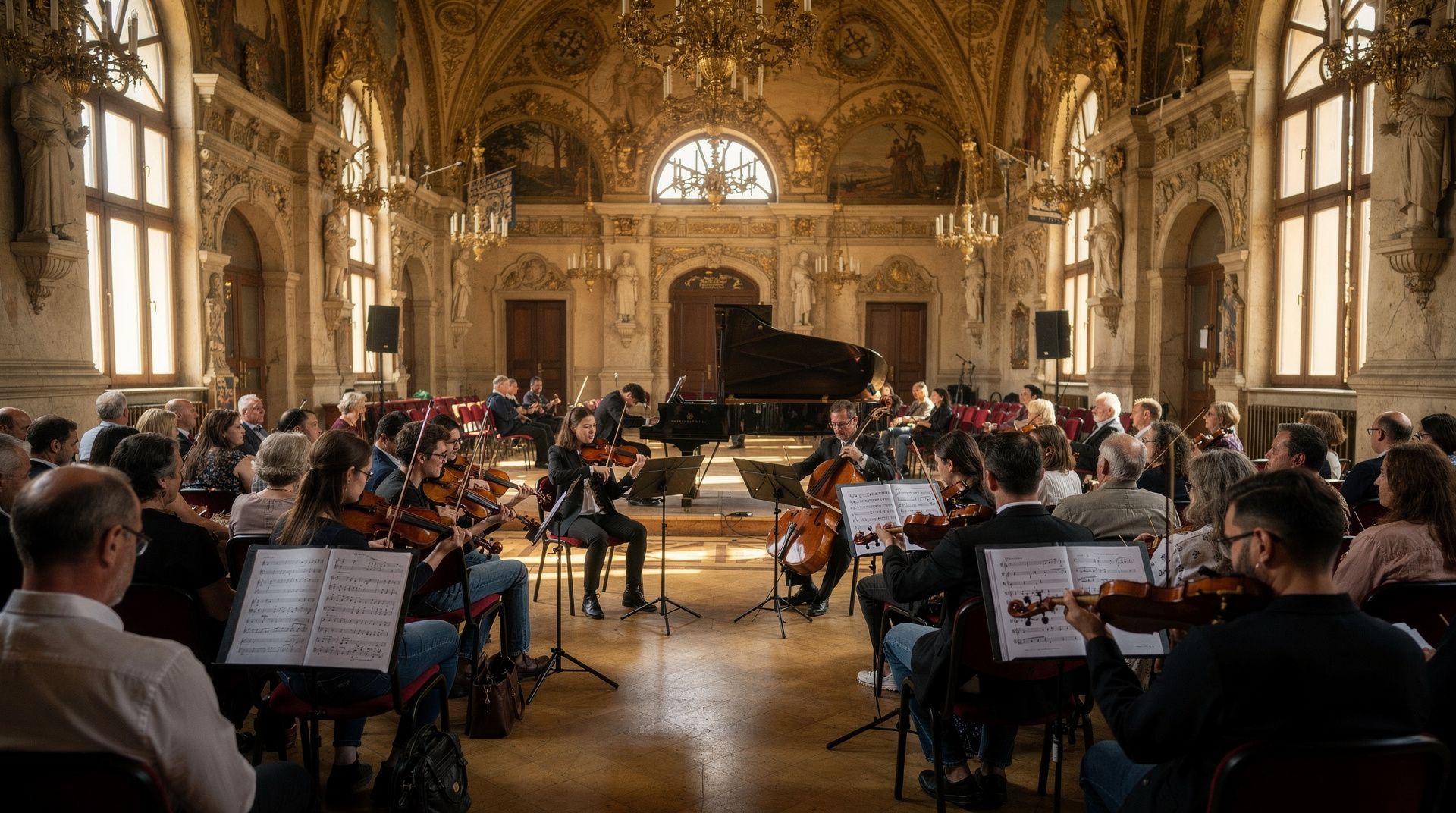
The Liszt Academy is one of Europe’s finest music conservatories, housed in an art nouveau building on Liszt Ferenc tér. The Great Hall (capacity ~900) has near-perfect acoustics. The Budapest Philharmonic Orchestra performs here regularly, as do chamber ensembles and visiting international soloists.
Tickets: 3,500–20,000 HUF (€8.75–50) depending on programme. Student/rush tickets often available from 1,500 HUF before the concert. Book at zeneakademia.hu.
Pesti Vigadó (Vigadó tér 2, District V, embankment):
The nineteenth-century Vigadó concert hall on the Danube promenade hosts classical performances and folklore events. The building’s interior is worth seeing even if you don’t attend a concert; the exterior faces the river. Tickets vary by event.
The ruin-bar music scene: what to look for
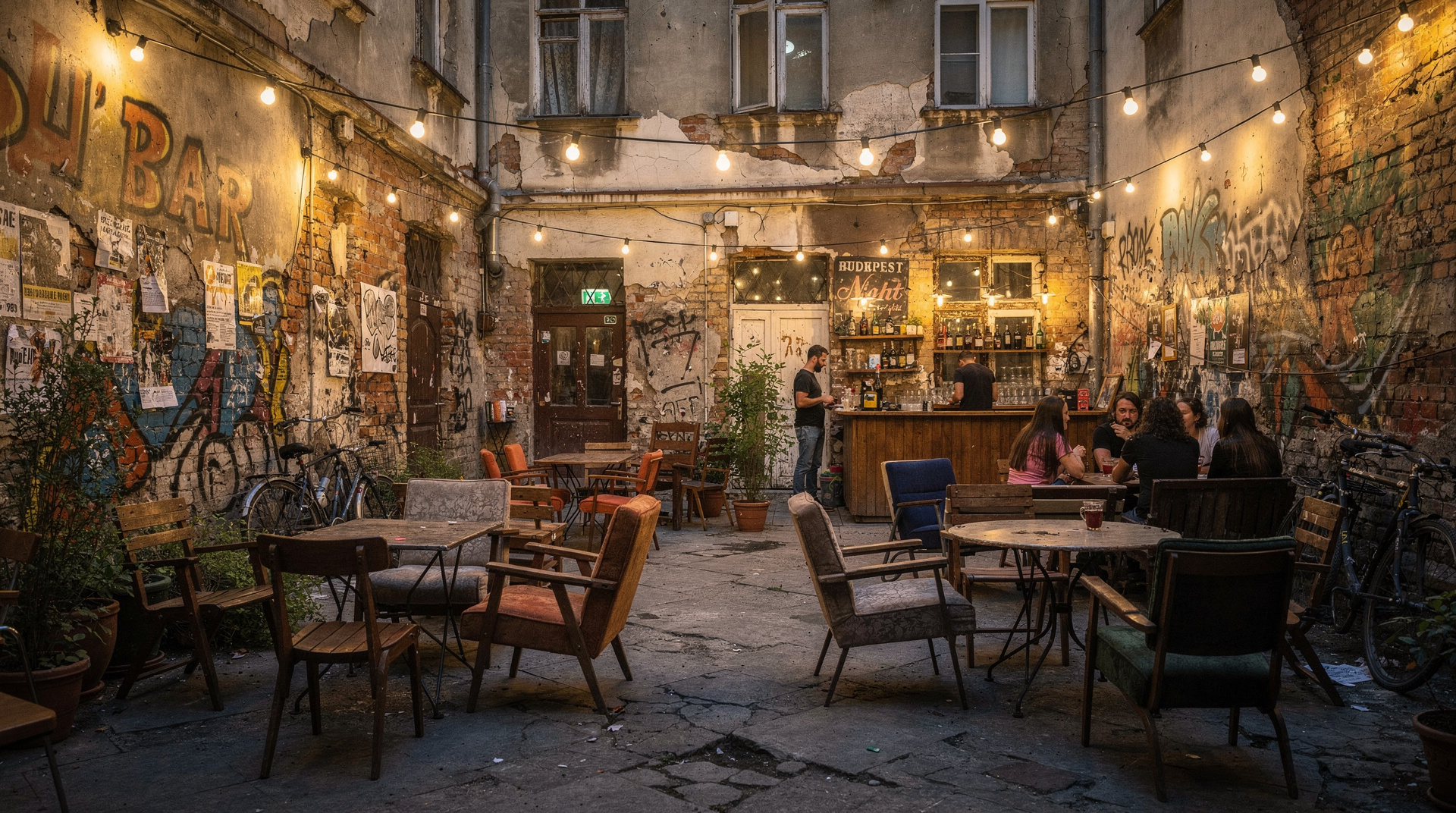
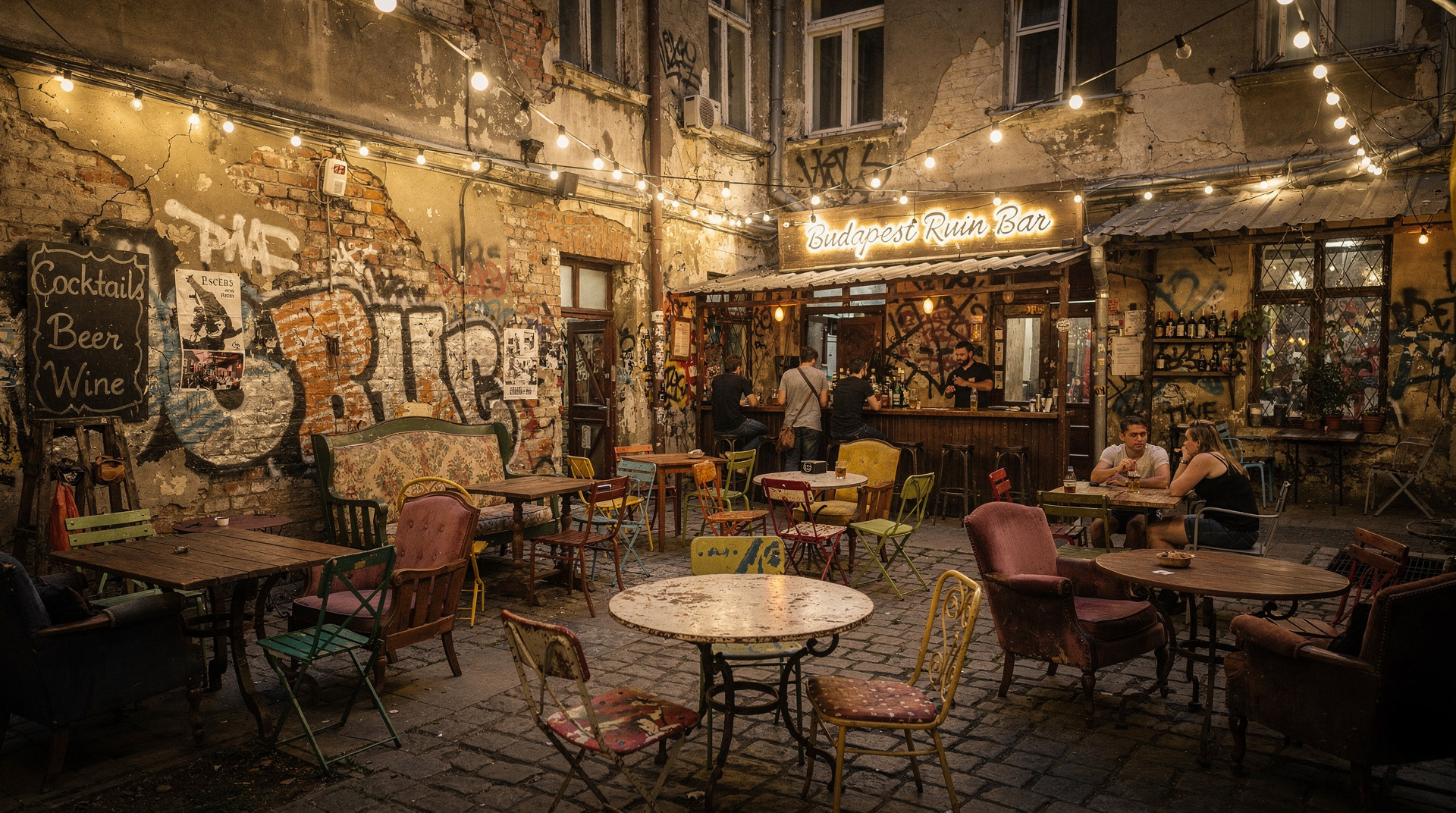
The larger ruin bars host their own music nights — not just background DJs but proper live sets:
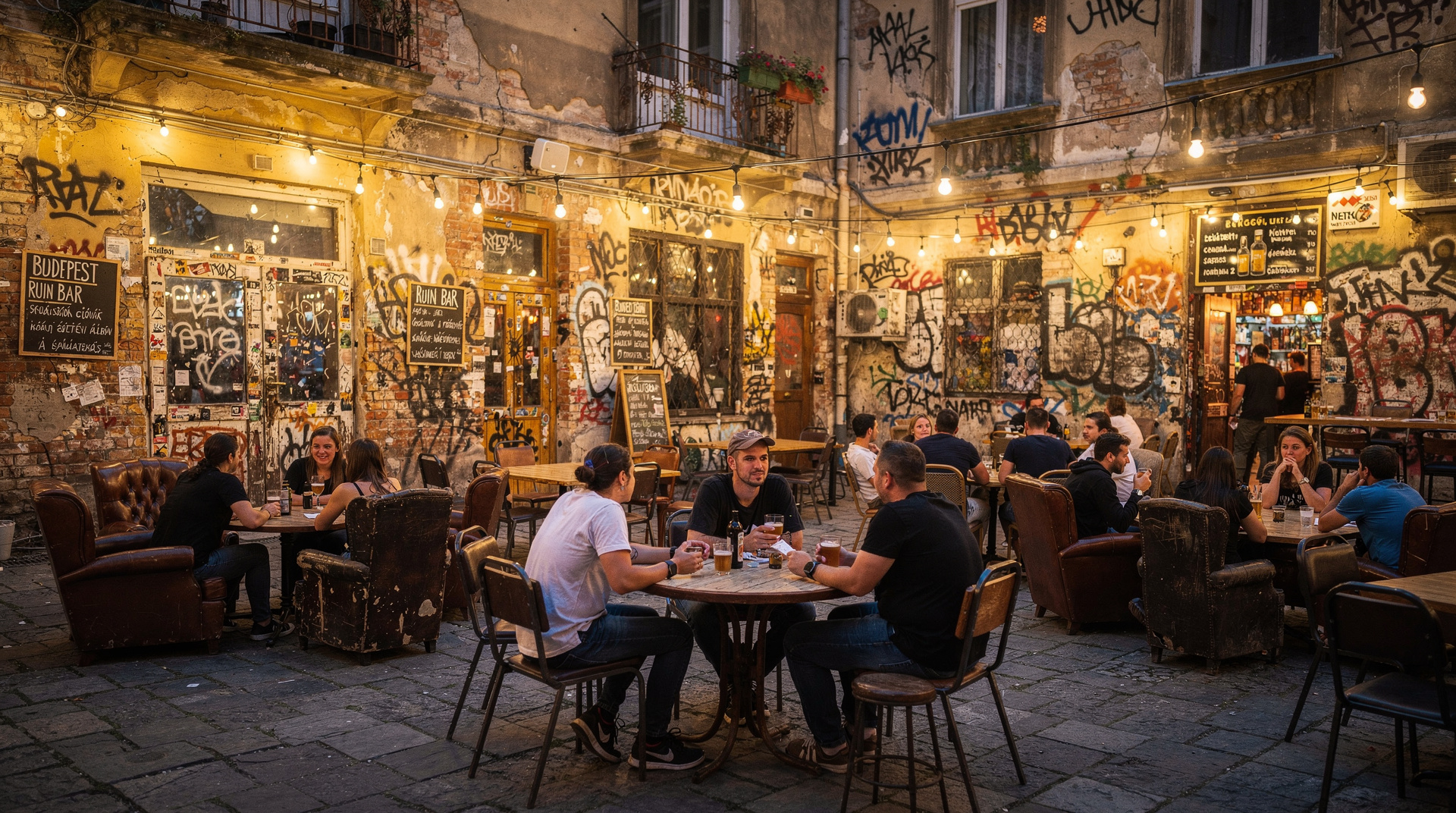
- For a ready-made evening in the scene, a ruin bar tour with 7 drinks and VIP club entry is a close alternative — a simple way to experience the ruin-bar nightlife without extensive research, though live music is not part of the listed experience.
Check venue Facebook pages for calendars: Szimpla Kert, Instant–Fogas, and Anker’t all publish weekly events listings.
Combining live music with other Budapest experiences
A Budapest evening that pairs an early dinner in the Jewish Quarter, an organ concert at the Basilica, and a ruin-bar bar stop afterwards is one of the better self-designed evenings in the city. The Budapest nightlife guide covers the broader evening landscape; best ruin bars in Budapest gives the bar detail.
For classical concerts, the Hungarian State Opera and classical concerts in Budapest guides cover the full programme. The Budapest 3-day itinerary suggests how to incorporate a concert into a structured visit.
Tickets for most venues can be purchased via Jegymester.hu (the main Hungarian ticketing platform) or through GetYourGuide for pre-selected concert packages.
Budapest Jazz Club in detail: what to expect
Budapest Jazz Club (BJC) opened in 2007 and quickly established itself as the premier jazz venue in Hungary. The room is deliberately intimate — around 200 seats, with sight lines designed so that no seat is far from the stage. The acoustics are good for a converted urban space; the sound balance is managed by a professional crew who work the room regularly.
The programming is genuinely eclectic: on any given week you might find a Hungarian bebop quartet on Monday, an American touring pianist on Wednesday, a Brazilian-influenced group on Friday, and a big band evening on Saturday. The BJC programmes approximately 250 concerts per year, making it one of the most active jazz clubs in Central Europe.
Practical details:
- Address: Holló utca 7, District V (five minutes’ walk from Deák tér)
- Box office and bar opens 1 hour before the concert
- Concerts start at 20:00; the room is often full before the start
- Two sets most evenings; some concerts are single-set formats
- Restaurant adjacent to the venue for pre-concert dining
- Dress code: none — jeans and trainers are fine alongside suit jackets
Tickets via bjc.hu or at the door if available. Online booking is strongly recommended for Friday and Saturday events.
The Hungarian folk music revival: táncház explained
The táncház (dance house) movement began in Hungary in 1972 as a cultural resistance to both the commercial pop music promoted by the communist state and the sanitised “folklorism” of the state folk ensemble. Young musicians and ethnographers returned to primary sources — village musicians in Transylvania and the Hungarian-speaking regions who had preserved genuine pre-war folk music traditions.
The result was a paradox: authentic traditional music became a vehicle for political and cultural dissent. By the 1980s, the táncház had become a significant social movement; it influenced the development of world music internationally (the first táncház recordings were among the earliest examples of what later became the “world music” genre).
Today, the Fonó Music Hall in District XI is the main venue for táncház in Budapest. A session typically runs: musicians play authentic regional styles (Transylvanian, from the Szék or Kalotaszeg regions; Moldavian csángó music; southern Hungarian styles), and participants either dance (traditional circle dances and couples dances) or listen. There is no performance stage — the musicians sit in the corner of the room, exactly as they would in a village context.
For visitors, this is one of the most authentic cultural experiences available in Budapest — more so than the theatrical folk shows designed for tourist audiences. The participants are genuinely dancing; the musicians are genuinely playing traditional repertoire. No English language is needed or expected. Entry at the door: 2,000–3,000 HUF.
Hungarian popular music: what’s current
Budapest’s contemporary music scene extends well beyond jazz and folk into genres that rarely appear in tourist guides:
Hungarian indie and alternative: Bands like Carson Coma, Margaret Island (indie-pop), Quimby (rock), and AWS (alternative/metal — Hungary’s Eurovision 2017 representatives) have significant local followings. A38 Ship and Dürer Kert (Ajtósi Dürer sor 19, District XIV) are the main indoor venues.
Electronic music: The Hungarian electronic scene is concentrated around Sziget Festival (mid-August, Margaret Island) and the club nights at Instant–Fogas and Akvárium Klub (Erzsébet tér 12, District V). Hungarian producers have had international visibility in house and techno circuits.
Romani music: Budapest has a significant Roma cultural presence, and Romani music — csárdás, verbunkos, and contemporary fusion — appears at certain venues and festivals. The annual Romani music festival and events at the Óbudai Cultural Centre (District III) are worth checking if dates align.
World music and fusion: The Óbudai Kulturális Központ and the Palace of Arts (Müpa, District IX, Komor Marcell utca 1) host international world music acts alongside Hungarian artists. The Müpa also hosts the Budapest Jazz Festival in October, which is the most significant jazz event of the year.
Booking tickets in Budapest: practical guide
Jegymester.hu: The main Hungarian ticketing platform. Hungarian-language site but navigable with a browser that auto-translates. Credit and debit cards accepted. Print or mobile ticket options.
Ticketportal.hu: Secondary ticketing platform; sometimes has availability when Jegymester doesn’t.
At the door: Many smaller venues (Budapest Jazz Club, Fonó Music Hall, Anker’t events) sell a significant proportion of tickets at the door. Arrive 30–45 minutes before the event and payment is cash or card.
The Hungarian State Opera: Tickets via opera.hu — English-language version available, online booking with card payment. Rush tickets (often available 1 hour before) can be excellent value.
Müpa (Palace of Arts): Mupa.hu — full English version, online booking, one of the most professionally managed ticketing systems in Budapest.
How to find out what’s on
For live music during your specific dates:
- Concerts Budapest (concertbudapest.com): English-language concert listings aggregator for Budapest
- Facebook events: Most smaller venues and DJs post their events on Facebook. Searching “Budapest jazz” or “Budapest concert” plus your dates gives reasonable results
- Funzine.hu: Budapest’s longest-running English-language entertainment guide; events calendar includes live music
- The venue websites directly: BJC, A38, Fonó all have monthly calendars
For the broader nightlife context that surrounds live music evenings, see the Budapest nightlife guide and party districts. For ruin bars that regularly host live music, see best ruin bars in Budapest.
Classical music in Budapest: a practical guide
Budapest has a serious classical music infrastructure built around the Hungarian State Opera, the Liszt Academy, and Müpa (Palace of Arts). Understanding each venue’s character helps plan accordingly:
Hungarian State Opera (Andrássy út 22): The primary venue for opera and ballet. The building (1884, Miklós Ybl) is one of the finest opera houses in Central Europe — attending a performance is partly an architectural experience. Repertoire is a mix of core opera canon (Verdi, Puccini, Mozart, Wagner) and Hungarian works (Bartók, Kodály, Erkel). Ticket prices: 3,500–25,000 HUF (€8.75–62.50) depending on seat location and production. Rush tickets (if available) at the box office one hour before are often the best value.
Liszt Academy (Zeneakadémia, Liszt Ferenc tér 8): The most architecturally spectacular concert hall in Budapest. The Great Hall (Nagterem) seats 1,200 under a vaulted ceiling with Art Nouveau ornamentation — one of the most beautiful concert interiors in Europe. The Liszt Academy hosts the Budapest Spring Festival (March), International Liszt Competition, and the most prestigious chamber music and orchestral concerts. Ticket prices: 2,500–15,000 HUF (€6.25–37.50). Student rush tickets available 30 minutes before for enrolled students with ID.
Müpa — Palace of Arts (Komor Marcell utca 1, District IX): Opened in 2005, Müpa is Budapest’s modern concert hall complex on the Danube south of the city centre. The Béla Bartók National Concert Hall has exceptional acoustics and hosts the Budapest Philharmonic Orchestra in its regular season (September–June), international orchestras and soloists, and the Budapest Jazz Festival (October). The Ludwig Museum of Contemporary Art is in the same building. Getting there: tram 2 from central Pest, direction Közvágóhíd; approximately 20 minutes from Deák tér.
Margitszigeti Szabadtéri Színpad (Margaret Island Open-Air Stage): Budapest’s outdoor concert venue, operating June–September. Large-capacity (2,700 seats), used for operettas, ballet, pop-classical crossover events, and the Sziget Festival fringe programme. Atmosphere on a warm July evening with the trees overhead is genuinely excellent.
Hungarian folk and dance: the táncház movement in depth
The táncház (dance house) movement that began in the 1970s deserves more attention than it typically receives in tourist guides. It emerged as a form of cultural resistance — young Hungarians recovering their own musical and dance heritage at a time when the communist government preferred folk culture to be preserved in formal, folkloric, depoliticised form rather than as a living community practice.
The movement’s originators — notably musician Márta Sebestyén and ethnomusicologist György Martin — collected folk music and dance from rural communities (particularly in Transylvania, then part of Romania) and brought it back to urban Budapest. The táncház was the format: a weekly event where participants actually learned and danced the traditional forms rather than watching professionals perform them.
What to expect at a táncház:
- A band playing traditional instruments: violin, viola, bass, gardon (a struck cello), koboz (lute). No amplification in most cases.
- A taught dance segment at the start for beginners — a caller or teacher walks participants through the basic steps.
- An open session where participants who know the dances join in.
- A genuinely mixed crowd: local families, students, older Hungarians, and interested visitors.
- Beer and pálinka from a small bar in the corner.
Fonó Music Hall (Sztregova utca 3, District XI) hosts the flagship Saturday táncház. The venue’s programme is on fonó.hu; the main táncház events are listed as “táncház szombat” (dance house Saturday). Starting time is typically 19:00 or 20:00; dancing continues until midnight or later.
The Budapest Dance House Festival in March is the annual highlight — multiple venues across the city host simultaneous táncház events.
Bartók and Hungarian classical music: context for visitors
Béla Bartók (1881–1945) is the most internationally significant Hungarian composer, and his work is performed regularly in Budapest. Understanding a little of his context makes performances more resonant:
Bartók collected over 10,000 folk melodies from Hungary, Romania, Bulgaria, Turkey, and North Africa, and this material fed into his orchestral and chamber works. The Concerto for Orchestra (1943), the Music for Strings, Percussion and Celesta, and the six String Quartets are the most performed works and the most representative of his mature style.
The Bartók Memorial House (Bartók Béla út 29, District II) occupies the villa where he lived 1932–1940. Concerts are held here regularly — chamber music in the rooms where he worked. Intimate scale; worth seeking out if dates align.
Zoltán Kodály, Bartók’s contemporary and collaborator, is more associated with music education (the Kodály method is taught globally) than with concert music, but his Háry János suite and Peacock Variations are performed regularly and are excellent introductions to Hungarian classical music.
Jazz clubs: extended recommendations
Beyond the Budapest Jazz Club, several other venues are worth knowing for jazz specifically:
Opus Jazz Club (Müpa, Komor Marcell utca 1): The dedicated jazz programme within the Müpa complex. Higher production values than most jazz clubs; programmes tend toward well-known international and Hungarian acts rather than experimental forms. Ticket prices: 2,000–6,000 HUF.
Jazzy (Hajós utca 7, District VI): Smaller jazz club in a basement near the Opera. Regular late sets on weekends; more intimate than BJC. Cover charge 1,000–2,500 HUF depending on the act.
Anker’t (Paulay Ede utca 33): The ruin bar hosts jazz sessions on weekday evenings in the quieter months (October–April). Free entry; drink purchase expected. Quality varies but includes genuinely good local musicians.
Dürer Kert (Ajtósi Dürer sor 19, District XIV): Multi-venue arts complex in City Park that hosts jazz acts alongside electronic music and indie. Larger venue than BJC; better for international touring acts. Programme at durerkert.com.
Live music by season
Budapest’s live music calendar shifts noticeably across the year. Indoor venues — Budapest Jazz Club, the Liszt Academy, St. Stephen’s Basilica organ concerts — run full programmes year-round, making winter a genuinely good time for music-focused visits when outdoor tourism is quieter. Summer (June–August) adds outdoor and festival programming: Sziget Festival dominates mid-August, the Margaret Island Open-Air Stage runs June–September, and A38’s rooftop deck becomes a regular evening spot. The Budapest Jazz Festival at Müpa in October and the Budapest Dance House Festival in March are the two standout single events for genre specialists — both are worth timing a visit around if jazz or folk music specifically draws you to the city. Spring and autumn shoulder seasons combine the advantages of both: full indoor programming without summer’s festival crowds.
Free live music: where to hear it without a ticket
Budapest’s free live-music circuit is genuinely good, not a consolation prize. Ruin bars including Szimpla Kert and Anker’t run regular free jazz and acoustic nights, particularly on weekday evenings in the quieter months — you pay only for drinks. Liszt Ferenc tér’s café terraces sometimes host buskers and small acoustic sets on summer evenings. The Great Market Hall occasionally has folk musicians on its upper gallery on weekend mornings. For a structured but still low-cost evening, combine a free ruin-bar set with a walk past St. Stephen’s Basilica at dusk, when the organ concert crowd is arriving and the building is floodlit outside.
Combining live music with a Budapest night out
For visitors who want music without committing an entire evening to one venue, the ruin-bar district (District VII) allows genre-hopping: a jazz set at Blue Fox, a folk session at a Kazinczy utca bar, then a DJ room at Instant–Fogas — all within a 10-minute walk. See party districts in Budapest for the neighbourhood map and late-night Budapest for what’s still open once the last set finishes.
Frequently asked questions about Live music and jazz in Budapest
Does Budapest have a good jazz scene?
Yes, Budapest has one of Central Europe's strongest jazz scenes. Budapest Jazz Club (BJC) on Holló utca hosts concerts most evenings from 20:00 with a mix of Hungarian and international acts. Tickets run 2,500–5,000 HUF (€6.25–12.50). Liget Club (in the City Park area) and some ruin bars also host jazz nights.How much do live music tickets cost in Budapest?
Ranges widely: free (some ruin-bar jazz nights) to 2,500–5,000 HUF (€6.25–12.50) for Budapest Jazz Club, 3,000–8,000 HUF (€7.50–20) for A38 events, 8,000–15,000 HUF (€20–37.50) for Hungarian State Opera, and 4,500–8,000 HUF (€11.25–20) for St. Stephen's Basilica organ concerts. Classical concerts at the Basilica are excellent value.Are folk music shows for tourists or are they genuine?
Both exist. The folklore dinner shows (at venues like the Duna Palota) are theatrical performances designed for tourists — enjoyable but not authentic. For genuine Hungarian folk music, the Fonó Music Hall (Sztregova utca 3, District XI) hosts táncház (dance house) sessions where Hungarians participate, not just watch. The Hungarian State Folk Ensemble also performs at the Budai Vigadó.Can I see a classical concert in Budapest cheaply?
Yes. Organ concerts at St. Stephen's Basilica run almost every evening at 20:00 for around 4,500–8,000 HUF (€11.25–20) — an atmospheric setting with serious musical quality. The Liszt Academy has a student concert series from 1,500 HUF. The Budapest Philharmonic at Pesti Vigadó runs from around 5,000 HUF for balcony seats.What should I wear to a Budapest concert or jazz club?
Casual is fine almost everywhere. Budapest Jazz Club and A38 have no dress code — jeans are standard. St. Stephen's Basilica organ concerts and the Liszt Academy are slightly smarter but still don't require formalwear; smart-casual is comfortable. Only the Hungarian State Opera leans dressier, though even there a jacket without a tie is accepted.
Top experiences
Bookable activities with verified prices and instant confirmation on GetYourGuide.