Budapest on a budget: practical guide for 2026

How do you do Budapest on a budget?
Stay in District VII hostels, eat at the Great Market Hall and local restaurants away from Váci utca, use BKK public transport passes, visit free sights (Fisherman's Bastion terrace, Heroes' Square, Margaret Island, Jewish Quarter), and book paid attractions in advance. A realistic budget traveller spends €30–45 per day including accommodation.
Travelling Budapest cheaply in 2026
Budapest has risen in price since 2020, but it remains genuinely manageable on a tight budget with the right approach. The difference between a tourist-trap Budapest and a budget-intelligent Budapest is significant — the tourist infrastructure is designed to extract money, and the alternative (what locals actually do) is consistently cheaper and often better.
This guide covers every category of spending with specific, honest strategies.
If you want the wider picture before planning, is Budapest expensive? sets the city against other European capitals, Budapest trip cost breaks down what a whole trip adds up to, and the daily budget guide shows how spending shifts from one travel style to another. Use this page when the goal is simply to spend as little as possible without wasting the trip.
| Daily budget | €30–45/day including accommodation |
| Cheapest sleep | District VII/VIII hostel dorm, 4,000–8,000 HUF/night |
| Cheapest eat | Great Market Hall lángos, 800–1,500 HUF |
| Cheapest transport | 72-hour BKK travelcard, 5,750 HUF |
| Best free sights | Fisherman’s Bastion terrace, Margaret Island, Heroes’ Square |
Accommodation: where to stay cheaply
Hostels in District VII
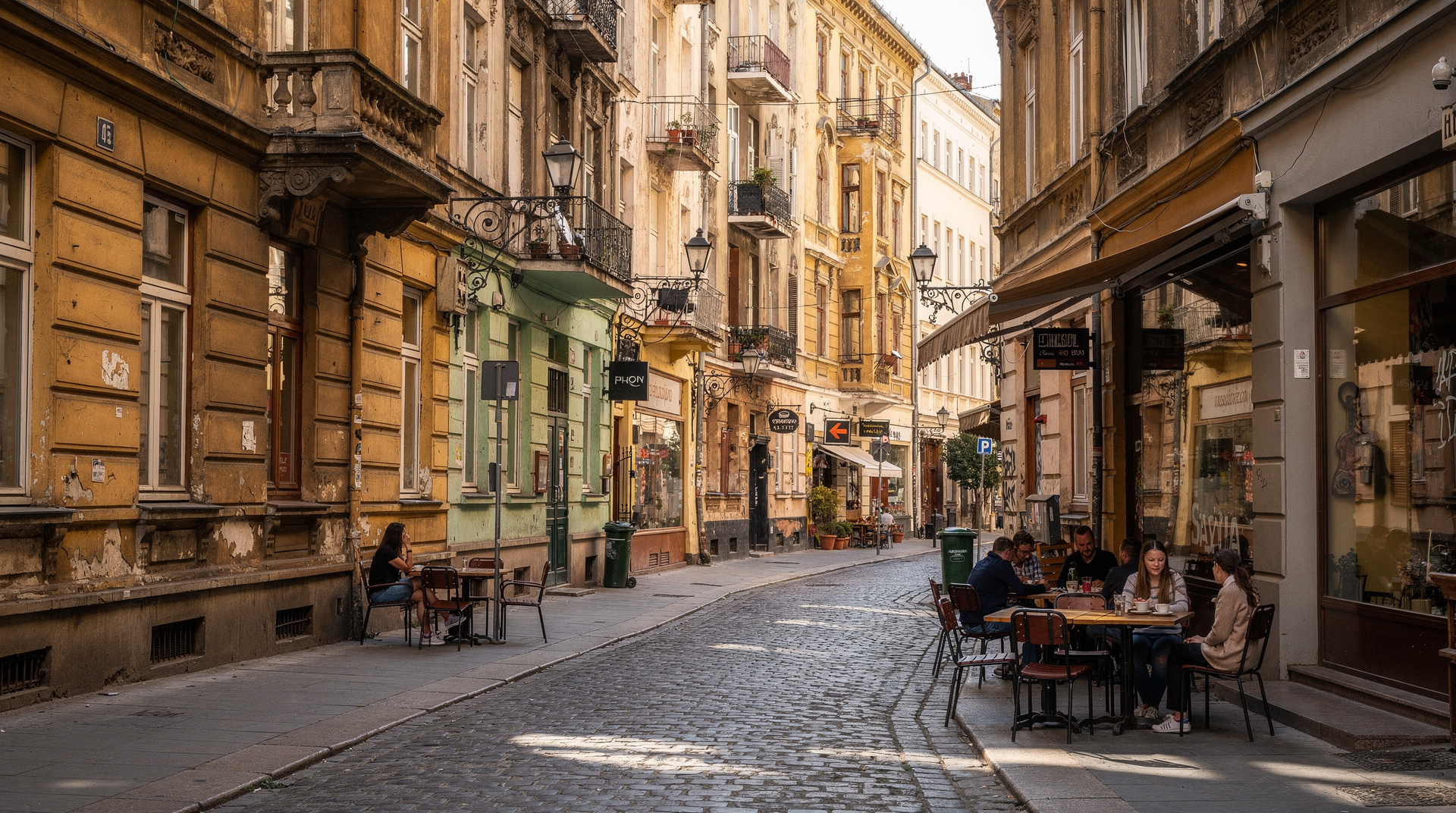
The Jewish Quarter (District VII, around Kazinczy utca and Kertész utca) has Budapest’s highest concentration of budget accommodation. Hostel dorms run 4,000–8,000 HUF/night (€10–20); private rooms in guesthouses range 12,000–24,000 HUF/night (€30–60).
Honest trade-off: District VII is the ruin-bar district. It is lively, interesting, and exceptionally well-located. It is also noisy until 03:00–04:00 on weekends. If you need sleep, book a room with earplugs or choose a quieter street.
Recommended approach: Book through Hostelworld or Booking.com; read reviews specifically mentioning noise levels. Well-rated budget hostels fill quickly in summer — book at least 1–2 weeks ahead for July–August.
Budget-friendly Districts VI and VIII
District VI (around Andrássy Avenue) is quieter than VII and still central. District VIII is cheaper, more local, and a 15-minute walk or one metro stop from the main sights. The trade-off is less atmosphere for the price you save.
Apartments with kitchens
For stays of 3+ nights, an apartment with kitchen access from Airbnb or Booking.com saves significantly on food costs. Self-catering from Hungarian supermarkets costs roughly €8–12/day per person — versus €15–25/day eating out. The maths favours apartment stays for budget trips of 4–7 nights.
District VIII: the underrated budget base
District VIII (Józsefváros), particularly around Blaha Lujza tér and Corvin-negyed, is consistently cheaper than District VII while remaining one or two tram/metro stops from the centre. It lacks the ruin-bar atmosphere but has good local restaurants, the National Museum, and genuinely lower accommodation prices. Some pockets nearer Keleti station are rougher and worth checking reviews carefully, but the core around Corvin-negyed is safe, walkable and increasingly gentrified without the price premium that comes with it. For a full comparison of where budget makes sense against location, see where to stay in Budapest.
Neighbourhood choice shapes both your nightly rate and your daily transport spending, so it is worth reading Buda vs Pest: where to stay and the Jewish Quarter district guide before you book. If late-night noise is a concern, the ruin-bar guide shows which streets stay busiest, so you can pick a bed a few blocks away.
Transport: getting around cheaply
BKK public transport
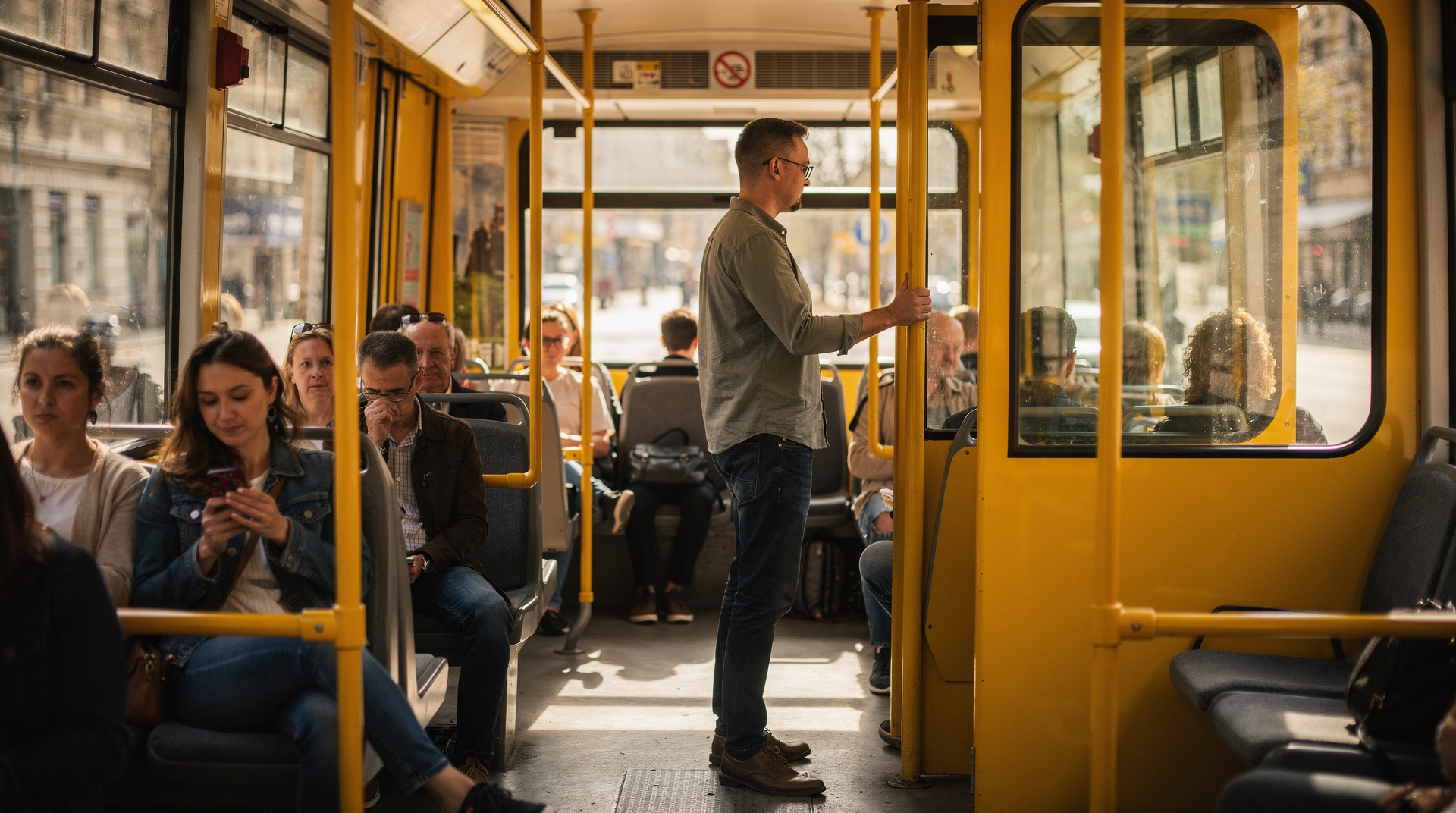
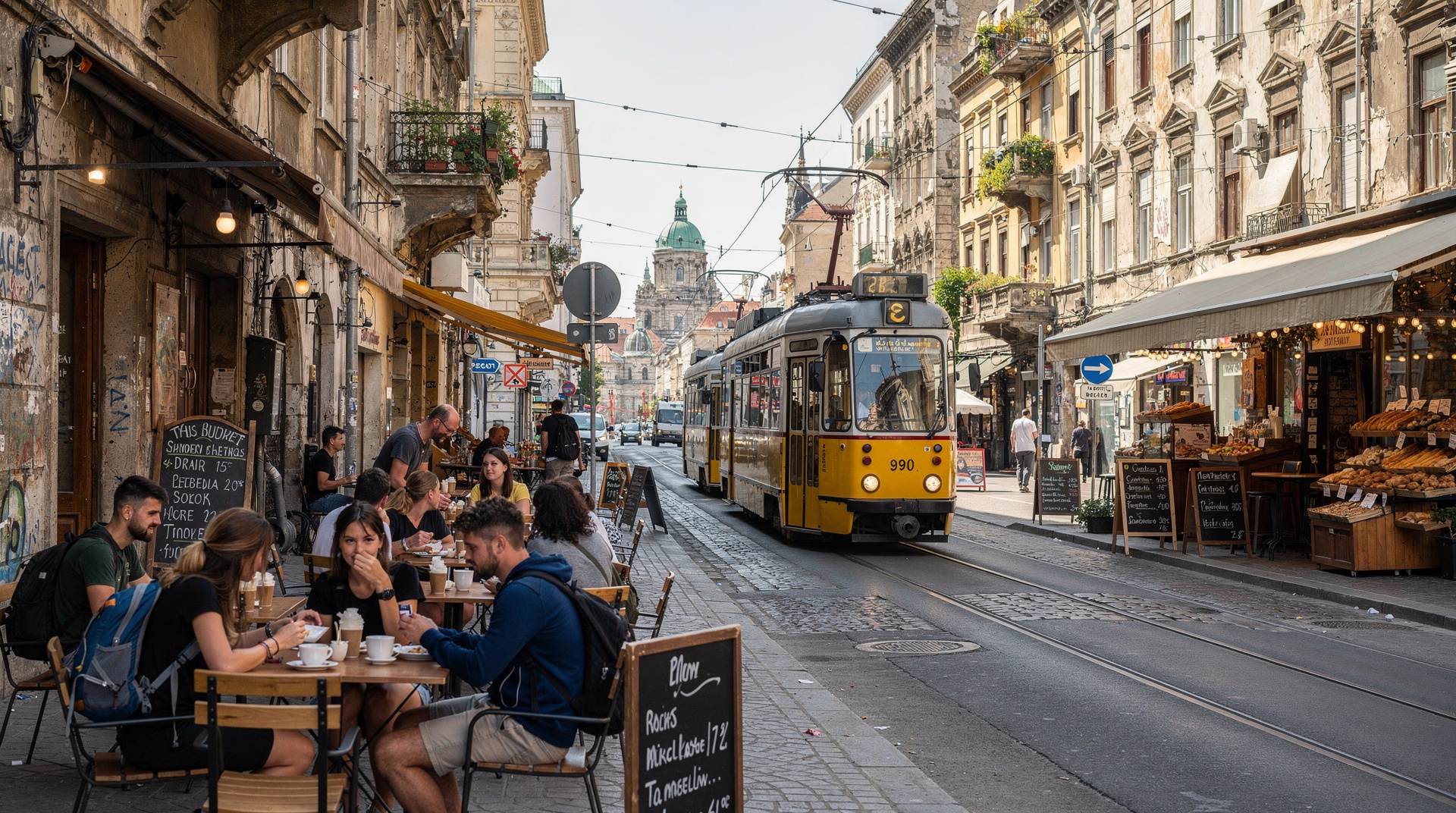
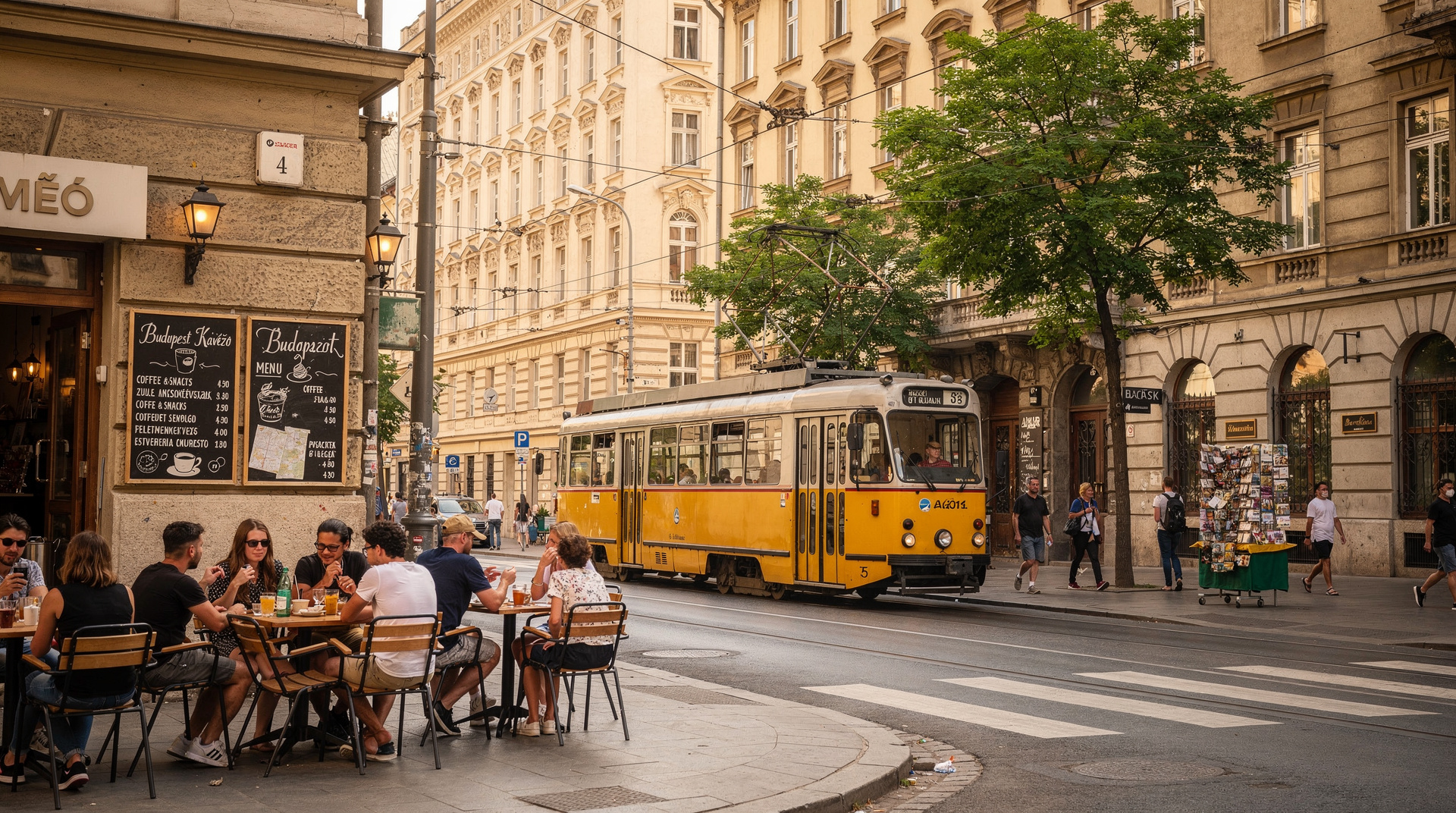
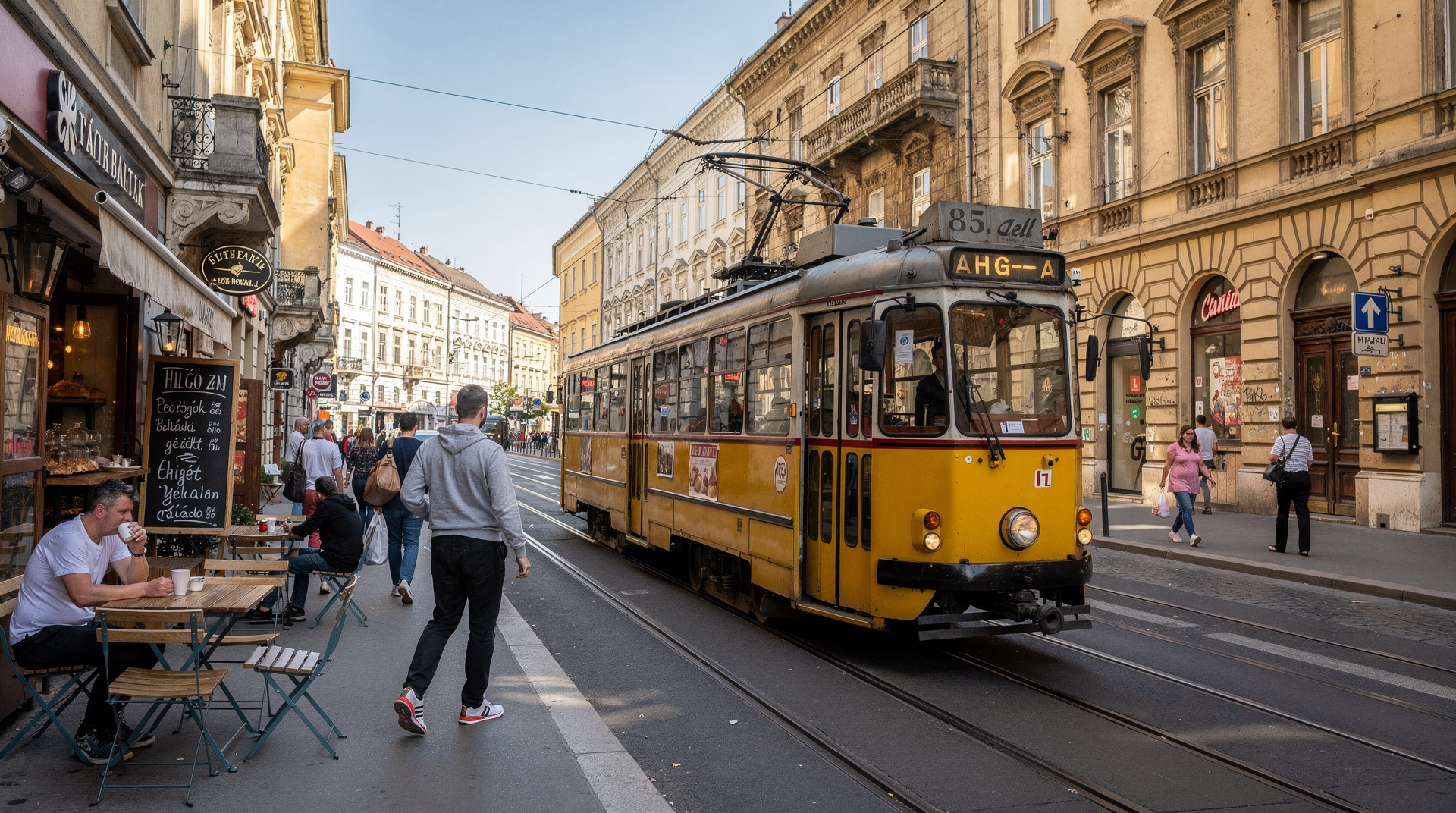
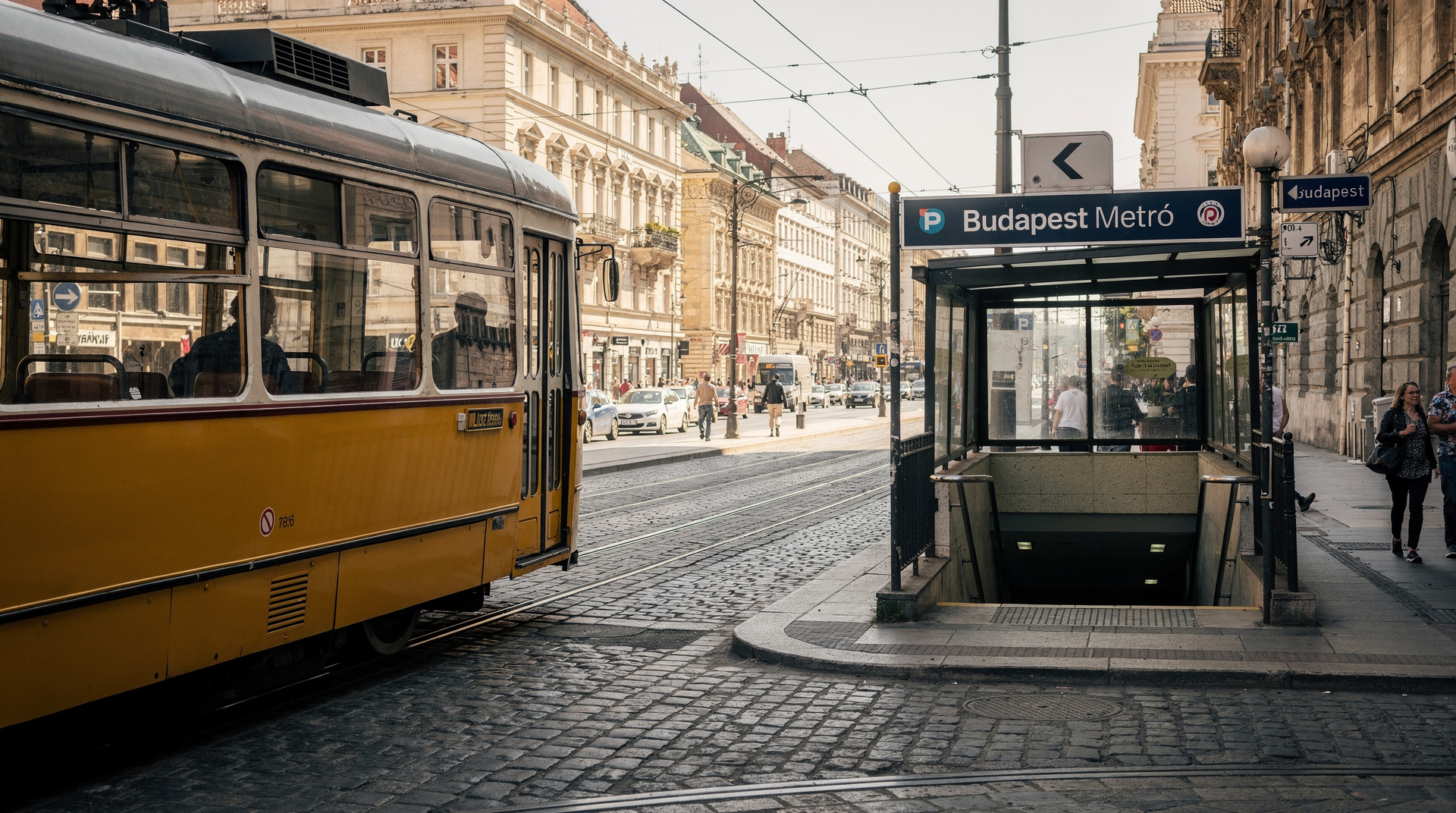
The BKK network (metro, tram, bus, suburban HÉV rail) covers the city comprehensively. Key prices for 2026:
- Single ticket: 500 HUF bought in advance (700 HUF on board) — validate on boarding, not at the end
- 24-hour travelcard: 2,750 HUF
- 72-hour travelcard: 5,750 HUF
- 30-day monthly pass: 8,950 HUF
For a 3-day budget trip, the 72-hour card covers all transport without counting tickets. For longer stays, the 30-day pass pays off if you are taking more than 2–3 journeys per day.
Critical warning: Validate your ticket or tap your card at the start of every journey. BKK inspectors work in plain clothes and check frequently on the M3 and M4 lines. The unvalidated-ticket fine is 16,000 HUF (€40) — which eliminates any transport savings from a week.
See /guides/public-transport-tickets/ for the full guide and /guides/getting-around-budapest/ for route advice.
Airport transfer on a budget
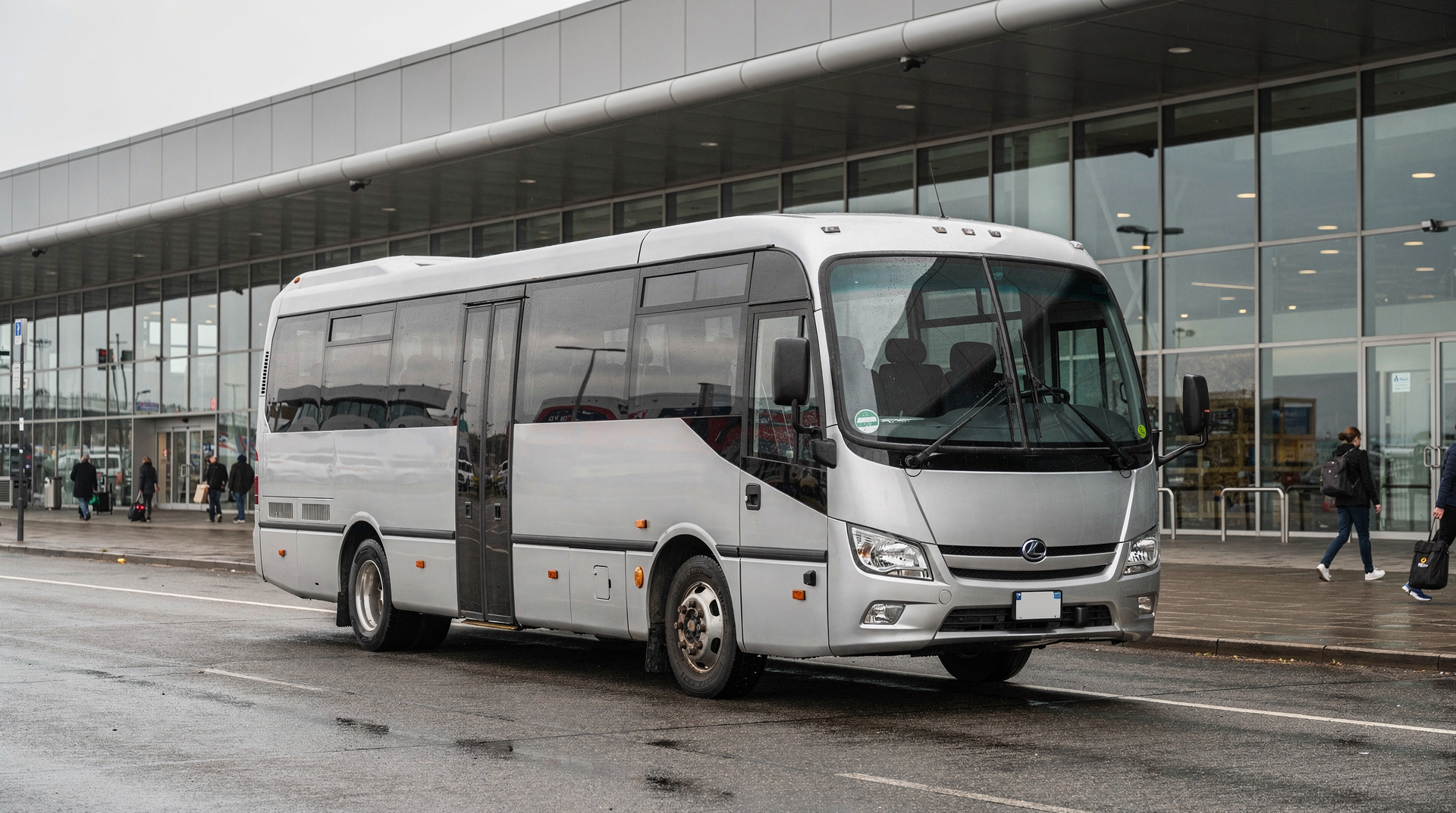
Bus 100E from BUD airport to Deák Ferenc tér: 1,100 HUF (€2.75). Runs every 20 minutes, takes 30–40 minutes. This is the correct budget option.
Never take an unmarked taxi at the airport. If you want a taxi, use the Bolt app (6,000–10,000 HUF to central Budapest, €15–25) and book inside the terminal before approaching the taxi rank. See /guides/budapest-airport-to-city-center/ for the complete options.
Walking
Central Budapest is walkable. The distance from the Parliament to the Chain Bridge is about 15 minutes on foot; from the Chain Bridge to the Great Market Hall is 20 minutes. Districts V, VI, and VII are compact and flat on the Pest side. Save the transit cards for crossing the river to Buda (tram 19 or 41, or metro M2 to Moszkva tér).
For ticket types and how the zones work, the BKK travel passes guide goes deeper, and the metro guide helps you read the lines before your first ride. Walking also pairs well with the Chain Bridge guide, since crossing it on foot is free and gives you the river views without a ticket.
Food: eating well and cheaply
The Great Market Hall
Nagy Vásárcsarnok at the end of Váci utca is the most useful budget eating location in central Budapest. Ground floor:
- Lángos stalls: deep-fried flatbread with sour cream and cheese for 800–1,500 HUF (€2–3.75) — filling, cheap, genuinely good
- Fresh produce: cheap and high quality; useful for apartment self-catering
- Market canteen (étkezde): traditional Hungarian lunch menus for 1,500–2,500 HUF (€3.75–6.25)
See /guides/central-market-hall-guide/ for the layout and what to buy where.
Local restaurants away from tourist streets
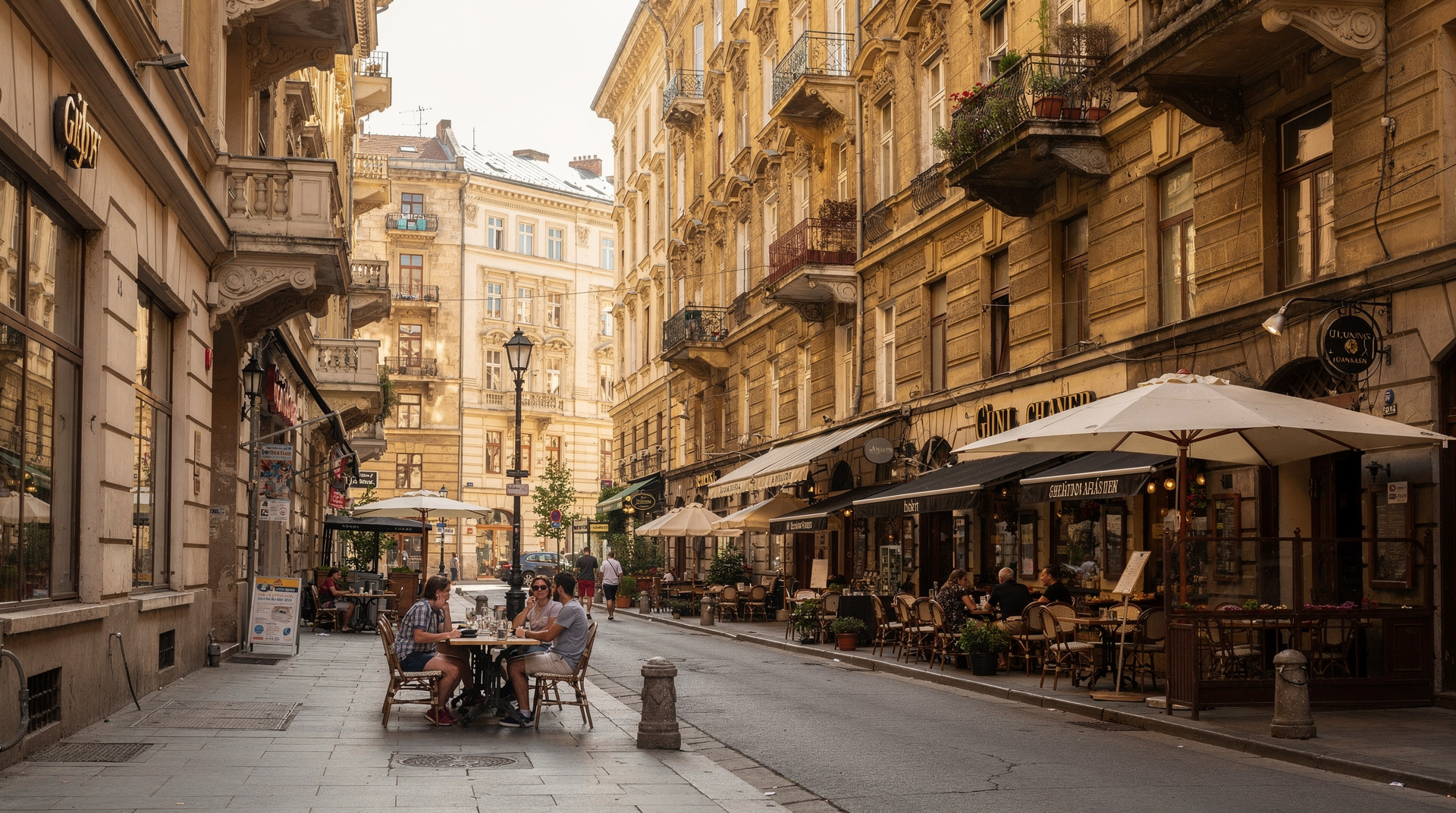
The rule: Váci utca and the immediate surroundings are 30–50% more expensive than equivalent restaurants two streets away. Walk perpendicular to the tourist corridor and quality improves while prices fall.
What to look for:
- Hungarian étkezde (canteens): lunch menu (leves + főétel, soup plus main) for 1,500–2,500 HUF (€3.75–6.25)
- Rétesbar and pastry shops: Hungarian stuffed pastries (rétes) for 400–800 HUF (€1–2)
- Supermarket deli sections: cooked food to take away at low prices
Street food and kiosks
- Kürtőskalács (chimney cake): 800–1,500 HUF (€2–3.75) — best fresh from the grill
- Sausage stands (lángossütő): 600–1,200 HUF
- Market cold sandwiches: 500–1,000 HUF
For more ideas on traditional dishes worth ordering, see the Hungarian dishes guide, the lángos guide and the street food guide. Travelling without meat is easy too, as the vegetarian and vegan guide explains.
Drinking cheaply
Hungarian beer (Dreher, Borsodi, Soproni) costs 500–900 HUF (€1.25–2.25) at a local bar; 800–1,500 HUF at a ruin bar. The ruin bars in District VII (Szimpla Kert, Instant-Fogas) charge tourist prices but the atmosphere is the main draw. See /guides/best-bars-for-locals/ for the genuinely local alternatives at lower prices.
Free and cheap sightseeing
Free attractions — genuinely worth your time
- Fisherman’s Bastion terrace: free, with some of the city’s best Parliament views; only the towers charge (1,000 HUF per adult)
- Heroes’ Square and Vajdahunyad Castle: free to walk around; the Millenary Monument and castle exterior are the main sights
- Margaret Island: free to enter; the island’s park, musical fountain, and Danube-side paths cost nothing
- Jewish Quarter (District VII): wandering Kazinczy utca, Rumbach utca, and the surrounding streets costs nothing — the architecture and atmosphere are the draw
- Andrássy Avenue: free to walk; the UNESCO World Heritage boulevard has beautiful buildings, the State Opera House (exterior), and leads to Heroes’ Square
- Chain Bridge and river embankment: walking both Buda and Pest embankments costs nothing and gives excellent views
The full list of no-cost options lives in free things to do in Budapest. Individual free sights each have their own page: the Fisherman’s Bastion guide, Heroes’ Square and City Park and Margaret Island are the ones to prioritise.
Budget sightseeing
- Past and present Jewish district walk: a paid guided walk of the Jewish district, and a worthwhile step up from wandering it alone. It offers context on the Dohány Street Synagogue area, the history of Hungarian Jewry, and the ruin-bar district origins
- 2-hour Budapest walking tour: approximately 4,000–6,000 HUF (€10–15) per person — covers the main Pest sights with local context. The best-value introduction to the city
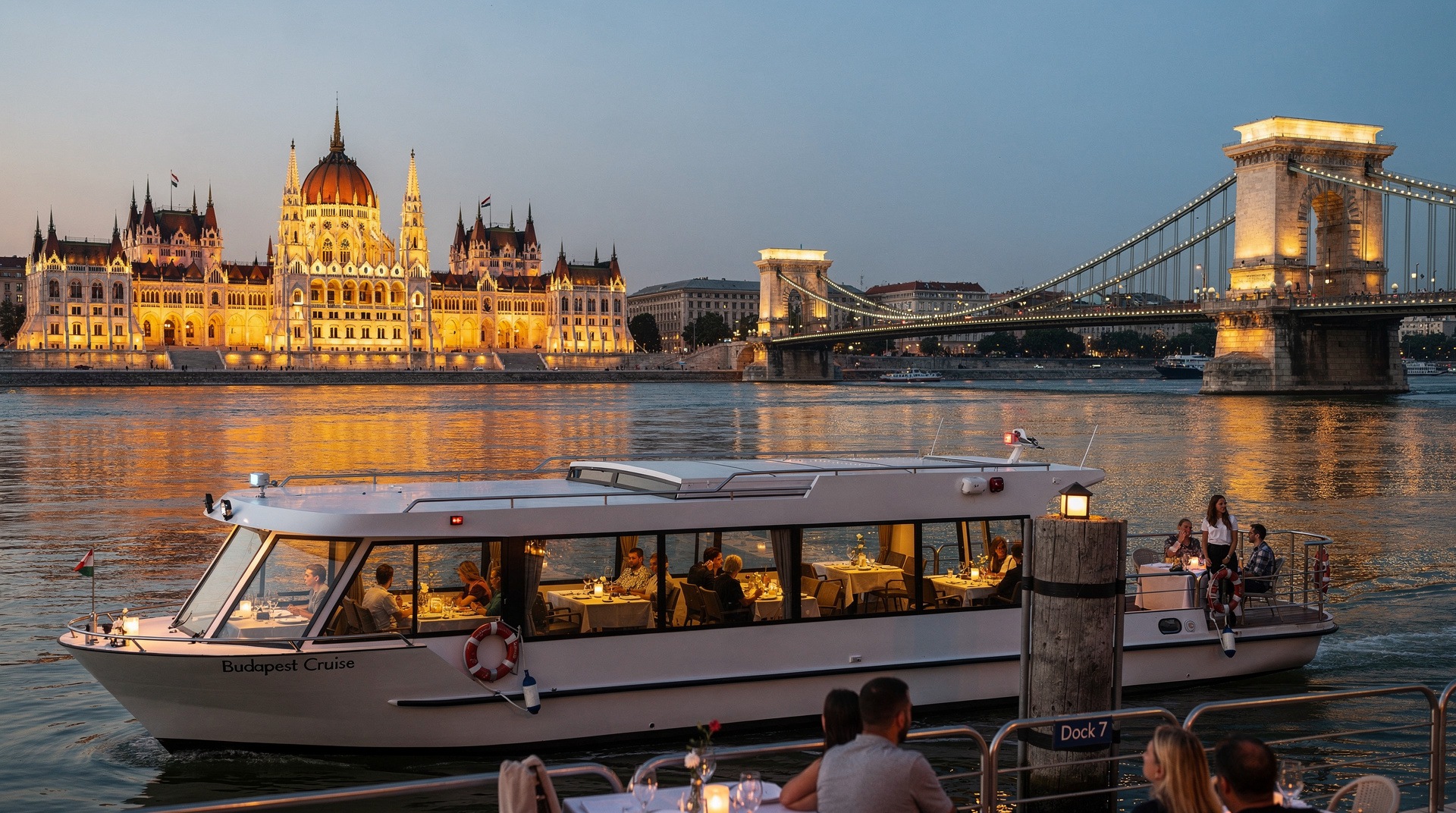
- Daytime sightseeing cruise: the city highlights cruise costs approximately 3,500–5,500 HUF (€8.75–13.75) for 70 minutes of Danube views — one of the cheapest ways to see the Parliament, Castle, and bridges from the water
If you would rather compare tours before choosing, the walking tours guide and the Danube cruise overview lay out the options side by side.
Museums on a budget
- Memento Park (communist statues): approximately 3,000 HUF (€7.50) — worth it as a unique Budapest experience, about 20 minutes from the centre by bus
- House of Terror: approximately 4,000 HUF (€10) — excellent and genuinely affecting
- Hungarian National Museum: approximately 2,000–3,000 HUF (€5–7.50), with some free days
The House of Terror guide and the Memento Park guide help you decide whether each is worth its ticket, and best museums in Budapest covers the alternatives.
The Budapest Card — budget tool or tourist trap?
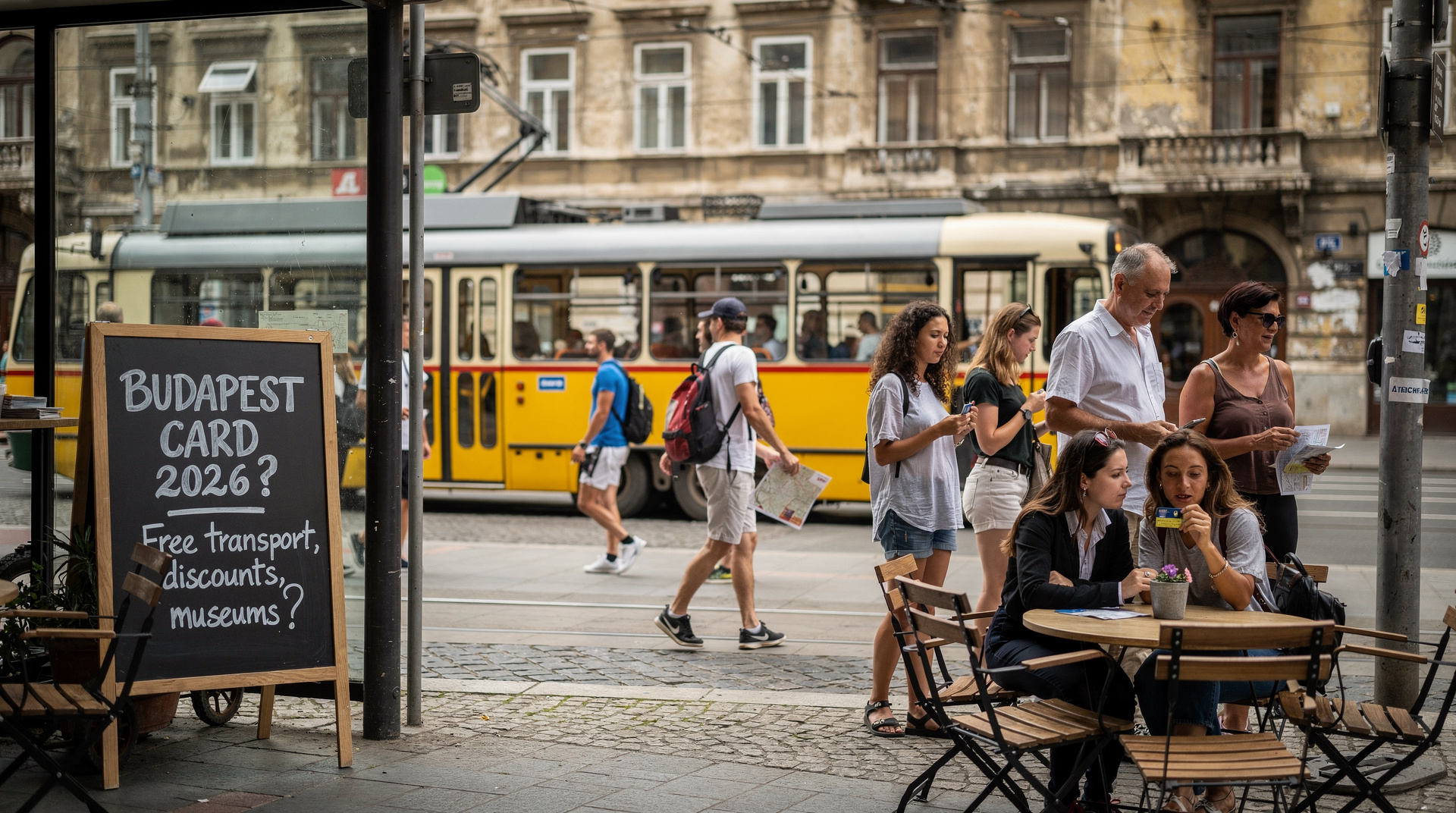
The Budapest Card includes unlimited public transport, more than 30 free visits and activities, and discounts of 10 to 25% at restaurants, cafés, museums and baths. The 72-hour version costs 29,990 HUF.
For budget travellers: Use the Budapest Card calculator to see whether your planned activities justify the cost. The card pays off for visitors who plan to use many of the free visits and activities and take many transport trips. It breaks even for most 3-day mid-range visitors. For backpackers who rely mainly on free attractions, it may not save money. See /guides/budapest-card-worth-it/ for the detailed analysis.
The thermal baths on a budget
You do not need to pay Széchenyi prices (10,000–14,000 HUF) to enjoy Budapest’s thermal culture:
- Lukács Baths: 5,300–7,000 HUF (€13–17.50) — excellent quality, genuinely local, much quieter than Széchenyi
- Dandar Thermal: 2,500–4,000 HUF (€6.25–10) — the cheapest major bath in the city, very local, basic facilities
For a first-time visitor, Széchenyi is worth experiencing once. For a return visitor or budget-focused traveller, Lukács delivers the same thermal water experience at meaningfully lower cost. See /guides/best-thermal-baths-in-budapest/ for the comparison and /guides/budapest-baths-prices-tickets/ for current prices.
Never buy bath tickets from touts near the Széchenyi entrance: resellers charge inflated prices and sometimes sell invalid or used tickets. Buy at the official desk or from a verified booking platform. See /guides/bath-ticket-mistakes/ for the full explanation.
Our Budapest Card vs single tickets comparison works through the same question with worked examples.
Scams to avoid that hit budget travellers hardest
Budget travellers are disproportionately targeted by several Budapest scams:
Street taxis at Keleti station: The taxi rank outside Keleti (the main train station) has a persistent problem with drivers using manipulated meters or refusing to use meters at all. Use Bolt (the app) exclusively. Set your pickup location inside the station and walk to where the app shows the car. See /guides/taxis-and-bolt-budapest/.
The “friendly girl” scam: A well-dressed woman approaches solo male travellers, strikes up a conversation, and leads them to a bar where the bill for drinks turns out to be 30,000–80,000 HUF (€75–200). Known locally as konzumlány bars. Walk away if the interaction feels engineered. The area around Ráday utca and the V and VI districts has the highest concentration.
Overpriced drinks in ruin bars without a menu: Some bars in District VII do not display prices. Ask for the price list (árlap) before ordering. Legitimate establishments produce it without issue.
Airport exchange desks: Exchange rates at BUD airport desks are typically 15–20% below bank rates. Exchange the minimum needed for immediate transport (bus ticket = 1,100 HUF; you can pay by card on the 100E bus) and withdraw from a reputable ATM once in the city.
See /guides/common-scams-in-budapest/ for the full rundown.
3-day budget itinerary summary
See the full budget itinerary for the planned version, and the 3-day overview if you want a less budget-driven plan. The summary:
Day 1: Airport by bus 100E → Jewish Quarter free walking tour → Great Market Hall lunch → Andrássy Avenue walk → Heroes’ Square (free) → local restaurant dinner
Day 2: Lukács Baths morning (5,300–7,000 HUF) → packed lunch from bakery → Fisherman’s Bastion and Castle District (free terrace) → evening at Szimpla Kert (budget 1–2 drinks)
Day 3: Danube city cruise (3,500–5,500 HUF) → Chain Bridge walk → Margaret Island (free) → departure
Estimated 3-day total (excluding flights and accommodation):
- Activities: 12,000–20,000 HUF (€30–50)
- Food: 20,000–30,000 HUF (€50–75)
- Transport (72h card): 5,750 HUF
- Total: 37,750–55,750 HUF excluding accommodation
With a hostel dorm at 5,000 HUF/night, a 3-day stay costs roughly €120–160 total. Mid-range with a guesthouses at 20,000 HUF/night pushes to €180–240.
Use the daily budget calculator to refine these numbers for your specific profile, and adjust the accommodation line up or down depending on whether you choose a District VII hostel or a cheaper District VIII option.
Free walking tours: an underrated budget win
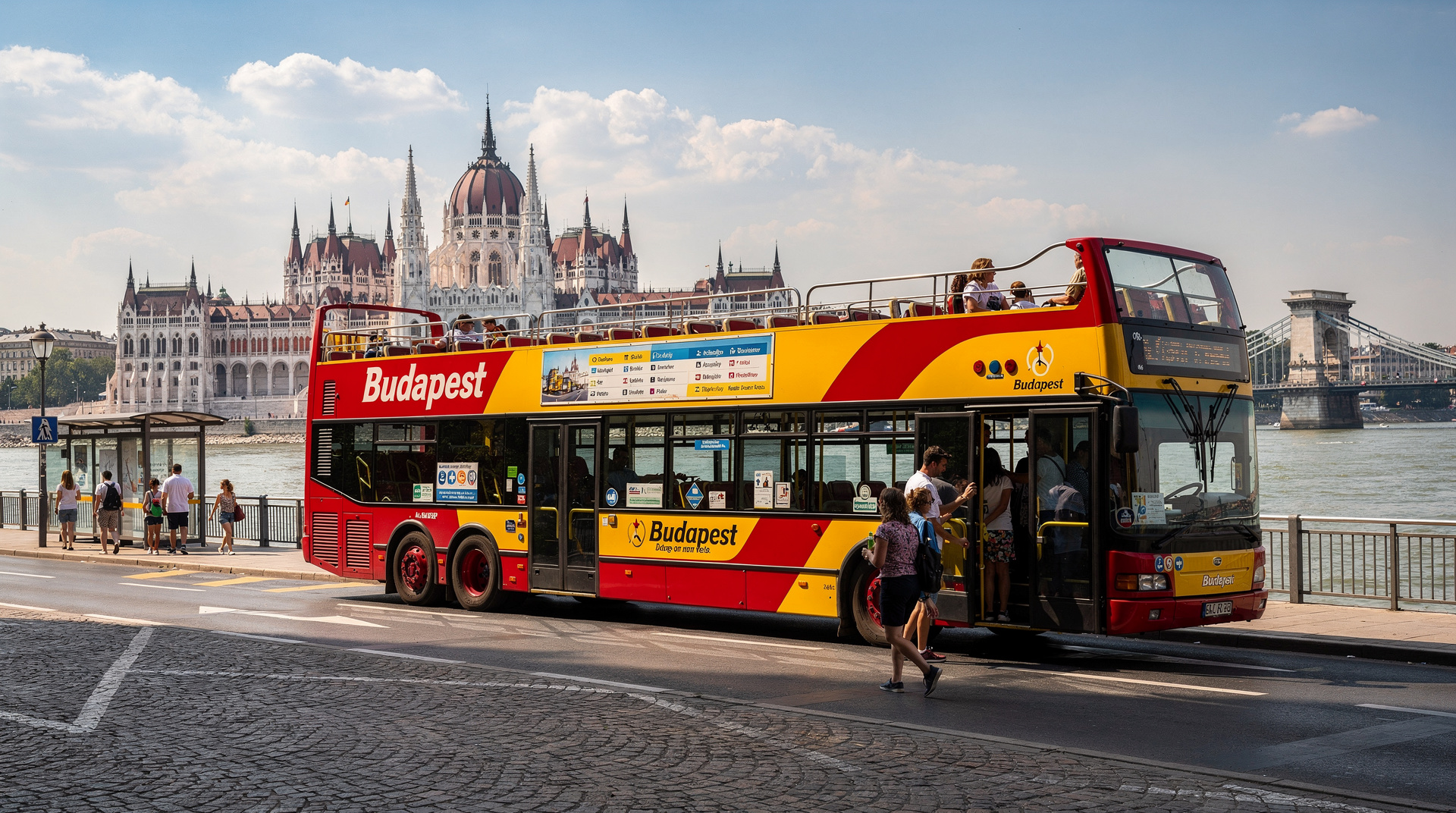
Tip-based free walking tours cover the main Pest sights with genuine local context for whatever you choose to tip — typically 2,000–3,000 HUF is fair for a good guide. It’s one of the best-value activities in the city and a smarter budget choice than a hop-on-hop-off bus ticket if orientation and history matter more than convenience — and tipping generously for a genuinely good guide still costs less than most paid tours. Most tours run daily, last around 2–2.5 hours, and cover the Parliament, Basilica and Danube embankment in a single loop — a genuinely efficient use of a budget traveller’s first morning. See free walking tours in Budapest for the main operators and meeting points.
Frequently asked questions about Budapest on a budget
What is the cheapest way to get from Budapest airport to the city?
Bus 100E from BUD to Deák Ferenc tér costs 1,100 HUF (€2.75) — 30–40 minutes, runs every 20 minutes. Far cheaper than a taxi (6,000–10,000 HUF via Bolt) and the only budget option. Never take an unmarked taxi at the airport. See /guides/budapest-airport-to-city-center/ for the full route guide.Which Budapest area is cheapest to stay?
District VII (the Jewish Quarter/ruin-bar area) has the highest concentration of hostels and budget guesthouses. It is central, walkable to most sights, and lively — arguably too lively if you need quiet nights. Districts VIII and IX have cheaper options further from the tourist centre. Avoid booking hotels on Váci utca — you are paying a location premium for a worse experience.Where do locals eat cheaply in Budapest?
The Great Market Hall (Nagy Vásárcsarnok) on the ground floor: lángos, market stalls, cheap fresh food. Simple Hungarian étkezde (canteen-style restaurants) in non-tourist districts serve two-course meals with soup for under 2,500 HUF (€6.25). Bakeries (pékség) sell fresh pastries for 200–500 HUF. Supermarkets (Spar, Aldi, Lidl) for self-catering.Is the Budapest public transport worth using for budget travellers?
Essential. The BKK network (metro, tram, bus) covers the whole city. A single ticket costs 500 HUF when bought in advance (700 HUF on board); a 24-hour travelcard costs 2,750 HUF. For a 3-day visit, a 72-hour card at 5,750 HUF is the most cost-efficient option. Validate tickets on boarding — inspectors check frequently and the fine for unvalidated tickets is significant.Can you do the thermal baths on a budget?
Yes — Lukács Baths is the best-value major bath at around 5,300–7,000 HUF (€13–17.50) for a full day. Dandar Thermal is even cheaper (around 2,500–4,000 HUF) and genuinely local. Széchenyi costs 10,000–14,000 HUF (€25–35) — worth it once for the experience, but Lukács is the budget alternative. Skip resellers outside the entrance — buy directly at the desk or online.Which Budapest district is best for budget accommodation without sacrificing convenience?
District VIII, particularly the area near Blaha Lujza tér and Corvin-negyed, offers noticeably lower prices than District VII while remaining one or two metro/tram stops from the centre. It's less atmospheric than the Jewish Quarter but genuinely practical for budget travellers. See /guides/where-to-stay-in-budapest/ for the full comparison.Is a Budapest walking tour worth it for budget travellers?
Yes — a tip-based free walking tour is one of the best-value activities in the city, giving context to the main Pest sights for whatever you choose to tip (typically 2,000–3,000 HUF is fair). Paid 2-hour tours at 4,000–6,000 HUF add more depth. Either beats paying for a hop-on-hop-off bus if budget is the main concern. See /guides/free-walking-tours-budapest/.
Top experiences
Bookable activities with verified prices and instant confirmation on GetYourGuide.