Sziget Festival Budapest: the complete planning guide

What is Sziget Festival and how do I plan for it?
Sziget is one of Europe's largest music festivals, held on an island in the Danube north of central Budapest in mid-August for approximately 7 days. It combines major international music acts across multiple stages with arts, culture, and a city festival atmosphere. Book accommodation months in advance — Budapest accommodation sells out during Sziget week. Tickets are purchased directly from szigetfestival.com.
Sziget Festival: Budapest’s most internationally famous event
Sziget (pronounced “SEE-get” — the Hungarian word for “island”) has grown from a local student event in 1993 to one of Europe’s most attended and well-regarded music festivals. Around 500,000 visitors attend across the 7-day festival, drawn by international headliner acts and a reputation for organization and atmosphere that competes with Glastonbury, Roskilde, and Primavera.
The festival is held on Óbudai-sziget, a 108-hectare island in the Danube river in northern Budapest. The island is used as a public park outside festival season; during August, it becomes a temporary city within a city.
| Where | Óbudai-sziget island, northern Budapest |
| When | ~7 days, mid-August (check szigetfestival.com) |
| Cost | €350–450+ for a full festival pass (early bird) |
| Getting there | HÉV H5 to Filatorigát, 10 min walk |
| Booking | Accommodation months ahead; tickets from szigetfestival.com only |
The festival format
Sziget is more than a music festival — it bills itself as an “Island of Freedom” and includes significant arts, cultural, and experiential components alongside the music:
Music stages: The main stage (Grand Stage) hosts internationally headlining acts. Multiple secondary and tertiary stages cover electronic music, alternative, world music, folk, and jazz. The lineup in recent years has included some of the world’s most commercially successful artists.
Arts and culture: Large-scale art installations, circus and acrobatics performances, theatre, and spoken word. The arts programming is considered above average for major commercial festivals.
Activities: Sports, wellness (yoga, fitness), cinema, talks, comedy, and food from an extensive range of international stalls.
Camping: On-island camping is the most affordable accommodation option and creates the traditional festival community. Camping tickets are sold separately from festival passes.
Tickets
Tickets are sold exclusively through the official Sziget website at szigetfestival.com. Types available:
- Full festival pass: 7-day access including camping — the best value per day, purchased by most international visitors
- Day passes: Available for specific days; more expensive per day than the full pass, useful if you only want to attend for 1–2 days
- VIP passes: Additional perks including dedicated facilities, premium viewing areas, and better facilities
When to buy: Tickets go on sale approximately 6–12 months before the festival. Early-bird pricing is significantly cheaper than standard pricing — early purchase saves 20–40% in most years. By the time the lineup is announced (typically 6 months before), prices have risen from early-bird levels.
Do not buy from third-party resellers: Fake tickets circulate. The official site and app are the only legitimate purchase channels.
Where to stay
On the island (camping)
The most affordable accommodation option and the most immersive festival experience. The island’s camping area is structured into sections with different facilities. A camping pass must be purchased in addition to the festival ticket.
Honest notes:
- The camping infrastructure is decent for a festival but not luxurious
- Noise does not stop until early morning — bring ear plugs if you need sleep
- Festival camping is not for everyone; if you are not accustomed to it, a central Budapest hotel with the festival commute may be more comfortable
- Luggage storage is available on the island for non-camping day visitors
Central Budapest hotels (Districts V, VI, VII)
For visitors who want festival attendance by day and city hotel comfort by night. The commute to the island via HÉV takes 30–40 minutes from central Pest.
The critical point: Central Budapest accommodation during Sziget week sells out very early — popular properties are booked 3–6 months in advance. If you plan to stay in central Budapest during Sziget, book the moment your dates are confirmed. Do not wait for the lineup announcement.
See /guides/where-to-stay-in-budapest/ for the full neighbourhood guide.
Buda side — Districts III and Óbuda
Staying in Districts III or Óbuda (northern Buda) reduces the commute to the festival significantly. The HÉV line runs from Batthyány tér (easily accessible from most of Buda) to Filatorigát, adjacent to the island. Less demand for accommodation here during Sziget means better availability and lower prices than the tourist-heavy Districts V–VII.
Outside central Budapest
Budget hotels and guesthouses in outer districts (XI, XIV) are accessible by metro. The extra metro/tram leg adds travel time but keeps accommodation affordable.
Getting to the festival island
HÉV H5 suburban rail: Batthyány tér (metro M2 connection, Buda side) to Filatorigát. Approximately 20 minutes, frequency increases during festival days. Valid BKK transport passes cover the HÉV within Budapest. From Filatorigát, a 10-minute walk reaches the festival entrance.
Festival shuttle boats: The festival organises boats from the Pest embankment (near Jászai Mari tér) to the island entrance. More scenic than the HÉV, similar travel time. Check the current shuttle schedule on the festival website.
Bus: Routes to Óbuda and bus connections to the island entrance — check BKK’s festival-specific route announcements published closer to the event.
Taxi/Bolt: Not recommended during peak festival arrival and departure times — traffic around the island becomes heavily congested. The HÉV is significantly faster.
See /guides/getting-around-budapest/ for the full Budapest transport guide.
Visiting Budapest alongside Sziget
Many international visitors combine Sziget with 2–3 days of city sightseeing before or after the festival. This works well.
Before the festival (recommended):
- Use the days before for the city sights — Széchenyi Baths, the Castle District, Danube cruise, the Jewish Quarter
- The city is calmer and accommodation cheaper in the days before festival week
- Rest and explore the city before the intensity of the festival
After the festival:
- The post-festival day is generally quiet for recovery
- City sightseeing after a multi-day festival requires energy that may not be available
- If you want post-Sziget Budapest exploration, build in a recovery day
What to see before Sziget
Thermal baths: The Széchenyi day ticket gives a full day of thermal pools — a good pre-festival body preparation. Széchenyi is also unusual enough (the steam, the chess, the outdoor pool scene) to be memorable even for festival veterans.
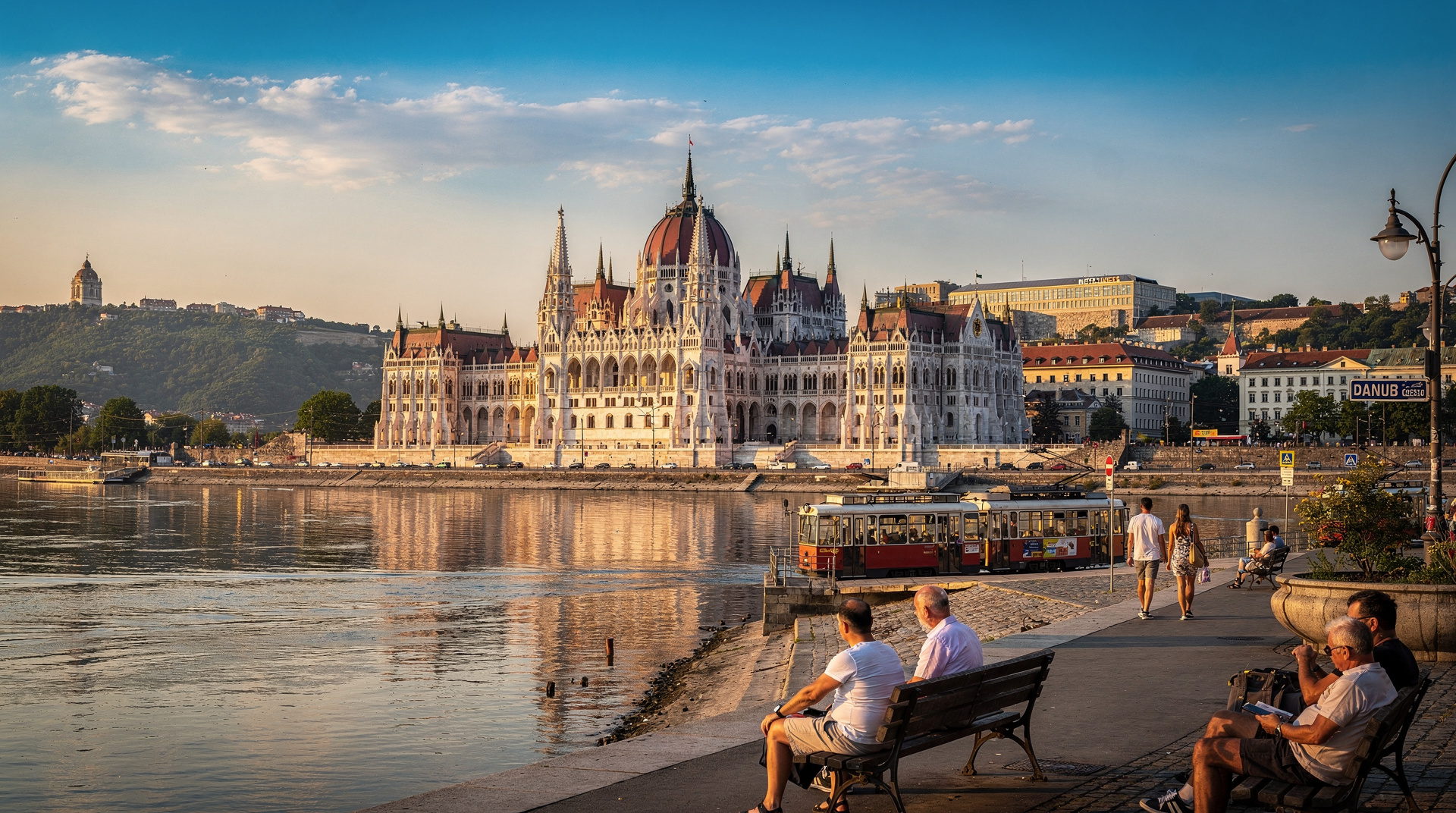
Danube cruise: An evening sunset cocktail cruise before or after the festival gives the classic Budapest Danube panorama — Parliament lit up, Buda Castle reflected on the water. 90 minutes, unlimited cocktails, genuinely good.
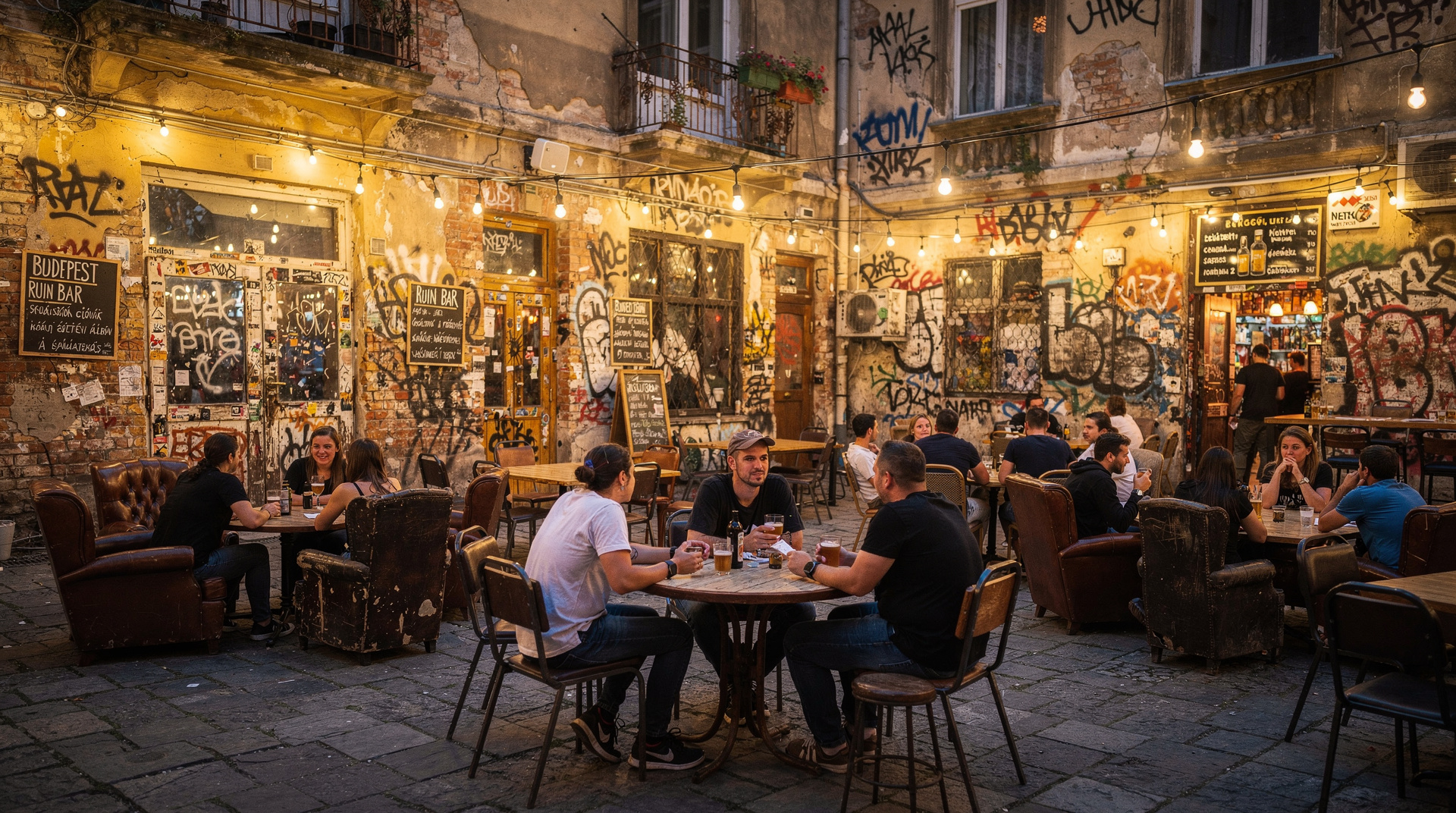
Ruin bars: The ruin-bar district (District VII — Szimpla Kert, Instant-Fogas) is the city’s nightlife cultural equivalent of Sziget’s arts programming. Worth an evening before or after the festival to understand Budapest’s party culture from the inside. See /guides/best-ruin-bars-budapest/.
Sparty: The monthly late-night spa party at Széchenyi — the Sparty ticket — is the closest thing Budapest has to a Sziget-style pool party. The summer Sparty events in July and early August book out; plan around Sziget dates. See /guides/sparty-spa-party-guide/.
Practical festival tips
What to bring:
- Comfortable, closed-toe shoes (the island can be dusty or muddy)
- Sunscreen and a hat (exposed island in August sun)
- Reusable water bottle (free water refill points on the island)
- Lightweight waterproof layer (afternoon thunderstorms possible in August)
- ID or passport (required for entry, and some areas are age-restricted)
- Power bank (no reliable charging at camping)
- Cash (some stalls are cash-only, though cards are increasingly accepted)
What not to bring:
- Glass bottles (prohibited)
- Drones
- Professional camera equipment without media accreditation
- Anything you cannot afford to lose or get wet
Money at the festival: The island uses a cashless wristband system (RFID) for purchases. Load credit at the festival; unspent credit is refundable after the festival ends. Check current credit validity terms on the festival website.
Health and safety: The festival has medical and first-aid facilities throughout the island. Safe sex kits and drug checking services are available — the festival’s harm-reduction approach is considered one of the better examples among European festivals. Stay hydrated in August heat.
Cost of attending Sziget
| Item | Approximate cost |
|---|---|
| Full festival pass (7 days) | €350–450 (early bird), €500+ (standard) |
| Day pass | €80–130 depending on day |
| Camping (7 nights) | €100–150 additional |
| Central Budapest hotel (7 nights, per person) | €300–700+ depending on hotel |
| Food/drink per day on island | €30–60 |
| Transport (BKK 7-day pass) | 4,000–6,500 HUF (€10–16) |
| Total attendance cost (ex-flights) | €600–1,200 per person |
This is the honest range — attending Sziget is not a budget experience. For visitors staying in central Budapest hotels rather than camping, the accommodation cost is the main budget variable.
Is Sziget worth it?
For music festival enthusiasts, Sziget consistently delivers: the lineup quality, the scale, the arts programming, and the Budapest setting combine into a genuinely world-class festival experience. The city itself adds a layer — the baths, the river, the ruin bars — that island-only festival locations cannot match.
For visitors primarily interested in Budapest as a city rather than the festival specifically, the second week of August is probably better avoided due to the accommodation pressure and higher prices. See Budapest in summer and best time to visit Budapest for the broader seasonal picture.
Planning a Sziget trip around the rest of Budapest
Because accommodation and city logistics shift so much during festival week, it’s worth reading beyond this guide before locking in dates. Where to stay in Budapest explains which neighbourhoods hold up best under Sziget-week demand, and getting around Budapest covers the transport pass you’ll want for both the festival commute and city sightseeing. If you’re flying in specifically for the festival, Budapest airport to city centre covers the arrival logistics, and is Budapest expensive? gives useful context on how festival week compares to the rest of the year on price.
First-timer packing priorities, ranked
If you’re only remembering a handful of items, prioritise in this order: comfortable closed-toe shoes (the single most common regret among first-timers), a reusable water bottle (free refill points make this genuinely useful, not just eco-signalling), a power bank (charging at camping is unreliable), and a lightweight rain layer (August afternoon storms are common enough to plan for). Everything else on the packing list matters less than these four.
Sziget vs a quieter August visit
If your group is split between festival-goers and people who’d rather see the city calmly, it’s worth being honest about the trade-off: Sziget week means higher prices, fuller trams and a livelier — but less relaxed — Budapest. The Budapest neighborhoods guide can help non-festival companions find a calmer base (Districts I or II) away from the Sziget commute corridor and the ruin-bar crowds who often extend their nights after leaving the island.
Filling the days around the festival
A few other guides on the site help you shape the rest of the trip. If your festival pass leaves you free for a day or two, the Budapest nightlife guide and the best ruin bars in Budapest explain where the city’s evening scene happens once the island closes. For something slower, the Széchenyi baths guide is the natural recovery plan, and outdoor baths in winter is a reminder of how different the same pools feel outside festival season.
If you want a ready-made structure for the non-festival days, the Budapest 3 days itinerary fits neatly before or after the festival, and Óbuda and Aquincum is worth a look since it sits close to the island and is calmer than the centre. Visitors who want a day away from the crowds entirely can read the Lake Balaton day trip guide.
For more on how the festival has been covered, Sziget returns and Sziget 2026 preview give a more narrative take on the event.
Frequently asked questions about Sziget Festival Budapest
When is Sziget 2026?
Sziget 2026 dates are announced by the festival organisers — check szigetfestival.com for the confirmed dates. The festival typically runs for 7 days in mid-August, usually the second week of the month. It has been held annually since 1993 with a break only during the pandemic years.How do I get to Sziget Island from central Budapest?
Take the HÉV suburban rail line H5 from Batthyány tér (Buda side, metro M2) to Filatorigát station, then a 10-minute walk to the festival island. Buses also run from central Pest. Walking from Margaret Island is possible but significantly longer. A festival shuttle boat operates from the Pest embankment during the festival. Avoid taxis to the festival — traffic and price inflation make them impractical.Where should I stay for Sziget Festival?
On the island (camping passes available — the most affordable option), in central Budapest (Districts V–VII, book months in advance and accept higher prices), or in accommodation accessed by HÉV from the Buda side (Districts III, Óbuda area). Festival visitors camping on the island pay for a separate camping ticket in addition to the festival pass. Central Budapest accommodation during Sziget week books out as much as 6 months ahead for popular properties.Is Sziget good for first-timers?
Yes, with preparation. Sziget is large but well-organized. The island layout has multiple stages, food courts, arts installations, and camping areas clearly mapped out. First-timers often underestimate the size — it is a 30-minute walk from one end of the island to the other. Comfortable shoes, sunscreen, and a reusable water bottle are essential. Read the festival's own first-timer guide on their website.Is it worth visiting Budapest during Sziget week if I'm not attending the festival?
It depends on your tolerance for a busier city. If you are visiting for thermal baths, the Danube, and classic city sightseeing, Sziget week makes accommodation scarce and more expensive, but the city itself is not overwhelmed. If you are visiting for quiet, relaxed exploration, the second week of August is not the right time. Consider the week before or after instead.What acts have played Sziget?
Sziget has hosted a wide range of international headliners including Foo Fighters, Billie Eilish, Arctic Monkeys, Dua Lipa, The Strokes, and Lizzo in recent years. The lineup covers mainstream pop, rock, indie, electronic, and world music across the main and secondary stages. Full lineups are announced in spring before the August festival.Can you visit Sziget Island for free?
No — the island is a ticketed festival venue during Sziget. The rest of the year, Óbudai-sziget is a public park accessible for free. During the festival, a day pass or multi-day pass is required. Day passes are the most expensive per-day option; multi-day and full festival passes offer better value.How does Sziget compare to Balaton Sound?
Sziget is a broad, multi-genre festival — rock, pop, indie, electronic and world music, plus extensive arts and culture programming, over 7 days on a Danube island. Balaton Sound (July, Lake Balaton) is a shorter, dance-and-electronic-focused festival with a beach setting. Sziget is the bigger, more varied event; Balaton Sound suits visitors who specifically want an electronic-music, lakeside format.What happens to Sziget Island the rest of the year?
Óbudai-sziget reverts to a public park, freely accessible by the same HÉV H5 line used during the festival. It's a pleasant, quiet green space with river views — a good spot for a picnic or a run if you're in Budapest outside festival season and curious about the location.
Top experiences
Bookable activities with verified prices and instant confirmation on GetYourGuide.