Art nouveau Budapest: the best buildings and where to find them

Where is Budapest's art nouveau architecture?
Budapest's finest art nouveau buildings are scattered across the inner districts. Key locations: the Museum of Applied Arts (IX), the New York Café (VII), the Geological Institute (XIV), Gresham Palace (V), the Postal Savings Bank (V), and dozens of apartment buildings in Districts V, VI and VII.
The city that made art nouveau Hungarian
Art nouveau arrived in Budapest at exactly the right historical moment. The Compromise of 1867 unleashed four decades of building ambition and budget; the young nation wanted architecture that announced itself to Europe. The style that emerged — international art nouveau filtered through Hungarian folk motifs and Zsolnay ceramics — was distinctive enough to have a name of its own: Szecesszió (Secession), after the Vienna Secession movement that influenced it.
By 1914, Budapest had accumulated some of the finest art nouveau civic buildings in Europe. Then the golden age ended: World War I, Trianon, the interwar austerity, war damage, and communist-era neglect all reduced the stock. What remains is extraordinary.
This guide covers the most significant buildings, their architects and how to see them on a self-guided walk.
| Where | Districts V, VI, VII, IX — inner Pest |
| Cost | Free to view exteriors; museum entry from around 3,000 HUF |
| Time needed | 3–4 hours for the essential self-guided walk |
| Getting there | Walkable from Deák Ferenc tér (M1/M2/M3) |
| Best time | Morning light on Zsolnay rooflines; avoid Mondays (many museums closed) |
Key art nouveau buildings compared
| Building | Architect | District | Interior access |
|---|---|---|---|
| Museum of Applied Arts | Ödön Lechner | IX | Yes — paid museum entry |
| Geological Institute | Ödön Lechner | XIV | Exterior only (working institute) |
| Postal Savings Bank | Ödön Lechner | V | Exterior only (National Bank HQ) |
| Gresham Palace | Quittner & Vágó | V | Yes — Four Seasons lobby/lounge |
| New York Café | Hauszmann | VII | Yes — café, buy a coffee to sit |
Ödön Lechner and the Hungarian style
No guide to Budapest’s art nouveau begins anywhere but with Ödön Lechner (1845–1914). Lechner was not the only Hungarian architect working in the style, but he was the only one who developed a genuinely original variant rather than importing Parisian or Viennese models.
Lechner’s breakthrough insight was that Hungarian architecture should look Hungarian — not neo-Gothic or neo-baroque (which were German or French imports), but rooted in Magyar folk ornament and connected to the eastern origins of the Hungarian people. He studied Indian Mogul architecture in London, convinced that there were shared motifs linking the decorative traditions of Central Asia and Hungary. He partnered with the Zsolnay ceramics factory in Pécs, which manufactured the vivid pyrogranite tiles that define his rooflines.
The results are instantly recognisable: ceramic surfaces in turquoise, blue and yellow; swirling folk ornament combining with international art nouveau floral patterns; rooflines that seem to be alive. Two of his greatest buildings are in Budapest.
Museum of Applied Arts (Iparművészeti Múzeum): Üllői út 33–37, District IX. Built 1893–96, this is Lechner’s most complete statement. The exterior combines Zsolnay tiles, Mogul arches and Hungarian folk pattern in an exuberant whole. The interior — a white, light-filled hall with a glazed roof and Moorish galleries — is breathtaking. The museum’s collection covers decorative arts from medieval Hungary to the 20th century. Restoration work ongoing; check opening status before visiting.
Geological Institute (Magyar Állami Földtani Intézet): Stefánia út 14, District XIV. Built 1898–99, slightly more restrained than the Applied Arts Museum but with the most spectacular Zsolnay roofline in the city: deep blue tiles supporting globe-bearing Atlas figures in ceramic. Less visited than the central buildings, but worth the journey to City Park.
Postal Savings Bank: Hold utca 4, District V. Built 1901, now the National Bank of Hungary. The exterior is Lechner’s most concentrated piece: the roofline is encrusted with ceramic bees (symbolising thrift), snakes and folk ornament. The building cannot be entered, but stand on Hold utca and look up.
Gresham Palace: the restored centrepiece
Roosevelt tér 5–6, District V (at the Pest end of the Chain Bridge).
The Gresham Palace (1907, designed by Zsigmond Quittner and the Vágó brothers) is the most photographed art nouveau building in Budapest, partly because of its location facing the Chain Bridge and the Castle hill, partly because its restoration to a Four Seasons hotel has made the interiors accessible.
The façade combines neo-baroque symmetry with art nouveau decoration: stained glass peacocks in the entrance gate, ceramic and ironwork in the lobby. The interior has been restored to its 1907 condition. Afternoon tea in the Four Seasons lounge is expensive by Budapest standards (6 000–12 000 HUF per person) but allows non-guests to see the interior.
The New York Café and the Palace Hotel
Erzsébet körút 9–11, District VII (inside the New York Palace hotel).
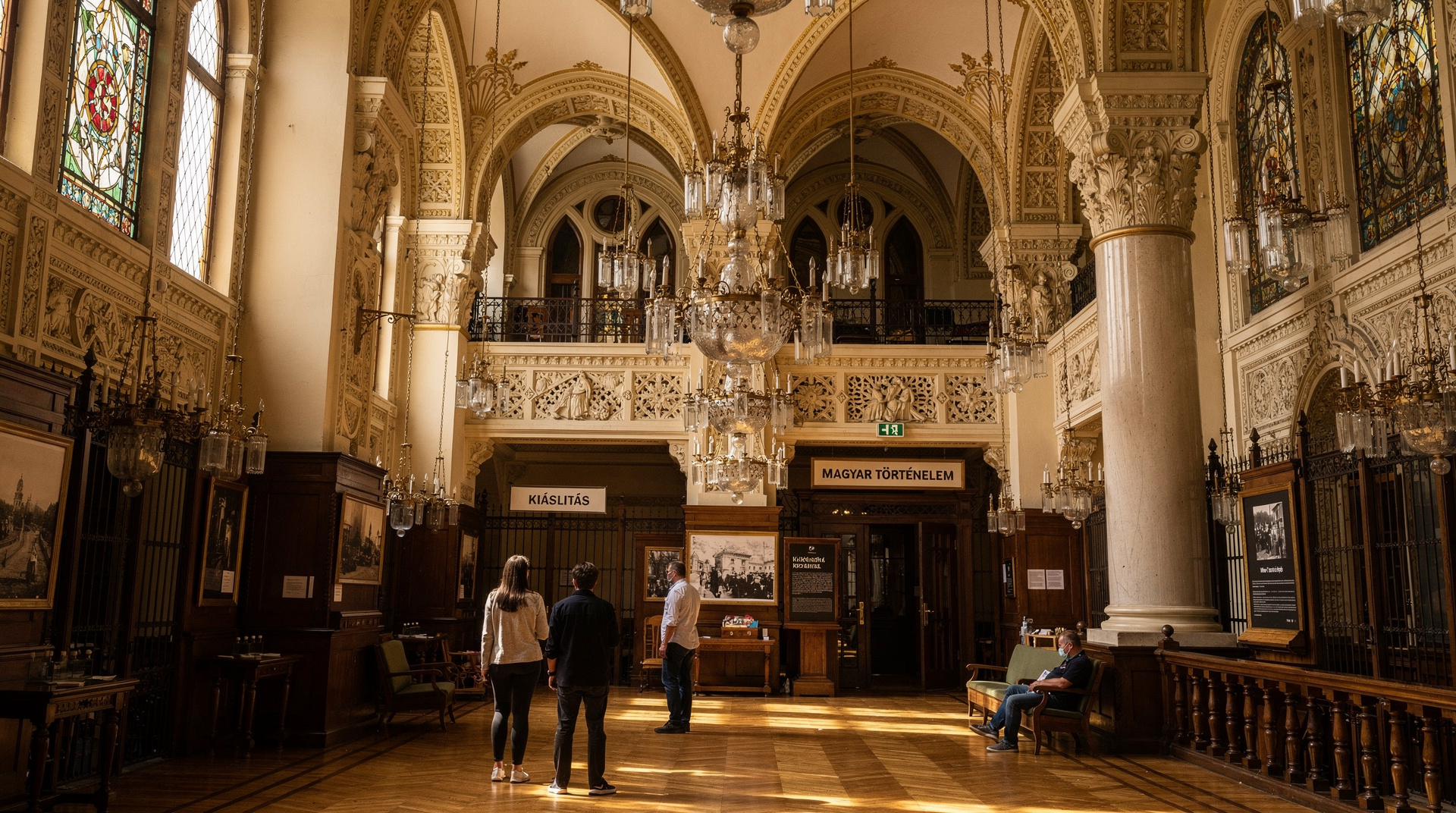
The New York Café opened in 1894 as part of the New York Palace hotel, designed by Alajos Hauszmann and the Korb-Giergl firm. The style is neo-baroque rather than pure art nouveau, but the decorative vocabulary — gilding, frescoes, ornate columns, chandeliers — places it firmly in the belle époque sensibility that overlaps with art nouveau in Budapest.
The café became a legend in Hungarian cultural history: at its peak, it was open 24 hours and served as an informal headquarters for Budapest’s literary and theatrical community. Writers received free coffee and a table in exchange for providing atmosphere. After various indignities under communism (it was briefly a sports goods store), it was restored in 2006 with the hotel reopening. A coffee here costs 1 500–2 500 HUF; the spectacle is free once you are seated.
District VII apartment buildings
The richest hunting ground for apartment-scale art nouveau is the Jewish Quarter and surrounding areas of District VII (Erzsébetváros). The building boom of the 1890s–1910s produced hundreds of apartment buildings in the Szecesszió style, many of which survive with intact façades and stairwells.
Specific addresses to look for:
- Király utca 47: ironwork staircase visible through the door
- Dob utca (multiple buildings): ceramic-decorated façades
- Kazinczy utca: several apartment buildings alongside the Orthodox Synagogue
- Rumbach Sebestyén utca: in addition to the Wagner synagogue, the neighbouring apartment buildings are decorative
Walking the Jewish Quarter with attention to the residential buildings above the street level reveals an art nouveau layer that most visitors miss.
The Hungarian State Opera
Andrássy út 22, District VI.
The Opera House (1884, designed by Miklós Ybl) predates the main art nouveau period — it is technically neo-Renaissance — but its decorative programme belongs to the same spirit of ornamental ambition. The exterior is massive and symmetrical; the interior is one of Europe’s most beautiful opera houses, with gilded loggias, ceiling frescoes and a remarkable acoustic.
Guided tours run daily and provide access to the auditorium even without an opera ticket. The classical concerts Budapest guide covers the concert programme. The opera house is on Andrássy Boulevard, a UNESCO World Heritage site in its entirety, and the same street as the House of Terror.
How to see it efficiently
A self-guided art nouveau walk in Pest can cover the key sites in 3–4 hours:
- Start at Gresham Palace (Chain Bridge, Pest side) — exterior and, if budget allows, the interior
- Walk east along Erzsébet utca or Deák tér to Szabadság tér — Postal Savings Bank exterior on Hold utca
- Up Andrássy Boulevard: the Opera House; continue to the tree-lined upper section (the residential buildings have notable façades)
- Down through District VII: New York Café on the Nagykörút, then into Kazinczy and Király streets for apartment buildings
- South to Museum of Applied Arts on Üllői út (allow 1–1.5 hours inside)
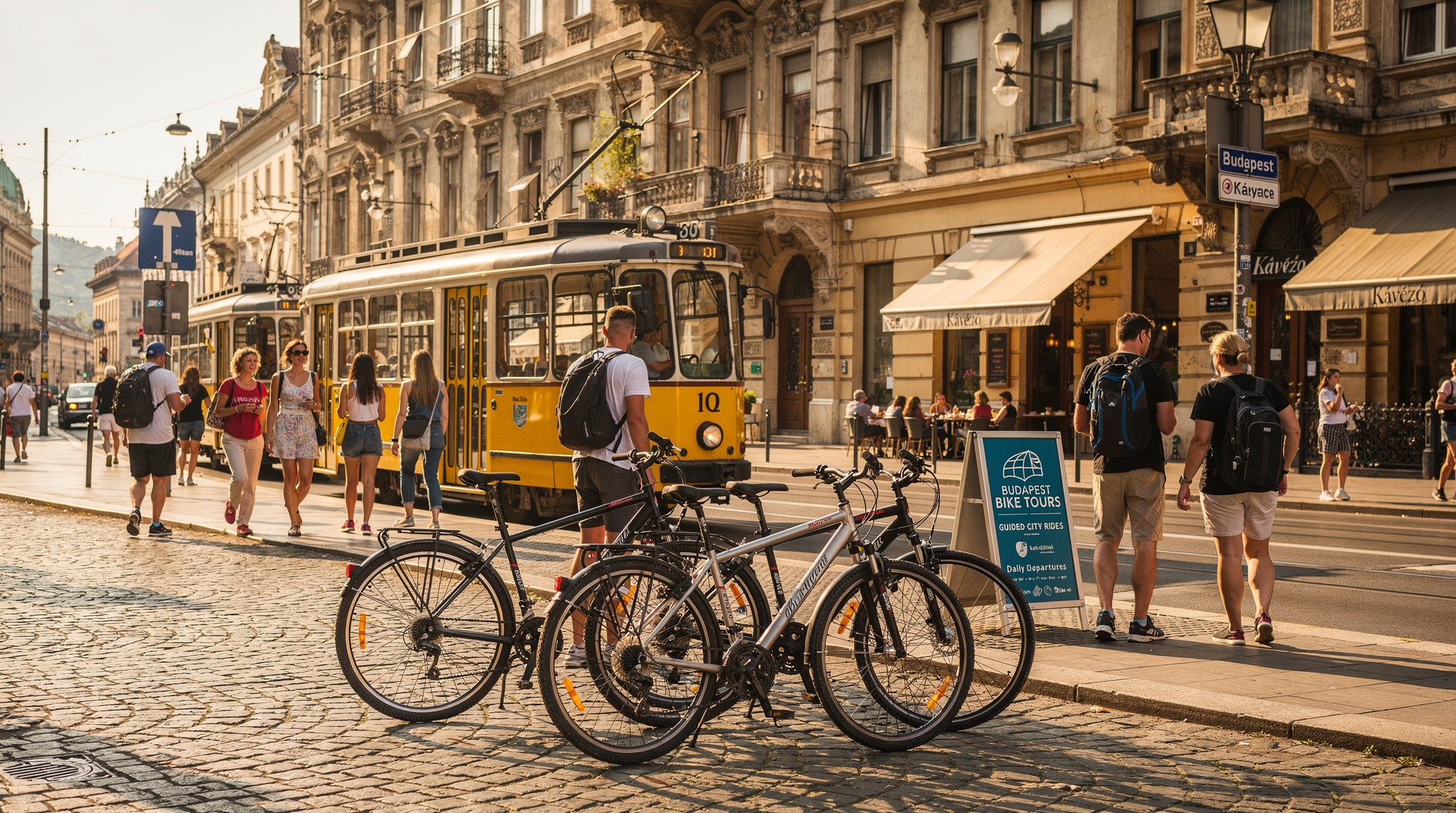
A guided walking tour of central Budapest covers many of these sites with architectural commentary. For more flexibility, the grand Budapest sightseeing bike tour covers wider ground including the outer art nouveau buildings in a half-day.
Reading a façade: what to look for
Art nouveau in Budapest rewards slow looking. Once you know the vocabulary, the walk stops being a checklist of famous addresses and becomes a game of spotting details. Start with the ceramics: Lechner’s rooflines use glazed tiles in strong colours, and their surface catches the light differently from hour to hour, which is why a morning start pays off. Then look at the ironwork — balcony railings, stair banisters and entrance gates often carry plant stems, whiplash curves and stylised flowers. Finally, look for folk ornament: tulips, birds and interlaced patterns borrowed from Hungarian embroidery appear on buildings that otherwise look thoroughly international.
A useful habit is to cross the street before you photograph a building. Most of the best detail sits above the first floor, and you need distance to see how the roofline, windows and ornament work together. Courtyards matter too. Many apartment buildings have a passage from the street to an inner courtyard, and when the door is open you can often glimpse tiled floors, glazed bricks and curved staircases. Be respectful: these are people’s homes, so look from the threshold, keep voices down and never push past a closed door.
Pairing art nouveau with other stops
The route works best when you let it overlap with sights you were already planning. The St. Stephen’s Basilica guide covers a landmark close to the Szabadság tér leg, and the district V Belváros guide explains the surrounding streets, cafés and squares where you can pause. If you want to rest in a historic interior without spending a fortune, the coffee houses guide lists grand cafés where the decoration is as much of an attraction as the cake.
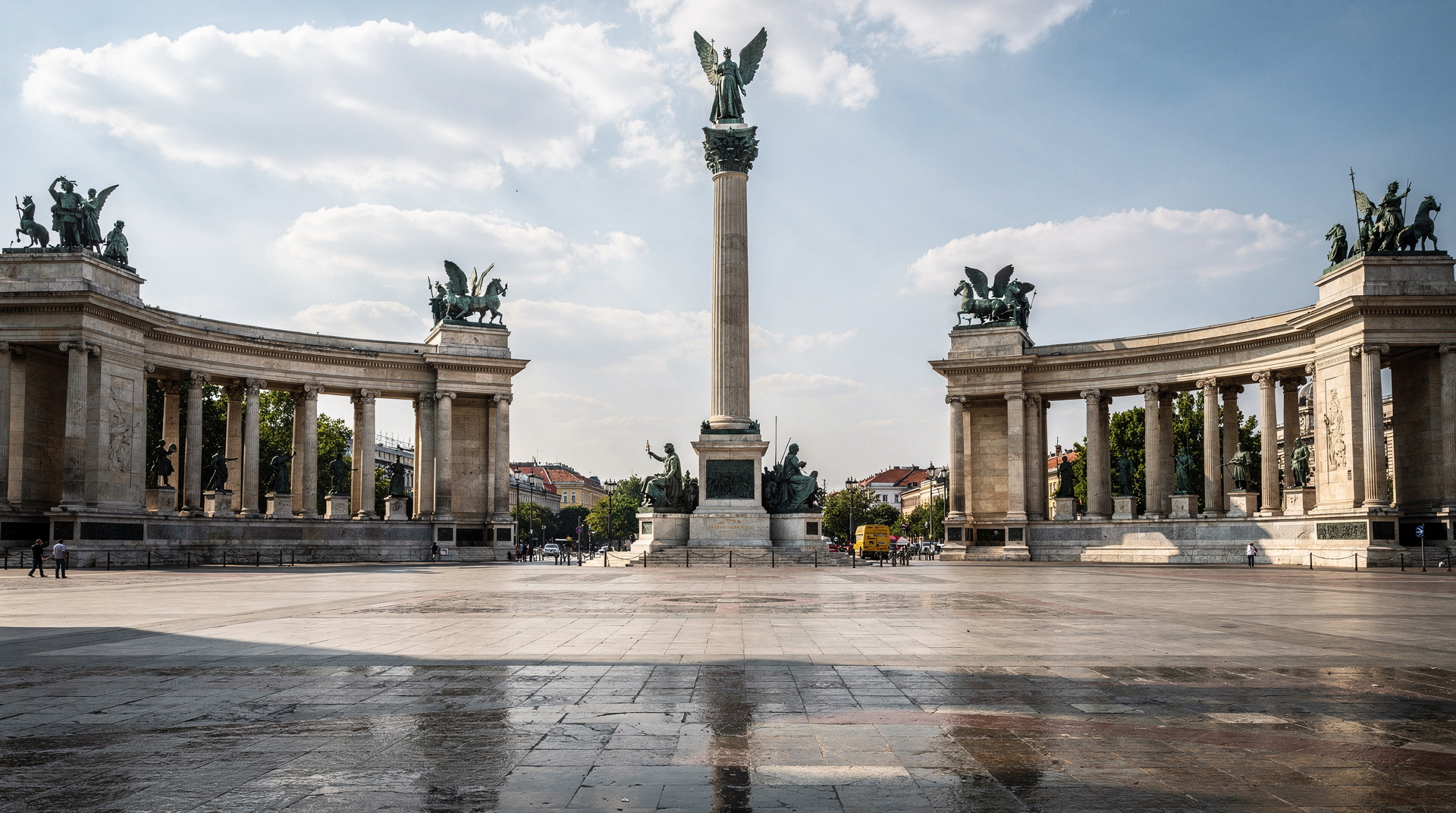
Evenings suit the Andrássy end of the route. The Hungarian State Opera guide explains how to see the auditorium, and the Heroes’ Square and City Park guide and the City Park destination page are the natural continuation if you head out towards the Geological Institute. For the wider picture of how these neighbourhoods fit together, the Budapest neighbourhoods guide and the downtown Pest page help you decide where to base yourself so the key buildings sit within easy reach.
If architecture is the main reason for your trip, the Budapest 2-day itinerary and the first-timer highlights itinerary both leave room to slot in a morning for this walk. Travellers who prefer to keep the rest of the day free can read the free things to do guide, since looking at façades costs nothing and makes a good anchor for a low-budget day.
Condition and preservation: what to expect on the ground
Not every art nouveau building in Budapest is in restored condition, and it is worth setting expectations before you go looking. Many District VII apartment buildings still show communist-era neglect and unrepaired war damage on their façades — cracked plaster, faded ceramic, missing details — alongside the fully restored showpieces. This is part of the character rather than a flaw to avoid: the contrast between a pristine Gresham Palace and a crumbling but still beautiful apartment block on Király utca tells the real story of the 20th century better than a fully polished streetscape would. If a building looks closed or scaffolded, it is usually a genuine ongoing restoration rather than permanent inaccessibility — check status nearer your visit date, particularly for the Museum of Applied Arts, which has had extended restoration phases.
Combining the walk with the Jewish Quarter
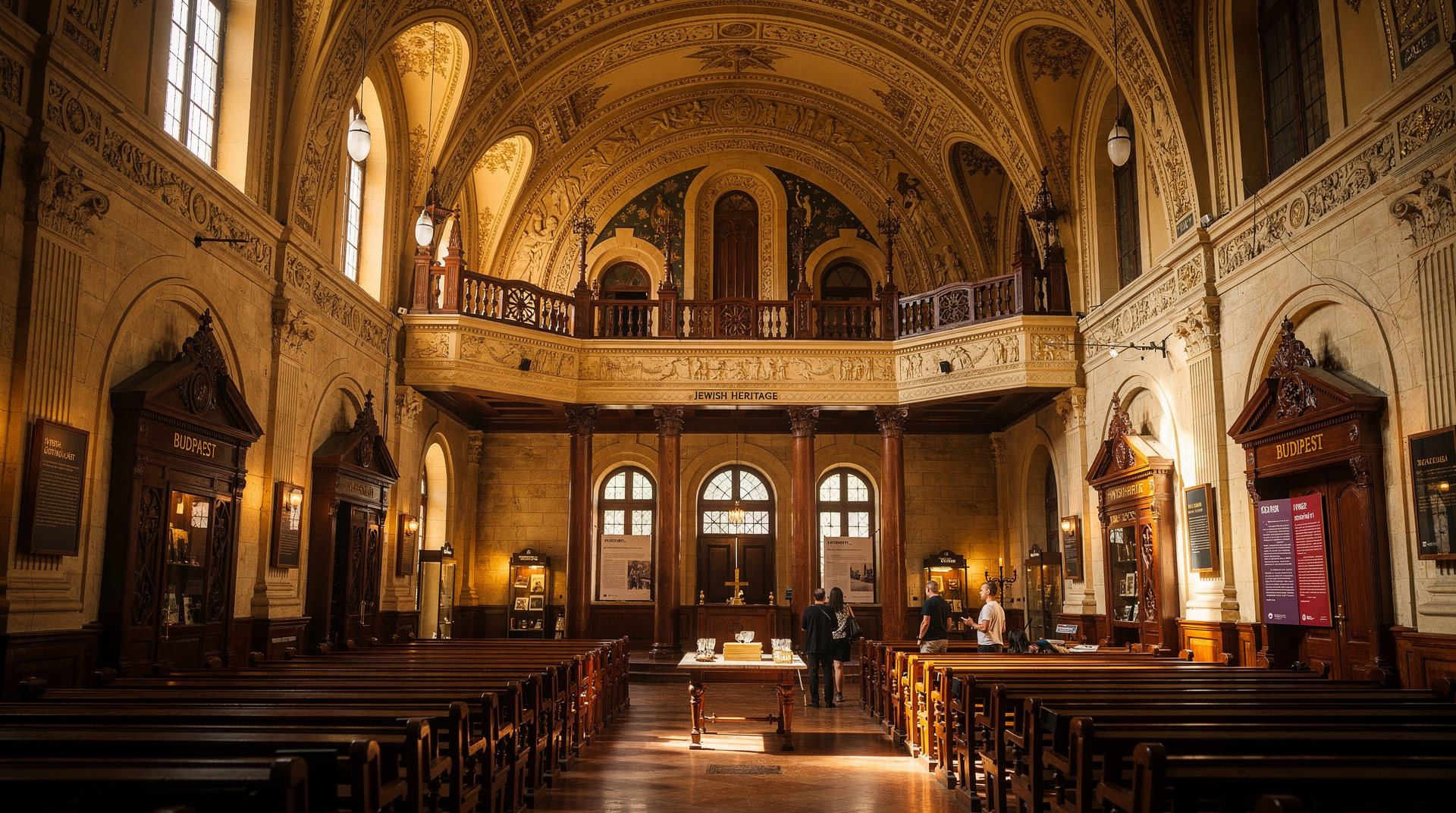
The District VII apartment-building leg of this walk overlaps almost exactly with the Jewish Quarter heritage guide and the synagogues on Kazinczy and Rumbach Sebestyén utca, so the two make a natural half-day combination rather than two separate trips. A private guide who covers both threads together — architecture and heritage — gets more out of the area than reading façades alone.
Private Jewish Quarter and architecture walking tourFor a broader first orientation to the city before narrowing in on art nouveau specifically, the first time in Budapest guide and the top attractions guide are useful starting points, and the style pairs well with a longer stay — see the 3-day Budapest overview for how to fit an architecture walk into a fuller itinerary.
Further resources in Budapest
The Museum of Applied Arts itself has the best collection of art nouveau design objects in the city — furniture, textiles, ceramics, glass. The Zsolnay ceramic brand (responsible for most of the distinctive tiles visible on Lechner’s buildings) has a showroom on Kossuth tér near Parliament; the factory and primary museum are in Pécs, a day trip from Budapest.
The Hungarian history primer contextualises why the golden age of building happened when it did. The best museums in Budapest guide ranks where the art nouveau thread continues in the city’s collections. The best walking tours Budapest guide lists operators who offer architecture-focused tours that go deeper into the buildings’ histories.
Frequently asked questions about Art nouveau Budapest
Why does Budapest have so much art nouveau architecture?
The Compromise of 1867 triggered a 40-year building boom that coincided exactly with the peak years of art nouveau (roughly 1890–1914). Budapest's architects — led by Ödön Lechner, who developed a specifically Hungarian variant of the style — had massive commissions and the freedom to experiment. The result was one of the densest concentrations of art nouveau civic and residential architecture in Europe.Who was Ödön Lechner?
Ödön Lechner (1845–1914) was Hungary's most significant art nouveau architect and the inventor of a distinctly Hungarian architectural style. He fused Zsolnay ceramic tiles (made in Pécs), Mogul Indian influences and Hungarian folk ornament into buildings that looked unlike anything else in Europe. The Museum of Applied Arts and the Geological Institute are his masterpieces.Is the New York Café really art nouveau?
The New York Café (opened 1894, restored 2006) is neo-baroque rather than pure art nouveau, but the interior decoration overlaps considerably with art nouveau principles in its exuberance and detail. It is worth visiting for the decoration alone, regardless of category. One of Budapest's most photographed interiors.Can I visit the Postal Savings Bank interior?
The Postal Savings Bank (1901, designed by Ödön Lechner) is now the headquarters of the National Bank of Hungary. The interior is not regularly open to the public, but the exterior — and particularly the roofline with its Zsolnay ceramic bees and snakes — is extraordinary and fully visible from the street. The building is at Hold utca 4, near Liberty Square.How long does a self-guided art nouveau walk in Budapest take?
Budget 3–4 hours for the essential route: Gresham Palace, the Postal Savings Bank exterior, the Hungarian State Opera, New York Café and a stretch of District VII apartment buildings, finishing at the Museum of Applied Arts. Add 1–1.5 hours if you go inside the Museum of Applied Arts, and extend the day further by combining it with the Jewish Quarter's synagogues and courtyards, which sit along the same route.
Top experiences
Bookable activities with verified prices and instant confirmation on GetYourGuide.