Budapest in winter: 3-day Christmas and festive itinerary

Budapest in winter is one of Central Europe’s best-kept secrets. The Christmas markets are genuinely lovely rather than commercialised, the thermal baths are at their most atmospheric with steam rising off hot water in cold air, hotel prices drop by 30–50% compared to summer, and the major sights are accessible without queuing for an hour. If you have flexibility on when to visit, a late November, December or early January trip competes seriously with any time of year.
| Where | Castle District, Vörösmarty tér, Basilica square, Jewish Quarter |
| Cost | Around €240–290 per person (excl. accommodation) |
| Time needed | 3 days, mid-November to December 31 window |
| Getting there | Bus 100E or Bolt from BUD airport (allow extra time in snow) |
| Best time | Weekday evenings for markets without weekend crowds |
This itinerary runs from mid-November to December 31 — the Christmas market period. For New Year’s Eve specifically, Budapest hosts large public celebrations on the Danube embankment and in central squares; book accommodation months in advance and expect higher prices. The Budapest New Year’s Eve guide covers this separately.
See also the best time to visit Budapest guide and the full Budapest Christmas markets guide for dates, vendors and market comparisons.
This itinerary assumes three consecutive days somewhere within that window, structured so that each day has one anchor experience — a Christmas market, the thermal baths, or the Parliament and a night cruise — rather than trying to cram all of winter Budapest’s highlights into every single day. That pacing matters more in winter than in summer: shorter daylight hours and cold temperatures make an over-packed schedule feel exhausting rather than festive.
Understanding Budapest in winter
Weather: December averages are 0–5°C with occasional snow. November is milder (3–10°C). January (if you are visiting for the New Year period) can drop below -10°C on cold nights. Dress in layers; a warm coat, gloves and waterproof shoes are essential. The thermal baths are comfortable in any temperature — the contrast between the hot water and cold air is part of the appeal.
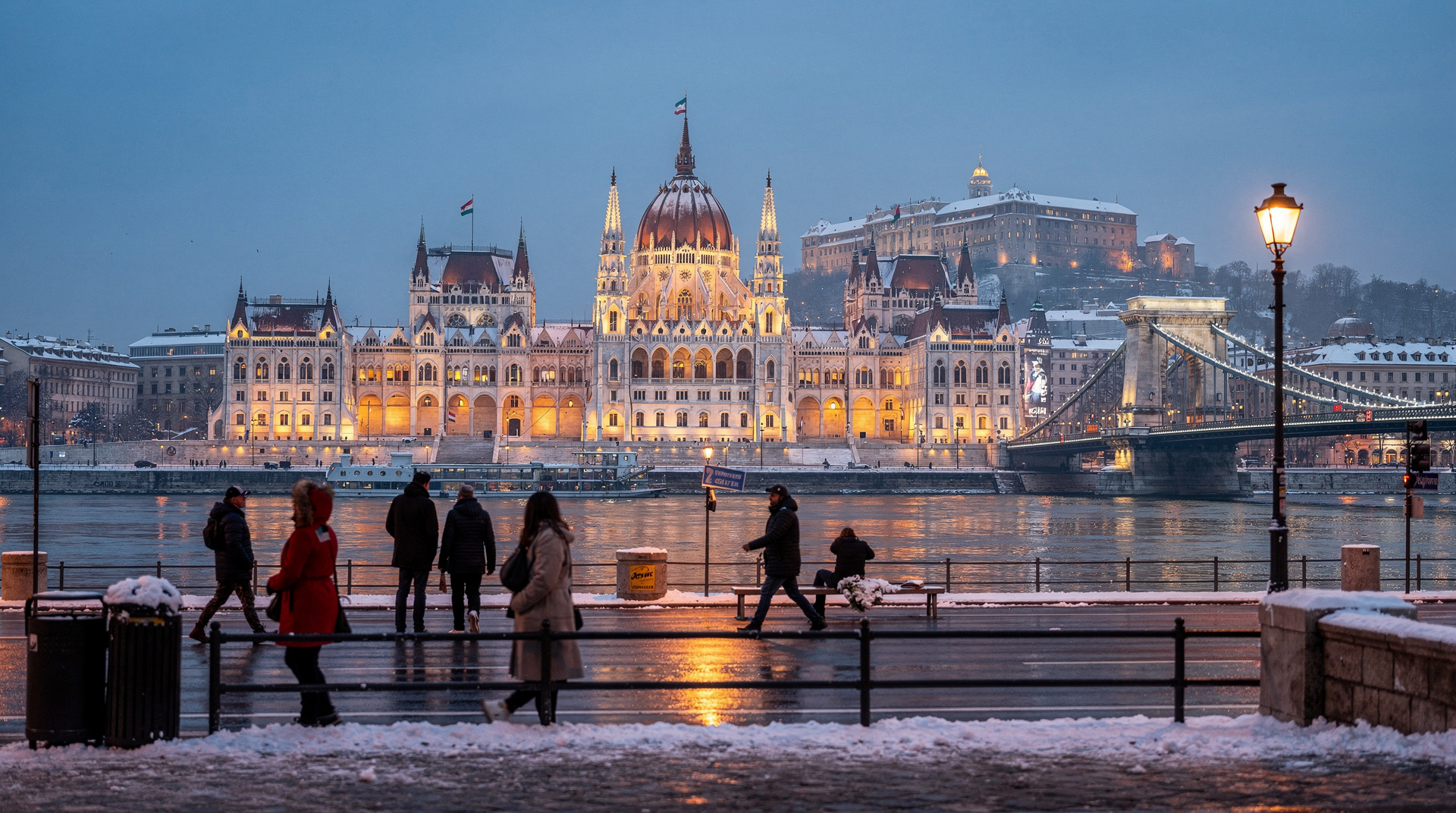
Daylight: sunset is around 15:45 in December, which makes the floodlit Parliament and castle visible from mid-afternoon. The Christmas markets are best experienced after 16:00 when the lights are on and the atmosphere builds.
Crowds: significantly lower than summer, except at the Christmas market itself on weekday evenings and weekends. Parliament tours can often be booked for the same day in winter; Széchenyi Baths rarely have the summer queues.
Prices: hotel prices in November–December are typically 30–50% lower than June–August. Restaurant reservations are easier. Overall a better value proposition than peak season. The is Budapest expensive guide has broader seasonal pricing context if you are comparing winter against a summer trip.
Winter month by month
Not all of “winter” behaves the same way, and choosing between late November, December and early January genuinely changes the trip.
| Month | Weather | Crowds | Notes |
|---|---|---|---|
| Late November | 3–10°C, mild | Low | Markets just opening, fewer festive crowds, best value hotels |
| December | 0–5°C, occasional snow | Moderate–high on weekends | Peak festive atmosphere, markets at their fullest |
| Around New Year | Can drop below -10°C | Very high (NYE week) | Big public celebrations, book months ahead, higher prices |
For most visitors, the two to three weeks either side of early-to-mid December hit the sweet spot: markets fully open, weather cold but manageable, and crowds lighter than the final pre-Christmas weekend rush. See the Budapest in winter guide for a broader seasonal comparison beyond the Christmas market window covered here.
Day 1: Buda Castle and the first Christmas market
Morning: Castle District without summer crowds (9:00–12:30)
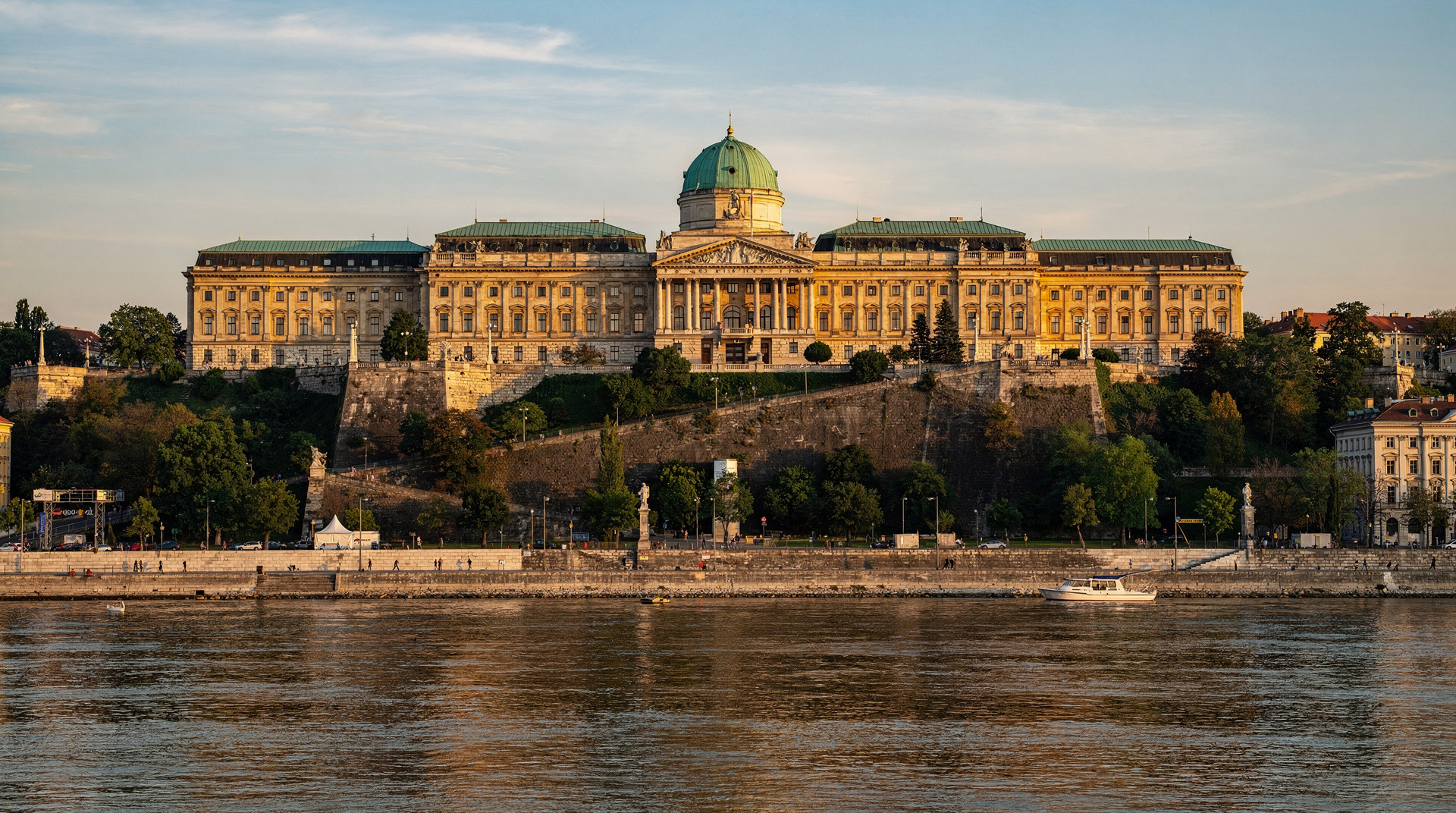
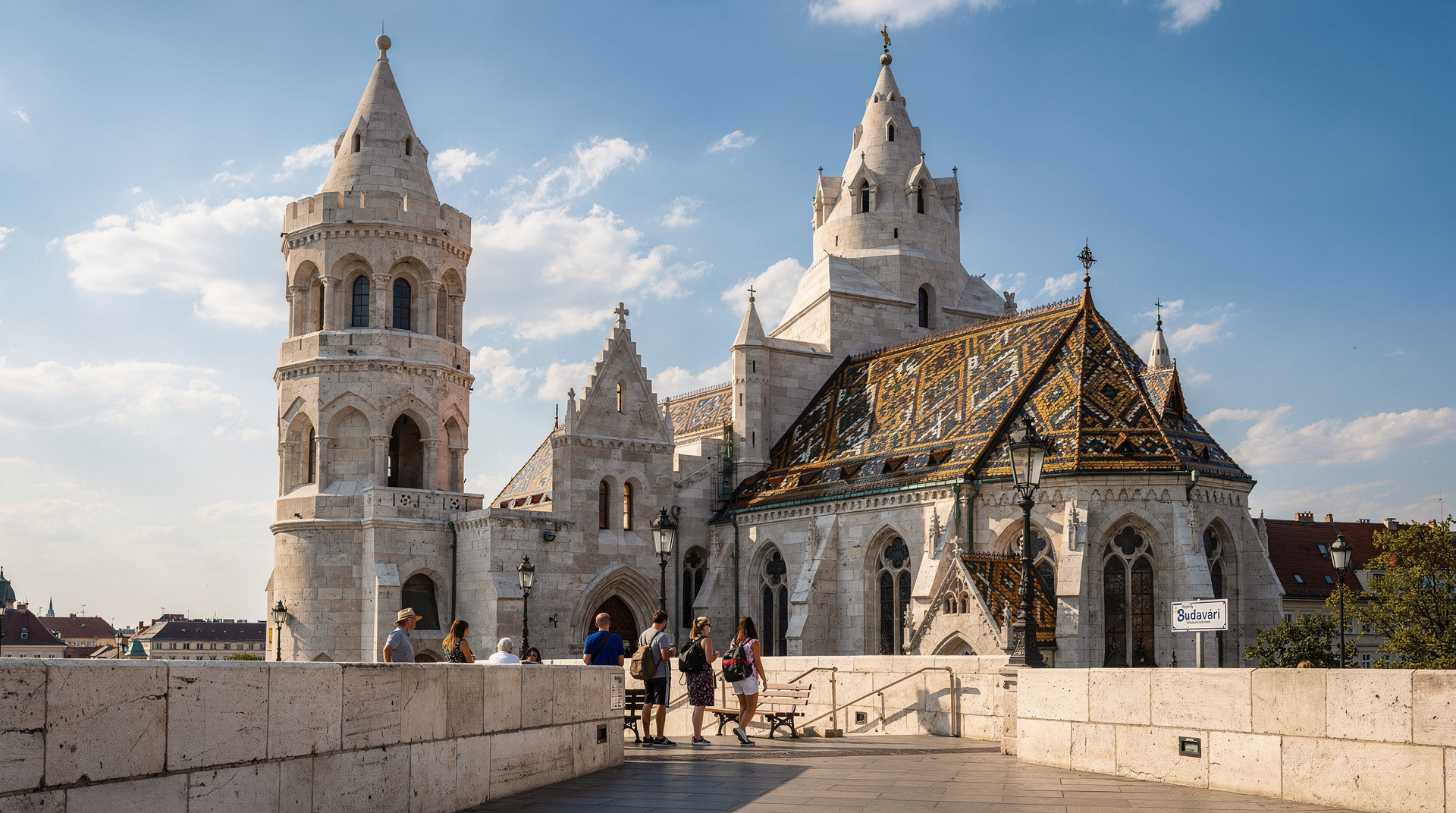
One of winter’s advantages in Budapest: the Castle District at 9:00 in December feels private. Fisherman’s Bastion — free at the lower terraces — with a light frost on the stone and a low winter sun illuminating the Parliament across the river is a different experience from the crowded summer version.
Matthias Church entry (~3,500 HUF) is worth 40 minutes in winter — the painted interior is warm and quiet. The Christmas period often adds a small Nativity display inside. The castle area in general is more pleasant in winter than summer: the tour groups are smaller, the street cafés less frantic.
A guided Buda Castle walk in winter covers the neighbourhood’s history without the summer heat and crowds — guides note that winter is their preferred season for showing the castle district.
Midday: lunch in Buda, then Chain Bridge (12:30–15:00)
Descend to the river and cross the Chain Bridge on foot. Winter views from the bridge include mist on the water, ice floes occasionally in January, and the full grandeur of the castle-to-parliament vista without the summer haze. Allow time to stand at the midpoint and look in both directions.
For lunch on the Pest side: Spíler Shanghai or Két Szerecsen near Liszt Ferenc tér for a warm, non-tourist lunch (mains 3,000–5,500 HUF). The area around Andrássy út is well served by neighbourhood restaurants that are quieter in winter.
Afternoon: Christmas market at Vörösmarty tér (15:00–18:00)
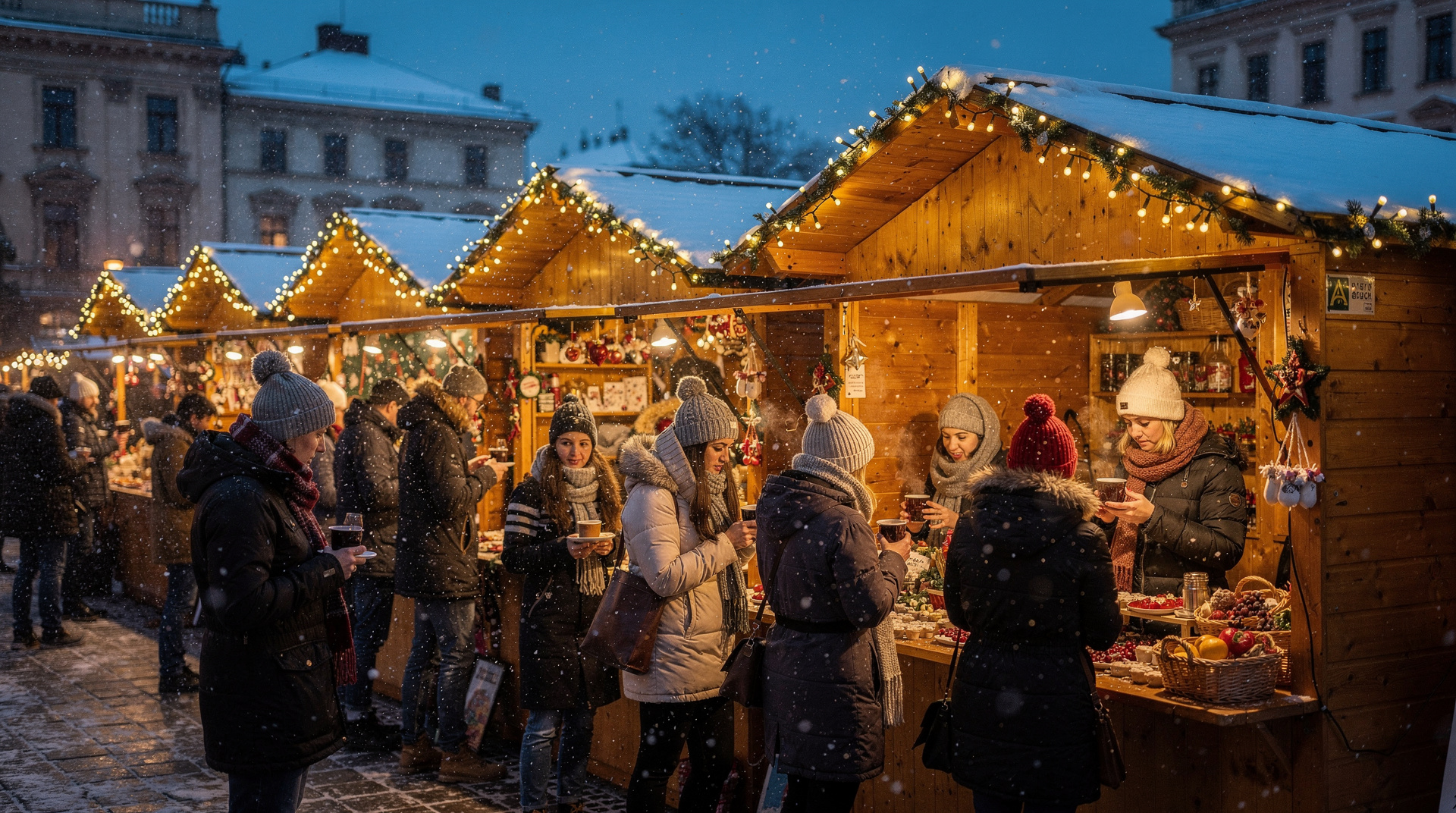
The Vörösmarty tér Christmas market is Budapest’s most famous and most centrally located. It runs from mid-November to January 1st, daily from approximately 10:00 to 21:00 (until 22:00 on weekends). The market occupies the entire square around the Vörösmarty statue, with wooden stalls selling:
- Traditional handcrafts: embroidered tablecloths, folk pottery, carved wood items — often genuinely locally made
- Hungarian food: lángos, kürtőskalács (chimney cakes — best eaten warm from the oven), gulyás in bread bowls, sweet roasted chestnuts
- Drinks: forralt bor (mulled wine, typically 1,000–1,500 HUF per cup), hot cocoa with pálinka
The market is at its most atmospheric after dark — arrive at 16:00 as the lights come on and the square fills with warm light. Budget 4,000–8,000 HUF per person for snacks, drinks and a small gift or two.
The market quality is notably better than many European Christmas markets. The Budapest Christmas markets guide reviews all the markets in the city with vendor quality ratings.
Evening: Andrássy út and dinner (18:30–22:00)
Walk up Andrássy út from Vörösmarty tér toward the Opera House — the boulevard is decorated with lights throughout December and is one of the most elegant winter evening walks in Central Europe. The House of Terror is open until 18:00 if you want a late afternoon history visit.
Dinner on or near Andrássy út: Borkonyha (wine kitchen, one Michelin star, book ahead), Olimpia for innovative Hungarian cooking, or the bistro scene around Liszt Ferenc tér. December is an excellent time to get a last-minute reservation at good restaurants that would be fully booked in summer.
Day 2: Széchenyi Baths in winter and the Basilica market
Morning: late start and breakfast (9:30–11:00)
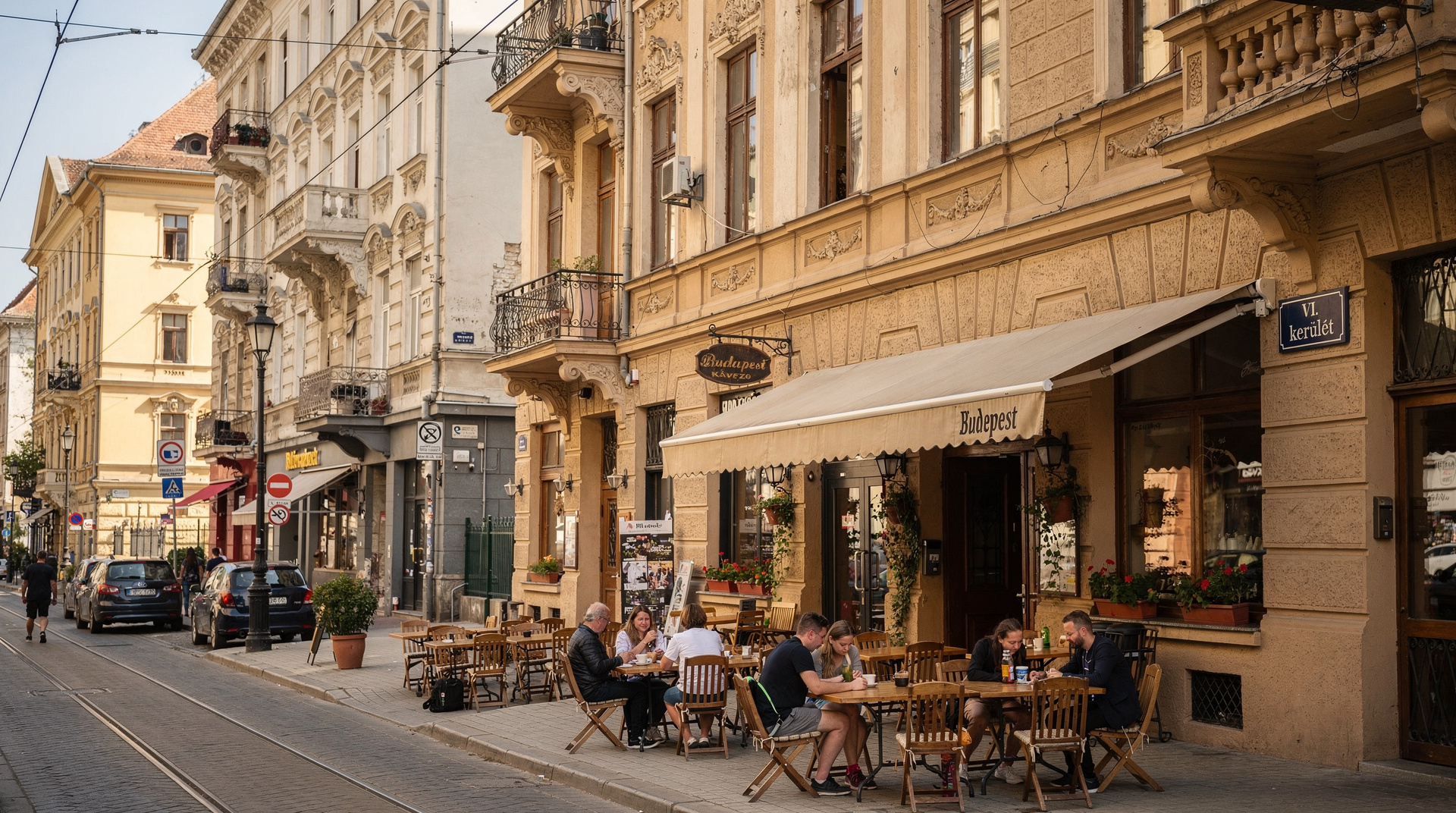
Winter itineraries should start later than summer ones — it is dark until around 7:30 and the cold morning is best spent with a long coffee. Budapest’s café culture is at its finest in winter: the historic coffee houses (Gerbeaud on Vörösmarty tér, Central Kávéház on Károlyi Mihály utca, the New York Café on Erzsébet körút) are warm, beautifully lit and rarely crowded in the morning.
A proper Hungarian breakfast at a coffee house: eggs, cold cuts, cheese, bread, jam and coffee. Budget 2,500–4,500 HUF per person.
Late morning to afternoon: Széchenyi Baths in winter (11:00–16:00)
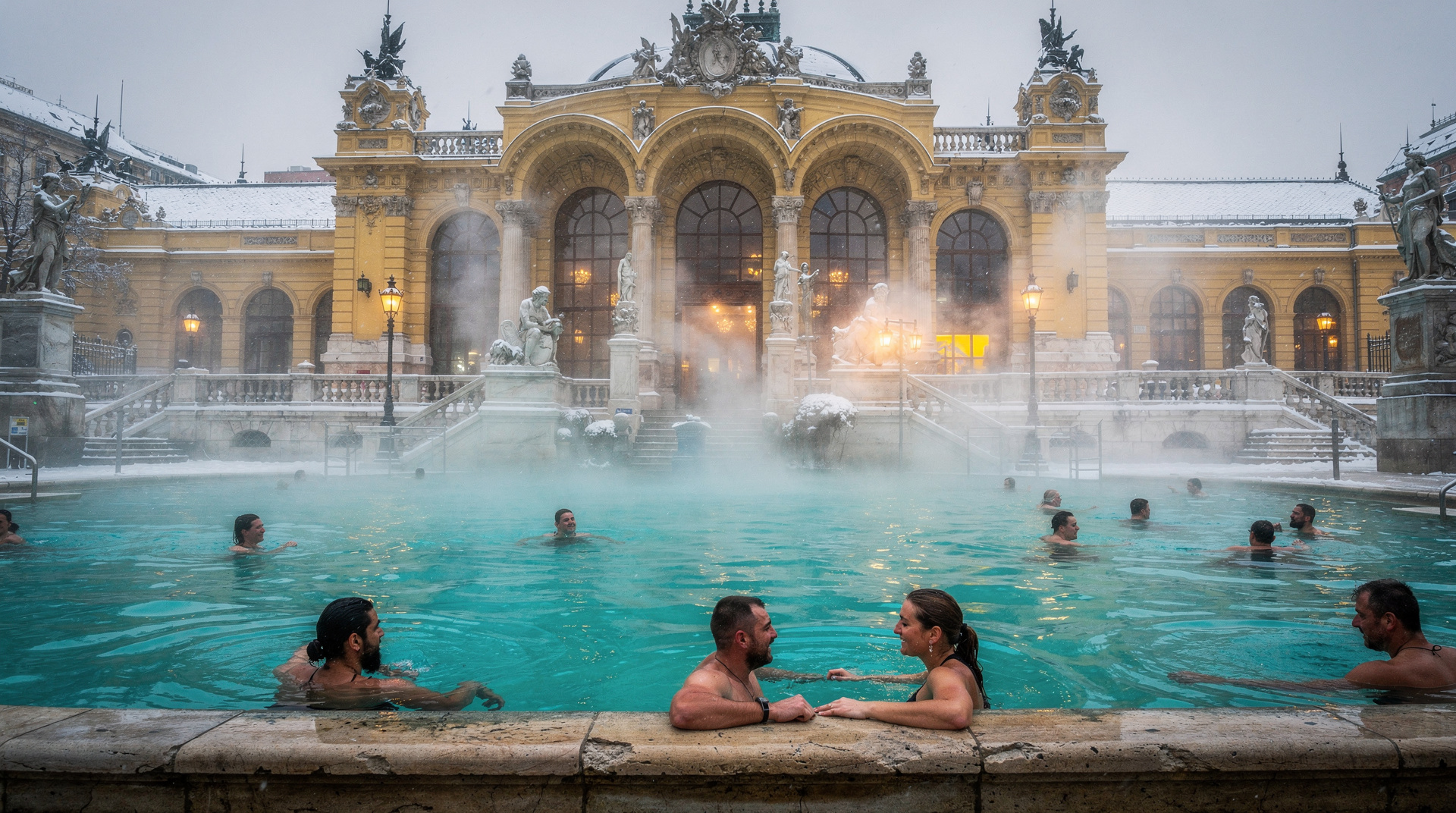
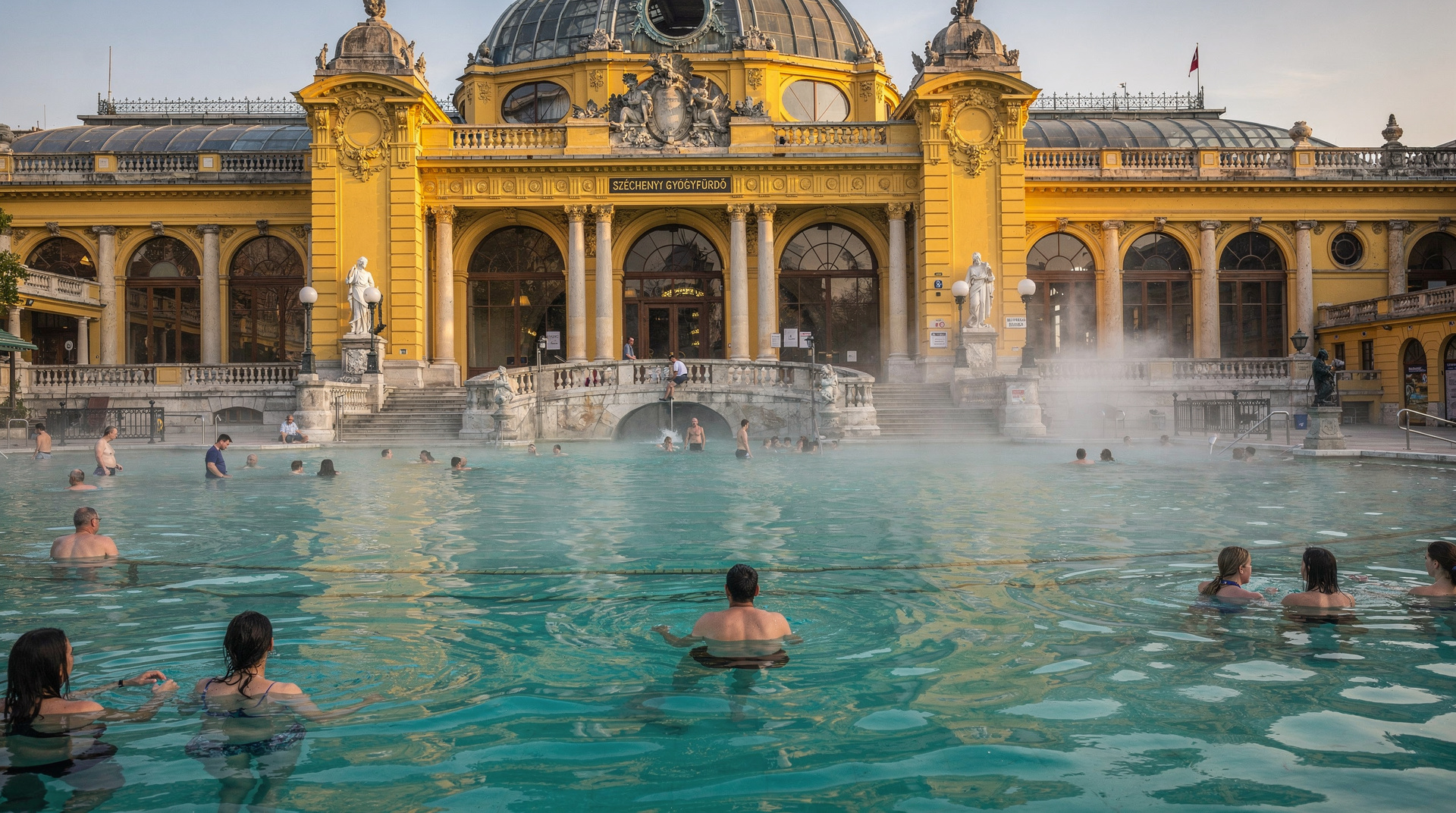
This is the defining winter Budapest experience. Book your Széchenyi day ticket in advance (9,900–13,900 HUF) and plan for a full afternoon. In winter, the outdoor pools are at their most atmospheric: the 38°C water steams dramatically in cold air, condensation clouds rise from the pool surface, and if it snows — which happens a few times each December — the combination of snow falling on the hot water and the grand yellow building behind you is one of Europe’s most memorable travel moments.
The baths are quieter in winter than summer. Weekday mornings in December have queue times of 10–15 minutes rather than 45–60 minutes. Indoor sections — the steam rooms and saunas — are particularly appealing when it is cold outside.
See the outdoor baths in winter guide for the full picture of the winter thermal bath experience, including what to wear from the locker room to the outdoor pool (a robe or large towel is essential). The general Széchenyi Baths guide is worth reading beforehand too, since winter logistics (locker choice, timing) are the same as any other season even though the atmosphere is completely different.
Evening: St Stephen’s Basilica market (17:00–21:00)
The St Stephen’s Basilica Christmas market is smaller and more refined than Vörösmarty tér. It occupies the square in front of the Basilica (Ferenciek tere side, open from mid-November to December 26, approximately 12:00–21:00). The scale is more intimate; the vendor selection leans toward artisan crafts and quality Hungarian food products.
The Basilica itself is beautifully lit at night during the Christmas period. The organ concerts that take place inside from November to January make a beautiful evening addition if they coincide with your visit — see the classical concerts guide for the current schedule.
After the market, the area around the Basilica on Zrínyi utca and Arany János utca has excellent restaurants for dinner. Costes Downtown (one Michelin star) is nearby if you want to celebrate; Bortársaság wine bar for a more relaxed evening with excellent Hungarian wines.
Day 3: Parliament, a night cruise and the Jewish Quarter
Morning: Parliament and the Danube (9:00–12:00)
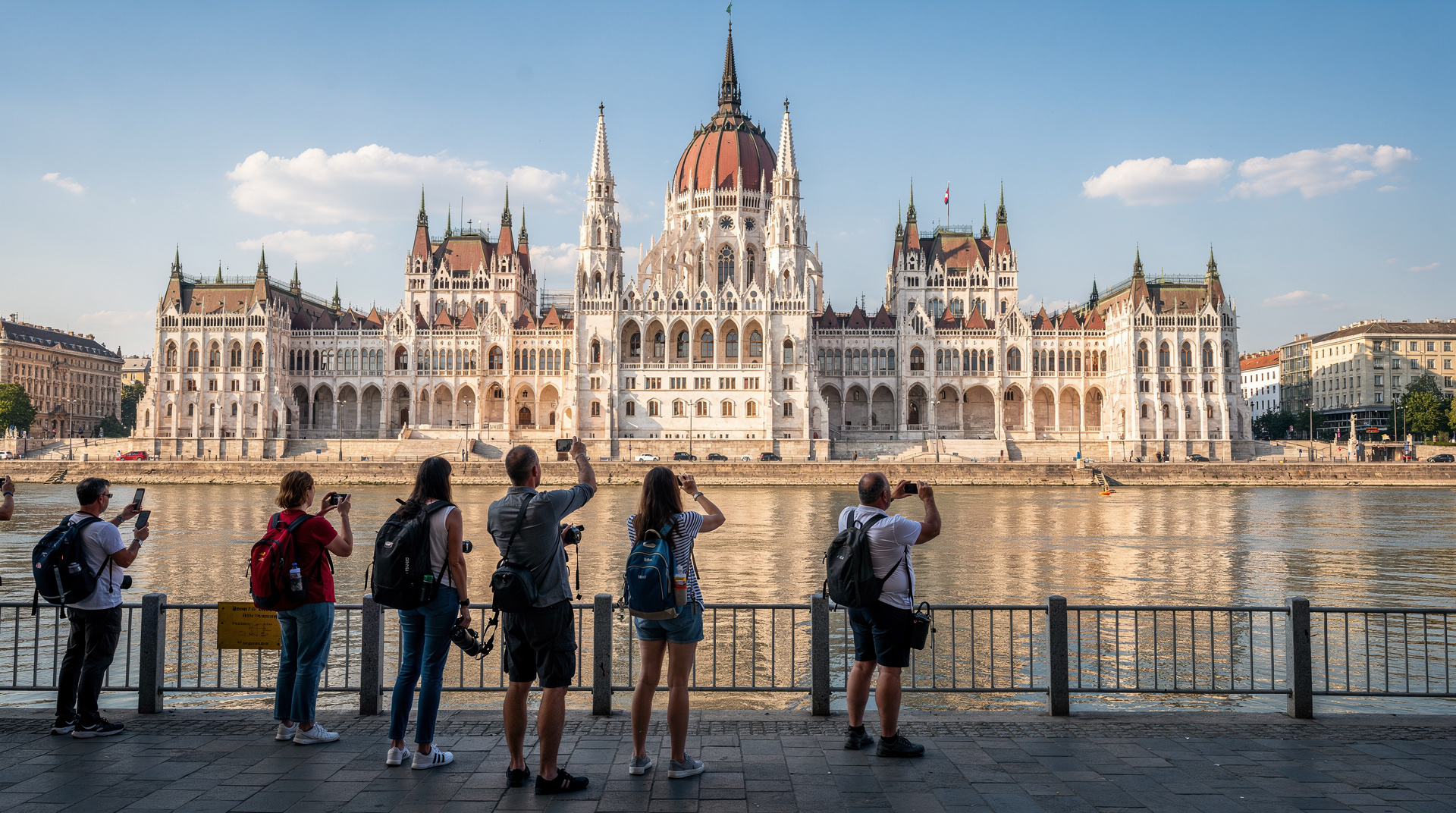
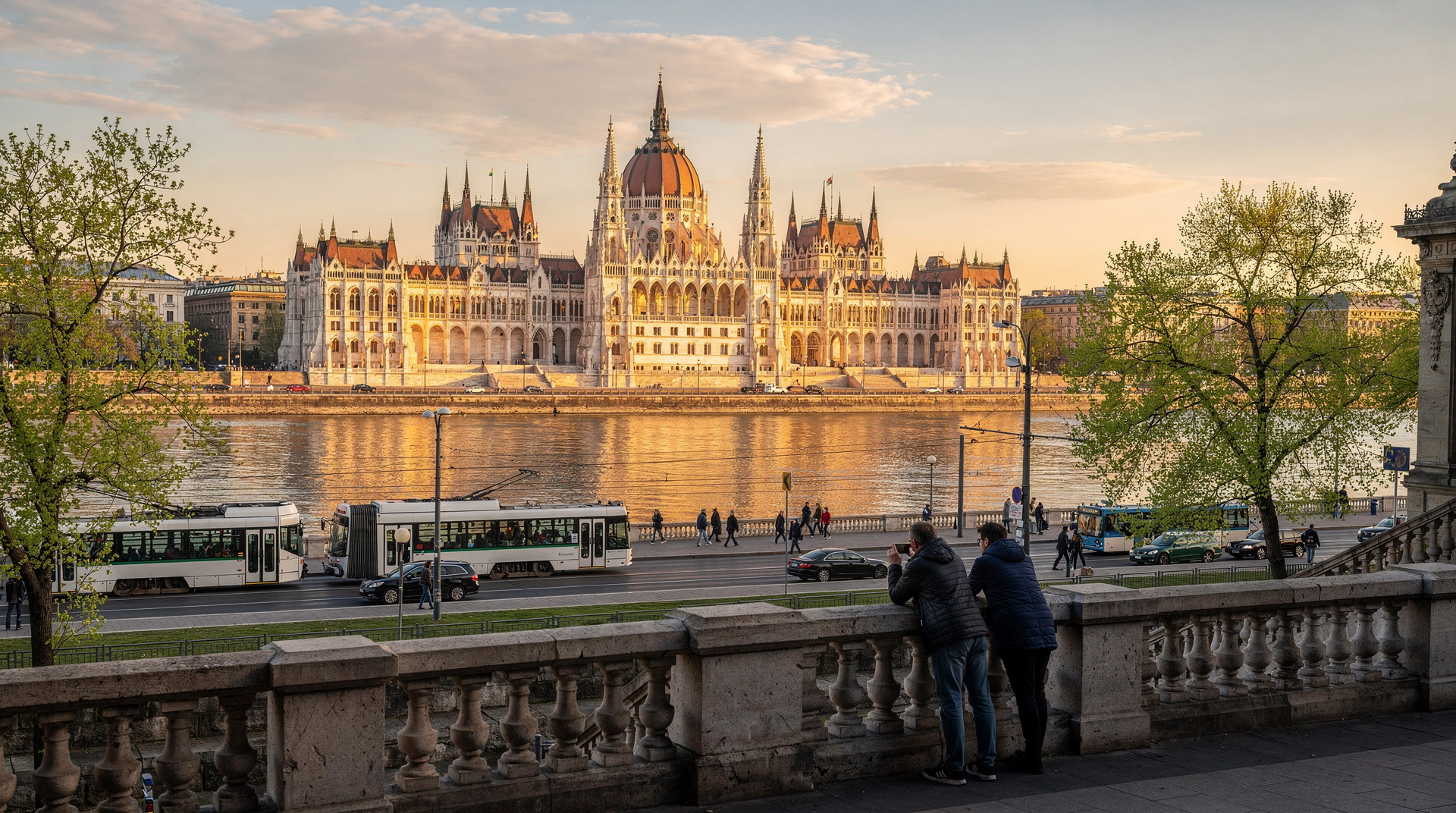
Book the Parliament tour in advance (less critical in winter but still advisable for popular time slots). The Hungarian Parliament interior is equally impressive in winter — the heating system in the central hall means it is warm regardless of outside temperature, and the Holy Crown display is unchanged.
The Danube embankment in winter has its own appeal: the river can carry ice floes in January; the embankment cafés and restaurants are cosier; and the view of the Castle District in winter light has a bleaker, more Central European quality than the summer version.
The Shoes on the Danube Bank memorial has particular resonance in winter — the wrought-iron shoes against a grey winter river, often with a dusting of snow.
A Parliament audio guide tour allows you to visit at your own pace and works well on winter mornings when group tour timing can be inflexible.
Midday: Great Market Hall and Jewish Quarter (12:30–15:30)
The Central Market Hall (Fővám tér) is warm, aromatic and excellent for a winter lunch. The paprika stalls, pickle barrels and sausage counters on the ground floor have a particular visual richness in winter light. The upper gallery lángos and food stalls are less crowded in winter — queue times at the most popular stalls drop significantly.
Walk north to the Jewish Quarter for the afternoon. The neighbourhood in winter has a different atmosphere — the outdoor ruin bar terraces are closed, but the indoor spaces are warmer and more interesting. Szimpla Kert is open year-round and is genuinely cosy in winter (heated indoor sections, the usual atmosphere). The downtown Pest destination guide covers the broader central area if you have an extra hour to wander before the light fades.
Afternoon: night tour and final evening (17:00–22:00)
In winter, 16:00 is already dusk. Use the early dark to your advantage: a night lights city tour by retro minibus covers Budapest’s illuminated sights — Parliament, Castle District, Chain Bridge — in a way that feels seasonal and appropriate for winter evenings. The Christmas market decorations across the city add a layer of light that summer visitors do not see.
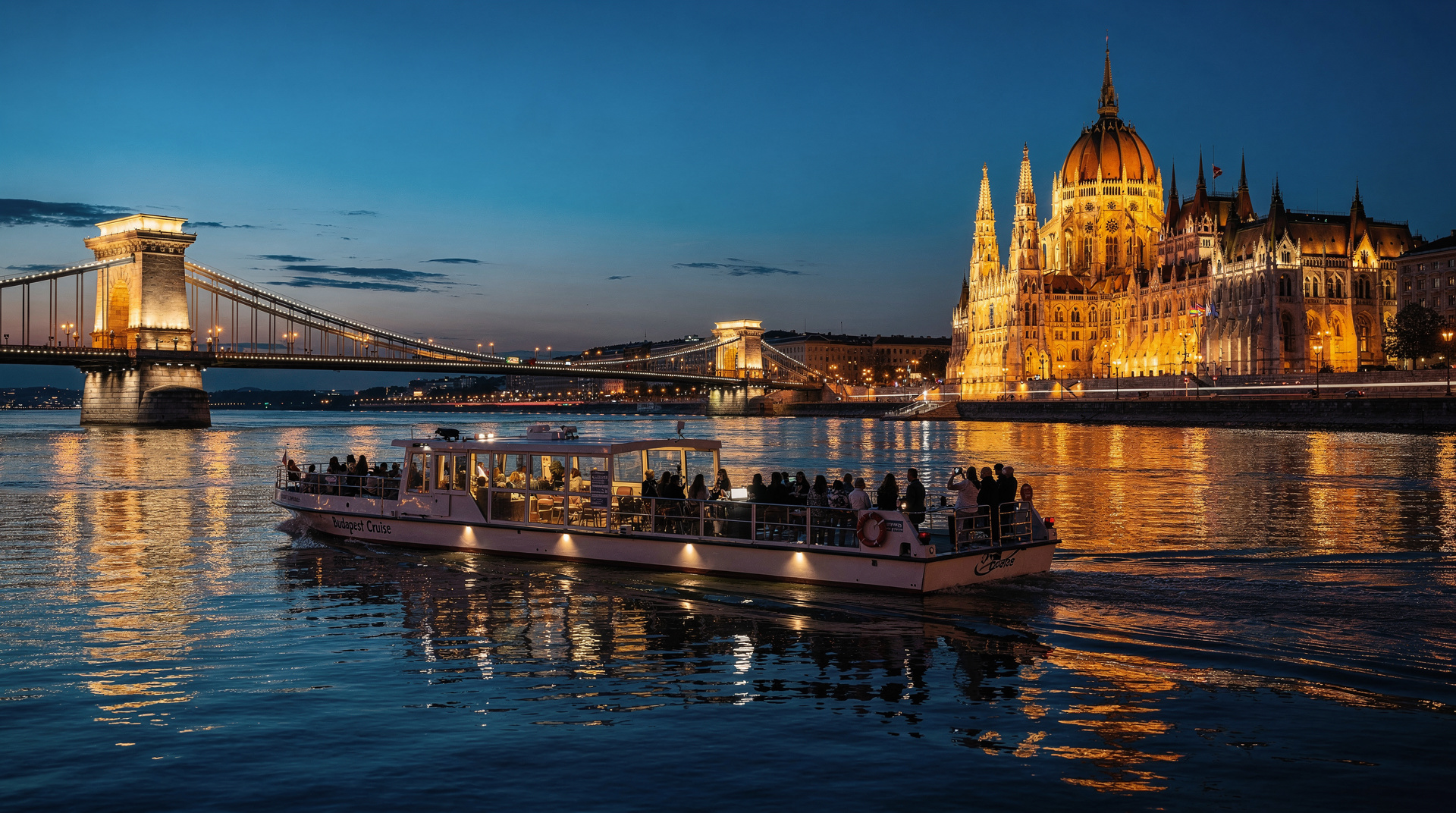
For the final evening: a night cruise on the Danube with a welcome drink — the illuminated Parliament and bridges from the water at Christmas time is the definitive winter Budapest image. A night sightseeing cruise with a welcome drink is the right scale for a final evening.
For a last dinner, make a reservation somewhere you have been meaning to try. The best restaurants in Budapest guide has current recommendations across price points. In December, restaurants have their Christmas menus running — often excellent value set menus with seasonal ingredients.
Practical notes for winter visits
What to wear
- Warm coat, gloves, hat — essential for December, especially evenings
- Waterproof shoes — cobblestone streets become icy; the Castle District in particular can be slippery
- Layering system under your coat for the transitions between cold outside and warm inside
- For the baths: bring a robe or use a large beach towel for the walk between changing room and outdoor pool (the facilities provide plastic slippers)
Christmas market dates and times
The main markets typically run:
- Vörösmarty tér: mid-November to January 1
- Basilica square: mid-November to December 26
- Budapest Christmas Fair (usually linked to Vörösmarty): mid-November to January 1
- Advent Bazilika: similar dates, Basilica square
Check exact dates for the current year — the Budapest Christmas markets guide is updated annually.
Transport in winter
The BKK network operates normally throughout winter. In heavy snow, tram lines can experience delays; metro is unaffected. Bolt taxis are essential for evening returns to the hotel — do not wait for street taxis in the cold. The getting around Budapest guide covers all options.
If you extend into New Year
Visitors staying through 31 December should treat it as a separate event rather than an extra day of this itinerary. The Danube embankment and central squares host large free public celebrations with fireworks, but accommodation books out months ahead and prices spike well above the December rates quoted here. The Budapest New Year’s Eve guide has the specifics on where to stand, what closes, and how far ahead to book.
Budget (three days, winter, per person)
| Item | HUF | EUR approx. |
|---|---|---|
| Accommodation (3 nights, mid hotel, winter rate) | 50,000–90,000 | €125–225 |
| 72h transport pass | 5,500 | €14 |
| Parliament tour | 7,000 | €18 |
| Matthias Church | 3,500 | €9 |
| Széchenyi Baths | 11,000 | €28 |
| Christmas market eating and drinks | 12,000–18,000 | €30–45 |
| Night cruise | 7,000 | €18 |
| Meals x3 days (restaurants, mid) | 40,000–60,000 | €100–150 |
| Misc entries and gifts | 10,000 | €25 |
| Total (excl. accommodation) | ~96,000–116,000 | €240–290 |
Winter hotel prices significantly reduce the total cost compared to summer — a good mid-range hotel costs 15,000–25,000 HUF/night in December versus 25,000–50,000 HUF in July. A three-night winter trip costs meaningfully less than the equivalent summer visit for the same hotel quality.
What makes winter special
Beyond the practical advantages, Budapest in winter has a quality that summer — for all its warmth and vitality — cannot match. The city was not built for sun. It was built for candlelight, thermal water, grand interiors, and the kind of long evening that starts with mulled wine at 16:00 and ends in a ruin bar at midnight. Winter is Budapest in its natural register.
Frequently asked questions about Budapest in winter
Is Budapest worth visiting in December for the Christmas markets? Yes — the Vörösmarty tér and Basilica square markets are genuinely well-regarded, less commercialised than many Western European equivalents, and pair naturally with Budapest’s thermal baths, which are especially atmospheric in cold weather. Hotel prices are also 30–50% lower than summer.
How cold does it get in Budapest in winter, and what should I pack? December typically sits between 0–5°C with occasional snow; late November is milder (3–10°C); temperatures around New Year can drop below -10°C on the coldest nights. Pack a warm coat, gloves, a hat, waterproof shoes for icy cobblestones, and layers for moving between cold outdoor markets and warm indoor spaces.
Top experiences
Bookable activities with verified prices and instant confirmation on GetYourGuide.