Outdoor baths in winter Budapest: soaking in the steam season

Are Budapest thermal baths open in winter?
Yes — all major Budapest baths operate year-round, including outdoor pools. Winter (November–March) is actually the best time to experience the outdoor pools: steam rises dramatically from the hot water in cold air, crowds are smaller, and the city is at its most atmospheric.
Why winter is the best time to visit Budapest’s outdoor baths
Most first-time visitors to Budapest plan their thermal bath visit in summer — logically enough, since they want sunshine and warmth. But experienced visitors know that Budapest’s outdoor thermal pools in winter offer an experience that summer simply cannot replicate.
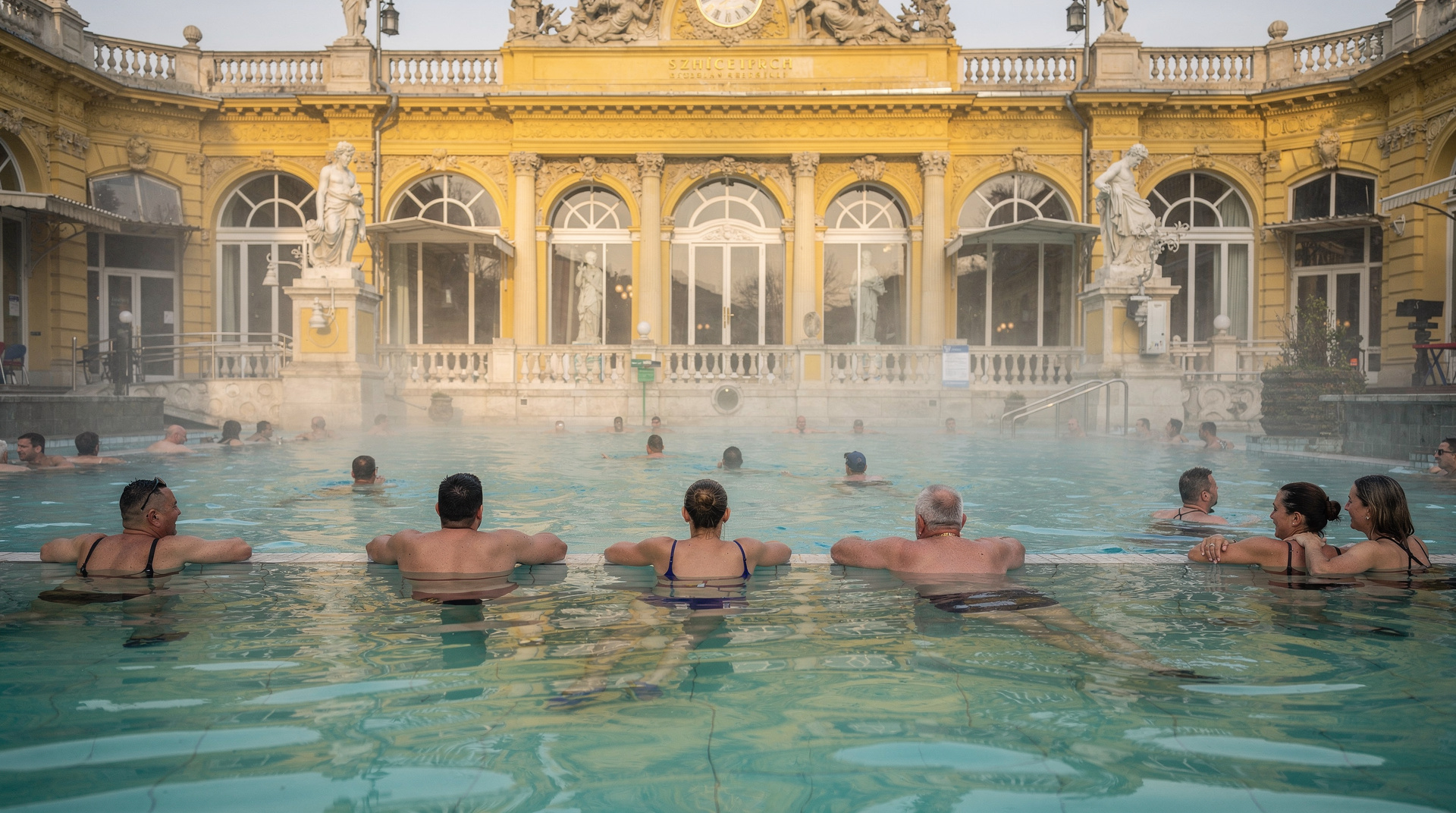
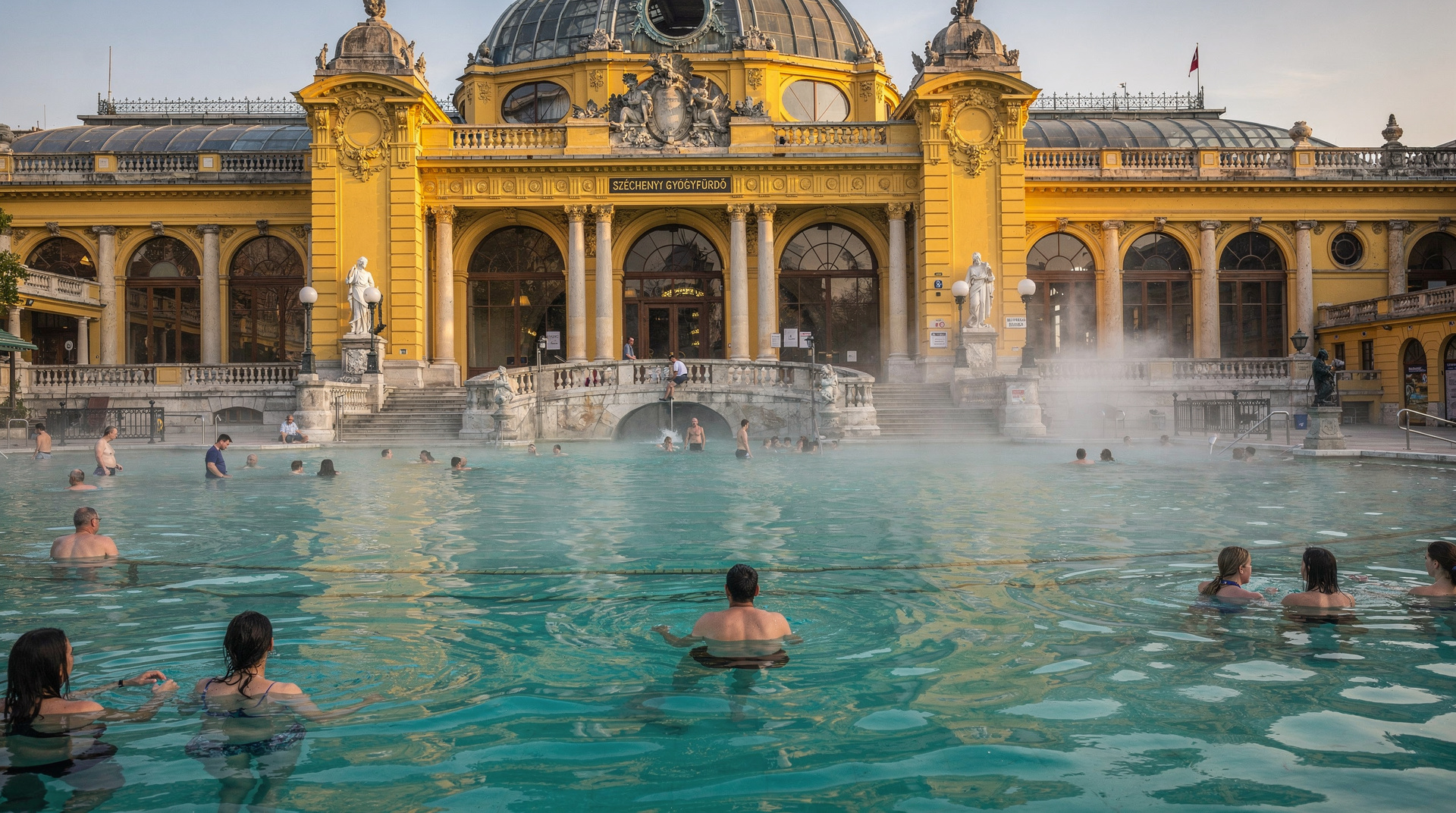
The visual: steam rising from 38°C water as cold air (0–5°C in December and January) meets the pool surface. The Széchenyi palace illuminated behind the outdoor pools. Chess players still at their floating boards in the main pool, wrapped in steam. The quiet that January brings to a tourist attraction better known for summer crowds.
The winter outdoor bath is one of those experiences — like eating a bowl of gulyás in a cellar restaurant in February — that feels completely right for Budapest and completely impractical to describe to someone who has not done it.
| Where | Széchenyi, Rudas, or Lukács (all year-round outdoor pools) |
| Cost | Around 8,000–12,000 HUF full day (Széchenyi) |
| Time needed | 2–4 hours |
| Best months | December–February for the steam effect |
| Bring | Large towel, flip-flops, swim cap if hair is long |
Winter bathing month by month
| Month | Air temp | Crowd level | Notes |
|---|---|---|---|
| November | 5–10°C | Low | Shoulder season, steam starting |
| December | 0–5°C | Moderate (holidays) | Festive atmosphere, Christmas markets nearby |
| January | -5–5°C | Lowest | Best steam effect, quietest queues |
| February | -3–7°C | Low | Still excellent, fewer holiday crowds |
| March | 3–12°C | Rising | Steam less dramatic as air warms |
The best outdoor bathing options in winter
Széchenyi outdoor pools
The three outdoor pools at Széchenyi operate year-round at their standard temperatures. The large outdoor swimming pool runs at 27–28°C — cooler, but heated enough that swimming lengths in winter is perfectly comfortable (the regulars do it daily). The thermal soaking pools maintain 36–40°C throughout the year.
In winter, these pools are the primary draw. Arrive at 08:00 on a January weekday and you will find chess players, early-morning swimmers, and a quantity of steam over the outdoor pools that is genuinely cinematic. The queue at the ticket window is short or nonexistent.
The Széchenyi full-day pass covers outdoor and indoor pools. In winter, the full-day aspect matters less — most visitors spend 2–3 hours and then retire to the indoor pools and saunas.
Rudas rooftop Jacuzzi
The rooftop pool at Rudas Baths is a more compact outdoor option — a Jacuzzi and plunge pool rather than a full swimming pool, but with Danube views that are enhanced rather than diminished by winter light. The Elizabeth Bridge and the lit Pest skyline on a clear January evening from the Rudas rooftop is excellent. See /guides/rudas-baths-guide/ for the practical details.
Lukács outdoor pool
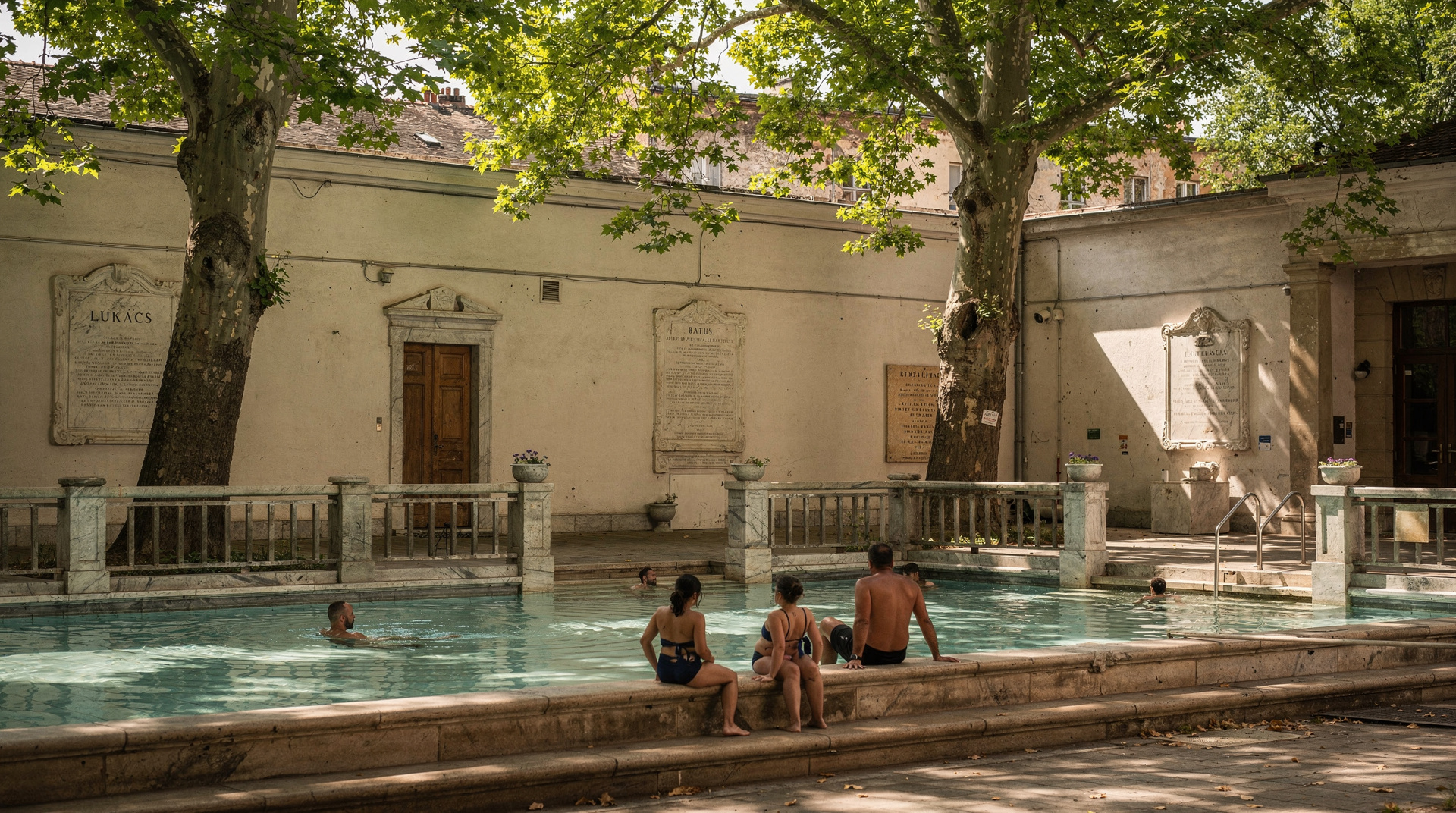
Lukács has an outdoor thermal pool in the garden running at 36°C, open year-round. Winter visits here have a particularly neighbourhood character — the plane trees above the pool are bare, the garden is quiet, and the clientele is almost entirely local. For a non-tourist winter bath experience, Lukács in December or January is the answer.
The Lukács full-day ticket in winter costs the same as any other time of year — and delivers significantly more quiet.
Choosing which bath for your winter soak
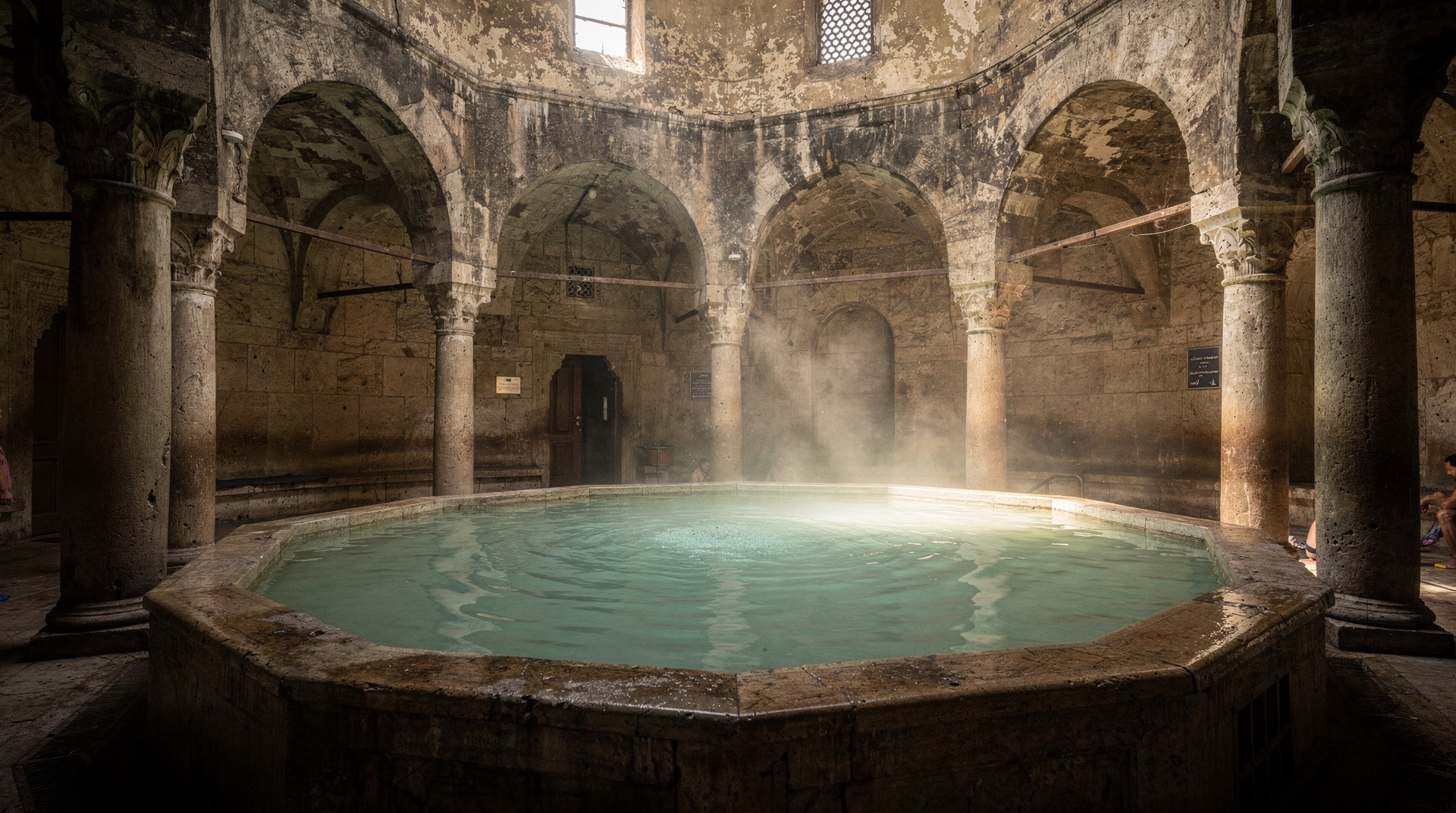
Each of the three baths gives winter a different character, so the right pick depends on what you want from the day. Széchenyi is the grand, photogenic choice: the neo-baroque building, the steam, the chess boards. Our Széchenyi baths guide covers the layout, the entrances and how the indoor and outdoor sections connect, which matters when you want to hop between cold air and warm rooms. Rudas is the choice for views and for a shorter, more compact outdoor session; the Rudas baths guide explains how its historic domed pool and the rooftop fit together. Lukács is the quiet, local option, described in the Lukács baths guide.
If you are still undecided, the Széchenyi vs Gellért vs Rudas comparison lines the big names up against each other, and the best thermal baths in Budapest roundup puts the whole field in one place. Gellért is a famous name, but check its current status before building a winter plan around it; the Gellért baths guide is the place to look.
Couples often find that winter changes the mood of a bath entirely: the warm water, the steam and the dark early evening make for a romantic outing, and the best baths for couples guide helps choose the right setting. Travelling with children is possible too, though the cold walk between pools asks for more planning; see baths with kids before you commit.
What the experience is actually like
Getting in
The main adjustment for first-time winter bathers is the approach to the pool edge. You will be in a robe or towel, wearing flip-flops on wet stone, with cold air on your skin. Walk briskly to the pool steps, get in fast. The first 10 seconds of entering a 38°C pool from 2°C air is an intense contrast — then you are surrounded by warm water and the cold ceases to matter.
In the pool
The steam effect is real and visible. Looking across the outdoor pool in cold weather, you see the pool surface layered with vapour. The hot water keeps you warm; the cold air on your face and hair is refreshing rather than uncomfortable. You may stay longer than you intended.
The chess players at Széchenyi remain a fixture even in the coldest months. Do not disturb the game.
Getting out
This is the brisk part. Exiting the pool in winter requires moving quickly to your towel and robe. The changing rooms at all major baths are heated and close to the outdoor areas — this transition takes about 30 seconds of cold exposure. After the first time, it becomes straightforward.
Tip: Bring a large towel rather than the small rental options. Dry quickly and thoroughly before going back outdoors or into the indoor section.
Practical winter bath tips
Flip-flops: Even more important in winter than summer — the outdoor stone surrounds can be icy or very cold to bare feet on cold mornings. Wear pool sandals from changing room to pool edge and back.
Hair: Long hair can partially freeze in very cold conditions (below -5°C) if you get it wet in an outdoor pool. Swim caps are available at Széchenyi; otherwise keep your hair dry if temperatures are very low.
Timing: The steam effect is most photogenic in the morning when light quality is best and pool surfaces are most dramatic. Arrive between 08:00 and 11:00 on a clear winter day.
No booking required in deepest winter: January and February at Széchenyi rarely require advance booking. November through December and the holiday period (late December, early January) benefit from booking ahead. Check the current situation before going — see /guides/budapest-baths-prices-tickets/ for price and booking notes.
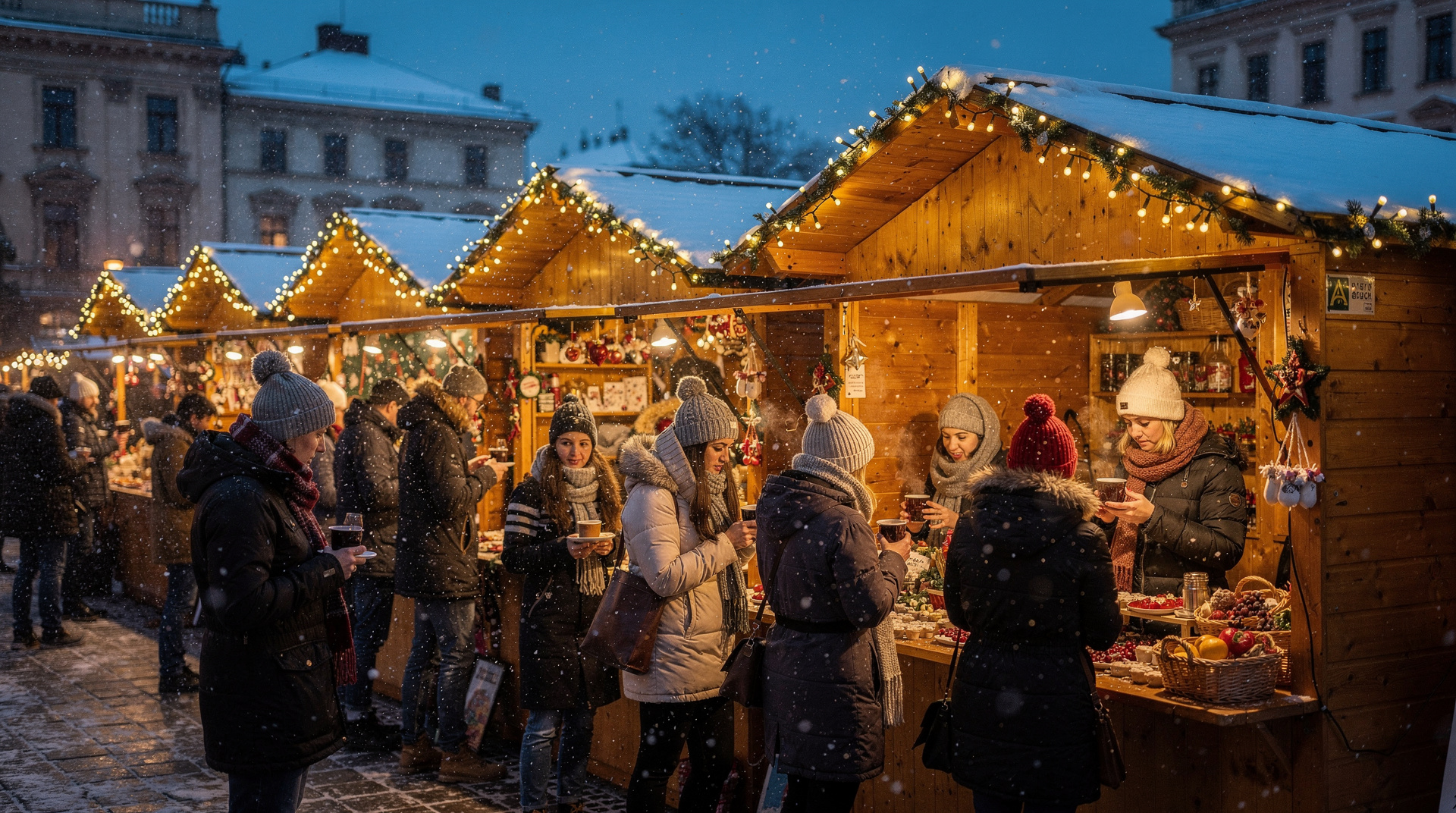
Combine with other winter activities: A winter Budapest visit pairs naturally with the Christmas markets (/guides/budapest-christmas-markets/), thermal baths, and folk music evenings. The /itineraries/budapest-winter-christmas-3-days/ itinerary incorporates a bath day with market visits and a dinner cruise. The /guides/budapest-in-winter/ guide covers the broader seasonal picture.
Planning a winter bath day around the rest of your trip
A winter soak works best when it is not squeezed between other commitments. Bathing is slow and relaxing, and the cold outside makes you want to linger, so treat it as the centrepiece of a morning or afternoon rather than a quick stop. Many visitors pair it with a lazy lunch afterwards, or with a gentle walk through the park once they are warm and dry.
Think about the order of your day. A bath first thing leaves the afternoon free for indoor sights, which suits short winter daylight; our best museums in Budapest guide has plenty of warm places to continue. A bath late in the day pairs well with dinner, and the coffee houses of Budapest are a good way to warm up between activities. For evening plans, the Budapest in winter guide gathers seasonal ideas.
If this is your first time in the city, the first time in Budapest guide shows where a bath day fits among the main sights. For visitors who want the baths to be the heart of the trip, the Budapest thermal baths itinerary builds several days around them, and the Budapest weekend break itinerary shows how to fit one soak into a short stay.
Finally, remember the basics of bath behaviour. The thermal bath etiquette guide explains what to wear, how the locker system works and the unwritten rules, and bath ticket mistakes will save you from the common errors at the ticket window. Ticket types and costs are laid out in bath prices and tickets, and a first-hand winter bath story gives a sense of what the first visit feels like. For clothing beyond the pool, what to pack for Budapest covers layers and footwear for cold days.
Winter baths and the honest seasonal advice
Budapest in winter is underrated in travel media. The crowds are smaller, accommodation prices are lower, and some of the city’s best experiences — outdoor thermal pools in steam, Christmas markets on Vörösmarty tér, the Chain Bridge in December light — are specifically winter things.
The thermal baths are a year-round draw, but winter is when the outdoor pool experience delivers something impossible to replicate in summer. If you are choosing between a July visit with full Széchenyi queues and a January visit with empty pools and visible steam: for the baths specifically, January wins.
For shoulder-season planning, see /guides/best-time-to-visit-budapest/. The /guides/budapest-in-winter/ guide covers all the reasons to visit in the cold months. The /guides/thermal-bath-etiquette/ guide covers what to bring and how to navigate the bath experience regardless of season.
The Széchenyi entry with private hotel transfer is particularly convenient in winter when you want a seamless journey from your hotel without navigating cold streets and public transport with a wet bag.
Easing into your first cold-weather soak
If you have never bathed outdoors in cold weather, give yourself a gentle start. Spend your first few minutes in the warmest pool, near the edge, and let your body settle before you wander to other pools. The sensation of a warm body and a cold face is unusual at first, and most people find that it becomes one of the most relaxing parts of the visit once they stop fighting it.
Move between indoor and outdoor pools at your own pace. Many regulars alternate: a spell in the steam outdoors, a rest in a warm indoor pool, then back out again. This rhythm keeps you comfortable, and it spreads the visit over a few unhurried hours instead of one long stretch. Listen to your body, leave the water if you feel dizzy or overheated, and drink water between sessions, since hot water is more tiring than it feels.
Take care on wet surfaces, which can be slippery in any season and more so when cold. Walk rather than run, hold the handrails on the pool steps, and keep your phone in the locker or in a waterproof pouch; steam and wet hands are hard on electronics. If you want photographs of the steam, take them quickly and put the camera away, because the best part of the visit is the one you are not filming.
For the practicalities of tickets, lockers and cabins, the Széchenyi baths guide and the thermal bath etiquette page are worth reading before you arrive. Getting there is straightforward with the city’s transport; the Budapest metro guide and getting around Budapest explain the options, and the City Park destination page describes the area around Széchenyi.
Drying off and warming up afterwards
The post-bath transition matters more in winter than any other season. Plan to dry your hair thoroughly indoors before heading back outside — wet hair in sub-zero air is uncomfortable and, in the coldest snaps, can partially freeze. Most baths have hairdryers in the changing rooms; bring your own if you’re particular about drying time. After a winter bath session, a hot drink nearby completes the experience properly: the Széchenyi complex has an on-site café, and the surrounding City Park has kürtőskalács (chimney cake) stands that are especially welcome after a cold walk from the changing rooms. See chimney cake guide for where to find the best.
Frequently asked questions about Outdoor baths in winter Budapest
Which Budapest baths have outdoor pools in winter?
Széchenyi keeps its outdoor pools open year-round at 36–38°C. Rudas has a rooftop Jacuzzi open in winter. Lukács has an outdoor heated pool. The Széchenyi outdoor pools in winter — with steam in cold air and an illuminated neo-baroque building — are one of Budapest's best experiences.How cold does it get in Budapest in winter?
December through February averages 0–5°C, with occasional drops to -10°C. January is the coldest month. The contrast between the outdoor air temperature and the 38°C pool water is part of what makes the winter experience special.Is it comfortable to get in and out of outdoor pools in winter?
The transition between the warm pool and cold air is the main discomfort — and it lasts only seconds. Once in the water, you are entirely comfortable. Getting out is brisk, but changing rooms are just steps away. Bring a large towel and flip-flops.Are winter baths less crowded?
Yes — significantly. November through March sees far fewer international tourists than summer. Local regulars continue throughout winter, but walk-up queues at Széchenyi are rare from November to February. This is the best time to visit without queuing.Is the Christmas/New Year period busy at the baths?
December 26 through January 3 is busier than the typical winter period — holiday visitors and local families. Expect moderate crowds but nothing approaching summer peak levels.
Top experiences
Bookable activities with verified prices and instant confirmation on GetYourGuide.